Table of Contents
Capturing pristine audio at a wedding isn’t just about technical perfection—it’s about preserving the tremor in a father’s voice during his toast, the barely-whispered vows exchanged beneath a floral arch, and the spontaneous laughter that erupts when a ring bearer steals the show. As we move deeper into 2026, wedding videographers face an increasingly complex audio landscape: venues saturated with Wi-Fi 7 networks, celebrants live-streaming to multiple platforms, and couples expecting cinematic sound quality that rivals their visual expectations. The wireless lavalier microphone has evolved from a simple convenience to an indispensable creative tool, yet choosing the right system requires navigating a maze of specifications that manufacturers rarely explain in plain English.
This comprehensive guide dismantles the marketing jargon and equips you with the technical fluency to invest wisely in equipment that won’t fail when the officiant asks that pivotal question. Whether you’re upgrading legacy gear or building your first professional audio kit, understanding these core principles will separate your work from the sea of videographers still struggling with interference-laden, battery-dead ceremony audio.
Top 10 Lavalier Microphones For Weddings
Detailed Product Reviews
1. Phenyx Pro Single Digital Wireless Microphone System, w/Mini Receiver, Bodypack Transmitter,15 Channels in 900MHz UHF Band, Headset/Lapel Microphone for Karaoke, Singer, Church, Wedding (PDP-1-1B)

Overview: The Phenyx Pro PDP-1-1B is a professional-grade digital wireless microphone system operating in the 900MHz UHF band, designed for live performers, presenters, and karaoke enthusiasts. This comprehensive package includes a bodypack transmitter, both headset and lapel microphones, and a compact mini receiver with USB-C charging, delivering encrypted audio transmission for interference-free performance.
What Makes It Stand Out: The system’s 48kHz/24-bit digital circuitry with encrypted signal transmission eliminates crosstalk and latency, a feature typically found in higher-priced units. With 15 tunable frequencies between 902-928MHz, it offers exceptional flexibility for multi-system setups in crowded RF environments. The all-metal construction, one-tap frequency selection, and included angled adapter for optimal antenna positioning demonstrate professional attention to reliability and ease of use.
Value for Money: Positioned in the mid-range category, this system delivers digital wireless technology at a price point usually occupied by analog units. The complete package—including dual microphones, USB-C charging, and robust metal build—provides exceptional value compared to entry-level systems lacking encryption and frequency agility, making it a smart investment for growing performers.
Strengths and Weaknesses: Strengths include digital signal clarity, flexible frequency selection, solid metal durability, and comprehensive accessories. The 160-200ft range suits most venues. Weaknesses include potential interference in the crowded 900MHz band and reliance on optimal antenna positioning. Battery monitoring is necessary during extended events, as runtime varies by usage.
Bottom Line: An excellent choice for musicians, church leaders, and karaoke hosts seeking reliable, interference-resistant wireless audio. The digital transmission and frequency flexibility make it a future-proof investment for serious performers needing professional-grade sound without premium pricing.
2. TONOR UHF Wireless Microphone System with Headset Lavalier Lapel Mic, Bodypack Transmitter, Rechargeable Receiver, 15 Channels 200ft Range 1/4" Output for Recording Live Performance, 1 Bodypack Mic

Overview: The TONOR UHF Wireless Microphone System offers a versatile single-channel solution for presenters, worship leaders, and event hosts requiring hands-free operation. The package includes a bodypack transmitter compatible with both headset and lapel microphones, paired with a rechargeable receiver delivering up to 200 feet of wireless freedom for churches, weddings, and conferences.
What Makes It Stand Out: The rechargeable receiver eliminates constant battery replacement, offering 6-8 hours of operation on a 2-3 hour charge—a rarity in this price range. The LCD display provides clear frequency and status information, while individual volume controls and a three-position ON/MUTE/OFF switch prevent popping sounds during transitions. With 15 selectable frequencies, it adapts seamlessly to challenging RF environments.
Value for Money: This budget-friendly system punches above its weight by including a rechargeable receiver, saving significant long-term battery costs. While the bodypack requires AA batteries, the overall package delivers professional features like LCD monitoring and frequency agility at an entry-level price, making it economical for regular users.
Strengths and Weaknesses: Strengths include impressive 200ft range, flexible frequency selection, hands-free convenience, and broad compatibility with 1/4" inputs. The receiver’s rechargeability is a major advantage. Weaknesses include the bodypack’s AA battery requirement, incompatibility with Bluetooth devices and soundbars, and potential signal loss near metal objects. Managing separate power sources requires attention.
Bottom Line: Ideal for churches, small venues, and mobile presenters seeking an affordable, reliable wireless system. The rechargeable receiver and flexible frequency options make it a practical choice for regular use, despite minor power management considerations that are easily learned.
3. 2-Pack Lavalier Lapel Microphone Compatible with Sennheiser Wireless System Bodypack Transmitter, Omnidirectional Condenser Mic for YouTube, Lectures, Living Performance
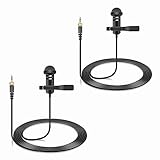
Overview: This two-pack of lavalier microphones offers a cost-effective replacement or expansion option for users of Sennheiser wireless systems. Designed for compatibility with EW100/300/500 series and similar bodypack transmitters, these omnidirectional condenser mics provide professional-quality audio capture for presentations, worship services, broadcast applications, and educational content creation.
What Makes It Stand Out: The locking 3.5mm TRS connectors ensure secure connection to compatible transmitters, preventing accidental disconnections during critical moments. The omnidirectional condenser capsules deliver clear, sensitive audio pickup with minimal handling noise, while the included metal clips and windscreens provide professional-grade accessories typically sold separately, enhancing overall value.
Value for Money: As a fraction of the cost of OEM Sennheiser lavalier mics, this two-pack represents exceptional value for budget-conscious productions. Users get redundant backup capability and comparable audio quality for presentations and video work without premium brand pricing, making it ideal for schools, churches, and small production companies needing reliable microphone options.
Strengths and Weaknesses: Strengths include broad Sennheiser compatibility, solid metal construction, clear audio reproduction, and excellent value as a two-pack. The locking connector is a crucial reliability feature. Weaknesses include the 5-foot cable length, which may restrict movement for active performers, and the fact that these are microphones only—requiring an existing compatible wireless system. They lack the premium capsule quality of top-tier Sennheiser mics for critical broadcast applications.
Bottom Line: Perfect for Sennheiser wireless system owners needing affordable, reliable backup or secondary microphones. These lavaliers deliver professional functionality at a consumer price point, making them a smart addition to any production kit where cost-effectiveness meets practical performance requirements.
4. Wireless Mini Microphone for iPhone - 2 Pack Lavalier Microphone for Video Recording, 2 In 1 Noise Reduction Lapel Mic for Ipad, Android,Clip-on Mini Mic with USB-C for Content Creators Podcast

Overview: The ZOPPLM Wireless Mini Microphone system is a mobile-first audio solution designed for modern content creators. This two-pack kit includes compact transmitters with lavalier mics, USB-C and Lightning adapters, and advanced DSP processing for smartphone and tablet recording, making it ideal for vlogging, interviews, TikTok content, and podcasting on the go.
What Makes It Stand Out: True plug-and-play operation with no apps or Bluetooth pairing required distinguishes this from competitors. The system offers real-time headphone monitoring, multiple audio modes (Standard, Reverb, Mute), and comprehensive wind protection with both foam and deadcat covers. The 360-degree rotating clip provides flexible mounting options on clothing, hats, or gear for optimal positioning.
Value for Money: Competitively priced for a two-transmitter kit, it includes features like DSP noise reduction and real-time monitoring typically found in more expensive systems. The universal adapter compatibility eliminates the need for separate iPhone and Android solutions, delivering excellent value for multi-platform creators who need versatility without carrying multiple microphone systems.
Strengths and Weaknesses: Strengths include effortless setup, impressive noise reduction, versatile mounting, and cross-platform compatibility. The real-time monitoring is a game-changer for content quality control. Weaknesses include mobile-only limitation, unspecified battery life that may vary by device, and audio quality that, while excellent for mobile, may not meet professional broadcast standards. The diminutive size could make components easy to misplace.
Bottom Line: An outstanding choice for YouTubers, TikTokers, and mobile journalists prioritizing convenience and audio quality. The plug-and-play design and robust feature set make it essential gear for serious smartphone content creation where speed and quality are equally important.
5. MAYBESTA Wireless Mini Microphone for iPhone, Android Phone - Bluetooth Lavalier Lapel Mic for Audio Video Recording - Clip on Content Creator Microphones for YouTube Tiktok Podcast Vlogging

Overview: The MAYBESTA Wireless Mini Microphone is a Bluetooth-enabled lavalier system targeting smartphone content creators across all platforms. With a case-friendly extended receiver design, this clip-on mic offers 65 feet of wireless range and six hours of battery life for vlogging, podcasting, live streaming, and video conferencing from iPhone, Android, and laptop devices without removing protective cases.
What Makes It Stand Out: The elongated receiver interface solves a common mobile creator frustration by connecting securely to phones with cases installed—eliminating the need to remove protection before filming. Automatic pairing occurs instantly when powered on, bypassing complex Bluetooth setup. The omnidirectional capsule with noise reduction chip captures clear audio while minimizing environmental interference in varied recording situations.
Value for Money: This budget-friendly wireless mic delivers Bluetooth convenience at an accessible price point. While professional-grade UHF systems cost significantly more, this provides adequate quality for social media content, online teaching, and casual interviews, making it an economical entry into wireless audio for creators upgrading from wired or phone-internal microphones.
Strengths and Weaknesses: Strengths include universal smartphone compatibility, case-friendly design, simple operation, and decent 65ft range. The six-hour battery covers most shooting sessions. Weaknesses include Bluetooth’s inherent latency limitations, battery life that may not suffice for full-day events, and audio quality that falls short of professional UHF systems. Performance can degrade in areas with heavy Bluetooth traffic or physical obstacles.
Bottom Line: Ideal for beginner to intermediate content creators needing affordable, convenient wireless audio for smartphone production. The case-friendly design and simple operation make it perfect for casual vlogging, though professionals should consider UHF alternatives for critical broadcast or commercial work where reliability is paramount.
6. MICNAUX Wireless Lapel Microphone System with Headset & Lavalier Mics, UHF Bodypack Transmitters, Mini Rechargeable Receiver, 48 Channels in 500MHz, 260ft Range, Plug & Play for Wedding Speech Church
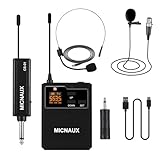
Overview: The MICNAUX wireless system delivers professional-grade audio for presenters, officiants, and performers who need reliable hands-free operation. This UHF bodypack system includes both headset and lavalier microphone options, offering flexibility for weddings, church services, and public speaking engagements. With a 260-foot transmission range and 48 selectable frequencies, it provides stable performance in challenging RF environments.
What Makes It Stand Out: The dual-microphone inclusion eliminates extra purchases, while the rechargeable receiver reduces ongoing battery costs. Its 48 UHF channels offer exceptional interference avoidance compared to typical 16-channel systems. The anti-jamming chip maintains signal integrity across long distances, and the 6.35mm to 3.5mm adapter ensures compatibility with cameras, smartphones, and tablets—uncommon versatility in this price tier.
Value for Money: Priced competitively for entry-level professional gear, this system undercuts premium brands by 40-60% while delivering comparable range and channel selection. The rechargeable receiver alone saves $30-50 annually in battery costs. For occasional users, the included adapter bundle removes the need for separate $15-25 accessories, making it an economical all-in-one solution.
Strengths and Weaknesses: Strengths include excellent channel flexibility, solid transmission distance, versatile connectivity, and rechargeable receiver convenience. The bodypack’s AA battery requirement (not included) adds ongoing costs, while the LCD display is basic compared to high-end models. Some users report occasional dropouts beyond 200 feet with obstacles. Build quality is functional but not ruggedized for heavy touring use.
Bottom Line: Ideal for wedding videographers, church staff, and educators seeking reliable wireless audio without premium pricing. The MICNAUX system balances performance, features, and affordability, making it a smart choice for semi-professional applications where occasional interference can be managed through its ample channel selection.
7. NEEWER CM28 PRO Wireless Lavalier Lapel Microphone System with Charging Case 48KHz 16 Bit Uncompressed Audio Noise Canceling 4GB Storage 9Hrs Recording Compatible with iPhone iPad Android Camera PC

Overview: The NEEWER CM28 PRO redefines wireless lavalier systems with recording-studio specifications in a portable package. This dual-transmitter kit captures uncompressed 48KHz/16-bit audio while offering 4GB internal recording per unit—effectively functioning as backup recorders. The charging case provides two full recharges, making it perfect for content creators, journalists, and filmmakers who demand broadcast-quality sound.
What Makes It Stand Out: Uncompressed audio recording and onboard storage are rare at this price point, eliminating the risk of transmission loss. The 656-foot range surpasses most competitors by 2-3x, while one-click noise cancellation and dual LED indicators streamline field operation. Magnetic attachment options and the 9-hour transmitter battery life cater to long-form content creation.
Value for Money: Though priced higher than basic UHF systems, the CM28 PRO justifies its cost with features typically found in $400+ kits. The charging case and dual transmitters alone represent $150+ value, while onboard recording provides insurance against wireless dropouts. For serious creators, this eliminates separate audio recorder purchases, delivering exceptional ROI.
Strengths and Weaknesses: Strengths include uncompressed audio quality, remarkable range, onboard backup recording, excellent battery life, and versatile mounting. The complexity may overwhelm beginners, and the OTG adapter requirement for some phones adds minor expense. File management via the transmitters requires practice, and the plastic construction prioritizes weight over durability.
Bottom Line: A game-changer for YouTubers, podcasters, and documentary filmmakers who refuse to compromise on audio quality. The NEEWER CM28 PRO’s combination of uncompressed recording, extreme range, and intelligent features makes it the best value for content creators serious about their sound.
8. Bietrun UHF Wireless Lavalier Lapel Microphone System/Headset Mic/Stand Mic, 165ft Range, Rechargeable Transmitter Receiver, 1/4" Output, for iPhone,Android,PA Speaker,DSLR Camera,YouTube, Recording

Overview: Bietrun’s versatile system targets users wanting maximum microphone flexibility without multiple purchases. This kit uniquely includes headset, handheld, and lavalier mics—switching between presentation styles instantly. With 25 UHF channels, rechargeable components, and broad device compatibility, it serves educators, fitness instructors, and vloggers who need one system for varied scenarios.
What Makes It Stand Out: The triple-microphone bundle eliminates separate purchases, saving $80-120. Rechargeable transmitter and receiver (6 hours each) reduce battery waste compared to AA-powered units. The unique ID code prevents WiFi/Bluetooth interference—a thoughtful touch for congested 2.4GHz environments. Included TRS and TRRS cables cover cameras and mobile devices comprehensively.
Value for Money: Exceptional value for multi-purpose users. Purchasing three separate quality mics would cost 2-3x this system’s price. The rechargeable design pays for itself within a year for regular users. While range is modest, the feature set and included accessories make it one of the best-equipped entry-level systems available.
Strengths and Weaknesses: Strengths include unmatched mic variety, rechargeable convenience, interference resistance, and complete adapter set. Weaknesses are the shorter 165-foot range, inability to work with Bluetooth speakers or MacBooks (critical limitation for some), and basic 25-channel selection. Build quality is adequate for light use but not professional abuse. No battery level indicators on some units.
Bottom Line: Perfect for teachers, fitness coaches, and casual content creators needing microphone versatility on a budget. The Bietrun system excels when flexibility trumps maximum range, though MacBook users and those needing long-distance transmission should look elsewhere.
9. MIZISNR Wireless Lavalier Microphone System with Headset & Lapel Mics, 4 Channel UHF Cordless Microphone and Metal Receiver Set, 300ft Range for Singing, Church, Karaoke, Preaching, Wedding

Overview: The MIZISNR four-channel system addresses multi-presenter scenarios with a metal receiver and four complete bodypack sets. Each of the four transmitters includes both headset and lavalier mics, enabling simultaneous use by a full panel or choir. With 300-foot range and automatic synchronization, it’s built for churches, training facilities, and event spaces requiring reliable multi-user wireless audio.
What Makes It Stand Out: Four independent channels with dual-mic options per transmitter is rare in sub-$300 systems. The metal receiver provides durability lacking in plastic competitors. Automatic pairing simplifies setup for non-technical volunteers, while the cardioid dynamic capsules effectively reduce feedback in live settings. The included power adapter ensures continuous operation without battery concerns.
Value for Money: Unbeatable for multi-user applications. Four separate quality wireless systems would cost $600-800; this consolidates them at a 50-60% discount. The metal chassis and included accessories (four mics each type, power supply) eliminate hidden costs. For churches or schools needing quartet-level coverage, ROI is immediate.
Strengths and Weaknesses: Strengths include four simultaneous channels, metal receiver construction, comprehensive mic package, and simple auto-sync. Weaknesses include AA battery dependency for transmitters (not included), lack of rechargeable options, and no individual channel displays. The 300-foot claim requires line-of-sight; obstacles reduce range significantly. No digital recording or advanced features.
Bottom Line: The ideal solution for houses of worship, conference rooms, or training centers needing multiple wireless mics simultaneously. While lacking modern conveniences like rechargeable batteries, the MIZISNR system’s channel count, durability, and included hardware make it the practical choice for multi-user environments.
10. TONOR UHF Wireless Microphone System with Headset Lavalier Lapel Mic, Bodypack Transmitter, Rechargeable Receiver, 2*15 Channels 200ft Range 1/4" Output for Recording Live Performance, 2 Bodypack Mics

Overview: TONOR’s dual-bodypack system targets presenters and performers needing reliable two-person wireless audio. With two complete mic sets (headset and lavalier per transmitter), 200-foot range, and a rechargeable receiver, it serves wedding duos, interview teams, and small event production. The 15 channels per transmitter provide adequate interference avoidance for most venues.
What Makes It Stand Out: The dual-transmitter package with four total mics offers immediate two-person flexibility. Individual volume controls and mute switches prevent popping during transitions—professional touches rarely seen at this price. The rechargeable receiver’s 6-8 hour life covers full event days, while the LCD displays provide at-a-glance status. Automatic pairing enables volunteer-friendly operation.
Value for Money: Strong value for dual-mic needs. Competitors often charge 30-50% more for comparable two-transmitter kits. The rechargeable receiver and included mic variety remove $60-80 in accessory costs. While not the cheapest option, the feature set and TONOR’s reliability reputation justify the modest premium over bare-bones systems.
Strengths and Weaknesses: Strengths include dual complete mic sets, individual controls, rechargeable receiver, automatic pairing, and solid 200-foot performance. Weaknesses include AA battery requirement for bodypacks, limited 15 channels per unit (30 total), and plastic construction. No onboard recording or advanced digital features. Some users note receiver charging port durability concerns with heavy use.
Bottom Line: Excellent choice for two-person presentation teams, wedding officiants, or interviewers needing dependable wireless audio without complexity. The TONOR system hits the sweet spot of performance, ease-of-use, and affordability, making it a trustworthy workhorse for regular event use.
The Evolution of Wedding Audio Capture
Why Wireless Lavaliers Dominate Modern Wedding Videography
The shift toward wireless lavalier systems hasn’t happened by accident. Traditional shotgun microphones, while excellent for controlled environments, struggle with the unpredictable acoustics of churches with 30-foot ceilings, beach ceremonies buffeted by ocean winds, and vineyard venues where the “perfect spot” for audio capture is also the perfect spot for the photographer’s wide-angle shot. Lavaliers place the microphone exactly where the sound originates—within 8 inches of the subject’s mouth—delivering intimate, isolated audio that post-production can’t replicate with even the most advanced AI denoising tools.
Modern couples also demand mobility. They’re not standing still at altars anymore; they’re walking down spiral staircases for first looks, exchanging vows on moving sailboats, and hosting receptions in industrial lofts where running XLR cables across the dance floor is a liability nightmare. Wireless systems free you to capture these moments without becoming a trip hazard or restricting the couple’s movement.
The Shift from 2024 to 2026: What’s Changed
The wireless audio landscape transformed dramatically between 2024 and 2026, primarily due to spectrum reallocation and digital transmission breakthroughs. The FCC’s finalization of the 6 GHz band for unlicensed use has opened new frequency corridors specifically designated for professional audio, while the sunset of certain UHF ranges means systems you purchased just two years ago might now operate in legally gray or congested territories.
Additionally, the adoption of AI-powered frequency hopping algorithms has become standard rather than premium. These systems don’t just scan for open frequencies at startup—they continuously predict and avoid interference patterns from venue Wi-Fi, LED lighting systems, and guests’ devices in real-time. This intelligence matters immensely when you’re recording a 20-minute ceremony and can’t afford a dropout during the ring exchange.
Key Technical Specifications Decoded
Frequency Bands and Spectrum Management
When evaluating wireless systems, you’ll encounter three primary frequency categories: UHF (470-608 MHz, the traditional workhorse), 1.9 GHz DECT (digital enhanced cordless telecommunications), and the newly allocated 5.2-5.8 GHz bands. For wedding videography, UHF remains the gold standard for penetrating walls and transmitting through crowds, but not all UHF systems are created equal.
The critical specification is “tuning bandwidth”—how wide a swath of spectrum your system can access. A system with 100 MHz of tuning bandwidth gives you vastly more options to find clean frequencies than one with only 20 MHz. In 2026, look for systems offering at least 60 MHz of usable bandwidth in the core UHF range, plus automatic scanning that identifies not just empty frequencies, but stable ones with minimal adjacent-channel interference.
Understanding Transmission Range and Line-of-Sight
Manufacturers love advertising “300-foot range” in bold type while burying the “line-of-sight” caveat in microscopic footnotes. At a wedding, line-of-sight is a fantasy. You’re dealing with 150 guests holding up smartphones, metal chair frames, stone columns, and your own body blocking the signal path.
Real-world effective range is typically 30-40% of advertised specs in typical venue conditions. For ceremony coverage, prioritize systems with diversity reception—dual antennas that continuously compare signal strength and switch to the stronger path instantaneously. Some 2026 models now feature “polarization diversity,” where antennas are oriented differently to catch signals bouncing off surfaces at odd angles, dramatically improving reliability when you can’t maintain visual contact with transmitters.
Battery Life Realities: Beyond Manufacturer Claims
That “10-hour battery life” claim? It was measured in a climate-controlled lab with fresh batteries at room temperature, transmitting at minimum power, with the transmitter sitting idle 70% of the time. Your real-world experience will differ significantly.
Cold ceremonies in unheated winter venues can slash lithium battery performance by 40%. Continuous transmission at maximum power (necessary for large venues) drains faster than intermittent use. And those rechargeable lithium-polymer packs? Their capacity degrades after 300-500 charge cycles—roughly 18 months of weekly weddings.
For 2026, consider systems with smart power management that automatically reduces transmission power when receivers detect strong signals nearby, and always verify whether battery life claims are specified for “continuous transmission” or “typical use.” Better yet, look for systems that display remaining runtime in minutes rather than vague battery bars.
Audio Quality Fundamentals for Wedding Ceremonies
Frequency Response and the Human Voice
The human voice produces fundamental frequencies between 85 Hz (male bass) and 255 Hz (female soprano), but the character and intelligibility live in the harmonics extending up to 12 kHz. A lavalier with a frequency response of 50 Hz to 15 kHz seems adequate on paper, but the slope of that response curve matters enormously.
Many budget systems roll off frequencies above 10 kHz to mask self-noise, resulting in vowels that sound clear but consonants that lose their crispness—“s” sounds become “sh,” reducing intelligibility when vows are whispered. Conversely, systems that boost frequencies around 5-7 kHz can add presence but also exaggerate fabric rustle and wind noise. The sweet spot for wedding audio is a relatively flat response from 80 Hz to 12 kHz with a gentle, natural roll-off above 13 kHz to reduce hiss without sacrificing clarity.
Signal-to-Noise Ratio: The Silent Killer of Clean Audio
Signal-to-noise ratio (SNR) is the most honest measure of audio purity, expressed in decibels. A spec of “70 dB” means the desired signal is 70 dB louder than the system’s inherent noise floor. For wedding work, 70 dB is the absolute minimum; 80 dB or higher is where professional results begin.
Here’s what manufacturers won’t tell you: SNR is measured at maximum input level. At typical speaking volumes—especially those emotional, whispered vows—the actual SNR can be 15-20 dB worse. This is where “gain staging” becomes critical. Systems with adjustable input sensitivity allow you to optimize the transmitter’s gain for the specific speaker’s voice, maximizing SNR at the source rather than cranking noisy gain at the receiver or in post.
Compression Artifacts and Digital Transmission
Digital wireless systems compress audio before transmission to save bandwidth, then decompress it at the receiver. Aggressive compression can create artifacts—subtle warbling or watery sounds—that become audible during sustained vowels or when recording acoustic music performances during ceremonies.
In 2026, look for systems advertising “low-latency, high-bitrate transmission” with specific numbers: aim for at least 24-bit/48kHz digital transmission with compression ratios below 4:1. Some premium systems now offer “visually lossless” compression that preserves dynamic range while still maintaining robust wireless performance. This matters enormously when the officiant’s voice drops to a reverent whisper, and you need to preserve that emotional dynamic without introducing digital crunch.
Build Quality and Wedding-Day Reliability
Weather Resistance for Outdoor Ceremonies
That IP rating—IP63, IP65, IP67—isn’t just for show. Outdoor ceremonies present constant threats: sudden downpours, humidity that fogs internal components, and celebratory champagne sprays during toasts. An IP65 rating means the transmitter withstands water jets from any direction, while IP67 indicates temporary submersion protection.
More importantly, examine the microphone connector’s sealing. The point where the lavalier cable enters the transmitter body is the most common failure point for moisture ingress. 2026 systems with “cable strain relief collars” and o-ring sealed connectors dramatically outlast those with simple 3.5mm jacks. Remember: a transmitter that survives a drizzle but fails when the bride hugs her weeping father is still a failed transmitter.
Connector Types and Compatibility
The industry remains frustratingly fragmented between locking 3.5mm connectors, TA4F mini-XLR, and proprietary snap-lock designs. Your choice affects not just compatibility but reliability. Locking 3.5mm connectors are ubiquitous and inexpensive to replace, but they can loosen during active receptions. TA4F connectors provide positive locking but limit your microphone options to professional-grade lavaliers.
The emerging standard in 2026 is the “digital smart connector,” which not only locks mechanically but also communicates microphone type to the transmitter, automatically applying appropriate gain and EQ presets. This eliminates the guesswork when switching between different lavaliers for the officiant, groom, and reader. However, these systems typically lock you into a single manufacturer’s microphone ecosystem—a tradeoff between convenience and flexibility.
Antenna Design and Durability
External antennas have largely disappeared from modern transmitters, replaced by internal antennas that are less prone to snagging on clothing or breaking during quick changes. However, internal antenna performance varies wildly based on design.
Look for transmitters specifying “dual internal antennas with diversity switching” rather than single antenna designs. The antenna material matters too—polymer-based antennas resist bending but can crack in extreme cold, while flexible metal trace antennas maintain performance across temperature ranges. For receivers, avoid units with thin, whip-style antennas that snap in crowded gear bags; instead, prioritize compact units with integrated antenna arrays or ruggedized external paddles that fold flat for transport.
User Experience and Workflow Optimization
Pairing and Syncing in High-Pressure Situations
The five minutes before a ceremony starts are not when you want to be scrolling through menus trying to pair transmitters. Modern systems have embraced NFC (near-field communication) tap-to-pair functionality—hold the transmitter near the receiver, and they sync frequencies, gain settings, and even custom names like “Groom” or “Officiant” instantly.
Even more valuable is “group pairing,” where a single receiver unit can simultaneously pair with multiple transmitters, assigning them to discrete channels with pre-configured level offsets. This means you can hand transmitters to three ceremony participants, pair them all with one tap sequence, and know the officiant’s levels are optimized for booming projection while the bride’s are set for softer speech—all before the processional music begins.
Monitoring Solutions for Solo Operators
Wedding videographers rarely have a dedicated sound engineer. You’re framing the shot, adjusting exposure, and monitoring audio simultaneously—a recipe for missed distortion or dropouts. Receiver units with high-visibility OLED screens showing real-time audio waveforms, not just level meters, let you spot problems at a glance.
Even better are systems offering smartphone app integration with low-latency monitoring. These apps display levels for all active channels, log interference events with timestamps, and can even send vibration alerts to your phone if a transmitter’s battery drops below 20% or signal quality degrades. The key is ensuring the app works in airplane mode—venues with poor cell reception shouldn’t compromise your monitoring capabilities.
Mounting Options and Concealment Strategies
How you mount transmitters directly impacts audio quality and client comfort. The traditional “clip to belt” method fails when grooms wear suspenders or brides wear strapless gowns. Modern systems include multiple mounting accessories: magnetic pouches that slip into waistbands, adhesive pockets that stick to the small of the back, and even silicone sleeves with integrated cable management that reduce fabric rustle.
The transmitter’s physical dimensions matter enormously here. Units thicker than 0.5 inches create visible bulges under sheath dresses, while overly wide designs press uncomfortably against ribs during hugs. The ideal wedding transmitter is roughly the size of two stacked credit cards—thin enough to disappear, yet large enough to house a decent battery and robust antenna.
Spectrum Management and Legal Compliance
FCC Regulations in 2026: What You Need to Know
The regulatory landscape shifted significantly in late 2025 when the FCC completed its spectrum auction, reallocating portions of the 600 MHz band exclusively to telecommunications. Operating a wireless microphone in these frequencies now carries fines up to $10,000 per incident, and modern scanning receivers can detect illegal transmissions in real-time.
All professional systems now ship with “geo-location awareness”—the receiver uses GPS to identify your location and automatically locks out illegal frequencies for that region. However, this feature only works if you update the device’s firmware regularly. Before each wedding season, connect your receivers to manufacturer software and download the latest frequency database. That beach wedding in a coastal market might now border a protected maritime communications band you weren’t aware of.
Avoiding Interference at Crowded Venues
The average 200-person wedding in 2026 presents a perfect storm of interference: 150 smartphones with Bluetooth and Wi-Fi active, venue staff using wireless intercoms, photographers firing wireless strobes, and the DJ’s own microphone system. Frequency coordination isn’t just recommended—it’s essential.
Professional-grade systems now include “interference mapping” that logs every RF hit during your setup period, creating a visual heatmap of clean frequencies. Use this during venue walkthroughs, not just at the ceremony site but at the reception area too. The clean frequency at 2 PM during setup might become congested by 6 PM when guests arrive with their devices. Savvy videographers identify three backup frequencies per channel and program them into presets, enabling on-the-fly switching if interference appears mid-ceremony.
Power Management Strategies
Rechargeable vs. Disposable: The 2026 Perspective
The rechargeable revolution is complete—modern lithium-polymer cells now deliver consistent voltage output until they’re nearly depleted, unlike alkaline batteries that gradually fade and cause unpredictable gain changes. However, the real game-changer is USB-C Power Delivery fast charging.
Systems supporting 20W fast charging can replenish a transmitter from 0% to 80% in 45 minutes. This means you can top off units during cocktail hour between ceremony and reception using a standard power bank. The key specification is “pass-through charging”—the ability to charge while simultaneously transmitting. This effectively gives you unlimited runtime for all-day events when connected to a small USB battery pack hidden in a pocket.
Still, always carry disposable lithium AA batteries as ultimate backup. They maintain performance in extreme cold and serve as your insurance policy when a transmitter fails and you need an immediate, no-charging-required solution.
Hot-Swapping Techniques During Continuous Recording
Wedding ceremonies don’t pause for battery changes. Professional systems now feature “dual-battery bays” in receivers, allowing hot-swapping without losing power. For transmitters, the technique involves using external USB battery packs with right-angle connectors that stay attached during use.
The critical workflow enhancement is “battery telemetry” that predicts remaining runtime based on actual usage patterns, not just voltage. These algorithms learn that your officiant transmitter drains faster because it transmits at higher power, while your groom transmitter sips power conservatively. This prevents the nightmare scenario of changing a battery that actually had 90 minutes left while neglecting another that’s about to die.
Budget Allocation and ROI Considerations
Understanding Price Tiers and Feature Sets
Wireless lavalier systems cluster into three distinct tiers that reflect real performance differences, not just brand prestige. Entry-level systems ($200-400 per channel) offer basic digital transmission and acceptable audio quality for controlled indoor ceremonies. They lack robust interference avoidance and typically provide 60-65 dB SNR—adequate, but requiring more post-production cleanup.
Mid-tier systems ($500-800 per channel) deliver the sweet spot for full-time wedding videographers: 80+ dB SNR, intelligent frequency hopping, weather sealing, and smartphone monitoring. This is where you’ll find the durability and reliability to handle 40+ weddings annually without constant repairs.
Premium systems ($1000+ per channel) justify their cost through features that save time and reduce liability: automatic gain riding that prevents clipping during emotional peaks, built-in recording backups to microSD cards, and multi-channel receivers that replace three separate units. For videographers shooting luxury weddings or offering live-streaming services, this tier pays for itself in reduced gear weight and insurance against audio failure.
The Hidden Costs of Cheap Systems
That budget system seems like a smart entry point until you calculate the true cost of ownership. Inexpensive transmitters typically lack replaceable batteries, meaning when the sealed lithium cell dies after 18 months, you’re buying a whole new unit. The audio quality often requires 30-45 minutes of extra post-production per wedding—cleaning noise, boosting presence, fixing distortion—time that could be spent booking another client.
There’s also the liability cost. A missed audio recording of vows due to interference or battery failure isn’t just a technical failure; it’s a breach of contract that can result in full refunds, negative reviews, and lost referrals. Investing in a $600 system that guarantees capture is infinitely cheaper than the $3000 refund you’ll issue when your $250 system fails during the first kiss.
Frequently Asked Questions
What’s the minimum number of wireless channels needed for a typical wedding?
Three channels is the practical minimum: one for the officiant, one for the groom (which also captures the bride during vows), and a backup/spare for readers or unexpected speakers. Four channels provide optimal coverage for luxury weddings with readers, musicians, and toasts.
How far in advance should I arrive at a venue to coordinate frequencies?
Arrive 90 minutes before the ceremony start time. This gives you 30 minutes for initial frequency scanning during venue setup, another 30 minutes to rescan after guests begin arriving with their devices, and a final 30-minute buffer for troubleshooting. For venues hosting multiple events simultaneously, contact the venue’s AV coordinator 48 hours prior to discuss frequency allocation.
Can I use my wireless lavaliers for both ceremony and reception toasts?
Technically yes, but practically it’s risky. Ceremony transmitters are optimized for stationary subjects and often hidden under clothing, making them difficult to access quickly for toasts. The ideal workflow uses dedicated ceremony systems left in place, with separate handheld or podium-mounted wireless mics for reception audio that guests can easily pass around.
What’s the best way to conceal transmitters on wedding dresses without audio compromise?
Use magnetic pouches placed at the small of the back, secured to the dress’s inner structure. Run the lavalier cable through the dress interior, emerging at the neckline. Always use moleskin or medical tape to secure the mic element to the skin or dress lining, preventing fabric rustle. Test the placement by having the bride twist, hug, and sit—movements that cause the most noise.
Are digital wireless systems truly better than analog in 2026?
For wedding videography, absolutely. Modern digital systems offer five critical advantages: immunity to analog interference (like LED dimmers), encryption that prevents guest eavesdropping, consistent audio quality throughout the transmission range, simultaneous multi-channel operation without intermodulation, and metadata embedding (timecode, device ID) that streamlines post-production syncing.
How do I handle frequency coordination when the DJ brings their own wireless mics?
Establish a frequency coordinator role immediately. Use a spectrum analyzer app on your phone to identify occupied bands, then negotiate division: you take lower UHF, DJ takes upper UHF, and you both avoid the 2.4 GHz band entirely. Document agreed frequencies in writing. Professional DJs will understand this process; amateurs may need education about the legal and technical consequences of interference.
What’s the lifespan of a professional wireless lavalier system with heavy use?
Expect 4-5 years of reliable service with proper maintenance. The transmitter’s battery connector typically fails first after 500+ charge cycles. Antenna connections loosen around year three. Microphone capsules last 2-3 years before sweat and makeup degrade the diaphragm. Budget annually for one transmitter rebuild ($150-200) and replace lavalier mics every 18-24 months as preventive maintenance.
Should I invest in systems with built-in audio recorders as backup?
Yes, but treat it as a safety net, not a primary workflow. Built-in recorders capture audio directly at the transmitter, providing insurance against wireless dropouts. However, they add complexity—separate files to sync, additional battery drain, and potential for the recorder to fail while the wireless link continues working. Use them for ceremony only, and always verify recording status with a visual indicator check before the processional begins.
How does Wi-Fi 7 impact wireless microphone performance in 2026?
Wi-Fi 7 operates across 2.4 GHz, 5 GHz, and 6 GHz bands, creating unprecedented congestion. However, it’s also more spectrally efficient, meaning fewer collisions with properly designed wireless mics. The real threat isn’t direct interference but receiver desensitization—your mic receiver being overwhelmed by the sheer power of venue Wi-Fi. Use directional antennas on your receivers pointed toward your transmitters, and physically separate receivers from Wi-Fi access points by at least 6 feet.
What’s the most common user error that causes wireless mic failure at weddings?
Gain staging mistakes top the list. Videographers set transmitter gain too low (fearing distortion), then boost noisy gain at the receiver or in post, resulting in thin, hissy audio. The correct technique: set transmitter gain so peaks hit -12 dB on the receiver’s meter, allowing 12 dB of headroom for emotional volume spikes while maximizing signal-to-noise ratio. Always test with the actual speaker projecting at their loudest expected volume, not just conversational levels.
See Also
- 10 Budget-Friendly Wireless Microphones for Wedding Videographers Under $300
- 10 Game-Changing Wireless Microphones for Wedding Videographers in 2026
- 10 Premium Lavalier Microphones for Wedding Officiants in 2026
- 10 Lavalier Microphones for Wedding DJs That Clip Securely in 2026
- 10 Lightweight Wireless Microphones for Aerobics Instructors in 2026