Table of Contents
The modern touring landscape has fundamentally reshaped what it means to be a working drummer. Gone are the days when you could comfortably haul a 7-piece kit in hardened cases from gig to gig. Today’s fly-date economy demands precision, portability, and performance that fits in an overhead bin. Whether you’re jumping between festival stages, doing radio station promos, or playing intimate club dates across three cities in 48 hours, your gear needs to move at the speed of your career.
As we barrel toward 2026, travel drum sets have evolved from compromised starter kits into sophisticated instruments worthy of headlining acts. The technology behind compact shells, lightweight hardware, and TSA-friendly cases has reached an inflection point where “travel-sized” no longer means “toy-sized.” This guide dives deep into the essential considerations for drummers who live on departure boards, exploring everything from material innovations to mic’ing strategies that’ll make your tiny kit sound arena-ready.
Top 10 Travel Drum Sets For Fly-Dates
Detailed Product Reviews
1. Pearl Compact Traveler Drum Set 18" Bass Drum & 10" Snare Drum with Bag (Cymbals & Hardware Sold Separately)*

Overview: The Pearl Compact Traveler reimagines acoustic drumming for the mobile musician. This innovative kit features a 10" snare and 18" bass drum that utilize standard drum heads, delivering authentic acoustic tones despite its diminutive footprint. Designed for drummers who refuse to compromise on sound while traveling, it folds completely flat and includes a durable black nylon travel bag for effortless transport between gigs, rehearsals, or studio sessions.
What Makes It Stand Out: Pearl’s engineering brilliance shines in the quick-setup design that assembles in minutes without sacrificing acoustic integrity. The ability to stack percussion instruments using the included 3/8" rod transforms it into a versatile percussion station. Unlike electronic alternatives, this provides genuine acoustic response and feel. The travel bag is specifically designed to protect the frames during transit, making it uniquely roadworthy for acoustic purists who need portability.
Value for Money: Priced between budget electronic kits and full-sized acoustic sets, this represents solid value for gigging drummers who already own cymbals and hardware. You’re investing in Pearl’s legendary durability and acoustic authenticity rather than digital features. For apartment dwellers or frequent travelers, the space-saving design justifies the cost by eliminating storage headaches while providing real drum feel that electronics can’t replicate.
Strengths and Weaknesses: Strengths:
- Authentic acoustic sound with standard tunable heads
- Folds completely flat for unprecedented portability
- Included heavy-duty travel bag
- Quick setup and breakdown
- Stackable percussion mounting options
Weaknesses:
- Cymbals and hardware sold separately (hidden costs)
- Limited low-end response from 18" bass drum
- Not suitable for loud rock performances
- Requires more space than electronic alternatives when assembled
Bottom Line: Perfect for acoustic purists needing portability, this kit excels in small venues, acoustic sets, and practice spaces. Just factor in the additional hardware investment before purchasing.
2. Electronic Drum Set - YUOIOYU Electric Drum Set Roll Up Portable Drum Kit MIDI Practice Drum Pad with Dual Built-in Speaker, Drum Sticks and Pedals, Christmas Birthday Gift for Kids Adult

Overview: The YUOIOYU roll-up drum kit delivers a feature-packed electronic drumming experience in an ultra-portable package. With nine touch-sensitive pads covering three toms, two hi-hats, snare, ride, and two crashes, plus dual pedals, this all-in-one solution includes built-in speakers, drumsticks, and a rechargeable battery. The LED digital panel controls 30 demo songs, multiple rhythms, and recording functions, making it immediately playable for beginners and hobbyists.
What Makes It Stand Out: Bluetooth connectivity and MIDI-over-USB set this apart from basic practice pads, enabling music streaming and integration with DAWs or rhythm games. The 2000mAh battery provides up to 10 hours of cordless playtime—exceptional for outdoor gatherings or travel. Colorful LED light effects add visual excitement for younger players. The AUX input allows playing along with external audio sources, creating a comprehensive practice environment that grows with the player’s skills.
Value for Money: This kit punches above its weight class by including everything needed to start drumming immediately—sticks, pedals, speakers, and internal battery. Comparable roll-up kits often lack Bluetooth or MIDI capability at this price point. While professional drummers will find limitations, the feature set represents excellent value for beginners seeking an affordable entry point without sacrificing modern connectivity options.
Strengths and Weaknesses: Strengths:
- All-inclusive package with sticks and pedals
- 10-hour rechargeable battery for true portability
- Bluetooth and MIDI connectivity
- Dual built-in speakers with headphone option
- LED visual feedback enhances engagement
Weaknesses:
- Silicone pad feel lacks acoustic realism
- Limited dynamic range compared to mesh heads
- Dual speakers may distort at high volumes
- Build quality concerns with heavy use
- Not suitable for advanced technique development
Bottom Line: An ideal starter kit for kids and casual adult players who prioritize portability and features over acoustic authenticity. The Bluetooth and battery make it perfect for bedroom practice and small gatherings.
3. Donner DED-80 Electronic Drum Set with 4 Quiet Mesh Pads, 180+ Sounds, 2 Pedals, Throne, Headphones, Sticks, and Melodics Lessons

Overview: The Donner DED-80 bridges the gap between toy electronic kits and professional e-drums for serious beginners. This complete package includes four 6" double-layered mesh pads, three 10" cymbals, a sturdy metal rack, drum module, throne, headphones, sticks, and cables. With 180 sounds across 15 drum kits and 30 demo songs, it provides authentic feel and tonal variety while maintaining apartment-friendly volume levels when using headphones.
What Makes It Stand Out: The high-density mesh heads deliver realistic stick rebound and playing feel rarely found at this price point. Integrated educational tools—including a drum coach, 30 accompaniment tracks, and Melodics lessons—create a structured learning path for beginners. The USB MIDI interface enables DAW connectivity for music production. Donner’s redesigned frame offers improved stability while remaining compact enough for youth players and small spaces, addressing a common weakness in entry-level kits.
Value for Money: This represents exceptional value as a true turnkey solution. Including a throne, headphones, and educational content eliminates hidden costs that often plague drum set purchases. Comparable mesh-head kits from major brands cost significantly more. The intelligent dynamic clarity technology produces surprisingly realistic sounds, making this a long-term investment rather than a disposable starter kit.
Strengths and Weaknesses: Strengths:
- Realistic double-layered mesh heads
- Complete package with throne and headphones
- Powerful educational features and app support
- USB MIDI for recording and DAW integration
- Stable, compact frame design
Weaknesses:
- Requires external amplifier for speaker output
- Only four drum pads limits expansion
- Cymbals are single-zone only
- Module interface can be complex for young children
- Smaller pad size challenges advanced techniques
Bottom Line: The best choice for committed beginners seeking authentic feel and educational support. The mesh heads and included accessories make it a genuine practice instrument, not just a toy.
4. Electronic Drum Sets Travel-Ready 7-Pad Foldable Drum Kit with Built-In Sound Output, Practical Practice Set for Teens Adults, Space-Saving Roll-Up Design for Home Training and Indoor Use
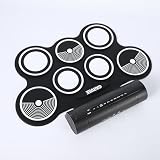
Overview: This 7-pad foldable electronic drum kit targets mobile musicians needing a practical practice solution. The compact roll-up design stores easily while multi-zone pads respond accurately to dynamics and positional hits. Built-in rhythms, demo songs, and multiple sound options provide variety for daily practice. Bluetooth audio input and standard audio outputs enable playing along with tracks or connecting to external speakers, making it versatile for home training and light creative work.
What Makes It Stand Out: The multi-zone pad sensitivity delivers more expressive control than typical entry-level roll-ups, recognizing nuances in playing dynamics. Broad device compatibility—supporting phones, tablets, and computers—transforms it into a learning hub for rhythm training apps and basic recording. The foldable design sacrifices nothing in connectivity while remaining genuinely travel-ready, addressing the needs of teens and adults who practice in multiple locations.
Value for Money: Positioned as a mid-tier roll-up kit, it offers better pad response and connectivity than budget options without premium pricing. The built-in sound library reduces reliance on external devices, while Bluetooth adds modern convenience. For apartment dwellers and traveling students, the space-saving design provides tangible value beyond the hardware itself, eliminating the need for dedicated practice rooms.
Strengths and Weaknesses: Strengths:
- Multi-zone pads with realistic dynamic response
- Bluetooth and audio output flexibility
- Wide device compatibility for learning apps
- Truly portable fold-up design
- Built-in rhythms and demo songs
Weaknesses:
- Seven pads limit full kit experience
- No included pedals or throne
- Silicone surface lacks mesh head realism
- Speaker quality adequate but not exceptional
- Limited sound editing capabilities
Bottom Line: An excellent practice tool for space-conscious players who want more expressiveness than basic roll-ups offer. Ideal for teens and adults maintaining technique while traveling or living in small spaces.
5. The Dreidel Company Tabletop Drums Set, Desktop Games, Junior Beginners, Party Favors 18" Inches Tall (Single)

Overview: The Dreidel Tabletop Drum Set packs acoustic drumming fun into an 18-inch tall desktop format. This miniature kit includes three drums (two 4.5" toms and one 6" tom), a bright cymbal, and two wooden drumsticks—everything needed for immediate rhythmic exploration. Designed for office stress relief, junior beginners, or party entertainment, it transforms any desk into a percussion playground without requiring power, apps, or complex setup.
What Makes It Stand Out: Pure acoustic simplicity defines this novelty instrument. No batteries, cables, or pairing processes—just unpack and play. The compact footprint (15.5" x 7") fits standard desks while the wooden construction delivers surprisingly satisfying tones for its size. It serves multiple purposes: introductory rhythm training for children, creative breaks for professionals, or unique party entertainment. The immediate tactile feedback helps develop basic coordination without digital intermediaries.
Value for Money: Priced as a novelty gift rather than a serious instrument, it delivers exactly what it promises—fun, accessible drumming. Comparable desktop toys often use cheaper materials and produce inferior sounds. While professional musicians won’t use it for practice, the build quality justifies the cost for its intended purpose. It’s an affordable entry point for testing a child’s interest before investing in full-sized equipment.
Strengths and Weaknesses: Strengths:
- Instant playability with no setup
- Compact desktop-friendly size
- Satisfying acoustic sound for its scale
- Durable wooden construction
- Excellent stress-relief tool
Weaknesses:
- Extremely limited tonal range
- Not suitable for serious technique development
- Small size restricts playing technique
- Cymbal placement is fixed and limited
- More toy than instrument
Bottom Line: A delightful novelty that excels as a gift or desk toy. Perfect for introducing young children to rhythm or providing creative stress relief, but don’t expect it to replace a practice pad or real drum set for skill development.
6. Pearl Drum Set 2-pc. Drum Kit Compact Traveler Cymbals and Hardware Not Included (PCTK1810)

Overview: The Pearl Compact Traveler kit redefines portability for drummers who need a full acoustic experience without the bulk. This innovative 2-piece setup features an 18-inch bass drum and 10-inch snare that both accept standard drum heads, delivering authentic tone in a fraction of the space. Designed for gigging musicians, apartment dwellers, and educators, it sets up in minutes and breaks down flat for effortless transport.
What Makes It Stand Out: Pearl’s engineering shines through the frame design that maintains tension across standard heads, producing surprisingly robust sound projection. The integrated 3/8" percussion rod is a brilliant addition, allowing you to mount tambourines, blocks, or bells directly on the kit. Unlike other travel kits that use proprietary heads, this uses the same heads you’d buy for a full-size kit, ensuring consistent tone and easy replacement.
Value for Money: While cymbals and hardware must be purchased separately, the shell pack offers exceptional value for mobile drummers. Comparable compact kits often cost 30-40% more or sacrifice tone with non-standard components. For players who already own hardware, this represents a smart investment in versatility without duplicating gear.
Strengths and Weaknesses: Strengths include lightning-fast setup, true acoustic response, space-saving storage, and compatibility with standard accessories. Weaknesses are the lack of included hardware (requiring additional investment), limited tonal range compared to full kits, and the learning curve for proper head tuning on unconventional frames.
Bottom Line: Perfect for drummers prioritizing portability over completeness. If you need a gig-ready practice kit or a compact solution for small venues, this Pearl traveler delivers professional quality in a revolutionary package. Just budget for the necessary hardware and cymbals.
7. Pearl Roadshow Drum Set 4-Piece Complete Kit with Cymbals and Stands, Aqua Blue Glitter (RS584C/C703)

Overview: The Pearl Roadshow eliminates guesswork for aspiring drummers by bundling everything needed to start playing immediately. This 4-piece acoustic kit includes an 18x12 bass drum, 13x5 snare, 10x7 rack tom, and 14x10 floor tom, complemented by a full hardware package and cymbals. The aqua blue glitter finish adds professional visual appeal to this entry-level powerhouse.
What Makes It Stand Out: Few beginner kits match the Roadshow’s comprehensive approach. The 6-ply poplar shells with hand-cut 45-degree bearing edges deliver surprisingly mature tone that grows with your skills. Double-braced stands provide stability typically reserved for mid-range kits, while the inclusion of two pairs of maple sticks and a stick bag demonstrates Pearl’s attention to detail.
Value for Money: At its price point, purchasing components individually would cost 50% more. The brass crash/ride and hybrid hi-hats outperform typical beginner cymbals, and the dual-chain bass drum pedal offers responsive feel. This isn’t just a starter kit—it’s a complete musical instrument package that rivals piecemeal setups costing significantly more.
Strengths and Weaknesses: Strengths include all-inclusive packaging, sturdy hardware, decent cymbals for the price, and quality poplar shells. Weaknesses are the basic cymbal quality won’t satisfy advancing players, limited shell configuration for complex genres, and the drum throne could be more comfortable for extended sessions.
Bottom Line: The Roadshow is the definitive choice for beginners seeking a true acoustic experience without hidden costs. It provides professional-grade fundamentals that withstand years of progression, making it the smartest first investment for serious drummers.
8. HAMPBACK MK-0 Electric Drum Set with 7’’ Quiet Mesh Drum Pads, 8’’ Full Rubber Cymbals, 12 Kits and 68 Authentic Sounds, USB MIDI, Throne, Sticks, Headphone, 2 Switch Pedals for Beginners & Kids

Overview: HAMPBACK’s MK-0 electronic kit bridges the gap between toy and instrument for entry-level percussionists. Featuring four 7-inch mesh drum pads and three 8-inch rubber cymbals, this compact system delivers 68 sounds across 12 customizable kits. The foldable rack, included throne, headphones, and pedals create a complete practice solution designed specifically for beginners and young players.
What Makes It Stand Out: Power bank compatibility liberates this kit from wall outlets, enabling true portability for backyard jams or travel. The double-layer mesh heads provide realistic rebound superior to rubber pads at this price point. With USB MIDI connectivity, learners can interface with music software and educational apps, extending the kit’s utility beyond basic practice into digital music production.
Value for Money: Competing entry-level e-kits often omit essential accessories, forcing additional purchases. HAMPBACK includes everything—throne, headphones, sticks, and even a 2-year warranty—making it a rare complete package. The mesh heads alone justify the price, as most budget kits use noisy rubber surfaces that hinder technique development.
Strengths and Weaknesses: Strengths include quiet mesh heads, battery power option, comprehensive accessory bundle, and educational MIDI capabilities. Weaknesses are limited sound editing, basic rubber cymbals lack choke functionality, and the rack may feel cramped for taller players. Sound module complexity might overwhelm absolute beginners without guidance.
Bottom Line: An exceptional starter electronic kit that prioritizes authentic feel and quiet operation. Perfect for apartments, late-night practice, and young learners. The included accessories and warranty make it the most hassle-free entry point into electronic drumming available.
9. ROCKSOCKI Electric Drum Set, 7-Pad Electronic Drum Set with Headphone Included, Roll-up Drum Pad For Kids, Great Holiday Xmas Birthday Gift (Dual Speakers)
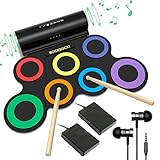
Overview: ROCKSOCKI’s roll-up drum pad targets the youngest aspiring drummers with a portable, self-contained design. Seven touch-sensitive pads represent a complete kit—three toms, snare, hi-hat, ride, and crash—controlled by two foot pedals for bass drum and hi-hat functions. Built-in speakers and headphone options provide flexible volume control for any environment.
What Makes It Stand Out: The 2000mAh battery delivers up to 10 hours of unplugged playtime, transforming any space into a practice room. Its roll-up design packs into backpacks for true on-the-go drumming. USB MIDI connectivity opens doors to music games like DTXMania, gamifying learning for tech-savvy kids. The dual-speaker system produces surprisingly full sound without external amplification.
Value for Money: As a sub-$100 electronic option, it competes with toys while offering legitimate MIDI functionality. The rechargeable battery eliminates ongoing costs, and the included headphones add immediate value. Parents avoid investing in bulky acoustic kits that may gather dust if interest fades.
Strengths and Weaknesses: Strengths include extreme portability, child-friendly simplicity, long battery life, and silent headphone practice. Weaknesses are rubber pads lack realistic stick response, limited dynamic range, foot pedals feel flimsy, and build quality won’t withstand aggressive playing. Sound quality is basic compared to mesh-head kits.
Bottom Line: An ideal musical toy that actually teaches rhythm and coordination. Perfect for kids aged 4-12 to explore drumming without household disruption. While not a professional instrument, it successfully introduces fundamentals in an engaging, portable package that justifies its modest price.
10. 5-Piece Drum Case Set - Travel Bags for Standard Kits, Includes 22" Kick Bag, 12" / 13" / 16" Tom, and 14" Snare, Thick Padding for your Drum Accessories Protection

Overview: This comprehensive 5-piece bag set provides professional-grade protection for standard drum kits during transport and storage. The collection includes specifically sized cases for a 22x18 kick drum, 14x5.5 snare, and 12x10, 13x11, and 16x16 toms. Constructed from heavy-duty 600D polyester with 10mm foam padding, these bags shield against impacts, moisture, and temperature fluctuations.
What Makes It Stand Out: The thoughtful design includes exterior size tags for quick identification during load-ins, while collapsible construction saves precious storage space in home studios or tour vans. Double zippers create wide openings for easy packing, and reinforced shoulder straps distribute weight comfortably. Unlike rigid cases, these bags conform to tight spaces while maintaining protective integrity.
Value for Money: Purchasing individual cases would cost 40-60% more than this bundled set. The 10mm padding exceeds many budget options that skimp with 5mm foam, offering genuine protection without the premium price of flight cases. For gigging drummers, the bags pay for themselves by preventing a single drumhead or bearing edge repair.
Strengths and Weaknesses: Strengths include comprehensive sizing for standard kits, robust padding, convenient carrying options, and space-saving storage. Weaknesses are 600D fabric won’t survive airline baggage handling like 1000D, lack of internal dividers for hardware, and no backpack straps for the kick drum bag’s substantial weight.
Bottom Line: Essential gear for any drummer who transports their kit. These bags deliver professional protection at a musician-friendly price point. While not tour-grade flight cases, they excel for local gigs, rehearsals, and studio sessions where convenience and adequate protection trump ultimate durability.
The Rise of the Fly-Date Drummer: Why Travel Kits Are Essential in 2026
The term “fly-date” used to be reserved for elite session players and major touring acts. Now, it’s the reality for regional bands, content creators, and gigging musicians who need to maximize every opportunity without bankrupting themselves on baggage fees. Airlines have tightened restrictions while simultaneously increasing costs for oversized items, making traditional kits financially reckless for most working drummers.
Travel drum sets have become the great equalizer, allowing you to say “yes” to that last-minute festival slot in Austin, the corporate gig in Vegas, or the recording session in Nashville—without the logistical nightmare. In 2026, these kits aren’t just smaller; they’re smarter, with integrated design features that anticipate the unique challenges of modern touring.
Understanding Fly-Dates: The Modern Musician’s Reality
A fly-date isn’t just a flight with a gig at the end—it’s a logistical puzzle where every piece of gear is a calculated decision. You’re often dealing with tight turnarounds, unfamiliar backlines, and venues where “load-in” means navigating a crowded subway station. The psychological weight of wondering whether your cymbals survived baggage handlers can distract from your actual performance.
This reality has created a new class of drummer: the minimalist road warrior who treats their kit like a pilot treats a pre-flight checklist. Every component must justify its existence, serving multiple purposes while weighing as little as possible. The fly-date drummer in 2026 thinks in terms of “flight segments” and “TSA compliance” as much as they think about shell depth and bearing edges.
The Evolution of Portable Percussion
The travel drum set market has matured dramatically since the early days of toy-like compact kits. Manufacturers have finally cracked the code on how to shrink dimensions without sacrificing the fundamental physics of good drum sound. We’re seeing innovations like hybrid shell materials that combine wood plies with carbon fiber reinforcement, creating shells that are both lighter and more resonant than their full-sized counterparts.
Hardware has undergone its own revolution. Memory locks are now standard on even mid-tier travel hardware, and lightweight alloys previously reserved for aerospace applications are finding their way into stands and pedals. The result is a ecosystem where your entire rig—including hardware—can come in under 50 pounds, protected by cases that are actually designed for airline abuse rather than just car trunk transport.
Key Considerations Before You Buy
Jumping into the travel drum market without a strategy is like packing for a month-long tour with a gym bag. You need to understand your specific needs before dropping serious cash on a kit that might not serve your actual playing situations. Start by honestly assessing your typical fly-date scenarios: Are you mostly doing acoustic coffeehouse gigs or full-volume rock shows? Do you need to mic everything, or will you be playing unamplified?
Your playing style directly impacts which features matter most. A jazz drummer who relies on subtle brush work will prioritize different shell characteristics than a metal player who needs their 16” floor tom to sound massive through a venue’s PA. The key is matching the kit’s inherent compromises to your non-negotiable sonic requirements.
Weight vs. Sound Quality: The Eternal Trade-off
Physics doesn’t take a vacation just because you’re flying coach. A drum’s mass contributes significantly to its projection, sustain, and low-end response. Strip away too much material, and you’re left with a cardboard-like thud instead of a musical note. The sweet spot in 2026 lies in intelligent design rather than simple material reduction.
Look for kits that strategically place mass where it matters most—thicker reinforcement rings on smaller diameter shells, for instance, or dense wood plies only on the batter side of the shell. Some manufacturers are experimenting with internal weight systems that can be added or removed depending on whether you’re traveling or stationary. This modular approach lets you optimize for weight during travel and sound quality during performance.
Size Matters: Decoding Shell Depths and Diameters
The difference between a 14”x5” snare and a 14”x4” snare might seem trivial—until you’re trying to fit it into an overhead compartment. Depth reductions of even half an inch across your entire kit can free up crucial packing space. But shallower shells fundamentally change how drums respond, particularly in the low end.
For toms, diameters have settled into a new standard for travel: 10”, 12”, and 14” configurations dominate, with some jazz-focused kits going even smaller. The 14” floor tom often serves double duty as a compact bass drum when paired with a special riser, a trick that eliminates the need to transport a separate 18” or 20” kick. This “kick/tomb” hybrid is perhaps the most important innovation for fly-date drummers, saving both weight and space while maintaining a surprisingly deep voice.
Material Science: What Your Drums Are Made Of
Traditional maple and birch are giving way to more exotic options in the travel market. Poplar has made a huge comeback—not for its tone, but for its incredible strength-to-weight ratio. When paired with a thin interior ply of a denser wood like walnut, poplar shells deliver surprising complexity without the heft.
Synthetic materials are finally coming into their own. Advanced polymers and carbon fiber composites offer consistency that wood can’t match, especially when dealing with rapid humidity changes between climates. These materials don’t expand and contract like wood, meaning your tuning stays stable from the dry air of a Denver venue to the swampy humidity of New Orleans. The downside? They can lack the warmth that many drummers crave, though manufacturers are getting better at engineering “warmth” into the shell design.
Hardware Hassles: Streamlining Your Setup
Your hardware choice can make or break a fly-date experience faster than a broken bass drum head. Multi-purpose stands have become essential—think cymbal stands with removable boom arms that convert to straight stands, or hi-hat stands that collapse small enough to fit inside your bass drum case. The hardware pack that comes with many travel kits is often the weakest link, so budget for upgrades.
The throne is frequently overlooked until you’re nursing a back injury three dates into a tour. Lightweight thrones have improved dramatically, with memory foam cushions and sturdy tripod bases that don’t feel like you’re sitting on a barstool. Some even feature storage compartments for sticks and small accessories, turning a necessary evil into a functional piece of gear.
The Anatomy of a Travel Drum Set
Understanding how travel kits are constructed helps you spot quality and avoid expensive mistakes. Unlike traditional kits, where each drum is essentially a standalone instrument, travel sets are designed as integrated systems where components work together to create a cohesive sound. The bass drum might be designed to acoustically complement the specific resonant frequency of the toms, for example.
This systems-thinking approach extends to how the kit packs. Cases are often custom-molded to nest drums inside each other like Russian dolls, with hardware fitting into void spaces. A well-designed travel kit feels like a solved puzzle rather than a game of Tetris you’re doomed to lose.
Shell Packs vs. Complete Kits: What’s Right for You?
Shell packs—just the drums, no hardware—offer maximum flexibility for drummers who already own lightweight hardware they trust. They’re typically cheaper and allow you to curate every component. The downside? You’ll spend hours researching compatible cases and figuring out how to pack everything efficiently.
Complete kits, which include matched hardware and bags, take the guesswork out of the equation. Manufacturers have optimized these packages for specific travel scenarios, often including innovative features like a bass drum pedal that attaches directly to the hoop without a traditional spur, saving precious inches. The trade-off is less customization, and the included hardware might not meet your performance standards if you’re used to pro-level gear.
Breakthrough Technologies in 2026
This year’s standout innovation is the emergence of “active resonance control” in high-end travel kits. These systems use small, battery-powered modules mounted inside the shells to electronically enhance certain frequencies, effectively making a 10” tom sound like it has the body of a 12”. While purists may scoff, the technology is proving invaluable in situations where you can’t mic every drum.
Another game-changer is the development of “smart cases” with integrated weight sensors and GPS tracking. These cases connect to your phone, alerting you if your kit gets routed to the wrong city or if a baggage handler treats it like a trampoline. Some even feature built-in humidity control packets that release moisture when the case interior gets too dry, protecting your shells from cracking.
Smart Packing Strategies for Air Travel
Mastering the art of packing separates the pros from the amateurs. Start by creating a detailed inventory with photos of each piece of gear. Not only does this help with insurance claims if disaster strikes, but it also speeds up reassembly when you’re jet-lagged and facing a 15-minute changeover.
Develop a “first-night kit” concept: the absolute minimum you need for a show if the airline loses everything else. This typically includes your snare, hi-hat cymbals, a kick pedal, and sticks. Pack these in your carry-on whenever possible. Everything else becomes negotiable if you’ve got a solid backline to work with.
TSA-Approved Cases and Gig Bags
The term “TSA-approved” is somewhat misleading—there’s no official certification program for musical instrument cases. However, cases designed with TSA locks and clear X-ray profiles significantly reduce the chance of invasive inspections. Look for cases with minimal metal reinforcement on the outer shell, as these can trigger additional screening.
Gig bags have evolved from flimsy nylon sacks to sophisticated protective systems with ABS panels, memory foam interiors, and weather-resistant exteriors. The best bags feature external pockets sized specifically for hardware, keeping everything together and reducing the number of items you’re tracking. Some even have backpack straps, freeing your hands for navigating airport terminals.
The Carry-On Conundrum: What Actually Fits?
The dream of carrying on your entire kit dies hard at the gate when you realize your 14” snare case is half an inch too deep for the overhead bin. Airlines have become increasingly strict about dimensions, and that “fits most overhead compartments” claim on your case is often optimistic at best.
Reality check: most travel snares under 13” in diameter and 5” deep will fit in standard overheads, but it’s tight. Your best bet is a 12” snare or a “snom” (snare-tom hybrid) that can serve as both a rack tom and primary snare. For cymbals, a 20” cymbal bag can usually squeeze under the seat in front of you if it’s not overstuffed. The real trick is wearing your hi-hat cymbals as a necklace through security—TSA agents have seen it all, and it beats checking them.
Sound Engineering on the Road
Small drums present unique challenges for front-of-house engineers who are used to miking standard kits. Your 16” kick might sound massive behind the kit, but without proper mic placement and EQ, it can disappear in the mix like a ghost note in a metal song.
Communication is key. Arrive early for soundcheck and be prepared to explain the idiosyncrasies of your travel kit. Bring your own miking solutions if possible—small-diaphragm condensers work wonders on compact toms, and a well-placed boundary mic can capture your mini-kick’s true character better than a standard large-diaphragm dynamic.
Mic’ing Travel Kits: Challenges and Solutions
The proximity effect becomes your enemy with shallow drums. That bass drum might be only 10” deep, meaning the mic sits inches from the beater head, capturing every click and thump while missing the body of the tone. Consider using a sub-kick style microphone placed near the floor to capture the low-end fundamentals that a standard placement misses.
For toms, clip-on condensers have become the secret weapon of touring drummers. They’re lightweight, require minimal stands, and can be positioned to capture the shell’s resonance rather than just the attack. Some engineers will balk at using condensers on toms, but modern mics can handle the SPL, and the detail they provide is crucial for making small drums sound full.
Tuning Tricks for Small Spaces
Travel drums are incredibly sensitive to tuning changes, especially when moving between climates. The smaller shell mass means less stability, so you’ll need to retune more frequently. Develop a quick-tuning routine that takes under five minutes. Use a drum dial or similar tension meter to ensure consistency, and consider slightly higher tunings than you’d use on full-sized drums—this helps projection and compensates for the lack of shell depth.
The “batter head tight, resonant head tighter” approach works particularly well on travel toms, creating a pitch bend that suggests a larger drum. For the kick, try a ported head with a thin blanket touching the batter head slightly off-center. This kills some of the high-end attack while maintaining the low-end thump that small kicks struggle to produce.
Durability and Build Quality: Surviving the Journey
Your travel kit will experience more trauma in one flight than a studio kit sees in its lifetime. Baggage handlers, temperature extremes, and the occasional fall from a luggage cart are occupational hazards. This isn’t the place to skimp on quality to save a few bucks.
Inspect potential kits with a critical eye. Check the bearing edges under good lighting—any imperfections will be magnified when you’re relying on single-ply heads for projection. Test all lugs for smooth operation; stripped threads are a nightmare to replace on the road. The finish should be more than cosmetic—it’s your first line of defense against moisture and impact damage.
Road-Worthy Hardware Standards
Professional-grade hardware has always been heavy, which defeats the purpose of a travel kit. The new generation of lightweight hardware uses titanium and aircraft-grade aluminum, but these materials require precise engineering to avoid failure. Look for double-braced designs that use strategic reinforcement rather than sheer mass for stability.
The weakest points are typically the wing bolts and adjustment mechanisms. These should feel solid, with no wobbling or stripping when tightened. Test the collapsibility in the store—if it takes five minutes to break down a cymbal stand, you’ll hate your life during a 2 AM load-out. Memory locks should be integrated, not aftermarket additions, and they should lock positively without tools.
Warranty and Support Considerations
A standard warranty is worthless if you’re in Copenhagen and the manufacturer is based in Los Angeles. Look for companies with global service networks and a reputation for supporting touring musicians. Some brands offer “tour warranties” that cover damage from airlines and provide expedited replacement parts anywhere in the world.
Read the fine print carefully. Many warranties exclude “professional use,” which is absurd for gear marketed to touring drummers. The best companies understand that their reputation is built on road stories, not showroom demos. They’ll offer things like advance replacement programs where they ship you the part before you send back the broken one, minimizing downtime.
Budget Breakdown: Investment vs. Value
A quality travel drum set represents a significant investment, often costing as much as a mid-tier standard kit. Prices in 2026 range from budget-friendly options around $800 to professional rigs approaching $3,500. The sweet spot for most working drummers lies between $1,500 and $2,200, where you get 90% of the performance without the premium price tag.
Consider this an investment in your career. Every gig you can take because you have a reliable travel kit is income that offsets the initial cost. Factor in the money you’ll save on baggage fees—some airlines charge $200 per oversized item, meaning two flights and your travel kit has already paid for itself compared to checking a standard kit.
Hidden Costs of Travel Drumming
The sticker price is just the beginning. You’ll need to budget for cases (often sold separately), replacement heads (travel drums eat them faster), and a backup snare wire or two. Don’t forget the cost of a quality stick bag that can double as a carry-on, and possibly a small hardware case that fits inside your larger drum case.
Insurance is another non-negotiable expense. Your homeowner’s policy likely won’t cover professional gear, and airline liability is laughably inadequate. Specialized musical instrument insurance runs about 1-2% of the gear’s value annually, but it’s the only way to sleep soundly on red-eye flights. Some policies even cover rental gear if your kit is delayed, which can be a career-saver.
The Future of Fly-Date Drumming
Looking beyond 2026, we’re seeing the early stages of truly modular drum systems where shells can be reconfigured for different musical situations. Imagine a 10” tom that splits into two shallower toms, or a bass drum that expands in diameter for larger venues. These concepts are moving from prototype to production, promising even greater flexibility.
Sustainability is also becoming a priority, with manufacturers exploring recycled carbon fiber and sustainably harvested wood alternatives. The travel drum market is uniquely positioned to lead this charge, as environmentally conscious drummers are often the same musicians embracing minimalist touring philosophies.
Frequently Asked Questions
1. Can I really fit a complete drum set in a single checked bag?
Absolutely, but it requires careful planning and the right kit. Most modern travel drum sets are designed to nest inside each other, with hardware fitting into void spaces. A typical configuration—including a 14” kick, 10” and 12” toms, a 12” snare, and all necessary hardware—can fit in a single 50-pound case that meets airline size restrictions. The key is choosing a kit specifically engineered for this purpose, not trying to force a standard kit into an oversized case.
2. How do I protect my drums from temperature and humidity changes?
Sudden climate shifts are the silent killer of drum shells. Always allow your kit to acclimate for at least an hour before tuning or playing. Keep silica gel packets in your cases to absorb excess moisture, and consider using a humidipack system in extremely dry environments. When flying, choose cases with thermal insulation—even a thin layer of foam can buffer against the rapid temperature changes in cargo holds. Most importantly, avoid leaving your kit in vehicles overnight, where condensation can wreak havoc on bearing edges.
3. Will a travel kit sound good enough for professional recordings?
Modern travel kits can sound absolutely pro in the studio, often with surprising character that engineers love. The key is mic selection and placement. Small drums benefit from close-miking techniques and sometimes require more aggressive EQ than full-sized kits. Many engineers appreciate the focused, dry sound of travel drums, which can sit better in a dense mix without extensive processing. Just be prepared to work a bit harder on tuning and possibly supplement with samples if you need that huge rock sound.
4. What’s the biggest mistake drummers make when buying their first travel kit?
The number one mistake is buying based on price alone, choosing the cheapest option that looks compact. These budget kits often use subpar hardware that fails mid-tour and shells that sound boxy and lifeless. The second biggest mistake is not considering their actual playing situations—a jazz drummer buying a kit designed for hard rock will be frustrated by the overpowering attack, while a rock drummer with a jazz-focused kit will struggle to cut through distorted guitars. Always match the kit’s design philosophy to your musical needs.
5. How do I handle cymbals when flying with a travel kit?
Cymbals are actually easier to travel with than drums. A quality cymbal bag with dividers can hold up to six cymbals and typically counts as a personal item on most airlines. The 20” size limit for personal items accommodates most cymbal bags comfortably. For extra protection, use cymbal sleeves between each cymbal and consider a bag with a reinforced bottom. If you’re particularly paranoid, wear your hi-hats around your neck through security—it looks weird but guarantees they’ll arrive safely.
6. Are there any airlines that are particularly musician-friendly?
Southwest Airlines remains a favorite among touring musicians for their two free checked bags policy and generally reasonable attitude toward instruments. Internationally, some European low-cost carriers have become surprisingly accommodating if you purchase priority boarding. However, policies change frequently, and the gate agent’s mood often matters more than the official rules. Always print the airline’s instrument policy and carry it with you, and consider joining the airline’s loyalty program—status can help when you need to negotiate at the gate.
7. How often should I replace heads on a travel kit?
Travel drums typically need new heads every 20-30 shows, compared to 40-50 for a studio kit. The constant setup and teardown, combined with the higher tunings often used on smaller drums, wear heads faster. Carry at least one spare batter head for each drum size, plus an extra snare head. Pro tip: pack a used but intact head as an emergency backup—it won’t sound perfect, but it’ll get you through a show if you blow a head during soundcheck. Also, consider using two-ply heads on your snare and kick for extra durability.
8. Can I use my regular drum pedal with a travel bass drum?
Most travel bass drums require a special pedal adapter or riser because they’re significantly shallower than standard kicks. A regular pedal’s beater shaft may not extend far enough to strike the head properly. Many travel kits include a purpose-built pedal or adapter, but if you’re building a custom setup, measure carefully. Some drummers prefer using a direct-drive pedal with adjustable beater angle, which offers more flexibility for shallow drums. The goal is achieving the same beater impact position you’d use on a standard kit.
9. What’s the best way to insure a travel drum set?
Standard homeowners or renters insurance typically excludes professional equipment and often has low payout limits for musical instruments. Look for specialized musical instrument insurance from companies that understand touring musicians. These policies cover theft, damage in transit (including airline handling), and often provide worldwide coverage. Expect to pay 1-2% of the gear’s value annually, and always maintain an up-to-date inventory with photos and serial numbers. Some policies also cover rental gear if your kit is delayed, which is invaluable on tight schedules.
10. How do I maintain my travel kit on the road with limited tools?
Create a compact maintenance kit that fits in your stick bag: a multi-tool with drum key attachments, a small tube of bearing edge conditioner, spare tension rods and washers, and a portable work mat to keep small parts from rolling away. Develop a pre-show and post-show routine that takes five minutes: check all lugs for tightness, wipe down bearing edges, and inspect hardware for cracks or wear. Many drummers also carry a small container of wood glue and sandpaper for emergency shell repairs—because a split shell at a festival is a nightmare you can fix with basic supplies if you’re prepared.
See Also
- 10 Travel Drum Sets with Removable Hardware for Fly Dates in 2026
- 10 Travel Drum Sets for Fly-Dates That Fit in Overhead Bins in 2026
- 10 Travel Drum Sets Under 20 lbs for Fly Dates in 2026
- 10 Travel Drum Sets with Quick-Release Hardware in 2026
- 10 Travel Drum Sets with Stackable Shells for Backpack Musicians in 2026