Table of Contents
The baritone guitar has evolved from a niche curiosity into an absolute necessity for modern metal architects. As we push deeper into 2026, Drop-A tuning has become the de facto standard for everything from pulverizing deathcore breakdowns to atmospheric doom soundscapes. But here’s the brutal truth: your baritone is only as lethal as the strings you’re wielding. The wrong set will leave you with floppy low-end, muddy articulation, and intonation that wanders like a lost soul. The right set? It transforms your instrument into a precision weapon where every palm-muted chug cuts like a chainsaw and every sustained low note rings with cathedral-like clarity.
Choosing baritone strings for Drop-A metal isn’t just about grabbing the heaviest gauge and calling it a day. It’s a complex calculus involving tension physics, material science, scale length compatibility, and your specific subgenre’s sonic demands. This guide dismantles the marketing fluff and dives into the engineering realities that separate mediocre sets from the ones that’ll make your riffs feel like tectonic plates shifting. Whether you’re tracking in a professional studio or dialing in your live rig, understanding these principles will save you thousands in trial-and-error—and countless hours of frustration.
Top 10 Baritone Guitar Strings
Detailed Product Reviews
1. Ernie Ball 6-String Baritone Slinky Nickel Wound Electric Guitar Strings, 13-72 Gauge (P02839)

Overview: Ernie Ball’s Baritone Slinky set delivers the company’s legendary quality specifically engineered for extended-range instruments. With a substantial 13-72 gauge range, these strings accommodate the lower tunings baritone guitars demand while maintaining familiar Slinky playability. Manufactured in California using premium nickel-plated steel, they represent the brand’s commitment to professional-grade materials.
What Makes It Stand Out: The small ball ends ensure compatibility with import baritone guitars and vintage instruments that require this specification. Ernie Ball utilizes their most popular bass string alloy, transferring decades of low-end expertise to the baritone market. The result is a remarkably balanced tonal spectrum that doesn’t sacrifice clarity in the lower registers or sparkle in the higher frequencies.
Value for Money: Positioned in the mid-price tier, these strings offer exceptional value through consistent quality control and reliable performance. While lacking the extended lifespan of coated competitors, their fresh materials and USA manufacturing justify the investment. Players seeking traditional uncoated tone will find these more economical than boutique alternatives.
Strengths and Weaknesses: Strengths include trusted brand heritage, excellent tonal balance, small ball end compatibility, and reliable tuning stability. The 13-72 gauge provides ideal tension for B-to-B baritone tuning. Weaknesses involve no corrosion coating, meaning shorter lifespan for acidic hands, and the heavy bottom may feel stiff for players preferring slinkier response.
Bottom Line: Ideal for traditionalists seeking authentic baritone tone without boutique pricing. These strings excel in studio and stage applications where fresh, uncoated tone is paramount.
2. D’Addario Electric Guitar Strings, XL Nickel, EXL158, Light Baritone Gauge 13-62, 6-String Set, Pack of 1

Overview: D’Addario’s EXL158 set represents their flagship XL Nickel series adapted for baritone applications. The 13-62 light baritone gauge offers a more flexible feel than traditional heavy sets while maintaining proper tension for lower tunings. Produced in New York to exacting specifications, these strings carry the brand’s reputation for consistency and reliability.
What Makes It Stand Out: The proprietary Hex-Core construction ensures exceptional intonation accuracy and tuning stability across the entire fretboard. This hexagonal core wire grips the wrap wire more securely, preventing slippage and maintaining consistent feel. The recyclable VCI bag packaging includes a Players Circle code, rewarding loyal customers with points toward future purchases—a unique value-add in the string market.
Value for Money: Competitively priced against other major manufacturers, the EXL158 offers premium American-made quality without boutique markup. The Players Circle program effectively reduces long-term costs for frequent string changers. While uncoated strings require more frequent replacement, the initial investment remains reasonable for professional-grade tone.
Strengths and Weaknesses: Strengths include brilliant nickel-plated tone, exceptional intonation consistency, flexible feel for a baritone set, and environmental consciousness. The Hex-Core technology provides reliable durability. Weaknesses are the lighter 13-62 gauge may feel loose in lower tunings, and absence of protective coating limits lifespan.
Bottom Line: Perfect for players seeking a more pliable baritone string with studio-quality intonation. The reward program sweetens the deal for regular players.
3. Stringjoy BAL14B Baritone Signatures Nickel Electric Guitar Strings, 14-64 Balanced Medium Gauge, Baritone Guitars Strings Electric 6 String Set
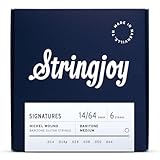
Overview: Stringjoy’s BAL14B Baritone Signatures cater to discerning players seeking artisanal string construction. This Nashville-based company emphasizes hand-crafted quality with a balanced 14-64 medium gauge that optimizes tension across baritone scale lengths. Founded in 2014, Stringjoy has quickly established a reputation for obsessive quality control.
What Makes It Stand Out: Every string is wound in-house using state-of-the-art equipment, allowing meticulous tension balancing that mass-produced strings cannot match. The 14-64 gauge provides uniform feel from low to high strings, eliminating the typical “floppy” low end or “tight” high strings. This balanced tension enhances both complex chord voicings and single-note clarity.
Value for Money: Positioned at a premium price point, these strings justify cost through artisan craftsmanship and enhanced performance. While more expensive than mass-market brands, the improved tuning stability and tonal consistency reduce the need for frequent changes. For serious baritone players, the investment translates to better recording sessions and more confident performances.
Strengths and Weaknesses: Strengths include exceptional tuning stability, balanced tension design, rich harmonic content, and small-batch quality control. The nickel construction offers classic warmth. Weaknesses involve higher price and limited retail availability compared to major brands. Some players may prefer brighter coated alternatives.
Bottom Line: Recommended for professional baritone players demanding precision and consistency. The boutique quality delivers noticeable improvements in playability and tone.
4. Elixir Strings, Electric Guitar Strings, Nickel Plated Steel with NANOWEB Technology, Longest-Lasting Bright Tone with Comfortable Feel, 6 String Set, Baritone 12-68
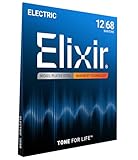
Overview: Elixir’s baritone set revolutionizes extended-range string longevity through their proprietary NANOWEB coating. The 12-68 gauge range covers standard baritone tunings while the ultra-thin polymer coating protects against corrosion without sacrificing tone. These strings target players frustrated by frequent changes due to harsh playing conditions or acidic sweat.
What Makes It Stand Out: NANOWEB Technology creates an imperceptible barrier against moisture, sweat, and grime while maintaining the crisp attack and natural feel of uncoated strings. Unlike traditional coatings that dampen overtones, Elixir’s formulation preserves brilliant high-end clarity and string-to-string definition. The 12-16-22-38-52-68 gauges provide balanced tension optimized for baritone scales.
Value for Money: While commanding a premium price, these strings typically last 3-5 times longer than uncoated alternatives. For gigging musicians or players with corrosive sweat, the extended lifespan eliminates frequent $10-15 purchases. The cost-per-day analysis heavily favors Elixir, making them economical for serious players despite higher initial investment.
Strengths and Weaknesses: Strengths include unparalleled longevity, consistent tone over months, smooth comfortable feel, and excellent corrosion resistance. The bright nickel-plated tone suits multiple genres. Weaknesses are the coated feel that some players dislike, premium pricing, and potential for coating to eventually flake.
Bottom Line: The ultimate choice for players prioritizing longevity and consistent tone. Ideal for touring musicians and those with acidic hands.
5. Ernie Ball Mammoth Slinky Nickel Wound Electric Guitar Strings, 12-62 Gauge (P02214)

Overview: Ernie Ball’s Mammoth Slinky set targets the modern metal and progressive player exploring ultra-low tunings. While not exclusively marketed as baritone strings, the 12-62 gauge works exceptionally well for drop A, drop B and C standard on both standard-scale and baritone guitars. The set carries Ernie Ball’s legacy of artist endorsements from legends like Slash and Metallica.
What Makes It Stand Out: Specifically designed for extreme downtuning, these strings maintain clarity and definition where lighter gauges become muddy. The Element Shield Packaging ensures factory-fresh strings that resist corrosion before installation—a crucial feature for players buying in bulk. This packaging innovation keeps strings pristine until opened, maximizing tone life from day one.
Value for Money: Priced identically to standard Slinky sets, these offer exceptional value for players needing heavy gauge without boutique markup. The extended range capability eliminates the need for custom sets. While lacking coating, the fresh materials and protective packaging provide excellent initial value.
Strengths and Weaknesses: Strengths include perfect tension for drop tunings, trusted brand reliability, protective packaging, and bright balanced tone. The 12-62 gauge offers slinkier feel than traditional baritone sets. Weaknesses are potential for insufficient tension in standard baritone B-to-B tuning and no coating for extended life.
Bottom Line: Excellent for metal players using drop tunings. Consider heavier gauges for traditional baritone applications.
6. Nickel Wound Electric Baritone Guitar Strings 14-68
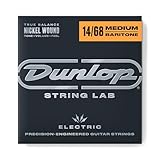
Overview:
These heavy-gauge nickel wound strings are engineered for baritone electric guitars demanding extreme low-end performance. The 14-68 set delivers robust tension ideal for drop tunings and aggressive playing styles. Designed for modern players, they promise consistent tonal balance and reliable performance through countless gigs and recording sessions.
What Makes It Stand Out:
The 14-68 gauge stands out as one of the heaviest baritone sets available, providing exceptional stability for tunings as low as A standard or drop F#. The consistent volume across all strings ensures your riffs cut through dense mixes without losing clarity, while the comfortable tension maintains playability despite the heavy gauge.
Value for Money:
Positioned as a standard premium string set, these offer excellent value for metal and extended-range players who need reliable performance under heavy picking. Comparable to Ernie Ball and D’Addario baritone sets, they deliver professional-grade durability at a competitive price point, making them economical for regular use.
Strengths and Weaknesses:
Strengths include outstanding tuning stability for low tunings, thick powerful tone, and impressive longevity under heavy use. Weaknesses are the demanding tension that may require neck adjustments, limited flexibility for bending, and potential overkill for standard B-to-B baritone tuning.
Bottom Line:
Ideal for aggressive genres requiring extreme low tunings. If you play djent, doom metal, or extended-range music, these strings deliver the tension and stability you need. For standard baritone tuning, consider lighter gauges for better playability.
7. Nickel Wound Electric Baritone Guitar Strings 13-62

Overview:
These medium-gauge nickel wound baritone strings offer a versatile solution for players seeking balanced performance. The 13-62 set hits the sweet spot for standard B-to-B tuning, delivering comfortable tension without sacrificing the authoritative low-end baritone guitars are known for. They serve as reliable workhorses for diverse musical applications.
What Makes It Stand Out:
This gauge perfectly bridges the gap between heavy-handed riffing and expressive lead work. The comfortable tension allows for fluid technique while maintaining enough mass on the low strings to avoid floppiness. The tonally balanced design ensures each string complements the others, creating a cohesive voice across the entire fretboard.
Value for Money:
As a workhorse string set, these provide exceptional value for everyday players. They compete directly with industry standards from major brands while offering the same gig-ready reliability. The price reflects professional quality without premium markup, making them sensible for regular string changes and consistent performance.
Strengths and Weaknesses:
Strengths include excellent playability for most baritone applications, consistent intonation across the fretboard, and versatile enough for multiple genres. Weaknesses are insufficient heft for ultra-low tunings below A, and some players may find them slightly stiff for bending compared to lighter options.
Bottom Line:
A no-brainer choice for standard baritone tuning. These strings deliver reliable performance for rock, metal, and alternative styles. If you want versatile baritone strings without specialization, this is your set—balanced, dependable, and reasonably priced.
8. Stringjoy BAL12B Baritone Nickel Electric Guitar Strings, 12-58 Balanced Super Light Gauge, Baritone Guitars Strings Electric 6 String Set

Overview:
Stringjoy’s BAL12B set represents the boutique approach to baritone strings, hand-wound in Nashville with a super-light 12-58 gauge. Designed for players prioritizing comfort and speed, these strings deliver premium performance with meticulous attention to tension balance across all six strings, embodying the company’s craft-first philosophy.
What Makes It Stand Out:
The 12-58 gauge is uniquely light for a baritone set, enabling unprecedented bending and vibrato while maintaining tuning stability. Stringjoy’s in-house manufacturing process ensures quality control unmatched by mass-produced alternatives. The balanced tension design eliminates the typical “fight” against heavy strings, letting technique flourish naturally.
Value for Money:
These command a premium price but justify it through craftsmanship, extended lifespan, and superior playability. For players who value comfort and quality over economy, the investment pays dividends in reduced hand fatigue and consistent performance. They’re fairly priced for artisan strings that outlast and outperform mass-market options.
Strengths and Weaknesses:
Strengths include buttery smooth playability, excellent tuning stability, rich harmonically complex tone, and impressive durability. Weaknesses are the premium cost, potential for floppiness in tunings below B standard, and the super-light feel may not suit heavy-handed players accustomed to traditional baritone tension.
Bottom Line:
Perfect for technically demanding players and those with hand strain issues. If you want baritone range without the typical heavy string fight, Stringjoy delivers. Worth the premium for serious musicians who prioritize feel and quality over budget considerations.
9. Elixir Strings, Acoustic Guitar Strings, 80/20 Bronze with NANOWEB Technology, Longest-Lasting Bright and Focused Tone For Life with Comfortable Feel, 6 String Set, Baritone 16-70

Overview:
Elixir’s acoustic baritone strings bring their legendary NANOWEB coating technology to the lower registers. The 16-70 set pairs 80/20 bronze with polymer protection, creating the longest-lasting acoustic baritone strings available. Designed for players tired of frequent string changes on seldom-used acoustic baritones, they promise enduring brightness.
What Makes It Stand Out:
The NANOWEB coating is the game-changer, preserving bright, focused tone for months while resisting corrosion from sweat and humidity. This set is specifically engineered for acoustic baritone guitars, addressing the unique challenges of maintaining clarity in lower frequencies where uncoated strings quickly lose their sparkle and definition.
Value for Money:
While priced significantly higher than uncoated strings, the extended lifespan makes them economical. One set of Elixirs often outlasts three sets of conventional strings, justifying the upfront cost for performing musicians and casual players who value consistency over frequent maintenance and replacement expenses.
Strengths and Weaknesses:
Strengths include months-long tone retention, smooth comfortable feel, excellent tuning stability, and superior corrosion resistance. Weaknesses are the coated string feel that some players dislike, limited to acoustic instruments only, and the ultra-heavy 16-70 gauge may require nut slot modifications for proper fit.
Bottom Line:
The ultimate choice for acoustic baritone players prioritizing longevity. If you hate changing strings but demand consistent tone, these are worth every penny. The coating feel is subjective but the performance is undeniable—bright tone that lasts for months, not weeks.
10. Nickel Wound Electric Baritone Guitar Strings 13-72

Overview:
These nickel wound baritone strings feature a hybrid 13-72 gauge, offering a unique approach to tension distribution. The medium-high strings maintain playability while the heavy low-end provides authority for drop tunings. Engineered for modern players seeking versatility without compromise, they solve the common problem of floppy low strings.
What Makes It Stand Out:
The 72-gauge sixth string is substantially heavier than typical baritone sets, delivering exceptional low-end definition for drop-A and beyond. This hybrid design allows comfortable bending on the higher strings while preventing the low B from becoming muddy or indistinct under heavy attack, creating a best-of-both-worlds solution.
Value for Money:
These offer specialized performance at standard pricing, making them an excellent value for players needing heavy low-end without a full heavy set. They eliminate the need for custom string combinations, saving money and ensuring balanced tone from a single package without the trial-and-error of mixing gauges.
Strengths and Weaknesses:
Strengths include tight low-string definition, versatile hybrid gauge for mixed playing styles, and consistent volume across strings. Weaknesses are the noticeable tension imbalance between high and low strings, potential neck relief issues requiring setup adjustments, and the heavy sixth string may not fit all saddles without modification.
Bottom Line:
Ideal for drop-tuning specialists who refuse to sacrifice lead playability. If you need a massive low end but want to retain bending ability, this hybrid set solves your problem. A niche but effective solution for modern metal and progressive players.
Understanding the Baritone Guitar’s Role in Modern Metal
The baritone’s extended scale length isn’t just for show—it’s a fundamental response to the physics of low-frequency tension. Standard 25.5" scales simply can’t maintain proper string tension below B standard without resorting to absurdly heavy gauges that kill playability. Baritone guitars, typically sporting 27" to 30" scales, solve this by increasing the speaking length of the string, allowing for tighter feel and clearer note definition at subterranean tunings.
Why Drop-A Demands Specialized Strings
Drop-A (A-E-A-D-F#-B) subjects your lowest string to a unique torture test. You’re dropping a full fourth below standard B, creating a fundamental frequency of 55Hz—dangerously close to the threshold where human hearing transitions from pitch to pure rumble. Generic “heavy” sets designed for standard tuning lack the mass and tension to keep this low-A from turning into a flubby mess. Specialized baritone sets account for this with progressive tension profiling and reinforced core-to-wrap ratios that maintain pitch stability under aggressive picking and palm-muted assaults.
The Physics of Low-End Tension and Clarity
String tension isn’t linear; it squares with pitch and scales directly with unit weight. At Drop-A, you need approximately 18-22 pounds of tension on your low string to achieve studio-grade clarity. This requires a string with significantly more mass than what works for Drop-B or C standard. But simply increasing diameter creates its own problems—excessive stiffness, intonation issues, and a fundamental tone that can sound more like a bass than a guitar. The magic lies in core-to-wrap ratios and specialized winding techniques that maximize mass while preserving flexibility.
Core String Gauge Strategies for Drop-A Stability
Forget everything you know about standard string gauges. Baritone sets for Drop-A operate in a different universe where traditional logic about “heavy” and “light” breaks down completely.
The 13-62 Benchmark and Beyond
The 13-62 gauge has emerged as the unofficial minimum for serious Drop-A work on 27" scales. This configuration typically provides around 19-20 pounds of tension on the low A, enough for tight response without feeling like bridge cables. However, players using 28" or multi-scale instruments can often drop to 12-60 sets while maintaining equal tension, thanks to the extended scale length’s mechanical advantage. Conversely, 25.5" “extended range” guitars trying to fake baritone performance often require 14-68 or even 15-70 sets, which introduce their own playability nightmares.
Hybrid Gauge Approaches for Hybrid Players
If your playing blends technical leads with low-end rhythm work, consider hybrid strategies. Some players opt for a traditional heavy bottom (like a .062 for the low A) but pair it with lighter tops ( .009 or .010 for the high B) to facilitate bends and shred passages. This creates tension disparity that can feel odd at first but offers the best of both worlds. The key is ensuring your middle strings bridge this gap smoothly—a sudden tension drop between D and G strings will create an uneven playing field that fights your muscle memory.
Balanced Tension vs. Traditional Sets
Balanced tension sets—where each string exerts nearly identical pull—have gained cult status among progressive metal players. In Drop-A, this might look like .013, .017, .022w, .032, .044, .060. The uniform feel makes complex chord voicings and string-skipping arpeggios more intuitive. Traditional sets, with their graduated tension, often feel more “organic” for straight-ahead rhythm work, giving you that familiar slinky feel on the high strings while anchoring the low end. Neither is objectively superior; it’s about which complements your picking attack and fretboard hand technique.
Material Science: Nickel, Steel, and Exotic Alloys
The metal alloy wrapped around your core wire fundamentally shapes your EQ curve, attack character, and longevity—especially critical when you’re pushing high-gain amps and extended-range speakers to their limits.
Nickel-Plated Steel: The Industry Standard
Nickel-plated steel (NPS) remains the default for good reason. The nickel coating provides a slightly warmer, smoother top-end that tames the harshness high-gain rigs can exacerbate, while the steel core maintains magnetic output for strong pickup response. For Drop-A, NPS offers a balanced tone where low-end fundamentals stay tight without becoming boomy, and mids cut through dense mixes without sounding nasal. The plating also provides a degree of corrosion resistance, though sweat-heavy players might see discoloration after 2-3 weeks of intense use.
Stainless Steel: Aggressive Attack and Longevity
Stainless steel strings deliver a brighter, more aggressive tone with enhanced high-frequency content that makes pick attack brutally articulate. This clarity is invaluable in Drop-A, where low-note definition often gets lost in the mix. Stainless also laughs at corrosive sweat, often lasting 2-3 times longer than NPS before tone degradation. The trade-off? Some players find them too harsh, especially through already-bright active pickups. They also exert slightly more fret wear over time—something to consider if you’re playing a premium baritone with stainless steel frets.
Cobalt and Maraging Steel: The Premium Tier
Cobalt strings—utilizing iron-cobalt alloys—offer higher magnetic permeability, resulting in stronger pickup output and a more pronounced low-end response. In Drop-A, this translates to a perceived increase in “thump” and sustain. Maraging steel, originally developed for aerospace applications, provides unparalleled strength-to-weight ratio, allowing for thinner cores with equivalent tension. This yields more flexible feel and enhanced harmonic content. Both command premium prices and cater to players obsessing over the final 5% of tone and performance.
Construction Methods That Define Tone
How strings are built matters as much as what they’re built from. Modern manufacturing has evolved far beyond simple wrap wire around core.
Roundwound vs. Flatwound for Metal Applications
Roundwound strings dominate metal for their brightness, sustain, and aggressive attack. The textured surface creates more high-frequency content and enhances pick scrape effects. Flatwounds, traditionally for jazz, have found a cult following among doom and stoner metal players seeking a darker, thumpier low-end with minimal finger noise. In Drop-A, flatwounds can create a almost bass-like fundamental on the lowest strings, but they sacrifice the cutting articulation modern metal production demands. Hybrid sets with roundwound bass and flatwound trebles exist but remain extremely niche.
Hex Core vs. Round Core: Stability vs. Vintage Feel
Hexagonal cores “grip” the wrap wire more securely, preventing slippage and maintaining tuning stability under extreme bending and tremolo use. This makes them ideal for technical metal and players using aggressive vibrato. Round cores offer a more flexible, vintage-inspired feel with enhanced sustain and a slightly warmer tone, but they’re more prone to tuning instability if you’re really digging in. For Drop-A’s high-tension environment, hex core’s stability usually wins out, though some boutique manufacturers use round cores with specialized locking wraps to get the best of both worlds.
Coated Strings: Trade-offs in Metal Contexts
Polymer coatings extend string life by preventing corrosion, but they add a microscopic layer that can dampen high-frequency response. In Drop-A, where clarity is paramount, this can translate to slightly muffled attack. However, new nano-coatings in 2026 have become so thin that the tone compromise is negligible for all but the most discerning ears. If you’re a heavy sweater or gig in humid environments, coated strings might save you money long-term, but purists often prefer the uncoated feel and replace sets more frequently.
Scale Length Considerations for Optimal Performance
Your baritone’s scale length isn’t just a spec sheet number—it directly dictates which string sets will perform optimally and which will feel like wet noodles or iron rods.
27" vs. 28" Scale: How String Choice Adapts
The 1" difference between common baritone scales creates a surprising tension variance. A .062 low-A string on a 27" scale sits around 19.5 lbs of tension—tight but playable. That same string on a 28" scale jumps to roughly 21 lbs, approaching the threshold where flexibility suffers. Conversely, you can drop to a .060 on the 28" scale and maintain similar tension to the 27" with a .062, yielding slightly better intonation and easier bending. Players with 28" instruments should generally opt for one gauge lighter than their 27" counterparts for equivalent feel.
Multi-Scale Instruments and String Compatibility
Multi-scale (fanned fret) baritones complicate string selection further. With scale lengths varying from perhaps 26.5" on the high B to 28" on the low A, you need sets designed for progressive tension or you’ll experience wildly disparate feel. Some manufacturers now offer “multi-scale specific” sets with custom gauges that account for the varying scale lengths. Using standard sets on multi-scale instruments often results in overly tight high strings or floppy low strings—neither conducive to technical playing. Always check your instrument’s specific scale spread before committing to a set.
Winding Techniques and Their Sonic Impact
Beyond basic construction, advanced winding methods can solve specific Drop-A problems that plague standard sets.
Tapered Winding for Improved Intonation
Tapered (or “tension core”) strings use a thinner core at the ball end, allowing the string to seat more properly in the bridge saddle and improving intonation on the lowest frets. In Drop-A, where intonation drift is magnified, this can be the difference between a tight recording take and endless punch-ins. The taper also reduces breakage at the bridge—a common failure point with heavy gauges. Most premium baritone sets now incorporate tapering on the lowest two strings as standard.
Compression Winding for Enhanced Durability
Compression winding applies additional pressure during the winding process, creating a denser wrap with fewer microscopic gaps. This increases mass without increasing diameter significantly and enhances durability. For Drop-A players who attack strings with extreme pick velocity, compression-wound strings resist denting and “dead spots” longer, maintaining consistent tone over weeks of heavy use rather than days. The process also slightly brightens the tone, which can counteract the muddiness low tunings sometimes introduce.
Tension Profiles: Matching Your Playing Style
Your picking hand’s attack velocity and your fretting hand’s pressure requirements should directly influence your string tension choices.
Progressive Tension Sets for Technical Players
Progressive tension sets increase gauge more dramatically from high to low strings, creating a firm foundation for the low-A while keeping the high strings supple for bends and vibrato. A typical progressive set might run .012, .016, .020p, .030, .042, .062. This profile excels for players who frequently transition between lead and rhythm within the same passage—think progressive metal and technical death metal. The increased tension gradient can feel strange initially but rewards with enhanced dynamic control.
Uniform Tension for Rhythmic Consistency
Uniform tension sets, where each string exerts nearly identical pull, create a consistent playing surface that some rhythm-focused players prefer. Every string responds similarly to picking attack, making complex syncopated patterns feel more cohesive. The trade-off is that no single string feels “optimized”—bends require similar effort across the board, which some players find limiting. For pure rhythm work in styles like slam death metal or beatdown hardcore, the predictability often outweighs the flexibility sacrifices.
The Tone Equation: Brightness, Mids, and Low-End Thump
Your string choice fundamentally shapes your EQ curve before you even touch your amp’s tone controls. Understanding this relationship is crucial for dialing in a mix-ready sound.
EQ Curves of Different String Materials
NPS strings typically boost upper-mids (2-4kHz) while slightly scooping extreme highs, creating a “present but not harsh” profile that sits well in dense mixes. Stainless steel extends the high-frequency response past 8kHz, adding air and pick attack that can cut through walls of cymbals and synths. Cobalt strings exhibit a unique low-mid hump around 150-250Hz, enhancing the “chest-punch” factor of low-A chugs. Maraging steel maintains the most linear frequency response, reproducing your guitar’s natural resonance with minimal coloration—ideal for players using sophisticated amp modeling where string character matters.
How String Age Affects Metal Tone
Fresh strings exhibit maximum brightness and harmonic content, crucial for articulate low-end definition. After 5-10 hours of play, high-frequency content drops significantly as dirt and corrosion accumulate in the windings. In Drop-A, this aging process manifests as a “woolly” low-end where individual notes lose separation. For recording, most engineers insist on strings less than 3 hours old. For touring, many players accept the compromise, changing sets every 2-3 shows to balance tone and budget. Coated strings extend this timeline, but the tonal degradation curve is steeper once the coating finally fails.
Durability and Corrosion Resistance in High-Output Settings
Metal playing is physically destructive to strings. Sweat, high-velocity picking, and aggressive palm muting create a perfect storm for premature failure.
The Sweat Factor: Playing Intensity and String Life
Your body chemistry directly impacts string life. Acidic sweat can kill a set of uncoated strings in a single marathon rehearsal session, causing black corrosion that deadens tone and invites breakage. Stainless steel offers the best resistance, while NPS provides moderate protection. If you’re a heavy sweater (and let’s be honest, most metal players are), consider wiping strings down with a microfiber cloth after every session and using string conditioner. Some players even apply a thin layer of fretboard oil to the strings, though this can affect tone initially.
Storage and Maintenance Best Practices
Store guitars in cases with humidity control packs (45-55% RH) when not in use. Rapid environmental changes cause condensation on strings, accelerating corrosion. For baritones kept in multiple tunings, consider having dedicated instruments rather than constantly re-tuning—this reduces metal fatigue from repeated tension cycling. When changing strings, stretch them properly: tune to pitch, gently pull each string away from the fretboard, retune, repeat 3-4 times. This stabilizes tuning faster and prevents premature breakage at the bridge and nut.
Price Tiers and Value Propositions
String pricing reflects material costs, manufacturing complexity, and R&D investment—but the most expensive set isn’t always the best for your needs.
Budget-Friendly Options That Don’t Compromise
Entry-level baritone sets ($8-12) typically use standard NPS with basic hex cores. While they won’t last as long as premium options, many offer surprisingly good tone for the first 5-10 hours. For players who change strings religiously before every gig, these can actually be more economical than $20+ sets that last marginally longer. The key is buying fresh stock—strings degrade even in sealed packaging, so purchase from high-turnover retailers and check manufacture dates when possible.
Premium Sets: When the Investment Makes Sense
Premium sets ($18-30+) justify their cost through exotic materials, advanced winding techniques, and tighter quality control. Maraging steel and cobalt alloys genuinely offer tonal and durability benefits that recording artists can hear in final mixes. Tapered winding and compression processes solve real intonation and longevity problems. If you’re touring extensively or recording an album, the consistency and extended life can save money and headaches. For bedroom players, the diminishing returns might not warrant the expense.
Compatibility with Hardware and Electronics
Your baritone’s hardware and electronics create a system where every component must cooperate. Strings are no exception.
Locking Tuners and String Gauge Limits
Locking tuners excel at maintaining stability but have gauge limitations. Most locking tuners max out around .068—beyond this, the locking mechanism can’t properly grip the string, leading to slippage or breakage at the tuner shaft. If you’re running extreme gauges, traditional vintage-style tuners with multiple wraps often provide more secure holding power, despite requiring more string changes to master. Always measure your tuner post holes before ordering ultra-heavy sets.
Active Pickups vs. Passive: String Response Differences
Active pickups (like EMGs) have higher output and more compressed response, which can exaggerate the harshness of stainless steel strings while smoothing out NPS. Passive pickups (like Bare Knuckles) reveal more of the string’s natural character, making material choice more critical. With actives, you might prefer the warmth of NPS to avoid ice-pick highs. With passives, stainless steel’s articulation can help cut through without boosting amp gain to noisy levels. Cobalt strings pair exceptionally well with passives, as their increased magnetic response compensates for lower-output designs.
Bridge Types and Their String Requirements
Hardtail bridges handle heavy gauges effortlessly and provide the most stable platform for Drop-A. Tune-o-matic bridges often require tailpiece adjustments or even replacement with higher-mass units to accommodate thick strings without binding. Floating tremolos present the biggest challenge—the increased tension of baritone sets can overwhelm spring systems, requiring additional springs and claw adjustments. Some baritone-specific floating bridges exist but remain rare. For most players, a fixed bridge is the path of least resistance.
Setup Implications: Nut, Bridge, and Truss Rod
Installing heavy baritone sets isn’t a simple string change—it’s a minor setup procedure that affects your entire instrument.
When Professional Setup Becomes Essential
If you’re jumping from a standard 10-46 set to a 13-62 baritone set, expect significant changes. The neck will bow forward from increased tension, the nut slots will be too narrow (causing binding and tuning issues), and the bridge saddles will need intonation adjustments. While experienced players can handle truss rod tweaks and intonation, nut filing is permanent and easy to botch. A professional setup ($75-150) ensures proper slot width and depth, preventing string breakage and tuning instability. This is non-negotiable if you’re using a vintage or high-end baritone where nut replacement is costly.
DIY Adjustments for the Experienced Player
If you’re comfortable with basic guitar maintenance, you can handle the truss rod and bridge adjustments yourself. Loosen the truss rod 1/8 turn, let it settle for an hour, check relief, and repeat until you achieve .010"-.012" gap at the 7th fret with capo on first and hand on last fret. For intonation, expect the low-A saddle to move significantly back—sometimes nearly to the bridge’s limit. If you run out of adjustment, flipping the saddle or using a tapered string can solve the issue. Always measure twice and adjust gradually.
The 2026 Market Landscape: What to Expect
String manufacturing continues evolving, with 2026 bringing several trends that directly impact baritone players.
Emerging Technologies in String Manufacturing
Laser-etched windings, now appearing in premium lines, create microscopic grooves that increase mass without adding diameter, improving low-end response. “Micro-coating” technologies apply protective layers at the molecular level, preserving tone longer while remaining virtually invisible. Some manufacturers are experimenting with cryogenic treatment, flash-freezing strings to align molecular structure and enhance durability. While these sound like marketing gimmicks, controlled testing shows measurable improvements in harmonic content retention over time.
Sustainability Trends Affecting Material Choices
Environmental regulations are pushing manufacturers toward recycled metals and reduced-waste packaging. While this is positive ecologically, recycled alloys can have slightly inconsistent magnetic properties. Leading brands now certify their recycled-content strings through batch testing, ensuring performance matches virgin materials. Some companies offer trade-in programs where old strings are recycled into new sets, often at a discount. For the eco-conscious metalhead, these options provide guilt-free tone without compromise.
Genre-Specific Nuances Within Drop-A Metal
Not all Drop-A metal is created equal, and your string choice should reflect your specific sonic goals.
Deathcore vs. Doom: Different String Needs
Deathcore demands maximum clarity for machine-gun chugs and surgical pinch harmonics. Stainless steel or cobalt sets with progressive tension excel here, providing the articulation needed for rapid-fire riffs. Doom metal, prioritizing sustain and low-end mass, often benefits from slightly lighter gauges with round cores, allowing the low-A to breathe and bloom. NPS sets with traditional tension profiles create the warm, massive tone that defines the genre. Consider your picking attack too—deathcore’s tight syncopation needs firm tension, while doom’s slower tempos accommodate more flexible strings.
Progressive Metal: Clarity for Complex Chord Voicings
Progressive metal’s extended chords and clean passages require strings that articulate every note in a voicing. Balanced tension sets with maraging steel construction shine here, providing even response across the fretboard. The uniform feel makes complex stretches more predictable, while the material’s linear frequency response ensures each note in a chord rings true without frequency masking. Avoid overly heavy gauges that choke sustain—progressive playing often needs notes to ring together, and excessive tension can shorten decay times.
Frequently Asked Questions
Will any heavy guitar string set work for Drop-A on a baritone?
Not reliably. Standard heavy sets lack the specific tension profiling and core-to-wrap ratios needed for Drop-A’s extreme low pitch. Baritone-specific sets account for the extended scale length and require different mass distribution to maintain playable tension across all six strings.
How often should I change strings when playing Drop-A metal?
For recording, change them every 8-12 hours of playing time. For live use, every 3-4 shows if you’re using standard NPS. Stainless steel or coated sets can extend this to 6-8 shows. The low-A string degrades fastest due to maximum vibration amplitude and sweat accumulation.
Can I use a 7-string set on my 6-string baritone?
Yes, by discarding the high-E string. Many players do this to access heavier gauges, but be aware that 7-string sets assume a shorter scale length. The tension profile will be uneven, and you may need to adjust the nut for the thicker low string.
Do I need to adjust my truss rod when switching to baritone sets?
Almost certainly. The increased tension will pull the neck forward, requiring loosening of the truss rod. Always make gradual adjustments (1/8 turn) and allow the neck to settle before further changes.
What’s the ideal string gauge for a 30" scale baritone in Drop-A?
At 30", you can use lighter gauges while maintaining tension. A 12-60 set will feel similar to a 13-62 on a 27" scale. The extended length provides natural tension, so avoid going too heavy or you’ll sacrifice playability.
Are coated strings worth it for high-gain metal?
Modern nano-coatings have minimal tonal impact while significantly extending life. If you gig regularly or sweat heavily, they’re cost-effective. Purists who prioritize ultimate brightness may prefer uncoated sets changed more frequently.
Why does my low-A string sound dead even when new?
Check your nut slot width—binding can kill sustain. Ensure proper string stretching during installation. Some guitars have a resonant frequency that cancels the low-A; try a different gauge to shift the resonant node. Also verify your pickup height isn’t too close, which can magnetically choke the string.
Can I mix different brands or materials in a custom set?
Absolutely. Many advanced players buy single strings to create custom gauges or hybrid material sets. Just ensure all strings are the same construction type (all hex core, for instance) to maintain consistent feel, and verify the ball ends are compatible with your bridge.
What’s the best string material for active pickups in Drop-A?
Nickel-plated steel often pairs best, as its warmer tone balances active pickups’ inherent brightness and compression. Stainless steel can sound harsh unless you roll off treble significantly. Cobalt strings can overload active circuits, causing unwanted distortion.
How do I know if my baritone’s scale length suits Drop-A?
If your low-A feels either floppy (buzzing, poor intonation) or excessively stiff (difficult to fret, short sustain), your gauge/scale combination is mismatched. A properly matched set should allow clean fretting with moderate pressure and maintain pitch during aggressive picking without feeling like rebar.
See Also
- 10 Budget Baritone Guitar String Sets Under $15 for Drop-A Riffing
- 10 Premium Baritone Guitar Strings for Metal Drop-Tuning Without Flop in 2026
- 10 Best Baritone Guitar Sets for Extended Range Shredders in 2026
- The 10 Ultimate High-Gain Heads for 7-String Metal in 2026
- 10 Premium Baritone Guitar Strings Worth the Splurge for Doom Metal in 2026