Table of Contents
The quest for cranked tube amp tone in a 600-square-foot apartment has driven guitarists to near-mythical lengths—blankets over cabinets, amps in closets, midnight recording sessions that end with angry knocks from neighbors. But here’s the reality that’s reshaping home studios in 2026: you don’t need a 100-watt stack to achieve professional-grade recordings anymore. The sub-15-watt tube amplifier category has matured into a sophisticated ecosystem of tone machines specifically engineered for the modern apartment-dwelling musician, combining genuine tube saturation with neighbor-friendly volume levels.
What makes this moment particularly exciting is how manufacturers have finally embraced the recording guitarist as their primary customer, not an afterthought. These aren’t just smaller versions of stage amps—they’re purpose-built tools with attenuation, direct recording solutions, and voicing that shines at conversation-level volumes. Whether you’re layering tracks in a bedroom studio or capturing Instagram-worthy tones at 11 PM, understanding what separates a true recording amp from a simple practice amp will save you years of frustration and thousands of dollars in trial and error.
Top 10 Low Watt Tube Guitar Amplifiers
Detailed Product Reviews
1. Monoprice 5-Watt, 1x8 Guitar Combo Tube Amplifier with Celestion Speaker - Stage Right Series

Overview: The Monoprice Stage Right 5-watt combo delivers authentic tube tone in an affordable package. This compact amplifier pairs a 6V6GT power tube with an ECC83 preamp, driving a genuine Celestion Super 8 speaker. Designed for bedroom practice and studio recording, it offers two input options for varying pickup outputs while maintaining classic tube dynamics.
What Makes It Stand Out: The Celestion speaker inclusion at this price point is remarkable, providing proven tonal character rare in budget amplifiers. The dual-input design (Low/High) offers practical flexibility, allowing players to match their guitar’s output without pedals. Its straightforward control set focuses on core tone rather than digital frills, delivering pure tube saturation that responds to picking dynamics.
Value for Money: This represents one of the most cost-effective entries into true tube amplification. Competing all-tube combos typically cost twice as much. While limited to 5 watts, it provides genuine tube harmonic distortion and compression that solid-state amps cannot replicate, making it ideal for home recording where tone matters more than volume.
Strengths and Weaknesses: Strengths include authentic tube circuitry, quality Celestion speaker, simple operation, and exceptional price. The 8-inch speaker size limits low-end response, and 5 watts may be insufficient for live use. Build quality is adequate but not road-worthy, and the limited EQ controls restrict tonal shaping.
Bottom Line: Perfect for beginners seeking their first tube experience or recording guitarists needing authentic cranked-amp tones at manageable volumes. It’s a no-frills tone machine that prioritizes essential tube character over features.
2. OriPure 5W All Tube Guitar Amplifier Head OA-H05

Overview: The OriPure OA-H05 is a premium 5-watt tube head built for discerning tone enthusiasts. This hand-crafted amplifier utilizes a 12AX7 preamp, EL84 power tube, and 6Z4 rectifier to deliver single-ended Class A tones. Housed in a robust cast-aluminum chassis, it provides extensive tone-shaping capabilities without compromise.
What Makes It Stand Out: The handcrafted paper-insulated output transformer using Grain-Oriented Silicon steel sets it apart, delivering superior high-frequency clarity and tight low-end. The BRIGHT/WARM toggle fundamentally changes the character, while dual gain stages allow everything from pristine cleans to aggressive overdrive. This attention to transformer detail rivals amplifiers costing significantly more.
Value for Money: Positioned in the mid-range for boutique tube heads, it offers exceptional value through component quality. The custom transformer and aluminum casing alone justify the price premium over mass-produced alternatives. For recording and home use, it provides boutique-level tone without the boutique price tag.
Strengths and Weaknesses: Strengths include exceptional transformer quality, versatile EQ, sturdy aluminum construction, and rich harmonic content. As a head, it requires an external speaker cabinet. The EL84 power tube delivers British-style crunch rather than American 6V6 warmth, which may not suit all preferences. It’s also heavier than expected for its size.
Bottom Line: An outstanding choice for serious home recordists and tone purists seeking boutique build quality and flexibility. The transformer alone makes it worth considering over mass-market alternatives.
3. JJ Electronics T-6L6GC-JJ-MQ Amplifier Tube

Overview: The JJ 6L6GC-MQ is a premium Slovakian power tube offering 30 watts of reliable output. This matched quad version ensures consistent performance across push-pull amplifier configurations. Known for its robust construction and musical character, it serves as an excellent upgrade or replacement for American-style amplifiers.
What Makes It Stand Out: JJ’s military-grade manufacturing standards produce tubes with exceptional reliability and low microphonics. The “-MQ” designation guarantees Apex matching, critical for balanced output and long-term stability in high-performance amps. These tubes deliver colorful lows, relaxed midrange, and sparkling highs that maintain clarity even when pushed hard.
Value for Money: While pricier than Chinese alternatives, JJ tubes offer superior longevity and tonal consistency. A matched quad represents significant savings over buying four singles and paying for matching services. For players seeking to restore vintage amplifiers or upgrade modern production amps, the cost is justified by performance and lifespan.
Strengths and Weaknesses: Strengths include exceptional reliability, musical overdrive character, consistent manufacturing, and excellent matched sets. They require proper bias adjustment, which adds installation cost. Some players may prefer the stiffer response of original American tubes for certain genres. They’re also slightly microphonic in high-gain applications compared to NOS options.
Bottom Line: Ideal for Fender, Mesa, and Marshall 6L6 users seeking reliable, great-sounding replacements. The matched quad option makes this particularly valuable for amp restoration projects.
4. JJ Electronics T-6L6GC-JJ Amplifier Tube
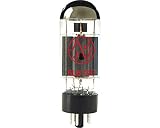
Overview: The JJ Electronics 6L6GC is the standard-bearer for modern Slovakian power tubes, delivering 30 watts of robust output. This listing represents JJ’s core 6L6GC product line, available in singles, matched pairs, or matched quads. It provides the same proven construction and musical voicing that has made JJ a go-to choice for amplifier manufacturers and repair shops worldwide.
What Makes It Stand Out: JJ’s reputation for consistency stems from rigorous quality control and military-spec manufacturing processes. These tubes offer a balanced tonal signature with rich low-end, smooth midrange, and articulate highs that work across genres. The availability of factory-matched sets ensures optimal performance in push-pull configurations without third-party testing.
Value for Money: Positioned as a mid-priced premium tube, it bridges the gap between budget Chinese tubes and expensive NOS options. For most players, these represent the sweet spot of performance versus cost. The option to purchase exactly the quantity needed (single, pair, or quad) prevents overspending while ensuring proper matching.
Strengths and Weaknesses: Strengths include proven reliability, excellent tonal balance, flexible purchasing options, and widespread availability. They exhibit slightly more compression than original American 6L6s, which some players prefer while others don’t. Proper biasing is mandatory, adding to installation complexity. They may not satisfy collectors seeking authentic vintage tone.
Bottom Line: A workhorse tube suitable for most modern and vintage-inspired amplifiers. Whether replacing a single tube or retubing an entire amp, these deliver consistent, musical performance that justifies their reputation.
5. JOYO Atomic BanTamp Series Mini Amp Head 20W Hybrid Tube 2-Channel Guitar Amplifier with Bluetooth (No Sound, Need Extra Speaker)

Overview: The JOYO Atomic BanTamp merges classic British tone with modern convenience in a compact 20-watt head. This hybrid design combines a 12AX7 preamp tube with a solid-state power section, delivering authentic tube feel without the weight or maintenance of full-tube designs. Its two channels cover clean and mid-gain overdrive territories.
What Makes It Stand Out: Bluetooth connectivity for wireless practice integration is revolutionary at this price point. The studio-quality FX loop maintains effect integrity, while the headphone output with cabinet simulation enables silent recording. Its British-voiced tone stack delivers iconic scooped-mids clarity, and the 20-watt output provides surprising headroom for such a small package.
Value for Money: This represents exceptional value for feature-conscious players. Hybrid reliability, wireless connectivity, and an FX loop typically cost twice as much. While requiring an external speaker, it’s perfect for apartment dwellers and home studio owners seeking versatility without multiple amplifiers.
Strengths and Weaknesses: Strengths include portable design, Bluetooth streaming, FX loop, headphone out, and loud 20-watt output. The hybrid design sacrifices some all-tube saturation character. Requires external speaker for sound, adding hidden cost. Bluetooth is limited to practice, not performance use. The single 12AX7 may not satisfy purists seeking full-tube warmth.
Bottom Line: Perfect for modern guitarists prioritizing features and portability over all-tube purity. It’s an ideal home studio Swiss Army knife that handles practice, recording, and small gigs admirably.
6. Bugera V5 INFINIUM 5-Watt Class-A Tube Amplifier Combo with INFINIUM Tube Life Multiplier, Original Turbosound Speaker, Reverb and Power Attenuator

Overview: The Bugera V5 INFINIUM is a 5-watt, hand-built Class-A tube combo that delivers authentic vintage tone in a compact package. Featuring a single EL84 power tube and 12AX7 preamp, this amp captures the essence of ’60s era amplifiers while incorporating modern conveniences. The 8-inch Turbosound speaker provides a surprisingly robust voice for its size, making it ideal for home practice and studio recording.
What Makes It Stand Out: The revolutionary INFINIUM Tube Life Multiplier technology automatically adjusts bias to extend tube lifespan by up to 20 times, addressing a major pain point of tube amp ownership. The built-in power attenuator lets you dial down to 1 watt or 0.1 watt for silent recording, while the spring reverb adds authentic ambience. The vintage aesthetic combines with British-engineered speaker components for a premium feel.
Value for Money: At this price point, the V5 INFINIUM competes directly with entry-level tube amps but offers features typically found in boutique models. The INFINIUM technology alone saves hundreds in tube replacement costs over the amp’s lifetime, making it an exceptional long-term investment compared to standard 5-watt competitors.
Strengths and Weaknesses: Strengths include genuine tube saturation at manageable volumes, versatile attenuation options, and cost-saving tube management system. The Turbosound speaker delivers clarity beyond typical budget combos. Weaknesses involve Bugera’s historical reliability questions, limited clean headroom, and the 8-inch speaker’s inherent low-end constraints. It’s also single-channel, limiting tonal flexibility.
Bottom Line: Perfect for apartment dwellers and recording musicians seeking authentic tube tone without the maintenance headaches. The V5 INFINIUM offers boutique features at a mass-market price, making it a smart choice for players wanting vintage sound with modern reliability.
7. Inside Tube Amps: The Design, Modification and Repair Manual for Vacuum Tube Guitar Amplifiers

Overview: “Inside Tube Amps” serves as the definitive technical bible for understanding vacuum tube guitar amplifier design, modification, and repair. This comprehensive manual targets serious builders, technicians, and advanced players seeking deep circuit knowledge. Unlike superficial guides, this book dives into the physics and engineering principles that make tube amplifiers work, providing schematic-level understanding.
What Makes It Stand Out: The manual’s depth separates it from hobbyist literature, offering professional-grade insights into component selection, circuit topology, and troubleshooting methodology. It likely covers everything from basic Ohm’s law applications to advanced negative feedback loops, power supply design, and frequency response optimization. The focus on both design and repair makes it a dual-purpose resource.
Value for Money: Compared to specialized electronics textbooks or boutique amp-building courses costing hundreds, this single manual consolidates essential knowledge. For aspiring amp techs, it replaces multiple reference books, offering ROI through saved repair costs or potential income from custom builds and servicing.
Strengths and Weaknesses: Strengths include comprehensive technical coverage, practical modification guidance, and repair procedures that extend amp lifespans. It empowers complete circuit understanding. Weaknesses: the lack of listed features suggests it may be overly technical for beginners, potentially requiring prior electronics knowledge. Without specified content, its organization and clarity remain unknown. It also can’t replace hands-on experience.
Bottom Line: An indispensable reference for committed amp builders and technicians. Beginners should start with simpler resources, but for those ready to dive deep, this manual provides the theoretical foundation for mastering tube amplifier craftsmanship.
8. OriPure 15W All Tube Guitar Amplifier Head Paper Insulation Handcrafted Output Transformer OA-H15

Overview: The OriPure OA-H15 is a handcrafted 15-watt all-tube guitar amplifier head built for tone purists who value component quality over brand prestige. This single-ended Class-A design uses a 12AX7 preamp and dual EL84 power tubes to deliver rich harmonics and natural compression. The paper-insulated output transformer represents old-world craftsmanship applied to modern playing needs.
What Makes It Stand Out: The handcrafted paper insulation transformer is a boutique feature rarely seen at this price, reducing stray capacitance for enhanced high-frequency clarity and using premium grain-oriented silicon steel for tighter low-end response. The 1-watt/15-watt switch provides exceptional home-friendly flexibility, while the three-band EQ offers precise tonal sculpting. Its cast-aluminum chassis combines durability with professional aesthetics.
Value for Money: Competing with established brands like Monoprice and Bugera, the OriPure distinguishes itself through transformer quality and build materials. The hand-wound transformer alone justifies the cost for tone-conscious players, offering boutique-level componentry without the 2-3x price premium of custom builders.
Strengths and Weaknesses: Strengths include exceptional transformer quality, versatile wattage switching, robust aluminum housing, and authentic single-ended tube character. The paper insulation process yields transparent, articulate tone. Weaknesses involve limited brand recognition, requiring a separate speaker cabinet, and potential long-term support uncertainties. The single-channel design may feel limiting to some players.
Bottom Line: Ideal for players seeking boutique build quality and vintage-inspired tone without the boutique price tag. The OA-H15 rewards tone aficionados who understand that transformers are the heart of great amp design.
9. Flatsons FBA-10 Guitar Amp, 10W Mini Electric Guitar Amplifier with Clean/Drive Channel, 6H Working, USB-C Rechargeable, 3.5mm Headphone/AUX Jack, Wireless Portable Amp for Indoor Practice, Traveling

Overview: The Flatsons FBA-10 redefines portable guitar amplification by combining analog circuitry with modern convenience features. This 10-watt mini amp delivers genuine tube-like response through pure analog technology, running on USB-C rechargeable power for true wireless operation. Designed for practice, travel, and street performance, it packs surprising capability into a compact 580-gram package.
What Makes It Stand Out: Six hours of battery life with quick USB-C charging eliminates the tyranny of wall outlets, while Bluetooth 5.3 allows seamless backing track integration. The analog signal path maintains tonal integrity often lost in digital modeling amps. Dual Clean/Drive modes with independent Gain and Tone controls provide genuine versatility, and the 3.5mm headphone/AUX jacks enable silent practice or external audio mixing.
Value for Money: Compared to battery-powered competitors like the Roland Micro Cube or Vox Mini3, the FBA-10 offers superior battery life and modern connectivity at a competitive price point. The analog design provides more natural feel than digital alternatives, while the vintage woven grille adds aesthetic value unmatched by plastic competitors.
Strengths and Weaknesses: Strengths include exceptional portability, long battery life, analog tone purity, and versatile connectivity options. The 165-foot coverage exceeds typical mini amp range. Weaknesses involve limited 10-watt power for group settings, unknown brand reliability, and potential durability concerns with extensive travel use. Tone controls are less comprehensive than full-sized amps.
Bottom Line: The ultimate practice companion for mobile musicians. The FBA-10’s analog heart and modern features make it perfect for hotel rooms, parks, or late-night inspiration without disturbing others.
10. JOYO Meteor II BanTamp XL Series Mini Amp Head 20 Watt Preamp 2 Channel Hybrid Tube Guitar Amplifier Head for Electric Guitar with Bluetooth

Overview: The JOYO Meteor II BanTamp XL Series is a 20-watt hybrid mini amp head that bridges the gap between authentic tube feel and modern digital convenience. Featuring a genuine 12AX7 preamp tube driving a solid-state power section, this two-channel head delivers everything from pristine cleans to modern high-gain distortion in a pedalboard-friendly footprint. Bluetooth connectivity and an FX loop add contemporary flexibility.
What Makes It Stand Out: Independent channel controls allow precise volume balancing between clean and distortion channels—a rarity in mini amps. The footswitchable channel switching enables seamless live transitions, while the FX loop preserves time-based effect clarity. Bluetooth audio streaming for practice and an emulated headphone output for silent playing address modern players’ needs without compromising core tone.
Value for Money: Competing with mini heads from Orange and Blackstar, the Meteor II offers dual-channel independence and Bluetooth at an aggressive price point. The hybrid design provides tube dynamics without the maintenance costs of all-tube power sections, making it economical for players wanting tube response on a budget.
Strengths and Weaknesses: Strengths include versatile dual-channel operation, compact portability, Bluetooth integration, and impressive 20-watt output power. The FX loop is a pro-level feature often omitted in mini amps. Weaknesses: the solid-state power amp lacks true tube compression, single preamp tube limits tonal complexity, and the 20 watts may be excessive for purely home use. Build quality, while improved, doesn’t match premium brands.
Bottom Line: An excellent Swiss Army knife for players needing multiple tones in a compact package. The Meteor II excels as a practice tool, backup head, or compact recording solution for genre-hopping guitarists.
Why Low-Wattage Tube Amps Are Perfect for Apartment Recording
The physics of sound doesn’t care about your lease agreement. A 100-watt amp cranked to its sweet spot produces roughly 130dB of sound pressure—equivalent to a jet engine at 100 feet. Even a 30-watt amp can hit 120dB, which will get you evicted faster than you can say “but the tone, man.” Sub-15-watt amplifiers, however, operate in a completely different reality. They’re designed to reach their optimal harmonic distortion threshold at manageable volumes, typically between 85-100dB, which is roughly the loudness of a busy restaurant or a blender—annoying if sustained, but unlikely to result in legal action.
But wattage alone tells only half the story. The real magic lies in how these amplifiers achieve their voice. Unlike their high-powered siblings that rely on output transformer saturation and power tube breakup at ear-splitting levels, modern low-wattage amps are engineered to deliver that same harmonic complexity at conversational volumes. This isn’t about compromise—it’s about optimization.
The Sweet Spot: Understanding Wattage and Volume
Here’s the counterintuitive truth that trips up most guitarists: a 5-watt amp isn’t half as loud as a 50-watt amp—it’s only about 10dB quieter. The logarithmic nature of decibel scales means that perceived loudness doubles roughly every 10dB. So while a 5-watt amp can still generate significant volume, it reaches its tonal sweet spot—the point where tubes begin to naturally compress and generate harmonics—at a fraction of the volume of its bigger brothers.
For apartment recording, this sweet spot becomes your best friend. A 1-watt amp might hit its stride at bedroom TV volume, while a 15-watt amp might need you to close the windows but won’t shake the foundation. Understanding this relationship helps you choose the right wattage for your specific living situation and recording needs.
Tone at Low Volumes: The Master Volume Revolution
The master volume control has evolved from a simple signal pad to a sophisticated circuit that preserves tone at any level. Early master volumes sucked tone like a studio compressor set to “kill,” but 2026’s implementations use clever techniques like post-phase-inverter master volumes (PPIMV), dual-volume controls, and even separate gain structures for each stage. These circuits maintain the same harmonic content whether you’re monitoring through headphones or pushing a 12-inch speaker to its limits.
What matters for recording is how these controls interact with the amp’s overall architecture. A well-designed master volume doesn’t just turn things down—it reshapes the EQ curve and compression characteristics to compensate for how our ears perceive sound at lower volumes. This psychoacoustic compensation is the difference between an amp that sounds “thin” at low volume versus one that sounds “focused.”
Natural Breakup vs. Preamp Distortion
The eternal debate: should you push power tubes or preamp tubes for your core tone? Power tube distortion—what we traditionally think of as “cranked amp” sound—produces even-order harmonics, natural compression, and a three-dimensional quality that’s hard to replicate. Preamp distortion, on the other hand, offers tighter bass response, more aggressive clipping, and greater control over your gain structure.
Modern sub-15-watt amps brilliantly blur this line. Many feature cascaded preamp stages that simulate power tube sag and compression, while others use unconventional power tube configurations (like single-ended Class A designs) that break up at whisper-quiet levels. For recording, the smart approach isn’t choosing sides—it’s selecting an amp that gives you both textures to blend.
Key Features to Look For in Apartment-Friendly Amps
Shopping for a recording amp requires a completely different checklist than gigging gear. Stage amps prioritize reliability, stage volume, and simplicity. Recording amps must excel at signal routing, tonal flexibility, and silent operation. The features that matter most might not even appear on a spec sheet—they’re design philosophies that reveal themselves only after hours of critical listening.
Attenuators and Power Scaling
Attenuation technology has become the defining feature of modern low-wattage amps, but not all attenuators are created equal. Built-in attenuators offer convenience and circuit-matched performance, while external units provide flexibility across multiple amps. The key distinction lies in reactive versus resistive loading—a detail that dramatically impacts feel and tone.
Reactive attenuators maintain the complex impedance relationship between amp and speaker, preserving the dynamic response and frequency response. Resistive attenuators, while cheaper, can make your amp feel stiff and lifeless. For recording, where every nuance gets captured, reactive is non-negotiable. Some 2026 models even feature dynamic attenuation that automatically adjusts based on playing intensity—think of it as a smart compressor that works on your output stage.
Line-Outs and Cabinet Simulations
A quality line-out with speaker emulation transforms your tube amp into a direct recording solution. The best implementations use actual IR (impulse response) technology, capturing the sound of mic’d cabinets in professional studios. These aren’t the cheesy cab sims of the 90s—they’re convolution-based models that respond to your playing dynamics just like a real mic.
Look for line-outs with multiple voicings, adjustable mic placement simulation, and the ability to bypass the speaker entirely. Some advanced units even let you load your own IRs via USB, turning your amp into a hardware host for your favorite cabinet libraries. This feature alone can justify the price premium, effectively eliminating the need for microphones in noise-sensitive environments.
Headphone Jacks: Myth vs. Reality
Let’s address the elephant in the room: most tube amp headphone jacks disappoint. They often tap the preamp signal before the power section, missing the crucial interaction between tubes and output transformer. However, 2026’s best designs have solved this by including a dummy load and sophisticated emulation circuitry that captures the entire amp character.
The key question to ask: does the headphone circuit include power tube modeling? If not, you’re getting a glorified preamp pedal with a headphone jack. True headphone implementation requires the same technology as quality line-outs—IR loading, reactive loading, and psychoacoustic compensation for the lack of physical air movement.
Effects Loops and Pedal Compatibility
Your pedalboard is an extension of your instrument, and your amp’s effects loop is the gateway to integrating it properly. For recording, serial loops with adjustable send/return levels provide the most flexibility. But the real game-changer is the emergence of pedal-friendly front ends that maintain impedance and headroom even when hit with high-output drives and fuzzes.
Consider how the amp handles buffered versus true-bypass pedals, whether the loop is tube-buffered or solid-state, and if it can handle line-level devices like rack processors. Some modern amps even feature dual effects loops—one pre-gain for time-based effects and one post-gain for modulation—giving you studio-console flexibility in a combo format.
Tube Types and Their Sonic Fingerprints
The tubes glowing inside your amp are more than just glass bottles—they’re the DNA of your tone. Each type brings a distinct harmonic signature, compression characteristic, and breakup behavior that shapes your recorded sound before it ever hits a microphone or IR loader.
6V6 vs. EL84: The Classic Debate
The 6V6GT, the tube that powered tweed-era American amps, delivers warm lows, smooth mids, and a compressed, singing quality when pushed. Its breakup is gradual and musical, making it ideal for blues, rock, and anything requiring touch sensitivity. In sub-15-watt designs, 6V6s often run in single-ended configurations, producing rich, even-order harmonics that record beautifully.
EL84s, the British invasion tube, offer a brighter, more aggressive voice with a chimey top end and tight bass response. They break up earlier and more abruptly than 6V6s, creating that signature “crunch” perfect for alternative rock and indie tones. Many modern low-wattage amps use EL84s in push-pull configurations to maximize clean headroom while retaining that British character.
EL34 and 6L6 in Small Packages
While traditionally associated with 50-100 watt monsters, EL34s and 6L6s are appearing in innovative sub-15-watt designs that leverage their unique characteristics. EL34s in low-wattage amps deliver the midrange-forward, aggressive voice of British stacks at manageable volumes. The key is running them at lower plate voltages, which creates a different distortion character than their high-power counterparts.
6L6s in small amps are rarer but offer the most robust low-end and headroom in the category. These designs often use clever circuit tricks to simulate the 6L6’s signature “big amp” feel while staying within apartment-friendly volume limits. For recording metal or hard rock in small spaces, these are worth seeking out.
Preamp Tube Voicing: 12AX7 Variants
The 12AX7 is the workhorse of guitar preamps, but not all 12AX7s are identical. Modern production tubes from different manufacturers exhibit significant variations in gain, noise floor, and harmonic content. A JJ ECC83S sounds different from a Tung-Sol 12AX7, which sounds different from a NOS Mullard.
For recording, low-noise tubes with balanced sections are crucial. Some 2026 amps even feature tube bias adjustments for the preamp stage, letting you fine-tune the gain structure and harmonic content. This level of control used to be studio-console territory; now it’s available in bedroom-sized combos.
Speaker Considerations for Home Recording
Your amp’s speaker is the final voice in your tone chain, and in apartment recording, it plays an even more critical role. The speaker’s efficiency, size, and cabinet design determine not just your tone, but how much sound leaks through walls and how well your amp responds to microphones.
Size Matters: 8", 10", and 12" Speakers
The conventional wisdom that “bigger is better” doesn’t apply in confined spaces. An 8-inch speaker in a well-designed cabinet can produce focused, mid-forward tones that cut through a mix without generating excessive low-end that excites room modes. They’re also naturally quieter, making them ideal for late-night inspiration sessions.
10-inch speakers offer the sweet spot for many recording applications, providing enough low-end authority without the room-filling beaminess of 12-inch speakers. They respond quickly to picking dynamics and often exhibit a natural compression that flatters recorded guitars.
12-inch speakers, while traditional, can be problematic in small rooms. Their directionality creates hot spots and nulls that complicate mic placement. However, their full-range response and familiar tone make them worth the extra effort if you have adequate acoustic treatment.
Speaker Efficiency and SPL Ratings
Speaker efficiency, measured in dB SPL (sound pressure level) at 1 watt/1 meter, directly impacts how loud your amp will be. A 95dB speaker will sound drastically quieter than a 102dB speaker with the same 5-watt amp. For apartment recording, look for speakers in the 95-98dB range—they’re specifically designed to sound full without excessive volume.
Some manufacturers now produce “recording speakers” with built-in attenuation or multiple voice coils that let you adjust efficiency on the fly. These speakers can drop SPL by 6-9dB without significantly altering tone, effectively giving you a master volume control at the speaker level.
Open-Back vs. Closed-Back Cabinets
Open-back cabinets project sound in a hemisphere, filling the room more evenly and reducing the intensity of reflections. They produce a more “airy,” less focused tone that records beautifully with room mics but can lack the punch needed for dense mixes.
Closed-back cabinets focus sound forward like a spotlight, creating more direct tone and stronger low-end response. In apartments, this directionality can be your ally, allowing you to point the amp away from shared walls. The trade-off is increased bass buildup in corners and a more beamy high-end that requires careful mic placement.
Recording Techniques for Low-Wattage Amps
Capturing great guitar tone in an apartment isn’t just about gear—it’s about technique. The proximity of walls, the reflection of windows, and the ambient noise of urban living all become part of your signal chain. Learning to work with these limitations rather than against them separates amateur demos from professional productions.
Mic Placement Fundamentals
Close-miking remains the most reliable method for controlling room sound. Start with a dynamic mic (like the industry-standard SM57) positioned halfway between the center and edge of the speaker cone, angled slightly off-axis. This captures the speaker’s direct sound while minimizing harsh high-end frequencies.
For low-wattage amps, consider miking closer than you would a 4x12 cabinet. The reduced low-frequency content means you can place the mic within an inch of the grille cloth without overemphasizing bass. Experiment with the “Fredman technique”—two mics at different angles—to capture a fuller picture of the speaker’s voice.
Room Mic vs. Direct Signal Blending
Your apartment’s natural ambience probably isn’t Abbey Road Studio 2, but that doesn’t mean it’s useless. A room mic placed 3-6 feet from the amp captures the space’s character, which might be exactly what your sterile direct tone needs. The trick is to high-pass filter aggressively (starting at 200Hz) to remove room mud and compress lightly to control unpredictable reflections.
Blend this room mic with your direct signal (either from a close mic or line-out) to create depth. Start with the room mic 15-20dB lower than the direct signal and adjust to taste. In dense mixes, you might not need it at all, but for sparse arrangements, it can add a sense of space that plugins struggle to replicate.
DI Box Solutions and Reamping
Sometimes the best way to record a tube amp in an apartment is to not record it live at all. Take a clean DI signal, record it silently, then reamp through your tube amp during daylight hours when noise isn’t an issue. This approach requires a quality DI with proper impedance matching and a reamp box that converts line-level signals back to instrument level.
Some modern amps include built-in DI outputs with ground lifts and level controls, eliminating the need for external boxes. For the ultimate flexibility, look for amps with effects loop send/returns that can function as reamp interfaces, letting you insert the amp into your DAW as an external effect.
Apartment-Specific Challenges and Solutions
Living in close quarters introduces variables that suburban studio owners never consider: thin walls, shared ventilation, and neighbors who work night shifts. Your recording setup must address these realities with surgical precision.
Soundproofing vs. Acoustic Treatment
These are fundamentally different concepts. Soundproofing blocks sound transmission through walls and floors—expensive, construction-heavy work that’s often impossible in rentals. Acoustic treatment controls reflections within your room, making it sound better to microphones while doing nothing to stop sound leakage.
For apartment recording, focus on treatment over proofing. Broadband absorption panels at reflection points, bass traps in corners, and a cloud panel above your recording position will improve your recorded tone more than any gear upgrade. If you must reduce transmission, invest in a quality isolation box for your amp rather than attempting to soundproof an entire room.
Dealing with Neighbors: Best Practices
Communication beats confrontation every time. Introduce yourself, explain your recording schedule, and establish boundaries. Most neighbors will tolerate reasonable noise during daytime hours if they understand it’s not random inconsideration.
Create a “do not disturb” schedule and stick to it religiously. Use a sound level meter app to objectively measure your volume and keep it under 85dB at the source. When inspiration strikes at midnight, switch to headphones or direct recording. Being a good neighbor costs nothing but pays dividends in peace of mind.
Iso Boxes and Reactive Load Boxes
Isolation boxes—sealed enclosures for your amp and speaker—can reduce volume by 20-30dB but introduce their own problems. They heat up quickly, color your tone, and can damage speakers if not properly ventilated. For occasional use, they’re invaluable; for daily recording, they’re a compromise.
Reactive load boxes like the Universal Audio Ox or Two Notes Torpedo capture your amp’s output without a speaker, letting you record silently using IRs. The best implementations include room simulation, microphone modeling, and even power amp modeling to replicate the complete signal chain. For pure apartment recording, a reactive load box often makes more sense than a physical speaker.
The Role of Attenuators in Modern Recording
Attenuation has evolved from a simple volume reducer to a sophisticated tone-shaping tool. Understanding the different approaches helps you choose between amps with built-in attenuation and external solutions.
Reactive vs. Resistive Attenuation
Reactive attenuators maintain the complex electrical relationship between your amp and speaker, preserving the feel and frequency response. They use transformers and reactive components that mimic a speaker’s impedance curve, ensuring your amp behaves naturally even when heavily attenuated.
Resistive attenuators are simpler and cheaper but flatten the impedance curve, making amps feel stiff and two-dimensional. For recording, where dynamics and touch sensitivity translate directly to expressiveness, reactive attenuation is essential. The price difference is negligible compared to the improvement in recorded tone.
Built-in vs. External Attenuation Solutions
Built-in attenuators are matched to the amp’s specific output transformer and speaker, offering seamless integration and often additional features like line-out voicing. External attenuators provide flexibility across multiple amps and typically offer more attenuation steps.
For the dedicated apartment recorder, built-in solutions win on convenience and integration. The attenuation circuit can be designed to compensate for tone loss at extreme attenuation levels, something external units struggle to do universally. However, if you own multiple amps, a high-quality external reactive attenuator becomes a studio essential rather than a luxury.
Digital Integration and Hybrid Solutions
The line between analog tube tone and digital convenience has blurred beyond recognition. Modern low-wattage amps embrace digital technology not as a replacement for tubes, but as an enhancement that solves real recording problems.
IR Loading and Digital Cabinet Sims
Loading custom impulse responses directly into your amp represents a paradigm shift for apartment recording. Instead of choosing between your amp’s single internal speaker and a handful of line-out voicings, you can access thousands of professionally captured cabinets, microphones, and rooms.
The implementation quality varies dramatically. The best systems use 32-bit processing, offer multiple IR slots for blending, and include microphone position adjustment. Some even capture the non-linear behavior of speakers at different volumes, responding to your playing dynamics like a physical cabinet.
USB Recording Outputs
USB connectivity has become standard on recording-focused amps, but the implementation details matter immensely. Look for 24-bit/96kHz converters, adjustable input gain, and zero-latency monitoring. The ability to record both a processed signal (with IRs and effects) and a dry signal simultaneously gives you maximum flexibility for reamping and mixing.
Some advanced units even function as audio interfaces, letting you record your entire setup—guitar, amp, and pedals—through a single USB cable. This integration simplifies your signal chain and eliminates ground loop hum, the bane of apartment recording setups.
Budget Considerations and Value Proposition
The sub-15-watt tube amp market spans from budget-friendly lunchbox heads to premium combos costing as much as a used car. Understanding where your money goes helps you make informed decisions rather than emotional ones.
Price vs. Performance in the Sub-15W Category
Entry-level models (under $500) typically cut costs on transformers, speakers, and cabinet materials. While they deliver authentic tube tone, they often lack the headroom, low-noise performance, and recording features that justify the tube amp hassle in an apartment context.
Mid-range amps ($500-$1200) represent the sweet spot for most recordists. These units feature quality output transformers, premium speakers, and at least one standout recording feature like built-in attenuation or IR loading. The component quality jump in this range directly translates to better recorded tone and reliability.
Premium amps ($1200+) justify their price through exceptional build quality, unique circuit designs, and comprehensive recording feature sets. For professional recordists or serious enthusiasts, the noise floor reduction, tonal flexibility, and long-term value often warrant the investment.
Hidden Costs: Tubes, Maintenance, and Accessories
That $600 amp is just the beginning. Factor in $100-200 for a spare tube set, $50-150 for a quality attenuator if not built-in, $100-300 for acoustic treatment, and $100-200 for microphones or load boxes. Over three years, you’ll likely spend another $200-300 on tube replacements and biasing.
Consider these costs when budgeting. A $900 amp with built-in attenuation and IR loading might actually cost less over time than a $600 amp requiring external accessories. The total cost of ownership often tells a different story than the sticker price.
The Future of Tube Amps: 2026 Trends
The tube amp market isn’t frozen in amber—it’s evolving rapidly to meet the needs of modern guitarists who record more than they gig. Several trends are reshaping what we expect from low-wattage designs.
Smart Features and App Connectivity
Bluetooth connectivity and companion apps are moving from gimmick to essential tool. Modern amps let you adjust bias, store presets, update firmware, and even download new IRs from your phone. Some apps include tone-matching features that analyze your favorite recordings and suggest knob settings to approximate that sound.
This connectivity isn’t about replacing knobs with screens—it’s about accessing parameters that were previously hidden inside the chassis. Bias adjustment, effects loop level matching, and attenuation curves become adjustable in real-time, letting you optimize your amp for different guitars, pedals, and recording scenarios without opening the cabinet.
Eco-Friendly Power Solutions
Sustainability has entered the tube amp conversation. Manufacturers are exploring low-power standby modes, automatic shutdown timers, and even solar-capable power supplies for tube amps. While these features might seem peripheral to tone, they address the reality that tube amps are inherently inefficient and often left on for hours during writing sessions.
Some 2026 models feature “recording mode” that automatically reduces heater voltage and plate voltage when not receiving signal, cutting power consumption by 60% while maintaining instant readiness. It’s a small detail that reflects a broader shift toward responsible design without sacrificing the tube amp experience.
Frequently Asked Questions
What’s the realistic volume difference between a 5-watt and 15-watt tube amp for apartment recording?
The 15-watt amp will be approximately 4-5dB louder at full power, which translates to a noticeable but not dramatic increase in perceived volume. However, the 15-watt amp will have significantly more clean headroom before breakup, making it more versatile for pedals and cleaner styles. For pure saturation recording, 5 watts often reaches its sweet spot at more neighbor-friendly levels.
Can I really get professional studio tones from amps under 15 watts?
Absolutely. Many professional recordings from the past decade feature low-wattage amps exclusively. The key is choosing an amp with quality transformers and a well-designed circuit. Wattage doesn’t determine tone quality—circuit design and component selection do. A well-designed 5-watt amp will outrecord a mediocre 50-watt amp every time.
How often will I need to replace tubes in a low-wattage recording amp?
With moderate use (10-15 hours per week), power tubes typically last 2-3 years, while preamp tubes can last 5-10 years. Recording amps often experience less thermal stress than gigging amps due to lower overall volumes and built-in attenuation. Budget for a full retube every 2-3 years, but don’t be surprised if you get 4-5 years from a quality set.
Is built-in attenuation better than using an external attenuator?
For most users, yes. Built-in attenuation is matched to your amp’s specific output transformer and speaker, with compensation circuits that preserve tone at extreme attenuation levels. External attenuators offer flexibility across multiple amps but can’t provide the same level of circuit-specific optimization. If you own one amp, built-in is superior.
What’s the best way to record silently with a tube amp?
Use a reactive load box with IR loading capability. This captures your amp’s full character—including power tube distortion—without any speaker volume. For the most authentic sound, choose a load box that includes room simulation and microphone modeling. Some modern amps include this functionality built-in, eliminating the need for external hardware.
Do I need a 12-inch speaker for proper low-end response?
Not necessarily. Modern 10-inch speakers from companies like Eminence and Celestion provide ample bass for recording applications. The cabinet design matters more than speaker size—a well-designed 10-inch cabinet can outperform a mediocre 12-inch setup. Focus on speaker efficiency and cabinet construction rather than diameter alone.
How can I reduce amp noise in my recordings?
Start with proper gain staging—don’t crank the amp’s gain if you’re using high-gain pedals. Use a power conditioner to eliminate ground loops and filter AC noise. Position the amp away from computer monitors and routers, which induce hum. For severe noise issues, consider a noise gate in the effects loop or a hum-reducing pedal like the ISP Decimator.
Are hybrid tube/solid-state amps worth considering for apartment recording?
Modern hybrid designs have evolved significantly. Some use tube preamps with Class D power sections, offering tube feel with solid-state reliability and weight savings. For recording, the critical factor is whether the power section contributes to your desired tone. If you rely on preamp distortion, a quality hybrid can be excellent. If you need power tube saturation, stick with all-tube designs.
What’s the ideal room size for recording low-wattage tube amps?
Surprisingly, smaller is often better. A 10x12 foot bedroom with proper acoustic treatment provides enough space for a room mic without excessive reflections. The key isn’t size—it’s treatment. A small, well-treated room outperforms a large, untreated space every time. Focus on absorption at first reflection points and bass trapping in corners.
Should I prioritize an amp with multiple channels or a great single channel?
For recording, a phenomenal single channel almost always beats two mediocre channels. You can shape tone with pedals before recording, but you can’t fix an uninspiring core voice. Look for an amp that excels at edge-of-breakup tones, then use pedals to push it into higher gain territories. Multi-channel amps are convenient for live use but often compromise circuit purity for flexibility.
See Also
- 10 Tube Guitar Amplifiers Under 15 Watts for Studio Recording in 2026
- 10 Best Tube Guitar Amplifiers for Recording Warmth Without Mic Bleed in 2026
- 10 Essential Tube Guitar Amplifiers for Studio Recording in 2026
- 10 Affordable Tube Guitar Amplifiers Under $500 That Rival Boutique in 2026
- 10 Mini Guitar Amplifiers with USB Recording for Direct DAW Tracking in 2026