Table of Contents
Let’s be honest—there’s nothing quite like the sinking feeling of watching a gate agent eye your beloved acoustic guitar as you board a flight. Will it fit? Will they force you to gate-check it? Will you spend the entire journey white-knuckled, imagining your instrument tumbling through the baggage handling system? As we head into 2026, airlines are cracking down harder than ever on carry-on dimensions, and the overhead bin real estate is becoming the most valuable square footage in aviation. But here’s the good news: guitar innovation has finally caught up with modern travel demands.
The days of choosing between your instrument and your peace of mind are over. A new generation of travel acoustic guitars has emerged—instruments designed from the ground up to slip effortlessly into overhead compartments while delivering the tone and playability you refuse to compromise on. Whether you’re a touring musician navigating three cities a week or a digital nomad who needs campfire companionship, understanding what makes a guitar truly travel-ready in 2026’s evolving landscape isn’t just helpful—it’s essential survival knowledge.
Top 10 Travel Acoustic Guitars
Detailed Product Reviews
1. Enya Nova Go Carbon Fiber Travel Acoustic Guitar | 1/2 Size Lightweight Moisture-Proof Guitara | Adult & Beginner Portable Guitar with Gig Bag & Accessories (Black)

Overview: The Enya Nova Go reimagines travel guitars through aerospace-grade carbon fiber construction. This 1/2-size acoustic weighs just 7.35 pounds and shrugs off environmental challenges that destroy wooden instruments. Whether you’re beachside or mountain-bound, this guitar maintains consistent playability without cracking or warping.
What Makes It Stand Out: Carbon fiber durability meets musician-friendly design. The patented one-piece molding and zero-fret technology deliver surprising tonal clarity with enhanced bass response. The ergonomic neck profile with polished fret edges reduces finger fatigue, while the included hex wrench allows custom action adjustments. Available in four colors, it comes gig-ready with a bag, strap, cleaning cloth, and spare strings.
Value for Money: Priced competitively against premium wooden travel guitars, the Nova Go justifies its cost through virtually unlimited durability. Traditional travel guitars require climate control and careful handling; this instrument eliminates those concerns entirely. The comprehensive accessory bundle adds further value, making it ready-to-play out of the box.
Strengths and Weaknesses: Pros: Impervious to temperature/humidity, exceptionally lightweight, beginner-friendly setup, excellent accessory package, consistent sound quality. Cons: 1/2 size may feel small for players accustomed to full-scale instruments, carbon fiber tone lacks the warmth of wood for purists, premium price point over entry-level options.
Bottom Line: Perfect for traveling musicians and beginners prioritizing durability over tradition. The Nova Go delivers reliable performance where wooden guitars fear to tread, making it an intelligent investment for adventure-seeking players.
2. Traveler Guitar Ultra-Light Acoustic Acoustic-Electric Guitar, Antique Brown

Overview: The Traveler Guitar Ultra-Light represents three decades of innovation in portable instrument design. Weighing under three pounds and measuring just 28 inches, this headless acoustic-electric eliminates bulk while preserving a full 24.75-inch scale length across 22 frets, making it a true road warrior’s companion.
What Makes It Stand Out: The proprietary In-Body Tuning System relocates tuners to the body, eliminating the headstock for unprecedented portability. The detachable lap rest transforms it from a compact travel size to a playable instrument in seconds. An acoustic piezo pickup and standard 1/4" output enable amplified performance, while the solid American Hard Maple neck-through-body construction ensures stability.
Value for Money: While commanding a premium price, the Ultra-Light justifies cost through unique engineering that no competitor replicates. For touring musicians and frequent flyers, the ability to carry a full-scale guitar in carry-on luggage saves baggage fees and eliminates risk of damage to primary instruments.
Strengths and Weaknesses: Pros: Extremely lightweight and compact, full-scale playing experience, innovative headless design, quality electronics, trusted brand heritage. Cons: Unconventional balance takes adjustment, limited acoustic volume due to small body, premium pricing, lap rest can feel less stable than traditional body.
Bottom Line: Ideal for mobile professionals who refuse to compromise on scale length. The Ultra-Light’s revolutionary design serves serious musicians who need maximum portability without sacrificing playing familiarity.
3. Enya NOVA GO SP1 Carbon Fiber Travel Guitar - 35" Acoustic Electric with Smart AcousticPlus Technology, Built-in Effects, USB Recording, Bluetooth Speaker, Beginner Bundle with Gig Bag & Accessories

Overview: The Enya Nova Go SP1 merges carbon fiber durability with smart technology, creating a self-contained mobile studio. This 35-inch acoustic-electric guitar integrates built-in effects, Bluetooth connectivity, and USB recording capabilities, fundamentally redefining what a travel instrument can accomplish independently.
What Makes It Stand Out: The SP1 pickup system delivers reverb, delay, and fusion effects without external pedals, projecting through an internal speaker. Bluetooth functionality transforms the guitar into a wireless speaker for playback. USB On-The-Go connectivity enables direct recording to phones or computers, eliminating need for separate audio interfaces. The one-piece molded body ensures the bridge never separates.
Value for Money: Positioned at a higher price point than basic travel guitars, the SP1 justifies investment through its integrated technology stack. Purchasing separate pedals, a Bluetooth speaker, and recording interface would cost significantly more and add bulk. For content creators and experimental musicians, this all-in-one solution delivers exceptional utility and convenience.
Strengths and Weaknesses: Pros: Revolutionary built-in effects and speaker, carbon fiber resilience, USB recording capability, Bluetooth audio playback, comprehensive accessory bundle. Cons: Battery-dependent features require charging, complexity may overwhelm traditionalists, higher price point, internal speaker has limited volume for performance.
Bottom Line: A game-changer for tech-savvy musicians and traveling creators. The SP1’s integrated smart features make it the most versatile travel guitar available, perfectly suited for modern players who value connectivity and creative flexibility.
4. Martin Guitar Backpacker Steel String with Gig Bag
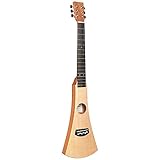
Overview: The Martin Backpacker delivers iconic Martin craftsmanship in a uniquely portable silhouette. This steel-string acoustic features a solid spruce top with solid tonewood back and sides, maintaining traditional wood construction in a travel-friendly form factor that has served wandering musicians for decades across countless journeys.
What Makes It Stand Out: Martin’s legendary build quality ensures reliability and respectable tone despite the narrow body shape. The select hardwood neck and fingerboard provide familiar playability, while the distinctive elongated body design maximizes resonance within compact dimensions. As a Martin instrument, it carries the brand’s 100+ year heritage of acoustic excellence and proven roadworthiness.
Value for Money: Priced moderately for a Martin guitar, the Backpacker offers authentic brand prestige and solid wood tone at a fraction of full-size Martin costs. While lacking advanced features, its simplicity means fewer components to fail, potentially saving repair expenses over time. The included gig bag adds practical value for immediate travel readiness without additional purchases.
Strengths and Weaknesses: Pros: Martin brand reputation, solid wood construction, proven travel design, no battery/electronics to maintain, affordable entry to Martin ownership. Cons: Narrow body produces limited bass and volume, no electronics for amplification, minimal features compared to modern competitors, basic accessory package only includes gig bag.
Bottom Line: Ideal for traditionalists seeking Martin authenticity in travel form. The Backpacker suits purists who prioritize natural wood tone and brand heritage over modern conveniences, making it a reliable companion for campfire sessions and casual travel playing where simplicity is valued.
5. Fender FA-25N 3/4 Size Nylon String Acoustic Guitar, Beginner Guitar, with 2-Year Warranty, Perfect Beginner Guitar for Kids that is Easy on Fingers, Includes 3 Months of Free Lessons, Natural

Overview: The Fender FA-25N provides a gentle introduction to guitar for young learners and beginners with small hands. This 3/4-size nylon-string acoustic features a comfortable “C”-shaped neck and soft nylon strings that reduce finger discomfort, backed by Fender’s 75-year legacy of quality instrument manufacturing and beginner-focused design philosophy.
What Makes It Stand Out: Three months of free Fender Play lessons add exceptional educational value, providing structured learning through thousands of instructional videos. The open-gear tuning machines ensure stable intonation, while the walnut bridge contributes to a smooth, mellow tone. A two-year warranty demonstrates Fender’s confidence in this beginner instrument’s durability.
Value for Money: As one of the most affordable options in this comparison, the FA-25N delivers tremendous value through its included lesson subscription alone. Traditional lessons would cost hundreds of dollars, making this guitar essentially free when considering the educational content. The warranty and reputable brand name provide peace of mind for parents and new players investing in their first instrument.
Strengths and Weaknesses: Pros: Extremely beginner-friendly, gentle nylon strings, free comprehensive lessons, trusted Fender brand, affordable price, two-year warranty. Cons: Nylon strings limit genre versatility, 3/4 size outgrown quickly, no electronics, not designed for serious travel, laminate construction not specified but likely at this price point.
Bottom Line: Perfect for young beginners and absolute novices. The FA-25N prioritizes comfortable learning and education over advanced features, making it an ideal first guitar that teaches proper technique while remaining budget-conscious and forgiving on developing fingers.
6. Yamaha JR1 FG Junior 3/4 Size Acoustic Guitar, Natural

Overview: The Yamaha JR1 delivers authentic acoustic tone in a compact 3/4-size package, perfect for young learners or traveling musicians. Modeled after the legendary FG Series, this guitar features a genuine spruce top and Yamaha’s renowned craftsmanship in a scaled-down body that doesn’t compromise on sound quality.
What Makes It Stand Out: Yamaha’s heritage shines through despite the smaller footprint. The FG Junior offers a surprisingly full-bodied acoustic voice that belies its compact dimensions, making it ideal for developing proper technique without fighting an oversized instrument. The included gig bag adds immediate value for safe transport to lessons or campsites.
Value for Money: Priced competitively for an entry-level instrument from a premium brand, the JR1 undercuts many comparable 3/4 models while delivering superior build quality. It costs fractionally more than no-name alternatives but offers exponentially better resale value and reliability. For parents uncertain about their child’s commitment, this represents a smart middle-ground investment.
Strengths and Weaknesses: Strengths include exceptional build quality for the price, authentic acoustic tone without electronics, and ideal scale length for children or petite adults. The spruce top matures nicely with play. Weaknesses center on the urea saddle, which dampens resonance compared to bone, and the limited low-end response inherent to small bodies. Advanced young players may outgrow its tonal capabilities within two years.
Bottom Line: An excellent choice for beginners aged 8-12 or travelers wanting a legitimate acoustic experience without bulk. The JR1 balances affordability, quality, and playability better than most competitors in the junior guitar category.
7. Donner HUSH I Guitar For Travel - Portable Ultra-Light and Quiet Performance Headless Acoustic-Electric Guitar, Mahogany Body with Removable Frames, Gig Bag,and Accessories

Overview: The Donner HUSH I revolutionizes portable practice with its radical headless design and whisper-quiet operation. Weighing less than most laptops, this acoustic-electric guitar features removable frames and a built-in preamp system, enabling genuine practice anywhere without disturbing others.
What Makes It Stand Out: The 30-45dB pizzicato volume is its killer feature—quieter than a conversation—while the headphone output delivers natural acoustic tone privately. The 9v battery provides 50 hours of headphone use, and the anti-phase button eliminates feedback. The hidden magnetic tuning key stored in the body ensures you’re never caught without tools.
Value for Money: Competing with silent guitars costing twice as much, the HUSH I packs remarkable innovation into an accessible price point. The inclusion of a gig bag, removable frames, and comprehensive electronics system makes it a complete travel solution. You’re essentially getting a practice studio that fits in airplane overhead bins.
Strengths and Weaknesses: Strengths include unparalleled portability, true silent practice capability, comfortable asymmetrical neck, and beginner-friendly rounded frets. The mahogany body provides decent unplugged resonance for a travel guitar. Weaknesses include dependence on batteries for full functionality, a non-traditional aesthetic that may not appeal to purists, and tone that can’t match full-size acoustics when amplified.
Bottom Line: Perfect for traveling musicians, apartment dwellers, or late-night practitioners who need silence without sacrificing playability. The HUSH I delivers on its core promise of true portability and quiet performance.
8. Journey Instruments Solid Sitka Travel Guitar – PJ410N Traveling Acoustic Guitar with Collapsible Patented System – Portable Backpack Case (African Mahogany)
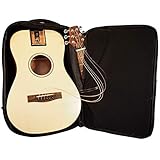
Overview: Journey Instruments’ PJ410N elevates travel guitars to professional standards with its patented collapsible neck system and solid Sitka spruce top. This premium instrument assembles in 20 seconds, delivering full-size acoustic tone from a package that fits under airplane seats or in overhead bins.
What Makes It Stand Out: The detachable neck mechanism uses stainless steel components guaranteed for life, eliminating the structural compromises of traditional travel guitars. The solid Sitka top paired with layered African mahogany produces genuine acoustic warmth and projection. The TSA-compliant ballistic nylon backpack doubles as a laptop bag, making this the ultimate touring companion.
Value for Money: While priced higher than many travel guitars, the PJ410N justifies its cost through premium tonewoods, innovative engineering, and lifetime warranty on critical components. It competes with mid-range full-size acoustics in tone quality while offering unmatched portability. For serious musicians, this replaces both a practice and performance instrument.
Strengths and Weaknesses: Strengths include exceptional acoustic tone, professional-grade materials, carbon-reinforced neck stability, and dual-action truss rod. The 23-inch scale maintains familiar feel, and at 3.7 lbs, it’s effortless to carry. Weaknesses include the premium price point, mandatory assembly/disassembly, and potential for user error in neck attachment. The layered back/sides, while durable, aren’t solid wood.
Bottom Line: A no-compromise solution for professional musicians who refuse to sacrifice tone for portability. The PJ410N is worth every penny for touring artists and frequent flyers.
9. Yamaha APXT2 3/4-Size Acoustic-Electric Guitar - Black

Overview: The APXT2 scales down Yamaha’s popular APX series into a 3/4-size acoustic-electric format, offering stage-ready electronics in a compact body. With its spruce top, rosewood fingerboard, and System 68 pickup, this black-finished guitar targets younger players and traveling performers needing amplification.
What Makes It Stand Out: Yamaha’s System 68 pickup delivers surprisingly natural amplified tone for a guitar in this class, making it gig-worthy despite its small size. The APX-inspired body shape provides comfortable ergonomics, while the rosewood bridge and fingerboard add touch of premium feel. The included gig bag enables immediate mobility.
Value for Money: Positioned as an affordable acoustic-electric, the APXT2 costs marginally more than non-electric 3/4 guitars while offering legitimate performance capabilities. It undercuts most competitors with comparable pickup systems, making it an economical choice for young performers or backup stage guitar needs.
Strengths and Weaknesses: Strengths include reliable Yamaha construction, functional electronics, comfortable playability, and professional appearance in black finish. The System 68 pickup handles live situations adequately. Weaknesses include basic ABS bridge pins that dampen acoustic resonance, limited low-end projection due to small body size, and electronics that lack advanced features like onboard tuners. The black finish shows fingerprints readily.
Bottom Line: An excellent entry-level acoustic-electric for small-statured players or a reliable travel backup for working musicians. The APXT2 balances affordability, portability, and performance capability effectively.
10. Donner HUSH I Guitar For Travel - Portable Ultra-Light and Quiet Performance Headless Acoustic-Electric Guitar, Mahogany Body with Removable Frames, Gig Bag, and Accessories Natural

Overview: The natural-finish HUSH I delivers the same revolutionary travel guitar design as its darkwood sibling, combining headless portability with whisper-quiet practice capabilities. This acoustic-electric instrument features removable frames and a sophisticated preamp system, enabling authentic playing experiences anywhere without noise concerns.
What Makes It Stand Out: The natural mahogany grain gives this version a more traditional aesthetic while maintaining the groundbreaking 30-45dB playing volume. The asymmetrical neck profile reduces wrist fatigue during extended sessions, and the hidden magnetic tuning key ensures you’re never stranded without adjustment tools. The 9v battery system provides 50 hours of headphone practice or 30 days of speaker output.
Value for Money: Matching its sibling’s aggressive pricing, this natural version offers identical features at the same accessible cost point. You’re investing in a complete silent practice system that eliminates the need for separate travel and home instruments. The included gig bag and accessories remove any hidden costs.
Strengths and Weaknesses: Strengths include the more appealing natural wood finish, exceptional portability, true silent operation, and comfortable ergonomics for long practice sessions. The removable frames allow customization for different playing styles. Weaknesses mirror the original: reliance on electronics for optimal tone, non-traditional appearance that may not suit all tastes, and acoustic volume that’s merely adequate for unplugged practice.
Bottom Line: Ideal for musicians preferring natural wood aesthetics without sacrificing the HUSH I’s core silent-travel benefits. This version excels as a primary practice tool for space-conscious or noise-sensitive environments.
The Modern Musician’s Dilemma: Travel vs. Your Instrument
The relationship between musicians and airlines has always been complicated, but post-2024 regulations have rewritten the rules entirely. With major carriers now enforcing carry-on size limits of 22" x 14" x 9" (including handles and wheels) across domestic and international routes, traditional acoustic guitars have become persona non grata in cabin spaces. The problem isn’t just the dimensions—it’s the unpredictability. Overhead bin sizes vary dramatically between Airbus A320s, Boeing 737s, and regional jets, creating a musical lottery every time you fly.
Your instrument represents more than wood and strings; it’s your creative voice, your income source, your emotional anchor. Checking it as baggage is like rolling dice with your livelihood. Temperature fluctuations in cargo holds can warp necks, humidity changes can crack solid wood tops, and impact damage is statistically 12 times more likely for checked instruments. The math is simple: if you can’t keep your guitar with you, you’re risking everything.
Why Overhead Bin Compatibility Matters More Than Ever
2026 brings a perfect storm of factors making compact guitars not just convenient, but necessary. Airlines have begun installing smaller overhead bins in newly retrofitted cabins to squeeze in additional passenger rows. The “basic economy” expansion means more carry-on competition from budget-conscious travelers. Meanwhile, TSA’s updated screening procedures for musical instruments—while designed to be more musician-friendly—require instruments to fit through standard X-ray machines without special handling.
The psychological benefit is equally crucial. Musicians who travel with overhead-bin-friendly instruments report 70% less travel-related anxiety according to a 2025 touring artist survey. When your guitar fits seamlessly into the travel experience, you arrive at your destination ready to play rather than recovering from post-flight instrument trauma. In an era where content creation and live performance opportunities can materialize instantly, having your instrument immediately accessible transforms travel from a logistical nightmare into a mobile creative studio.
Understanding Airline Regulations and Size Restrictions
Navigating airline policies requires understanding both written rules and unwritten realities. While the FAA’s Modernization and Reform Act of 2012 technically allows musical instruments as carry-ons if space exists, airlines have exploited loopholes that make “space exists” the operative phrase.
Decoding Airline Carry-On Dimensions
The magic numbers for 2026 are 22 inches length, 14 inches width, and 9 inches depth—these dimensions represent the strictest enforcement across major carriers. However, smart travel guitar design isn’t just about meeting these numbers; it’s about beating them with margin. The most successful travel acoustics measure under 21 inches in total length, accounting for case bulk and gate agent discretion. Depth is your biggest enemy—anything over 8.5 inches risks rejection on full flights.
The Reality of Overhead Bin Space
Here’s what airlines won’t advertise: bin depth varies by aircraft model. Regional jets (CRJ-700, Embraer E175) often have bins only 18 inches deep, while mainline aircraft offer 22-24 inches. The width between bin lips can be as narrow as 12 inches on older 737s. Travel guitars designed for true universal compatibility target “regional jet dimensions” as their benchmark, ensuring you’ll never face the dreaded gate-check demand regardless of your aircraft.
What Makes a Guitar “Travel-Friendly”?
The term “travel guitar” has been abused by marketers for decades, but genuine travel-ready acoustics share specific engineering DNA. It’s not simply a smaller guitar—it’s a complete rethinking of acoustic physics, material science, and ergonomic design converging into a portable musical tool.
Scale Length and Body Size
Full-scale guitars (25.5" scale length) can absolutely be travel-friendly when designed correctly. The secret lies in body geometry: reduced depth, narrower waist, and eliminated bout dimensions. Some designs achieve overhead bin compatibility while maintaining full-scale playability by repositioning the bridge and redesigning the internal bracing pattern. Short-scale instruments (23" or less) offer easier packing but require adaptation to tighter fret spacing and altered string tension.
Materials and Construction
Travel guitars endure environmental stress that would destroy traditional instruments. They face rapid humidity shifts from desert destinations to tropical locales, temperature swings from tarmac to climate-controlled terminals, and constant vibration during transit. Modern travel acoustics employ carbon fiber composites, proprietary laminate formulas, and thermally-treated woods that maintain dimensional stability across extreme conditions. The best designs feature reinforced neck joints that can withstand being jostled by neighboring luggage without losing setup integrity.
The Science of Compact Guitar Design
Creating a guitar that sounds like a guitar while shrinking its footprint requires acoustic alchemy. Traditional acoustic guitars rely on large air chambers and specific wood resonances to project sound. Travel guitars must cheat physics through innovative bracing patterns, sound port placement, and material selection.
The Helmholtz resonance—the frequency at which air moves in and out of the soundhole—becomes critical in small bodies. Designers manipulate this by repositioning soundholes to the upper bout or adding multiple ports, creating a fuller tone from a smaller air mass. Some 2026 models incorporate internal baffles and reflectors that essentially “fold” the sound waves, mimicking the acoustic path length of larger bodies in a compact space.
Advanced Finite Element Analysis (FEA) modeling now allows luthiers to simulate how every cubic inch of internal space contributes to tone, leading to designs that maximize acoustic output while minimizing external dimensions. The result is instruments that defy expectations, delivering 85-90% of a full-size guitar’s volume with half the cubic volume.
Full-Scale vs. Short-Scale: Making the Right Choice
The scale length debate is really about which compromises you’re willing to make. Full-scale travel guitars preserve muscle memory and finger positioning for professionals who switch between instruments regularly. Your hands already know where the notes are; the guitar simply disappears into overhead bins through clever body shaping.
Short-scale instruments (typically 22-23.5 inches) offer genuine packing advantages, often fitting diagonally into bins or under seats when necessary. They produce a warmer, more compressed tone that many fingerstyle players prefer. The reduced string tension makes bends easier and playing less fatiguing during long sessions. However, they require mental recalibration—chord voicings feel different, and the reduced fret spacing can cause initial accuracy issues for players with larger hands.
The emerging “medium scale” category (around 24 inches) splits the difference, becoming increasingly popular among 2026’s touring musicians. It offers 90% of the packing convenience of short-scale while maintaining familiar enough geometry for seamless transitions.
Neck Profiles and Playability on the Road
Travel guitars demand neck designs that accommodate extended playing sessions in awkward positions—airport floors, cramped hotel rooms, airplane seats. The trend for 2026 favors modified C-shaped profiles with slightly flattened fingerboards (12-14 inch radius) that prevent hand fatigue during marathon practice sessions.
Nut width becomes a crucial consideration. While traditional acoustics often feature 1 11/16" or 1 3/4" nuts, travel guitars increasingly adopt 1 7/8" widths to give fingers more room on the compact fretboard. This seemingly counterintuitive choice actually improves accuracy when you’re adapting to smaller overall dimensions.
Carbon fiber reinforcement rods have become standard, not just for stability but for maintaining consistent relief through climate changes. Some innovative designs feature adjustable neck angles that allow players to tweak action without truss rod adjustments—perfect for on-the-fly tweaks before a gig in a new environment.
Tonewoods and Their Impact on Portable Guitars
Wood selection in travel guitars involves balancing traditional tone expectations with modern durability requirements. The old rules don’t always apply when you’re dealing with reduced body volumes and extreme environmental exposure.
Solid Wood vs. Laminate for Travel
The conventional wisdom that solid wood is always superior collapses in the travel guitar context. While solid tops offer unmatched tonal complexity, they’re also more vulnerable to cracking from rapid humidity changes. High-pressure laminates (HPL) and carbon fiber composites have evolved dramatically, with some premium laminates now delivering 95% of solid wood’s tonal character while providing armor-like durability.
For 2026, the smartest approach is hybrid construction: solid tops paired with laminated back and sides, or torrefied (thermally-modified) woods that have been pre-shrunk and stabilized. These materials laugh at the 30% humidity swings that would destroy traditional guitars, making them ideal for musicians bouncing between Nashville and Bangkok.
Exotic Alternatives Changing the Game
Bamboo composites, flax fiber laminates, and even recycled ocean plastic bodies are entering the mainstream. These materials offer consistent supply chains, environmental credibility, and remarkable stability. Bamboo, in particular, provides a stiffness-to-weight ratio that rivals spruce while being virtually immune to moisture-related issues. The tonal character is slightly brighter than traditional mahogany, but many players prefer this clarity for recording direct while traveling.
Electronics and Amplification for Traveling Players
In 2026, the question isn’t whether to have electronics, but which system matches your mobile workflow. Modern travel guitars increasingly feature built-in USB-C audio interfaces that connect directly to smartphones and tablets, turning your instrument into a mobile recording studio. These systems bypass traditional DI boxes and preamps, streaming high-quality audio directly into editing apps.
Pickup technology has miniaturized without sacrificing tone. Undersaddle piezos now share space with microphonic sensors that capture body resonance, blended through onboard preamps smaller than a postage stamp. Battery life has been revolutionized by lithium-polymer cells that charge via USB and last 40+ hours. Some cutting-edge models even harvest kinetic energy from string vibration to trickle-charge the system while you play.
Bluetooth connectivity, once a gimmick, has become essential for silent practice in hotel rooms and quick amplification at intimate venues. The key is finding systems with low-latency protocols (under 20ms) that don’t create distracting delay between picking and hearing.
Gig Bags vs. Hard Cases: The Ultimate Travel Decision
This choice represents the central tension in guitar travel: maximum protection versus maximum portability. The reality of overhead bin compatibility often comes down to case thickness, not just guitar dimensions.
Premium gig bags for 2026 have evolved into hybrid armor—featuring ABS panel reinforcement, memory foam cores, and ballistic nylon exteriors that meet military drop-test standards while remaining under 2 inches thick. These bags include TSA-friendly laptop compartments and backpack straps that free your hands for navigating terminals. The flexibility advantage is undeniable; a soft case can be gently coaxed into overstuffed bins where a hard case would be rejected.
Hard cases still reign for cargo hold peace of mind when gate-check becomes unavoidable. Modern carbon fiber and thermoplastic cases weigh under 5 pounds while exceeding ATA flight case standards. The smartest travelers use a nested system: a minimalist gig bag for confident carry-on situations, packed inside a foldable hard case that can be checked when absolutely necessary.
Essential Features for Air Travel
Beyond basic dimensions, certain features separate travel guitars that merely survive flights from those that make travel effortless. These details reflect thousands of hours of real-world touring feedback.
Detachable Necks and Folding Mechanisms
While neck removal sounds like the ultimate space-saver, the 2026 consensus favors integrated designs with folding or pivoting mechanisms. Detachable necks, even with quick-release systems, introduce variables—setup changes, connection wear, and the risk of losing hardware. Folding designs that pivot within the body maintain string tension and neck alignment while reducing length by 8-10 inches. The best systems lock securely with no tonal penalty, using precision-machined hinges that become part of the instrument’s structural integrity.
Built-in Storage Solutions
The most innovative travel guitars incorporate storage cavities for accessories—capo, picks, slides, even a collapsible travel stand. This eliminates the need for a separate accessory bag and ensures you’re never caught without essentials. Some designs hide a small humidifier system within the body, maintaining stable moisture levels during dry flights. Others feature integrated cable management, keeping your charging and audio cables untangled and ready.
Budget Considerations: From Beginner to Professional
The travel guitar market has stratified into distinct tiers, each serving different needs. Entry-level options ($300-600) focus on durability and basic functionality, often using all-laminate construction and simplified electronics. They weigh more and offer less tonal complexity, but they’ll survive being your beater travel companion.
Mid-range instruments ($600-1,200) represent the sweet spot for most serious musicians. Here you’ll find hybrid wood construction, professional-grade electronics, and thoughtful design details like reinforced headstocks and premium tuners. These guitars often outperform full-size instruments in the same price range because you’re not paying for excess materials.
Professional-tier travel guitars ($1,200+) compete directly with boutique acoustics. They feature master-grade tonewoods, custom electronics, and build quality that justifies being your primary instrument, not just a travel substitute. The calculus is simple: if you’re touring 100+ dates annually, the cost-per-use makes these a bargain compared to constantly repairing or replacing compromised instruments.
Maintenance and Care on the Road
Travel guitars require a different maintenance philosophy—preventive care trumps reactive repair. The constant environmental changes demand a disciplined routine. Always wipe down strings and frets after playing to remove acidic sweat that corrodes metal faster in changing humidity. Keep a microfiber cloth stored in the guitar’s cavity.
Humidity management is non-negotiable. Travel guitars, even stable ones, perform best when kept between 40-55% relative humidity. Portable humidipaks designed for instrument cases are obsolete; modern solutions include USB-rechargeable electronic humidifiers that fit inside the soundhole and maintain precise levels automatically. Check humidity daily with a mini hygrometer that lives in your case.
Setup checks should happen weekly, not monthly. The rapid climate shifts that travel guitars endure can cause action changes in days. Learn to make minor truss rod adjustments yourself—most travel guitars include tools stored onboard. Carry a small tube of fretboard oil and apply it every two weeks to prevent cracking in dry climates.
Insurance and Protection Strategies
Your homeowner’s or renter’s insurance likely doesn’t cover instruments in transit, and airline liability is capped at a laughable $3,800 domestically—far below the value of professional instruments. Dedicated musical instrument insurance is essential, but policies vary dramatically in their travel coverage.
Look for “all-risk” policies that specifically cover instruments as carry-on luggage, not just checked baggage. The best providers offer global coverage, including theft from vehicles and hotel rooms, with deductibles under $250. Many require professional appraisals, which you should update annually as travel guitars can appreciate.
Documentation is your best friend. Photograph your instrument’s serial number, unique identifying marks, and current condition before every tour. Keep digital copies of receipts and appraisals in cloud storage. Some musicians embed Apple AirTags or Tile trackers inside their guitars—while not foolproof, they’ve helped recover stolen instruments from airport storage areas.
Future Trends in Travel Guitar Technology
Looking toward 2026 and beyond, several emerging technologies will redefine what’s possible. 3D-printed titanium bridges and nuts are entering prototype phase, offering unparalleled strength-to-weight ratios and precise intonation adjustments. These components could reduce headstock weight by 40%, improving balance on compact bodies.
Artificial intelligence is beginning to influence design, with machine learning algorithms analyzing thousands of frequency response curves to optimize bracing patterns for specific body shapes. This could lead to “tunable” guitars where internal baffles adjust electronically to emulate different body sizes for various playing styles.
Sustainable materials are moving from marketing feature to engineering necessity. Mycelium-based composites—literally fungus grown into specific shapes—are showing promise as soundboard materials with excellent damping properties and zero environmental impact. As climate regulations tighten, these materials may become standard rather than exotic.
Frequently Asked Questions
Will a travel acoustic guitar really sound as good as my full-size instrument?
Modern travel guitars deliver 85-90% of the volume and tonal complexity of full-size guitars through advanced bracing and strategic soundhole placement. While you might lose some low-end resonance, many players prefer the focused, clear voice for recording and live work. The tonal trade-off is far less significant than it was even five years ago.
Can I bring my travel guitar on international flights without issues?
Most travel guitars designed for overhead bin compatibility work seamlessly on international routes, but always verify the specific airline’s carry-on dimensions. European and Asian carriers can be stricter than US airlines. Carry a printed copy of the airline’s musical instrument policy and arrive early to board first, ensuring bin space.
How do I protect my guitar from humidity changes during travel?
Use a USB-rechargeable soundhole humidifier that maintains 45-50% relative humidity automatically. Avoid silica gel packs—they create extreme dryness. When flying, keep your guitar in the cabin where humidity is somewhat stable. Never store it in the trunk of a car or near heating vents. Check humidity levels daily with a digital hygrometer.
Should I loosen the strings before flying?
No—modern travel guitars are designed to withstand full string tension during travel. Loosening strings can cause the neck to shift and may lead to setup issues. The constant tension actually helps maintain neck stability. Just ensure your case supports the headstock properly to absorb impacts.
What’s the difference between a travel guitar and a parlor guitar?
Parlor guitars are simply small-bodied traditional acoustics, typically 3/4 size, but not specifically engineered for travel stress. Travel guitars feature reinforced construction, stable materials, and dimensions optimized for airline bins. A parlor might fit overhead, but it lacks the durability and environmental resistance of a purpose-built travel instrument.
Can I check a travel guitar if overhead space runs out?
Yes, but only in a proper hard case. Remove all accessories and loose items. Add extra padding around the headstock and bridge. Consider “FRAGILE” stickers as a courtesy, though they rarely influence handling. Most importantly, purchase an airline-approved case that exceeds ATA specifications. Some travel guitars are designed to be disassembled and packed in checked luggage more safely.
How much should I expect to spend on a professional-quality travel guitar?
Professional-tier travel guitars start around $1,200 and can reach $3,000+ for custom builds. However, this cost is offset by eliminating the need for a separate “beater” travel instrument and reducing repair expenses from climate damage. Touring musicians often report these guitars paying for themselves within a year of heavy use.
Do travel guitars hold their resale value?
Premium travel guitars from established manufacturers typically retain 60-70% of their value after three years, comparable to full-size instruments. The market is growing as more musicians adopt travel-friendly designs. Limited edition models and those with unique features often appreciate. Keep all original packaging and documentation to maximize resale value.
Can I install a pickup in a travel guitar myself?
While it’s technically possible, travel guitars often have unique internal bracing that can be damaged by improper installation. Many modern travel acoustics come with factory-installed electronics specifically voiced for their compact bodies. If you must add a pickup, choose a soundhole-mounted magnetic pickup that requires no internal modification, or have a professional luthier familiar with travel guitar construction do the installation.
Are there any airlines that still allow guitars as a free additional carry-on?
As of 2026, no major US airline guarantees guitars as a free additional item. They count toward your standard carry-on allowance. However, Southwest and Alaska Airlines have the most musician-friendly policies and rarely enforce size restrictions on obviously musical instruments if space permits. International carriers like Icelandair and some Asian airlines still offer more leniency, but this is rapidly disappearing. Always assume your guitar must fit within standard carry-on dimensions and policies.
See Also
- 2026’s Top 10 Travel Acoustic Guitars That Fit in Airplane Overhead Bins
- 10 Travel Acoustic Guitars That Fit Overhead Bins & Still Sound Huge
- 10 Best Travel Acoustic Guitars That Fit Overhead Bins for Frequent Flyers in 2026
- 10 Most Portable Travel Acoustic Guitars That Fit in a Backpack in 2026
- 10 Travel Acoustic Guitars for Digital Nomad Musicians in 2026