Table of Contents
There’s something almost mythological about the image: perched on a Himalayan ridge as the sun bleeds through the peaks, your trusted six-string resting on your knee, the opening chords of your song mingling with mountain wind. It’s the romantic dream that sells a thousand Instagram posts. But here’s what those filtered photos don’t show—the splintered bridge from Bolivia’s humidity swings, the neck warp after a week in a Vietnamese monsoon, or the tuning pegs that seized solid after a Saharan sandstorm. The harsh reality is that 90% of acoustic guitars aren’t built to survive the brutal physics of life on the trail.
By 2026, the travel guitar market has evolved from novelty toys into serious instruments engineered for nomadic musicians. But engineering alone doesn’t guarantee survival. Understanding what makes a guitar truly road-worthy—beyond marketing hype—is the difference between a lifetime of campfire songs and a very expensive pile of kindling. This guide dismantles the travel guitar mythos and rebuilds it with the practical, field-tested knowledge you need before your instrument faces its first border crossing.
Top 10 Travel Acoustic Guitars
Detailed Product Reviews
1. Enya Nova Go Carbon Fiber Travel Acoustic Guitar | 1/2 Size Lightweight Moisture-Proof Guitara | Adult & Beginner Portable Guitar with Gig Bag & Accessories (Black)

Overview: The Enya Nova Go represents a modern approach to travel guitars, utilizing aerospace-grade carbon fiber to create a 1/2-size instrument that defies traditional limitations. Weighing just 7.35 pounds, this compact guitar promises consistent performance regardless of climate conditions, making it an intriguing option for adventurers and beginners alike.
What Makes It Stand Out: The carbon fiber construction is the star here—completely impervious to humidity and temperature changes, eliminating the cracking and warping risks that plague wooden guitars. The patented one-piece molding and zero-fret technology deliver surprisingly clear tones with enhanced bass response that belies its small stature. The ergonomic neck profile with polished fret edges demonstrates thoughtful beginner-friendly design, while the included hex wrench allows for personalized setup adjustments.
Value for Money: Priced competitively against premium wooden travel guitars, the Nova Go offers exceptional durability that wooden alternatives simply cannot match. The inclusion of a gig bag, strap, cleaning cloth, and spare strings adds tangible value. When you factor in the long-term savings from avoiding repairs due to climate damage, the investment becomes even more compelling for frequent travelers.
Strengths and Weaknesses: Pros: Unmatched climate resistance; lightweight portability; consistent sound quality; beginner-friendly ergonomics; complete accessory bundle. Cons: Lacks the organic warmth of solid wood; 1/2 size may feel cramped for players with larger hands; carbon fiber aesthetic isn’t for traditionalists.
Bottom Line: The Enya Nova Go is an excellent choice for traveling musicians, beginners in humid climates, or anyone seeking a worry-free practice instrument. While it won’t replace your prized wooden acoustic, it excels as a reliable secondary guitar that can go anywhere.
2. Traveler Guitar Ultra-Light Acoustic Acoustic-Electric Guitar, Antique Brown

Overview: The Traveler Guitar Ultra-Light redefines portability with its revolutionary headless design and featherlight construction. At just 2 pounds 14 ounces and 28 inches long, this instrument sacrifices neither playability nor features, offering a full 24 3/4-inch scale length with 22 frets in a package that fits effortlessly in overhead bins.
What Makes It Stand Out: The proprietary In-Body Tuning System is a game-changer, relocating tuning machines to the body and eliminating the traditional headstock for maximum compactness. The detachable lap rest provides playing stability while allowing the guitar to pack flat. Despite its diminutive size, the full-scale neck ensures familiar finger spacing and tension, while the piezo pickup and standard 1/4-inch output enable amplified performance anywhere.
Value for Money: This premium-priced travel guitar justifies its cost through genuine innovation and 30+ years of brand expertise. You’re paying for patented engineering that simply doesn’t exist elsewhere. While more expensive than basic travel guitars, the Ultra-Light eliminates the need for a separate instrument at your destination, effectively serving as both primary practice tool and travel companion.
Strengths and Weaknesses: Pros: Extremely lightweight and compact; full-scale playing experience; quality piezo pickup; overhead bin-friendly; solid maple construction. Cons: Unconventional appearance may draw questions; detachable lap rest can feel less stable; limited acoustic volume and tone; premium price point.
Bottom Line: For touring musicians and frequent flyers who refuse to compromise on scale length, the Ultra-Light is unmatched. Its innovative design makes it the most genuinely portable full-scale acoustic-electric available, though traditionalists may need time to adjust to its unique ergonomics.
3. Enya NOVA GO SP1 Carbon Fiber Travel Guitar - 35" Acoustic Electric with Smart AcousticPlus Technology, Built-in Effects, USB Recording, Bluetooth Speaker, Beginner Bundle with Gig Bag & Accessories

Overview: The Enya Nova Go SP1 pushes travel guitar boundaries by integrating smart technology directly into a carbon fiber body. This 35-inch acoustic-electric instrument combines climate-resistant construction with built-in effects, Bluetooth connectivity, and USB recording capabilities, creating an all-in-one solution for modern musicians who demand versatility on the road.
What Makes It Stand Out: The SP1 pickup system is revolutionary, delivering reverb, delay, and fusion effects acoustically through an internal speaker without requiring external amps or pedals. Bluetooth playback transforms the guitar into a portable speaker system, while USB On-The-Go connectivity enables direct recording to phones or computers—eliminating the need for separate audio interfaces. The one-piece molded carbon fiber body ensures the bridge will never detach, a common failure point in traditional acoustics.
Value for Money: Though priced significantly higher than basic travel guitars, the SP1 replaces multiple pieces of gear—effects pedals, portable amp, Bluetooth speaker, and audio interface. For gigging musicians and content creators, this consolidation offers substantial savings and convenience. The included USB-C cable, instrument cable, gig bag, and hex wrench further enhance the package’s value proposition.
Strengths and Weaknesses: Pros: Built-in effects and speaker; USB recording capability; Bluetooth audio playback; climate-proof carbon fiber; complete accessory bundle. Cons: Battery-dependent features add complexity; higher price point; effects may not satisfy purists; charging required for smart functions.
Bottom Line: The Nova Go SP1 is ideal for tech-savvy players, traveling performers, and social media creators who need maximum functionality in minimal space. While overkill for traditionalists, it’s a versatile powerhouse that redefines what a travel guitar can accomplish.
4. Martin Guitar Backpacker Steel String with Gig Bag
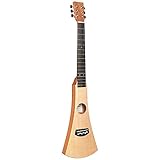
Overview: Martin’s Backpacker offers a no-frills approach to portable acoustic guitars, leveraging the company’s legendary reputation in a compact, steel-string design. Built with traditional tonewoods including a spruce top and solid back/sides, this instrument prioritizes brand heritage and simplicity over modern features, appealing to purists who trust the Martin name.
What Makes It Stand Out: The Martin brand itself is the primary differentiator—75+ years of acoustic guitar mastery lends credibility that few competitors can match. The steel-string configuration provides authentic acoustic tone and feel that nylon-string travel guitars cannot replicate. Its distinctive elongated body shape, while unconventional, projects surprising volume for its size and has become iconic among traveling musicians.
Value for Money: Positioned as a premium travel guitar, you’re paying substantially for the Martin name and quality control rather than features. The sparse inclusion of only a basic gig bag feels underwhelming at this price point. However, for players who value traditional craftsmanship and plan to keep the instrument for decades, the investment in a Martin retains better resale value than most travel guitars.
Strengths and Weaknesses: Pros: Martin build quality and brand prestige; authentic steel-string tone; respectable projection; excellent resale value; simple, reliable design. Cons: Minimal features (no electronics); basic gig bag; uncomfortable ergonomics for extended playing; premium pricing; vulnerable to climate damage like all wooden guitars.
Bottom Line: The Martin Backpacker suits traditionalists and Martin enthusiasts who prioritize brand heritage over modern convenience. While it lacks the features and durability of carbon fiber alternatives, it delivers genuine Martin tone in a package that fits overhead bins—making it a respectable, if pricey, choice for the brand-loyal traveler.
5. Fender FA-25N 3/4 Size Nylon String Acoustic Guitar, Beginner Guitar, with 2-Year Warranty, Perfect Beginner Guitar for Kids that is Easy on Fingers, Includes 3 Months of Free Lessons, Natural

Overview: Fender’s FA-25N targets the beginner market with a 3/4-size nylon-string acoustic designed specifically for comfort and learnability. This instrument combines Fender’s manufacturing expertise with player-friendly features like a C-shaped neck, soft nylon strings, and a complimentary Fender Play subscription, creating an accessible entry point for aspiring guitarists of all ages.
What Makes It Stand Out: The three-month Fender Play subscription adds exceptional educational value, providing thousands of structured lessons that transform this from a simple instrument into a complete learning system. The nylon strings are gentler on beginner fingertips than steel, while the 3/4 scale length reduces stretch requirements for small hands. Fender backs this with a two-year warranty—uncommon in this price bracket—demonstrating confidence in their build quality.
Value for Money: This is among the most affordable ways to own a guitar from a major brand while receiving professional instruction at no additional cost. The inclusion of lessons alone represents a $30-50 value, making the guitar itself effectively discounted. For parents uncertain about their child’s commitment, this low-risk package offers tremendous bang-for-buck compared to buying lessons and instrument separately.
Strengths and Weaknesses: Pros: Extremely beginner-friendly; soft nylon strings; includes valuable lessons; two-year warranty; trusted Fender brand; comfortable neck profile. Cons: Nylon strings limit musical genres; 3/4 size outgrown quickly; basic build quality; no electronics; limited projection.
Bottom Line: The FA-25N is the ideal starter guitar for children or absolute beginners seeking a gentle introduction to playing. While experienced players will quickly outgrow its limitations, the included lessons and comfortable playability make it the smartest value purchase for those taking their first musical steps.
6. Yamaha APXT2 3/4-Size Acoustic-Electric Guitar - Black

Overview: The Yamaha APXT2 is a 3/4-size acoustic-electric guitar that delivers the brand’s renowned craftsmanship in a travel-friendly package. Featuring a spruce top and rosewood fingerboard, this compact instrument is designed for musicians on the move or younger players seeking a quality starter guitar. The included gig bag adds immediate value for safe transportation.
What Makes It Stand Out: Yamaha’s System 68 pickup system sets this apart from basic travel acoustics, providing reliable amplified tone for small gigs or practice sessions. The APX body shape, scaled down to 3/4 size, maintains comfortable playability while the black finish offers a sleek, modern aesthetic. The rosewood bridge and fingerboard provide a premium feel uncommon in guitars this size.
Value for Money: Positioned in the mid-range for travel guitars, the APXT2 justifies its price through Yamaha’s quality control and the inclusion of electronics that actually sound decent. While cheaper options exist, they lack the proven durability and resale value of the Yamaha brand. You’re paying for reliability, not just features.
Strengths and Weaknesses: Strengths include excellent build quality, reliable electronics, comfortable neck profile, and trusted brand backing. Weaknesses are the basic ABS bridge pins, limited acoustic volume due to small body size, and the generic gig bag. The 3/4 scale may feel cramped for players with larger hands.
Bottom Line: The APXT2 is ideal for traveling musicians who need a dependable acoustic-electric that won’t break the bank. It sacrifices some acoustic richness for portability but delivers where it counts—reliability and plugged-in performance.
7. Journey Instruments Solid Sitka Travel Guitar – PJ410N Traveling Acoustic Guitar with Collapsible Patented System – Portable Backpack Case (African Mahogany)

Overview: The Journey Instruments PJ410N revolutionizes travel guitars with its patented collapsible neck system, packing full-scale acoustic tone into an airline-friendly package. This premium instrument features a solid Sitka spruce top and African mahogany back and sides, delivering rich, resonant sound that belies its compact 23-inch scale length. The TSA-compliant backpack case makes it a true travel companion.
What Makes It Stand Out: The 20-second assembly/disassembly system is genuinely innovative, using stainless steel locking components backed by a lifetime guarantee. Unlike traditional travel guitars that compromise tone for size, the PJ410N maintains serious acoustic projection. The carbon-reinforced mahogany neck ensures stability across climates, while the dual-action truss rod allows precise setup adjustments.
Value for Money: This sits at the premium end of the travel guitar market, but the price reflects genuine innovation and high-end materials. When you factor in the included ballistic nylon backpack (worth $100+ alone) and lifetime hardware warranty, it competes favorably with non-collapsible alternatives from major brands. You’re investing in engineering, not just wood.
Strengths and Weaknesses: Strengths include revolutionary portability, premium tonewoods, excellent playability, and airline-ready design. Weaknesses involve the learning curve of assembly, higher price point, and potential for mechanical wear over decades of use. Traditionalists may dislike the disassembly process.
Bottom Line: For serious touring musicians and songwriters who refuse to compromise on tone, the PJ410N is worth every penny. It solves the travel guitar dilemma brilliantly, though casual players may find simpler options more practical.
8. Donner HUSH I Guitar For Travel - Portable Ultra-Light and Quiet Performance Headless Acoustic-Electric Guitar, Mahogany Body with Removable Frames, Gig Bag,and Accessories

Overview: The Donner HUSH I redefines travel guitars with its radical headless design and ultra-quiet operation. Weighing as little as a laptop, this mahogany-bodied acoustic-electric features removable frames and button tuners, packing down to an incredibly slim 33.5" x 6.7" x 2.2" profile. The included gig bag fits easily in overhead bins, making it the ultimate stealth travel instrument.
What Makes It Stand Out: The 30-45dB pizzicato volume level allows genuine silent practice without disturbing others—perfect for hotel rooms or late-night sessions. The headphone preamp delivers natural acoustic tone with 50 hours of battery life, while the anti-phase button eliminates feedback. The hidden magnetic tuning key stored in the body ensures you’re never without tools.
Value for Money: This is remarkably affordable for a silent guitar with this level of engineering. Competing models from Yamaha and Traveler cost 2-3 times more. Donner includes essential accessories and delivers features that genuinely solve travel practice problems, making it an exceptional budget-conscious choice.
Strengths and Weaknesses: Strengths include extreme portability, silent practice capability, long battery life, and innovative design. Weaknesses are the complete reliance on electronics (no acoustic projection), unconventional aesthetics that may not appeal to traditionalists, and Donner’s lesser brand recognition for resale value.
Bottom Line: The HUSH I is perfect for guitarists who prioritize practice time over tradition. If you need a truly portable, silent instrument for travel, this delivers unprecedented value, though purists should look elsewhere.
9. Yamaha JR1 FG Junior 3/4 Size Acoustic Guitar, Natural

Overview: The Yamaha JR1 FG Junior is a no-frills 3/4-size acoustic guitar that captures the essence of Yamaha’s legendary FG series in a compact, travel-ready form. Built with a spruce top and meranti back and sides, this straightforward instrument prioritizes authentic acoustic tone over fancy features. The included gig bag provides basic protection for the road.
What Makes It Stand Out: Simplicity is the JR1’s greatest strength. Without electronics or complex mechanisms, it offers pure, unadulterated acoustic sound in a reliable package. Yamaha’s manufacturing consistency ensures each JR1 plays well out of the box, with a comfortable neck profile ideal for smaller hands or young beginners. The urea saddle provides decent intonation without costly materials.
Value for Money: This is among the most affordable ways to own a genuine Yamaha acoustic. It costs less than many toy guitars while delivering legitimate playability and tone. For beginners or as a knockaround travel guitar, the value proposition is outstanding. You’re getting a real instrument, not a compromise.
Strengths and Weaknesses: Strengths include unbeatable price, solid build quality, authentic acoustic tone, and trusted brand name. Weaknesses are the lack of electronics, basic gig bag, urea saddle (inferior to bone), and limited projection from the small body. Advanced players will find the 3/4 scale restrictive.
Bottom Line: The JR1 is the smart choice for beginners, kids, or anyone wanting a simple, reliable travel acoustic. It won’t wow audiences, but it will provide years of dependable practice and songwriting without breaking the bank.
10. Donner HUSH I Guitar For Travel - Portable Ultra-Light and Quiet Performance Headless Acoustic-Electric Guitar, Mahogany Body with Removable Frames, Gig Bag, and Accessories Natural

Overview: The Donner HUSH I in Natural finish offers the same groundbreaking portability as its black counterpart, presenting a more traditional wood aesthetic in an ultra-modern design. This headless, frameless travel guitar weighs virtually nothing and breaks down to briefcase dimensions, redefining what a travel instrument can be. The natural wood grain gives it a warmer, more organic appearance despite its futuristic silhouette.
What Makes It Stand Out: Beyond the revolutionary silent practice capability (30-45dB), the natural finish appeals to players who prefer classic wood looks. The 50-hour battery life through headphones remains unmatched in this price bracket. The asymmetrical neck profile reduces wrist fatigue during extended practice sessions, while the round frets prevent finger injuries—a thoughtful touch for traveling musicians who play for hours.
Value for Money: At this price point, you’re getting technology that typically commands three times the cost. The inclusion of a gig bag, accessories, and the hidden magnetic tuning tool eliminates hidden expenses. For travelers who value both aesthetics and functionality, the natural finish adds visual appeal without increasing price.
Strengths and Weaknesses: Strengths include the natural finish option, extreme portability, silent operation, and ergonomic design. Weaknesses remain the same: no acoustic projection, niche appeal, and brand perception. The natural finish may show wear more readily than black.
Bottom Line: Choose the Natural HUSH I if you want silent travel capabilities with a more traditional appearance. It’s identical to the black model functionally but offers aesthetic versatility for the discerning traveling guitarist.
The Anatomy of a Road-Ready Acoustic
Why Standard Guitars Fail on the Trail
Your grandmother’s dreadnought might sound like heaven in her climate-controlled living room, but introduce it to the real world and its design flaws become fatal vulnerabilities. Traditional acoustic guitars are built for stability in static environments. The moment you subject them to rapid temperature changes—like moving from an air-conditioned Bangkok hostel to 95°F street busking—the wood expands and contracts at different rates. Glue joints cry uncle. Bridge plates separate. Soundboards crack along the grain like a dried lakebed.
The problem isn’t just temperature. Standard guitars use hide glue or similar adhesives that soften in heat and become brittle in cold. Their solid wood tops, while tonally superior in studios, absorb moisture like a sponge in Costa Rica’s rainy season, ballooning upward and raising action to unplayable heights. Even the finish—typically nitrocellulose lacquer—micro-fractures with each altitude change, eventually checking into a spiderweb of cracks that lets moisture invade the wood beneath.
The Physics of Portable Tone
Travel guitars don’t just shrink standard designs; they rewrite the acoustic rulebook. The Helmholtz resonance—the frequency at which the body cavity vibrates—shifts dramatically when you reduce air volume. A properly designed travel guitar compensates with bracing patterns that are often more complex than full-size instruments. Ladder bracing, commonly used in cheap parlor guitars, becomes a liability in travel models because it concentrates stress along narrow glue lines. Instead, look for modified X-bracing or even fan bracing borrowed from classical guitars, which distributes tension across a wider surface area.
The scale length—the distance between nut and saddle—presents another compromise. Shorten it too much and you lose string tension, resulting in a flabby, indistinct tone. The sweet spot for most travel guitars falls between 22.5 and 23.5 inches, compared to a standard 25.5-inch scale. This retains enough tension for clarity while shaving serious inches off overall length.
Size Matters: Scale Length and Body Shape
Parlor vs Travel vs Mini: Decoding the Categories
The marketing terms blur together, but the distinctions matter more than you’d think. Parlor guitars are essentially historical artifacts—small-bodied instruments from the 19th century that happen to be portable. They retain full-scale lengths and standard nut widths, making them comfortable for adult hands but only marginally smaller than modern guitars. Their vintage-inspired designs often lack modern bracing innovations, making them surprisingly fragile for their size.
True travel guitars are ground-up designs where portability drives every decision. Body depths rarely exceed 3.5 inches, and upper bouts are sculpted to nestle against your back in a pack. Mini guitars, like the popular “baby” series from major manufacturers, split the difference—scaled-down bodies but often with full-scale necks bolted on. They feel familiar but can be neck-heavy and prone to dive-bombing when strapped on.
The 3/4 Scale Debate: Playability vs Portability
The 3/4-size designation is misleading—it refers to overall dimensions, not a precise 75% scaling of every component. A 3/4 guitar with a 23-inch scale length and 1-11/16" nut width can feel surprisingly natural to players with smaller hands or those willing to adapt. The trade-off comes in string tension: lighter gauge strings become mandatory to maintain playability, which reduces volume and bass response.
For fingerstyle players, the shorter scale can be a revelation—less string tension means easier bends and vibrato. But aggressive strummers will find the reduced dynamic range frustrating. The key is matching your playing style to the scale. If you’re a percussive player who beats the hell out of your instrument, stick closer to 24 inches. If you’re a delicate fingerpicker, you can dip down to 22 inches without sonic penalty.
Materials That Brave the Elements
Laminate vs Solid Wood: The Moisture War
The solid vs. laminate debate flips on its head when you’re backpacking. Solid wood guitars—prized for their resonant, improving tone—are moisture time bombs. A solid spruce top can swell 3-5% in high humidity, enough to lift a bridge or snap a brace. Laminate tops, constructed from thin plywood layers with alternating grain directions, resist movement because each layer counteracts the other’s expansion. Modern cross-laminated timber (CLT) techniques have improved laminate tone dramatically, with some high-end laminates approaching 70-80% of solid wood’s resonance.
But not all laminates are created equal. Avoid guitars using mystery “select hardwood” laminates—these are often soft, porous woods that delaminate when wet. Look for specific species: laminated mahogany or sapele for backs and sides, and laminated sitka or engelmann spruce for tops. The glue matters too; many 2026 models use waterproof resorcinol glue, the same stuff that holds wooden boats together.
Composite Innovations: Carbon Fiber and Beyond
Carbon fiber has matured from a boutique curiosity into a legitimate backpacking solution. Unlike wood, it has near-zero moisture absorption and a coefficient of thermal expansion that’s practically nil. A carbon fiber guitar thrown in a pack during a Patagonian trek will emerge in the same tune it entered. The tonal compromise has narrowed significantly; modern woven carbon tops with strategic damping layers produce warmth that early models lacked.
Emerging materials for 2026 include flax fiber composites—offering carbon’s stability with wood-like damping—and recycled ocean plastic bodies that are virtually indestructible. These eco-composites weigh slightly more than carbon but can be repaired in the field with epoxy, unlike carbon which requires professional autoclave work when cracked.
Hardware That Won’t Rust in the Rain
Tuning machines are the Achilles’ heel of travel guitars. Die-cast chrome tuners will seize within weeks of ocean air exposure. Look for sealed, lubricated tuners with stainless steel shafts and bronze gears. The gear ratio should be at least 18:1—lower ratios mean less precision and more slippage when temperatures fluctuate.
Bridge pins are another overlooked vulnerability. Plastic pins become brittle in cold and warp in heat. Ebony pins look traditional but crack under stress. For backpacking, Tusq or Corian pins offer the best compromise: stable across temperatures, self-lubricating for string changes, and cheap enough to replace when you inevitably lose one in a Cambodian guesthouse.
Neck Design for the Nomadic Musician
Slim Profile vs Standard: Fatigue Factors
A neck that feels fast in the store can become torture after three hours of busking in Prague’s Old Town Square. Ultra-slim necks (under 19mm at the first fret) transfer more vibration to your hand, causing fatigue. They also have less wood mass, making them more susceptible to warping when humidity spikes. The ideal travel neck profile is a modified C-shape, around 20-21mm thick, with a satin finish that lets your palm slide without sticking.
The fingerboard radius—how curved the fretboard is—deserves equal attention. A flatter radius (14-16 inches) makes barre chords easier and accommodates lower action without buzzing. Vintage 7.25-inch radii might look cool but require higher action and choke notes when you bend strings, a recipe for frustration when you’re already battling environmental challenges.
Detachable Neck Systems: Gimmick or Game-Changer?
Several 2026 models feature tool-free detachable necks that supposedly make packing easier. In practice, these systems add weight in reinforcement hardware and create potential failure points at the neck joint. The constant assembly and disassembly wear down connection points, eventually developing play that kills sustain and tone.
However, for fly-in backpacking trips where carry-on space is measured in millimeters, a detachable neck can be justified—if the system uses a locking pin design rather than threaded inserts. Threaded inserts strip over time; locking pins distribute stress across a wider area. If you go this route, practice disassembly at home until it’s muscle memory. Fumbling with a neck joint in a crowded airport is a surefire way to drop your guitar.
Electronics for the Modern Troubadour
Built-in Tuners That Actually Work
Clip-on tuners get lost. Smartphone tuner apps drain precious battery. Built-in tuners, when done right, are survival gear. The key is placement: tuners integrated into the preamp should be recessed, not protruding. A protruding tuner control is a snag hazard that will catch on pack straps and break.
Look for tuners with a “sleep” function that draws micro-amps when idle. Some 2026 models use piezo-based tuning that reads vibration directly from the bridge saddle, eliminating the need for a separate battery-draining tuner circuit. This tech is more accurate in noisy environments—essential when you’re tuning up next to a Bangkok street market.
Pickup Systems That Preserve Battery
Onboard electronics are a luxury until you’re playing a paid gig in a Lisbon hostel common room. The problem is battery drain. Traditional 9V batteries last 20-30 hours; lithium coin cells in newer systems push 100+ hours. Even better: some travel guitars now feature USB-C rechargeable preamps with battery management chips that shut down automatically after 10 minutes of silence.
Undersaddle piezo pickups dominate the travel market for good reason—they’re lightweight and don’t affect acoustic tone when bypassed. But quality varies wildly. Cheap piezos sound quacky and harsh. Look for systems with individual saddle compensation—each string has its own piezo element calibrated for string gauge. This eliminates the brittle, artificial tone that makes so many amplified acoustics sound like a toy.
Weather Resistance: Beyond Water-Repellent
Humidity Control on the Hoof
You can’t carry a humidifier, but you can manage micro-climates. The goal isn’t perfection; it’s stability. Sudden changes kill guitars faster than constant bad conditions. When moving from air-conditioning to tropical heat, keep your guitar in its case for 30 minutes to acclimate. The case acts as a buffer, slowing humidity exchange from 6% per hour (exposed) to 1% per hour (cased).
Desiccant packs are your friends, but not the silica gel kind that need oven regeneration. Modern calcium chloride packs (the same chemistry as DampRid) absorb moisture and turn it to brine, which you can pour out. Two 50-gram packs in your case can drop relative humidity by 15% in 24 hours. Just don’t let them touch the wood—they’re corrosive when wet.
Temperature Extremes and Glue Joints
Every 20°F temperature swing changes wood dimensions by about 1%. Multiply that across a guitar’s 15+ glue joints and you have a structural integrity lottery. The critical threshold is 140°F—the temperature at which most instrument glues begin to soften. A guitar left in direct sun in a car in Marrakech can hit this in under 30 minutes.
For cold, the danger is brittleness. Below 40°F, nitrocellulose finishes become glass-like and crack at the slightest impact. The solution isn’t just insulation; it’s thermal mass. A hard case with foam insulation protects against impact but doesn’t prevent temperature change. A gig bag with a reflective Mylar liner, however, reflects radiant heat and slows conductive cooling. In extreme cold, tuck your guitar inside your sleeping bag at night—your body heat is the best heater you’ve got.
The Case Conundrum: Gig Bag vs Hard Shell
Backpack Integration Features
A case that doesn’t attach securely to your pack is a dropped guitar waiting to happen. Modern travel gig bags feature modular MOLLE (Modular Lightweight Load-carrying Equipment) webbing, the same system used on military packs. This lets you strap your guitar horizontally across the top of a 40L backpack, distributing weight to your hips rather than shoulders.
Look for bags with stowable backpack straps that tuck away when not in use. Nothing will destroy a guitar faster than dangling straps catching in bus doors or train couplings. The best designs use magnetic strap keepers that snap flush against the case body. Also crucial: a rainfly that deploys from a hidden pocket. Most “water-resistant” cases fail after 20 minutes of sustained rain; a sil-nylon rainfly adds negligible weight and genuine protection.
Impact Protection Without the Weight Penalty
Hard cases protect against crushing but weigh 8-12 pounds empty—unacceptable when your base weight is already pushing airline limits. Modern hybrid cases use closed-cell foam exoskeletons: 15mm of high-density foam with a semi-rigid ABS plastic spine. This setup weighs under 3 pounds but can survive a 4-foot drop onto concrete.
The secret is energy distribution. A hard case transfers impact force directly to the guitar at the contact point. A foam case compresses, extending the impact duration and reducing peak force. Think of it like falling on a mattress versus a marble floor. For the truly weight-conscious, some 2026 models feature inflatable air bladder protection—essentially a bike helmet for your guitar that adds 8 ounces when packed but provides 2 inches of crush space.
Tuning Stability in Hostile Environments
Gear Ratio Mathematics for the Road
Tuning stability isn’t about luck; it’s about mechanical advantage. An 18:1 gear ratio means 18 turns of the tuning knob equal one turn of the string post. Higher ratios (21:1, 28:1) offer finer adjustment but more turns to pitch, which becomes tedious when you’re re-tuning every 20 minutes in variable weather.
The real spec to watch is post diameter. A larger diameter post (10mm vs standard 8mm) increases string break angle over the nut, improving sustain and reducing slippage. But it also means more string wrap is needed, which can shift as it settles. The sweet spot for travel: 9mm posts with 18:1 ratio, giving you precision without requiring a marathon of winding.
Locking Tuners: Worth the Ounce?
Locking tuners add about 2 ounces per set and $50 to the price tag. For backpacking, that weight is negligible compared to the benefit: they eliminate string slippage at the post, the primary cause of tuning drift. Traditional tuners rely on string friction and multiple wraps that shift with temperature changes. Locking tuners clamp the string, making the connection effectively permanent.
The downside? If a locking tuner mechanism seizes from corrosion or sand infiltration, you can’t just replace a string—you need tools to disassemble the tuner. For desert or beach travel, stick with standard sealed tuners. For mountain or urban travel where humidity is the enemy, locking tuners are worth their weight in gold-plated brass.
Playability vs. Portability: Finding Your Threshold
Action Setup for Variable Climates
Action—the string height above the fretboard—is a moving target on the trail. A setup that’s perfect in dry Colorado becomes unplayably high in humid Cambodia. The solution isn’t a one-size-fits-all measurement; it’s a setup range. Aim for 2.0mm at the 12th fret on the low E string and 1.5mm on the high E. This gives you headroom for swelling without buzzing when the wood contracts.
Carry a 1/8" truss rod wrench. A quarter-turn clockwise counteracts neck bow from humidity; a quarter-turn counter-clockwise prevents back-bow in dry climates. Mark your “neutral” position with a small dot of nail polish on the truss rod nut. That way, you can always return to baseline without guesswork.
Fretboard Radius and Finger Fatigue
A flatter radius (16 inches) reduces finger fatigue during long playing sessions because your fingers don’t have to “climb” a curved surface. But it makes chords in the first position slightly harder for players with smaller hands. Compound radius fretboards—flatter higher up, more curved near the nut—offer the best of both worlds but are rare in travel guitars due to manufacturing complexity.
If you find a travel guitar with a compound radius (usually 12" at the nut flattening to 16" at the 12th fret), it’s worth a serious look. The design reduces choking on bends above the 7th fret while keeping cowboy chords comfortable. Just ensure the transition is smooth; a poorly executed compound radius feels like playing over a speed bump.
Budget Realities: From Busker to Balladeer
The $200-$500 Sweet Spot
This is where travel guitars stop being toys and start being tools. Below $200, you’re getting laminated everything, plastic nuts, and tuners that won’t last a season. Above $500, you hit diminishing returns for backpacking purposes—solid wood tops and boutique electronics don’t justify the cost when your guitar might get stolen from a Barcelona hostel.
The $350 mark is the magic number. At this price, you get laminated top/back/sides with specific wood species (not “select hardwood”), a bone or Tusq nut and saddle, sealed tuners, and a gig bag that’s actually road-worthy. The electronics, if included, will be basic but functional. Think of it as the Toyota Corolla of travel guitars: not exciting, but it’ll get you 200,000 miles.
When to Invest in Premium Road-Warrior Guitars
Spending $1000+ on a travel guitar only makes sense if it’s your primary instrument. Professional musicians who tour internationally need reliability that justifies the cost. Premium models feature carbon fiber reinforcement rods in the neck, waterproof polyester finishes, and modular electronics that can be field-replaced with a screwdriver.
The hidden cost is insurance. A $1500 travel guitar needs a rider on your travel insurance, typically 1-2% of the instrument’s value per trip. That $30 premium adds up over a year of backpacking. For most travelers, that money is better spent on a backup guitar in case of theft or catastrophic damage.
The Second-Hand Trail: Finding Hidden Gems
Red Flags in Used Travel Guitars
The used market is littered with travel guitars that failed their owners. Learn to spot the casualties. Check the neck joint with a straightedge; any gap between neck heel and body means the glue has failed and will need a $100+ reset. Press down on the bridge with your thumb; movement indicates the bridge is separating, often from moisture exposure.
Inspect the fret ends. Sharp, protruding frets mean the neck has shrunk from dryness—a common issue in guitars that lived in arid climates. This is fixable but costs $75-150 for a fret dressing. Most damning: ask where the guitar lived. If the answer involves “storage unit,” “attic,” or “basement,” walk away. Those environments cycle temperature and humidity constantly, creating invisible stress fractures in the top braces.
Vintage vs Modern: Durability Considerations
Vintage parlor guitars from the 1930s-50s have the advantage of fully cured wood that’s less reactive to humidity. But they also have hide glue, no truss rods, and often feature Brazilian rosewood—illegal to transport across international borders without CITES certification. Getting stopped at customs with a vintage guitar can result in confiscation and fines.
Modern guitars built after 2020 benefit from CAD-designed bracing, synthetic adhesives, and UV-cured finishes that are more flexible than vintage nitrocellulose. They’re also more likely to have replaceable parts. A broken tuner on a 1940s parlor might require a custom fabrication; a broken tuner on a modern travel guitar is a $20 Amazon order away.
Field Maintenance: Your On-Road Toolkit
Emergency Repairs with Minimal Gear
Your entire repair kit should fit in a sunglasses case: a 1/8" truss rod wrench, a string winder with built-in cutter, a small tube of super glue (for fretboard chips), dental floss (for cleaning nut slots), and a credit card (for checking neck straightness). That’s it. Anything more is dead weight.
For bridge lifting, carry a small clamp and a packet of rapid-curing epoxy. Clean the separation with alcohol wipes, apply epoxy, clamp for 30 minutes, and let cure overnight. It’s not a professional repair, but it’ll hold for months. For cracks in the top, use super glue and a piece of paper from a tea bag as a splint. The paper’s fibers reinforce the glue without adding significant weight.
String Changing in Hostel Bathrooms
Change strings one at a time to maintain neck tension. Remove the low E, replace it, tune to pitch, then move to the A string. This prevents the bridge from shifting on floating-bridge designs. Bring a microfiber towel to drape over the sink; dropping a bridge pin down a hostel drain is a traveler’s nightmare.
Wind strings with minimal overlap—two wraps maximum for wound strings, three for plain strings. More wraps create a shifting mass that destabilizes tuning. Stretch each string thoroughly: tune to pitch, pull the string up at the 12th fret with moderate force, retune, repeat until the string stops detuning. This pre-stretches the metal, reducing tuning drift during your first performance.
Testing Protocols: The Pre-Purchase Audition
The “One Week” Simulation Test
Before committing, subject any candidate to a 7-day torture test. Day 1-2: Play it in your bathroom with a hot shower running to simulate tropical humidity. Day 3-4: Leave it in your car trunk during a sunny day (hit 120°F+). Day 5-6: Store it in a fridge for 4 hours, then play immediately. Day 7: Drop it (in its case) from waist height onto concrete.
Extreme? Absolutely. But these conditions are daily realities on the road. A guitar that survives this week will survive the Pan-American Highway. Check for buzzing, tuning stability, and cosmetic damage after each phase. Document with photos. If the dealer won’t let you do this, they’re selling you a museum piece, not a tool.
What Music Stores Won’t Tell You
Store acoustics are kept at 45% relative humidity and 72°F. Your first night in a humid climate will reveal truths the showroom hid. Always ask to play the exact guitar you’re buying, not the “floor model.” Floor models are kept in optimal conditions and may have been set up by a tech. The one in the box is how it ships from the factory—often with high action, rough fret ends, and untested electronics.
Test the pickup (if equipped) through the store’s crappiest amp. If it sounds good through a 10-watt practice amp, it’ll sound great through a PA. Fancy amps hide sins. And ask about the return policy for “environmental damage.” Many stores consider humidity-related issues user error and won’t accept returns. Get it in writing.
2026 and Beyond: Emerging Technologies
Smart Guitars and Travel Integration
The next generation of travel guitars features embedded humidity sensors that send alerts to your phone when conditions become dangerous. Some models include GPS trackers hidden in the neck block—priceless for recovery after theft. The most innovative include built-in wireless charging pads in the case, powered by a solar panel that straps to your pack.
But smart features add failure points. A humidity sensor with a dead battery gives false confidence. A GPS tracker with a monthly subscription drains your travel budget. The rule for 2026: only pay for smart features that solve problems you’ve actually experienced. If you’ve never had a guitar stolen, skip the tracker and invest in better insurance.
Sustainable Materials for Eco-Conscious Wanderers
Travelers are increasingly demanding guitars that don’t contribute to deforestation. 2026 models feature tops made from torrefied (heat-treated) poplar or basswood—fast-growing species that, after thermal treatment, rival spruce for stiffness-to-weight ratio. Backs and sides use bamboo laminates that are actually stronger than traditional mahogany.
The most exciting development is mycelium-based composites—fungus-grown materials that are carbon-negative to produce and completely waterproof. Early models sound surprisingly warm, though they lack the high-end sparkle of wood. For buskers playing three-hour sets, the tonal compromise is offset by the knowledge that their instrument actually sequestered carbon during manufacturing.
Frequently Asked Questions
What’s the difference between a travel guitar and a regular small guitar?
Travel guitars are engineered from the ground up for durability in extreme conditions, featuring reinforced bracing, moisture-resistant materials, and compact designs that prioritize portability over traditional tone. Regular small guitars like parlor models simply shrink standard designs without addressing the structural compromises that make them vulnerable on the road.
Can I bring my travel guitar as a carry-on on flights?
Most travel guitars under 35 inches total length fit in overhead bins, but policies vary wildly by airline and even by gate agent. The key is a soft gig bag that squishes to fit awkward spaces. Print the airline’s musical instrument policy and arrive early. Some musicians buy a seat for their guitar (ticket code CBBG, “Cabin Baggage”) for guaranteed storage.
How do I protect my guitar from humidity while backpacking?
Use a two-pronged approach: a quality gig bag with a rainfly for external moisture, and two-way humidity control packets inside the bag. Boveda makes 49% RH packs that both add and remove moisture as needed. For extreme humidity, carry calcium chloride desiccants. Most importantly, minimize rapid transitions—let your guitar acclimate in its case when moving between climates.
Are solid wood travel guitars worth it?
Only if you prioritize tone above all else and have meticulous humidity control. For 95% of backpackers, high-quality laminated tops with solid wood bracing offer 85% of the tone with 300% more durability. Solid wood guitars can work for stationary base camps but become liabilities on multi-climate itineraries.
What’s the ideal weight for a backpacking guitar?
The guitar itself should be under 3.5 pounds. Your case or gig bag should add no more than 2 pounds. Anything over 5.5 pounds total becomes a morale killer on 15-mile hiking days. Carbon fiber models can dip under 2.5 pounds, while still sounding like a real instrument.
Do I need electronics in a travel guitar?
Only if you plan to perform for audiences larger than 10 people or busk in noisy environments. For personal enjoyment or small campfire circles, a purely acoustic guitar is lighter, simpler, and has one less failure point. If you do get electronics, prioritize passive pickups that work without batteries for emergency amplification.
How often should I change strings while traveling?
Every 40-60 hours of playing time, or immediately if you notice rust, discoloration, or tuning instability. In coastal or humid environments, that might mean every two weeks. Carry two full sets: one phosphor bronze for warmth, one 80/20 bronze for brightness. Coated strings last longer but cost more—a worthwhile tradeoff when string changes are inconvenient.
Can I use regular guitar strings on a travel guitar?
Yes, but scale length matters. On shorter scales (under 23 inches), regular light gauge strings (.012-.053) feel floppy. Move up to medium gauge (.013-.056) to maintain tension and tone. On scales below 22 inches, you may need custom “long scale” strings designed for baritone guitars to get proper tension.
What’s the best way to insure a guitar for international travel?
Standard travel insurance often caps single items at $500. For expensive guitars, get a musical instrument rider from a specialist like Anderson Group or Clarion. Expect to pay 1-2% of the instrument’s value per trip. Document your guitar with photos and a serial number. Some policies require a professional appraisal for instruments over $1000.
Will a travel guitar’s sound improve over time like a full-size?
Laminate-top guitars won’t open up significantly, but solid-top travel guitars do benefit from playing. The break-in period is shorter—6 months instead of 2-3 years—because the smaller top vibrates more intensely. Carbon fiber and composite guitars sound the same from day one to year ten, which is either a feature or a bug depending on your perspective.
See Also
- 10 Travel Acoustic Guitars for Backpacking Musicians Worth the Splurge in 2026
- 10 Must-Have Travel Acoustic Guitars for Backpacking Musicians in 2026
- 10 Travel Acoustic Guitars That Fit in Airplane Overhead Bins in 2026
- 10 Travel Acoustic Guitars for Digital Nomad Musicians in 2026
- The Complete Guide to 10 Travel Acoustic Guitars for Digital Nomads in 2026