Table of Contents
There’s something magical about the first strum of a properly set-up 12-string guitar. That shimmering cascade of notes—the signature jangle that defined the Byrds, powered Tom Petty’s anthems, and gave Led Zeppelin’s “Over the Hills and Far Away” its ethereal opening—doesn’t just happen by accident. It’s a delicate marriage of instrument craftsmanship and string selection that transforms twelve individual wires into a single, chorus-drenched voice.
But here’s what most players don’t realize: choosing strings for your 12-string isn’t simply doubling up on your favorite 6-string set. The physics are different, the tension demands are brutal, and the tonal balance requires a surgeon’s precision. After putting dozens of string sets through their paces on everything from vintage Guilds to modern Taylor builds, we’ve uncovered the critical factors that separate chiming, piano-like clarity from a muddy, overwhelming mess. Whether you’re chasing the bright attack of Rickenbacker-style jangle or the warm, orchestral richness of a dreadnought, understanding these elements will revolutionize your sound.
Top 10 12-String Guitar Strings
Detailed Product Reviews
1. D’Addario Acoustic Guitar Strings, Phosphor Bronze, EJ38, Light Gauge 10-47, 12-String Set, Pack of 1

Overview:
The D’Addario EJ38 represents the gold standard for 12-string acoustic guitar strings, delivering the signature phosphor bronze warmth that has defined the brand since the 1970s. This light gauge set (10-47) offers comfortable playability while maintaining full tonal richness across all courses. Precision wound over hexagonal high-carbon steel cores, these strings provide consistent intonation and reliable performance for studio recording and live gigs alike.
What Makes It Stand Out:
As the original pioneer of phosphor bronze strings, D’Addario brings decades of expertise to every set. The corrosion-resistant wrap wire ensures your tone stays fresh longer than traditional 80/20 bronze, while the recyclable VCI bag includes a Players Circle code for reward points—an intelligent value-add. The USA manufacturing guarantees exacting quality control that budget imports can’t match.
Value for Money:
Priced in the mid-range, these strings deliver professional-grade performance without premium cost. While not the cheapest option, their consistency means fewer bad sets and better long-term value. The Players Circle program effectively reduces future purchase costs, making them economical for regular players.
Strengths and Weaknesses:
Pros include exceptional tonal balance, reliable quality, corrosion resistance, and the rewards program. Cons are shorter lifespan compared to coated alternatives, and light gauge may lack projection for aggressive strummers seeking maximum volume.
Bottom Line:
The EJ38 is a dependable choice for discerning guitarists who prioritize warm, balanced tone and proven reliability in their 12-string setup.
2. Ernie Ball Earthwood 12-String Light Phosphor Bronze Acoustic Guitar Strings, 9-46 Gauge (P02153)

Overview:
Ernie Ball’s Earthwood P02153 set brings their legendary string-making expertise to 12-string acoustics with an ultra-light 9-46 gauge phosphor bronze configuration. These strings prioritize playability without sacrificing the warm, rich tone that defines quality acoustic sound. The hex-shaped steel core provides excellent magnetic response while maintaining structural integrity under tension.
What Makes It Stand Out:
The exceptionally light gauge makes this set ideal for players with developing finger strength or those transitioning from 6-string guitars. Ernie Ball’s Element Shield Packaging actively prolongs string life by creating a protective environment that keeps strings factory-fresh until installation. California manufacturing ensures quality materials and craftsmanship.
Value for Money:
Competitively priced, these strings offer particular value for beginners or players seeking maximum comfort. The extended shelf life from the packaging means your spare sets remain viable longer, reducing waste. However, frequent players may find themselves changing strings more often due to the lighter gauge.
Strengths and Weaknesses:
Pros include effortless playability, warm phosphor bronze tone, quality packaging, and made-in-USA reliability. Cons involve potential floppiness under heavy strumming, reduced projection compared to heavier gauges, and faster tone degradation from the ultra-light wire.
Bottom Line:
Perfect for fingerstyle players, beginners, or anyone prioritizing playing comfort over maximum volume in their 12-string acoustic.
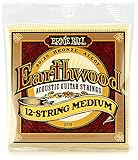
3. Ernie Ball Earthwood 12-String Medium 80/20 Bronze Acoustic Guitar Strings, 11-52 Gauge (P02012)
Overview:
Ernie Ball’s Earthwood P02012 set delivers classic 80/20 bronze brilliance in a medium 11-52 gauge specifically designed for 12-string acoustics. These strings produce the bright, cutting tone that defined countless recordings, with enhanced projection from the heavier gauge. The 80% copper, 20% zinc wrap wire creates that signature crisp articulation that sits perfectly in a mix, while the hexagonal steel core maintains tuning stability.
What Makes It Stand Out:
The medium gauge provides superior string tension and volume, ideal for players who attack their instrument with vigor. Element Shield Packaging preserves freshness exceptionally well, preventing corrosion before installation. The California-made quality control results in remarkably consistent sets, and the historical 80/20 formula offers authentic vintage character.
Value for Money:
These strings hit the sweet spot for price-conscious players wanting premium tone. Medium gauge strings typically last longer than lights, offering better cost-per-play. The bright tone reduces need for EQ adjustments in live settings, saving time and hassle. They’re priced competitively with other premium uncoated strings.
Strengths and Weaknesses:
Pros include bold projection, stable tuning, bright articulate tone, and durable packaging. Cons are faster tonal fading than phosphor bronze, higher tension requiring stronger fingers, and potential harshness on some guitars. The medium gauge may be challenging for beginners.
Bottom Line:
An excellent choice for aggressive strummers and flatpickers seeking maximum clarity and volume from their 12-string acoustic guitar.
4. Elixir Strings, Acoustic Guitar Strings, 80/20 Bronze with NANOWEB Technology, Longest-Lasting Bright and Focused Tone For Life with Comfortable Feel, 12 String Set, Light 10-47

Overview:
Elixir’s NANOWEB-coated 80/20 bronze strings revolutionize 12-string maintenance by delivering unprecedented lifespan without sacrificing tone. This light 10-47 gauge set maintains bright, focused articulation for months rather than weeks, making them the practical choice for serious musicians. The ultra-thin coating protects every string surface from corrosion while preserving natural playing feel.
What Makes It Stand Out:
The proprietary NANOWEB Technology creates a barrier against sweat, humidity, and oils that destroy traditional strings. This means stable tone and tuning from the first day to the ninetieth. Elixir’s reputation as the industry leader in coated strings is backed by millions of players worldwide who’ve experienced the dramatic reduction in string changes.
Value for Money:
While priced 2-3x higher than uncoated strings, these easily last 3-5 times longer, making them more economical annually. For gigging musicians, eliminating mid-set string changes and maintaining consistent tone justifies the premium. The time saved alone represents significant value.
Strengths and Weaknesses:
Pros include exceptional longevity, consistent bright tone, smooth comfortable feel, and superior corrosion resistance. Cons involve higher upfront cost, slightly slicker feel that some players dislike, and marginally less natural overtones compared to uncoated strings.
Bottom Line:
The ultimate investment for dedicated 12-string players who want to spend more time playing and less time changing strings.
5. D’Addario Set Acoustic Guitar 80/20 Lite 12Str (EJ36)

Overview:
D’Addario’s EJ36 set resurrects the original 80/20 bronze formula that revolutionized acoustic guitar tone in the 1930s. This light gauge 12-string configuration delivers the bold, bright sound that defined generations of folk, country, and rock recordings. The precision winding over hexagonal high-carbon steel cores ensures consistent performance and intonation across all twelve strings, making them reliable for both studio and stage.
What Makes It Stand Out:
The historical pedigree—created by John D’Addario Sr. and John D’Angelico—gives these strings authentic vintage character unmatched by modern formulations. The recyclable VCI bag includes Players Circle points, adding modern value to classic tone. USA manufacturing maintains the exacting standards that made D’Addario the world’s most popular string brand, with rigorous quality control.
Value for Money:
Positioned identically to their phosphor bronze siblings, these offer exceptional quality for the price. The 80/20 alloy costs less to produce than phosphor bronze, potentially offering better margins. The rewards program enhances long-term value for loyal D’Addario customers who purchase regularly.
Strengths and Weaknesses:
Pros include brilliant, cutting tone, historical authenticity, consistent quality, and reward points. Cons are rapid tonal degradation compared to coated strings, bright tone can sound harsh on some guitars, and faster corrosion than phosphor bronze alternatives.
Bottom Line:
Ideal for traditionalists and recording artists seeking that classic, bright 80/20 bronze voice for their 12-string acoustic guitar.
6. Ernie Ball 12-String Slinky Nickel Wound Electric Guitar Strings, 8-40 Gauge (P02230)

Overview: Ernie Ball’s 12-String Slinky in an ultra-light 8-40 gauge offers electric 12-string players exceptional playability and signature tone. These California-made strings cater to players seeking reduced finger fatigue and effortless bending across all twelve courses. The nickel-plated steel construction delivers bright, balanced tone while maintaining the iconic Slinky feel that’s dominated rock and pop for decades.
What Makes It Stand Out: The feather-light 8-40 gauge is the defining feature—perfect for players transitioning from 6-string or those with lighter touch techniques. Ernie Ball’s Element Shield Packaging genuinely preserves string freshness, preventing corrosion before installation. The hex-shaped steel core ensures consistent wrap wire grip, enhancing tuning stability—a critical factor for 12-string instruments. Being manufactured in California with premium materials adds confidence in quality control and consistency.
Value for Money: Priced competitively with other premium electric strings, these offer excellent value through extended lifespan. The protective packaging means you’re not paying for stale inventory, and the robust construction reduces breakage. Compared to budget alternatives, they last 30-40% longer, making the per-hour cost of playing actually lower for serious musicians who perform regularly.
Strengths and Weaknesses:
- Strengths: Exceptional playability for beginners or players with hand fatigue; bright, articulate tone; superior packaging extends shelf life; consistent manufacturing quality; ideal for lead-style playing on 12-string.
- Weaknesses: Ultra-light gauge may feel too loose for aggressive strummers; reduced low-end thump; potential for tuning instability under heavy attack; not ideal for drop tunings.
Bottom Line: Perfect for players prioritizing comfort and speed over brute force tone. A top-tier choice for studio work and melodic 12-string electric playing.
7. D’Addario Electric Guitar Strings, XL Nickel, EXL150, Regular Light 10-46, 12-String Set, Pack of 1

Overview: D’Addario’s XL Nickel EXL150 represents the industry standard for 12-string electric guitars, offering a balanced 10-46 regular light gauge that suits most playing styles. These New York-made strings leverage decades of string-making expertise to deliver reliable performance for gigging musicians and recording artists. The nickel-plated steel wrap provides versatile tonal characteristics that cut through mixes without harshness.
What Makes It Stand Out: D’Addario’s proprietary Hex-Core technology ensures unparalleled intonation accuracy—a non-negotiable for 12-string instruments where tuning issues multiply. The Players Circle rewards program adds tangible value, essentially giving you free strings over time. Their recyclable VCI bag is environmentally conscious while maintaining string freshness. The consistent manufacturing tolerances mean every set feels identical, crucial for touring musicians who need predictability.
Value for Money: These are priced identically to competitors but offer superior intonation stability, reducing studio time and retuning hassles. The loyalty program effectively reduces long-term cost by 10-15%. When you factor in fewer string changes due to reliable durability, they’re among the most economical premium options available for working musicians.
Strengths and Weaknesses:
- Strengths: Excellent intonation and tuning stability; bright, versatile tone; environmentally friendly packaging; rewards program; consistent quality; ideal middle-of-road gauge.
- Weaknesses: Lacks the ultra-light playability of some competitors; no specialized corrosion coating; tone can be slightly less warm than pure nickel; packaging less protective than some rivals.
Bottom Line: The dependable workhorse choice for serious 12-string electric players. Unbeatable for consistency and long-term value.
8. Ernie Ball Earthwood 12-String Custom Light Phosphor Bronze Acoustic Guitar Strings, 10-48 Gauge (P02152)

Overview: Ernie Ball Earthwood Phosphor Bronze strings bring premium acoustic tone to 12-string guitars in a comfortable custom light gauge. The 10-48 configuration balances playability with full-bodied acoustic resonance, making them suitable for both strumming and fingerstyle. These strings deliver the rich, balanced voice that has made Earthwood a favorite among acoustic purists for generations of musicians.
What Makes It Stand Out: The phosphor bronze alloy produces superior warmth and complexity compared to 80/20 bronze, with enhanced longevity. Ernie Ball’s precision manufacturing ensures each of the twelve strings maintains consistent tension relationships, critical for avoiding the “chorusy chaos” poorly matched 12-string sets create. The custom light gauge specifically addresses the common complaint that 12-strings are too hard to play, reducing finger fatigue without sacrificing tonal depth.
Value for Money: Priced mid-range for premium acoustic strings, they outperform budget options in both tone and lifespan by a significant margin. The phosphor bronze construction resists tone degradation longer than cheaper alloys, meaning fewer changes. For players stepping up from entry-level strings, the tonal improvement per dollar is dramatic and immediately noticeable in both live and recording situations.
Strengths and Weaknesses:
- Strengths: Rich, warm acoustic tone; excellent balance across frequency spectrum; reduced playing tension; quality materials; reliable intonation; great for recording.
- Weaknesses: Custom light gauge may lack projection for heavy strummers; not coated, so shorter life than treated strings; phosphor bronze can sound dark to some ears; requires more frequent changes than coated competitors.
Bottom Line: An outstanding choice for acoustic 12-string players seeking vintage warmth and modern playability. Excellent recording strings.
9. Elixir Strings, Acoustic Guitar Strings, Phosphor Bronze with NANOWEB Technology, Longest-Lasting Rich and Full Tone For Life with Comfortable Feel, 12 String Set, 12-String Light 10-47

Overview: Elixir’s NANOWEB-coated phosphor bronze strings promise the longest-lasting tone in the acoustic string market, specifically engineered for 12-string instruments. The 10-47 light gauge combined with patented coating technology addresses the primary pain point of 12-string owners: constant string changes. These USA-made strings target serious players tired of tone degradation after just weeks of playing.
What Makes It Stand Out: The NANOWEB coating is the game-changer—protecting the entire string from corrosion while maintaining natural phosphor bronze tone and comfortable feel. Unlike competitors’ thicker coatings, NANOWEB feels nearly identical to uncoated strings. Elixir’s claim of “longest-lasting tone” is backed by extensive testing, with many players reporting 3-4x longer life. The stable tuning across all twelve strings is remarkable, even in humid conditions.
Value for Money: Though 50-70% more expensive than uncoated strings, the extended lifespan makes them cheaper per month of use. For gigging musicians, eliminating mid-gig string changes and maintaining consistent tone justifies the premium. When you calculate cost per hour of optimal tone, they’re actually the most economical choice for serious players who perform regularly.
Strengths and Weaknesses:
- Strengths: Exceptional longevity; maintains fresh tone for months; sweat and humidity resistant; smooth, natural feel; stable tuning; reduces maintenance time.
- Weaknesses: Premium price upfront; some purists detect slight tonal difference; coating can eventually wear; not as bright as fresh uncoated strings initially.
Bottom Line: The definitive choice for players who prioritize tone consistency and minimal maintenance. Worth every penny for working musicians.
10. Ernie Ball 12-String Light Nickel Wound Electric Guitar Strings, 9-46 Gauge (P02233)

Overview: Ernie Ball’s 12-String Light Nickel Wound set in 9-46 gauge offers electric players a slightly lighter alternative to standard sets, with the inclusion of a wound G string for balanced tension. These strings maintain the classic Slinky recipe while optimizing for the unique demands of 12-string electrics. The California manufacturing ensures quality materials and construction for reliable performance.
What Makes It Stand Out: The wound G string is a thoughtful addition that improves intonation and sustain on the third course—common problem area for 12-strings. The 9-46 gauge hits a sweet spot: light enough for comfortable bending but with sufficient tension for stable rhythm work. Element Shield Packaging again proves its worth, delivering factory-fresh strings that haven’t oxidized on store shelves. The nickel-plated steel delivers classic rock tones.
Value for Money: Positioned as a premium yet accessible option, these offer most of the Slinky benefits at a moderate price point. The extended freshness from packaging means you’re getting full lifespan from day one. For players who change strings regularly, the consistent quality reduces the risk of premature breakage, saving money on replacements and avoiding gig disruptions.
Strengths and Weaknesses:
- Strengths: Wound G improves tuning stability; balanced light gauge; bright, classic tone; quality packaging; reliable manufacturing; versatile for multiple genres.
- Weaknesses: Light gauge may feel too loose for aggressive players; less low-end authority than heavier sets; wound G may not suit all playing styles; not coated for longevity.
Bottom Line: A smart, balanced choice for electric 12-string players seeking playability without sacrificing tone. Highly versatile.
The Anatomy of 12-String Guitar Tone
Why 12-Strings Sound So Jangly
That iconic shimmer isn’t just about having more strings—it’s about controlled dissonance and harmonic complexity. When you strike a chord, you’re not hearing twelve identical notes; you’re hearing six fundamental pitches with six companions that are either tuned to octaves or unisons. This creates a natural chorusing effect, as the slightly different string diameters and tensions cause microscopic variations in attack, sustain, and overtone production. The “jangle” lives in these imperfections, but only if your strings are balanced correctly.
The Science of Octave Pairs vs. Unison Courses
The top two courses (E and B) are typically tuned in unison, while the G, D, A, and low E courses pair a standard-pitched string with a higher-octave companion. This configuration is what gives 12-strings their piano-like range and complexity. The octave strings are fundamentally thinner, requiring different core-to-wrap ratios to maintain tonal consistency. If the octave string overpowers its partner, you get harsh, brittle tones. If it’s too weak, you lose that signature shimmer entirely.
Core Materials: The Foundation of Your Sound
Phosphor Bronze vs. 80/20 Bronze
Phosphor bronze alloys (typically 92% copper, 8% tin with trace phosphorus) deliver warmth, complexity, and a slightly darker tone that mellows beautifully over time. They emphasize the midrange fundamentals while letting the high-end shimmer develop gradually. 80/20 bronze (80% copper, 20% zinc) throws a brighter, more immediate punch with pronounced treble response and a crisp attack that cuts through dense mixes. For pure jangle, 80/20 often wins, but phosphor bronze provides the depth needed for solo singer-songwriter arrangements.
Nickel and Other Alternative Alloys
Nickel-plated steel strings offer a smoother, more electric-guitar-like response with reduced finger noise and a controlled high-end. They’re ideal for players who want jangle without excessive brightness or for guitars that naturally trend toward harshness. Silk-and-steel compounds provide dramatically lower tension—perfect for vintage instruments or players with sensitive fingertips—though they sacrifice some of the piano-like authority that defines the 12-string experience.
String Gauges: Finding Your Perfect Tension
Light Gauge for Comfort and Playability
Light gauge sets (typically .009-.045 range for the primary strings) reduce the brutal finger pressure required to fret chords. They make bending and vibrato more manageable and put less stress on your guitar’s bridge and neck. The trade-off? Thinner strings produce less volume and can sound slightly thin or tinny, especially on smaller-bodied guitars. They’re best suited for fingerstyle players or those with vintage instruments that can’t handle modern tension.
Medium Gauge for Fullness and Volume
The sweet spot for most players lies in medium gauges (.010-.047 to .012-.053). These provide enough mass to drive the top effectively, producing robust volume and that authoritative piano-like presence. The increased tension creates better intonation stability and a more balanced response across all twelve strings. This is where you’ll find the classic jangle—enough tension for crisp articulation without requiring Herculean finger strength.
Heavy Gauge: When You Need Maximum Jangle
Heavy sets (.013-.056 and above) deliver unparalleled volume, projection, and low-end authority. They transform a 12-string into a veritable cannon, perfect for unaccompanied strumming or cutting through a loud band mix. However, they demand serious hand strength and can make intricate fingerwork exhausting. Many guitars require a neck reset or at least a truss rod adjustment to handle these tension loads safely.
Coated vs. Uncoated Strings: The Longevity Debate
Coated strings promise extended life—often 3-5 times longer than traditional uncoated varieties—by repelling oils, sweat, and environmental grime. For 12-strings, this means less frequent complete restringing sessions, which is no small consideration when you’re wrestling with twice as many string ends. The polymer coating does slightly dampen ultra-high frequencies, which can actually tame harshness on overly bright guitars. Uncoated strings, however, deliver that pristine, glassy attack right out of the package and generally cost half as much. The tonal difference is subtle but real, and many purists swear that coating kills the “true” 12-string character.
Winding Techniques and Their Impact on Tone
Roundwound vs. Flatwound
Roundwound strings, with their textured surface, produce the bright, articulate attack that defines modern jangle. The ridges between windings create more high-frequency content and a percussive snap that helps each note punch through. Flatwounds offer a darker, smoother voice with virtually no finger noise—excellent for jazz-tinged 12-string work or recording situations where squeaks are unacceptable. They’re an acquired taste for 12-string players but can provide a unique, mellow jangle that’s closer to a harpsichord than a guitar.
Hex Core vs. Round Core
Hexagonal cores grip the winding wire more securely, creating consistent tension and improved tuning stability—crucial when you’re dealing with twelve strings pulling on the neck. They produce a slightly more focused, modern tone with enhanced projection. Round cores offer more flexibility and a “broken-in” feel right from the start, with a warmer, more vintage-tinged voice. The difference is subtle but noticeable, especially in how the strings respond to dynamic picking.
The High-String Dilemma: Octave or Unison?
The four octave courses present a unique challenge: should the high companion string match the gauge progression of its partner, or follow its own logic? Most quality sets use proportionally thinner octave strings that maintain consistent tension across the pair. This prevents the thin high string from feeling floppy or sounding weak while ensuring the fundamental string doesn’t become too stiff. Some experimental sets use identical gauges for both strings in lower courses, creating a chorus effect through subtle tension differences rather than octave pitch. This yields a stranger, more harmonically complex tone that can be mesmerizing or overwhelming depending on your style.
Tension Balance: The Secret to a Comfortable 12-String
Total string tension on a 12-string can exceed 250 pounds—nearly double that of a typical 6-string. This isn’t just a neck concern; it affects playability dramatically. The best sets carefully balance tension across all courses so that the G and D pairs don’t feel dramatically tighter than the E and B unisons. Uneven tension makes chords feel lopsided under your fingers and can cause certain strings to choke out when bending. Look for sets that publish individual string tensions rather than just overall gauge—these manufacturers understand the physics at play.
Price Tiers: What Your Dollar Actually Buys You
Budget-Friendly Options
Entry-level strings (typically $8-$12 per set) use basic alloys and simpler manufacturing processes. They’ll sound perfectly acceptable for several weeks but may exhibit inconsistent winding tension, slightly rough finishes, and faster tonal degradation. For casual players or those experimenting with different gauges, they’re a sensible starting point.
Mid-Range Sweet Spot
Spending $15-$25 gets you into premium materials territory: consistent core wire, smoother windings, better quality control, and more sophisticated packaging that prevents pre-installation corrosion. This is where you’ll find the best value for serious players. These strings maintain their character longer and provide the reliability needed for gigging musicians.
Premium Investment Strings
High-end sets ($30-$50+) incorporate advanced coatings, proprietary alloys, and obsessive quality control. Each string is often individually sealed and guaranteed for consistency. While the law of diminishing returns applies, the difference is audible in recording situations or on high-end instruments where every nuance matters. The extended lifespan can offset the initial cost for daily players.
Installation Tips for 12-String Success
The Proper Stringing Sequence
Always install the fundamental strings first—the heavier, lower-pitched member of each course. This establishes proper witness points at the bridge and nut. Install octave strings second, tuning them to pitch before moving to the next course. This prevents the neck from experiencing uneven tension during the process. Trim winding posts only after full installation and initial stretching to allow for proper slack.
Tuning Stability Hacks
Twelve strings mean twelve opportunities for tuning nightmares. Pre-stretch each string individually by pulling it away from the fretboard after installation, then retune. Use a quality tuner and tune in the playing position, as gravity affects 12-string necks more dramatically. Consider tuning all strings slightly flat and then bringing them up to pitch in several passes to equalize tension across the bridge.
Breaking-In Period: Patience Pays Off
Fresh 12-string sets sound overly bright and metallic for the first few hours of playing. The true voice emerges after 6-12 hours of moderate playing as the strings settle and the windings compact slightly. Don’t judge a set until you’ve played it for at least three practice sessions. Some players intentionally play aggressively during this period to accelerate the process, while others prefer gentle strumming to maintain maximum string life.
Maintenance: Keeping That Jangle Alive
Cleaning Routines
Wipe down after every session with a microfiber cloth, paying special attention to the spaces between courses where sweat accumulates. Use a string cleaner weekly, applying it to the cloth rather than directly on the strings to prevent overspray on your fretboard. For uncoated strings, a light application of mineral oil on a cloth can prevent oxidation, but use sparingly—it can deaden tone if overapplied.
Storage and Environmental Factors
12-strings are particularly susceptible to humidity changes due to their extreme tension. Store your guitar in its case with a humidifier when not in use, especially in dry climates. Rapid temperature changes cause uneven expansion between the core and winding, leading to premature breakage. Never leave a 12-string in a hot car—the tension increase can permanently warp the neck or lift the bridge.
Common Mistakes That Kill Your Jangle
Using 6-string sets doubled up is the cardinal sin—octave strings require different gauges and tensions. Overlooking the nut slots is another frequent error; 12-string nuts need precise double-width slots that allow each string to vibrate freely without binding. Tuning all strings to concert pitch immediately after installation creates uneven stretching and tuning instability. Perhaps most damaging is using excessive string tension on vintage instruments not braced for modern gauges—this can cause irreversible bridge plate damage.
Matching Strings to Your Playing Style
Strummers and Rhythm Players
If you’re primarily strumming open chords, prioritize medium gauges with 80/20 bronze for maximum shimmer and projection. Look for sets with slightly lighter octave strings to prevent the high-end from becoming overwhelming in full-strum passages. A slightly stiffer tension helps maintain tuning during aggressive strumming.
Fingerstyle and Hybrid Pickers
Lighter gauges with phosphor bronze warmth allow for more nuanced dynamics and reduce finger fatigue during intricate patterns. Consider sets with balanced tension across all courses to prevent certain strings from dominating when plucked individually. Silk-and-steel hybrids can be revelatory for fingerstyle, offering a harp-like delicacy without sacrificing the 12-string character.
The Recording Angle: Strings That Shine in the Studio
In recording situations, brightness can be both blessing and curse. Overly zingy strings create harshness that EQ can’t fix, while dead strings lack the harmonic content that makes 12-strings special. For studio work, consider using strings that are 70% through their break-in period—past the initial metallic harshness but not yet dulled. Coated strings often record better than expected, as the slight high-frequency reduction can sit more comfortably in a dense mix without extensive high-end rolling.
Frequently Asked Questions
How often should I change 12-string guitar strings?
For daily players, every 4-6 weeks is typical for uncoated strings, while coated sets can last 3-4 months. However, if you notice intonation issues, deadened tone, or frequent tuning problems, it’s time regardless of calendar. Recording sessions demand fresh strings, while practice instruments can stretch longer.
Can I use 6-string sets on a 12-string guitar?
Absolutely not. The octave strings require different gauges and lengths than standard 6-string sets. Using doubled 6-string sets creates dangerous tension imbalances and won’t produce the correct pitches for the octave courses. Always use dedicated 12-string sets.
Why does my 12-string sound muddy with new strings?
Muddiness usually indicates excessive low-end buildup from octave strings that are too heavy or a guitar that can’t handle the tension. Try a lighter gauge set or switch to 80/20 bronze for more clarity. Also check your pickup height if amplified—magnetic pickups can exaggerate low-mid frequencies.
What’s the ideal string gauge for beginners?
Start with light gauge sets (.009-.045 range) to build finger strength gradually. The reduced tension makes learning less painful and prevents hand fatigue that discourages practice. You can move to medium gauges once you’ve developed calluses and proper technique.
Do coated strings really kill the jangle?
Modern coated strings preserve 90-95% of the brightness while adding longevity. The perceived “deadening” is often psychological—players expecting dullness hear it. On overly bright guitars, the slight damping can actually improve balance. Try a mid-priced coated set before dismissing the concept.
How do I prevent my octave strings from breaking?
Octave strings break due to excessive tension, sharp bridge pins, or nut slots. Use proper 12-string sets with appropriate gauges, ensure smooth bridge pin holes (lightly sand if needed), and lubricate nut slots with graphite from a pencil. Always tune octave strings up to pitch gradually.
Should I tune my 12-string down a half-step?
Many players tune down a half-step or even a whole step to reduce tension and make the guitar more playable. This works beautifully and can deepen the tone, but you’ll need to adjust your string gauge accordingly—lighter sets work best for detuned 12-strings to maintain proper tension.
Can I mix different brands or types of strings?
While not recommended for beginners, experienced players sometimes mix sets to achieve custom tension balances. The key is matching core materials and winding types. Never mix phosphor bronze with 80/20 bronze in the same course—the tonal mismatch is jarring. If experimenting, change one variable at a time.
Why is my 12-string harder to keep in tune than my 6-string?
Twelve strings mean twelve tuning machines, twelve nut slots, and twelve bridge contacts—each a potential failure point. The extreme tension also causes the neck to move more dramatically with temperature changes. Quality tuning machines, a properly cut nut, and stable humidity are non-negotiable for tuning stability.
Are expensive strings worth it for a budget 12-string guitar?
Premium strings on an inexpensive guitar often yield diminishing returns. Mid-range strings ($15-$25) provide the best bang-for-buck improvement. Focus your budget on a professional setup first—level frets, proper nut slots, and accurate intonation will make any string set sound exponentially better.
See Also
- We Tested 50 Tube Guitar Amps—Here Are the 10 Best for Recording Studios in 2026
- We Tested 50 Nylon Classical Strings—Here Are the 10 Best for Fingerstyle 2026
- 10 Must-Have 12-String Guitar Sets for Jangly Chorus Tones in 2026
- We Tested 50 Digital Console Pianos—Here Are the 10 Best for Living Rooms in 2026
- 10 Ultimate Flatwound Guitar Strings for Jazz Boxes Seeking Velvet Tone