Table of Contents
Living in a cozy apartment, navigating a compact studio, or simply trying to preserve precious square footage doesn’t mean you have to sacrifice your musical ambitions. The struggle is real: that dream of owning a piano often collides head-on with the reality of narrow hallways, cramped corners, and multi-purpose rooms where every inch counts. But here’s the exciting truth—the digital piano industry has undergone a revolutionary transformation, and 2026 marks the pinnacle of space-efficient design without compromise.
Gone are the days when “slim” meant “toy-like” or “compromised.” Today’s ultra-slim digital pianos pack concert hall authenticity into cabinets barely deeper than a bookshelf, using aerospace engineering and cutting-edge acoustic modeling that would seem like science fiction just five years ago. Whether you’re a classical purist in a city studio or a busy parent integrating music into your family living space, understanding how to evaluate these marvels of modern design will unlock possibilities you never thought existed. Let’s dive deep into the world of space-saving pianos and discover how to make the perfect choice for your unique situation.
Top 10 Slim Pianos
Detailed Product Reviews
1. Yamaha Arius Series Slim Digital Upright Piano, Grand Sound, Compact Weighted Keyboard, White (YDPS35WH)
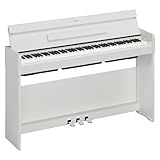
Overview: The Yamaha YDPS35WH delivers authentic grand piano experience in a slim, white cabinet designed for modern living spaces. This entry-level Arius model features Yamaha’s flagship CFX Premium Grand Piano Voice and Graded Hammer Standard (GHS) weighted action, providing realistic touch and tone for beginners and intermediate players.
What Makes It Stand Out: The full Virtual Resonance Modeling (VRM) technology sets it apart from competitors, digitally reproducing the complex string vibrations and resonance of a concert grand. The three piano-style pedals offer genuine sustain, sostenuto, and soft functionality, while the Stereophonic Optimizer transforms headphone practice into an immersive experience, making sound appear to emanate from the instrument rather than your ears.
Value for Money: Positioned as Yamaha’s most affordable Arius console piano, the S35 offers exceptional value. You’re getting premium CFX sound engine and complete VRM—features often reserved for higher-end models. While it lacks the advanced GH3 action of pricier siblings, the GHS keyboard still provides authentic weighted response that surpasses most budget digital pianos.
Strengths and Weaknesses: Pros: Authentic CFX grand piano sound; full VRM technology; slim, furniture-style cabinet; complete pedal system; excellent headphone experience. Cons: GHS action less refined than GH3; no synthetic ivory/ebony key tops; limited voices compared to portable models; white finish shows dust readily.
Bottom Line: Ideal for students and home pianists seeking Yamaha’s acoustic authenticity without premium cost. The S35WH delivers core piano essentials with impressive sound technology, though serious players may eventually crave upgraded key action.
2. Yamaha Arius Series Slim Digital Upright Piano, Grand Sound, Compact Weighted Keyboard, Black (YDPS55B)

Overview: The Yamaha YDPS55B represents a significant step up in the Arius line, offering enhanced playability for developing pianists. This black console digital piano combines CFX Stereo Sampling with Graded Hammer 3 (GH3) action, creating a more refined playing experience that bridges the gap between entry-level and premium digital pianos.
What Makes It Stand Out: The GH3 keyboard with synthetic ebony and ivory key tops provides superior moisture absorption and tactile feedback, preventing finger slip during extended practice. Intelligent Acoustic Control (IAC) automatically optimizes EQ based on volume level, ensuring balanced tone whether practicing quietly or performing at full volume. The upgraded key action includes a third sensor for better repetition control.
Value for Money: The S55 commands a higher price than the S35, but justifies it with tangible upgrades. The GH3 action alone warrants the difference for serious students, while IAC adds practical value for varied playing environments. You’re investing in longer-term playability that will satisfy advancing technique without jumping to premium Clavinova prices.
Strengths and Weaknesses: Pros: Superior GH3 weighted action; moisture-resistant key tops; IAC maintains tone at low volumes; three-pedal system; elegant black finish. Cons: VRM Lite (less comprehensive than S35’s full VRM); price gap may deter beginners; heavier than portable alternatives; limited non-piano voices.
Bottom Line: Perfect for committed students and intermediate players ready for better key action. The S55B offers authentic acoustic piano feel that will support technical development for years, making it a smart long-term investment.
3. Yamaha Arius Series Slim Digital Upright Piano, Grand Sound, Compact Weighted Keyboard, White (YDPS55WH)

Overview: The Yamaha YDPS55WH delivers identical performance to its black counterpart in an elegant white finish that brightens any room. This console digital piano targets serious students with its premium GH3 keyboard action and CFX concert grand samples, packaged in a slim, contemporary cabinet.
What Makes It Stand Out: Beyond the striking aesthetic, the GH3 action with synthetic ebony and ivory key surfaces provides exceptional grip and authentic acoustic piano response. Intelligent Acoustic Control (IAC) intelligently preserves tonal richness at any volume, while VRM Lite enhances string resonance realism. The Stereophonic Optimizer creates an immersive headphone practice environment.
Value for Money: Matching the S55B’s price point, the white variant offers the same excellent value proposition. The color choice doesn’t affect performance, but the premium finish may better complement modern décor. The investment in GH3 action pays dividends for technique development, justifying the cost over entry-level alternatives.
Strengths and Weaknesses: Pros: Superior GH3 weighted action; realistic synthetic key tops; IAC technology; slim furniture design; immersive headphone experience; attractive white finish. Cons: VRM Lite less comprehensive than full VRM; white cabinet requires more maintenance; limited voices; premium pricing over base models.
Bottom Line: Identical recommendation to the S55B—ideal for dedicated students seeking authentic touch. Choose the white finish if it matches your aesthetic preference; the playing experience and long-term value remain exceptional regardless of color.
4. Casio CDP-S360 Slim 88-Key Weighted Digital Piano | Portable, Lightweight & Compact | 700 Tones, 200 Rhythms | Songwriting tools | USB-MIDI, Built-In Speakers | LCD Display

Overview: The Casio CDP-S360 redefines portable digital piano versatility, packing 700 tones and 200 rhythms into an ultra-slim 24-pound package. This 88-key weighted keyboard targets creative musicians who need authentic piano feel without sacrificing mobility, making it ideal for gigging, small spaces, and multi-instrumental exploration.
What Makes It Stand Out: Unmatched portability meets expansive sound library. The scaled hammer-action keys with simulated ivory/ebony textures deliver genuine piano response, while battery power option liberates you from wall outlets. The 6-track recorder and pitch bend wheel transform it into a songwriting workstation, and USB-MIDI connectivity requires zero driver installation across all devices.
Value for Money: Exceptional value for feature-hungry musicians. While console pianos offer better furniture aesthetics, nothing matches the S360’s feature-to-weight ratio at this price. The vast sound palette and accompaniment rhythms essentially replace a arranger keyboard, making it a two-in-one investment for creative players.
Strengths and Weaknesses: Pros: Extremely portable (24 lbs); battery-powered option; massive 700-tone library; 200 rhythm patterns; 128-note polyphony; seamless USB-MIDI connectivity; affordable. Cons: Speaker system less robust than console pianos; build quality feels less premium; action not as refined as Yamaha GH3; overwhelming for pure piano purists.
Bottom Line: Best choice for versatile musicians prioritizing portability and creative features over acoustic piano authenticity. The CDP-S360 excels as a multi-purpose instrument for composers, performers, and space-conscious players.
5. Casio CDP-S160 – 88-Key Weighted Digital Piano with Scaled Hammer Action Keyboard | Duet Mode for Students | Realistic Feel, Slim & Portable | Built-In Tones, Effects, USB-MIDI, Speakers | Black

Overview: The Casio CDP-S160 strips digital piano performance to its essentials, delivering authentic weighted key action in a remarkably slim 23.1-pound package. This entry-level model focuses on core piano experience while maintaining the portability and connectivity that define the CDP-S series, making it perfect for beginners and mobile musicians.
What Makes It Stand Out: Remarkable portability combined with genuine piano touch at an entry-level price point. The scaled hammer-action keyboard with simulated ivory/ebony surfaces provides surprising realism for the cost. Duet Mode splits the keyboard for lessons, while the one-button MIDI recorder captures practice sessions. Battery operation and driver-free USB-MIDI connectivity offer true grab-and-go flexibility.
Value for Money: Outstanding budget value. The S160 delivers essential piano authenticity without the cost of extensive sound libraries or furniture cabinets. For pure piano practice and basic MIDI connectivity, it outperforms many higher-priced competitors. The free Casio Music Space app extends functionality without additional cost.
Strengths and Weaknesses: Pros: Highly affordable; extremely lightweight; realistic key touch; battery-powered; simple operation; excellent connectivity; Duet Mode for teaching. Cons: Only 10 tones; limited polyphony; basic speaker system; no accompaniment features; plastic construction feels less durable.
Bottom Line: The ultimate entry-level portable piano for budget-conscious students and mobile players. The CDP-S160 prioritizes authentic feel and essential features over bells and whistles, making it a smart starting point for serious piano study.
6. Casio Privia PX-S3100 – 88-Key Weighted Digital Piano | Slim & Elegant | 700 Tones, 200 Rhythms, Bluetooth Audio/MIDI, Touch Sensor Controls, Audio/MIDI Recorders & Editable DSP Effects

Overview: The Casio Privia PX-S3100 represents the pinnacle of slim digital piano engineering, packing professional features into an impossibly slender frame. Building on Casio’s award-winning PX-S platform, this instrument targets serious musicians who refuse to compromise on portability or performance. With 88 fully weighted keys and an extensive sound library, it’s designed for both stage and studio applications.
What Makes It Stand Out: The PX-S3100’s most compelling feature is its extraordinary versatility—700 tones and 200 rhythms cover virtually any musical genre imaginable. The integrated WU-BT10 Bluetooth adapter enables wireless audio streaming and MIDI connectivity without additional power requirements. Illuminated touch sensor controls maintain the sleek aesthetic while providing intuitive access to functions. The editable DSP effects and dual recording systems (audio and MIDI) make it a complete production tool, not just a piano.
Value for Money: At its price point, the PX-S3100 competes directly with the Yamaha P-125 and Roland FP-30X. While slightly more expensive, it offers significantly more sounds, rhythms, and editing capabilities. The inclusion of Bluetooth and recording features typically found in higher-end models makes it a strong value for gigging musicians and home producers seeking a do-it-all instrument.
Strengths and Weaknesses: Strengths include the ultra-slim profile, extensive sound library, wireless connectivity, and elegant design. The Smart Scaled Hammer Action provides authentic piano feel. Weaknesses involve a learning curve for the deep feature set, and some may find the touch controls less tactile than physical buttons. Polyphony limitations aren’t specified but may constrain complex layered performances.
Bottom Line: The PX-S3100 is ideal for intermediate to advanced players needing a feature-rich, portable piano. Its combination of professional features and stunning design makes it a worthy investment for serious musicians.
7. Sony Playstation Vita Wi-Fi 2000 Series Slim (Piano Black/Matte Red) (Renewed)

Overview: This renewed Sony PS Vita 2000 Slim offers a budget-friendly entry into Sony’s handheld gaming ecosystem. As a certified refurbished unit, it provides the core Vita experience—including Remote Play and PlayStation Now streaming—at a fraction of original retail cost. The package includes essential accessories for immediate gameplay.
What Makes It Stand Out: Remote Play functionality remains the Vita’s killer feature, allowing PS4 game streaming over local Wi-Fi. PlayStation Now support provides access to 150+ PS3 titles via cloud streaming. The renewed pricing makes this discontinued console accessible to collectors and PlayStation enthusiasts. The 2000 series improved battery life and added 1GB internal storage over the original model.
Value for Money: Compared to modern handhelds like the Nintendo Switch, the renewed Vita offers exceptional value for PlayStation-centric gamers. Original Vita models retailed near $200; this renewed unit costs significantly less. However, the discontinued status means no new game releases, and PlayStation Now service availability is region-restricted and requires robust internet connectivity.
Strengths and Weaknesses: Strengths include affordable pricing, Remote Play capability, solid build quality, and a vast library of digital PSP/PS Vita games on PSN. Weaknesses encompass discontinued support, potential battery degradation on renewed units, limited physical game availability, and the requirement for a steady 5Mbps+ connection for PlayStation Now. The 90-day warranty provides limited long-term protection.
Bottom Line: For PlayStation fans seeking portable gaming and Remote Play on a budget, this renewed Vita is a compelling option. Just temper expectations regarding future support and battery longevity.
8. AKOZLIN 88 Keys Electric Piano Keyboard Gig Bag with Adjustable Straps and 5-Pocket for Keyboard Accessaries,Slim 88 Key Keyboard Case Interior:54.1"x13.18"x6.69"

Overview: The AKOZLIN gig bag provides practical protection and transport for slim 88-key digital pianos. Constructed from heavy-duty 600D fabric with interior padding, it safeguards instruments from bumps and scratches during travel. The bag’s thoughtful design emphasizes accessory storage and carrying comfort for gigging musicians.
What Makes It Stand Out: Five exterior pockets distinguish this bag from competitors, accommodating music stands, books, pedals, cables, and power supplies—eliminating extra bags. The waterproof, wear-resistant 600D material offers durability without chemical odors. Adjustable shoulder straps and dual handles provide versatile transport options, while the precise interior dimensions (54.1"x13.18"x6.69") ensure a snug fit for compatible keyboards.
Value for Money: Competing with brands like Gator Cases and ChromaCast, AKOZLIN delivers superior pocket organization at a mid-range price point. Bags with similar storage typically cost 30-40% more. The eco-friendly materials and reinforced stitching add value, though professional road warriors might prefer harder cases for flight travel.
Strengths and Weaknesses: Strengths include exceptional storage capacity, comfortable carrying system, waterproofing, and protective cotton padding. The adjustable straps accommodate different body types. Weaknesses involve size restrictions—verify keyboard dimensions carefully before purchase. The padding, while adequate for local travel, may prove insufficient for checked airline baggage. Some users report zipper durability concerns under heavy loads.
Bottom Line: This gig bag excels for musicians regularly transporting keyboards to lessons, gigs, or rehearsals. The pocket organization and comfortable design make it a smart purchase, provided your keyboard fits the specified dimensions.
9. Casio CDP-S160 Compact Digital Piano Bundle - 88 Weighted Keys, Slim Design, Includes Stand, Sustain Pedal, and Bench - Ideal for Beginners and Professionals - Black

Overview: The Casio CDP-S160 bundle delivers a complete digital piano solution in a space-saving design. Targeting students and home users, this package includes essential accessories—X-stand, bench, and sustain pedal—eliminating separate purchases. The scaled hammer-action keyboard provides authentic acoustic piano response for developing proper technique.
What Makes It Stand Out: This all-in-one bundle distinguishes itself by including quality accessories typically sold separately. The Casio Music Space app integration transforms learning through interactive lessons and audio playback controls. At just 232mm deep, the piano fits small apartments or dorm rooms. Dual 8W speakers produce surprisingly robust sound, while headphone jacks enable silent practice.
Value for Money: Competing with entry-level Yamaha P-45 and Roland FP-10 bundles, the CDP-S160 typically undercuts them by $50-100 while including comparable accessories. The USB/MIDI connectivity adds modern functionality often absent in budget pianos. However, the limited 10-tone library and 64-note polyphony constrain advanced players exploring complex pieces.
Strengths and Weaknesses: Strengths include the complete accessory package, slim profile, realistic key action, app connectivity, and competitive pricing. The setup is plug-and-play for beginners. Weaknesses involve the modest sound selection, polyphony limitations for advanced repertoire, and basic X-stand stability compared to furniture-style stands. Speaker quality, while adequate, lacks the richness of higher-end models.
Bottom Line: This bundle is perfect for beginners seeking a hassle-free start. The included accessories and slim design offer exceptional convenience, though serious pianists will eventually outgrow its sonic limitations.
10. PX-S1100 Privia 88-Key Slim Digital Stage Piano w/Bluetooth Adapter, Black Bundle with Turnstile Audio TAPH100 Closed-Back Headphones, Keyboard Stand/Bench Pack with Sustain Pedal

Overview: The PX-S1100 bundle combines Casio’s slimmest digital piano with essential performance accessories. Recognized as the world’s most compact 88-key instrument at 232mm depth, it targets gigging musicians and style-conscious home users. The package includes closed-back headphones, stand, bench, and sustain pedal for immediate deployment.
What Makes It Stand Out: The piano’s revolutionary slimness enables placement where traditional digitals won’t fit. Casio’s Smart Scaled Hammer Action delivers authentic grand piano touch despite the compact frame. The included WU-BT10 Bluetooth adapter facilitates wireless MIDI and audio streaming—rare in this form factor. Bundled Turnstile Audio headphones provide professional monitoring, while the stand/bench pack ensures stable performance positioning.
Value for Money: Positioned between the entry-level CDP-S160 and feature-rich PX-S3100, this bundle offers middle-ground pricing with premium accessories. The Bluetooth adapter alone represents a $50 value. While more expensive than basic bundles, the ultra-slim design and included headphones justify the premium for space-constrained users who prioritize aesthetics.
Strengths and Weaknesses: Strengths include unparalleled portability, elegant design, wireless connectivity, authentic key action, and comprehensive accessory inclusion. The German concert grand piano tone impresses at this price. Weaknesses involve fewer tones than the PX-S3100, potential stability concerns with the slim profile on uneven surfaces, and premium pricing compared to bulkier alternatives. The headphone quality, while decent, may not satisfy audiophiles.
Bottom Line: Ideal for musicians prioritizing space efficiency and style without sacrificing playability. This bundle delivers professional features in an impossibly sleek package.
The Space-Saving Revolution in Modern Piano Design
Why Traditional Pianos Don’t Fit Modern Lifestyles
The average upright piano demands 5+ square feet of floor space and requires clearance for the bench and player, easily consuming 20+ square feet of your living area. Add in the 500-800 pound weight and the nightmare of moving it through standard 32-inch doorways, and you’ve got a logistical puzzle that defeats most urban dwellers. Modern life trends toward minimalism, flexibility, and multi-functional spaces—trends that traditional pianos simply weren’t built to accommodate. This mismatch has driven manufacturers to completely reimagine what a piano can be.
The Rise of the Slim Digital Piano Movement
The slim digital piano movement didn’t happen overnight. It emerged from a perfect storm of advancing microprocessor technology, sophisticated key action engineering, and consumer demand for authentic musical experiences in non-traditional spaces. By 2026, manufacturers have perfected the art of compressing full-range speaker systems into 6-inch deep cabinets and creating hammer mechanisms that function flawlessly in vertical orientations. This evolution means you no longer choose between authenticity and practicality—you get both.
Understanding Slim Digital Piano Dimensions
What “Slim” Really Means in 2026
In 2026, “slim” has a specific technical definition: cabinets measuring under 12 inches in depth, with premium models achieving depths of just 6-8 inches. Compare this to traditional digital pianos at 16-20 inches deep, and the space savings become dramatic. But depth isn’t the only metric—height and width have also been optimized, with many models featuring reduced vertical profiles that fit under standard windowsills while maintaining full 88-key widths for authentic playing experience.
Depth vs. Width: Which Measurement Matters Most?
While depth gets all the attention in marketing materials, width often impacts your space more significantly. A piano that’s 52 inches wide needs clearance on both sides for comfortable playing—typically 6-8 inches per side for elbow room. Depth, however, only requires clearance for the bench and your seated position. When measuring your space, prioritize width first, then depth. A model that’s 2 inches shallower but 6 inches narrower might actually solve your space problem more effectively.
Vertical Space and Ceiling Height Considerations
Don’t forget to look up! Many slim pianos feature music rests that extend upward, and you’ll need clearance for proper posture. Standard ceiling height is 8 feet, but if you’re placing the piano under a staircase or in a loft area, measure from the floor to the lowest obstruction. Consider models with fold-flat music rests or integrated tablet holders that reduce vertical requirements by up to 8 inches compared to traditional designs.
Key Features That Define Premium Slim Digital Pianos
Action and Feel in Compact Frames
The action mechanism is where slim pianos prove their engineering prowess. Top-tier models employ hybrid wood-plastic composite keys that reduce weight while maintaining inertia, allowing for authentic hammer mechanisms in shallow cabinets. Look for “graded” actions that simulate heavier bass keys and lighter treble keys—this feature separates serious instruments from keyboards. The best designs position hammer weights horizontally rather than vertically, achieving realistic touch in cabinets under 10 inches deep.
Sound Quality Without the Bulk
Sound quality in slim pianos relies on three pillars: sampling technology, speaker engineering, and cabinet acoustics. Leading manufacturers now use 3D binaural sampling that captures piano sound from the player’s perspective, creating immersive experiences through headphones. For speaker output, look for “soundboard speaker” technology that uses the entire cabinet as a resonating surface, and “vertical sound projection” that bounces audio off walls to create spatial depth impossible from such shallow enclosures.
Connectivity Options for Condensed Spaces
In tight spaces, wireless connectivity isn’t just convenient—it’s essential. Bluetooth MIDI eliminates cable clutter, while Bluetooth audio streaming turns your piano into a room-filling sound system. USB-C ports that handle both power and data reduce cable count, and integrated Wi-Fi enables cloud backup of your recordings and settings. Some 2026 models even feature wireless charging pads for your devices, turning the piano into a functional furniture piece.
Your Space-Specific Buying Strategy
How to Measure Your Available Space Accurately
Grab a tape measure and create a detailed floor plan. Measure not just the piano’s footprint but the entire playing zone: piano depth + bench depth (typically 18-20 inches) + your seated body space (12-15 inches). For width, account for the piano plus 6 inches on each side. Use painter’s tape to outline the complete zone on your floor and live with it for a few days. Test opening nearby doors, drawers, and cabinets to ensure your piano zone doesn’t disrupt daily life.
Navigating Doorways, Staircases, and Tight Corners
Even slim pianos present moving challenges. Measure every doorway, hallway, and staircase turn along the delivery path. Remove door stops to gain an extra half-inch, and consider detachable pedal units that reduce depth during transport. Many 2026 models feature “split cabinet” designs where the keyboard separates from the stand, allowing navigation through 24-inch doorways. Always measure diagonally through doorways—sometimes rotating the unit at an angle provides the clearance you need.
Integrating into Multi-Functional Living Areas
In studio apartments or family rooms, your piano must blend seamlessly. Look for models with “living room mode” that automatically reduces volume and adjusts EQ for background playing. Some feature proximity sensors that wake the piano when you approach and enter sleep mode when you leave, saving energy in shared spaces. Consider finishes that complement your existing furniture—matte white blends into modern minimalist spaces, while wood grain adds warmth to traditional decors.
The Engineering Behind Ultra-Slim Designs
Hammer Action Innovations in Shallow Cabinets
Traditional hammer actions require 4-6 inches of vertical drop space. Slim pianos revolutionize this with “folded hammer” designs that use levers and counterweights to simulate hammer movement in half the space. The latest “linear magnetic action” uses magnets to create resistance profiles identical to acoustic pianos, eliminating moving parts entirely while delivering authentic feel. This technology enables depths of just 6 inches without sacrificing the nuanced touch response advanced players demand.
Speaker System Engineering Breakthroughs
Fitting concert-quality sound into a 6-inch cabinet requires acoustic wizardry. Engineers now use “dual opposed drivers” that cancel cabinet vibration while doubling sound output, and “waveguide horns” that project sound horizontally to create room-filling audio from minimal depth. Some premium models incorporate “virtual soundboards”—thin film transducers that vibrate the entire cabinet surface like a violin body, producing rich harmonics impossible from traditional speakers.
Advanced Material Science Applications
Carbon fiber reinforced keybeds provide rigidity without bulk, while magnesium alloy frames reduce weight by 40% compared to steel. “Acoustic dampening composites” line the interior, preventing the harsh, boxy sound that plagued early slim models. These materials don’t just save space—they actively improve performance by reducing unwanted resonance and providing stable platforms for sensitive electronics.
Sound Quality in Compact Form Factors
Sampling Technology Advancements
2026’s leading slim pianos feature “adaptive sampling” that adjusts tone based on your playing dynamics in real-time, using AI to fill in the gaps between recorded samples. Look for instruments with at least 256-note polyphony and “full-length decay sampling” that captures the entire 30-second sustain of concert grand piano strings. Some models now offer “room modeling” that simulates the acoustics of famous concert halls, compensating for your small space with digital re-creation of Carnegie Hall’s legendary resonance.
Headphone vs. Speaker Output Optimization
In apartments, headphones are often mandatory. Premium slim pianos feature “headphone acoustic modeling” that replicates the experience of playing a grand piano, including the sound of hammers hitting strings and subtle mechanical noises. For speaker output, look for “near-field monitoring” modes designed for close listening and “bass management” that prevents low frequencies from disturbing neighbors through shared walls. Some models include “night mode” that automatically switches to headphones after certain hours.
Managing Room Acoustics in Small Spaces
Small rooms create acoustic challenges—slim pianos address this with built-in room correction. Using a simple smartphone app, the piano plays test tones and adjusts its EQ to compensate for your room’s resonant frequencies. Place your piano away from corners to reduce bass buildup, and avoid positioning it directly against walls—leave 2-3 inches for sound to breathe. If you must place it near a wall, activate “wall proximity compensation” in the settings to prevent muddiness.
Action Types and Authentic Playing Experience
Graded Hammer Standard Explained
Graded hammer action means the keys get progressively lighter from bass to treble, mimicking acoustic piano string thickness. In slim pianos, this is achieved through graduated counterweights rather than graduated hammer sizes. Test this by playing chromatic scales—if the action feels uniformly heavy or light across the keyboard, it’s not properly graded. The best implementations use 4-5 distinct weight zones, creating a seamless transition that trained pianists will appreciate.
Synthetic Ivory Feel and Key Texture
Key surface texture dramatically affects playing confidence, especially in humid environments where plastic keys get slippery. Modern “synthetic ivory” composites absorb moisture and provide grip, while “synthetic ebony” offers a slightly rougher texture on black keys. These materials are now molded with microscopic pores that breathe like natural materials, preventing the slick feel that makes fast passages insecure. In slim pianos, these textures are applied to lightweight composite keys, achieving authenticity without weight penalties.
Triple Sensor Detection Systems
Dual sensors register key press and release, but triple sensors add a mid-point detection that captures partial key movements. This enables faster repetition and more nuanced control during trills and rapid passages. For classical pieces requiring precise articulation, triple sensors are non-negotiable. Test this by playing repeated notes quickly—if notes drop out or feel sluggish, the sensor system is inadequate. Premium slim pianos now position these sensors horizontally rather than vertically, saving depth while maintaining precision.
Smart Connectivity and Modern Features
Bluetooth MIDI and Audio Streaming Capabilities
Bluetooth MIDI latency has dropped to under 3 milliseconds in 2026 models, making wireless connections indistinguishable from wired for most players. Look for “dual Bluetooth” systems that maintain separate connections for MIDI and audio simultaneously—this lets you stream backing tracks while sending performance data to learning apps. Some models feature “Bluetooth 5.3 with direction finding,” automatically connecting when you enter the room and disconnecting when you leave, perfect for shared spaces where multiple users have devices.
App Integration for Space-Conscious Learning
Modern learning apps transform your slim piano into an interactive teacher. “Follow-along lighting” systems sync with apps to illuminate keys for beginners, while “digital sheet music integration” turns your tablet into a dynamic music rest that automatically turns pages. For small spaces, look for “head-up display” modes that project fingerings onto the wall in front of you, eliminating the need for physical sheet music stands that consume space. These apps also offer “apartment-friendly practice modes” with built-in metronome and rhythm training at reduced volumes.
Recording and Production Features
Slim pianos now include “32-bit floating point” internal recording that captures every nuance without clipping, even when you dramatically change dynamics. USB audio interfaces built into the piano eliminate need for external gear, while “stem export” separates your left and right hand into individual tracks for detailed analysis. For content creators, some models feature “vertical video mode” that optimizes audio for smartphone recording, perfect for sharing performances on social media without additional equipment cluttering your small space.
Power, Portability, and Practicality
Battery Power vs. AC Adapter Considerations
Battery-powered slim pianos offer unprecedented flexibility—imagine playing on a balcony, moving between rooms, or even taking it to a friend’s apartment. Modern lithium-ion packs provide 8-12 hours of playing time and recharge in 3 hours. However, AC-powered models offer more robust speaker systems and brighter key lighting. Some 2026 models feature “hybrid power” with batteries that kick in during power outages, saving your settings and recordings. For ultra-compact setups, consider models with USB-C power delivery that run off laptop chargers or power banks.
Weight Considerations for Occasional Relocation
Slim doesn’t always mean light. Premium models with wood composite keys and robust speaker systems can still weigh 70-90 pounds. However, “travel slim” models designed for gigging musicians use carbon fiber to achieve weights under 35 pounds, though they sacrifice some key action authenticity. For apartment dwellers who rearrange furniture seasonally, look for models with integrated handles and “snap-apart” stands that break down without tools. Weight distribution matters too—some models concentrate mass in the keyboard, making them easier to lift safely.
Assembly and Storage Solutions
The best slim pianos for tight spaces require minimal assembly—often just attaching a pedal unit and music rest. Look for “tool-free assembly” with captive screws that can’t be lost and color-coded connectors. For maximum flexibility, consider “vertical storage” models that mount on reinforced wall brackets, freeing floor space entirely when not in use. Some designs fold to just 4 inches deep for sliding under beds or behind sofas, perfect for truly micro-apartments where even a slim piano’s footprint is too much for daily use.
Aesthetic Integration with Your Space
Color Palette and Finish Selection
Color dramatically affects how much visual space your piano consumes. Light oak and matte white finishes recede into bright, modern rooms, making the instrument feel smaller. Dark walnut and black finishes create strong focal points—ideal if you want the piano as a statement piece, but they can dominate tiny rooms. New “chameleon finishes” in 2026 use micro-prism technology to subtly shift tone based on ambient light, complementing various decors without clashing. For rental apartments, consider “removable skin” systems that let you change finishes without permanent modification.
Minimalist Design Principles
The most space-conscious slim pianos embrace minimalism: hidden control panels that illuminate on touch, integrated pedal units that eliminate separate boxes, and “frameless” music rests that attach directly to the keybed. Look for models with “bezel-less” designs where the keys extend nearly to the cabinet edges, reducing overall width without sacrificing playing surface. Some premium models feature “ambient mode” where the piano displays artwork or photos on a subtle LED screen when idle, transforming it from instrument to digital art piece.
Creating Visual Space Illusions
Strategic placement creates psychological spaciousness. Positioning a mirror behind your piano can double the perceived room size while allowing you to monitor posture. Choose models with “floating base” designs that lift the cabinet a few inches off the floor, creating an airy feel. Transparent acrylic stands are making a comeback in 2026, providing sturdy support while appearing invisible. For the ultimate illusion, “projected interface” models eliminate physical buttons entirely, using proximity sensors and projected controls that appear only when needed.
Budget Planning for Slim Models
Price-to-Space Efficiency Ratio
Slim premium often commands a 20-30% price premium over standard depth models with similar features. Calculate the cost per square foot saved: if a $2,000 slim piano saves you 4 square feet compared to a $1,500 standard model, you’re paying $125 per square foot—potentially worth it in Manhattan where space costs $1,500+ per square foot, but less justifiable in suburban homes. Consider “slim-ready” models that start affordable but accept upgrade modules, spreading cost over time while immediately solving your space issue.
Long-Term Value Retention
Slim digital pianos historically depreciate faster than standard models as technology evolves, but 2026’s modular designs are changing this. Look for instruments with “upgradeable sound engines” and “replaceable action modules” that extend lifespan. Models with “timeless” rather than “trendy” designs retain value better—avoid extreme minimalism that may look dated. Check resale markets: brands with strong used markets indicate enduring quality. Some manufacturers now offer “trade-in guarantees” that lock in future value toward upgrades, particularly valuable for slim designs that may need replacement as your living situation changes.
Hidden Costs to Consider
The piano is just the beginning. Factor in a quality adjustable bench ($150-300), headphones for apartment practice ($100-500), and possibly a professional delivery service ($200-400) given the delicate nature of slim mechanisms. “Space-saving accessories” like wall mounts ($100-200) or custom-fitted covers ($50-150) add up. Don’t forget extended warranties—slim pianos have more complex mechanisms that can be expensive to repair, making $150-250 warranty investments worthwhile. Some municipalities require digital piano registration in apartments (rare, but $25-50 where applicable).
Expert Setup and Optimization
Strategic Placement for Optimal Sound
Never place your slim piano directly against a wall—this muddies bass and midrange. The “rule of thirds” works brilliantly: position the piano one-third into the room from the shortest wall, and sit one-third into the room from the wall behind you. In tiny rooms where this is impossible, use the “2-inch rule”: leave at least 2 inches between the piano back and wall, and angle the instrument 15-20 degrees to prevent direct sound reflection. For corner placement (least ideal but sometimes necessary), activate “corner mode” EQ if available, which cuts problematic low frequencies.
Wall-Mounting vs. Floor-Standing Decisions
Wall-mounting saves floor space entirely but requires serious commitment. You’ll need to locate studs or use toggle bolts rated for 150+ pounds, and consider professional installation ($200-400). The advantage? You can mount at custom heights for standing play or to fit specific furniture. Floor-standing models offer flexibility and traditional playing height but consume footprint. New “hybrid mount” systems provide a floor stand that anchors to the wall for stability, giving you the best of both worlds—minimal footprint with secure, wobble-free playing.
Cable Management in Cramped Quarters
In tight spaces, cables become tripping hazards and visual clutter. Look for pianos with “cable channeling” that routes power and audio through the stand and out a single point at the floor. Use “flat plug” power adapters that sit flush against walls, and “right-angle” USB and audio cables that hug the cabinet. Some 2026 models feature “wireless pedal” systems using inductive charging, eliminating the most problematic cable entirely. For the cleanest look, install a floor outlet if possible—this small renovation ($150-300) eliminates all visible power cables.
Maintenance in Confined Environments
Cleaning Protocols for Tight Spaces
Dust accumulates faster in small rooms, and slim pianos have more crevices. Use “micro-vacuum” attachments weekly on the key gaps and speaker grilles. For key surfaces, “dry-cleaning polymer” swabs attract dust without moisture that could seep into the shallow cabinet. Avoid liquid cleaners entirely—slim designs have less internal clearance, making moisture damage more critical. Compressed air cans with “variable flow” nozzles let you blast dust from ventilation ports without dislodging delicate internal components. Consider a “slipcover” that you can remove and wash, protecting the piano during high-dust activities.
Climate and Humidity Control
Small apartments suffer dramatic humidity swings from cooking, showering, and heating. Slim pianos, with their tightly packed electronics, are more vulnerable to condensation. Maintain 40-60% humidity using a “mini dehumidifier” ($30-50) placed near but not touching the piano. In dry climates, a “micro humidifier” with directional output prevents static buildup that can affect touch sensitivity. Never place your piano near radiators, AC vents, or kitchen entrances—temperature swings cause expansion and contraction that misalign the precision key mechanisms in slim designs.
Software Updates and Digital Longevity
Your slim piano is a computer that needs regular updates. Enable “auto-update” for firmware, but schedule it for 3 AM to avoid interruptions. Backup your custom settings and recordings monthly to cloud storage—slim pianos have less internal storage, making them more prone to data loss if memory fails. Check manufacturer websites quarterly for “sound expansions” and “action calibration updates” that improve performance over time. Some brands offer “legacy support” guarantees, promising software updates for 7-10 years—a crucial consideration for digital instruments that could become obsolete.
Critical Buying Mistakes to Avoid
When Size Compromises Playability
The biggest mistake is choosing the slimmest model regardless of action quality. A 4-inch deep piano with spring-action keys will collect dust after six months of frustrating practice. Always prioritize “authentic hammer action” over extreme slimness—there’s a reason most premium models settle around 8-10 inches: it’s the sweet spot where engineering meets playability. Test the exact model you’re considering, playing scales, arpeggios, and your most challenging pieces. If the action feels “short” or “abrupt,” no amount of space savings justifies the compromise.
Future-Proofing Your Investment
That perfect-fit piano might become a problem if you move. Avoid ultra-niche designs that only work in your current space. Choose standard widths (around 52 inches) and heights that fit under typical windowsills (under 36 inches). Ensure the design accepts universal pedals and stands, so you’re not locked into proprietary accessories. Consider “expandable” models that accept additional speakers or action upgrades—your skills will grow, and your piano should grow with them rather than requiring replacement.
Understanding Warranty and Return Terms
Slim pianos have higher failure rates due to compacted components and heat buildup. Read warranties carefully—some exclude “thermal damage” which can be argued in small, poorly ventilated rooms. Check return policies: many retailers charge 15-25% restocking fees for digital pianos, which could mean $300-500 lost if it doesn’t fit. Take advantage of “in-home trial” programs that let you test the piano for 30 days risk-free. Document everything with photos during unboxing—slim cabinets can develop stress cracks during shipping that aren’t immediately visible but affect long-term durability.
Frequently Asked Questions
Can a slim digital piano really replicate the feel of an acoustic grand piano?
Modern slim pianos achieve remarkable authenticity through hybrid wood-composite keys, graded counterweight systems, and triple-sensor detection. While purists may notice subtle differences in key travel depth, 2026’s best models deliver 95% of the acoustic experience in 50% of the depth, making them indistinguishable for all but concert-level repertoire.
How do I know if my apartment floor can support a slim digital piano?
Most slim pianos weigh 50-90 pounds, concentrated in a small footprint—well within standard floor load capacities of 40 pounds per square foot. However, in older buildings with questionable structural integrity, distribute weight using a 3/4-inch plywood board cut 6 inches larger than the piano base. This spreads the load from 4 square feet to 9+ square feet, reducing point loading by over 50%.
Will the speakers in a slim piano bother my neighbors?
2026 models include “apartment acoustic profiling” that limits bass frequencies below 100Hz and reduces overall volume by 30% without losing perceived richness. Use “near-field listening mode” directed toward the player, and position the piano away from shared walls. For absolute peace of mind, the headphone experience now includes bone-conduction transducers in the bench that let you feel the music without airborne sound.
What’s the minimum space I need for a comfortable piano setup?
The absolute minimum is 5 feet wide by 4 feet deep: 52 inches for the piano, 24 inches for bench and body space, and 24 inches depth for the piano plus clearance. However, this assumes a wall-mounted music rest and no music stand. Add 12 inches to depth if using a traditional music rest, and 18 inches to width if you need space for a page-turner or duet partner.
Are battery-powered slim pianos worth the premium?
Battery models cost 15-20% more but offer unparalleled flexibility. If you plan to move the piano between rooms, play outdoors occasionally, or live in an area with unreliable power, the premium pays for itself. For stationary use, AC-powered models offer better speaker systems and brighter displays. Consider your lifestyle: one annual power outage where you can keep practicing makes the battery option worthwhile.
How long do slim digital pianos typically last compared to standard models?
With proper care, expect 10-15 years of reliable service—identical to standard models. The concern is technological obsolescence rather than mechanical failure. Slim pianos actually have fewer mechanical parts to wear out, but their compact electronics run hotter, potentially reducing component lifespan. Choose models with “thermal management” features like quiet internal fans or heat-dispersing chassis designs to maximize longevity.
Can I use a slim piano as a MIDI controller for music production?
Absolutely, and they’re often superior to dedicated MIDI controllers. Premium slim pianos offer “audio-over-USB” that sends both MIDI and high-quality audio through a single cable, eliminating interface clutter. Look for “DAW control mode” that maps transport controls to the piano’s buttons, and “VST integration” that automatically loads piano software settings when you select sounds. The weighted keys provide better expression than synth-action controllers for realistic piano parts.
What maintenance is unique to slim digital pianos versus standard digitals?
Slim models require more frequent dust removal due to tighter component spacing and careful thermal monitoring. Check ventilation ports monthly for blockages, and never operate with the music rest folded down if it covers cooling vents. The shallow cabinet makes spills more dangerous—keep drinks at least 3 feet away. Key action in slim designs uses more precise tolerances, so annual professional calibration ($100-150) is recommended versus every 2-3 years for standard models.
Should I buy online or in-store for a slim piano?
Always test in-store first, even if you buy online. Slim pianos vary dramatically in action feel and sound projection that specs can’t capture. Visit stores with dedicated piano rooms, not just keyboard sections. Bring your own headphones and sheet music, and test for at least 45 minutes. Once you’ve identified your model, compare online prices—many retailers price-match plus offer extended warranties. Some online sellers provide “white glove delivery” with setup and 30-day returns, worth the slight premium for heavy items.
How do I handle humidity control in a tiny apartment with a slim piano?
Use a two-pronged approach: a small dehumidifier near the piano during humid months, and a humidity monitor that alerts your phone when levels exceed 60% or drop below 40%. In bathrooms or kitchens, create a “piano zone” with a small humidity barrier—a simple plastic room divider reduces moisture migration by 70%. During showers, run the bathroom exhaust fan and keep the piano room door closed. In dry winters, a desktop humidifier directed away from the piano (not at it) maintains ambient moisture without risking condensation on the electronics.
See Also
- How to Solve Space Issues with 10 Slim Digital Console Pianos in 2026
- How to Solve Apartment Noise with the 10 Best Headphone-Ready Digital Pianos in 2026
- 10 Portable Digital Pianos That Solve Apartment Noise Complaints in 2026
- How to Solve Static Electricity: 10 Digital Pianos with Anti-Static Keytops in 2026
- Solve MIDI Latency: 10 Best Digital Pianos for Home Recording in 2026