Table of Contents
Living in a narrow apartment doesn’t mean you have to sacrifice your passion for piano. As urban dwellings shrink and wall space becomes precious real estate, manufacturers have responded with engineering marvels that deliver authentic piano experiences in profiles slimmer than many flat-screen TVs. The modern slim digital piano represents a perfect convergence of acoustic tradition and space-age technology, allowing you to transform that awkward 4-foot wall section into a sophisticated music studio without sacrificing playability or sound quality.
But here’s what most buyers don’t realize: not all “slim” pianos are created equal, and the difference between a disappointing compromise and a lifelong instrument often lies in understanding the subtle engineering choices that happen beneath those sleek cabinets. Whether you’re a classical purist dreaming of Chopin nocturnes or a producer needing MIDI control in your bedroom studio, the right slim piano can feel like it was custom-built for your exact wall dimensions.
Top 10 Slim Pianos
Detailed Product Reviews
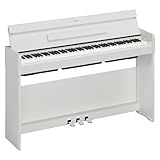
1. Yamaha Arius Series Slim Digital Upright Piano, Grand Sound, Compact Weighted Keyboard, White (YDPS35WH)
Overview:
The Yamaha YDPS35WH delivers authentic grand piano experience in a sleek white console perfect for modern homes. Featuring the flagship CFX Premium Grand Piano Voice and GHS weighted action, this slim digital upright replicates acoustic piano touch with heavier low keys and lighter high keys. The three integrated pedals provide genuine damper, sostenuto, and soft functionality, while Virtual Resonance Modeling creates rich harmonic complexity that responds to your playing dynamics.
What Makes It Stand Out:
The Stereophonic Optimizer transforms headphone practice into an immersive experience, making sound appear to emanate from the instrument rather than your ears. VRM technology distinguishes this model from entry-level competitors by modeling the intricate string resonances and subtle vibrations that define a concert grand’s character. This attention to sonic detail creates limitless expressive possibilities that inspire musical growth.
Value for Money:
Positioned as an accessible entry into Yamaha’s Arius line, the YDPS35WH offers premium features typically found in higher-end models. While priced above basic digital pianos, it justifies the investment with authentic acoustic properties and furniture-grade cabinetry that complements living spaces without dominating them. The slim profile saves valuable floor space while delivering console piano presence.
Strengths and Weaknesses:
Pros include convincing CFX sound engine, progressive weighted action, elegant slim design, and effective headphone optimization. The three-pedal system adds authenticity for classical repertoire. Cons involve the GHS action being less sophisticated than GH3 mechanisms, limited voice selection beyond piano sounds, and absence of Intelligent Acoustic Control for speaker optimization at low volumes.
Bottom Line:
An excellent choice for serious students and home musicians seeking Yamaha’s renowned piano authenticity in a space-conscious, stylish package that excels in both aesthetics and performance.
2. Yamaha Arius Series Slim Digital Upright Piano, Grand Sound, Compact Weighted Keyboard, Black (YDPS55B)

Overview:
The Yamaha YDPS55B represents the sweet spot in the Arius series, combining premium touch technology with flagship concert grand sound. Its Graded Hammer 3 action with synthetic ebony and ivory key tops provides exceptional tactile feedback while absorbing moisture during intense practice sessions. CFX Stereo Sampling captures the nuanced tonal palette of Yamaha’s renowned concert grand with remarkable fidelity, delivering authoritative bass and crystaline highs through its integrated speaker system.
What Makes It Stand Out:
Intelligent Acoustic Control automatically adjusts EQ based on volume levels, ensuring balanced tone whether practicing at whisper levels or full volume. The GH3 action’s triple-sensor key detection captures every subtlety of your playing, while synthetic key tops prevent finger slippage during extended sessions—a professional touch rarely seen at this price point. This combination of touch and tone technology creates an exceptionally realistic playing experience.
Value for Money:
Though positioned higher than entry-level models, the YDPS55B delivers tangible upgrades in touch authenticity and technological sophistication. The GH3 mechanism alone warrants the premium for serious students preparing for acoustic piano performances, making it a wise long-term investment. The automatic acoustic compensation adds value for those in shared living spaces.
Strengths and Weaknesses:
Strengths include superior key action with moisture management, automatic acoustic optimization, convincing VRM Lite resonance, and robust build quality. The Stereophonic Optimizer excels for private practice sessions. Weaknesses include limited non-piano voices compared to multi-function competitors, VRM Lite versus full VRM implementation, and substantial weight that reduces portability despite slim dimensions.
Bottom Line:
Perfect for advancing pianists who prioritize authentic touch and dynamic expression over bells and whistles, offering professional-grade features in a handsome console.
3. Yamaha Arius Series Slim Digital Upright Piano, Grand Sound, Compact Weighted Keyboard, White (YDPS55WH)

Overview:
Identical in functionality to its black counterpart, the YDPS55WH packages Yamaha’s premium digital piano technology in an elegant white cabinet that brightens any room. The Graded Hammer 3 action with synthetic ebony and ivory key tops delivers professional-grade touch response, while CFX Stereo Sampling provides the authoritative voice of Yamaha’s flagship concert grand. This model targets discerning musicians who refuse to compromise performance for aesthetics, offering the complete Arius experience.
What Makes It Stand Out:
Beyond the striking white finish, the Intelligent Acoustic Control system distinguishes this instrument by automatically optimizing EQ across all volume levels—crucial for apartment dwellers and night owls who practice at low volumes. The GH3 action’s moisture-absorbing key tops maintain grip during demanding passages, while VRM Lite technology adds convincing string resonance that responds to pedaling technique and playing dynamics.
Value for Money:
The white finish commands a slight premium over black versions, but the investment pays dividends in interior design flexibility. Musicians gain identical performance specifications to the YDPS55B while achieving a lighter, contemporary aesthetic that complements modern décor without sacrificing Yamaha’s renowned piano authenticity or build quality.
Strengths and Weaknesses:
Advantages include superior GH3 weighted action, elegant white cabinetry, intelligent volume compensation, and realistic pedaling response. The Stereophonic Optimizer enhances headphone practice significantly. Drawbacks mirror the black version: limited instrument voices, VRM Lite rather than full VRM, and minimal portability due to console design. White finishes require more diligent cleaning to maintain their pristine appearance.
Bottom Line:
Ideal for style-conscious pianists seeking professional touch and tone in a visually striking package that performs as beautifully as it looks.
4. Casio CDP-S360 Slim 88-Key Weighted Digital Piano | Portable, Lightweight & Compact | 700 Tones, 200 Rhythms | Songwriting tools | USB-MIDI, Built-In Speakers | LCD Display

Overview:
The CDP-S360 redefines portable digital piano versatility, packing 700 tones and 200 rhythms into an astonishingly slim 24-pound frame. Casio’s scaled hammer-action keys with simulated ivory and ebony textures deliver authentic grand piano feel, while battery-power capability liberates musicians from wall outlets. This instrument transforms from a serious practice tool to a complete songwriting workstation with its 6-track recorder and comprehensive connectivity options for modern production setups.
What Makes It Stand Out:
No other piano matches this feature-to-weight ratio. The massive sound library spans orchestral instruments, vintage synths, and world sounds, while 200 accompaniment rhythms provide full backing band support. USB-MIDI connectivity works plug-and-play across all devices, and the free Casio Music Space app unlocks deep customization. At just 24 pounds, it moves effortlessly between home, studio, and stage without sacrificing playability.
Value for Money:
Exceptional value proposition. Competitors offering similar versatility cost significantly more and weigh double. The CDP-S360 eliminates need for separate arranger keyboards or MIDI controllers, making it a one-stop solution for creative musicians. Battery operation adds tremendous value for buskers, mobile performers, and those seeking practice location flexibility.
Strengths and Weaknesses:
Pros: unmatched portability, enormous sound palette, battery power, intuitive app integration, and 128-note polyphony. The 6-track recorder facilitates composition. Cons: speaker system lacks the projection of console pianos, overwhelming interface for traditionalists focused solely on piano, and build quality prioritizes weight savings over premium materials found in heavier units.
Bottom Line:
A powerhouse for creative musicians, gigging artists, and space-starved producers who need maximum flexibility in a genuinely portable package.
5. Casio CDP-S160 – 88-Key Weighted Digital Piano with Scaled Hammer Action Keyboard | Duet Mode for Students | Realistic Feel, Slim & Portable | Built-In Tones, Effects, USB-MIDI, Speakers | Black

Overview:
The CDP-S160 distills essential piano playing into a remarkably portable package weighing just 23.1 pounds. Featuring 88 scaled hammer-action keys with simulated ivory and ebony surfaces, this focused instrument prioritizes authentic touch and core piano sounds over superfluous features. Duet Mode splits the keyboard for teacher-student lessons, while USB-MIDI connectivity integrates seamlessly with educational apps and recording software. Battery power option liberates practice from location constraints entirely.
What Makes It Stand Out:
Simplicity meets sophistication in this refined package. While competitors bombard users with hundreds of sounds, the CDP-S160 perfects its 10 core tones, particularly the expressive grand piano voice. The pitch-bend wheel adds expressive potential, and the one-button MIDI recorder captures ideas instantly. Its featherweight design and battery operation make it the ultimate practice companion for students and traveling musicians who need reliability.
Value for Money:
Outstanding entry-point pricing delivers genuine weighted keys and credible piano tone without feature bloat. The CDP-S160 focuses resources where they matter most: touch authenticity and portability. For pure piano practice, it outperforms many higher-priced competitors while remaining accessible to budget-conscious families and students.
Strengths and Weaknesses:
Strengths include realistic hammer action, extreme portability, battery operation, straightforward interface, and effective duet mode for instruction. USB-MIDI requires no drivers. Weaknesses: limited to 10 tones, basic effects processing, modest speaker output, and no accompaniment features. The minimalist approach may disappoint musicians seeking sonic variety beyond piano sounds.
Bottom Line:
The definitive choice for serious beginners and mobile pianists prioritizing authentic feel and simplicity over extensive features they may never use.
6. Casio Privia PX-S3100 – 88-Key Weighted Digital Piano | Slim & Elegant | 700 Tones, 200 Rhythms, Bluetooth Audio/MIDI, Touch Sensor Controls, Audio/MIDI Recorders & Editable DSP Effects

Overview: The Casio Privia PX-S3100 represents the pinnacle of slim digital piano engineering, packing professional features into an ultra-compact frame. This 88-key weighted keyboard delivers concert-quality sound with 700 tones and 200 rhythms, making it suitable for serious pianists, composers, and performers who demand portability without sacrificing capability.
What Makes It Stand Out: The integrated WU-BT10 Bluetooth adapter sets this apart, enabling wireless MIDI and audio streaming without additional power requirements. The Smart Scaled Hammer Action keyboard with simulated ebony/ivory texture provides authentic grand piano feel. Illuminated touch sensor controls and the Surround/Hall Simulation create an immersive playing experience that rivals much larger instruments.
Value for Money: Positioned in the premium mid-range category, the PX-S3100 justifies its price through exceptional build quality and feature density. Competitors with similar specifications typically cost 20-30% more or lack the comprehensive Bluetooth integration. The included recording capabilities and editable DSP effects eliminate need for external hardware, delivering genuine professional value.
Strengths and Weaknesses: Strengths include its astonishingly slim profile (just 232mm deep), realistic key action, extensive sound library, and seamless wireless connectivity. The stereo speaker system produces impressive volume for its size. Weaknesses involve a steeper learning curve for beginners due to complex features, and the glossy black finish shows fingerprints readily. Some users may find the touch controls less tactile than physical buttons.
Bottom Line: The PX-S3100 is an outstanding choice for intermediate to advanced players seeking a sophisticated, space-saving instrument. Its combination of authentic feel, rich sound palette, and modern connectivity makes it a compelling centerpiece for home studios or stages.
7. Sony Playstation Vita Wi-Fi 2000 Series Slim (Piano Black/Matte Red) (Renewed)

Overview: This renewed Sony PS Vita 2000 Slim offers portable gaming enthusiasts a cost-effective entry into Sony’s handheld ecosystem. The international version includes console, AC adapter, and charging cable, certified refurbished with minimal wear and a 90-day warranty, packaged securely for transit.
What Makes It Stand Out: Remote Play functionality remains the killer feature, allowing PS4 game streaming over local Wi-Fi when away from your main console. PlayStation Now compatibility provides access to over 150 PS3 titles via cloud streaming. The Slim model improves upon the original with better battery life and a more comfortable form factor.
Value for Money: As a discontinued platform, the renewed pricing (typically 40-60% below original MSRP) represents solid value for collectors and existing PlayStation ecosystem users. However, prospective buyers must factor in the limited future support and regional service availability. The 90-day warranty provides reasonable protection for a refurbished device.
Strengths and Weaknesses: Strengths include the vibrant OLED display, solid build quality, and unique features like Remote Play. The game library contains excellent exclusives. Major weaknesses are the discontinued status, rapidly aging hardware, and that PlayStation Now isn’t available in all regions. The bulk packaging approach may feel less premium than retail boxes.
Bottom Line: Ideal for PlayStation loyalists and retro gaming collectors, this renewed Vita 2000 delivers niche value. New buyers should consider modern alternatives, but for PS4 owners wanting portable access to their library, it’s a worthwhile budget option despite platform limitations.
8. AKOZLIN 88 Keys Electric Piano Keyboard Gig Bag with Adjustable Straps and 5-Pocket for Keyboard Accessaries,Slim 88 Key Keyboard Case Interior:54.1"x13.18"x6.69"

Overview: The AKOZLIN gig bag provides practical protection for 88-key digital pianos, accommodating instruments up to 54.1"x13.18"x6.69". Constructed from heavy-duty 600D fabric with internal padding, this case prioritizes portability and accessory organization for musicians regularly transporting their keyboards.
What Makes It Stand Out: Five exterior pockets distinguish this bag, offering dedicated storage for music stands, books, sustain pedals, power supplies, and cables. The adjustable shoulder straps and dual carrying handles provide versatile transport options. Eco-friendly, odor-free materials and water-resistant construction demonstrate thoughtful design beyond basic protection.
Value for Money: Priced competitively in the budget-to-mid-range segment, this bag delivers exceptional utility for its cost. Comparable cases with similar pocket configurations typically cost 30-50% more. The 600D fabric durability exceeds many similarly priced alternatives, making it a smart investment for casual gigging musicians and students.
Strengths and Weaknesses: Strengths include abundant storage, comfortable carrying options, and robust water-resistant fabric. The interior cotton padding adequately protects against scratches and minor bumps. Weaknesses involve limited impact protection compared to hard cases, and the specific dimensions won’t fit all 88-key models. The padding thickness may be insufficient for heavy touring or airline travel.
Bottom Line: Perfect for students, teachers, and casual performers needing reliable transport and organization. While not a replacement for flight cases or heavy-duty road gear, the AKOZLIN bag offers excellent everyday protection and convenience at an attractive price point.
9. Casio CDP-S160 Compact Digital Piano Bundle - 88 Weighted Keys, Slim Design, Includes Stand, Sustain Pedal, and Bench - Ideal for Beginners and Professionals - Black

Overview: The CDP-S160 bundle delivers a complete digital piano solution in a space-saving design. Featuring 88 scaled hammer-action keys with adjustable touch sensitivity, this package includes essential accessories: an X-style stand, sustain pedal, and padded bench, making it immediately playable for beginners and practice-ready for professionals.
What Makes It Stand Out: The slim 232mm depth rivals premium models, fitting easily into apartments and dorm rooms. Casio’s Smart Scaled Hammer Action provides authentic piano response typically found in more expensive instruments. USB/MIDI connectivity and Casio Music Space app integration offer modern learning tools and recording capabilities that enhance the educational value.
Value for Money: This bundle represents outstanding entry-level value, essentially providing the accessories free compared to purchasing components separately. At this price point, few competitors offer weighted keys with comparable action quality. The inclusion of a sturdy stand and bench eliminates hidden costs that often surprise new piano buyers.
Strengths and Weaknesses: Strengths include realistic key action, compact footprint, quality bundled accessories, and intuitive app connectivity. The dual speaker system delivers clear sound for home practice. Weaknesses are the limited 10-tone library and 64-note polyphony, which may constrain advanced players. The basic sustain pedal lacks half-pedaling capability, and the X-stand, while functional, isn’t as stable as furniture-style stands.
Bottom Line: An exceptional starter package that doesn’t compromise on core piano feel. The CDP-S160 bundle is ideal for beginners and intermediate players prioritizing authentic touch and space efficiency over extensive sound libraries. Professionals will appreciate it as a reliable practice instrument.
10. PX-S1100 Privia 88-Key Slim Digital Stage Piano w/Bluetooth Adapter, Black Bundle with Turnstile Audio TAPH100 Closed-Back Headphones, Keyboard Stand/Bench Pack with Sustain Pedal

Overview: The PX-S1100 bundle centers on Casio’s slimmest 88-key digital piano, measuring just 232mm deep. This package pairs the instrument with closed-back headphones, an X-style stand, bench, and sustain pedal, creating a complete setup for silent practice and performance. The Bluetooth adapter enables wireless connectivity for modern workflow integration.
What Makes It Stand Out: Recognized as the world’s slimmest 88-key digital piano, the PX-S1100’s minimalist design features illuminated touch controls and a sophisticated gloss black finish. The Smart Scaled Hammer Action keyboard and enhanced German concert grand piano tone deliver premium feel and sound that belie its compact dimensions and mid-range positioning.
Value for Money: This bundle offers strategic value by combining essential accessories with a core instrument that punches above its weight class. The PX-S1100 itself provides 80% of the PX-S3100’s experience at roughly 60% of the cost. The included headphones and furniture accessories represent approximately $150 in additional value, making the package price highly competitive.
Strengths and Weaknesses: Strengths include the revolutionary slim design, authentic key action, quality headphone inclusion for silent practice, and Bluetooth connectivity. The speaker system is surprisingly robust for such a thin instrument. Weaknesses involve fewer tones than higher-end models, touch controls that require acclimation, and the basic X-stand’s stability limitations during vigorous playing. The headphone quality is decent but not audiophile-grade.
Bottom Line: The PX-S1100 bundle strikes an impressive balance between portability, performance, and price. Perfect for space-conscious players wanting authentic piano experience with modern connectivity, this package eliminates guesswork while delivering professional-grade essentials in an extraordinarily compact form.
Why Slim Digital Pianos Are Revolutionizing Apartment Living
The shift toward minimalist urban living has fundamentally changed how instrument makers approach design. Traditional digital pianos required 18-24 inches of depth, dominating rooms and blocking natural traffic flow. Today’s slim models compress that footprint to as little as 10-12 inches while actually improving upon earlier sound engines. This transformation isn’t just about shaving inches—it’s about reimagining the piano as architectural element rather than bulky furniture. The best models integrate seamlessly with your wall, creating a visual focal point that enhances rather than clutters your living space. Advanced cabinet materials like reinforced composite boards and aluminum chassis provide rigidity without bulk, while innovative speaker placement uses your room’s natural acoustics instead of fighting them.
Understanding the Critical Dimensions: It’s Not Just About Width
When measuring your narrow wall, most shoppers fixate on width, but seasoned players know the real story lives in three dimensions. A 48-inch width might fit perfectly between two windows, but if the depth pushes your piano into the walking path, you’ll resent it daily. Similarly, height affects both the visual proportion and the acoustic projection in ways that surprise first-time buyers.
Depth: The Real Space Saver
Depth measurements typically range from ultra-slim 9.5-inch console-style units to more substantial 14-inch models that might include better speaker systems. The trick is finding the sweet spot where cabinet depth accommodates a proper hammer action mechanism without protruding into your living space like an awkward bookshelf. Pay special attention to pedal bar extensions, which can add 3-4 inches beyond the stated cabinet depth.
Height Considerations for Visual Harmony
Taller cabinets (around 32-36 inches) often house superior speaker arrays and create a more commanding presence, but they can overwhelm low-ceilinged apartments. Conversely, shorter models might look diminutive on a tall wall. The golden ratio typically positions the keyboard at exactly 28-30 inches from floor to keybed—matching acoustic piano standards—while the top should align with other visual elements in your room.
The Weight Factor: Wall-Mounting Realities
Before you fall in love with any model, grab your stud finder and understand this: most slim digital pianos weigh between 70-120 pounds, far exceeding typical wall-mounted TV ratings. This isn’t a deterrent—it’s a engineering consideration. Proper wall mounting requires locating at least two, preferably three, vertical studs and using heavy-duty lag bolts rated for 3-4 times the instrument’s weight. The weight distribution matters enormously; models with centered mounting points transfer load more evenly than those with end-heavy designs. If you’re renting, freestanding slim consoles with zero-clearance backs that sit flush against walls offer the same space benefits without landlord conflicts.
Key Action Technology: Slim Doesn’t Mean Compromised
The biggest fear among serious pianists is that slim cabinets necessitate compromised key actions. Fortunately, optical sensors and miniaturized hammer mechanisms have shattered that assumption. Modern slim pianos employ folded hammer actions that zigzag within the cabinet, maintaining full counterweights and escapement simulation without requiring deep chassis.
Fully-Weighted Keys: The Non-Negotiable Standard
Never settle for semi-weighted keys if you’re transitioning from acoustic piano. True hammer-action keys use actual hammers (albeit smaller) that swing on pivot points, creating the same inertia and rebound you’d find in a Steinway. Test for gradual weight increase from treble to bass—a hallmark of authentic action design that budget models often skip.
Escapement and Synthetic Ivory: Premium Touches
The best slim models replicate the subtle “notch” felt when pressing keys slowly—the escapement mechanism that defines grand piano touch. Synthetic ivory keytops absorb moisture and provide grip during long practice sessions, a feature worth prioritizing if you practice daily. These details separate furniture pieces from genuine instruments.
Sound Quality: Engineering Big Tone in Thin Cabinets
Slim cabinets present acoustic challenges—less internal air volume for speakers, reduced resonance chambers. Top manufacturers counter this with ported speaker designs that use your room’s boundaries as extensions of the cabinet. Forward-firing speakers combined with rear-facing passive radiators create 360-degree sound that fills spaces more effectively than traditional boxy designs.
Sampling Technology Explained
The heart of any digital piano is its sound source. In 2026, expect nothing less than 256-note polyphony and 24-bit/192kHz sampling. The most advanced engines use binaural sampling—separate microphone setups for headphone versus speaker playback—creating an uncanny sense of sitting at a nine-foot concert grand even through earbuds. Look for models offering multiple piano sample sets; you should be able to switch between European and American tonal characteristics.
Speaker Configuration Strategies
Single full-range speakers save space but can’t reproduce the complex harmonics of piano tone. Premium slim models use 2-way or 3-way systems with separate tweeters, midrange drivers, and woofers, sometimes arranged vertically to fit narrow cabinets. Speaker wattage tells only part of the story; efficiency and cabinet tuning matter more than raw power in apartment settings.
Volume Control and Headphone Technology
Apartment living demands sophisticated volume management. The best slim pianos feature dual headphone jacks with independent volume controls—perfect for late-night duets or teacher-student lessons. Look for models with progressive damper pedals that allow half-pedaling techniques; this nuance dramatically affects tonal color at low volumes. Advanced models include “apartment mode” EQ settings that compress dynamic range without sacrificing expression, preventing you from becoming the neighbor everyone hates.
Connectivity: Your Piano as a Smart Home Hub
Modern slim pianos function as command centers for your musical life. Bluetooth MIDI allows wireless connection to notation apps and DAWs, eliminating cable clutter in tight spaces. But understand the difference: Bluetooth Audio streams backing tracks through your piano’s speakers, while Bluetooth MIDI transmits your performance data to tablets. The best models offer both simultaneously.
USB and Line Outputs
Even if you never plan to record professionally, USB audio interfaces built into the piano simplify connecting to computers. Line outputs let you route sound to external monitors or PA systems when you eventually play that house concert. Check for USB-C connectivity—it’s becoming the standard and offers faster data transfer for complex MIDI setups.
Pedal Solutions for Space-Conscious Musicians
Traditional three-pedal lyres protrude 8-12 inches beyond the cabinet, destroying the slim profile. Innovative designs now integrate pedals into the base or offer detachable units that stow underneath when not in use. Some wall-mounted models position pedals on a separate slim bar that mounts flush to the floor, maintaining the streamlined aesthetic.
Compact Pedal Units vs Traditional Lyre
Detachable pedal boards provide flexibility but can slide on hardwood floors. Look for models with weighted, rubberized bases or optional floor-mounting hardware. Progressive sustain pedals that support half-pedaling are non-negotiable for classical repertoire—anything less is a toy, not a tool.
Wall-Mounting vs. Floor Standing: Making the Right Choice
Wall-mounting creates stunning visual impact and frees floor space for cleaning, but it’s permanent. Floor-standing slim consoles offer nearly the same space benefits with mobility—you can reposition for better acoustics or take it with you when moving. Consider your lease terms and DIY confidence before drilling into studs.
Stud Finding and Weight Distribution
Use a high-quality electronic stud finder that detects both edges of each stud. Mark centers precisely—being off by even half an inch risks catastrophic failure. The ideal mounting height places the keyboard at standard 28.5-inch height. For ultimate safety, add a secondary safety strap to a third stud, especially in earthquake-prone regions.
Anti-Tip Safety Considerations
If you have children or pets, anti-tip devices are mandatory. Even floor-standing slim models can tip forward if leaned on. Many manufacturers include anti-tip kits that anchor the piano’s top to the wall with discreet cables, providing security without visible hardware.
Aesthetic Integration: Your Piano as Wall Art
The most successful slim piano installations treat the instrument as intentional design element, not afterthought. Choose finishes that complement existing furniture—matte black disappears against dark walls, while natural wood tones warm minimalist spaces. Some manufacturers offer interchangeable side panels in different veneers, allowing you to update the look without buying a new instrument. Consider models with hidden control panels that preserve clean lines when not in use.
Power Consumption and Energy Efficiency
Running a digital piano 24/7 in a small apartment impacts your electric bill. Modern slim models draw as little as 12W during play and under 1W in standby, thanks to efficient Class D amplifiers and auto-power-off features. Look for Energy Star certification and consider models with physical power switches that completely disconnect from mains—phantom power draw adds up over years.
The Technology Suite: Apps and Integration
Companion apps transform your slim piano into an interactive learning system. The best apps offer split-screen notation, adjustable tempo practice modes, and recording functions. Some even use your phone’s camera to analyze hand position, providing real-time feedback. Ensure the app works offline—relying on cloud connectivity in a small apartment with spotty WiFi creates frustration.
Price Tiers: What Your Investment Yields
Entry-level slim pianos ($800-$1,500) provide adequate weighted keys and basic sampling but compromise on speaker quality and cabinet materials. Mid-tier models ($1,500-$3,000) hit the sweet spot for most apartment dwellers, offering premium key actions and robust connectivity. High-end instruments ($3,000+) deliver handcrafted actions, exotic wood veneers, and sound engines indistinguishable from acoustic grands—worthwhile if piano is your primary life pursuit.
Future-Proofing: 2026 and Beyond
Technology evolves rapidly, but a quality slim piano should last 15-20 years. Prioritize models with user-updatable firmware and expandable sound libraries via USB. Some forward-thinking manufacturers now include modular computing units that can be swapped for newer processors in future years, protecting your investment from obsolescence. Avoid proprietary connectors—stick with standard MIDI, USB, and audio jacks that will remain relevant.
Where to Experience Models Before Committing
Never buy based on online specs alone. Visit showrooms with your exact wall measurements taped to a notepad. Bring headphones you actually use, and test at the volume levels you’ll play at home. Many retailers now offer in-home trials for slim models—take advantage of this to assess how the piano interacts with your specific room acoustics and lighting. Pay attention to control button placement; in tight spaces, awkwardly positioned power buttons become daily annoyances.
Frequently Asked Questions
How do I accurately measure my wall space for a slim digital piano?
Measure the total wall width, then subtract 6 inches minimum on each side for visual breathing room. Use a stud finder to locate support beams within your target area—if studs don’t align with mounting points, you’ll need to adjust placement. Mark the standard 28.5-inch keyboard height on the wall with painter’s tape to visualize how the instrument will sit in your sightlines.
Can I really mount a digital piano on drywall alone?
Absolutely not. Drywall anchors, even heavy-duty toggle bolts, cannot support 80+ pounds of dynamic load. You must secure mounting brackets directly into at least two vertical studs using 3/8-inch lag bolts. For plaster walls, use specialized masonry anchors and consider adding a plywood backing plate between studs to distribute load.
Will a slim piano’s sound quality disappoint compared to a traditional digital piano?
Not if you choose wisely. Premium slim models actually outperform older bulky units through advanced speaker placement and DSP correction. The key is multiple speaker arrays and cabinet designs that use boundary reinforcement—where your wall becomes part of the speaker system. Test models with your favorite headphones, as that often reveals the true quality of the sound engine.
What’s the minimum ceiling height for a wall-mounted piano?
You need at least 7 feet to accommodate a standard 32-inch tall cabinet mounted at proper playing height. With 8-foot ceilings, you have flexibility to mount slightly higher for visual impact. Below 7 feet, consider shorter console models or floor-standing units that don’t require elevation.
Are there any building codes or landlord restrictions I should check?
Rental agreements often prohibit drilling into structural members. Some condo associations have rules about wall-mounted fixtures in shared walls. Always get written permission for installations exceeding 50 pounds. Consider floor-standing slim consoles as a renter-friendly alternative that provides 90% of the space savings without permanent modifications.
How do I prevent my wall-mounted piano from vibrating through to my neighbor’s apartment?
Use rubber isolation pads between the mounting bracket and wall—these absorb mechanical vibrations before they transfer to studs. Keep volume moderate after 9 PM, and consider placing acoustic panels on the shared wall behind the piano. The anti-vibration benefits of slim designs actually reduce transmission compared to floor-standing models that couple directly to joists.
Can I use a piano desk lamp with a wall-mounted unit?
Yes, but choose battery-powered LED lamps or those with low-profile USB connections. Traditional piano lamps with heavy bases defeat the slim aesthetic and can scratch finishes. Many modern pianos include integrated LED lighting that activates when you lift the key cover—this elegant solution eliminates external lighting entirely.
What’s the realistic lifespan of a slim digital piano?
With daily use, expect 15-20 years from a quality instrument. Key actions may require regulation after 10 years—similar to acoustic piano maintenance. Electronics are the wildcard; capacitors in power supplies can fail after 10-12 years. Choose brands with authorized service centers and avoid models where circuit boards are glued rather than screwed, limiting repairability.
Do slim pianos work with traditional piano benches?
They do, but consider a height-adjustable bench to fine-tune ergonomics. Slim pianos have identical keyboard heights to acoustic pianos, so standard benches fit perfectly. For ultra-tight spaces, explore collapsible benches that store under the piano when not in use, or wall-mounted fold-down seats that tuck away completely.
Is it worth paying extra for Bluetooth connectivity?
For apartment living, absolutely. Bluetooth MIDI eliminates cable clutter that makes small spaces feel chaotic. However, prioritize models with both Bluetooth MIDI and Audio—many budget options only include MIDI. The convenience of streaming backing tracks wirelessly through your piano’s speakers justifies the $200-300 premium, especially when you consider the cost of hiding cables in rental units.
See Also
- 10 Best Digital Pianos for Apartment Living in 2026
- How to Solve Apartment Noise with the 10 Best Headphone-Ready Digital Pianos in 2026
- 10 Portable Digital Pianos That Solve Apartment Noise Complaints in 2026
- Solving Apartment Noise Complaints with Compact Digital Pianos That Have Headphone Outputs
- How to Solve Tight Spaces with the 10 Best Slim Digital Pianos in 2026