Table of Contents
There’s something almost sacred about vintage guitar necks. Whether it’s a buttery 1950s soft V-profile or a substantial 1960s C-shape, these instruments weren’t just built—they were sculpted by era-specific tooling and aged through decades of natural resonance. But that very character creates a challenge: modern accessories, particularly capos, often apply brute-force pressure that chokes tone, pulls strings sharp, or worse, damages delicate finishes. This is where the elegant engineering of Shubb-style toggle capos enters the conversation. Unlike spring-loaded designs that offer a one-size-fits-all approach, these precision tools give you granular control over clamping pressure, making them the go-to choice for discerning players who refuse to compromise their vintage instrument’s voice.
The toggle mechanism isn’t just a different way to fasten a capo—it’s a fundamentally different philosophy about how a capo should interact with a guitar neck. By using a levered cam system with micro-adjustable tension, these capos let you dial in exactly enough pressure to clear every string cleanly, and not a fraction more. For vintage necks with their non-standard radii, delicate frets, and nitrocellulose finishes that react to pressure differently than modern poly finishes, this level of control isn’t a luxury—it’s essential preservation.
Top 10 Toggle Capos Shubb Style
Detailed Product Reviews
1. Dunlop 14F Professional Toggle Capo, Flat

Overview: The Dunlop 14F Professional Toggle Capo delivers reliable performance for flat fingerboard guitars through its straightforward toggle-action design. Engineered for steel-string acoustic and electric instruments, this capo employs a simple yet effective clamping mechanism that provides consistent pressure across all six strings without requiring complex adjustments.
What Makes It Stand Out: The flat profile specifically accommodates guitars with true flat fingerboards, while the toggle system offers quick, tool-free installation and removal. Its low-profile design ensures the capo won’t interfere with your fretting hand, particularly valuable when playing complex chord shapes near the neck joint. The “adjust-o-strap” concept, while basic in this model, allows for reasonable customization to fit various neck thicknesses.
Value for Money: Positioned in the mid-range price bracket, the 14F represents solid value for gigging musicians who need dependable gear. It outperforms cheaper elastic capos in tuning stability and durability while costing significantly less than premium trigger-style alternatives. The robust construction ensures years of service, making it a cost-effective long-term investment.
Strengths and Weaknesses: Strengths include its lightweight build, non-marring contact points, and foolproof operation. The low profile maintains instrument aesthetics and playability. However, the toggle system lacks the micro-adjustment precision of screw-operated capos, and beginners may find achieving optimal pressure requires practice. The flat radius won’t suit curved fingerboards.
Bottom Line: The Dunlop 14F is an excellent workhorse capo for flat-neck guitar owners seeking reliability without complexity. Ideal for performers who prioritize speed and simplicity.
2. Dunlop Advanced Toggle Capo, Flat

Overview: The Dunlop Advanced Toggle Capo (model 11F) refines the classic toggle design with modern materials and precision engineering. Weighing a mere 0.04 pounds, this featherlight accessory targets players who notice every ounce of added neck weight, particularly electric guitarists and studio musicians seeking minimal tonal interference.
What Makes It Stand Out: Its ultra-compact footprint (under 5 inches long) makes it disappear on your headstock when not in use. The advanced toggle mechanism provides smoother operation than traditional designs while maintaining the signature one-handed usability. Despite its diminutive size, the capo delivers uniform pressure distribution, eliminating string buzz and tuning issues common with inferior lightweight models.
Value for Money: This capo commands a slight premium over basic toggle models, justified by its aerospace-grade weight savings and refined ergonomics. It competes favorably against budget trigger capos that often introduce tuning instability. For players owning multiple guitars, the universal flat design eliminates the need for several specialized capos.
Strengths and Weaknesses: The primary strength is its near-weightless presence and unobtrusive profile. The nickel-plated hardware resists corrosion from sweat and humidity. However, the “Advanced” designation creates confusion with the Professional series, and the lighter construction may feel less substantial to players preferring heftier gear. The adjustment range, while adequate, doesn’t accommodate extremely thick vintage necks.
Bottom Line: Perfect for the minimalist guitarist who values portability and stealth. The 11F excels as a backup or primary capo for weight-conscious players.
3. Jim Dunlop Advanced Toggle Capo, Curved

Overview: The Jim Dunlop Advanced Toggle Capo in curved configuration addresses the needs of modern guitarists playing radiused fingerboards. This model bridges the gap between basic elastic capos and premium screw-operated models, offering a middle-ground solution that doesn’t compromise on performance or convenience.
What Makes It Stand Out: The curved rubber pad conforms precisely to standard 12"-16" fingerboard radii, ensuring even pressure across all strings without excessive force that causes tuning drift. The nickel-plated finish provides professional aesthetics while offering superior corrosion resistance compared to painted alternatives. Its toggle mechanism enables lightning-fast key changes mid-performance, crucial for setlist versatility.
Value for Money: This capo sits at the sweet spot of price versus performance. It undercuts trigger-style capos by 30-40% while delivering comparable functionality. The durable nickel plating prevents the flaking and wear that plagues cheaper chrome finishes, extending the product’s lifespan significantly. For players with multiple radiused guitars, this single capo often suffices.
Strengths and Weaknesses: Strengths include its universal compatibility with most curved necks, robust build quality, and smooth toggle action. The nickel finish maintains appearance through heavy use. Weaknesses stem from the basic toggle adjustment lacking fine-tuning capability for exotic neck profiles, and the fixed curvature may not match extreme vintage radii. Some users report the rubber pad wears faster than premium alternatives.
Bottom Line: A dependable, no-fuss capo for the majority of radiused fingerboard guitars. Ideal for gigging musicians needing reliable performance at a reasonable price point.
4. Dunlop 14C Professional Toggle Capo, Curved

Overview: The Dunlop 14C Professional Toggle Capo represents the pinnacle of the toggle-style capo evolution, specifically engineered for curved fingerboards. This pro-grade tool incorporates Dunlop’s exclusive “adjust-o-strap” system, providing micro-adjustment capabilities rarely found in toggle designs. It’s built for discerning players who refuse to compromise on intonation and tuning stability.
What Makes It Stand Out: The adjust-o-strap mechanism allows precise pressure calibration, eliminating the guesswork of standard toggle capos. This feature ensures you can dial in exactly enough pressure to clear all strings without pulling them sharp—a common complaint with less sophisticated designs. The extremely positive clamping action maintains consistent pressure even during aggressive playing, while the low profile stays completely out of your way above the 5th fret.
Value for Money: While priced at the upper end of toggle capos, the 14C justifies its cost through superior engineering and materials. The nickel-plated steel construction withstands professional touring rigors, and the fine-adjustment capability saves time during soundchecks. Compared to premium screw capos, it offers similar precision at half the price and with faster operation.
Strengths and Weaknesses: The micro-adjustment system and rock-solid clamping are standout strengths. The durable nickel plating and professional aesthetics complement high-end instruments. However, the additional hardware adds marginal bulk, and mastering the adjust-o-strap requires a brief learning curve. The mechanism, while robust, contains more moving parts than simpler designs.
Bottom Line: The 14C is the definitive choice for serious guitarists demanding toggle capo convenience without sacrificing precision. A stage-ready professional tool.
5. Shubb C1 Standard Acoustic Guitar Capo – Polished Nickel

Overview: The Shubb C1 Standard redefines capo design with its patented lever mechanism that has remained virtually unchanged for 35 years. Unlike toggle or trigger designs, the Shubb employs a unique over-center locking principle that mimics a human finger’s precise pressure, setting it apart in a crowded marketplace of copycat designs.
What Makes It Stand Out: The revolutionary “set it and forget it” feature allows you to calibrate the pressure once for your specific guitar, then lock and remove the capo repeatedly without readjustment. This consistency is unmatched by any toggle design. The custom rubber pad is formulated to behave like a fingertip, distributing pressure evenly and preventing the tuning drift that plagues spring-loaded alternatives. The polished nickel finish exudes vintage elegance.
Value for Money: Positioned in the premium tier, the Shubb C1 costs 2-3 times basic toggle capos but delivers unparalleled tuning stability and speed of use. For recording artists and performing musicians, the time saved during sessions and the elimination of retuning between songs justifies every penny. Its legendary durability means you’ll likely never need a replacement.
Strengths and Weaknesses: Unmatched consistency, superior tuning stability, and one-handed operation are major strengths. The elegant design complements fine instruments. The primary weakness is its incompatibility with some oversized neck profiles and 12-string guitars without model variations. The initial pressure adjustment, while simple, requires more thought than slap-on toggle capos.
Bottom Line: The Shubb C1 is the gold standard for players who value tuning perfection and repeatable performance. Worth the investment for serious musicians.
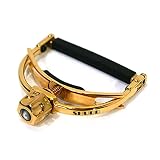
6. Shubb F1G FineTune Yoke Capo Royale for Steel-string Guitars - Titanium Gold
Overview:
The Shubb F1G FineTune Yoke Capo Royale represents the pinnacle of capo engineering, featuring a titanium gold finish that elevates both form and function. Designed specifically for steel-string guitars, this premium accessory employs a yoke-style mechanism that wraps completely around the neck, providing unparalleled stability and even pressure distribution across all six strings.
What Makes It Stand Out:
The numbered adjustment knob is a game-changer, allowing precise, repeatable tension settings that eliminate the guesswork common with lesser capos. Once you dial in the perfect pressure for your instrument, you can remove and reattach it without readjustment. The titanium plating isn’t merely cosmetic—it provides exceptional durability and corrosion resistance while adding a luxurious aesthetic that complements high-end instruments.
Value for Money:
Positioned at the upper end of the capo market, the F1G justifies its premium price through meticulous craftsmanship and materials that will outlast multiple guitars. While beginners might find the cost prohibitive, serious players recognize this as a lifetime investment that prevents tuning issues and string buzz, ultimately saving money on setup costs and replacements.
Strengths and Weaknesses:
Pros include surgical precision, zero fret wear, stunning appearance, and consistent performance. The main drawback is the steep price point, and the yoke design may feel bulky to players accustomed to spring-loaded models. Some might consider it over-engineered for casual use.
Bottom Line:
For discerning guitarists who demand perfection and own quality instruments, the F1G is unmatched. It’s a buy-once, cry-once purchase that delivers flawless performance gig after gig.
7. Shubb F1 Capo, Silver, Alloy Steel for U-shaped Acoustic Guitar

Overview:
The Shubb F1 Capo in silver alloy steel offers the same robust engineering as its premium sibling without the flashy titanium finish. Built for steel-string acoustic and electric guitars, this workhorse capo delivers professional-grade performance through its innovative adjustable yoke design that ensures consistent, optimal pressure across the fretboard.
What Makes It Stand Out:
The numbered tension adjustment knob sets this apart from spring-loaded alternatives, enabling musicians to find their instrument’s sweet spot and lock it in permanently. This eliminates the tuning instability and string pulling that plague traditional capos. The alloy steel construction provides exceptional strength while maintaining a lighter weight than brass alternatives, making it ideal for players who frequently change positions during performances.
Value for Money:
This mid-priced capo strikes an excellent balance between affordability and professional features. It costs significantly less than the Royale version while delivering 95% of the functionality. For working musicians, the durability alone makes it a smarter investment than replacing cheap capos annually. The precision it offers rivals models costing twice as much.
Strengths and Weaknesses:
Pros include rock-solid reliability, excellent intonation preservation, and comfortable ergonomics. The silver finish may develop patina over time, which some players actually prefer. Cons include a slightly industrial aesthetic compared to the Royale, and the initial adjustment process requires patience. It’s less intuitive than squeeze-and-release models for beginners.
Bottom Line:
The F1 is the sensible choice for serious players who prioritize function over flash. It’s a reliable, gig-worthy tool that belongs in every performing guitarist’s case.
8. Shubb C1K Standard Acoustic Guitar Capo Noir – Black Chrome

Overview:
The Shubb C1K Capo Noir brings the company’s legendary 35-year-old design into a sleek black chrome finish. This standard-style capo eschews the yoke mechanism for a traditional lever-clamp design that has earned the trust of generations of guitarists. Engineered specifically for steel-string acoustics, it delivers the famed “set it and forget it” convenience that made Shubb a household name.
What Makes It Stand Out:
The proprietary rubber padding mimics the firmness and texture of a human fingertip, applying pressure exactly where needed without squeezing the strings sharp. The lever mechanism allows for lightning-fast changes between frets with one hand, while the internal cam design maintains your preset tension indefinitely. This eliminates the need to readjust between songs—a crucial advantage during live performances.
Value for Money:
As one of the most affordable capos in Shubb’s lineup, the C1K offers extraordinary value. You’re getting a design refined over decades, built with materials that outlast competitors at similar price points. The black chrome finish adds a touch of elegance without inflating cost. For players upgrading from elastic or cheap spring capos, this represents a massive performance improvement for minimal investment.
Strengths and Weaknesses:
Pros include bulletproof reliability, excellent tuning stability, one-handed operation, and a proven track record. The black chrome resists fingerprints and wear exceptionally well. Cons include less precise pressure control than the F-series and a slightly bulkier profile that can interfere with some playing styles near the capo. The preset tension might not suit all neck profiles perfectly.
Bottom Line:
The C1K is the definitive entry into quality capos. It’s an essential, no-brainer upgrade for any acoustic guitarist serious about staying in tune.
9. Shubb C5 Standard Banjo Capo – Polished Nickel

Overview:
The Shubb C5 Standard Banjo Capo applies the company’s battle-tested lever design to the unique requirements of banjo players. Featuring a polished nickel finish and dimensions optimized for banjo necks, this capo maintains the same “set it and forget it” philosophy that defines the Shubb brand. The 35-year-old design has been subtly modified to accommodate the banjo’s shorter neck radius and lighter string tension.
What Makes It Stand Out:
The custom rubber padding is specifically formulated for banjo strings, preventing the buzz and tonal choking that occurs when using guitar capos on banjos. The lever action is tuned for the banjo’s slimmer neck profile, providing secure clamping without excessive pressure that can pull the instrument out of tune. The compact size stays clear of the player’s hand position, crucial for the banjo’s intricate picking patterns.
Value for Money:
Banjo-specific capos are a niche product, often carrying premium prices. The C5 breaks this trend by offering specialized performance at a standard capo price point. Considering the tonal clarity it preserves and the tuning stability it provides, it’s an investment that pays dividends in professional sound quality. Generic capos may seem cheaper but often require replacement when they damage banjo necks or cause chronic buzzing.
Strengths and Weaknesses:
Pros include perfect banjo neck fit, superior intonation preservation, durable nickel finish, and effortless one-handed operation. The design is time-tested and roadworthy. The main con is its single-instrument specificity—it’s useless for guitars. Some players might prefer a shinier finish option. The preset tension, while generally perfect, may require occasional tweaking for different banjo setups.
Bottom Line:
If you own a banjo, the C5 isn’t optional—it’s mandatory. It’s the difference between sounding amateur and professional, making it the best banjo capo investment you can make.
10. Shubb C2 Standard Classical Guitar Capo – Polished Nickel

Overview:
The Shubb C2 Standard Classical Guitar Capo adapts the legendary lever design for nylon-string instruments. With a polished nickel finish and a wider, flatter clamping surface designed for classical guitar necks, this capo delivers the same “set it and forget it” reliability that made Shubb famous. The 35-year-old design philosophy ensures that the delicate intonation of classical guitars remains pristine.
What Makes It Stand Out:
The extended rubber padding is specifically contoured for the flat fingerboards and wider neck profiles of classical guitars, distributing pressure evenly across all six nylon strings. This prevents the sharping effect common with narrow capos that concentrate pressure unevenly. The gentler clamping force respects the lower tension of nylon strings while still providing buzz-free performance. The lever mechanism is calibrated for the unique neck dimensions, ensuring secure placement without disturbing the instrument’s delicate setup.
Value for Money:
Classical guitarists often struggle to find capos that don’t compromise their instrument’s voice. The C2 solves this at a price comparable to generic guitar capos, making it an exceptional value. The durability means it will likely outlast your current guitar, and the tuning stability it provides is priceless during performances where retuning would be disruptive. For students and professionals alike, it’s a small investment that protects tonal integrity.
Strengths and Weaknesses:
Pros include perfect classical neck compatibility, excellent intonation preservation, robust construction, and fast one-handed operation. The polished nickel finish is durable and attractive. Cons include the product description’s confusing mention of banjos (likely a copy-paste error) and its single-purpose design. Players who own both steel-string and classical guitars will need separate capos. The preset tension may need adjustment for different neck thicknesses.
Bottom Line:
Classical guitarists can finally stop compromising. The C2 preserves your instrument’s voice while delivering the convenience Shubb is known for—an essential addition to any classical player’s kit.
Understanding the Shubb-Style Toggle Mechanism
The genius of the toggle design lies in its mechanical simplicity. A levered cam system creates a mechanical advantage that multiplies your hand’s input force, but unlike spring mechanisms, it locks into a stable position that won’t drift. When you flip the toggle, you’re engaging a precisely machined cam that draws a rubber-padded bar against the strings with repeatable, measurable force.
How the Cam System Works
The cam’s eccentric shape means that as it rotates through its arc, the distance between the bar and neck changes in a non-linear fashion. This gives you a mechanical advantage curve—initially easy to close, then progressively firmer until it reaches a positive lock. The adjustment screw lets you set the starting point of this arc, effectively calibrating the maximum pressure for your specific neck profile and string gauge.
The Role of the Adjustment Screw
That small knurled screw isn’t just a tensioner—it’s your primary tone-shaping tool. Turning it clockwise increases the clamping range, while counterclockwise reduces it. For vintage necks, you’ll typically find the sweet spot between 1.5 and 2.5 full turns from fully closed, but this varies dramatically based on neck thickness, fret height, and even humidity levels.
Why Vintage Necks Demand Specialized Capos
Vintage guitar necks are snowflakes—no two are exactly alike. Factory tolerances in the 1950s and 60s were looser, hand-sanding created subtle asymmetries, and decades of string tension have induced microscopic changes in neck geometry. A modern, mass-produced capo designed for CNC-perfect necks simply can’t accommodate these variables.
The Nitrocellulose Factor
Nitro finishes are porous, relatively soft, and prone to compression marks. Excessive capo pressure can create permanent divots or “capo rash” that destroys collector value. The toggle mechanism’s gentle but firm clamping action distributes pressure more evenly across a wider surface area, reducing point-loading that damages finishes.
Fret Wear Considerations
Vintage frets, often made from softer nickel alloy, have likely been leveled multiple times. Low frets combined with excessive capo pressure can cause strings to bottom out against wood between frets, creating buzz that isn’t actually a setup issue—it’s a capo pressure issue. Precise control lets you clear the tallest fret without over-clamping.
The Science of Precise Pressure Control
String physics doesn’t care about nostalgia. When you clamp a capo, you’re creating a new nut position, and that nut must hold strings at proper height and break angle without altering pitch. Too little pressure gives you buzz and dead notes; too much pulls strings sharp and chokes harmonic overtones.
Pressure and Intonation Relationship
Every millimeter of string deflection under the capo bar translates to pitch change. A spring capo might apply 3-4 pounds of force where only 1.5 pounds are needed. That extra force stretches the string microscopically, pulling notes 5-15 cents sharp. The toggle system lets you find the absolute minimum pressure for clean tone, typically between 1.2-2.0 pounds depending on string gauge and action height.
Harmonic Content Preservation
Over-clamping dampens the string’s ability to vibrate freely, particularly affecting higher harmonics. This is why a heavy-handed capo can make a vintage Martin sound muffled and modern. The toggle’s precise pressure preserves the delicate harmonic balance that makes vintage instruments valuable in the first place.
Key Features to Evaluate in Toggle Capos
Not all toggle capos are created equal. The market has seen numerous interpretations of the design, each with subtle differences that matter enormously for vintage applications.
Adjustment Screw Thread Pitch
Fine-thread screws (typically 32-40 TPI) give you more precise control over tension increments. Coarse threads adjust faster but lack the granularity needed for delicate vintage necks. Look for capos where a quarter-turn makes a noticeable but subtle difference in pressure.
Bar Material and Construction
Solid brass or stainless steel bars provide better inertia and more even pressure distribution than aluminum. Some designs use a two-piece bar with independent suspension for each string, though these are overkill for most vintage applications and can actually create uneven pressure if not perfectly aligned.
Rubber Compound Quality
The padding that contacts your strings is critical. Cheap silicone can compress permanently, requiring constant readjustment. High-quality, high-durometer rubber (typically 70-80 Shore A) with a slightly convex profile maintains consistent pressure without developing flat spots.
Material Selection and Tone Impact
Every material in the capo’s construction becomes part of your instrument’s vibrating system. Mass, density, and resonance characteristics all subtly influence tone.
Metallic Components
Brass adds warmth and mass, which can enhance sustain on bright maple-necked guitars. Stainless steel provides clinical precision and is virtually immune to corrosion from finger oils. Titanium offerings exist but are often too light, lacking the inertial stability that helps maintain consistent pressure during vigorous playing.
Rubber Density and Hardness
Softer rubber (60-65 Shore A) conforms better to fingerboard radius but compresses more, requiring slightly higher initial tension. Harder rubber (75+ Shore A) transfers vibration more efficiently but may not seat perfectly on highly radiused boards. For vintage Fender 7.25" radius necks, medium-soft rubber often works best.
Neck Profile Compatibility Considerations
Vintage necks span a spectrum of profiles that would never pass modern QC. Your capo must accommodate this reality.
Deep U and V Profiles
These substantial necks require the capo’s arm to open wider, which changes the toggle’s mechanical advantage curve. Some toggle designs feature extended arms or adjustable stops specifically for this scenario. Without this accommodation, you might run out of adjustment range before achieving proper pressure.
Asymmetrical and Boat Profiles
Many vintage necks have subtle asymmetries. A rigid, straight bar can create uneven pressure across strings. The solution is a bar with slight flex or a pre-radiused contour that matches common vintage fingerboard radii (7.25", 9.5", or 12").
Neck Taper Effects
Vintage necks often taper more dramatically from nut to body joint. A capo designed for modern, consistent neck thickness may bind or rock when moved up the neck. Look for designs with pivot points that allow the bar to self-align to the neck’s changing geometry.
Adjusting Your Toggle Capo for Optimal Performance
The adjustment process is where art meets science. Rushing this step guarantees compromised tone.
The “Goldilocks Zone” Method
Start with the adjustment screw fully backed out. Close the toggle and slowly tighten until you get clean notes on all strings when fretted at the capo position. Then, play a full chord and slowly back off the tension until you hear the faintest hint of buzz on one string. Tighten a quarter-turn past that point—that’s your minimum effective pressure.
Seasonal Adjustments
Wood moves with humidity. A capo perfectly adjusted in a 45% RH winter environment may need 1/8-1/4 turn more in a humid summer. Vintage instruments are particularly sensitive here. Make checking capo pressure part of your seasonal setup routine.
Installation Techniques for Vintage Instruments
How you place the capo matters as much as which capo you choose. Vintage frets and finishes reward careful technique.
Positioning for Even Pressure
Place the capo directly behind the target fret, not on top of it. On worn vintage frets, position it slightly closer to the body of the guitar than you would on a modern instrument. This compensates for lower fret height and ensures the string break angle remains consistent.
Avoiding Finish Damage
Always lift the toggle mechanism away from the neck before sliding the capo into position. Dragging it across nitro finish creates micro-scratches that accumulate into visible wear. Some players keep a small piece of silk cloth between the capo and neck during positioning, then remove it once the capo is locked.
Common Pressure-Related Issues and Solutions
Even with a perfect capo, problems arise. Knowing how to diagnose pressure-related issues saves you from unnecessary setup changes.
Buzzing on Specific Strings
If only the D or G string buzzes, you likely have a radius mismatch. The bar isn’t conforming to your fingerboard’s curvature. Try rotating the capo bar slightly (if the design allows) or switching to a softer rubber compound that will better mate with the board.
Notes Pulling Sharp
This is classic over-pressure. Back off the adjustment screw in quarter-turn increments, retesting intonation each time. If you’re still sharp at minimum effective pressure, your nut slots may be too high, creating excessive string stretch when capoed.
Uneven Volume Across Strings
If your high E is quiet while low E booms, pressure distribution is uneven. Check that the capo bar is parallel to the frets when closed. Some vintage necks have twist that requires compensating by angling the capo slightly.
Maintenance and Care for Longevity
A precision tool demands precision maintenance. Neglect here erases the benefits of careful selection.
Cleaning the Rubber Contact Surface
String oils and finger grime accumulate on the rubber bar, creating a sticky surface that can pull strings sideways during installation. Clean monthly with a lint-free cloth dampened with naphtha. Never use alcohol, which dries out and hardens the rubber.
Lubricating the Toggle Mechanism
The cam and pivot points benefit from a single drop of light machine oil annually. Too much oil attracts dust and creates a grinding paste. Work the toggle open and closed several times after applying, then wipe away any excess.
Screw Thread Preservation
The adjustment screw is the heart of the system. Periodically remove it completely, clean the threads with a toothbrush, and apply a tiny amount of anti-seize compound. This prevents galling and ensures smooth, predictable adjustments.
Comparing Toggle Capos to Other Designs
Understanding the alternatives highlights why toggle mechanisms excel for vintage applications.
Spring-Loaded Capos: The Pressure Problem
Spring capos apply a fixed force determined by spring rate and compression distance. On a vintage V-neck, that might be perfect at the 5th fret but excessive at the 1st fret where the neck is thinner. The pressure curve is linear and non-adjustable.
Partial Capos and Tone Implications
Partial capos that cover 3-5 strings create unique pressure challenges. The uneven loading can cause the capo to rock on curved necks. Toggle mechanisms with wide, stable bases handle this better than narrow spring capos that concentrate force.
Elastic and Strap Capos
While gentle on finishes, these lack the precision pressure control and often slip during performance. They’re fine for casual practice but unreliable for recording or gigging with vintage instruments.
Price vs. Performance: What to Expect
The toggle capo market spans from budget imports to precision-machined instruments. Understanding the value curve helps you invest wisely.
The $20-30 Range
These use cast rather than machined components, coarser threads, and generic rubber. They’ll work but lack the refinement for serious vintage use. Adjustment is often jumpy, and material quality means replacing them every 12-18 months.
The $40-60 Sweet Spot
This is where you find machined brass or steel construction, fine-pitch adjustment screws, and premium rubber compounds. These capos offer 90% of the performance of high-end options at a reasonable price. For most vintage guitar owners, this is the ideal range.
Premium Options Above $70
You’re paying for exotic materials, tighter tolerances, and often, aesthetic customization. The functional improvement over mid-range options is marginal—perhaps 5% better pressure consistency—but for recording professionals or collectors of extremely valuable instruments, that margin matters.
Vintage Guitar-Specific Concerns
Certain vintage instruments present unique challenges that generic capo advice doesn’t address.
Pre-War Guitars and Light Bracing
Pre-war Martins and Gibsons often have delicate scalloped bracing. Excessive capo pressure that pulls the neck back slightly can stress these braces. The toggle’s minimal required pressure is crucial here—never use a capo that needs more than 2 pounds of force on these instruments.
Vintage Fender Maple Necks and Finish Checking
Maple necks with vintage nitro finishes are prone to finish checking under pressure changes. Always warm the capo in your hands before applying to a cold guitar. The temperature differential can cause the finish to contract rapidly under pressure, initiating cracks.
12-String Vintage Guitars
The doubled string courses and higher overall tension make 12-strings particularly capo-sensitive. You need a capo with exceptional rigidity to prevent bar flex, but minimal pressure to avoid pulling sharp. Some players use two toggle capos—one standard, one modified with extra-light tension—for different positions on the neck.
Expert Setup Tips for Recording Sessions
In the studio, capo-induced intonation issues are magnified. These techniques ensure your vintage guitar sounds as good capoed as it does open.
The Capo-First Tuning Method
Tune your guitar with the capo already in place at your target position. Then remove it and fine-tune open strings. When you reapply the capo, the slight pitch raise from pressure will bring you back to true pitch. This compensates for the inevitable micro-stretching.
Pressure Mapping Your Neck
Create a reference chart for each vintage guitar. Starting at the 1st fret, find the minimum effective pressure setting and note the screw position. Repeat every two frets. You’ll discover each instrument’s unique pressure curve, allowing you to preset your capo before recording sessions.
Using a Strobe Tuner for Setup
Standard tuners don’t show the subtle pitch drift from capo pressure. A strobe tuner reveals that your “perfect” pressure might still pull strings 3-4 cents sharp. Adjust until each string reads within 1 cent of target pitch—this level of precision is only possible with a toggle mechanism.
Troubleshooting Guide for Toggle Capos
Even the best tools malfunction. Knowing how to field-repair your capo saves sessions and gigs.
Toggle Won’t Lock Positively
If the toggle feels mushy or won’t stay locked, the cam surface may be contaminated. Remove the bar and clean the cam with a cotton swab and naphtha. If the problem persists, the cam may be worn and need replacement—most quality manufacturers offer rebuild kits.
Adjustment Screw Backs Out During Use
This indicates worn threads or insufficient thread engagement. Apply a tiny drop of clear nail polish to the screw threads—not enough to lock it permanently, just to add friction. For a permanent fix, replace the screw with one of slightly larger diameter if the manufacturer offers it.
Bar Develops Permanent Curvature
If you store the capo clamped onto something for extended periods, the bar can take a set. To correct, gently bend it back over a padded vise jaw, or better, replace it. A curved bar creates uneven pressure that no amount of adjustment can fix.
Frequently Asked Questions
How do I know if my vintage neck needs a toggle-style capo?
If you notice notes going sharp, reduced sustain, or a choked tone when using a spring capo, your vintage neck will benefit from the precise pressure control of a toggle design. Any instrument with a nitrocellulose finish or low vintage frets is a candidate.
Can a toggle capo damage my vintage guitar’s finish?
Any capo can damage a finish if misused, but toggle capos are actually safer when properly adjusted because they allow minimum effective pressure. The key is never clamping it tighter than necessary and always lifting it away from the neck when repositioning.
What’s the ideal pressure range for a vintage acoustic guitar?
Most vintage acoustics require between 1.2 and 1.8 pounds of pressure at the bar. You can measure this with a small postal scale—place the capo on the scale and close it until you reach minimum effective pressure, then read the weight.
How often should I readjust my toggle capo?
Check the adjustment every time you change string gauges or with significant seasonal humidity shifts (every 3-4 months). Otherwise, a properly set toggle capo should maintain its setting indefinitely.
Will a toggle capo work on my vintage 12-string?
Yes, but ensure you choose a model specifically designed for 12-strings with a rigid bar that won’t flex under the increased string count. You may need to set the pressure slightly higher, but still far less than a spring capo would apply.
Why does my capo sound different at the 1st fret vs. the 7th fret?
Neck thickness varies, changing the toggle’s mechanical advantage. A quality toggle capo compensates for this, but you may need slightly different adjustment settings for extreme positions. This is normal and part of the precision these capos offer.
Can I use a toggle capo on a vintage guitar with a zero fret?
Zero frets present unique challenges since the capo becomes the primary nut. Toggle capos excel here because you can set pressure to just barely clear the zero fret, maintaining proper string height without excessive stretch.
How do I clean the rubber without damaging it?
Use naphtha on a lint-free cloth, applying gentle pressure. Avoid alcohol, acetone, or any petroleum-based solvents. Clean monthly for optimal performance and to prevent string contamination.
What’s the lifespan of a quality toggle capo?
With proper maintenance, a machined brass or steel toggle capo should last decades. The rubber bar typically needs replacement every 3-5 years depending on usage. Most manufacturers sell replacement rubber strips.
Are there vintage guitars that shouldn’t use any capo?
Extremely valuable museum-grade instruments or those with structural issues (loose braces, neck resets needed) should avoid capos entirely. For most player-grade vintage guitars, a properly adjusted toggle capo is safe and won’t diminish value.
See Also
- 10 Expert Picks: Shubb-Style Capos for Precise Pressure Control
- Stop Fret Wear: 10 Toggle Capos with Soft Padding for Vintage Guitars in 2026
- 10 Brass Capos for Vintage Tone Purists in 2026
- 10 Budget Toggle Capos for College Guitar Ensembles Under $15 in 2026
- 10 Top-Rated Acoustic Capos for Martins With Curved Radius Necks 2026