Table of Contents
If you’ve ever wrestled with a capo that yanks your guitar out of tune the moment you clamp it down, you already understand why pressure control isn’t just a fancy feature—it’s the difference between a seamless key change and a tuning nightmare. Shubb-style capos have earned their cult following among discerning guitarists precisely because they treat your strings with the respect they deserve, applying pressure that’s firm enough to eliminate buzz yet gentle enough to keep intact.
Unlike spring-loaded designs that apply a one-size-fits-all crush, these precision-engineered tools give you nuanced control over how much force meets your fretboard. Whether you’re a fingerstyle purist who needs every harmonic to ring true, or a gigging musician who switches capos mid-set, understanding the mechanics behind these devices will transform how you think about this often-overlooked accessory. Let’s dive deep into what makes Shubb-style capos the gold standard for players who refuse to compromise on tone.
Top 10 Shubb-Style Capos
Detailed Product Reviews
1. Shubb C1 Standard Acoustic Guitar Capo – Polished Nickel

Overview: The Shubb C1 is the quintessential acoustic guitar capo that has earned its reputation through decades of reliable performance. This polished nickel version represents the brand’s flagship design, engineered specifically for steel-string acoustic guitars. With over 35 years of refinement, it delivers consistent pressure across the fretboard while maintaining perfect intonation. The capo’s mechanical lever system allows for quick one-handed operation, making mid-song key changes seamless for performing musicians.
What Makes It Stand Out: The patented “set it and forget it” adjustment system distinguishes this capo from cheaper spring-loaded alternatives. Once you dial in the perfect pressure for your guitar’s neck, the locking mechanism maintains that setting indefinitely. The custom-molded rubber pad mimics a human fingertip’s density and resiliency, eliminating the tuning issues common with rigid capos. The polished nickel finish isn’t merely cosmetic—it provides exceptional corrosion resistance while developing an attractive vintage patina over years of use.
Value for Money: Priced in the mid-to-premium range ($20-25), the C1 costs roughly twice entry-level capos but delivers five times the lifespan. You’re investing in a precision-machined brass body and hardened steel components that won’t weaken or lose alignment. For serious players who perform regularly, the time saved from retuning and adjusting pressure alone justifies the premium over $10 disposable capos that need replacement annually.
Strengths and Weaknesses: Pros: Unmatched tuning stability; one-handed operation; durable metal construction; maintains perfect pressure setting; excellent for studio recording. Cons: Not ideal for electric guitars with smaller fretboards; polished finish shows fingerprints; premium price may deter beginners; slightly heavier than ultralight capos.
Bottom Line: The Shubb C1 is the professional’s choice for acoustic guitar, delivering flawless performance that justifies its price. If you value your instrument’s tone and your own time, this is the only capo you’ll ever need to buy.
2. Shubb F1 Capo, Silver, Alloy Steel for U-shaped Acoustic Guitar

Overview: The Shubb F1 represents the brand’s specialized solution for steel-string guitars with U-shaped neck profiles. Constructed from alloy steel with a silver finish, this capo addresses the unique challenges posed by thicker, vintage-style necks that standard capos struggle to accommodate. The numbered adjustment knob provides unprecedented precision in pressure calibration, ensuring clean notes without pulling strings sharp.
What Makes It Stand Out: Unlike the standard C-series, the F1 features a quantified adjustment system with visible numbers, allowing players to document and replicate exact pressure settings for different instruments. The stainless steel construction offers superior tensile strength for the wider clamping range required by U-shaped necks. This engineering prevents the gradual weakening experienced by brass-bodied capos when stretched to their operational limits. The minimalist silver finish appeals to players preferring understated hardware that doesn’t distract from their instrument’s aesthetics.
Value for Money: Positioned at the higher end of the capo market ($25-30), the F1 justifies its cost through specialized functionality. For owners of vintage Martins, Guilds, or other guitars with substantial neck profiles, this eliminates the compromise of using an ill-fitting standard capo. The steel construction ensures it will outlast multiple guitars, making it a one-time purchase for collectors and vintage instrument enthusiasts.
Strengths and Weaknesses: Pros: Perfect for U-shaped necks; numbered adjustment enables precise documentation; steel construction prevents flex; excellent for multiple instrument owners; superior clamping force. Cons: Overkill for modern C-shaped necks; higher price point; limited finish options; adjustment knob can be stiff initially; heavier than standard models.
Bottom Line: If you play guitars with substantial U-shaped necks, the F1 is non-negotiable. Its specialized design solves a specific problem perfectly, making it essential for vintage guitar aficionados despite the premium price.
3. Shubb C1K Standard Acoustic Guitar Capo Noir – Black Chrome

Overview: The C1K delivers identical mechanical performance to the classic C1 but cloaks it in a sleek black chrome finish. This “Noir” variant targets players who want Shubb’s legendary reliability without the flashy appearance of polished nickel. The black chrome coating provides a stealth aesthetic that complements dark-stained acoustic guitars and appeals to performers seeking stage hardware that doesn’t reflect stage lights. Every internal component mirrors the standard C1’s proven design.
What Makes It Stand Out: The black chrome finish offers more than just visual appeal—it provides enhanced scratch resistance and virtually eliminates visible fingerprints, a common complaint with the polished version. The matte-like appearance creates a modern, professional look that pairs exceptionally well with black hardware and bindings found on many contemporary acoustic guitars. Despite the different finish, it maintains the same precision-machined brass body and patented lever mechanism that define the Shubb experience.
Value for Money: Priced identically to the standard C1, the C1K presents a pure style choice without financial penalty. You’re receiving the same professional-grade components and 35-year legacy design, just in a more contemporary package. For players who’ve invested in visually striking instruments, having hardware options that complement rather than contrast their guitar’s aesthetics adds intangible value that budget capos cannot match.
Strengths and Weaknesses: Pros: Fingerprint-resistant finish; modern aesthetic; identical reliability to C1; excellent for dark-colored guitars; durable coating. Cons: Black finish may wear thin on contact points over extreme long-term use; not traditional-looking; identical performance means you’re paying for style only; limited availability in some markets.
Bottom Line: Choose the C1K if you value aesthetics as much as function. It performs identically to the legendary C1 while offering a sophisticated blacked-out alternative that modern players will appreciate.
4. C1 Shubb Standard series Acoustic Guitar Capo - Polished Nickel

Overview: This listing represents Shubb’s foundational C1 model, the capo that revolutionized professional guitar accessories. Designed exclusively for acoustic steel-string guitars, it employs a lever-operated clamp with adjustable pressure that eliminates the tuning compromises inherent in spring-loaded designs. The polished nickel finish on brass body construction has remained unchanged for decades because it simply works. This is the workhorse capo found in countless professional guitar cases worldwide.
What Makes It Stand Out: The C1’s genius lies in its mechanical simplicity and material science. The custom-formulated rubber pad duplicates the density of a human fingertip, preventing string depression that causes sharp notes. The lever’s geometry provides mechanical advantage, making it operable with one hand while delivering consistent, repeatable pressure. Unlike mass-produced capos, each C1 undergoes quality control that ensures the locking mechanism maintains its setting through thousands of uses without slipping or weakening.
Value for Money: At approximately $20-25, the C1 sits in the sweet spot between disposable gear and overpriced boutique accessories. Its lifespan measured in decades rather than months makes the cost-per-use incredibly low. Professional musicians calculate that this capo pays for itself by preventing just one studio retake caused by tuning instability. For serious students and performing artists, it’s a modest investment that protects their musical expression.
Strengths and Weaknesses: Pros: Proven 35-year design; exceptional tuning stability; one-handed operation; rebuildable and repairable; professional studio quality. Cons: Slightly heavier than minimalist capos; polished finish requires occasional cleaning; not suitable for classical guitars; initial adjustment requires trial and error.
Bottom Line: The C1 Standard is the definitive acoustic guitar capo for good reason. It delivers professional performance that justifies its price tag, making it an essential tool for any serious acoustic guitarist.
5. Shubb Guitar Capo (S1)

Overview: The S1 model extends Shubb’s trusted design philosophy to a broader range of steel-string guitars, functioning as the versatile all-rounder in their lineup. While sharing the same 35-year-old lever mechanism and finger-like rubber grip as its siblings, the S1 is engineered for universal compatibility across dreadnoughts, jumbos, and smaller-bodied acoustics. It represents Shubb’s answer to players needing one capo for multiple instruments without model-specific specialization.
What Makes It Stand Out: The S1’s moderate clamping range and standardized pressure settings make it more forgiving than specialized models when switching between different guitar neck profiles. The lever design incorporates a slightly longer handle for improved grip, benefiting players with smaller hands or those wearing gloves in cold performance environments. While lacking the numbered adjustment of the F1, it maintains the “set it and forget it” convenience that defines the brand, with a sweet spot pressure that works across most modern guitar necks.
Value for Money: Typically retailing for $18-22, the S1 undercuts the C1 slightly while delivering 95% of its functionality. It avoids the premium pricing of specialized models while sidestepping the quality pitfalls of budget competitors. For players owning one primary guitar or multiple similar instruments, this represents the most cost-effective entry into professional-grade capo performance without sacrificing the core Shubb experience.
Strengths and Weaknesses: Pros: Versatile across multiple guitar types; slightly lower price point; easy lever operation; reliable tuning stability; good for beginners upgrading from spring capos. Cons: Less precise than numbered models; finish options are limited; may require readjustment for extreme neck shapes; not optimized for vintage U-necks.
Bottom Line: The S1 is the perfect gateway to professional capo performance. It delivers Shubb’s core benefits at a slightly more accessible price, making it ideal for gigging musicians who need reliable, versatile functionality without model-specific specialization.
6. Shubb C2 Standard Classical Guitar Capo – Polished Nickel

Overview: The Shubb C2 Standard Classical Guitar Capo brings 35 years of proven engineering to nylon-string instruments. Its polished nickel finish and distinctive lever-operated design have made it a staple among classical and flamenco guitarists who demand precision without compromising their instrument’s delicate setup. This capo addresses the unique challenges of flat fretboards and wider string spacing found on classical guitars.
What Makes It Stand Out: Unlike universal capos that can warp nylon strings or create uneven pressure across the fingerboard, the C2 features a custom rubber pad that mimics a human fingertip’s density and curvature. The “set it and forget it” mechanism lets you dial in perfect pressure once, then lock and remove with a simple lever flip—no readjustment needed between performances. The polished nickel offers timeless aesthetics that complement any classical instrument.
Value for Money: Positioned in the mid-to-premium range, the C2 justifies its price through exceptional durability and tuning stability. While budget capos may cost half as much, they often require constant retuning and replacement. This single purchase typically outlasts multiple cheaper alternatives, making it more economical over a player’s lifetime.
Strengths and Weaknesses: Strengths include unparalleled tuning stability, one-handed operation, elegant appearance, and instrument-specific design. The precision-machined construction ensures consistent performance year after year. Weaknesses are its specialization—it won’t work on curved fretboards—and the initial learning curve for pressure adjustment. Some players may find the polished nickel shows fingerprints.
Bottom Line: For classical guitarists seeking a capo that preserves their instrument’s voice and intonation, the Shubb C2 is an essential investment that delivers decades of reliable service.
7. Shubb C5 Standard Banjo Capo – Polished Nickel

Overview: The Shubb C5 Standard Banjo Capo adapts the company’s legendary lever-operated design specifically for five-string banjos. With 35 years of refinement behind it, this polished nickel capo addresses the unique challenges of banjo playing: frequent key changes, the instrument’s sharp attack, and the critical need for precise intonation across the drone string. It’s engineered for the working banjoist.
What Makes It Stand Out: The C5’s rubber pad is contoured to match a banjo’s slender neck and radiused fingerboard, applying pressure exactly where needed without pulling strings sharp. The flip-lever mechanism enables lightning-fast changes between songs—crucial in bluegrass and folk settings. Once you set the pressure screw for your instrument’s action, the “set it and forget it” system ensures perfect repeatability every time you clamp it on.
Value for Money: Priced similarly to other premium capos, the C5’s instrument-specific design makes it worth every penny. Generic capos often cause tuning issues on banjos, costing valuable stage time and sonic clarity. The robust construction means this capo will likely outlast your current instrument, representing true long-term value despite the higher upfront cost compared to budget options.
Strengths and Weaknesses: Major strengths include instant operation, exceptional tuning stability, perfect banjo neck fit, and durable polished nickel finish. The lever action is smoother than spring-loaded alternatives. Weaknesses include single-instrument compatibility—it won’t function properly on guitars—and the fixed radius that may not suit all banjo neck profiles. The price point may deter beginners.
Bottom Line: Serious banjo players should consider the Shubb C5 non-negotiable gear. Its reliability and performance far exceed cheaper alternatives, making it a wise investment for any dedicated player.
8. Shubb F1G FineTune Yoke Capo Royale for Steel-string Guitars - Titanium Gold
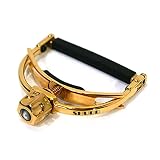
Overview: The Shubb F1G FineTune Yoke Capo Royale represents the pinnacle of capo engineering for steel-string acoustic and electric guitars. This titanium gold-plated masterpiece wraps completely around the neck, eliminating the side torque that traditional capos exert. Designed for discerning players who view their capo as both a tool and a statement piece, it offers unprecedented control over pressure and positioning.
What Makes It Stand Out: The numbered adjustment knob provides precise, repeatable pressure settings you can document for different instruments or positions—an innovation no lever-style capo offers. The yoke design ensures perfectly even pressure across all six strings while leaving the fretboard completely unobstructed for comfortable playing. The titanium gold finish isn’t merely cosmetic; it’s an ultra-durable plating that maintains its luster through years of stage use and handling.
Value for Money: This premium-priced capo commands nearly double the cost of Shubb’s standard series, but delivers proportional value. For studio musicians and collectors who own multiple high-end guitars, the ability to fine-tune pressure prevents costly setup issues and preserves instrument integrity. The luxurious finish and precision machining justify the investment for professionals and enthusiasts alike.
Strengths and Weaknesses: Strengths include unparalleled pressure control, zero fretboard interference, stunning aesthetics, and perfect intonation. The numbered settings are genuinely useful. Weaknesses include slower application than lever capos, higher price point, and the yoke design may not fit all neck heels or body joints. It’s overkill for casual strummers.
Bottom Line: The F1G is a luxury tool for serious musicians who demand perfection. If you own premium guitars and value precision, this capo is worth every cent.
9. Shubb Capo for Steel String Guitar (SC1G)

Overview: The Shubb SC1G Royale Capo for steel-string guitars combines the company’s proven lever mechanism with a striking titanium gold finish. This made-in-USA capo delivers the same “set it and forget it” convenience that made Shubb famous, while offering an aesthetic upgrade for players who want their gear to look as good as it performs. It’s designed for six-string acoustics and electrics.
What Makes It Stand Out: The high-tech titanium finish eliminates the optical wear and tarnishing that plague traditional plated capos, ensuring it remains gleaming after years of use. Shubb’s custom rubber formula continues to set the industry standard for mimicking human finger pressure, maintaining perfect intonation without constant retuning. The gold finish adds a touch of stage-worthy glamour without compromising the tool’s functional integrity.
Value for Money: While priced above the standard nickel version, the SC1G’s premium finish and lifetime durability make it a sound investment. Cheap gold-plated capos quickly fade or flake, but Shubb’s titanium process bonds at a molecular level. For performing musicians, the sustained appearance means never looking shabby on stage, translating to professional value that justifies the extra cost over standard models.
Strengths and Weaknesses: Strengths include the durable luxury finish, USA craftsmanship, proven tuning stability, and one-handed operation. The gold color complements sunburst and natural wood guitars beautifully. Weaknesses include the premium price for primarily aesthetic gains, potential for flashy appearance to distract in conservative settings, and the same instrument-radius limitations as other lever capos.
Bottom Line: If you want Shubb’s legendary performance with head-turning looks that last, the SC1G Royale delivers exceptional long-term value for performing guitarists.
10. C4 Shubb Standard Series Electric Guitar Capo - Polished Nickel

Overview: The C4 Shubb Standard Series Electric Guitar Capo brings the company’s 35-year legacy of precision engineering to the specific needs of electric guitarists. With a polished nickel finish and low-profile design, this capo acknowledges that electric guitars typically have lower action, lighter strings, and require a more delicate touch than their acoustic counterparts. It’s built for speed and subtlety.
What Makes It Stand Out: The C4 features a slightly narrower rubber pad and reduced clamping pressure range optimized for electric guitar necks and string gauges. This prevents the common problem of pulling electric strings sharp—a frequent issue when using acoustic capos on electrics. The flip-lever mechanism allows for lightning-fast key changes mid-song, while the “set it and forget it” system ensures consistent pressure whether you’re at the first or twelfth fret.
Value for Money: Competitively priced within Shubb’s standard series, the C4 offers specialized performance that generic capos can’t match. Electric players often struggle with tuning stability when using acoustic-oriented capos, costing time and creative flow. This instrument-specific design eliminates those issues, providing professional reliability at a reasonable price point that undercuts many boutique electric guitar capos.
Strengths and Weaknesses: Strengths include perfect electric guitar compatibility, stable tuning on light-gauge strings, sleek low-profile design, and durable construction. The lever action is intuitive and fast. Weaknesses include limited versatility—it performs poorly on acoustic guitars—and the polished nickel may not suit all aesthetic preferences. The pressure adjustment screw can be initially stiff.
Bottom Line: Electric guitarists seeking a no-fuss, reliable capo that maintains perfect intonation should make the C4 their go-to choice. It’s specialized excellence at a fair price.
What is a Shubb-Style Capo?
A Shubb-style capo represents a fundamental shift from spring-loaded designs. At its core, it’s a mechanical clamp that uses a lever-operated, adjustable screw mechanism to apply precise pressure across the strings. This design philosophy prioritizes control over convenience, giving you the ability to dial in exactly the amount of force needed for clear tones without excessive tension.
The Mechanics Behind the Design
The Lever and Screw System
The heart of this design lies in its cam-style lever paired with an adjustable tension screw. When you flip the lever closed, it draws a padded bar down onto the strings with consistent, even pressure. The screw allows you to fine-tune this pressure before locking it in place. This mechanical advantage means you’re not fighting a spring—you’re setting a specific tension that remains constant until you change it.
Why This Matters for Your Tone
Consistent pressure across all six strings eliminates the common problem of uneven fretting. With spring capos, the outer strings often receive more force than the middle ones, creating subtle pitch variations that can make your chords sound slightly “off.” The Shubb-style mechanism distributes pressure evenly from the first string to the sixth.
Why Precise Pressure Control Matters
Intonation Preservation
Excessive pressure stretches strings sharp. It’s physics. When you clamp down with too much force, you’re essentially bending every string microscopically. Precise pressure control lets you find the sweet spot where strings contact the fret firmly without being pulled out of pitch. This is especially critical for recording situations where intonation discrepancies become glaringly obvious.
Sustain and Overtones
Heavy pressure chokes your guitar’s natural resonance. The right amount of pressure allows the string to vibrate freely, preserving sustain and letting harmonic overtones bloom. Players who rely on open-string drones and partial capo techniques find this particularly valuable—each string needs to ring with its full voice.
Key Features to Look For
Micro-Adjustable Tension Screw
Look for a tension screw with fine threads that allow for minute adjustments. Coarse adjustments make it nearly impossible to find that perfect pressure point. The best designs feature a knurled knob that’s easy to grip but doesn’t protrude enough to get in your way while playing.
Low-Profile Lever Design
A sleek lever that sits close to the neck prevents your hand from bumping it during play. Some designs position the lever on the treble side, others on the bass side—your playing style should dictate which works better for your technique.
Material Considerations
Aircraft-Grade Aluminum vs. Brass
Most quality Shubb-style capos use either aluminum or brass for the main body. Aluminum offers exceptional strength-to-weight ratio, keeping the capo light enough to not affect neck balance. Brass adds mass, which some players believe enhances sustain by coupling more effectively with the neck. Both work excellently—the choice often comes down to personal preference and weight sensitivity.
Padding Materials
The material that contacts your strings matters enormously. Quality designs use silicone or specialized rubber compounds that won’t adhere to wound strings or leave residue. This padding should be firm enough to transmit pressure evenly but soft enough to conform to string windings without damping them.
Tuning Stability Factors
String Binding Prevention
When you clamp a capo, strings can bind in the nut slots, preventing them from returning to pitch when you release it. Precise pressure minimizes this binding effect. The best Shubb-style capos work in harmony with a well-cut nut, applying just enough pressure to fret the strings without forcing them downward into the nut slots.
Temperature and Humidity Considerations
Metal expands and contracts with temperature changes. High-quality Shubb-style capos account for this with materials that maintain consistent tension across varying conditions. Cheaper imitations often use plastics that become brittle in cold or soften in heat, causing pressure fluctuations.
Neck Profile Compatibility
C-Shaped Necks
Modern C-profile necks, common on Stratocasters and many acoustic guitars, work beautifully with most Shubb-style capos. The relatively shallow depth and consistent radius allow the capo’s bar to make full contact without excessive pressure on the center strings.
V-Shaped and Asymmetrical Necks
Vintage V-profiles and modern asymmetrical designs present unique challenges. The capo’s bar must be flexible enough to conform to these contours. Some premium designs feature a radiused bar that matches common fingerboard radii, while others use a slightly flexible bar that adapts to the neck shape.
String Gauge Considerations
Light Gauge Strings (0.010-0.046)
Extra-light strings require minimal pressure. With these, you can back off the tension screw significantly. Too much pressure will pull them catastrophically sharp. The adjustability of Shubb-style capos shines here—you can set just enough tension to clear the lightest touch.
Medium and Heavy Gauges (0.012+)
Thicker strings need more pressure to fret cleanly, but not as much as you’d think. The key is finding the point where the core of the wound strings makes solid contact without compressing the winding itself. Heavy-gauge players often need to increase tension by a quarter to half-turn compared to light strings.
The Roller Mechanism Explained
How the Roller Works
The defining feature that distinguishes true Shubb-style capos is the roller that contacts the neck’s back. As you clamp down, this roller rotates slightly, allowing the capo to center itself perfectly. This self-aligning action ensures even pressure distribution without requiring you to manually position it perfectly every time.
Maintenance of the Roller
The roller mechanism contains a small amount of lubricant from the factory. Over time, this can attract dust. A quick blast of compressed air every few months keeps it moving smoothly. Avoid oiling it—this just creates a grime magnet.
Adjustability Features
Quick-Release vs. Precision Adjustment
Some designs offer a quick-release function that lets you remove the capo instantly without readjusting the tension screw. Others require you to unscrew completely. For players who move their capo frequently mid-performance, quick-release models save precious seconds and maintain your exact tension setting.
Memory Function
Premium models feature a tension screw that “remembers” your setting even when fully opened. This means you can remove the capo and replace it on the same guitar without readjusting. It’s a small detail that becomes invaluable during live performances.
Durability and Build Quality
Pivot Points and Wear
The lever’s pivot point undergoes tremendous stress. Look for designs that use bronze bushings or stainless steel pins rather than simple rivets. These maintain smooth operation for years, while cheaper pivots develop play and wobble that compromise pressure consistency.
Finish Protection
The back of the neck is vulnerable to finish wear. Quality Shubb-style capos use a polished, smooth roller that won’t mar nitrocellulose or thin lacquer finishes. Some even incorporate a thin felt buffer for extra protection on vintage instruments.
Ergonomics and Ease of Use
One-Handed Operation
Despite their adjustability, the best Shubb-style capos allow true one-handed operation. The lever should flip smoothly with thumb pressure while your fingers support the neck. If you need two hands to position and clamp it, the design has missed the mark.
Weight Distribution
A well-balanced capo won’t make your neck dive. The mass should be centered over the neck, not hanging off one side. This is particularly important for headstock-heavy guitars like Les Pauls, where every ounce matters.
Price vs. Performance
The Law of Diminishing Returns
Entry-level Shubb-style capos around $20-30 offer 80% of the performance of premium models. They’ll hold pressure consistently and won’t damage your guitar. However, stepping up to the $40-60 range gets you refined adjustment mechanisms, better materials, and ergonomic improvements that serious players appreciate.
When to Invest
If you use a capo daily, or if you own guitars with delicate finishes or challenging neck profiles, investing in a premium model pays dividends. The precision and reliability translate directly to better tone and less frustration. For occasional use, a mid-range option provides excellent value.
Common Mistakes to Avoid
Over-Tightening
The most frequent error is treating the tension screw like a vise. More pressure doesn’t equal better tone—it equals dead strings and poor intonation. Start with minimal pressure and increase gradually until all strings ring clearly.
Incorrect Positioning
Placing the capo too far from the fret causes buzzing. Too close and you choke the string’s vibration. The ideal position is about 1/8" behind the fret wire, close enough for clean fretting but not directly on top of the fret.
Maintenance and Care Tips
Cleaning the Padding
String oils and dirt accumulate on the padding over time. A soft cloth dampened with mild soap and water cleans it effectively. Avoid alcohol-based cleaners that can dry out and crack the rubber. Let it air dry completely before use.
Storage Wisdom
Never leave your capo clamped on the guitar when not in use. This creates a permanent memory in the padding and can compress the fretboard wood over time. Store it in your case pocket or on a music stand hook.
Professional Setup Considerations
Integrating with Your Guitar’s Setup
A Shubb-style capo works best with a properly set-up guitar. If your nut slots are too high, even perfect capo pressure can’t compensate—you’ll pull sharp. Similarly, uneven frets create buzzing that no amount of pressure will fix. Consider your capo purchase as part of a holistic setup approach.
Custom Radius Matching
Some luthiers and techs offer custom-radiused capo bars for players with non-standard fingerboard radii. If you play a vintage instrument with a 7.25" radius or a modern compound radius board, a custom bar ensures perfect pressure distribution.
Frequently Asked Questions
Will a Shubb-style capo work on my 12-string guitar?
Yes, but you’ll need a specific 12-string model designed for the wider neck and doubled courses. The pressure requirements are different, and a standard 6-string capo won’t distribute force evenly across all twelve strings.
How do I know if I’m applying the right amount of pressure?
Fret each string individually with the capo engaged. Each note should ring as clearly as it does when fretted normally. If notes sound muted or buzz, increase pressure slightly. If they sound sharp compared to open strings, back off the tension.
Can I use a Shubb-style capo on a classical guitar with nylon strings?
Absolutely, but choose a model specifically designed for flat fingerboards and lower string tension. Nylon strings require gentler pressure, and classical necks are typically wider. The mechanism is the same, but the dimensions and padding softness differ.
Why does my capo pull my guitar out of tune even with minimal pressure?
This usually indicates a nut slot issue. Strings are binding in the nut and not returning to pitch. Have a luthier check your nut slots—polishing them or slightly widening them often solves the problem completely.
How often should I replace the padding on my capo?
With regular use, expect 2-3 years before the padding compresses permanently or becomes glazed. If you notice strings buzzing in the middle but not the edges, the padding has likely developed a permanent curve and needs replacement.
Is there a break-in period for a new Shubb-style capo?
The padding may need a few hours of playing time to conform perfectly to your string windings. The mechanical action itself should be smooth from day one. If it feels gritty or stiff, return it—something is wrong with the manufacturing.
Can I adjust the capo while it’s on the guitar?
Yes, that’s the beauty of the design. You can fine-tune the pressure in real-time. However, make adjustments in quarter-turn increments and retune after each change to hear the effect accurately.
What’s the difference between a Shubb-style capo and a “partial” capo?
A partial capo only covers some of the strings, creating alternate tunings. While some partial capos use the same mechanism, not all Shubb-style capos are partial capos. The term refers to the clamping mechanism, not the string coverage.
Will using a Shubb-style capo damage my frets?
When used correctly with appropriate pressure, these capos are gentler on frets than spring-loaded alternatives. The even pressure distribution prevents the single-fret denting that can occur with uneven spring tension.
Why are some Shubb-style capos so much more expensive than others?
Premium models use higher-grade materials, tighter manufacturing tolerances, and often include features like memory adjustments or custom radii. The difference is subtle but meaningful for professionals who use a capo as an extension of their instrument rather than an afterthought.
See Also
- 10 Shubb-Style Toggle Capos for Precise Pressure Control on Vintage Necks
- 10 Expert-Recommended Acoustic Capos for Fingerstyle Players in 2026
- 10 Expert-Recommended Toggle Capos for One-Handed Changes on Stage
- The 10 Most Durable Guitar Capos for Touring Musicians After 6 Months on the Road
- 10 Classical Capos for Wide Flat Fingerboards in 2026