Table of Contents
There’s something undeniably magical about that crystalline, chiming guitar sound that defined entire generations of indie rock. From the jangly arpeggios of 1980s college radio to the shimmering soundscapes of modern bedroom pop, the semi-hollow electric guitar has remained the secret weapon behind indie rock’s most iconic tones. As we look toward 2026, the landscape of these instruments is evolving with innovative construction techniques, sustainable materials, and electronics that honor tradition while pushing boundaries.
Whether you’re chasing the bright, articulate attack of post-punk revivalists or the warm, chorus-drenched wash of dream pop, understanding what makes a semi-hollow guitar produce that coveted jangle is crucial. This guide dives deep into the anatomy, specifications, and shopping considerations that separate ordinary semi-hollows from those that truly sing with indie rock character—no brand bias, no sponsored picks, just pure tonal science and practical wisdom for the modern musician.
Top 10 Semi-Hollow Guitars For Indie Rock
Detailed Product Reviews
1. Grote Full Scale Electric Guitar Semi-Hollow Body Guitar Stainless Steel Frets (Vintage Sunburst)
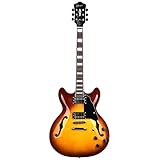
Overview: The Grote Full Scale Semi-Hollow in Vintage Sunburst positions itself as an accessible entry into the semi-hollow market. Featuring a Canadian Maple body and 24.75-inch scale length, it apes the classic ES-335 formula at a fraction of the cost. The metallic truss rod cover adds a touch of visual flair to what is otherwise a traditional aesthetic.
What Makes It Stand Out: The standout feature is undoubtedly the stainless steel frets—a premium touch rarely seen at this price point. Combined with the semi-hollow Canadian Maple construction, this guitar promises durability and resonance. The 22-fret Maple neck with its “Black Wood” fingerboard aims for smooth playability, while the Vintage Sunburst finish delivers classic visual appeal.
Value for Money: Competing with entry-level models from Epiphone and Ibanez Artcore series, the Grote undercuts them significantly while offering comparable core features. The stainless steel frets alone justify the price tag, as they typically require a professional refret costing more than this entire instrument. For budget-conscious players, this represents exceptional value.
Strengths and Weaknesses: Strengths include quality fretwork, genuine maple body, and attractive finish. The stainless steel frets ensure longevity and smooth bending. However, the unspecified “Black Wood” fingerboard raises questions about actual materials, and the electronics and pickups are likely generic, requiring potential upgrades. Brand reputation and quality control remain concerns.
Bottom Line: An excellent choice for beginners or experimental players wanting semi-hollow tones without financial risk. The stainless steel frets are a genuine surprise at this price, though serious players should budget for potential electronics upgrades.
2. Redid Semi-Hollow Body Electric Guitar RD-100 Jazz Guitar with F-Hole,Maple neck,humbucker Pickups(Brown)

Overview: The Redid RD-100 is a straightforward 335-style semi-hollow targeting jazz, blues, and rock players. With its Canadian Hard Maple neck and rosewood fretboard, it follows traditional tonewood choices. The brown finish maintains a classic, understated appearance suitable for traditional genres and stage settings.
What Makes It Stand Out: This model distinguishes itself with premium material choices: Canadian Hard Maple for the neck, genuine rosewood for the fretboard, and stainless steel frets. The control layout—3-way toggle with dual volume and tone knobs—offers authentic 335 functionality, allowing nuanced tonal shaping beyond what many budget clones provide.
Value for Money: Positioned similarly to the Grote models, the RD-100 justifies its price through superior specified tonewoods and comprehensive electronics. While still far below professional instruments from Gibson or Heritage, it offers serious bang-for-buck compared to entry-level Epiphones, particularly with the stainless steel frets adding long-term value.
Strengths and Weaknesses: Strengths include the excellent neck material, rosewood fretboard feel, and professional control layout. The stainless steel frets resist wear and provide smooth action. Weaknesses center on the unknown pickup quality, unspecified hardware grades, and potential quality control inconsistencies common with budget brands. The semi-hollow body may be laminate rather than solid maple.
Bottom Line: A capable semi-hollow for intermediate players or serious beginners wanting authentic 335 ergonomics. The quality neck and fretwork make it a solid foundation, though discerning ears might eventually swap pickups.
3. Semi Hollow Body Electric Guitar Mahogany - Double Cutaway with F-Holes & Dual Humbuckers for Jazz Blues Rock(Brown)

Overview: This mahogany-bodied semi-hollow diverges from the typical maple laminate construction, offering a unique tonal profile in the budget category. Designed for jazz, blues, and rock, it features dual F-holes and a double-cutaway shape. The brown finish and gold hardware create a distinctive aesthetic that stands out in any collection.
What Makes It Stand Out: The solid mahogany body is the star here—delivering warmer, darker tones than maple counterparts. The feedback-resistant center block is crucial, allowing high-gain rock tones without the squealing typical of hollow bodies. Gold hardware package adds visual sophistication uncommon at this price point.
Value for Money: Mahogany construction typically commands premium pricing, making this an exceptional value. The feedback-resistant design expands versatility beyond jazz into rock territory, essentially offering two guitars in one. Competing mahogany semi-hollows often cost twice as much, making this a smart investment for tone-conscious players on tight budgets.
Strengths and Weaknesses: Strengths include the superior tonewood, lightweight chambered design for comfort during long gigs, feedback resistance, and upscale aesthetics. The rosewood fretboard and Tune-O-Matic bridge are quality touches. Weaknesses involve potentially mediocre pickups, gold plating that may wear quickly, and unknown brand reliability. The mahogany might be of lower grade.
Bottom Line: Ideal for players seeking authentic mahogany warmth in a semi-hollow platform. The feedback resistance makes it surprisingly versatile, though electronic upgrades may be needed to unlock its full potential.
4. GROTE Jazz Electric Guitar Semi-Hollow Body Trapeze Tailpiece Bridge Guitar Gig Bag (RED)

Overview: The Grote 335-style semi-hollow in Red includes a gig bag, targeting beginners and gigging musicians needing a complete package. It uses basswood and maple construction with a simulated wood grain finish achieved through printing—a novel eco-conscious approach that reduces wood consumption while maintaining visual appeal.
What Makes It Stand Out: The included gig bag immediately adds practical value for transportation. The trapeze tailpiece bridge offers vintage aesthetics and different string resonance compared to stop-bar designs. The simulated maple grain, while unconventional, reflects environmental consideration and creates a unique conversation piece about sustainability in instrument manufacturing.
Value for Money: This package delivers everything needed to start playing immediately. The trapeze tailpiece and included bag justify the price alone. While basswood is cheaper than maple, it keeps costs down for beginners. Compared to buying a guitar and case separately, the savings are substantial—often $50-100 less than equivalent setups from major brands.
Strengths and Weaknesses: Strengths include the complete package, lightweight basswood body for comfort, smooth maple neck and rosewood fingerboard, and vintage-style tailpiece. The red finish is eye-catching. Weaknesses are the basswood’s limited resonance compared to maple, printed grain that may appear artificial up close, and generic electronics. Quality control is a gamble with budget brands.
Bottom Line: Perfect for beginners or as a backup guitar. The gig bag makes it gig-ready out of the box, though tone purists should consider maple-bodied alternatives. A practical, no-fuss choice for the budget-conscious musician.
5. Redid Semi-Hollow Body Electric Guitar RD-100 Jazz Guitar with F-Hole,Maple neck,humbucker Pickups(Orange)

Overview: The Redid RD-100 in Orange is functionally identical to its brown counterpart, offering the same 335-style semi-hollow construction with Canadian Hard Maple neck and rosewood fretboard. The vibrant orange finish provides a modern aesthetic alternative to traditional sunbursts and browns, appealing to contemporary players seeking individuality on stage.
What Makes It Stand Out: Beyond the striking orange finish, this model shares the same impressive specs: stainless steel frets, premium maple neck, and comprehensive electronics control. The finish stands out dramatically on stage, offering visual personality while maintaining classic semi-hollow tones that work across multiple genres from jazz to rock.
Value for Money: Identical to the brown version, this guitar delivers exceptional value through quality materials and construction. The orange finish typically doesn’t command a premium, making it a pure aesthetic choice. Compared to other budget semi-hollows, the maple neck and stainless frets remain standout features that justify the investment for serious students.
Strengths and Weaknesses: Strengths mirror the brown model: durable neck wood, smooth rosewood fretboard, wear-resistant stainless frets, and professional control layout. The orange finish is vibrant and well-applied. Weaknesses include unspecified pickup quality, potential hardware corner-cutting, and quality control variability. The finish may not suit traditional jazz purists seeking vintage aesthetics.
Bottom Line: Choose between this and the brown version purely on visual preference. Both offer identical playing experience and value. The orange finish suits rock and indie players wanting stage presence, while maintaining the versatility for jazz and blues applications.
6. Redid Semi-Hollow Body Electric Guitar RD-100 Jazz Guitar with F-Hole,Maple neck,humbucker Pickups (Black)

Overview: The Redid RD-100 positions itself as a versatile semi-hollow electric guitar targeting jazz, blues, and rock players. With its 335-style construction, Canadian hard maple neck, and rosewood fretboard, it promises professional-grade features at an accessible price point. The inclusion of stainless steel frets and comprehensive electronics suggests serious attention to playability and tonal flexibility.
What Makes It Stand Out: The stainless steel frets are a standout feature rarely found in budget-friendly semi-hollows, offering exceptional durability and resistance to wear. The Canadian hard maple neck provides stability and bright tonal characteristics, while the traditional control layout (3-way toggle with dual volume and tone knobs) gives players extensive tonal sculpting capabilities typically reserved for higher-end instruments.
Value for Money: While specific pricing isn’t provided, the combination of premium materials—particularly the stainless steel frets and Canadian maple neck—suggests strong value. These features usually command significantly higher prices, making the RD-100 potentially competitive against entry-level Epiphones and Ibanez Artcore models while offering superior fret longevity.
Strengths and Weaknesses: Strengths include durable stainless steel frets, stable maple neck construction, versatile electronics, and classic semi-hollow tones. Potential weaknesses may involve unspecified pickup quality, possible quality control inconsistencies common in budget guitars, and the lack of brand recognition affecting resale value. The finish and hardware durability remain unproven without long-term user data.
Bottom Line: The Redid RD-100 appears ideal for intermediate players seeking semi-hollow versatility with premium fretwork. Beginners wanting a lifelong instrument and gigging musicians needing reliable backup should consider it, though testing individual units for setup quality is advisable before purchase.
7. Censtar Semi-Hollow Body Electric Guitar,Jazz Guitar with Diamond Holes,Maple Body,Mahogany Neck,Rosewood Fingerboard,6-String Full Size Semi-Hollow Body Electric Guitar.

Overview: The Censtar semi-hollow electric guitar targets musicians seeking professional tones across jazz, blues, and rock genres. Its diamond hole design and premium wood combination—maple body with mahogany neck—create an instrument that balances aesthetic appeal with functional resonance. Marketed as a comfortable, lightweight alternative to solid-body guitars, it promises extended playing comfort without sacrificing tonal depth.
What Makes It Stand Out: The distinctive diamond-shaped f-holes provide unique visual flair while potentially altering acoustic resonance compared to traditional f-holes. The maple and mahogany tonewood pairing offers a balanced sonic profile—bright attack from maple complemented by mahogany’s warmth. Its lightweight construction specifically addresses player fatigue, making it gig-friendly for musicians with long sets.
Value for Money: Positioned as a budget-conscious alternative to Gibson ES-335 variants or premium Ibanez models, the Censtar delivers multi-genre versatility and eye-catching design. The material specifications suggest durability for regular gigging, though the unknown brand name means you’re trading prestige for potential savings, making it best for players prioritizing function over brand cachet.
Strengths and Weaknesses: Strengths include comfortable lightweight design, attractive aesthetics, versatile tonal palette, and reduced playing strain. Weaknesses involve unspecified electronics quality, potential feedback management issues without a center block, unknown hardware reliability, and limited resale value. The diamond holes may polarize traditionalists, and quality control could vary between units.
Bottom Line: Suitable for gigging musicians needing a lightweight, versatile semi-hollow on a budget. Jazz and blues players will appreciate the warmth, while rock guitarists should test feedback resistance. Perfect as a secondary guitar or for players prioritizing comfort and aesthetics over brand name.
8. Semi Hollow Body Electric Guitar Mahogany - Double Cutaway with F-Holes & Dual Humbuckers for Jazz Blues Rock(Black)

Overview: This mahogany-constructed semi-hollow electric guitar targets serious players seeking rich, warm tones with modern feedback resistance. The dual f-hole design and solid center block aim to deliver classic semi-hollow character while maintaining high-gain stability. With its gold hardware and mahogany body, it emphasizes both visual elegance and tonal depth for jazz, blues, and rock applications.
What Makes It Stand Out: The solid wood center block is a crucial feature that distinguishes it from fully hollow instruments, allowing rock and indie players to use distortion without uncontrollable feedback. The all-mahogany construction (uncommon in semi-hollows) produces a darker, warmer voice that balances the typical brightness of laminate maple bodies, creating a unique sonic signature for players wanting depth and richness.
Value for Money: Offering professional-grade features like feedback suppression and premium tonewoods, this instrument likely competes with mid-range Epiphone Dot or D’Angelico models. The mahogany body and center block construction typically command higher prices, suggesting excellent value for gigging musicians who need versatility across clean and overdriven tones without feedback issues.
Strengths and Weaknesses: Strengths include feedback-resistant center block, rich mahogany warmth, lightweight comfort, elegant gold aesthetics, and versatile genre suitability. Weaknesses may involve potential weight imbalance from the center block, less acoustic volume than fully hollow designs, unspecified pickup quality, and possible neck-dive issues. The gold hardware may tarnish over time, and setup quality could vary.
Bottom Line: Ideal for gigging guitarists playing multiple genres who need feedback control without sacrificing semi-hollow tone. Rock and indie players will benefit most from the center block design, while jazz purists might prefer fully hollow alternatives. Inspect setup quality upon arrival, but the specifications promise professional performance.
9. GROTE Jazz Electric Guitar Semi-Hollow Body Trapeze Tailpiece Bridge Guitar Gig Bag (Black)

Overview: The GROTE semi-hollow electric guitar positions itself as an environmentally conscious, entry-level-friendly instrument suitable for all skill levels. Combining basswood and maple construction with a simulated wood grain finish, it offers classic semi-hollow tones while emphasizing sustainability. The included gig bag and smooth-playing neck profile make it an attractive package for beginners and traveling musicians seeking affordability and convenience.
What Makes It Stand Out: The simulated maple wood grain using advanced printing techniques represents a unique eco-friendly approach, reducing demand for rare hardwoods while maintaining aesthetic appeal. The trapeze tailpiece bridge offers traditional semi-hollow character and easier string changing. Including a gig bag adds immediate value, making this a complete starter package for new players.
Value for Money: As one of the most budget-conscious options in the semi-hollow market, GROTE delivers exceptional value by including essential accessories and using cost-effective materials intelligently. It competes directly with entry-level Harley Benton and Glarry models, offering similar features with added environmental consideration. Perfect for beginners unsure about long-term commitment or pros needing a beater guitar for travel.
Strengths and Weaknesses: Strengths include affordable price point, included gig bag, eco-friendly manufacturing, versatile sound suitable for multiple genres, and beginner-friendly playability. Weaknesses involve basswood’s softer durability, simulated finish potentially wearing over time, unknown hardware longevity, possible quality control issues, and limited tonal refinement compared to premium models. The trapeze bridge may reduce sustain compared to fixed bridges.
Bottom Line: Excellent choice for beginners testing the semi-hollow waters or professionals needing a travel instrument. The environmental angle and included accessories make it a smart purchase for budget-conscious buyers. However, serious gigging musicians should invest in hardware upgrades and professional setup. Perfect for practice, recording, or as a backup guitar.
10. Censtar Semi-Hollow Body Electric Guitar,Jazz Guitar with Diamond Holes,Maple Body,Mahogany Neck,Rosewood Fingerboard,6-String Full Size Semi-Hollow Body Electric Guitar.

Overview: The Censtar semi-hollow electric guitar emphasizes professional sound quality and versatility across jazz, blues, and rock genres. With its semi-hollow construction and promise of balanced tonal characteristics, it targets musicians seeking an instrument that can handle both mellow clean passages and aggressive overdriven passages. The diamond hole design mentioned in the title suggests contemporary aesthetics alongside traditional functionality.
What Makes It Stand Out: The guitar’s primary distinguishing feature is its claimed ability to deliver both warm, mellow tones and powerful, punchy sounds from the same instrument—a versatility that’s ideal for gigging musicians covering multiple styles. The diamond-shaped sound holes provide visual differentiation in a crowded market, while the maple body and mahogany neck combination offers a balanced tonal foundation that should cut through mixes while maintaining warmth.
Value for Money: Without specific pricing but positioned as a budget-friendly alternative to premium semi-hollows, this Censtar model competes in the entry-to-mid-range segment. It offers multi-genre flexibility that would typically require multiple guitars or expensive switching systems, making it cost-effective for working musicians needing tonal variety on a budget.
Strengths and Weaknesses: Strengths include versatile tonal range, lightweight semi-hollow comfort, attractive diamond aesthetics, and suitability for multiple genres. Weaknesses involve unspecified hardware and electronics quality, potential feedback issues without a center block, unknown durability for heavy touring, and limited brand recognition affecting resale. The minimal feature description raises concerns about transparency and consistent specifications.
Bottom Line: A solid option for beginners and intermediate players exploring semi-hollow versatility without major investment. Gigging musicians should verify build quality in person and consider potential upgrades. Best suited as a secondary guitar for specific tonal colors rather than a primary professional instrument until proven reliable through extended use.
The Jangle Tone Revolution in Indie Rock
What Exactly Is Jangle?
Jangle isn’t just a sound—it’s a feeling. That bright, percussive attack with harmonic overtones that seem to hang in the air like wind chimes. In technical terms, jangle lives in the upper-mid frequencies (2-5 kHz) with a fast transient response and complex harmonic content that doesn’t mask the fundamental note. Semi-hollow guitars achieve this through a delicate balance of acoustic resonance and electric clarity. The partially enclosed body chamber adds just enough natural reverberation to soften the harshness of pure electricity while maintaining the definition that gets lost in fully hollow instruments.
The Physics Behind Semi-Hollow Resonance
The magic happens when string vibration transfers through the bridge into both the center block and the hollow wings simultaneously. This dual-path energy transfer creates phase cancellation and reinforcement patterns that produce those distinctive overtones. In 2026, manufacturers are refining this relationship with precision-routed chambers and composite center blocks that control feedback while maximizing harmonic complexity. The result? A more predictable jangle that behaves consistently across different volume levels—a game-changer for live performers who need to crank their amps without losing control.
Construction Fundamentals for 2026
Laminated vs. Solid Wood Tops
The debate rages on, but here’s the reality: laminated maple tops (typically 3-ply or 5-ply) offer superior feedback resistance and affordability, making them the workhorse choice for touring indie bands. They produce a tighter, more focused jangle with pronounced attack. Solid wood tops, particularly spruce or cedar, deliver richer harmonic content and a more “open” voice that blooms beautifully with clean amp settings. For 2026, we’re seeing hybrid laminates that sandwich a thin solid wood veneer between plies, capturing 80% of the solid top’s character at half the price.
Center Block Variations and Feedback Control
The center block is your tone’s backbone. Traditional mahogany blocks provide warmth and sustain but can muddy your jangle at high gain. Modern designs employ chambered or “swiss-cheese” center blocks—strategically routed passages that reduce weight while creating additional resonance nodes. Some 2026 models feature multi-density blocks, combining dense maple under the bridge for attack with lighter poplar sections toward the neck for warmth. This isn’t just marketing; it’s acoustic engineering that gives you the best of both worlds.
F-Hole Architecture and Airflow Dynamics
Those iconic f-holes aren’t just for looks. Their size, shape, and positioning dramatically affect air movement within the body. Larger f-holes increase acoustic volume but raise feedback risk. The 2026 trend favors asymmetrical designs—slightly offset f-holes that break up standing wave patterns, reducing wolf tones while maintaining airiness. Pay attention to f-hole binding too; unbound edges can create subtle air turbulence that adds “grit” to your clean tone, while bound holes yield a smoother, more refined voice.
Pickup Selection for Maximum Chime
Single-Coils: The Traditional Choice
Low-output single-coils remain the gold standard for pure jangle. Their wide frequency response and sparkling highs capture every nuance of your picking dynamics. Look for pickups with Alnico II or III magnets for softer, more musical treble response—perfect for complex chords where you want each note to ring clearly. The key spec is DC resistance: 5.5k-6.5k ohms typically hits the sweet spot. Anything higher and you lose the airy quality; anything lower and you sacrifice output to noise.
P90s and Modern Alternatives
P90s in the bridge position deliver a thicker, more aggressive jangle that cuts through dense mixes without harshness. Their wider coil captures more body resonance, adding midrange complexity that single-coils miss. For 2026, noiseless P90 designs have finally cracked the code—true single-coil character without the 60-cycle hum. These are ideal for studio work where silence between phrases matters as much as the notes themselves.
Filter’Trons and the Vintage-Modern Hybrid
Filter’Tron-style pickups (and their modern interpretations) offer the perfect compromise: tighter lows than P90s, smoother highs than traditional singles, and exceptional note separation. Their unique construction—dual coils with narrower apertures—rejects hum while preserving single-coil sparkle. This makes them incredibly versatile for indie rockers who drift between jangly cleans and overdriven leads. The 2026 crop features adjustable pole pieces that let you fine-tune string-to-string balance, a crucial detail for alternate tunings.
Neck Profiles and Playability Factors
The neck shapes your entire playing experience. For jangle-intensive styles requiring intricate arpeggios and rapid chord changes, modern “C” profiles with a slight V at the nut provide ergonomic comfort without sacrificing thumb-over techniques. Fingerboard radius matters more than you think: 9.5" to 12" radii offer the best compromise for both chordal work and lead lines. Compound radius necks (flatter as you move up) are becoming standard in 2026, and for good reason—they make upper-fret jangle leads effortless while maintaining comfortable lower-position chording.
Hardware Decisions That Shape Your Tone
Bridge Systems and Sustain Balance
Your bridge is the primary energy transfer point. Tune-o-Matic style bridges with lightweight aluminum or titanium saddles preserve high-frequency content that heavy steel saddles can dampen. For vibrato enthusiasts, the 2026 semi-hollow market offers Bigsby-style units with upgraded roller bridges that maintain intonation better than ever. The secret is in the spring tension—lighter springs (8-10 oz) let the bridge respond to your picking dynamics, adding subtle pitch variations that enhance the jangle’s organic feel.
Scale Length and String Gauge Strategy
Short-scale guitars (24.75") naturally produce a warmer, rounder jangle with less string tension—great for players using heavy gauges to increase mass without fighting the instrument. Long-scale (25.5") instruments deliver brighter, more piano-like clarity with tighter low-end definition. The 2026 sweet spot? Medium-scale 25" options that split the difference. Pair your scale length with string gauges strategically: .010-.046 sets on short-scale guitars mimic the tension of .009-.042 on long-scales, giving you similar playing feel with increased harmonic content from the heavier strings.
Budget Navigation for 2026 Buyers
Entry-Level Options
Sub-$800 semi-hollows have matured dramatically. You can now expect multi-ply bodies, proper center blocks, and decent electronics at this price point. The compromise typically lives in hardware quality and factory setup. These instruments often need $100-150 in professional setup work to truly jangle—nut slotting, saddle adjustment, and potentially pickup height optimization. Think of them as excellent platforms for future upgrades rather than finished products.
Mid-Range Value Propositions
The $800-$1,800 range is where innovation thrives in 2026. You’ll find genuine solid wood tops, premium pickup options, and professional-grade hardware. This tier includes many “workhorse” instruments that tour relentlessly and record flawlessly. The key differentiator isn’t just materials but quality control—consistent neck sets, properly leveled frets, and electronics that don’t need immediate replacement. For serious indie bands, this is often the final stop before diminishing returns kick in.
Professional Investments
Above $1,800, you’re paying for consistency, exotic woods, and hand-finishing details that affect feel more than fundamental tone. These guitars offer the tightest quality control, ensuring your backup sounds identical to your number one. Custom pickup voicing, proprietary bracing patterns, and ultra-stable neck construction justify the price for session players and major touring acts. The 2026 premium market also emphasizes sustainability—ethically sourced woods and carbon-neutral manufacturing that appeals to environmentally conscious artists.
Setup Secrets for Optimal Jangle
Even the perfect guitar needs proper setup. Action height at the 12th fret should hover around 4/64" on the high E and 5/64" on the low E—low enough for easy fretting but high enough to let notes breathe. Pickup height is critical: start with 3/32" from the strings when fretted at the last fret, then adjust by ear. Too close and you lose dynamics; too far and your jangle becomes thin. The 2026 trick? Slightly tilt your neck pickup toward the bass side and your bridge pickup toward the treble side to balance the natural frequency response of each position.
Amplifier and Pedal Synergy
Your guitar is only half the equation. Vox-style AC circuits remain the jangle amplifier benchmark, their cathode bias and lack of negative feedback creating natural compression that enhances chime. For 2026, digital modeling has finally captured this behavior authentically, making lightweight options viable. Pedal-wise, transparent overdrives that preserve your guitar’s voice (think low-gain, flat-EQ designs) work better than mid-humped screamers. Compressors with blend knobs let you add sustain without killing transients—the lifeblood of jangle.
Emerging 2026 Innovations
This year’s breakthroughs include graphene-reinforced necks that eliminate dead spots while remaining incredibly light, and “smart” semi-hollows with piezo elements blended into the magnetic signal for enhanced acoustic presence without feedback. 3D-printed titanium bridge components are becoming mainstream, offering previously impossible resonance characteristics. Perhaps most exciting are the new sustainable composite center blocks made from recycled carbon fiber and flax fiber—materials that match traditional tonewoods while reducing environmental impact.
Frequently Asked Questions
What makes a semi-hollow guitar better for jangle tones than a solid body?
Semi-hollow guitars add acoustic resonance through their partially enclosed chambers, creating complex harmonic overtones and a faster note attack that solid bodies can’t replicate. The air movement within the body softens harsh treble frequencies while preserving clarity, resulting in that signature chime.
Can I achieve proper jangle tones with humbuckers?
Standard humbuckers typically produce too much midrange and lack the high-frequency sparkle of single-coils. However, low-output humbuckers with Alnico II magnets or coil-splitting capabilities can approximate jangle tones. For authentic results, consider humbucker-sized P90s or Filter’Tron-style pickups instead.
How do I control feedback when playing loud with a semi-hollow?
Position yourself at an angle to your amp rather than directly in front of it, and roll off your guitar’s volume knob slightly when not playing. Using a noise gate set to a moderate threshold helps, as does stuffing the body chambers lightly with foam. Modern semi-hollows with chambered center blocks offer significantly better feedback resistance than vintage designs.
What string gauges work best for indie rock jangle?
.010-.046 provides the ideal balance of tension and harmonic content for most players. Heavier gauges increase sustain and low-end definition but require stronger fingers. Lighter sets (.009-.042) offer easier playability but can sound thin. Consider a hybrid set: .010-.013-.017-.026-.036-.046 for optimal results.
Are short-scale semi-hollows suitable for jangle tones?
Absolutely. Short-scale guitars produce a warmer, rounder jangle that’s perfect for dream pop and shoegaze. The reduced string tension makes heavy gauges more comfortable, which actually enhances harmonic richness. The trade-off is slightly less high-end sparkle compared to long-scale instruments.
How important is the center block material?
Critically important. Dense woods like maple transfer energy quickly for bright attack, while lighter woods like poplar add warmth. The 2026 trend of multi-density center blocks lets manufacturers tune the resonance spectrum, essentially giving you a custom-voiced instrument off the shelf.
Should I choose a guitar with one or two f-holes?
Two f-holes offer more acoustic volume and a slightly more open sound, but increase feedback risk. Single f-hole designs (often offset) provide better feedback control while maintaining 90% of the acoustic character. For live indie rock, a single f-hole often proves more practical.
What’s the best way to record semi-hollow jangle tones?
Use a combination of amp mic’ing and direct injection (DI) for maximum flexibility. Position a small-diaphragm condenser mic 6-8 inches from the amp, slightly off-axis, to capture the high-end detail without harshness. Blend in a DI signal for clarity and use phase alignment to avoid cancellation.
Do I need a vintage-spec guitar for authentic jangle?
Not anymore. Modern manufacturing has replicated the key elements of vintage tone while improving reliability and feedback control. The “mojo” of vintage guitars often comes from decades of wood settling and component degradation—effects you can approximate with proper setup and slightly aged pickups.
How will climate affect my semi-hollow guitar in 2026?
Modern finishes and construction techniques have dramatically improved stability, but semi-hollows remain more sensitive than solid bodies. Keep humidity between 45-55% and avoid rapid temperature changes. The 2026 models with carbon fiber reinforcement are notably more resilient, but a good hygrometer and case storage remain essential investments.
See Also
- 10 Semi-Hollow Electric Guitars for Indie Jangle Tones in 2026
- 10 Expert Picks: Hollow Body Electric Guitars for Indie Rock Jangle in 2026
- 10 Affordable Semi-Hollow Electric Guitars That Nail Blues Tones Under $600 in 2026
- 10 Expert-Recommended Semi-Hollow Electric Guitars for Blues Tones in 2026
- 10 Top-Rated Left-Handed Semi-Hollow Electric Guitars for Blues-Rock in 2026