Table of Contents
That percussive, metallic crack of a perfectly executed slap pop. The way each note jumps out of the speaker with aggressive clarity, dancing between thunderous lows and cutting highs. If you’re chasing that signature snap, you already know your choice of strings isn’t just important—it’s everything. Dead spots are the enemy, turning what should be a vibrant, singing note into a lifeless thud that kills your groove. Finding the right roundwound bass string set means understanding the delicate balance between tension, material science, and manufacturing precision that separates mediocre strings from those that sing.
Let’s dive deep into what makes roundwound strings deliver that coveted slap tone while avoiding the dreaded dead zones that plague so many basses. Whether you’re a seasoned thumb-master or just developing your technique, this guide will arm you with the knowledge to choose strings that respond to your touch with consistent, musical energy across every fret.
Top 10 Roundwound Bass Strings
Detailed Product Reviews
1. Ernie Ball Regular Slinky Nickel Wound Bass Guitar Strings, 50-105 Gauge (P02832)

Overview: Ernie Ball’s Regular Slinky 50-105 gauge bass strings represent the gold standard for medium-heavy string sets. Favored by iconic acts like Tool and Rage Against the Machine, these nickel-wound strings deliver the punch and clarity modern bassists demand. The 50-105 configuration provides excellent tension for aggressive playing styles while maintaining enough flexibility for nuanced technique.
What Makes It Stand Out: The Element Shield Packaging sets these apart from competitors, creating a sealed environment that keeps strings factory-fresh until installation. This proprietary packaging significantly reduces oxidation, meaning you get the same vibrant tone on day one as the strings had when they left the California factory. The nickel-plated steel wrap wire produces a balanced harmonic response that sits perfectly in rock, metal, and fusion mixes.
Value for Money: Priced in the mid-range for premium bass strings, the Regular Slinkys offer exceptional longevity thanks to both the packaging and robust construction. When factoring in their consistent performance and the reduced need for frequent changes, they outperform budget alternatives that lose their sparkle within weeks. You’re paying for proven reliability, not marketing hype.
Strengths and Weaknesses: Strengths include outstanding tonal balance, superior durability, and the confidence of professional endorsements. The packaging genuinely extends usable life. Weaknesses: the 50-105 gauge may feel too stiff for players accustomed to lighter sets, and nickel-wound strings lack the aggressive brilliance of stainless steel options. Some players might prefer more flexibility for slapping.
Bottom Line: For rock and metal bassists seeking dependable, punchy tone with professional-grade longevity, these strings are a benchmark choice. The gauge provides authoritative low-end without sacrificing definition.
2. Ernie Ball Super Slinky Nickel Wound Bass Guitar Strings, 45-100 Gauge (P02834)

Overview: Ernie Ball’s Super Slinky 45-100 gauge bass strings cater to players prioritizing speed and comfort without sacrificing tone. Built with the same nickel-wound construction as their heavier siblings, these lighter strings reduce finger fatigue and facilitate faster passages. The reduced tension makes them ideal for extended playing sessions and techniques requiring a lighter touch.
What Makes It Stand Out: The 45-100 gauge hits a sweet spot for versatile genres, from funk to progressive rock. Like all Ernie Ball strings, they feature the Element Shield Packaging, which practically eliminates pre-installation corrosion. This means every set performs consistently, regardless of how long it sat in your gig bag. The lighter tension particularly benefits players who employ extensive position shifting and complex fingerwork.
Value for Money: Positioned identically to the Regular Slinkys in pricing, these offer the same manufacturing quality and packaging innovation. For players who don’t require the extra heft of heavier gauges, you’re getting premium performance optimized for playability. The reduced hand strain alone justifies the investment for working musicians playing nightly shows.
Strengths and Weaknesses: Strengths include effortless playability, reduced finger wear, and bright, articulate tone that cuts through mixes. The lighter gauge excels in funk and fusion contexts. Weaknesses: the lower tension can feel floppy for aggressive pick players, and you lose some of the fundamental thump that heavier gauges provide. Drop tuning below D can feel unstable.
Bottom Line: Perfect for technical players and those with lighter touch styles. If you value finger comfort and speed over maximum low-end authority, the Super Slinkys deliver professional tone with enhanced playability.
3. Ernie Ball 5-String Regular Slinky Nickel Wound Bass Guitar Strings, 45-130 Gauge (P02836)
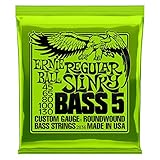
Overview: Ernie Ball’s 5-String Regular Slinky set brings their legendary consistency to extended-range bassists. The 45-130 gauge configuration handles the low B string with authority while maintaining balanced tension across all five strings. This set has become the de facto standard for players transitioning from four to five strings, offering familiar feel with expanded sonic territory.
What Makes It Stand Out: As Ernie Ball’s most popular 5-string set, it’s been refined through decades of professional feedback. The .130 low B string provides proper tension without the floppiness common in lighter 5-string sets. The nickel winding ensures the B string integrates tonally with the higher strings, avoiding the “dead” sound that plagues some 5-string sets. Element Shield Packaging keeps the extended set pristine.
Value for Money: Slightly more expensive than 4-string sets (standard industry practice), but the premium is minimal for what you gain. The even tension profile means you won’t need to adjust your technique dramatically when moving to the low B. For bassists requiring extended range for modern metal, jazz fusion, or session work, this represents excellent ROI.
Strengths and Weaknesses: Strengths include perfectly balanced string-to-string tension, reliable intonation, and the low B’s clarity. The nickel tone works across genres. Weaknesses: the .130 B-string might feel too stiff for some players preferring a .125 or .120. The set lacks the brightness of stainless steel alternatives for aggressive genres. Some players may want tapered B-string options.
Bottom Line: If you’re moving to five strings or seeking a reliable replacement for your current set, this is the industry benchmark. It delivers professional performance with no surprises, making it ideal for working musicians.
4. DR Strings - Hi-Beams - Bass Guitar Strings 4-String Set - Medium 45-105 - Stainless Steel Round Core - Bass Guitar Accessories (MR-45)

Overview: DR’s Hi-Beams 45-105 bass strings target tone purists seeking maximum brightness and articulation. Unlike conventional hex-core strings, these feature a round core construction that enhances flexibility and sustain. The stainless steel wrap wire produces a cutting, piano-like tone that excels in dense mixes where clarity is paramount. Handcrafted in the USA, they appeal to discerning players.
What Makes It Stand Out: The round core design is the defining feature, creating a more flexible string with increased harmonic content. This construction allows the strings to vibrate more freely, resulting in enhanced resonance and a distinctive “bloom” to each note. Hi-Beams are manually inspected during production, ensuring consistency that machine-wound strings sometimes lack. The stainless steel delivers aggressive brilliance without harshness.
Value for Money: Slightly pricier than mass-produced alternatives, but the handmade quality justifies the cost for serious players. The round core construction offers a unique playing experience that cheaper strings cannot replicate. For recording artists and gigging musicians who need to cut through dual guitars and dense keyboard arrangements, the tonal advantage is worth every penny.
Strengths and Weaknesses: Strengths include exceptional brightness, increased sustain, smooth finger feel, and handmade quality. They maintain tuning stability well. Weaknesses: stainless steel can accelerate fret wear, the bright tone may be too aggressive for vintage-style music, and some players find the flexibility takes adjustment. They’re less forgiving of sloppy technique than nickel wounds.
Bottom Line: For players demanding articulate, present bass tone that slices through any mix, Hi-Beams are exceptional. The round core innovation provides a unique playing experience worth the premium for tone-conscious musicians.
5. Rotosound RS66LF Swing Bass 66 Stainless Steel Bass Guitar Strings (45 65 85 105)

Overview: Rotosound’s RS66LF Swing Bass 66 strings embody classic British tone with modern stainless steel construction. The 45-105 gauge set has powered countless recordings since the 1960s, delivering the aggressive, piano-like punch that defined progressive rock and early metal. These no-frills strings prioritize performance over marketing flash, earning loyalty through decades of consistent quality.
What Makes It Stand Out: The Swing Bass 66 series carries historic pedigree—used by icons like John Entwistle and Jaco Pastorius in his early years. The stainless steel wrap provides immediate, brilliant attack that mellows into a rich, complex tone. Unlike coated or specially packaged strings, Rotosound relies on traditional manufacturing excellence. The strings feature a distinctive growl that sits perfectly in rock and fusion contexts.
Value for Money: Generally priced competitively with mid-tier strings, you’re paying for proven legacy rather than fancy packaging. The stainless steel construction ensures longevity comparable to premium brands. For players seeking authentic vintage-modern hybrid tone without boutique pricing, these represent outstanding value. They last as long as more expensive alternatives.
Strengths and Weaknesses: Strengths include legendary tone, excellent durability, and authentic vintage vibe. The stainless steel provides cutting presence. Weaknesses: minimal packaging information, no corrosion-resistant coating, and the bright initial tone may require break-in for some players. The brand’s marketing is understated, which might make them seem less premium to newcomers.
Bottom Line: For traditionalists and tone purists who value heritage and raw performance, the RS66LFs are unbeatable. They deliver classic stainless steel punch with a price tag that respects your wallet.
6. D’Addario Bass Guitar Strings, NYXL Nickel Plated, NYXL45105, Regular Light Top/Medium Bottom Gauge 45-105, Long Scale, 4-String Set, Pack of 1

Overview: The D’Addario NYXL45105 represents the pinnacle of uncoated bass string engineering. These premium nickel-plated steel strings feature a 45-105 gauge range suitable for most playing styles, built around D’Addario’s proprietary NY Steel core wire. Manufactured in their New York facility, these strings target serious bassists who demand maximum performance without the tonal compromise of coatings.
What Makes It Stand Out: The reengineered core-to-wrap ratio delivers enhanced harmonic response while maintaining familiar tension and feel. The NY Steel core provides exceptional break strength and tuning stability that surpasses conventional strings, addressing two major pain points for gigging musicians. Additionally, the recyclable VCI bag includes a Players Circle code, turning a routine purchase into loyalty rewards—a subtle but appreciated value-add.
Value for Money: Positioned at the premium tier, these strings justify their higher price through extended lifespan and consistent performance. While costing 2-3x budget options, the tuning stability alone saves time and frustration during gigs and sessions. They compete directly with other high-end uncoated strings but offer unique technological advantages.
Strengths and Weaknesses: Strengths include remarkable tuning stability, enhanced tonal clarity, superior break strength, and domestic manufacturing quality. The uncoated design provides pure tone without coating dampening. Weaknesses center on the premium pricing that may deter beginners, and the uncoated nature means shorter life than polymer-coated alternatives in corrosive environments.
Bottom Line: For serious players seeking uncompromising performance and reliability, the NYXL45105 strings deliver exceptional value. They excel in studio and live settings where tuning stability and tonal consistency are paramount.
7. TUOREN 2Packs/4-String Set Bass Strings Nickel Plated Steel Roundwound Medium, 45-100 Gauge

Overview: The TUOREN 2-Pack bass strings offer an economical solution for bassists seeking reliable performance without financial strain. These nickel-plated steel roundwound strings feature a 45-100 gauge configuration—slightly lighter than the standard 45-105—making them particularly forgiving for developing hands. Packaged as two complete sets, this product clearly targets budget-conscious players, students, and those needing dependable backup strings.
What Makes It Stand Out: The dual-pack configuration provides immediate value, essentially offering a 50% discount compared to purchasing individual sets. The nickel-silver wound construction promises a warm yet bright tonal balance suitable for various genres, while the high-quality solid steel core resists rust and maintains intonation. The slightly lighter gauge reduces finger fatigue, benefiting beginners during extended practice sessions.
Value for Money: Exceptional. Two full sets at a price point below most single premium sets makes this ideal for learners, school programs, or working musicians requiring emergency spares. While they won’t match premium brands for longevity, the cost-per-set ratio is unbeatable.
Strengths and Weaknesses: Strengths include the two-pack value, beginner-friendly gauge, decent tonal balance, and rust resistance. The primary weakness is inconsistent quality control compared to established brands, with some users reporting shorter lifespan and less stable tuning. The 45-100 gauge may feel too light for players accustomed to standard 105 E-string tension.
Bottom Line: Perfect for beginners, students, or as backup strings in your gig bag. While professionals may find them lacking in durability, the TUOREN 2-Pack delivers functional performance at an unbeatable price point.
8. DR Strings Bass Strings, Black Beauties BASS Black Coated Nickel Plated Bass Guitar Strings on Round Core (BKB5-45)

Overview: DR’s Black Beauties BKB5-45 coated bass strings distinguish themselves through both performance and appearance. These medium-gauge 5-string sets feature DR’s signature handmade construction with a distinctive black polymer coating applied to the nickel-plated steel wrap wire. Designed for bassists seeking extended string life without sacrificing the articulate character of traditional roundwounds, these strings occupy a unique niche in the coated string market.
What Makes It Stand Out: The striking black finish isn’t merely cosmetic—it encapsulates DR’s proprietary coating technology that significantly prolongs string life by protecting against corrosion, sweat, and debris. The hand-wound construction ensures consistent quality control, while the ultra-thin coating maintains the crisp attack and clarity DR is known for. The round core design contributes to enhanced flexibility and vintage-inspired feel.
Value for Money: Mid-range pricing positions these competitively against other premium coated strings. The extended lifespan justifies the modest premium over uncoated alternatives, particularly for players with acidic sweat or demanding gig schedules. The unique aesthetic adds subjective value for stage presence.
Strengths and Weaknesses: Strengths include superior longevity, distinctive appearance, consistent handmade quality, and maintained tonal clarity despite coating. Weaknesses involve the coating’s potential to flake over time, slightly altered feel that purists may reject, and the black color showing wear more visibly than traditional finishes.
Bottom Line: An excellent choice for players prioritizing durability and visual impact. The Black Beauties deliver authentic tone with extended life, making them ideal for gigging musicians tired of frequent string changes.
9. GHS Electric Bass 4 String Boomers Roundwound Piccolo 34" - 35" Scale, 18-50, P3045

Overview: The GHS P3045 Boomers Piccolo set addresses a highly specialized market: bassists tuning their instruments an octave higher than standard. With an ultra-light 18-50 gauge, these strings enable the piccolo bass configuration popular in studio work and progressive rock. GHS applies their High Breakpoint Technology to these delicate gauges, ensuring surprising durability despite the extreme lightness. These strings transform a standard bass into a unique tonal instrument.
What Makes It Stand Out: The piccolo-specific design is rare in the string market, filling a genuine niche. GHS’s focus on Ultimate Tensile Strength (UTS) technology provides enhanced durability that defies the fragility typically associated with such light gauges. The strings deliver a clear, articulate picked tone that cuts through dense mixes while retaining sufficient low-mid punch—a challenging tonal balance to achieve in this register. They’re perfect for transitioning between rock gigs and studio sessions.
Value for Money: Fairly priced for a specialty product. While more expensive than standard strings on a per-set basis, they enable a unique instrument configuration without custom ordering. For studio professionals and experimental players requiring quick tonal variety, this specialized tool justifies its cost.
Strengths and Weaknesses: Strengths include enabling piccolo bass setup, remarkable durability for light gauge, excellent articulation for chordal work, and versatility across genres. The primary weakness is extreme niche application—useless for standard bass tuning. The light tension requires precise setup and may feel foreign to traditional bassists.
Bottom Line: Essential for piccolo bass enthusiasts and studio professionals seeking extended-range tonal options. Not recommended for standard bass applications, but unparalleled for their intended purpose.
10. Rotosound RS66LD Swing Bass Electric Bass 4 String Set (45-105)

Overview: Rotosound’s RS66LD Swing Bass strings carry decades of rock heritage in their stainless steel wrap wire. These 45-105 gauge roundwounds have defined the aggressive bass tone on countless classic recordings. Manufactured in the United Kingdom, the RS66LD set delivers the signature piano-like clarity and midrange growl that made Rotosound synonymous with British rock bass tone.
What Makes It Stand Out: The stainless steel construction produces a uniquely bright, cutting tone with extended high-frequency response that nickel strings cannot replicate. This clarity provides exceptional note definition for fast passages and picked styles. The strings’ legacy is proven—players from John Paul Jones to Jaco Pastorius have relied on Rotosound’s consistency and character. The manufacturing quality remains faithful to the original specifications that created these iconic tones.
Value for Money: Mid-range pricing offers excellent value for a string with such historical pedigree. While not as cheap as budget brands, the consistent quality and distinctive tone justify the modest investment. They compete favorably with other premium stainless options.
Strengths and Weaknesses: Strengths include legendary bright tone, exceptional clarity, strong midrange presence, and consistent UK manufacturing. Stainless steel provides longer life than nickel for some players. Weaknesses include the harshness on frets and fingers, excessive brightness for warm-tone seekers, and potential for finger noise due to the aggressive top-end.
Bottom Line: The definitive choice for rock, punk, and metal players seeking aggressive articulation and classic tone. If you want that iconic British bass growl, accept no substitutes—though jazz and blues players may prefer warmer nickel alternatives.
Understanding the Slap Bass Sound and String Selection
The slap technique exposes every flaw in your strings. Unlike fingerstyle playing that can mask inconsistencies, slap bass demands strings that vibrate freely and evenly. The aggressive attack of thumb and pop creates complex harmonic overtones that either bloom beautifully or collapse into sonic mush.
The Physics Behind the Perfect Slap Tone
When your thumb strikes the string, you’re essentially creating a sharp impulse that excites multiple vibration modes simultaneously. Quality roundwounds maintain balanced partials—the fundamental frequency and its overtones—without certain frequencies canceling each other out. This is where dead spots originate: points on the neck where the string’s natural resonance frequency matches the wood’s absorption frequency, creating a black hole for sustain.
Why Roundwounds Dominate the Slap Scene
Roundwound strings feature a wire wrap with a circular cross-section, creating ridges that produce brightness and harmonic complexity. This textured surface is crucial for slap articulation. The peaks and valleys of the winding catch your thumb and fingers, producing that characteristic “snap” as the string rebounds. Flatwounds, by contrast, lack this texture and produce a muted, thumpy response that fights against slap technique rather than enhancing it.
Decoding String Gauge for Maximum Snap
String gauge directly impacts both your physical playing experience and your tonal output. For slap bass, gauge isn’t just about feel—it’s about controlling the string’s excursion and recovery time.
Light vs. Heavy: The Tension Trade-off
Lighter gauges (typically .040-.095) require less force to displace, making rapid-fire slap patterns easier on your hands. They snap back quickly, producing a bright, immediate response. However, excessive lightness can lead to floppy strings that lack low-end authority and create inconsistent tension across the neck.
Heavier gauges (.050-.110) deliver more fundamental punch and sustain, but demand greater finger strength. The increased tension can actually reduce dead spot issues by overpowering the neck’s natural frequency absorption. The downside? Slower recovery time and potential hand fatigue during extended slap sessions.
Finding Your Ideal Gauge Sweet Spot
Most slap specialists land in the medium-light range (.045-.100 or .045-.105). This provides enough mass for solid low-end while maintaining the agility needed for complex rhythmic patterns. Consider your bass’s scale length here—a 30" short scale bass will feel significantly slinkier with the same gauge strings than a 35" extended scale instrument.
Material Matters: Nickel vs. Stainless Steel
The alloy composition of your wrap wire fundamentally shapes your slap voice. This choice affects brightness, feel, durability, and how the strings interact with your pickups.
The Brightness Factor
Stainless steel strings produce the brightest, most aggressive slap tone. Their high iron content and magnetic properties interact strongly with pickups, generating powerful output and crisp highs that cut through dense mixes. Nickel-plated steel offers a slightly warmer, more balanced tone while retaining enough bite for articulate slapping. Pure nickel, while vintage-voiced, often lacks the upper harmonic content that makes slap pop.
Feel and Finger Noise Considerations
Stainless steel feels rougher under your fingers due to its harder composition. This texture enhances the snap but can increase finger noise and fret wear. Nickel-plated steel provides a smoother playing surface while maintaining most of the brightness. Your personal tolerance for finger noise and string roughness should guide this decision—some players embrace the extra texture as part of their sonic signature.
Core Design Secrets That Prevent Dead Spots
The core wire running through your string’s center is the unsung hero of consistent tone. Its shape and mass distribution directly influence how evenly the string vibrates.
Hex Core vs. Round Core Tonal Impact
Hexagonal cores grip the wrap wire more securely, preventing slippage and maintaining consistent tension throughout the string’s life. This stability translates to fewer dead spots and more predictable vibration patterns. Round cores offer a more flexible feel with enhanced sustain, but can be prone to wrap wire movement that creates subtle inconsistencies—death for slap articulation.
Core-to-Wrap Ratio Explained
The relationship between core diameter and wrap wire thickness determines the string’s stiffness and harmonic content. A thicker core with thinner wrap produces a stiffer string with fewer overtones—great for fundamental punch but potentially lacking slap sizzle. Conversely, a thinner core with heavier wrap creates flexibility and harmonic richness, but may feel too loose. Premium manufacturers optimize this ratio specifically for slap applications, balancing stiffness for low-end clarity with flexibility for high-end snap.
Winding Techniques That Make or Break Your Tone
How the wrap wire is applied to the core dramatically affects string performance. Inconsistent winding creates micro-variations in mass distribution—prime culprits for dead spots.
The Importance of Tight, Consistent Windings
Precision machinery applies wrap wire under exacting tension. When this process falters, you get loose windings that vibrate independently of the core, creating phase cancellation and dead spots. High-quality strings feature windings so tight you can barely see gaps between wraps. Run your finger along the string—it should feel uniformly smooth without bumps or loose sections.
Taperwound Strings: Pros and Cons for Slap
Taperwound strings reduce mass at the bridge saddle by using a thinner core section, improving intonation and reducing stiffness. For slap bass, this can enhance upper register clarity and make harmonics sing. However, some players find taperwounds lose a bit of the aggressive punch in the lower positions. If your slap style heavily features high-fret work and chordal slapping, taperwounds deserve consideration.
Scale Length Matching: A Critical Overlooked Factor
Installing strings designed for a different scale length than your bass is a guaranteed recipe for dead spots and weird tension.
Long Scale, Short Scale, and Everything Between
Long scale (34") is the industry standard, but short scale (30"), medium scale (32"), and extra-long scale (35" and beyond) each require specific string lengths. Using a long scale set on a short scale bass forces the silk winding or taper to sit on the fretboard, creating uneven vibration and dead spots. Conversely, short scale strings on a long bass may not reach the tuning posts with enough winding length for stable tuning.
Why Proper Fit Eliminates Dead Spots
The string’s speaking length—the portion that actually vibrates—must align perfectly with your bass’s nut-to-bridge distance. When this relationship is off, you create nodes (points of no vibration) in musically important areas. Always verify your bass’s exact scale length and choose strings specifically designed for that measurement.
String Tension and Setup Synergy
Total string tension affects your entire instrument, not just playability. The cumulative pull of all strings influences neck relief, which directly impacts dead spot formation.
Balanced Tension Sets: The Modern Solution
Traditional string sets feature gradually increasing tension from high to low strings, but this can create uneven response across the neck. Balanced tension sets engineer each string to exert equal pull, resulting in more consistent vibration characteristics and reduced dead spots. For slap bass, this means your thumb strikes produce uniform volume and sustain regardless of which string you’re playing.
How Tension Affects Slap Technique
High tension strings resist displacement, requiring more forceful technique but returning energy quickly for sharp articulation. Low tension strings are easier to work but may feel sluggish. Your action height interacts with tension—higher action on low-tension strings creates excessive excursion that can cause buzzing and deaden the snap. Finding the right tension-action balance is crucial for clean, powerful slapping.
Coated Strings: The Controversial Choice
Coatings promise extended life, but at what cost to your slap tone? The early days of coated strings deadened high frequencies, but modern formulations have evolved.
Do Coatings Kill the Snap?
Traditional polymer coatings add a damping layer that absorbs high-frequency overtones—the very frequencies that make slap pop. However, ultra-thin nano-coatings now provide protection without significant tonal sacrifice. These advanced coatings can actually enhance consistency by preventing corrosion that creates uneven mass distribution over time.
Modern Coating Technology Breakthroughs
Look for strings featuring surface treatments rather than full encapsulation. These micro-thin barriers protect the windings while preserving the string’s natural texture. Some manufacturers now offer “slap-specific” coatings optimized for brightness and tactile response. The key is choosing coatings designed for aggressive playing styles rather than general-purpose longevity.
The Break-In Period Reality
Fresh strings sound different from played-in strings. Understanding this evolution helps you evaluate new sets fairly and avoid prematurely discarding quality strings.
What to Expect from Fresh Strings
Out of the package, roundwounds exhibit maximum brightness and metallic zing. Some slap players love this sound, while others find it harsh. The first few hours of playing see rapid tonal changes as the strings stretch, settle into the nut and bridge, and develop micro-oxidation that slightly mellows the extreme highs. Dead spots may seem more pronounced initially due to uneven stretching.
Accelerating the Break-In Process
You can speed up break-in by gently stretching each string after installation. Pull the string away from the fretboard at the 12th fret, applying firm but controlled pressure. Retune and repeat several times. Playing sustained notes and harmonics across all positions helps the string settle evenly. Some bassists even run a soft cloth along the strings to remove manufacturing residues that can dampen vibration.
Price vs. Performance: Finding Value
String pricing ranges from budget to boutique, but cost doesn’t always correlate with slap performance. Understanding where your money goes helps make smart purchasing decisions.
Budget-Friendly Options That Deliver
Mid-priced strings from established manufacturers often deliver 90% of the performance of premium sets. These strings use proven manufacturing processes and quality materials without boutique markup. For regular gigging musicians who change strings frequently, these represent excellent value. The key is choosing lines specifically marketed for bright, aggressive styles rather than all-purpose sets.
Premium Strings: When the Investment Makes Sense
High-end strings justify their cost through exotic materials, advanced manufacturing tolerances, and specialized designs. For recording sessions where every nuance matters, or for basses with persistent dead spot issues, premium strings can be transformative. They often feature tighter quality control, ensuring each string in the set matches spec perfectly—critical for balanced slap response.
Brand Consistency and Quality Control
Not all string manufacturers maintain the same standards. Variations between production batches can introduce dead spots where none existed before.
Why Manufacturing Standards Matter
Premium brands invest in computer-controlled winding machines that monitor tension in real-time, rejecting any string that deviates from spec. This consistency means when you find a set that works perfectly, you can reliably purchase the same performance. Lesser quality control allows variations in wrap tension and core straightness that create unpredictable dead spots.
Small Batch vs. Mass Production
Small batch manufacturers often provide hand-finished strings with meticulous attention to detail. While potentially more consistent individually, they lack the statistical quality control data of major producers. Mass production, when properly managed, actually improves consistency through refined processes and large-sample quality verification. For slap bass, either approach works if quality control is rigorous.
Setup Considerations Beyond the Strings
Your strings exist within a system. Even the perfect set will underperform if other components aren’t optimized for slap playing.
Nut and Bridge Compatibility
The nut slots must match your string gauge precisely. Too tight, and the string binds, creating false overtones and dead spots. Too loose, and you lose energy transfer. Bridge saddles should provide solid contact without sharp edges that create stress points. For slap bass, consider graphite nuts which provide self-lubricating properties for better string return after aggressive attacks.
Intonation and Action Adjustments
Slap technique exaggerates intonation issues. The sharp attack pulls strings sharp momentarily, and poor intonation makes this more pronounced. Set your action low enough for speed but high enough to allow string vibration without choking. The relationship between neck relief and string height is crucial—too much relief creates high action in the middle positions where slap players frequently solo.
Common Mistakes That Create Dead Spots
Sometimes the strings aren’t the problem—it’s how they’re treated. Avoid these pitfalls that can kill your snap.
Improper String Installation Techniques
Winding strings incorrectly around tuning posts creates uneven tension and unstable vibration. Always wind from the top of the post downward, ensuring each wrap sits below the previous one. This creates a consistent break angle over the nut. Stretching strings unevenly during installation can also create internal stresses that manifest as dead spots.
Mixing and Matching Incompatible Sets
Combining strings from different manufacturers or even different product lines creates tension imbalances and mismatched magnetic responses. Your pickups are calibrated for specific output levels—mixing a high-output stainless steel D string with a moderate-output nickel G string creates uneven slap response. Always change full sets and avoid the temptation to replace single strings unless they’re from an identical batch.
Testing Strings for Dead Spots Before You Buy
You can’t always test strings before purchase, but smart shopping strategies minimize the risk of investing in dead-prone sets.
In-Store Testing Protocols
When buying in person, examine the string packaging for damage that could indicate rough handling. While you can’t play them, you can visually inspect the windings through clear packaging. Look for uniform spacing and consistent coloration. Some specialty shops keep demo sets on display basses—take advantage of these to test slap response across the neck.
Understanding Return Policies
Many online retailers now offer satisfaction guarantees on strings. This is invaluable for slap players, as dead spots might not reveal themselves until strings are installed and played in context. Keep packaging and receipts, and don’t hesitate to return sets that exhibit unacceptable dead zones. Document the specific locations of dead spots to help retailers identify potential manufacturing issues.
Maintenance Tips to Preserve That Fresh Snap
Your strings’ lifespan directly impacts their slap performance. A dead-sounding string set often just needs proper care, not replacement.
Cleaning Routines That Work
After each playing session, wipe down strings with a clean, dry microfiber cloth. For slap players who generate more finger oils and debris, consider using a string cleaning solution weekly. Apply it to the cloth, not directly to the strings, and clean each string individually. Avoid alcohol-based cleaners that can strip protective coatings and accelerate corrosion.
Storage and Environmental Factors
Humidity is the enemy of consistent string performance. Store your bass in its case with desiccant packets when not in use. If you live in coastal areas, consider strings with enhanced corrosion resistance. Never leave your bass in extreme temperatures, as this can cause the core and wrap to expand/contract at different rates, creating internal stresses that lead to dead spots.
Frequently Asked Questions
What exactly causes dead spots on bass strings?
Dead spots occur when a string’s natural resonant frequency matches the wood’s absorption frequency at a specific fret position, creating phase cancellation. Poor manufacturing tolerances, incorrect installation, and mismatched scale lengths exacerbate this phenomenon by introducing uneven mass distribution and tension.
How often should slap bassists change strings?
Aggressive slap technique accelerates string wear, typically requiring changes every 2-4 weeks for regular players. Professional recording artists might change them weekly. However, proper cleaning can extend this to 6-8 weeks while maintaining acceptable snap. The moment you notice diminished pop or uneven response across strings, it’s time for a change.
Can heavier gauges eliminate dead spots?
Heavier gauges increase overall tension, which can sometimes overpower neck resonance issues and reduce dead spot severity. However, this is a workaround, not a cure. The increased mass also changes your tone fundamentally and may require setup adjustments. Address the root cause through proper string selection and setup first.
Are stainless steel strings always better for slap?
Not necessarily. While stainless steel offers maximum brightness and output, some basses and playing styles benefit from nickel-plated steel’s warmer, more balanced response. The “best” material depends on your bass’s natural voicing, pickup type, and genre requirements. Always consider the complete signal chain.
Do tapered strings help with slap harmonics?
Tapered strings can improve upper-register clarity and harmonic response by reducing stiffness at the bridge. This benefits slap players who incorporate chords and high-fret work. However, some players feel taperwounds lose punch in traditional slap positions. Test them if your style extends beyond classic thumb-at-the-fretboard techniques.
How do I know if a dead spot is the string or my bass?
Test multiple string brands and gauges on the same fret. If the dead spot persists across different sets, your bass likely has a structural resonance issue. If it moves or disappears with string changes, the strings are the culprit. Professional luthiers can diagnose bass-related dead spots using spectrum analysis.
Can coating technology preserve slap tone?
Modern ultra-thin coatings can protect strings without significant tonal sacrifice. However, traditional thick polymer coatings do dampen high frequencies essential for slap articulation. Look for coatings specifically marketed for bright, aggressive styles, and be prepared to pay a premium for advanced formulations.
Should I stretch my strings differently for slap playing?
Slap bass benefits from slightly more aggressive stretching during installation to ensure stability under sharp attacks. After initial tuning, pull each string firmly at the 12th fret, retune, and repeat 3-4 times. This prevents tuning drift during vigorous slapping and helps the strings settle into consistent vibration patterns.
What’s the impact of string height on slap dead spots?
Excessively low action causes strings to strike frets during slap attacks, creating false harmonics and choking sustain. Too high, and you lose speed and create intonation issues. The sweet spot allows clean attack without buzz while maintaining playability. This varies by string gauge and tension—higher tension strings can run lower action.
Can mixing brands ever work for slap bass?
Mixing brands almost always creates tension and output imbalances that compromise slap consistency. The exception is when you have deep knowledge of each manufacturer’s specs and can mathematically match tension and magnetic output. For 99% of players, complete matched sets from reputable manufacturers deliver superior, predictable slap performance.
See Also
- 10 Roundwound Bass Strings for Slap Players Who Need Punch Without Fret Wear
- 10 Expert-Recommended Roundwound Bass Strings for Slap Players in 2026
- 2026’s Top 10 Roundwound Bass Strings for Slap Bass Players
- The Complete Guide to the 10 Best Roundwound Bass Strings for Rock in 2026
- 10 Affordable Roundwound Bass Strings That Punch Above Their Price in 2026