Table of Contents
The landscape of DJ performance is undergoing its most dramatic transformation in decades, and at the heart of this revolution sits an often-underestimated component: the built-in screen. As we barrel toward 2026, these integrated displays have evolved from novel conveniences into essential command centers that fundamentally reshape how artists interact with their music, their audience, and their creative process. No longer tethered to laptop screens in dimly lit booths, modern DJs are embracing controllers that put everything they need right at their fingertips—literally.
What makes 2026 particularly pivotal isn’t just incremental improvements in resolution or responsiveness. We’re witnessing a paradigm shift where screens are becoming intelligent performance partners, powered by on-board AI, cloud connectivity, and processing capabilities that would have seemed like science fiction just a few years ago. Whether you’re a club veteran looking to streamline your setup or a mobile DJ seeking maximum portability without sacrificing functionality, understanding this new generation of screen-equipped controllers isn’t optional—it’s essential for staying competitive in an increasingly tech-driven industry.
Top 10 Dj Controllers Screens
Detailed Product Reviews
1. Denon DJ SC LIVE 4 Standalone DJ Controller with Stem Separation on 4-Decks, Wi-Fi Streaming, Build-in Speakers, Serato DJ and Virtual DJ Compatible

Overview:
The Denon DJ SC LIVE 4 redefines standalone DJ performance by combining four-deck mixing with revolutionary stem separation technology. This all-in-one unit operates on Engine DJ OS, eliminating laptop dependency while providing access to your music library via dual USB ports and SD card slot. The vibrant 7-inch touchscreen streamlines track browsing and loading, while integrated Wi-Fi opens up over 100 million tracks from major streaming services like Amazon Music, Apple Music, and TIDAL. Built-in speakers make this a truly self-contained solution for practice sessions and intimate gigs, and the professional connectivity options ensure it fits any setup.
What Makes It Stand Out:
The stem separation capability sets this apart from competitors, allowing real-time vocal/instrumental isolation without laptop processing. The integrated speaker system is rare for a pro-grade controller, making it ideal for mobile DJs and content creators who need instant audio monitoring. The wireless streaming integration is among the most comprehensive in the market.
Value for Money:
At its price point, the SC LIVE 4 competes favorably with other standalone units while adding streaming and speaker functionality that typically requires additional investments. The included Serato DJ Pro and Virtual DJ compatibility sweeten the deal significantly.
Strengths and Weaknesses:
Strengths include true standalone operation, comprehensive streaming integration, responsive touchscreen, and versatile connectivity. Weaknesses involve built-in speakers lacking club-level power and the learning curve for Engine DJ OS.
Bottom Line:
The SC LIVE 4 is a game-changer for mobile DJs and streaming performers wanting laptop-free freedom without sacrificing modern features. It’s a solid investment for those prioritizing flexibility and all-in-one convenience.
2. Denon DJ SC LIVE 4 WHITE - Standalone DJ Controller with Stems on 4-Decks, Wi-Fi Streaming, Build-in Speakers, Serato DJ and Virtual DJ Compatible

Overview:
The Denon DJ SC LIVE 4 WHITE delivers identical performance to its black counterpart in a striking white finish that commands attention. This standalone four-deck DJ controller runs on Engine DJ OS, providing laptop-free operation with stem separation technology, Wi-Fi streaming, and built-in speakers. The 7-inch touchscreen facilitates seamless library navigation across USB, SD, and streaming platforms including Apple Music, TIDAL, and Amazon Music Unlimited. Every professional feature remains intact, from the 3-band EQ to multiple waveform displays.
What Makes It Stand Out:
Beyond the bold aesthetic that stands out in any DJ booth or livestream, this unit offers the same revolutionary stem separation and comprehensive streaming integration. The white finish particularly appeals to content creators and mobile DJs wanting a distinctive visual identity without sacrificing functionality.
Value for Money:
Priced identically to the black version, the white variant offers no technical compromises. The aesthetic premium is subjective but valuable for performers where visual presentation matters. You get the same software unlocks and connectivity options.
Strengths and Weaknesses:
Strengths mirror the standard model: standalone flexibility, extensive streaming support, and integrated monitoring. The white finish adds visual distinction but may show wear more visibly. The same limitations apply—built-in speakers serve best for monitoring rather than main output.
Bottom Line:
Choose the SC LIVE 4 WHITE if you value stage presence and visual branding. It’s functionally identical to the original, making it ideal for performers wanting the same powerful features in a more eye-catching package.
3. Rane PERFORMER 4-Channel Motorized DJ Controller, 7" Platters with Displays, Precision Feel Faders, Stem Split, Advanced FX, Serato DJ Pro Included

Overview:
The Rane PERFORMER represents the pinnacle of motorized DJ controller engineering, delivering an authentic vinyl experience with modern digital capabilities. This four-channel beast features 7-inch high-torque motorized platters with magnetic acrylic discs and integrated displays showing track data and waveforms. The MAG Four crossfader and tension-adjustable volume faders provide unmatched tactile response, while the OLED pad displays and 29 customizable Main FX offer deep creative control. Serato DJ Pro is included, unlocking advanced Stem-Split functionality and streaming from Apple Music, TIDAL, and Spotify.
What Makes It Stand Out:
The motorized platters with built-in displays create a hybrid experience that digital and vinyl purists both appreciate. The MAG Four crossfader is industry-leading for scratch performance, while the Stem-Split mode offers innovative live remixing possibilities. The DVS-enabled inputs expand flexibility for turntablists.
Value for Money:
As a premium controller, it competes directly with high-end motorized units. The included Serato DJ Pro and Pitch ’n Time plugin add significant value. While expensive, the build quality and performance justify the investment for serious professionals.
Strengths and Weaknesses:
Strengths include exceptional platter feel, precise faders, comprehensive FX suite, and robust construction. Weaknesses are the weight and size for portability, plus the requirement of a laptop for full functionality.
Bottom Line:
The PERFORMER is built for dedicated turntablists and club DJs demanding the finest tactile control. If you crave motorized platters and professional-grade faders, this controller justifies its premium price through superior performance and durability.
4. SUND PREMIUM QUALITY Screen Protector for AlphaTheta XDJ-AZ DJ Controller
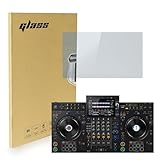
Overview:
The SUND Premium Screen Protector for the AlphaTheta XDJ-AZ provides essential protection for your investment’s 7-inch display. Engineered with 9H hardness rating, this tempered glass shield defends against scratches, impacts, and daily wear that could compromise your controller’s touchscreen functionality. The hydrophobic and oil-repellent coating maintains a cleaner surface, resisting up to 95% of smudges from fingerprints and sweat during intense performances. With 99% transparency, the protector preserves screen clarity while maintaining full touch responsiveness for seamless library navigation.
What Makes It Stand Out:
This protector is specifically molded for the XDJ-AZ’s exact dimensions, ensuring edge-to-edge coverage without interfering with controls. The ultra-thin design maintains the touchscreen’s sensitivity while the advanced coating technology reduces glare and keeps the display pristine under stage lighting. The custom fit eliminates the guesswork of universal protectors.
Value for Money:
As an insurance policy for a professional DJ controller costing thousands, this screen protector represents minimal investment for maximum peace of mind. Replacing a damaged display would cost exponentially more than this preventive solution, making it a no-brainer purchase.
Strengths and Weaknesses:
Strengths include perfect fit, high durability, smudge resistance, and maintained touch sensitivity. Weaknesses involve the precision required during installation to avoid bubbles and the fact that it’s single-device specific with no reuse option.
Bottom Line:
Every XDJ-AZ owner should install this screen protector immediately. It’s an inexpensive, essential accessory that preserves your controller’s resale value and ensures reliable touchscreen performance through countless gigs.
5. Denon DJ PRIME GO+ Portable DJ Controller and Mixer with Stem Separation, 2 Decks, Wi-Fi Streaming, Bluetooth, Lights Control, 7" Screen and Battery

Overview:
The Denon DJ PRIME GO+ delivers professional-grade performance in an ultra-portable, battery-powered package. This two-deck standalone controller runs on Engine DJ OS, offering laptop-free operation with stem separation, Wi-Fi streaming, and even lighting control. The built-in battery provides hours of untethered performance, while the 7-inch touchscreen and dual media inputs (USB/SD) ensure music access anywhere. Stream from Apple Music, Amazon Music Unlimited, and other services via integrated Wi-Fi, or connect via Bluetooth for backup audio.
What Makes It Stand Out:
The battery-powered design combined with pro features like stem separation and lighting control is unique in the market. Weighing significantly less than full-size controllers, it’s perfect for rooftop parties, beach gigs, or intimate venues where power access is limited. The 26 Main FX and 10 Touch FX provide surprising depth for such a compact unit.
Value for Money:
While priced at a premium for its portability, no other controller offers this feature set with battery operation. It eliminates the need for separate batteries, inverters, and reduced setups, saving money and hassle for mobile DJs.
Strengths and Weaknesses:
Strengths include true portability, battery power, comprehensive FX, and streaming integration. Weaknesses are the two-deck limitation versus four-deck units and smaller jog wheels that may feel cramped for some mixing styles.
Bottom Line:
The PRIME GO+ is the ultimate grab-and-go controller for mobile DJs and outdoor performers. If portability and battery power are priorities, this unit delivers professional capabilities that justify its specialized price point.
6. Gemini Sound GMX Versatile DJ Controller & Media Player - Compact USB/MIDI System with VirtualDJ LE, Ideal for Mobile DJs & Live Performances

Overview: The Gemini GMX is a hybrid DJ solution that bridges standalone media players and software controllers, targeting mobile DJs who need flexibility without bulk. This compact unit supports direct USB playback or full MIDI control of VirtualDJ LE, offering a dual-threat approach to performance. Weighing under seven pounds, it’s engineered for DJs navigating house parties to club gigs where versatility and quick setup are paramount.
What Makes It Stand Out: Dual high-contrast screens display waveforms and track data independently of your laptop—a rare feature at this price tier. Fully mappable MIDI control lets you customize every knob and button to your exact workflow, while the 24-bit audio interface and XLR outputs deliver professional-grade sound. The standalone USB capability serves as a crucial backup system when laptops fail mid-gig.
Value for Money: Positioned between entry-level controllers and professional gear, the GMX punches above its weight class. While Pioneer and Numark dominate the beginner market with plug-and-play simplicity, the GMX’s standalone playback justifies its mid-range price tag. You’re essentially getting a media player and controller in one chassis, saving money on backup equipment.
Strengths and Weaknesses: Strengths include versatile connectivity, exceptional portability, professional I/O options, and the safety net of USB playback. Weaknesses involve Gemini’s lesser brand recognition, potentially less robust build quality compared to industry leaders, and jog wheels that feel undersized for serious scratching. Software integration lacks the polished ecosystem of Rekordbox or Serato-native controllers.
Bottom Line: The GMX excels as a secondary controller for working DJs or a primary unit for budget-conscious mobile performers. Beginners face a steeper learning curve than with mainstream alternatives, but the standalone capability makes it intelligent insurance against technical failures. If you prioritize flexibility over brand prestige, this is a savvy choice.
7. Hercules DJControl Inpulse 200 MK2 — Ideal DJ Controller for Learning to Mix — Software and Tutorials Included, Black

Overview: Hercules engineered the Inpulse 200 MK2 as a complete DJ learning ecosystem, not just a controller. This entry-level deck targets absolute beginners with visual beatmatching guides and integrated tutorial content. USB-powered and compact, it removes technical barriers while teaching proper technique from day one, making it the digital equivalent of training wheels that actually help you ride faster.
What Makes It Stand Out: The Beatmatch Guide system uses tempo and beat align lights to visually train your ears—accelerating skill development dramatically. STEMS support isolates vocals, drums, and instruments, delivering pro-level creativity rarely seen at this price. Seamless integration with Beatport, SoundCloud Go+, and TIDAL means practicing with millions of tracks without upfront music purchases.
Value for Money: This represents the best beginner value in DJ hardware. For the price of two vinyl records, you get the controller, Serato DJ Lite, DJUCED software, and professional DJ Academy video tutorials. Competing controllers from Pioneer and Numark offer less educational support at similar prices, making this a smarter investment for novices.
Strengths and Weaknesses: Strengths include revolutionary learning tools, streaming service integration, comprehensive tutorial content, and a gentle price point. Weaknesses are the toy-like plastic construction, lack of XLR outputs limiting professional use, small jog wheels unsuitable for turntablists, and performance pads that feel basic. Serious DJs will outgrow its capabilities within a year.
Bottom Line: Perfect for bedroom DJs taking their first steps, the Inpulse 200 MK2 teaches proper technique better than any competitor. Plan to upgrade once you master the fundamentals. For hobbyists, it offers enough features to remain entertaining indefinitely. If you’re serious about DJing, this is the best $150 you’ll spend—but budget for your next controller soon.
8. LyxJam 2-Deck Portable DJ Controller, Mixing Console with LCD Display | Manual Looping, USB, MIC Input, Record Output, 16 Performance Pads with Virtual DJ LE Software Included (Download)

Overview: The LyxJam controller targets budget-conscious party hosts who want DJ capabilities without professional-tier investment. This barebones 2-deck mixing console promises a complete starter kit with an LCD display, 16 performance pads, and Virtual DJ LE software. Marketed as the ultimate plug-and-play solution, it’s designed for house parties, weddings, and casual events where simplicity trumps sophistication.
What Makes It Stand Out: Sixteen performance pads per deck is exceptional for this price class—doubling the typical eight-pad layout of budget controllers. Manual looping controls and dedicated filter knobs provide creative options often omitted in entry-level gear. The 5-inch jog wheels balance portability with just enough real estate for basic scratching and pitch adjustments.
Value for Money: This is among the most affordable paths to a 2-deck controller with bundled software. However, the rock-bottom price raises legitimate concerns about component quality and longevity. Compared to established brands like Hercules or Numark at similar price points, you’re trading brand support and reliability for more physical controls.
Strengths and Weaknesses: Strengths include the generous pad count, microphone input with dedicated controls, record output for set capture, and USB connectivity. Weaknesses center on the unknown brand reputation, likely inferior build quality, limited software optimization, and absence of pro-level outputs. The “heavy-duty construction” claim is questionable at this weight class, and customer support is presumably minimal.
Bottom Line: A tempting gamble for absolute beginners on the tightest possible budget. The feature set impresses on paper, but you’re better served saving an additional $50-100 for a Hercules or Numark controller with proven reliability. Only recommended if you need maximum controls for minimum cash and accept the significant quality risks. For most buyers, patience pays dividends.
9. AxcessAbles Two-Tier Portable DJ Booth | Large DJ Table Stand w/ 43"x25" Desk Surface | 2 Ergonomic Table Heights | Black & White Facades, Carry Cases | DJ Laptop Controller Stand

Overview: The AxcessAbles ES-02XT is a mobile DJ’s portable office—a professional facade and workstation that transforms any venue into a credible DJ booth. Featuring a 43"x25" main surface and optional second tier, this system provides organized workspace while concealing cable clutter behind interchangeable scrims. It’s engineered for mobile professionals who prioritize presentation and efficiency over permanent installation.
What Makes It Stand Out: Dual-height adjustment (35" or 39") accommodates different DJ preferences and venue constraints. The interchangeable black and white scrims offer remarkable versatility—black provides classic professionalism while white doubles as a projection screen for visuals or lighting effects. The 10-minute setup/packdown time is critical for mobile professionals managing multiple gigs per weekend.
Value for Money: Positioned between DIY plywood solutions and premium brands like Odyssey, the ES-02XT hits a practical sweet spot for working DJs. Included carry cases and scrim options add value that competitors typically charge extra for. While hobbyists may question the investment, mobile professionals recoup costs through improved client perception and faster load-ins.
Strengths and Weaknesses: Strengths include professional appearance, integrated cable management slots, rapid setup, versatile scrim projection capabilities, and comprehensive packaging. Weaknesses involve potential stability issues with heavy gear, scrim durability concerns under frequent use, and weight that challenges solo operators. The aluminum mesh tabletop, while lightweight, feels less substantial than solid wood surfaces.
Bottom Line: An essential tool for mobile DJs serious about brand image. The ES-02XT delivers professional presentation without custom-case pricing. If you’re still using folding banquet tables and tablecloths, this upgrade instantly elevates client perception and organizational efficiency. For bedroom DJs, it’s overkill. For working professionals, it’s a tax-deductible investment that pays for itself through higher booking rates.
10. Denon DJ PRIME GO – Portable DJ Controller and Mixer with 2 Decks, WIFI Streaming, 7-Inch HD Touchscreen, DJ Set with Lights Control and Rechargeable Battery

Overview: The Denon DJ PRIME GO redefines portability by eliminating the laptop entirely from the DJ equation. This battery-powered standalone system runs ENGINE OS with a 7-inch HD touchscreen, WiFi streaming, and four hours of untethered performance. It’s a complete DJ ecosystem in a compact form factor, designed for professional mobile DJs who perform where traditional setups are impractical or impossible.
What Makes It Stand Out: True standalone operation with rechargeable battery power enables performances on beaches, rooftops, and remote venues lacking AC power. The touchscreen provides intuitive control over waveforms, library browsing, and effects. WiFi streaming from TIDAL, SoundCloud Go+, Beatport, and Beatsource delivers infinite music access without local storage limitations.
Value for Money: At a premium price, the PRIME GO competes with Pioneer’s XDJ-RR and flagship controllers. The battery operation and extreme portability justify the cost—no other pro-grade system offers this freedom. For mobile DJs, the ability to perform without power or laptop recoups the investment through expanded booking opportunities and reduced setup complexity.
Strengths and Weaknesses: Strengths include unmatched portability, professional I/O, touchscreen workflow, Bluetooth audio input, and integrated lighting control. Weaknesses are the premium price, four-hour battery life limiting marathon sets, and a screen smaller than Denon’s SC Live units. ENGINE OS, while powerful, lacks Rekordbox’s industry-standard ecosystem. Compact controls feel cramped for DJs with large hands.
Bottom Line: The undisputed king of portable DJ systems. If you perform at unconventional venues or value minimal setup, this is your solution. For club residents or studio DJs, traditional controllers offer superior ergonomics and ecosystem integration. For mobile professionals seeking ultimate flexibility, the PRIME GO is worth every penny—it’s the only tool that lets you bring professional DJ capabilities literally anywhere.
Why Built-In Screens Are Revolutionizing DJ Performance
The migration from laptop-dependent setups to self-contained controllers represents more than aesthetic minimalism. Built-in screens eliminate the psychological barrier between performer and audience, allowing you to maintain eye contact and read the room while simultaneously navigating your library, adjusting waveforms, and triggering effects. This visceral connection transforms your performance from a technical demonstration into a genuine artistic expression.
In 2026, these displays have become sophisticated enough to render complex visual feedback in real-time, showing not just waveforms but harmonic key relationships, energy levels across your set, and even predictive track suggestions based on crowd response patterns captured through integrated sensors. The screen is no longer a passive display—it’s an active participant in your creative decision-making process.
Key Screen Technologies to Watch in 2026
OLED vs. Mini-LED: The Display Battleground
The debate between display technologies has intensified as manufacturers commit to different paths. OLED screens offer perfect blacks and infinite contrast ratios, crucial for readability in dark club environments where glare can ruin your flow. The individual pixel illumination means you get true blacks next to vibrant colors, making waveform separation crystal clear even during frantic mixing.
Mini-LED technology, meanwhile, brings exceptional brightness and eliminates burn-in concerns that can plague OLED displays after thousands of hours showing static interface elements. For touring DJs who might rack up 200+ performance hours monthly, this longevity matters. The latest Mini-LED implementations in 2026 controllers achieve 2,000+ nits brightness, making them visible even in direct sunlight for festival performances.
Refresh Rate and Touch Latency Specifications
2026’s premium controllers have standardized 120Hz refresh rates, cutting motion blur during rapid track scrolling and effect parameter adjustments. More critically, touch latency has dropped below 8ms in flagship models, creating a tactile experience that feels immediate and organic. When you’re doing intricate finger drumming on performance pads displayed on-screen, that near-instantaneous response becomes the difference between a flubbed fill and a flawless execution.
Screen Size and Resolution Considerations
The 7-Inch Sweet Spot vs. 10-Inch+ Flagship Territory
Controllers generally fall into two size categories, and your choice impacts everything from portability to workflow efficiency. Seven-inch screens dominate the mid-range market, offering enough real estate to display two full track waveforms, library navigation, and a parameter panel simultaneously without forcing you to squint or constantly switch views.
Larger 10-inch and beyond displays enter tablet-like territory, enabling split-screen workflows where you can browse tracks while monitoring effects, view four-deck layouts comfortably, or display detailed track information alongside performance visualizations. The trade-off? These controllers often weigh 25+ pounds and require reinforced flight cases, making them less ideal for DJs who frequently fly to gigs.
Resolution Requirements for Clarity
In 2026, anything below 1920x1200 resolution feels dated. The standard has become 2K displays (2560x1600) on screens 9 inches and larger, providing the pixel density needed to render small text in metadata fields without eye strain. More importantly, higher resolutions enable finer waveform detail, letting you see subtle transients and ghost kicks that might inform your mixing decisions.
Touchscreen vs. Non-Touchscreen Interfaces
The Hybrid Approach Gaining Traction
Pure touchscreen controllers promised minimalist designs but often delivered finger-smudged displays and accidental triggers during high-energy performances. The 2026 solution? Hybrid interfaces that pair high-quality capacitive touch with robust physical encoders, faders, and buttons.
This combination lets you use touch for intuitive tasks like waveform scrubbing, library searching, and effect parameter drawing, while relying on hardware controls for critical functions like EQ kills, fader cuts, and cue triggers. The best implementations use contextual touch sensitivity that disables certain screen regions when you’re actively using nearby physical controls, preventing mishaps.
Haptic Feedback Integration
Advanced models now incorporate localized haptic feedback directly into the screen surface. When you twist a virtual knob or slide a fader displayed on-screen, you feel subtle vibrations that simulate the tactile response of physical hardware. This technology bridges the gap between digital flexibility and analog feel, making touchscreen-only interfaces viable for DJs who previously swore by hardware.
Integration with DJ Software Ecosystems
Native vs. Universal Compatibility
Controllers with built-in screens either run proprietary operating systems or function as advanced peripherals for desktop software. Native systems offer instant-on performance and bulletproof stability—no laptop crashes mid-set—but typically lock you into a specific software ecosystem. Universal controllers act as sophisticated MIDI controllers with screens that mirror your laptop display, giving you freedom to switch between Serato, rekordbox, Virtual DJ, or emerging 2026 platforms.
The critical question isn’t which approach is better, but which aligns with your existing library investment and performance style. A native system might offer deeper integration and faster performance, but if you’ve spent years curating crates in Serato, the migration pain might outweigh the benefits.
Cloud Library Synchronization
2026’s game-changing feature is seamless cloud integration. Modern controllers can sync your entire library, including cue points, loops, and metadata, directly through integrated Wi-Fi 6E or 5G connections. This means you can show up to a gig, log into your cloud account on any compatible controller, and have your complete setup ready in under two minutes—no USB drives, no laptop tethering, no emergency backups.
Processing Power and Onboard Computing
CPU and RAM Specifications That Matter
Don’t let the compact form factor fool you—these controllers house serious computing hardware. Entry-level 2026 models pack octa-core ARM processors with 8GB RAM, while flagship units feature custom silicon rivaling laptop performance with 16GB+ RAM and dedicated GPU cores for rendering complex visualizations.
This power isn’t just for show. It enables real-time stem separation directly on the controller, AI-driven track analysis that learns your mixing style, and the ability to run multiple virtual decks with independent effects chains without latency buildup. When evaluating controllers, pay attention to the processor generation—2026 models using last year’s chips might save you money upfront but could limit software update longevity.
Thermal Management in Compact Spaces
All that processing power generates heat, and a controller overheating mid-set is a nightmare scenario. Premium 2026 designs incorporate vapor chamber cooling, silent fans with dust filtration, and thermal throttling algorithms that prioritize audio stability over visual frills when temperatures rise. Look for controllers with obvious ventilation design and manufacturers who publish thermal performance data—the best ones guarantee stable operation in 40°C (104°F) ambient temperatures.
Standalone Mode Capabilities
True Standalone vs. Laptop-Assisted Operation
“Standalone” has become a marketing buzzword with varying definitions. True standalone controllers boot directly into a complete operating system, letting you DJ from USB drives or SD cards without any external device. Laptop-assisted standalone mode might require a computer for initial library analysis or advanced track preparation but runs independently during performance.
For 2026, the distinction matters because true standalone controllers now support third-party plugin architectures. You can load your favorite VST effects or instruments directly onto the controller, running them natively without laptop processing. This opens doors for live remixing and production that were previously impossible in standalone mode.
Recording and Export Features
Modern standalone controllers don’t just play music—they capture your entire performance in multitrack format. Imagine recording your set with each deck, microphone input, and effects bus on separate tracks for later mixing and mastering. High-end 2026 models offer 32-bit float recording at 96kHz directly to internal NVMe storage, giving you studio-quality stems of your live performance for release or analysis.
Connectivity and Expansion Options
The Death of the USB-A Port
2026 has largely deprecated old USB standards. Expect USB4/Thunderbolt 4 as the primary connection, offering 40Gbps bandwidth for multichannel audio, display data, and peripheral expansion through a single cable. This simplifies setup dramatically—one cable from controller to laptop handles everything, including charging your computer.
Legacy support still matters, though. The best controllers include at least one USB-A port with programmable voltage, letting you charge your phone or power a wireless microphone receiver directly from the unit. For mobile DJs, this reduces cable clutter and eliminates the need for separate power strips.
Network Audio and Dante Integration
Professional installations increasingly rely on Dante audio-over-IP networking. Premium 2026 controllers include native Dante compatibility, letting you connect directly to club sound systems with a single Ethernet cable carrying 64 channels of audio. This isn’t just convenient—it provides redundancy, allowing the sound engineer to tap into your signal at multiple points and ensuring seamless backup transitions.
Build Quality and Durability Factors
Metal vs. Premium Polymer Construction
The chassis material debate continues, but 2026 has refined both approaches. Machined aluminum unibody designs offer ultimate rigidity and premium feel, but quality polymer composites with fiberglass reinforcement can achieve similar durability at half the weight. The key isn’t the material itself but the internal structure—look for controllers with internal bracing around high-stress points like fader mounts and encoder clusters.
Fader and Knob Longevity Ratings
Screens get the headlines, but your performance lives and dies by fader and knob reliability. Professional-grade controllers now specify lifecycle ratings: crossfaders rated for 5 million+ operations, line faders for 3 million+, and rotary encoders with contactless magnetic sensing that theoretically never wear out. These aren’t just numbers—they translate to years of reliable performance before needing maintenance.
Portability vs. Feature Set Trade-offs
The Flight Case Reality Check
That 12-inch screen and four-deck support looks amazing in the store, but can you lift it? Can you check it on a flight without paying overweight fees? Smart 2026 designs modularize heavy components, letting you detach screen sections for transport or swap out battery packs. Some controllers even feature separate processing units that can rack-mount in a road case while the control surface remains lightweight and portable.
Battery Power Innovations
Battery technology has finally reached the point where true wireless DJing is practical. High-capacity lithium-silicon batteries in 2026 premium controllers provide 6-8 hours of standalone performance, with fast charging that hits 80% in 30 minutes. More importantly, intelligent power management lets you hot-swap batteries without interrupting audio playback—a crucial feature for marathon sets or festivals where power might be unreliable.
Audio Interface and Sound Quality Standards
Converter Quality Beyond Bit Depth
Everyone advertises 24-bit/96kHz audio, but that spec alone means little. The real quality differentiator is the digital-to-analog converter (DAC) implementation and clock jitter performance. 2026’s best controllers use dual-mono DAC designs with separate power supplies for left and right channels, achieving dynamic ranges exceeding 120dB and total harmonic distortion below 0.0005%.
Latency Performance in Real-World Conditions
Manufacturers love citing ultra-low latency figures, but these are often measured under ideal conditions. What matters is stable latency under load—when you’re running four decks, 16 effects, and recording simultaneously. Look for controllers with dedicated DSP chips for audio processing, ensuring your round-trip latency stays under 5ms even when the main CPU is maxed out rendering visualizations.
Advanced Performance Features
AI-Powered Mixing Assistance
Artificial intelligence in 2026 controllers has matured from gimmicky auto-mixing into genuinely useful creative tools. AI can now analyze the harmonic content of your incoming track and suggest the perfect transition point based on melodic structure, not just beatmatching. It can also detect vocal sections and automatically suggest instrumental tracks to layer underneath, or identify build-ups in your current track and queue effect presets.
Gesture and Proximity Controls
Infrared sensors and small radar chips embedded around screens enable gesture controls without touching the surface. Wave your hand to execute filter sweeps, move your palm closer to the screen to preview a track, or use two-hand gestures to manipulate multiple effects simultaneously. This creates performance possibilities that feel futuristic while solving the practical problem of keeping your screen clean and visible during intense sets.
Price Tiers and Value Propositions
Understanding the $800-$1,500 Mid-Range Segment
This competitive bracket offers the best value for most working DJs. Controllers here typically feature 7-inch screens, true standalone capability, and professional-grade audio interfaces. What you sacrifice versus premium models are largely convenience features: smaller screens, fewer simultaneous effects, and less expansion connectivity. The core performance experience, however, remains exceptionally capable.
Justifying the $2,500+ Investment
Premium controllers command high prices not just for larger screens but for ecosystem integration. Buying into a flagship system often includes cloud storage subscriptions, premium software licenses, and access to exclusive sound libraries. More importantly, these units are built with modular upgrade paths—firmware updates can unlock new features, and hardware expansion slots let you add functionality without replacing the entire controller.
Future-Proofing Your Investment
Software Update Commitment Windows
A controller is only as good as its software support. Reputable manufacturers now publish explicit support timelines—minimum five years of major updates for professional models. This matters because DJ software evolves rapidly, and a controller that can’t integrate with next year’s features becomes obsolete fast. Check manufacturer forums and release history to verify they actually deliver on update promises.
Hardware Expansion and Modularity
The most future-proof designs treat the controller as a platform, not a product. Look for units with accessible M.2 slots for storage upgrades, USB-C ports that support external GPUs for enhanced visualization, and firmware that can be flashed with third-party operating systems. Some manufacturers even release hardware expansion modules—want a dedicated step sequencer? Snap it onto the side. Need additional inputs for a live band? Add an I/O module.
Making the Right Choice for Your DJ Style
Club Resident vs. Mobile DJ Priorities
Club residents should prioritize robust build quality, native installation connectivity (like Dante), and screens optimized for dark environments with minimal blue light emission to preserve night vision. Your controller likely lives in one place, so weight matters less than reliability and integration with venue systems.
Mobile DJs need the opposite: lightweight construction, battery power options, and screens bright enough for outdoor gigs. Your controller must set up and break down quickly, often in unpredictable conditions. Prioritize units with instant-on capability and screens that work with gloves—crucial for winter events.
Genre-Specific Workflow Considerations
Hip-hop DJs need screens that excel at waveform zooming for precise scratching cues and pad performance visualization. Techno DJs benefit from screens that display long-form arrangement views and complex effect modulation curves. Open-format DJs require superior library management with intelligent sorting and rapid search across massive collections. There’s no universal best controller—only the one that matches how you think about music.
Frequently Asked Questions
How much internal storage do I realistically need on a 2026 DJ controller?
For most DJs, 256GB provides ample space for a large music library and recorded sets. However, if you plan to use stem separation features extensively or record multitrack performances, opt for 512GB or 1TB. Remember that high-quality controllers allow external storage expansion, so you’re not permanently limited.
Can I use my existing music library with a new standalone controller, or will I need to re-analyze everything?
Modern controllers support importing existing libraries from Serato, rekordbox, and other major platforms while preserving your cue points, loops, and metadata. The initial import might take several hours for large collections, but you won’t lose your work. Some premium models even offer cloud-based library conversion services.
Are touchscreen controllers reliable enough for high-energy performances where I might hit the screen accidentally?
2026’s best controllers incorporate palm rejection, configurable touch zones, and the ability to lock touch functionality while keeping the display active. Many DJs use hybrid mode: touch for library browsing and preparation, but physical controls for live mixing. The reliability concern has largely been solved through smart software design.
What’s the typical lifespan of a DJ controller with a built-in screen compared to traditional laptop setups?
A quality controller with an integrated screen should last 5-7 years of professional use. The screen itself is rated for 50,000+ hours of operation. Traditional laptop setups might seem more flexible, but laptops typically need replacement every 3-4 years due to battery degradation and OS requirements. The controller’s dedicated nature often makes it more durable long-term.
Do built-in screens eliminate the need for a laptop entirely, or should I still bring one as backup?
While 2026 controllers are incredibly capable, most professional DJs still carry a minimal backup—often just a tablet with their music library. True standalone mode means you don’t need the laptop for your main performance, but having a backup device with your music provides peace of mind for mission-critical gigs.
How do I clean and maintain a touchscreen DJ controller without damaging it?
Use microfiber cloths slightly dampened with distilled water—never alcohol-based cleaners which can degrade oleophobic coatings. Power down the controller first, and apply minimal pressure. For smudge prevention, some DJs apply matte screen protectors designed for automotive displays, which reduce glare and fingerprints while maintaining touch sensitivity.
Will a controller purchased in 2026 become obsolete when new software versions release in 2027?
Reputable manufacturers provide firmware updates that maintain compatibility. However, hardware limitations can eventually cap feature support. Buying controllers with modular architectures and explicit multi-year support commitments minimizes obsolescence risk. Avoid budget models with limited processing headroom if longevity matters to you.
What’s the learning curve like when transitioning from a laptop-based setup to a standalone screen controller?
Expect 2-4 weeks of regular practice to achieve the same comfort level. The biggest adjustment is developing muscle memory for on-screen navigation without looking down. Most controllers offer “practice mode” that overlays visual guides on the screen. Many DJs report that after the transition, they perform faster and more intuitively than before.
Are there any insurance considerations for high-value DJ controllers with built-in screens?
Yes—standard musical instrument insurance often doesn’t cover electronics over $2,000. You’ll need specialized DJ equipment insurance that covers accidental damage, theft, and even liquid spills. Some manufacturers offer extended warranty programs that include accidental damage protection, which can be more cost-effective than third-party insurance.
How do screen-equipped controllers perform in extreme temperatures, like outdoor festivals or winter events?
Premium 2026 controllers are rated for operation between -10°C and 45°C (14°F to 113°F). The screen’s liquid crystal layer is the most temperature-sensitive component. Below freezing, response times slow significantly. Above 40°C, thermal throttling may dim the display. For extreme conditions, look for controllers with active cooling and rapid startup features that pre-warm components in cold environments.
See Also
- 10 DJ Controllers with Built-In Speakers for Beach Parties in 2026
- 10 DJ Controllers with Built-In FX Units to Replace External Racks in 2026
- 10 DJ Controllers for Rooftop Raves with Sunlight-Readable Screens
- 10 Most Revolutionary DJ Controllers With Motorized Jog Wheels in 2026
- 10 DJ Controllers with Built-In FX Units to Ditch External Racks