Table of Contents
The 2026 drum corps season is already casting its long shadow across practice fields from California to New Jersey, and while everyone obsesses over drill design and electronics integration, the most crucial equipment decision your percussion staff will make might be the smallest: the humble snare stick. In championship-level competition, where hundredths of a point separate legends from also-rans, your stick choice directly impacts everything from ensemble clarity at fortississimo to the subtlest pianissimo inner-beats that judges scrutinize during exposed passages. This isn’t about grabbing whatever’s in the bulk order catalog—it’s about understanding how molecular structure, weight distribution, and taper geometry can either amplify your corps’ identity or undermine an entire season’s worth of work.
As we approach the 2026 season, the marching percussion landscape continues to evolve with new materials science, heightened awareness of performer health, and increasingly sophisticated acoustic demands from modern repertoire. Whether you’re a returning finalist aiming to unseat the reigning champion or a rising corps making your first push into World Class, the methodology behind selecting professional marching snare sticks has become as complex as the music itself. Let’s dive deep into the factors that separate championship-caliber equipment from merely adequate tools.
Top 10 Marching Snare Sticks
Detailed Product Reviews
1. Vic Firth Corpsmaster Signature Snare – Ralph Hardimon

Overview: The Vic Firth Corpsmaster Ralph Hardimon signature stick represents the gold standard in marching percussion. Designed by the legendary Ralph Hardimon himself, this model is the weapon of choice for elite drum corps and marching bands worldwide. It embodies decades of championship-level experience in a single pair of hickory sticks.
What Makes It Stand Out: The modified barrel tip delivers exceptional articulation on kevlar heads while the extended taper creates a fulcrum point that enhances control and provides beautifully balanced rebound. This isn’t just marketing hype—the geometry fundamentally changes how the stick responds in your hands, allowing for both subtle dynamic control and powerful projection when needed.
Value for Money: Priced competitively with other professional marching sticks, you’re investing in a proven design used by champions. While beginners might balk at the premium over generic sticks, the consistency and durability mean fewer replacements. Compared to standard Corpsmaster models, the Hardimon signature offers specialized features that justify the slight price increase.
Strengths and Weaknesses: Strengths: Unmatched pedigree and proven performance; superior rebound and control; excellent durability from premium hickory; versatile for both traditional and matched grip; consistent manufacturing quality. Weaknesses: Specific design may feel foreign to beginners; tip shape requires adjustment for concert snare players; premium price point for casual players.
Bottom Line: For serious marching percussionists seeking championship-level tools, the Ralph Hardimon signature stick is essential. The design genuinely enhances performance once mastered, making it ideal for competitive drummers ready to invest in their craft.
2. Vic Firth Corpsmaster Signature Snare – Mike Jackson

Overview: The Mike Jackson signature stick targets drummers who demand maximum power without sacrificing the finesse required for complex passages. This model takes the Corpsmaster foundation and pushes it toward aggressive, front-weighted performance that dominates in outdoor marching environments.
What Makes It Stand Out: The innovative long reverse taper shifts mass forward, creating a naturally powerful stroke that does half the work for you. Combined with a thick shoulder, this design generates impressive volume while the extended taper maintains enough rebound for fast rudiments. It’s a unique physics approach to stick design.
Value for Money: Positioned at the standard Vic Firth signature price point, these sticks offer a specialized tool for specific playing styles. The front-weighted design means you can achieve greater volume with less effort, potentially reducing fatigue during long rehearsals. For players who match Jackson’s aggressive approach, the efficiency gains justify every penny.
Strengths and Weaknesses: Strengths: Exceptional power and projection; front-weighted feel cuts through ensembles; reduced effort for fortissimo passages; durable hickory construction; unique playing experience. Weaknesses: Unconventional balance requires adaptation period; not ideal for players preferring traditional weight distribution; may feel clumsy for subtle techniques.
Bottom Line: Perfect for lead snare drummers and those who prioritize power and projection. If you struggle to cut through your ensemble or fatigue during loud passages, the Mike Jackson signature offers a legitimate mechanical advantage worth the learning curve.
3. ProMark Scott Johnson Hickory Signature Marching Snare Drum Sticks - FireGrain For Playing Harder, Longer - No Excess Vibration - Lacquer Finish, Large Round Tip, Hickory Wood - 1 Pair
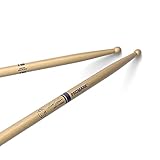
Overview: ProMark’s Scott Johnson signature stick brings innovative FireGrain technology to the marching world. These 17-inch, .700-inch diameter sticks promise enhanced durability through a heat-tempering process while maintaining the responsive feel hickory is known for. Scott Johnson’s involvement ensures the specifications meet real-world marching demands.
What Makes It Stand Out: The FireGrain treatment isn’t just surface-level—it fundamentally strengthens the hickory fibers, claiming to increase lifespan significantly. The large round tip produces a robust, full-bodied tone on marching snares, while the specific 17" length and .700" diameter hit a sweet spot for control and leverage that many marching drummers prefer.
Value for Money: While slightly pricier than standard hickory sticks, the FireGrain technology promises extended durability that could mean fewer replacements over a season. For hard-hitting drummers who break sticks regularly, the premium pays for itself. The made-in-USA quality control also adds value compared to offshore alternatives.
Strengths and Weaknesses: Strengths: FireGrain durability significantly reduces breakage; minimal vibration transfer to hands; precise specifications (17", .700"); large round tip delivers full tone; excellent quality control. Weaknesses: Heat treatment slightly alters natural hickory feel; less pedigree than Vic Firth in marching circles; specific dimensions may not suit all players.
Bottom Line: An excellent choice for aggressive players who prioritize durability. If you regularly snap sticks mid-performance, the FireGrain technology offers tangible benefits that justify the premium. Ideal for marching drummers hard on equipment who need reliability.
4. Vic Firth Corpsmaster Signature Snare – Colin McNutt

Overview: The Colin McNutt signature stick strikes a deliberate balance between power and finesse, making it the most versatile option in the Corpsmaster signature lineup. Designed for the complex musical demands of modern drum corps, this stick adapts to varied repertoire without forcing compromises in technique.
What Makes It Stand Out: The medium taper creates a balanced fulcrum that doesn’t favor either extreme. Unlike specialized models, this stick transitions seamlessly between soft legato passages and aggressive accent work. The design philosophy prioritizes adaptability, allowing drummers to maintain one stick model throughout an entire show’s dynamic range.
Value for Money: At the standard signature stick price point, the McNutt model offers exceptional versatility. Rather than buying multiple pairs for different musical styles, this single design handles diverse demands. For students and professionals alike, the cost-per-use makes it economically smart, especially when compared to owning several specialized models.
Strengths and Weaknesses: Strengths: Highly versatile for varied musical styles; balanced feel suits most grip techniques; smooth dynamic transitions; durable premium hickory; excellent all-around performance. Weaknesses: Lacks the specialized character of other signatures; may not satisfy players wanting extreme power or rebound; medium taper doesn’t excel at either end of the spectrum.
Bottom Line: The ideal workhorse stick for marching percussionists who play diverse repertoire. If you want one reliable pair that handles everything from ballads to blast beats, the Colin McNutt signature delivers balanced performance without specialization compromises.
5. 3-Pairs Vic Firth Corpsmaster Signature Ralph Hardimon Marching Snare Drum Sticks (SRH)

Overview: This three-pair bundle delivers the legendary Ralph Hardimon signature sticks in a convenient multi-pack format. You receive the exact same championship-level sticks that top drum corps use, but in a quantity that ensures you’re prepared for intensive rehearsal schedules and performance seasons without last-minute supply runs.
What Makes It Stand Out: Beyond the sticks themselves, the bulk packaging provides immediate backup pairs and long-term consistency. Having three matched pairs from the same production batch ensures uniform weight and feel across all your sticks—a critical detail for competitive drummers who rotate pairs during demanding shows. It’s preparedness in a box.
Value for Money: The bulk packaging typically offers per-pair savings compared to individual purchases, making it a smart financial move for serious players. When you factor in shipping costs or music store trips, the convenience adds further value. For students in competitive programs, this represents a semester’s worth of sticks at a discount.
Strengths and Weaknesses: Strengths: Cost savings over individual pairs; matched batch consistency; always have backups ready; same legendary Hardimon design; reduces emergency stick purchases. Weaknesses: Higher upfront investment; commits you to one model for months; less ideal if you’re still experimenting with stick preferences; storage space required.
Bottom Line: A no-brainer for committed Hardimon users in competitive marching programs. If you’ve already settled on this as your go-to stick, buying in bulk saves money and eliminates the anxiety of running out before a big performance. Perfect for dedicated students and professionals alike.
6. Vic Firth Corpsmaster Signature Snare –Thom Hannum Beast

Overview: The Vic Firth Corpsmaster Signature Snare – Thom Hannum Beast is a purpose-built marching snare stick designed by the legendary DCI instructor. Measuring 17 inches in length with a .700-inch diameter, this stick delivers the substantial heft required for outdoor marching applications where projection is paramount. As part of Vic Firth’s respected Corpsmaster series, it represents professional-grade equipment trusted by top drum corps worldwide.
What Makes It Stand Out: The “Beast” designation isn’t just marketing—this stick’s substantial mass and forward balance create authoritative articulation on high-tension marching heads. The signature design reflects Hannum’s decades of championship-level pedagogy, optimized for the precise technique demands of modern corps-style drumming. Vic Firth’s rigorous manufacturing standards ensure exceptional consistency from pair to pair.
Value for Money: Positioned in the premium signature stick category, these offer excellent value for serious marching percussionists. While priced above generic options, the durability and performance justify the investment for competitive players who require reliable equipment through demanding rehearsal schedules.
Strengths and Weaknesses: Strengths include exceptional durability, superior projection, and impeccable quality control. The balanced taper provides controlled rebound despite the stick’s mass. Weaknesses include limited versatility—the aggressive design is overkill for indoor or drum set applications. The substantial weight may fatigue younger players, and the specific corps-style feel requires adjustment for those transitioning from lighter sticks.
Bottom Line: Ideal for dedicated marching snare drummers seeking championship-level performance. The Thom Hannum Beast excels in outdoor projection and durability, making it a worthy investment for serious corps and band percussionists.
7. ProMark Drum Sticks - Scott Johnson Drumsticks - Drum Sticks Set - Wood Tip - Painted White Hickory Drumsticks - Consistent Weight and Pitch - 1 Pair

Overview: The ProMark Scott Johnson signature marching sticks represent a thoughtful balance between tradition and innovation. These 17-inch hickory sticks feature a .700-inch diameter with a round wood tip, specifically engineered for the articulate demands of marching snare drums. The painted white finish serves both aesthetic and functional purposes, making them highly visible during field performances.
What Makes It Stand Out: The stark white finish immediately distinguishes these from standard wood-finish sticks, enhancing visual uniformity in marching ensembles. The round tip produces a robust, full-bodied tone that cuts through outdoor environments, while the medium taper ensures balanced response and rebound. As a Scott Johnson signature model, they reflect the expertise of a Blue Devils percussion legend.
Value for Money: These sticks sit comfortably in the mid-range price bracket for signature models. Hickory’s natural durability combined with ProMark’s weight and pitch matching process delivers professional consistency without the premium pricing of some competitors, making them accessible to students and professionals alike.
Strengths and Weaknesses: Strengths include excellent visibility, durable hickory construction, and consistent manufacturing quality. The round tip provides excellent durability and broad tone production. Weaknesses involve the painted finish, which can chip over time and feel slightly slick when hands become sweaty. The round tip offers less articulation than acorn-shaped alternatives for intricate passages. Some players may find the white finish shows wear more prominently than natural wood.
Bottom Line: A solid choice for marching percussionists prioritizing visibility and durability. The ProMark Scott Johnson sticks deliver reliable performance for both rehearsal and competition, particularly in ensembles where visual uniformity matters.
8. Heavy Marching Drum Sticks - “Exhausted” Weight, 3 Levels for Strength Training, Pitch & Weight Matched, Hickory Wood with Non-Slip Grip for Marching Band & Drumline,Strength Training Drum Sticks

Overview: These innovative Heavy Marching Drum Sticks redefine practice equipment with their progressive strength training approach. Available in three distinct weights—“Comfort,” “Tired,” and “Exhausted”—these hickory sticks are specifically engineered as training tools rather than performance implements. The extra-heavy construction builds endurance while maintaining authentic marching dimensions and feel.
What Makes It Stand Out: The three-tiered weight system is genuinely unique, allowing drummers to progressively overload their practice sessions. This systematic approach builds muscle memory and control more effectively than simply using heavy sticks arbitrarily. Each pair is meticulously weight and pitch matched, ensuring balanced practice sessions that translate directly to improved performance with standard-weight sticks.
Value for Money: As a specialized training tool, these offer excellent value for serious drummers. The durability of premium hickory ensures longevity despite intense practice, and the progressive system replaces multiple individual training stick purchases. For committed marching percussionists, the performance gains justify the investment.
Strengths and Weaknesses: Strengths include the intelligent weight progression system, authentic marching stick geometry, secure non-slip grip, and exceptional durability. Practicing with these makes standard sticks feel effortless, improving speed and control. Weaknesses include the risk of overuse injuries if not incorporated properly into a training regimen. They’re unsuitable for actual performance and may promote bad habits if used exclusively. The extreme weight could be counterproductive for younger or less-developed players.
Bottom Line: An exceptional training innovation for dedicated marching percussionists. When used judiciously as part of a balanced practice routine, these sticks deliver measurable improvements in endurance and control, making them a worthwhile investment for serious players.
9. Vic Firth Corpsmaster Signature Snare - Roger Carter

Overview: The Vic Firth Corpsmaster Signature Snare – Roger Carter model occupies a unique niche as a hybrid marching stick designed to feel familiar to drum set players. Measuring 17 inches long, this stick bridges the technical gap between drum set and marching snare techniques, making it ideal for percussionists who transition between both disciplines regularly.
What Makes It Stand Out: The revolutionary concept of a marching stick that “plays like a drum set stick” addresses a common challenge for multi-percussionists. While maintaining the length and durability required for marching applications, the Roger Carter model offers the balance and response characteristics that drum set players find intuitive, reducing the learning curve significantly.
Value for Money: For percussionists who perform in both marching and drum set contexts, this stick eliminates the need for separate practice regimens to adapt technique. The versatility provides exceptional value, essentially serving as a crossover tool that maintains proficiency across disciplines without compromising quality.
Strengths and Weaknesses: Strengths include versatile hybrid design, Vic Firth’s renowned durability, and smooth adaptation for set drummers entering marching activities. The stick maintains sufficient mass for outdoor projection while offering refined feel. Weaknesses include potential compromise—neither a pure marching stick nor a true set stick, it may not satisfy purists in either camp. Limited feature details make specific comparisons difficult. The balanced approach might lack the extreme projection of dedicated corps-style sticks.
Bottom Line: Perfect for versatile percussionists bridging marching and drum set worlds. The Roger Carter signature stick excels as a transitional tool, making it invaluable for students and professionals who refuse to be limited to a single percussion discipline.
10. Promark TXDCBYOSW “Bring Your Own Style” BYOS Drumsticks, Hickory Oval Wood Tip

Overview: The Promark BYOS (Bring Your Own Style) drumstick combines traditional hickory construction with innovative performance features. At 17 inches long with a .700-inch diameter, these sticks match standard marching specifications while incorporating a distinctive butt-end grip ring designed specifically for executing stick tricks and enhancing control during visual performances.
What Makes It Stand Out: The integrated grip ring at the butt end is a game-changer for marching percussionists who incorporate stick flips, spins, and visual effects into their routines. This feature provides tactile reference points and improved security during complex manipulations without compromising the stick’s primary playing surface or affecting traditional grip technique.
Value for Money: The BYOS sticks are priced competitively with standard signature models, making the innovative grip ring essentially a free value-add. For performers who regularly execute stick tricks, this feature eliminates the need for tape modifications or alternative grip solutions, saving time and money while providing a factory-engineered solution.
Strengths and Weaknesses: Strengths include the innovative grip ring, premium hickory durability, large oval tip for controlled articulation, and consistent manufacturing quality. The medium taper provides balanced rebound. Weaknesses include the grip ring’s subjective feel—some traditionalists may find it intrusive or unnecessary. The feature adds minimal weight that could affect ultra-precise balance preferences. Visual learners may become dependent on the grip reference, potentially struggling with standard sticks.
Bottom Line: An excellent choice for visually-oriented marching percussionists. The Promark BYOS sticks successfully merge traditional performance with modern showmanship, making them ideal for drumlines that prioritize both musicality and visual excellence.
Understanding Championship-Level Marching Snare Stick Requirements
The Evolution from High School to World-Class Demands
The jump from regional competition to DCI Finals is measured in more than just rehearsal hours—it’s a quantum leap in physical and sonic expectations. Championship-level sticks must survive 16-hour rehearsal days in 95-degree heat while maintaining consistent response characteristics. The wood density that works perfectly for a Friday night halftime show will often splinter under the relentless 300+ BPM demand of a “BlooPit”-style feature. World-class corps require sticks engineered for what we call “cumulative fatigue resistance,” meaning they perform identically on day one of spring training and day 60 at Lucas Oil Stadium.
What Judges Listen For in Championship Settings
When adjudicators sit in the press box at Lucas Oil, they’re evaluating your sticks’ performance through a critical filter: articulation uniformity across 25-30 snare drummers. A stick that produces slightly different overtones when played at the edge versus center will create phase cancellation that murderizes your ensemble clarity score. The modern judging community has developed an ear for “stick noise”—the unwanted artifacts of poor tip design or improper weight distribution that bleed through the mic array during soft exposed sections. Your equipment must disappear sonically, leaving only the pure, intentional sound of your performance.
Core Material Science: Wood, Carbon Fiber, and Hybrid Innovations
Traditional Maple and Hickory: Still Relevant?
Maple and hickory remain the twin pillars of professional marching sticks, but their applications have become increasingly specialized. Maple’s lower density provides faster rebound and reduced hand fatigue—critical for programs emphasizing velocity and complex split passages. However, its cellular structure breaks down faster under high-tension heads, requiring more frequent rotation. Hickory’s tighter grain pattern delivers superior durability and a darker fundamental tone, but its added mass can slow down ultra-high-tempo passages and increase vibration transfer to the hands. The 2026 trend is toward “spec’d density,” where manufacturers select wood from specific regions and harvest seasons to achieve precise weight tolerances within ±1.5 grams.
Carbon Fiber Reinforcement: The Future of Durability
The stigma around synthetic sticks has evaporated among top-tier corps, with hybrid designs now dominating the innovation space. Carbon fiber reinforcement typically appears in the neck and shoulder area, providing a 40-60% increase in break resistance while maintaining traditional wood feel in the grip area. The key advancement for 2026 is “directional fiber orientation”—engineers now layer carbon in specific angular patterns to control flex points and vibration dampening. This eliminates the “pingy” overtones that plagued early synthetic models while creating sticks that can survive an entire season with minimal degradation. The trade-off? A learning curve for performers accustomed to wood’s natural flex response.
Dimensional Dynamics: Length, Diameter, and Taper Geometry
Why Half-Inch Differences Matter in Visual Coordination
In modern drill where snare lines perform crossovers, sweeps, and synchronized visuals, stick length affects everything from interval accuracy to body alignment. A 17-inch stick versus a 17.5-inch model creates a quarter-inch difference in arc radius that, multiplied across 30 performers, becomes visually noticeable from the box. Longer sticks provide more leverage for power but require greater shoulder mobility during quick visual resets. The 2026 standard has settled around 17 inches for most championship corps, though some are experimenting with “variable length protocols” where inner beats use slightly shorter sticks for faster split passages while outer beats maintain standard length for visual consistency.
Taper Profiles and Their Impact on Rebound
Taper geometry—where and how the stick narrows from shoulder to tip—dictates your rebound coefficient more than any other factor. A long, gradual taper creates a whippy feel that accelerates rebound but sacrifices control at extreme dynamic levels. Conversely, a short, aggressive taper provides rock-solid stability during fortissimo rimshots but can feel sluggish during rapid single-stroke rolls. The emerging 2026 trend is “dual-zone tapering,” where the stick maintains a traditional profile through the grip area but incorporates a secondary micro-taper in the final three inches to optimize tip response. This allows drummers to maintain visual uniformity while customizing rebound characteristics through subtle grip adjustments.
Tip Design Philosophy: Shaping Your Corps’ Signature Sound
Acorn vs. Barrel vs. Teardrop: A Sonic Analysis
Tip shape functions as your acoustic fingerprint. Acorn tips produce a full-bodied fundamental with rich overtones, ideal for corps emphasizing tonal warmth and orchestral color. Barrel tips deliver a focused, articulate attack that cuts through amplified electronics and brass-heavy arrangements—perfect for rock-infused shows. Teardrop tips occupy the middle ground, offering versatility but potentially lacking character in exposed moments. The 2026 innovation is “mass-compensated tip design,” where manufacturers engineer the tip’s internal density to offset the stick’s overall balance, creating sticks that feel identical in the hands despite different tip profiles.
Nylon Tips: The Unsung Heroes of Outdoor Projection
While purists once dismissed nylon-tipped sticks as “cheating,” championship corps now recognize their strategic value in specific contexts. Modern nylon tips—precision-molded rather than glued—provide 15-20% more articulation projection in outdoor stadiums without the harsh “click” of early designs. They’re particularly effective on high-carbon heads where wood tips compress and lose definition over time. The downside? They can sound sterile during soft, exposed moments. The 2026 approach is “hybrid implementation,” where corps issue nylon-tipped sticks for large-impact moments and wood tips for intimate passages, requiring performers to master both variants.
Weight Distribution and Balance Points: The Physics of Control
Forward vs. Center Balance for Different Playing Styles
A stick’s balance point—where it naturally pivots—fundamentally alters your fulcrum mechanics. Forward-balanced sticks (balance point 7-8 inches from the butt) generate more natural velocity with less wrist effort, making them ideal for velocity-driven programs. Center-balanced sticks (9-10 inches) provide superior control for intricate split patterns and dynamic nuance but require more physical input for power playing. The 2026 breakthrough is “adjustable weight cartridges” in the butt end, allowing performers to fine-tune balance without switching stick models. This customization lets you match stick feel to specific musical segments within a single show.
Grip Engineering: Lacquer, Paint, and Bare Wood Finishes
Sweat Management in High-Intensity Performances
Nothing sabotages a championship run like a stick slipping during the feature solo. Lacquer finishes provide a consistent grip coefficient but become slick when saturated with sweat. Paint finishes offer texture but chip and wear unevenly, creating grip inconsistencies. Bare wood—properly sanded and treated—absorbs moisture and maintains friction but requires break-in and can splinter. The 2026 solution is “hydrophobic micro-texturing,” where manufacturers laser-etch microscopic patterns into the grip area that channel sweat away while maintaining a smooth feel. This technology, borrowed from professional tennis racket grips, reduces grip pressure by up to 20%, decreasing forearm fatigue during all-day rehearsals.
Dynamic Range Capabilities: From Pianissimo to Fortississimo
Stick Mass and Its Relationship to Volume Ceiling
The physics is simple: heavier sticks generate more kinetic energy, producing higher volume ceilings. But there’s a critical threshold where added mass begins to choke vibration rather than amplify it. Championship-level sticks typically weigh 60-75 grams, with the sweet spot around 67-70 grams for most world-class applications. Below 65 grams, sticks lack the mass to produce authoritative fortissimo rimshots. Above 75 grams, they become unwieldy during rapid passages and increase injury risk. The 2026 consideration is “dynamic efficiency ratio”—how much sound per unit of effort a stick produces. Elite corps now test this using decibel meters and accelerometers to quantify stick performance across the entire dynamic spectrum.
Durability Under Extreme Conditions: A 300-Beat Per Minute Stress Test
Season-Long Longevity vs. Peak Performance Trade-offs
Here’s the brutal truth: the stick that feels perfect on day one might be dead by finals. Wood fibers micro-fracture with each impact, gradually altering flex and response. Championship corps face a dilemma: rotate sticks frequently to maintain peak performance (expensive) or use more durable sticks that sacrifice initial feel (competitive risk). The 2026 strategy is “performance curve mapping,” where staff track stick response degradation using tap tests and replace them at predetermined intervals—typically every 80-100 hours of intense playing. This data-driven approach prevents the catastrophic failure of a stick going dead during a critical finals week push.
Matching Sticks to Your Corps’ Acoustic Identity
High-Tension vs. Traditional Drum Setup Compatibility
Your drum setup fundamentally dictates stick requirements. High-tension Kevlar heads (common in DCI) require sticks with more mass and durability to activate the head properly, while traditional Mylar setups demand lighter, more responsive sticks for tonal color. The head’s “activation threshold”—the minimum force needed to produce full fundamental tone—must align with your stick’s mass and tip velocity. Championship corps in 2026 are increasingly using “system matching,” where stick selection happens concurrently with head choice and tuning protocol, treating the stick as an integrated component rather than an afterthought.
The Ergonomic Factor: Preventing Injury During 12-Hour Rehearsal Days
Vibration Dampening and Repetitive Strain Prevention
Carpal tunnel syndrome and tendonitis have ended more championship dreams than bad drill charts. Every impact sends shockwaves through the stick into your hands—typically 8-12 Gs of deceleration force. Sticks with inadequate vibration dampening transfer this energy directly to the ulnar nerve, creating cumulative trauma. The 2026 focus is on “impedance matching,” where the stick’s material density gradually transitions from dense (tip) to less dense (grip), creating a natural shock absorber. Some designs incorporate “vibration nodes”—strategic thinning in the neck that cancels specific frequencies before they reach the hand. This isn’t just comfort; it’s performance insurance.
Visual Uniformity: Aesthetics in Championship-Level Equipment Choices
Color Coordination and Corps Branding
In the age of 4K broadcast cameras and Instagram-ready rehearsal photos, stick aesthetics matter. Matte black finishes reduce glare under stadium lights but show wear quickly. Natural wood provides a classic look but lacks visual pop for themed shows. The 2026 trend is “programmable aesthetics”—sticks with interchangeable colored rings or tips that align with costume changes or show themes. More importantly, visual uniformity extends to wear patterns. Sticks that age inconsistently create visual distraction during close-up camera shots. Top corps now implement “rotational matching,” where sticks are rotated within the line to ensure uniform wear patterns across all performers.
Budget Considerations for Championship Corps
Bulk Purchasing Strategies for 50+ Percussionists
A championship snare line represents a $3,000-5,000 annual stick investment when you factor in rotation and replacement. Smart corps directors negotiate “season contracts” with manufacturers, receiving bulk pricing in exchange for performance data and endorsement potential. The 2026 innovation is “performance-based pricing,” where manufacturers offer discounted rates for corps that provide detailed feedback on stick performance under extreme conditions. Some corps are exploring “stick pooling,” where the entire percussion section draws from a centralized inventory rather than issuing personal sticks, allowing for more efficient rotation and reduced waste.
Testing Methodology: How Elite Corps Evaluate Potential Sticks
The Blind Test Protocol
You can’t judge a stick by its marketing copy. Championship corps employ rigorous testing protocols: blind trials where performers don’t know the model, A/B testing with identical musical excerpts, and long-term durability assessments during full-show run-throughs. The gold standard is the “isolated passage test,” where a single player performs the same 30-second feature segment with different sticks while staff record and analyze consistency metrics. The 2026 addition is “biometric integration,” where performers wear EMG sensors to measure muscle engagement and fatigue across different stick models, quantifying ergonomic differences that subjective feel might miss.
2026 Trends and Innovations on the Horizon
Smart Stick Technology and Embedded Sensors
The future is here: prototype sticks with embedded accelerometers and pressure sensors that transmit data to tablets in real-time. These “smart sticks” measure tip velocity, impact angle, and grip pressure, allowing staff to identify technique inconsistencies across the line. While still in early adoption, championship corps are already using this data to optimize stick design for specific musical moments. The 2026 prediction? “Adaptive sticks” that subtly alter their flex characteristics based on playing temperature and humidity, using shape-memory alloys in the neck. This sounds like science fiction, but it’s already in DARPA-funded development for military drummers.
Maintenance and Care: Protecting Your Investment
Humidity Control and Seasonal Storage
Wood is hygroscopic—it breathes. A stick that leaves the factory in humid Indiana will be a different stick when it arrives in dry California for spring training. Championship corps now store sticks in climate-controlled cases at 45-50% relative humidity, preventing warping and maintaining consistent weight. The 2026 best practice is “seasonal acclimatization,” where sticks are gradually exposed to the performance environment over two weeks rather than immediate deployment. Additionally, “stick hospitals”—dedicated repair stations at rehearsals—allow for minor tip reshaping and grip refinishing, extending useful life by 30-40%.
Frequently Asked Questions
How often should championship corps replace marching snare sticks during a season?
For world-class corps, sticks should be replaced every 80-100 hours of intense playing time, typically every 3-4 weeks during peak season. However, this varies based on stick model, head tension, and individual playing style. Many corps implement a rotation system where sticks are demoted from snare line to tenor line to bass line as they age, maximizing utility before retirement.
What’s the ideal stick weight for achieving clean 300+ BPM passages?
The sweet spot for extreme velocity is typically 63-67 grams, balancing rebound speed with enough mass to activate the head. Lighter sticks feel faster but often produce weak articulation at tempo. The key is finding a stick where the balance point sits 8-8.5 inches from the butt, creating natural rebound without excessive wrist effort.
Should our corps switch stick models mid-season if we’re unhappy with our initial choice?
Mid-season changes are risky but sometimes necessary. If you switch, allow a minimum two-week adaptation period before the next major competition. The bigger challenge is retraining muscle memory—grip pressure, rebound expectation, and rimshot accuracy all shift with a new model. Championship corps that switch successfully often do so after a “rest week” to allow mental and physical recalibration.
How do we balance individual performer preference with the visual uniformity required at championship level?
The 2026 approach is “system tolerance” rather than absolute uniformity. Specify a narrow range (e.g., 66-69 grams, 17-inch length) and allow performers to select within that window. This maintains visual consistency while accommodating hand size and playing style differences. Some corps issue three “approved models” that meet visual and sonic standards, letting performers choose.
Are carbon fiber reinforced sticks worth the 40-60% price premium for championship corps?
For most world-class corps, yes—if you factor in total cost of ownership. While upfront cost is higher, carbon fiber sticks typically last 2.5-3 times longer than pure wood models under championship demands. More importantly, they maintain consistent response characteristics throughout their lifespan, eliminating the performance degradation that forces early replacement of wood sticks.
What’s the realistic break-in period for professional marching snare sticks?
Professional sticks require 5-8 hours of playing time to reach optimal response. The break-in process involves micro-fracturing the wood fibers in a controlled way. Championship corps accelerate this through “pre-breaking” protocols: tapping sticks against a hard rubber surface in specific patterns before first use. Never sand or modify a new stick—this voids the warranty and creates unpredictable response.
How many sticks should each snare drummer carry during a championship season?
The standard is 8-10 pairs in rotation: 4 pairs in active use, 2-3 pairs in reserve, and 2 pairs for specific musical moments (e.g., nylon-tipped for impact sections). Each performer should also have 2-3 pairs of “gloves-off” sticks for rehearsals where hand fatigue is extreme. Total inventory management is critical—lost or broken sticks mid-tour can derail consistency.
Can stick choice affect our corps’ overall tuning stability and drum maintenance?
Absolutely. Heavier sticks (70+ grams) compress head fibers faster, requiring more frequent tuning adjustments. They also increase hoop stress on die-cast rims. Conversely, sticks that are too light won’t fully activate Kevlar heads, creating a choked sound that staff might misinterpret as a tuning issue. The stick-drum-head system must be designed as an integrated unit, not separate components.
What’s the environmental impact of professional marching stick production, and are sustainable options viable for 2026?
The marching percussion industry is finally addressing sustainability. Hickory and maple harvesting impacts old-growth forests, and many manufacturers now source FSC-certified wood. Some corps are experimenting with bamboo-based composites that offer similar density to maple with 3-year regrowth cycles. The carbon footprint of manufacturing is also under scrutiny—look for manufacturers using solar kilns and water-based finishes. Performance isn’t sacrificed with sustainable options, but supply chains are still developing for corps-sized quantities.
How do we test sticks to ensure compatibility with our specific drum and head setup?
Create a standardized test protocol: tune all drums to competition specs, then have your center snare and one other player perform identical 2-minute excerpts with candidate sticks. Record with both close mics and overhead arrays to analyze consistency. Use a tap test: strike the drum center with each stick and measure the decay time and fundamental frequency. Sticks that produce more than 2% variation in fundamental pitch should be eliminated. Finally, perform a “run test”—play a full show segment and measure stick performance degradation using a tap test before and after.
See Also
- 10 Premium Hickory Marching Snare Sticks for Drum Corps in 2026
- 10 Best Clip-On Sheet Music Holders for Marching Band Lyres 2026
- 10 Heavy-Duty Marching Bass Drum Mallets That Won’t Fray in 2026
- 10 Best Marching Tenor Stick & Mallet Packs for 2026 Season
- 10 Rubber-Tipped Practice Sticks for Silent Rehearsal in 2026