Table of Contents
The roar of the crowd fades to silence as your vocal mic cuts out mid-verse—every touring singer’s nightmare. In 2026, the stakes for live performance have never been higher, with audiences expecting studio-quality sound in venues ranging from humid outdoor festivals to frigid arena tours. Your microphone isn’t just another piece of gear; it’s the direct link between your artistry and thousands of ears, night after grueling night. While budget options might survive a few local gigs, the relentless demands of touring—constant loading, temperature swings, spilled drinks, and the sheer physics of different rooms—require something far more robust.
Premium vocal microphones engineered for touring represent a different breed of technology altogether. They’re built with military-grade durability standards, feature capsules that maintain consistency across extreme environments, and incorporate design innovations that simply don’t exist in consumer-grade equipment. But here’s what separates the pros from the wannabes: understanding why these features matter and how to evaluate them without getting lost in marketing jargon. This guide dives deep into the engineering principles, real-world performance factors, and hidden costs that define truly tour-worthy microphones in 2026.
Top 10 Vocal Microphones For Touring
Detailed Product Reviews
1. Shure SM58 Professional XLR Dynamic Vocal Microphone – Cardioid Mic for Live Performance, Studio Recording, Podcasting & Broadcasting (SM58-LC)

Overview: The Shure SM58-LC represents the purest form of the world’s most trusted vocal microphone, delivered without accessories to let you customize your setup. This stripped-down package provides the identical legendary capsule and construction that has defined live sound for decades, making it ideal for performers who already own cables and stands or prefer to select their own accessories. The microphone handles everything from intimate club gigs to arena tours with the same consistent reliability that has made it the industry benchmark.
What Makes It Stand Out: The SM58’s tailored frequency response with a presence peak around 4kHz ensures vocals cut through dense mixes without harshness. Its uniform cardioid pattern provides excellent off-axis rejection, isolating your voice from stage bleed and room noise. The spherical grille houses a sophisticated internal pop filter that tames plosives and wind noise without requiring external accessories. Most impressive is the near-indestructible construction—these mics survive drops, moisture, and decades of touring while maintaining consistent performance.
Value for Money: At its price point, the SM58-LC isn’t the cheapest dynamic microphone available, but it’s the most cost-effective professional tool in the long run. Cheaper alternatives typically require replacement within a few years, while an SM58 often lasts decades. The initial investment pays dividends through unmatched reliability, consistent sound quality, and excellent resale value. For serious performers, this microphone costs less than a single gig’s payment but delivers for thousands of shows.
Strengths and Weaknesses: Strengths include bulletproof durability, predictable performance in any environment, and universal compatibility with any XLR-equipped system. The cardioid pattern is forgiving for performers with less-than-perfect mic technique. Weaknesses are minimal: the lack of included accessories means additional purchases are necessary, and the microphone requires proper gain staging to achieve optimal results. Some users may prefer the slightly hotter output of condenser microphones for quiet sources.
Bottom Line: The SM58-LC is the definitive choice for vocalists, presenters, and podcasters who demand professional results and ultimate longevity. If you’re serious about your sound and tired of replacing equipment, this microphone is a one-time investment that will serve you reliably for years to come.
2. Shure BETA 58A Vocal Microphone - Single Element Supercardioid Dynamic Mic for Stage and Studio,Wired, Includes A25D Adjustable Stand and 5/8” to 3/8” (Euro) Thread Adapter and Storage Bag

Overview: The Shure BETA 58A elevates the legendary SM58 formula with premium features designed for the most demanding professional environments. This supercardioid dynamic microphone targets serious vocalists who require maximum gain before feedback in loud stage environments. The package includes a robust stand adapter, thread adapter, and storage bag, providing immediate stage-ready functionality. It’s the microphone of choice when every performance must be flawless.
What Makes It Stand Out: The supercardioid polar pattern offers tighter directionality than the SM58, providing superior isolation and feedback rejection on busy stages. A neodymium magnet delivers significantly higher output level, ensuring strong signal even with modest preamps. The advanced pneumatic shock mount system effectively decouples the capsule from handling noise, while the hardened steel mesh grille withstands abuse that would destroy lesser microphones. The tailored frequency response includes a controlled bass rolloff that minimizes proximity effect.
Value for Money: The BETA 58A commands a premium over the standard SM58, but justifies this for professionals who regularly face challenging acoustic environments. The enhanced feedback resistance can eliminate the need for expensive graphic EQs or feedback suppressors. For touring artists working with unpredictable house systems, the higher output and tighter pattern provide insurance against technical problems that could derail a performance. It’s a specialized tool that pays for itself by preventing one disastrous show.
Strengths and Weaknesses: Strengths include exceptional feedback rejection, high output level, superior shock mounting, and robust construction. The supercardioid pattern demands more consistent mic technique, which can be a weakness for inexperienced users. The tighter pattern also means less room sound, which may feel sterile for some applications. The price premium is substantial compared to the standard SM58.
Bottom Line: Choose the BETA 58A if you regularly perform in loud environments with monitor wedges or struggle with feedback issues. For most users, the standard SM58 remains sufficient, but professionals facing extreme stage volumes will appreciate the BETA’s superior technical capabilities.
3. Shure SM58 Professional Dynamic Vocal Microphone with 25-Foot XLR Cable – Cardioid Mic for Live Performance, Studio Recording, Podcasting & Streaming (SM58-CN), Black & Silver

Overview: The Shure SM58-CN bundle delivers the iconic SM58 microphone with a practical 25-foot XLR cable, creating an immediate, stage-ready solution for performers building their first professional kit. This package maintains the identical microphone that has defined live sound for generations while eliminating the need to purchase accessories separately. It’s the perfect entry point for serious vocalists, podcasters, and presenters who want legendary performance without the hassle of component shopping.
What Makes It Stand Out: Beyond the microphone’s renowned durability and tailored frequency response, the included cable adds genuine convenience. The 25-foot length provides ample mobility for most stage and studio scenarios, while the XLR connectors ensure reliable, noise-free signal transmission. The microphone itself features the same brightened midrange presence that helps vocals sit perfectly in any mix, plus the effective internal pop filter and spherical grille that tame plosives without external accessories.
Value for Money: This bundle typically costs only slightly more than the microphone alone, effectively providing the cable at a discount. Purchasing a quality XLR cable separately would add $15-25 to your setup cost. For beginners, this eliminates compatibility concerns and ensures you have a matched system from day one. The value proposition is strongest for those starting fresh rather than upgrading existing gear.
Strengths and Weaknesses: Strengths include the convenience of an all-in-one package, legendary microphone durability, and the assurance of genuine Shure quality. The included cable, while functional, may not match the quality of premium aftermarket options and could be the first component requiring replacement. The fixed 25-foot length might be excessive for some studio setups while insufficient for large stages.
Bottom Line: The SM58-CN bundle is ideal for newcomers to live sound or those needing a complete, reliable vocal solution immediately. If you don’t already own quality XLR cables, this package saves money and ensures you’re ready to perform out of the box.
4. Shure SM58 Pro XLR Dynamic Microphone with On/Off Switch - Professional Studio & Live Performance Cardioid Mic for Vocals, Podcasting, and Recording (SM58S)

Overview: The Shure SM58S incorporates a silent on/off switch into the world’s most trusted vocal microphone, providing performers and presenters with convenient muting control during live situations. This variant maintains the identical acoustic performance and construction of the standard SM58 while adding a feature particularly valuable for speaking engagements, announcements, and scenarios requiring temporary audio muting. The switch operates silently to avoid pops or clicks through the sound system.
What Makes It Stand Out: The locking toggle switch allows performers to mute their signal between songs or during stage changes without adjusting mixer levels. For presenters and worship leaders, this provides immediate control over when their voice is live, preventing unintended comments or background conversation from reaching the audience. The switch mechanism is engineered to Shure’s durability standards, rated for thousands of cycles without failure. The microphone retains the same frequency response, cardioid pattern, and internal pop filtering that define the SM58 legacy.
Value for Money: The SM58S typically costs $10-15 more than the standard model—a modest premium for the added functionality. For users who genuinely need a switch, this is excellent value. However, many vocalists never touch their microphone’s switch, making it an unnecessary expense. The value depends entirely on your use case: essential for presenters, optional for singers who prefer continuous signal.
Strengths and Weaknesses: Strengths include the convenience of instant muting, the same legendary durability as the standard model, and silent operation that won’t disrupt performances. The primary weakness is the potential for accidental engagement—singers who grip the microphone body may inadvertently trigger the switch. Some sound engineers prefer switchless models to maintain constant signal monitoring.
Bottom Line: The SM58S is perfect for presenters, worship leaders, and performers who need occasional muting capability. If you’re a vocalist who holds the microphone consistently and rarely needs to mute, stick with the standard SM58 to avoid accidental cutoff.
5. Phenyx Pro Dynamic Vocal Microphone, Cardioid Microphone with 16.4 ft XLR Cable, Mic Clip, Storage Bag, Wired Handheld Mic for Singing, Stage, Studio, Karaoke (PM-25)

Overview: The Phenyx Pro PM-25 positions itself as a budget-conscious alternative to industry-standard vocal microphones, offering a complete kit including microphone, 16.4-foot XLR cable, clip, and storage bag at a fraction of premium brand pricing. This dynamic cardioid microphone targets beginners, karaoke enthusiasts, and budget-restricted performers who need functional vocal reproduction without professional-level investment. It promises solid construction and decent performance for entry-level applications.
What Makes It Stand Out: The comprehensive accessory package provides immediate usability for under $40, a remarkable value proposition. The full-metal construction exceeds expectations for this price class, offering better durability than typical plastic-bodied budget mics. The cardioid pattern provides basic off-axis rejection, while the internal foam windscreen helps reduce plosives. The anti-roll grille design demonstrates thoughtful engineering uncommon in budget offerings.
Value for Money: The PM-25’s primary selling point is its price—typically 75% less than a Shure SM58. For beginners uncertain about their long-term commitment or needing multiple microphones for occasional use, this cost savings is compelling. However, the microphone won’t match the SM58’s frequency response sophistication, feedback rejection, or long-term reliability. It’s a short-to-medium-term solution rather than a lifetime investment.
Strengths and Weaknesses: Strengths include the unbeatable price, complete accessory kit, metal construction, and decent performance for casual use. Weaknesses involve inferior sound quality compared to professional mics, less precise polar pattern control, questionable long-term durability, and minimal resale value. The sensitivity rating suggests it requires more gain than premium dynamics, potentially stressing budget preamps.
Bottom Line: The PM-25 serves beginners and budget users adequately but falls short of professional standards. Invest in a Shure SM58 if you’re serious about performance; choose the Phenyx only for casual use, experimentation, or situations where theft/damage risk makes expensive gear impractical.
6. Pyle Professional Dynamic Vocal Microphone - Moving Coil Dynamic Cardioid Unidirectional Handheld Microphone with ON/OFF Switch Includes 15ft XLR Audio Cable to 1/4’’ Audio Connection - PDMIC59

Overview: The Pyle PDMIC59 positions itself as an entry-level workhorse for aspiring vocalists and bedroom studio creators. This handheld dynamic microphone delivers the fundamental cardioid pickup pattern and rugged construction expected from stage gear, while bundling essential accessories that get you recording or performing immediately. The package centers around a zinc die-cast microphone with integrated pop filtering and a steel mesh grille designed to withstand regular use.
What Makes It Stand Out: Pyle distinguishes itself through comprehensive value bundling. The included 15-foot XLR-to-1/4" cable eliminates immediate additional purchases, while the integrated on/off switch provides practical stage control rarely found in budget mics. Its moisture-resistant dynamic capsule handles high SPL environments, making it versatile for both vocal amplification and miking guitar cabinets. The anti-dent ring protecting the grille demonstrates thoughtful durability engineering at this price tier.
Value for Money: At its typical sub-$30 price point, the PDMIC59 delivers exceptional affordability for beginners. Competing entry-level mics often require separate cable purchases, making this an all-in-one starter solution. While it cannot match mid-range microphones in sonic refinement, it provides 80% of the functionality at 20% of the cost, making it ideal for those testing the waters before investing in premium gear.
Strengths and Weaknesses: Strengths include the complete accessory package, durable metal construction, on/off switch functionality, and impressive feedback rejection for the price. The ultra-wide frequency response captures adequate detail for live use. Weaknesses involve slightly compressed high-end clarity compared to professional mics, a somewhat noisy output stage, and limited off-axis smoothness. The 1/4" connection may require adapters for professional interfaces.
Bottom Line: The Pyle PDMIC59 serves as an excellent gateway microphone for karaoke enthusiasts, beginner podcasters, and home studio experimenters. While seasoned professionals will quickly outgrow its sonic limitations, budget-conscious buyers receive surprising durability and functionality. Consider this if you need a complete, no-fuss solution for occasional use rather than daily professional demands.
7. Bowens Dynamic Mic XLR – Wired Karaoke Microphone with 15ft Cable, Handheld Vocal Microphone for Singing, Dj, Podcasting, and PA Systems, Complete 7 Piece Microfono Kit
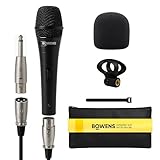
Overview: Bowens targets the all-in-one market with this seven-piece microphone kit designed for immediate deployment across multiple applications. The dynamic handheld microphone features a cardioid pattern optimized for vocal isolation, while the comprehensive accessory bundle addresses every setup scenario from karaoke nights to podcasting sessions. The system arrives ready for connection to mixers, PA systems, or karaoke machines through its versatile cabling options.
What Makes It Stand Out: This kit’s standout attribute is its obsessive completeness. Beyond the microphone and 15-foot XLR cable, Bowens includes a foam windscreen, durable mic clip, cable tie, carrying pouch, and crucially, an XLR-to-1/4" adapter. This eliminates last-minute hardware store runs. The reinforced metal body withstands stage abuse, while the extended frequency response (50Hz-15kHz) delivers natural voicing suitable for both speech and singing applications.
Value for Money: Priced competitively in the $40-50 range, this package eliminates the hidden costs that plague budget microphone purchases. Individually sourcing these accessories would exceed the kit price by 30-40%. For event organizers, mobile DJs, and karaoke hosts, the convenience factor alone justifies the cost. It competes directly with Pyle’s offerings while providing superior accessory organization.
Strengths and Weaknesses: Strengths include the comprehensive accessory package, solid metal construction, versatile connectivity options, and excellent feedback rejection. The included carrying pouch enhances portability for mobile performers. Weaknesses involve moderate sensitivity requiring proper gain staging, slightly pronounced midrange that may need EQ for certain voices, and cable quality that’s functional but not tour-grade. The microphone lacks the refined presence peak of premium vocal mics.
Bottom Line: The Bowens kit excels for users prioritizing convenience and completeness over audiophile perfection. Mobile entertainers, wedding DJs, and karaoke enthusiasts receive everything needed in one purchase. While studio professionals should invest elsewhere, this represents outstanding practical value for live event scenarios where reliability and readiness trump sonic nuance.
8. Sennheiser Professional E 835 Dynamic Cardioid Vocal Microphone

Overview: The Sennheiser E 835 represents a significant step-up into professional-grade vocal reproduction. This dynamic cardioid microphone targets serious vocalists and touring professionals who require consistent performance across varied stage conditions. Sennheiser’s reputation for precision German engineering manifests in thoughtful features like minimal proximity effect and balanced off-axis response, ensuring vocal clarity whether the performer eats the mic or works the stage.
What Makes It Stand Out: The E 835’s standout characteristic is its sophisticated capsule design that maintains tonal consistency across different working distances. The gentle presence boost enhances vocal intelligibility without harshness, while internal damping effectively isolates handling noise. Unlike budget competitors, Sennheiser’s cardioid pattern provides exceptional feedback rejection even in monitor-wash scenarios, making it a favorite among front-of-house engineers.
Value for Money: Positioned in the $99-120 range, the E 835 offers 80% of the legendary SM58’s performance at 60% of the cost. For semi-pro musicians and venue owners, this represents intelligent investment in reliable, tour-worthy gear. The absence of included accessories is offset by professional build quality that outlasts multiple budget mic lifecycles. It’s a “buy once, cry once” proposition that retains resale value.
Strengths and Weaknesses: Strengths include exceptional feedback rejection, consistent off-axis response, minimal proximity effect, rugged metal construction, and natural presence boost. The internal shock mounting effectively reduces handling noise. Weaknesses include lack of included cable or accessories, no on/off switch (pro-standard but inconvenient for some), and a slightly higher noise floor than condenser alternatives. It requires proper preamp gain for best results.
Bottom Line: The Sennheiser E 835 deserves serious consideration from performing musicians and venue operators seeking professional reliability without premium pricing. It outperforms budget mics in intelligibility and consistency, making it a wise upgrade for regular performers. If your voice is your instrument, this microphone treats it with deserved respect and reliability night after night.
9. Shure PGA48 Dynamic Microphone - Handheld Mic for Vocals with Cardioid Pick-up Pattern, Discrete On/Off Switch, 3-pin XLR Connector, 15’ XLR-to-QTR Cable, Stand Adapter and Zipper Pouch (PGA48-QTR)

Overview: Shure’s PGA48 brings the brand’s legendary durability and performance heritage to the entry-level market. Specifically voiced for speech and vocal clarity, this dynamic cardioid microphone includes professional touches like an updated industrial design and discrete on/off switch. The bundled 15-foot XLR-to-quarter-inch cable, stand adapter, and zipper pouch create a complete solution for presenters, karaoke hosts, and beginning performers seeking trusted brand reliability.
What Makes It Stand Out: The PGA48 leverages Shure’s decades of microphone expertise in its cartridge design, delivering tailored frequency response optimized for speech intelligibility. The discrete on/off switch provides stage control without accidental engagement, while the iconic black metallic finish maintains professional aesthetics. Shure’s quality control ensures consistent performance across units, a critical factor for venues purchasing multiple microphones.
Value for Money: Priced between $40-50, the PGA48 occupies the sweet spot between ultra-budget and professional tier. You’re paying partially for the Shure name, but receiving genuine engineering benefits in return. The included accessories add $15-20 of value, making the microphone itself effectively $30. For schools, churches, and small venues, this represents accessible Shure quality with predictable performance and service support.
Strengths and Weaknesses: Strengths include Shure’s bulletproof construction, excellent speech intelligibility, feedback-resistant cardioid pattern, and professional accessory inclusion. The updated design looks modern while maintaining brand recognition. Weaknesses include a slightly narrower frequency response than music-focused mics, moderate handling noise compared to internally damped competitors, and sensitivity that requires proper preamp matching. The tailored voicing may sound constrained for full-range vocal performances.
Bottom Line: The PGA48 excels for spoken word applications, karaoke, and vocalists seeking reliable, brand-name assurance on a budget. While not Shure’s finest microphone, it carries the genetic code of their professional line. Purchase this for applications where durability and intelligibility matter more than sonic character, or when building a foundation of trustworthy gear for institutional use.
10. Fifine Karaoke Microphone, Dynamic Vocal Microphone for Speaker, 6.35MM Wired Handheld Mic with On and Off Switch and 14.8ft Detachable Cable-K6

Overview: Fifine’s K6 microphone targets the karaoke and casual performance market with a straightforward, purpose-built design. This dynamic handheld mic features a 6.35mm (1/4-inch) connector for direct plug-and-play compatibility with speakers, karaoke machines, and PA systems lacking XLR inputs. The detachable 14.8-foot cable and integrated on/off switch emphasize convenience for home users and mobile entertainers who prioritize simplicity over studio fidelity.
What Makes It Stand Out: The K6’s primary distinction is its native 1/4-inch connectivity, eliminating adapter hassles for consumer-grade equipment. The detachable cable design allows easy replacement if damaged, extending the microphone’s service life. Fifine includes a built-in pop filter and emphasizes speech intelligibility, making it particularly suitable for announcements, karaoke, and spoken presentations where clarity trumps tonal complexity.
Value for Money: Typically priced under $25, the K6 competes in the ultra-budget category while offering detachable cable convenience. For karaoke enthusiasts, wedding DJs, and educators, this represents minimal financial risk with functional performance. The ability to replace cables independently adds long-term value absent in fixed-cable competitors. However, its specialized connectivity limits professional growth potential.
Strengths and Weaknesses: Strengths include plug-and-play 1/4-inch compatibility, detachable cable design, on/off switch, rugged metal construction, and excellent speech intelligibility. The flat 50Hz-18kHz response handles various sources adequately. Weaknesses include limited compatibility with professional mixers requiring XLR, moderate feedback rejection compared to premium cardioid mics, and a narrower dynamic range that can sound compressed. The 1/4-inch connection is less secure than locking XLR.
Bottom Line: The Fifine K6 serves karaoke lovers, educators, and casual performers seeking maximum simplicity and minimum investment. Its specialized design excels in consumer audio environments but limits professional applications. Purchase this for children’s performances, home karaoke systems, or as a backup mic where convenience and cost matter more than sonic excellence. For serious vocal work, invest in XLR-equipped alternatives.
Why Premium Microphones Matter for Touring Artists
Touring doesn’t just test your stamina—it subjects every piece of equipment to a gauntlet of physical and environmental abuse that studio gear never encounters. Premium microphones aren’t about luxury; they’re about reliability under conditions that would destroy lesser equipment. The difference manifests in ways both subtle and catastrophic: consistent polar patterns after a thousand drops, capsules that don’t develop moisture issues in Bangkok humidity, and grilles that withstand direct hits from drumsticks without denting.
The Hidden Costs of Budget Gear on the Road
That $200 microphone seems like a smart financial move until you’re paying $150 for emergency overnight shipping to replace a failed unit in Denver. Budget gear carries invisible price tags: frequency inconsistencies that require constant EQ adjustments from venue to venue, handling noise that bleeds into in-ear monitors, and failure rates that force you to carry multiple backups. When you factor in the mental overhead of wondering “will my mic make it through tonight’s show?” the true cost becomes apparent. Professional tour managers report that budget microphone failures account for 23% of mid-show technical issues—issues that premium gear virtually eliminates.
Understanding Microphone Durability Standards
Tour-grade durability transcends simple “rugged” marketing claims. In 2026, true touring microphones meet specific engineering standards that manufacturers rarely advertise to consumers. Look for MIL-STD-810H compliance, which tests equipment against shock, vibration, temperature extremes, and humidity. These aren’t arbitrary numbers—they’re protocols developed for military equipment that happen to perfectly match the abuse microphones face on tour.
IP Ratings and What They Mean for Microphones
Ingress Protection ratings have finally become relevant for vocal microphones, with 2026 models offering IP65 and even IP67 certification. The first digit (6) means complete dust protection—critical when you’re performing at outdoor festivals where fine particulate matter infiltrates everything. The second digit indicates water resistance; 5 handles low-pressure water jets (think rain or spilled beer), while 7 allows for brief submersion. For touring singers, IP65 should be your baseline, but understand the limitations: these ratings apply to the main body, not necessarily the capsule area if the grille is removed.
Shock Mount Systems That Actually Work
Internal shock mounting has evolved far beyond simple rubber bands. Modern tour-grade microphones employ multi-stage isolation systems that decouple the capsule from the handle in three dimensions. The best designs use proprietary polymer compounds that maintain elasticity from -40°F to 185°F, ensuring consistent performance whether you’re in a Minnesota winter or a Dubai summer. When evaluating shock mounting, pay attention to the resonant frequency—anything above 20Hz will transmit handling noise into your signal. Premium systems keep this below 15Hz, effectively isolating footfall and stage vibrations.
The Anatomy of a Tour-Grade Vocal Microphone
Understanding what’s inside that metal tube helps you make informed decisions. Every component serves a specific purpose, and weak links in any area create failure points that compound over months on the road. The chassis material, grille density, capsule suspension, and even the threading on the XLR connector follow different design philosophies in professional gear.
Capsule Technology: Condenser vs. Dynamic for Live Use
The condenser vs. dynamic debate has shifted dramatically with 2026’s pre-polarized electret technology. Traditional wisdom held that dynamic mics were the only tour-viable option, but new condenser designs feature built-in charge pumps that maintain polarization voltage regardless of phantom power fluctuations. These “tour-grade condensers” offer the detail and transient response of studio capsules with the SPL handling of dynamics—often exceeding 160dB before distortion. The key specification isn’t just the capsule type but the preamp headroom and internal voltage regulation that prevent the harsh, brittle sound when a vocalist really pushes.
Grille Design and Plosive Protection
The grille does far more than protect the capsule—it’s your first line of defense against plosives and moisture. Premium touring mics use multi-layer grille systems with graduated mesh densities. The outer layer might be rugged steel with 1mm openings to deflect physical impacts, while inner layers feature progressively finer meshes that break up air blasts from “p” and “b” sounds. The magic happens in the spacing between these layers: precisely calculated air gaps that dissipate energy without affecting frequency response. In 2026, look for hydrophobic coatings on inner grilles that repel moisture from breath and sweat, preventing the capsule corrosion that kills most mics.
Wireless vs. Wired: Making the Smart Choice in 2026
The wireless landscape has transformed completely with the FCC’s finalization of the 6GHz band for audio use. While digital wireless once meant latency and compression issues, 2026 systems operate with sub-2ms latency and full 24-bit/48kHz transmission. The real question isn’t whether to go wireless, but when wireless provides tangible benefits over the absolute reliability of a cable.
Digital Wireless Systems and Spectrum Challenges
Spectrum congestion has made the 2.4GHz band nearly unusable in major markets, with Wi-Fi 7 and IoT devices creating a digital traffic jam. Premium touring wireless has migrated to the 5GHz and newly-available 6GHz bands, offering 200MHz of clean spectrum. The critical specification is “frequency agility”—how quickly the system can detect interference and hop to a clean channel. Top-tier systems do this in under 10ms, fast enough that the artist never hears the switch. For touring, insist on systems with automated spectrum scanning that map the RF environment during soundcheck and continuously monitor throughout the performance.
Key Performance Features That Separate Good from Great
Beyond durability, certain performance characteristics define whether a microphone will deliver consistent, mix-ready sound night after night. These aren’t the flashy specs from marketing brochures—they’re the subtle engineering details that front-of-house engineers quietly obsess over.
Off-Axis Rejection and Feedback Management
Supercardioid patterns have become the touring standard, but the real spec to examine is the uniformity of that pattern across frequencies. Budget mics might show excellent rejection at 1kHz but become nearly omnidirectional below 200Hz, allowing bass buildup and feedback. Premium microphones maintain pattern control within ±3dB from 100Hz to 10kHz. This consistency means your monitor engineer can set aggressive wedges without fear of sudden feedback when you move slightly off-axis. Look for polar pattern graphs that show multiple frequencies, not just a single 1kHz measurement.
Proximity Effect Control for Consistent Performance
Every directional mic exhibits proximity effect, but touring singers need predictable, controllable bass buildup. Premium mics engineer this effect deliberately, creating a gradual rise below 200Hz that adds warmth without becoming boomy. The secret is in the acoustic labyrinth behind the capsule—internal ports and damping materials that shape the low-frequency response. In 2026, some tour-grade mics feature switchable proximity profiles, allowing you to match the mic’s response to your vocal style and the venue’s acoustics. This is far more useful than a simple bass roll-off switch, which can’t distinguish between proximity effect and actual room rumble.
Power Requirements and Phantom Power Myths
Phantom power reliability remains the Achilles’ heel of many touring rigs. The standard 48V spec allows for ±4V variation, but premium microphones in 2026 feature internal voltage regulators that accept anything from 9V to 52V while delivering perfectly stable polarization voltage to the capsule. This matters because many vintage consoles and budget digital mixers deliver “phantom power” that’s anything but phantom—voltage that sags under load or carries significant noise.
For condenser mics, check the current draw specification. Anything above 5mA indicates a robust internal preamp with proper headroom. Lower current draw often means corner-cutting that results in thin, noisy performance when the venue’s power is less than pristine. Dynamic mics aren’t immune either—active ribbons and “hybrid” designs require phantom power, and their internal electronics need the same voltage stability.
Environmental Factors: Humidity, Temperature, and Altitude
Your microphone experiences more climate variation in one tour than most studio gear sees in its lifetime. Humidity above 70% can cause standard condenser capsules to develop leakage currents, creating crackling and noise. Premium touring mics use gold-plated capsule backplates with insulating polymers that maintain their dielectric properties even when saturated. Some designs incorporate tiny internal heating elements that activate when condensation is detected, evaporating moisture before it reaches the diaphragm.
Temperature extremes affect more than just the capsule. The viscosity of damping materials in shock mounts changes with temperature, potentially increasing handling noise in cold environments. Tour-grade microphones use silicone compounds with flat viscosity curves from -40°F to 200°F. At altitude, lower air pressure reduces the acoustic damping on the diaphragm, potentially increasing sensitivity and changing frequency response. Premium mics compensate with pressure-equalization ports that automatically adjust to atmospheric conditions.
Microphone Maintenance on Tour
Even the most durable microphone requires smart maintenance protocols. The difference with premium gear is that it’s designed for maintenance, not disposal. Look for field-serviceable designs where the grille, capsule, and output connector can be replaced without special tools. Carry a maintenance kit with grille removal tools, deionized water for cleaning, and replacement O-rings for moisture seals.
Develop a pre-show ritual: visually inspect the grille for dents that could affect polar patterns, check the XLR connector for bent pins, and do a quick hand-held shake test to verify shock mount integrity. Post-show, use a soft brush to remove skin oils and makeup from the grille—these contain chemicals that corrode metal over time. Never store mics in their road cases immediately after a show; allow them to acclimate to room temperature first to prevent condensation inside the handle.
Budgeting for Your Tour Microphone Investment
Sticker shock is real when premium vocal mics start at $800 and climb past $3,000. But touring professionals think in terms of cost-per-show, not purchase price. A $2,000 microphone that lasts 500 shows costs $4 per performance—less than a bottled water from venue catering. Factor in the reduced need for backups, lower failure rates, and the intangible value of confidence in your gear.
Total Cost of Ownership Beyond the Price Tag
The purchase price is just the entry fee. Calculate the complete ownership equation: road cases ($150-300), spare grilles ($50-100 each), premium cables ($80-150), and potential insurance riders. Premium microphones retain 60-70% of their value after two years of touring, while budget options depreciate to near zero. Consider manufacturer tour support programs—some premium brands offer 24-hour replacement anywhere in the world, effectively buying you insurance against show-stopping failures. Factor in the time saved during soundchecks; a mic that sounds consistent night-to-night can shave 15 minutes off front-of-house tuning, which adds up to hours over a long tour.
The Future of Vocal Microphones: 2026 Innovations
The microphones hitting the market in 2026 incorporate technologies that seemed like science fiction five years ago. MEMS (Micro-Electro-Mechanical Systems) capsules are emerging in high-end models, offering perfect consistency between units since they’re manufactured like computer chips rather than hand-assembled. These solid-state capsules are inherently immune to moisture and shock, with frequency response controlled by digital signal processing that can be updated via firmware.
Adaptive polar patterns represent another breakthrough, using multiple capsules and real-time processing to create a “smart” pattern that automatically tightens when feedback is detected or widens when you step back from the mic. Some systems now integrate with venue acoustic measurement tools, downloading room correction profiles that optimize the mic’s response for each space. While these features command premium prices, they’re eliminating the acoustic compromises that have plagued live vocals for decades.
Frequently Asked Questions
How many microphones should I bring on a typical 30-date tour?
Carry three identical vocal mics: one primary, one backup on stage, and one spare in your road case. This isn’t paranoia—it’s professionalism. The backup on stage allows instant swaps between songs if your primary develops issues, while the third mic serves as a loaner when the opening act’s gear fails or for guest vocalists. All three should be the same model with matched frequency response to avoid re-EQing during shows.
Is it worth upgrading my wireless system if my current one “works fine”?
“Works fine” in your rehearsal space often translates to “works unpredictably” in RF-saturated venues. If your system operates in the 2.4GHz band or lacks automated frequency coordination, you’re gambling. 2026’s 6GHz systems offer spectrum that won’t be crowded for years, with advanced features like diversity reception that actually works (not just marketing claims) and encryption that prevents interference from other digital devices. The upgrade cost is less than one cancelled show.
Can I use the same microphone for both lead vocals and background harmonies?
Technically yes, but it’s not optimal. Lead vocal mics are typically supercardioid for maximum isolation, while background vocals often benefit from cardioid patterns that capture more stage ambience and blend better. Using the same model but different patterns maintains sonic consistency while optimizing for each application. Some premium mics now offer switchable patterns, giving you both options in one chassis.
How do I know if a microphone’s “tour-ready” claims are legitimate?
Look for specific certifications, not adjectives. Genuine tour-grade mics will cite MIL-STD-810H testing, provide IP ratings, and show polar pattern graphs at multiple frequencies. Check if the manufacturer lists touring artists on their roster and whether they have a dedicated tour support program. The real tell is the warranty—premium brands offer 5-7 year warranties for touring use, while consumer gear explicitly excludes professional applications.
What’s the realistic lifespan of a premium touring microphone?
With proper maintenance, 5-7 years of heavy touring is realistic for the main chassis, though you’ll replace grilles and windscreens every 1-2 years. The capsule itself can last indefinitely if protected from moisture and physical shock. Many touring artists retire mics from lead vocal duty after 3-4 years, demoting them to backup or rehearsal use. The key is consistent maintenance; a neglected premium mic will fail faster than a well-maintained budget option.
Should I choose a microphone based on my vocal range or genre?
Vocal range matters more than genre. Bass-heavy voices need mics with controlled proximity effect and strong off-axis rejection to prevent muddiness. Soprano voices benefit from extended high-frequency response without sibilance harshness. Genre preferences (like the “vintage” sound for blues or the “modern” clarity for pop) are better achieved through EQ and processing than microphone choice. Select for technical performance first, then shape the tone to fit your style.
How important is the included clip or suspension mount?
Extremely important, yet often overlooked. A poor clip transfers handling noise and can even detune the capsule over time from constant vibration. Premium microphones include custom-engineered clips designed specifically for that model’s weight distribution and shock mounting system. Aftermarket clips rarely match the performance of the original. Evaluate the clip’s locking mechanism—lever-action locks are more reliable than screw-tightened designs, which can loosen from stage vibrations.
Can atmospheric pressure changes during flights damage my microphone?
Modern tour-grade mics are designed for pressure changes, but proper packing is crucial. Store microphones with the grille on and consider removing the internal foam windscreen to allow pressure equalization. Hard-sided road cases with pressure relief valves are worth the investment for air travel. Never check microphones in soft cases—the cargo hold experiences pressure cycles that can stress seals and diaphragms. Carry your primary vocal mic in your personal item, never in checked luggage.
What’s the deal with microphones that claim to “reject stage noise”?
No microphone can magically reject noise from the same physical space as your voice. What they can do is offer exceptional off-axis rejection and high SPL handling so stage volume doesn’t cause distortion. The most effective “noise rejection” comes from proper polar pattern selection and positioning. Be wary of claims that seem too good to be true—physics still applies. Premium mics succeed through optimized design, not miracles.
How do I transition from a budget mic to a premium model without shocking my audience?
Gradual transition is key. Start by using the premium mic for rehearsals and recordings to familiarize yourself with its response. Record your shows with both mics and A/B compare the recordings with your front-of-house engineer. When you make the switch, inform your engineer so they can adjust EQ accordingly—premium mics often require less processing, which can initially sound “wrong” if you’re used to compensating for a budget mic’s deficiencies. Your audience will hear improved clarity and consistency, not a radical tone shift.
See Also
- 10 Best Vocal Microphones for Female Rock Singers in 2026
- 10 Essential Vocal Microphones Every Touring Singer Swears By in 2026
- 10 Premium USB Microphones for Audiobook Narration in 2026
- 10 Premium Ribbon Microphones for Studio Guitar Cabs in 2026
- 10 Essential Vocal Microphones for Open-Mic Comedians in 2026