Table of Contents
Let’s be honest—checking a keyboard at the airport feels like sending your beloved pet through a wood chipper and hoping for the best. Between baggage handlers who treat “fragile” stickers as a challenge, cargo holds that swing from Arctic tundra to sauna conditions, and the mysterious physics of turbulence, standard cases crumble like cheap crackers. By 2026, airline travel will be even more demanding, with stricter carry-on enforcement and new handling protocols that could turn your $3,000 workstation into a bag of expensive parts. The good news? Premium cases have evolved from simple soft bags to aerospace-grade fortresses designed specifically for this chaos. This guide cuts through marketing fluff and reveals what actually keeps your gear alive when the gate agent gives you that dreaded “we’ll have to check it” look.
Top 10 Keyboard Cases For Flights
Detailed Product Reviews
1. Gator Cases Frequent Flyer’s Series Molded Flight Case for 61-Note Keyboards with TSA Approved Locking Latches and Recessed Wheels, (GTSA-KEY61)

Overview:
The Gator Cases GTSA-KEY61 is a professional-grade molded flight case engineered for musicians who frequently travel with 61-note keyboards. Built to ATA specifications, this nearly indestructible polyethylene case provides airline-compliant protection for instruments worth thousands of dollars.
What Makes It Stand Out:
The TSA-approved locking latches are the star feature, allowing secure air travel without damage from forced inspections. The wedge-and-block interior customization system ensures a snug fit for various keyboard models, while the 200lb-rated recessed wheels offer smooth mobility through airports. The USA-based design and support adds quality assurance.
Value for Money:
At approximately $250-300, it’s a significant investment but justified when protecting $1,000+ keyboards. Compared to $150 plywood cases, the polyethylene construction offers superior impact resistance and waterproofing. Cheaper gig bags ($50-100) provide minimal protection and can’t match its TSA compliance.
Strengths and Weaknesses:
Strengths: ATA-rated durability, TSA locks, customizable interior, smooth wheels, excellent customer support.
Weaknesses: Heavy at 20+ lbs, expensive for casual musicians, overkill for local gigs, limited color options.
Bottom Line:
This is the gold standard for touring professionals who fly with 61-key instruments. The premium price delivers peace of mind and airline compliance that cheaper alternatives simply cannot match.
2. Gator Cases Frequent Flyer’s Series Molded Flight Case for Deep 88-Note Keyboards with TSA Approved Locking Latches and Recessed Wheels, (GTSA-KEY88D)

Overview:
The GTSA-KEY88D variant addresses the specific needs of musicians with deep 88-note keyboards, offering the same Frequent Flyer Series protection as its smaller sibling. This case accommodates full-size digital pianos and synthesizers with extra depth requirements that standard cases can’t handle.
What Makes It Stand Out:
The extended interior depth is crucial for modern weighted-key digital pianos. Unique features include the red release trigger for quick access and dual spring-loaded rubber tow handles (130lb capacity each) plus an ergo-grip top handle, providing multiple carrying options. The surface-mounted impact diversion latch housings add extra protection at vulnerable points.
Value for Money:
Priced around $300-350, it’s $50-75 more than the standard 88-key version but essential for deep keyboards. Compared to custom cases ($500+), it’s a bargain. The alternative—checking keyboards as baggage without proper cases—risks thousands in damage.
Strengths and Weaknesses:
Strengths: Accommodates deep keyboards, multiple handle options, TSA compliance, superior impact protection, smooth wheels.
Weaknesses: Very heavy (25+ lbs), bulky dimensions challenge small vehicles, premium price point, may be excessive for shallow keyboards.
Bottom Line:
If you own a deep 88-key keyboard and travel by air, this is non-negotiable protection. Check your instrument’s depth carefully—this case is worth every penny when it’s the difference between safe arrival and catastrophic damage.
3. Ruibo 61 Key Keyboard Gig Bag Case,Portable Durable Keyboard Piano Waterproof 600D Oxford Cloth with 10mm Cotton Padded Case Gig Bag 40"x16"x6" / Black+Red

Overview:
The Ruibo gig bag offers a lightweight, budget-conscious solution for transporting 61-key keyboards. Constructed from 600D Oxford cloth with 10mm padding, it prioritizes portability over heavy-duty protection for local musicians and students who need basic carrying convenience.
What Makes It Stand Out:
The convertible carrying system transforms from handbag to backpack with adjustable straps—a flexibility hard cases can’t match. The dual exterior pockets accommodate accessories like power supplies and sheet music, while the waterproof fabric provides basic weather resistance. At just a few pounds, it’s effortlessly portable and stores easily in closets.
Value for Money:
Typically under $50, this represents exceptional value for casual use. It’s 80% cheaper than entry-level hard cases while offering adequate protection for car travel and local gigs. For $500 keyboards, the risk-reward ratio is reasonable; for $2,000 instruments, it’s insufficient protection.
Strengths and Weaknesses:
Strengths: Extremely lightweight, highly affordable, versatile carrying options, useful storage pockets, easy storage, waterproof fabric.
Weaknesses: Minimal impact protection, not TSA-compliant, zippers are failure points, 10mm padding is inadequate for airline travel, won’t prevent crushing damage.
Bottom Line:
Perfect for students, teachers, and gigging musicians who drive to local venues. Don’t expect flight case protection at this price—use it for what it’s designed for: convenient, short-distance transport of moderately priced keyboards.
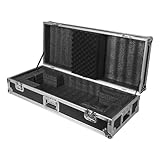
4. Sound Town Plywood 49-Note Keyboard ATA Flight Case, with Recessed Handles and Latches, High-density Foam Interior (STRC-KB49W)
Overview:
Sound Town’s plywood flight case provides professional ATA-rated protection for 49-note keyboards, offering a traditional wood construction alternative to modern molded cases. With interior dimensions of 39" x 14.6" x 7.5", it fits compact controllers and synthesizers for serious road use.
What Makes It Stand Out:
The plywood frame with chrome-plated hardware delivers classic road-case aesthetics and repairability that polyethylene cases lack. High-density foam interior with adjustable wedges allows customization, while recessed latches and rubber-gripped handles prevent snagging during transport. It’s a middle ground between flimsy bags and expensive molded cases.
Value for Money:
Priced around $150-180, it costs 40% less than comparable molded cases. For ground touring bands with vans or trailers, it offers sufficient protection without the premium for TSA compliance. However, plywood can delaminate over time and lacks waterproofing, potentially costing more long-term.
Strengths and Weaknesses:
Strengths: ATA-rated, customizable foam, professional appearance, lighter than molded cases, repairable construction, recessed hardware.
Weaknesses: No TSA locks, not waterproof, plywood vulnerable to moisture, limited wheel options, requires more careful handling than polyethylene.
Bottom Line:
An excellent choice for 49-key keyboardists who tour by ground. Skip this for air travel, but for regional bands and studio musicians needing reliable road protection without breaking the bank, it’s a smart, serviceable investment.
5. Gator Cases Frequent Flyer’s Series Molded Flight Case for 88-Note Keyboards with TSA Approved Locking Latches and Recessed Wheels, (GTSA-KEY88)

Overview:
The GTSA-KEY88 completes Gator’s Frequent Flyer Series as the standard-depth solution for 88-note keyboards. Sharing the same nearly indestructible polyethylene construction and TSA-approved locking latches as its 61-key counterpart, it’s designed for airline travel with full-size instruments.
What Makes It Stand Out:
The wedge-and-block interior customization system adapts to various 88-key keyboard profiles within its 59" x 19" x 6.63" dimensions. The combination of an ergo-grip comfort handle and spring-loaded rubber tow handle with 130lb capacity provides versatile carrying options. Recessed wheels maintain the case’s streamlined profile while enabling easy airport navigation.
Value for Money:
At $280-320, it’s priced similarly to the 61-key model but protects instruments worth $1,500-5,000. Compared to the GTSA-KEY88D, it saves $50 but only fits standard-depth keyboards. Custom ATA cases cost $400+, making this a relative bargain for frequent flyers.
Strengths and Weaknesses:
Strengths: TSA-compliant, exceptional impact protection, customizable interior, smooth mobility, comfortable handles, USA support.
Weaknesses: Heavy (23+ lbs), expensive for occasional users, verify keyboard depth before purchase, bulky storage when not in use.
Bottom Line:
The definitive choice for standard-depth 88-key keyboards in air travel scenarios. Before purchasing, confirm your instrument’s dimensions—if it fits, this case delivers unmatched protection and compliance that justifies every dollar for touring professionals.
6. Gator Cases Slim Line 88-Note Padded Keyboard Gig Bag with Adjustable Interior Security Arms, Carry Handle, and Large Exterior Pocket, (GKB88SLIM)

Overview: The Gator Cases GKB88SLIM serves musicians needing portable protection for slim 88-note keyboards. This gig bag targets lightweight stage pianos and controllers, balancing mobility with essential safeguarding for regular gigging. Its 53" x 15" x 6" interior accommodates most modern slim keyboards while maintaining a streamlined profile.
What Makes It Stand Out: What distinguishes this bag are the adjustable padded security arms inside—preventing instrument movement during transport. The rugged nylon exterior resists moisture and abrasion, while reinforced riveted handles with nylon webbing ensure comfortable, secure carrying. The large front pocket provides practical storage for accessories, pedals, and cables.
Value for Money: Priced mid-range among gig bags, it offers strong value compared to hard cases costing significantly more. For musicians using lightweight controllers, it delivers adequate protection without the weight and bulk of flight cases, making it economical for frequent local transport.
Strengths and Weaknesses: Strengths include its lightweight portability, adaptable interior fit, generous accessory storage, and durable materials. The slim design stores easily in vehicles and tight spaces. However, as a soft case, it cannot withstand severe impacts, crushing, or freight handling. The 6-inch interior height may not fit keyboards with raised control panels. Padding is sufficient for bumps but not drops.
Bottom Line: The GKB88SLIM excels for gigging musicians prioritizing portability over maximum protection. It’s ideal for lightweight 88-key instruments in regular local use, but inadequate for touring or shipping. Always verify keyboard dimensions before purchase.
7. Case Club Keyboard Hard Shell Carry Case for Keyboards. Maximum Keyboard Dimensions of 37.8" L x 11" W x 3.1" H. Lockable Transport Case with Pre-cut Foam.

Overview: The Case Club Hard Shell Case provides robust protection for smaller keyboards, but with critical size limitations. Designed for instruments not exceeding 37.8" x 11" x 3.1", it serves a niche market of compact controllers and synthesizers. The manufacturer explicitly warns many keyboards won’t fit, making precise measurement essential before purchase.
What Makes It Stand Out: Its standout feature is the military-grade closed-cell polyethylene foam interior, offering superior impact absorption compared to consumer-grade cases. Adjustable spacer blocks allow customization for smaller keyboards, ensuring a snug, movement-free fit. The injection-molded plastic shell withstands shocks and drops, while padlock holes provide security.
Value for Money: This case represents good value for those needing hard-shell protection on a budget. Priced below professional flight cases, it offers comparable foam quality and security for smaller instruments. However, its utility is entirely dependent on your keyboard’s dimensions.
Strengths and Weaknesses: Strengths include excellent impact protection, customizable foam interior, lockable latches, and durable construction. The foam lasts indefinitely without degrading. Major weaknesses are the extremely restrictive size limits—most 61-key keyboards exceed these dimensions. The 3.1" height restriction is particularly limiting, excluding many models with knobs or aftertouch strips.
Bottom Line: This case is excellent if your keyboard fits, offering professional protection at a consumer price. For most musicians, however, the size restrictions make it impractical. Measure twice, buy once—this is a specialized solution, not a universal one.
8. Harmony Audio Cases HCKB61W Flight Rolling ATA Hard Custom Case Compatible with 61 Note Keyboard
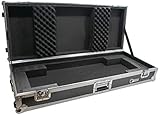
Overview: The Harmony Audio HCKB61W is a no-compromise ATA flight case built for professional touring. Weighing 45 pounds empty, this case prioritizes maximum protection over portability, designed for 61-note keyboards facing rigorous travel conditions. Its heavy-duty construction reflects road-ready engineering.
What Makes It Stand Out: What makes it stand out is the intentional overbuilding—spring-loaded handles, chrome hardware, heavy ball corners, and structural ribs create a fortress for your instrument. The foam-lined interior with eggshell lid foam prevents scratches and absorbs severe impacts. Smooth-rolling wheels provide mobility despite the weight, while the adjustable interior (39.5" to 44.25" length) accommodates various 61-key models.
Value for Money: Value for money is justified for touring professionals. While expensive and heavy, it eliminates the risk of instrument damage during freight shipping, airline handling, and constant loading. The cost is negligible compared to replacing a high-end keyboard.
Strengths and Weaknesses: Strengths include unparalleled protection, durable hardware, smooth wheels, and professional-grade construction. It meets ATA specifications for air travel. Weaknesses are significant: the 45-pound empty weight makes it cumbersome, and it’s overkill for local gigs or storage. The price point exceeds casual musicians’ budgets.
Bottom Line: This case is exclusively for serious touring musicians and production companies. If you’re flying with your keyboard or shipping it regularly, it’s indispensable. For local gigging, it’s excessive weight and expense. Know your needs before investing in this level of protection.
9. Sound Town Plywood 61-Note Keyboard ATA Flight Case, with Recessed Wheels, Handles and Latches, High-density Foam Interior (STRC-KB61W)

Overview: The Sound Town STRC-KB61W offers professional ATA-grade protection in a plywood flight case for 61-note keyboards. With interior dimensions of 46" x 17.9" x 7.5", it accommodates most 61-key instruments while providing robust safeguarding for touring musicians. The plywood construction balances weight and durability effectively.
What Makes It Stand Out: Standout features include recessed wheels, latches, and rubber-gripped handles that prevent damage during transit and allow stackability. The high-density foam interior with adjustable wedges enables a customized, secure fit for various keyboard profiles. Chrome-plated hardware adds corrosion resistance and professional aesthetics.
Value for Money: Priced competitively among flight cases, it delivers excellent value for regularly gigging musicians. It offers comparable protection to more expensive brands at a mid-range price point, making professional-grade security accessible to serious hobbyists and working musicians.
Strengths and Weaknesses: Strengths include the recessed hardware design, customizable foam interior, durable plywood construction, and smooth mobility. The 7.5" interior height accommodates keyboards with control surfaces. Weaknesses include significant weight (though lighter than Harmony’s 45-pound case), bulkiness in small vehicles, and a price that may exceed casual users’ budgets. The plywood exterior requires care to prevent water damage if the finish is compromised.
Bottom Line: This is an excellent choice for musicians regularly transporting 61-key keyboards. It provides professional protection without the premium price of top-tier brands. For touring or frequent gigging, it’s a sound investment that balances protection, features, and cost effectively.
10. AKOZLIN 61-Key Full Padded Keyboard Gig Bag, 41.7”×17.3”×6.3”Portable Electric Piano Keyboard Case Foldable Bag

Overview: The AKOZLIN 61-Key Gig Bag provides budget-friendly portability for 61-note keyboards up to 41.7" x 17.3" x 6.3". This soft case targets beginners, students, and casual musicians needing light-duty transport protection. The weather-resistant nylon exterior offers basic defense against moisture and minor bumps.
What Makes It Stand Out: What makes it stand out at this price point are the multiple carrying options—two handle straps and adjustable backpack straps—plus dual large accessory pockets for pedals, cables, and music books. The interior magic tape system secures the keyboard against shifting, a thoughtful feature rarely seen in budget bags. The 21/64" foam padding provides modest impact absorption.
Value for Money: This bag delivers exceptional value for money. It’s among the most affordable 61-key cases available, making it accessible to students and hobbyists. While it can’t match hard cases for protection, it costs a fraction of the price and weighs significantly less, making it practical for occasional local transport.
Strengths and Weaknesses: Strengths include versatile carrying options, useful accessory pockets, lightweight design, and the magic tape security system. It’s easy to store and handle. Weaknesses are the minimal padding thickness, soft-sided vulnerability to crushing, and basic construction that won’t withstand heavy use. The weather resistance is limited to light moisture, not heavy rain.
Bottom Line: Perfect for beginners, students, or musicians making short local trips. It offers adequate protection for careful handling but isn’t suitable for touring, shipping, or rough treatment. For the price, it’s a practical starter solution.
The Airline Baggage Reality Check
Why Standard Cases Fail at 30,000 Feet
That $50 gig bag might survive the subway, but airline travel is a different beast entirely. Baggage systems use automated conveyor belts with 90-degree drops and aggressive sorting arms that can exert over 200 pounds of force on your case. Standard foam padding compresses permanently after just a few flights, leaving your keyboard’s delicate keybed and PCB board vulnerable to impact shock. The real kicker? Cargo holds aren’t pressurized like the cabin—pressure can drop to equivalent altitudes of 8,000 feet, causing unsealed cases to literally implode and putting stress on every seam and latch. Premium cases account for this with pressure-equalization valves and structural reinforcement that maintains integrity even when the aircraft’s atmospheric controls are working overtime.
The True Cost of Cheap Protection
Here’s the math that hurts: replacing a damaged Nord Stage or Roland Fantom after airline destruction costs between $2,500-$4,000. A premium case runs $400-$800. That’s a 5:1 return on investment after just one catastrophic incident. But the hidden costs sting more—last-minute rentals at your destination ($200/day), missed gigs (potentially thousands), and the irreparable damage to your professional reputation. In 2026, airlines are tightening their liability caps for musical instruments, with many carriers limiting compensation to $1,500 regardless of your gear’s actual value. Suddenly, that “expensive” case looks like the cheapest insurance policy you’ll ever buy.
Decoding “Premium” in the Travel Context
Material Science: What Actually Protects Your Gear
Premium doesn’t mean “more expensive plastic.” In 2026, top-tier cases utilize rotationally molded polyethylene with cross-linking polymer structures that absorb and dissipate impact energy across the entire surface. This isn’t your garden-variety hard shell—it’s the same technology protecting military communications equipment in combat zones. The interior features multi-density foam systems: closed-cell foam against the instrument (won’t absorb moisture), progressive-density foam in the middle (absorbs medium impacts), and open-cell foam against the case walls (handles catastrophic impacts). Look for cases advertising “EIA RS-160 compliance”—this aerospace standard ensures the foam won’t outgas or degrade in extreme temperatures, a common failure point in cheaper cases.
MIL-STD Ratings Explained for Musicians
Those military standard ratings aren’t just marketing buzzwords—they’re torture tests. MIL-STD-810H Method 516.8 means the case survived drop tests from 48 inches onto concrete edges, corners, and faces—simulating the worst baggage handler scenarios. Method 507.6 tests humidity resistance through 10-day cycles of 95% humidity at 140°F, replicating tropical cargo holds. Method 500.6 subjects cases to rapid pressure changes from sea level to 40,000 feet and back. A case claiming “MIL-STD-810H certified” (not just “tested”) has passed these at an independent lab. For 2026 travel, prioritize cases with the 516.8 and 500.6 certifications—airlines are increasingly using automated loading systems that create impact forces exceeding old manual-handling standards.
TSA-Compliant Design Features
The 3-1-1 Rule’s Impact on Keyboard Cases
While your keyboard itself isn’t subject to liquid restrictions, TSA’s evolving screening protocols in 2026 are changing case design. New “clear-view” inspection panels made from ballistic polycarbonate allow agents to see interior contents without opening the case, reducing the risk of improper repacking that damages keys. Cases with TSA-approved locking systems use special Travel Sentry locks that agents can open with master keys—preventing them from cutting your locks or forcing latches. The latest innovation? Integrated cable management that keeps power supplies and cables in designated, scannable compartments, preventing the “spaghetti explosion” that occurs when agents rifle through traditional cases.
Smart Layouts for Security Screening
2026 TSA guidelines recommend cases that split into two distinct sections: the instrument cavity and a separate “tech bin” for accessories. This mimics the laptop screening process and speeds up inspection. Premium cases now feature removable accessory trays that slide out like drawers, allowing agents to inspect pedals, cables, and power bricks without touching your keyboard. Look for cases with non-metallic hardware in the instrument compartment—composite latches and fiberglass-reinforced nylon hinges won’t trigger secondary screening, reducing handling time and opportunities for damage. Pro tip: cases with external document pouches for your “Instruments of Trade” customs forms prevent agents from opening the main compartment at all during international travel.
Size Constraints: Carry-On vs Checked Baggage
Understanding Linear Inch Limits
The magic number for 2026 is 115 linear inches—that’s length + width + depth. Most airlines enforce this strictly for overhead bins, with some budget carriers dropping to 108 inches. Premium keyboard cases are engineered right up to these limits, often featuring “expandable depth” for gate-check situations. A 61-key case might measure 42" x 16" x 8" (66 linear inches) for carry-on, but expand to 42" x 16" x 12" (70 linear inches) when you need to pack extra cables, creating a checked-bag configuration. The trick is finding cases with “dimension-shift” technology—removable interior panels that let you reconfigure the case shape without buying multiple units.
When to Gate-Check Your Instrument
Sometimes gate-checking is unavoidable, but premium cases make this less terrifying. Cases designed for gate-check feature “crumple zones”—sacrificial foam sections that compress on impact while leaving the instrument cavity untouched. They also include redundant latching systems: primary latches for normal use, and secondary “flight locks” that engage when you know the case is heading into the belly of the beast. In 2026, smart cases come with impact sensors that log G-force data during travel—if baggage handlers exceed safe thresholds, you have documented evidence for insurance claims. These sensors also alert you via Bluetooth if your case is dropped during transfer, so you can inspect immediately upon arrival rather than discovering damage at the hotel.
The Anatomy of Airline-Proof Construction
Reinforced Corner Engineering
Corners take 70% of impact damage in real-world airline travel. Premium cases use “ballistic corner caps”—not just thicker plastic, but multi-layered composite structures with internal aluminum reinforcement. The latest 2026 designs incorporate “energy directors,” which are geometric patterns molded into the corner material that channel impact forces away from the case body and into sacrificial crush zones. Some cases even feature replaceable corner modules—if one gets destroyed, you swap it out for $30 instead of replacing the entire $600 case. Look for corners with stainless steel wear plates where conveyor belts make contact; these prevent the gradual erosion that eventually compromises structural integrity.
Pressure-Equalization Systems
This is where cheap cases literally collapse. Cargo holds cycle pressure multiple times during flight—takeoff, cruise altitude, landing. Without proper venting, sealed cases create vacuum forces that pull lids inward, crushing keyboards against foam that’s already compressed. Premium cases use automatic pressure-equalization valves (like on dive watches) that let air pass but block moisture. In 2026, advanced models feature dual-stage valves: one for normal pressure changes, and a secondary emergency vent that activates if the case experiences rapid decompression events. These valves are positioned away from impact zones and include hydrophobic membranes that prevent water ingress even when the case sits on a rainy tarmac during loading.
Weight vs Protection: The Delicate Balance
Lightweight Materials That Don’t Compromise
Every pound counts when you’re paying $50-$100 for each overweight bag. Premium cases in 2026 leverage carbon-fiber reinforced polymers that offer the same protection as traditional rotomolded cases at 40% less weight. The secret is in the layup schedule—strategic placement of carbon fiber only where needed (corners, edges) while using lighter materials in low-stress areas. Some manufacturers are experimenting with graphene-enhanced composites that are both lighter and stronger than aluminum, though these command premium prices. A 61-key case should weigh under 20 pounds empty—any more and you’re wasting money on baggage fees. The best designs achieve this through “honeycomb core” construction, similar to aircraft wings, creating rigid structures with minimal material.
Water Resistance in Pressurized Cabins
Water damage doesn’t just come from rain—it comes from condensation. When your cold case sits on a 20°F tarmac then enters a 70°F cargo hold, moisture forms inside like a cold beer can in summer. Premium cases combat this with active humidity control: desiccant chambers that regenerate during flight and breathable membranes that allow moisture to escape without letting liquid water in. The 2026 standard is IP67 rating—submersion-proof for 30 minutes—but for air travel, look for cases advertising “condensation management systems.” These include vapor-barrier liners and venting channels that direct moisture away from your keyboard’s electronics. Remember, one drop of water on your mainboard can cause $1,000+ in damage, making this feature non-negotiable.
The Hidden Dangers of Cargo Holds
Temperature Extremes and Your Electronics
Cargo holds aren’t climate-controlled like the cabin. On the tarmac in Phoenix, internal temperatures can hit 140°F—enough to melt solder joints and warp keybeds. In Minneapolis winter, they drop to -20°F, making plastic brittle and LCD screens shatter. Premium cases use phase-change materials in their insulation that absorb heat when it’s hot and release it when it’s cold, maintaining a stable 60-80°F microclimate around your instrument. For 2026, look for cases with thermal mass panels—removable gel packs that you freeze or heat depending on climate, creating a buffer against extreme swings. Some cases even include digital thermometers that log temperature data, providing proof if airline conditions exceed safe operating ranges specified in your warranty.
Pressure Cycling Effects
Your keyboard experiences 5-10 full pressure cycles per flight segment: boarding, taxi, climb, cruise, descent, landing, unloading. Each cycle flexes the case structure and compresses the foam microscopically. Over a year of weekly flights, this adds up to 500+ cycles—enough to degrade cheap foam by 60%. Premium cases use “memory foam” with high resilience ratings (HR foam) that springs back to original shape after each compression. They also feature floating suspension systems where the keyboard doesn’t touch case walls directly—it’s suspended on shock cords or spring-loaded mounts that absorb dimensional changes. For 2026, the gold standard is “isolation cradles” that use magnetic levitation (seriously) to keep your keyboard completely decoupled from the case structure during pressure fluctuations.
Warranty Considerations for Frequent Flyers
Standard warranties don’t cover airline damage—they consider it “user negligence.” Premium case manufacturers in 2026 offer “airline damage protection programs” that work like insurance. These cover not just the case, but your instrument up to $5,000 if the case fails during airline travel. The catch? You must register each flight beforehand and use the case strictly according to their guidelines. Look for companies offering “no-fault” replacement—if your case is damaged, they ship you a new one overnight anywhere in the world. Pay attention to the fine print about “approved airlines”—some warranties exclude budget carriers with notorious handling records. Also check if the warranty transfers when you sell the case; premium cases retain 60-70% of their value after years of use, but only if the warranty is transferable.
The 2026 Travel Landscape: What’s Changing
New Airline Policies on Musical Instruments
Starting January 2026, major carriers are implementing “smart baggage” requirements for musical instruments. Cases without integrated tracking devices may be subject to additional handling fees or denied priority routing. The FAA’s new ruling allows airlines to require “instrument condition reports” before boarding—essentially forcing you to document your keyboard’s state pre-flight. Premium cases are adapting with built-in cameras that take time-stamped photos when the case is closed and opened, creating an unbroken chain of custody. Some airlines are also piloting “musician class” cabins with dedicated instrument storage, but access requires cases meeting specific “airline partner” certifications—think of it like Apple MFi certification, but for flight. These cases feature NFC chips that gate agents scan to verify compliance, speeding up boarding and reducing arguments.
Making Your Final Decision
Choosing the right premium keyboard case for 2026 travel means balancing protection, weight, compliance, and budget. Start by honestly assessing your travel frequency—if you’re flying twice a month, the $800 case amortizes to $33 per flight, cheaper than any rental insurance. Map your typical routes: international flights demand TSA-compliant designs, while regional hops prioritize lightweight construction. Test the case in person if possible—close it empty and stand on it. If it flexes, your keyboard won’t survive a real drop. Finally, factor in the resale value; premium cases from established manufacturers appreciate in value as airline regulations tighten, making them one of the few gear purchases that actually holds worth. Your keyboard is your livelihood—protecting it isn’t just smart, it’s non-negotiable in the increasingly hostile environment of modern air travel.
Frequently Asked Questions
What makes a keyboard case “airline-proof” versus just “heavy-duty”?
Airline-proof cases undergo specific MIL-STD-810H testing for pressure cycling and impact from conveyor-height drops. They feature pressure-equalization valves, reinforced corners rated for 200+ pound impacts, and materials that won’t outgas or degrade in cargo hold conditions. Heavy-duty cases might survive a van crash but can still implode from pressure changes or have foam that permanently compresses after a few flights.
Can I carry my 88-key keyboard on in 2026, or will airlines force me to check it?
Most 88-key cases exceed 115 linear inches, making them check-only. However, some premium 88-key cases feature “breakaway” designs that split into two TSA-compliant sections for carry-on. Check your airline’s “musical instrument” policy—many allow 88-key boards if you purchase a seat for them, but the case must be certified for in-cabin use with non-abrasive exteriors and secure locking systems.
How do pressure-equalization valves actually work?
These one-way valves contain a hydrophobic membrane that lets air molecules pass but blocks water droplets. During ascent, air escapes gradually to prevent vacuum forces. During descent, air enters to equalize pressure. Quality valves activate at specific pressure differentials (usually 0.5 psi) and include dust covers to prevent clogging from cargo hold debris.
Are TSA-approved locks worth the extra cost?
Absolutely. Standard locks get cut off in about 30% of inspections, leaving your case vulnerable for the rest of its journey. TSA-approved locks use the Travel Sentry system, allowing agents to open and properly relock your case. In 2026, premium locks also include tamper-evident features that show if someone accessed your case improperly, which is crucial for insurance claims.
What’s the weight limit I should target for a 61-key case?
Aim for under 20 pounds empty. At 20-25 pounds, you’re adding $50-$100 in overweight fees per flight. Premium lightweight cases achieve this through honeycomb cores and carbon fiber reinforcement. Remember, your keyboard likely weighs 25-35 pounds, so a 30-pound case puts you at 60+ pounds total—most airlines cap checked bags at 50 pounds without hefty fees.
How often should I replace the foam in a premium case?
Quality HR foam lasts 5-7 years under normal use, but airline travel accelerates degradation. If you fly monthly, inspect foam annually for permanent compression marks. Most premium manufacturers sell replacement foam inserts for 20-30% of the case cost. In 2026, some cases feature “foam health indicators”—color-changing sections that show when compression resistance drops below safe levels.
Do I really need a case with a temperature management system?
If you fly through climates with more than 40°F temperature swings (think Phoenix summer or Minneapolis winter), yes. Condensation is the silent killer of keyboards, causing corrosion that isn’t immediately visible. Thermal management systems add $100-$150 to case cost but can prevent $1,000+ in electronic damage. For temperate climate travel, it’s less critical but still valuable insurance.
What’s the difference between IP67 and “airline-grade” water resistance?
IP67 means submersion-proof for 30 minutes—great for rain but irrelevant for condensation. Airline-grade resistance focuses on vapor management and pressure-related moisture intrusion. Look for cases advertising “condensation-proof” or “pressure-cycle water resistance” rather than just IP ratings. The best have both, but prioritize pressure-cycle protection for flying.
Can I insure my keyboard specifically against airline damage?
Standard musical instrument riders often exclude airline handling. You need a “commercial transit” policy that covers checked instruments. In 2026, some premium case manufacturers partner with insurers to offer bundled coverage—buy their case, get $5,000 of airline damage insurance for $50/year. Always document your keyboard’s serial number and condition with time-stamped photos before each flight.
Will airlines really scan NFC chips in cases by 2026?
Major carriers (Delta, United, American) are piloting this in hub airports now, with full rollout planned for Q2 2026. The system speeds up boarding and reduces gate-check arguments. Cases without NFC certification won’t be rejected, but you won’t get priority handling or access to new “instrument-friendly” boarding zones. It’s becoming a de facto standard for professional musicians who travel frequently.
See Also
- 10 X-Style Keyboard Stands with Rubber Feet That Won’t Slip on Hardwood in 2026
- 10 Double-Tier Keyboard Stands for 61-Key Synths That Won’t Tip in 2026
- 10 Best Keyboard Cases with Wheels for 88-Key Boards Under 50 lb in 2026
- 10 Premium Table-Style Keyboard Stands for Luxury Home Studios in 2026
- 10 Keyboard Cases With Wheels for One-Person Load-Ins in 2026