Table of Contents
If you’ve ever felt trapped in the same chord shapes, watching your songs blur together into one familiar-sounding progression, you’re not alone. Open tunings unlock new harmonic landscapes, but even then, your fingers eventually fall back into predictable patterns. Enter the partial capo—a deceptively simple tool that clamps down on select strings while leaving others free to ring open, creating chord voicings that would require yoga-level finger contortions otherwise. For songwriters working in open tunings, this isn’t just a gadget; it’s a portal to uncharted melodic territory where inspiration strikes in the space between fretted and open notes.
Unlike standard capos that indiscriminately raise everything, partial capos function like a surgical instrument for your fretboard, letting you maintain the droning essence of open tunings while accessing fresh harmonic complexity. Whether you’re crafting folk ballads in DADGAD, slide-ready blues in open G, or experimental soundscapes in custom tunings, understanding how to choose and deploy the right partial capo can fundamentally transform your creative process. Let’s dive deep into what makes these tools indispensable for serious songwriters.
Top 10 Partial Capos
Detailed Product Reviews
1. Kyser Musical Products Short-Cut Partial Guitar Capo, KG3BA, Black - Three String Capos, DADGAD Tuning, Made in USA, Quality, Strong, Lightweight, Quick & Easy Key Changes, Innovative, Perfect Fit

Overview: The Kyser KG3BA is a precision-engineered partial capo crafted from aircraft-grade aluminum in the USA. Designed specifically to simulate DADGAD tuning without retuning, this three-string capo clamps the A, D, and G strings at any fret, instantly creating open-tuning voicings while maintaining standard fingering patterns. Its spring-loaded mechanism promises rapid key changes during live performance.
What Makes It Stand Out: The original Quick-Change design sets this apart—simply squeeze to attach and release with one hand. Unlike full capos, it parks conveniently on your headstock when idle, eliminating loss. The DADGAD-specific engineering means it’s optimized for Celtic, folk, and contemporary fingerstyle players seeking that signature droning resonance. At just ounces, the lightweight construction won’t burden your instrument’s neck or throw off balance.
Value for Money: Priced competitively in the $20-25 range, the KG3BA offers exceptional value. Made-in-USA quality ensures durability that outlasts budget imports, while the specialized three-string function provides effects impossible with standard capos. Compared to retuning between songs or owning multiple guitars, this is an economical creativity multiplier.
Strengths and Weaknesses: Pros:
- One-handed operation enables lightning-fast changes mid-set
- Premium aluminum construction withstands road abuse
- Headstock parking prevents loss and keeps it accessible
- Perfect intonation for DADGAD simulation Cons:
- Fixed spring tension may not suit all string gauges
- Limited to three specific strings reduces flexibility
- Black finish shows wear over time
Bottom Line: The Kyser KG3BA is an essential tool for gigging guitarists who need instant open-tuning textures. Its robust build and clever design make it worth every penny, though players wanting adjustable tension should look elsewhere.
2. C7B Shubb 3 string Partial Capo - Brass

Overview: The Shubb C7B Brass partial capo brings 35 years of refined engineering to modern players. This distinctive capo uniquely covers either the 2-3-4 or 3-4-5 string sets, offering unprecedented flexibility. The brass construction provides substantial heft and vintage aesthetic while the patented locking mechanism maintains consistent pressure without requiring readjustment.
What Makes It Stand Out: Shubb’s “set it and forget it” adjustable screw mechanism is revolutionary—once you dial in perfect pressure, it repeats that exact tension every time. The custom-formulated rubber operates like a human fingertip, eliminating tuning issues. Its dual-configuration design essentially gives you two capos in one, opening up creative possibilities for alternate voicings and simulated tunings.
Value for Money: Retailing around $25-30, the C7B positions itself as a premium mid-range option. The brass construction and precision engineering justify the slight premium over aluminum competitors. Considering its dual-string-set capability and lifetime durability, it’s a smarter long-term investment than replacing broken spring-loaded capos annually.
Strengths and Weaknesses: Pros:
- Adjustable pressure prevents over-tightening and tuning drift
- Versatile string coverage (2-3-4 or 3-4-5) doubles creative options
- Brass build offers superior sustain and vintage tone preservation
- Rubber pad mimics finger texture for authentic string response Cons:
- Slower operation than spring-loaded alternatives
- Heavier weight may affect neck-heavy guitars
- Brass requires occasional polishing to prevent tarnishing
Bottom Line: The Shubb C7B is ideal for tone-conscious players who prioritize precision over speed. Its adjustable mechanism and dual-mode design make it a versatile, long-lasting addition to any serious guitarist’s toolkit.
3. The Liberty FLIP Capo Idea Book: The Guitarist’s Guide to the Ultimate Partial Capos (Capo Voodoo Guitar)

Overview: This instructional guidebook focuses exclusively on mastering the Liberty FLIP partial capo system. Unlike physical capos, this is a creative manual exploring “Capo Voodoo”—techniques that transform standard tuning into rich, open-voiced textures without turning tuning pegs. It serves as the missing link between owning a FLIP capo and truly exploiting its potential.
What Makes It Stand Out: The book’s singular dedication to FLIP capo methodology sets it apart from generic guitar guides. It maps out chord voicings, scale patterns, and arrangement strategies specifically for reversible partial capoing. The “Idea Book” format emphasizes immediate practical application, giving players compositional tools rather than abstract theory. Its systematic approach reveals harmonic possibilities that remain hidden with conventional playing methods.
Value for Money: Priced affordably under $15, this book delivers disproportionate creative returns. The specialized knowledge condenses what would otherwise require countless hours of experimental discovery. For FLIP capo owners, it’s a modest investment that transforms a simple accessory into a comprehensive creative system, far outweighing the cost of another effects pedal or piece of gear.
Strengths and Weaknesses: Pros:
- Unlock the full potential of FLIP capo functionality
- Provides structured learning path for unconventional techniques
- Encourages original composition and unique arrangements
- Compact size travels easily to gigs and sessions Cons:
- No listed audio examples to hear techniques in action
- Useless without owning a FLIP-compatible partial capo
- Niche focus offers little value for standard capo users
- Physical format may be less convenient than digital media
Bottom Line: This book is essential for Liberty FLIP capo owners but irrelevant to others. If you’ve invested in the hardware, this guide is the mandatory software that activates its true creative power.
4. The Partial Capo - The Basics, Tips, Tricks, and More Book/Online Audio

Overview: This 48-page instructional package combines a concise guidebook with online audio demonstrations, making it the most accessible entry point into partial capo techniques. Designed for guitarists at any level, it demystifies the mechanics while providing progressive exercises that build from fundamental concepts to advanced applications. The audio component bridges the gap between written notation and actual sound.
What Makes It Stand Out: The integration of online audio transforms this from a simple manual into an interactive learning experience. Hearing exactly how each technique should sound accelerates mastery and prevents misinterpretation. The book’s pragmatic structure mirrors natural learning progression, while the 48-page length delivers concentrated value without overwhelming readers with unnecessary filler content that plagues many instruction books.
Value for Money: At approximately $15-18, this package offers remarkable educational bang-for-buck. The audio component alone justifies the price compared to text-only alternatives. For players unsure about committing to partial capoing, this low-risk investment provides comprehensive foundation knowledge that applies to any brand of partial capo they might eventually purchase.
Strengths and Weaknesses: Pros:
- Online audio provides essential aural reference points
- Compact 48-page format is focused and digestible
- Covers multiple partial capo types, not brand-specific
- Progressive structure suits beginners and intermediates Cons:
- Thin page count may lack advanced depth for experts
- Requires separate purchase of a partial capo
- Online audio dependency requires internet access
- Limited visual diagrams due to brevity
Bottom Line: This is the perfect starting point for any guitarist curious about partial capos. The audio component makes abstract concepts concrete, making it an unbeatable value for beginners seeking structured, multi-sensory instruction.
5. G7th Newport Guitar Capo - String Partial Silver, 30mm - Lightweight & Low Profile - Easy Flip Lever with Fine-Tune Adjustment - Unlock Open Tunings, Perfect for 3 String Acoustic and Electric Guitars
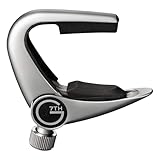
Overview: The G7th Newport represents the evolution of partial capo design with its innovative flip-lever mechanism and micro-adjustable tension control. This 30mm silver capo targets three-string applications on acoustic and electric guitars, enabling instant open-tuning effects like DADGAD or open G with a simple flip. The low-profile design minimizes interference with fretting hand technique while maintaining robust clamping power.
What Makes It Stand Out: The Newport’s quick-release lever combined with a fine-tune pressure knob offers unprecedented control—speed when you need it, precision when you want it. The reversible design allows clamping either the A-D-G strings for DADGAD effects or the D-G-B strings for open G sounds, effectively delivering two capos in one. Silicone pads protect finishes while the 30mm width ensures focused string coverage without accidental contact with adjacent strings.
Value for Money: Positioned around $30-35, the Newport commands a premium justified by its dual-function design and precision engineering. While more expensive than basic spring-loaded models, its versatility eliminates the need for multiple capos. For serious players exploring open tunings regularly, the time saved and creative flexibility offered provides substantial return on investment that cheaper alternatives cannot match.
Strengths and Weaknesses: Pros:
- Dual-mode flipping provides two capo configurations
- Fine-tune knob ensures perfect pressure and tuning stability
- Quick-release lever enables instant changes mid-performance
- Silicone pads protect guitar finishes from damage Cons:
- Premium price point exceeds basic partial capos
- 30mm width may be too narrow for some string spacings
- Mechanism complexity requires careful handling
- Heavier than minimalist aluminum designs
Bottom Line: The G7th Newport is the ultimate partial capo for versatile performers who demand both speed and precision. Its innovative features justify the higher price for serious musicians treating partial capoing as core to their sound.
6. Secrets of Partial Capos In DADGAD Tuning: Unlocking Another Dimension In Your Guitar (Capo Voodoo Guitar)

Overview: This specialized guidebook focuses exclusively on combining partial capo techniques with DADGAD tuning, offering guitarists a pathway to unexplored harmonic territories. It targets intermediate to advanced players seeking to expand their sonic palette beyond standard approaches and traditional methods.
What Makes It Stand Out: The book’s singular focus on DADGAD tuning sets it apart from generic capo guides. It provides voicings and fingerings that are impossible in standard tuning, effectively creating a hybrid open-string universe. The material explores how partial capos can simulate alternate tunings without retuning, specifically tailoring progressions and chord shapes to DADGAD’s distinctive modal character and droning qualities.
Value for Money: For DADGAD enthusiasts, this niche publication justifies its price by delivering concentrated, non-diluted content. While general guitar books might dedicate a chapter to this topic, this volume offers exhaustive exploration. Compared to trial-and-error learning, it saves countless hours, making it a worthwhile investment for dedicated practitioners.
Strengths and Weaknesses: Pros: Deeply specialized content, unlocks unique voicings, systematic approach to a complex topic, excellent for Celtic and fingerstyle players. Cons: Extremely narrow focus limits broader applicability, requires solid DADGAD foundation, may be too specialized for casual players, physical book format less convenient than digital alternatives.
Bottom Line: Essential for serious DADGAD players wanting to master partial capo techniques. Casual guitarists should consider more general resources first.
7. Secrets of the 3-String Partial Capo: The “Cut Capo” Chord Book (Capo Voodoo Guitar)

Overview: This practical chord encyclopedia is dedicated to the popular three-string partial capo configuration, commonly called the “cut capo.” It serves as a comprehensive reference for guitarists looking to master this specific voicing system without extensive music theory study or trial-and-error.
What Makes It Stand Out: Unlike general chord dictionaries, this volume maps out the complete harmonic landscape of a three-string capo covering the A, D, and G strings. The book provides logically organized chord shapes that exploit the open-string drones created by this configuration, enabling quick mastery of the “Esus” sound popular in worship and contemporary music settings.
Value for Money: The systematic organization saves guitarists from piecing together fragmented online tutorials. For worship leaders and singer-songwriters frequently using cut capo arrangements, this physical reference provides reliable access during practice sessions. The price is justified by its focused utility and time-saving structure.
Strengths and Weaknesses: Pros: Exhaustive chord voicings for 3-string capo, clear diagrams, portable reference format, ideal for worship and modern folk styles. Cons: Covers only one capo configuration, limited theoretical explanation, physical book less convenient than apps, may overlap with free online chord charts.
Bottom Line: An excellent resource for guitarists committed to the cut capo sound. Those preferring digital learning may find online alternatives sufficient for their needs.
8. The Big Book of Partial Capos: An In-Depth Look At A Hidden Musical World (Capo Voodoo Guitar)

Overview: This comprehensive volume serves as the definitive reference on partial capo techniques, exploring multiple configurations and tunings. It positions itself as an encyclopedic resource for guitarists seeking to understand the full potential of this underutilized creative tool.
What Makes It Stand Out: The book’s exhaustive scope covers two-string, three-string, and five-string capo setups across various tunings. It combines practical chord charts with theoretical explanations, historical context, and creative applications. The author presents progressive exercises that build from basic concepts to advanced compositional techniques rarely covered elsewhere.
Value for Money: As an all-in-one reference, it eliminates the need for multiple specialized guides. The depth of research and systematic organization justify the premium price point. For serious students and educators, it functions as both textbook and reference manual, offering long-term value and utility.
Strengths and Weaknesses: Pros: Comprehensive coverage of all partial capo types, includes theory and history, suitable for multiple skill levels, reduces need for other books. Cons: Information density may intimidate beginners, physical book format limits portability, some may prefer video demonstrations, higher price than slimmer guides.
Bottom Line: The ultimate reference for dedicated partial capo explorers. Beginners might start with simpler guides before tackling this comprehensive volume.
9. Shubb 5 String Partial Capo

Overview: The Shubb C8B is a precision-engineered five-string partial capo that skips the low E string to emulate drop-D tuning while allowing standard chord shapes. Its roller design ensures smooth operation and consistent pressure across the covered strings.
What Makes It Stand Out: Shubb’s patented roller mechanism allows for quick repositioning without adjusting tension, a significant advantage during live performances. The selective string coverage opens up open-string drones while maintaining familiar fingerings, creating rich, full voicings that would otherwise require retuning or complex stretches.
Value for Money: Priced in the premium range, the Shubb justifies its cost through durable brass construction and reliable performance. Unlike cheaper elastic or plastic alternatives, this capo maintains consistent pressure over years of heavy use. For gigging musicians, the reliability far outweighs the initial investment.
Strengths and Weaknesses: Pros: Excellent build quality, roller design enables quick changes, precise string targeting, emulates drop-D effectively, durable materials. Cons: Higher price point, limited to five-string configuration, may require adjustment for different neck profiles, not suitable for all playing styles.
Bottom Line: A professional-grade tool worth the investment for serious guitarists. Budget-conscious players may find adequate alternatives, but none match Shubb’s long-term reliability.
10. Shubb. C7B Brass Partial Capo (covers 3 inside strings) (Limited Edition)

Overview: This limited edition Shubb partial capo covers the three inside strings (A, D, G) in brass, creating an Esus-like open tuning effect. The premium material and collectible status distinguish it from standard nickel-plated models while maintaining Shubb’s renowned precision.
What Makes It Stand Out: The brass construction offers superior resonance and aesthetic appeal compared to nickel or aluminum variants. As a limited edition, it appeals to collectors and serious enthusiasts. This configuration produces the popular “cut capo” sound used extensively in contemporary worship and fingerstyle folk music.
Value for Money: The premium pricing reflects both material costs and limited availability. While functionally similar to standard versions, the brass build provides enhanced durability and a distinctive vintage look. For collectors, the limited edition status adds intrinsic value beyond pure utility.
Strengths and Weaknesses: Pros: Premium brass construction, limited edition collectibility, precise engineering, excellent for worship/folk styles, enhanced sustain and tone. Cons: Significantly higher price, limited availability, specific three-string configuration may not suit all needs, cosmetic upgrades may not justify cost for purely practical players.
Bottom Line: Ideal for collectors and professional worship musicians seeking the best tools. Casual players should opt for standard models unless drawn by collectibility and premium materials.
What Is a Partial Capo and Why It’s Different
A partial capo is a specialized fretting device that covers only specific strings rather than barring the entire fretboard. Think of it as a capo with missing teeth—it applies pressure to three, four, or five strings while leaving at least one string completely open. This selective pressure creates what guitarists call “false tunings” or “virtual tunings,” where your guitar behaves as if it’s in an alternate tuning without you ever turning a tuning peg.
The magic lies in the interplay between capoed and open strings. When you strum a standard open chord shape, you get notes at two different pitch levels: the capoed notes ringing at a higher fret, and the open strings maintaining their original pitch. This creates cascading intervals and unexpected harmonic clusters that are impossible to achieve with a full capo or your fingers alone.
Why Open-Tuning Songwriters Need Partial Capos
Open tunings already give you rich, resonant drones and simplified chord shapes. So why add a partial capo to the mix? Because it exponentially increases your voicing options without sacrificing the character that drew you to open tunings in the first place. You retain those beautiful ringing open strings that define DADGAD or open C, but you gain access to chord extensions, suspended harmonies, and melodic pathways that would normally require retuning mid-set.
For songwriters, this means you can write in your favorite open tuning but suddenly have major seventh chords, suspended fourths, or exotic add9 voicings available with simple one-finger shapes. It’s like having a collaborator who hands you a new chord progression without you having to ask. The partial capo becomes a compositional partner, forcing your fingers into unfamiliar positions that spark melodic ideas you wouldn’t have discovered otherwise.
How Partial Capos Create New Chord Voicings
The physics is simple: when you capo strings 2-3-4 at the second fret while leaving strings 1-5-6 open, you create a hybrid tuning that doesn’t exist in nature. Your standard G chord shape now produces a Gmaj7 with the open first string ringing as the major seventh. Move that same shape up the neck, and each position yields a different harmonic color because the relationship between capoed and open strings shifts.
This string-specific pressure creates what we call “intervallic displacement.” The capoed strings become transposed while open strings remain fixed, generating compound intervals and compound chords. A D chord shape might suddenly include a major ninth interval from the open high E string to the capoed B string. These voicings sound fresh because they violate the conventional wisdom of how chords should be constructed—they’re asymmetrical, unpredictable, and sonically rich.
Types of Partial Capos Explained
Spring-Loaded vs. Screw-Adjust Designs
Spring-loaded partial capos offer lightning-fast changes between songs, perfect for live performers who need to slap on a device mid-set. The trade-off is less precise tension control—you get what the spring gives you, which might be too tight on some necks and too loose on others. Screw-adjust models require a few seconds to position but reward you with micro-adjustable pressure. You can dial in exactly enough tension to hold strings cleanly without pulling them sharp, crucial for recording situations where intonation is non-negotiable.
Single-String vs. Multi-String Models
Single-string capos (sometimes called “third-hand devices”) clamp one string at a time, giving you ultimate flexibility to create custom patterns. Multi-string models cover predetermined sets—most commonly three adjacent strings (2-3-4 or 3-4-5) or four strings in various configurations. For open-tuning songwriters, the three-string models are the sweet spot, emulating the popular “Esus” or “Asus” partial capo positions that have become standard in fingerstyle and alternate tuning communities.
Specialty Pattern Capos
These niche tools cover non-adjacent strings or create specific interval patterns like fifths or octaves. Some models skip the sixth string entirely while capoing 1-5, perfect for open-G tuning where you want that low D to drone while accessing higher voicings. Others create split patterns that capo strings 1-2 and 4-5 while leaving the middle string open, generating cluster voicings that sound almost piano-like in their complexity.
Key Features to Consider When Choosing
Material Quality and Construction
The difference between a $15 partial capo and a $50 model often comes down to materials. Aircraft-grade aluminum or stainless steel bodies resist wear and maintain consistent pressure over years. Cheaper zinc alloys or plastic components can develop weak springs or stripped screw threads after a few months of regular use. Look for rubber padding that’s silicone-based rather than cheap synthetic rubber—it grips strings without leaving residue and won’t harden or crack with age.
Tension Mechanism and Precision
The heart of any partial capo is its ability to apply even pressure across its coverage area. Uneven tension means some strings buzz while others pull sharp. High-quality mechanisms distribute pressure uniformly, often through curved rubber pads that match your fretboard’s radius. For open tunings where drones are critical, even a slightly sharp string can ruin the harmonic foundation of your song. Test the tension by fretting behind the capo—if notes choke or feel stiff, the mechanism is too aggressive.
Coverage Pattern and String Selection
Your choice here should reflect your primary open tuning. If you live in DADGAD, a capo covering strings 2-3-4 gives you instant access to Dsus4 voicings that complement the tuning’s suspended nature. Open-G players might prefer 3-4-5 coverage to create G6 variations. Some capos offer reversible designs that give you two patterns in one tool—ideal for songwriters who work across multiple tunings. Consider whether you need adjacent string coverage or if your style demands skipping strings for more exotic voicings.
Neck Profile Compatibility
Modern guitars come in every neck shape imaginable—from vintage V profiles to modern D shapes and everything between. A partial capo designed for a slim electric neck will sit awkwardly on a chunky acoustic. Look for models with adjustable width or those specifically marketed for your neck type. The rubber pad should make full contact across all strings it’s meant to cover without overhanging onto adjacent strings you want to remain open. Some premium models include interchangeable pads for different neck radii, a worthwhile investment if you own multiple guitars.
String Spacing Adjustability
Not all guitars have uniform string spacing. A partial capo that fits perfectly on your Taylor might misalign on your Martin, causing it to partially fret an open string or miss its target string entirely. The best designs offer side-to-side adjustability or come in multiple width options. For 12-string guitars or custom instruments, this feature moves from nice-to-have to absolutely essential. Some innovative models feature independent string pads that can be micro-positioned—overkill for most, but a godsend for perfectionists.
Understanding Capo Placement for Maximum Creativity
Placement isn’t just about which fret—you need to consider vertical positioning on the fretboard. Placing a partial capo directly behind the fret (like you would barre with a finger) minimizes intonation issues and string pull. However, sliding it slightly back toward the nut can create subtle pitch bends on the capoed strings, a technique that adds expressive micro-tonality to sustained chords.
The real creative goldmine lies in thinking beyond the second fret. A 2-3-4 capo at the fourth fret in DADGAD tuning creates a completely different harmonic ecosystem than the same capo at the second fret. At the seventh fret, you’re accessing mandolin-like voicings. Each position shifts the intervallic relationship between open and capoed strings, essentially giving you multiple “virtual tunings” from a single physical device.
Open Tunings That Shine with Partial Capos
While partial capos work in standard tuning, they truly blossom in open tunings. DADGAD with a 2-3-4 capo at the second fret creates a Dsus4/add9 landscape where simple one-finger shapes produce cascading, harp-like arpeggios. Open G (DGDGBD) with a 3-4-5 capo at the second fret gives you an open A tuning with a ringing high E string, perfect for country-blues hybrids.
Open C (CGCGCE) becomes a modal playground with a 4-5-6 partial capo, creating droning low notes while your fingers dance on the higher strings. Even exotic tunings like Orkney (CGDGCD) or Pelican (DADADD) gain new dimensions when you introduce selective string pressure. The key is matching your capo pattern to the tuning’s character—suspended tunings love middle-string capos, while root-fifth tunings benefit from capoing the lower strings.
Advanced Creative Techniques for Songwriters
Try using a partial capo as a “pedal point” device. Capo strings 1-2 at the seventh fret while leaving the rest open, then play progressions that move between the capoed tonic and open-string harmonies. The capoed notes become your harmonic anchor while open strings create shifting dissonance and resolution.
Another powerful technique involves combining partial capo positions with fingerpicking patterns. Capo strings 3-4-5 at the second fret in DADGAD, then pluck a pattern that alternates between open bass strings and capoed treble strings. The resulting cross-rhythms and intervallic leaps sound compositionally complex but require minimal left-hand movement—freeing you to focus on melodic development.
Experiment with “capoing into” a chord. Place the partial capo after you’ve already fretted a chord shape, creating a split voicing where some notes are fretted by fingers, some by the capo, and others open. This three-tiered approach yields chords with no name in traditional theory but possess unforgettable emotional character.
Common Pitfalls and How to Avoid Them
The biggest mistake is treating a partial capo like a standard capo. Slapping it on without considering the intervallic consequences leads to muddy, dissonant chords that don’t serve the song. Always map out which strings are capoed and which remain open before you start writing. Keep a notebook of your favorite positions and their resulting “virtual tunings.”
Intonation issues plague low-quality partial capos. If your capoed strings sound sharp compared to open strings, try placing it closer to the fret or switching to a screw-adjust model where you can reduce tension. Sometimes flipping the capo upside down (if the design allows) changes the pressure distribution and solves buzzing problems.
Avoid the temptation to capo too many strings. A partial capo covering five strings is essentially a full capo with one drone—you lose the essential contrast that makes partial capos special. The sweet spot is capoing three or four strings maximum, leaving enough open strings to maintain the tuning’s character.
Maintenance and Long-Term Care
Partial capos have more moving parts than standard capos, making them susceptible to wear. Clean the rubber pads monthly with a soft cloth dampened with water—never use alcohol or solvents that degrade rubber. Check screw threads for stripping annually, and apply a tiny drop of machine oil to spring mechanisms if they become squeaky.
Store them in a case or pouch. Tossing a partial capo in your gig bag with cables and pedals can bend the frame, causing uneven pressure. If you notice buzzing on specific strings, inspect the rubber pad for grooves or cuts. Most quality manufacturers sell replacement pads, which are cheaper than buying a new capo.
For touring songwriters, carry a backup. Partial capos are small and easy to lose, and a broken spring mid-tour can derail your setlist. A redundant model also lets you quickly switch between two patterns without reconfiguring one capo on stage.
Budget vs. Premium: What You’re Paying For
Entry-level partial capos ($15-$25) typically use basic spring mechanisms and uniform rubber pads. They work fine for occasional experimentation but lack the precision for professional recording. Mid-range options ($30-$45) introduce screw-adjust tension and better materials—this is the sweet spot for most serious songwriters.
Premium partial capos ($50-$75) justify their price through innovative features: reversible designs, interchangeable pads for different neck radii, and aerospace-grade construction that lasts decades. They’re not necessary for beginners, but if you’ve integrated partial capos into your signature sound, the reliability and tonal consistency are worth every penny. Consider it an investment in your creative voice, not just another accessory.
The “Try Before You Buy” Philosophy
Never purchase a partial capo without testing it on your specific guitar. Online reviews can’t account for your neck’s unique profile or your preferred string gauge. Visit a music store with your primary instrument and spend at least 15 minutes trying different models. Play open chords, barre chords, and single-note lines to test for buzz and intonation.
Bring a tuner and check the pitch of capoed versus open strings. A quality partial capo should keep capoed notes within 5 cents of their intended pitch. If you’re shy about testing in-store, remember: a good partial capo transforms your writing, while a bad one becomes an expensive paperweight. The fifteen minutes of potential awkwardness is worth years of creative satisfaction.
Integrating Partial Capos into Your Songwriting Workflow
Start your writing session with the partial capo already in place. Don’t add it to an existing song—let it dictate the harmonic foundation from the first chord. This approach forces you out of muscle memory and into discovery mode. Record every idea; many partial capo voicings are so unique that you’ll forget how to recreate them later.
Develop a shorthand notation system. Write down your tuning, capo position, and which strings are covered. Something like “DADGAD | 2-3-4 @ 2nd fret” saves hours of frustration when you return to a song months later. Some songwriters even photograph their capo placement for visual reference.
Use partial capos as arrangement tools. Record a rhythm track with a standard capo, then overdub a lead part using a partial capo position. The interlocking voicings create a richness that sounds like multiple guitars in different tunings, all from one instrument.
Combining Partial and Standard Capos
This advanced technique unlocks truly bizarre harmonic worlds. Place a standard capo at the fifth fret, then add a partial capo covering strings 3-4-5 at the seventh fret (relative to the nut, not the standard capo). You’re now playing in a transposed key with additional intervallic shifts that create chords resembling a harpsichord.
The key is calculating your effective tuning. A standard capo at the third fret with a 2-3-4 partial at the second fret (relative to the standard capo) means your partial is actually at the fifth fret relative to the nut. This math becomes second nature with practice, but start simple: use the partial capo close to the standard capo to minimize confusion.
Some songwriters use this combination to replicate open tunings on the fly. Standard capo at the second fret with a 3-4-5 partial at the fourth fret approximates open A tuning without retuning—a lifesaver during live shows when you need multiple tunings but only have one guitar.
Future-Proofing Your Partial Capo Collection
Start with a versatile 2-3-4 model in screw-adjust configuration. This covers 80% of open-tuning applications and teaches you the fundamentals. As your style develops, add a 3-4-5 model for lower-string focus, then consider a single-string capo for experimental work.
Think modular. Some systems allow you to combine multiple single-string capos to create custom patterns. This approach costs more upfront but eliminates the need to buy five different fixed-pattern capos. For the technologically inclined, a few manufacturers offer app-connected capos that adjust tension via smartphone—overkill for most, but intriguing for producers integrating guitars with electronic music.
Remember that your collection should serve your songwriting, not complicate it. Three well-chosen partial capos that you know intimately will serve you better than ten that you fumble with on stage.
Frequently Asked Questions
1. Will a partial capo damage my guitar’s neck or frets?
No more than a standard capo when used properly. The key is proper tension—just enough to eliminate buzz without excessive pressure. Quality partial capos have rubber padding designed for fretboard contact. Avoid leaving any capo on your guitar when not playing, as prolonged pressure can compress wood fibers over months.
2. Can I use a partial capo on a 12-string guitar?
Yes, but you need a model specifically designed for wider necks and doubled courses. Standard partial capos often don’t apply even pressure across 12 strings, causing the octave strings to buzz. Look for adjustable-width models or those marketed explicitly for 12-string use, and expect to pay a premium for the specialized design.
3. Do partial capos work with nylon-string classical guitars?
Absolutely, though the neck’s flat radius and wider string spacing require careful selection. Many partial capos designed for steel-string acoustics will misalign on classical necks. Seek out models with flat rubber pads and width adjustability. The lower tension of nylon strings also means you can use lighter spring pressure, reducing the risk of pulling strings sharp.
4. How do I know which strings my partial capo should cover?
Start by identifying the open strings that define your tuning’s character. In DADGAD, the open D and A strings create the signature drone, so avoid capoing them. Capo the middle strings (2-3-4) to add harmonic color while preserving the tuning’s foundation. Experimentation is key—record each configuration and listen back to identify which patterns spark creativity.
5. Can partial capos replace learning complex chord shapes?
They can simplify certain voicings, but they’re not a shortcut to musicianship. Think of them as a creative catalyst rather than a crutch. The best songwriters use partial capos to discover new sounds, then learn the fingerings behind those sounds to expand their overall technique. They complement skill, they don’t replace it.
6. Why do my capoed strings sound out of tune compared to open strings?
This is usually a tension or placement issue. Try moving the capo closer to the fret, reducing tension if you have a screw-adjust model, or checking that the capo is seated perpendicular to the neck. Some guitars have inconsistent fretwork, so you may need to micro-adjust the capo’s position. In rare cases, the capo’s rubber pad is too hard, causing sharpness—softer pads grip better without stretching the string.
7. Are there partial capos for electric guitars with narrow necks?
Yes, though the selection is smaller than for acoustics. Electric guitar necks vary wildly, so adjustable models are crucial. Many electric-specific partial capos are lower-profile to avoid interfering with playing technique. If you play a Gibson-style 24.75” scale neck, ensure the capo’s width matches the narrower string spacing common on those instruments.
8. How do I notate partial capo positions for other musicians?
Use a clear shorthand: write the tuning, then the capo position in parentheses. For example: “DADGAD (2-3-4 @ 2nd fret)” or “Open G (3-4-5 @ 4th fret).” Some songwriters include a fretboard diagram showing which strings are capoed. When sharing with bandmates, always specify whether the fret number is relative to the nut or a standard capo if you’re using both.
9. Can I make my own partial capo from a standard capo?
Technically yes, but it’s not recommended. Cutting or modifying a standard capo compromises its structural integrity and usually results in uneven pressure. The rubber padding is specifically engineered for full-fret contact, and modifying it creates buzz points. Commercial partial capos are precision-engineered for their specific purpose. Save the DIY spirit for your songwriting.
10. How many partial capos does a songwriter actually need?
Most songwriters find that two well-chosen partial capos cover 90% of creative needs: a versatile 2-3-4 model and a 3-4-5 model for different tonal emphasis. A third single-string capo adds experimental flexibility. Beyond that, you’re collecting rather than creating. Master the musical vocabulary of two or three positions before expanding your collection—the depth of your exploration matters more than the breadth of your gear.
See Also
- 10 Partial Capos for Singer-Songwriters Creating DIY Open-Tuning Tracks
- 10 Dual-Rail Partial Capos for Open G Tuning in 2026
- 10 Game-Changing Partial Capos for Alternate-Tuning Experiments in 2026
- 10 Roller Capos for Lap Steel Players Seeking Smooth Glides
- 10 Shark-Fin Partial Capos for DADGAD Exploration in 2026