Table of Contents
Fingerstyle guitar isn’t just a technique—it’s a conversation between your hands and the wood. Every nuanced harmonic, every cascading pull-off, every delicate percussive tap demands an instrument that speaks with clarity and responds to the lightest touch. In 2026, parlor acoustic guitars have emerged as the undisputed champions for discerning fingerstyle players, offering an intimate voice and unparalleled playability that larger bodies simply can’t replicate. But not all parlors are created equal, and the difference between a good instrument and a must-have one lies in a constellation of features that many players overlook until it’s too late.
This guide cuts through the marketing noise to examine what truly makes a parlor guitar exceptional for fingerstyle artistry. We’ll explore the physics of sound, the ergonomics of playability, and the subtle details that separate a lifetime instrument from a passing fancy. Whether you’re a percussive tapper, a classical crossover artist, or a folk storyteller, understanding these elements will transform how you evaluate your next musical partner—regardless of what winds up on any “best of” list.
Top 10 Parlor Acoustic Guitars
Detailed Product Reviews
1. Gretsch Jim Dandy Parlor Acoustic Guitar - Deep Cherry Burst

Overview: The Gretsch Jim Dandy Parlor Acoustic Guitar in Deep Cherry Burst delivers vintage Americana aesthetics in a compact, budget-friendly package. This 24-inch scale parlor guitar features a laminate body with nato neck and walnut fingerboard, embodying Gretsch’s legacy of accessible instruments. Perfect for beginners, travelers, or as a living room couch guitar, it prioritizes portability and style over premium tonewoods. The smaller body size makes it comfortable for younger players or those with smaller frames, while the classic Gretsch branding adds authentic musical heritage.
What Makes It Stand Out: The Deep Cherry Burst finish and vintage-inspired design immediately catch the eye, offering authentic Gretsch visual appeal at an entry-level price point. Unlike many budget guitars, it includes a walnut fingerboard rather than cheaper alternatives. The compact parlor size (roughly 3/4 scale) makes it exceptionally portable for camping trips or casual jams. Gretsch’s reputation for quality control ensures consistent builds, and the instrument comes ready to play with decent factory setup. It’s one of the few sub-$200 parlors that doesn’t look or feel like a toy.
Value for Money: Priced firmly in the budget tier, the Jim Dandy competes directly with generic no-name parlors while offering brand credibility and superior aesthetics. The laminate construction keeps costs low while providing durability for travel. For beginners unsure about committing to guitar, this represents minimal financial risk. However, serious players will quickly outgrow its tonal limitations. Compared to building a parts-caster or buying used, this new instrument with warranty offers peace of mind. It’s roughly 30-40% cheaper than solid-top competitors.
Strengths and Weaknesses: Pros: Authentic vintage Gretsch styling; extremely lightweight and portable; comfortable for small hands; walnut fingerboard feels decent; no-frills reliable hardware; great for travel or practice.
Cons: Laminate top produces thin, boxy tone lacking projection; nato neck feels basic; factory strings are low quality; limited dynamic range; not suitable for recording or serious performance; may require truss rod adjustment.
Bottom Line: The Jim Dandy is an ideal first parlor guitar or secondary travel instrument. While it won’t replace your main acoustic, it delivers playable functionality and undeniable style for casual strumming. Recommended for beginners, collectors seeking vintage vibes, or experienced players needing a beater guitar. Manage expectations on tone and you’ll be satisfied.
2. Fender CP-60S Parlor Acoustic Guitar, with 2-Year Warranty, 3-Color Sunburst

Overview: The Fender CP-60S Parlor Acoustic represents a step-up from budget offerings, featuring a solid spruce top paired with laminated mahogany back and sides. This 24.75-inch scale guitar balances Fender’s legendary quality control with parlor-sized portability. The 3-Color Sunburst finish delivers classic Fender aesthetics, while chrome die-cast tuners and walnut fingerboard provide reliable performance. Designed for developing players seeking better tone without full-size bulk, it includes Fender’s 2-year warranty for added confidence. The instrument bridges the gap between beginner boxes and premium small-bodied acoustics.
What Makes It Stand Out: The solid spruce top is the star feature, offering genuine tonal improvement over laminate-only competitors at a similar price point. Fender’s 2-year warranty demonstrates manufacturer confidence rarely seen in this segment. The 3-Color Sunburst finish provides iconic visual appeal that ages gracefully. Chrome die-cast tuners deliver stable tuning—often a weak point in parlors. The 24.75-inch scale length strikes an ideal balance between comfort and proper string tension. Fender’s rolled fingerboard edges create a broken-in feel that beginners appreciate.
Value for Money: Positioned in the mid-tier range, the CP-60S justifies its price premium over laminate guitars through its solid top, which enhances resonance and projection significantly. The included warranty adds approximately $50-75 of value compared to uninsured competitors. While costing 40-50% more than budget parlors, it delivers 70% of the performance of solid-wood instruments costing twice as much. The lack of included case is disappointing but standard for this price. It competes favorably with Yamaha’s parlor offerings.
Strengths and Weaknesses: Pros: Solid spruce top provides excellent clarity and dynamic range; stable die-cast tuners; comfortable neck profile; reassuring warranty coverage; classic Fender aesthetics; good projection for size.
Cons: Laminated back/sides limit ultimate tonal complexity; no gigbag or case included; factory setup may require action adjustment; 20 frets might feel limiting for some; slightly heavier than all-laminate models.
Bottom Line: The CP-60S is an excellent choice for serious students or intermediate players seeking a quality parlor guitar. The solid top makes a audible difference, and Fender’s warranty provides peace of mind. If your budget allows, this is a worthwhile step up from laminate models. Ideal for recording, practice, or small gigs.
3. Gretsch Jim Dandy Parlor Acoustic Guitar - Frontier Stain

Overview: The Gretsch Jim Dandy in Frontier Stain offers the same compact parlor design as its Deep Cherry Burst sibling, targeting beginners and travelers seeking vintage aesthetics. This model features a laminate body construction with nato neck and walnut fingerboard, maintaining Gretsch’s commitment to accessible instruments. The 24-inch scale length and diminutive body make it ideal for younger players, couch strumming, or campfire sessions. Frontier Stain provides a more rustic, tobacco-brown aesthetic compared to the flashier sunburst. It’s functionally identical to other Jim Dandy variants, differing only in cosmetic finish.
What Makes It Stand Out: The Frontier Stain finish delivers a distinctively vintage, almost Depression-era appearance that appeals to roots music enthusiasts and collectors. Like other Jim Dandys, it packs authentic Gretsch branding and walnut fingerboard into an ultra-affordable package. The compact size remains exceptionally portable—weighing under 4 pounds. Gretsch’s quality control ensures playability out of the box, rare for guitars in this price bracket. The matte finish feels organic and ages gracefully. It’s one of the few historically-styled parlors that doesn’t require vintage instrument maintenance or cost.
Value for Money: Identical to other Jim Dandy models, this represents exceptional value for those prioritizing style and portability over acoustic performance. The laminate construction ensures durability for travel while keeping the price accessible. You’re paying primarily for brand heritage and design rather than tonal complexity. For beginners, it’s a low-risk introduction to parlor guitars. Compared to building a comparable travel guitar, this factory-made option saves time and includes warranty support. The finish choice doesn’t affect price, so select purely on visual preference.
Strengths and Weaknesses: Pros: Distinctive vintage Frontier Stain aesthetic; extremely portable and lightweight; comfortable for small hands; walnut fingerboard upgrade; reliable basic hardware; authentic Gretsch vibe.
Cons: Laminate construction yields thin, boxy tone; nato neck feels utilitarian; limited volume and projection; factory strings are subpar; not suitable for serious performance; requires eventual upgrade for growing players.
Bottom Line: Choose the Frontier Stain if you’re drawn to its rustic, tobacco-road aesthetics over the sunburst alternative. Functionally identical, it’s perfect for beginners, travelers, or as a decorative playable piece. Don’t expect sonic excellence, but appreciate its charm and portability. A solid choice for casual strumming and practice.
4. Fender CP-60S Parlor Acoustic Guitar, with 2-Year Warranty, Natural

Overview: The Fender CP-60S in Natural finish delivers the same solid spruce top and player-friendly design as its sunburst counterpart, targeting serious beginners and intermediate players. This model showcases the wood’s natural grain while providing Fender’s acclaimed easy-to-play neck with rolled fingerboard edges. The 24.75-inch scale length and mahogany back and sides create a balanced, articulate voice. Fender’s detailed feature list emphasizes the spruce top’s dynamic range and the mahogany’s resonant midrange. The 2-year warranty accompanies this instrument, representing Fender’s commitment to quality in the parlor segment. It’s designed for players seeking premium features in a compact form.
What Makes It Stand Out: The Natural finish reveals the solid spruce top’s attractive grain patterns, appealing to purists who prefer understated aesthetics. Fender’s “easy-to-play” neck shape with rolled fingerboard edges creates exceptional comfort, particularly for beginners developing calluses. The solid spruce top remains the tonal highlight, delivering strength and brightness unmatched by laminate competitors. The 2-year warranty provides rare security in this price class. Chrome die-cast tuners ensure stable intonation, while the walnut fingerboard offers smooth playability. The Natural finish ages more transparently than sunburst, showing wear as character.
Value for Money: Matching the sunburst version’s price, the Natural finish offers identical sonic value with alternative aesthetics. The solid spruce top justifies the 40% price premium over all-laminate guitars, delivering noticeable improvement in projection and harmonic complexity. Fender’s warranty effectively adds $50-75 of insurance value. While lacking an included case, the overall package competes aggressively with Yamaha and Ibanez parlors. For players prioritizing tone over flashy looks, the Natural finish provides better “wood value” perception. It’s a smart long-term investment for developing musicians.
Strengths and Weaknesses: Pros: Solid spruce top offers excellent tonal clarity; rolled fingerboard edges enhance comfort; stable chrome tuners; versatile for strumming and fingerpicking; reassuring 2-year warranty; attractive natural wood grain.
Cons: Laminated back/sides constrain ultimate resonance; no included gigbag; may require professional setup; slightly heavy for a parlor; limited to 20 frets; finish shows fingerprints more than sunburst.
Bottom Line: Opt for the Natural finish if you appreciate visible wood grain and understated elegance. Otherwise identical to the sunburst model, it’s an excellent value for serious students. The solid top and playability features make it a worthwhile upgrade from budget parlors. Ideal for practice, recording, and small venues. Highly recommended for dedicated beginners.
5. Washburn R310K Victorian Parlor Acoustic Guitar w/Gigbag, Antique Brown

Overview: The Washburn R310K Victorian Parlor Acoustic stands out by including a gigbag and offering unique tonewood choices in the mid-range segment. This instrument features a spruce top paired with Trembesi back and sides—a less common Indonesian hardwood similar to rosewood. The soft V neck profile and antique brown matte finish deliver vintage-inspired aesthetics and feel. With neck thickness tapering from 22.5mm to 25.7mm, it provides substantial yet comfortable fretting. Washburn targets players seeking a complete package with distinctive character, combining traditional parlor dimensions with modern playability features.
What Makes It Stand Out: The included black gigbag immediately adds $40-60 of value, making this the only ready-to-travel option in its class. Trembesi back and sides offer exotic wood appeal and tonal warmth distinct from standard mahogany. The soft V neck profile caters to players craving vintage Gibson-style feel, rare in contemporary parlors. The antique matte finish provides non-slip comfort and understated elegance. Washburn’s Victorian styling includes period-correct binding and rosette details. The instrument’s specifications show meticulous attention to neck dimensions, suggesting ergonomic focus uncommon at this price.
Value for Money: Competitively priced against the Fender CP-60S, the included gigbag and unique features create compelling value. Trembesi wood offers boutique appeal without boutique pricing. The soft V neck may require adaptation for modern C-neck players but rewards with vintage authenticity. While Washburn lacks Fender’s massive brand recognition, their acoustic heritage runs deep. The complete package eliminates immediate accessory purchases, saving buyers $50+. For gigging musicians needing a grab-and-go parlor, this is the most practical choice.
Strengths and Weaknesses: Pros: Gigbag included for immediate portability; unique Trembesi tonewood adds sonic character; comfortable soft V neck profile; attractive antique matte finish; detailed neck specs ensure consistency; good value proposition.
Cons: Trembesi is unproven long-term compared to mahogany; softer matte finish scratches more easily; brand resale value lower than Fender/Gretsch; limited dealer network for support; may feel bulky to small-handed players.
Bottom Line: The R310K is ideal for players wanting a complete parlor package with vintage feel. The included gigbag and unique Trembesi construction differentiate it from competitors. Recommended for roots musicians, travelers, and those preferring soft V neck profiles. A practical, characterful alternative to mainstream options. If you value accessories and distinctive tonewoods, this is your best bet.
6. Gretsch Jim Dandy Parlor Acoustic Guitar - Rex Burst

Overview: The Gretsch Jim Dandy Parlor in Rex Burst delivers vintage Americana charm in a compact, travel-friendly package. This acoustic guitar channels 1930s Gretsch designs with its petite parlor body, making it ideal for couch playing, camping trips, or small-framed players. The laminate top and nato construction keep costs down while maintaining structural durability.
What Makes It Stand Out: Its standout feature is the authentic parlor-sized body that most brands ignore at this price point. The striking Rex Burst finish gives it a premium, aged appearance that belies its budget status. Gretsch’s legacy branding adds serious mojo, making this feel like more than a beginner instrument. The compact 24-inch scale length makes complex chords easier for beginners.
Value for Money: At around $150-180, this represents exceptional value for a name-brand parlor guitar. Comparable parlor acoustics from Martin or Taylor cost 5-10x more. While you sacrifice solid wood tone, you’re getting legitimate Gretsch heritage and a unique voice that’s perfect for blues fingerpicking and folk strumming.
Strengths and Weaknesses: Strengths include its ultra-portable size, lightweight comfort, vintage aesthetics, and surprising volume for its dimensions. The short scale is easy on beginner hands. Weaknesses are the laminate top’s limited tonal complexity, nato’s budget-tone wood character, and lack of onboard electronics for amplification.
Bottom Line: An unbeatable choice for beginners seeking character, travelers needing portability, or experienced players wanting a fun couch guitar. Don’t expect studio-quality tone, but embrace its quirky, bluesy voice.
7. Ibanez PN12E - Vintage Mahogany Sunburst

Overview: The Ibanez PN12E brings stage-ready performance to the budget acoustic market. This acoustic-electric guitar features a sapele top with nyatoh back and sides, delivering warm, balanced tones that work well for strumming and fingerstyle alike. The Vintage Mahogany Sunburst finish provides classic aesthetics.
What Makes It Stand Out: Its integrated electronics system at this price point is remarkable. The under-saddle pickup and preamp allow immediate amplification for open mics or practice sessions. The sapele top offers better tonal clarity than typical laminated spruce competitors. Ibanez’s reputation for slim, fast necks translates well here, making it comfortable for electric guitar converts.
Value for Money: Priced competitively around $200, this undercuts most acoustic-electric guitars by $50-100. You’re getting gig-ready features typically reserved for $300+ instruments. The inclusion of a cutaway body provides upper fret access that many dreadnoughts lack at this price.
Strengths and Weaknesses: Strengths include the built-in electronics, sapele wood’s rich overtones, comfortable neck profile, and cutaway design. The nyatoh construction provides decent durability. Weaknesses involve the unspecified “Nu” fingerboard material (likely budget composite), basic preamp without tuner, and laminated construction limiting dynamic response.
Bottom Line: Perfect for beginners wanting to perform live or record directly. The electronics alone justify the modest price premium over pure acoustics. A practical, gig-ready workhorse.
8. Gretsch Jim Dandy Deltoluxe Dreadnought Acoustic-electric Guitar - Black

Overview: The Gretsch Jim Dandy Deltoluxe Dreadnought expands the popular Jim Dandy line into full-size acoustic-electric territory. This black beauty combines classic Gretsch aesthetics with modern amplification in a traditional dreadnought body that projects more volume and bass than its parlor siblings.
What Makes It Stand Out: The Deltoluxe pickup system distinguishes it from standard Jim Dandy models, offering plug-and-play versatility for stage or studio. The dreadnought shape provides significantly more bass response and overall projection than parlor guitars. Its jet-black finish gives it a rock ’n’ roll attitude that stands out in a sea of natural wood guitars.
Value for Money: At approximately $180-200, you’re paying only $30-50 more than the acoustic-only parlor version for the electronics and larger body. This represents solid value for players needing amplification without jumping to $300+ acoustic-electrics. The Gretsch name adds credibility at this accessible price point.
Strengths and Weaknesses: Strengths include the louder dreadnought voice, onboard electronics, classic styling, and comfortable nato neck. The laminate construction withstands humidity changes well. Weaknesses are the laminate top’s compressed dynamic range, basic Deltoluxe preamp lacking advanced tone-shaping, and the black finish’s tendency to show dust and fingerprints constantly.
Bottom Line: An excellent step-up for players wanting acoustic-electric versatility without sacrificing unplugged volume. The dreadnought body makes this the most musically versatile Jim Dandy in the lineup.
9. Epiphone Blues King Studio Parlor Acoustic Electric, Dark Burst with Bag
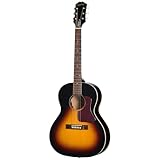
Overview: The Epiphone Blues King Studio Parlor elevates the compact guitar concept with serious professional features. This acoustic-electric parlor channels vintage L-00 blues boxes with its layered mahogany body, 24.75-inch scale length, and Fishman electronics system. The included gig bag adds immediate portability.
What Makes It Stand Out: The Fishman Presys VT preamp and S-Core pickup represent professional-grade electronics rarely seen under $400. The glued dovetail neck joint provides superior resonance transfer compared to bolt-on necks common in this price class. Its short scale and parlor dimensions create a comfortable, slinky feel perfect for blues fingerwork.
Value for Money: At roughly $350-400, this commands a premium over basic parlors but includes $150+ worth of quality electronics and a gig bag. Comparable Fishman-equipped guitars from Martin or Gibson cost $800+. You’re paying for legitimate stage-ready performance in a portable package.
Strengths and Weaknesses: Strengths include exceptional Fishman electronics, authentic blues tone, comfortable short-scale neck, quality dovetail joint construction, and included gig bag. The layered mahogany provides decent durability. Weaknesses involve the layered (not solid) top limiting acoustic richness, genre-specific voicing that may not suit strummers, and higher price point.
Bottom Line: The best choice for serious blues players wanting a gig-ready parlor. The electronics and build quality justify every extra dollar. A true performance instrument, not a toy.
10. Gretsch Limited-edition Jim Dandy Parlor Solid Top Acoustic Guitar - Heritage Burst

Overview: The Gretsch Limited Edition Jim Dandy Parlor with Solid Top represents the pinnacle of the Jim Dandy line. This Heritage Burst beauty upgrades the standard model with a solid spruce top while maintaining the classic parlor dimensions and vintage vibe that made the series popular among players seeking compact character.
What Makes It Stand Out: The solid spruce top is a game-changer, providing significantly improved resonance, dynamic response, and harmonic complexity over laminate versions. As a limited edition, it offers collectibility and exclusivity. The Heritage Burst finish looks premium, and the solid top will age and improve its tone over time, maturing like a fine instrument should.
Value for Money: Priced around $200-220, it costs only $50 more than the laminate version but delivers tone improvements typically found in $400-500 guitars. Solid tops at this price are exceptionally rare from major brands. This represents arguably the best value in the entire Jim Dandy lineup.
Strengths and Weaknesses: Strengths include the solid spruce top’s superior tone, limited edition appeal, classic parlor portability, and continued Gretsch quality. The laminated back and sides keep costs down while maintaining durability. Weaknesses are the lack of electronics, limited availability due to limited edition status, and nato neck’s budget feel.
Bottom Line: An absolute must-buy for anyone considering a Jim Dandy. The solid top transforms this from a fun novelty into a serious musical instrument. Grab one before they’re gone.
Why Parlor Guitars Reign Supreme for Fingerstyle Artistry
The parlor guitar’s compact dimensions aren’t merely aesthetic choices—they’re fundamental to its voice. Unlike dreadnoughts or jumbos designed to project brute volume for strummers, parlors prioritize tonal complexity and immediate responsiveness, two non-negotiable qualities for fingerstyle players who orchestrate multiple voices simultaneously.
The Intimate Voice of a Smaller Body
A parlor’s reduced air cavity creates a quicker sound pressure response, meaning the top begins moving with less energy input. This translates to a piano-like attack where each note in a complex chord voicing emerges with distinct definition rather than blurring into harmonic mush. The bass remains tight and focused instead of boomy, preventing low-end frequencies from masking the intricate midrange melodies that define fingerstyle arrangements. For players who rely on alternate tunings, this controlled resonance prevents the wolf tones and muddy intervals that can plague larger guitars when strings are detuned.
Historical Roots Meet Modern Innovation
The parlor guitar’s 19th-century origins as a domestic instrument have evolved dramatically. While vintage specimens offered charm, they often lacked the structural stability for modern playing techniques. Contemporary luthiers have reimagined these instruments with scalloped bracing patterns, carbon fiber reinforcement, and precision-milled components that honor the past while embracing the future. This marriage of heritage and technology means today’s parlors deliver consistency across climate zones and withstand the rigors of percussive body tapping without losing their soulful character.
Decoding the Perfect Fingerstyle Tonewood Formula
Tonewood selection for fingerstyle parlors follows different rules than for strummed acoustics. You’re not seeking massive volume—you’re chasing harmonic richness, note separation, and a frequency response that rewards delicate dynamics.
Spruce Tops: Clarity and Articulation
Sitka spruce remains the gold standard for players who demand headroom and pristine note definition. Its high stiffness-to-weight ratio produces a crisp attack that makes fast arpeggios sparkle, while its linear grain structure ensures even response across all registers. For 2026, look for tops harvested from higher altitudes with tighter grain spacing—these offer superior responsiveness for feather-light touches. Engelmann spruce presents a compelling alternative, delivering 90% of Sitka’s clarity with added warmth that flatters melodic passages.
Cedar Tops: Warmth and Responsiveness
Western red cedar’s lower velocity of sound creates an immediate, played-in feel that many fingerstylists prefer. It requires minimal attack to achieve full tonal color, making it ideal for players who use flesh-and-nail hybrid techniques. The trade-off is slightly reduced headroom—aggressive percussive taps can compress the dynamic range—but for lyrical, expressive playing, cedar’s complex overtones create a three-dimensional soundstage that spruce can’t match.
Exotic Alternatives: Beyond the Traditional
Cocobolo and ziricote back and sides have gained traction among boutique builders for their ability to add harmonic complexity without increasing body size. These dense hardwoods reflect sound waves with laser-like precision, creating a reverb-like quality that enhances fingerstyle’s orchestral nature. For sustainable options, African mahogany and sapele offer surprising sophistication, with interlocking grain structures that scatter overtones beautifully across the stereo field when recorded with dual microphones.
Body Size and Shape: The Physics of Fingerstyle Projection
The term “parlor” encompasses a spectrum of dimensions, and understanding these variations is critical for matching an instrument to your playing style.
Scale Length Matters: Shorter vs. Standard
The 24-inch short-scale parlor reduces string tension by approximately 15%, making bends and vibrato effortless while decreasing hand fatigue during three-hour practice sessions. However, this lower tension can sacrifice projection and introduce intonation challenges above the 12th fret. The modern 24.75-inch “hybrid” scale—popularized in 2026—strikes an elegant balance, maintaining slinky playability while preserving enough string energy for articulate treble response. For players using complex chord voicings with stretches beyond four frets, this extra .75 inches can be transformative.
The Upper Bout Access Advantage
Parlor guitars typically feature a 12-fret neck joint where the body meets the neck at the 12th fret rather than the 14th. This design shifts the bridge closer to the center of the lower bout, activating the top more efficiently. More importantly for fingerstylists, it provides unrestricted access to the upper frets while maintaining a compact form factor. When evaluating instruments, check that the heel carve allows your thumb to wrap comfortably for over-the-neck voicings without shifting your hand position.
Neck Profiles That Unlock Technical Freedom
Your left hand’s relationship with the neck determines technical ceiling more than any other ergonomic factor. Fingerstyle demands frequent position shifts, thumb-over techniques, and rapid alternation between melodic and harmonic passages.
The Modern “C” vs. Vintage “V” Debate
The contemporary “C” profile—with its consistent curvature from nut to heel—accommodates thumb-behind-the-neck classical positions and modern wrap-around techniques equally well. Its symmetrical design prevents hand cramping during extended sessions. The vintage “V” shape, while ergonomically natural for open-position folk playing, can create pressure points when executing complex stretches. However, a soft-V with a flattened apex offers surprising versatility, guiding your thumb into optimal position while allowing quick lateral movement.
Nut Width: Finding Your Comfort Zone
The 1-11/16" nut width common on steel-string acoustics often feels cramped for fingerstyle, where individual string articulation is paramount. The sweet spot for most players lies between 1-3/4" and 1-7/8". This extra 1/16 to 1/4 inch provides crucial breathing room for independent finger movement without requiring the extreme stretch of a 2" classical nut. For 2026, many builders are offering adjustable nut slots that allow customization after purchase—look for this feature if you’re transitioning from a different neck style.
The Critical Role of Setup and Action
A parlor guitar’s factory setup rarely optimizes it for fingerstyle’s unique demands. The action height that prevents buzz during aggressive strumming can choke delicate harmonics and increase finger effort exponentially.
Factory Setup vs. Professional Optimization
Most production guitars ship with actions around 3/32" at the 12th fret to accommodate average players. For fingerstyle, target 2/32" to 5/64" on the treble side and slightly higher on the bass side to prevent low-string rattle during percussive taps. This requires precise nut slot depth—often 0.020" for the high E—and a compensated saddle that accounts for the lighter touch. Budget an additional $150-300 for a professional setup that includes fret leveling, nut shaping, and saddle compensation. This investment yields more tonal improvement than upgrading to a more expensive guitar with a poor setup.
String Spacing at the Bridge
Bridge string spacing deserves equal attention. A 2-1/4" spread (E to E) at the saddle provides enough room for accurate fingerpicking without feeling like a classical guitar. For hybrid players who incorporate flatpicking, 2-3/16" offers better pick control. The individual string slots should be angled to match your attack angle—this prevents strings from sliding sideways during aggressive pulls and reduces breakage at the ball end.
Electronics for the Modern Fingerstyle Performer
Acoustic pickups have evolved from necessary evils to tone-shaping tools that enhance rather than degrade your natural sound. In 2026, integrated systems have become sophisticated enough to capture the parlor’s nuanced voice accurately.
Undersaddle vs. Soundboard Transducers
Undersaddle piezos remain the most feedback-resistant option for stage use, but their quacky attack can homogenize the parlor’s character. Look for systems with individual string piezo elements and onboard preamps featuring sweepable midrange controls—these allow you to notch out harsh frequencies while preserving fingerstyle’s complex harmonic signature. Soundboard transducers (SBTs) offer superior tonal realism by capturing the top’s actual movement, but they’re prone to feedback and amplify handling noise. The hybrid systems emerging in 2026 combine a mini-mic with an undersaddle element, blending the best of both worlds through a phase-aligned preamp.
The Importance of Onboard EQ and Tuning
A three-band EQ is insufficient for fingerstyle’s frequency range. Seek systems with parametric midrange (200Hz-2kHz) to control boxiness and a high-pass filter starting at 80Hz to eliminate stage rumble without affecting your fundamental notes. Built-in tuners have become remarkably accurate, but their location matters—avoid systems where the tuner button placement interferes with your forearm’s resting position. Some 2026 models feature wireless charging for the preamp battery, eliminating the need to remove the endpin jack for battery changes.
Budget Tiers: Investment Strategy for 2026
Price doesn’t always correlate with fingerstyle suitability. Understanding what features justify cost at each tier prevents overspending on cosmetic upgrades while underspending on critical components.
Entry-Level Sweet Spots
The $800-1,200 range now includes solid wood tops with laminated back and sides from reputable factories. These instruments offer 80% of the tonal performance of premium guitars but may require immediate setup work. Prioritize models with bone nuts and saddles—even if other components are synthetic—as these significantly impact sustain and tuning stability. Check that the truss rod is accessible and functional; some budget models use decorative rods that don’t actually adjust relief.
Mid-Range Mastery
Between $1,500 and $3,000, you enter the realm of all-solid wood construction, hand-scalloped bracing, and professional-grade hardware. This is where fingerstyle-specific features become standard: wider nuts, ebony fingerboards, and compensated saddles. The key differentiator is wood quality—look for quartersawn braces and tops graded for stiffness rather than appearance. A plain-looking top with exceptional tap-tone will outperform a highly-flamed piece with dead spots.
Professional-Grade Instruments
Above $3,500, you’re paying for select tonewoods, meticulous voicing, and customization options. For fingerstyle, the value lies in responsive tops voiced for light touch and necks carved to your exact specifications. These guitars often include lifetime maintenance agreements and come with factory setups optimized for fingerstyle. The law of diminishing returns applies aggressively here—a $5,000 guitar won’t sound five times better than a $1,000 model, but it will offer consistency, longevity, and inspiration that justify the investment for working professionals.
Customization and Modification Potential
Even the perfect parlor guitar can benefit from targeted upgrades that enhance its fingerstyle voice. Understanding modification pathways before purchase ensures you select an instrument with upgrade potential.
Aftermarket Upgrades Worth Considering
Replacing the saddle with a custom-compensated bone or fossilized ivory piece can improve intonation and add harmonic complexity. For cedar-topped guitars, a slightly heavier saddle material like corian can increase headroom without sacrificing warmth. Upgrading tuning machines to higher gear ratios (18:1 or 21:1) allows more precise tuning of open strings used as drones. Some players install a second strap button at the neck heel for classical positioning, which improves ergonomics during seated performances. Before modifying, verify that your guitar’s warranty allows such changes—some boutique builders void warranties if non-original parts are installed.
Care and Maintenance for Optimal Performance
Parlor guitars are more susceptible to climate fluctuations than larger instruments due to their thinner tops and smaller air mass. A humidity-controlled environment isn’t optional—it’s essential for preserving the setup and preventing cracks.
Maintain relative humidity between 45-55% year-round. In dry climates, use a soundhole humidifier during storage and keep a hygrometer in your case. The small body means the top can shrink or swell dramatically within 48 hours of environmental change, throwing your carefully adjusted action out of whack. Wipe down strings after every session; fingerstyle’s frequent string bends and vibrato accelerate corrosion. Consider coated strings for their extended life, but note that some coatings dampen high-frequency overtones—test different brands to find the balance between longevity and sparkle.
Future-Forward Features to Watch in 2026
The parlor guitar market has embraced innovation while respecting tradition. Several emerging technologies are reshaping what’s possible in a small-bodied acoustic.
Carbon fiber reinforcement rods in necks have become standard, preventing seasonal relief changes that plague traditional designs. Some builders now offer modular electronics systems that swap out preamp modules without soldering, allowing you to upgrade as technology improves. Torrefaction—thermally aging tonewoods—has trickled down to mid-range instruments, delivering vintage tone stability without the vintage price tag. Perhaps most intriguingly, parametric bracing analysis software now allows builders to voice each top for specific playing styles before assembly, creating fingerstyle-optimized instruments from the first note.
Frequently Asked Questions
What’s the ideal string gauge for fingerstyle on a parlor guitar?
Light gauge (12-53) strings strike the best balance, offering enough tension for clear note definition without requiring excessive finger pressure. Some players drop the high E to a .011 for easier bends, but maintain .053 on the low E to drive the smaller top effectively.
Can a parlor guitar handle percussive body tapping as well as a larger guitar?
Yes, but differently. Parlors produce a sharper, more focused tap tone that cuts through a mix but lacks the deep thump of a jumbo. The key is targeting the sweet spot near the bridge where the top is most responsive, rather than the upper bout common on larger guitars.
How do I amplify a parlor guitar for fingerstyle without losing its character?
Start with a high-quality microphone for studio work. For live sound, use a hybrid pickup system with the mic element blended at 30% or less to add airiness. Set your high-pass filter at 100Hz and cut 1kHz slightly to reduce piezo quack while preserving warmth.
Is a 12-fret or 14-fret parlor better for fingerstyle?
The 12-fret design generally offers superior tonal response and easier upper-fret access for fingerstyle positions. However, 14-fret models provide more traditional playability for players transitioning from larger guitars. Test both to see which neck joint position aligns with your thumb placement.
What’s the break-in period for a new parlor guitar?
Solid wood parlors typically open up after 20-40 hours of actual playing time. Cedar tops mature faster than spruce, often reaching 80% of their potential within months. You can accelerate the process by playing loudly and using varied dynamics, but avoid artificial vibration devices that can over-stress the braces.
Do I need a cutaway on a parlor guitar for fingerstyle?
Most players don’t. The 12-fret joint already provides access to the 14th-15th frets where most fingerstyle arrangements peak. Cutaways remove mass from the upper bout, subtly reducing harmonic complexity—a trade-off rarely worth it for the extra two frets of access.
How does fretboard radius affect fingerstyle playability?
A flatter radius (16"-20") allows cleaner string separation for complex chords and reduces choking during bends. However, a slightly rounder radius (12"-14%) feels more natural for thumb-over techniques. Many 2026 models offer compound radii that flatten as you move up the neck.
Can I use nylon strings on a steel-string parlor guitar?
Never without significant modifications. Steel-string guitars lack the necessary bracing and nut width for nylon’s lower tension, and the neck isn’t designed for nylon’s wider string spacing. This will damage the guitar and produce poor tone. Buy a dedicated nylon-string parlor if that’s your preferred sound.
What’s the best way to record a parlor guitar for fingerstyle?
Use a small-diaphragm condenser mic positioned at the 12th fret, angled toward the soundhole at 45 degrees, placed 8-12 inches away. Add a second mic near the bridge to capture body warmth. The parlor’s focused projection means you can mic closer than a dreadnought without overwhelming proximity effect.
Are parlor guitars suitable for players with large hands?
Absolutely. While the body is smaller, the neck dimensions are often identical to full-size guitars. Many large-handed players prefer parlors because the compact body brings the neck closer to their torso, reducing shoulder strain. Focus on nut width and neck profile rather than body size when assessing ergonomics.
See Also
- 10 Must-Have Acoustic Guitars for Retirement-Hobby Players in 2026
- Parlor Acoustic Guitars: The Secret Weapon for Fingerstyle Players in Small Venues
- 10 Must-Have Acoustic Guitars for Songwriters Who Record at Home in 2026
- Top 10 Best Concert Acoustic Guitars for Fingerstyle Players in 2026
- We Tested 50 Acoustic Guitars—Here Are the 10 Best for Fingerstyle Players