Table of Contents
The home recording revolution has evolved from a niche hobby into a professional powerhouse, and at the heart of this transformation sits the modeling guitar amplifier with USB recording capability. As we move deeper into 2026, the line between traditional tube amps and their digital counterparts has not just blurred—it’s been completely redrawn. Modern modeling amplifiers now offer studio-grade direct recording, zero-latency monitoring, and amp simulations so authentic that even seasoned producers struggle to distinguish them from miked-up vintage stacks in blind tests.
For home studio owners, this technology represents more than convenience; it’s a fundamental shift in creative workflow. No longer do you need to choose between cranking a 100-watt monster at inappropriate hours or settling for lifeless DI tones. Today’s USB-equipped modeling amps deliver authentic feel, dynamic response, and seamless DAW integration that transforms your bedroom into a professional recording environment. But with rapid advancements in machine learning modeling, impulse response technology, and interface capabilities, knowing what features truly matter has become increasingly complex.
Top 10 Modeling Guitar Amplifiers
Detailed Product Reviews
1. Fender Mustang LT25 Guitar Amp, 25-Watt Combo Amp, with 2-Year Warranty, 30 Preset Effects with USB Audio Interface for Recording

Overview: The Fender Mustang LT25 is a 25-watt solid-state combo amplifier designed specifically for beginners and home players seeking authentic Fender tone with modern digital flexibility. This compact amp pairs an 8-inch Fender special design speaker with a straightforward user interface featuring a 1.8-inch color display, making navigation intuitive even for those new to guitar gear. With 30 preloaded presets covering everything from pristine cleans to high-gain distortions, it serves as an all-in-one practice solution.
What Makes It Stand Out: What truly distinguishes the LT25 is its seamless USB audio interface integration, allowing direct recording to your computer without additional hardware. The color display is a rarity in this price class, providing visual feedback that simplifies preset editing and parameter adjustments. Fender’s two-year warranty demonstrates exceptional confidence in build quality, while the 30 professionally crafted presets give beginners instant access to iconic tones without deep menu diving.
Value for Money: Priced competitively in the entry-level digital amp market, the LT25 offers remarkable value by combining amplifier, effects processor, and recording interface in one unit. Competing products often require separate purchases for recording capability, making this an economical choice for home studio setups. The included warranty adds long-term security that many budget alternatives lack.
Strengths and Weaknesses: Strengths: User-friendly color display; versatile preset selection; excellent recording integration; robust build quality; comprehensive warranty coverage; authentic Fender voicings. Weaknesses: 8-inch speaker limits low-frequency response; 25 watts insufficient for live performances; limited deep editing compared to higher-end models; no footswitch included.
Bottom Line: The Mustang LT25 is an outstanding choice for beginners and bedroom producers prioritizing ease of use, recording capability, and brand reliability. While it won’t replace a stage rig, it excels as a practice and home recording tool, earning its place as the smart first amp for modern guitarists.
2. Line 6 Spider V 20 MKII

Overview: The Line 6 Spider V 20 MKII represents the latest evolution of the iconic Spider series, delivering 20 watts of solid-state power through a custom-designed 8-inch speaker. This compact combo amp caters to modern players seeking instant gratification with 16 onboard presets and the ability to run three effects simultaneously plus independent reverb. The streamlined control set provides immediate access to tone shaping without overwhelming beginners, while the free Spider V Remote app unlocks a vast library of additional models.
What Makes It Stand Out: Spider V 20 MKII’s classic speaker mode delivers enhanced tube-like feel and response that many digital amps struggle to replicate. The built-in tuner and tap-tempo function eliminate need for external pedals, streamlining your practice setup. Most impressive is the app connectivity, providing access to over 200 amplifier and effect models—essentially offering professional-grade modeling software at no extra cost, a feature competitors typically charge premium prices for.
Value for Money: This amp positions itself as a budget-friendly modeling solution that punches above its weight class. While it lacks USB recording capability, the free app integration provides exponentially more tonal options than similarly priced alternatives. For players focused on practice and tone exploration rather than recording, it offers exceptional bang-for-buck, though you’ll need separate hardware for home studio work.
Strengths and Weaknesses: Strengths: Classic speaker mode enhances realism; extensive free app library; three simultaneous effects; built-in tuner and tap-tempo; simple, intuitive controls; compact footprint. Weaknesses: No USB audio interface; 20 watts limits clean headroom; 8-inch speaker lacks deep bass; plastic construction feels less robust; no warranty mentioned in specifications.
Bottom Line: The Spider V 20 MKII excels for practice and tonal experimentation, offering unprecedented model variety at this price point. However, recording-focused players should look elsewhere. It’s ideal for beginners wanting maximum sonic flexibility without complexity or for experienced players needing a portable practice solution with serious depth.
3. Fender Champion II 25 Guitar Amp, 25 Watts, with 2-Year Warranty, Features 12 Built-In Effects Models

Overview: The Fender Champion II 25 takes a more traditional approach than its Mustang siblings, offering 25 watts of analog-style solid-state power through an 8-inch Fender Special Design speaker. This single-channel, single-input combo focuses on simplicity while providing 12 essential effects including reverb, delay, chorus, tremolo, and Vibratone. With multiple amp voicings and distortion types accessible via straightforward controls, it bridges the gap between vintage Fender aesthetics and modern convenience for players who prefer knob-twisting over menu-diving.
What Makes It Stand Out: Unlike the digital-heavy Mustang series, the Champion II 25 emphasizes analog-like interaction with dedicated controls for each parameter, making it feel more like a classic amplifier. The inclusion of Fender’s signature Vibratone effect—a rotating speaker simulation—adds distinctive character rarely found in amps at this price point. The two-year warranty reinforces Fender’s commitment to durability, while the single-channel design forces players to develop effective volume and tone knob technique on their guitar.
Value for Money: Positioned similarly to the Mustang LT25, the Champion II 25 trades digital sophistication for analog simplicity at the same price point. While you lose USB recording and preset storage, you gain immediate, tactile control that many players find more musical. For those who don’t need computer connectivity, it offers comparable build quality and superior real-time tweakability, making it a strong value for traditionalists.
Strengths and Weaknesses: Strengths: Intuitive knob-per-function layout; authentic Fender vibrato effects; robust build quality; excellent clean tones; reliable warranty coverage; no complex menus to navigate. Weaknesses: No preset memory; lacks USB recording; single channel limits switching options; 8-inch speaker restricts low-end; effects depth limited compared to digital rivals.
Bottom Line: The Champion II 25 suits players who value hands-on control and classic Fender tone over digital features. It’s perfect for beginners wanting to learn amp fundamentals and for experienced players seeking a reliable, no-fuss practice amp. Choose this over the Mustang if you prefer twisting knobs to pushing buttons.
4. Flatsons FBA-10 Guitar Amp, 10W Mini Electric Guitar Amplifier with Clean/Drive Channel, 6H Working, USB-C Rechargeable, 3.5mm Headphone/AUX Jack, Wireless Portable Amp for Indoor Practice, Traveling

Overview: The Flatsons FBA-10 redefines portable guitar amplification with its 10-watt analog design and battery-powered operation. Measuring just 152x75x99mm and weighing 580g, this mini amplifier delivers up to six hours of playtime via USB-C charging. It features dual tone modes (Clean/Drive), analog circuitry for natural response, and comprehensive connectivity including Bluetooth 5.3 audio streaming, 3.5mm headphone output, and AUX input. The vintage-inspired two-tone woven grille adds aesthetic appeal while serving functional sound transmission purposes.
What Makes It Stand Out: True analog technology in a battery-powered mini amp is exceptionally rare, providing authentic tube-like feel that digital modeling portables can’t match. The Bluetooth 5.3 integration allows wireless backing track playback, eliminating cable clutter during practice. Its 100Hz-20kHz frequency response and 165-foot coverage demonstrate impressive engineering for the size. The USB-C rechargeable battery with six-hour life outperforms most competitors, while the handcrafted grille elevates it from utility to conversation piece.
Value for Money: As a niche portable solution, the FBA-10 commands a slight premium over basic practice amps but justifies it through genuine analog tone and wireless features. While 10 watts won’t compete with full-sized amps, nothing in its class offers this blend of battery life, analog sound quality, and Bluetooth connectivity. For traveling musicians and apartment dwellers, it eliminates the need for separate devices, representing excellent specialized value.
Strengths and Weaknesses: Strengths: Genuine analog circuitry; exceptional portability; six-hour battery life; Bluetooth 5.3 streaming; USB-C charging; headphone practice capability; attractive vintage design; impressive wireless range. Weaknesses: 10 watts limits volume; single 3.5mm input may require adapter; no effects beyond basic drive; small speaker compromises bass response; not suitable for performances.
Bottom Line: The FBA-10 is the ultimate portable practice solution for tone-conscious players. It sacrifices power for portability but maintains sonic integrity through analog design. Ideal for travelers, apartment practice, and street performance, it’s a specialized tool that excels within its intended purpose. Don’t buy this as your primary amp; buy it as your anywhere amp.
5. Fender Mustang LT50 Guitar Amp, 50 Watts, with 2-Year Warranty 30 Preset Effects with USB Audio Interface for Recording, 20Dx19.5Wx11.5H Inches, Black
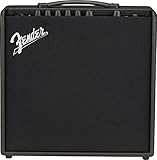
Overview: The Fender Mustang LT50 is the muscular 50-watt big brother of the LT25, designed for players needing more clean headroom and projection while maintaining the same user-friendly digital architecture. This larger combo amp (20Dx19.5Wx11.5H inches) delivers enhanced low-end response and volume through what is presumably a larger speaker than its 8-inch sibling. It retains the 1.8-inch color display and 30 preloaded presets but expands the effects count to 25, including distortion, overdrive, compression, modulation, reverb, delay, and octave effects, plus the invaluable USB recording interface.
What Makes It Stand Out: The LT50’s 50-watt output provides sufficient power for small gigs and jam sessions while maintaining practice-friendly volume control. The expanded effects library offers greater sonic flexibility than the LT25, particularly with the addition of octave effects and more modulation options. Fender’s two-year warranty transfers seamlessly to this higher-wattage model, while the USB interface enables the same direct recording capability that makes the series ideal for modern home studios.
Value for Money: Stepping up from the LT25 costs modestly more while delivering significantly more usable power and presumably better speaker performance. For players who might occasionally play with a drummer or perform small venues, this represents a wise investment over the 25-watt version. Competitors in the 50-watt modeling category typically cost substantially more, making the LT50 a value leader for semi-serious players needing versatility and recording capability.
Strengths and Weaknesses: Strengths: 50 watts provides gig-worthy volume; expanded effects selection; retains user-friendly interface; USB recording capability; sturdy construction; comprehensive warranty; suitable for small performances. Weaknesses: Larger size reduces portability; still limited to single speaker; no footswitch included; preset count unchanged from LT25; may be overkill for pure bedroom practice.
Bottom Line: The Mustang LT50 is the perfect step-up for advancing players who’ve outgrown 25 watts but love the LT series simplicity. It bridges practice and performance worlds effectively, offering enough power for small gigs while excelling as a home recording tool. Choose this over the LT25 if you foresee playing with others or need extra clean headroom for pedals.
6. Positive Grid Spark GO 5W Ultra-Portable Smart Guitar Amp, Headphone Amp & Bluetooth Speaker with Smart App for Electric Guitar, Acoustic or Bass

Overview: The Positive Grid Spark GO redefines portable guitar amplification by cramming studio-grade technology into a pocket-sized package. This 5-watt smart amp functions as a guitar amplifier, headphone amp, and Bluetooth speaker, targeting modern players who demand versatility without sacrificing tone quality. Its computational audio processing delivers unexpectedly rich, full-bodied sound that belies its diminutive footprint.
What Makes It Stand Out: The Spark GO’s integration with the Smart App sets it apart from traditional portable amps. The Auto Chords feature instantly analyzes and displays chords for any song you search, while Smart Jam acts as an AI bandmate that adapts to your playing style in real-time. With 33 amp models, 43 effects, and access to over 50,000 user-created tones via ToneCloud, tonal possibilities are virtually limitless. The 8-hour USB-C rechargeable battery ensures all-day jamming.
Value for Money: Positioned in the mid-range for portable amps, the Spark GO justifies its price through sheer technological sophistication. Competing units offer similar wattage but lack the AI-powered features and cloud ecosystem. For players prioritizing practice efficiency and inspiration over raw power, it outperforms conventional amps costing significantly more.
Strengths and Weaknesses: Strengths include revolutionary smart features, exceptional portability, long battery life, and stunning tonal variety. Weaknesses are the 5-watt limitation restricting clean headroom, small speaker size limiting low-end response, and heavy reliance on the companion app for full functionality.
Bottom Line: The Spark GO is an indispensable tool for tech-forward guitarists seeking inspiration and portability. While not a stage amp, it excels as a practice companion and creative catalyst, making it highly recommended for bedroom players and traveling musicians.
7. Fender Mustang LT40S Guitar Amplifier, with 2-Year Warranty

Overview: The Fender Mustang LT40S brings four decades of digital modeling expertise into a compact desktop format designed for serious home practice. Delivering 40 watts of stereo power, this amp provides ample headroom for clean tones and enough volume for small jams. It comes preloaded with 30 professionally crafted presets spanning rock, jazz, metal, and beyond.
What Makes It Stand Out: The LT40S distinguishes itself through genuine stereo amplification at this price point, creating an immersive soundscape that mono competitors cannot match. Fender’s pedigree shines through in authentic amp modeling, particularly the sparkling cleans and overdriven tones. The two-year warranty provides peace of mind rarely offered in this category, while the desktop form factor integrates seamlessly into modern living spaces.
Value for Money: For a Fender-branded 40-watt stereo modeling amp, the LT40S sits at an attractive price point. It undercuts many boutique modeling amps while offering superior power and brand reliability. The inclusion of 20 amp models and 25 effects provides sufficient variety for most players without overwhelming beginners.
Strengths and Weaknesses: Strengths include robust stereo power, trusted Fender build quality, intuitive interface, and genre-spanning presets. Weaknesses include lack of battery power limiting portability, fewer effects than some competitors, and potential overkill for apartment dwellers who cannot utilize full volume. The absence of advanced app integration feels dated compared to smart amps.
Bottom Line: The Mustang LT40S is a powerhouse for dedicated home practice. It sacrifices portability for performance, making it ideal for players with dedicated practice space who want Fender tone and stereo imaging without breaking the bank.
8. SONICAKE 10W BT Guitar Amplifier, Multi-effect Digital Modeling Speakers with APP, Portable Desktop All-in-one Guitar Amp with 80 Effects 100 Preset for Bedroom Practice, OTG AMPCUBE QAM-20

Overview: The SONICAKE AMPCUBE QAM-20 enters the crowded portable amp market as a budget-conscious all-in-one solution. Weighing just 1.4 kg with built-in 3-inch speakers, this 10-watt desktop amp targets bedroom players seeking maximum versatility. It bundles over 80 professional effects and 100 presets into a compact chassis with modern connectivity options.
What Makes It Stand Out: The sheer feature density at this price point is remarkable. Bluetooth 5.0, MIDI support, and USB recording capabilities rival units costing three times as much. The ability to power via built-in battery or DC 9V provides flexibility for various playing scenarios. The OTG (On-The-Go) functionality enables direct mobile recording, appealing to content creators.
Value for Money: This is where the SONICAKE dominates. No competitor offers this many effects, presets, and connectivity options at such an aggressive price. It democratizes professional-grade features for beginners and budget-conscious players. While build quality questions remain, the value proposition is undeniable for those prioritizing features over brand prestige.
Strengths and Weaknesses: Strengths include unbeatable price-to-feature ratio, extensive effects library, multiple power options, and comprehensive connectivity. Weaknesses involve questionable long-term reliability, uninspired 3-inch speaker performance, confusing user interface, and minimal brand support. The tone quality lacks the refinement of premium competitors.
Bottom Line: The SONICAKE AMPCUBE is a feature-packed bargain for experimental beginners and home recording enthusiasts. Accept its limitations as a trade-off for affordability, and it becomes a capable practice tool. Recommended for players wanting maximum features on minimum budget.
9. Yamaha THR5 10-Watt Desktop Guitar Combo Amp

Overview: The Yamaha THR5 represents the premium end of desktop amplification, blending the company’s legendary musical instrument craftsmanship with expertise from their award-winning AV division. This 10-watt combo delivers five meticulously modeled classic amps through Virtual Circuitry Modeling (VCM) technology, producing true hi-fi stereo sound that transcends typical guitar amp expectations.
What Makes It Stand Out: The THR5’s audio fidelity is simply unmatched in its class. Yamaha’s cross-division collaboration resulted in an amp that functions as a high-quality Bluetooth speaker when not amplifying guitar. The VCM technology captures nuanced tube amp behavior, while the battery-powered portability combined with AC operation provides ultimate flexibility. Its industrial design is equally at home in a living room or studio.
Value for Money: Positioned as a premium product, the THR5 commands a higher price but delivers commensurate quality. The sound engineering rivals studio monitors, making it a dual-purpose investment. While offering fewer amp models than competitors, the depth and authenticity of each model surpasses quantity-focused alternatives. For tone purists, the premium is justified.
Strengths and Weaknesses: Strengths include exceptional sound quality, elegant design, trusted Yamaha reliability, true portability, and hi-fi audio performance. Weaknesses are limited amp models (only five), fewer built-in effects than competitors, premium pricing, and no advanced app features. The 10-watt rating may underwhelm players wanting more headroom.
Bottom Line: The THR5 is the connoisseur’s choice for desktop amplification. It prioritizes sonic excellence over feature quantity, making it perfect for players who value quality over quantity and need an amp that doubles as a premium audio system.
10. Marshall Amps Guitar Combo Amplifier (M-MG10G-U)

Overview: The Marshall MG10G embodies the no-frills approach to practice amplification that built the brand’s legendary reputation. This entry-level combo delivers 10 watts of solid-state Marshall tone through a single 6.5-inch speaker, targeting beginners and purists who prefer analog simplicity over digital complexity. It represents the most accessible point of entry to the Marshall tonal family.
What Makes It Stand Out: In an era of feature-laden digital amps, the MG10G’s simplicity is its unique selling proposition. The classic Marshall aesthetics—gold panel, black grille cloth—provide authentic brand appeal at an unprecedented price point. It offers the core Marshall overdrive character without menus, apps, or latency. For traditionalists, this immediate, tactile experience is refreshing.
Value for Money: As the most affordable Marshall combo available, the MG10G delivers brand prestige at a bargain price. However, value depends entirely on priorities. Players seeking effects and versatility will find better feature-per-dollar elsewhere. Those wanting genuine Marshall tone and build quality in a basic package will appreciate the honest pricing.
Strengths and Weaknesses: Strengths include authentic Marshall voicing, bulletproof analog construction, intuitive operation, and iconic brand cachet. Weaknesses are severe: zero built-in effects, no battery power, minimal connectivity (just input and headphone out), dated feature set, and limited volume for anything beyond bedroom practice. It lacks modern amenities expected in 2024.
Bottom Line: The MG10G serves a niche audience—Marshall loyalists wanting simplicity on a budget. For beginners, better-featured options exist. For experienced players needing a reliable practice amp with classic tone, it remains a viable, if uninspired, choice. Purchase for brand authenticity, not versatility.
Understanding the Modern Modeling Amplifier Ecosystem
What Defines a True USB Recording Amp in 2026?
The term “USB recording” has become somewhat diluted in marketing materials, but genuine studio-ready amplifiers offer more than a simple USB port. True USB recording amps function as full-fledged audio interfaces with bi-directional audio streaming, allowing simultaneous recording and playback through your DAW. In 2026, we’re seeing widespread adoption of USB-C connectivity with class-compliant drivers, eliminating the installation headaches that plagued earlier generations. These devices should provide at least 24-bit/96kHz resolution, though many now offer 32-bit float recording for virtually unclippable input signals—a game-changer for capturing dynamic performances without constant gain riding.
The Evolution from Emulation to Physical Modeling
Early modeling amps used basic sampling and EQ curves to approximate famous amplifier tones. The technology powering 2026’s leading units employs neural networks trained on thousands of hours of circuit behavior analysis, capturing everything from tube sag and rectifier compression to transformer saturation and speaker cone cry. This shift from static emulation to dynamic physical modeling means your amp responds to pickup changes, volume knob adjustments, and playing dynamics with the same complexity as the original hardware. When evaluating units, look beyond the number of amp models and investigate whether the manufacturer mentions “AI-enhanced” or “neural” modeling—these aren’t just buzzwords but indicators of genuinely responsive tone generation.
Critical Features That Separate Professional Units from Practice Amps
USB Audio Interface Quality and Latency Performance
Not all USB implementations are created equal, and this remains the single most important spec for home studio integration. Professional-grade modeling amps in 2026 feature dedicated DSP chips for audio interface duties, separate from the tone modeling processor. This architecture maintains sub-3ms roundtrip latency even under heavy plugin loads in your DAW. Pay close attention to buffer size flexibility—units that force large buffers for stable operation will ruin your recording experience. The best amps allow direct monitoring through the hardware itself, routing your processed guitar signal straight to headphones or speakers before it even hits the USB bus, completely bypassing computer-induced delay.
Bit Depth, Sample Rate, and Digital Headroom
While 24-bit/48kHz was the standard benchmark just a few years ago, 2026’s professional workflow demands higher resolution. Look for 24-bit/96kHz minimum, but understand the practical implications: 32-bit float recording essentially makes clipping impossible at the input stage, giving you unprecedented freedom to adjust levels post-recording. This is particularly valuable when reamping—sending a clean DI back through the amp later. Some manufacturers now offer “dual-path recording,” simultaneously capturing both a processed amp tone and a clean DI through a single USB connection, streamlining your workflow and preserving options for later manipulation.
Software Ecosystem and Long-Term Support
The hardware is only half the equation. A modeling amp’s longevity depends entirely on its software ecosystem. Investigate the manufacturer’s track record for firmware updates—are they still supporting models from five years ago, or do they abandon hardware to push new releases? The most reliable brands offer desktop editors, iOS/Android control apps, and seamless plugin integration that lets you load amp tones directly into your DAW without the physical hardware connected. Cloud-based preset sharing communities and regular expansion packs indicate a healthy, evolving platform rather than a static product.
Power Scaling and Home Studio Practicality
Wattage Ratings and Attenuation Technology
Traditional thinking suggests lower wattage is better for home use, but modern power scaling has complicated this equation. Many 2026 modeling amps feature reactive load attenuation that lets you crank a 50-watt model to achieve power tube saturation at conversation volume. This matters because some of the best-feeling models are based on non-master-volume vintage circuits that need to be pushed hard to sound right. Look for amps with “power amp modeling” modes that simulate the interaction between output tubes and transformers, regardless of actual wattage. A 20-watt amp with excellent power amp modeling often surpasses a 100-watt amp without it for home studio authenticity.
Silent Recording and IR Loading Capabilities
The ultimate home studio feature is truly silent recording—playing through headphones with no speaker attached while still achieving cranked-amp response. This requires sophisticated internal load boxes and cabinet impulse response (IR) technology. The best units allow you to load third-party IRs, giving you access to thousands of professionally-miked cabinet sounds. In 2026, we’re seeing real-time IR blending (mixing multiple mic positions on the fly) and acoustic IRs that simulate room ambiance, eliminating the need for additional reverb plugins and creating a more natural recorded sound.
Effects Integration and Signal Chain Flexibility
Built-In Effects Quality vs. Plugin Integration
Modeling amps come loaded with effects, but the quality varies dramatically. Rather than counting the number of delay or modulation types, examine the signal chain flexibility. Can you place effects before and after the preamp? Is there a dedicated effects loop in the digital domain? The most powerful units treat effects as separate modules you can reorder like physical pedals. However, consider whether you even need built-in effects—some musicians prefer using the amp strictly for amp tones and running dedicated plugins for effects, which often offer deeper editing. USB amps with excellent dry signal capture make this hybrid approach seamless.
MIDI Control and Automation Potential
For serious studio work, MIDI implementation transforms your amp from a static tone generator into a dynamic part of your production. Look for units that accept MIDI program changes for instant preset switching, but more importantly, those that respond to MIDI continuous controller (CC) messages for parameter automation. Imagine recording a solo where the amp’s gain automatically increases from 3 to 8 mid-take, or the delay mix swells in real-time—this level of control blurs the line between performance and production. In 2026, many units also support OSC (Open Sound Control) for wireless control from tablets, enabling engineers to adjust tones from the control room while the guitarist plays.
Physical Design and Ergonomic Considerations
User Interface: Knobs vs. Screens
The debate between physical knobs and touchscreen interfaces remains heated. Purists argue that muscle memory and tactile control are essential for creative flow, while tech-forward players embrace deep menu systems that offer unlimited flexibility. The sweet spot often lies in hybrid designs—motorized faders that snap to preset positions, or encoders with LED rings that show current values. For home studio use, consider how often you’ll physically touch the amp versus controlling it from your computer. A unit that works flawlessly as a plugin but has a frustrating hardware interface might still be worth it if it stays rack-mounted.
Build Quality and Component Longevity
Even digital amps contain analog components—potentiometers, jacks, power supplies—that fail over time. In 2026, we’re seeing more manufacturers use sealed, dust-resistant encoders instead of traditional pots, and Neutrik-brand jacks for USB and audio connections. The power supply design matters enormously for noise floor; linear supplies generally outperform switch-mode in studio environments, though some modern switch-mode designs are exceptionally quiet. Check whether the fan is thermostatically controlled and whisper-quiet, or if it runs constantly and might be picked up by sensitive microphones during acoustic sessions.
Integration with Your Existing Studio Setup
Reamping Workflows and DI Quality
The mark of a truly professional USB amp is its reamping capability. This requires not just a USB input for recording, but a dedicated line-level output that can feed a clean DI signal back into the amp’s input without impedance mismatch or level issues. Some units achieve this internally through software, allowing you to drag a recorded DI clip onto a plugin that routes it through the amp model. The quality of the built-in DI is crucial—it should capture the full frequency response and impedance interaction of your guitar pickups, not just a sterile, buffered signal. Ask whether the DI is transformer-balanced; this adds a subtle coloration that many engineers prefer.
DAW Compatibility and Driver Stability
Before purchasing, research the amp’s driver performance on your specific operating system. macOS users benefit from class-compliant devices that require no drivers, while Windows users need rock-solid ASIO or WASAPI drivers. In 2026, we’re seeing more manufacturers adopt universal drivers that work across platforms, but stability varies. Search user forums for reports of dropout issues, particularly with AMD-based Windows systems or Apple Silicon Macs. The best manufacturers provide public beta driver programs and rapid bug fixes, while others leave known issues unresolved for years.
Price Tiers and Value Assessment
Budget-Friendly Options vs. Professional Investments
The modeling amp market spans from $200 practice amps to $3000+ flagship units, but price doesn’t always correlate with recording quality. Sub-$500 amps often use the same fundamental modeling engine as their expensive siblings, sacrificing I/O flexibility, build quality, and effects depth rather than core tone. For pure home recording, a mid-tier unit ($600-$1200) frequently offers the best value, providing professional USB audio performance without stage-oriented features like high-wattage power amps or rugged flight cases. That said, expensive units justify their cost through superior analog front-ends, better preamp converters, and more extensive I/O for integrating outboard gear.
Hidden Costs and Essential Accessories
The sticker price rarely tells the full story. Factor in the cost of a quality USB-C cable (not all cables support data transfer), potential software subscriptions for premium amp packs, and studio monitor upgrades to actually hear the detail these amps provide. Many units ship with minimal onboard storage for IRs and presets, requiring additional purchases for expansion packs. Consider whether you’ll need a separate MIDI foot controller for hands-free operation—some amps include basic control, but advanced switching often costs extra. Power conditioning is another overlooked expense; these digital devices are sensitive to dirty power, and a decent UPS or power conditioner can prevent crashes and audio glitches.
Setting Up for Optimal Recording Performance
Gain Staging and Level Optimization
Proper gain staging with modeling amps differs significantly from traditional amps. You’re not just driving a preamp—you’re optimizing for digital conversion. Start with your guitar’s volume at maximum to present the proper impedance load, then adjust the amp’s input gain to peak around -12dBFS in your DAW. This leaves headroom for unexpected transients while keeping the signal well above the noise floor. Many 2026 amps feature LED meters or software level indicators—use them religiously. Resist the urge to “drive the input” like you would a tube amp; digital clipping sounds harsh and unmusical, unlike analog saturation.
Monitoring Configurations for Different Scenarios
Your monitoring setup changes everything about the recording experience. For silent recording, invest in high-impedance headphones (250+ ohms) that can handle the amp’s full-frequency output without distorting. When using monitors, position the amp away from your desk to avoid electromagnetic interference with computer screens and hard drives. Some engineers prefer to monitor through the DAW with a slight buffer, applying compression and EQ to hear a “finished” sound while recording. Others insist on zero-latency hardware monitoring for the most natural feel. The best 2026 amps allow blending both signals, so you can hear your raw amp tone alongside processed DAW tracks.
Troubleshooting Common USB Recording Issues
Solving Latency and Dropout Problems
Even the best systems encounter issues. If you’re experiencing latency, first verify you’re using the amp as your system’s primary audio device, not sharing drivers with another interface. Increase your DAW’s buffer size for mixing, but drop it to 64 or 128 samples for tracking. Dropouts often stem from USB power management—disable Windows’ ability to power down USB ports, and connect directly to your computer rather than through a hub. On Macs, reset the Core Audio driver by killing the coreaudiod process in Activity Monitor. For persistent issues, some 2026 amps now offer “troubleshooting modes” that log USB errors and suggest specific fixes through their control software.
Dealing with Noise and Ground Loops
Digital modeling amps can introduce noise through ground loops, especially when connected to both USB and monitor speakers. If you hear whine that changes with CPU activity, you’re likely experiencing a ground loop. The simplest fix is to connect all your gear (computer, monitors, amp) to the same power strip or UPS. For stubborn cases, use USB isolators or ground lift adapters on your monitor cables. Some premium amps include galvanic isolation in their USB design, completely breaking the ground connection while maintaining data integrity. Never use a ground lift on your amp’s AC power cord—this is dangerous. Instead, address the issue at the signal level.
Future-Proofing Your Investment
Expandability and Modular Architecture
The modeling amp you buy today should grow with your studio. Look for units with user-upgradable firmware and expandable DSP via external processors. Some manufacturers now offer “compute module” upgrades—swap a card inside the amp to double processing power for next-generation models. Cloud-based tone libraries that sync across devices ensure your sound palette constantly evolves. Consider whether the company has a history of backward compatibility; brands that continue supporting older hardware with new software releases demonstrate a commitment to your long-term satisfaction over short-term sales cycles.
Community and Third-Party Development
The most vibrant modeling platforms foster third-party development. Check if the amp supports user-created models or IRs, and whether there’s an active community sharing presets. Open-platform amps that allow developers to create and sell expansion packs ensure the ecosystem stays fresh. In 2026, we’re seeing integration with AI tone-matching services that can clone any amp you have access to, uploading the model directly to your device. This effectively makes your amp future-proof, as you can capture new gear without buying new hardware. Manufacturers that embrace this open approach typically provide better long-term value than closed, proprietary systems.
Frequently Asked Questions
1. Can I really replace my entire pedalboard and tube amp collection with a single modeling amp for professional recordings?
Absolutely. Modern modeling amps in 2026 capture not just the sound but the feel and dynamic response of vintage gear. Many professional studios now keep a flagship modeling amp as a permanent recording solution for quick tracking and reamping. The key is learning to dial in tones properly—most complaints about “digital sound” stem from improper gain staging or using harsh factory presets rather than limitations of the technology.
2. How important is USB-C compared to older USB-B connections?
USB-C offers more reliable connectivity and sufficient power delivery for high-end units, but the protocol matters more than the connector shape. A USB-B connection with USB 3.0 protocol outperforms a USB-C running USB 2.0. Focus on USB 3.0 or higher speed ratings and class-compliant operation. The real advantage of USB-C is durability—those connectors withstand thousands more insertions than older USB types.
3. Will my recordings sound better if I use the amp’s built-in cabinet simulation versus loading third-party IRs?
It depends on the amp. Premium units now include IRs captured in world-class studios using vintage microphones and preamps that rival commercial libraries. However, third-party IRs offer variety and specialization—acoustic IRs for specific room sounds, or mixes of rare cabinets. The best approach is to record both a processed track with the amp’s cab sim and a DI track simultaneously, giving you the option to reamp through different IRs later during mixing.
4. What’s the realistic lifespan of a modeling amp before it becomes obsolete?
Hardware-wise, expect 10+ years of reliable operation if you buy a well-built unit. Software obsolescence is the real concern. Brands with strong firmware support typically add major features for 5-7 years post-release. After that, the modeling technology may lag behind newer releases, though the amp remains perfectly functional. Consider it similar to a computer—usable for a decade but potentially lacking cutting-edge features after 5-6 years.
5. Do I need special studio monitors to hear the difference between budget and premium modeling amps?
Yes, to an extent. Entry-level monitors (under $300/pair) often lack the midrange detail to reveal subtle modeling differences. However, the gap becomes obvious even on modest monitors when comparing dynamic response and low-end tightness. More importantly, invest in quality headphones first—they reveal cabinet simulation details that monitors in untreated rooms might mask. A $200 pair of studio headphones will show you more about your amp’s quality than $1000 monitors in a bad room.
6. How do I handle reamping if my amp doesn’t have a dedicated reamp input?
Use a passive reamp box between your interface’s line output and the amp’s instrument input. This converts the line-level signal to proper instrument level and impedance. Set your DAW to output the DI track through a spare interface output, connect to the reamp box, then feed that into your amp. Record the amp’s output back into your DAW through USB or another interface input. Some 2026 amps simplify this by offering “reamp mode” in software, which adjusts input impedance automatically when detecting a line-level signal.
7. Can modeling amps capture the sound of my specific guitar’s interaction with an amp?
This is where modern physical modeling shines. Unlike static samples, neural network-based models respond to your guitar’s output impedance, pickup type, and even volume knob position in real-time. The model learns the complex interaction between pickup inductance and amp input stage, recreating how a fuzz pedal cleans up with your guitar’s volume control. For the most accurate results, ensure you’re using high-impedance inputs (1MΩ or higher) that match the original amp’s input characteristics.
8. Why does my amp sound great through headphones but thin through studio monitors?
This typically indicates a cabinet simulation mismatch. Headphones provide isolated, direct sound while monitors interact with your room acoustics. Try enabling room simulation or acoustic IRs in your amp to add virtual space. Also check your monitor placement—if they’re too close to walls, bass buildup can mask midrange detail. Some amps have separate EQ curves for headphone versus line outputs; experiment with global EQ settings to compensate for your room’s acoustic signature.
9. Is it better to record effects from the amp or add them in post-production?
Record both. Most professional engineers capture a dry amp tone (just amp and cab) while also printing a separate track with effects for monitoring and reference. This gives you the committed effect sound for immediate inspiration while preserving the option to change or refine effects during mixing. Modern DSP allows zero-latency effects tracking without compromising the dry capture quality. For time-based effects like delay and reverb, consider recording a 100% wet track alongside the dry for maximum flexibility.
10. How do I know if an amp’s USB interface will work reliably with my specific computer setup?
Research thoroughly before buying. Search the manufacturer’s support forums for your exact OS version and computer model. Look for users with similar setups reporting stable performance over months, not just first impressions. Check if the company offers a trial period or generous return policy. Many manufacturers now publish compatibility matrices listing tested computer configurations. For Windows users, verify native ASIO support rather than relying on ASIO4ALL wrappers. Mac users should confirm Apple Silicon native support—not just Rosetta 2 compatibility—for optimal performance and future-proofing.
See Also
- 10 Essential Modeling Guitar Amplifiers for Home Recording in 2026
- 10 Mini Guitar Amplifiers with USB Recording for Direct DAW Tracking in 2026
- 10 Modeling Guitar Amplifiers with Fender-style Clean for Surf Rock in 2026
- The 10 Ultimate Modeling Guitar Amplifiers for Cover Bands in 2026
- 10 Revolutionary Modeling Guitar Amplifiers with App Control in 2026