Table of Contents
You’ve finally nailed that soaring lead tone in your head, but the moment you engage your amp, the neighbor starts banging on the wall. Again. It’s the eternal bedroom guitarist’s paradox: great tone lives in the power amp section, but power amps live in the doghouse with anyone sharing your walls. As we move through 2026, the modeling amplifier landscape has evolved from digital compromise to genuine tube-amp emancipation, offering solutions that don’t just approximate your dream tones—they deliver them at conversation levels without sacrificing the tactile response that makes playing electric guitar addictive.
The modern bedroom warrior faces a different set of challenges than players did even three years ago. We’re not just talking about simple volume reduction anymore. Today’s modeling amps need to integrate seamlessly with home recording setups, provide latency-free monitoring, offer authentic tube-like compression at whisper volumes, and connect to an ecosystem of apps and wireless devices. The good news? The technology has finally caught up with the promise, and understanding what actually matters in these new designs will save you from expensive trial-and-error.
Top 10 Modeling Guitar Amplifiers
Detailed Product Reviews
1. Fender Mustang LT25 Guitar Amp, 25-Watt Combo Amp, with 2-Year Warranty, 30 Preset Effects with USB Audio Interface for Recording

Overview: The Fender Mustang LT25 is a feature-packed 25-watt practice amplifier that targets beginner to intermediate guitarists seeking versatility without complexity. Housed in a compact cabinet with an 8-inch Fender Special Design speaker, this amp delivers authentic Fender tone heritage in a bedroom-friendly package. The 1.8-inch color display simplifies navigation through its deep feature set, making digital amp modeling accessible to newcomers.
What Makes It Stand Out: The LT25’s 30 preloaded presets cover everything from pristine cleans to high-gain metal tones, eliminating guesswork for beginners. Its integrated USB audio interface is a game-changer at this price point, enabling direct recording to DAWs without additional hardware. The 2-year warranty demonstrates Fender’s confidence in their build quality, while the color display provides visual feedback that most competitors lack. The amp’s stereo aux input and headphone output make it ideal for silent practice and jamming along with tracks.
Value for Money: Priced competitively for a branded 25-watt modeling amp, the LT25 offers exceptional value through its USB connectivity alone—typically a premium feature. Compared to analog practice amps, you’re getting 30 amp models and effects for roughly the same cost as a basic single-channel amp. The included Fender Fuse software expands tonal options further, making this a long-term investment that grows with your skills.
Strengths and Weaknesses: Strengths include authentic Fender voicings, robust build quality, silent practice capabilities, and seamless recording integration. The color display aids usability significantly. Weaknesses are the 8-inch speaker’s limited low-end response and volume ceiling for small gigs. Some users may find the menu-diving slightly complex initially, and the plastic construction, while durable, lacks the premium feel of higher-end models.
Bottom Line: The Mustang LT25 is an outstanding choice for beginners prioritizing versatility and recording capability. It bridges the gap between practice and production, making it ideal for home recording enthusiasts who want Fender tone without breaking the bank.
2. Line 6 Spider V 20 MKII

Overview: The Line 6 Spider V 20 MKII represents the latest evolution of the iconic Spider series, delivering 20 watts of digital amp modeling power in a compact practice amp format. This second-generation model refines the Spider formula with enhanced speaker response and streamlined controls, targeting guitarists who want instant gratification without sacrificing depth. The amp provides a straightforward path to professional tones for bedroom players and beginners.
What Makes It Stand Out: The new Classic Speaker Mode dramatically improves the amp’s analog feel and dynamic response, addressing a common criticism of digital amps. While only 16 presets are onboard, the free Spider V Remote App unlocks over 200 amps and effects, effectively future-proofing the unit. The ability to run three simultaneous effects plus independent reverb creates complex signal chains rarely seen in this class. The built-in tuner and tap-tempo functions add practical performance tools that streamline practice sessions.
Value for Money: As one of the most affordable entry points into professional-grade modeling, the Spider V 20 MKII punches above its weight class. The app ecosystem provides continuous value through updates and new content without additional cost. While competitors offer more onboard presets, none match the depth of Line 6’s cloud-based library at this price point, making it a smart long-term investment for tone explorers.
Strengths and Weaknesses: Strengths include the authentic Classic Speaker Mode, extensive app-based expansion, simultaneous effects processing, and intuitive control layout. The amp excels at modern high-gain tones. Weaknesses include the limited 16 onboard presets without the app, smaller speaker size that limits low-end punch, and plastic chassis that feels less robust than some competitors. The reliance on a smartphone for full functionality may deter traditionalists.
Bottom Line: The Spider V 20 MKII is perfect for tech-savvy beginners and intermediate players who prioritize app integration and effect flexibility. If you’re comfortable with smartphone control, this amp offers an unmatched depth of tones for the price.
3. Fender Champion II 25 Guitar Amp, 25 Watts, with 2-Year Warranty, Features 12 Built-In Effects Models

Overview: The Fender Champion II 25 strips away digital complexity in favor of a pure, straightforward analog experience. This 25-watt combo delivers classic Fender clean tones through its 8-inch Special Design speaker, supplemented by 12 built-in effects for tonal seasoning. Designed for players who prefer knob-twisting over menu-diving, it represents Fender’s commitment to accessible, no-nonsense amplification for practice and small jam sessions.
What Makes It Stand Out: Unlike its digital siblings, the Champion II 25 focuses on analog signal paths that respond naturally to playing dynamics. The amp voicings cover essential Fender tones—from Blackface cleans to British crunch—without overwhelming users with options. The 2-year warranty provides peace of mind, while the simple single-channel design encourages players to develop their sound through technique rather than presets. The effects are deliberately limited to the most usable types: reverb, delay, chorus, tremolo, and Vibratone.
Value for Money: Positioned as Fender’s budget-friendly alternative to modeling amps, the Champion II 25 offers tremendous value for purists. You’re getting genuine Fender circuitry and construction at a price point that competes with generic practice amps. While it lacks USB connectivity, the analog simplicity means no firmware updates or app dependencies—just plug-and-play reliability that retains resale value exceptionally well.
Strengths and Weaknesses: Strengths include authentic analog feel, bulletproof reliability, intuitive operation, and classic Fender cleans that digital amps struggle to replicate. The amp takes pedals exceptionally well. Weaknesses are the limited 12 effects compared to competitors’ 30+ models, no USB recording capability, single-channel limitation, and lack of a display for precise settings recall. The 8-inch speaker restricts stage volume potential.
Bottom Line: Choose the Champion II 25 if you value analog simplicity and classic Fender tone over digital versatility. It’s ideal for beginners who want to learn tone-shaping fundamentals and experienced players needing a reliable practice amp that responds like a real amp should.
4. Flatsons FBA-10 Guitar Amp, 10W Mini Electric Guitar Amplifier with Clean/Drive Channel, 6H Working, USB-C Rechargeable, 3.5mm Headphone/AUX Jack, Wireless Portable Amp for Indoor Practice, Traveling

Overview: The Flatsons FBA-10 redefines portable guitar amplification with its battery-powered, analog-design architecture. This 10-watt mini amp delivers crystal-clear tone through pure analog circuitry, making it a unique proposition in a market dominated by digital modeling. Compact enough for backpack travel yet powerful enough for bedroom practice, it bridges the gap between headphone amps and full-sized combos for musicians on the move.
What Makes It Stand Out: The six-hour USB-C rechargeable battery liberates guitarists from wall outlets, enabling street performance and remote practice sessions. Bluetooth 5.3 connectivity allows wireless backing track streaming—a rare feature in analog amps. The handcrafted two-tone woven grille isn’t merely aesthetic; it enhances sound transmission while providing vintage appeal. Dual Clean/Drive channels with independent Gain and Tone controls offer genuine analog flexibility, while the 100Hz-20kHz frequency response ensures hi-fi clarity.
Value for Money: While priced higher than basic 10-watt practice amps, the FBA-10 justifies its cost through portability features competitors lack. The battery and Bluetooth alone add significant value for traveling musicians. Compared to smartphone apps or headphone amps, you’re getting real analog feel and 10 watts of genuine power in a 580-gram package—an impressive engineering achievement that serves a specific niche effectively.
Strengths and Weaknesses: Strengths include exceptional portability, long battery life, analog tone purity, Bluetooth connectivity, and USB-C convenience. The headphone jack enables silent practice anywhere. Weaknesses include limited 10-watt power for anything beyond personal practice, unknown brand reputation compared to Fender/Line 6, minimal effects (just basic drive), and potential durability concerns with heavy travel use. The small speaker size compromises bass response.
Bottom Line: The Flatsons FBA-10 is a specialized tool for guitarists prioritizing portability and analog tone over power. It’s perfect for traveling players, apartment dwellers, and buskers who need cordless freedom without sacrificing sound quality.
5. Positive Grid Spark GO 5W Ultra-Portable Smart Guitar Amp, Headphone Amp & Bluetooth Speaker with Smart App for Electric Guitar, Acoustic or Bass

Overview: The Positive Grid Spark GO packs groundbreaking AI technology into a pocket-sized 5-watt amplifier, fundamentally reimagining what a practice amp can be. This ultra-portable smart amp combines a full-featured modeling engine with intelligent features that actively assist your playing, targeting tech-forward guitarists who want more than just amplification from their gear. It functions as an amp, headphone amp, and Bluetooth speaker in one diminutive package.
What Makes It Stand Out: The AI-powered Smart Jam feature creates a virtual backing band that learns your playing style in real-time—a genuinely innovative tool for improvisation practice. Auto Chords analyzes any song and displays chord diagrams instantly, eliminating the need for tab searches. With 33 amps and 43 effects onboard, plus access to 50,000+ tones from the ToneCloud community, the tonal possibilities dwarf traditional amps. Computational audio processing delivers surprisingly full sound from a tiny enclosure.
Value for Money: Despite its premium price for a 5-watt amp, the Spark GO offers unprecedented value through its AI features and app ecosystem. You’re essentially getting a personal guitar instructor, backing band, and infinite tone library in one device. While traditionalists may balk at the cost-per-watt ratio, the productivity and learning tools justify the investment for serious students and creative explorers.
Strengths and Weaknesses: Strengths include revolutionary AI features, massive tone library, excellent battery life (8 hours), compact size, and versatile functionality as a Bluetooth speaker. The app integration is seamless and regularly updated. Weaknesses include limited 5-watt power restricting clean headroom, complete reliance on the app for deep editing, tiny speaker lacking low-end authority, and higher price point compared to traditional 5-watt amps. The smart features may overwhelm traditional players.
Bottom Line: The Spark GO is a must-have for tech-savvy guitarists who view practice as a creative, interactive process. If you want an AI-powered learning tool that happens to be an amp, this is revolutionary. Traditionalists seeking simple plug-and-play tone should look elsewhere.
6. Fender Mustang LT40S Guitar Amplifier, with 2-Year Warranty

Overview: The Fender Mustang LT40S delivers 40 watts of stereo power in a compact desktop package designed for home practice and jamming. With 20 amp models and 25 effects, it offers versatile tone-shaping capabilities. The unit comes preloaded with 30 presets spanning rock, jazz, and metal genres, making it ready to play out of the box. Fender backs it with a reassuring 2-year warranty, cementing its position as a serious practice tool.
What Makes It Stand Out: The stereo configuration at 40 watts is rare in desktop amps, creating an immersive playing experience that single-speaker competitors can’t match. Fender’s modeling technology captures authentic tube amp feel, while the compact footprint fits any living space. The 2-year warranty demonstrates manufacturer’s confidence in build quality and long-term reliability.
Value for Money: Priced competitively against other modeling amps, the LT40S justifies its cost through genuine Fender heritage and stereo output. While cheaper options exist, none combine this power level, brand reliability, and warranty coverage. It sits in the sweet spot between budget practice amps and expensive recording units, offering professional features at a mid-range price.
Strengths and Weaknesses: Strengths include impressive stereo imaging, extensive preset library, intuitive controls, and robust build quality. The 40-watt output provides ample headroom for clean tones and dynamic response. Weaknesses involve limited portability due to AC-only power and potential overkill for apartment dwellers needing whisper-quiet practice. The lack of a built-in audio interface may disappoint recording-focused players.
Bottom Line: The Mustang LT40S excels as a premium home practice solution for guitarists wanting authentic Fender tone and stereo immersion without studio-grade complexity.
7. SONICAKE 10W BT Guitar Amplifier, Multi-effect Digital Modeling Speakers with APP, Portable Desktop All-in-one Guitar Amp with 80 Effects 100 Preset for Bedroom Practice, OTG AMPCUBE QAM-20

Overview: The SONICAKE AMPCUBE QAM-20 is an ultra-portable 10-watt modeling amplifier weighing just 1.4 kg, designed for bedroom practice and mobile musicians. It packs over 80 professional effects and 100 presets into a diminutive enclosure with 3-inch full-range speakers. Bluetooth 5.0, MIDI, and USB connectivity enable wireless audio streaming and digital integration, while flexible power options include built-in battery or DC 9V adapter.
What Makes It Stand Out: Unprecedented connectivity in a micro-amp format sets this apart. The combination of battery power, Bluetooth audio, and USB recording capability creates a truly mobile recording solution. With 80 effects and 100 presets, it surpasses many full-sized modeling amps in processing power, while the built-in tuner adds practical convenience.
Value for Money: This amplifier delivers exceptional value, offering features typically found in units costing twice as much. The sheer number of effects and presets, combined with wireless capabilities and battery operation, makes it one of the best feature-to-price ratios available. It directly challenges established brands at a fraction of the cost.
Strengths and Weaknesses: Strengths include extreme portability, comprehensive effects library, multiple connectivity options, and battery power flexibility. The lightweight design encourages spontaneous practice anywhere. Weaknesses involve the 10-watt power limitation for jamming with others, small speaker size compromising low-end response, and lesser brand recognition affecting resale value. The plastic construction may not withstand heavy touring abuse.
Bottom Line: Perfect for bedroom guitarists and traveling musicians prioritizing portability and features over raw power, the AMPCUBE QAM-20 redefines what’s possible in a micro-amp package.
8. Yamaha THR5 10-Watt Desktop Guitar Combo Amp

Overview: Yamaha’s THR5 represents a paradigm shift in desktop amplification, delivering 10 watts of premium modeled tone through Yamaha’s acclaimed Virtual Circuitry Modeling (VCM) technology. Developed with their award-winning AV division, this amp prioritizes hi-fi stereo reproduction over traditional guitar amp design. It runs on AC or battery power, offering true portability for discerning tone enthusiasts who refuse sonic compromises.
What Makes It Stand Out: The THR5’s audiophile approach distinguishes it from competitors. VCM technology provides nuanced amp response, while the hi-fi stereo system creates an immersive listening experience that doubles as a multimedia speaker. Yamaha’s engineering pedigree ensures exceptional component quality and reliability, making it as much a piece of audio furniture as a practice tool. The design philosophy emphasizes quality over quantity.
Value for Money: Positioned at a premium price point, the THR5 justifies its cost through superior sound quality and build. While offering fewer amp models than budget alternatives, each model exhibits exceptional realism. It competes with boutique desktop amps, delivering reference-grade audio that satisfies both guitarists and audiophiles, making it worth the investment for tone purists seeking long-term satisfaction.
Strengths and Weaknesses: Strengths include stunning audio fidelity, elegant design, battery portability, and Yamaha’s legendary reliability. The stereo imaging excels for both guitar and music playback. Weaknesses include limited amp models (only five), lower wattage for clean headroom, and premium pricing that may deter beginners. It lacks USB audio interface capabilities found in similarly priced competitors, limiting recording functionality.
Bottom Line: The THR5 serves guitarists who demand reference-quality tone and versatility as a multimedia speaker, prioritizing sonic excellence over feature quantity.
9. Fender Mustang LT50 Guitar Amp, 50 Watts, with 2-Year Warranty 30 Preset Effects with USB Audio Interface for Recording, 20Dx19.5Wx11.5H Inches, Black
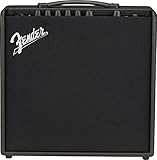
Overview: The Fender Mustang LT50 builds upon its smaller sibling with 50 watts of power and integrated USB audio interface for direct recording. Measuring 20Dx19.5Wx11.5H inches, this combo amplifier targets home recording enthusiasts seeking authentic Fender tone. It includes 25 onboard effects and 30 preloaded presets covering diverse musical styles, backed by Fender’s 2-year limited warranty that underscores its professional aspirations.
What Makes It Stand Out: The USB audio interface transforms this from practice amp to recording solution, enabling direct DAW integration without additional hardware. The 50-watt output provides substantial clean headroom while maintaining desktop-friendly dimensions. Fender’s modeling expertise ensures each preset delivers musical, gig-worthy tones that inspire creativity and streamline the recording process for home musicians.
Value for Money: For home studio owners, the LT50 eliminates need for separate audio interface and amp, offering excellent value. It competes favorably against entry-level recording setups, combining amplification and interfacing in one package. The 2-year warranty and Fender resale value further enhance its financial proposition, making it a smart long-term investment for serious hobbyists and emerging artists.
Strengths and Weaknesses: Strengths include versatile recording capability, robust power section, extensive effects library, and Fender’s build quality. The amp models sound authentic and inspiring. Weaknesses include larger footprint than desktop alternatives, potential overkill for silent practice, and lack of battery power for portability. Some users may prefer more specialized recording solutions for professional work, and the stereo output is missing from this model.
Bottom Line: The LT50 perfectly serves home recording guitarists wanting seamless DAW integration with authentic Fender tone in a single, reliable package.
10. HeadRush FRFR-GO - 30W Electric and Bass Guitar Amplifier with Dual 3" Speakers, Bluetooth and Rechargeable Battery, for Multi-FX/Amp Modeling Pedals

Overview: The HeadRush FRFR-GO is a purpose-built 30-watt amplification solution designed specifically for multi-FX and amp modeling pedals. Featuring dual 3-inch speakers in a precision-tuned cabinet, it delivers full-range flat response (FRFR) reproduction for accurate amp and cabinet emulation. The built-in rechargeable battery provides up to 13 hours of cordless operation, while Bluetooth connectivity enables wireless audio streaming for practice backing tracks.
What Makes It Stand Out: Unlike traditional guitar amps, the FRFR-GO is engineered as a neutral platform for digital modelers, ensuring your carefully crafted tones translate accurately without coloration. The exceptional 13-hour battery life liberates players from wall outlets, enabling truly mobile modeling sessions anywhere. Dedicated Bass and Treble EQ knobs offer quick room correction without tweaking your pedalboard settings, preserving your core tones.
Value for Money: While requiring a separate modeler, the FRFR-GO’s specialized design justifies its price for serious digital rig users. It eliminates need for bulky PA speakers or compromising studio monitors, filling a unique niche in the market. For owners of HeadRush, Line 6, or Fractal units, this represents an affordable, portable FRFR solution that outperforms generic Bluetooth speakers and delivers professional results.
Strengths and Weaknesses: Strengths include accurate FRFR reproduction, outstanding battery life, compact portability, and Bluetooth convenience. The EQ controls add practical flexibility for different environments. Weaknesses include dependency on external modeler, limited standalone functionality, and 30-watt power ceiling restricting live use. Bass players may find low-end response limited compared to larger FRFR systems, and the price may seem high for a “speaker.”
Bottom Line: The FRFR-GO is an indispensable tool for modeling pedal owners seeking portable, accurate amplification that preserves their digital tone investment and enables true mobility.
Why Bedroom Volume Remains the Ultimate Tone Killer
The Physics of Low-Volume Frustration
The relationship between volume and perceived tone isn’t psychological—it’s physical. Guitar speakers don’t produce their characteristic frequency response until they’re moving enough air to engage their mechanical properties. At bedroom levels, you’re hearing the speaker in its least efficient range, where high frequencies dominate and low-end thump disappears. Traditional tube amps compound this problem: their power sections require significant signal level to produce the harmonic saturation and compression we crave. Reduce the master volume, and you’re essentially neutering the entire signal chain before it reaches the speaker.
The Tube Amp Paradox
Here’s what manufacturers won’t tell you: attenuators and master volume mods are band-aids, not solutions. An attenuator sits between your amp and speaker, bleeding off power as heat, but it can’t change the fact that your speakers aren’t moving enough air to sound natural. You’re left with a fizzy, compressed signal that feels like playing through a wet blanket. Master volume mods push the preamp harder while starving the power section, creating a harsh, buzzy distortion that lacks the dynamic response of a cranked amp. This is why bedroom players have historically chosen between tone and tenancy.
The 2026 Modeling Amp Revolution
DSP Advances That Actually Matter
This year’s modeling amplifiers leverage 64-bit floating-point processing at sample rates up to 192kHz, but the real breakthrough isn’t raw horsepower—it’s algorithmic efficiency. New convolution engines can process cabinet impulse responses with near-zero latency while simultaneously running power amp simulation, room modeling, and multiple effects. The key development is parallel processing architecture that treats each gain stage as a separate entity, just like a physical amp. This means when you roll back your guitar’s volume knob, the amp model cleans up with the same non-linear response as a vintage tube circuit, not the sterile, linear taper of early digital attempts.
From Practice Tool to Professional Solution
The stigma of “digital” has evaporated for good reason. Professional studios now routinely track with modeling amps not just for convenience, but for sonic superiority in certain contexts. The ability to re-record different cabinet and microphone combinations after the fact eliminates the commitment anxiety of traditional miking. For bedroom players, this means your practice amp can now serve as your main recording device, your silent stage monitor, and your tone laboratory—all without the SPL of a jet engine.
Critical Features for Silent Practice
Wattage Switching Demystified
Don’t be fooled by “1-watt mode” marketing. True bedroom-friendly amps offer continuously variable wattage from 0.1 to 50 watts, letting you find the exact sweet spot where your power amp simulation breathes without overwhelming your space. More importantly, look for amps that maintain consistent tone across wattage settings. The best implementations use DSP compensation to adjust EQ curves as wattage decreases, preventing the thin, harsh sound that plagues low-power modes on lesser amps. This is different from attenuation—you’re not bleeding off power, you’re scaling the entire power amp model’s behavior.
Headphone Amplifier Quality
The headphone output on most modeling amps has historically been an afterthought, resulting in harsh, fatiguing tones that drive you back to your studio monitors. 2026’s standout models feature dedicated headphone amplifiers with impedance matching circuits that automatically adjust output characteristics based on your headphones’ load. Look for specs like “32-bit headphone DAC” and “sub-1-ohm output impedance.” These aren’t just numbers—they translate to headphone tones that maintain the three-dimensional imaging and depth missing from budget implementations. Some amps now include binaural room simulation that places your virtual cabinet in a 3D space, eliminating the “sound in your head” effect that makes headphone practice feel unnatural.
Cabinet Simulation Depth
The difference between a two-dimensional amp model and a living, breathing tone often comes down to impulse response quality. Modern amps don’t just load a single IR—they blend multiple microphone positions, room reflections, and even speaker breakup characteristics in real time. The critical specification is IR length: 20ms captures the basic frequency response, but 500ms IRs capture the entire acoustic signature of a cabinet in a room, including the low-frequency tail that makes palm mutes feel substantial. For bedroom use, this depth is non-negotiable—you’re replacing the physical room your amp would normally interact with, so the simulation needs to be convincing enough to fool your ears into feeling air movement.
Direct Recording and Re-Amping Workflows
USB-C Audio Integration
The move to USB-C has standardized direct recording, but implementation varies wildly. The gold standard in 2026 is 32-bit/96kHz audio interface capability built directly into the amp, with separate driver channels for processed and dry guitar signal. This lets you record a wet track for monitoring while capturing a clean DI for re-amping later. Crucially, look for amps that function as audio interfaces without proprietary drivers—class-compliant USB-C means plug-and-play compatibility with iPads, Android devices, and any computer without installing bloated software that crashes mid-session.
Re-Amping: Practice Now, Record Later
Re-amping capability transforms your bedroom practice into a professional workflow. Record your performance at 11 PM with headphones, then send that DI back through the amp at noon to experiment with different amp models, cabinets, and effects. The key is zero-latency hardware monitoring during recording, so you’re not distracted by delay. Advanced amps now include “commit mode” that renders your final tone choices as you practice, creating a hybrid workflow that saves hours of tone-chasing during mixing.
Power Amp Modeling: The Feel Factor
Why Power Section Emulation Matters
Preamp distortion gets all the attention, but power amp response is what makes an amp feel alive under your fingers. At bedroom volumes, traditional amps lose this interaction entirely. Modern modeling captures the dynamic impedance relationship between power tubes, output transformer, and speaker load. This means when you dig in with your pick, the virtual power section compresses and blooms like a cranked Plexi. The secret is in the sag and ghost note generation—subtle intermodulation artifacts that create the “bloom” around your notes. Without this, even perfect preamp distortion feels stiff and unresponsive.
Reactance and Sag: The Tube Feel
Sag isn’t just volume drop—it’s a complex interaction where the power supply voltage dips during hard transients, creating a breathing effect. Advanced modeling amps simulate this with separate power supply and transformer models that respond to your playing dynamics in real time. The result is an amp that feels like it’s fighting you in the best possible way, compressing when you hit it hard and opening up when you play delicately. This is the difference between playing a responsive instrument and triggering samples.
The Modern Bedroom Ecosystem
Wireless Connectivity Standards
Bluetooth 6.0 and Wi-Fi 7 integration in 2026’s amps isn’t about streaming backing tracks—it’s about seamless preset synchronization across devices and cloud-based tone sharing. The key improvement is latency: sub-10ms wireless audio means you can adjust amp settings from your phone without audible delay. More importantly, look for amps that support MIDI over Bluetooth, letting you control parameters with wireless foot controllers or integrate with DAW automation without cable spaghetti.
App Integration and Preset Management
The best amp ecosystems treat the hardware as a DSP engine and the app as the brain. This means the app works offline, stores presets locally, and syncs intelligently when connected. Watch out for amps that require constant app connection—if the app crashes, you shouldn’t lose your tone. Advanced implementations include AI-assisted tone building that analyzes your playing style and suggests parameter tweaks, but the underlying architecture should always let you override these suggestions and save your human-driven choices.
Monitoring Solutions: Headphones vs. FRFR
Headphone Topology and Impedance Matching
Not all headphone outputs are created equal. The critical spec is output impedance—ideally under 2 ohms for modern low-impedance headphones. Higher output impedance interacts with your headphones’ frequency response, creating unpredictable EQ shifts. The best bedroom amps include multiple headphone voicings: “studio flat” for critical listening, “amp in room” for familiar feel, and “monitor” for tracking with a full mix. Some even include crossfeed circuits that bleed a bit of left channel into right and vice versa, creating a more speaker-like stereo image that reduces ear fatigue.
FRFR Speakers for Bedroom Use
Full-range, flat-response speakers seem like the obvious choice for modeling amps, but in bedrooms, they can be overkill. A 5-inch FRFR monitor at three feet produces the same perceived volume as a 4x12 cabinet at twenty feet, but without the cabinet’s natural low-end roll-off. This means you hear frequencies that would normally be absorbed by a room, resulting in harsh, boomy tone. The solution is FRFR speakers designed specifically for guitar, with DSP that mimics the dispersion pattern and off-axis response of traditional guitar cabinets. These create the same “amp in room” feel without the SPL.
Impulse Responses and Customization
Stock vs. Third-Party IRs
Every modeling amp comes with stock cabinet simulations, but the quality varies dramatically. Professional-grade amps include IRs captured with high-end microphones, vintage preamps, and proper acoustic treatment. The real power comes from loading third-party IRs—thousands of professionally captured cabinets are available, letting you match the exact sound of your favorite records. The key feature is IR length support: some amps limit you to 20ms IRs, while others accept 500ms files that capture the complete acoustic signature. For bedroom players, longer IRs are crucial—they provide the depth missing from your physical space.
Creating Your Own Cabinet Models
Advanced users can now capture their own physical cabinets using the amp’s built-in IR capture function. This process sends a test tone through your cabinet, records it with your microphone, and creates a custom IR in under a minute. For bedroom players with one treasured cabinet, this means you can practice silently while preserving your exact tone. The best implementations include room capture modes that add your bedroom’s natural reverb to the IR, creating a consistent sound whether you’re monitoring through headphones or speakers.
Price Tiers and Value Propositions
Budget Tier Expectations
Sub-$300 modeling amps in 2026 deliver shockingly good core tones but cut corners in connectivity and processing headroom. Expect limited IR slots (usually 1-2), fixed signal chains, and basic headphone outputs. The amp models themselves are often identical to pricier versions—companies reuse their DSP algorithms across product lines—but you’ll lack the deep editing and recording integration that justifies higher prices. These are perfect for pure practice but will frustrate you if you try to integrate them into a recording workflow.
Mid-Range Sweet Spots
The $400-$700 range is where bedroom amps hit their stride. You get variable wattage down to 0.1W, multiple IR slots, USB-C audio interface capability, and robust app ecosystems. These amps include the same DSP chips as flagship models but with fewer footswitches and simpler hardware. The key differentiator is processing allocation: mid-tier amps might run four effects simultaneously versus eight on premium units, but the core amp modeling is identical. This is the sweet spot for serious bedroom players who record occasionally.
Premium Feature Justification
Premium amps above $800 justify their price through expandability and build quality. You get more IR memory (100+ slots), dedicated re-amp outputs, multiple effects loops, and premium components in the analog signal path. The headphone amplifiers alone often cost what a budget amp does, with discrete circuitry and high-current output stages. For bedroom players, the real value is future-proofing: premium amps receive firmware updates longer and often include hardware features that become essential as your needs evolve.
Future-Proofing Your 2026 Purchase
AI Tone Matching Reality Check
AI-driven tone matching promises to analyze your favorite recordings and automatically dial in matching settings. In practice, this works remarkably well for classic tones but struggles with heavily processed modern sounds. The more important question is whether the AI runs locally or in the cloud. Local processing means your tones work offline and remain private; cloud processing means you’re dependent on the manufacturer’s servers staying online. For bedroom players, local AI is a useful starting point, but manual tweaking will always be necessary for truly personal tone.
Firmware Update Philosophy
The lifespan of a modeling amp is determined by its firmware support, not its hardware. Research manufacturers’ track records: Do they add features years after release, or abandon products for new models? The best companies treat firmware as a continuous improvement process, adding amp models, effects, and connectivity options based on user feedback. Check forums for patterns: brands that actively respond to bug reports and implement user-requested features are worth premium prices. Your bedroom amp should improve over time, not become obsolete.
Frequently Asked Questions
How low can bedroom modeling amps actually go before tone suffers?
Modern modeling amps maintain core tone characteristics down to 0.1 watt, but the real magic happens in the power amp modeling algorithms. At sub-watt levels, you’re relying entirely on DSP to simulate speaker interaction, so look for amps with dedicated “low-volume compensation” circuits that adjust EQ and compression curves as wattage decreases. The practical limit is around 0.05 watts—below this, even the best models start to feel compressed and lifeless.
Do I need a separate audio interface if my amp has USB-C?
Not necessarily. High-end modeling amps now function as complete audio interfaces with multiple input/output channels, phantom power for condenser mics, and direct monitoring. However, if you need more than two simultaneous inputs (for miking acoustic guitars or vocals), a separate interface still makes sense. For pure guitar recording, a quality USB-C amp eliminates interface clutter.
Can modeling amps really replace my tube amp for recording?
For 90% of recording situations, yes. The remaining 10% involves edge cases: extremely touch-sensitive clean tones at the threshold of breakup, or specific power amp distortion characteristics that current modeling still approximates rather than perfectly replicates. That said, most listeners can’t distinguish professionally recorded modelers from miked amps in blind tests, and the flexibility to change cabs and mics after recording is a game-changer.
What’s the difference between power scaling and master volume in modeling amps?
Power scaling adjusts the entire power amp model’s behavior, including sag, compression, and harmonic content. Master volume simply controls output level after the modeling is complete. Think of power scaling as turning down a real amp’s wattage while keeping the tubes saturated; master volume is like turning down a mixing board fader. For authentic feel at low volumes, power scaling is essential.
How many impulse response slots do I realistically need?
For pure practice, 5-10 slots let you cover the essential cabinet sounds. For recording, you’ll want 50+ to match different song contexts. The real question is how quickly you can swap IRs—amps that let you audition IRs in real-time without interrupting audio make large libraries usable. Some players thrive with one perfect IR; others collect hundreds. Start with an amp that includes quality stock IRs, then expand based on your needs.
Will Bluetooth connectivity affect my tone?
Modern Bluetooth 6.0 operates on a separate frequency band from your guitar signal and includes error correction that prevents interference. The bigger concern is latency: audio over Bluetooth can have 30-40ms delay, which is unusable for monitoring. However, Bluetooth for control data (preset changes, parameter adjustment) is instantaneous and doesn’t affect your core tone at all.
Do FRFR speakers sound good at low bedroom volumes?
Traditional FRFR monitors sound harsh and boomy at low volume because they reproduce frequencies your room can’t handle. Look for FRFR speakers with “guitar voicing” modes that emulate the dispersion and low-end roll-off of real cabinets. Better yet, consider smaller 5-inch models designed for nearfield listening—they interact with your room more like a quiet combo amp than a studio monitor.
How important is the headphone amplifier quality in a modeling amp?
Critically important. A poor headphone amp has high output impedance that interacts with your headphones’ drivers, creating unpredictable frequency response and harshness. It also lacks current delivery for proper transient response, making your tone feel compressed and lifeless. Test with quality headphones (32-80 ohms) and listen for clarity in the upper mids and tightness in the low end—this reveals a proper headphone output stage.
Can I use my modeling amp’s effects with a real tube amp?
Many modern modeling amps include an effects loop that lets you use their delays, reverbs, and modulations with a traditional amp. Some even offer “4-cable method” connectivity, placing the modeling amp’s preamp in front of your tube amp’s power section. This hybrid approach gives you the best of both worlds: digital effects precision with real tube power amp response.
What should I prioritize: more amp models or better core tones?
Always prioritize quality over quantity. An amp with five perfectly realized models will serve you better than one with 100 mediocre simulations. The best approach is to identify the two or three amp tones you actually use, then find an amp that nails those specifically. Exceptional core tones with deep editing beat a sprawling model list every time. Remember, you’ll spend 95% of your time on three sounds—make sure those three are flawless.
See Also
- How to Solve Stage Volume Issues with the 10 Best Mini Guitar Amplifiers in 2026
- 10 Best Modeling Guitar Amplifiers for Bedroom Producers in 2026
- 10 Modeling Guitar Amplifiers with Fender-style Clean for Surf Rock in 2026
- The 10 Ultimate Modeling Guitar Amplifiers for Cover Bands in 2026
- 10 Revolutionary Modeling Guitar Amplifiers with App Control in 2026