Table of Contents
The streets have always been the ultimate proving ground for musicians, but in 2026, the game has fundamentally changed. Today’s buskers aren’t just competing with traffic noise and chatty crowds—they’re navigating increasingly stringent city regulations, integrating digital backing tracks on the fly, and delivering studio-quality tone from setups that fit in a backpack. The mini guitar amplifier has evolved from a novelty practice tool into a sophisticated piece of performance gear that can make or break your street-corner gig.
What makes this shift truly revolutionary isn’t just the shrinking size; it’s the convergence of power-efficient Class D amplification, advanced battery chemistry, and DSP modeling that puts stadium-worthy tones in the hands of sidewalk virtuosos. Whether you’re a fingerstyle guitarist building looped soundscapes or a blues player cutting through urban chaos, understanding the nuanced features of modern mini amps isn’t just helpful—it’s essential for turning passing foot traffic into a captivated audience (and a hat full of tips).
Top 10 Mini Guitar Amplifiers
Detailed Product Reviews
1. LEKATO Mini Electric Guitar Amp 5W, Portable Guitar Amp Bluetooth with Built-in 4 Effects, Clean Distortion Overdrive Reverb, Rechargeable Small Amplifier for Practice, Black (JA-05G)

Overview: The LEKATO JA-05G is a 5-watt mini amplifier designed for portable practice sessions. This compact unit packs four built-in effects—clean, distortion, overdrive, and reverb—into a tiny black enclosure that weighs next to nothing. With its integrated rechargeable battery offering approximately six hours of playtime and Bluetooth connectivity for backing tracks, it’s built for guitarists who need mobility without sacrificing tonal variety.
What Makes It Stand Out: The plug-and-play design with a direct 6.35mm plug eliminates cable clutter, allowing you to attach the amp directly to your guitar. The four-effect suite is impressive for such a small form factor, giving beginners and intermediate players ample sonic territory to explore. The Bluetooth audio function lets you jam along with your favorite songs streamed from your phone, making practice sessions more engaging and musical.
Value for Money: Positioned as an entry-level practice solution, this LEKATO offers significant features at a competitive price point. The combination of multiple effects, wireless backing track capability, and rechargeable convenience makes it a strong contender against similarly priced units that typically offer fewer effects or require disposable batteries.
Strengths and Weaknesses: Strengths include true portability, versatile effect selection, solid battery life, and hassle-free Bluetooth streaming. The 5-watt output is adequate for personal practice but won’t cut through in group settings. Notable weaknesses are the lack of a headphone jack for silent practice and Bluetooth limitations—it only receives audio, not transmits, so no wireless headphones or external speakers.
Bottom Line: Perfect for beginners and traveling guitarists who prioritize portability and effect variety over volume. The LEKATO JA-05G delivers impressive functionality in a pocket-sized package, though silent practice requires a separate solution.
2. Flatsons FBA-10 Guitar Amp, 10W Mini Electric Guitar Amplifier with Clean/Drive Channel, 6H Working, USB-C Rechargeable, 3.5mm Headphone/AUX Jack, Wireless Portable Amp for Indoor Practice, Traveling

Overview: The Flatsons FBA-10 is a 10-watt mini amplifier that champions pure analog technology for guitarists seeking authentic tube-like response in a portable package. This feature-rich unit delivers crystal-clear tone across a 100Hz-20kHz frequency range, covering over 165 feet of range. With dual CLEAN/DRIVE channels, comprehensive tone-shaping controls, and modern connectivity options, it’s engineered for serious practice anywhere.
What Makes It Stand Out: The full analog circuitry sets it apart from digital modeling competitors, providing natural breakup and responsive dynamics that digital amps struggle to replicate. The inclusion of both a 3.5mm headphone jack for silent practice and an AUX input with independent volume control offers unmatched flexibility. Bluetooth 5.3 ensures stable wireless backing track streaming, while the handcrafted two-tone woven grille adds vintage aesthetic appeal.
Value for Money: While priced higher than basic 5-watt options, the FBA-10 justifies its cost through superior analog sound quality, doubled power output, and professional features like USB-C charging and headphone capability. It’s an investment in tone that rivals practice amps costing significantly more.
Strengths and Weaknesses: Strengths include exceptional analog tone, 10-watt output, versatile connectivity, modern USB-C charging, and striking design. The battery provides six hours of playtime, matching competitors. Weaknesses are limited to two channels versus four effects found elsewhere, and the slightly larger footprint compared to ultra-compact models. The analog approach, while tonally superior, offers less effect variety.
Bottom Line: For tone-conscious guitarists who demand authentic analog sound in a portable format, the Flatsons FBA-10 is an outstanding choice. The 10-watt power and headphone jack make it versatile for home, travel, or quiet practice.
3. JOYO Mini Amp 5W Portable Electric Practice Amp Bluetooth Rechargeable Guitar Amplifier Built-in 4 Effects Clean Distortion Overdrive Reverb, Black (JA-05G)

Overview: The JOYO JA-05G is a 5-watt portable amplifier that mirrors many features of its competitors while adding thoughtful touches for specific guitar types. This black mini amp houses four essential effects—clean, distortion, overdrive, and reverb—controlled through a single EFFECT button. With Bluetooth 5.1 connectivity and a rechargeable battery, it’s designed for convenient practice sessions anywhere inspiration strikes.
What Makes It Stand Out: The included extension plug specifically addresses compatibility issues with Stratocaster-type guitars, where the recessed output jack can prevent proper connection with integrated plug designs. This small addition demonstrates JOYO’s attention to real-world player needs. The four-effect suite provides tonal variety rarely seen in this size class, while the plug-and-play design maintains ultimate portability.
Value for Money: This amp sits in the same price bracket as other 5-watt mini amps but adds the valuable extension plug at no extra cost. For Strat players, this eliminates the need for separate adapter cables, representing genuine added value. The five-hour battery life is slightly shorter than some competitors but remains practical for most practice sessions.
Strengths and Weaknesses: Strengths include the extension plug for Strat guitars, four versatile effects, Bluetooth backing track capability, and true portability. The clean design and simple operation appeal to beginners. Weaknesses include the lack of a headphone jack for silent practice, Bluetooth 5.1 (slightly older than 5.3), and marginally shorter battery life. Like its peers, the 5-watt output limits its use to personal practice.
Bottom Line: An excellent choice for Stratocaster owners and beginners wanting maximum effect variety in a travel-friendly package. The JOYO JA-05G solves a common connectivity problem while delivering solid practice features.
4. Flatsons FBA-10 Guitar Amp, 10W Mini Electric Guitar Amplifier with Clean/Drive Channel, 6H Work, USB-C Rechargeable, 3.5mm Headphone/AUX, Wireless Portable Amp for Indoor Practice, Travel (White)

Overview: The Flatsons FBA-10 in white is functionally identical to its black counterpart, offering 10 watts of pure analog power in a stylish vintage-inspired package. This mini amplifier delivers the same impressive 100Hz-20kHz frequency response and 165-foot coverage, making it ideal for home practice, travel, and street performance. With dual CLEAN/DRIVE channels, comprehensive controls, and modern connectivity, it combines classic tone with contemporary convenience.
What Makes It Stand Out: Beyond the striking white finish with handcrafted two-tone woven grille, this amp’s pure analog technology provides authentic, responsive tone that digital competitors can’t match. The versatile connectivity suite—including a 3.5mm headphone jack, AUX input with independent volume control, and Bluetooth 5.3—offers flexibility for any practice scenario. USB-C charging brings modern convenience to the vintage aesthetic.
Value for Money: Sharing the same price point as the black version, the white FBA-10 offers identical sonic performance and features. The color choice is purely aesthetic, allowing players to match their style or instrument without compromising on the amp’s excellent analog circuitry and 10-watt output. It’s a premium practice amp that justifies its cost through sound quality rather than flashy features.
Strengths and Weaknesses: Strengths mirror the black model: superior analog tone, robust 10-watt power, silent practice capability, stable Bluetooth 5.3, USB-C charging, and eye-catching design. The six-hour battery life is competitive. Weaknesses include only two channels versus the four effects offered by some 5-watt competitors, and a slightly larger size than ultra-portable options. The analog approach prioritizes tone purity over effect variety.
Bottom Line: Choose the white Flatsons FBA-10 if you value both tone quality and aesthetic appeal. It’s identical to the black version in performance, making it an excellent analog practice amp for discerning guitarists who want their gear to look as good as it sounds.
5. LEKATO Mini Guitar Amplifier, Dual Speakers 5W, Rechargeable Electric Guitar Amp Bluetooth with Clean Overdrive, 6H Working, Headphone Jack, Portable Small Amp for Practice AG-04 (Brown)

Overview: The LEKATO AG-04 distinguishes itself from its JA-05G sibling with a brown retro aesthetic, dual speaker configuration, and crucially, a headphone jack. This 5-watt amplifier offers clean and overdrive modes with simple three-knob control, Bluetooth 5.0 connectivity, and six hours of rechargeable battery life. The vintage-inspired woven grille and compact form factor make it as stylish as it is practical for portable practice.
What Makes It Stand Out: The dual speaker design promises fuller, more immersive sound than single-speaker competitors, while the inclusion of a 3.5mm headphone jack addresses the primary weakness of the JA-05G model. The retro brown finish with threaded mesh grille adds distinctive visual character that stands out from generic black boxes. USB-C charging provides modern convenience, and the 2000mAh battery delivers reliable performance.
Value for Money: This LEKATO variant trades two effects for a headphone jack and dual speakers compared to the JA-05G. For players needing silent practice capability, this is an excellent value proposition. The retro design adds aesthetic premium without increasing price significantly, making it competitive with other 5-watt amps that lack the headphone option.
Strengths and Weaknesses: Strengths include the headphone jack for silent practice, dual speakers for richer sound, attractive retro design, USB-C charging, and stable Bluetooth 5.0. The six-hour battery life is solid. Weaknesses are the reduced effect selection (only clean and overdrive) compared to four-effect competitors, and the slightly larger size due to dual speakers. The 5-watt power remains suitable only for personal practice.
Bottom Line: The LEKATO AG-04 is the ideal choice within the LEKATO lineup for players who prioritize silent practice and aesthetic appeal. While it sacrifices some effect variety, it gains crucial functionality and delivers it in a stylish, portable package.
6. Orange Crush Mini Guitar Amplifier Combo 3 Watts
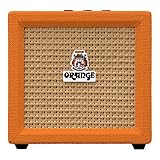
Overview: The Orange Crush Mini is a 3-watt combo amp that packs surprising versatility into a tiny footprint. This pint-sized powerhouse gives guitarists authentic Orange tone in a battery-powered package perfect for bedroom practice, backstage warmup, or impromptu jam sessions. Its straightforward design prioritizes plug-and-play simplicity over menu-diving complexity, making it ideal for guitarists who want great tone without fuss.
What Makes It Stand Out: The Crush Mini’s “shape” control is a stroke of genius, replacing traditional EQ knobs with a single sweep that morphs from scooped metal tones to mid-forward rock crunch. The ability to drive an external cabinet transforms it from practice toy to micro gigging head—plug into a 4x12 and you’re genuinely gigging with 3 watts. The built-in tuner eliminates a common pedalboard staple, while the aux-in makes jamming with backing tracks seamless.
Value for Money: At its typical sub-$70 price point, this is premium territory for a micro amp, but the Orange pedigree and cabinet-driving capability justify every penny. Comparable practice amps lack the tuner and external speaker output, making this a smart long-term investment that grows with your needs rather than becoming obsolete.
Strengths and Weaknesses: Strengths: Authentic Orange tone in miniature; drives external cabinets; built-in tuner; intuitive shape control; solid battery life Weaknesses: Limited wattage for clean headroom; single tone control limits fine-tuning; no headphone volume independent of speaker
Bottom Line: The Orange Crush Mini is the thinking guitarist’s practice amp—versatile enough to remain useful as your rig evolves, with features that punch well above its weight class and price tag.
7. Marshall MS2 Battery-Powered Micro Guitar Amplifier

Overview: The Marshall MS2 is the quintessential pocket amp, delivering iconic Marshall tone in a device smaller than most effects pedals. Weighing just 0.34 pounds and powered by a single 9V battery, this 1-watt micro amp lets you take that classic British crunch anywhere. It’s the ultimate travel companion for guitarists who refuse to be without their tone, fitting literally in your pocket.
What Makes It Stand Out: Authentic Marshall styling in a package that literally fits in your pocket sets the MS2 apart. While other micro amps chase features, the MS2 focuses on core tone with its simple volume and tone controls. The headphone jack enables silent practice anywhere, from hotel rooms to commuter trains. Its featherlight weight makes it the most portable option from a major amp manufacturer, and that Marshall badge carries serious credibility.
Value for Money: Typically available for under $50, the MS2 sits in the budget sweet spot. You’re paying for the Marshall name and legacy more than raw power, but the build quality and brand cachet make it a worthwhile purchase for enthusiasts. Alternatives offer more features, but none deliver that classic Marshall aesthetic and promised tone in such a minimal package.
Strengths and Weaknesses: Strengths: Extreme portability; authentic Marshall branding; headphone output; simple operation; excellent for travel Weaknesses: Only 1 watt limits practical use; no aux input for backing tracks; basic tone control; battery life could be better
Bottom Line: Perfect for Marshall loyalists needing a travel practice solution, the MS2 trades features for brand authenticity and ultimate portability—ideal for those who value style and simplicity over versatility.
8. Fender Frontman 10G Guitar Amp, 10 Watts, with 2-Year Warranty, 6 Inch Fender Special Design Speaker, 5.75Dx10.25Wx11H Inches

Overview: The Fender Frontman 10G represents the gold standard for beginner practice amps, offering 10 watts of power through a 6-inch speaker in a classic Fender package. This is the amp that launched a million guitar journeys, providing clean and overdriven tones with the reliability of a two-year warranty. It’s a no-nonsense workhorse designed for daily practice and skill development in bedrooms and dorm rooms.
What Makes It Stand Out: That 2-year Fender warranty speaks volumes about build quality and manufacturer confidence. The closed-back design delivers a surprisingly robust bass response that belies its small size, while the dedicated gain and overdrive switch provide authentic tube-like breakup. Separate treble and bass controls offer genuine tone-shaping capability missing from most micro amps, and the 10-watt output provides enough clean headroom for small acoustic gatherings.
Value for Money: Priced around $60-70, the Frontman 10G is an exceptional value. You’re getting proper amp construction, brand heritage, and warranty protection that cheap knockoffs can’t match. While headphone-only amps cost less, this provides real speaker output for performance practice, making it a more complete learning tool that justifies the modest premium over disposable micro amps.
Strengths and Weaknesses: Strengths: 10 watts of usable power; closed-back design; 2-year warranty; separate EQ controls; authentic Fender tone; aux input Weaknesses: Not battery powered; heavier at 11.7 lbs; no reverb; overdrive can sound harsh at high gain
Bottom Line: The Frontman 10G is the definitive starter amp—reliable, loud enough for small rooms, and backed by Fender’s warranty. It’s the smart choice for beginners who want a proper amp experience without breaking the bank.
9. SONICAKE Guitar Headphone Amp Mini Guitar Headphone Amplifier US Classic Rechargeable Plug-in Pocket Bedroom Overdrive Reverb Effects

Overview: The SONICAKE US Classic is a purpose-built headphone amplifier that delivers tweed-era Fender tones directly to your ears without waking the neighbors. This rechargeable unit is designed for silent practice, packing clean and overdrive channels plus reverb into a device that plugs directly into your guitar. It’s the modern solution for apartment dwellers and late-night shredders who demand authentic tone without volume.
What Makes It Stand Out: The tweed amp modeling captures that coveted vintage American tone with surprising accuracy for such an affordable device. Built-in reverb adds dimension that most headphone amps lack, while the included headphone splitter lets you jam with a teacher or friend. USB charging eliminates battery costs, and the 5-hour runtime covers extended practice sessions. The aux cable inclusion means you can play along with tracks right out of the box.
Value for Money: At roughly $40, this is exceptional value. Dedicated headphone amps with reverb typically cost more, and the included accessories (splitter, cable) add $10-15 in value. Compared to multi-effects units, it sacrifices versatility for simplicity and focus, making it perfect for players who want great tone without menu fatigue.
Strengths and Weaknesses: Strengths: Authentic tweed tones; built-in reverb; USB rechargeable; headphone splitter included; silent operation; compact Weaknesses: No speaker output; plastic construction feels cheap; limited tonal flexibility; reverb can’t be adjusted
Bottom Line: For silent practice with vintage vibe, the SONICAKE is unbeatable. It delivers focused, quality tones and essential accessories at a price that makes it a no-brainer for apartment guitarists.
10. LEKATO Mini Guitar Amp Rechargeable Electric Guitar Amplifer 5W, Clean/Overdrive Channels,Portable Small Amp for Guitarist Practice,Black

Overview: The LEKATO Mini Guitar Amp bridges the gap between headphone amps and practice combos, offering 5 watts of rechargeable power in a package that fits in your backpack. With clean and overdrive channels, Bluetooth connectivity, and aux input, this black beauty is designed for the modern guitarist who practices anywhere and everywhere. It’s a versatile solution that doesn’t tether you to wall power or compromise on features.
What Makes It Stand Out: Bluetooth audio playback is the killer feature, letting you stream backing tracks wirelessly while you play—no cables required. The independent volume controls for guitar and aux/Bluetooth inputs provide superior mix control compared to competitors. Five watts delivers enough volume for small gatherings, while the rechargeable battery offers up to 6 hours of unplugged playing time. The ability to switch between clean and overdrive channels adds genuine tonal versatility.
Value for Money: Priced around $50-60, the LEKATO offers features typically found in more expensive units. The Bluetooth capability alone justifies the price premium over basic micro amps, while the rechargeable battery saves long-term battery costs. It’s competitively priced against the Orange Crush Mini but offers modern connectivity that appeals to digital-native players.
Strengths and Weaknesses: Strengths: Bluetooth connectivity; rechargeable battery; independent volume controls; 5W speaker output; portable size; clean/overdrive channels Weaknesses: Tone control is basic; no built-in effects; build quality is adequate but not premium; Bluetooth can have latency issues
Bottom Line: The LEKATO is the connectivity king of micro amps, perfect for players who want wireless backing track integration and battery-powered freedom without sacrificing speaker output.
Why Mini Amplifiers Are Revolutionizing Street Performance in 2026
The Evolution from Bulky to Pocket-Sized Power
Remember when “portable” meant lugging a 30-watt combo amp with a car battery inverter? Those days feel like ancient history. The mini amplifier revolution kicked into high gear when manufacturers stopped trying to shrink traditional circuits and started rethinking amplification from the ground up. In 2026, we’re seeing third-generation Class D power sections that deliver 95% efficiency, meaning less heat, longer battery life, and surprisingly robust headroom from enclosures smaller than a lunchbox.
This evolution matters because buskers face unique spatial constraints. You’re not just carrying gear—you’re managing it in real-time, often while keeping one eye on your instrument and the other on your surroundings. Modern mini amps leverage neodymium speakers and passive radiators to cheat physics, producing低频 response that used to require 8-inch drivers from units barely larger than a grapefruit. The secret lies in ported cabinet design and digital signal processing that compensates for speaker size limitations in ways analog circuits never could.
Understanding the Modern Busker’s Needs
Today’s street performer is a multimedia entity. You might start with solo acoustic fingerpicking, layer in a vocal harmony via a looper, drop a pre-recorded drum beat, then switch to electric for a searing lead—all without missing a beat. Your amplifier needs to be a Swiss Army knife: clean enough for vocals, gritty enough for blues, and transparent enough to handle your loop station’s output without coloring it unpredictably.
The 2026 busker also operates in a surveillance-conscious world. Many municipalities now require permits with decibel limits enforced by smartphone apps wielded by patrolling officers. Your amp needs consistent, predictable output across its volume range—not the exponential jump from “too quiet” to “too loud” that plagued early mini models. This is where modern digital volume management and built-in limiters become non-negotiable features, not luxury add-ons.
Power and Portability: The Balancing Act
Wattage Reality Check: How Much Power Do You Really Need?
Let’s kill a persistent myth: more watts don’t always mean louder performances. A well-designed 5-watt mini amp with a high-efficiency speaker can project more effectively than a poorly engineered 20-watt unit. For busking, you’re targeting 75-90dB at 3 meters—enough to cut through ambient street noise without triggering noise complaints. In 2026’s urban environments, that sweet spot typically falls between 10-30 watts of clean power for electric setups, and 20-40 watts for acoustic-electric performances requiring more headroom.
The key metric is “clean headroom”—how loud your amp stays before breaking up. Digital modeling amps often advertise higher wattage but achieve it through power compression that can sound thin at max volume. Look for units specifying “RMS clean power” rather than “peak power.” For loop artists, having 20% more clean headroom than you think you need prevents your layered tracks from turning to mush when you dig into a solo.
Battery Technology Breakthroughs
Lithium-polymer batteries have given way to graphene-enhanced cells in premium 2026 models, offering 40% longer runtimes in the same footprint. But the real game-changer is intelligent power management. Modern mini amps feature adaptive draw systems that monitor your playing dynamics and adjust power consumption accordingly. Strum softly, and the amp sips juice; dig in for a chorus, and it instantly delivers full power without sag.
Runtime ratings are marketing fluff without context. A “20-hour battery life” claim might apply to practice volumes (around 60dB) but drop to 4 hours at busking levels. The spec sheet you want shows runtime at specific decibel outputs: “8 hours at 85dB, 12 hours at 80dB.” Also critical is USB-C Power Delivery (PD) 3.0 support, which lets you recharge from the same power bank that keeps your phone and looper alive—a single-cable ecosystem that simplifies your whole setup.
Weight vs. Volume: The Physics of Portable Sound
Here’s where industrial design gets clever. The lightest amp isn’t always the most portable if its shape creates an awkward center of gravity. The 2026 standard favors rectangular, brick-shaped units that slide into backpack laptop sleeves rather than cube-shaped boxes that roll around. Weight distribution matters when you’re carrying gear for hours—amps under 5 pounds with side-mounted strap points let you sling them over a shoulder without neck strain.
Material science plays a role too. Carbon-fiber reinforced cabinets shave ounces while improving rigidity, but they can sound sterile compared to wood composites that add warmth. Some manufacturers now use bio-composite panels that offer the best of both worlds: weather resistance and acoustic liveliness. The sweet spot for all-day busking is 3-4 pounds with a form factor that doubles as a monitor wedge when tilted back.
Tone Quality in a Compact Package
Digital Modeling vs. Analog Circuitry
The modeling vs. analog debate rages on, but 2026’s DSP chips have flipped the script. Modern mini amps run algorithms that model not just amps, but entire signal chains—including how different speakers interact with specific cabinet materials and how air movement affects microphone placement. For buskers, this means access to tones that would require a van full of gear, all switchable via foot controller.
That said, purists aren’t wrong about analog “feel.” The compression and sag of a genuine tube circuit (even a sub-miniature 12AX7 running at low voltage) responds to picking dynamics in ways digital still approximates. Hybrid designs are the compromise: analog preamp with digital effects and power section. For acoustic players, pure analog transparency often wins—your guitar’s natural voice shouldn’t sound like it’s been run through a video game console.
Speaker Size and Configuration Secrets
The “bigger is better” speaker myth dies hard, but mini amps have rewritten the rules. A 4-inch neodymium driver with a passive radiator can produce usable低频 down to 80Hz—enough for rhythm guitar but not bass. For solo buskers, that’s plenty. The trick is matching speaker excursion (how far the cone moves) to cabinet volume. Too much speaker in too small a box sounds boxy; too little speaker can’t move enough air.
2026’s innovation is coaxial and triaxial designs cramming multiple drivers into tiny spaces. A 3-inch main driver with a 1-inch tweeter handles guitar and vocals separately, preventing the midrange muddiness that plagues single-speaker units. Some amps now use full-range drivers designed for PA systems, voiced specifically for guitar through DSP correction. For loop artists, this separation is crucial—your bass line won’t swallow your vocal harmonies.
EQ Flexibility for Diverse Environments
Graphic EQs with fixed frequencies are outdated. Modern mini amps feature parametric mid controls that let you hunt and destroy problem frequencies in real-time. That 250Hz boom from a nearby building’s reflection? Dial it out in 10 seconds. The harsh 2kHz from a concrete tunnel? Notch it down without killing your presence.
Preset memory has become standard, but the 2026 twist is GPS-aware switching. Some amps can automatically load your “subway station” EQ curve when they detect you’ve returned to a previously played location. For the technophobic, simple “environment” knobs that apply smart EQ curves based on room size work wonders. Look for amps with at least 3-band EQ plus a sweepable mid or a dedicated “anti-feedback” control that uses notch filtering rather than just cutting highs.
Connectivity Features That Actually Matter
Bluetooth Streaming and Backing Tracks
Bluetooth 5.3 with aptX Adaptive has finally made wireless backing tracks viable for live performance. The latency now hovers around 40ms—imperceptible to most audiences and manageable for performers with a little practice. But the real win is dual-device pairing: stream drums from your phone while your looper connects via Bluetooth MIDI, all without cables snaking across the sidewalk.
The catch? Compression artifacts. Cheaper amps use standard SBC Bluetooth that crushes dynamics. For busking, you want codecs that preserve transients—your kick drum needs to punch, not splat. Also critical is the ability to blend Bluetooth audio with your guitar signal independently. Nothing’s worse than a backing track drowning out your live playing because the amp lacks a separate level control.
USB-C Power and Recording Capabilities
USB-C isn’t just for charging anymore. USB Audio 2.0 support turns your amp into an audio interface, sending a direct feed to your phone for livestreaming or recording. In 2026, many cities require buskers to livestream performances for permit compliance—having a single-cable solution that powers your amp while sending audio is a revelation.
Look for 24-bit/48kHz minimum specs; anything lower sounds noticeably thin when streamed. Some amps offer onboard recording to microSD cards as backup, capturing both your guitar and the Bluetooth backing track mix. This is invaluable for content creators building a social media presence from street performances. The killer feature is loopback recording—mixing your guitar with phone audio for reaction videos or collaboration content without complex routing.
DI Output for Professional Setup Integration
Smart buskers arrive early to scout spots, but sometimes you find yourself invited to plug into a venue’s PA system. A balanced XLR DI output with ground lift isn’t just convenient—it’s professional. The 2026 standard includes pre/post EQ switching, letting you send a dry signal to the sound engineer while still hearing your preferred tone through the amp.
Transformer-isolated DIs prevent ground hum when connecting to questionable venue power—common in outdoor festival setups. Some mini amps now feature IR (impulse response) loading on the DI, letting you send the sound of a miked 4x12 cabinet to the PA while your actual amp whispers at 85dB. For loop artists, a stereo DI output means your carefully crafted stereo image doesn’t collapse to mono when you hit the big stage.
Durability and Weather Resistance
IP Ratings Explained for Street Musicians
That IP67 rating looks impressive, but what does it mean for a busker? The “6” means dust-tight—essential when you’re kicking up sidewalk grit. The “7” indicates submersion protection up to 1 meter for 30 minutes. While you hopefully won’t drown your amp, this also covers torrential downpours and spilled coffee from passersby.
More practical is the IP54 rating found on many pro-grade units. The “5” handles dust ingress (some will get in, but not enough to harm operation), while the “4” protects against water splashes from any direction. For busking, IP54 is often the sweet spot—fully sealed amps can trap condensation from rapid temperature changes, causing more damage than they prevent. Look for Gore-Tex vents that equalize pressure while blocking moisture.
Build Quality Materials That Survive the Streets
ABS plastic is lightweight but becomes brittle in cold weather. Polycarbonate blends maintain flexibility down to -20°C—a real consideration for winter buskers. Metal grilles are non-negotiable; fabric grilles tear and foam speaker surrounds degrade in UV light. Stainless steel mesh with powder coating prevents rust from road salt in northern cities.
Corner protection deserves scrutiny. Rubber bumpers are fine, but integrated TPU (thermoplastic polyurethane) exoskeletons absorb impacts better without adding bulk. Check the strap points—metal D-rings are superior to molded plastic loops that snap under load. Internal construction matters too: circuit boards should be conformal-coated to resist moisture, and battery compartments need O-ring seals. The best amps use modular construction, letting you replace the speaker or battery without soldering—because on the street, gear fails and you need field-serviceable solutions.
Legal and Practical Busking Considerations
Volume Limitations and Local Regulations
In 2026, over 60% of major cities have enacted specific busking decibel limits, often enforced by officer-worn sound level meters. The typical ceiling is 85dB at 2 meters, but this varies wildly. Smart amps now feature calibrated SPL meters built into the chassis, displaying real-time levels so you can self-regulate before someone else does it for you.
Some units include geofencing capabilities, automatically capping volume when GPS detects you’re in a restricted zone like near a hospital or school. While this sounds Orwellian, it’s actually a permit-saver. More practical is a simple “legal limit” LED that turns red when you’re approaching the threshold. Always test your amp’s volume taper—some units jump from 80dB to 90dB with a tiny knob turn. Linear volume control is your friend when fines start at $100.
Quick Setup and Teardown Strategies
The difference between a profitable day and a disaster often comes down to setup speed. In 2026, the best busking spots have time limits—sometimes as short as 30 minutes. Your amp should power on to gig-ready state in under 10 seconds. Units with “instant on” circuitry keep the DSP in standby rather than full shutdown, cutting boot time dramatically.
Cable management separates pros from amateurs. Amps with integrated cable wraps and magnetic clip points keep your signal and power cords from becoming a tangled mess. Some designs feature a “dock” on top for wireless receivers or loop pedals, keeping everything in one grab-and-go unit. The ultimate setup is strap-worn: an amp with a shoulder strap, your guitar on your back, and a wireless system means you can be performance-ready in the time it takes to find a spot and flip a power switch.
Budget Tiers and Value Propositions
Entry-Level Options for Beginners
Sub-$150 mini amps have come a long way from the tinny practice boxes of yesteryear. In 2026, this tier offers genuine 10-watt clean power and 6-hour battery life—enough for a few trial busking sessions. The compromise is typically in speaker quality and durability: paper-cone drivers and ABS cabinets that won’t survive drops but sound perfectly fine at moderate volumes.
What you shouldn’t compromise on at this level is Bluetooth stability and basic EQ. Avoid amps with single-knob tone controls; you need at least bass and treble to fight environmental acoustics. The value play here is modularity—some entry amps accept battery upgrades or external speaker cabs, growing with your needs. Consider this tier your “proof of concept” phase: can you actually commit to busking before investing in pro gear?
Mid-Range Sweet Spots
The $200-$400 range is where mini amps become serious busking tools. Expect 20-watt RMS power, 8+ hour realistic battery life, and metal grilles. This is the “gigging musician” tier, where amps include DI outputs, multiple channels, and app-based deep editing. The speaker quality jumps to neodymium full-range drivers, and cabinets use wood composites for better tone.
The real value lies in feature integration. Amps in this range often bundle wireless receivers or include license for premium amp models via software. Some offer “busker bundles” with a carrying case, external battery pack, and rain cover—accessories that would cost $100+ separately. This is the most competitive price bracket, meaning manufacturers pack in features to stand out. Look for units with firmware update capabilities; today’s $300 amp might gain tomorrow’s hot new reverb algorithm for free.
Premium Features Worth the Investment
Crossing the $500 threshold enters “buy it for life” territory. Here you’re paying for graphene batteries with 15-hour runtimes, carbon-fiber cabinets, and IP67 ratings. More importantly, you get professional-grade preamps with impedance matching for any pickup type—from piezo to active humbuckers—without tone suck.
The premium tier justifies itself through reliability and versatility. Imagine an amp that handles your morning acoustic set, afternoon electric blues, and evening looped electronica without touching a knob, thanks to programmable scenes triggered by footswitch. These units often include built-in wireless systems with diversity antennas, eliminating dropouts in RF-heavy urban environments. For full-time buskers, the ROI is clear: one premium amp that lasts five years beats replacing mid-range units every 18 months.
Avoiding Common Busking Amplifier Mistakes
The biggest blunder? Buying based on wattage alone. A 50-watt amp with poor battery management dies faster than a 15-watt amp with smart power draw. Another frequent error is ignoring the DI quality. An unbalanced 1/4" “line out” is not a DI—it won’t reject noise and will hum like a beehive when connected to venue power.
Don’t fall for the “more effects is better” trap. You need three great sounds, not thirty mediocre ones. Complex multi-effects chains introduce latency and create points of failure. Similarly, avoid amps requiring proprietary chargers. If you can’t charge it from a standard USB-PD power bank, you’re tethered to wall outlets—defeating the portability purpose. Finally, test your amp’s cooling. Units with passive cooling can overheat in direct sunlight, causing thermal shutdown mid-performance. Active cooling fans must be silent; if you can hear them, so can your audience.
Future-Proofing Your 2026 Setup
The busking landscape evolves rapidly, and your gear should too. Firmware update capability is table stakes, but look for amps with open architecture—some manufacturers now allow third-party IR loading and even custom DSP programming. This means your amp’s tone palette expands rather than becoming obsolete.
Interoperability is key. The 2026 standard emerging is Matter-over-Thread for audio devices, promising seamless integration with smart city infrastructure (imagine your amp automatically queuing you for a digital busking slot). While still nascent, choosing gear from manufacturers committed to open standards prevents ecosystem lock-in. Battery standardization matters too;amps using removable 21700 cells let you swap in generic spares, while proprietary packs leave you stranded when the manufacturer discontinues support.
Consider your amp as part of a modular ecosystem. Units with 3.5mm sync jacks can link with drum machines and loopers, creating a portable band. Some forward-thinking designs include Qi wireless charging pads on top, powering your phone or receiver while you play. The goal is reducing cable spaghetti while increasing capability—because in 2026, the busker who looks most professional often sounds it too.
Frequently Asked Questions
How many watts do I realistically need for busy street corners?
For most urban environments with moderate traffic, 15-25 watts of clean power hits the sweet spot. This gives you enough headroom to cut through ambient noise while staying under typical 85dB municipal limits. Electric guitarists can lean toward the lower end since overdriven tones cut better acoustically, while acoustic-electric players need more clean headroom for dynamic strumming. Always test at your specific location during peak hours.
Can I run vocals and guitar through the same mini amp simultaneously?
Yes, but with caveats. Look for amps with discrete channels featuring separate EQ and level controls. Shared EQ means your vocal “air” boost will make your guitar sound brittle. The ideal setup has at least one XLR input with phantom power for a condenser mic and a 1/4" input with impedance matching for your guitar. Stereo mini-mixers built into premium models let you pan signals slightly, improving separation. Always test for feedback, as dual-input amps are more prone to howling.
What’s the real battery life difference between lithium-polymer and graphene cells?
Graphene-enhanced batteries typically deliver 30-40% more runtime in the same physical size, but the bigger advantage is charging speed. A graphene battery can hit 80% charge in 20 minutes versus over an hour for LiPo. They also handle temperature extremes better, maintaining capacity in winter cold that would cripple standard cells. For daily buskers, this means less downtime and fewer spare batteries to carry. However, they’re currently limited to premium models and cost roughly 50% more to replace.
Are Bluetooth backing tracks reliable enough for professional busking?
Bluetooth 5.3 with aptX Adaptive has made wireless tracks viable, but always have a wired backup. The 40ms latency is manageable for most genres, but funk or fast metal exposes the delay. More concerning is urban RF interference—subway systems, LED billboards, and crowd cell phones can cause dropouts. Pro tip: use a dedicated old phone in airplane mode for backing tracks, and position it within 3 feet of the amp. For critical gigs, a wired connection remains bulletproof.
How do I know if an amp is loud enough before buying?
Ignore manufacturer dB claims and look for SPL (Sound Pressure Level) measurements at 1 meter with 1 watt of power. A quality mini amp should hit 95-100dB/watt. More importantly, find video demos where the reviewer uses an actual SPL meter at gig volume. If possible, test the amp in a large, reflective space like a parking garage—this simulates street acoustics better than a carpeted music store. Bring your own guitar and play at your hardest strumming level to test for power compression.
Will a mini amp work with my acoustic-electric’s piezo pickup?
Most modern mini amps include an “acoustic” voicing that tames piezo quack, but impedance matching is the real issue. Piezos need a 1MΩ input impedance or higher to sound natural; electric guitar inputs are typically 1MΩ, but some cheap amps skimp with 500kΩ inputs that thin out your tone. Check the spec sheet for “high-Z” or “instrument” input ratings. Premium models include switchable impedance or dedicated piezo inputs. Without proper matching, even the best amp will make your acoustic sound like a tin can.
What’s the best way to protect my amp from weather?
Even IP-rated amps need help. Carry a packable rain cover—silicone-coated nylon ones weigh ounces and dry instantly. In drizzle, position the amp under your instrument case propped open like an awning. For morning dew, a small desiccant pack in the battery compartment prevents condensation. Never store a damp amp in its case; the trapped moisture causes corrosion. If your amp gets soaked, remove the battery immediately and let it air dry for 24 hours. Heat from a car vent can warp cabinets, so resist the urge to rush the drying process.
Can I upgrade the speaker in a mini amp later?
Usually, but it’s rarely worth it. Mini amp speakers are matched to cabinet volume and DSP curves; dropping in a generic 4-inch speaker often sounds worse than stock. Some premium models use standardized mounting and provide DSP bypass modes for speaker swaps, but this is rare. Instead of upgrading, consider adding an external cab via the amp’s extension speaker output. Many units can drive a 1x10" or 1x12" cabinet for indoor gigs, giving you two systems in one. This preserves the amp’s optimized voicing while adding flexibility.
How important is firmware update capability?
Critical. In 2026, amp modeling is software, and software gets bugs and improvements. Manufacturers regularly release updates that fix Bluetooth pairing issues, add new amp models, or improve battery management. Amps without USB update ports are abandonware—buying one is like purchasing a phone that can’t install new apps. Check the manufacturer’s track record: do they support five-year-old models with updates? Community forums are goldmines for this info. Avoid brands that haven’t released an update in over a year; they’re not invested in long-term support.
Should I prioritize amp modeling or effects quality?
Always prioritize amp modeling and core tone. Effects are easily added via inexpensive pedalboards, but you can’t fix a bad base sound. A mini amp with three stellar amp models and no effects beats one with thirty mediocre models and a bloated effects library. Look for units that let you disable effects entirely to reduce menu-diving. The exception is if you’re a solo act using loops—then built-in reverb and delay with tap tempo become essential, as external pedals complicate your signal chain and power requirements.
See Also
- 10 Game-Changing Solid State Guitar Amplifiers for Touring Musicians in 2026
- 10 Essential Mini Guitar Amplifiers for Buskers on the Go in 2026
- 10 Mini Guitar Amplifiers for Buskers Who Travel Light in 2026
- We Tested 50 Mini Guitar Amplifiers—Here Are the 10 Best for Buskers in 2026
- 10 Game-Changing Solid State Guitar Amplifiers for Pedalboards in 2026