Table of Contents
The drumming world has undergone a seismic shift, and if you’re still picturing electronic kits as stiff, lifeless practice tools, you’re living in the past. Mesh head technology has fundamentally rewritten what’s possible in digital percussion, delivering a playing experience so authentic that even seasoned acoustic purists are making the switch. As we move through 2026, the convergence of advanced sensor engineering, hyper-realistic sampling, and innovative materials science has created a perfect storm of innovation. These aren’t just “quiet kits” anymore—they’re legitimate musical instruments that respond to every ghost note, buzz roll, and aggressive rim shot with frightening accuracy.
But here’s the challenge: with revolutionary advancements comes overwhelming complexity. Today’s mesh head electronic drums feature tensioning systems that rival acoustic drums, multi-zone triggers that capture subtle articulations, and modules capable of producing studio-grade sounds. Navigating this landscape requires more than a casual glance at spec sheets. Whether you’re a bedroom warrior needing neighbor-friendly practice solutions, a gigging musician seeking consistent tone night after night, or a studio engineer chasing the perfect take, understanding the nuances of modern mesh head technology will determine whether your investment becomes an inspiring creative tool or an expensive source of frustration.
Top 10 Electronic Drum Sets
Detailed Product Reviews
1. Donner DED-80 Electronic Drum Set with 4 Quiet Mesh Pads, 180+ Sounds, 2 Pedals, Throne, Headphones, Sticks, and Melodics Lessons

Overview: The Donner DED-80 is a complete entry-level electronic drum kit targeting beginners and apartment dwellers. It features four 6-inch mesh pads, three 10-inch cymbals, a foldable metal frame, drum module, throne, headphones, and sticks. The compact design (42.5x18.1x39.4 inches expanded) prioritizes space efficiency and quiet operation, making it ideal for youth and home practice environments where noise is a concern.
What Makes It Stand Out: This kit shines through its educational focus, offering a built-in drum coach, 30 accompaniment tracks, and integration with Donner Play APP and Melodics lessons. The double-layered mesh heads provide realistic rebound uncommon in budget kits. USB MIDI connectivity transforms it into a DAW-compatible recording tool, while the foldable stand enables easy storage—features typically reserved for pricier models.
Value for Money: Competitively priced under $300, the DED-80 includes all essentials, delivering strong value for beginners. However, requiring an external amplifier adds hidden costs. With 180 sounds and 15 kits, it covers basics but trails competitors offering 400+ sounds. Still, the mesh heads and educational suite justify the price for entry-level players.
Strengths and Weaknesses: Pros: Ultra-quiet mesh pads; comprehensive learning tools; portable, foldable design; complete accessory package; USB MIDI. Cons: Small 6" pads limit playability; no built-in speakers; limited sound library; basic module functionality.
Bottom Line: The DED-80 is perfect for budget-conscious beginners prioritizing silent practice and structured learning. While amplification requires extra investment, its educational features and realistic feel make it an excellent gateway into drumming.
2. Alesis Nitro Max Kit Electric Drum Set with Quiet Mesh Pads, 10" Dual-Zone Snare, Bluetooth, 440+ Authentic Sounds, Drumeo, USB MIDI, Kick Pedal
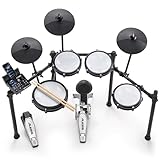
Overview: The Alesis Nitro Max represents a significant step-up in the entry-to-mid-tier electronic drum market. This 8-piece kit features a professional-grade 10-inch dual-zone mesh snare, three 8-inch mesh toms, a kick drum tower with pedal, and three 10-inch cymbals including a choke-capable crash. The upgraded drum module delivers BFD sounds—industry-standard samples known for realism—making this a serious instrument for advancing players.
What Makes It Stand Out: The Nitro Max distinguishes itself with Bluetooth connectivity for wireless audio streaming and 90-day Drumeo access, offering interactive lessons from 200+ professional drummers. The 440+ multi-velocity sampled sounds and 32 ready-to-play BFD kits provide acoustic-level authenticity. The dual-zone snare enables rimshots and head articulation, while the foldable rack maintains portability despite the professional feature set.
Value for Money: Priced around $500-600, the Nitro Max commands a premium over basic kits but delivers proportional value. The BFD sound engine alone justifies the cost for serious students, while Bluetooth and Drumeo subscription add hundreds in educational value. Compared to Roland’s similar tier, it offers comparable features at 30-40% less, making it a smart mid-range investment.
Strengths and Weaknesses: Pros: 10" dual-zone snare; BFD premium sounds; Bluetooth connectivity; comprehensive Drumeo lessons; large cymbals with choke; USB MIDI. Cons: Higher price point; 8" toms could be larger; kick tower less realistic than independent kick drums; module screen is basic.
Bottom Line: For dedicated students ready to invest in their craft, the Nitro Max offers professional features without breaking the bank. The combination of BFD sounds, Bluetooth, and Drumeo makes it the best value for serious learners seeking long-term growth.
3. Donner DED-200 Electric Drum Sets with Quiet Mesh Drum Pads, 2 Cymbals w/Choke, 31 Kits and 450+ Sounds, Throne, Headphones, Sticks, USB MIDI, Melodics Lessons (5 Pads, 3 Cymbals)

Overview: The Donner DED-200 bridges the gap between beginner and intermediate electronic drumming. This 8-piece configuration includes an 8-inch dual-zone mesh snare, three 8-inch toms, a 6-inch kick drum tower with double-pedal compatibility, and three 10-inch cymbals with choke functionality. The foldable iron stand with four-post aluminum rack provides enhanced stability over entry-level models, accommodating more aggressive playing styles.
What Makes It Stand Out: The DED-200’s 450 sounds and 31 drum kits rival premium brands, offering remarkable tonal variety. The kick drum’s double-pedal compatibility is rare in this price class, appealing to metal and hard rock drummers. Built-in 50 play-along songs, a sequencer, and recording function create a comprehensive practice environment. The premium silicone pads deliver consistent response across the entire surface, addressing a common budget-kit weakness.
Value for Money: Positioned around $400, the DED-200 undercuts Alesis and Roland equivalents while offering competitive specs. The inclusion of a throne, headphones, and cables eliminates hidden costs. With 450 sounds—more than some $600 kits—it delivers exceptional sonic value, though the module’s editing depth doesn’t match premium brands. It’s ideal for progressing players needing professional features without premium pricing.
Strengths and Weaknesses: Pros: Double-pedal compatible kick; 450 extensive sounds; choke-enabled cymbals; stable four-post rack; larger 8" pads; complete accessory package. Cons: Module interface less intuitive than competitors; brand recognition still building; 6" kick pad smaller than acoustic-style options; limited aftermarket support.
Bottom Line: The DED-200 is a feature-packed intermediate kit that punches above its weight class. For drummers ready to advance beyond basic models, it offers professional capabilities—especially double-pedal support—at an accessible price point.
4. AKLOT Acoustic-Style Electric Drum Set: Independent 16’’ Wooden Bass Drum and 12’’ Snare, Triple-Zone Ride Cymbal, Standalone Hi-Hat, Full Mesh Pads, 460 Sounds, USB MIDI, Throne, Sticks (B-CORE543)

Overview: The AKLOT B-CORE543 redefines electronic drum realism with its acoustic-style configuration. This premium kit features a 12-inch dual-zone wooden snare, 16-inch wooden kick drum, 12-inch two-piece independent hi-hat system, 14-inch triple-zone ride cymbal, and dual-zone toms. Engineered for drummers refusing to compromise on feel, it merges acoustic drum dimensions and response with electronic convenience, targeting serious practitioners and recording musicians.
What Makes It Stand Out: The independent hi-hat system with 12" top and bottom cymbals tracks foot splashes and half-open articulations with acoustic precision. The triple-zone ride distinguishes bell, bow, and edge strikes, while wooden shells deliver 30% faster beater rebound. The module’s 460 studio-sampled voices feature deep editing capabilities—adjusting shell tone, cymbal articulation, and sensitivity—plus studio-grade effects and EQ. This is electronic drumming that truly feels acoustic.
Value for Money: Priced near $800-900, the AKLOT competes with Roland’s TD-07KV and Alesis Strike Pro SE. While expensive, the wooden construction and independent hi-hat alone justify the cost compared to rubber cymbals on similarly priced kits. For drummers seeking acoustic authenticity without noise violations, it eliminates the need for a $2,000+ hybrid setup, delivering professional studio and stage capabilities at a mid-tier price.
Strengths and Weaknesses: Pros: Authentic wooden shells; independent two-piece hi-hat; triple-zone ride; 460 studio-quality sounds; advanced editing; realistic rebound. Cons: Premium price; large footprint unsuitable for tight spaces; setup complexity; heavier than portable kits; overkill for casual beginners.
Bottom Line: The AKLOT B-CORE543 is a game-changer for serious drummers demanding acoustic authenticity. If you prioritize realistic feel over portability and have the budget, this kit bridges the gap between electronic convenience and acoustic performance better than any competitor near this price.
5. AODSK Electric Drum Set for Beginner with 150 Sounds,4 Quiet Drum Pads,2 Pedal,Throne,Sticks,Electronic Drum with Headphone,AED-400

Overview: The AODSK AED-400 targets the absolute entry-level market with a bare-bones approach to electronic drumming. This compact kit includes four 6.5-inch silicone drum pads, three 8-inch cymbals, a foldable metal frame, drum module, throne, sticks, and headphones. Designed for beginners of all ages, its lightweight construction prioritizes portability and affordability over advanced features, making it accessible to the most budget-conscious aspiring drummers.
What Makes It Stand Out: The AED-400’s primary distinction is its ultra-low price point while still delivering a complete playing package. The foldable design makes it arguably the most portable option available, suitable for outdoor performances or frequent relocation. AUX input and USB MIDI connectivity provide basic integration with music players and recording software. The LED display simplifies operation for technophobic beginners, while the included headphones enable immediate silent practice.
Value for Money: Typically priced under $200, the AED-400 is the market’s most affordable complete e-drum kit. However, silicone pads lack the realistic rebound of mesh heads found on slightly pricier competitors. With only 150 sounds and 15 kits, its sonic palette is limited, and the 6.5-inch pads constrain playing technique. It’s a true “you get what you pay for” proposition—functional but basic.
Strengths and Weaknesses: Pros: Extremely affordable; highly portable; complete accessory package; simple operation; silent practice ready. Cons: Silicone pads inferior to mesh; very limited sound library; small playing surfaces; basic module features; questionable long-term durability.
Bottom Line: The AODSK AED-400 serves exactly one purpose: getting sticks in hands for the absolute minimum investment. For committed learners, spending $50-100 more for mesh heads and more sounds yields vastly better value. Only recommended for tentative beginners testing interest without financial commitment.
6. Alesis Turbo Max Electric Drum Set with Quiet 8" Mesh Pads, Lessons, Bluetooth and Accessories, Foldable

Overview: The Alesis Turbo Max delivers a complete entry-level drumming experience optimized for beginners in shared living spaces. This seven-piece kit features responsive 8-inch mesh drumheads and three cymbals, paired with a sound module offering 12 drum kits and 110 individual sounds. The foldable design and included accessories—throne, headphones, and sticks—make it ready to play straight out of the box.
What Makes It Stand Out: Bluetooth connectivity sets the Turbo Max apart, allowing wireless streaming of lessons and play-along tracks directly to the module. The ultra-quiet mesh heads provide authentic rebound while keeping volume apartment-friendly, and the space-saving foldable rack easily stores under beds or in closets. Twenty built-in play-along tracks and rhythmic exercises accelerate skill development without requiring external devices.
Value for Money: Priced competitively for the beginner market, this kit includes everything needed to start drumming immediately. Comparable entry-level sets often lack Bluetooth or require separate purchases for thrones and headphones. The integrated learning features and quiet operation eliminate the need for soundproofing investments, delivering exceptional value for apartment dwellers and parents.
Strengths and Weaknesses: Strengths include near-silent mesh heads, wireless connectivity, complete accessory bundle, and compact storage. The foldable design is genuinely practical for small spaces. Weaknesses are the basic sound module with limited customization, single-zone pads restricting expressive techniques, and smaller 8-inch pads that may feel cramped for advanced players. The kit also lacks advanced connectivity options like USB MIDI.
Bottom Line: The Turbo Max is an ideal starter kit for beginners prioritizing quiet practice and space efficiency. While seasoned drummers will outgrow its limitations quickly, it perfectly serves its target audience with thoughtful features that make learning accessible and neighbor-friendly. Highly recommended for first-time drummers in shared housing.
7. Donner Electric Drum Set, DED-70 Electronic Drum Kit for Beginner with 150 Sounds, 4 Quiet Mesh Pads, 9" Cymbals, USB MIDI, Type-C Charging, 2 Pedal, Throne, Headphones, Sticks, Melodics Lessons

Overview: The Donner DED-70 targets young learners aged 6-14 with a scaled-down yet capable electronic drum kit. It features four 6.5-inch dual-layer mesh pads and oversized 9-inch silicone cymbals, providing realistic feel in a compact footprint. The module includes 150 sounds, 15 customizable kits, and 10 demo songs, while USB MIDI connectivity enables integration with educational apps like Melodics.
What Makes It Stand Out: The DED-70’s standout feature is its dual power system—standard adapter or USB-C power bank—making it uniquely portable for outdoor practice or travel. The oversized cymbals offer better target areas for developing accuracy, and the height-adjustable rack grows with young players. Type-C charging modernizes the power input for convenience.
Value for Money: Positioned as a youth-focused kit, it delivers solid value with metal racks, mesh heads, and essential accessories included. The power bank compatibility eliminates location constraints, a feature rarely found at this price point. However, requiring an external amplifier for group performance adds hidden costs not present in some competitors.
Strengths and Weaknesses: Strengths include child-friendly sizing, portable power options, larger cymbals, durable metal construction, and USB MIDI connectivity. The dual-layer mesh provides good rebound. Weaknesses are the small 6.5-inch drum pads that may feel restrictive, lack of Bluetooth connectivity, and mandatory external amplification for sound output. The sound module is basic compared to adult-oriented kits.
Bottom Line: The DED-70 excels as a first kit for children and young teens, prioritizing portability and quiet practice. Its power flexibility and sturdy build make it practical for families, though the small pad size limits its long-term growth potential. Perfect for young beginners, but adults should look elsewhere.
8. HAMPBACK MK-0 Electric Drum Set with 7’’ Quiet Mesh Drum Pads, 8’’ Full Rubber Cymbals, 12 Kits and 68 Authentic Sounds, USB MIDI, Throne, Sticks, Headphone, 2 Switch Pedals for Beginners & Kids

Overview: The HAMPBACK MK-0 positions itself as the most portable entry-level option for beginners and kids. This seven-piece kit features 7-inch double-layer mesh drum pads and 8-inch rubber cymbals, powered by a compact module with 68 sounds and 12 kits. The foldable rack and power bank compatibility emphasize mobility and space efficiency for casual players.
What Makes It Stand Out: Extreme portability defines the MK-0—the rack fits in car trunks for outdoor jam sessions, and power bank operation frees players from wall outlets. The 2-year warranty provides peace of mind rarely offered in the budget tier. Its collapsible design stores easily under beds or against walls, maximizing space in small rooms.
Value for Money: As one of the most affordable mesh-head kits available, it delivers surprising value for casual dabblers and young children. However, rubber cymbals compromise realism compared to silicone or mesh alternatives, and the limited 68-sound library quickly feels restrictive. The warranty mitigates some risk, but serious learners will outgrow this rapidly.
Strengths and Weaknesses: Strengths include unbeatable portability, power bank flexibility, foldable compact design, included accessories, and strong warranty support. The double-layer mesh heads provide decent feel. Weaknesses are rubber cymbals lacking realistic response, very limited sound selection, basic switch pedals, and minimal connectivity options beyond USB MIDI. The small pads and basic module hinder skill progression.
Bottom Line: The MK-0 suits absolute beginners seeking maximum portability and minimal investment. It’s best for young kids testing interest in drumming or adults needing a travel practice kit. Serious students should invest in more capable systems, but for casual, quiet practice anywhere, it delivers acceptable performance at a rock-bottom price.
9. Donner DED-200 MAX Electronic Drum Set with Industry Standard Mesh Heads, 10’’ Snare, 8“ Tom, 10’’ Tom, 12’’ Crash, 450+ Authentic Sounds for Optimal Performance and Feel NEW

Overview: The DED-200 MAX represents Donner’s mid-tier offering for serious beginners advancing beyond entry-level kits. It features upgraded 2-ply mesh heads on a 10-inch snare, 10-inch tom, and 12-inch crash cymbal, delivering enhanced realism and durability. The module boasts an impressive 450+ sounds across 31 kits, plus 50 play-along songs, metronome, and recording functions for comprehensive practice.
What Makes It Stand Out: Larger pad sizes and 2-ply mesh construction provide a significantly more authentic playing experience that bridges the gap to acoustic drums. The 12-inch crash offers generous striking area, while real drum shell aesthetics enhance the visual appeal. USB MIDI connectivity integrates seamlessly with music production software, expanding creative possibilities.
Value for Money: This kit punches above its weight class, offering professional-grade mesh heads and extensive sound libraries typically found in higher-priced competitors. The larger pads justify the price increase over budget models, though the lack of built-in speakers requires additional amplifier investment. It’s an excellent value for committed students who’ve outgrown starter kits.
Strengths and Weaknesses: Strengths include premium 2-ply mesh heads, larger pad sizes, vast sound selection, robust steel rack, and advanced practice tools. The authentic drum shell design adds professional aesthetics. Weaknesses are no Bluetooth connectivity, absence of built-in speakers, and hi-hat controller limitations compared to premium brands. The module interface could be more intuitive.
Bottom Line: The DED-200 MAX is a smart upgrade for dedicated drummers ready to invest in better feel and sound variety. While it lacks some modern wireless features, its core playing experience rivals kits costing twice as much. Highly recommended for serious students and intermediate players seeking acoustic-like response without the noise.
10. Alesis Nitro Pro Electric Drum Set with Dual-Zone Quiet Mesh Pads, 500+ Authentic BFD Sounds, Bluetooth, Drumeo, USB MIDI, Double Kick Compatible

Overview: The Nitro Pro elevates Alesis into professional territory with an eight-piece kit featuring dual-zone mesh pads and the acclaimed BFD sound engine. The 10-inch dual-zone snare and three 8-inch toms deliver expressive capability, while three 10-inch cymbals—including chokeable crash and ride—provide acoustic-like dynamics. Bluetooth, USB MIDI, and Drumeo integration create a comprehensive learning and recording platform.
What Makes It Stand Out: BFD-powered sounds deliver multi-velocity samples and unmatched realism at this price point. The PRO mesh tower supports double bass pedals, a rarity in mid-range kits. Dual-zone snare enables rimshots and cross-sticks, while cymbal choking adds authentic expression. Ninety days of Drumeo lessons and BFD Player software inclusion provides exceptional educational value.
Value for Money: Though priced at the premium end of the mid-tier market, the Nitro Pro justifies every dollar with professional features typically reserved for kits costing thousands. The BFD sound library alone exceeds competitors, and the included software and lessons add hundreds in value. Double kick compatibility ensures it won’t limit advancing metal and rock drummers.
Strengths and Weaknesses: Strengths include industry-leading BFD sounds, dual-zone pads, cymbal choking, double kick readiness, Bluetooth connectivity, robust steel rack, and comprehensive educational bundle. The module is powerful yet user-friendly. Weaknesses are the 8-inch tom size could be larger, hi-hat pedal feels less realistic than premium alternatives, and the learning curve steeper for absolute beginners.
Bottom Line: The Nitro Pro is the best mid-range electronic kit for serious drummers demanding professional features without pro-level pricing. It eliminates the need for future upgrades through its expandable, performance-ready design. While beginners may be overwhelmed, advancing players will appreciate its authentic feel and studio-quality sounds. An exceptional investment.
Why Mesh Heads Changed the Game for Electronic Drums
The Evolution from Rubber to Mesh
Remember those early electronic pads that felt like hitting a practice pad wrapped in a tire? The transition from solid rubber surfaces to tensioned mesh represented more than just a comfort upgrade—it was a philosophical revolution. Rubber pads offered predictable triggering but zero dynamic nuance. They punished aggressive playing and whispered back the same response whether you tapped gently or smashed a fortissimo fill. Mesh heads introduced variable tension, natural rebound, and most importantly, the ability to practice actual acoustic technique without relearning muscle memory every time you switched kits.
What Makes Mesh Heads Feel “Real”
The “real feel” mantra gets thrown around constantly, but what does it actually mean? Authentic mesh heads replicate acoustic drum physics through tensioned woven surfaces that flex and respond like mylar drumheads. When your stick makes contact, the mesh depresses, stores kinetic energy, and releases it back as rebound—just like acoustic heads. The difference lies in the subtle variations: how the stick sinks slightly on a soft stroke versus bouncing immediately on a hard hit, the way rim shots produce a distinct tactile jolt, and how cross sticks create that signature woody resistance. In 2026, premium kits have refined this to an art form, with tension adjustments measured in quarter-turns and response curves customizable to your exact playing weight.
Key Technologies Defining 2026’s Mesh Head Drums
Advanced Tensioning Systems
The modern mesh head isn’t just a static surface—it’s a dynamic component you can voice like an acoustic drum. Current systems employ either traditional tension rod designs that screw directly into the hoop or innovative radial tensioners that distribute force evenly across the entire head. The game-changer? Micro-adjustment dials that let you fine-tune response in increments of a single pound per square inch. This means you can set your 10" tom to feel like a tightly tuned piccolo snare or a loose floor tom, all while maintaining consistent triggering accuracy.
Multi-Zone Sensing Capabilities
Single-zone pads are officially obsolete. Contemporary mesh heads employ sophisticated sensor arrays that distinguish between head, rim, and shell strikes with surgical precision. But 2026’s revolution lies in positional sensing—pads that know where you hit, not just how hard. Strike near the edge for a darker, warmer tone; center your hit for maximum attack. Some systems even recognize the difference between stick tip and shoulder contacts, opening up expressive possibilities that mirror acoustic drum shading. This isn’t just more triggers; it’s intelligent interpretation of your playing DNA.
Integrated Dampening Controls
Electronic drums used to ignore the concept of dampening entirely. Now, built-in dampening rings and adjustable muffling systems let you control decay and overtones without touching a module setting. Physical dampening changes how the mesh head vibrates, which in turn affects how the sensors read your strokes. This creates a feedback loop between acoustic feel and electronic response that was impossible just two years ago. You can literally tune the physical pad to match the virtual drum you’re triggering, achieving a unity of feel and sound that eliminates cognitive dissonance.
Understanding Mesh Head Construction
Single-Ply vs. Double-Ply Mesh
Mesh thickness directly impacts feel and durability. Single-ply meshes, typically measuring 0.5mm, offer maximum sensitivity and the quickest response, making them ideal for subtle ghost notes and brush work. However, they wear faster under heavy-hitting and can feel overly bouncy to players accustomed to coated ambassadors. Double-ply constructions, around 0.8mm total thickness, provide a more controlled rebound and significantly extended lifespan. The trade-off? Slightly reduced sensitivity at extreme dynamics. Most 2026 kits now offer hybrid solutions: single-ply on snare and toms for articulation, double-ply on kick drums for durability.
Tension Rod vs. Fixed Tension Designs
Traditionalists love tension rod systems because they mirror acoustic drum maintenance rituals. You can use a drum key, follow a star-pattern tuning sequence, and develop a relationship with each pad’s personality. Fixed tension designs, however, use internal spring mechanisms or cam systems that maintain consistent tension automatically. These are virtually maintenance-free and ideal for players who want reliable feel without periodic tweaking. The catch? You sacrifice the ability to dramatically alter rebound characteristics. Your playing style should dictate this choice: tinkerers and tone-chasers need tension rods; set-it-and-forget-it players should opt for fixed systems.
Durability Factors and Longevity
Mesh heads don’t last forever, but 2026 materials have extended lifespans dramatically. Woven polyethylene terephthalate (PET) remains the gold standard, but new hybrid fibers infused with nylon and carbon threads resist tearing at mounting points—the most common failure site. UV resistance has also improved, preventing the brittleness that plagued early mesh heads in sunny studios. Expect 2,000-3,000 hours of aggressive playing before replacement on premium heads, though this varies wildly based on stick type, technique, and tension settings. Pro tip: using wooden tips instead of nylon extends mesh life by up to 40%.
The “Real Feel” Factor: What to Look For
Stick Response and Rebound
Rebound characteristics separate mediocre kits from revolutionary ones. Test this by playing a simple paradiddle at various volumes. The sticks should return to ready position naturally without forcing your hands to work overtime. Overly bouncy pads cause fatigue and sloppy technique; dead-feeling pads make you work too hard. Look for rebound consistency across the entire playing surface—edge hits should feel similar to center hits, just with slightly different response times. Premium 2026 kits achieve this through graduated tension profiles that compensate for the natural stiffness increase near hoops.
Rim Shot and Cross Stick Realism
Rim shots on electronic drums historically felt like hitting a piece of plastic—which they were. Modern implementations use dual-density rims with softer contact zones and integrated shock absorption. The best systems trigger separate samples for the rim strike and the drum shell resonance, capturing the complex harmonic cocktail of an acoustic rim shot. Cross stick detection has evolved from simple side-stick triggers to sensors that recognize the physical act of laying the stick across the head. The pad actually senses the pressure distribution change and responds with an authentic cross-stick sample, complete with subtle head overtone bleed-through.
Dynamic Range and Velocity Sensitivity
Entry-level kits might offer 127 levels of velocity sensitivity—adequate but uninspiring. Professional 2026 mesh systems provide 1,024+ velocity layers with non-linear scaling. This means the difference between mezzo-piano and mezzo-forte contains hundreds of subtle timbral shifts, not just volume changes. More importantly, the velocity curve is adjustable per pad. You can make your snare respond linearly while your kick follows a logarithmic curve that rewards hard hits with explosive crack. This customization lets you compensate for personal playing dynamics, ensuring the kit adapts to you, not vice versa.
Module Compatibility and Sound Quality
Sample Library Depth
A mesh head is only as good as the sounds it triggers. Modern modules ship with 50-100GB of samples, but raw size means nothing without curation. Focus on round-robin sample counts—how many variations of each velocity layer exist to prevent the machine-gun effect. Premium libraries offer 8-16 round robins per dynamic level, capturing the microscopic timing and tonal variations that make acoustic drums breathe. Also investigate resonance modeling: does the module simulate sympathetic vibration between drums when you hit the snare? This detail transforms a collection of samples into a living drum kit.
Customization and Layering Options
2026’s modules blur the line between drum brain and production studio. You should be able to layer multiple samples per zone, adjust envelope parameters for each layer independently, and apply EQ and compression directly within the module. Look for user-sample import with automatic velocity mapping—drag a folder of your own recordings, and the module intelligently distributes them across dynamic layers. This feature future-proofs your investment; even if factory sounds become dated, you can refresh the kit with custom samples without buying new hardware.
Connectivity Standards in 2026
The modern drum module is the hub of your entire rig. Bluetooth 5.3 provides latency-free audio streaming for practice, while USB-C handles multi-channel audio and MIDI simultaneously. But the real revolution is in positional MIDI 2.0 implementation, transmitting not just velocity but exact strike coordinates to your DAW. This allows for post-production manipulation of drum performances—move a hit slightly off-center in the mix after recording, or automate mic position changes. Ensure any kit you’re considering supports these protocols; otherwise, you’re investing in outdated technology.
Physical Setup and Ergonomics
Rack System Stability
A wobbling rack destroys the precision of high-end mesh heads. Modern systems use either hexagonal tubing that prevents rotation or integrated memory locks at every joint. Weight distribution matters more than total mass—look for wide-base designs that place heavy components (module, snare) low to the ground. The best 2026 racks feature isolated mounting points that decouple pads from each other, preventing vibration crosstalk that can trigger false notes during intense passages. Don’t underestimate the importance of a rack that assembles without tools; you’ll tweak your setup frequently as you discover your ideal ergonomics.
Pad Sizing and Spacing
Manufacturers love advertising “full-size” drums, but that term is meaningless without context. A 14" snare pad with a 3" bezel might only offer 11" of playable surface. Measure the mesh diameter specifically, not just the total pad size. Tom spacing should mirror your acoustic setup—typically 1-2 inches between pads—to maintain muscle memory. The snare position relative to your hi-hat is critical; too close and you’ll hit both simultaneously, too far and your left hand travels unnecessarily. Premium kits include adjustable tom arms that slide horizontally, not just tilt, letting you fine-tune spacing in millimeters.
Customization for Your Playing Style
Are you a traditional grip player who needs extra snare height? A heel-down bassist who wants the kick nearly vertical? 2026’s best kits acknowledge that drummers aren’t uniform. Look for infinitely adjustable tom arms, tilting snare mechanisms that maintain trigger orientation, and cymbal arms with horizontal extension. Some advanced systems even offer interchangeable hoop profiles—round for jazz, die-cast for rock—changing the stick feel and rim shot character without swapping the entire pad. Your kit should conform to your body, not force you into a standardized posture.
Acoustic Noise Considerations
Volume Levels for Home Practice
Mesh heads are quiet, but “quiet” is relative. The stick striking mesh produces about 60-70dB, comparable to normal conversation. Rim shots can spike to 80dB, and kick pedal beaters hitting a pad still transmit structure-borne noise through floors. In 2026, manufacturers address this with integrated impact dampening layers beneath the mesh and redesigned pedal interfaces that absorb beater impact. But the real solution is isolation—no matter how quiet the kit, vibrations travel through solid surfaces. Always budget for a drum rug with dense foam backing; it’s not optional for apartment dwellers.
Sound Isolation Solutions
Beyond the kit itself, consider your environment. Mesh heads reduce airborne sound dramatically, but the thump of a kick pedal can still wake downstairs neighbors. Modern solutions include floating platforms constructed from tennis balls and plywood, decoupling the entire kit from the floor. Some 2026 kits offer optional “stealth mode” beaters with silicone impact surfaces that reduce kick noise by an additional 10dB. For cymbals, low-volume metal models with perforated surfaces provide authentic feel and trigger response at half the acoustic volume. Remember: the goal isn’t silence, but making your practice inaudible outside your immediate room.
Neighbor-Friendly Features
Manufacturers now design with apartment living in mind. Look for kits with “night mode” settings that electronically limit maximum volume output through headphones, preventing accidental spikes. Some modules include ambient noise detection that automatically adjusts your monitor mix to compensate for external sounds—like a doorbell you can actually hear while playing. The most innovative 2026 feature is vibration feedback through the throne: instead of cranking headphone volume to feel the kick, a subtle transducer in the seat provides physical thump you can dial to taste, letting you keep audio levels conversationally low.
Price Tiers and What to Expect
Entry-Level Mesh Kits: Features and Limitations
Budget mesh kits (typically $800-$1,500) finally deliver authentic feel, but with strategic compromises. You’ll get single-ply mesh on all drums, but tension adjustment might be limited to a single hex screw rather than full hoop tuning. Modules offer decent sounds but limited layering—usually two samples per pad maximum. Rim sensors detect hits but lack positional nuance. These kits excel for practice and basic recording but fall short for nuanced performance. The mesh heads themselves are often top-quality, with manufacturers betting you’ll upgrade the module later while keeping the pads.
Mid-Range Options: The Sweet Spot
The $1,800-$3,500 range is where 2026’s revolution truly lives. Double-ply mesh options, full tension rod systems, and modules with 500+ sounds become standard. Multi-zone cymbals with choke capability, positional sensing on snare and toms, and robust expansion options for adding pads define this tier. You get 90% of professional features at half the cost of flagship systems. The primary differences? Build materials (more plastic, less metal) and sensor sophistication. For 95% of players, this tier offers lifetime satisfaction without the premium price tax.
Professional-Grade Systems: Premium Innovations
Flagship kits ($4,000+) push boundaries with materials like carbon fiber hoops, titanium hardware, and modules that are essentially dedicated computers. Here you’ll find features like individual pad DSP processing, wireless connectivity with sub-3ms latency, and user-replaceable sensor arrays. The mesh itself might be proprietary blends with custom weave patterns optimized for specific drums. These systems are built for road warriors and session aces who need bulletproof reliability and sonic flexibility that can mimic any kit in any room. The law of diminishing returns applies heavily; you’re paying for reliability and exclusivity as much as performance.
Essential Features for Different Skill Levels
Beginner-Friendly Functions
If you’re new to drums, complexity is your enemy. Look for kits with “coach modes” that provide visual feedback on timing and dynamics, turning practice into a game. Preset kits should be logically organized by genre, not just numbered. A crucial 2026 feature for beginners is dynamic limiting: the module prevents extreme volume differences while you’re developing touch, then gradually removes training wheels as your control improves. Avoid kits requiring extensive menu diving; you want to spend time playing, not reading manuals. Bluetooth connectivity for streaming play-along tracks is non-negotiable for maintaining motivation.
Intermediate Player Must-Haves
At this level, you’re developing a voice and need tools that facilitate expression. Custom kit building becomes essential—being able to mix snares from different libraries, tune virtual heads, and adjust mic positions in the module. Look for positional sensing and the ability to import your own samples; you might want to trigger your acoustic kit’s exact snare sound. MIDI 2.0 connectivity for DAW integration is critical if you’re recording. You should also demand robust expansion capabilities; intermediate players often add auxiliary percussion pads or additional cymbals as their style evolves.
Advanced Features for Professionals
Pros need reliability under pressure and sonic transparency that disappears in a mix. Dual-trigger redundancy ensures a dead sensor won’t end a gig. Direct XLR outputs with independent processing per channel let you send kick, snare, and toms to separate console channels. The ability to load entire third-party sample libraries (not just individual sounds) means you can bring a client’s preferred drum software directly into the module. Look for kits with user-serviceable parts; on tour, you can’t wait two weeks for a factory repair. Finally, seamless integration with in-ear monitor systems via low-latency wireless is essential for modern stage workflows.
Maintenance and Care for Mesh Heads
Cleaning and Upkeep
Mesh heads collect dust and stick debris in their weave, gradually deadening response. Use a soft brush vacuum attachment monthly, working in circular motions from center to edge. For grime buildup, a slightly damp microfiber cloth with mild soap works, but never saturate the mesh—moisture can seep into sensor layers. Avoid alcohol-based cleaners; they degrade PET fibers over time. After cleaning, always let heads air dry completely before playing. A light application of anti-static spray (the kind used for electronics) reduces future dust attraction without affecting trigger response.
Tension Adjustments Over Time
Mesh heads stretch slightly during their first 50 hours of playing, similar to acoustic heads. Check tension weekly during this break-in period, making quarter-turn adjustments as needed. After settling, seasonal humidity changes can cause subtle tension drift. Develop a monthly check routine: tap each pad lightly with a drumstick and listen for even pitch. A flabby, low-pitched thump indicates loosening; a high-pitched ping suggests over-tightening. Mark your ideal tension settings with a silver Sharpie on the hoop for quick reference. Over-tightening is the most common user error—it doesn’t improve response and dramatically shortens head life.
When to Replace Mesh Heads
Replace mesh heads when you notice dead spots (areas with noticeably different rebound), visible fraying at the hoop, or when tension adjustments no longer restore consistent feel. Most players get 18-24 months of daily practice before replacement. However, if you exclusively use nylon tips or play with excessive force, expect 12-15 months. The good news: replacement heads are fractionally priced compared to acoustic drumheads, usually $25-$45 per pad. Keep one spare for your most-played drum (typically snare) to avoid downtime. Pro tip: rotate heads from less-played toms to your snare position to extend overall set life.
Common Mistakes When Buying Mesh Head Kits
Overlooking Module Quality
The flashiest mesh heads can’t compensate for a weak module. Buyers obsess over pad specs while ignoring sound quality, connectivity, and processing power. A great module with mediocre pads still sounds musical; the reverse is never true. Allocate at least 40% of your budget to the brain. Test modules by playing the same pattern at whisper-quiet and fortissimo levels—does the character change, or just the volume? Listen for phasing issues in ambient mics. Check if the module can stream audio while recording MIDI; this basic function is bizarrely absent in some mid-tier systems.
Ignoring Expansion Potential
Your needs will evolve. That three-piece kit might feel spacious now, but add a double pedal, second snare, or percussion pad, and suddenly you’re out of inputs. Count trigger inputs carefully, distinguishing between dual-zone and single-zone ports. A kit advertising “10 inputs” might only support 5 dual-zone pads. Look for modules with auxiliary trigger ports that support additional pads without requiring a splitter cable (which degrades performance). Consider mounting hardware too—does the rack have extra clamps and arms available, or will you need third-party solutions that may not integrate cleanly?
Misjudging Space Requirements
Mesh kits are compact, but not invisible. Measure your available space and add 20% for comfortable movement. Account for the module stand, throne placement, and room to swing sticks without hitting walls. Many buyers forget about the hi-hat stand and bass drum pedal, which extend the footprint significantly. Consider vertical space too—low ceilings can interfere with raised cymbals. Some 2026 kits offer fold-flat storage designs where the entire rack collapses against a wall, a lifesaver for multi-use rooms. Always check the assembled dimensions in the manual, not just the “compact” marketing claims.
The Future of Electronic Drumming Beyond 2026
Emerging Sensor Technologies
The next frontier is capacitive sensing—pads that detect your stick’s approach before impact, enabling predictive algorithms that reduce latency to under 1ms. Piezoelectric films are becoming so thin they’re embedded within the mesh weave itself, eliminating the tonal coloration that external sensors can introduce. Researchers are experimenting with micro-electro-mechanical systems (MEMS) accelerometers that capture not just impact but the entire stick trajectory, potentially allowing modules to interpret your sticking patterns and adjust sounds contextually. This isn’t sci-fi; prototype kits are already in select studios.
AI Integration and Smart Features
Artificial intelligence is moving from gimmick to genuine utility. Imagine a module that learns your playing style over weeks, automatically adjusting velocity curves and compensating for inconsistent technique. AI-driven sound matching could analyze your acoustic kit recordings and automatically generate a matching electronic kit, complete with proper tuning and mic placement. Real-time style analysis might trigger genre-appropriate ambient mics or compression settings as you drift from jazz to metal within a single song. The ethical questions are fascinating—when the AI corrects your timing, is it assistance or interference?
Sustainability in Drum Manufacturing
Environmental consciousness is reshaping production. Biodegradable mesh fibers derived from plant-based polymers perform identically to PET but decompose in landfills within years, not centuries. Manufacturers are adopting modular construction for easy repair, reducing e-waste. Some companies now offer trade-in programs where old modules are refurbished and resold, while pads are recycled into new products. Carbon-neutral shipping and solar-powered factories are becoming selling points. As a buyer, you can vote with your wallet for companies publishing transparent sustainability reports—not just greenwashing marketing.
Frequently Asked Questions
How long do mesh heads actually last compared to acoustic drumheads?
With daily practice, quality mesh heads typically last 18-24 months before needing replacement, whereas acoustic heads might need changing every 3-6 months depending on playing intensity. However, mesh heads can develop dead spots from uneven wear, while acoustic heads usually fail more predictably. Your technique and stick choice dramatically impact lifespan—wooden tips and controlled playing extend mesh head life significantly.
Can I use regular drumsticks on mesh heads, or do I need special ones?
Standard drumsticks work perfectly, but avoid excessively heavy sticks (2B and larger) as they accelerate wear. Nylon tips produce brighter stick definition but chew through mesh roughly 40% faster than wood tips. For maximum mesh longevity, consider maple sticks with wood tips and a slightly smaller diameter than you’d use acoustically. Some players keep dedicated “mesh sticks” that are slightly lighter to reduce impact fatigue during long practice sessions.
Will a mesh head kit help me improve my acoustic drumming technique?
Absolutely, but only if the kit offers authentic rebound and dynamic response. High-quality mesh heads replicate acoustic physics closely enough that your muscle memory transfers directly. The key is matching tensions between your electronic and acoustic kits. Practice rudiments and groove work translates seamlessly; however, subtle brush techniques and extreme dynamic shading still benefit from acoustic time. Think of mesh kits as 90% technique transfer tools—the remaining 10% requires acoustic familiarity.
How much quieter are mesh heads really compared to acoustic drums?
Mesh heads reduce direct stick impact noise by approximately 70-80%, measuring around 60-70dB at the source compared to 100-120dB for acoustic drums. However, the kick pedal thump and cymbal pads still produce structure-borne noise that travels through floors and walls. Real-world practice requires a drum rug and potentially a floating platform. For apartment living, mesh kits are often quiet enough for daytime practice, but nighttime sessions may still disturb neighbors below due to vibration transmission.
Do I need to tune mesh heads like acoustic drums?
Yes, but differently. Mesh heads require tension adjustment to achieve consistent rebound and trigger response, not to produce pitch. The goal is even tension across the head and a rebound feel that matches your preference. Unlike acoustic drums, you won’t tune to specific notes, but you will adjust for feel. Over-tightening doesn’t improve response and reduces head life. Think of it more as “tensioning” than tuning—aim for consistency and comfort rather than harmonic intervals.
What’s the difference between dual-zone and triple-zone pads?
Dual-zone pads separate head and rim triggers, allowing distinct sounds for each. Triple-zone adds a bell trigger on cymbals or a cross-stick detection zone on snares. For toms, triple-zone usually means head, rim, and shell triggers for separate rimshot and sidestick sounds. In 2026, “zones” also refer to positional sensing—some “dual-zone” pads actually have hundreds of virtual zones based on strike location. Always clarify whether zone count refers to physical triggers or software capabilities.
Can I upgrade just the module later and keep my existing pads?
Generally yes, but verify trigger compatibility first. Most mesh pads use standard piezo or switch triggers that work across brands, but proprietary connectors and unusual wiring configurations can limit options. Check if your pads use TRS (stereo) or TS (mono) cables, and whether the module you’re eyeing supports the required number of zones. Some advanced features like positional sensing only work with matched pad-module pairs. Buying within the same product ecosystem usually ensures seamless upgrades.
How do I fix false triggering or crosstalk issues?
False triggers occur when one pad’s vibration triggers another. Start by reducing sensitivity on the offending pad and increasing its crosstalk cancel threshold in the module. Physically isolate pads by ensuring rack clamps are tight and using foam washers between pads and mounts. If problems persist, adjust the module’s scan time—the delay between processing trigger signals. In 2026 kits, AI-powered crosstalk learning can automatically detect and filter these issues after a brief calibration procedure where you play each pad individually.
Are larger diameter pads always better?
Not necessarily. Larger pads (14" snare, 12" toms) offer more realistic spacing and allow positional sensing to shine, but they increase footprint and cost. Smaller pads (10" snare, 8" toms) are more compact and force precise stick accuracy, which can improve technique. The sweet spot for most players is 12" snare, 10" rack toms, and 12" floor tom. Consider your physical size too—a petite player might find 14" pads force uncomfortable reaches, while a larger drummer might feel cramped on 8" toms.
What’s the most important feature to prioritize if I can only choose one?
If forced to choose, prioritize module sound quality and dynamic response over pad count or fancy features. A great-sounding, responsive module with basic pads will inspire you to play more and sound better. Expansive pad setups with mediocre sounds become boring quickly. Focus on how the kit responds to your playing dynamics, not how many bells and whistles it advertises. The best kit is the one that disappears musically, letting you express yourself without fighting technology.
See Also
- 10 Electronic Drum Sets With Mesh Heads for Real Feel in 2026
- 10 Electronic Drum Sets with Mesh Heads for Real Feel in 2026
- 10 Electronic Drum Sets with Mesh Heads That Feel Like Acoustic Skins in 2026
- 10 Most Revolutionary Electronic Drum Sets of 2026
- 10 Premium Electronic Drum Sets for Studio Recording in 2026