Table of Contents
The crack of a snare line cutting through a stadium roar. The thunderous roll of a bass ensemble that you feel in your chest before you hear it. These iconic marching percussion moments don’t happen by accident—they’re engineered through technique, drum design, and perhaps most critically, the sticks in your hands. Finding that perfect pair that marries weight with projection isn’t just about volume; it’s about unlocking a level of clarity and endurance that separates good drumlines from unforgettable ones.
Every seasoned marching percussionist knows the frustration: sticks that feel like sledgehammers by the third movement, or pairs that disappear into the mix when the horn line kicks in. The sweet spot exists, but it requires understanding how mass, balance, and design converge to create tools that become natural extensions of your hands. Let’s dive deep into what makes marching drum sticks truly perform when it matters most—under the Friday night lights.
Top 10 Marching Drum Sticks
Detailed Product Reviews
1. Vic Firth Corpsmaster Signature Snare – Ralph Hardimon

Overview:
The Vic Firth Corpsmaster Ralph Hardimon signature stick represents the gold standard in marching percussion. Designed by the legendary Ralph Hardimon himself, this stick carries decades of championship pedigree and is the preferred choice of elite drum corps and marching bands worldwide. Crafted from premium USA hickory, it delivers the durability and response that professional drummers demand during grueling rehearsal schedules and high-stakes performances.
What Makes It Stand Out:
The modified barrel tip and extended taper create a unique playing experience that prioritizes both control and rebound. This design allows for nuanced ghost notes while maintaining the power needed for fortissimo passages. The fact that it’s used by top-tier groups like the Santa Clara Vanguard and Blue Devils speaks volumes about its performance credentials and reliability under pressure.
Value for Money:
Positioned in the premium tier, these sticks justify their price through exceptional durability and consistency. While beginners might find more affordable options, serious marching percussionists will appreciate the professional-grade construction that withstands intense rehearsal schedules. They outlast cheaper alternatives, making them cost-effective over time.
Strengths and Weaknesses:
Pros include outstanding rebound, superior control, championship-proven design, and excellent durability. The modified barrel tip provides articulate sound quality. Cons are the premium price point and that the specific feel may not suit every player’s preference. Beginners might not fully utilize its nuanced design.
Bottom Line:
For dedicated marching percussionists seeking professional-level performance, the Ralph Hardimon signature stick is an investment worth making. Its championship pedigree and refined design make it ideal for serious players.
2. Vic Firth Corpsmaster Signature Snare – Mike Jackson

Overview:
The Vic Firth Corpsmaster Mike Jackson signature stick delivers a powerhouse design built for projection and authority. Engineered with a thick shoulder and innovative long reverse taper, this stick pushes more mass toward the front, creating a forward-weighted feel that drives through the drumhead with conviction. Crafted from premium USA hickory, it’s designed for drummers who need to cut through large ensembles.
What Makes It Stand Out:
The reverse taper design is genuinely innovative, redistributing weight to enhance power without sacrificing the rebound needed for fast passages. The thick shoulder provides exceptional durability in high-impact zones, while the long taper maintains balance. This combination creates a stick that feels substantial in the hand but remains agile during technical passages.
Value for Money:
Competitively priced within the professional stick market, the Mike Jackson model offers excellent durability that extends its lifespan. The unique design provides a distinct playing experience that justifies its cost for players seeking specific performance characteristics. It’s a solid investment for marching percussionists who prioritize power.
Strengths and Weaknesses:
Pros include tremendous power, innovative weight distribution, excellent durability, and maintained rebound despite thickness. The forward-weighted feel helps projection. Cons include the unusual reverse taper that requires adjustment, potentially too heavy for younger players, and the thick shoulder may feel bulky for those preferring traditional designs.
Bottom Line:
Ideal for advanced players needing maximum projection and a substantial feel, the Mike Jackson stick excels in outdoor marching environments where power and durability are paramount.
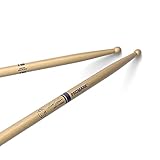
3. ProMark Scott Johnson Hickory Signature Marching Snare Drum Sticks - FireGrain For Playing Harder, Longer - No Excess Vibration - Lacquer Finish, Large Round Tip, Hickory Wood - 1 Pair
Overview:
The ProMark Scott Johnson FireGrain marching stick brings innovative heat-tempering technology to the marching world. At 17 inches with a .700" diameter, this hickory stick undergoes a special flame-tempering process that hardens the wood fiber, promising enhanced durability without sacrificing the classic feel that drummers love. The large round tip delivers a robust, full-bodied sound on marching snares.
What Makes It Stand Out:
The FireGrain treatment is the star feature, creating a stick that reportedly lasts significantly longer than traditional hickory. Made entirely in the USA at ProMark’s Texas facility, it represents stringent quality control. The round tip design offers a different sonic character than typical barrel tips, producing a warmer, broader articulation that suits certain musical styles and ensemble settings.
Value for Money:
Mid-range pricing makes this an attractive option for budget-conscious players seeking premium durability. The extended lifespan from FireGrain technology means fewer replacements, offering long-term savings. For high school and college programs buying in bulk, this durability translates to substantial cost benefits over a season.
Strengths and Weaknesses:
Pros include exceptional durability from FireGrain, consistent manufacturing, comfortable hickory feel, and robust round tip sound. The 17" length provides good reach. Cons include the round tip being less articulate for intricate passages, the heat treatment creating a slightly different feel some purists may dislike, and limited signature model prestige compared to Vic Firth’s lineup.
Bottom Line:
A smart choice for players prioritizing durability and value, the FireGrain technology makes this stick a reliable workhorse for demanding marching seasons.
4. Heavy Marching Drum Sticks - “Exhausted” Weight, 3 Levels for Strength Training, Pitch & Weight Matched, Hickory Wood with Non-Slip Grip for Marching Band & Drumline,Strength Training Drum Sticks

Overview:
These Heavy Marching Drum Sticks in “Exhausted” weight represent a specialized training tool rather than a performance instrument. Designed explicitly for strength training, these extra-heavy hickory sticks build the endurance and control necessary for demanding marching percussion. The three-level progressive system allows drummers to gradually increase resistance, making regular sticks feel effortless by comparison and significantly improving speed and stamina.
What Makes It Stand Out:
The innovative three-tier weight system (“Comfort,” “Tired,” “Exhausted”) is unique in the market, offering structured progression for serious athletes of drumming. Each pair is meticulously weight and pitch matched, ensuring consistent feel during practice. The non-slip grip finish and larger acorn tip maintain authentic marching technique while building muscle memory and stamina for long rehearsals.
Value for Money:
Excellent value as a dedicated training investment. These sticks replace expensive weighted practice gear and provide functional technique development. For serious marching percussionists, the improved endurance translates directly to better performance, making them worth every penny. They’ll outlast regular sticks due to their robust construction.
Strengths and Weaknesses:
Pros include effective strength building, progressive weight options, matched pair quality, secure grip, and authentic technique maintenance. Cons include being completely unsuitable for actual performance, potential for developing tension if overused, and the “Exhausted” level being too heavy for younger players. They’re a single-purpose tool requiring disciplined use.
Bottom Line:
An essential training aid for dedicated marching percussionists. Use them strategically to build endurance, but remember they’re for practice only—not the podium.
5. Vic Firth Corpsmaster Signature Snare – Ralph Hardimon Nylon

Overview:
The Vic Firth Corpsmaster Ralph Hardimon Nylon tip stick delivers the same legendary design as its wood-tipped sibling but with enhanced durability and articulation. At 17" long with a .710" diameter, this SRHN model features the identical barrel tip shape and long taper that made the original famous, but replaces the wood tip with high-impact nylon for a brighter, more consistent sound across all dynamic levels.
What Makes It Stand Out:
The nylon tip provides unparalleled durability, maintaining its shape and sound characteristics long after wood tips would have chipped or worn down. This consistency is crucial for long rehearsals and demanding performance schedules. The barrel tip design retains the quick rebound and control that Ralph Hardimon pioneered, while the nylon adds a crisp articulation that cuts through outdoor ensembles with exceptional clarity.
Value for Money:
Priced similarly to other premium signature sticks, the nylon tip version offers superior longevity, making it more economical over time. The extended lifespan means fewer replacements, particularly valuable for touring groups and intense marching seasons. For players who prefer nylon’s sound and durability, this represents excellent value and predictable performance.
Strengths and Weaknesses:
Pros include exceptional tip durability, consistent sound quality, crisp articulation, classic Hardimon design, and excellent rebound. The nylon tip won’t chip or soften. Cons include a brighter sound that may not suit all musical styles, different feel compared to wood that requires adjustment, and some purists preferring traditional wood tone for indoor ensembles.
Bottom Line:
Perfect for marching percussionists who love the Hardimon design but demand the durability and bright articulation only a nylon tip can provide. A smart long-term investment.
6. 3-Pairs Vic Firth Corpsmaster Signature Ralph Hardimon Marching Snare Drum Sticks (SRH)

Overview: The Vic Firth Corpsmaster SRH is the gold standard for marching percussion, and this three-pair bundle ensures you’re always prepared for intense rehearsal schedules and demanding performances. These signature sticks, designed with marching legend Ralph Hardimon, deliver the precise articulation and projection required for modern drum corps and marching band applications.
What Makes It Stand Out: The SRH features a unique barrel tip and long taper that produces exceptional rebound and clarity at all dynamic levels. The Corpsmaster series represents decades of collaboration with top DCI ensembles, resulting in a stick that performs flawlessly on high-tension drums. This multi-pair packaging eliminates mid-season emergency orders.
Value for Money: Purchasing three pairs at once typically saves 15-20% compared to individual pairs, making this an economical choice for serious students and professionals who chew through sticks during summer training. Given their durability and consistent manufacturing standards, the per-use cost remains low throughout a demanding season.
Strengths and Weaknesses: Strengths include superior balance, reliable durability under extreme playing conditions, and unmatched consistency pair-to-pair. The teardrop tip creates full-bodied tones while maintaining crisp definition. Weaknesses involve the substantial weight and diameter, which can fatigue younger players or those with smaller hands. They’re also over-engineered for casual concert band settings.
Bottom Line: For dedicated marching percussionists, this three-pack represents both practical economics and professional-grade reliability. The SRH remains the definitive choice for achieving championship-level sound quality and technical precision.
7. Vic Firth Corpsmaster Signature Snare –Thom Hannum Beast

Overview: The Thom Hannum “Beast” stick lives up to its intimidating name with a massive .700" diameter and 17" length, designed for percussionists who need maximum power and projection. This signature model from the renowned Marching Percussion Hall of Fame inductee delivers uncompromising authority for outdoor marching applications where sound must carry across football fields.
What Makes It Stand Out: The substantial dimensions create a commanding presence that produces an enormous sound without sacrificing the refined articulation Hannum’s techniques demand. The stick’s mass generates natural rebound from high-tension heads, reducing hand fatigue during long fortissimo passages. Its robust profile excels in creating the “beefy” contemporary marching sound popular in BOA and DCI circuits.
Value for Money: Priced comparably to other signature Corpsmaster sticks, the Beast offers specialized performance characteristics that justify its cost for specific musical contexts. While not as versatile as slimmer models, its durability and focused design provide excellent value for drumlines emphasizing power and presence.
Strengths and Weaknesses: Strengths include unparalleled projection, exceptional durability due to material mass, and confidence-inspiring heft for aggressive playing styles. The larger gripping surface suits adult hands perfectly. Weaknesses involve limited agility for intricate rudimental work and potential overpowering in intimate indoor venues. Younger players often struggle with the sheer size and weight.
Bottom Line: The Beast serves a specific mission: delivering maximum sonic impact. For mature, aggressive drummers in outdoor ensembles, it’s an unmatched tool. For nuanced indoor percussion, look elsewhere.
8. Marching Drum Sticks - “Tired” Weight (Medium Heavy), Hickory Wood with Non-Slip Grip for Strength Training & Practice, Designed for Marching Band & Drumline

Overview: These innovative “Tired” weight sticks represent a progressive training approach, specifically engineered to build the strength and endurance marching percussionists need. Heavier than standard performance sticks but not as extreme as full-weight trainers, they occupy the perfect middle ground for developing technique without risking injury or developing bad habits from excessive fatigue.
What Makes It Stand Out: The three-tier system (Comfortable, Tired, Exhausted) allows methodical physical development. Unlike random heavy sticks, these maintain authentic marching dimensions—17" length and enlarged acorn tip—ensuring technique transfers directly back to performance sticks. The non-slip finish performs admirably during sweaty outdoor rehearsals where traditional lacquer becomes slick.
Value for Money: As a dedicated training tool, these sticks deliver targeted value that standard sticks cannot. They’re priced competitively with premium hickory sticks but serve a dual purpose: practice and strength conditioning. For serious marchers, this eliminates separate gym training for grip strength.
Strengths and Weaknesses: Strengths include the progressive system concept, authentic feel that preserves technique, excellent grip security, and precise weight-matching between pairs. The hickory construction ensures durability despite intense practice sessions. Weaknesses involve limited performance application—they’re too heavy for nuanced musical expression. Some purists argue weighted sticks alter stroke mechanics negatively.
Bottom Line: An excellent strength-training supplement for committed marching percussionists. Use them for specific conditioning sessions, not full-time playing, to maximize benefits while preserving musical sensitivity.
9. Vic Firth Corpsmaster Signature – Ralphie Jr.

Overview: The Ralphie Jr. intelligently scales down the legendary SRH design for younger percussionists and indoor marching applications where full-sized sticks prove cumbersome. Maintaining the essential Hardimon profile while reducing dimensions creates a tool that fits developing hands without sacrificing the authoritative sound character that made the original famous.
What Makes It Stand Out: This stick addresses a critical gap in marching percussion—young players forced to use adult-sized equipment. The proportional reduction maintains proper balance and taper ratios, ensuring students develop correct technique rather than compensating for oversized sticks. Indoor drumlines benefit from the reduced mass, preventing overplaying in resonant gymnasiums.
Value for Money: Priced identically to full-sized Corpsmaster signatures, the value lies in ergonomic appropriateness rather than economics. Preventing bad habits and reducing hand strain in young players delivers long-term value that far exceeds the purchase price. Youth programs reduce equipment turnover as sticks properly fit their performers.
Strengths and Weaknesses: Strengths include ideal sizing for middle school through early high school players, preserved Hardimon sound quality at lower volumes, reduced hand fatigue, and seamless transition to SRH as students mature. The USA hickory construction maintains Vic Firth durability standards. Weaknesses involve limited outdoor projection and adults finding them too small for comfortable matched grip. They’re specialty sticks, not all-purpose replacements.
Bottom Line: Essential equipment for youth marching programs and indoor percussion ensembles. The Ralphie Jr. ensures proper technique development while delivering professional-grade performance for smaller hands.
10. Vic Firth Corpsmaster Signature – Ralph Hardimon Hammer

Overview: The Hardimon Hammer reimagines the classic SRH profile using dense Sta-Pac laminate material, creating a stick with identical geometry but substantially increased mass and durability. This material innovation serves percussionists who destroy standard hickory sticks yet require the familiar Hardimon balance and response they’ve honed their technique around.
What Makes It Stand Out: Sta-Pac laminate offers revolutionary durability, often lasting three to four times longer than hickory under extreme conditions. The added weight generates enhanced low-end fundamental from marching drums while maintaining the articulate high-frequency attack Hardimon sticks are known for. The material’s density provides unique tactile feedback many describe as “solid” and “controlled.”
Value for Money: While significantly more expensive than hickory equivalents, the extended lifespan creates a lower per-use cost for heavy-handed players or high-impact drumlines. The investment pays dividends during intense summer months when stick consumption typically spikes dramatically.
Strengths and Weaknesses: Strengths include extraordinary durability, consistent performance in extreme weather, enhanced projection, and the familiar Hardimon geometry. The Sta-Pac material resists chipping and splintering better than wood. Weaknesses involve substantial weight increase that can fatigue players unaccustomed to heavy sticks, higher initial cost, and a different feel that requires adjustment period. The added mass reduces speed for virtuosic passages.
Bottom Line: A specialized tool for aggressive players and demanding environments. If you value durability and projection above all else and can adapt to the weight, the Hammer delivers unparalleled longevity while preserving the Hardimon legacy.
Understanding the Marching Percussion Environment
The Demands of Outdoor Performance
Marching percussion exists in one of the most hostile acoustic environments imaginable. Unlike indoor concert halls with controlled acoustics, you’re battling wind, temperature fluctuations, and sound that dissipates rapidly across open fields. Your sticks must generate enough initial attack to project 50+ yards while maintaining enough finesse for nuanced passages. This dual requirement fundamentally shapes every design decision, from material density to taper geometry.
The physics are unforgiving. Indoors, a 5% difference in projection might go unnoticed. Outdoors, it’s the difference between your judges hearing crisp 32nd-note passages or a muddy wash of indistinct rhythm. Weight plays a crucial role here—too light, and you lose kinetic energy; too heavy, and fatigue compromises your technique before halftime.
How Weight and Projection Interact
Think of your stick as a lever. The fulcrum point (your grip) determines how energy transfers from your hands to the drumhead. Heavier sticks store more kinetic energy, naturally producing greater volume with less effort. However, that same mass requires more muscular control to accelerate and decelerate, creating a trade-off between power and speed.
Projection isn’t merely loudness—it’s sound that carries with definition. A well-balanced stick delivers the initial attack (the “crack” or “pop”) and allows the drum’s natural resonance to project clearly. Poorly balanced sticks, regardless of weight, create inefficient energy transfer that dissipates quickly, leaving your sound swallowed by the ensemble.
The Anatomy of a Marching Drum Stick
Taper Design and Its Impact
The taper—the gradual narrowing from shoulder to tip—dictates how a stick flexes and rebounds. Longer tapers create more whip action, increasing tip speed for articulate passages but reducing overall mass behind each stroke. Shorter tapers shift weight forward, delivering powerful downstrokes ideal for fortissimo passages but requiring more wrist effort for quick rebounds.
Marching-specific tapers often feature a “quick taper” design that starts wide near the shoulder and narrows rapidly toward the tip. This concentrates mass in the hands while keeping the tip light enough for clarity. The result? You get the psychological feel of a substantial stick with the articulation of something far lighter.
Tip Shapes and Sound Production
Oval, teardrop, acorn, barrel—each shape contacts the head differently. For marching snare, oval tips dominate because they provide consistent surface contact across various playing angles. This predictability is crucial when your drum angle changes during visual movements or body carries.
The tip’s density matters as much as its shape. Harder tip materials (like nylon or compressed wood composites) produce brighter overtones that cut through ensembles but can sound harsh on high-tension heads. Softer wood tips offer warmth but may lack the spectral content needed for outdoor projection. The magic happens when tip hardness complements your drumhead’s characteristics.
Material Selection: Beyond Basic Hickory
Hickory remains the gold standard for marching sticks due to its ideal strength-to-weight ratio and shock absorption. But not all hickory is equal. Northern-grown hickory typically has tighter grain structure, increasing durability and consistency. Some manufacturers now source specifically from higher latitudes for this reason.
Exotic materials like laminated birch or synthetic composites offer intriguing alternatives. Birch provides slightly higher density than hickory, giving more mass without increasing diameter—perfect for drummers who prefer thinner grips. Synthetic cores with wood veneers promise weather resistance but often sacrifice the natural feel that experienced players crave.
Decoding Weight Distribution
Front-Weighted vs. Back-Weighted Sticks
Front-weighted sticks concentrate mass toward the tip, creating natural momentum for downstrokes. They feel powerful but can cause early fatigue in the fingers and wrist because you’re constantly fighting gravity to lift the tip. These excel in bass drum mallets and tenor mallets where gravity assists the stroke.
Back-weighted designs keep mass near the hands, offering superior control for fast passages and intricate patterns. The trade-off? You must generate more initial velocity to achieve the same projection. For snare drummers executing complex rudiments at 160+ BPM, this balance often proves optimal.
The Role of Density in Feel
Two sticks can weigh exactly 56 grams but feel completely different. How? Density distribution. A stick with denser wood in its core and lighter outer layers feels quicker because the mass is concentrated closer to the rotational axis (your grip). This is why some premium sticks feel lighter than budget options of identical weight—they’re engineered with sophisticated internal density gradients.
Finding Your Personal Sweet Spot
Your ideal weight depends on three factors: grip style, physical stature, and playing role. Traditional grip players often prefer slightly lighter sticks (50-55 grams) because the underhand position provides less leverage. Matched grip players can handle 55-65 grams comfortably. Larger-handed players might find heavier sticks feel more stable, while smaller hands fatigue faster with excess mass.
Projection: More Than Just Volume
The Physics of Stick Rebound
Projection lives in the first 5 milliseconds of contact. When your stick strikes the head, it creates a pressure wave. The stick’s mass and velocity determine the wave’s amplitude, but its rebound characteristics determine how quickly you can create the next wave. Sticks that “stick” to the head (poor rebound) kill projection by dampening the drum’s natural vibration.
High-quality marching sticks feature optimized shoulder design that promotes immediate rebound without sacrificing body. This is achieved through precise taper engineering that creates a flex point just behind the tip, allowing the stick to “breathe” with the head’s vibration rather than choking it.
How Stick Mass Affects Articulation
Heavy sticks produce strong fundamental frequencies but can overwhelm the drum’s harmonic overtones, creating a “thud” rather than a “crack.” Lighter sticks excite higher overtones but may lack the energy to project those frequencies effectively. The solution lies in graduated mass—enough weight in the shoulder to drive the fundamental, with a light tip to preserve crisp overtones.
Matching Sticks to Your Drum Type
Snare Drum Considerations
High-tension marching snare heads (typically 400+ Hz fundamental) require sticks that can excite that tight membrane without excessive deflection. Look for sticks with reinforced shoulders and tips designed for high-impact rebound. The stick must also withstand rim shots at fortissimo—an action that generates over 100 pounds of force concentrated on a small area.
Tenor Drum Requirements
Tenor sticks walk a tightrope. They need enough mass to produce full tones on larger 14” spock drums but remain nimble for quick sweeps between drums. Most tenor players prefer sticks 5-10 grams lighter than their snare counterparts, with slightly longer tapers for increased reach across the drum arc.
Bass Drum Mallets vs. Sticks
While technically mallets, bass beaters follow the same principles. The weight distribution is deliberately front-loaded to utilize gravity, but the overall mass is carefully controlled to prevent choking the drum’s low-frequency resonance. A 2-ounce difference in beater weight can shift the drum’s perceived pitch by several semitones.
Grip and Ergonomics
Handle Diameter and Hand Fatigue
Standard marching stick diameters range from .690” to .720”. Smaller diameters allow finer finger control but concentrate stress on smaller hand muscles. Larger diameters distribute force but can cause cramping in players with smaller hands. The key is finding a diameter that lets you maintain a relaxed grip at maximum volume—if your knuckles whiten during fortissimo passages, your sticks are too thin.
Finish Types: Lacquer vs. Natural
Gloss lacquer finishes provide weather resistance and a consistent feel but can become slippery when hands sweat. Natural sanded finishes offer superior grip but absorb moisture, potentially warping over a season. Some manufacturers now offer hybrid finishes—gloss on the shoulder for durability, natural on the grip area for traction.
Anti-Slip Solutions for Sweaty Conditions
For humid climates or naturally sweaty hands, consider sticks with micro-textured grip areas or apply a light rosin coating to your grip zone. Avoid extreme solutions like stick tape, which changes the stick’s balance and diameter unpredictably. Some players swear by using grip wax designed for baseball bats—just a light application to the natural finish provides tack without buildup.
Durability Under Pressure
Weather Resistance Factors
Wood is hygroscopic—it absorbs and releases moisture. In high humidity, sticks swell slightly, increasing weight and reducing rebound. In dry conditions, they lose moisture, becoming lighter but more brittle. Premium sticks are kiln-dried to specific moisture content (typically 8-10%) and sealed to minimize environmental impact.
Rim Shot Endurance
A single rim shot concentrates impact force equivalent to dropping a 10-pound weight from 6 inches onto the stick’s shoulder. Quality marching sticks feature reinforced shoulders with compressed wood fibers or subtle lamination to prevent splitting. Even so, expect to retire snare sticks after 20-30 hours of intense rim shot-heavy performance.
The Break-In Period Myth
Unlike baseball gloves, marching sticks don’t fundamentally improve with age. What feels like “breaking in” is actually your hands adapting to the stick’s specific vibration frequency and your brain refining motor patterns. A stick that feels wrong after a week won’t magically become perfect after a month.
That said, sticks do undergo subtle changes. Microscopic wood fibers at the tip compress, creating a slightly larger contact surface that can soften the attack. This is why some players prefer slightly “played” sticks for concert performances but fresh pairs for competitions—each has a distinct sonic signature.
Budget vs. Professional Tier
Where Your Money Goes
Premium sticks ($30-50/pair) invest in wood selection, precise manufacturing tolerances, and quality control that ensures every pair matches within 1-2 grams. Budget sticks ($15-25/pair) may vary 5-8 grams between pairs, forcing you to adapt constantly. Over a season, the time saved not adjusting to inconsistent sticks justifies the cost for serious players.
Cost-Per-Performance Analysis
A $40 pair that lasts 30 hours costs $1.33 per hour. A $20 pair that lasts 10 hours costs $2 per hour. Factor in the reduced injury risk and improved consistency, and premium sticks often prove more economical for dedicated marchers. For casual players, mid-tier options offer 80% of the performance at 50% of the cost.
Testing Sticks Before Committing
The “Air Drum” Test
Hold the sticks in playing position and execute your fastest rudiment in the air. The sticks should feel like they’re moving themselves—any sense of dragging or fighting indicates poor balance for your technique. Listen for even “whoosh” sounds; asymmetrical air noise reveals uneven weight distribution.
Pad vs. Drum Testing Protocols
Practice pads lie. They overemphasize rebound and mask projection issues. Always test sticks on an actual marching drum at proper tension. Play the same passage at pianissimo and fortissimo. The sticks should maintain consistent feel across dynamic extremes—if they feel sluggish at soft volumes or uncontrollable at loud volumes, keep searching.
Group Testing Advantages
Never test sticks alone. Have a fellow drummer listen from 30 yards away while you play. What sounds crisp up close may disappear at distance. Rotate roles—you’ll be shocked how different sticks sound from the audience perspective. This is the ultimate projection test that no spec sheet can replicate.
Common Mistakes to Avoid
Chasing Someone Else’s Setup
Your section leader’s sticks work for their hands, not yours. Hand size, grip strength, and playing style create unique requirements. Use recommendations as starting points, but trust your own feel tests. I’ve seen too many talented players struggle because they forced themselves into popular sticks that fundamentally mismatched their physiology.
Ignoring Your Body’s Signals
Persistent forearm pain, blisters in unusual spots, or cramping during long rehearsals are your body’s way of saying these sticks are wrong. Don’t “tough it out.” The right sticks should feel increasingly natural as you play, not require constant mental adjustment. If you’re thinking about your sticks during performance, you’ve already lost.
Seasonal Considerations
Summer Heat and Humidity
High humidity increases stick weight and softens wood fibers, reducing rebound. Store sticks in climate-controlled areas and rotate pairs more frequently. Some players keep a “dry set” for competitions—sticks stored with desiccant packets to maintain optimal moisture content.
Cold Weather Performance
Cold makes wood brittle and reduces hand dexterity. Sticks below 40°F are more prone to splitting and feel sluggish. Warm them in your hands or pockets before performing. Consider slightly lighter sticks in winter to compensate for reduced grip strength in cold conditions.
The Mental Game of Stick Selection
Confidence Through Equipment
There’s a psychological component to stick selection. When you trust your equipment, you play more aggressively and commit to strokes fully. This alone can improve projection by 10-15%. Keep a “lucky pair” for performances, even if they’re slightly worn. The mental edge outweighs minor technical degradation.
Visualization Techniques
Before trying new sticks, visualize your ideal sound and feel. This primes your nervous system to recognize the right match. When testing, close your eyes and focus purely on the sensation and sound. Removing visual bias often reveals the best choice your conscious mind might overrule.
Caring for Your Investment
Storage Best Practices
Store sticks vertically in a cool, dry place. Horizontal stacking creates pressure points that warp sticks over time. Use a stick bag that allows air circulation, not airtight cases that trap moisture. Never leave sticks in hot cars—temperatures above 120°F permanently alter wood structure.
Cleaning and Maintenance
Wipe sticks with a dry cloth after each use. For stubborn rosin or tape residue, use a cloth lightly dampened with rubbing alcohol—never water, which raises the grain. Sand out small splinters immediately with fine-grit paper to prevent cracks from propagating.
Travel Protection
When flying, carry sticks in your hand luggage. Cargo holds experience extreme temperature and pressure changes that can cause internal stress fractures. For long bus trips, keep sticks away from direct sunlight and heating vents.
Future Innovations in Marching Stick Design
Emerging Materials
Carbon fiber composites are gaining traction, offering perfect weight consistency and weather immunity. Early iterations felt dead and lacked wood’s warmth, but new hybrid designs combine carbon cores with wood veneers, promising the best of both worlds. Expect these to become mainstream within 3-5 years.
Customization Trends
3D scanning technology now allows manufacturers to create sticks based on your hand’s geometry. While currently premium-priced, this personalization will likely become standard. Some companies already offer adjustable weight systems—small metal inserts that let you fine-tune balance without buying new pairs.
Frequently Asked Questions
What’s the ideal weight range for marching snare sticks?
Most marching snare sticks fall between 52-65 grams, with 56-60 grams being the sweet spot for most high school and college players. Professional DCI-level players often prefer 60-65 grams for maximum projection, while younger players should start lighter to build proper technique without injury.
How do I know if my sticks are too heavy?
If you experience forearm fatigue within 15 minutes of playing, struggle to execute quick diddles, or find your fulcrum point migrating toward the tip to compensate, your sticks are likely too heavy. The right weight should feel substantial but not require constant muscle engagement to control.
Can I use the same sticks for indoor and outdoor marching?
While possible, it’s not optimal. Indoor percussion allows lighter sticks (48-52 grams) since you don’t need extreme projection. Outdoor sticks prioritize durability and power. Using your outdoor sticks indoors develops bad habits—like overplaying—while indoor sticks outdoors will disappear in the mix.
How long should a pair of marching sticks last?
For active performers practicing 10+ hours weekly, expect 20-30 hours of playing time before noticeable performance degradation. Competition pairs might last one season if reserved for performances only. Always retire sticks at the first sign of cracking, splintering, or significant tip wear.
Do synthetic sticks really perform better than wood?
Synthetics excel in consistency and weather resistance but often lack wood’s complex vibration patterns that create “life” in the sound. For outdoor marching where reliability trumps subtlety, modern synthetics are excellent. For nuanced indoor performances, premium wood still reigns supreme.
Should beginners start with heavier or lighter sticks?
Always start lighter (50-55 grams). Heavy sticks mask technique flaws by producing volume through mass rather than proper stroke mechanics. Mastering control with lighter sticks builds the foundation to handle heavier pairs later. You can always add weight; unlearning bad habits is far harder.
How does stick weight affect speed vs. power?
It’s a direct trade-off. Every gram added increases power but requires exponentially more muscle force to accelerate. A 60-gram stick needs roughly 15% more force to reach the same tip speed as a 55-gram stick. For passages requiring both, find a middle weight and develop your technique to maximize efficiency.
What’s the best way to test sticks in a music store?
Bring your own practice pad and drum key. Test sticks on your pad, then on an actual marching drum if available. Play your full dynamic range, from softest to loudest. Ignore brand hype and focus on feel. Buy two pairs of the same model—if they feel different, the quality control is insufficient.
Can stick choice help prevent injuries?
Absolutely. Sticks that are too heavy or poorly balanced force compensatory muscle engagement that leads to tendinitis, carpal tunnel, and shoulder issues. Properly matched sticks allow relaxed playing, reducing impact stress on joints. If you’re injury-prone, invest in lighter, well-balanced sticks and prioritize technique over volume.
How often do professional marching drummers replace sticks?
DCI-level players often use fresh pairs for every major performance, rotating through 20+ pairs per season. They’ll practice with older pairs to preserve new ones for competitions. For most college and high school players, replacing pairs every 4-6 weeks during active season provides optimal performance without breaking the budget.
See Also
- 10 Must-Have Marching Drum Sticks That Cut Through Stadium Noise in 2026
- 10 Marching Drum Sticks That Survive Full-Season High-School Bands in 2026
- 10 Travel-Safe Marching Drum Sticks with Hard Cases in 2026
- 10 Marching Drum Sticks with Anti-Slip Grip Tape in 2026
- 10 Lightweight Marching Drum Sticks for High-School Halftime Shows