Table of Contents
The roar of 80,000 fans, the blare of brass sections, and the sheer sonic wall of a marching band in full tilt—this is the battlefield where ordinary drum sticks go to die. If you’ve ever felt your pulse disappear into the void of a stadium’s ambient noise, you already understand the fundamental truth of marching percussion: volume isn’t about playing harder; it’s about playing smarter. The right stick doesn’t just amplify your sound; it transforms your entire relationship with the drum, converting every ounce of energy into a crisp, articulate crack that slices through crowd roar like a clarion call.
But here’s what the veterans know that newcomers often miss: cutting through stadium noise isn’t simply a matter of grabbing the heaviest, longest sticks you can find. The physics of outdoor projection are far more nuanced, involving a delicate alchemy of material density, weight distribution, tip geometry, and taper design. Whether you’re a drum corps rookie learning the ropes or a seasoned section leader refining your arsenal, understanding these core principles will revolutionize your approach to stick selection. Let’s dive deep into what makes a marching drum stick truly stadium-ready.
Top 10 Marching Drum Sticks
Detailed Product Reviews
1. Vic Firth Corpsmaster Signature Snare – Ralph Hardimon

Overview: The Vic Firth Corpsmaster Ralph Hardimon signature stick represents the pinnacle of marching percussion design, carrying the legacy of one of the activity’s most influential figures. Crafted from premium USA hickory, this stick is the trusted choice for world-class drum corps and elite marching ensembles. Its design reflects decades of championship-level experience, offering professional percussionists a tool that delivers consistent performance under the most demanding competitive conditions. The stick’s specifications cater specifically to the nuanced requirements of modern marching snare technique.
What Makes It Stand Out: The modified barrel tip provides exceptional clarity and articulation on high-tension kevlar heads, producing a crisp sound that judges and educators love. The longer taper creates a beautifully balanced rebound that reduces hand fatigue during eight-hour rehearsal days. This isn’t mere celebrity endorsement—it’s a precision instrument refined through years of field testing by top groups like the Santa Clara Vanguard. The taper design gives players effortless control at all dynamic levels.
Value for Money: Positioned at approximately $18-20 per pair, these premium sticks compete directly with other professional marching models. Considering the legendary endorsement, rigorous quality control, and competitive advantage they provide, the investment proves justified for serious players. They significantly outlast budget alternatives and maintain their responsive feel far longer, making them more economical over a season.
Strengths and Weaknesses: Strengths include superior balance, exceptional durability, precise articulation, and unparalleled pedigree in the marching world. The longer taper provides effortless rebound and quick response. Weaknesses include a learning curve for players transitioning from shorter sticks, and their specialized design makes them less versatile for concert percussion or drum set applications.
Bottom Line: For dedicated marching percussionists seeking professional-grade performance, the Ralph Hardimon stick remains an essential tool that consistently delivers on its legendary reputation.
2. Vic Firth Corpsmaster Signature Snare – Mike Jackson

Overview: The Vic Firth Corpsmaster Mike Jackson signature stick introduces a revolutionary power-forward design to marching percussion. Developed in collaboration with renowned percussionist Mike Jackson, this stick serves players who require aggressive projection while maintaining the finesse needed for intricate rudimental passages. Constructed from premium USA hickory, it withstands the relentless demands of competitive drumline environments. The design philosophy prioritizes power without sacrificing musicality, making it ideal for both outdoor marching and indoor percussion.
What Makes It Stand Out: The thick shoulder design concentrates mass where impact occurs, delivering authoritative strokes that cut through full ensemble textures. The innovative long reverse taper shifts weight toward the front, creating an unusual but effective balance that enhances power while preserving surprising rebound quality. This combination produces a stick that feels substantial and controlled in the hand yet remains responsive on the drumhead. The reverse taper is particularly effective for achieving consistent heights in traditional grip.
Value for Money: At the standard Vic Firth premium price point of $17-19 per pair, these sticks offer a specialized design that justifies the cost for players seeking a competitive edge. They provide a distinct feel that budget sticks cannot replicate, and their durability ensures fewer replacements throughout the demanding marching season. The unique engineering offers value beyond standard models.
Strengths and Weaknesses: Strengths include exceptional power projection, innovative weight distribution, durable hickory construction, and a balanced feel despite forward-weighted design. The reverse taper offers unique playing benefits. Weaknesses include a significant adjustment period for the unconventional taper, potential overpowering for younger or smaller players, and limited versatility outside marching applications.
Bottom Line: Perfect for advanced players who prioritize power and projection, the Mike Jackson stick offers a distinctive feel that rewards dedicated practice and provides a measurable competitive advantage.
3. ProMark Scott Johnson Hickory Signature Marching Snare Drum Sticks - FireGrain For Playing Harder, Longer - No Excess Vibration - Lacquer Finish, Large Round Tip, Hickory Wood - 1 Pair
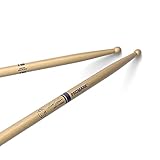
Overview: The ProMark Scott Johnson FireGrain marching stick embodies modern innovation in percussion tool design. Featuring ProMark’s proprietary FireGrain hardening process, this stick is specifically engineered for players who consistently push their equipment beyond normal limits. The 17-inch length and .700-inch diameter provide substantial presence while preserving traditional marching stick feel and technique. Designed by Scott Johnson of the Blue Devils fame, it reflects championship-level insights into durability and performance requirements.
What Makes It Stand Out: The FireGrain treatment dramatically increases wood density and durability without adding weight, allowing these sticks to outlast conventional hickory models by a significant margin. The large round tip produces a full, robust tone on marching snares with excellent projection. Made-in-USA craftsmanship ensures exceptional quality control and consistency. The 17-inch length offers slightly extended reach, benefiting players with larger hands or those seeking extra leverage.
Value for Money: While priced slightly higher than basic hickory sticks at $20-22 per pair, the FireGrain technology delivers tangible longevity benefits that justify the premium. For hard-hitting players who regularly break sticks, the extended lifespan makes them more economical over time. They compete favorably with other premium marching sticks while offering unique durability advantages that translate to fewer mid-season replacements.
Strengths and Weaknesses: Strengths include remarkable durability, consistent manufacturing, excellent projection from the round tip, and comfortable dimensions for most players. The FireGrain finish provides a smooth, secure grip. Weaknesses include a slightly different feel that some wood purists may not prefer, limited tip shape options, and premium pricing that may deter budget-conscious beginners.
Bottom Line: An excellent investment for aggressive players seeking maximum durability without compromising performance characteristics, especially valuable for those in high-intensity ensembles.
4. Heavy Marching Drum Sticks - “Exhausted” Weight, 3 Levels for Strength Training, Pitch & Weight Matched, Hickory Wood with Non-Slip Grip for Marching Band & Drumline,Strength Training Drum Sticks

Overview: These Heavy Marching Drum Sticks fundamentally reinvent practice methodology through their innovative strength-training approach. Designed explicitly as a training tool rather than performance equipment, they come in three progressive weights—Comfort, Tired, and Exhausted—to systematically build endurance and control. This progressive system transforms routine practice sessions into targeted strength conditioning, similar to athletic weight training protocols used by professional musicians.
What Makes It Stand Out: The three-tiered weight system is unprecedented in marching percussion, allowing drummers to gradually increase resistance like traditional strength training. The “Exhausted” level provides serious resistance that makes regular sticks feel virtually weightless by comparison. Each pair is meticulously weight and pitch matched, and the non-slip grip ensures security during intense practice sessions. This systematic approach builds muscle memory alongside physical strength.
Value for Money: As a specialized training tool, these sticks offer value that extends beyond typical stick purchases. They essentially combine equipment costs with strength training benefits that would otherwise require separate conditioning programs. For dedicated players, the improvement in endurance and control translates directly to better performance, justifying the moderate price premium over standard sticks.
Strengths and Weaknesses: Strengths include innovative training concept, progressive difficulty levels, excellent build quality, and immediate performance benefits when switching back to regular sticks. They build serious chops efficiently. Weaknesses include not being suitable for actual performance, potential for developing bad habits if overused, and the need for disciplined integration into practice routines to avoid injury.
Bottom Line: A game-changing training aid that builds serious endurance and control, but should complement—not replace—regular practice with performance sticks for optimal results.
5. Vic Firth Corpsmaster Signature Snare – Ralph Hardimon Nylon

Overview: The Vic Firth Corpsmaster Ralph Hardimon Nylon tip stick delivers the legendary Hardimon design with modern nylon tip technology. This model preserves all the performance characteristics that made the original famous while offering the enhanced durability and consistency of synthetic tips. At 17 inches long with a .710-inch diameter, it provides substantial feel for serious marching percussionists who demand reliability in high-pressure situations.
What Makes It Stand Out: The nylon tip maintains its shape and sound indefinitely, eliminating the frustration of worn or chipped wood tips during critical rehearsals or performances. You get the same barrel tip profile and long taper as the original Hardimon design, ensuring identical rebound and control characteristics, but with enhanced articulation clarity that nylon provides on high-tension heads. This consistency is invaluable during finals week when you can’t afford variable equipment.
Value for Money: Priced comparably to other premium nylon-tip marching sticks at $19-21 per pair, this model offers exceptional value for players in demanding ensembles. The tip longevity alone saves money over time, and the consistency from pair to pair exceeds what wood tips can offer. It’s a smart investment for players who prioritize reliability and need equipment that performs identically every time.
Strengths and Weaknesses: Strengths include tip durability, consistent articulation, familiar Hardimon balance, and excellent for indoor percussion where clarity is paramount. Nylon tips also perform better in humid conditions. Weaknesses include a different feel some traditionalists may dislike, potential over-brightness on certain drumheads, and personal preference factors that make wood tips irreplaceable for some players.
Bottom Line: The perfect choice for players who love the Hardimon feel but demand the reliability and consistency of nylon tips in competitive environments.
6. 3-Pairs Vic Firth Corpsmaster Signature Ralph Hardimon Marching Snare Drum Sticks (SRH)

Overview: The Vic Firth Corpsmaster Ralph Hardimon SRH is the gold standard for marching snare drummers worldwide. This three-pair bundle delivers the iconic stick that has defined modern marching percussion technique for decades. Crafted from premium hickory, these sticks feature a unique barrel tip and graduated taper that produces exceptional articulation and projection across any ensemble. At 17 inches long with a .710-inch diameter, they provide the leverage and mass needed for outdoor marching while maintaining the finesse required for indoor percussion.
What Makes It Stand Out: The SRH’s signature design comes from legendary percussionist Ralph Hardimon’s exacting specifications. The barrel tip creates a full-bodied sound on kevlar heads while the precise taper delivers balanced rebound. Purchasing three pairs ensures consistency across your drumline and provides backup for intense rehearsal schedules. Each pair is weight and pitch-matched using Vic Firth’s rigorous quality control, giving ensembles the uniformity they demand.
Value for Money: At approximately $12-15 per pair when bought in this bundle, these professional sticks cost less than a fast-food meal. Considering their durability and the fact that many drumlines use them exclusively, the three-pair pack represents exceptional value. Individual pairs retail for $18-20, making this multi-pack a smart investment for serious percussion programs.
Strengths and Weaknesses: Strengths: Unmatched consistency, proven durability, excellent projection, trusted by DCI champions, ideal weight distribution. Weaknesses: May feel heavy for younger players, not optimized for indoor percussion’s quieter demands, limited grip enhancement.
Bottom Line: These are non-negotiable for competitive marching ensembles. The three-pair pack ensures you’re always prepared while saving money. If you’re serious about marching percussion, the SRH belongs in your stick bag.
7. Marching Drum Sticks - “Tired” Weight (Medium Heavy), Hickory Wood with Non-Slip Grip for Strength Training & Practice, Designed for Marching Band & Drumline

Overview: These innovative “Tired” weight sticks function as a strength-training tool disguised as traditional marching sticks. Heavier than standard models, they’re engineered specifically to build the hand strength, wrist control, and endurance essential for competitive drumming. Made from premium hickory with a longer shaft, thicker diameter, and large acorn tip, they replicate authentic marching stick geometry while adding purposeful resistance.
What Makes It Stand Out: The progressive training system (Comfortable, Tired, Exhausted) offers a structured path to physical development. The “Tired” weight hits the sweet spot for intermediate drummers, providing challenge without risking injury. The non-slip finish maintains control during sweaty practice sessions, while precision matching ensures consistent feel between sticks—a rarity in training tools.
Value for Money: Priced similarly to standard marching sticks ($15-18 per pair), these deliver dual value: practice tool and performance enhancer. By making your regular sticks feel lighter and faster, they effectively improve your technique. Compared to gym memberships or specialized drumming exercise equipment, they’re an economical investment in your physical conditioning.
Strengths and Weaknesses: Strengths: Builds measurable strength, maintains traditional technique, excellent grip coating, part of logical training progression, durable hickory construction. Weaknesses: Not for performance use, may cause fatigue if overused, beginners should start with “Comfortable” weight, requires disciplined practice approach.
Bottom Line: A game-changer for drummers hitting physical plateaus. Use them for 20-30 minutes daily, then switch to your regular sticks to feel immediate improvement. Essential for building championship-level endurance.
8. Vic Firth Corpsmaster Signature Snare –Thom Hannum Beast

Overview: The Thom Hannum “Beast” lives up to its name with imposing dimensions: .700-inch diameter and 17-inch length make it one of the largest marching sticks in Vic Firth’s lineup. Designed by the renowned educator and arranger, these sticks are built for maximum projection and authority on the field. The extra mass delivers unparalleled volume and articulation on high-tension marching heads.
What Makes It Stand Out: The sheer girth sets the Beast apart. At .700 inches, it dwarfs most marching sticks, requiring serious grip strength while rewarding players with massive sound. The additional mass provides natural momentum, helping drummers achieve fuller strokes with less effort once adapted. It’s specifically engineered for outdoor marching where volume and clarity compete with brass sections.
Value for Money: Retailing around $20-25 per pair, the Beast commands a premium but delivers specialized performance. For drumlines needing maximum sonic impact, the investment pays dividends. However, their niche application means they shouldn’t be your only stick purchase. Think of them as a specialty tool rather than daily driver.
Strengths and Weaknesses: Strengths: Extreme projection, authoritative sound, durable construction, excellent for outdoor ensembles, builds hand strength naturally. Weaknesses: Too large for most indoor percussion, requires significant adaptation period, overkill for younger players, may cause hand fatigue during long rehearsals.
Bottom Line: Reserve these for outdoor marching where volume is paramount. Not for beginners or indoor groups, but indispensable for drumlines that need to cut through massive hornlines. A specialized weapon for specific sonic battles.
9. Vic Firth Corpsmaster Signature – Ralphie Jr.

Overview: Ralphie Jr. offers the revered Hardimon design in a scaled-down package perfect for younger percussionists and indoor marching applications. Maintaining the signature barrel tip and balanced taper of the original SRH, this stick reduces dimensions to better fit smaller hands while preserving the professional feel that makes the Hardimon line legendary. Crafted from premium USA hickory, it delivers authentic performance for developing players.
What Makes It Stand Out: This is the bridge between beginner sticks and professional gear. Rather than forcing young drummers to struggle with oversized sticks, Ralphie Jr. provides appropriately scaled dimensions without sacrificing quality. The familiar Hardimon profile ensures a smooth transition to the full-size SRH as players grow, making it an ideal teaching tool for progressive programs.
Value for Money: Priced at $15-18 per pair—nearly identical to professional models—the value lies in proper technique development. Preventing bad habits from ill-fitting equipment is priceless. For indoor percussion, where volume requirements are lower, these provide the Hardimon sound without excessive weight.
Strengths and Weaknesses: Strengths: Perfect size for youth, maintains Hardimon quality, smooth transition path, excellent for indoor use, prevents overexertion. Weaknesses: Limited projection for outdoor marching, advanced players will outgrow quickly, not suitable for adults, less durable than full-size models.
Bottom Line: Every youth percussion program should stock these. They allow proper technique development from day one. If you’re teaching middle school or indoor high school lines, Ralphie Jr. is the intelligent choice for building fundamentals without compromise.
10. Vic Firth Corpsmaster Signature – Ralph Hardimon Hammer

Overview: The Ralph Hardimon Hammer reimagines the classic SRH design using Sta-Pac laminate—a dense, heavy synthetic material that transforms the stick’s character while maintaining familiar geometry. This material swap adds significant weight and durability, creating a unique practice and performance tool for advanced drummers seeking different feedback. The same taper, tip shape, and balance points ensure a consistent transition from standard hickory Hardimons.
What Makes It Stand Out: Sta-Pac material offers extreme durability and a distinctive high-density feel that hickory cannot replicate. The added mass provides enhanced control during high-velocity passages while producing a darker, more focused tone on drumheads. These sticks essentially function as a weighted version of the SRH without altering dimensions, offering a unique training-to-performance continuum.
Value for Money: At $25-30 per pair, the Hammer commands a premium price justified by material costs and specialized application. They outlast hickory sticks significantly, potentially saving money long-term for heavy-handed players. However, the investment only makes sense if you specifically want the Sta-Pac characteristics.
Strengths and Weaknesses: Strengths: Exceptional durability, unique weighted feel, maintains Hardimon geometry, excellent for strength maintenance, distinctive articulation. Weaknesses: Expensive, heavy rebound requires adaptation, overkill for most players, not traditional wood feel, limited availability.
Bottom Line: A specialized tool for advanced drummers who’ve mastered the SRH and want to explore weighted training without changing technique. Not for beginners, but a worthwhile experiment for instructors and professionals seeking durability and unique sonic characteristics. Consider these a luxury upgrade rather than a necessity.
The Stadium Sound Challenge: Why Standard Sticks Fail
Stadium acoustics are merciless. Unlike the controlled environment of a concert hall, outdoor venues and massive arenas swallow mid-range frequencies whole while amplifying low-end rumble and high-frequency reflections. Your carefully practiced dynamics mean nothing if the stick can’t produce the fundamental frequencies that carry. Standard drum set sticks, designed for intimate club settings and studio work, simply lack the mass and attack profile to project beyond the first thirty rows.
The problem compounds with distance. Sound intensity drops roughly 6 decibels for every doubling of distance in open air. That means a stroke that sounds thunderous at the drumhead might register as a polite tap by the time it reaches the 50-yard line. Stadium-ready sticks combat this through strategic weighting that emphasizes attack—the initial transient that defines your sound—over sustain, which gets lost in the ambient wash anyway.
Anatomy of a Stadium-Ready Drum Stick
Before we dissect performance characteristics, you need to understand the language of stick architecture. Every component influences how energy transfers from your hands to the drumhead, and weak links in this chain destroy projection.
The butt (grip end) acts as your counterweight, affecting the stick’s balance point and how much effort you expend controlling rebound. The shaft provides the main mass and determines overall stiffness—critical for transferring power without absorbing it. The shoulder (the area where shaft meets taper) acts as a shock absorber and flex point, while the taper controls how quickly the stick returns after impact. Finally, the tip is your primary voice, shaping the attack’s frequency content and articulation.
In stadium applications, these elements work in concert to maximize acoustic efficiency. A well-designed stick behaves like a tuned circuit, minimizing energy loss while emphasizing the 2-5 kHz frequency range where human ears are most sensitive in noisy environments.
Material Matters: Wood Types and Synthetic Alternatives
Hickory: The Gold Standard
Hickory dominates the marching world for good reason. Its cellular structure offers the ideal balance of density (around 42-48 pounds per cubic foot), stiffness, and shock absorption. The wood’s natural damping properties prevent unwanted overtones while preserving the crisp attack that cuts through noise. Look for straight, tight grain patterns running the full length of the stick—wavy or irregular grain creates unpredictable flex points that sap power.
Maple: Speed vs. Power
Maple’s lower density makes it faster and more responsive, but that lightness becomes a liability in stadium settings. However, some advanced players prefer maple for tenors or indoor marching where extreme volume isn’t required. The key is selecting hard rock maple with specific gravity above 0.60, which provides better projection than softer varieties.
Oak: The Heavyweight Contender
Red and white oak variants offer superior density (up to 55 pounds per cubic foot) and durability, translating to effortless volume. The trade-off? Increased weight fatigue and potentially harsh overtones if the stick isn’t properly designed. Oak excels for bass drummers who need maximum impact with minimal effort, but snare players should approach with caution—the added mass can slow technical passages.
Synthetic Materials: The Modern Edge
Carbon fiber composites and engineered polymers are rewriting the rules. These materials offer consistent weight distribution, zero moisture absorption, and unparalleled durability. The best synthetics mimic hickory’s flex profile while adding 15-20% more mass in the same dimensions. They’re particularly valuable in humid climates where wooden sticks swell and lose their crisp response.
The Weight Factor: Finding Your Power-to-Control Ratio
Stadium sticks typically range from 1100 to 1300 grains (roughly 71-84 grams), significantly heavier than standard models. But raw weight tells only part of the story. Weight distribution determines whether that mass works for or against you.
A front-weighted stick concentrates mass toward the tip, creating natural momentum that does the work for you. This design excels for achieving maximum volume with relaxed grip pressure, reducing fatigue during three-hour games. However, excessive front-weighting slows quick rudiments and compromises finesse.
Rear-weighted or butt-balanced sticks shift mass toward the grip, offering greater control for technical passages at the cost of effortless projection. The sweet spot for most snare drummers lies in neutral balance—weight distributed evenly around the stick’s midpoint—providing versatility across dynamic ranges.
Test this by balancing each stick on your index finger. The balance point should fall between 15-17 inches from the tip for optimal stadium performance. Anything farther back sacrifices power; anything farther forward sacrifices control.
Length and Leverage: Maximizing Your Reach and Impact
Marching sticks typically measure 16.5 to 17.5 inches, longer than their drum set counterparts. That extra length isn’t arbitrary—it creates mechanical advantage. Like extending the handle on a wrench, longer sticks amplify your wrist’s angular velocity into greater tip speed, generating more impact force without additional muscular effort.
But leverage works both ways. Excessive length increases the moment of inertia, making quick doubles and drags feel sluggish. The optimal length depends on your playing style and physical stature. Taller players with longer arms can harness 17.5-inch sticks effectively, while shorter players may find 16.5-inch models offer better control.
For bass drummers, length becomes even more critical. The distance from carrier to drumhead often necessitates 18-inch sticks to maintain proper playing angle. Tenor players typically prefer shorter sticks (16-16.5 inches) for the tight spacing between drums.
Tip Design: The Science of Attack and Projection
Shape and Surface Area
The tip is where physics meets artistry. Barrel tips with their broad, flat surface area produce a thick, dark sound that gets lost in stadium noise. Acorn tips strike a balance between articulation and body, while small round tips focus all energy into a tiny contact point, creating a piercing attack that carries.
For maximum projection, look for modified acorn or arrowhead shapes that combine a small initial contact point with a slightly larger body. This design produces a sharp attack followed by enough mass to excite the drum’s fundamental tone.
Material Hardness
Nylon tips offer undeniable durability and a brighter, more focused attack. However, poorly manufactured nylon tips can sound brittle and lack the organic warmth of wood. Premium sticks use injection-molded nylon with specific hardness ratings (around 85-90 Shore D) that mimics the response of dense maple.
Wood tips provide superior tonal complexity but wear faster. The key is tip density—tips cut from the wood’s heartwood (denser center) maintain their shape longer and project better than sapwood tips.
Taper and Shoulder: The Hidden Architects of Response
The taper controls rebound, and rebound determines how fast you can play without tensing up. Short tapers (gradual reduction in diameter) create stiff sticks with minimal flex, translating to maximum power transfer. These excel for forte passages but feel clunky at pianissimo dynamics.
Long tapers produce whippier sticks with enhanced rebound, crucial for fast rudiments. The trade-off is some loss of direct power transfer. For stadium work, a medium taper hitting the sweet spot between stiffness and liveliness proves most versatile.
The shoulder’s shape matters more than most realize. A rounded shoulder distributes stress over a larger area, preventing the stick from “bottoming out” on hard rimshots and preserving its structural integrity. Sharp, angular shoulders create stress risers that lead to premature breakage.
Durability Under Pressure: Built for the Long Season
A stick that breaks mid-show is worse than useless—it’s a liability. Stadium-ready sticks face brutal conditions: rimshots at fortissimo, extreme temperature swings, and hours of daily practice. Durability starts with grain orientation. The grain should run parallel to the stick’s length, visible as straight lines from butt to tip. Diagonal or spiral grain patterns indicate weak structure.
Kiln-drying also plays a crucial role. Over-dried wood becomes brittle; under-dried wood warps. Professional-grade sticks are dried to 8-10% moisture content, balancing stability with resilience. Test this by flexing the stick slightly—it should bend without creaking, which indicates internal fiber separation.
For synthetics, look for unidirectional fiber alignment in carbon fiber models, mimicking wood’s natural grain structure. Premium composites use hybrid constructions, wrapping carbon fiber around a denser core material to achieve ideal weight and flex characteristics.
Grip and Finish: When Sweat Meets Stadium Lights
Friday night lights mean sweat, and sweat means slippage. A dropped stick during a crucial cadence is every drummer’s nightmare. Traditional lacquer finishes offer smooth comfort but become slick when wet. Satin finishes provide slightly more texture, while proprietary grip coatings use microscopic silica particles or polymer overlays to maintain traction.
Some players swear by unfinished sticks, claiming the raw wood absorbs moisture and improves grip. While true, unfinished wood also absorbs skin oils and swells inconsistently, altering the stick’s balance over time. A better compromise is a partial finish—lacquered shaft with an unfinished grip area.
Grip diameter matters too. A stick that’s too thin forces excessive grip pressure, causing fatigue. Too thick, and you lose finger control. The sweet spot for most male hands falls around 0.710-0.720 inches; female players often prefer 0.695-0.705 inches. But hand size varies—test multiple diameters to find what feels natural at the end of a three-hour rehearsal.
Matching Sticks to Your Drum: A Compatibility Guide
Your drum’s voice should harmonize with your stick’s characteristics. A high-tension Kevlar head on a modern marching snare demands a stick with significant mass and a hard tip to excite the head’s full frequency range. Using a light stick on a high-tension drum produces a thin, papery sound that disappears outdoors.
Conversely, Mylar heads on older drums or indoor ensembles respond better to slightly lighter sticks with more flex, allowing the head to resonate naturally. Bass drums, with their loose heads and deep shells, require mallets or heavily front-weighted sticks that move enough air to produce fundamental tone.
Tenor drums present unique challenges. The tight spacing between drums favors shorter, lighter sticks for quick movement, but the need for projection across the field demands tip designs that punch above their weight. Look for tenors sticks with oversized tips relative to their overall weight, maximizing attack without sacrificing speed.
The Break-In Period: From Stiff to Responsive
Fresh-out-of-the-box sticks rarely perform at their peak. The break-in period, typically 2-4 hours of playing, allows the wood’s internal fibers to align with the stresses of playing. During this time, you’ll notice the stick becoming more responsive, with improved rebound and a slightly warmer tone.
Accelerate break-in by playing medium-volume rudiments on a practice pad for 30-minute sessions. Avoid heavy rimshots during this period—they can create micro-fractures before the wood has settled. Rotate between multiple pairs during break-in to ensure consistent feel across your arsenal.
For synthetics, break-in is less about material settling and more about you adapting to the stick’s unique response curve. Carbon fiber sticks feel “dead” initially compared to wood, but after a few sessions, your hands adjust to the different flex pattern, and the sticks’ consistent performance becomes apparent.
Budget vs. Performance: Making Smart Investments
Entry-Level Options ($8-12 per pair)
These sticks use lower-grade hickory with more grain irregularities and simpler manufacturing processes. While functional, they lack the consistency and durability for serious marching. Expect to replace them frequently, which adds up over a season.
Mid-Range Professional ($15-20 per pair)
This is the sweet spot for most high school and college programs. These sticks feature better wood selection, precision machining, and quality control that ensures matched pairs within 1-2 grams. The performance difference from entry-level is immediate and substantial.
Premium Tier ($22-30 per pair)
Premium sticks justify their cost through exceptional consistency—often matched within half a gram—advanced finishes, and proprietary designs optimized for specific applications. For competitive drum corps or college programs, this investment pays dividends in performance and reduced replacement frequency.
The Hidden Cost of Cheap Sticks
Factor in the cost of broken sticks during performances, inconsistent sound quality, and potential hand fatigue leading to injury. Suddenly, saving $5 per pair seems less appealing. A broken stick that flies into the stands during a championship performance? Priceless in the worst way.
Common Selection Mistakes and How to Avoid Them
Mistake #1: Choosing Maximum Weight
Bigger isn’t always better. Sticks that are too heavy slow your technique and cause muscle strain. The goal is effective weight, not maximum weight. A well-designed 1200-grain stick can project better than a poorly balanced 1300-grain club.
Mistake #2: Ignoring Pair Matching
Even quality sticks vary slightly. Always roll your sticks on a flat surface to check for warping, and weigh them if possible. A 3-gram difference between sticks creates uneven response that sabotages your consistency. Professional percussionists often buy sticks in batches and spend hours matching them by weight and pitch.
Mistake #3: Overlooking the Back End
The butt end’s shape and finish affect how the stick resonates. A rounded butt allows subtle vibrations to dissipate naturally, while a flat-cut butt can create unwanted overtones. The butt also impacts how the stick feels in traditional grip—sharp edges dig into the palm during long rehearsals.
Mistake #4: Chasing Trends Over Fit
Just because the champion drum corps uses a particular profile doesn’t mean it’s right for your hands, your drums, or your playing style. Use recommendations as starting points, but trust your own experience. The best stick is the one that disappears in your hands, becoming a natural extension of your musical voice.
Testing Sticks Before You Commit
Never buy a dozen pairs without testing first. Most reputable retailers understand this and offer single-pair purchases for evaluation. When testing, bring your actual drum or an identical model. Practice pads lie—they don’t replicate the head tension, rim response, or acoustic feedback of your real instrument.
The Rudiment Test
Play a full dynamic range: pianissimo taps to check control, fortissimo rimshots to test power transfer, and fast paradiddles to evaluate rebound consistency. Listen for evenness between hands and watch for signs of stress in the stick.
The Drop Test
Hold the stick horizontally at shoulder height and drop it onto a hard surface. A quality stick produces a clear, ringing tone and bounces cleanly. A dull thud indicates internal damping or cracks. This test reveals hidden flaws that visual inspection misses.
The Flex Test
Apply gentle pressure to bend the stick slightly. It should flex smoothly with no creaking or splintering sounds. Excessive stiffness suggests over-drying; too much flex indicates weak grain structure. The ideal stick feels alive, resisting just enough to transfer your energy efficiently.
Maintenance and Care: Extending Stick Life
Storage Solutions
Never leave sticks in your car. Temperature extremes and humidity fluctuations are sticks’ worst enemies. Store them vertically in a cool, dry place, allowing air circulation around each pair. Stick bags with individual slots prevent warping and protect finishes.
Rotation Strategy
Rotate through 4-6 pairs during practice, allowing each set to rest and recover its shape. This practice extends lifespan by 30-40% and ensures you have broken-in backups ready. Mark each pair with the date you started using them to track their lifespan.
Inspection Rituals
Before each rehearsal, inspect sticks for hairline cracks around the shoulder and tip. Flex them gently and listen for internal separation. Catching a failing stick before it shatters mid-performance saves more than just embarrassment—it prevents potential injury from flying wood shards.
Cleaning Protocols
Wipe down sticks after each use with a dry cloth to remove oils and sweat. For lacquered sticks, occasional cleaning with a slightly damp cloth followed by immediate drying maintains the finish. Never submerge sticks in water or use alcohol-based cleaners, which strip natural oils from the wood.
Frequently Asked Questions
How long should a pair of marching sticks last under normal use?
With proper rotation and care, expect 40-60 hours of playing time for wooden sticks in stadium applications. Synthetics can last 150+ hours. However, heavy rimshot usage can halve these numbers. The key is monitoring for wear rather than following a strict timeline—replace sticks at the first sign of cracking or significant tip wear.
Do weather conditions really affect wooden sticks that much?
Absolutely. Wood is hygroscopic, meaning it absorbs moisture from the air. In high humidity, sticks swell slightly, becoming softer and less responsive. In dry conditions, they shrink and become brittle. A 20% humidity swing can alter a stick’s weight by 2-3 grams and change its flex characteristics noticeably. Synthetics eliminate this variable entirely.
Is there a break-in period for new sticks, or can I use them straight away?
All sticks benefit from a break-in period. Wooden sticks need 2-4 hours for fibers to align, while synthetics require your hands to adapt to their unique response. Start with medium-volume rudiments, avoid heavy rimshots initially, and rotate between multiple pairs. This prevents premature failure and ensures consistent feel across your stick inventory.
What’s the ideal stick weight for a high school marching snare drummer?
Most developing players perform best with sticks weighing 1150-1250 grains (74-81 grams). This range provides sufficient projection without causing the muscle fatigue that leads to poor technique. Lighter players or those with smaller hands may start around 1100 grains and progress heavier as their technique and strength develop.
Can I use the same sticks for snare, tenor, and bass?
While possible, it’s not optimal. Each drum voice has different acoustic requirements. Snare sticks need maximum attack, tenor sticks prioritize speed and maneuverability, and bass sticks require mass for low-frequency projection. Using specialized sticks for each voice improves overall ensemble clarity and reduces player fatigue.
How do I know if a stick is properly matched to its pair?
Roll both sticks on a perfectly flat surface to check for warping. Weigh them on a gram scale—professional-grade pairs should be within 1-2 grams of each other. Finally, tap each stick against a hard surface and listen for matching pitch. Evenly matched sticks produce nearly identical tones, ensuring your hands feel and sound consistent.
Are nylon tips really better for projection than wood?
Nylon tips produce a brighter, more focused attack that can cut through noise more effectively. However, premium hardwood tips with proper density can match nylon’s projection while offering superior tonal warmth. The real advantage of nylon is durability—wood tips wear down and change shape, while nylon maintains its profile for the stick’s lifespan.
What’s the best way to test sticks in a music store if I can’t bring my drum?
Bring a high-quality practice pad that mimics your drum’s rebound characteristics. Test the full dynamic range, focusing on how the stick feels during fast rudiments and heavy accents. Pay attention to the balance point and whether the stick feels alive or dead in your hands. While not perfect, this method reveals 80% of a stick’s performance characteristics.
How does stick taper affect my playing speed?
Taper length directly influences rebound speed. Long tapers create flexible sticks that rebound quickly, ideal for fast passages. Short tapers produce stiff sticks with slower rebound but more direct power transfer. For stadium work, a medium taper offers the best compromise—quick enough for technical passages, stiff enough for authoritative projection.
Should I buy sticks in bulk to save money, or purchase smaller quantities more frequently?
For established players who’ve found their perfect stick, buying in bulk (12-24 pairs) during sales makes sense. However, manufacturers occasionally change specifications, and wood varies between production batches. Buying smaller quantities more frequently ensures consistency and allows you to adapt if your preferred model evolves. For developing players still searching for the right fit, small purchases prevent wasting money on sticks that don’t suit your developing technique.
See Also
- 10 Must-Have Marching Drum Sticks That Cut Through Stadium Noise in 2026
- 10 Marching Drum Sticks That Survive Full-Season High-School Bands in 2026
- 10 Travel-Safe Marching Drum Sticks with Hard Cases in 2026
- 10 Best Marching Drum Sticks That Balance Weight and Projection
- 10 Marching Drum Sticks with Anti-Slip Grip Tape in 2026