Table of Contents
The blistering August sun beats down on the practice field as you power through hour three of drill rehearsal. Your hands are cradling the only piece of equipment that connects you directly to your instrument—your marching drum sticks. In that moment, the difference between a stick that’s merely adequate and one that’s perfectly matched to your hands, your drum, and the demands of college-level marching becomes crystal clear. As we look ahead to 2026, marching percussion technology has evolved dramatically, making the selection process more nuanced than ever for incoming college band camp participants.
Your drum sticks are not just accessories; they’re extensions of your musical voice that must withstand 12-hour rehearsal days, unpredictable weather, and the technical demands of modern collegiate drum books. The right pair can help you develop proper technique, prevent injury, and deliver the precise articulation your section leader demands. The wrong pair? They’ll leave you with bruised hands, inconsistent sound, and a frustrating camp experience that could set you back weeks in your development. This comprehensive guide breaks down everything you need to know to make an informed decision before you report for camp.
Top 10 Marching Drum Sticks
Detailed Product Reviews
1. Vic Firth Corpsmaster Signature Snare – Ralph Hardimon

Overview: The Vic Firth Corpsmaster Ralph Hardimon stick represents decades of marching percussion mastery. Designed by the legendary Ralph Hardimon himself, this model has become the gold standard for serious drumlines and indoor percussion ensembles worldwide. Crafted from premium USA hickory, it embodies the perfect balance of tradition and innovation that modern marching demands.
What Makes It Stand Out: The modified barrel tip delivers exceptional clarity on high-tension heads while the elongated taper creates a responsive rebound that feels effortless during long rehearsals. This isn’t just a stick—it’s Hardimon’s philosophy in wood form, trusted by ensembles like the Santa Clara Vanguard and Blue Devils. The longer taper specifically adds control without sacrificing the power needed for contemporary marching literature.
Value for Money: Priced competitively with other professional marching sticks, the Hardimon model justifies every penny through its durability and performance pedigree. While budget sticks might save $10-15 per pair, they lack the refined balance and consistent manufacturing that makes this stick a multi-season workhorse. Consider it an investment in your technique.
Strengths and Weaknesses: Strengths include unmatched rebound characteristics, exceptional durability for a wood tip, and universal acceptance among elite groups. The modified barrel tip provides articulate sound across all dynamic levels. Weaknesses are minimal but notable: the specific balance point may require adjustment for drummers transitioning from other models, and the wood tip will eventually chip compared to nylon alternatives.
Bottom Line: For serious marching percussionists seeking the benchmark in snare sticks, the Ralph Hardimon model remains virtually unbeatable. It’s the definitive choice for those who prioritize control, rebound, and proven performance at the highest levels.
2. Vic Firth Corpsmaster Signature Snare – Mike Jackson

Overview: The Vic Firth Corpsmaster Mike Jackson signature stick delivers a unique take on marching snare design, emphasizing forward mass and powerful projection. Created for drummers who need authority without sacrificing technical facility, this stick employs innovative geometry that distinguishes it from traditional marching models. The premium USA hickory construction ensures it can withstand the rigors of competitive drumline activity.
What Makes It Stand Out: The long reverse taper is the star here, deliberately shifting more mass toward the front of the stick for increased power and a distinctive feel. Combined with a thick shoulder, this design generates substantial volume while the extended taper maintains surprising rebound. It’s engineered for the modern marching athlete who plays with aggressive technique but demands precision.
Value for Money: Positioned at the standard Vic Firth signature price point, the Mike Jackson model offers specialized performance characteristics that justify its cost. For drummers struggling to achieve presence in large ensembles, this stick’s forward-weighted design provides natural amplification without technique changes, potentially eliminating the need for heavier traditional sticks.
Strengths and Weaknesses: Strengths include exceptional power-to-weight ratio, unique reverse taper feel that many find addictive, and robust durability at impact points. The thick shoulder adds durability and authority. Weaknesses include a learning curve for drummers accustomed to traditional tapers, and the forward mass may fatigue players with smaller hands during extended sessions. It’s less versatile than more neutral designs.
Bottom Line: The Mike Jackson stick excels for aggressive marching styles and players seeking natural volume enhancement. If you crave power with maintained rebound and are willing to adapt to its unique balance, this innovative design deserves serious consideration.
3. ProMark Scott Johnson Hickory Signature Marching Snare Drum Sticks - FireGrain For Playing Harder, Longer - No Excess Vibration - Lacquer Finish, Large Round Tip, Hickory Wood - 1 Pair
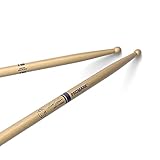
Overview: ProMark’s Scott Johnson FireGrain marching stick brings modern material science to traditional hickory construction. The FireGrain hardening process, combined with Scott Johnson’s performance specifications, creates a stick designed for relentless practice and performance. At 17 inches with a .700" diameter, it fits comfortably in the established marching stick paradigm while offering enhanced durability.
What Makes It Stand Out: The proprietary FireGrain treatment penetrates the hickory, significantly increasing durability without adding weight or altering the essential feel drummers expect. The large round wood tip produces a robust, full-bodied tone on kevlar heads that cuts through ensembles without harshness. Being entirely manufactured in Texas under strict quality controls ensures consistency pair-to-pair.
Value for Money: These sticks typically retail slightly below Vic Firth signature models while offering comparable performance and potentially superior lifespan due to the FireGrain process. For students and educators on tighter budgets, this represents excellent value—especially considering the reduced replacement frequency during intense camp seasons.
Strengths and Weaknesses: Strengths include remarkable durability from the FireGrain treatment, consistent manufacturing, comfortable dimensions for most hands, and warm yet articulate round tip sound. The lacquer finish provides secure grip. Weaknesses include the round tip lacking the pinpoint definition of barrel designs for certain techniques, and some purists feel the FireGrain process subtly alters the hickory’s natural flex. Availability can be sporadic compared to Vic Firth.
Bottom Line: For durability-focused marchers seeking American-made quality at a competitive price, the Scott Johnson FireGrain stick is a smart choice. It’s particularly valuable for students who practice extensively and need sticks that survive the journey from rehearsal to performance.
4. Heavy Marching Drum Sticks - “Exhausted” Weight, 3 Levels for Strength Training, Pitch & Weight Matched, Hickory Wood with Non-Slip Grip for Marching Band & Drumline,Strength Training Drum Sticks

Overview: These Heavy Marching Drum Sticks redefine the concept of practice tools, explicitly designed for strength training rather than performance. Available in three progressive weights—Comfort, Tired, and Exhausted—they function like resistance training equipment for drummers. The “Exhausted” weight represents the heaviest tier, engineered to build the specific muscles and endurance marching percussion demands.
What Makes It Stand Out: The three-tiered system allows progressive overload, a fundamental training principle rarely applied to stick design. Each weight is precisely matched for pitch and balance, ensuring consistent feel as you advance through levels. The acorn tip and authentic marching dimensions prevent technique adaptation when returning to standard sticks, focusing training on strength rather than compensatory movement.
Value for Money: While priced slightly above regular sticks, you’re purchasing a specialized training implement, not just another pair. Compared to investing in multiple pairs of varying weights or weighted gloves, this systematic approach offers better value and more drum-specific development. For serious marchers, it’s equipment that directly translates to performance gains.
Strengths and Weaknesses: Strengths include targeted strength building, progressive difficulty, authentic marching geometry, and excellent craftsmanship with non-slip grip. The weight and pitch matching is crucial for developing consistent technique. The major weakness is their single-purpose design—these are NOT performance sticks and using them as such could damage drums and develop poor technique. They’re also overkill for casual players.
Bottom Line: These are essential training tools for competitive marching percussionists committed to physical development. If you’re serious about building endurance and control, the progressive weight system offers unmatched specificity. Just remember: practice with these, perform with your regular sticks.
5. Vic Firth Corpsmaster Signature Snare – Ralph Hardimon Nylon

Overview: The Vic Firth Corpsmaster Ralph Hardimon Nylon model takes the iconic Hardimon design and swaps the traditional wood tip for durable nylon. This variation maintains the same 17" length, .710" diameter, and distinctive barrel tip profile that made the original legendary, while offering a different sonic character and enhanced tip longevity that some marching situations demand.
What Makes It Stand Out: You get Hardimon’s revered geometry—modified barrel tip and long taper for quick rebound—with the articulation clarity only a nylon tip provides. This combination solves the perpetual dilemma of wood tip durability on high-tension kevlar heads, especially in harsh weather conditions where wood tips can swell or crack. The nylon delivers consistent definition regardless of temperature or humidity.
Value for Money: Priced identically to the wood tip version, the nylon variant offers extended tip life, potentially saving money over a season. For drumlines performing frequently in outdoor stadiums or parades, the reduced replacement frequency offsets any subtle sonic compromise. It’s a practical investment for high-usage scenarios.
Strengths and Weaknesses: Strengths include exceptional tip durability, brighter articulation that cuts through amplified ensembles, weather resistance, and the same trusted Hardimon balance and rebound. The nylon tip maintains its shape indefinitely. Weaknesses include a slightly different feel some purists dislike, marginally brighter tone that may not suit indoor percussion, and the inability to “customize” tip shape through sanding like wood tips.
Bottom Line: Choose the Hardimon Nylon if you prioritize durability and consistent articulation in outdoor or high-volume settings. For purists preferring traditional wood feel and warmer tone, stick with the original. Both are exceptional—this is purely a preference and application decision.
6. 3-Pairs Vic Firth Corpsmaster Signature Ralph Hardimon Marching Snare Drum Sticks (SRH)

Overview: The Vic Firth Corpsmaster Ralph Hardimon SRH is the industry standard for marching snare drummers. This 3-pair bundle ensures you’re always prepared for intense practice sessions and performances. Crafted from premium hickory, these sticks deliver the projection and articulation demanded by top drumlines worldwide.
What Makes It Stand Out: The signature design features a unique barrel tip and gradual taper that produces exceptional clarity at all dynamic levels. Trusted by DCI champions and college bands, the SRH’s balanced weight distribution allows for precise rim shots and intricate passages. The three-pair packaging provides professional-level convenience.
Value for Money: Purchasing this triple pack offers significant savings over individual pairs while ensuring consistency across multiple pairs. Given their durability and the fact that many marching programs require identical sticks, this bulk option represents excellent value for serious percussionists and ensemble directors alike.
Strengths and Weaknesses: Strengths include unmatched durability, superior projection, and trusted performance in competitive settings. The sticks maintain excellent balance even after extensive use. Weaknesses include a learning curve for beginners due to their weight, and they may feel too heavy for indoor percussion applications. The finish can become slippery in humid conditions.
Bottom Line: These are the definitive marching snare sticks for serious percussionists. If you’re committed to marching percussion, the 3-pair SRH pack is an investment that will serve you through countless rehearsals and performances. Accept no substitutes for the original Hardimon design.
7. Vic Firth Corpsmaster Signature Snare –Thom Hannum Beast

Overview: The Vic Firth Corpsmaster Thom Hannum Beast lives up to its formidable name with substantial dimensions of .700" diameter and 17" length. Designed by the legendary caption head, these sticks are built for maximum power and projection in outdoor marching environments where volume is paramount.
What Makes It Stand Out: The Beast’s oversized profile generates tremendous sound without sacrificing control. The extra mass provides natural momentum for rolls and sustained passages, while the precision-crafted tip ensures articulate definition. This stick is specifically engineered for drummers who need to cut through amplified ensembles and large stadiums.
Value for Money: While priced at a premium like other signature series sticks, the Beast’s exceptional durability justifies the investment. The dense hickory construction withstands rim shot abuse far longer than standard sticks, reducing replacement frequency for heavy-handed players who might otherwise break sticks regularly.
Strengths and Weaknesses: Strengths include devastating projection, excellent durability under extreme playing, and the ability to produce full tones with less effort. The added length improves reach on large drums. Weaknesses include being prohibitively heavy for younger players, potential overplaying in indoor settings, and hand fatigue during long rehearsals.
Bottom Line: The Beast is a specialized tool for advanced drummers prioritizing power above all else. If you need to be heard across a football field and have the hand strength to wield them, these sticks are unmatched. Not recommended for beginners or indoor ensembles.
8. Marching Drum Sticks - “Tired” Weight (Medium Heavy), Hickory Wood with Non-Slip Grip for Strength Training & Practice, Designed for Marching Band & Drumline

Overview: These “Tired” weight marching sticks offer a unique approach to percussion training through intentional overweight design. Heavier than standard marching sticks, they’re specifically engineered to build hand strength, wrist control, and endurance for serious drumline performers seeking a competitive edge.
What Makes It Stand Out: As part of a progressive three-weight training system, the “Tired” model occupies the sweet spot between moderate and extreme resistance. The non-slip grip ensures control during sweaty practice sessions, while the classic marching profile maintains authentic technique development rather than requiring compensatory movements.
Value for Money: While priced similarly to premium performance sticks, their training purpose extends their value proposition. Rather than wearing out your primary sticks during conditioning, these dedicated trainers preserve your performance pairs while systematically building the physical capabilities essential for competitive marching percussion.
Strengths and Weaknesses: Strengths include effective strength building, durable hickory construction, and the progressive training system concept. The grip coating genuinely improves control. Weaknesses include being unsuitable for actual performances, potential for developing bad habits if overused, and the generic brand lacking the pedigree of established names.
Bottom Line: An excellent investment for motivated marching percussionists focused on physical development. Use them strategically in practice, and you’ll notice immediate improvements in speed and endurance when returning to standard sticks. Just remember they’re a training tool, not a performance replacement.
9. Vic Firth Corpsmaster Signature – Ralphie Jr.

Overview: The Ralphie Jr. provides a scaled-down alternative to the legendary Ralph Hardimon SRH, specifically designed for indoor marching percussion and younger players with smaller hands. This stick maintains the Hardimon family’s signature feel while offering more manageable dimensions for developing percussionists.
What Makes It Stand Out: At approximately 16.5" in length with a reduced diameter, the Ralphie Jr. delivers the SRH’s characteristic articulation without overwhelming smaller players. The premium USA hickory construction ensures durability despite the lighter weight, making it perfect for middle school, high school indoor drumline, and younger drum corps members.
Value for Money: Positioned at a standard single-pair price point, the Ralphie Jr. offers exceptional value for its target demographic. It eliminates the compromise young players face when forced to use oversized sticks, potentially accelerating technique development and preventing bad habits caused by equipment that’s too large.
Strengths and Weaknesses: Strengths include ideal sizing for younger hands, authentic Hardimon balance and tip design, and excellent durability. The stick performs beautifully in indoor acoustic settings. Weaknesses include insufficient projection for large outdoor ensembles, quick outgrowing by rapidly developing players, and limited appeal for advanced drummers.
Bottom Line: Perfect for young percussionists and indoor ensembles seeking Hardimon quality in a more manageable size. If the full SRH feels unwieldy or you’re playing in a gymnasium, the Ralphie Jr. is your ideal match. A smart choice for educators building their indoor percussion programs.
10. Vic Firth Corpsmaster Signature – Ralph Hardimon Hammer

Overview: The Ralph Hardimon Hammer reimagines the classic SRH profile using dense Sta-Pac laminate instead of traditional hickory. This material transformation adds significant weight and durability while preserving the familiar taper, tip shape, and balance point that Hardimon devotees expect from their sticks.
What Makes It Stand Out: The Sta-Pac construction offers weather resistance that wood simply cannot match, making these sticks ideal for unpredictable outdoor conditions. The added density provides extra mass for enhanced projection without increasing dimensions, creating a unique playing experience that bridges wood and synthetic materials.
Value for Money: While more expensive than standard hickory sticks, the Hammer’s extreme durability and weather resistance justify the premium. They won’t warp in humidity or crack in cold, potentially outlasting multiple pairs of wood sticks for outdoor marching applications where environmental conditions are unpredictable.
Strengths and Weaknesses: Strengths include weatherproof durability, consistent weight and balance, enhanced projection, and no risk of splintering. They maintain excellent rim shot clarity. Weaknesses include a different feel and vibration transfer than wood, higher price point, and potential over-dampening of subtle techniques.
Bottom Line: An excellent choice for outdoor marching percussionists facing varied weather conditions. If you want Hardimon geometry with synthetic durability and added heft, the Hammer delivers. Consider them a specialized tool for specific situations rather than an outright replacement for traditional wood sticks.
Understanding Marching Drum Stick Fundamentals
The Anatomy of a Marching Stick
Before diving into selection criteria, you need to understand what makes marching sticks fundamentally different from their concert or drum set counterparts. Marching sticks feature reinforced shoulders, denser wood selection, and specialized tip designs that project sound across football fields. The taper is typically shorter and more robust, reducing flex that would otherwise dissipate your stroke’s energy. Pay close attention to the shoulder’s thickness—this area absorbs the shock of rim shots and should maintain structural integrity after thousands of impacts.
The butt end often includes a counter-weight or specific diameter to improve back-sticking control, a technique frequently used in contemporary drumline writing. Understanding these components helps you evaluate why certain sticks feel “right” while others fight against your natural playing motion.
Why 2026 Represents a New Era in Marching Percussion
The marching arts have entered a renaissance period. Battery percussion books in 2026 feature more complex hybrid rudiments, faster tempos, and dynamic ranges that would have been unthinkable a decade ago. Simultaneously, material science has produced hybrid wood composites and advanced synthetic options that challenge traditional hickory-dominated markets. College band camps now emphasize player health and ergonomics more than ever, with many programs requiring specific stick specifications to ensure section uniformity and prevent repetitive strain injuries.
Climate considerations also play a larger role. As summer temperatures reach new extremes, sticks that maintain their structural integrity in heat and humidity have become essential. The 2026 season will see more programs implementing stick check protocols, making your pre-camp selection even more critical.
Matching Sticks to Your Specific Instrument
Snare Drum Requirements
Snare sticks demand the most versatility—they must produce crisp articulation for exposed solos while cutting through a 300-member ensemble during fortissimo passages. Look for sticks in the .695” to .710” diameter range with acorn or barrel tips. The weight should fall between 48-54 grams for optimal rebound without sacrificing mass for full strokes. College snare drums typically feature Kevlar heads tuned to extreme tensions, requiring sticks with exceptional durability in the shoulder region.
Consider the bead shape carefully. Acorn tips offer a balanced tone across the drum, while barrel tips provide more surface contact for a fuller sound. Some 2026 designs feature micro-textured tips that increase surface friction for enhanced articulation on high-tension heads.
Tenor Drum Considerations
Tenor sticks walk a delicate line—they need to be light enough for rapid around-the-drum movements yet substantial enough to produce consistent timbre across different drum sizes. Most college tenor lines use sticks in the .640” to .660” diameter range, significantly thinner than snare sticks. The length often extends to 17” to provide extra reach across large spock drum configurations.
The tip shape becomes crucial here. Oval or teardrop tips help navigate the tonal differences between 6”, 8”, 10”, 12”, 13”, and 14” drums common in modern tenor setups. Some 2026 models feature graduated tapers that shift the balance point slightly forward, improving control during sweeps and crossovers without sacrificing rebound.
Bass Drum Specifications
Bass mallets have evolved far beyond simple felt-covered beaters. Modern college bass lines use graduated mallet sets where each drum size has a specifically matched mallet. The mallets for smaller drums (14”-18”) typically feature smaller heads and lighter shafts, while 28”-32” bass drums require heavier mallets with larger, denser heads to activate the full drumhead.
Shaft flexibility has become a key consideration. Some 2026 designs incorporate segmented shafts with varying flex points, allowing players to generate more volume with less effort—a crucial feature during all-day rehearsal blocks. The grip area often includes tactile patterns that prevent slippage when hands become sweaty during outdoor rehearsals.
The Durability Factor: Surviving Two-A-Days
College band camps compress months of technique development into two or three weeks of intense rehearsal. Your sticks must survive 500-800 strokes per minute during extended full-ensemble segments, repeated rim shot sequences, and the inevitable accidental ground impacts during visual rehearsals. Look for sticks manufactured from second-growth hickory with specific grain orientation—straight, tight grain patterns indicate wood that’s less likely to split along its natural fault lines.
Many manufacturers now subject sticks to stress-testing protocols, simulating 50,000 rim shots before clearing them for marching applications. Ask about impact resistance ratings when evaluating options. Some 2026 sticks feature internal carbon fiber reinforcement in the shoulder and neck areas, dramatically extending lifespan without significantly altering weight or balance.
Decoding Weight and Balance Dynamics
The dead weight of a stick tells only part of the story. The perceived weight—how heavy it feels in motion—depends entirely on the balance point. College-level playing demands sticks balanced slightly forward of center, typically between 40-45% of the total length from the tip. This balance provides the mass needed for powerful downstrokes while maintaining enough weight in the butt for controlled upstrokes.
Swing weight, a term borrowed from tennis and golf, has entered marching percussion vocabulary. It describes how the stick’s mass distribution affects acceleration and deceleration. For 2026’s faster technical demands, look for sticks with moderate swing weight that won’t fatigue your hands during 8-hour rehearsal days but still provide the inertia needed for authoritative attacks.
Tip Shapes and Their Sonic Signature
The tip is your primary sound generator, and its geometry directly affects articulation clarity, overtone production, and rim shot character. Beyond the standard acorn, barrel, and oval shapes, 2026 has introduced hybrid profiles that combine elements of multiple designs. The “barrel-acorn” hybrid, for instance, offers the surface contact of a barrel tip with the focused attack of an acorn.
For indoor rehearsals and stadium performances, consider how the tip material interacts with your drumhead. Harder tip materials like maple or delrin produce brighter articulation that cuts through amplified ensembles, while slightly softer tips yield a warmer tone that blends better in acoustic settings. Some advanced tips now feature micro-cavities that reduce head wear while maintaining definition.
Material Science: Wood vs. Synthetic Evolution
Hickory remains the gold standard for marching applications due to its ideal combination of density, flexibility, and shock absorption. However, not all hickory is equal. The specific species (Carya ovata vs. Carya illinoinensis) and drying process (kiln-dried vs. air-dried) significantly affect performance. Air-dried hickory typically offers better moisture stability—a critical factor for outdoor camp conditions.
Synthetic options have matured dramatically. Carbon fiber composites now offer consistent weight and balance impossible to achieve with natural wood, though some players find them lacking in “feel.” Hybrid designs that wrap a synthetic core with a thin wood veneer attempt to bridge this gap. For 2026, consider your program’s policy—some colleges prohibit synthetic sticks due to their different sound characteristics, while others embrace them for their durability and consistency.
Length Matters: Finding Your Sweet Spot
Standard marching snare sticks range from 16.75” to 17.25”, but personal preference and hand size should drive your decision. Taller players with larger hands often benefit from the extra leverage of 17.5” sticks, while shorter players may find better control with 16.5” models. The key is maintaining a fulcrum point that allows your wrist to work efficiently without over-extension.
For tenor players, length affects cross-over technique. Longer sticks provide more reach but require greater forearm strength to control. Bass mallet length varies dramatically—from 14” for small drums to 18” for the largest—impacting stroke trajectory and player ergonomics. Test different lengths while performing your program’s specific visual package requirements, as some stick lengths interfere with certain choreographed movements.
Taper Designs and Rebound Control
The taper—the gradual reduction in diameter from shoulder to tip—dictates how energy transfers through the stick and returns to your hand. Short tapers (2.5” to 3”) produce stiff sticks with fast rebound, ideal for high-tempo passages. Long tapers (3.5” to 4”) create more flex, offering enhanced control for dynamic passages at the cost of some rebound speed.
Progressive tapers, which change diameter at varying rates along their length, represent 2026’s most significant design innovation. These tapers provide different flex characteristics depending on where you grip the stick, essentially giving you two sticks in one. For college camp, where you’ll encounter diverse musical demands, this versatility proves invaluable.
Grip Enhancements and Comfort Engineering
Eight-hour rehearsal days will expose any ergonomic shortcomings in your stick design. Modern marching sticks incorporate several comfort features: micro-textured grip areas, slightly flared butts, and ergonomic shaping that conforms to the hand’s natural closed position. Some 2026 models feature variable-diameter grips that accommodate the different pressure points of matched grip vs. traditional grip players.
Sweat management has become a serious design consideration. Hydroscopic finishes absorb moisture to maintain grip, while hydrophobic coatings repel sweat to prevent stick degradation. Your choice depends on personal perspiration levels and your willingness to apply grip tape, which many college programs restrict for uniformity reasons.
Weather Resistance for Outdoor Performance
The 2026 marching season will likely face continued climate volatility. Sticks that absorb moisture swell, become unbalanced, and lose their crisp articulation. Look for sticks sealed with penetrating oils rather than surface lacquers, which can crack and trap moisture against the wood. Some manufacturers now offer “weatherized” sticks treated with stabilizing resins throughout the wood structure.
Extreme heat presents equal challenges. Sticks left in instrument cases under direct sun can reach temperatures exceeding 150°F, causing internal resins to soften and the stick to lose its structural integrity. Consider sticks with heat-deflection temperatures above 180°F, and always store them in shaded areas during breaks. Synthetic options naturally excel in weather resistance but verify they maintain consistent flex across temperature ranges.
Budget Strategy for the College Musician
College band camp typically requires 3-4 pairs of sticks to rotate through during long rehearsal days. At $12-18 per pair for quality marching sticks, this represents a significant investment for most students. Many college programs negotiate bulk discounts with manufacturers—check if your band offers a stick package as part of your camp fees.
Consider the cost-per-stroke metric rather than upfront price. A $15 pair that lasts 40,000 strokes costs less than a $10 pair that fails after 15,000 strokes. Some 2026 manufacturers offer student loyalty programs with replacement discounts, and several provide “camp packs” of pre-matched stick sets at reduced prices. Don’t forget to budget for backup pairs—running out of functional sticks mid-camp can derail your progress.
The Art of Breaking In Marching Sticks
Fresh-out-of-the-package sticks rarely perform optimally. The break-in period involves gradually introducing the stick to rim shots and full-stroke playing while avoiding excessive stress on the first day. Start with 30 minutes of basic stroke exercises at moderate volume, focusing on even sound production. Over the next three days, progressively increase dynamics and introduce technical passages.
Some players swear by “rolling” sticks—gently rolling them underfoot while applying light pressure to compress the wood fibers slightly. While controversial, this technique can accelerate break-in for dense hickory sticks. Never sand or modify stick tips before camp, as this voids most manufacturer warranties and can create dangerous splintering. Instead, use the break-in period to identify any manufacturing defects while you still have time to exchange them.
Camp-Ready Maintenance Protocols
During band camp, implement a rotation schedule using three pairs of sticks, switching every 2-3 hours to allow wood fibers to recover from constant compression. This practice extends stick life by 40-50% and prevents the “dead” feeling that develops in overworked sticks. Store your inactive sticks in a cool, dry location—not in your car or direct sunlight.
Inspect sticks daily for hairline cracks, especially around the shoulder and neck. A small crack can propagate rapidly under camp stress, leading to catastrophic failure during performance. Keep fine-grit sandpaper in your stick bag to smooth any splinters immediately—never play with a splintered stick, as it can damage drumheads and cause hand injuries. Some 2026 stick models feature wear indicators that change color as the stick approaches its stress limit.
Storage and Transportation Best Practices
How you store sticks between rehearsals affects their performance as much as how you play them. Invest in a rigid stick case that protects against impact and maintains consistent humidity levels. Avoid soft bags that allow sticks to knock against each other, creating micro-fractures. During transport, orient sticks with tips facing the same direction to prevent tip damage.
For air travel to out-of-state camps, carry sticks in your personal item—checked baggage compartments can experience extreme temperature and pressure changes that stress wood. If flying with synthetic sticks, be aware that some carbon fiber models can trigger additional TSA screening, so allow extra time at security.
Red Flags: What to Avoid When Selecting Sticks
Beware of sticks with visible grain runout—the grain should run parallel to the stick’s length. Cross-grain patterns create weak points prone to splitting. Avoid sticks with excessive lacquer buildup, which adds unnecessary weight and can become sticky in humid conditions. Never purchase sticks without testing them on your actual drumhead type; a stick that sounds great on a coated head may sound harsh on the clear Kevlar heads most colleges use.
Steer clear of “multi-purpose” sticks marketed for both drum set and marching. These compromises excel at neither application and will fail quickly under marching demands. Similarly, avoid sticks with decorative paint or finishes in the grip area—these create inconsistent grip and often hide inferior wood. Finally, be skeptical of sticks significantly lighter than standard weights; they may feel fast initially but require more effort to produce adequate volume, increasing fatigue.
Testing Methodology Before You Buy
If possible, visit a percussion retailer that allows testing on actual marching drums. Bring your own practice pad with the same head type you’ll use at camp. Test sticks using a standardized exercise—play 16th notes at 120 BPM, forte, for two minutes. Evaluate how the sticks feel at the beginning versus the end of the test. Do they maintain rebound consistency? Has your fulcrum point shifted due to discomfort?
Perform a “tap test” on a hard surface. Quality marching sticks produce a clear, ringing tone when tapped on the butt end, indicating dense, well-seasoned wood. Dull thuds suggest internal cracks or improper drying. For balance testing, find the stick’s center of mass—it should be slightly forward of the physical midpoint. Finally, roll the stick on a flat surface to check for warping; even slight bends cause uneven wear and unpredictable rebound.
Frequently Asked Questions
How many pairs of sticks should I bring to college band camp?
Bring at least three pairs of your primary stick, plus one backup pair of a slightly different specification if your hands experience fatigue. Rotate through your main three pairs every 2-3 hours to extend their lifespan and maintain consistent feel throughout long rehearsal days.
Should I choose the same sticks my high school used?
Not necessarily. College drums typically use higher-tension heads and demand more volume. What worked in high school may be too light or too flexible for collegiate demands. Test sticks on the actual equipment you’ll use at camp before making a final decision.
How do I know if a stick is too heavy or too light for me?
If you experience forearm fatigue after 15 minutes of moderate playing, the stick is likely too heavy. If you struggle to produce consistent forte strokes without over-exerting, it’s too light. The ideal stick feels like a natural extension of your hand, not a tool you’re fighting to control.
Can I use synthetic sticks at college band camp?
Check your program’s policy first. Some colleges require wood sticks for tonal uniformity. If synthetics are allowed, verify they meet the same weight and balance specifications as wood models, as some sound technicians find their different overtone profile problematic in mic’d situations.
What’s the best way to break in sticks quickly before camp?
Start with 30-minute practice sessions focusing on basic strokes at moderate dynamics. Gradually increase intensity over five days. Avoid rim shots during the first two days. Some players roll sticks underfoot with light pressure, but this technique remains controversial among instructors.
How does humidity affect my sticks during outdoor rehearsals?
High humidity causes wood sticks to absorb moisture, swell slightly, and become unbalanced. This typically manifests as a “dead” feel and inconsistent rebound. Weatherized sticks with penetrating oil seals perform better, but always store sticks in a climate-controlled environment when not in use.
Should freshmen buy different sticks than upperclassmen?
Often, yes. Freshmen are still developing technique and may benefit from slightly lighter sticks that promote proper wrist motion. Upperclassmen with refined technique can handle heavier models that produce more volume. Your percussion instructor can provide guidance based on your individual development.
What’s the difference between marching and concert sticks?
Marching sticks are significantly heavier, denser, and more durable. They feature shorter tapers, reinforced shoulders, and tip designs that project outdoors. Using concert sticks on marching drums will result in poor sound projection, rapid stick breakage, and potential hand injury due to inadequate shock absorption.
How often should I replace sticks during camp?
With proper rotation, quality marching sticks should last 2-3 weeks of intense camp use. Replace them immediately if you notice cracks, significant tip wear that affects sound, or a “dead” feeling that persists after the stick has rested. Never continue playing a damaged stick.
Are expensive sticks worth the investment for college students?
Calculate cost-per-stroke rather than upfront price. A $16 pair lasting 40,000 strokes costs less than a $10 pair failing at 15,000 strokes. Additionally, premium sticks often feature better quality control, meaning all sticks in a batch feel identical—crucial for section uniformity at the college level.
See Also
- 10 Essential 2B Drum Sticks for Pit Orchestras in 2026
- 10 Must-Have Marching Drum Sticks That Cut Through Stadium Noise in 2026
- 10 Marching Drum Sticks That Survive Full-Season High-School Bands in 2026
- 10 Travel-Safe Marching Drum Sticks with Hard Cases in 2026
- 10 Best Marching Drum Sticks That Balance Weight and Projection