Table of Contents
The modern gigging guitarist faces a unique paradox: audiences crave authentic tube tone and responsive dynamics, but the neighborhood pub, coffeehouse, or corner stage at your local venue simply can’t handle a 100-watt stack. Cranking a full-sized amp in these intimate spaces doesn’t result in glorious saturated tone—it creates a harsh, ice-picky assault that sends patrons scrambling for the exit while the sound engineer plots your untimely demise. Enter the lunchbox amplifier head: a compact powerhouse that delivers genuine tube saturation, studio-grade features, and stage-worthy tone at volumes that won’t get you banned from the venue.
These pint-sized marvels have revolutionized what it means to be a working guitarist. No longer must you choose between tone and practicality, or between portability and professional features. A properly designed low-wattage head gives you access to that elusive power-amp compression and harmonic richness at levels where every note still cuts through the mix without overwhelming it. Whether you’re a blues player seeking touch-sensitive breakup, a metal guitarist needing tight saturation, or a versatile session player covering multiple genres, the lunchbox format offers a solution that fits both your tonal requirements and the physical constraints of today’s smaller performance spaces.
Top 10 Lunchbox Amp Heads
Detailed Product Reviews
1. Victory Amplification The Deputy 25-watt Amplifier Head - Lunchbox

Overview: The Victory Amplification Deputy packs 25 watts of boutique British tone into a lunchbox-sized head. This single-channel all-tube amplifier features an FX loop, three-position voicing switch, bright switch, and comprehensive 3-band EQ. Handbuilt in England, it delivers professional-grade sound for players seeking premium tone without the back-breaking weight of traditional heads.
What Makes It Stand Out: The Deputy’s three-position voicing switch transforms its character from American cleans to British crunch to classic rock lead tones, effectively giving you three amps in one. The bright switch adds top-end sparkle for single-coils, while the FX loop integrates modern pedalboards seamlessly. Its compact footprint and 25-watt output make it ideal for studio, stage, and home use.
Value for Money: At approximately $1,200, the Deputy sits in the premium lunchbox category. While expensive compared to mass-produced alternatives, its handwired construction, versatile voicing, and exceptional build quality justify the investment for serious players. Comparable boutique heads often cost 50% more.
Strengths and Weaknesses: Strengths: Handwired reliability; versatile voicing switch; excellent FX loop; portable size; professional tones. Weaknesses: Single-channel design limits live switching; no included carrying case; premium pricing excludes budget-conscious players.
Bottom Line: The Deputy is a top-tier choice for discriminating guitarists who prioritize tone quality and build craftsmanship. Its voicing flexibility overcomes the single-channel limitation, making it a worthy investment for studio and stage professionals.
2. EVH 5150III Lunchbox Amp Carrying Case

Overview: The EVH 5150III Lunchbox Amp Carrying Case is a purpose-built gig bag designed specifically for the EVH 5150III 50-watt lunchbox amplifier head. This form-fitting case provides essential protection for your valuable amp while maintaining portability for gigging musicians who need reliable transport without the bulk of a hard case.
What Makes It Stand Out: Unlike generic amp bags, this case features a custom-molded interior that cradles the 5150III’s unique dimensions perfectly, preventing movement during transport. The rugged exterior withstands the rigors of touring, while reinforced handles and shoulder strap options offer multiple carrying methods. EVH-branded zipper pulls add a touch of authenticity that fans appreciate, and the compact design stores easily in tight spaces.
Value for Money: Priced around $80, this case represents reasonable value for protecting a $1,000+ amplifier. While more expensive than universal bags, the perfect fit and reinforced construction prevent costly damage. Comparable custom cases often retail for $100-150, making this a smart insurance policy for your investment that pays for itself with one prevented accident.
Strengths and Weaknesses: Strengths: Custom fit for 5150III; adequate padding; durable construction; affordable protection; official EVH product. Weaknesses: Single-purpose design fits only one amp model; limited storage space for cables/accessories; no backpack straps; minimal impact protection compared to hard cases.
Bottom Line: If you own an EVH 5150III lunchbox head, this case is practically mandatory. It offers reliable protection and professional appearance at a fair price, though players with multiple amps may prefer a more versatile solution.
3. JOYO Zombie-II BanTamp XL Series Mini Amp Head 20W Hybrid Tube 2-Channel Guitar Amplifier with Bluetooth (No Sound, Need Extra Speaker)
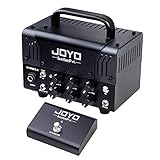
Overview: The JOYO Zombie-II BanTamp XL is a 20-watt hybrid mini amp head that delivers surprising versatility at a budget-friendly price point. This two-channel amplifier features a genuine 12AX7 preamp tube, Bluetooth connectivity, FX loop, headphone out with cabinet emulation, and a dedicated footswitch for channel switching. It’s designed for modern players who need flexibility without breaking the bank.
What Makes It Stand Out: The Zombie-II’s Bluetooth streaming and silent practice capabilities set it apart in the crowded mini-amp market. The independent channel controls for volume, gain, and tone provide exceptional flexibility, while the FX loop integrates modern pedalboards seamlessly. Its ability to function as a pristine clean pedal platform or tight high-gain monster makes it remarkably versatile for such an affordable unit.
Value for Money: At under $200, the Zombie-II offers extraordinary value. Comparable amps with similar features typically cost $300-400. The included footswitch and Bluetooth functionality alone justify the price, making it an ideal choice for budget-conscious players seeking professional features without the premium cost.
Strengths and Weaknesses: Strengths: Two independent channels; Bluetooth connectivity; headphone out with cab sim; included footswitch; excellent pedal platform; loud 20W output. Weaknesses: Requires external speaker (no built-in speaker); hybrid design lacks all-tube warmth; build quality concerns for heavy touring; no power scaling options.
Bottom Line: The Zombie-II is the ultimate bang-for-buck practice and recording amp. While not a true all-tube head, its features and tone far exceed expectations at this price point, making it perfect for home players and studio musicians.
4. Orange Dual Terror Guitar Amp Head 30/15/7 Watts with Bag

Overview: The Orange Dual Terror is a 30-watt all-tube amp head that descends directly from the iconic Tiny Terror. Powered by four EL84 tubes, it offers flexible power switching between 30, 15, and 7 watts, making it suitable for stages, studios, and bedrooms alike. The package includes a custom gig bag for portability, making it a complete gig-ready solution.
What Makes It Stand Out: The Dual Terror’s three-way power scaling is its killer feature, allowing you to achieve cranked tube tones at whisper volumes. The “Terror” channel adds a second voicing option, effectively giving you two distinct amp characters. The included gig bag is a welcome addition that many competitors charge extra for, and the no-frills control panel gets you to great tones quickly.
Value for Money: Priced around $1,000, the Dual Terror offers solid value for a genuine Orange all-tube head. The power scaling feature and included bag add significant value. While cheaper than its bigger siblings, it delivers authentic British crunch that Orange is famous for, competing with amps costing hundreds more.
Strengths and Weaknesses: Strengths: Three-way power scaling; authentic Orange tone; portable size; included gig bag; simple, effective controls; loud enough for gigs. Weaknesses: No FX loop limits pedalboard integration; basic EQ controls; heavy for its size; limited clean headroom at higher volumes.
Bottom Line: The Dual Terror is a gigging musician’s dream for classic rock and punk tones. Its power scaling makes it practical for any situation, and the authentic Orange sound is undeniable. Just don’t expect pristine cleans or elaborate effects routing.
5. Orange Dark Terror High Gain Amp Head 15 Watts with Fx Loop

Overview: The Orange Dark Terror is a 15-watt high-gain amp head designed for metal and hard rock players who need serious distortion in a portable package. This all-tube head features a 4-stage preamp, FX loop, and output power switching, delivering crushing tones that belie its small size. It represents Orange’s commitment to putting high-gain tones first in a compact format.
What Makes It Stand Out: The Dark Terror’s 4-stage preamp packs massive gain while maintaining clarity and note definition, even at extreme settings. The FX loop allows modern pedal integration, while power switching lets you dial back volume for practice without sacrificing tone. Its signature Orange aesthetics and compact footprint make it instantly recognizable, and the simple control layout gets you to great sounds quickly.
Value for Money: At approximately $700, the Dark Terror offers excellent value for high-gain enthusiasts. It delivers tones comparable to larger, more expensive Orange heads at a fraction of the cost and size. Competing high-gain lunchbox amps from other premium brands typically start at $900+, making this an accessible entry into boutique high-gain territory.
Strengths and Weaknesses: Strengths: Massive high-gain tone; 4-stage preamp; FX loop; power switching; portable size; authentic Orange build quality. Weaknesses: Single-channel design; limited clean tones; no included accessories; can be noisy at extreme gain settings; limited headroom for large venues.
Bottom Line: The Dark Terror is the perfect solution for metal players needing a portable, high-gain amp. While it won’t win awards for clean tones, its crushing distortion and practical features make it an outstanding choice for practice, recording, and small gigs where massive tone is required.
6. Gator Cases G-TOUR Series ATA Style Road Case for Mini Electric Guitar Amp Heads with Heavy Duty Latches and Spring Loaded Handles, (G-TOURMINIHEAD3)

Overview: The Gator Cases G-TOURMINIHEAD3 is a professional-grade ATA-style road case designed to protect mini electric guitar amplifier heads during transport. Built with 3/8-inch plywood construction and featuring heavy-duty recessed latches, this case offers touring musicians peace of mind when moving their valuable gear between venues.
What Makes It Stand Out: This case distinguishes itself through its adjustable foam interior, allowing customization to fit most mini amp heads securely. The spring-loaded handles provide comfortable carrying, while the lift-off lid design enables quick stage setup and breakdown. The robust red recessed latches not only look professional but prevent accidental opening during transit.
Value for Money: While priced higher than soft cases, the G-TOURMINIHEAD3 justifies its cost through ATA-spec construction that could save you hundreds in repairs. Comparable cases from competitors often cost 20-30% more, making this an intelligent investment for musicians who gig regularly. The customizable interior eliminates the need for additional padding purchases.
Strengths and Weaknesses: Strengths include exceptional durability, professional hardware, versatile foam interior, and quick-access design. Weaknesses involve substantial weight at 22"x12"x12" dimensions, limited portability for fly dates, and interior size restrictions that won’t accommodate larger standard amp heads.
Bottom Line: For touring guitarists seeking maximum protection for their mini amp heads, the G-TOURMINIHEAD3 delivers professional-grade security without breaking the bank. It’s a worthwhile investment that prioritizes gear safety over lightweight convenience.
7. JOYO Bass Mini Amp Head 50 Watt Preamp Hybrid Tube Power Amplifier Head with 3 Band EQ & Bluetooth (No Sound,Need Extra Speaker) Badass

Overview: The JOYO BADASS is a 50-watt hybrid bass amplifier head that combines a genuine 12AX7 tube preamp with solid-state power, delivering warm tube harmonics in a compact package. This amp requires connection to a separate bass cabinet (4Ω or higher) or headphones to produce sound, making it ideal for practice and small venue applications.
What Makes It Stand Out: This mini head packs professional features rarely seen at its price point: an onboard studio-grade compressor, versatile 3-band EQ, Bluetooth connectivity for backing tracks, and an FX loop for pedal integration. The included footswitch enables instant compressor engagement, while the headphone output features cabinet emulation for silent practice.
Value for Money: Offering tube preamp warmth under $200, the BADASS dramatically undercuts traditional hybrid bass heads that typically start at $400+. The comprehensive feature set—including compression and Bluetooth—adds exceptional value, essentially bundling multiple pedals into the amp itself.
Strengths and Weaknesses: Strengths include authentic tube tone, extensive connectivity, built-in compression, and silent practice capabilities. Weaknesses are the 50-watt power limitation for larger gigs, lack of an included speaker cabinet, and potential reliability questions given the budget price point and complex features.
Bottom Line: The JOYO BADASS is an outstanding value for bassists seeking tube tone on a budget. Perfect for home studios, practice sessions, and small club dates, it delivers professional features without the professional price tag, provided you have a compatible cabinet.
8. JOYO Atomic BanTamp Series Mini Amp Head 20W Hybrid Tube 2-Channel Guitar Amplifier with Bluetooth (No Sound, Need Extra Speaker)

Overview: The JOYO Atomic BanTamp delivers iconic British clean tones and mid-gain drive in a compact 20-watt hybrid tube head. Featuring a genuine 12AX7 preamp tube paired with a solid-state power section, this mini amplifier requires an external speaker cabinet to operate but provides authentic tube response for home studios and practice sessions.
What Makes It Stand Out: The Atomic excels as a pedal platform, offering pristine clean channels that take overdrives beautifully. Its studio-quality FX loop preserves modulation effects’ clarity, while Bluetooth connectivity allows wireless backing track integration. The amp captures classic scooped-mid British character in a package smaller than most lunchboxes.
Value for Money: Priced competitively under $150, the Atomic provides genuine tube preamp tone that rivals amps costing three times as much. For bedroom players and home recordists, it eliminates the need for expensive attenuators while delivering cranked tube character at manageable volumes.
Strengths and Weaknesses: Strengths include authentic British voicing, excellent pedal platform performance, compact portability, and useful practice features. Weaknesses involve limited 20-watt headroom for clean tones, requirement for external speaker, and minimal controls compared to full-sized amps.
Bottom Line: The JOYO Atomic is a stellar choice for guitarists seeking classic British tones without the volume or expense of traditional tube amps. Ideal for home recording and practice, it pairs wonderfully with pedals and offers remarkable value, though gigging musicians will need to mic it or use a larger amp.
9. Gator Cases G-TOUR Series ATA Style Road Case for Mini Electric Guitar Amp Heads Such as Marshall JTM1H - Equipped with Heavy Duty Latches and Spring Loaded Handles; (G-TOURMINIHEAD2)

Overview: The Gator Cases G-TOURMINIHEAD2 is a compact ATA-style road case engineered specifically for smaller mini guitar amp heads like the Marshall JTM1H. Constructed from 3/8-inch plywood with professional-grade hardware, this case provides robust protection in a more portable footprint than its larger siblings, measuring just 17.5" x 10" x 10" internally.
What Makes It Stand Out: This case’s precisely sized interior perfectly accommodates diminutive amp heads that would swim in standard cases. The adjustable foam interior allows precise customization, while heavy-duty red recessed latches and spring-loaded handles maintain the professional G-TOUR standard in a travel-friendly size that fits easily in vehicles.
Value for Money: Offering the same ATA-spec protection as larger cases at a reduced price point, the MINIHEAD2 represents excellent value for owners of compact amp heads. The alternative—using an oversized case—wastes money and space, making this specialized size a smart, economical choice for specific gear.
Strengths and Weaknesses: Strengths include perfect sizing for mini heads, durable construction, professional hardware, and space-efficient design. Weaknesses involve extremely limited interior space that won’t fit standard-sized gear, making it a one-trick pony, and still substantial weight despite smaller dimensions.
Bottom Line: If you own a mini amp head like the JTM1H, the G-TOURMINIHEAD2 is the ideal protection solution. It eliminates wasted space while providing professional-grade security, making it a must-have for gigging musicians with compact amplification.
10. JOYO ZOMBIE II Amplifier 20 Watt Hybrid Mini Tube Head Bluetooth BanTamp XL Series with Foot Switch

Overview: The JOYO ZOMBIE II BanTamp XL is a 20-watt hybrid mini tube head that delivers two-channel versatility in an ultra-compact package weighing under five pounds. Featuring a 12AX7 preamp tube and independent EQ controls for each channel, this amp provides genuine tube response while requiring an external speaker cabinet for operation, making it ideal for practice and recording.
What Makes It Stand Out: Unlike many mini heads, the ZOMBIE II offers completely independent gain, tone, and volume controls for clean and overdrive channels, providing remarkable tonal flexibility. The included footswitch enables seamless channel switching, while Bluetooth connectivity allows wireless backing track streaming for practice and performance applications.
Value for Money: Priced competitively with other BanTamp models, the ZOMBIE II’s independent channel EQ and included footswitch add significant value. Comparable two-channel tube heads typically start at $500+, making this sub-$200 option particularly attractive for budget-conscious players seeking versatility without sacrificing tone.
Strengths and Weaknesses: Strengths include true two-channel operation with independent EQ, included footswitch, extreme portability, and Bluetooth functionality. Weaknesses involve the shared 20-watt power section limiting headroom, requirement for external speaker, and potential durability concerns with budget mini amp construction over long-term use.
Bottom Line: The JOYO ZOMBIE II excels as a versatile practice and recording amplifier. Its independent channel controls set it apart from competitors, making it ideal for home studios and small gigs where tonal flexibility matters more than raw power.
What Exactly Is a Lunchbox Amp Head?
The term “lunchbox amp” emerged from the guitar community’s affectionate description of amplifiers that literally resemble a metal lunchbox in size and shape. These units typically range from 1 to 20 watts, measure roughly 12-14 inches wide, and tip the scales at under 15 pounds. But don’t let the diminutive footprint fool you—these aren’t practice amps dressed up for stage. Modern lunchbox heads pack the same high-quality components, transformers, and circuit topologies found in their full-sized counterparts, just optimized for lower power consumption and reduced physical mass.
The concept gained mainstream traction in the late 2000s when players realized that 90% of their gigs happened in venues where anything over 30 watts was pure overkill. Manufacturers responded by distilling their flagship circuits into these portable formats without sacrificing the core tone-generating elements. Today’s lunchbox heads represent the intersection of classic analog design and modern convenience features, making them the Swiss Army knives of the gigging guitarist’s arsenal.
Why Low Wattage Makes Sense for Small Venues
Volume management isn’t just about being polite—it’s about sonic control. In a 150-capacity room with low ceilings and hard surfaces, a 100-watt amp on “2” produces sterile, anemic tone because the power section never reaches its sweet spot. That same amp on “6” generates so much stage volume that it bleeds into every vocal mic, creating a muddy, uncontrollable wash that sabotages the entire band mix.
Low-wattage heads flip this script entirely. A 15-watt amp can be pushed to its sweet spot—where power tubes compress naturally and produce those even-order harmonics we crave—while remaining at a volume level that sits properly in a small-stage mix. You get the richness of a cranked amp without overwhelming the room. This also builds goodwill with sound engineers, who can actually control the front-of-house mix rather than fighting your stage volume. The result is a better overall band sound, clearer monitors, and a more professional relationship with venue staff who’ll actually welcome you back.
Power Ratings Decoded: RMS vs Peak vs Perceived Volume
Wattage ratings create endless confusion because manufacturers use different measurement standards. RMS (Root Mean Square) represents continuous power output—the real-world number that matters for guitarists. Peak wattage measures momentary maximums and can be 2-3 times higher than RMS, which is why some “5-watt” amps seem louder than others.
Perceived volume introduces another variable: speaker sensitivity. A 5-watt amp through a 100dB-efficient speaker produces the same volume as a 10-watt amp through a 97dB speaker. Doubling wattage yields roughly a 3dB increase—barely perceptible to human ears—while doubling speaker surface area (adding a second identical speaker) provides a 6dB boost. This means your cabinet choice dramatically impacts how loud your lunchbox head actually sounds. For small stages, a 15-watt head paired with a quality 2x12 cabinet often delivers enough clean headroom for country or jazz while still achieving saturated blues and rock tones when pushed.
Tube vs Solid-State: The Heart of Your Tone
The tube versus solid-state debate intensifies at low wattages because every component’s character gets magnified. Traditional glass tubes produce natural compression, harmonic overtones, and a dynamic response that reacts to your picking attack and guitar volume knob. A 12AX7 preamp tube and a pair of EL84s in a 15-watt configuration deliver the classic British crunch that defined rock music, while 6V6 tubes lean toward American-style sparkle and headroom.
Modern solid-state designs have evolved far beyond the harsh, sterile tones of early modeling amps. Contemporary MOSFET and JFET circuits emulate tube behavior with impressive accuracy, offering consistency, reliability, and often more features at lower price points. Some hybrid designs pair tube preamps with solid-state power sections, attempting to capture the best of both worlds. For the working guitarist, solid-state lunchbox heads eliminate tube replacement costs and reliability concerns, while tube purists argue that nothing matches the organic feel of glowing glass. The choice ultimately depends on whether you prioritize maintenance-free convenience or that last 5% of tactile response.
The Sweet Spot: Finding Your Ideal Wattage Range
Selecting the right wattage requires honest assessment of your playing contexts. One to five watts excels in bedroom studios and recording situations but often lacks the headroom and projection for even small gigs with a drummer. These are ideal for direct recording and practice but may leave you wanting more when the full band kicks in.
The five-to-fifteen-watt range represents the sweet spot for most small-stage applications. Here, you can achieve genuine power-tube saturation at drummer-friendly volumes while retaining enough clean headroom for chord-melody passages and pedal-platform duties. Fifteen watts through an efficient 1x12 cabinet can hang with a restrained drummer and even cut through a small PA.
Fifteen to thirty watts offers maximum versatility for players needing pristine clean tones that remain articulate at gig volume. Jazz guitarists, country pickers, and pedalboard enthusiasts who rely on pedals for gain often gravitate toward this range for its increased headroom and dynamic range. You sacrifice some natural breakup character but gain a stable foundation for sophisticated effects chains.
Essential Features to Look For
Beyond wattage and tone, modern lunchbox heads differentiate themselves through features that solve real gigging problems. The right combination can transform a simple amp into a comprehensive tone solution.
FX Loops and Signal Routing Flexibility
An effects loop isn’t just a luxury—it’s essential for players using delay, reverb, and modulation. Series loops run your entire signal through the effects, while parallel loops blend wet and dry signals, preserving your core tone if a pedal fails. Look for loop level controls that match your pedals’ requirements, especially if you’re running a mix of vintage and modern stompboxes. Some advanced loops offer switchable series/parallel operation and even impedance matching, turning your lunchbox head into a routing hub.
Multiple Channels: Versatility vs Simplicity
Single-channel amps force you to master your guitar’s volume knob and playing dynamics, producing a more organic relationship between player and amplifier. However, modern gigs often demand instant switching from pristine cleans to saturated leads. Two-channel designs typically separate preamp gain structures while sharing a power section, giving you footswitchable tones without massive volume jumps. Three-channel heads add a third gain stage for a crunch rhythm tone. Pay attention to whether channels share EQ sections—shared controls simplify operation but limit tonal variation between channels.
Attenuation and Power Scaling Technology
Built-in attenuation lets you achieve power-tube saturation at whisper volumes by absorbing excess wattage before it reaches the speaker. Reactive attenuators maintain the amp’s interaction with the speaker, preserving feel and dynamics better than resistive designs. Power scaling takes a different approach, reducing voltage to the power tubes themselves, which some players prefer for its more natural compression characteristics. Either feature dramatically increases an amp’s utility for home recording and quiet stages.
DI Outputs and Cab Simulations
A quality direct output with cabinet simulation transforms your lunchbox head into a recording device and silent stage solution. Modern IR (Impulse Response) technology captures the exact sonic fingerprint of specific speaker cabinets and microphones, letting you send a “miked cab” signal directly to the PA or recording interface. Look for options that let you load custom IRs via USB, and ensure the DI functions properly when the speaker is disconnected for silent recording. Some amps provide separate dry and processed outputs, giving you maximum flexibility for re-amping later.
Footswitch Compatibility
Verify exactly what functions the footswitch controls—some only change channels while others also engage reverb, boost, or effects loops. Proprietary footswitches often include LEDs and status indicators but lock you into that specific amp ecosystem. MIDI-compatible amps integrate with sophisticated pedalboard controllers, letting you change channels, adjust parameters, and sync with your entire rig. For simple setups, a basic two-button switch might suffice, but future-proofing your rig with MIDI capabilities pays dividends as your setup evolves.
Speaker Cabinet Pairing Strategies
Your lunchbox head is only half the equation—speaker choice defines your final voice. Impedance matching is non-negotiable: running a 4-ohm amp into a 16-ohm cabinet stresses the output transformer and reduces power transfer. Most lunchbox heads offer multiple impedance outputs (4, 8, and 16 ohms), giving you flexibility.
Speaker efficiency dramatically impacts perceived volume. A Celestion Vintage 30 at 100dB sensitivity makes a 10-watt amp sound twice as loud as a Greenback at 97dB. For small stages, a single 12-inch speaker often provides the perfect balance of dispersion and portability. Open-back cabinets project a wider, room-filling sound that works beautifully for clean tones and blues, while closed-back designs focus low-end punch for rock and metal. Consider a 2x12 vertical cabinet for increased projection without the beaminess of a single speaker—your bandmates will thank you for the more even coverage.
Size and Weight Considerations for Gigging Musicians
The lunchbox format’s primary advantage is portability, but not all compact amps are created equal. A true lunchbox head should fit in a backpack or standard gig bag pocket and weigh under 12 pounds. Some “compact” heads creep toward 20 pounds and require their own padded bag, negating the convenience factor.
Consider how the amp integrates with your existing rig. Does it mount to a pedalboard using standard brackets? Can it be rack-mounted for fly-in dates? Some players build a “fly rig” around a lunchbox head and a compact 1x12 cabinet that fits as airline carry-on, eliminating checked baggage nightmares. Weight distribution matters too—an amp with a top-mounted handle balances differently than one with side handles, affecting how it feels after a five-block walk from the parking garage.
Tone Shaping Controls: Beyond Basic EQ
Basic three-knob EQ sections (bass, middle, treble) work fine for broad strokes, but lunchbox heads often include sophisticated shaping tools. Presence controls affect high-frequency content in the power section, adding sparkle without harshness. Resonance or depth controls manipulate low-end tightness, crucial for modern metal tones.
Mid-shift switches, often labeled “voice” or “scoop,” reconfigure the midrange frequency center, transforming a British-style crunch into an American clean platform. Some amps feature pre-gain and post-gain controls, letting you dial in the perfect balance of preamp distortion and power-amp compression. Understanding these interactions separates a good tone from a great one—cranking the bass on a low-watt amp often creates flabby, undefined low-end, while carefully adjusting the resonance control can yield tight, punchy response even at bedroom volumes.
Build Quality and Roadworthiness
That lightweight aluminum chassis might look sleek in the store, but one drop onto a concrete venue floor reveals the difference between consumer-grade and professional construction. Look for reinforced corners, steel handle brackets, and transformers mounted with rubber isolation to withstand vibration. PC board-mounted tube sockets save manufacturing costs but make repairs difficult; hand-wired turret board construction costs more but allows easy servicing.
Check the IEC power inlet for sturdiness—this is a common failure point on frequently moved amps. Quality potentiometers feel smooth and consistent, while cheap knobs exhibit uneven taper and scratchiness within months. The best lunchbox heads use metal-shafted pots secured to the chassis, preventing damage when knobs get knocked during transport. Consider the tube layout: side-mounted tubes protected by the chassis survive gigs better than exposed top-mounted designs.
Price vs Performance: Finding Your Sweet Spot
Budget lunchbox heads under $300 often deliver impressive core tone but cut corners on features, transformers, and cabinet simulations. Mid-range options between $400 and $800 typically offer the best bang-for-buck, including quality tubes, robust features, and professional DI outputs. Premium heads exceeding $1000 justify their cost through hand-wired construction, custom transformers, and sophisticated power scaling.
The law of diminishing returns hits hard in the lunchbox market. A $600 head might deliver 85% of a $1500 boutique amp’s tone, but that final 15% represents nuanced response, build quality, and unique character that professionals demand. For weekend warriors, mid-range amps provide everything needed for reliable gigging. Studio musicians might invest in premium units for their subtle response differences that translate to better recordings. Factor in long-term costs: tube replacement runs $100-150 every few years, while solid-state amps require virtually no maintenance.
Genre-Specific Considerations
Your musical style should heavily influence your lunchbox choice. Blues and classic rock players thrive on amps with simple circuits, minimal negative feedback, and power tubes that break up early. Look for cathode-biased EL84 designs that compress naturally and respond to picking dynamics.
Metal and hard rock demand tight low-end, extended preamp gain, and effective noise gates. These amps often use fixed-bias 6L6 or EL34 power sections for headroom and clarity, even when saturated. The ability to switch between high-gain modes and cleaner rhythm tones becomes essential.
Jazz and fusion guitarists require pristine clean headroom and hi-fi frequency response. Solid-state or hybrid designs often excel here, offering uncolored pedal platforms with enough power to maintain clarity at gig volume. Country players need both crystalline cleans and pedal-friendly breakup, making mid-wattage American-voiced amps with bright switches and spring reverb ideal choices.
The Used Market: Hidden Gems and Caveats
The lunchbox category moves quickly through the used market as players experiment with different models. This creates opportunities to score high-end amps at 40-60% of retail price. When buying used, inspect the power tubes for discoloration or loose elements—replacing a matched pair costs significantly less than a full quad. Test every knob and switch for scratchiness or dropouts, which indicate worn potentiometers or dirty contacts.
Check the effects loop with a pedal you know works; loop jacks are expensive to replace. Ask about the amp’s history—bedroom use is ideal, while heavy touring amps might have internal damage from vibration. Research common failure modes for specific models; some early lunchbox designs had undersized transformers that failed under heavy use. The used market favors buyers who understand that lunchbox amps are tools, not collectibles—prices remain reasonable because these amps are meant to be played, not displayed.
Setup Tips for Small Stages
Position your lunchbox head on a chair or amp stand to get it closer to ear level, letting you hear your tone accurately without cranking the volume. Angle the cabinet slightly upward or use a tilt-back stand to project sound across the stage rather than into the back wall. When miking your cabinet for the PA, place the microphone 2-4 inches from the grille, slightly off-center from the speaker cone—this captures the speaker’s full frequency range without overemphasizing harsh highs.
Run a DI signal to the front-of-house even when miking your cab; this gives the engineer options for blending and provides a backup if the mic fails mid-set. Keep spare preamp tubes in your gig bag—they’re the most common failure point and swapping takes seconds. Finally, respect the sound check: set your amp at performance volume, not practice levels, so the engineer can properly balance the mix before the room fills with bodies that absorb high frequencies.
Frequently Asked Questions
1. Will a 15-watt lunchbox head be loud enough to gig with a drummer?
Absolutely, when paired with an efficient speaker cabinet. A 15-watt tube head through a 100dB-sensitive 2x12 cabinet produces roughly 118dB at one meter—enough to compete with a moderately loud drummer. The key is speaker efficiency and stage positioning. For louder drummers or unmiked gigs, consider a 20-30 watt model or add a second cabinet for increased coverage.
2. Can I use my lunchbox head for silent recording at home?
Most modern lunchbox heads with DI outputs and cabinet simulation allow completely silent recording. Connect the DI to your audio interface, plug in headphones for monitoring, and disconnect the speaker (if the amp has a built-in load). Some amps require a dummy load or attenuator set to maximum attenuation. Always verify the manual—running a tube amp without a proper load can destroy the output transformer.
3. What’s the difference between master volume and power scaling?
Master volume controls signal level before the power tubes, letting you achieve preamp distortion at low volumes but sacrificing power-tube compression. Power scaling reduces voltage to the power tubes themselves, allowing them to saturate at bedroom volumes while maintaining the amp’s dynamic response. Power scaling generally feels more natural but costs more to implement.
4. Do I need an attenuator if my amp already has a master volume?
It depends on your tonal goals. A master volume alone can’t produce true power-tube saturation—that requires pushing the output stage. If you want the compressed, harmonically rich tone of cranked power tubes at low volumes, an attenuator (or built-in power scaling) is essential. For preamp-distortion tones, a master volume suffices.
5. How often will I need to replace tubes in a lunchbox head?
Power tubes typically last 1,000-2,000 hours of playing time—roughly 2-3 years for a gigging musician playing weekly. Preamp tubes can last 5,000+ hours. Signs of failing power tubes include volume dropouts, excessive noise, or a loss of high-frequency response. Budget $100-150 annually for tube maintenance if you gig regularly.
6. Can I run a 4-ohm head into an 8-ohm cabinet or vice versa?
Always match impedance when possible. Running a 4-ohm amp into an 8-ohm cabinet is safe but reduces power output and can affect tone. Running a 8-ohm amp into a 4-ohm cabinet stresses the output transformer and risks damage. Most lunchbox heads provide multiple impedance outputs—use the one that matches your cabinet exactly.
7. Are solid-state lunchbox heads worth considering over tube models?
Modern solid-state amps have closed the tone gap significantly. They offer consistency, reliability, and often more features at lower prices. For players using extensive pedalboards or requiring pristine cleans, premium solid-state heads can outperform similarly priced tube amps. The “right” choice depends on whether you prioritize maintenance-free convenience or the subtle dynamic response of tubes.
8. What’s the best speaker cabinet size for small gigs?
A vertical 2x12 cabinet offers the ideal balance: increased projection and low-end response over a 1x12, while remaining portable and avoiding the beaminess of a 4x12. For maximum portability, a high-quality 1x12 with an efficient speaker (100dB+) works beautifully. Closed-back cabs provide focused projection, while open-back designs fill the stage with a wider, more ambient sound.
9. How do I prevent my lunchbox amp from sounding thin at low volumes?
Use the amp’s resonance or depth control to add low-end thickness without flabbiness. Increase the presence control slightly for sparkle, and don’t be afraid to run the bass knob higher than you would at stage volume—low frequencies are the first to disappear at quiet levels. Consider a quality attenuator that maintains the amp’s interaction with the speaker, preserving the full frequency response.
10. Can I use pedals designed for high-watt amps with a lunchbox head?
Yes, but with considerations. Overdrive and distortion pedals optimized for clean pedal platforms might sound overly compressed into an already-saturated low-watt amp. Start with lower gain settings and adjust gradually. Boost pedals work wonderfully to push the front end. Time-based effects (delay, reverb) perform identically regardless of amp wattage. The key is understanding that your amp’s breakup point arrives sooner, so dial pedal gain accordingly.
See Also
- 10 Best High-Watt Heads for Outdoor Festival Stages in 2026
- 2026’s Top 10 High-Gain Guitar Amplifier Heads for 7-String Players
- 10 Best Guitar Amplifier Power Soaks for Safe Cranked Tones at Home
- 10 Silent Recording Guitar Amplifier Solutions for Apartment Players
- Stop Stage Volume Wars: 10 Best Low-Watt Combo Amps for Club Gigs in 2026