Table of Contents
The quest for cranked tube amp tone at whisper volumes has evolved from a bedroom guitarist’s pipe dream into a sophisticated engineering discipline. As we navigate 2026’s landscape of guitar amplification, the market has exploded with solutions that promise genuine power tube saturation without alienating neighbors or shattering windows. Yet beneath the marketing claims lies a complex world of circuit designs, attenuation technologies, and acoustic physics that can make or break your home tone quest.
Understanding what truly defines a “bedroom-friendly” tube amp requires looking beyond wattage ratings alone. Today’s low-power amplifiers leverage everything from reactive load technology to advanced master volume circuits, offering players unprecedented access to the responsive, dynamic feel that was once exclusive to stage volumes. Whether you’re chasing SRV-style edge-of-breakup cleans, Brian May’s harmonic-rich overdrive, or modern high-gain textures, the right low-watt amp can deliver studio-grade tones at conversation levels—provided you know what to look for.
Top 10 Tube Guitar Amplifiers
Detailed Product Reviews
1. Monoprice 5-Watt, 1x8 Guitar Combo Tube Amplifier with Celestion Speaker - Stage Right Series

Overview: The Monoprice Stage Right 5-watt tube amp delivers authentic vintage tone in a compact, budget-friendly package. Featuring a genuine tube preamp (ECC83/12AX7) and power amp (6V6GT) section driving a Celestion Super 8 GBA-15 speaker, this amp prioritizes pure analog sound over digital frills. With simple Low and High inputs that attenuate or preserve your guitar’s signal strength, it offers straightforward operation for players seeking that coveted tube warmth and natural overdrive.
What Makes It Stand Out: This amp’s standout feature is delivering true tube circuitry—including coveted even-order harmonic distortion—at a price point typically reserved for solid-state practice amps. The inclusion of a genuine Celestion speaker in a sub-$200 amplifier is remarkable, providing professional-grade voice rarely seen in budget tube amps. The dual inputs effectively create two distinct gain structures, allowing players to dial in cleaner tones or push the amp into creamy overdrive without touching a knob.
Value for Money: Exceptional value for tone purists. Competing tube amps from premium brands cost 3-4 times more while offering similar wattage. You’re sacrificing features like built-in effects and multiple channels, but gaining authentic tube dynamics that modeling amps can’t replicate. For studio recording or home practice, it’s a cost-effective way to access genuine tube saturation.
Strengths and Weaknesses: Strengths: Authentic tube tone; Celestion speaker quality; Simple, reliable circuit; Low noise floor (-75dB); Excellent for recording. Weaknesses: Limited 5-watt power; Single 8-inch speaker lacks low-end; No effects or EQ; Not gig-worthy; Basic build quality.
Bottom Line: Ideal for recording musicians and bedroom players craving genuine tube tone without breaking the bank. Don’t expect versatility—this is a one-trick pony, but that trick sounds fantastic.
2. Fender Champion II 50 Guitar Amp, 50 Watts, with 2-Year Warranty, Features 12 Built-In Effects Models

Overview: The Fender Champion II 50 is a versatile solid-state workhorse delivering 50 watts through a 12-inch Fender Special Design speaker. This two-channel amp combines Fender’s legendary clean tones with 12 built-in effects including reverb, delay, chorus, and tremolo. Designed for players needing reliable performance from practice to small gigs, it offers multiple amp voicings and distortion types in a familiar Fender package backed by a comprehensive 2-year warranty.
What Makes It Stand Out: Fender’s amp voicing technology authentically replicates their iconic clean and overdriven tones, making this a “greatest hits” collection in a single amp. The 50-watt power section provides genuine gig volume without the weight and maintenance of tubes. The extensive effects selection eliminates pedalboard clutter, while the 12-inch speaker delivers full-range response that smaller practice amps can’t match. The 2-year warranty reflects Fender’s confidence in their build quality.
Value for Money: Strong value for gigging musicians. While tube purists may scoff at solid-state tone, the feature set—50 watts, 12-inch speaker, multiple effects, and Fender branding—typically costs more when purchased separately. Competing modeling amps offer more presets, but rarely match the Champion’s straightforward interface and genuine Fender clean channel.
Strengths and Weaknesses: Strengths: Gig-worthy 50-watt output; Authentic Fender clean tones; Versatile effects selection; 12-inch speaker; Reliable solid-state design; Excellent warranty. Weaknesses: Solid-state overdrive lacks tube warmth; Heavy at ~30 pounds; Effects can’t be edited deeply; No USB connectivity; Limited to two channels.
Bottom Line: A reliable, giggable amp that nails Fender cleans and offers enough effects for most players. Perfect for bar gigs, rehearsals, and home practice where volume and reliability matter more than ultimate tube tone.
3. Fender Mustang LT25 Guitar Amp, 25-Watt Combo Amp, with 2-Year Warranty, 30 Preset Effects with USB Audio Interface for Recording

Overview: The Fender Mustang LT25 is a feature-packed 25-watt modeling amp designed for modern players. Its 8-inch Fender Special Design speaker delivers authentic tones shaped by 30 preset effects covering diverse musical styles. The standout feature is the USB audio interface for direct recording to computer. A user-friendly 1.8-inch color display simplifies navigation, making complex amp modeling accessible to beginners while offering enough depth for experienced players seeking a versatile practice and recording solution.
What Makes It Stand Out: The USB audio interface transforms this from a practice amp into a recording studio tool, allowing direct digital capture without microphones or external interfaces. The color display is a game-changer for modeling amps, making preset selection and editing intuitive rather than menu-diving with a single knob. Fender’s amp modeling is highly regarded, and 30 presets provide instant access to tones from sparkling cleans to high-gain metal. The compact dimensions (12.75" x 14.5" x 8.25") make it apartment-friendly.
Value for Money: Outstanding value for bedroom producers and beginners. Comparable recording interfaces alone cost $100+, making this a two-in-one solution. While 25 watts won’t shake walls, it’s perfect for home use. Competing modeling amps often lack the USB feature or charge a premium for it. The 2-year warranty adds peace of mind.
Strengths and Weaknesses: Strengths: USB recording capability; Intuitive color display; 30 versatile presets; Compact size; Headphone output for silent practice; Excellent warranty. Weaknesses: 8-inch speaker limits low-end; 25 watts insufficient for gigs; Digital tone may not satisfy purists; Presets can sound similar; No footswitch included.
Bottom Line: The ultimate beginner-to-intermediate amp for the digital age. If you want to practice silently, record directly, and explore various tones without buying multiple amps, this is your best bet under $200.
4. Flatsons FBA-10 Guitar Amp, 10W Mini Electric Guitar Amplifier with Clean/Drive Channel, 6H Working, USB-C Rechargeable, 3.5mm Headphone/AUX Jack, Wireless Portable Amp for Indoor Practice, Traveling

Overview: The Flatsons FBA-10 redefines portable guitar amplification with its battery-powered, Bluetooth-enabled design. This 10-watt mini amp delivers pure analog tone through full analog circuitry, offering Clean and Drive channels with Gain and Tone controls. Its compact size (152x75x99mm) and lightweight build (580g) make it ideal for travel, while USB-C charging provides 6 hours of playtime. The 3.5mm headphone jack enables silent practice, and the AUX input with independent volume control allows backing track accompaniment.
What Makes It Stand Out: True wireless freedom sets this apart—Bluetooth 5.3 streaming combined with battery operation eliminates cables entirely. The analog signal path is rare in portable amps, which typically use harsh-sounding digital circuits. The vintage two-tone woven grille adds aesthetic appeal while improving sound transmission. USB-C charging is modern and convenient, and the 6-hour battery life outlasts most practice sessions. The separate AUX volume control is a thoughtful touch for balancing guitar and backing tracks.
Value for Money: Excellent value for mobile musicians. Competing portable amps often use inferior digital modeling or lack Bluetooth streaming. While 10 watts won’t replace your main amp, the feature set—analog tone, Bluetooth, rechargeable battery, headphone out—justifies the price for travelers and apartment dwellers. It’s a specialized tool that excels at its intended purpose.
Strengths and Weaknesses: Strengths: True portability with 6-hour battery; Bluetooth 5.3 streaming; Analog circuitry; Headphone and AUX jacks; USB-C charging; Compact and lightweight. Weaknesses: Unknown brand reliability; 10W limits headroom; Small speaker size; No effects; Build quality uncertain; Not for serious gigs.
Bottom Line: The perfect travel companion for guitarists prioritizing portability and convenience over power. Ideal for hotel rooms, park benches, or anywhere inspiration strikes without power outlets.
5. LEKATO Mini Electric Guitar Amp 5W, Portable Guitar Amp Bluetooth with Built-in 4 Effects, Clean Distortion Overdrive Reverb, Rechargeable Small Amplifier for Practice, Black (JA-05G)

Overview: The LEKATO JA-05G is an ultra-compact 5-watt amplifier that attaches directly to your guitar strap, offering ultimate portability for practice anywhere. This rechargeable mini amp features four built-in effects (Clean, Distortion, Overdrive, Reverb) and Bluetooth audio streaming for playing along with tracks. Weighing mere ounces and operating cord-free, it’s designed for players who want instant amplification without setup. The 6.35mm plug connects directly to your guitar output, while Bluetooth pairs with smartphones for backing tracks.
What Makes It Stand Out: The plug-and-play design eliminates cables entirely—simply plug it into your guitar and play. This is the most portable solution short of playing completely unplugged. Built-in effects mean no pedalboard needed for basic practice tones. Bluetooth connectivity for backing tracks is impressive at this size and price point. The 6-hour battery life ensures full day practice sessions, and the 5-watt output provides surprising volume for its diminutive size.
Value for Money: Unbeatable for extreme portability. Nothing else offers this combination of direct-plug design, built-in effects, Bluetooth, and rechargeable power at this price. While tone quality can’t match full-sized amps, you’re paying for convenience and mobility. It’s a specialty item that delivers exactly what it promises—practice anywhere capability.
Strengths and Weaknesses: Strengths: Ultra-portable direct-plug design; Built-in effects; Bluetooth streaming; 6-hour battery; Extremely lightweight; No cables needed. Weaknesses: Limited 5-watt power; Small speaker lacks depth; Effects quality is basic; Attaches to guitar (balance issues); No headphone output; Questionable long-term durability.
Bottom Line: A novelty that works. Perfect for travel, backstage warmup, or silent practice at home when you want to move freely. Don’t expect tone perfection—expect convenience and fun.
6. Monoprice 1x12 Guitar Speaker Cabinet With Celestion Vintage 30, Designed to Match to our 30-Watt Stage Right Head - Stage Right Series
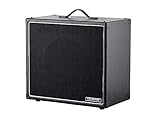
Overview: The Monoprice 1x12 Guitar Speaker Cabinet delivers professional-grade tone through its Celestion Vintage 30 speaker, housed in a road-worthy enclosure designed to pair with the Stage Right 30-watt head. This cabinet brings the legendary V30 sound—immortalized by guitar icons like Slash and Steve Stevens—to players seeking arena-ready tone without the premium price tag. The rugged construction features reinforced metal corner caps and a textured synthetic leather exterior that projects stage-ready aesthetics while protecting against the rigors of transport.
What Makes It Stand Out: The Celestion Vintage 30 speaker is the star here, offering the same midrange punch and articulate highs found in cabs costing twice as much. Monoprice has smartly focused budget on the component that matters most—the speaker—while providing genuinely gig-ready durability. The compact 12-inch format strikes an ideal balance between portability and full-spectrum projection, making it equally suitable for studio sessions and club dates.
Value for Money: Competing V30-loaded cabinets from Orange or Mesa Boogie easily exceed $500, making this Monoprice offering a remarkable value at approximately half that investment. While the Stage Right head pairing is marketed, this cabinet works excellently with any quality amp head, delivering pro-studio tone on a project-studio budget. The build quality exceeds expectations for the price point.
Strengths and Weaknesses: Strengths include authentic Celestion tone, robust construction with metal corners, professional appearance, and exceptional affordability. Weaknesses involve unspecified internal wood composition (likely MDF versus premium birch ply) and limited brand recognition for serious touring musicians. The cabinet also requires a separate amp head, adding to total system cost.
Bottom Line: This cabinet is an outstanding choice for tone-conscious players wanting Vintage 30 character without financial sacrifice. Perfect for home studios, gigging musicians on a budget, or as a reliable backup cabinet.
7. Fender Frontman 20G Guitar Amp, 20 Watts, with 2-Year Warranty 6 Inch Fender Special Design Speaker, 10x16x16 inches

Overview: The Fender Frontman 20G represents the brand’s entry-level amplifier offering, delivering 20 watts through a compact 6-inch Fender Special Design speaker. This no-frills practice amp embodies Fender’s commitment to accessible tone, featuring a straightforward control layout that beginners can master instantly while providing enough sonic flexibility to keep developing players engaged. The 10x16x16-inch cabinet fits effortlessly into bedroom corners and dorm rooms.
What Makes It Stand Out: Fender’s two-year warranty sets it apart in the budget category, providing peace of mind rarely matched at this price point. The dual-channel design with dedicated drive switching offers genuine clean and overdriven tones, while the three-band EQ provides meaningful tone shaping beyond typical entry-level amps. The inclusion of both auxiliary input and headphone jack creates a complete practice solution.
Value for Money: Positioned as one of the most affordable amps bearing the Fender logo, the Frontman 20G delivers brand credibility and reliability that generic competitors cannot match. While similarly priced options exist, none carry Fender’s service network and resale value. It’s an investment in a musical journey rather than disposable gear.
Strengths and Weaknesses: Strengths include intuitive operation, trusted brand heritage, comprehensive warranty, and essential practice features. The 6-inch speaker limits low-end response and overall volume, making it strictly a bedroom practice tool. Tone purists will find the overdrive somewhat generic, and serious players will quickly outgrow its capabilities.
Bottom Line: Ideal for absolute beginners prioritizing reliability and brand support over features. A solid first amp that delivers Fender clean tones, but experienced players should look elsewhere.
8. GLARRY Electric Guitar Amp, Portable Guitar Tube Amp with Headphone MP3 Input, 20W Practice Guitar Combo Amplifier Speaker Accessories with Bass, Volume, Treble, and Middle Controls
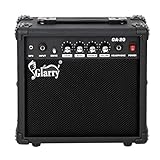
Overview: The GLARRY 20W Electric Guitar Amp targets the ultra-budget market with a featherlight 6.61-pound design and grab-and-go portability. This practice amplifier features a 6.5-inch speaker and basic overdrive capability, aiming to provide beginners with essential features at the lowest possible price point. The integrated belt clip and hard rubber corner guards emphasize mobility and basic protection for players with severe space or budget constraints.
What Makes It Stand Out: Extreme portability defines this amp—the belt clip allows literal walk-around practice, while the sub-$50 price point makes it one of the most accessible electric guitar amplifiers available. The hard rubber edges provide practical protection against minor bumps that could damage competing budget amps with bare wood corners.
Value for Money: This is among the cheapest functional guitar amps on the market. However, the rock-bottom price reflects significant compromises in component quality and tonal fidelity. While it produces sound, the value proposition is questionable when slightly more expensive options from established brands offer superior durability and tone.
Strengths and Weaknesses: Strengths include unbeatable portability, headphone/aux connectivity, and minimal financial risk. Weaknesses are substantial: unknown brand reliability, thin and boxy tone from the small speaker, questionable long-term durability, and minimal resale value. The “high sensitive tuner” claim is misleading marketing fluff.
Bottom Line: Only recommended for absolute beginners with severely limited budgets or those needing a disposable travel amp. Most players should invest slightly more for the Fender Frontman or similar entry-level offerings from reputable manufacturers.
9. Fender Champion II 100 Guitar Amp, 100 Watts, with 2-Year Warranty, Features 15 Built-In Effects Models

Overview: The Fender Champion II 100 is a powerhouse combo amplifier built for serious gigging and rehearsal, delivering 100 watts through dual 12-inch Fender Special Design speakers. This feature-rich amp provides two channels and access to 15 built-in effects, covering everything from subtle reverb to psychedelic modulation. The Champion series has evolved into a versatile workhorse, offering multiple amp voicings and distortion types that emulate everything from blackface cleans to modern high-gain stacks.
What Makes It Stand Out: The combination of 100-watt output and comprehensive digital effects creates a true all-in-one performance solution. Unlike many modeling amps that compromise core tone, the Champion II 100 maintains Fender’s signature clean channel integrity while providing expansive sonic options for players covering diverse musical styles. The dual-speaker configuration delivers impressive stage presence and headroom.
Value for Money: For gigging musicians needing versatility without pedalboard complexity, this amp represents significant value. Purchasing separate pedals to match its effect library would cost far more than the amp itself. While tube purists may scoff, the convenience and reliability for working musicians is undeniable.
Strengths and Weaknesses: Strengths include robust power handling, authentic Fender cleans, extensive effects palette, and trusted brand warranty. Weaknesses involve digital effects that may not satisfy analog purists, considerable weight at 40+ pounds, and potential overkill for home-only players. The learning curve for effects editing can frustrate technophobes.
Bottom Line: An excellent choice for gigging guitarists needing a reliable, versatile amp that covers classic Fender tones plus modern effects. Perfect for cover bands and musicians valuing convenience over boutique tone.
10. Bugera V5 INFINIUM 5-Watt Class-A Tube Amplifier Combo with INFINIUM Tube Life Multiplier, Original Turbosound Speaker, Reverb and Power Attenuator

Overview: The Bugera V5 INFINIUM delivers authentic Class-A tube tone in a compact 5-watt package, driven by an EL84 power tube and 12AX7 preamp. This hand-built combo captures vintage British character through its 8-inch Turbosound speaker, while Bugera’s proprietary INFINIUM technology automatically adjusts tube bias to extend tube life up to 20 times longer than conventional designs. The integrated power attenuator allows volume reduction from 5 watts to 1 watt or 0.1 watt, enabling genuine tube saturation at bedroom levels.
What Makes It Stand Out: INFINIUM technology solves tube maintenance anxiety, making this an ideal first tube amp for players intimidated by bias adjustments and frequent tube replacements. The power attenuator provides unprecedented flexibility for home recording and practice, delivering cranked-amp response without window-shaking volume. The vintage aesthetic combines with modern reliability engineering.
Value for Money: As one of the most affordable all-tube amplifiers available, the V5 INFINIUM offers genuine tube dynamics at solid-state prices. While premium low-wattage tube amps exceed $500, this provides entry-level access to true tube breakup and response, making it an exceptional value for studio musicians and home tone enthusiasts.
Strengths and Weaknesses: Strengths include authentic tube tone, innovative INFINIUM longevity, effective attenuator, and vintage styling. Weaknesses involve Bugera’s historical reliability concerns (though improved), the 8-inch speaker’s limited bass response, and 5 watts still being surprisingly loud for apartment dwellers. Build quality, while improved, doesn’t match premium boutique brands.
Bottom Line: Perfect for players seeking genuine tube tone on a budget, particularly home recordists and blues enthusiasts. The INFINIUM technology and attenuator make it the most practical low-wattage tube amp for bedroom warriors.
Understanding the Bedroom Amp Revolution
The bedroom amp revolution didn’t happen overnight. It emerged from a perfect storm of urbanization, advances in component miniaturization, and a collective realization that tone lives in the power section, not just the preamp. In 2026, we’ve reached an inflection point where manufacturers no longer treat low-wattage amps as stripped-down practice tools, but as serious instruments deserving of the same engineering prowess as their stage-ready siblings.
The Physics of Low-Wattage Power
Wattage represents electrical power, but your ears perceive loudness logarithmically. A 5-watt amp isn’t simply one-tenth as loud as a 50-watt monster—it’s roughly half the perceived volume. This non-linear relationship works in your favor at home. A 1-watt amp cranked wide open pushes roughly 95-100dB, equivalent to a motorcycle engine at 25 feet. Manageable? Absolutely. But the magic lies in how that wattage interacts with your tubes and speakers to create harmonic complexity that feels alive under your fingers.
Why Tubes Still Matter in 2026
Despite digital modeling reaching new heights of realism, tubes retain their crown for touch-sensitive dynamics and harmonic generation. The reason? Tubes compress and distort asymmetrically, producing predominantly even-order harmonics that our brains interpret as “musical” and “warm.” When you dig into a chord on a cooking 6V6 or EL84 power section, the sag and bloom create a three-dimensional quality that even the most advanced algorithms in 2026 struggle to replicate in real-time. This isn’t nostalgia—it’s physics and psychoacoustics working in your favor.
Decoding Wattage: It’s Not What You Think
Manufacturers’ wattage ratings often tell half the story. That “5-watt” label might reflect clean headroom before clipping, maximum RMS power, or even peak transients. Understanding these distinctions separates marketing fluff from genuine bedroom performance.
The Decibel-Wattage Relationship
Every doubling of wattage yields roughly a 3dB increase in volume—barely perceptible to human ears. A 15-watt amp is only about 5dB louder than a 5-watt version, yet requires significantly more clean headroom. For bedroom use, this means the difference between 1 watt and 5 watts matters less than how the amp’s circuit handles that power. A well-designed 3-watt amp with efficient power scaling can feel more versatile than a poorly implemented 15-watt amp with a single volume knob.
Real-World Volume Expectations
In practice, a 1-watt tube amp through a 12" speaker produces approximately 95dB at one meter—loud enough to cut through a conversation but not trigger noise complaints. Crank it to 5 watts and you’re looking at 102-105dB, approaching live drum territory. The sweet spot for most bedroom players lies between 0.5 and 7 watts, where you can achieve power tube saturation at 85-95dB. This range lets you experience genuine tube compression without reaching for earplugs or apologizing to housemates.
The Anatomy of Cranked Tone at Low Volumes
True cranked tone emerges from multiple elements working in concert. It’s not merely about pushing tubes into distortion—it’s about the entire signal chain responding as a cohesive unit. At bedroom levels, this becomes exponentially more challenging because speakers aren’t moving enough air to generate their own harmonic contributions.
Power Tube Saturation vs. Preamp Gain
Power tube saturation feels different under your hands. The output transformer begins to saturate, creating a spongy, reactive quality that makes the amp breathe with your playing. Preamp gain, by contrast, sounds tighter but can feel stiff and two-dimensional. The best bedroom amps blur this line, using low-wattage power sections that distort early while maintaining enough headroom for dynamic cleans. Look for amps that let you blend preamp and power amp distortion rather than relying solely on cascading gain stages.
Speaker Efficiency: The Hidden Variable
A 95dB speaker requires twice the power of a 98dB speaker to produce the same volume. This means your amp choice must account for speaker efficiency. Bedroom amps often pair with lower-efficiency speakers (90-95dB) to tame volume, but this can牺牲tone. Conversely, a high-efficiency speaker (100dB+) makes a 1-watt amp surprisingly loud but delivers more detailed frequency response. The 2026 trend favors medium-efficiency speakers (95-98dB) that balance articulation with neighbor-friendly output.
Essential Features for Modern Bedroom Players
Gone are the days when a single volume knob sufficed. Today’s bedroom amps pack features that would make 1990s arena rigs jealous, yet these additions serve practical purposes beyond showroom appeal.
Master Volume vs. Attenuation
A traditional master volume bleeds signal before the power section, preserving preamp distortion while keeping output manageable. This works but sacrifices power tube saturation. Modern attenuation, conversely, sits between power tubes and speaker, letting you drive the output stage fully while reducing actual volume. The key distinction: master volumes control where distortion occurs; attenuators control how much reaches the speaker. For authentic cranked tone, prioritize amps with power attenuation over simple master volumes.
Built-in Attenuation Technologies
Reactive attenuation has become the gold standard in 2026, mimicking speaker impedance curves to maintain tone and feel. Resistive attenuation, while cheaper, can sound flat and lifeless. Some manufacturers now offer hybrid approaches—reactive attenuation down to -12dB, then resistive padding for extreme low-volume playing. Others incorporate digital load boxes with impulse response (IR) technology, letting you play silently through headphones while recording studio-quality DI tracks.
Effects Loops and Pedal Integration
A properly buffered effects loop is non-negotiable for modern players. It lets you place time-based effects after the preamp distortion but before power amp coloring. At bedroom volumes, this becomes crucial because your pedals’ character shines through more clearly without stage volume masking artifacts. Look for series loops with send/return level controls, which accommodate both stompboxes and rack gear. Some 2026 models even offer switchable loop impedance to optimize performance with vintage or modern pedals.
Amp Topologies: Which Circuit Suits Your Style?
Circuit topology fundamentally shapes your amp’s personality. Understanding these designs helps you match an amp to your playing style before ever plugging in.
Single-Ended vs. Push-Pull Designs
Single-ended amps (like classic 5-watt designs) use one power tube handling the entire waveform. They produce rich, harmonic-laden distortion with natural compression but can sound loose in the bass. Push-pull designs use two tubes working in opposition, canceling even-order harmonics and producing tighter, more aggressive distortion with better headroom. For bedroom use, single-ended amps offer more character at lower volumes, while push-pull designs provide cleaner platforms for pedal-heavy rigs.
Class A vs. Class AB Considerations
The Class A vs. Class AB debate rages on, but the reality is nuanced. True Class A operation means tubes conduct current 100% of the time, generating more heat and harmonic content but less efficiency. Most “Class A” marketed amps are actually hot-biased Class AB. For bedroom players, this distinction matters less than the actual circuit implementation. Focus instead on how the amp feels—does it respond immediately to pick attack (Class A characteristics) or offer more headroom and punch (Class AB traits)?
Speaker Configurations and Cabinet Choices
Your amp’s voice lives in its speaker and cabinet as much as its circuit. At bedroom levels, these choices become magnified because you’re not drowning them in stage volume.
8" vs. 10" vs. 12" Speakers at Low Wattage
The 12" speaker remains the industry standard for good reason—it moves more air and produces fuller low-end. But in a bedroom, an 8" speaker can surprise you. Modern 8" designs from 2026 deliver surprising bass response and break up earlier, adding their own compression. A 10" speaker splits the difference, offering punch without overwhelming small rooms. Consider your genre: blues and classic rock thrive on 12" speakers’ depth; indie and alternative can exploit 8" speakers’ unique midrange character.
Open-Back vs. Closed-Back for Home Use
Open-back cabinets project sound in all directions, filling rooms more evenly and reducing harsh reflections. They sound airier and more three-dimensional at low volumes—perfect for bedroom playing. Closed-back cabs focus sound forward, delivering tighter bass and more aggressive midrange but can sound boxy when not pushed hard. For apartment dwellers, open-back designs often work better, dispersing sound to avoid hotspots that trigger neighbor complaints.
Size, Weight, and Portability Considerations
Your bedroom amp shouldn’t anchor you to one spot. The modern player moves from bedroom to rehearsal space to recording session, and portability matters more than ever in 2026’s gigging landscape.
Compact Head and Cab vs. Combos
Separating amp head and speaker cabinet offers flexibility—you can pair a 1-watt head with a 1x12" cab for recording, then a 2x10" for rehearsal. Combos, however, provide grab-and-go convenience and often cost less. The 2026 trend favors micro heads weighing under 10 pounds, paired with lightweight neo-magnet cabs. These setups deliver authentic tube tone without the hernia risk of vintage combos.
Build Quality and Roadworthiness
Even bedroom amps face abuse—knocks against doorframes, spilled coffee, temperature fluctuations from window placement. Look for Baltic birch plywood cabs, steel chassis, and chassis-mounted tube sockets. Printed circuit boards (PCBs) aren’t inherently bad, but amps with hand-wired turret boards offer easier maintenance. For 2026’s market, many manufacturers now use hybrid construction: PCBs for stable components, with critical signal paths hand-wired for reliability.
The Attenuation Question: Built-in vs. External
Attenuation has become the bedroom player’s best friend, but not all solutions are created equal. Your choice here determines whether you’ll actually use your amp’s cranked tones or leave it on a shelf gathering dust.
Reactive vs. Resistive Attenuation
Reactive attenuators use transformers and capacitors to mimic a speaker’s impedance curve, preserving the amp’s interaction with its load. This maintains the spongy feel and frequency response of a live speaker. Resistive attenuators simply add resistance, which can sound stiff and alter tone. In 2026, the price gap has narrowed—reactive units now start around $150, making them accessible for most players. Some amps integrate reactive attenuation directly into the output stage, offering seamless operation without external boxes.
Digital Load Boxes and IR Technology
The ultimate bedroom solution might be a digital load box with impulse response technology. These devices replace your speaker entirely, letting you crank the amp while monitoring through headphones or studio monitors. Modern units in 2026 feature reactive loading, built-in IRs of iconic cabinets, and even power amp modeling to simulate different output tube characteristics. While purists argue this defeats the point of tubes, the convenience is undeniable—record at 2 AM without waking a soul while capturing tones indistinguishable from mic’d cabs in blind tests.
Budget Realities in 2026’s Market
The low-watt tube amp market spans from sub-$200 lunchbox heads to $3,000+ boutique masterpieces. Understanding where your money goes helps avoid buyer’s remorse.
Price vs. Performance Sweet Spots
Three distinct tiers dominate 2026’s market. The sub-$500 range offers surprisingly capable amps, often Chinese-made with PCB construction and basic features. The $500-$1,200 sweet spot delivers hand-wired or hybrid construction, premium components, and thoughtful features like reactive attenuation. Above $1,200, you’re paying for custom transformers, rare tubes, and artisanal build quality—improvements that matter more to collectors than bedroom players. Most players find their forever amp between $600-$900, where engineering excellence meets reasonable cost.
Hidden Costs: Tubes, Maintenance, and Mods
That $400 head is just the beginning. A full retube costs $80-$150 and happens every 2-5 years depending on use. Biasing tools run $50-$100 if you DIY, or $75 per service visit. Upgrades like better speakers ($100-$300), boutique transformers ($200-$400), and premium capacitors can quickly double your investment. Factor these into your budget. Some 2026 models use cathode-biased designs that simplify tube changes, while others require professional biasing—research before buying.
New vs. Used: Navigating the 2026 Marketplace
The used market for low-watt amps has exploded, but buying vintage or second-hand requires different considerations than new gear. Meanwhile, 2026’s new amp offerings incorporate lessons learned from decades of tube amp evolution.
The Boutique Boom and Its Impact
Hundreds of small builders now compete with major manufacturers, driving innovation in attenuation, miniaturization, and feature sets. This boutique boom means more choices but also more potential for buyer’s remorse. New amps in 2026 often include warranties, return policies, and modern reliability standards. Used amps might offer vintage mojo at lower prices but carry risks of hidden issues and outdated safety standards. For bedroom players, the reliability of new gear often outweighs the character of vintage finds.
Vintage Viability for Low-Wattage Amps
Vintage practice amps from the 50s and 60s—Silvertone, Valco, and early Fender designs—have become collectible. While they ooze character, many lack safety features like three-prong grounding and can be fire hazards. Their transformers were designed for 110v wall power; today’s 120v+ mains stress these components. If you go vintage, budget $200-$400 for a professional restoration. For most players, modern amps that evoke vintage circuits offer better value and peace of mind.
Connectivity for the Modern Musician
Your bedroom amp is likely your recording amp, your practice amp, and possibly your live amp. Connectivity options determine how seamlessly it integrates into your workflow.
DI Outputs and Silent Recording
Line-level DI outputs with speaker simulation have become standard on quality bedroom amps. These let you record silently while capturing the amp’s character. The best implementations use transformer-coupled outputs that load the amp properly, maintaining tube feel. Some 2026 models offer switchable cab simulation—bypass it to use your own IRs in your DAW, or engage it for quick demos. Look for XLR outputs with ground lift to eliminate hum in studio setups.
USB and Bluetooth Integration
USB audio interfaces built into amps seemed gimmicky five years ago, but 2026’s implementations are genuinely useful. They allow direct recording to computers and tablets without external interfaces, often with zero-latency monitoring. Bluetooth connectivity, meanwhile, lets you stream backing tracks directly to the amp or control settings via smartphone apps. While purists scoff, these features make practice more engaging and recording more efficient—valuable assets for bedroom players.
Tone Shaping Beyond the Amp
Your amp is the foundation, but pedals and EQ shape the final result. Understanding this synergy helps you build a rig that sounds huge at low volumes.
EQ Pedals and Amp Synergy
At bedroom levels, speakers don’t generate the same harmonic content as cranked stage cabs. An EQ pedal in your effects loop can restore missing frequencies. Cut sub-bass below 80Hz to reduce mud; boost 2-4kHz for cut; add a gentle 6-8kHz lift for air. Some 2026 amps include post-power-section EQ, essentially integrating this function. If yours doesn’t, a quality 10-band EQ pedal ($80-$150) becomes essential for dialing in pro tones at whisper volumes.
Boost and Drive Pedal Pairings
Low-watt amps excel at edge-of-breakup tones, and the right boost pushes them into singing sustain without adding harshness. Klon-style circuits with their mid-hump and clean blend controls work beautifully, preserving amp character while adding girth. For higher gain, consider pedals that emulate power amp sag—some 2026 units even include tube-driven output stages that interact with your amp like an extension of its own circuit. The key is matching pedal output impedance to your amp’s input for optimal tone transfer.
Maintenance and Longevity
Tube amps require upkeep, but low-wattage designs are generally more forgiving than their high-power brethren. Understanding maintenance needs prevents unpleasant surprises.
Tube Life Expectancy in Low-Watt Amps
Power tubes in bedroom amps last 2,000-5,000 hours—potentially a decade of casual playing. Preamp tubes can exceed 10,000 hours. However, running amps with built-in attenuation at full power while reducing speaker volume stresses tubes more than playing quietly through the speaker. If you frequently use heavy attenuation, expect 30-40% shorter tube life. Keep spare power tubes on hand; they can fail suddenly, and matching pairs are critical for push-pull designs.
Biasing Requirements for Bedroom Players
Fixed-bias amps require periodic adjustment when changing power tubes; cathode-biased amps are plug-and-play. In 2026, many bedroom amps use cathode bias for convenience, but some high-performance models remain fixed-bias for tighter low-end. If you’re not comfortable measuring plate voltage and calculating dissipation, stick to cathode-biased designs or budget for professional service. Some modern amps feature auto-bias circuits that continuously adjust, combining the performance of fixed-bias with the convenience of cathode-bias—this technology has matured significantly in recent years.
Genre-Specific Considerations
Your musical style dictates which low-watt features matter most. A jazz player needs different voicing than a metal shredder, even at bedroom volumes.
Clean Headroom for Jazz and Country
Jazz guitarists need pristine cleans with touch-sensitive dynamics. Look for higher-wattage bedroom amps (5-7 watts) with clean circuits and ample headroom. Single-ended designs with 6L6 or 6V6 tubes excel here, offering warm, hi-fi cleans that respond to picking dynamics. Country players need similar headroom for chicken-pickin’ but benefit from subtle power tube breakup on double-stops. A switchable attenuator that drops from 5 watts to 0.5 watts provides both clean platform and greasy overdrive options.
High-Gain Needs for Metal and Hard Rock
Modern metal requires tight low-end and saturated gain, challenging for low-watt amps. The solution isn’t necessarily more preamp gain—it’s circuit design that maintains clarity under heavy distortion. Push-pull designs with EL84 or EL34 tubes, robust power supplies, and post-phase-inverter master volumes deliver tight response. Look for amps with negative feedback controls or “tight” switches that adjust low-frequency damping. Pairing these with overdrive pedals designed for low-volume tightness creates massive tones that don’t flub out.
Future-Proofing Your 2026 Purchase
Technology moves fast, and today’s cutting-edge feature becomes tomorrow’s obsolete gimmick. Choosing an amp that grows with your needs prevents premature upgrades.
Modularity and Upgrade Paths
Some 2026 amps embrace modularity—swappable preamp modules, upgradeable digital sections, and user-replaceable components. This extends lifespan and adapts to evolving tastes. Hand-wired turret board construction allows easy modifications by any competent tech. PCB amps with socketed components offer middle-ground flexibility. Consider whether the amp’s design philosophy aligns with your long-term goals. A simple, well-executed circuit often outlasts feature-laden models with proprietary digital ecosystems.
Software Integration and Firmware Updates
Digital integration in tube amps divides opinion, but 2026’s implementations add genuine value. Apps that monitor tube health, adjust bias digitally, or load new IRs extend functionality without compromising analog tone. However, consider the manufacturer’s track record—will they support the software in five years? Open-source platforms offer more security than proprietary systems. The sweet spot: amps that function perfectly without software, but offer enhancements for those who want them. This ensures your investment remains viable even if the digital companion becomes abandonware.
Frequently Asked Questions
Will a 1-watt tube amp really be quiet enough for apartment practice?
A cranked 1-watt amp produces roughly 95dB, similar to a loud conversation. While this won’t satisfy all landlords, it’s manageable during daytime hours. For true whisper volumes, look for amps with attenuation down to 0.1 watts or headphone outputs. The key is matching the attenuation depth to your specific living situation—some 2026 models offer continuously variable power scaling rather than stepped attenuation.
Do I need a 12" speaker, or can I get great tone from a 10" or 8"?
Speaker size matters less than design quality. Modern 10" speakers from 2026 deliver 80% of a 12"s low-end in bedroom settings, while 8" speakers offer unique midrange focus that cuts through mixes. Your choice should reflect genre and space—12" for maximum depth, 8" for tight, focused tones in small rooms. Many players find a 10" speaker offers the best compromise.
Is built-in attenuation as good as external units?
In 2026, built-in reactive attenuation rivals external units costing $300+. The advantage is integration—manufacturers design the attenuator specifically for that amp’s output transformer and impedance curve. However, external units offer flexibility across multiple amps and often include more advanced features like IR loading. For a one-amp bedroom player, built-in attenuation provides better value and simplicity.
How often will I need to replace tubes in a low-watt amp?
Power tubes typically last 2,000-5,000 hours in bedroom amps. Playing one hour daily, that’s 5-13 years. Preamp tubes last even longer. However, using heavy attenuation stresses tubes more, potentially reducing lifespan by 30%. Keep a spare matched pair of power tubes on hand, as failures can be sudden and unpredictable.
Can I gig with a low-watt bedroom amp?
Absolutely, with caveats. Mic’d through a PA, a 5-watt amp provides stage-worthy tone. For unmic’d gigs, you’ll struggle to compete with drums beyond coffeehouse volumes. Some 2026 low-watt amps include switchable wattage (e.g., 1/5/15 watts), making them viable for small gigs. Consider your typical venues—if they’re always mic’d, your bedroom amp might be your only amp.
What’s the difference between cathode-biased and fixed-bias amps for home use?
Cathode-biased amps are plug-and-play when changing tubes—no adjustments needed. Fixed-bias amps require measuring and adjusting bias voltage, usually by a tech. For bedroom players who don’t want maintenance headaches, cathode bias offers convenience. Fixed bias can yield tighter low-end and more headroom but adds complexity. Many 2026 amps now feature auto-bias, combining both benefits.
Do I need an effects loop on a low-watt amp?
If you use delay, reverb, or modulation, yes. Running these effects before a distorting preamp creates muddy, undefined tones. An effects loop places them after the preamp but before power amp distortion, preserving clarity. At bedroom volumes, this distinction becomes more apparent since effects aren’t masked by high stage volume. Look for series loops with level controls for maximum flexibility.
How important is speaker efficiency for bedroom volume?
Critically important. A 102dB speaker makes a 1-watt amp as loud as a 95dB speaker driven by 8 watts. For bedroom use, aim for 95-98dB efficiency—low enough to control volume but high enough to maintain dynamic response. Ultra-efficient speakers (100dB+) can make even 0.5-watt amps too loud for late-night playing.
Can modeling amps truly replace low-watt tube amps for bedroom use?
2026 modeling technology has achieved remarkable realism, but the playing feel still differs. Tube amps respond to touch in ways that even the best models struggle to replicate in real-time. However, modelers offer advantages—silent recording, infinite tones, and no maintenance. Many players now use both: a tube amp for inspiration and a modeler for convenience. The “best” choice depends on whether you prioritize authentic feel or versatility.
What should I budget for a quality low-watt tube amp in 2026?
The sweet spot is $600-$900, where you get reactive attenuation, quality transformers, and robust construction. Below $500, expect compromises in components and features. Above $1,200, you’re paying for diminishing returns in craftsmanship rather than massive tone improvements. Factor in $150-200 for a spare set of tubes and potentially $100-300 for a speaker upgrade if the stock unit doesn’t suit your style.
See Also
- 10 Best Low-Watt Tube Guitar Amplifiers for Studio Crunch in 2026
- 10 Budget Tube Guitar Amplifiers That Rival Boutique Tone Under $800
- Top 10 Best Tube Guitar Amplifiers for Blues Tone Purists in 2026
- 10 Affordable Tube Guitar Amplifiers Under $500 That Rival Boutique in 2026
- 10 Solid State Guitar Amplifiers That Nail Dimebag Tone for Thrash in 2026