Table of Contents
The neighbor’s knock at 9 PM. The landlord’s warning note. Your roommate’s death glare during your evening practice session. If you’re a drummer in 2026, you know the struggle is real—acoustic drums, while sonically glorious, have become increasingly difficult to play in modern living spaces. But here’s the good news: electronic drum technology has evolved so dramatically that “low-volume” no longer means “low-quality.”
Whether you’re a seasoned acoustic drummer making the switch or a beginner looking for a practice solution that won’t start a war with everyone within a 500-foot radius, understanding how to evaluate and optimize low-volume electronic drum sets is crucial. The market in 2026 offers unprecedented options for authentic feel, expressive dynamics, and whisper-quiet operation—but only if you know what features actually matter for your specific noise constraints.
Top 10 Electronic Drum Sets
Detailed Product Reviews
1. Donner DED-80 Electronic Drum Set with 4 Quiet Mesh Pads, 180+ Sounds, 2 Pedals, Throne, Headphones, Sticks, and Melodics Lessons

Overview: The Donner DED-80 delivers a complete entry-level drumming package designed for apartment dwellers and beginners. This 7-piece configuration includes four 6-inch mesh pads, three 10-inch cymbals, and all essential accessories—throne, headphones, sticks, and pedals. The kit’s compact footprint (42.5" x 18") and foldable frame make it ideal for limited spaces, while the USB MIDI interface enables music production integration.
What Makes It Stand Out: Double-layered mesh heads provide authentic rebound and quiet operation crucial for shared living spaces. The educational suite stands apart with a built-in drum coach, 30 accompaniment tracks, and Melodics lessons integration. The Donner Play APP support extends learning beyond the module, creating a structured progression path for new drummers.
Value for Money: At its price point, the DED-80 includes everything needed to start playing immediately. Comparable kits often lack the throne or educational content, requiring separate purchases. While 180 sounds and 15 kits are modest versus premium options, they’re sufficient for skill development.
Strengths and Weaknesses: Strengths include near-silent mesh pads, comprehensive accessory bundle, robust educational features, and space-saving design. Weaknesses are the 6-inch pads that feel small for advanced techniques, mandatory external amplifier requirement for live sound, and limited sound library compared to mid-tier kits.
Bottom Line: The DED-80 excels as a beginner’s apartment-friendly kit. If you’re starting your drumming journey in a noise-sensitive environment and value structured learning, this complete package delivers exceptional practicality despite its sonic limitations.
2. Alesis Nitro Max Kit Electric Drum Set with Quiet Mesh Pads, 10" Dual-Zone Snare, Bluetooth, 440+ Authentic Sounds, Drumeo, USB MIDI, Kick Pedal
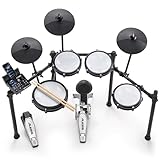
Overview: The Alesis Nitro Max represents a significant step-up in electronic drumming, offering an 8-piece professional-grade experience. Featuring a 10-inch dual-zone mesh snare, three 8-inch toms, and three 10-inch cymbals, this kit prioritizes playability. The revolutionary drum module packs 440+ BFD sounds and Bluetooth connectivity, bridging practice and performance needs.
What Makes It Stand Out: Industry-leading BFD drum sounds deliver multi-velocity samples that rival acoustic kits. Bluetooth audio streaming allows playing along with tracks wirelessly, while the 90-day Drumeo subscription provides access to 200+ instructors and 5,000 songs. The USB MIDI connection unlocks the BFD Player for endless expansion.
Value for Money: Though priced higher than entry-level kits, the Nitro Max justifies cost through superior sound quality, larger playing surfaces, and premium educational content. Comparable kits with BFD licensing typically cost significantly more, making this an accessible professional gateway.
Strengths and Weaknesses: Strengths include authentic feel from larger mesh heads, exceptional sound library, Bluetooth convenience, and world-class lessons. The dual-zone snare enables realistic rim shots. Weaknesses involve a steeper learning curve for absolute beginners and premium pricing that may exceed casual learners’ budgets.
Bottom Line: For serious students ready to invest in long-term growth, the Nitro Max Kit delivers professional features without breaking the bank. The combination of BFD sounds, expansive lessons, and robust hardware makes it the best value in the mid-tier market.
3. Alesis Turbo X Electronic Drum Set - Sweetwater Exclusive

Overview: The Alesis Turbo X, a Sweetwater exclusive, presents a streamlined 5-piece electronic drum set focused on simplicity and accessibility. With three 8-inch tom pads, an 8-inch snare, and a basic cymbal configuration, this kit targets budget-conscious beginners seeking a no-frills entry point into electronic drumming.
What Makes It Stand Out: As a Sweetwater exclusive, buyers receive specialized customer support and potentially bundle pricing. The simplified 5-piece layout reduces setup complexity, making it immediately approachable for younger players or those intimidated by larger kits.
Value for Money: While pricing details remain proprietary to Sweetwater, exclusive models typically offer competitive rates. However, the sparse feature set—limited sounds, no mesh heads mentioned, and minimal connectivity—suggests this serves as a basic starter kit rather than a long-term investment.
Strengths and Weaknesses: Strengths include straightforward assembly, compact footprint, and Sweetwater’s reputable support. The 8-inch pads provide adequate playing surface for basics. Weaknesses are significant: no mesh head specification means potentially noisy rubber pads, extremely limited sound library, lack of educational features, and no mention of essential accessories like throne or headphones.
Bottom Line: The Turbo X fills a niche for absolute beginners prioritizing simplicity over features. However, the lack of detailed specifications makes it difficult to recommend confidently. Consider this only if budget is severely constrained and Sweetwater offers an exceptional exclusive deal.
4. Donner DED-200 Electric Drum Sets with Quiet Mesh Drum Pads, 2 Cymbals w/Choke, 31 Kits and 450+ Sounds, Throne, Headphones, Sticks, USB MIDI, Melodics Lessons (5 Pads, 3 Cymbals)

Overview: The Donner DED-200 elevates the brand’s offerings with an 8-piece configuration featuring full mesh heads across all drums. This kit includes an 8-inch dual-zone snare, three 8-inch toms, a 6-inch kick tower, and three 10-inch cymbals with choke functionality. With 450 sounds and 31 kits, it targets intermediate players seeking authentic feel without premium pricing.
What Makes It Stand Out: Choke-enabled cymbals provide expressive playing typically reserved for higher-end kits. The robust iron stand with four-post aluminum rack delivers superior stability compared to entry-level frames. Fifty play-along songs, a sequencer, and recording functions create a comprehensive practice environment.
Value for Money: Positioned between beginner and professional tiers, the DED-200 offers impressive specifications for its price bracket. The full mesh setup, choke cymbals, and extensive sound library rival kits costing hundreds more, representing strong mid-range value.
Strengths and Weaknesses: Strengths include consistent mesh response across all drums, larger 10-inch cymbals with choke, sturdy hardware, and diverse sound options. The auxiliary input and MP3 compatibility enhance practice sessions. Weaknesses include the small 6-inch kick pad that may feel cramped for advanced footwork and Donner’s lesser brand recognition compared to Roland or Alesis.
Bottom Line: The DED-200 is a compelling choice for progressing drummers needing professional features on a budget. The choke cymbals and robust stand alone justify the upgrade from entry-level kits, making this a smart intermediate investment.
5. Donner Electric Drum Set, DED-70 Electronic Drum Kit for Beginner with 150 Sounds, 4 Quiet Mesh Pads, 9" Cymbals, USB MIDI, Type-C Charging, 2 Pedal, Throne, Headphones, Sticks, Melodics Lessons

Overview: The Donner DED-70 specifically targets young beginners aged 6-14 with a scaled-down 7-piece electronic kit. Four 6.5-inch mesh pads and three 9-inch silicone cymbals provide age-appropriate playing surfaces. The 150-sound library and 15 kits offer stylistic variety without overwhelming novice learners, while USB MIDI and Type-C charging enable modern connectivity.
What Makes It Stand Out: Dual power modes—AC adapter or USB power bank—create unprecedented portability for outdoor practice or travel. The height-adjustable rack grows with children, ensuring ergonomic playing posture. At a folded size of 24.4" x 10.6", storage is effortless for families.
Value for Money: Tailored for its demographic, the DED-70 includes essential accessories and kid-friendly features at a competitive price point. Comparable youth kits often lack adjustable components or portable power options, making this a thoughtful value proposition for parents.
Strengths and Weaknesses: Strengths include kid-optimized sizing, portable charging capability, silent headphone practice, and adjustable hardware. The Type-C charging is modern and convenient. Weaknesses are the very limited 150-sound library and tiny pads that quickly become restrictive as skills advance. The 9-inch cymbals feel disproportionately large compared to the 6.5-inch drums.
Bottom Line: For parents introducing children to drumming, the DED-70’s portable power and adjustable design make it unbeatable. However, expect to upgrade within 2-3 years as young drummers outgrow its limitations. Perfect for ages 6-10, less ideal for teens.
6. AKLOT Acoustic-Style Electric Drum Set: Independent 16’’ Wooden Bass Drum and 12’’ Snare, Triple-Zone Ride Cymbal, Standalone Hi-Hat, Full Mesh Pads, 460 Sounds, USB MIDI, Throne, Sticks (B-CORE543)

Overview: The AKLOT B-CORE543 targets serious drummers seeking authentic acoustic feel in an electronic package. This flagship kit features real wooden shells on the 16" kick and 12" snare, paired with full mesh heads throughout. The standalone hi-hat system and triple-zone ride cymbal deliver nuanced articulation rarely found at this price tier, making it suitable for both practice and performance.
What Makes It Stand Out: The independent two-piece hi-hat with weighted bottom cymbal provides genuine foot control and natural resistance. The triple-zone ride cymbal (bell/bow/edge) offers expressive articulation, while the wooden kick drum delivers 30% faster rebound than typical e-kick pads. With 460 studio-sampled sounds and deep editing capabilities, the module rivals professional-grade alternatives.
Value for Money: Priced in the mid-to-high tier, this kit justifies its cost through premium materials and features typically reserved for flagship models costing twice as much. The authentic acoustic response eliminates the need for immediate upgrades, making it a sound long-term investment for intermediate to advanced players.
Strengths and Weaknesses: Strengths include exceptional playability from wooden shells, highly responsive cymbals with choke functions, extensive sound customization, and robust construction. Weaknesses involve a steeper learning curve for beginners, substantial footprint requiring dedicated space, and a module interface that could be more intuitive.
Bottom Line: Ideal for drummers transitioning from acoustic kits or demanding realistic response, the B-CORE543 delivers professional performance without acoustic volume. It’s a compelling choice for home recording artists and gigging musicians needing authentic feel in noise-sensitive environments.
7. Air Drum Sticks Set, Electronic Drum Set, 3D Motion Sensing Drumstick with Clip-On Foot Pedals, 8 Sound Portable Practice Drum Kit Electric Drum Set for Home Party Kid Beginner

Overview: This motion-sensing air drum kit reimagines percussion through 3D accelerometer technology, eliminating physical pads entirely. The ABS drumsticks detect movement in space while clip-on foot sensors simulate kick and hi-hat control. With only eight onboard sounds and RGB lighting effects, it targets casual users, children, and beginners seeking a novel, ultra-portable practice solution.
What Makes It Stand Out: The complete lack of physical drums makes this infinitely portable—practice anywhere without noise complaints. RGB lights sync to playing for visual feedback, and the virtual positioning creates an immersive experience. Motion sensing technology, while basic, enables genuine stick technique development without surface rebound.
Value for Money: As one of the most affordable electronic percussion options, it provides entry-level accessibility. However, the eight generic sounds and limited dynamic range offer minimal long-term value. Consider it a novelty or learning toy rather than a serious instrument investment.
Strengths and Weaknesses: Strengths include absolute portability, silent operation, child-friendly design, and engaging light effects. Major weaknesses are extremely limited sound library, lack of tactile feedback hindering technique development, reliance on batteries, and questionable long-term durability of motion sensors.
Bottom Line: A fun gift for young children or casual rhythm exploration, but unsuitable for serious drummers. The air drum concept excels as a travel toy or party novelty, yet fails to replicate the physical feedback essential for proper drum technique development.
8. AODSK Electric Drum Set for Beginner with 150 Sounds,4 Quiet Drum Pads,2 Pedal,Throne,Sticks,Electronic Drum with Headphone,AED-400

Overview: The AODSK AED-400 delivers a complete entry-level e-kit in a compact, foldable package. Four 6.5" silicone drum pads and three 8" cymbals provide a basic playing surface, while the included throne, sticks, and headphones enable immediate silent practice. With 150 sounds and 15 preset kits, it targets absolute beginners and younger players.
What Makes It Stand Out: The foldable metal frame sets this apart in the budget category, allowing easy storage in small apartments. Silicone heads offer quieter practice than rubber alternatives, and the USB MIDI interface provides future expansion. The AUX input for play-along tracks enhances learning potential beyond basic practice.
Value for Money: This represents strong value for first-time drummers, bundling all essentials at a competitive price point. While limited in expressive potential, it costs significantly less than mesh-head alternatives. The included accessories eliminate hidden costs, making it an honest starter package.
Strengths and Weaknesses: Strengths include affordability, compact storage, silent headphone practice, straightforward setup, and decent connectivity. Weaknesses involve small pad sizes limiting playing technique, silicone heads lacking realistic rebound, limited sound editing, and a basic module without advanced features.
Bottom Line: Perfect for testing commitment to drumming without major investment. Young beginners and space-conscious users will appreciate the convenience, though progressing players will quickly outgrow its limitations. A solid, honest starter kit that delivers exactly what it promises.
9. Alesis Turbo Max Electric Drum Set with Quiet 8" Mesh Pads, Lessons, Bluetooth and Accessories, Foldable

Overview: Alesis positions the Turbo Max as a step-up beginner kit, replacing rubber pads with responsive 8" mesh heads across four drums and three cymbals. The foldable rack, Bluetooth streaming, and 20 built-in play-along tracks target modern learners. With 110 sounds and 12 kits, it bridges the gap between basic e-kits and serious practice tools.
What Makes It Stand Out: Bluetooth audio streaming eliminates cable clutter for play-along practice—a rare feature in this price class. The mesh heads provide significantly better rebound and quieter operation than rubber pads. Including 20 practice tracks and rhythmic exercises makes this a self-contained learning system.
Value for Money: Mid-range pricing reflects the mesh head upgrade and Bluetooth convenience. It costs more than entry-level rubber kits but delivers tangible playability improvements. For dedicated beginners, the enhanced feel justifies the premium over budget alternatives.
Strengths and Weaknesses: Strengths include realistic mesh feel, wireless connectivity, compact foldability, included accessories, and lesson integration. Weaknesses involve small 8" pads still limiting technique, limited sound customization, basic module with dated interface, and lightweight rack prone to wobble during aggressive playing.
Bottom Line: An excellent choice for committed beginners ready to invest in proper technique development. The mesh heads and Bluetooth create a modern practice experience, though the kit’s longevity depends on how quickly skills advance. Better than entry-level, but intermediate players will desire more.
10. Alesis Nitro Pro Electric Drum Set with Dual-Zone Quiet Mesh Pads, 500+ Authentic BFD Sounds, Bluetooth, Drumeo, USB MIDI, Double Kick Compatible

Overview: The Nitro Pro represents Alesis’s answer to mid-range professional demands, featuring dual-zone 10" snare and 8" toms, 10" cymbals with choke, and BFD-powered sound engine with over 500 multi-velocity samples. The PRO steel rack supports double kick pedals, while Bluetooth connectivity and 90-day Drumeo membership position it as a serious practice and recording tool.
What Makes It Stand Out: BFD sound engine delivers studio-quality multi-velocity samples that respond dynamically to playing intensity. Dual-zone snare enables rimshots and cross-sticking techniques. Double kick compatibility and robust steel rack accommodate aggressive metal and rock styles. The Drumeo integration provides structured learning from world-class instructors.
Value for Money: This kit punches above its weight class, offering features found in rigs costing twice as much. The BFD sounds alone justify the price premium over basic modules. For intermediate drummers, it eliminates the need for immediate upgrades, providing years of growth potential.
Strengths and Weaknesses: Strengths include professional-grade sounds, expandable architecture, robust rack, dual-zone capabilities, and valuable educational content. Weaknesses include a cluttered module interface requiring menu diving, occasional trigger crosstalk, and cymbals that feel smaller than acoustic counterparts.
Bottom Line: The best value proposition for serious hobbyists and gigging drummers needing authentic feel and professional sounds. While not quite flagship tier, it delivers 90% of premium performance at half the cost. The Nitro Pro grows with your skills, making it a wise long-term investment.
Understanding the True Source of Volume Complaints
Before diving into solutions, it’s essential to understand what actually triggers volume complaints. It’s not just about decibels—frequency transmission, vibration through floors, and practice timing all play critical roles. Electronic drums solve the direct acoustic output problem, but many drummers discover that pedal noise, pad impact sound, and even amplifier bleed can still cause issues in apartments or shared spaces.
The Difference Between Airborne and Structure-Borne Noise
Your downstairs neighbor isn’t hearing your snare drum—they’re feeling the kick pedal thump transmitted through the floor joists. Modern low-volume electronic kits address this by isolating impact vibrations through floating pedal designs, riser platforms, and redesigned beater mechanisms. Understanding this distinction helps you target the right features rather than overspending on solutions that don’t address your specific noise transmission problem.
Why “Silent” Isn’t Always Silent
Even the most advanced electronic drums produce some mechanical noise. Mesh heads make a distinctive “thwack,” cymbal pads click when struck, and hi-hat pedals can produce a metallic chirp. The goal in 2026 isn’t achieving absolute silence—it’s reducing the sound profile to conversational level or below, making it blend into ambient household noise rather than dominating it.
Mesh Head Technology: The Foundation of Quiet Playing
Mesh drumheads revolutionized electronic drums, and 2026 models have refined this technology to near-perfection. The key lies in the weave density, tensioning system, and underlying dampening materials that determine both feel and acoustic output.
Single-Ply vs. Multi-Ply Mesh Construction
Single-ply mesh heads offer maximum rebound and realistic stick response but can produce more impact noise. Multi-ply constructions dampen both sound and vibration, creating a quieter playing experience at the cost of some authentic feel. For apartment dwellers, a dual-ply head with adjustable tension often provides the optimal balance between noise reduction and playability.
Tension Adjustment and Its Impact on Volume
The ability to fine-tune mesh head tension isn’t just about feel—tighter heads produce higher-pitched impact sounds that cut through ambient noise, while looser heads create deeper, less intrusive thumps. Look for kits offering tool-free tension adjustment, allowing you to dial in the quietest playable setting for your specific environment.
Kick Drum Solutions That Actually Work
The kick drum represents the biggest challenge in low-volume drumming. Traditional electronic kick towers can transmit as much vibration as an acoustic drum if not properly designed.
Beaterless Kick Pedal Designs
2026’s most innovative low-volume solutions use beaterless or virtual pedal systems that eliminate the physical impact entirely. These designs employ pressure sensors or optical triggers that respond to pedal movement without requiring a striker to hit a surface, reducing both airborne and structure-borne noise to near zero.
Isolated Kick Towers and Floating Platforms
If you prefer traditional beater-based systems, look for kick towers with built-in isolation feet that decouple from the floor. Some advanced setups include floating riser platforms with multiple layers of dampening material, effectively creating a mechanical suspension system that absorbs impact before it reaches your floor.
Cymbal Pad Innovations for Reduced Noise
Metal cymbal pads, while durable, can be surprisingly loud when struck with force. Modern alternatives use composite materials that mimic the response of bronze without the acoustic ping.
Rubber Compound Variations and Noise Levels
Not all rubber cymbals are created equal. Softer, more porous rubber compounds significantly reduce impact noise but may sacrifice some stick definition. The sweet spot for 2026 low-volume kits involves dual-density designs—firmer at the bell for clear articulation, softer at the edge for washy crashes that don’t sound like someone’s tapping on a countertop.
Choke Functionality Without the Clack
Cymbal choking is a staple technique, but grabbing an electronic cymbal can produce a loud plastic “clack.” Advanced pads now use capacitive touch sensors or minimal-contact choke zones that respond to light finger pressure rather than firm gripping, eliminating this common complaint trigger.
Sound Module Features for Volume Management
Your drum module is the brain of the operation, and its features can make or break your low-volume experience. Beyond just triggering sounds, modern modules offer sophisticated tools for managing your overall acoustic footprint.
Individual Pad Volume Curves and Compression
Look for modules allowing per-pad volume curve customization. This lets you set your snare to respond dynamically while keeping your crash cymbals at a consistent, lower level. Built-in compression algorithms can also prevent sudden volume spikes that might startle housemates, even through headphones.
Ambient Noise Masking and Frequency Shaping
Some 2026 modules include “room matching” features that analyze your environment’s ambient noise profile and automatically shape drum frequencies to mask rather than compete with background sounds. This psychoacoustic approach makes your playing less noticeable without turning it down.
The Headphone Amplification Challenge
Cranking headphones to hear yourself over pad noise creates a vicious cycle of increasing volume. The solution lies in low-impedance, high-isolation monitoring systems designed specifically for electronic drums.
Impedance Matching for Electronic Drums
Electronic drum modules output at different impedance levels than standard music players. Using headphones with mismatched impedance requires higher volume settings, defeating the purpose of a low-volume setup. Look for kits advertising “drum-optimized” headphone outputs or plan to invest in a dedicated drum headphone amplifier.
Closed-Back vs. In-Ear Monitoring for Isolation
Closed-back over-ear headphones provide excellent isolation but can be hot during long sessions. Modern in-ear monitors with foam tips offer superior isolation and comfort, allowing you to monitor at lower, safer volumes while hearing every nuance of your playing.
Physical Space and Layout Optimization
How you set up your kit physically impacts its noise profile more than most drummers realize. Strategic positioning and thoughtful ergonomics can reduce both direct sound and vibration transmission.
Corner Placement and Acoustic Shadowing
Positioning your kit in a corner creates an acoustic shadow that directs pad noise away from shared walls. The corner acts as a natural baffle, absorbing and redirecting sound waves that would otherwise travel directly through walls to adjacent apartments or rooms.
Minimal Footprint Configurations for Apartments
2026’s modular rack systems allow for compact, vertical setups that minimize floor contact points. Fewer rack legs mean less vibration transmission, and upright configurations position noise sources closer to your ears and farther from walls and floors.
Room Treatment on a Budget
You don’t need a professional studio to meaningfully reduce drum noise transmission. Strategic, affordable treatment targets the specific frequencies electronic drums produce.
DIY Isolation Platforms
A simple platform made from two layers of MDF with rubber isolation pucks in between can reduce floor transmission by up to 70%. For maximum effectiveness, size the platform to fit your entire kit footprint, creating a floating island that decouples from the building structure.
Strategic Soft Furnishing Placement
That bookshelf against the shared wall? It’s not just storage—it’s a broadband absorber. Positioning heavy furniture and hanging thick tapestries or moving blankets on walls adjacent to your kit creates a barrier that absorbs mid and high frequencies before they penetrate walls.
Practice vs. Performance: Dual-Mode Setups
Many drummers need both a whisper-quiet practice rig and a performance-capable kit. Rather than buying two systems, 2026 technology allows for modular configurations that transform based on your needs.
Quick-Swap Pad Systems
Some advanced kits feature pads that accept both mesh heads for quiet practice and acoustic-style heads for amplified performance. By swapping heads and adjusting module settings, you can transition from apartment-friendly to stage-ready in under 30 minutes.
Hybrid Acoustic-Electronic Conversion Kits
For acoustic purists, conversion kits using specialized triggers and mesh heads on your existing shells provide the ultimate flexibility. Your acoustic kit becomes a low-volume electronic set for practice, then returns to full acoustic glory for gigs by simply swapping heads and removing triggers.
Budget Allocation: Where to Invest for Maximum Quiet
Not all features contribute equally to volume reduction. Smart budget allocation prioritizes the components that make the biggest real-world difference.
The 50/30/20 Rule for Low-Volume Kits
Allocate 50% of your budget to the pad quality and pedal system—these directly impact mechanical noise. Spend 30% on the module’s volume management features and connectivity. The remaining 20% covers the rack, throne, and accessories. Skimping on pads to get a fancier module is a common mistake that leaves you with a quiet brain but loud limbs.
Long-Term Cost of Ownership
Consider replacement parts availability and durability. A cheaper kit requiring frequent mesh head replacements or developing noisy triggers within a year ultimately costs more than a premium kit lasting five. Check warranty coverage specifically for mesh head wear and trigger mechanism failure.
Durability and Maintenance in Low-Volume Context
Paradoxically, low-volume setups can experience different wear patterns than loud ones. Constant light playing without the masking effect of high volume reveals mechanical noises that loud playing would cover.
Trigger Crosstalk and Sensitivity Drift
In quiet environments, even minor crosstalk between pads becomes audible. 2026 modules offer advanced crosstalk cancellation algorithms, but physical isolation between pads remains crucial. Regular maintenance includes checking pad mounts for looseness and cleaning trigger contacts to prevent sensitivity drift that forces you to play harder and louder.
Mesh Head Tension Consistency
Mesh heads lose tension over time, requiring harder hits to trigger properly—which increases noise. Develop a monthly tension-check routine, and invest in a drum key with torque measurement to maintain consistent settings that allow for light, quiet playing technique.
Connectivity and Silent Recording Workflows
Modern drummers need their low-volume kit to integrate with recording setups, streaming platforms, and silent rehearsal systems. The right connectivity eliminates the need for loud monitors.
USB Audio Interface Integration
Modules with built-in USB audio interfaces allow direct, latency-free recording to your computer without additional hardware. This not only simplifies your setup but eliminates the need for monitor speakers entirely—your headphones become the only sound source.
Bluetooth MIDI and Wireless Monitoring
2026’s Bluetooth 5.3 implementations offer latency low enough for real-time playing. Wireless in-ear systems designed for electronic drums free you from cable tangles while maintaining the low-volume isolation you need, perfect for streamers and content creators.
Future-Proofing Your 2026 Investment
Technology evolves rapidly, and today’s cutting-edge features become tomorrow’s baseline expectations. Making a smart purchase means looking beyond current specs.
Firmware Update Policies and Community Support
Prioritize manufacturers with strong track records of regular firmware updates that add features rather than just fix bugs. Active user communities often create custom low-volume settings and trigger configurations that can transform your kit’s performance without hardware changes.
Modular Upgrade Paths
Choose kits with interchangeable components across product lines. The ability to upgrade individual pads or the module without replacing the entire system protects your investment as low-volume technology continues advancing through 2027 and beyond.
Psychological Adaptation to Low-Volume Playing
The biggest challenge isn’t technical—it’s mental. Learning to trust that your light touch is producing full dynamic sound requires psychological adjustment.
Developing Quiet Technique Without Sacrificing Power
Practice playing with 50% of your normal force while monitoring through headphones at higher volume. Gradually reduce headphone volume as you build confidence in your light touch. This trains muscle memory for quiet playing that still feels expressive and powerful.
The “Feel vs. Volume” Trade-off Mindset
Accept that some authenticity is sacrificed for the ability to practice daily. Focus on the benefits: more frequent, longer practice sessions, better timekeeping development without acoustic masking, and the ability to play along with music at balanced levels.
Community and Legal Considerations
Even with the quietest kit, maintaining good relationships requires proactive communication and awareness of local regulations.
Sound Level Apps and Documentation
Use smartphone decibel meter apps to document your kit’s actual output at the property line or shared wall. Having data showing your setup operates at conversational level (60 dB or below) can resolve disputes before they escalate and demonstrates good-faith effort to neighbors and landlords.
Lease Agreement Clauses and Electronic Drums
Many 2026 rental agreements specifically address “musical instruments” and “electronic devices.” Get written clarification that your electronic kit complies with noise clauses, and consider renter’s insurance that covers musical equipment. Some policies now offer “neighbor relations” coverage for noise-related disputes.
Frequently Asked Questions
1. Will a low-volume electronic kit be quiet enough for apartment use at night?
Modern electronic kits can operate below 50 dB at the pad surface—quieter than normal conversation. With proper isolation and headphones, you can practice at 2 AM without disturbing neighbors, though kick pedal vibration may still require a riser platform.
2. Do I need special flooring or carpets under my electronic drums?
While not strictly necessary, a dense rubber mat or isolation platform reduces structure-borne vibration by 60-80%. Even a thick area rug with a plywood board underneath makes a noticeable difference in multi-level buildings.
3. How long do mesh heads last with daily practice?
Quality mesh heads typically last 3-5 years with daily use. The constant light playing associated with low-volume practice actually extends lifespan compared to aggressive acoustic-style hitting. Inspect for fraying every six months.
4. Can I use regular music headphones or do I need “drum headphones”?
Standard headphones work but often require higher volume due to impedance mismatch. Drum-specific headphones offer better isolation, allowing lower, safer listening levels while blocking pad noise. This prevents the volume escalation cycle.
5. What’s the quietest kick drum solution available in 2026?
Beaterless pedal systems are virtually silent, using pressure sensors instead of physical impact. If you prefer traditional feel, isolated towers with foam beaters on floating risers reduce noise to barely audible levels in adjacent rooms.
6. Will my electronic drums still be loud enough for band practice?
Yes—when amplified through a PA or drum monitor. The low-volume design refers to unamplified acoustic output. Most 2026 kits have dual-mode outputs: line-level for recording/headphones and XLR for stage volume.
7. How do I handle the “clicking” sound from cymbal pads?
Upgrade to dual-density rubber cymbals or adjust your playing technique to strike with glancing blows rather than direct hits. Some drummers apply a thin layer of drum dampening gel to cymbal edges, reducing click without affecting trigger response.
8. Are there any silent alternatives to hi-hat pedals?
Yes—2026 sees widespread adoption of optical hi-hat controllers that eliminate the physical mechanism noise entirely. These use infrared sensors to detect pedal position and pressure, offering completely silent operation with realistic feel.
9. Can I convert my acoustic drums to low-volume electronic?
Absolutely. Conversion kits with mesh heads and internal triggers transform acoustic shells into hybrid instruments. This offers the most authentic feel while maintaining the option to switch back to acoustic heads for performances.
10. What maintenance is required to keep my kit operating quietly?
Monthly tension checks on mesh heads, quarterly inspection of rack clamps and isolation feet, and annual cleaning of trigger contacts. Lubricate moving parts on pedals with silicone-based (not petroleum) lubricant to prevent squeaks that become audible in quiet environments.
See Also
- How to Solve Volume Complaints with the 10 Best Electronic Drum Sets for Apartments in 2026
- Stop Noise Complaints: 10 Best Low-Volume Acoustic Drum Sets for Home Use
- How to Stop Volume Complaints with the 10 Best Low-Volume Drum Sets in 2026
- 10 Electronic Drum Sets That Solve Apartment Noise Complaints in 2026
- Top 10 Best Jazz Drum Sets for Low-Volume Cocktail Gigs in 2026