Table of Contents
Tuning a 12-string guitar has always been a delicate dance between glorious harmonic richness and mechanical complexity. Add a capo to the equation, and you’re essentially asking twelve strings—each under tremendous pressure—to bend to your will without surrendering their collective voice. By 2026, the capo market has evolved far beyond simple spring-loaded clamps, with low-tension designs emerging as the non-negotiable standard for serious 12-string players who refuse to compromise intonation or sustain.
The unique physics of 12-string instruments demand a fundamentally different approach to string pressure. With courses doubled up and octave discrepancies creating uneven tension profiles across the fretboard, a traditional capo often exerts enough force to pull strings sharp, choke harmonics, or create that dreaded “sitar buzz” on the octave strings. Low-tension capos represent a paradigm shift, using intelligent engineering to apply precisely calibrated pressure only where needed, preserving the instrument’s natural resonance while delivering flawless pitch transposition. Understanding what separates a merely adequate capo from a truly exceptional one requires diving deep into materials science, ergonomic design, and the evolving needs of modern players.
Top 10 12-String Capos
Detailed Product Reviews
1. Kyser Musical Products Quick-Change Guitar Capo, KG12BA, Black - For Twelve String Guitars, Made in USA, Quality, Strong, Lightweight, Quick & Easy Key Changes, Innovative, Perfect Fit for 12 Strings

Overview: The Kyser KG12BA is a spring-loaded quick-change capo engineered specifically for the wider neck and doubled courses of 12-string guitars. Crafted from aircraft-grade aluminum, this Made-in-USA capo promises durability without adding significant weight to your instrument.
What Makes It Stand Out: The original quick-change mechanism remains its defining feature—simple one-handed operation lets you reposition the capo mid-performance in seconds. The ability to park it on your headstock when not in use eliminates the classic “capo hunt” during gigs. Its 12-string optimization ensures adequate reach across the wider fingerboard while maintaining even pressure distribution.
Value for Money: Priced in the mid-range for quality capos, the Kyser offers excellent durability and convenience. While cheaper alternatives exist, the aircraft-grade construction and lifetime of reliable performance justify the investment. Comparable quick-change capos often lack the 12-string-specific design, making this a smart buy for dedicated 12-string players.
Strengths and Weaknesses: Strengths: Lightning-fast repositioning; robust aluminum construction; convenient headstock storage; no adjustment needed between uses; proven track record. Weaknesses: Spring tension isn’t adjustable, which may cause tuning issues on some setups; rubber pad may wear over time; pressure distribution can be less precise than adjustable models.
Bottom Line: For players prioritizing speed and convenience, the Kyser KG12BA is a reliable workhorse. It excels in live settings where quick key changes are essential, though studio purists might prefer an adjustable model for precise pressure control.
2. Shubb C3 Standard 12-String Guitar Capo – Polished Nickel

Overview: The Shubb C3 Standard represents 35 years of refined capo engineering, offering a unique adjustable design that maintains consistent pressure without repeated tuning. This polished nickel capo uses a lever-locking mechanism that mimics the pressure of a human finger.
What Makes It Stand Out: The “set it and forget it” philosophy is revolutionary—once you adjust the screw to your guitar’s neck profile, the capo applies identical pressure every time you clamp it. The custom rubber pad is designed to function like a fingertip, minimizing string depression and preserving intonation across all 12 strings.
Value for Money: Positioned as a premium product, the Shubb justifies its price through exceptional build quality and tuning stability. Unlike spring-loaded alternatives that require compromise, this capo delivers consistent performance that protects your investment in a quality 12-string. It outlasts cheaper models and maintains resale value.
Strengths and Weaknesses: Strengths: Unparalleled tuning stability; adjustable pressure prevents buzz without over-tightening; durable nickel construction; consistent performance; excellent intonation preservation. Weaknesses: Slower to position than quick-change models; initial setup requires trial and error; lever mechanism requires two hands for optimal placement; higher price point.
Bottom Line: The Shubb C3 is the precision instrument of capos—ideal for recording artists and serious players who value tonal purity over speed. If you can master the initial setup, you’ll never need another capo.
3. C3K Shubb Capo Noir Series 12 String Guitar Capo - Black Chrome

Overview: The Shubb Capo Noir C3K delivers the same legendary performance as the Standard C3 but cloaked in a sleek black chrome finish. This variant maintains the 35-year-old design that revolutionized adjustable capos, offering identical mechanical function with a modern aesthetic.
What Makes It Stand Out: Beyond the stealthy appearance, the Noir series retains the proprietary “set and forget” mechanism that eliminates daily readjustment. The black chrome plating provides enhanced corrosion resistance while offering a contemporary look that complements darker hardware. The same finger-like rubber technology ensures your 12-string maintains perfect intonation.
Value for Money: Typically priced slightly above the standard polished nickel version, the Noir commands a modest premium for its finish. For players whose instruments feature black tuners and hardware, the cohesive appearance justifies the extra cost. Functionally identical to the C3, you’re paying for aesthetics and marginally improved durability against tarnishing.
Strengths and Weaknesses: Strengths: All mechanical benefits of the C3 (tuning stability, adjustable pressure); corrosion-resistant black chrome finish; modern aesthetic appeal; same durable construction; excellent intonation. Weaknesses: Premium price for essentially cosmetic upgrade; same slower operation as standard C3; initial learning curve; black finish may show fingerprints more readily.
Bottom Line: Choose the Capo Noir if you value the blacked-out aesthetic and want Shubb’s precision engineering. For function alone, the standard C3 offers identical performance at a slightly lower price.
4. G7th Newport Capo (12 String Silver)

Overview: The G7th Newport represents the cutting edge of capo technology, engineered specifically for the complex demands of 12-string guitars. This silver capo introduces patented features that address the fundamental challenge of equal pressure across varied string gauges.
What Makes It Stand Out: The Compensated String Pad Technology features strategically ridged silicone that adapts to different string thicknesses, ensuring uniform pressure across all courses. The fine-tune knob provides micro-adjustments for precise pressure control, while the upgraded quick-release mechanism allows seamless transitions. Internal silicone pads protect your guitar’s finish at every contact point.
Value for Money: As a premium-priced capo, the Newport targets serious musicians who demand perfection. The innovative pad technology and fine-tuning capability offer tangible benefits that cheaper alternatives simply cannot match. For professional recording or performance, this investment preserves your guitar’s tone and your musical reputation.
Strengths and Weaknesses: Strengths: Revolutionary compensated pad eliminates uneven fretting; precise pressure adjustment; excellent tuning stability; quick-release mechanism; comprehensive finish protection; preserves sustain and tone. Weaknesses: Highest price in category; more complex mechanism could require maintenance; slightly heavier than minimalist designs; overkill for casual players.
Bottom Line: The G7th Newport is the ultimate 12-string capo for tone purists and professionals. If you demand perfect intonation and are willing to pay for innovation, this capo delivers unmatched performance.
5. Paige 12-String Guitar Capo – Adjustable Tension, Buzz-Free, Stores Behind the Nut - Smokey Black Finish

Overview: The Paige 12-String Guitar Capo takes a specialized approach to doubled courses, handcrafted in the USA for the specific geometry of 12-string necks. Its yoke-style design prioritizes controlled tension and buzz-free performance over speed.
What Makes It Stand Out: The thicker tubing on the saddle specifically compensates for height variations in octave strings, a detail many universal capos miss. The precision yoke/screw system lets you dial in exact pressure for each position, while the behind-the-nut storage keeps it permanently attached to your instrument. The nickel-plated steel construction ensures decades of reliable service.
Value for Money: Positioned as a mid-to-premium option, the Paige offers specialized 12-string engineering without the price tag of high-tech alternatives. The made-in-USA quality and thoughtful design provide excellent value for dedicated 12-string players who need reliability over flashy features.
Strengths and Weaknesses: Strengths: Purpose-built for 12-string geometry; adjustable tension prevents buzz; convenient behind-nut storage; durable American craftsmanship; excellent string-to-string compensation. Weaknesses: Slower adjustment than quick-change models; yoke design requires sliding off neck for removal; may not fit all neck profiles; screw adjustment needs periodic checking.
Bottom Line: The Paige capo is perfect for 12-string specialists who prioritize perfect fit and function over rapid key changes. It’s a lifetime tool for serious acoustic players.
6. Heavy Duty Guitar Capo for Acoustic/Electric Guitar,Guitar Clip,6 String, 12 String, Gradient Color Guitar Clamp for Bass Classical Guitar, Ukulele, Mandolin(Rosewood Color)

Overview: The Heavy Duty Guitar Capo is a versatile 3-in-1 tool designed for acoustic, electric, classical guitars, ukulele, bass, and mandolin. Crafted from silver-plated zinc alloy with a rosewood color finish, it combines functionality with aesthetic appeal for musicians seeking a multi-purpose accessory.
What Makes It Stand Out: This capo’s triple-threat design integrates a pick holder and string puller alongside its primary function. The industrial-strength spring provides precise tension that eliminates fret buzz, while silicone padding protects your instrument’s neck and strings from damage. Its compatibility across six and twelve-string instruments makes it exceptionally versatile.
Value for Money: Positioned in the mid-range price bracket, this capo effectively replaces three separate tools. For gigging musicians who need quick access to picks and string changes, the consolidated design offers genuine utility that justifies the cost over basic single-function capos.
Strengths and Weaknesses: Strengths include the 3-in-1 functionality, robust zinc alloy construction, and comprehensive instrument compatibility. The silicone padding demonstrates thoughtful design for instrument protection. However, the zinc alloy construction adds noticeable weight compared to aluminum alternatives, and musicians who prefer minimal accessories may find the extra features unnecessary bulk.
Bottom Line: Ideal for performing musicians who value utility and convenience, this capo delivers reliable performance across multiple instruments while keeping essential tools at your fingertips. The rosewood finish adds a touch of class to this practical workhorse.
7. C3B Shubb Original Series 12-string Guitar Capo - Brass
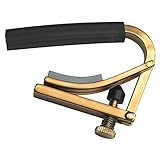
Overview: The C3B Shubb Original Series capo represents 35 years of refined engineering, specifically designed for 12-string guitars but compatible with other instruments. Its brass construction and unique locking mechanism have made it a favorite among serious musicians who prioritize tuning stability.
What Makes It Stand Out: Shubb’s “set it and forget it” adjustable tension system allows you to dial in the perfect pressure once, then simply flip the lever for consistent performance every time. The custom-formulated rubber mimics a human fingertip, distributing pressure evenly across strings while maintaining intonation—crucial for 12-string instruments.
Value for Money: This premium-priced capo justifies its cost through exceptional build quality and longevity. Unlike spring-loaded alternatives that require constant adjustment, Shubb’s reliable mechanism saves time and frustration during performances, making it a worthwhile investment for professional musicians.
Strengths and Weaknesses: Strengths include unparalleled tuning stability, robust brass construction, and the revolutionary tension adjustment system. The lever action is smooth and reliable. However, it’s slower to position than squeeze-on capos, has a learning curve for optimal tension setting, and the premium price may deter casual players.
Bottom Line: For serious guitarists, especially 12-string players, the Shubb is unmatched in maintaining tuning integrity. If you value precision and reliability over speed, this capo will serve you flawlessly for decades.
8. D’Addario Guitar Capo for Acoustic and Electric Guitar - NS Capo Lite - Adjustable Tension - Guitar Accessories - Works for 6 String and 12 String Guitars - Lite - Black

Overview: D’Addario’s NS Capo Lite brings professional-grade micrometer tension adjustment to an affordable, lightweight package. Designed for six and twelve-string acoustic and electric guitars with radiused fretboards, this ABS thermoplastic capo delivers precision typically found in higher-priced models.
What Makes It Stand Out: The fast micrometer screw enables true one-handed operation, allowing musicians to adjust tension precisely while moving between frets. This eliminates the guesswork of spring-loaded designs and prevents the tuning issues caused by excessive pressure, especially important on radiused fretboards where string height varies.
Value for Money: This budget-friendly capo punches well above its weight class, offering features usually reserved for premium models. For players seeking precise control without breaking the bank, it represents exceptional value compared to both basic elastic capos and expensive professional options.
Strengths and Weaknesses: Strengths include precise tension control, ultra-lightweight construction, and thoughtful design for modern fretboard radii. The price point is highly accessible for students and working musicians. However, the ABS plastic construction, while durable, lacks the premium feel of metal alternatives, and some users may question its long-term durability under heavy touring use.
Bottom Line: The NS Capo Lite is the smart choice for players who want precise, buzz-free performance on a budget. It’s particularly well-suited for guitarists with radiused fretboards who need reliable, adjustable tension without the premium price tag.
9. D’Addario Guitar Capo – Pro Plus Capo - Ideal for Acoustic, Electric, Classical, & 12-String Guitars - Black
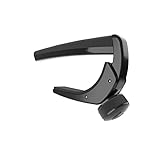
Overview: D’Addario’s Pro Plus Capo represents the pinnacle of modern capo design with its innovative FlexFit technology. Engineered for acoustic, electric, classical, and 12-string guitars, this premium accessory automatically adapts to any fretboard radius for optimal performance without manual adjustment.
What Makes It Stand Out: FlexFit technology is the game-changer, intelligently distributing pressure across strings regardless of fretboard curvature. This eliminates the compromise between flat and radiused boards that plagues other capos. The single-hand operation is buttery smooth, making lightning-fast key changes effortless during live performances.
Value for Money: While priced in the mid-to-high range, the Pro Plus justifies its cost by replacing multiple specialized capos. For musicians who own various guitar types, this universal solution eliminates the need for separate capos and ensures consistent, buzz-free performance across your entire collection, from vintage acoustics to modern electrics.
Strengths and Weaknesses: Strengths include automatic radius adjustment, superior pressure distribution, and professional-grade reliability. The build quality inspires confidence. The primary weakness is the price point, which may be excessive for beginners or players with only one instrument. It also offers fewer features than some multi-tool alternatives.
Bottom Line: For professionals and collectors with diverse guitar arsenals, the Pro Plus is the ultimate universal capo. Its ability to perfectly adapt to any fretboard makes it worth every penny for serious musicians demanding flawless performance.
10. Guitar Capo (2 Pack) for Acoustic Guitars, Ukulele, Banjo, Mandolin, Bass - Made of Ultra Lightweight Aluminum Metal (1.2 oz!) for 6 & 12 String Instruments - Nordic Essentials, Black+Silver
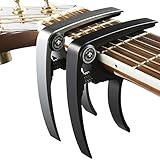
Overview: Nordic Essentials delivers a practical two-pack of ultra-lightweight aluminum capos designed for acoustic, electric, classical guitars, ukulele, banjo, mandolin, and bass. At just 1.2 ounces each, these capos prioritize portability and convenience for musicians constantly on the move.
What Makes It Stand Out: The aircraft-grade aluminum construction provides surprising durability at an incredibly low weight. Coming in a two-pack with individual carry pouches, this offering excels as both a primary capo and a backup for gigging musicians. The quick-release design enables true one-handed operation for seamless key changes during live performances without disturbing your flow.
Value for Money: Exceptional value proposition—two professional-quality aluminum capos for roughly the price of one competing model. For students, beginners, or gigging musicians needing backup gear, this package is practically unbeatable. The included pouches add travel-friendly convenience and protection.
Strengths and Weaknesses: Strengths include outstanding weight-to-durability ratio, excellent value, and true versatility across instruments. The aluminum construction resists bending and wear even with frequent use. However, the spring tension is non-adjustable, which may cause tuning issues on some instruments with different string gauges, and the basic design lacks premium features like radius compensation or pick holders.
Bottom Line: Perfect for beginners, students, or as reliable backup capos for working musicians. If you need lightweight, dependable capos without breaking the bank, this two-pack delivers professional performance at an entry-level price point.
Why 12-String Guitars Demand Specialized Capos
The mathematics alone tells the story: a standard 12-string guitar exerts approximately 250-320 pounds of total string tension, nearly double that of its 6-string counterpart. This isn’t just about more pressure—it’s about a complex tension map where octave strings sit at different heights and gauges, creating a microscopic roller coaster across your fretboard. A capo designed for six strings applies uniform pressure that inevitably over-clamps some courses while under-clamping others. The result? Your shimmering open chords become a compromise between slightly sharp bass notes and slightly flat trebles, with that magical 12-string chorus effect collapsing into discord.
The Science Behind Low-Tension Capo Design
Modern low-tension capos leverage distributed load theory, spreading pressure across multiple contact points rather than concentrating it in a single bar. Think of it as the difference between standing on a bed of nails versus a single spike. Advanced designs incorporate variable-durometer padding that compresses differently under each string course, automatically compensating for the gauge differential between standard and octave strings. This intelligent compression means the low E string receives exactly the pressure it needs while the high octave E gets a gentler touch—no manual adjustment required.
Understanding String Pull vs. Capo Tension
Here’s where many players get confused: “low-tension” doesn’t mean “weak clamping force.” It refers to optimized pressure that counters string pull without adding unnecessary downward force. String pull is the lateral tension trying to drag your capo toward the nut, especially pronounced on 12-strings with their steep break angles. A well-engineered low-tension capo creates a vertical clamping vector that neutralizes this pull while using minimal overall pressure, typically 30-40% less than conventional designs.
Key Features to Evaluate in 2026 Models
The latest generation of capos includes several non-negotiable features that simply didn’t exist five years ago. Look for micro-adjustable thumbscrews with tactile feedback indicators that click at precise tension intervals. Some designs now incorporate LED tension meters that glow green when optimal pressure is achieved—no more guessing. The most sophisticated models feature dual-stage locking mechanisms that first grab the neck lightly, then allow fine-tuning before final engagement.
Material Innovations Shaping Modern Capos
Titanium-aluminum composites have revolutionized capo construction, offering exceptional strength-to-weight ratios that keep these devices under 2 ounces. This matters enormously on 12-string headstocks, which are already balancing a significant weight load. The real breakthrough, however, lies in viscoelastic polymer pads that “remember” your neck’s radius after just a few uses, creating a custom-molded contact surface that eliminates pressure points. These materials also resist the ozone and UV degradation that turned older silicone pads brittle and sticky.
The Radius Matching Challenge on 12-String Necks
Unlike 6-strings, which typically sport a consistent 9.5" to 16" fretboard radius, 12-string necks often feature compound radii that flatten dramatically past the 7th fret. A flat capo bar on a radiused board means only the center strings make proper contact. Modern low-tension designs address this through either flexible, radius-conforming bars or interchangeable radius inserts that snap into place. The best systems allow you to match your specific neck profile within 1/16" increments, ensuring every string course makes identical contact.
Quick-Change Mechanisms: Are They Worth It?
The eternal debate rages on: speed versus precision. Quick-change levers offer one-handed operation that’s invaluable during live performances, but traditional designs rely on springs that can’t distinguish between string gauges. 2026’s hybrid mechanisms solve this with magnetic assist levers that provide initial clamping force, then lock into a micro-adjustable tensioning stage. You get the best of both worlds: lightning-fast placement and tune-friendly pressure calibration. For studio work, though, many purists still prefer manual thumbscrew designs that force you to listen as you tighten.
Weight Considerations and Balance Impact
Every gram matters when you’re already wrestling with a neck that anchors twelve tuning machines. A heavy capo acts like a tiny wrecking ball on your headstock balance, subtly shifting the center of gravity and affecting how the instrument hangs on a strap. The psychological impact is real too—players unconsciously adjust their fretting hand position to compensate, leading to fatigue and technique drift. Premium low-tension capos now use skeletonized frames with strategic cutouts that maintain structural integrity while shaving weight to under 45 grams.
Padding Technology and String Buzz Prevention
The octave strings on a 12-string sit closer to the fretboard and require less pressure to fret cleanly. Over-clamp them, and they choke; under-clamp the standard strings, and they buzz. Next-generation padding uses zoned density foam—firmer under the main courses, softer under the octaves—embedded in a single seamless pad. Some designs even incorporate tiny air channels that allow the pad to breathe and conform without collapsing, maintaining consistent pressure through temperature and humidity changes that would cause traditional foam to harden or soften.
Microtonal Adjustment Capabilities
As microtonal music gains mainstream traction, forward-thinking capo manufacturers have introduced infinite-adjustment thumbscrews that allow for less-than-semitone positioning. This means you can place a capo at what amounts to a “quarter fret” to explore just intonation or alternate tuning systems without retuning your entire instrument. While this might seem niche, it’s become a selling point for experimental folk and world music players who treat their 12-string as a harmonic laboratory.
The Role of AI-Assisted Tension Calibration
Perhaps the most controversial development is the integration of capacitive sensors that measure string vibration in real-time as you tighten the capo. A companion app analyzes the harmonic content and suggests optimal pressure via Bluetooth feedback. Purists scoff at this “solution in search of a problem,” but for players new to 12-strings or those working in loud stage environments where subtle buzzing is inaudible, this technology provides an objective reference point. The AI learns your playing style over time, recognizing whether you’re a heavy strummer needing more pressure or a fingerpicker requiring maximum sustain.
Compatibility with Modern 12-String Neck Profiles
The 12-string renaissance has spawned neck profiles that would baffle vintage purists: from ultra-thin “speed necks” on electric 12-strings to the massive V-shapes on modern baritone acoustics. Capos must now accommodate depths ranging from 0.75" to over 1.125" without bottoming out or tilting. Look for designs with extended jaw travel and reversible clamping arms that can be configured for either deep acoustic or slim electric necks. The most versatile models include shim inserts that fine-tune the clamping range without compromising stability.
Price vs. Performance: Finding Your Sweet Spot
The law of diminishing returns hits hard in the capo world. A $25 basic model might get you 70% of the way there, while a $120 premium design offers that final 30% of performance that professionals deem essential. The breakpoint for most serious 12-string players falls around $60-75, where you gain radius matching, quality padding, and reliable hardware without paying for experimental features you won’t use. Consider your usage pattern: gigging musicians should invest in durability, while studio players might prioritize micro-adjustment precision.
Maintenance and Longevity in Professional Use
Even the finest capo becomes a liability if neglected. The constant pressure cycling degrades springs and pads over time. Modern low-tension designs require minimal maintenance—usually just wiping the pads with a microfiber cloth after each session to remove fretboard oils and dead skin. However, the titanium hardware benefits from occasional thread lubrication with dry graphite powder (never oil-based products that attract dust). Most professional players replace their capo pads annually, treating them like drum heads or strings—consumable items that directly impact tone.
Environmental Factors and Climate Adaptability
Twelve-string guitars are notoriously sensitive to humidity, and your capo is no different. Wooden-necked instruments expand and contract seasonally, changing the effective clamping pressure needed. Some 2026 models feature hygroscopic inserts that subtly adjust the mechanism’s tension range based on ambient moisture levels, automatically compensating for seasonal changes. For players touring through varied climates, this self-regulating feature eliminates the constant tweaking that traditional capos require when moving from desert dry venues to humid coastal festivals.
Frequently Asked Questions
How do I know if my capo tension is too high on a 12-string?
You’ll notice a distinct “choking” of sustain, particularly on the octave strings, and your tuner will show notes registering 10-20 cents sharp immediately after clamping. The tonal bloom that makes 12-strings magical will sound compressed and lifeless. Try this test: capo at the 5th fret, play a chord, then lightly tap each string behind the capo. If you hear a clear ping, your tension is appropriate. If it’s dead or thuddy, you’re over-clamping.
Can I use a standard 6-string low-tension capo on my 12-string?
Technically yes, but you’ll compromise performance. Standard capos lack the width to properly distribute pressure across all courses, often missing the outer octave strings entirely. The padding density is optimized for six strings of similar gauge, not the mixed courses of a 12-string. While it might work in a pinch for informal playing, you’ll never achieve the balanced, buzz-free performance that a dedicated 12-string design provides.
What’s the ideal weight for a 12-string capo?
Aim for under 50 grams (1.8 ounces) for acoustic 12-strings, and under 40 grams for electric models. Anything heavier begins to affect headstock balance noticeably. The lightest professional-grade models now hit 35 grams without sacrificing strength, thanks to magnesium alloys and carbon fiber reinforcement. Remember, you’ll feel this weight for hours during a performance, so prioritize ergonomics over perceived durability.
How often should I replace the padding on my capo?
With daily use, replace pads every 12-18 months. The viscoelastic material develops compression set over time, meaning it stops rebounding to its original shape. You’ll notice uneven wear patterns where the octave strings sit, and eventually, the pad won’t conform to your neck radius. Keep the original packaging—most manufacturers sell replacement pads specifically matched to your model’s radius and density profile.
Do low-tension capos work with alternate tunings like open C or DADGAD?
Absolutely, and they often perform better than standard capos in these scenarios. Alternate tunings redistribute string tension unpredictably, making precise pressure calibration even more critical. The micro-adjustment features on modern low-tension designs let you compensate for the unusual tension patterns, preventing the tuning instability that plagues spring-loaded models when dealing with slackened or heightened string courses.
Will a low-tension capo fix intonation issues on my 12-string?
No capo can correct underlying intonation problems—it can only minimize additional tuning artifacts. If your guitar’s octave strings are intonated incorrectly at the saddle, a capo will reveal these issues more clearly, not mask them. Think of a quality low-tension capo as a precision tool that preserves your guitar’s native intonation rather than correcting flaws. Address setup issues first, then let the capo do its job.
Are magnetic capo designs reliable for 12-string use?
Magnetic systems remain controversial for 12-strings. While they offer incredible speed and zero neck wear, they struggle with the uneven magnetic response from different string alloys. Phosphor bronze strings react differently than plain steel octaves, potentially creating inconsistent pressure. Until manufacturers develop multi-pole magnetic arrays specifically for 12-string courses, traditional mechanical clamps remain the professional standard.
How do temperature changes affect low-tension capo performance?
Extreme cold makes polymer pads temporarily stiffer, requiring slight tension adjustment. Heat causes them to soften, which can lead to over-compression if you don’t back off the pressure. The best 2026 models use phase-change materials in their pads that maintain consistent durometer from 40°F to 100°F. If you’re playing outdoor festivals, give your capo five minutes to acclimate to ambient temperature before fine-tuning.
Can I leave a low-tension capo on my guitar when not playing?
Never. Even minimal pressure creates a memory impression in both the pad and your fretboard wood over time. Store your capo on the headstock or in your case. Some players develop the habit of clipping it to their mic stand between sets—this prevents accidental falls and keeps it within reach. The only exception is during short breaks in a recording session, where removing it might cause minute tuning shifts that complicate punch-ins.
What’s the learning curve for adjusting to a micro-adjustable capo?
Most players master the technique within two weeks of regular use. The key is developing a tactile sense for when the pressure is “just right” rather than cranking until it feels secure. Practice by placing the capo, tuning, then slowly backing off tension until you hear the first hint of buzz, then tightening just past that point. After a dozen repetitions, your muscle memory will recognize the optimal resistance. The time investment pays dividends in tuning stability and tonal clarity that lasts throughout your entire playing career.
See Also
- 10 Must-Have Electric Capos for Seven-String Metal Players in 2026
- 10 Capos for 7-String Guitars That Handle Low B String in 2026
- 10 Capos for 8-String Lap Harp Guitars With Extra Reach
- 10 High-Tension Capos for Baritone Guitars in 2026
- 10 Deluxe Classical Capos for Flamenco Players With Low String Action 2026