Table of Contents
There’s nothing quite like the sound of a cranked tube amplifier. That sweet spot where power tubes saturate, speakers push air, and harmonics bloom into three-dimensional tone is the holy grail for guitarists. But in the real world of thin apartment walls, sleeping family members, and noise-sensitive neighbors, achieving those glorious overdriven tones at home feels like an impossible dream. Enter the power soak—your secret weapon for capturing stadium-sized tone at whisper volumes.
Often called attenuators or power soaks, these ingenious devices sit between your amp and speaker, absorbing excess wattage before it reaches the speaker, letting you push your amp to its tonal sweet spot without rattling windows. Whether you’re a vintage amp purist or a modern high-gain player, understanding how to choose and use the right power soak can transform your home playing experience from frustrating to inspiring.
Top 10 Guitar Amp Power Soaks
Detailed Product Reviews
1. Bugera POWER SOAK PS1 Passive 100 Watt Power Attenuator for Guitar and Bass Amplifiers with Emulated Mic Output

Overview: The Bugera POWER SOAK PS1 is a passive attenuator designed to let guitarists crank their tube amps for natural overdrive without excessive volume. It handles up to 100 watts and features multiple impedance options for broad compatibility across different amplifier types.
What Makes It Stand Out: The emulated mic output is a standout feature, allowing direct recording or PA connection without miking a cabinet. The multi-impedance inputs (4, 8, 16 Ohms) ensure compatibility with virtually any amplifier. Passive design means no power supply needed, simplifying setup and reducing failure points.
Value for Money: At its price point (typically around $100-150), it competes with entry-level attenuators like the Jettenuator. The 3-year warranty adds significant value, offering peace of mind that competitors often lack. It’s substantially cheaper than premium options like the Rivera RockCrusher or Universal Audio OX, making it accessible for home and project studio users.
Strengths and Weaknesses: Strengths: Versatile impedance matching; useful emulated output for recording; no power required; solid warranty coverage; compact design. Weaknesses: Passive design lacks advanced reactive load technology of pricier units; may affect tone at higher attenuation levels; build quality adequate but not road-grade for heavy touring.
Bottom Line: For home and studio players seeking cranked-amp tones at reasonable volumes, the PS1 delivers essential functionality at an accessible price. While it won’t replace high-end attenuators for purists, it’s a practical, cost-effective solution for most gigging and recording scenarios.
2. D’Addario Tour-Grade Power Base - Surge Protector Outlet - Surge Protector Power Strip - Stage Power Strip with 6 ft Cable - 5 Standard and 3 Transformer- Guitar Amp Outlet with Indicator Light
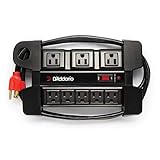
Overview: The D’Addario Tour-Grade Power Base is a heavy-duty surge protector designed specifically for musicians and their gear-heavy setups. It provides eight outlets in a stable, low-profile metal housing that stays put on stage or in the studio.
What Makes It Stand Out: Its stage-ready design features three transformer-spaced outlets accommodating bulky wall-warts alongside five standard outlets. The 6-foot cable with neat wrap system solves cable management issues that plague typical power strips. The indicator light provides visible surge protection status, crucial for troubleshooting stage power issues quickly.
Value for Money: Priced around $40-50, it competes with generic surge protectors but offers musician-specific features. The durable metal construction and thoughtful layout justify the modest premium over plastic consumer strips. Comparable stage-grade strips often cost $60+, making this a smart investment for protecting valuable gear.
Strengths and Weaknesses: Strengths: Excellent outlet spacing; robust metal housing; smart cable management; clear protection indicator; stable low-profile design prevents tipping. Weaknesses: Limited surge protection joule rating not specified; no USB ports; heavier than plastic alternatives; 6-foot cable may be short for some stage setups.
Bottom Line: This is a no-brainer for gigging musicians tired of wrestling with inadequate power solutions. While it lacks some modern conveniences like USB charging, its stage-focused design and reliable construction make it essential gear for any performer or studio with multiple pedals and rack units.
3. LEKATO Mini Electric Guitar Amp 5W, Portable Guitar Amp Bluetooth with Built-in 4 Effects, Clean Distortion Overdrive Reverb, Rechargeable Small Amplifier for Practice, Black (JA-05G)

Overview: The LEKATO JA-05G is a rechargeable 5-watt mini amplifier targeting traveling guitarists and bedroom players. It combines amplification with Bluetooth audio playback in a compact, plug-and-play format that hangs directly from your guitar.
What Makes It Stand Out: This unit merges four essential effects (clean, distortion, overdrive, reverb) with Bluetooth connectivity, allowing practice along with backing tracks. The plug-in design with 6.35mm connector eliminates cables between guitar and amp. Six-hour battery life supports extended mobile sessions without hunting for power outlets.
Value for Money: At approximately $40-60, it undercuts competitors like the Blackstar Fly 3 while adding Bluetooth functionality. The rechargeable battery saves ongoing costs compared to battery-powered alternatives. It’s an exceptional value for entry-level players or as a portable practice tool that eliminates disposable battery expenses.
Strengths and Weaknesses: Strengths: Versatile built-in effects; Bluetooth audio input; rechargeable convenience; truly portable plug-in design; headphone output for silent practice. Weaknesses: 5-watt output limits headroom and clean tones; tone quality can’t match full-sized amps; Bluetooth only for audio input, not headphones; build quality suitable for light use only.
Bottom Line: Perfect for beginners, travelers, or anyone needing a silent practice solution. While it won’t replace your main amp, its feature set and portability at this price make it a smart secondary tool. The rechargeable battery and Bluetooth functionality give it an edge over basic mini amps.
4. Marshall MS2 Battery-Powered Micro Guitar Amplifier

Overview: The Marshall MS2 is a legendary 1-watt micro amp that delivers the iconic Marshall aesthetic in a pocket-sized, battery-powered package. Weighing just 0.34 pounds, it’s the ultimate ultra-portable practice solution for guitarists on the move.
What Makes It Stand Out: Its authentic Marshall branding and styling make it instantly recognizable. The simple volume and tone controls provide straightforward operation. The headphone jack enables silent practice, while the belt clip offers true mobility for practicing anywhere. It runs on a single 9V battery for maximum convenience.
Value for Money: Typically priced around $45-55, you’re paying partly for the Marshall name. Functionally similar micro amps cost less, but none carry the same brand cachet. For collectors and Marshall enthusiasts, the premium is justified as a collectible item that still functions as a practice tool.
Strengths and Weaknesses: Strengths: Iconic Marshall design; extremely lightweight and portable; simple intuitive controls; headphone output; genuine Marshall tone stack character. Weaknesses: 1-watt output is barely audible without headphones; tone is limited and boxy; battery life can be short with heavy use; plastic construction feels toy-like; expensive for pure sonic performance.
Bottom Line: This is a novelty item that happens to be functional. Buy it for the Marshall branding and extreme portability, not for serious practice. It’s a fun gift and conversation piece, but serious players will quickly outgrow its limitations. Consider it a collectible that lets you practice in a pinch.
5. SONICAKE Guitar Headphone Amp Mini Guitar Headphone Amplifier US Classic Rechargeable Plug-in Pocket Bedroom Overdrive Reverb Effects

Overview: The SONICAKE headphone amp is a USB-rechargeable mini amplifier designed for silent practice. It delivers classic American tweed-style tones with built-in overdrive and reverb effects in a pocket-sized form factor that plugs directly into your guitar.
What Makes It Stand Out: This unit specializes in authentic amp-like tones rather than generic distortion. The included headphone splitter and aux cable enable jamming with backing tracks or sharing with another player. Five-hour battery life supports extended practice sessions. The plug-and-play design works with any guitar without additional cables.
Value for Money: Priced around $30-40, it’s one of the most affordable headphone amps with quality effects. Competing products like the Vox amPlug series lack the included accessories and USB charging. The feature set punches well above its weight class at this price point, offering serious value.
Strengths and Weaknesses: Strengths: Convincing tweed amp tones; built-in reverb adds depth; USB rechargeable; useful included accessories; headphone splitter for dual monitoring; compact metal construction. Weaknesses: Limited tonal variety beyond American clean/overdrive; no Bluetooth connectivity; 5-hour battery life is decent but not class-leading; effects are non-adjustable; not suitable for live use.
Bottom Line: An excellent choice for apartment dwellers or late-night practice sessions. The tone quality exceeds expectations for the price, making it ideal for players seeking authentic amp feel without volume. While it won’t replace a real amp, it’s an indispensable practice tool that delivers serious value.
6. JOYO Mini Guitar Amplifier 5W Electric Guitar Amp Small Practice Amp with Bluetooth Clean & Overdrive Channels Portable Rechargeable (JA-02 II Black)

Overview: The JOYO JA-02 II is a pocket-sized 5-watt guitar amplifier designed for practice anywhere. This rechargeable mini amp delivers six hours of playtime and features both clean and overdrive channels, Bluetooth 5.0 connectivity, and headphone output for silent sessions.
What Makes It Stand Out: Its impressive six-hour battery life outlasts most competitors, while Bluetooth 5.0 ensures stable wireless backing tracks. The dual-channel design with independent gain and tone controls offers surprising tonal flexibility for its size. At just inches wide, it literally fits in a guitar case pocket.
Value for Money: Priced around $50-60, it competes directly with the Blackstar Fly and Vox Mini amps but adds Bluetooth connectivity that many lack. You’re getting a complete practice solution without recurring battery costs, making it cheaper long-term than non-rechargeable alternatives.
Strengths and Weaknesses: Strengths include exceptional portability, long battery life, reliable Bluetooth, and silent practice capability. The clean channel is surprisingly clear, and the overdrive delivers decent crunch for its size. Weaknesses include limited volume (5W won’t keep up with drums), a small 3-inch speaker that lacks low-end depth, and no effects beyond basic overdrive. The plastic construction feels budget-conscious.
Bottom Line: Perfect for apartment dwellers, travelers, and late-night practice sessions. While it won’t replace your main amp, the JA-02 II excels as a secondary practice tool that goes anywhere your guitar does.
7. LEKATO Electric Guitar Amp, Rechargeable Guitar Amp 20W, Distortion, Delay Effect, Bluetooth, Guitar Amp Combo for Daily Practice, Travel

Overview: The LEKATO 20W rechargeable amp is a feature-packed practice solution doubling as a pedal power hub. With dual 10W speakers, built-in distortion and delay effects, and three 9V pedal outputs, it’s designed for serious practice and small performances.
What Makes It Stand Out: This amp uniquely powers up to three effect pedals directly, eliminating wall wart clutter. Its “OUT” jack lets you use it as a preamp into a larger system, preserving your dialed tones. The analog delay module with three adjustable parameters rivals standalone pedals.
Value for Money: At roughly $80-100, it costs more than basic practice amps but replaces a power supply ($40) and delay pedal ($50), offering genuine savings. The ability to function as a preamp adds professional versatility rarely seen in this class.
Strengths and Weaknesses: Strengths include robust 20W output, quality delay effect, pedal power capability, and Bluetooth connectivity. The distortion circuit is responsive and musical. However, the three-hour battery life is disappointing compared to competitors’ six-hour ratings. It’s also heavier and bulkier than mini amps, and the 3000mAh battery may degrade over time. The plastic chassis lacks road-worthy durability.
Bottom Line: Ideal for pedal users who practice in multiple locations. While battery life and portability suffer, the LEKATO’s versatility as amp, power supply, and preamp make it a smart, space-saving investment for the gigging practice musician.
8. Donner DP-1 Guitar Power Supply 10 Isolated DC Output for 9V/12V/18V Effect Pedal
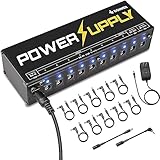
Overview: The Donner DP-1 is a compact power supply designed to cleanly power up to ten guitar effect pedals simultaneously. With isolated outputs spanning 9V, 12V, and 18V, it addresses the needs of modern pedalboards while incorporating noise reduction and protection circuits.
What Makes It Stand Out: The ten isolated outputs prevent ground loop hum, a critical feature often missing in budget supplies. One 500mA output handles high-current digital pedals, while the 12V and 18V options accommodate vintage and specialty pedals. Independent short-circuit protection ensures one faulty pedal won’t kill your entire signal chain.
Value for Money: At around $40-50, it dramatically undercuts premium isolated supplies like Voodoo Lab Pedal Power 2 ($170) while delivering similar core functionality. The included ten power cables add further value, making it gig-ready out of the box.
Strengths and Weaknesses: Strengths include versatile voltage options, true isolation, robust short-circuit protection, and aluminum construction. The blue LED provides visual status and board lighting. Weaknesses include limited high-current outputs (only one 500mA), potential quality control inconsistencies, and shorter cable lengths that may require extensions for larger boards. The 18V output is limited to 100mA, restricting some power-hungry pedals.
Bottom Line: An exceptional budget choice for expanding pedalboards. While pros may prefer established brands for tour reliability, the DP-1 offers isolated power and protection that cheap daisy chains simply can’t match, making it perfect for hobbyists and semi-pros.
9. Marshall Amps Guitar Combo Amplifier (M-MG10G-U)

Overview: The Marshall M-MG10G-U is a 10-watt solid-state combo amplifier from the iconic British brand’s entry-level MG series. This no-frills practice amp delivers classic Marshall aesthetics in a compact format with two channels and a single 6.5-inch speaker.
What Makes It Stand Out: The Marshall badge carries undeniable heritage and resale value that budget brands can’t match. Its clean channel offers surprisingly pristine tones, while the overdrive circuit captures some of that classic Marshall crunch at bedroom volumes. The simple control layout makes it ideal for beginners.
Value for Money: Typically priced around $100-120, you’re paying a premium for the brand name compared to similarly specced amps. However, Marshall’s build quality and customer support justify some markup. It lacks modern features like Bluetooth or battery power, making it feel dated for the price.
Strengths and Weaknesses: Strengths include the iconic Marshall styling, decent clean tones, and robust construction that withstands years of use. The overdrive channel is musical if somewhat limited. Weaknesses include no rechargeable battery, lack of effects or Bluetooth, a small speaker that gets boxy at volume, and controls that feel cheap. It’s also heavier than modern portable amps despite similar power.
Bottom Line: A solid choice for Marshall purists and traditionalists. While it lacks the features and portability of contemporary practice amps, the MG10G delivers authentic brand experience and reliable performance for home practice. Consider it only if the Marshall name matters to you.
10. LEKATO Mini Guitar Amp Rechargeable Electric Guitar Amplifer 5W, Clean/Overdrive Channels,Portable Small Amp for Guitarist Practice,Black

Overview: The LEKATO 5W Mini Amp is a rechargeable practice amplifier offering six hours of wireless playtime in a package smaller than a lunchbox. With clean and overdrive channels, Bluetooth connectivity, and independent volume controls, it’s built for modern guitarists who prioritize portability.
What Makes It Stand Out: The independent volume knobs for guitar input and Bluetooth/aux input solve a common frustration with mini amps, letting you perfectly balance backing tracks. Its six-hour battery matches category leaders, while the black metal grille gives it a more premium appearance than plastic competitors.
Value for Money: Positioned around $50-60, it directly challenges the JOYO JA-02 II with nearly identical specs but adds that crucial independent volume control. The metal faceplate and slightly more robust build suggest better longevity for the same price point.
Strengths and Weaknesses: Strengths include excellent battery life, Bluetooth stability, smart volume control layout, and silent headphone practice. The overdrive channel is respectable for a 5-watter. Weaknesses include the inherent limitations of a 5-watt, 3-inch speaker—thin bass response and limited headroom. Like all mini amps, it won’t replace a proper practice amp for tone development. The plastic body still feels budget-appropriate rather than premium.
Bottom Line: A worthy competitor to the JOYO with a smarter control layout. For portable practice and travel, the LEKATO 5W Mini delivers essential features with thoughtful usability improvements. Choose it if you frequently jam with backing tracks and need precise volume balancing.
What Is a Guitar Amplifier Power Soak?
A power soak is essentially a volume control for your amplifier’s output section. Unlike your amp’s master volume, which controls signal level before the power tubes, a power soak intercepts the actual amplified signal after the power tubes have done their magic. It dissipates electrical energy as heat, reducing the volume that reaches your speaker while allowing your power tubes to run at full tilt.
Think of it as a sophisticated load resistor network that tricks your amp into thinking it’s still connected to a speaker while quietly bleeding off most of the energy. This means you get all the harmonic richness, compression, and touch sensitivity of a cranked amp at levels that won’t get you evicted.
How Power Soaks Work: The Science Behind the Silence
The fundamental principle involves converting electrical energy into thermal energy. When your amp sends its full-power signal to the power soak, the device uses a network of resistors to create an electrical load that simulates a speaker. As current flows through these resistors, they heat up—sometimes significantly—and the signal that passes through to your actual speaker is reduced by a predetermined amount.
Modern power soaks use sophisticated circuitry to maintain the proper impedance curve that your amp expects to see. This is crucial because tube amplifiers are designed to work with specific impedance loads, and deviating from this can cause damage to your output transformer or power tubes. The best units use reactive loads rather than simple resistive loads, which more accurately mimics the complex impedance behavior of a real speaker cabinet.
Why You Need a Power Soak for Home Playing
The difference between preamp distortion and power amp distortion is night and day. Preamp tubes create a scratchy, fizzy distortion that many players describe as “buzzy” or “artificial.” Power tube saturation, on the other hand, produces the singing, three-dimensional overdrive that defines classic rock and blues tones. Your amp’s master volume robs you of this magic by keeping the power tubes clean.
The Tube Amp Dilemma: Volume vs. Tone
Tube amplifiers need to be pushed to a certain level to achieve their signature sound. A 50-watt Marshall needs to be running at approximately 60-70% of its maximum output before the power tubes begin to saturate. In practical terms, this means volume levels approaching 110-115 decibels—louder than a chainsaw and definitely louder than your lease agreement allows.
This creates an impossible choice: either play with uninspiring preamp distortion at reasonable volumes, or enjoy glorious power tube saturation at the cost of your hearing and housing situation. Power soaks eliminate this compromise entirely.
Protecting Your Hearing and Relationships
Beyond the tonal benefits, power soaks serve a critical protective function. Prolonged exposure to volumes above 85 decibels causes permanent hearing damage. A cranked 100-watt amp can easily exceed 120 decibels, which can cause immediate harm. Your ears, your family’s sanity, and your neighbor’s goodwill are all preserved when you can practice with saturated tube tone at conversation-level volumes.
Key Features to Consider When Buying a Power Soak
Not all power soaks are created equal. The market ranges from simple passive resistive boxes to sophisticated reactive units with cabinet simulation and DI outputs. Understanding the key features will help you make an informed decision that matches your specific needs and amplifier.
Wattage Rating: Matching Your Amp’s Output
This is non-negotiable. Your power soak must be rated for at least as much power as your amplifier can produce. If you have a 50-watt amp, you need a power soak rated for 50 watts minimum. However, smart players often choose units rated for significantly higher wattage—100 watts or more—to provide headroom and ensure the device isn’t operating at its absolute limit.
Running a power soak near its maximum rating generates excessive heat and can lead to premature component failure. It also often results in tone loss because the resistors are working at their thermal limits. Always leave at least 20-30% headroom above your amp’s rated output.
Attenuation Levels: How Quiet Can You Go?
Different power soaks offer varying levels of attenuation, typically measured in decibels. A 3dB reduction halves the perceived volume, while 10dB makes it sound roughly half as loud to human ears. Most quality units offer stepped attenuation levels like -3dB, -6dB, -9dB, -12dB, and sometimes -15dB or more.
Consider your playing environment. If you’re in an apartment, you’ll likely need at least -12dB to -15dB of attenuation to reach comfortable practice levels. For late-night playing, some units offer a “bedroom” setting that provides extreme attenuation, though this can sometimes impact tone more dramatically.
Impedance Matching: The Critical Compatibility Factor
Your power soak must match your amplifier’s output impedance exactly. Tube amps are designed to work with specific loads—typically 4, 8, or 16 ohms. Mismatching impedance can cause flyback voltage that damages your output transformer, potentially resulting in a repair bill that far exceeds the cost of the power soak.
Some modern units feature switchable impedance, allowing you to use them with multiple amplifiers. Others are fixed at a specific impedance. Always verify your amp’s output impedance (usually marked near the speaker jacks) before making a purchase. If you own multiple amps with different impedance ratings, a switchable unit is worth the extra investment.
Reactive vs. Resistive Load: Tone Preservation Explained
This is where the science gets interesting and where price differences become apparent. Resistive loads use simple resistors to dissipate power. They’re inexpensive and effective but don’t accurately replicate the complex impedance curve of a real speaker. Speakers don’t present a flat resistance—they vary dramatically with frequency, creating a reactive load that interacts with your amp’s output transformer.
Reactive loads use a combination of resistors, capacitors, and inductors to simulate this frequency-dependent impedance curve. The result is vastly superior tone preservation, especially in the low-end response and high-frequency sparkle. Your amp feels more alive and responsive with a reactive load, maintaining the dynamic interaction between your guitar’s pickups and the output section.
Build Quality and Heat Management
Power soaks generate significant heat—it’s literally their job. Quality units feature substantial heat sinks, ventilation slots, and sometimes even cooling fans. The chassis should be robust metal, not plastic. Look for units with generous ventilation and avoid stacking other gear on top of them during use.
The internal components matter too. High-wattage wire-wound resistors, quality switches, and robust jacks will ensure longevity. Check user reviews for reports of overheating or component failure. A well-built power soak should last decades with proper care.
Advanced Features That Enhance Your Experience
While basic attenuation is the core function, modern power soaks include features that transform them from simple volume reducers into comprehensive recording and practice tools. These additions can justify higher price points and provide functionality that extends far beyond bedroom practice.
Line Out and DI Capabilities
A line out jack allows you to send your attenuated signal directly to a recording interface, mixing console, or headphone amp. This is invaluable for silent recording or practicing with headphones. The quality of this line out varies dramatically between units—some provide a simple unbalanced signal, while others offer balanced XLR outputs with proper level matching.
Look for units with adjustable line out levels and ground lift switches to eliminate hum. The best implementations include a dedicated volume control for the line out, allowing you to set your speaker volume and recording level independently.
Cabinet Simulation and IR Loading
The most advanced power soaks now include built-in cabinet simulation, often using impulse responses (IRs) of classic speaker cabinets. This means you can record directly without miking a physical cabinet, capturing the sound of a mic’d 4x12 even when playing through headphones.
Some units allow you to load your own IRs via USB, giving you access to thousands of professionally captured cabinet sounds. This feature essentially combines an attenuator, load box, and digital cabinet simulator into one device, eliminating the need for microphones and treated recording spaces.
FX Loops and Wet/Dry Mixing
High-end power soaks sometimes include effects loops that allow you to insert time-based effects after the attenuator but before the speaker. This can be useful for maintaining effect clarity at high attenuation levels. Some units even offer wet/dry mixing capabilities, letting you blend a direct signal with an attenuated signal for unique tonal textures.
These features are particularly valuable for players using complex pedalboards or those who want to experiment with parallel processing. While not essential for basic attenuation, they provide creative flexibility that advanced players will appreciate.
Integration with Your Existing Rig
A power soak isn’t an isolated piece of gear—it needs to work seamlessly with your amplifier, speaker cabinet, and potentially your recording setup. Proper integration ensures optimal tone, protects your equipment, and maximizes the utility of your investment.
Placement in Your Signal Chain
The power soak sits between your amplifier’s speaker output and your speaker cabinet. This is a high-level signal path carrying significant voltage and current, so use high-quality speaker cables, not instrument cables. The difference matters—speaker cables have thicker conductors and can handle the current without heating up or degrading signal.
Never place pedals or other devices between your amp and power soak unless the unit specifically includes an effects loop designed for this purpose. The signal level is far too hot for standard effects and will cause immediate damage.
Combining with Pedalboards and Modelers
If you’re using a pedalboard, the power soak sits entirely after it in the chain. Your overdrive, distortion, and boost pedals hit the amp’s input as normal, driving the preamp and power amp into saturation. The power soak then tames the output.
For players using amp modelers, a power soak can serve a different purpose. Some modelers have tube power amp sections that benefit from attenuation, or you might use the power soak as a load box for silent recording. In this scenario, the modeler feeds the power amp, which then feeds the power soak, which provides a line out to your recording interface.
Common Mistakes to Avoid
Even the best power soak can cause problems if used incorrectly. Understanding common pitfalls will protect your equipment and ensure you get the best possible tone from your setup.
Mismatching Impedance: A Recipe for Disaster
We’ve mentioned this before, but it bears repeating: impedance mismatch is the number one cause of power soak-related amp damage. Never assume your amp and power soak are matched—always verify. If your amp has multiple speaker outputs at different impedances, ensure you’re using the correct one that matches your power soak’s setting.
Some players mistakenly think they can use a higher-impedance power soak with a lower-impedance amp output. This is false and dangerous. The mismatch creates voltage spikes that can arc across transformer windings, causing permanent damage. When in doubt, consult your amp’s manual or contact the manufacturer.
Over-Attenuating: Losing the Magic
There’s a point of diminishing returns with attenuation. Below -12dB to -15dB, you start losing not just volume but also feel and dynamics. The speaker isn’t moving enough air to create the physical response that makes playing inspiring. The tone can become thin, and the low-end can disappear.
Experiment with different attenuation levels to find the sweet spot for your environment. Sometimes -9dB is enough to make a cranked amp manageable while retaining most of its sonic character. Remember, the goal is reasonable volume, not complete silence—that’s what load boxes and IRs are for.
Maintenance and Care Tips
A quality power soak is a long-term investment that should last for years. Proper maintenance ensures consistent performance and prevents costly repairs or replacements.
Heat Management and Ventilation
Always position your power soak with adequate airflow. Don’t place it in enclosed racks or stack gear on top of it. Some units get hot enough to burn skin after extended use at high attenuation levels—this is normal but requires respect. Allow the unit to cool completely before storing it.
If your unit has a cooling fan, ensure the intake and exhaust vents remain clear of dust. Use compressed air to clean them periodically. For passive units, check that ventilation slots aren’t blocked by debris or placed too close to walls.
Connection Best Practices
Use high-quality speaker cables of appropriate gauge—16 gauge is sufficient for most applications, but 14 gauge is better for high-wattage amps and long cable runs. Check connections regularly for corrosion or looseness. A poor connection can create resistance that generates heat and affects tone.
When powering down, always turn off your amplifier first, then disconnect the power soak after it has cooled. This prevents potential voltage spikes from hitting the unit when the amp is switched off. Develop a consistent power-up and power-down routine to protect both your amp and attenuator.
The Future of Home Tone: Power Soaks vs. Amp Modelers
The landscape of home guitar tone has evolved dramatically. While power soaks solve the tube amp volume problem, modern amp modelers promise the same tones without any physical amp at all. This has sparked debate about which approach is superior for home players.
Power soaks offer the undeniable authenticity of real tube saturation. You’re hearing your actual amp, with all its unique character and response. There’s no algorithm approximating the behavior of your specific output transformer or power tube complement. For purists, this authenticity is non-negotiable.
However, amp modelers provide convenience and versatility that power soaks can’t match. With a modeler, you can switch between dozens of amp sounds instantly, record silently with headphones, and practice at any hour without generating any heat or requiring speaker cabinets. The latest generation of modelers uses incredibly sophisticated algorithms that many players find indistinguishable from the real thing.
The truth is, both tools have their place. Many professional players now use hybrid setups, using a real amp with a power soak for tracking main rhythm parts where authenticity matters, then switching to a modeler for overdubs and late-night writing sessions. For the home player, the choice often comes down to budget, space, and personal philosophy about digital versus analog tone.
Frequently Asked Questions
What is the difference between a power soak and an attenuator?
The terms are used interchangeably in the guitar world. “Power soak” was popularized by early models like the Tom Scholz Power Soak in the 1980s, while “attenuator” is the more technically accurate term describing any device that reduces signal strength. Both perform the same function of reducing amplifier volume while allowing power tube saturation.
Can power soaks damage my tube amp?
When used correctly with proper impedance matching, power soaks are completely safe and can actually extend tube life by allowing you to run your amp at optimal levels without pushing speakers to their limits. The only risk comes from improper impedance matching or using an underrated unit, which can cause flyback voltage damage to your output transformer.
How much attenuation do I need for apartment playing?
Most apartment dwellers need between -12dB and -18dB of attenuation to reach comfortable practice levels. A 3dB reduction halves the power, while 10dB sounds approximately half as loud to human ears. Keep in mind that extreme attenuation can affect tone, so consider your minimum acceptable volume rather than seeking complete silence.
Do power soaks work with solid-state amplifiers?
Technically yes, but they provide little benefit. Solid-state amps don’t have power tubes that need to be pushed into saturation to achieve their best tone. The distortion in solid-state amps comes primarily from the preamp section, so using a master volume achieves the same result more efficiently and cost-effectively.
Will a power soak affect my amp’s tone?
All attenuators affect tone to some degree, but quality reactive load designs minimize this impact. The most noticeable changes typically occur at extreme attenuation levels (-15dB and beyond), where you may lose some low-end thump and high-end sparkle. The key is finding the attenuation sweet spot that balances volume reduction with tone preservation.
How do I match impedance correctly?
Check your amplifier’s back panel near the speaker outputs—it will be marked as 4Ω, 8Ω, or 16Ω. Your power soak must be set to the same impedance. If your amp has multiple outputs, use the one that matches your attenuator. Never mix impedances, and if you’re unsure, consult your amp’s manual or contact the manufacturer before connecting anything.
Can I use a power soak without a speaker cabinet?
Only if the unit specifically includes a load box feature. Standard power soaks require a speaker connection to provide the proper load for your amp. Running an amp without any load (speaker or power soak with load box capability) will cause catastrophic damage to your output transformer. Always verify the unit has a “load” or “silent recording” mode before attempting this.
Why are reactive loads more expensive than resistive loads?
Reactive loads require more sophisticated circuitry using a combination of resistors, capacitors, and inductors to accurately simulate a speaker’s complex impedance curve. The components are more expensive, the design process is more complex, and the manufacturing requires tighter tolerances. The tonal benefits, however, are substantial enough that most serious players consider the extra cost justified.
Do I need a power soak if my amp has a master volume?
Master volumes control signal level before the power tubes, preventing them from saturating. If you want power tube distortion—the rich, harmonically complex overdrive that defines classic amp tones—a power soak is essential. However, if you’re satisfied with preamp distortion or use pedals for your overdrive sounds, a master volume may be sufficient for your needs.
How long do power soaks typically last?
A well-built power soak should last decades with proper care. The components are relatively simple and robust, with no tubes to wear out or complex digital circuits to become obsolete. The most common failure points are switches and jacks, which can be replaced. Units with cooling fans may need fan replacement after many years, but the core attenuation circuitry is extremely durable.
See Also
- 2026’s Top 10 High-Gain Guitar Amplifier Heads for 7-String Players
- 10 Low-Watt Lunchbox Guitar Amplifier Heads for Small Stages
- 10 Silent Recording Guitar Amplifier Solutions for Apartment Players
- 10 Mic-Friendly Guitar Combo Amps for Home Studio Recording in 2026
- 10 Best Vintage Reissue Guitar Amplifiers for Classic Rock Tones