Table of Contents
There’s nothing quite like the feeling of a tube amp pushed to its sweet spot—the harmonics bloom, the sag feels alive under your fingers, and every note breathes with character. But in 2026, with neighbors working from home and urban living spaces getting tighter, cranking a 50-watt Marshall or a cranked Vox AC30 is a one-way ticket to an eviction notice. This is where attenuators have evolved from niche studio tools to essential home rig components. They’re no longer just “volume boxes” but sophisticated pieces of gear that preserve your amp’s soul while dropping SPL levels from window-shaking to conversation-quiet.
The modern attenuator market has exploded with options that do far more than just soak up excess power. Today’s units integrate reactive load technology, impulse response loading, direct recording capabilities, and even digital modeling—blurring the lines between traditional power attenuation and full-blown amp utilities. Whether you’re a bedroom player chasing classic rock crunch at midnight or a home studio owner needing silent recording solutions, understanding what separates a tone-sucking resistor box from a transparent studio-grade tool is critical.
Top 10 Guitar Amp Attenuators
Detailed Product Reviews
1. Bugera POWER SOAK PS1 Passive 100 Watt Power Attenuator for Guitar and Bass Amplifiers with Emulated Mic Output

Overview: The Bugera POWER SOAK PS1 is a passive 100-watt attenuator designed for guitarists and bassists who crave cranked amp tone at manageable volume levels. This unit sits between your amplifier and speaker cabinet, dissipating excess power while preserving the saturated character of a maxed-out tube amp. Perfect for home studios, small venues, and recording applications where volume constraints exist.
What Makes It Stand Out: Unlike many budget attenuators, the PS1 offers multi-impedance input connectors (4, 8, and 16 Ohms), making it compatible with virtually any amplifier. The emulated Mic Output is a standout feature, providing a direct recording solution that simulates a miked cabinet without the need for microphones. The dedicated Level control on the line output adds flexibility for silent recording or direct PA feeding.
Value for Money: Priced significantly below premium attenuators from Two Notes or Rivera, the PS1 delivers essential features at a fraction of the cost. While it lacks active circuitry and advanced EQ compensation found in high-end models, it provides a practical solution for musicians on a budget. The included 3-year warranty offers peace of mind rarely seen in this price bracket.
Strengths and Weaknesses: Pros: Versatile impedance matching, useful emulated output, solid build quality, excellent warranty coverage. Cons: Passive design may introduce slight treble loss at high attenuation, lacks reactive load technology for maximum authenticity, Bugera’s brand reputation for reliability remains mixed among professionals.
Bottom Line: The POWER SOAK PS1 is an excellent entry-level attenuator for home recordists and gigging musicians needing volume control without sacrificing tube amp dynamics. While purists may prefer reactive load designs, this unit offers remarkable functionality for its price point.
2. Pyle Premium Direct Injection Audio Box - 2.36" x 4.09" Passive DI Unit Hum Eliminator w/ Input Attenuator to Connect Guitar & Bass, 1/4’’ Impedance Transformer Connector to Balanced & Unbalanced XLR
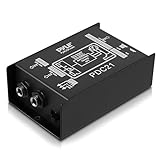
Overview: The Pyle Premium Direct Injection Audio Box is a passive DI unit designed to eliminate hum and impedance-match unbalanced instrument signals for professional audio systems. This compact solution connects guitars, basses, keyboards, and effects processors directly to mixing consoles via balanced XLR outputs, making it ideal for live sound and home recording setups.
What Makes It Stand Out: The integrated hum eliminator and input attenuator set this apart from basic DI boxes. It effectively cancels ground loop buzz while allowing level adjustment for hot signals, preventing distortion at the mixer. The ¼-inch connector accommodates various instruments, and its passive operation means no power source is required, simplifying setup for mobile musicians.
Value for Money: Positioned as a budget alternative to industry standards like Radial or Whirlwind, this Pyle unit costs a fraction of professional DIs. While it lacks the road-worthy construction and premium transformers of high-end models, it provides essential connectivity for hobbyists and semi-pro musicians. The price makes it accessible for multiple unit purchases.
Strengths and Weaknesses: Pros: Affordable, effective hum cancellation, passive operation, versatile connectivity options. Cons: All-steel chassis would improve durability, audio fidelity doesn’t match premium brands, unclear specifications on transformer quality, Pyle’s quality control can be inconsistent.
Bottom Line: This DI box serves budget-conscious musicians needing basic signal routing and noise reduction. It’s suitable for home studios and occasional live use, but professionals should invest in more robust alternatives. For the price, it delivers functional performance for non-critical applications.
3. VOL Attenuator Guitar Effect Pedal

Overview: The VOL Attenuator is a passive guitar effects pedal that functions as a volume pad, allowing players to switch between preset volume levels instantly. Based on the classic Electro-Harmonix Signal PAD design, this simple device enables you to keep your amplifier cranked for natural overdrive while providing a clean rhythm volume at the stomp of a switch.
What Makes It Stand Out: Its placement flexibility distinguishes it from typical volume pedals. Position it before your drive pedals for input level control, after them for output attenuation, or in your amp’s effects loop for master volume manipulation. This versatility unlocks creative tonal combinations without coloring your signal, thanks to its fully passive circuitry.
Value for Money: This is one of the most affordable tone-shaping tools available, costing less than most single-function pedals. It provides a practical solution for players wanting channel-switching functionality without investing in multi-channel amps. The passive design means no battery or power supply costs, adding to long-term value.
Strengths and Weaknesses: Pros: Inexpensive, passive operation, versatile positioning, simple to use, compact size. Cons: Passive design may cause slight high-frequency loss, build quality concerns with budget enclosures, lacks true bypass switching, no LED indicator for status.
Bottom Line: The VOL Attenuator is a clever problem-solver for guitarists seeking volume control flexibility on a tight budget. While it won’t replace professional attenuators or high-end volume pedals, it’s an invaluable tool for experimental players and those needing simple channel-switching functionality. Perfect for practice rigs and small pedalboards.
4. Nobsound XLR Passive Preamp Attenuator: Balanced Stereo Audio Volume Controller for Signal Optimization - Features ALPS RK27 Potentiometer & Gold Terminals - for Critical Listening Audiophiles

Overview: The Nobsound XLR Passive Preamp Attenuator is a precision volume controller engineered for critical listening environments. Designed for audiophiles and studio professionals, this device sits between digital sources and power amplifiers, attenuating hot signals without introducing distortion or coloration, preserving the full dynamic range of high-resolution audio systems.
What Makes It Stand Out: The inclusion of the renowned ALPS RK27 quad-gang potentiometer ensures exceptional channel balance and smooth operation, a feature typically found in equipment costing several times more. Gold-plated XLR terminals and double-sided ENIG PCB construction demonstrate serious attention to signal integrity. The zero-gain, transistor-free design guarantees absolute transparency.
Value for Money: This unit occupies a sweet spot between budget passive controllers and audiophile-priced preamps. While more expensive than basic volume controls, it offers premium components at a fraction of brands like Schiit or Benchmark. For serious listeners seeking transparency without four-figure investments, it presents compelling value.
Strengths and Weaknesses: Pros: Premium ALPS potentiometer, exceptional build quality, zero distortion, gold-plated connectors, elegant aluminum enclosure. Cons: Passive design limits functionality (no gain), may struggle with long cable runs, Nobsound’s brand recognition lags behind established audiophile names, no remote control.
Bottom Line: The Nobsound attenuator is an outstanding choice for audiophiles prioritizing signal purity above all else. Its component quality and transparent operation rival far more expensive units. While it lacks features of active preamps, it excels at its singular purpose. Highly recommended for purists seeking honest signal attenuation in studio or hi-fi systems.
5. PYLE-PRO Premium Direct Injection Audio Box - Passive DI Unit Hum Eliminator w/ Input Attenuator to Connect Guitar & Bass - 1/4 Inch Impedance Transformer Connector to Balanced & Unbalanced XLR-PDC22 , Black
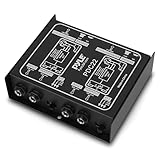
Overview: The PYLE-PRO Premium Direct Injection Audio Box is a two-channel passive DI unit built for musicians requiring rugged signal routing solutions. This all-steel chassis device converts unbalanced ¼-inch instrument signals to balanced XLR outputs while eliminating ground loop hum, serving both live performance and recording applications.
What Makes It Stand Out: The dual-channel configuration and robust steel construction differentiate it from single-channel budget DIs. Each channel features independent operation, allowing simultaneous connection of two instruments or stereo sources. The integrated hum eliminator and input attenuator provide professional-grade noise reduction and level control typically absent in economy DI boxes.
Value for Money: Offering two channels for roughly the price of one premium DI, this unit presents exceptional value for expanding connectivity. The steel chassis justifies the slight price premium over basic Pyle models. While it doesn’t match the audio fidelity of Radial or Countryman units, it provides functional performance for budget-conscious users needing multiple channels.
Strengths and Weaknesses: Pros: Durable steel construction, dual-channel operation, effective hum elimination, passive design requires no power, affordable multi-channel solution. Cons: Audio transformers lack premium specifications, occasional quality control issues, specifications documentation is minimal, sound quality adequate but not exceptional.
Bottom Line: This PYLE-PRO DI box suits musicians and venues needing reliable, cost-effective multi-channel direct injection. Its steel construction addresses durability concerns of budget DIs, making it appropriate for regular gigging. While audiophiles should look elsewhere, it delivers practical functionality for working musicians building out their live sound toolkit.
6. Volume Attenuator Pedal for Guitar | Guitar Effect Pedal with Knob Control | True Bypass | 20mA | Tuning Accessories

Overview: This compact volume attenuator pedal offers guitarists a straightforward solution for taming output levels while maintaining signal integrity. Designed as a simple utility tool, it provides essential volume control through a single knob interface, making it ideal for players seeking no-frills attenuation without complex features or steep learning curves.
What Makes It Stand Out: The pedal’s minimalist design philosophy shines through its one-knob operation, allowing precise attenuation adjustments on the fly. True bypass switching ensures your core tone remains uncolored when disengaged, while the all-metal chassis provides road-worthy durability. The 1KΩ low-impedance output maintains stable signal transmission, reducing noise and interference that often plague budget attenuators.
Value for Money: Positioned as an entry-level option, this attenuator delivers fundamental functionality at an accessible price point. While lacking the sophisticated reactive load technology of premium models costing ten times more, it accomplishes basic volume reduction for practice and small gigs. For budget-conscious musicians or those needing a simple backup solution, the cost-to-functionality ratio proves compelling.
Strengths and Weaknesses: Pros include its rugged metal construction, true bypass circuitry, straightforward operation, and affordable pricing. The low current draw (20mA) makes it pedalboard-friendly. Cons involve limited features—no impedance matching, minimal tone shaping capabilities, and generic branding that may raise longevity questions. The basic circuitry won’t preserve amp feel like expensive attenuators.
Bottom Line: This attenuator serves players needing simple volume control without breaking the bank. It won’t replace professional-grade units but excels as a practice tool or backup pedal for musicians prioritizing simplicity and durability over advanced tone preservation.
7. Boss WAZA Tube Amp Expander Amplifier Attenuator

Overview: The Boss WAZA Tube Amp Expander represents a quantum leap in attenuator technology, serving as a comprehensive command center for tube amplifiers up to 150 watts. Built with Boss’s prestigious Waza craftsmanship and Tube Logic design philosophy, this unit transcends simple volume reduction to become an essential tone preservation tool for serious guitarists.
What Makes It Stand Out: Its advanced variable reactive load circuit with discrete analog components sets a new standard, maintaining your amp’s natural tone, dynamic feel, and distortion characteristics across all volume levels. The user-adjustable impedance tuning correctly matches any tube amp, while ten recallable rig settings enable instant access to favorite configurations. MIDI I/O and footswitch compatibility provide deep real-time control for stage and studio.
Value for Money: While commanding a premium price, the WAZA Expander justifies every dollar through unparalleled functionality that replaces multiple pieces of gear. Competing with units like the UA OX Amp Top Box, it offers superior impedance matching and recallable presets. For professionals who’ve invested heavily in tube amps, this protects that investment while enabling silent recording and manageable stage volumes.
Strengths and Weaknesses: Strengths include exceptional tone preservation, robust build quality, extensive connectivity, and flexible impedance tuning. The recallable presets are gig-ready game-changers. Weaknesses center on the steep price barrier for hobbyists and a learning curve that may intimidate casual users. Its size and weight also demand permanent studio or stage placement.
Bottom Line: This is the definitive attenuator for serious tube amp enthusiasts and professionals. If you’ve invested in premium amplifiers and need flawless tone at any volume with modern control capabilities, the WAZA Expander is worth every penny.
8. Strymon AA.1 Amplifier Attenuator Eurorack Module

Overview: The Strymon AA.1 elegantly solves the signal level mismatch between guitar gear and Eurorack modular synthesizers. This compact 4HP module acts as a bi-directional bridge, allowing seamless integration of guitar pedals, instruments, and modular systems. For musicians exploring the intersection of guitar and synthesis, it’s an indispensable utility module.
What Makes It Stand Out: The AA.1’s dual functionality sets it apart—it amplifies guitar signals by +18dB for modular input while attenuating Eurorack signals by -18dB for pedal compatibility. This bidirectional conversion happens simultaneously through 1/4" stereo inputs and dual 1/8" outputs. Its thoughtful design specifically addresses Strymon Magneto’s effects loop integration, though it works universally across all guitar and modular gear.
Value for Money: Priced fairly for a specialized tool, the AA.1 eliminates the need for multiple external DI boxes and attenuators. While limited to Eurorack users—a niche market—it delivers exactly what that community needs without compromise. Comparable solutions often require DIY builds or multiple modules, making this an efficient, ready-to-use proposition for modular enthusiasts.
Strengths and Weaknesses: Pros include perfect level matching, compact 4HP footprint, robust build quality, and USA manufacturing. It simplifies complex routing challenges elegantly. Cons are its niche application—useless without a Eurorack system—and limited to stereo operation. The price may seem high for a simple utility, though no simpler alternative exists.
Bottom Line: For Eurorack users incorporating guitar pedals or instruments, the AA.1 is essential. It flawlessly executes its specialized mission, making it a must-have bridge module. Guitarists without modular systems should look elsewhere.
9. Bugera V5 INFINIUM 5-Watt Class-A Tube Amplifier Combo with INFINIUM Tube Life Multiplier, Original Turbosound Speaker, Reverb and Power Attenuator

Overview: The Bugera V5 INFINIUM delivers authentic Class-A tube tone in a compact 5-watt combo package perfect for home use and recording. This hand-built amplifier features EL84 and 12AX7 tubes, an 8-inch Turbosound speaker, and built-in reverb. The integrated power attenuator and INFINIUM Tube Life Multiplier technology make it a feature-rich option for tone purists on a budget.
What Makes It Stand Out: INFINIUM technology automatically monitors and adjusts tube performance, extending lifespan and maintaining consistent tone—a rarity in this price class. The built-in power attenuator allows cranked tube saturation at whisper volumes, solving the bedroom player’s dilemma. The Turbosound speaker provides British-voiced clarity that belies the amp’s modest size, while vintage aesthetics deliver authentic visual appeal.
Value for Money: Exceptional value defines the V5. Competing tube combos with similar features cost significantly more. You’re getting genuine Class-A tone, tube monitoring technology, quality speaker, reverb, and attenuation—all under one roof. For players seeking boutique tone on a mass-market budget, this represents one of the best price-to-performance ratios available.
Strengths and Weaknesses: Strengths include authentic tube tone, innovative INFINIUM technology, effective attenuator, quality speaker, and unbeatable price. The compact size suits home studios. Weaknesses involve limited headroom for clean tones, single-channel simplicity, and build quality that, while good, doesn’t match premium hand-wired amps. Five watts may prove limiting for some applications.
Bottom Line: The V5 INFINIUM is a stellar choice for home players and recording guitarists craving real tube tone without volume issues or maintenance worries. It punches far above its weight class, making it a smart, toneful investment.
10. QANYEGN 20mA Amp Attenuator Pedal, Audio Volume Controller, Guitar Volume Effect Pedal for Electric Guitar

Overview: The QANYEGN attenuator pedal provides basic volume control for guitarists seeking an affordable, no-nonsense solution. Operating at 20mA with true bypass switching and a single-knob interface, this utility pedal aims to deliver clean signal attenuation for practice and performance situations where precise volume management is essential.
What Makes It Stand Out: This pedal distinguishes itself through sheer simplicity and visual feedback—LED indicators flash during operation, providing clear status monitoring on dark stages. The all-metal housing offers durability uncommon at this price tier, while the 1KΩ low-impedance output maintains signal stability. Its plug-and-play design requires zero learning curve, making it accessible to absolute beginners.
Value for Money: Extremely budget-friendly, this attenuator competes with other entry-level options while offering comparable features. It undercuts established brands’ basic volume pedals by a significant margin, though it lacks their pedigree and proven reliability. For players needing occasional volume reduction or a backup utility pedal, the minimal investment risk is appealing. However, serious tone hounds should invest more.
Strengths and Weaknesses: Pros include rock-bottom pricing, true bypass circuitry, LED status indicators, durable metal chassis, and straightforward operation. Cons involve unknown brand reputation, potentially inconsistent quality control, basic functionality without advanced features, and questionable long-term reliability. The generic design offers no unique tonal character or impedance matching.
Bottom Line: Consider this for a first attenuator or emergency backup. It performs adequately for basic volume control but won’t satisfy discerning players. If your budget is extremely tight, it’s functional; otherwise, spend more for proven reliability and better tone preservation.
Understanding Tube Amp Attenuators
Why Volume Reduction Matters for Modern Players
The relationship between a tube amp and its speaker is symbiotic. Your amp’s output transformer, power tubes, and speaker impedance interact in complex ways that define your tone. When you simply turn down your amp’s master volume, you often lose the power tube compression and transformer saturation that create that coveted “amp in the zone” sound. Attenuators sit between your amp and speaker, allowing you to drive the amp’s power section hard while reducing the actual volume reaching the speaker. In 2026, this isn’t just about being polite—it’s about accessing your amp’s full tonal palette at any hour, in any space.
How Attenuators Work Without Killing Your Tone
Traditional attenuators used simple resistive networks to bleed off power as heat. While effective, this approach often resulted in a fizzy, compressed tone with reduced low-end response and harsh highs. Modern units employ reactive loads that mimic a real speaker’s impedance curve, maintaining the complex relationship between your amp and what it “sees” as a speaker. This reactive design preserves the frequency-dependent impedance spikes that occur at resonant frequencies, keeping your amp’s character intact. The best 2026 models use advanced thermal management and precision components to ensure that the only thing you’re losing is decibels—not dynamics, not harmonics, and definitely not your amp’s signature voice.
Key Features That Separate Good from Great
Power Handling: Matching Your Amp’s Output
One of the most critical specifications is continuous power handling. A 100-watt attenuator might handle a 100-watt amp’s clean signal, but cranked tube amps often produce transient peaks 30-50% above their rated power. For 2026’s higher-gain amps and boosted signals, you’ll want headroom—look for units rated at least 50% above your amp’s maximum output. If you’re running a 50-watt amp, a 100-watt attenuator isn’t overkill; it’s insurance against thermal overload and component failure. Consider your future amp purchases too—a versatile attenuator should grow with your rig.
Impedance Matching: The Non-Negotiable Spec
Impedance mismatching is the fastest way to damage your tube amp’s output transformer. Your attenuator must match your amp’s output impedance exactly—whether that’s 4, 8, or 16 ohms. Many 2026 models offer switchable impedance, but verify that the switching is done with high-quality relays or switches, not cheap resistor networks that introduce tone loss. Some advanced units even provide multiple impedance outputs simultaneously, letting you run multiple cabinets or switch between rigs without reconfiguring. Never compromise here; a mismatched load can cost you a transformer repair that far exceeds the price of a proper attenuator.
Tone Preservation Technology
The magic happens in how an attenuator handles the signal reduction. Look for terms like “reactive load network,” “frequency-compensated attenuation,” and “dynamic range preservation.” Premium units in 2026 use multi-stage attenuation that applies different reduction curves across the frequency spectrum, preventing the “blanket over your amp” effect. Some employ optical or transformer-based volume control for the cleanest possible signal path. The best designs also include subtle high-frequency filtering to counteract the natural brightness increase that occurs when speakers are driven less hard—this isn’t tone coloring, it’s corrective EQ that restores natural speaker response.
Types of Attenuators in 2026
Resistive vs. Reactive Load Designs
Resistive attenuators are the old guard—simple, robust, and affordable, but often tone-compromising. They present a flat resistance to your amp, which doesn’t replicate how a real speaker’s impedance changes with frequency. Reactive loads, conversely, use inductors and capacitors to create an impedance curve that mirrors a speaker’s behavior. In 2026, the gap has widened further: reactive units now include programmable impedance curves that can emulate different speaker types, from vintage Greenback-style response to modern V30 curves. For serious tone hounds, reactive isn’t just preferred—it’s mandatory.
Digital Modeling Attenuators
The newest category blends analog attenuation with digital processing. These units first reduce power through a reactive load, then process the line-level signal with cabinet impulse responses, room simulation, and even power amp modeling. This means you can run your amp completely silent while recording studio-quality tones direct. The digital component in 2026 models features sub-2ms latency and 24-bit/96kHz processing that’s indistinguishable from analog in blind tests. They essentially function as attenuators, load boxes, and digital modelers in one chassis—perfect for apartment recording but overkill for players who just need simple volume reduction.
Hybrid Units: Best of Both Worlds
Hybrid attenuators give you a pure analog path to your speaker for live use, plus a separate digital line out for recording. You can attenuate your stage volume while sending a direct signal with cab sim to front of house. In 2026, these represent the most flexible option for players who both gig and record at home. The key is how seamlessly they switch between modes—look for units where the digital and analog sections are truly independent, so engaging the line out doesn’t affect your speaker tone at all.
Build Quality and Longevity
Cooling Systems and Thermal Management
Attenuators convert excess power into heat—lots of it. A 100-watt amp cranked to 10 can generate enough thermal energy to cook components if not properly dissipated. Modern units use massive heat sinks, active fan cooling with thermal sensors, and even liquid thermal pads. In 2026, smart thermal management includes automatic power reduction if temperatures exceed safe thresholds. Check for units with over-temperature protection that doesn’t just shut down but gracefully reduces attenuation to protect itself while keeping you playing. The chassis should feel substantial; if it’s light enough to carry with one finger, it probably can’t handle sustained high-power use.
Component Quality and Circuit Design
Open up any premium attenuator (virtually, via manufacturer photos) and you’ll see audiophile-grade components: non-inductive power resistors, polypropylene capacitors, and silver-plated connectors. The circuit board should be thick, double-sided, with wide traces for power handling. Surface-mount components are fine for low-level signal paths, but power handling sections need through-hole parts for reliability. In 2026, look for units with isolated grounding schemes to prevent ground loops and switch-mode power supplies for any active electronics—these run cooler and cleaner than old linear supplies.
Advanced Features Worth Paying For
Line Outputs and Direct Recording
A simple line out is table stakes in 2026. What matters is the quality of that output: is it transformer-isolated? Does it have its own level control? The best units provide multiple line outs—one pre-cab sim for re-amping, one post-cab sim for direct recording, and maybe an XLR out with ground lift for running to a mixing console. Look for variable output impedance on the line out to match different recording interfaces. Some units even include built-in re-amping features, letting you send a recorded DI back through the attenuator’s load to capture authentic power amp interaction later.
Cabinet Simulation and IR Loading
Built-in cabinet simulation has become incredibly sophisticated. We’re not talking about generic 4x12 models—these units load third-party impulse responses via USB or Bluetooth, letting you match any mic’d cabinet. In 2026, IR management includes cloud libraries, tone-matching algorithms that analyze your actual cab and create a matching IR, and even AI-based room correction that compensates for your studio’s acoustics. If you’re recording silently, this feature alone justifies a higher price tag. Ensure the IR processing doesn’t introduce latency or digital artifacts when monitoring through headphones.
Footswitch Control and MIDI Integration
For gigging musicians, footswitch control is crucial. Can you bypass the attenuator entirely for rhythm parts and engage it for leads? Can you switch between -6dB and -12dB reduction on the fly? MIDI integration means you can automate attenuation changes from your DAW or pedalboard controller. In 2026, some units include expression pedal inputs for variable attenuation—imagine swelling from clean to crunch by reducing attenuation while rolling off guitar volume. This turns your attenuator into a performance tool, not just a utility box.
Installation and Setup Considerations
Series vs. Parallel Connection
Most attenuators connect in series between amp and speaker, but some offer parallel connections that blend attenuated and non-attenuated signals. Parallel routing can preserve more “air” and feel, especially at moderate reduction levels. In 2026, advanced units let you adjust the blend ratio, effectively creating a wet/dry mix between your pure amp tone and the attenuated signal. This is particularly effective for bedroom levels where complete attenuation can feel too disconnected. The parallel path requires careful phase alignment—premium units handle this automatically.
Speaker Cable vs. Instrument Cable
This is where many players mess up: attenuators require speaker cables, not instrument cables. Speaker cables are unshielded, thicker gauge, and designed for high-current, low-impedance signals. Using an instrument cable can cause voltage drop, heat buildup, and even cable failure. In 2026, some attenuators include cable quality sensors that detect improper cables and warn you before damage occurs. Always use cables rated for at least double your amp’s power output, and keep them as short as practical—every foot of cable adds resistance that can subtly affect tone.
Price Tiers and What to Expect
Budget attenuators ($200-400) typically offer basic resistive or simple reactive loads with minimal features. They work but may compromise tone at high attenuation levels. Mid-range units ($400-800) provide true reactive loads, robust power handling, and basic line outs. This is the sweet spot for most home players in 2026. Premium units ($800-1500+) include all the bells and whistles: advanced IR loading, multiple I/O options, MIDI control, and studio-grade components. Professional units ($1500+) are overbuilt for touring, with redundant circuits and repairable modular designs. Consider your actual needs—a bedroom player doesn’t need a tour-ready chassis, but a gigging musician should invest in reliability.
Common Mistakes and How to Avoid Them
The biggest error is buying an attenuator without enough headroom for your amp’s peak power. Always measure your amp’s actual output with your hottest pedals and highest gain settings. Another mistake is placing the attenuator in an effects loop—it must go between the amp output and speaker. Players also forget to adjust their amp’s EQ after adding attenuation; what sounded bright at stage volume might need tweaking at bedroom levels. In 2026, some players over-rely on digital cab sims and forget the joy of moving air through a real speaker. Use attenuation to get your speaker working, not to eliminate it entirely unless you’re recording silently.
The Future of Attenuation in 2026
We’re seeing attenuators become central hub devices. The latest trend is integration with amp modeling software via Wi-Fi, allowing real-time impedance curve adjustments from your phone. Some units now include load-sensing technology that automatically detects your amp’s output and configures optimal settings. AI-driven tone matching can analyze your favorite recorded tones and adjust the attenuator’s response to help you get closer to that sound. The line between attenuator, load box, and audio interface continues to blur—expect next-gen units to include built-in DAW integration and cloud-based preset sharing.
Making Your Final Decision
Your ideal attenuator depends on your specific use case. Bedroom-only players should prioritize tone preservation and simple operation—fancy features you’ll never use just add cost. Home studio owners need excellent line outs and IR capabilities. Gigging musicians must have bulletproof reliability and footswitch control. Start by honestly assessing your amp collection’s power requirements, then list must-have features. Read user forums for long-term reliability reports, and whenever possible, test units with your own amp. The wrong attenuator can make a great amp sound mediocre, but the right one becomes a permanent, transparent part of your tone chain.
Frequently Asked Questions
Will using an attenuator damage my tube amp?
No, a properly designed attenuator with correct impedance matching is safer than running your amp without a speaker load. Modern units include protection circuits that prevent damage from common user errors like mismatching or disconnecting cables while powered.
How much volume reduction do I actually need for home use?
For typical apartment playing, 12-18dB of reduction brings a cranked 50-watt amp to TV-volume levels. However, you’ll want an attenuator capable of more reduction (20-24dB) for late-night whisper-quiet playing, as this gives you more usable range on the volume control.
Does attenuation affect tube life?
Paradoxically, running your amp cranked into an attenuator can actually extend power tube life compared to stage use. The tubes work hard but see a constant, stable load instead of the reactive back-EMF from a speaker at high volumes. However, you’ll wear through preamp tubes faster since you’re running gain stages hotter.
Can I use an attenuator with any tube amp?
Most tube amps work fine, but very low-wattage amps (under 5 watts) may not have enough output to properly engage the reactive load network. Conversely, vintage amps with no negative feedback loop can sound unusual through some attenuators—always check manufacturer compatibility lists.
What’s the difference between an attenuator and a load box?
An attenuator reduces volume to a speaker; a load box replaces the speaker entirely for silent recording. Many 2026 units do both, but a pure attenuator always routes signal to a speaker. If you need silent recording, ensure the unit has a proper dummy load, not just a line out.
Why does my tone get brighter when I attenuate more?
Speakers naturally roll off highs when driven hard. When you attenuate heavily, the speaker moves less, reducing this natural compression and high-frequency damping. Quality attenuators include subtle treble compensation circuits to counteract this effect, restoring balanced tone.
Can I use pedals after the attenuator?
No, the attenuator must be last in your chain before the speaker. Effects go between guitar and amp input, or in the amp’s effects loop. Placing pedals after the attenuator would require them to handle speaker-level signals, which would damage them instantly.
Is fan noise from active cooling a problem?
In bedroom settings, fan noise can be noticeable. Premium 2026 units use temperature-controlled fans that only spin up under heavy load, and run at sub-20dB when they do. For silent recording, look for passive-cooled units or those with fan-off modes at lower attenuation levels.
Do I need different attenuators for different impedance cabs?
Not if you buy a multi-impedance unit. Most modern attenuators offer 4/8/16 ohm switching. However, if you own multiple amps with different outputs, you may want separate attenuators to avoid constant reconfiguration—impedance switches are convenient but add potential failure points.
How do I know if my attenuator is transparent or coloring my tone?
Do a blind A/B test: record your amp directly into a load box, then re-amp that recording through your attenuator and speaker at the same level. If you can’t consistently identify which is which in a double-blind test, your attenuator is transparent. Most quality reactive loads are indistinguishable at moderate reduction levels.
See Also
- 10 Boutique Tube Amps for Collectors Seeking Rare Tones in 2026
- The 10 Most Reliable Tube Amps for Gigging 200 Nights a Year in 2026
- 10 Best Tube Amps for Jazz Guitarists Who Need Warm Headroom in 2026
- How to Solve Stage Volume Wars with 10 Best 1-Watt Tube Amps in 2026
- We Tested 50 Tube Guitar Amps—Here Are the 10 Best for Recording Studios in 2026