Table of Contents
The unmistakable growl of a P-Bass cutting through Marshall stacks, the articulate punch that drives a stadium anthem, the metallic bite that defines an iconic riff—this is the voice of roundwound strings in rock music. As we barrel toward 2026, the evolution of string manufacturing has reached new heights, offering bassists unprecedented control over their tone, feel, and durability. Whether you’re a weekend warrior gigging local clubs or a studio veteran crafting the next rock masterpiece, understanding the nuances of roundwound bass strings isn’t just gearhead trivia—it’s fundamental to your sound.
This guide dismantles the complexity of modern string selection, moving beyond simple brand loyalty to examine the physics, materials, and design philosophies that separate good strings from truly great ones. We’ll explore how subtle variations in construction translate to dramatic differences in tone and playability, empowering you to make informed decisions that elevate your rock performance. No product placements, no sponsored rankings—just pure, unfiltered expertise to help you find your perfect voice.
Top 10 Roundwound Bass Strings
Detailed Product Reviews
1. Ernie Ball Regular Slinky Nickel Wound Bass Guitar Strings, 50-105 Gauge (P02832)

Overview: The Ernie Ball Regular Slinky 50-105 gauge bass strings represent the industry standard for medium-gauge nickel-wound strings. Favored by professional bassists across genres, these deliver the classic Ernie Ball tone that has defined modern bass sound for decades. The 50-105 tension provides substantial feel without excessive stiffness, making it ideal for aggressive picking and fingerstyle alike.
What Makes It Stand Out: The celebrity endorsement list reads like a rock hall of fame, but the real innovation is Element Shield Packaging that genuinely extends string life by preventing pre-installation oxidation. Unlike competitors who simply seal strings in paper, Ernie Ball’s airtight packaging keeps them factory-fresh until you’re ready to play.
Value for Money: Priced in the mid-tier range ($20-25), these compete directly with D’Addario and GHS. The consistency from set to set justifies the cost—what you hear on the first gig is what you’ll hear three months later. American manufacturing ensures quality control that budget imports can’t match.
Strengths and Weaknesses: Strengths include exceptional reliability, versatile tonal character that sits perfectly in rock and metal mixes, and impressive longevity. The nickel winding is gentle on frets and fingers. Weaknesses: The 50-105 gauge may feel heavy for players transitioning from lighter sets, and nickel lacks the aggressive brightness of stainless steel for cutting through dense mixes.
Bottom Line: For rock, metal, and fusion players seeking dependable, balanced tone with professional-grade consistency, the Regular Slinkys are a no-brainer investment that rarely disappoints.
2. Ernie Ball Super Slinky Nickel Wound Bass Guitar Strings, 45-100 Gauge (P02834)

Overview: The Ernie Ball Super Slinky 45-100 set offers a lighter alternative to the Regular Slinky, reducing finger fatigue while maintaining signature Ernie Ball tonal character. These nickel-wound strings provide the same balanced voicing in an easier-playing package, making them particularly attractive for beginners, studio session players, and those with a lighter touch.
What Makes It Stand Out: The 45-100 gauge hits a sweet spot for playability—bending and vibrato require noticeably less effort compared to heavier sets, while still providing enough tension for stable tuning. You get all the professional features: Element Shield Packaging, California manufacturing, and the same legendary artist roster using these exact strings on countless recordings.
Value for Money: Sharing the same price point as the Regular Slinkys, the Super Slinkys deliver identical build quality and longevity. For players who don’t need the extra heft of 50-105, this represents excellent value, essentially giving you premium performance optimized for comfort without a premium price tag.
Strengths and Weaknesses: Strengths include reduced finger strain, faster playability, and enough tension for most musical styles. The lighter gauge excels in funk and pop where agility matters. Weaknesses: Aggressive pick players may find them slightly floppy, and the reduced mass yields a marginally thinner tone compared to heavier gauges. Some basses may require truss rod adjustment.
Bottom Line: If you prioritize comfort and speed without sacrificing professional tone, the Super Slinkys are an outstanding choice that proves lighter strings needn’t mean lighter performance.
3. Ernie Ball 5-String Regular Slinky Nickel Wound Bass Guitar Strings, 45-130 Gauge (P02836)
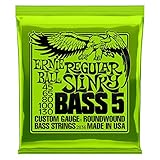
Overview: Ernie Ball’s 5-String Regular Slinky extends their legendary formula to the extended-range bass market with a 45-130 gauge set. Designed as their most popular five-string configuration, these nickel-wound strings maintain balanced tension across all strings, ensuring the low B doesn’t feel like a floppy afterthought but an integrated part of a cohesive instrument.
What Makes It Stand Out: The 130-gauge low B string achieves remarkable clarity without the muddiness that plagues many 5-string sets. This isn’t simply a 4-string set with an added string—Ernie Ball engineers the core-to-wrap ratios specifically for five-string instruments. The Element Shield Packaging becomes even more critical here, as that low B is expensive to replace if it corrodes prematurely.
Value for Money: Typically retailing $25-30, these command a modest premium over 4-string sets—standard industry practice. Given that a dead B-string can ruin an entire set, the packaging and consistent quality represent genuine value. You’re paying for a set where every string performs equally, not just four good ones and one adequate string.
Strengths and Weaknesses: Strengths include even feel across all strings, excellent low-B definition, and the same reliable nickel tone. The set works brilliantly for metal, prog, and jazz fusion. Weaknesses: Players using 35" scale basses might still find the B slightly loose, and the nickel winding may lack the aggressive attack some metal players want from their low end.
Bottom Line: For five-string bassists seeking a reliable, balanced set that treats the low B with respect, this is the benchmark that competitors consistently try to match.
4. DR Strings - Hi-Beams - Bass Guitar Strings 4-String Set - Medium 45-105 - Stainless Steel Round Core - Bass Guitar Accessories (MR-45)

Overview: DR Hi-Beams carve a distinct niche with stainless steel construction and unique round core design. Unlike conventional hex-core strings, the round core gives these 45-105 gauge strings a suppler feel and enhanced sustain, producing a bright, piano-like tone that excels in articulate, complex playing where every note must speak clearly.
What Makes It Stand Out: The round core construction is the headline feature—it allows the wrap wire to move more freely, creating noticeable improvement in harmonic content and dynamic response. These strings feel alive under your fingers in a way hex-core strings don’t. The handmade-in-USA craftsmanship ensures each set receives individual attention rather than mass-production uniformity.
Value for Money: Positioned at the premium end ($30-35), Hi-Beams cost more than mass-market brands. However, the unique tonal character and construction justify the price for players seeking something beyond typical nickel-wound sound. They last significantly longer than many stainless strings due to quality materials.
Strengths and Weaknesses: Strengths include exceptional brightness without harshness, outstanding sustain, smooth finger feel, and impressive durability. The round core provides distinctive articulation. Weaknesses: Stainless steel is harder on frets and fingers than nickel, the bright tone may be too aggressive for vintage-style music, and some basses require setup adjustments for the round core’s flexibility.
Bottom Line: For players demanding cutting articulation and piano-like clarity in their bass tone, Hi-Beams deliver a unique voice that justifies every penny of their premium price.
5. Rotosound RS66LF Swing Bass 66 Stainless Steel Bass Guitar Strings (45 65 85 105)

Overview: Rotosound’s RS66LF Swing Bass 66 strings carry the legacy of British rock royalty, delivering stainless steel tone in a no-nonsense package. These 45-105 gauge strings have anchored countless classic recordings, offering a bright, aggressive voice that cuts through dense mixes with authority. The Swing Bass 66 formula has remained largely unchanged since the 1960s—a testament to its enduring effectiveness.
What Makes It Stand Out: The pedigree is undeniable—John Paul Jones, Jaco Pastorius, and British Invasion bassists used these strings. That heritage translates to a specific character: raw, punchy, and unapologetically present. Unlike heavily marketed brands, Rotosound lets the product speak for itself with minimal packaging and maximum performance.
Value for Money: Often priced $5-10 below American competitors, the RS66LFs deliver professional-grade stainless steel tone at a working musician’s price point. You’re not paying for fancy packaging or marketing campaigns—just quality materials and time-tested manufacturing. The strings last as long as premium competitors, making them a smart financial choice for regular gigging.
Strengths and Weaknesses: Strengths include classic bright stainless tone, excellent sustain, punchy attack, and outstanding value. They excel in rock and metal contexts. Weaknesses: The initial rough feel requires a break-in period, stainless steel can be abrasive on fingers and frets, and the minimal packaging provides less pre-installation protection than sealed competitors.
Bottom Line: For players seeking authentic vintage stainless steel tone with modern reliability and an attractive price, these British classics remain impossible to beat.
6. D’Addario Bass Guitar Strings, NYXL Nickel Plated, NYXL45105, Regular Light Top/Medium Bottom Gauge 45-105, Long Scale, 4-String Set, Pack of 1

Overview: The D’Addario NYXL45105 represents the pinnacle of uncoated bass string engineering, designed for discerning players who demand exceptional performance. These premium nickel-plated steel strings utilize D’Addario’s proprietary NY Steel core, delivering a powerful combination of strength, tuning stability, and enhanced harmonic response. The 45-105 gauge (Regular Light Top/Medium Bottom) offers versatile playability across genres, from aggressive rock to nuanced jazz.
What Makes It Stand Out: The reengineered core-to-wrap ratio sets these apart from standard nickel-wounds, providing a familiar feel while unlocking superior tonal complexity. The NY Steel core dramatically improves break strength and tuning stability—crucial for heavy-handed players and those using aggressive techniques. Additionally, the Players Circle rewards program adds tangible value, and the resealable VCI bag ensures freshness until installation.
Value for Money: Positioned at the premium tier, these strings justify their higher price through measurably longer life and consistent performance. While costing 50-75% more than standard strings, the enhanced durability means fewer changes, ultimately saving money for gigging musicians. They compete directly with Ernie Ball Cobalt and Elixir coated strings, offering a unique uncoated alternative.
Strengths and Weaknesses: Strengths include exceptional tuning stability, increased break strength, enhanced harmonic content, Made-in-USA quality control, and environmental packaging. Weaknesses are the premium price point, which may deter beginners, and the uncoated design that won’t match the longevity of coated competitors for players with acidic sweat.
Bottom Line: Ideal for serious gigging musicians and recording artists who prioritize tone and reliability. The NYXLs deliver professional-grade performance that justifies the investment, making them a top choice for players tired of frequent string changes.
7. TUOREN 2Packs/4-String Set Bass Strings Nickel Plated Steel Roundwound Medium, 45-100 Gauge

Overview: The TUOREN 2-Pack bass strings offer an accessible entry point for players seeking quality tone without breaking the bank. These nickel-plated steel roundwounds feature a solid steel core with a slightly lighter 45-100 gauge, producing a balanced, warm-yet-bright tone suitable for practice, recording, and performance. The two-pack configuration provides immediate backup strings—a practical touch for students and budget-conscious musicians.
What Makes It Stand Out: The exceptional value proposition is undeniable: two complete sets at a price often lower than a single set from premium brands. The nickel-silver winding offers decent corrosion resistance, while the standard roundwound construction delivers familiar feel and articulate tone. TUOREN clearly targets the replacement string market with pragmatic packaging and straightforward performance.
Value for Money: This is where TUOREN dominates. Two sets for roughly the price of one D’Addario or Ernie Ball pack makes these among the most economical choices available. While they won’t match premium brands for longevity or nuanced response, they provide perfectly serviceable tone for rehearsals, learning, and backup purposes. The cost-per-set makes frequent changes financially feasible.
Strengths and Weaknesses: Strengths include unbeatable price, two-pack convenience, decent out-of-the-box tone, and suitability for beginners. Weaknesses involve inconsistent quality control, shorter lifespan compared to premium brands, potential tuning stability issues, and lack of advanced core technology. The tone may lack the sophistication serious players demand.
Bottom Line: Perfect for beginners, students, and players needing reliable backup strings. While pros may find them limiting, TUOREN delivers acceptable performance at an unbeatable price, making them smart for practice instruments and those on tight budgets.
8. DR Strings Bass Strings, Black Beauties BASS Black Coated Nickel Plated Bass Guitar Strings on Round Core (BKB5-45)

Overview: DR’s Black Beauties bring dramatic visual flair to the 5-string bass market while delivering the signature crisp tone DR is known for. These medium-gauge coated strings feature a black polymer finish over nickel-plated steel wrap wire, creating a distinctive look that matches their unique sonic character. The super-thin coating extends string life while preserving the round core’s natural resonance and clarity.
What Makes It Stand Out: The striking black appearance immediately differentiates these from conventional strings, making them ideal for stage presence. DR’s handmade approach ensures each string receives individual attention, while the coating technology specifically addresses corrosion and grime buildup without excessive dampening. The round core design contributes to enhanced flexibility and vintage-style tone.
Value for Money: Mid-to-premium priced, the Black Beauties offer reasonable value for players prioritizing both aesthetics and longevity. The coating extends playable life by 30-40% compared to uncoated strings, offsetting the higher initial cost. However, players unconcerned with visual impact may find better pure-tone value in uncoated premium options.
Strengths and Weaknesses: Strengths include unique visual appeal, extended lifespan from coating, handmade quality, crisp articulate tone, and corrosion resistance. Weaknesses involve the coating’s slightly different feel that some players dislike, potential flaking over time, higher price than standard strings, and the black color may not suit all genres or tastes.
Bottom Line: Excellent for performers wanting visual impact and extended string life. The Black Beauties deliver reliable DR tone with added durability, making them a solid choice for gigging 5-string bassists who value stage presence and reduced maintenance.
9. GHS Electric Bass 4 String Boomers Roundwound Piccolo 34" - 35" Scale, 18-50, P3045

Overview: The GHS P3045 Piccolo Boomers serve a specialized niche, offering an ultra-light 18-50 gauge set designed for piccolo bass tuning (typically one octave higher than standard). These strings enable bassists to explore melodic, guitar-like territories while maintaining fundamental low-mid punch. The High Breakpoint Technology focuses on Ultimate Tensile Strength, ensuring these remarkably thin strings withstand unusually high tension without breaking.
What Makes It Stand Out: This isn’t a standard string set—it’s a tool for sonic exploration. The extreme light gauge provides unparalleled articulation for picked passages and rapid melodic lines. GHS’s UTS technology prevents the frequent breaks that would otherwise plague such thin diameters, while the roundwound construction preserves brightness and clarity essential for the piccolo range.
Value for Money: For standard bassists, zero value. For those seeking piccolo bass capabilities, these are priceless. Priced comparably to premium regular strings, they offer specialized performance that few manufacturers address. The durability technology prevents costly restringing and studio downtime, justifying the investment for the right player.
Strengths and Weaknesses: Strengths include unique application enabling piccolo bass setup, exceptional articulation, surprising durability for gauge, clear picked tone, and studio versatility. Major weakness is extremely limited application—useless for conventional bass playing. They require specific setup and intonation adjustments, and the light gauge offers minimal low-end fundamental.
Bottom Line: Only purchase if you specifically need piccolo bass strings. For that purpose, they’re outstanding. For everyone else, completely inappropriate. These are specialty tools, not all-purpose strings, excelling in their narrow but important niche.
10. D’Addario Electric Bass Guitar Strings, XL Nickel, EXL165, Regular Light Top/Medium Bottom Gauge 45-105, Long Scale, 4-String Set, Pack of 1

Overview: The D’Addario EXL165 represents the industry workhorse—arguably the most trusted nickel-wound bass string in history. These Regular Light Top/Medium Bottom (45-105) long-scale strings deliver the balanced, clear fundamentals and tight lows that define modern bass tone. Built with D’Addario’s proprietary Hex-Core, they offer consistent performance, reliable intonation, and the durability that made D’Addario the player’s choice worldwide.
What Makes It Stand Out: Decades of proven reliability set the EXL165 apart. The hex-core construction ensures perfect contact between wrap and core, eliminating dead spots and providing uniform tension. Unlike coated or premium alloys, these deliver authentic, uncolored nickel-wound tone that sits perfectly in any mix. The Made-in-USA quality control and Players Circle rewards add professional credibility.
Value for Money: Exceptional. These occupy the sweet spot between budget and premium, offering 80% of NYXL performance at 50% of the cost. For working musicians requiring consistent, no-fuss performance, the value is unbeatable. They outlast budget brands and match many premium options for tone, making them the smart economic choice for regular gigging.
Strengths and Weaknesses: Strengths include proven reliability, balanced versatile tone, excellent intonation, strong durability, great price-to-performance ratio, and widespread availability. Weaknesses include lacking the extended harmonic complexity of NYXL, no coating for players with corrosive sweat, and the tone may be considered “safe” rather than exceptional.
Bottom Line: The definitive all-purpose bass string. Perfect for gigging musicians, studio work, and players wanting reliable, balanced tone without premium pricing. If you need one string set that handles everything competently, the EXL165 remains the benchmark.
Why Roundwounds Dominate the Rock Bass Landscape
Roundwound strings didn’t become the de facto choice for rock bassists by accident. Their construction—round wire wrapped around a core—creates microscopic ridges that produce harmonic-rich overtones and that coveted aggressive top-end sizzle. Unlike flatwounds or half-rounds, which prioritize smoothness and fundamental tones, roundwounds deliver the articulation and cut that helps bass lines punch through dense guitar walls and thunderous drums. In a genre built on power and presence, this sonic signature isn’t just preferred—it’s essential.
The tactile feedback of roundwounds also shapes rock playing technique. Those same ridges that create brightness provide grip for aggressive fingerstyle attack and precise pick control. When you’re digging in for a driving eighth-note groove or executing a lightning-fast fill, that textural interaction becomes an extension of your musical expression. Modern manufacturing has refined this balance, offering strings that maintain attack while reducing unwanted finger noise—a critical evolution for both studio clarity and live performance.
Decoding String Gauges for Rock Applications
String gauge represents far more than simple “light” or “heavy” categorizations—it’s a fundamental tone-shaping tool that directly impacts output, tension, and harmonic response. The relationship between gauge and magnetic output follows a linear curve: heavier strings produce stronger signals, which translates to more compression and saturation when pushed through vintage-style pickups or overdrive pedals. This isn’t merely physics; it’s the difference between a polite bass tone and one that commands attention.
Light vs. Heavy: Finding Your Sweet Spot
Light gauges (typically .040-.095) excel for players prioritizing speed and agility. The reduced tension facilitates rapid position shifts and complex tapping sequences common in progressive rock, but sacrifices some low-end fundamental and sustain. Heavy gauges (.050-.110) deliver piano-like definition and massive low-end authority perfect for downtuned metal and hard rock, yet demand greater finger strength and can fatigue hands during marathon sets. The modern rock bassist’s secret weapon often lies in hybrid sets—pairing heavier low strings for thunder with lighter highs for singing clarity. This approach mirrors how guitarists have customized sets for decades, yet remains underutilized by many bass players.
Core Materials: Nickel vs. Stainless Steel Showdown
The core wire and wrap material constitute the tonal foundation of your strings, with nickel-plated steel and stainless steel representing the two primary philosophies. Nickel-plated strings offer a vintage-tinged warmth with slightly attenuated highs, sitting beautifully in classic rock mixes without requiring extensive EQ sculpting. The nickel coating also provides a smoother feel that many fingerstyle players prefer for extended playing sessions.
Stainless steel, conversely, delivers unapologetic brightness and extended high-frequency response. This material excels in modern rock and metal contexts where clarity through dense arrangements is non-negotiable. The increased magnetism of stainless steel also yields hotter output, pushing tube preamps and compressors into sweet saturation zones. However, this brilliance comes at a cost—some players find stainless steel strings overly harsh until properly broken in, and they can accelerate fret wear on softer metals. Your choice here should align with your pickup type, amp voicing, and mixing philosophy.
The Hidden Impact of Hex vs. Round Cores
While most discussions focus on wrap materials, the core shape lurking beneath dramatically influences string behavior. Hex cores, with their six-sided profile, grip the wrap wire more securely, creating a stiffer feel with enhanced tuning stability and punchy attack. This design has become the modern standard for rock applications precisely because it translates picking energy efficiently into sonic impact. The downside? Reduced flexibility can feel unforgiving under a light touch.
Round cores harken back to vintage designs, offering a suppler feel and more pronounced sustain. The wrap wire isn’t locked into grooves, allowing slight movement that produces a “blooming” quality to notes—excellent for expressive legato work and ballads. However, this same flexibility can compromise intonation consistency and makes them more susceptible to premature failure under aggressive playing. For rock players who use picks or employ heavy attack, hex cores generally provide the reliability and immediate response the genre demands.
Winding Techniques and Their Sonic Signatures
Not all roundwounds are created equal—winding tension, wire profile, and wrap angle create distinct sub-categories within the roundwound family. Precision winding, where each wrap sits perfectly adjacent to its neighbor, produces maximum brightness and consistency. This technique dominates modern high-end strings, offering unparalleled clarity for complex chordal work and solos. The trade-off is reduced “vintage character” and sometimes a longer break-in period.
Looser, more traditional winding patterns create subtle gaps between wraps, introducing micro-compressions and a slightly darker initial tone. These strings often feel more “broken-in” from day one, making them favorites among classic rock purists. Some manufacturers now employ compression winding, where the outer wrap is slightly flattened post-winding to smooth the feel while retaining harmonic content. This hybrid approach offers compelling benefits for rock players seeking speed without sacrificing the roundwound character.
Taperwound Strings: The Secret Weapon for B-string Clarity
Five and six-string bassists face a unique challenge: maintaining definition and even output from the low B string. Taperwound designs address this by reducing the mass of the string over the bridge saddle, effectively tricking the pickup into seeing a higher impedance. The result is tighter low-end response, faster note attack, and improved intonation on extended-range instruments. For rock players exploring drop tunings or extended low-end, taperwound B strings aren’t just an upgrade—they’re a necessity.
The implementation varies between manufacturers. Some taper only the final few inches, while others begin the taper earlier in the speaking length. This affects both the string’s flexibility and the precise break angle over the bridge. When selecting taperwounds, ensure compatibility with your bridge design—some top-loading bridges won’t accommodate heavily tapered strings, potentially creating unwanted buzz or unstable witness points.
Coated vs. Uncoated: The Longevity Debate
Polymer coatings promise extended string life by shielding wraps from corrosive sweat and debris. For touring rock bassists playing nightly, this translates to consistent tone throughout a month-long run rather than mid-tour dead spots. Modern coatings have evolved beyond the initial “plastic wrap” feel, with micro-thin applications that preserve much of the roundwound texture while adding months to usable lifespan.
However, coatings subtly alter the string’s mass and damping characteristics. The most discerning ears detect a slight attenuation of extreme highs and a marginally softer attack. Whether this trade-off matters depends on your monitoring situation and tonal philosophy. Some players now adopt a hybrid approach: coated strings for touring reliability, uncoated for studio sessions where absolute fidelity trumps longevity. The cost premium of coated strings often balances out when factoring in reduced change frequency and setup consistency.
Scale Length Compatibility: Don’t Overlook This Critical Factor
The physics of string vibration dictate that scale length—distance from nut to bridge—directly impacts tension, feel, and harmonic content. Standard long scale (34") strings on a short scale (30") bass create floppy tension and intonation nightmares. Conversely, short scale strings on a long scale instrument risk insufficient winding length, placing the tapered section over the pickup and killing output.
The 2026 market has responded with increasingly specific scale length offerings. Medium scale (32") and extra-long scale (35"+) options now feature optimized taper points and core-to-wrap ratios. For rock players using multi-scale (fanned fret) instruments, this becomes even more critical. These progressive designs require strings engineered for varying speaking lengths across the neck. Using standard strings on fanned-fret basses creates uneven tension and compromised tone. Always verify the winding length, not just the ball-to-silk distance, when selecting strings for non-standard instruments.
Matching Strings to Rock Subgenres
Classic Rock: Warmth and Punch
Classic rock demands strings that honor vintage tone while delivering modern reliability. Medium gauge nickel-plated roundwounds (.045-.105) typically provide the sweet spot—enough mass to push tube amps into harmonic richness without overwhelming the mix. Look for strings with moderate winding tension to capture that slightly “wooly” low-mid character that defined the 70s studio sound. The goal is supportive presence that locks with kick drums while leaving space for guitars.
Hard Rock and Metal: Aggression and Definition
Modern metal production leaves no room for muddy low-end. Here, stainless steel strings in heavier gauges (.050-.110 or higher) deliver the required clarity and aggression. Taperwound low strings become essential for 5+ string instruments, preventing the low B from becoming a flubby mess. Consider strings with reinforced cores or specialized alloys designed for extended range instruments. The emphasis should be on note separation under high gain and articulate pick attack that cuts through quad-tracked guitars.
Punk and Alternative: Raw Energy and Speed
Punk rock’s relentless eighth-note assault demands strings that respond instantly and stay in tune under aggressive attack. Light-to-medium gauge hex core strings offer the perfect balance—fast enough for rapid-fire position shifts, stable enough for stage abuse. Many punk players intentionally choose strings with slightly looser windings for a rawer, more immediate tone that doesn’t sound overly polished. The key is reliability over refinement; your strings should facilitate maximum energy transfer with minimal fuss.
The Fingerstyle vs. Pick Player’s Guide to String Selection
Your attack method fundamentally changes how strings react and which characteristics matter most. Fingerstyle players generate complex harmonic series through flesh-and-nail interaction, making string flexibility and midrange complexity paramount. Lighter gauges with round cores often reveal subtle nuances in ghost notes and dynamics that hex cores might compress. The string’s texture also affects finger noise—smoother wraps reduce unwanted artifacts when sliding between positions.
Pick players, conversely, need strings that can withstand focused impact without losing definition. The concentrated force of a pick benefits from stiffer hex cores and tighter windings that prevent “smearing” of notes. Stainless steel wraps particularly excel here, as the pick’s attack excites the high-frequency content that defines articulate rock bass tone. Gauge selection becomes a balancing act: too light and picking sounds thin and clicky; too heavy and the tone loses the necessary bounce and dynamics.
Breaking In New Strings: What to Expect
Fresh roundwounds exhibit a “zingy” character that can overwhelm a mix. This initial brightness results from pristine wraps with maximum microscopic roughness. The break-in period—typically 2-6 hours of playing time—sees the extreme highs settle as the strings develop micro-scratches and your finger oils begin to fill the gaps between winds. This isn’t string death; it’s tonal maturation.
Smart rock players accelerate this process intentionally. Controlled stretching during installation, followed by moderate playing sessions with reduced EQ, helps stabilize the tone faster. Some bassists even use a clean cloth to gently abrade new strings, mimicking the smoothing effect of playing time. The goal is reaching that sweet spot where brightness becomes articulation without losing the string’s fundamental character. For studio sessions, consider installing strings 48 hours before tracking to ensure they’ve settled without losing vitality.
Maintenance Hacks to Extend String Life
Professional rock bassists don’t change strings weekly out of extravagance—it’s cost-effective maintenance. Dead strings force you to over-EQ, adding noise and fighting your mix engineer. Simple habits dramatically extend usable life. Wiping strings down with a microfiber cloth after every set removes corrosive sweat before it penetrates the wraps. For touring musicians, a quick alcohol wipe-down between shows can reset string freshness remarkably.
String conditioners and lubricants remain controversial. While they can temporarily revive dead strings, some formulations actually accelerate wrap degradation by trapping contaminants. The 2026 approach favors prevention over treatment: washing hands before playing, using coated strings for problematic pH levels, and storing instruments in stable humidity. For studio work, consider a dedicated “recording set” that’s broken in but not gig-worn, preserved through meticulous cleaning and minimal exposure to open air.
Budget vs. Premium: Understanding the True Value Proposition
The string market spans from budget packs under $20 to premium sets approaching $60. The difference isn’t just marketing—premium strings utilize exotic alloys, computer-controlled winding tension, and multi-stage quality control that ensures consistency from pack to pack. For rock players, this translates to more reliable intonation, balanced output across sets, and superior durability under aggressive playing.
However, diminishing returns exist. Mid-tier strings from reputable manufacturers often deliver 85% of premium performance at half the cost. The key is identifying which premium features align with your needs. If you play aggressive pickstyle metal, reinforced ball ends and specialized core materials justify the expense. For classic rock cover bands, that investment might exceed practical benefits. Consider your playing frequency too—a weekend warrior might not wear out budget strings fast enough to notice differences, while a touring pro’s string budget directly impacts tone consistency and setup stability.
Frequently Asked Questions
How often should I change roundwound strings for rock playing?
Change frequency depends on playing intensity, sweat chemistry, and tonal requirements. Touring rock bassists often change every 2-4 shows to maintain consistency, while studio players might use a fresh set for each session. For casual players, monthly changes suffice. The real indicator is when your tone becomes muddy despite proper technique and EQ—dead strings kill mix clarity.
Do heavier gauge strings really sound “better” for rock?
“Heavier” doesn’t mean “better”—it means “different.” Heavier gauges increase output and low-end fundamental, but reduce flexibility and can overpower vintage-style pickups. The ideal gauge balances your playing style, bass setup, and genre requirements. Many iconic rock tones come from medium gauges that allow the instrument’s character to shine through.
Can I mix different brands or types in a custom set?
Absolutely, and many professional rock players do. Mixing brands lets you optimize each string’s characteristics—perhaps a tapered B from one manufacturer, stainless steel E and A for brightness, and nickel D and G for warmth. The key is matching tension profiles to avoid unbalanced feel. Keep detailed notes on what works for your specific instrument.
Why do my new strings sound too bright and tinny?
This is normal. Fresh roundwounds exhibit extreme high-frequency content that settles after break-in. If the brightness persists beyond 6-8 hours of playing, consider switching to nickel-plated wraps or slightly heavier gauges. Your pickup height and amp EQ also play massive roles—don’t blame strings alone for a harsh tone.
Are coated strings worth the extra cost for rock?
For players with corrosive sweat or those touring extensively, coated strings offer compelling value—extending usable life 3-5x. The subtle tonal compromise is often negligible in live rock contexts. However, purists seeking absolute high-frequency detail may prefer uncoated strings for studio work. Calculate cost-per-gig, not just initial price.
What’s the deal with “balanced tension” string sets?
Traditional sets feature decreasing tension from low to high strings, creating uneven feel. Balanced tension sets use custom gauges to equalize pull across all strings, promoting more consistent attack and intonation. For rock players using aggressive techniques, this can improve right-hand consistency and reduce fatigue. The trade-off is non-standard gauges that might require nut slot modifications.
How do I know if I need long scale or short scale strings?
Measure from the ball end to the nut—if it’s approximately 34", you need long scale. Short scale is around 30". The critical spec is winding length: the silk or taper should start after the nut but before the tuning post. Using wrong-scale strings places the taper over the pickup or creates insufficient wraps around the post, causing tuning instability.
Will stainless steel strings damage my frets faster?
Yes, stainless steel is harder than nickel-silver frets and accelerates wear. However, this process takes years of heavy playing to become problematic. If you refret with stainless steel frets, the concern disappears. For occasional players, the tonal benefits outweigh fret wear considerations. Consider it an investment in your signature sound.
Do different wrap colors affect tone?
Colored wraps are purely cosmetic and don’t impact tone. However, some colored strings use different base materials or coating processes that could subtly affect sound. Always verify the underlying alloy rather than judging by appearance. In rock contexts, stage presence might justify colored strings, but tone should drive the decision.
Can boiling strings really revive them?
Boiling can temporarily remove oils and debris, but it doesn’t restore lost metal mass or fix microscopic wear in the wraps. The process also risks weakening the core and promoting rust if not dried perfectly. While a fun emergency hack for broke musicians, it’s not a professional solution. Modern string construction and affordable mid-tier options make boiling obsolete for serious players.
See Also
- 10 High-Output Bass Strings for Rock Recording in 2026
- 10 Affordable Roundwound Bass Strings That Punch Above Their Price in 2026
- 10 Expert-Recommended Roundwound Bass Strings for Slap Players in 2026
- 2026’s Top 10 Roundwound Bass Strings for Slap Bass Players
- 10 Roundwound Bass Strings for Slap Players Who Need Punch Without Fret Wear