Table of Contents
That moment in the studio when your bass track sounds more like a lifeless thud than the rich, velvety foundation you envisioned? You’ve just met “dead tone”—the spectral enemy of engineers and bassists alike. In 2026’s hyper-transparent recording landscape, where every sonic imperfection is magnified, flatwound bass strings have evolved from a vintage curiosity into a modern studio essential. They’re no longer just for Motown impersonators; they’re the secret weapon for achieving that coveted warmth that sits perfectly in dense mixes without fighting for space.
But not all flatwounds are created equal, and choosing the wrong set can leave you with a muddy, indistinct mess that even the most skilled mixing engineer can’t resurrect. This deep dive strips away the marketing fluff and focuses on what actually matters when selecting flatwound bass strings for studio-ready warmth. We’re talking core construction physics, metallurgy fundamentals, and the subtle interplay of factors that transform your instrument from a tone graveyard into a harmonic paradise.
Top 10 Flatwound Bass Strings
Detailed Product Reviews
1. D’Addario XL Chromes Flat Wound Bass Guitar Strings - ECB81 - Long Scale - Regular Light, 45-100

Overview: D’Addario’s XL Chromes ECB81 represent the company’s flagship flatwound bass strings, designed for players seeking that classic warm, mellow voice. These long-scale strings in 45-100 gauge feature a stainless steel flattened ribbon wrap wire that’s meticulously polished to deliver an exceptionally smooth playing surface. The construction utilizes D’Addario’s proprietary Hex-Core technology, which ensures consistent intonation and enhanced durability across all four strings.
What Makes It Stand Out: The precision-polished ribbon wrap sets these apart from competitors, providing unparalleled smoothness that drastically reduces finger noise while maintaining a rich, articulate tone. The Hex-Core construction offers superior stability and consistent feel, particularly noticeable during aggressive playing. Additionally, the recyclable VCI bag includes a Players Circle code, allowing you to earn reward points—an eco-friendly value-add rarely seen in string packaging. Being manufactured in D’Addario’s New York facility guarantees stringent quality control.
Value for Money: Positioned in the premium mid-range price bracket, these strings justify their cost through exceptional longevity and consistent performance. The reward points program effectively reduces long-term expenses for frequent string changers. Compared to budget alternatives, the Chromes maintain their tonal character significantly longer, making them more economical over time.
Strengths and Weaknesses: Pros include buttery smooth feel, dark warm tone perfect for jazz and R&B, excellent string-to-string balance, and outstanding durability. Cons are the premium price point and that the mellow tone may lack the aggressive punch needed for rock or metal genres.
Bottom Line: Ideal for fretless bass players, jazz enthusiasts, and recording musicians who prioritize a smooth, noise-free performance with vintage warmth. The D’Addario XL Chromes are a worthwhile investment for serious players.
2. Fender 9050 Bass Strings, Stainless Steel Flatwound, 9050L .045-.100

Overview: Fender’s 9050L flatwound bass strings deliver the quintessential vintage tone that helped define countless classic recordings. These 45-100 gauge stainless steel strings are specifically engineered for 34-inch scale instruments, making them a perfect match for Fender’s iconic Precision and Jazz basses. The flatwound design produces the warm, mellow voice essential for traditional genres while virtually eliminating finger noise.
What Makes It Stand Out: The silk wraps at the tuner post end provide crucial protection for the windings during installation and tuning, preventing unraveling—a thoughtful detail that extends string life. Fender’s classic color-coded ball ends make string changes intuitive and error-free, especially appreciated during rushed gig setups. The brand’s decades of string manufacturing expertise shines through in the consistent wrap tension and reliable performance.
Value for Money: As USA-made strings from a legendary brand, they’re competitively priced against other premium flatwounds. You’re paying partially for the Fender name, but also for proven reliability and quality control. For Fender bass owners, the scale-specific design ensures optimal tension and feel.
Strengths and Weaknesses: Pros include authentic vintage tone, minimal finger noise, excellent for fretless instruments, and trusted brand heritage. The silk wrapping adds durability. Cons are limited gauge options and the warm tone may be too subdued for modern slap or aggressive playing styles.
Bottom Line: A top choice for traditionalists, jazz players, and Fender bass enthusiasts seeking that classic Motown thump. These strings deliver reliable, no-frills performance with authentic vintage character.
3. Ernie Ball Group III Flatwound Bass Guitar Strings, 45-100 Gauge (P02806)

Overview: Ernie Ball’s Group III Flatwound bass strings bring the company’s reputation for quality to the flatwound market. These 45-100 gauge strings feature flattened stainless steel wrap wire around a hex-shaped tin-plated steel core, delivering the smooth feel and warm, rounded tone that flatwound players demand. Trusted by professionals worldwide, these strings aim to provide consistent performance across various musical contexts.
What Makes It Stand Out: The hex-shaped tin-plated steel core provides excellent magnetic response, translating to a slightly more articulate midrange compared to some competitors. Ernie Ball’s widespread artist endorsement speaks to their reliability and consistency from set to set. The company’s manufacturing precision ensures each string maintains uniform tension and intonation, crucial for professional performance where dependability matters.
Value for Money: These sit in the competitive mid-range price point, offering professional-grade quality without the premium pricing of some boutique brands. For players already using Ernie Ball roundwounds, these provide a familiar quality standard in a flatwound voice, making the transition seamless without rethinking your string budget.
Strengths and Weaknesses: Pros include super smooth feel, balanced string-to-string output, reduced finger noise, and trusted brand consistency. The tone sits nicely between bright and dark. Cons include no unique features to differentiate from similar offerings, and the packaging lacks eco-friendly initiatives found in competitors.
Bottom Line: A solid, dependable choice for bassists exploring flatwounds for the first time or seeking a reliable backup to more expensive strings. They deliver professional performance without breaking the bank.
4. Flatwound Bass Guitar Strings - Coated Hexagonal High Carbon Steel Core Bass Strings - For Bass Guitar 4 String - 45-100 Gauge

Overview: These unbranded flatwound bass strings offer an entry-level introduction to the flatwound experience. With a 45-100 gauge setup, they feature a high-carbon hexagonal steel core wrapped in chrome alloy winding, targeting budget-conscious players curious about flatwound tone. Marketed primarily toward professionals despite the generic branding, they promise a smooth feel and warm sound suitable for four-string electric basses, particularly fretless instruments. The manufacturer emphasizes their suitability for genre versatility.
What Makes It Stand Out: The primary distinguishing factor is the aggressive pricing—these are among the most affordable flatwounds available. The coated hexagonal core suggests modern manufacturing techniques typically found in pricier strings. For players unsure about committing to flatwounds, they provide a low-risk trial option without significant financial investment, removing the barrier to experimentation.
Value for Money: Exceptional affordability makes these accessible to beginners and experimenters. However, the unknown brand raises questions about quality control and consistency. They represent good value if performance meets expectations, but potential longevity issues could diminish overall savings, requiring more frequent replacements that offset initial savings.
Strengths and Weaknesses: Pros include low price, smooth polished surface, warm tonal character, and suitable for various genres. Cons involve unknown manufacturer, potentially inconsistent quality between sets, vague marketing claims, and questionable durability compared to established brands with proven track records.
Bottom Line: Worth trying if you’re flatwound-curious on a tight budget, but serious players should invest in reputable brands for reliable performance. Treat these as an experiment rather than a long-term solution.
5. Ernie Ball Flatwound Group 2.5 Electric Bass Strings - 45-105 Gauge

Overview: Ernie Ball’s Flatwound Group 2.5 strings cater to players seeking a slightly heavier bottom end in their flatwound setup. With gauges of 45-65-85-105, these strings provide extra tension and fullness on the low E string compared to standard 45-100 sets. Constructed with flattened stainless steel wrap wire around a hex-shaped tin-plated steel core, they maintain the super smooth feel and warm tone characteristic of quality flatwounds while addressing specific playability preferences.
What Makes It Stand Out: The 105 gauge low E offers enhanced definition and punch for players who find standard 100 gauge strings too floppy or lacking authority. This subtle change can improve low-end clarity in band mixes without sacrificing the flatwound character. Ernie Ball’s consistent manufacturing ensures the tension increase feels natural rather than imbalanced across the set, maintaining comfortable playability.
Value for Money: Priced identically to other Ernie Ball flatwound sets, they offer specialized gauge options without premium upcharges. For players needing that extra low-string heft, these eliminate the need for custom string purchases or mixing sets, providing convenient value that saves both money and hassle.
Strengths and Weaknesses: Pros include ideal gauge for players wanting tighter low end, smooth playability, reliable durability, and consistent Ernie Ball quality. The 85-105 transition feels balanced and musical. Cons include non-standard gauge may require minor setup adjustments, and the stiffer feel might not suit all playing styles or basses with lighter construction.
Bottom Line: Perfect for bassists who love flatwounds but crave more low-string definition. These strings solve a specific problem without compromising the smooth, warm flatwound character that defines the genre.
6. La Bella 760FS Deep Talkin’ Stainless Steel Flat Wound - Standard Long Scale Bass Guitar String 45-105
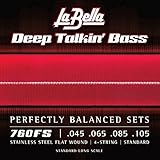
Overview: La Bella’s 760FS Deep Talkin’ strings represent a legacy choice for bassists seeking authentic vintage flatwound tone. Developed from the iconic formulas of the 1950s and 60s, these stainless steel flatwounds deliver the classic thump and mellow warmth that defined generations of recorded bass. The standard long scale set with gauges 45-105 suits traditional electric basses perfectly.
What Makes It Stand Out: The hand-polished construction creates an exceptionally smooth playing surface that eliminates finger noise while maintaining articulate note definition. La Bella’s precise silk placement requirements (38" for G/D/A, 36¾" for E) demonstrate their commitment to traditional manufacturing. The MAP packaging technology ensures strings arrive factory-fresh, preventing tarnishing during storage—a detail few competitors address.
Value for Money: These premium-priced strings justify their cost through meticulous USA craftsmanship and extended lifespan. While more expensive than mass-produced alternatives, the tonal consistency and durability provide substantial long-term value. Professional session players and vintage enthusiasts will find the investment worthwhile compared to replacing cheaper strings more frequently.
Strengths and Weaknesses: Pros: Authentic vintage tone, mirror-smooth finish, excellent intonation stability, corrosion-resistant packaging, and professional-grade materials. Cons: Not compatible with through-body bridges, requires careful installation to avoid breakage, premium pricing may deter casual players, and the rigid tension may feel stiff to some.
Bottom Line: Ideal for bassists pursuing classic flatwound tone with uncompromising quality. The 760FS set rewards proper installation with timeless sound and feel.
7. La Bella LTF-4A Low Tension Flats Long Scale Stainless Steel Flat Wound 4- String Electric Bass 42-100

Overview: La Bella’s LTF-4A Low Tension Flats cater to players craving flatwound warmth without the traditional high tension. Using the same revered construction techniques as their Deep Talkin’ series, this 42-100 gauge set reduces finger fatigue while preserving the signature thump. The total tension of 134.90 lbs strikes an impressive balance between playability and tonal integrity.
What Makes It Stand Out: These strings solve the classic light-tension dilemma: delivering comfortable flexibility without the dreaded “floppy string” effect. Round cores and a narrower ribbon enhance pliability and smoothness, while maintaining precise pitch definition. The consistent string-to-string tension (36.2, 34, 30.5, 34.2 lbs) ensures balanced response across all registers—critical for technical passages and dynamic playing.
Value for Money: Positioned at a premium price point similar to other La Bella strings, the LTF-4A offers specialized value for players with repetitive strain issues or those preferring a lighter touch. The MAP-preserved freshness and American craftsmanship extend usable life, offsetting initial cost over time compared to budget alternatives that lose vibrancy quickly.
Strengths and Weaknesses: Pros: Exceptional playing comfort, reduced hand fatigue, smooth ribbon winding, consistent tone, and quality packaging. Cons: Lighter gauges may lack the heft needed for aggressive styles, premium price, and potentially too flexible for players accustomed to standard tension.
Bottom Line: A revelation for flatwound enthusiasts seeking ergonomic benefits without sacrificing vintage character. Perfect for jazz, soul, and extended playing sessions.
8. Fender 9050 Bass Strings, Stainless Steel Flatwound, 9050ML .050-.100,

Overview: Fender’s 9050ML flatwounds bring the company’s legendary quality to the stainless steel flatwound category. Designed for 34-inch scale instruments with a medium-light 50-100 gauge profile, these strings target reggae, jazz, country, and R&B players seeking warm, mellow tonality with minimal finger noise. The ball-end design streamlines string changes.
What Makes It Stand Out: The color-coded ball ends and silk wraps at the tuner posts demonstrate Fender’s user-friendly approach, protecting windings during installation while simplifying the restringing process. Specifically engineered for 34-inch scale basses, these strings provide optimal tension and intonation for the most common electric bass size. The consistent winding technique ensures uniform tone across the fretboard.
Value for Money: Fender’s pricing typically sits in the mid-tier range, offering excellent value for players wanting reliable brand performance without boutique costs. These strings deliver professional results that satisfy gigging musicians and recording artists alike, representing a smart compromise between budget and premium options.
Strengths and Weaknesses: Pros: Warm vintage tone, reduced finger noise, easy installation with color coding, versatile genre application, and reliable Fender quality. Cons: Medium-light gauge may feel too light for some players, not as smooth as hand-polished premium options, and limited scale length compatibility.
Bottom Line: A dependable choice for Fender bass owners and genre players wanting authentic flatwound sound with practical features. Excellent for fretless instruments.
9. Fender 9050 Bass Strings, Stainless Steel Flatwound, 9050M .055-.105

Overview: The 9050M set represents Fender’s medium gauge flatwound offering, delivering fuller tension and increased low-end presence compared to its ML counterpart. With gauges from .055 to .105, these strings suit players requiring more resistance and punch while maintaining the signature flatwound warmth. The 34-inch scale design ensures compatibility with standard basses.
What Makes It Stand Out: This medium set shares the same practical features as the ML version—color-coded ball ends and protective silk wraps—but provides the additional mass needed for aggressive playing styles. The increased tension particularly benefits players using pick techniques or those needing enhanced projection in live settings. Fender’s manufacturing consistency shines through in even response and reliable intonation.
Value for Money: Mid-range pricing makes these strings accessible while delivering professional-grade performance. The medium gauge extends their versatility across more demanding musical contexts, offering better value for rock, funk, and fusion players who might find lighter gauges limiting. The durable construction ensures respectable longevity.
Strengths and Weaknesses: Pros: Fuller tone and increased punch, comfortable medium tension, easy installation, reduced finger noise, and versatile application. Cons: Heavier gauge may challenge players with smaller hands, not suitable for extra-long scale basses, and lacks the ultra-smooth finish of hand-polished competitors.
Bottom Line: Perfect for bassists wanting flatwound warmth with medium-gauge authority. A workhorse set that performs reliably across diverse musical styles.
10. DR Strings Legend- Polished Flatwound Stainless Steel Bass Strings: Medium 45-105 (FL-45)

Overview: DR’s Legend FL-45 strings merge medium gauge flatwound character with the company’s acclaimed Hi-Beams construction philosophy. The polished stainless steel surface delivers exceptional smoothness while the 45-105 tension profile suits standard scale basses. These strings emphasize flexibility and musical warmth over rigid stiffness, targeting players who prioritize comfort and instrument preservation.
What Makes It Stand Out: The “polished” designation indicates a refined surface treatment that rivals hand-polished competitors, offering superior comfort and virtually silent sliding. DR’s Hi-Beams manufacturing process, requiring extra steps and care, produces strings that are highly flexible yet durable. The claim that they “don’t eat your frets” highlights their gentleness on instrument hardware—a significant long-term benefit for valuable instruments.
Value for Money: DR positions these competitively against premium brands while offering unique benefits like fret preservation. The extended lifespan and consistent string-to-string balance provide excellent return on investment. Players seeking boutique performance without the highest price tag will appreciate the value proposition, especially considering the reduced wear on frets.
Strengths and Weaknesses: Pros: Highly polished smooth surface, flexible feel, warm musical tone, exceptional durability, fret-friendly design, and balanced response. Cons: CRITICAL—these are NOT long scale strings, limiting compatibility with many modern basses; may feel too flexible for traditional flatwound purists.
Bottom Line: Outstanding performance for short and medium scale basses. Verify your instrument’s scale length before purchasing, as these will not fit standard long-scale instruments.
What Exactly Is ‘Dead Tone’ and Why It Haunts Your Studio Sessions
“Dead tone” isn’t just a vague complaint—it’s a measurable phenomenon. It occurs when your strings produce excessive inharmonic overtones, weak fundamental frequencies, and a rapid decay that kills sustain before the note can bloom. In a studio context, this translates to tracks that require massive EQ boosts to cut through, introducing noise and unnatural resonance. Roundwounds, while brilliant for live attack, often betray you under the microscope of close miking and digital conversion. Their aggressive high-frequency content can clash with cymbals, vocals, and guitars, creating a harsh, fatiguing mix that fights the listener rather than welcoming them.
The Flatwound Revolution: Why Warmth Isn’t Just a Buzzword
Warmth in 2026’s production world means controlled harmonic content, strong midrange presence, and a smooth top-end that doesn’t trigger harshness in 192kHz recordings. Flatwounds deliver this by design. The ribbon-like outer wrap presses tightly against the core, minimizing the microphonic “squeak” and high-frequency splash that plague roundwounds. This isn’t about rolling off treble—it’s about generating a focused, fundamental-rich tone from the source. Modern flatwounds have shed their floppy, lifeless reputation through advanced metallurgy and precision manufacturing, offering sustain that rivals rounds while maintaining that signature pillowy attack.
Core Construction Secrets: Hex Core vs. Round Core
The Geometry of Tone
Beneath that smooth exterior lies the real engine of your string. Hex cores, with their six-sided profile, grip the wrap wire mechanically, creating a brighter, more articulate response with tighter bass. This can be advantageous in studio settings where note definition is paramount. Round cores, conversely, allow the wrap to “breathe” slightly, resulting in a more flexible feel and a pronounced low-end thump—classic studio warmth. The trade-off? Round cores can feel slinkier but may have slightly less tuning stability under aggressive playing. For session work where consistency is king, understanding this distinction is non-negotiable.
Core-to-Wrap Ratio Impact
The diameter relationship between core and wrap wire directly affects your string’s flexibility and magnetic response. A thicker core relative to the wrap increases output and reduces flexibility, yielding a punchier, more direct tone that compresses beautifully through tube preamps. Thinner cores with heavier wraps create a more pliable string with enhanced sustain but potentially weaker output. In 2026’s high-headroom recording environments, that extra output from a robust core can mean less preamp gain and a cleaner signal path.
Wrap Wire Alchemy: Stainless Steel, Nickel, and Beyond
Stainless Steel: The Modern Studio Workhorse
Stainless steel flatwounds have undergone a renaissance. Modern formulations offer corrosion resistance that laughs at humidity-controlled iso-booths while delivering a crisp, defined attack that still qualifies as “warm.” Their higher iron content interacts more aggressively with your pickups, boosting output and midrange bite. They’re the go-to when you need warmth without sacrificing articulation in busy mixes.
Nickel’s Vintage Soul
Pure nickel wraps produce that coveted old-school thump—soft attack, rich fundamental, and a natural compression that feels like an 1176 is built into your bass. The lower magnetic pull is gentler on vintage pickups and creates less string pull, improving intonation. However, nickel’s softer nature means faster wear and a slightly darker tone that might need a touch of high-shelf EQ to sparkle in modern pop productions.
Composite Wraps: The 2026 Frontier
Emerging hybrid wraps combine nickel-plated steel with micro-coatings of copper or even titanium alloys. These experimental formulations aim to capture nickel’s warmth with stainless steel’s longevity and output. While pricey, they represent the cutting edge of studio-specific string design, offering break-in periods measured in hours rather than days.
Gauge Wars: Finding Your Studio Sweet Spot
Light Gauges (.040-.095): The Session Player’s Secret
Light flatwounds defy expectations. They deliver fast action and surprising articulation, making them ideal for intricate R&B lines or jazz fusion where every ghost note must speak clearly. The reduced tension minimizes finger noise and allows for lower action without buzz—critical for consistent DI recordings. The downside? Potential for a thinner tone that might lack weight on sub-heavy mixes.
Medium Gauges (.045-.105): The Goldilocks Zone
This is the studio standard for a reason. Medium flats offer the perfect balance of tension, output, and harmonic complexity. They provide enough mass to generate solid low-end fundamentals while maintaining enough flexibility for expressive playing. When in doubt, this range delivers consistent results across rock, pop, soul, and indie genres.
Heavy Gauges (.050-.110+): The Low-End Authority
For reggae, doom metal, or any production where the bass must function as a seismic event, heavy flats are non-negotiable. The increased mass produces a slower attack with enormous sustain and a fundamental so strong it can replace a kick drum in sparse arrangements. Be warned: the high tension demands setup adjustments and can fatigue fingers during all-day sessions.
Tension Talk: Balancing Playability and Sustain
String tension isn’t just about feel—it directly impacts your instrument’s acoustic resonance and electronic output. Higher tension strings couple more efficiently with your bass’s bridge and body, transferring more energy and potentially increasing sustain. However, excessive tension can choke the instrument’s natural vibration, creating a harsh, sterile tone. The 2026 approach involves matching string tension to your bass’s resonant frequency. Tap your unplugged bass’s body; that pitch should complement, not fight, your string tension. A luthier can help calculate this, but experienced engineers often select slightly lower tension for resonant instruments to avoid overpowering the room mics.
Scale Length Compatibility: Don’t Let Geometry Kill Your Tone
Long Scale Precision
Most flatwounds are designed for 34" long-scale basses, but “long scale” can vary between manufacturers. Using strings designed for 35" scale on a 34" bass can result in suboptimal witness points at the nut and bridge, killing sustain. Conversely, short-scale strings on a long-scale instrument will be under-tensioned, causing floppy feel and intonation nightmares. Always verify the manufacturer’s specified scale length, not just the generic label.
Short Scale’s Unique Demands
Short-scale basses (30"-32") require specifically engineered flats. The reduced speaking length means standard long-scale sets will feel stiff and sound choked. Modern short-scale flats are wound with this in mind, offering lower tension cores that maintain proper feel and harmonic response. In 2026, we’re seeing more short-scale options optimized for studio work, addressing the boominess that often plagues these instruments.
2026 Coating Technologies: The Silent Tone Preservers
The latest polymer coatings are game-changers for studio longevity. Unlike the thick, tone-killing coatings of the past, modern nano-coatings measured in microns preserve the wrap’s natural vibration while repelling skin oils and moisture. Some formulations even incorporate UV inhibitors, preventing the wrap from oxidizing under stage lights during video shoots. For session players, this means a set of strings can last months of daily recording without losing their studio-fresh zing. The key is selecting coated strings specifically marketed as “acoustically transparent”—thicker coatings might extend life but can introduce a subtle high-frequency damping that stacks unpleasantly with multiple layers of compression.
Break-In Period Reality Check: Patience vs. Performance
The First 24 Hours: Stretching and Stabilizing
Fresh flatwounds sound their brightest and most piano-like initially. This can be perfect for certain pop applications, but most engineers crave the settled tone that emerges after proper stretching. The break-in period involves not just pitch stability but also micro-level work-hardening of the wrap wire. Play vigorously for 30 minutes, then let sit overnight. Repeat this process for two days. The result is a more consistent tone across the fretboard and reduced metallic overtones.
The 100-Hour Sweet Spot
Most premium flatwounds reach their tonal peak around 100 hours of playing time. This is when the initial brightness has mellowed but before significant wear dulls the high-mids. For critical album sessions, savvy bassists install new strings two weeks in advance, playing them daily to hit this window. Some 2026 manufacturers are pre-aging strings through cryogenic treatment or controlled vibration cycles, offering “studio-ready” sets that claim to bypass this wait—though purists debate whether this matches the organic break-in process.
Frequency Response: Carving Your Sonic Space in the Mix
Flatwounds naturally attenuate frequencies above 4kHz, but their real magic lies in the 80Hz-1kHz range where bass lives. The best studio sets produce a gentle bump around 120-150Hz (that “chest thump”) and a broad, even response through the low-mids that prevents mud. When evaluating strings, record a simple DI track and analyze the frequency spectrum. Look for a smooth rolloff above 5kHz without sudden dips or peaks. That controlled top-end means less work for your mixing engineer and a bass tone that sits in the mix rather than on top of it.
Adapting Your Technique: Fingerstyle Adjustments for Flatwounds
Attack Angle and Pressure
Your roundwound technique won’t translate directly. Flatwounds reward a lighter touch. Digging in aggressively can produce a percussive “clack” that overwhelms the fundamental. Instead, use a more parallel attack, letting your fingers glide across the surface. This reduces finger noise and allows the string’s full sustain to develop. In studio settings, this also means more consistent levels, requiring less compression and preserving dynamic nuance.
Muting Mastery
The increased sustain and fundamental focus of flats make muting technique critical. Unwanted resonance will ring longer and more prominently than with rounds. Develop a floating thumb technique that lightly contacts strings you’re not playing. In the studio, engineers appreciate bassists who bring this discipline—it means fewer punch-ins and cleaner takes.
Maintenance Myths: Keeping That Warmth Alive
Contrary to popular belief, flatwounds don’t last forever. While they outlive roundwounds, their tone gradually shifts as the wrap wire work-hardens and accumulates debris. The myth of “never changing flats” comes from the fact that their tonal evolution is more gradual and often musically useful. For studio consistency, clean them monthly with a microfiber cloth and isopropyl alcohol. Avoid string cleaners with lubricants—they can deaden the wrap’s vibration. Store your bass in a case with humidity control; even stainless steel can develop microscopic corrosion that affects intonation.
Studio Investment Logic: Price vs. Performance Ratio
Premium flatwounds cost three to four times more than budget rounds, but the math makes sense for serious recording. A $60 set that lasts six months of daily sessions costs $10/month. Cheaper rounds needing monthly changes at $25/set cost $150 over the same period. More importantly, the tonal consistency of high-end flats means fewer session delays, less engineering time fixing inconsistent tone, and a more professional reputation. In 2026’s competitive session world, showing up with studio-optimized strings signals you’re a serious collaborator, not just a hobbyist.
Environmental Factors: Humidity, Temperature, and String Life
Your iso-booth’s climate control isn’t just for comfort. Fluctuating humidity causes the wrap wire to expand and contract, creating micro-gaps that accelerate wear and cause tuning instability. Ideal storage is 45-55% relative humidity at 68-72°F. Touring bassists often keep a “studio set” and a “road set,” swapping them before sessions to ensure optimal performance. For home studio players, consider a dedicated humidity-controlled cabinet for string storage—it’s a small investment that preserves your tonal investment.
Recording Chain Optimization: Miking, DI, and EQ Strategies
DI vs. Amp: The Flatwound Advantage
Flatwounds excel in DI recordings. Their controlled harmonic content means less harshness when hitting pristine preamps. If you must mic an amp, choose a tube head with a gentle overdrive circuit. The even-order harmonics produced by tube saturation complement the flatwound’s natural warmth. Avoid scooped-mid amp settings; flats need that midrange to speak. A Royer R-121 ribbon mic positioned off-axis captures the amp’s warmth without exaggerating high-frequency content.
EQ Strategies: Less Is More
When mixing flatwound tracks, resist the urge to boost highs for “definition.” Instead, make gentle cuts in the 200-300Hz range to reduce mud if needed, and consider a subtle 2-3dB boost around 1.5kHz for finger attack clarity. High-pass filtering above 5kHz often improves the mix by removing unnecessary noise. The goal is to preserve the string’s natural character, not reshape it into a roundwound impersonator.
Critical Mistakes That Murder Flatwound Tone
Over-Equalizing During Tracking
Boosting treble at your bass’s preamp to compensate for perceived darkness is a cardinal sin. This introduces noise and exaggerates the very frequencies you’re trying to control. Trust the string’s design and capture a flat, uncolored signal. You can always add sheen later, but you can’t remove harshness baked into the recording.
Incompatible Pickup Height
Flatwounds’ lower output and reduced magnetic pull mean your pickup height must be optimized. Too close, and the magnetic field can choke sustain; too far, and you lose output and low-end response. The 2026 standard is starting with pickups 3/32" from the strings when fretted at the highest fret, then adjusting by ear. This sweet spot maximizes output while allowing the string’s natural vibration.
2026 and Beyond: The Future of Flatwound Innovation
The flatwound renaissance is accelerating. AI-assisted winding machines now create microscopically consistent wraps that were impossible five years ago. Some manufacturers are experimenting with “variable tension” sets where each string’s core is optimized for its pitch, creating more even response across the fretboard. We’re also seeing the emergence of “hybrid-core” strings that combine round and hex sections along the string’s length, theoretically offering the best of both worlds. For the studio bassist, this means unprecedented consistency and the ability to select strings with surgical precision for specific musical contexts.
Frequently Asked Questions
1. Will flatwounds make my modern active bass sound muddy? Not if matched correctly. Modern active electronics have extended frequency ranges that can actually benefit from flatwounds’ controlled highs. The key is adjusting your preamp’s treble control to taste rather than leaving it flat. Many active basses sound sterile with rounds; flats add organic character.
2. How long do flatwounds really last in a professional studio environment? With proper care, a premium set can maintain consistent tone for 6-12 months of daily use. However, many session players change them every 3-4 months to ensure absolute consistency, especially for high-profile clients where tonal variation between sessions is unacceptable.
3. Can I get a good slap tone with flatwounds for studio funk tracks? It’s possible but requires technique adjustment. The percussive “thump” is actually enhanced, but the characteristic “pop” is subdued. For authentic slap tone, rounds are still king. However, some modern funk productions intentionally use flats for a darker, more controlled slap sound that sits better in dense mixes.
4. Do I need to change my bass setup when switching to flats? Almost certainly. Flats typically require higher action due to lower tension and larger diameters. The nut slots may need widening, and intonation will definitely require adjustment. Plan for a full setup to avoid buzz and tuning issues that will haunt your recordings.
5. Are tapewounds the same as flatwounds? No. Tapewounds use a nylon or flat wire tape wrap, producing an even darker, more upright-bass-like tone. They’re a subset of flatwounds but have distinct sonic characteristics. Tapewounds are ideal for vintage soul or pseudo-upright parts, while traditional metal flatwounds offer more versatility.
6. Why do my new flatwounds sound brighter than expected? Fresh flats have manufacturing residues and haven’t work-hardened. This initial brightness is normal and will mellow within 10-20 hours of playing. If you need that vintage thump immediately, consider pre-worn sets or accelerate break-in with vigorous playing and proper stretching.
7. Can flatwounds handle drop tunings in studio metal productions? Absolutely, but gauge up. A .045-.105 set in standard tuning becomes floppy in drop C. Use a heavy set (.050-.110+) and consider a five-string set on your four-string bass, discarding the high G. The increased mass maintains tension and clarity in lowered tunings.
8. How do I mic a bass amp with flatwounds without losing definition? Position a large-diaphragm condenser 6-12 inches from the speaker, slightly off-center. Blend this with a DI signal, panning them slightly apart for width. The mic captures warmth; the DI provides clarity. High-pass the mic at 80Hz to avoid mud and let the DI handle the sub frequencies.
9. Will flatwounds fix my cheap bass’s bad tone? They’ll help, but they can’t perform miracles. Flatwounds excel at refining good tone, not masking fundamental instrument flaws. If your bass has dead spots or poor intonation, strings alone won’t solve it. Address setup and hardware issues first, then let flats elevate what’s already there.
10. Are there any genres where flatwounds are a poor studio choice? Extreme metal requiring ultra-fast picking and aggressive highs, modern country with its signature bright twang, and certain EDM subgenres needing synthetic-sounding bass. For most other styles—from hip-hop to indie rock to jazz—flats offer studio advantages that outweigh any stylistic tradition.
See Also
- 10 Best Flatwound Bass Strings for Vintage Tone This Year
- Stop Dead Tone: 10 Long-Lasting Steel Guitar Strings for Touring in 2026
- 10 Game-Changing Flatwound Bass Strings for Jazz Bassists Chasing Vintage Thump
- Stop Corrosion: 10 Coated Bass Strings for Humid Gigs in 2026
- 10 Essential Coated Bass Strings for Tour-Ready Durability in 2026