Table of Contents
The moment you step behind the worship microphone, you’re not just leading songs—you’re shepherding a congregation into a moment of connection. But nothing shatters that sacred atmosphere faster than the piercing squeal of feedback tearing through the room. In 2026’s increasingly complex audio landscape, where wireless systems compete with Wi-Fi 7 networks and modern worship spaces blend traditional acoustics with immersive technology, choosing the right feedback-rejecting vocal microphone has evolved from a simple preference to a critical technical decision.
Worship leaders face unique challenges that studio singers or conference presenters never encounter. You’re often moving dynamically across the stage, raising your hands in spontaneous worship, and navigating spaces designed for both pipe organ resonance and contemporary band amplification. The microphone you choose must become an extension of your voice while actively protecting against the frequencies that want to fight back. Let’s explore what makes a microphone truly feedback-resistant and how you can make an informed decision that serves both your congregation and your ministry.
Top 10 Vocal Microphones For Worship
Detailed Product Reviews
1. Shure SM58 Professional XLR Dynamic Vocal Microphone – Cardioid Mic for Live Performance, Studio Recording, Podcasting & Broadcasting (SM58-LC)

Overview: The Shure SM58-LC is the pure, unadulterated version of the world’s most legendary vocal microphone. Stripped of accessories and switches, this is the exact same industry-standard dynamic mic that has graced stages from dive bars to stadiums for decades. The “LC” designation means “less cable,” making it ideal for performers and engineers who already own premium XLR cables and demand nothing but the iconic SM58 performance.
What Makes It Stand Out: This microphone’s reputation isn’t built on flashy features but on decades of proven reliability. The uniform cardioid pattern delivers exceptional off-axis rejection, while the pneumatic shock mount system reduces handling noise. The built-in spherical windscreen and pop filter eliminate plosives without external accessories. Its break-resistant stand adapter and legendary durability mean it survives drops, moisture, and years of abuse while maintaining consistent frequency response.
Value for Money: At its price point, the SM58-LC represents professional-grade investment. While cheaper mics exist, none match its resale value or longevity. You’re paying for a microphone that will likely outlast your career. For those who already own quality cables, this saves money versus bundled options. It costs slightly more than budget alternatives but delivers exponentially better performance and reliability.
Strengths and Weaknesses:
- Pros: Unmatched durability; consistent sound quality; excellent feedback rejection; minimal handling noise; legendary status ensures compatibility
- Cons: No included cable; no on/off switch; requires XLR input; premium price for beginners
Bottom Line: The SM58-LC is the definitive choice for serious vocalists, presenters, and engineers who demand proven performance. If you own quality cables and want the industry standard without paying for extras, this is your microphone. It’s a lifetime investment that never compromises.
2. Shure SM58 Professional Dynamic Vocal Microphone with 25-Foot XLR Cable – Cardioid Mic for Live Performance, Studio Recording, Podcasting & Streaming (SM58-CN), Black & Silver

Overview: The SM58-CN package delivers the iconic Shure SM58 microphone bundled with a 25-foot XLR cable, creating an immediate, ready-to-use solution for performers and content creators. This configuration eliminates the guesswork of cable compatibility, making it perfect for newcomers to live sound or recording. You get the same legendary cardioid dynamic mic that professionals trust, plus the essential connectivity to plug in and perform instantly.
What Makes It Stand Out: This bundle addresses the most common barrier to entry: not having the right cable. The included 25-foot XLR provides ample stage mobility for most venues while maintaining clean signal transmission. The microphone itself retains all the SM58’s acclaimed features—tailored vocal response, superior feedback rejection, and that indestructible metal construction that has made it the global standard for live vocals.
Value for Money: Purchasing the mic and cable together saves approximately 15-20% versus buying separately. For beginners, this eliminates the risk of buying incompatible or subpar cables. The included cable is functional for most applications, though seasoned engineers might eventually upgrade to premium cabling. It’s an intelligent package that prioritizes convenience without sacrificing core performance.
Strengths and Weaknesses:
- Pros: Complete out-of-box solution; cost-effective bundle; same legendary SM58 performance; generous cable length; ideal for beginners
- Cons: Cable quality is adequate but not exceptional; no on/off switch; limited color options; may pay for cable you don’t need
Bottom Line: The SM58-CN is the smartest entry point into professional vocal microphones. If you’re starting your journey in live performance or podcasting and need everything to get going, this bundle delivers iconic sound without the hassle of separate purchases. It’s practical, professional, and performance-ready.
3. Pyle Professional Dynamic Vocal Microphone - Moving Coil Dynamic Cardioid Unidirectional Handheld Microphone with ON/OFF Switch Includes 15ft XLR Audio Cable to 1/4’’ Audio Connection - PDMIC59

Overview: The Pyle PDMIC59 positions itself as the budget-conscious performer’s entry into dynamic cardioid microphones. This package includes a handheld mic with an integrated on/off switch and a 15-foot XLR-to-1/4-inch cable, targeting bedroom studios, karaoke enthusiasts, and beginning musicians. While it borrows visual cues from more expensive mics, it aims to deliver functional performance at a fraction of professional prices.
What Makes It Stand Out: The price-to-inclusion ratio is this microphone’s primary appeal. You get a complete analog connection solution with the 1/4-inch cable terminating directly into consumer-grade mixers, amplifiers, and karaoke machines. The physical on/off switch provides immediate muting capability for live situations. Its all-metal zinc die-cast body and steel mesh grille attempt to mimic professional durability, while the ultra-wide frequency response spec promises versatility across vocals and instruments.
Value for Money: This is among the most affordable dynamic microphones from a recognizable brand. Costing less than a single Shure SM58 replacement grille, it’s accessible to any budget. However, the XLR-to-1/4-inch cable limits professional applications, as it bypasses balanced microphone preamps. For hobbyists using consumer equipment, it’s perfectly matched. For serious recording, you’ll need additional adapters or cables.
Strengths and Weaknesses:
- Pros: Extremely affordable; includes cable and switch; all-metal construction; good for beginners; works with consumer gear
- Cons: Sound quality lacks SM58’s presence; cable limits professional use; higher noise floor; questionable long-term durability
Bottom Line: The PDMIC59 serves karaoke hosts, beginner podcasters, and casual musicians who prioritize budget over boutique performance. It won’t fool audio engineers, but it will get sound from point A to B reliably. Manage expectations and it delivers acceptable value for hobbyist applications.
4. Shure SM58 Pro XLR Dynamic Microphone with On/Off Switch - Professional Studio & Live Performance Cardioid Mic for Vocals, Podcasting, and Recording (SM58S)

Overview: The SM58S is the switch-equipped variant of Shure’s legendary SM58, adding a silent magnetic on/off toggle to the world’s most trusted vocal microphone. This model maintains every acoustic and mechanical specification of the standard SM58 while providing performers with immediate control over their signal. It’s designed for live situations where muting between songs or during announcements is essential, without touching the mixer.
What Makes It Stand Out: The silent magnetic switch mechanism is engineered to prevent audible pops or clicks when engaged, a crucial detail that cheaper switched mics often miss. This thoughtful implementation means you can mute confidently mid-performance. The switch is recessed to prevent accidental engagement while remaining easily accessible. Beyond the switch, you get the identical cardioid pattern, pneumatic shock mounting, and spherical windscreen that define the SM58 experience.
Value for Money: The SM58S commands a modest premium over the SM58-LC—typically 10-15% more—for the switching capability. For live vocalists who frequently need to mute, this convenience justifies the cost immediately. For studio use or podcasting where the mic remains constantly hot, the switch offers less value. It’s a feature-specific upgrade that pays for itself in the right context.
Strengths and Weaknesses:
- Pros: Professional silent switch; same legendary durability; excellent feedback rejection; familiar handling; perfect for live muting
- Cons: Switch adds potential failure point; no included cable; costs more than base model; switch can be accidentally triggered
Bottom Line: Choose the SM58S if you perform live and need control at the microphone. The silent switch is genuinely useful for singers, presenters, and worship leaders. If your mic stays on a stand in a studio, save money with the SM58-LC. It’s a specialist tool that excels in its intended environment.
5. Phenyx Pro Dynamic Vocal Microphone, Cardioid Microphone with 16.4 ft XLR Cable, Mic Clip, Storage Bag, Wired Handheld Mic for Singing, Stage, Studio, Karaoke (PM-25)

Overview: The Phenyx Pro PM-25 emerges as a comprehensive, mid-tier alternative to industry stalwarts, packaging a dynamic cardioid microphone with a complete accessory kit. This bundle includes a 16.4-foot XLR cable, mic clip, hook-and-loop strap, and a faux leather storage bag—essentially everything needed for immediate deployment. It targets performers seeking professional features without premium pricing, bridging the gap between budget mics and boutique brands.
What Makes It Stand Out: The accessory completeness is unmatched at this price point. The included foam windscreen inside the capsule reduces plosives internally, while the anti-roll grille design prevents tabletop movement noise. The microphone’s sensitivity rating of -50dB and 260-ohm impedance are optimized for higher output with lower gain, making it forgiving with entry-level mixers. Phenyx Pro’s background in wireless systems informs the rugged full-metal construction.
Value for Money: This package delivers approximately $40-50 worth of accessories with a capable microphone, representing strong bundled savings. The microphone itself performs admirably for its class, offering clear midrange and controlled proximity effect. While it lacks the SM58’s decades-long track record, it provides modern features and completeness that appeal to budget-conscious but quality-aware buyers. It’s a pragmatic choice for those wanting a turnkey solution.
Strengths and Weaknesses:
- Pros: Complete accessory package; higher output sensitivity; full-metal build; anti-roll grille; includes storage bag
- Cons: Unproven long-term durability; lacks legendary resale value; brand recognition limited; not industry standard
Bottom Line: The PM-25 is ideal for emerging artists, karaoke venues, and podcasters wanting professional presentation without Shure pricing. It delivers 90% of the SM58 experience with 100% more accessories. If you value completeness and modern design over legacy status, this microphone punches well above its weight class.
6. Sennheiser Professional E 835 Dynamic Cardioid Vocal Microphone

Overview: The Sennheiser E 835 is a professional-grade dynamic vocal microphone engineered for demanding live performances and stage applications. Built on Sennheiser’s legacy of precision German audio engineering, this cardioid microphone delivers exceptional feedback rejection and vocal clarity, making it a trusted choice for vocalists, presenters, and venues worldwide.
What Makes It Stand Out: The E 835’s minimal proximity effect sets it apart from competitors, maintaining consistent bass response whether you’re eating the mic or working at a distance. Its balanced frequency response ensures your tone remains natural even when moving off-axis, while the gentle presence boost adds intelligibility without harshness. The rugged metal chassis and sophisticated internal damping system effectively isolate handling noise, crucial for active performers.
Value for Money: Positioned in the professional tier, the E 835 offers genuine long-term value. It competes directly with industry stalwarts like the Shure SM58 while providing superior off-axis consistency and feedback immunity. For touring musicians and serious vocalists, the durable construction translates to years of reliable service, justifying the premium investment over budget alternatives.
Strengths and Weaknesses: Strengths include outstanding feedback rejection, natural vocal reproduction, exceptional build quality, and minimal handling noise. The cardioid pattern provides excellent isolation, and the proximity effect control is best-in-class. Weaknesses include a higher price point that may deter casual users, and it requires adequate preamp gain compared to some high-output mics. Some users may find it less “warm” than vintage-style microphones.
Bottom Line: The Sennheiser E 835 is an exceptional choice for professional vocalists, touring bands, and venues prioritizing reliability and pristine sound quality. While not the cheapest option, its performance and durability make it a wise long-term investment for serious applications.
7. Bowens Dynamic Mic XLR – Wired Karaoke Microphone with 15ft Cable, Handheld Vocal Microphone for Singing, Dj, Podcasting, and PA Systems, Complete 7 Piece Microfono Kit

Overview: The Bowens Dynamic Mic XLR is a comprehensive entry-level microphone kit designed for karaoke enthusiasts, DJs, podcasters, and casual performers. This all-in-one package eliminates the guesswork of assembling audio components, providing everything needed for immediate setup and use in various live sound applications.
What Makes It Stand Out: This kit’s completeness is its primary advantage. The generous 15-foot XLR cable with included 1/4-inch adapter provides exceptional mobility, while the seven-piece bundle—featuring foam cover, mic clip, cable tie, and carrying pouch—delivers uncommon value at this price point. The reinforced metal body and steel mesh grille offer surprising durability for a budget offering.
Value for Money: Exceptional. Competing kits often exclude essential accessories or use inferior cables. Bowens provides professional-style components at a fraction of the cost of purchasing items separately. For beginners or occasional users, this represents minimal financial risk while delivering adequate performance for karaoke parties, small events, and home recording.
Strengths and Weaknesses: Strengths include the complete accessory package, robust build quality, versatile connectivity, and impressive cable length. The cardioid pattern effectively reduces background noise for clear vocals. Weaknesses involve a limited 50Hz-15kHz frequency range that lacks the extended highs and lows of professional mics, and the brand lacks the pedigree of established audio manufacturers. Sound quality is good but not exceptional.
Bottom Line: Perfect for beginners, casual karaoke hosts, and budget-conscious users seeking a turnkey solution. While not suitable for professional touring, the Bowens kit offers remarkable value and convenience for occasional use and entry-level applications.
8. Amazon Basics Dynamic Microphone - Professional Vocal Mic with Cable for Karaoke, Podcasting, Live Performance

Overview: Amazon Basics enters the audio market with this no-frills dynamic vocal microphone designed for cost-conscious users seeking reliable performance. Targeting karaoke, podcasting, and live speech applications, this mic prioritizes simplicity and affordability without completely sacrificing build quality or functionality.
What Makes It Stand Out: The spherical wind and pop filter integrated into the design effectively minimizes plosives and breath noise, a feature often omitted in budget microphones. The zinc die-cast housing and steel mesh head provide durability that exceeds expectations for the price point. As an Amazon Basics product, it benefits from the company’s reliable return policy and quality consistency.
Value for Money: Outstanding for entry-level users. This microphone costs significantly less than professional alternatives while delivering acceptable sound quality for non-critical applications. It includes a functional XLR to 1/4-inch cable, eliminating additional purchases. For podcasters, public speakers, or karaoke hobbyists on tight budgets, it represents minimal risk.
Strengths and Weaknesses: Strengths include exceptional affordability, decent construction quality, included cable, and effective pop filtering. The cardioid pattern provides adequate isolation for basic applications. Weaknesses are the basic sound quality lacking professional depth, absence of accessories like a carrying case or clip, and limited frequency response transparency compared to premium mics. Handling noise isolation is minimal.
Bottom Line: An ideal starter microphone for beginners, educators, and casual users prioritizing budget over boutique performance. While professionals should look elsewhere, this Amazon Basics mic delivers surprising value for hobbyists and occasional performers seeking functional simplicity.
9. TONOR Professional Vocal Microphone for Singing, Dynamic Handheld Wired Karaoke Mic, Cardioid Studio Microfono with 4.5M XLR to 1/4" Cable, for Speakers/Mixer Machine/Amp/Speech/Karaoke, D5

Overview: The TONOR D5 positions itself as a versatile mid-range dynamic microphone bridging the gap between budget karaoke mics and professional stage equipment. Featuring a hypercardioid pickup pattern and robust construction, it targets serious amateurs and semi-pro performers demanding better isolation and sound quality without premium pricing.
What Makes It Stand Out: The hypercardioid pattern offers tighter pickup than standard cardioid mics, providing superior feedback rejection and background noise isolation. With low impedance, high sensitivity, and 120dB SPL handling, the D5 captures detailed, distortion-free audio even in loud environments. The flush-mounted smooth switch operates silently, eliminating traditional toggle noise.
Value for Money: Excellent mid-tier value. It delivers performance characteristics approaching professional mics at roughly half the cost of industry standards. The included 14.75-foot XLR cable and all-metal zinc alloy construction enhance its proposition, making it a smart upgrade from entry-level options.
Strengths and Weaknesses: Strengths include the focused hypercardioid pattern, high SPL handling, durable metal construction, silent operation switch, and generous cable length. It excels in noisy environments and provides excellent vocal clarity. Weaknesses include the hypercardioid pattern’s demanding positioning requirements—move slightly off-axis and your level drops significantly. Brand recognition remains limited compared to legacy manufacturers.
Bottom Line: A fantastic step-up microphone for serious karaoke hosts, budding musicians, and semi-pro performers needing superior isolation and build quality. The TONOR D5 offers professional-grade features at an accessible price, though it requires more precise technique than standard cardioid mics.
10. Phenyx Pro Vocal Microphone, Supercardioid Dynamic Mic with 16.4 ft XLR Cable, Mic Clip, Storage Bag, Wired Handheld Microphone for Singing, Stage, Studio, Karaoke (PM-26S)
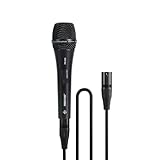
Overview: The Phenyx Pro PM-26S is a performance-focused dynamic microphone engineered for vocalists requiring maximum isolation and articulate sound reproduction. With its supercardioid polar pattern and specially tuned EQ curve, this mic targets live performers, worship leaders, and studio artists seeking professional features in a moderately priced package.
What Makes It Stand Out: The supercardioid pattern provides exceptional side rejection, significantly cleaner than cardioid designs in feedback-prone environments. Phenyx Pro’s tuned EQ curve delivers warm, full-bodied lows and naturally bright highs without sounding hyped. The low impedance design (580Ω) and -50dB sensitivity ensure robust output even with modest preamps, while the built-in foam cover effectively tames plosives.
Value for Money: Strong value for performers needing premium isolation. The comprehensive kit includes a 16.4-foot cable, mic clip, cable strap, and faux leather storage bag—accessories often sold separately. It competes favorably with mics costing significantly more, particularly for live stage use where feedback rejection is paramount.
Strengths and Weaknesses: Strengths include outstanding off-axis rejection, tailored vocal-friendly EQ, high output level, complete accessory package, and rugged full-metal construction. The on/off switch adds convenience for live use. Weaknesses involve the supercardioid pattern’s narrow sweet spot, requiring consistent mic technique. The sound character may be too bright for some voices, and it’s slightly pricier than entry-level options.
Bottom Line: An excellent choice for live vocalists, public speakers, and worship leaders battling feedback and stage noise. The Phenyx Pro PM-26S combines superior isolation, thoughtful voicing, and professional accessories, making it a standout performer in its class for stage-focused applications.
Why Feedback Rejection Matters in Modern Worship Spaces
Today’s worship environments have become acoustically complex arenas where multiple audio sources compete for sonic real estate. Unlike controlled studio settings, your sanctuary presents a perfect storm for feedback: hard reflective surfaces, open microphones for multiple vocalists, monitor wedges or in-ear systems, and the unpredictable variable of congregational participation. Feedback doesn’t just distract—it fundamentally undermines the authenticity of worship by reminding everyone they’re in a manufactured audio environment.
The psychological impact is significant. When feedback strikes repeatedly, it trains your congregation to brace for interruption rather than engage freely. For volunteer sound engineers, constant feedback battles create stress and diminish their ability to mix creatively. A properly selected feedback-rejecting microphone acts as your first line of defense, working proactively to prevent those problematic frequencies from ever looping back into your system.
Understanding Microphone Polar Patterns for Worship Leaders
The Directionality Spectrum Explained
Polar patterns determine how a microphone “hears” sound from different directions, and this characteristic directly impacts feedback susceptibility. Think of it as the microphone’s field of vision—some see in 360 degrees, while others focus like a telephoto lens. For worship leaders, understanding these patterns isn’t just technical trivia; it’s the foundation of feedback prevention.
Omnidirectional microphones capture sound equally from all directions and have no place in most worship leading scenarios precisely because they offer zero rejection of stage noise and monitor bleed. Cardioid patterns, shaped like an inverted heart, reject sound from behind the microphone reasonably well, making them the traditional starting point for live vocals. However, 2026’s more sophisticated audio demands have pushed the development of tighter patterns.
Supercardioid and Hypercardioid Advantages
Supercardioid patterns offer tighter front pickup with slightly more rear sensitivity than cardioid, while hypercardioid patterns narrow the focus even further. These patterns excel for worship leaders because they isolate your voice from drum cymbals, guitar amps, and monitor speakers positioned at specific angles. The trade-off is that they require more consistent microphone technique—you can’t wander far off-axis without losing vocal presence.
The Science Behind Feedback Rejection Technology
Acoustic Cancellation Principles
Modern feedback-rejection microphones employ sophisticated acoustic cancellation that goes beyond simple directional pickup. Internal acoustic labyrinths create phase-reversed pathways for off-axis sound waves, causing them to cancel themselves out before they reach the diaphragm. This mechanical approach works instantaneously without the latency introduced by digital processing.
In 2026, we’re seeing advanced dual-diaphragm designs that actively compare incoming sound waves, rejecting anything that doesn’t match the acoustic signature of a close-proximity vocal source. This technology is particularly effective in worship settings where the microphone must distinguish between your voice and reflected sound from nearby instruments.
Digital Signal Processing Integration
While pure acoustic rejection remains the gold standard, DSP-enhanced microphones are becoming increasingly sophisticated. These systems don’t just cut frequencies reactively; they predict feedback before it occurs by analyzing the phase relationship between input and output signals. For worship leaders, this means the microphone itself becomes an active participant in feedback management, not just a passive tool.
Key Features to Look for in 2026 Worship Microphones
Frequency-Specific Rejection Curves
Not all feedback occurs at the same frequencies. The most effective microphones for worship leaders feature tailored rejection curves that target the specific frequency ranges where feedback typically occurs in worship spaces—typically between 1kHz and 4kHz, with problematic nodes often appearing around 2.5kHz and 3.15kHz. Manufacturers now provide detailed polar response graphs at multiple frequencies, not just the traditional 1kHz measurement.
Proximity Effect Management
The proximity effect—where bass frequencies increase as you get closer to the microphone—can mask your vocal clarity and push your voice into frequencies more prone to feedback. Premium worship microphones in 2026 feature acoustic ports and internal filtering that tame this effect, maintaining consistent tone whether you’re speaking softly during prayer or belting out a chorus at close range.
Supercardioid vs. Hypercardioid: Which Pattern Reigns Supreme?
The Supercardioid Worship Advantage
Supercardioid patterns often strike the ideal balance for worship leaders who need to move freely while maintaining feedback resistance. The slightly wider pickup angle compared to hypercardioid gives you more forgiving off-axis performance when you turn your head to engage different sections of the congregation. This pattern typically provides 10-12 dB of rejection at 180 degrees behind the microphone—perfect for rejecting monitor wedges placed directly in front of you.
When Hypercardioid Makes Sense
Hypercardioid microphones shine in exceptionally difficult acoustic environments, such as highly reverberant traditional sanctuaries or stages with loud backline instruments. The 15-20 dB rejection at 180 degrees comes at the cost of a small lobe of sensitivity directly behind the microphone, which means your monitor placement becomes more critical. For worship leaders who remain relatively stationary behind a pulpit or music stand, hypercardioid can provide superior isolation.
The Impact of Frequency Response on Vocal Clarity
Tailored Presence Peaks
Vocal microphones for worship should feature a controlled presence boost in the 3-5 kHz range, where consonant clarity and vocal intelligibility live. However, the shape of this boost matters tremendously for feedback rejection. A broad, gentle rise is far less problematic than a sharp peak. In 2026, look for microphones that specify their presence curve with terms like “musical” or “smooth” rather than “aggressive” or “peaked.”
Low-Frequency Roll-Off Strategies
Effective low-frequency roll-off serves two purposes: reducing handling noise and preventing low-frequency buildup that can make your voice sound muddy and increase feedback risk. The best worship microphones implement this roll-off acoustically rather than electrically, using physical porting that naturally rejects sub-vocal frequencies below 80Hz while preserving the body and warmth of your voice.
Wireless Systems and Feedback Management in 2026
Digital Wireless and Spectrum Efficiency
The wireless landscape continues evolving, with 2026 seeing widespread adoption of digital systems operating in more efficient spectrum spaces. These systems offer advantages beyond avoiding interference—they maintain a more consistent audio level that doesn’t require aggressive compression at the receiver, which can inadvertently increase feedback risk. Digital transmission also enables bidirectional communication between microphone and receiver for real-time gain staging optimization.
Battery Management and Performance Consistency
Weak batteries cause microphones to operate at reduced sensitivity, forcing sound engineers to compensate with increased gain—directly raising feedback potential. Modern wireless systems feature intelligent power management that maintains consistent output throughout the battery’s life, with some systems providing up to 14 hours of operation on a single charge while alerting you to remaining capacity in 15-minute increments.
Handheld vs. Headset Microphones for Worship Leaders
The Handheld Worship Tradition
Handheld microphones remain the preference for many worship leaders because they offer natural acoustic isolation—you can physically move the mic closer or further to control dynamics and feedback risk. The weight and balance of a quality handheld mic also provide tactile feedback that helps maintain consistent technique. For 2026, look for models with internal shock mounting that reduces handling noise when you’re gesturing or moving vigorously.
Headset Microphones for Hands-Free Ministry
Headset microphones have evolved dramatically, with boom designs that position the capsule at the corner of your mouth rather than directly in front. This placement takes advantage of the natural sound shadow created by your face, providing excellent rejection of ambient stage noise while keeping your hands free for instrumentation or expressive gestures. The latest models feature incredibly thin, low-visibility booms that congregants barely notice.
The Role of DSP and Digital Processing in Feedback Prevention
Microphone-Mounted DSP Solutions
Some 2026 vocal microphones integrate DSP directly into the capsule housing, running sophisticated feedback prevention algorithms with near-zero latency. These systems analyze the incoming audio for the specific phase relationships that precede feedback, applying micro-adjustments to gain and frequency response before the signal ever reaches your mixing console. This approach is particularly valuable for churches with volunteer sound teams who may lack the experience to manually ring out monitors.
Console Integration and Networked Audio
Modern microphones can communicate with digital mixing consoles via networked audio protocols, sharing data about their position, orientation, and even predicting feedback based on room temperature and humidity. This integration allows the console to automatically adjust EQ and gain staging in anticipation of feedback, rather than reacting after it occurs.
Budget Considerations Without Sacrificing Quality
The Total Cost of Ownership Model
When evaluating microphone investments for 2026, consider the total cost over a five-year ministry lifespan. A $400 microphone that eliminates feedback incidents, reduces soundcheck time by 15 minutes weekly, and lasts a decade represents far better value than a $150 microphone that requires frequent replacement and constant EQ adjustments. Factor in the cost of batteries, wireless licensing fees where applicable, and potential repair services.
Mid-Tier Sweet Spots
The $250-$400 range often represents the sweet spot for worship microphones, where you gain professional-grade feedback rejection, durable construction, and reliable wireless performance without paying for studio-recording features irrelevant to live worship. Microphones in this bracket typically share capsule technology with flagship models but use simpler housing and basic DSP.
Durability and Build Quality for Weekly Worship Use
Moisture and Corrosion Resistance
Worship leading is physically demanding, and your microphone endures sweat, humidity, and occasional drops. Premium models feature hydrophobic grille coatings and internal conformal sealing that prevents moisture from reaching sensitive electronics. Some manufacturers now offer replaceable grille assemblies and internal filter screens that can be swapped out during services without tools.
Drop and Impact Survivability
Internal shock mounting has advanced beyond simple rubber isolation. Modern worship microphones use floating capsule designs suspended in acoustic foam specifically tuned to absorb impact frequencies without coloring the sound. Look for models tested to survive repeated drops from 6 feet onto hard surfaces—a realistic scenario in busy worship environments.
Integration with Modern Church Sound Systems
Dante and Networked Audio Compatibility
As churches adopt networked audio systems like Dante, AVB, and Milan, your microphone choice should consider integration capabilities. Some wireless receivers now connect directly to network switches, eliminating analog conversion stages that can introduce noise and reduce feedback headroom. This digital path maintains the integrity of the microphone’s built-in rejection characteristics throughout the signal chain.
Software Control and Preset Management
Wireless microphone systems in 2026 include software applications that let you create and recall presets for different worship leaders, services, or even songs. These presets can adjust gain, apply gentle EQ curves, and optimize feedback rejection parameters instantly. For multi-campus churches, cloud-based preset management ensures consistency across locations.
The Human Factor: Microphone Technique for Worship Leaders
Consistent Distance and Angle
Even the most feedback-rejecting microphone can’t compensate for poor technique. Train yourself to maintain a consistent 2-4 inch distance from the capsule, and keep the microphone angled slightly off-center from your mouth. This positioning maximizes the microphone’s directional rejection while allowing you to turn your head naturally without dramatic volume changes.
Dynamic Control Through Proximity
Learn to use proximity effect intentionally rather than fighting it. For intimate verses, pull back slightly to create a more natural, conversational tone. For powerful choruses, move in closer to add weight and authority to your voice. This technique works with the microphone’s design rather than against it, reducing the need for aggressive compression that can trigger feedback.
Future-Proofing Your Investment for 2026 and Beyond
Firmware Update Capabilities
Choose microphones and wireless systems that support firmware updates via USB or wireless connection. Manufacturers continue refining feedback algorithms and compatibility with emerging wireless spectrum regulations. A microphone that can receive updates remains relevant far longer than one locked to its factory configuration.
Modular Component Design
Forward-thinking manufacturers now offer modular microphone systems where the capsule, transmitter, and receiver can be updated independently. This approach allows you to upgrade to new wireless protocols or capsule technologies without replacing the entire system, protecting your investment as technology evolves.
Testing Methodology: How to Evaluate Microphones Before Buying
The Real-World Worship Simulation
Never evaluate microphones in a silent showroom. Replicate your actual worship environment as closely as possible. Set up monitors at typical stage volumes, have your band play at normal levels, and test the microphone while moving across your actual stage. Pay attention to how feedback resistance changes as you turn your head or raise the microphone during spontaneous moments.
A/B Testing with Your Voice and Your System
Your voice is unique, and your church’s PA system has specific characteristics. Bring your current microphone for direct comparison, and test through your own mixing console and speakers. Listen for how each microphone handles your vocal register, whether it requires unusual EQ adjustments, and how quickly feedback develops when you intentionally push gain.
Frequently Asked Questions
How close do I need to stay to a feedback-rejecting microphone for it to work effectively?
Maintain a consistent distance of 2-4 inches from the microphone grille. Feedback rejection relies on your voice being significantly louder at the capsule than ambient stage noise. Moving further away forces the sound engineer to increase gain, which negates the microphone’s rejection capabilities. Practice holding this distance even when you’re moving or gesturing during worship.
Will a feedback-rejecting microphone eliminate the need for monitor ringing during soundcheck?
A quality feedback-rejecting microphone dramatically reduces but doesn’t completely eliminate the need for soundcheck procedures. You’ll still need to ring out monitors, but you’ll find the process faster and the resulting system gain significantly higher. Think of it as a tool that makes good technique more effective, not a magic solution that replaces proper audio engineering.
Are headset microphones better than handhelds for feedback rejection in worship?
Neither is inherently superior—it depends on your ministry style. Headset mics position the capsule closer to your mouth, providing natural acoustic isolation, but they require precise positioning and can be visible on camera. Handhelds offer more control and are often more forgiving, but they occupy your hands. Choose based on your movement patterns and whether you play an instrument while leading.
How does room acoustics affect microphone feedback rejection performance?
Highly reverberant traditional sanctuaries with hard surfaces reflect more sound back toward the microphone, challenging even the best rejection patterns. In these spaces, hypercardioid patterns and microphones with strong off-axis coloration rejection prove most valuable. Modern “black box” worship spaces with acoustic treatment are more forgiving and work well with supercardioid designs.
Should I prioritize feedback rejection or vocal tone quality?
This is a false dichotomy—2026’s best worship microphones excel at both. However, if forced to choose, prioritize feedback rejection slightly, as a microphone that feeds back is unusable regardless of how beautiful it sounds in isolation. Most premium models now use sophisticated acoustic design to achieve both goals simultaneously.
Do digital wireless systems provide better feedback rejection than analog?
The microphone capsule’s acoustic design determines feedback rejection, not the wireless transmission method. However, digital systems maintain more consistent audio levels and dynamic range, which prevents the gain-riding that can trigger feedback. They also avoid the companding artifacts of analog wireless that can make feedback more harsh when it occurs.
How often should I replace my worship microphone grille and windscreen?
Replace grilles every 12-18 months in active worship environments. Corrosion and dents affect the microphone’s acoustic properties and can create tiny openings that reduce directional control. Windscreens should be replaced quarterly or washed monthly, as accumulated moisture and debris impede high-frequency response and can harbor bacteria.
Can I use the same feedback-rejecting microphone for both speaking and singing?
Absolutely, and this versatility is one of their strengths. The key is learning to work the microphone differently for each application. For speaking, hold it slightly further away (4-6 inches) and speak across the capsule rather than directly into it. For singing, move closer (2-3 inches) and use the proximity effect to add warmth. Quality microphones maintain consistent rejection characteristics across these different use cases.
What role does microphone impedance play in feedback susceptibility?
Impedance matching between microphone and preamp affects overall system headroom. Mismatched impedance can reduce available gain before feedback by 6-10 dB. Most modern worship microphones use low-impedance designs (150-300 ohms) that work optimally with standard mixing console preamps. Always verify compatibility, especially when integrating older analog equipment with new digital systems.
How do I train volunteer sound engineers to maximize my feedback-rejecting microphone’s capabilities?
Invest time in training your volunteers on the specific characteristics of your microphone. Show them how its polar pattern differs from older models, demonstrate proper gain staging, and create written protocols for monitor placement that complement the microphone’s rejection pattern. Consider recording a video tutorial when you first implement the microphone, so new volunteers can learn its capabilities without trial-and-error during live services.
See Also
- 10 Best Vocal Microphones for Female Rock Singers in 2026
- Stop Feedback with the 10 Best Handheld Microphones for Pub Gigs in 2026
- 10 Essential Vocal Microphones for Open-Mic Comedians in 2026
- 10 Budget Vocal Microphones Under $200 That Sound Pro in 2026
- 10 Premium Vocal Microphones for Touring Singers Worth the Road Case in 2026