Table of Contents
The tactile romance of vinyl meets cutting-edge digital precision—that’s the magic of Digital Vinyl Systems in 2026. As hybrid DJing continues to dominate booths from underground clubs to festival main stages, the turntable has evolved from a simple record player into a sophisticated controller that bridges analog feel with digital flexibility. Whether you’re a vinyl purist dipping your toes into digital crates or a controller DJ rediscovering the art of the platter, choosing the right turntable for your DVS setup isn’t just about specs—it’s about finding the instrument that translates your musical intuition into flawless performance.
But here’s the challenge: not every turntable belongs in a DVS rig. The wrong motor, inadequate torque, or poor vibration isolation can turn your pristine digital library into a warbling mess of dropped signals and inaccurate tracking. This guide cuts through the marketing noise to examine what truly matters when selecting a DVS-ready turntable in 2026, from torque curves to tonearm geometry, ensuring your investment delivers rock-solid reliability night after night.
Top 10 Dj Turntables For Dvs
Detailed Product Reviews
1. Pioneer DJ PLX-500 Direct Drive Turntable
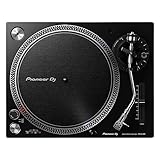
Overview: The Pioneer DJ PLX-500 occupies the sweet spot between entry-level affordability and professional-grade performance. This direct-drive turntable delivers the same core sound engineering as Pioneer’s flagship PLX-1000, making it an ideal choice for aspiring DJs and vinyl enthusiasts seeking reliable playback without premium pricing. Its versatile feature set bridges analog tradition with modern digital workflows, offering USB connectivity for archiving collections and DVS compatibility for contemporary performance setups.
What Makes It Stand Out: The integrated USB output sets the PLX-500 apart from competitors, enabling direct digital recording to PC or Mac without additional hardware. The innovative sleeve stand inside the dust cover displays album artwork during playback—a thoughtful touch missing from most rivals. Its servo-type direct drive provides consistent torque for mixing and scratching, while the 6mm tonearm height adjustment accommodates various cartridges, offering flexibility rarely seen at this price point.
Value for Money: Positioned as a mid-tier option, the PLX-500 delivers exceptional value by bundling professional features typically reserved for pricier models. The USB digitization capability alone saves $100+ on external interfaces, while robust build quality ensures longevity. Compared to similar turntables, it offers superior Pioneer reliability and DVS integration, making it a smarter long-term investment than budget alternatives that lack these capabilities.
Strengths and Weaknesses: Strengths include excellent sound reproduction, seamless USB recording, sturdy construction, and intuitive setup. The DVS compatibility with rekordbox expands performance possibilities. However, torque isn’t as strong as professional models, limiting aggressive scratching potential. The included cartridge is basic, requiring upgrade for serious audiophiles. Some users report the USB output lacks the warmth of analog pathways.
Bottom Line: The PLX-500 is a versatile workhorse perfect for home studios and beginner-to-intermediate DJs. It balances analog authenticity with digital convenience, offering features that grow with your skills. If you need USB archiving and occasional DVS use without breaking the bank, this is your best bet.
2. Pioneer DJ PLX-CRSS12 Direct Drive Turntable with DVS Control - Black

Overview: The Pioneer DJ PLX-CRSS12 represents a paradigm shift in digital vinyl systems, eliminating the tonearm entirely for pure DVS control. This professional-grade direct-drive turntable targets advanced DJs who demand unshakeable reliability during complex performances. Building on the PLX-1000’s legacy, it merges analog feel with digital precision, offering unprecedented customization for scratch artists and club DJs who refuse compromises.
What Makes It Stand Out: The revolutionary tone-arm-free DVS system prevents skipping entirely, allowing extreme turntablism without needle drop anxiety. The Magvel Clamp simulates record weight via an intuitive dial, while customizable torque and braking settings let you tailor response to your exact style. Performance pads and an OLED display provide instant track control and visual feedback, creating a hybrid workflow that traditional turntables simply cannot match.
Value for Money: As a premium product, the CRSS12 justifies its price through innovation alone. The skip-free DVS capability eliminates costly venue repairs and performance disasters. When you factor in the included MAGVEL CLAMP, robust matte black construction, and dual software compatibility (Serato/rekordbox), it outperforms separate controller and turntable setups costing significantly more. This is professional insurance for working DJs.
Strengths and Weaknesses: Unmatched DVS stability, extensive customization, excellent build quality, and intuitive controls are major strengths. The high-torque motor delivers precise response. However, the tonearm-free design limits pure analog playback flexibility. The premium price may deter hobbyists, and the learning curve for traditional vinyl purists is steep. It’s also heavier than competitors, reducing portability.
Bottom Line: For professional DJs prioritizing digital performance reliability, the CRSS12 is revolutionary. It eliminates the weakest link in DVS setups—the tonearm—while retaining vinyl’s tactile essence. If you perform regularly and demand absolute DVS stability, this is worth every penny.
3. Gemini Direct Drive DJ Turntable for Vinyl Records – USB Turntable with Built-In Preamp, High Torque Motor, Pitch Control, S-Shaped Tonearm, 33/45/78 RPM (TT-5000)

Overview: The Gemini TT-5000 is a feature-packed direct-drive turntable that punches above its weight class, delivering professional DJ performance at a budget-conscious price point. Engineered for live sets and studio work, this versatile unit combines high-torque stability with USB digitization capabilities. Its three-speed compatibility (33/45/78 RPM) and robust construction make it an attractive option for mobile DJs and vinyl archivists seeking maximum flexibility without premium costs.
What Makes It Stand Out: The inclusion of 78 RPM support is rare in this category, opening doors for archival DJs and vintage record collectors. The built-in phono preamp with switchable line output eliminates the need for external hardware, simplifying setup dramatically. Gemini’s inclusion of Audacity software for USB recording provides immediate out-of-the-box digitization, while the S-shaped tonearm and anti-skate mechanism deliver audiophile-grade playback typically absent in budget DJ decks.
Value for Money: Exceptional value defines the TT-5000. It bundles features—USB output, built-in preamp, three-speed support, high-torque motor—that would cost $200+ in add-ons with competing models. While build quality doesn’t match Pioneer’s premium offerings, the performance-per-dollar ratio is outstanding. For DJs starting out or veterans needing a reliable backup, this offers professional capabilities at nearly half the price of comparable units.
Strengths and Weaknesses: High-torque motor, comprehensive speed options, built-in preamp, and USB digitization are significant strengths. The anti-skate and hydraulic lift enhance precision. However, the plastic components feel less durable than professional models, and the motor noise is slightly more audible. The included cartridge is mediocre, and long-term reliability may not match industry leaders.
Bottom Line: The TT-5000 is a Swiss Army knife for budget-minded DJs and archivists. It sacrifices some build refinement for feature density, delivering capabilities that far exceed its price. Perfect as a starter deck or backup, though not a flagship workhorse for heavy touring.
4. Rane DJ Twelve MKII | 12-Inch Motorized Vinyl Like MIDI Turntable with USB MIDI & DVS Control for Traktor, Virtual DJ & Serato DJ (TWELVEMKII)

Overview: The Rane DJ Twelve MKII reimagines turntablism for the digital age, offering a motorized 12-inch control surface that mirrors vinyl feel without traditional turntable limitations. This innovative MIDI controller delivers authentic platter response while integrating seamlessly with major DJ software. Designed for purists embracing digital workflows, it eliminates needles, tonearms, and skipping concerns, focusing purely on performance precision in a familiar form factor.
What Makes It Stand Out: The full-size motorized platter with 3600 ticks of resolution provides unparalleled tactile feedback and tracking accuracy. Its dual-mode touch strip combines track search with 8 hot-cue triggers, offering controller-style functionality in a turntable layout. Multi-platform DVS and MIDI support across Serato, Traktor, and Virtual DJ ensures universal compatibility, while the adjustable 5.0 kgfcm torque motor lets you fine-tune resistance to match traditional turntables or modern preferences.
Value for Money: While priced similarly to high-end traditional turntables, the Twelve MKII consolidates multiple devices into one. It eliminates ongoing costs of cartridges, styli, and maintenance while providing software integration that would require separate controllers. For digital-focused DJs, the value is exceptional—delivering vinyl feel without analog vulnerabilities. However, analog purists may find limited value since it requires software to function.
Strengths and Weaknesses: The realistic motorized feel, software versatility, skip-free operation, and high-resolution platter are outstanding. The adjustable torque and hot-cue integration enhance creativity. Conversely, it’s useless without a computer, lacks true analog playback, and requires external power. The footprint is larger than controllers, and the price may deter casual users.
Bottom Line: The Twelve MKII is the ultimate digital turntablist tool, bridging vinyl nostalgia with software power. If you’ve abandoned analog but crave authentic platter control, this is unmatched. Not for traditionalists, but essential for modern performance-focused DJs.
5. Pioneer DJ PLX-CRSS12 Professional Direct Drive Turntable with DVS Control - Black Bundle with Headphones, TRS-to-RCA Breakout Cable, Slipmat, Cleaning Kit, and Austin Bazaar Polishing Cloth

Overview: This Pioneer DJ PLX-CRSS12 bundle delivers the revolutionary tone-arm-free turntable plus essential accessories in one comprehensive package. The CRSS12 itself redefines DVS reliability by eliminating skipping entirely, while the included headphones, cables, slipmat, and cleaning kit provide immediate performance readiness. It’s a turnkey solution for professional DJs seeking the latest in digital vinyl technology without the hassle of sourcing compatible accessories separately.
What Makes It Stand Out: The bundle’s value lies in its curation—Austin Bazaar includes a TRS-to-RCA breakout cable specifically matched to the CRSS12’s gold-plated terminals, ensuring optimal signal integrity. The acrylic turntable mat enhances sound quality beyond standard mats, while the vinyl cleaning kit preserves both analog and DVS control records. The MIDI-mappable performance pads and OLED display remain standout features, offering tactile control that competitors lack.
Value for Money: While the bundle commands a premium, it eliminates $150-200 in additional accessory costs. The included monitoring headphones alone justify the price bump over the standalone unit. For touring DJs, having matched, high-quality cables and maintenance tools prevents mid-gig failures. The convenience factor is substantial—everything arrives calibrated and ready, saving setup time and ensuring component compatibility that piecemeal purchasing cannot guarantee.
Strengths and Weaknesses: The skip-free DVS system, professional build quality, and comprehensive accessory package are major advantages. Gold-plated terminals and vibration-damping materials ensure pristine audio. However, the bundle’s higher total cost may strain budgets, and some DJs may prefer different headphone models. The weight and size remain challenging for mobile setups, and analog playback is limited by the tonearm-free design.
Bottom Line: This bundle is the smartest way to purchase the CRSS12 if you need a complete setup. It eliminates guesswork and provides professional-grade accessories matched to the turntable’s capabilities. For working DJs, the time savings and guaranteed compatibility make it worth the premium. If you already own quality accessories, buy the standalone version.
6. Pioneer DJ PLX-500 High Torque Turntable, USB, Black

Overview: The Pioneer DJ PLX-500 bridges the gap between casual vinyl listening and entry-level DJ performance. This high-torque direct drive turntable inherits DNA from its professional PLX-1000 sibling, offering reliable playback for home enthusiasts and budding turntablists. Its USB output enables straightforward vinyl digitization, while dual phono/line outputs eliminate the need for external preamps when connecting to modern speakers.
What Makes It Stand Out: The integrated cover holder inside the dust lid is a thoughtful touch for collectors who want to display album art during playback. The USB recording capability is implemented with impressive simplicity—just connect to your computer and capture your vinyl collection in high-quality digital formats without complex software. The shorter audio signal path from cartridge to output demonstrably reduces distortion compared to entry-level competitors.
Value for Money: Positioned in the mid-range category, the PLX-500 justifies its price through Pioneer’s build quality reputation and versatile connectivity. It competes directly with Audio-Technica’s AT-LP120XUSB, offering superior torque and a more DJ-focused design. For those seeking a single turntable for both archiving records and learning basic mixing techniques, it represents a smart investment.
Strengths and Weaknesses: Strengths include robust construction, excellent torque for the price class, versatile output options, and intuitive USB recording. Weaknesses are the lack of adjustable start/stop times and a tonearm that, while adequate, doesn’t match the precision of professional models. The pitch fader resolution also lags behind club-standard gear.
Bottom Line: The PLX-500 excels as a multi-purpose turntable for vinyl enthusiasts dipping their toes into DJ culture. While serious turntablists will eventually outgrow its limitations, it’s an ideal foundation for home listening, digitization, and fundamental mixing skills.
7. Numark Scratch | Two-Channel DJ Scratch Mixer for Serato DJ Pro (included) With Innofader Crossfader, DVS license, 6 Direct Access Effect Selectors, Performance Pads and 24-Bit Sound Quality
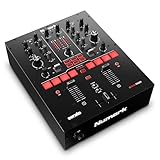
Overview: The Numark Scratch is a purpose-built battle mixer designed for Serato DJ Pro users who prioritize scratching and performance effects. This two-channel mixer comes fully loaded with a DVS license, eliminating the $99 software upgrade cost that competitors often hide. Its compact footprint belies a feature set that punches well above its weight class.
What Makes It Stand Out: The InnoFader crossfader is the star attraction—offering the same buttery-smooth, adjustable performance found in mixers costing twice as much. Six direct-access effect selectors with dual paddle triggers provide immediate control over Serato’s FX suite without menu diving. The performance pads are responsive and well-positioned for quick cue point triggering.
Value for Money: Exceptional. The included Serato DJ Pro license and DVS capability represent over $200 in software value alone. When you factor in the InnoFader, performance pads, and robust I/O options (XLR booth output, dual headphone jacks), this mixer undercuts Pioneer and Rane equivalents by hundreds while delivering comparable core functionality.
Strengths and Weaknesses: Strengths include the premium crossfader, comprehensive software bundle, solid steel chassis, and intuitive layout. The dedicated loop knobs are particularly useful for live performance. Weaknesses include only two channels (limiting for complex setups), no independent channel meters, and effect paddles that feel slightly less premium than high-end alternatives. The microphone input, while present, lacks advanced processing.
Bottom Line: For scratch DJs and digital vinyl enthusiasts on a budget, the Numark Scratch is nearly unbeatable. It democratizes professional-grade features without the premium tax, making it the smartest entry point into serious Serato performance.
8. Numark PT01 Scratch | DJ Turntable for Portablists With User Replaceable Scratch Switch, Built In Speaker, Power via Battery or AC Adapter, Three Speed RPM Selection & USB Connectivity

Overview: The Numark PT01 Scratch revolutionizes portable turntablism by delivering a battery-powered scratching solution that fits in a backpack. Designed for “portablists” who perform anywhere, this compact turntable runs on six D-cell batteries or AC power, making park sessions, busking, and mobile practice not just possible but practical. It’s a specialized tool that serves a growing niche of turntablists.
What Makes It Stand Out: The user-replaceable Scratch Slide Switch is a game-changer—this proprietary fader can be swapped in seconds and accommodates both right and left-handed users, addressing a long-standing portability challenge. The built-in speaker, while not studio-quality, produces surprisingly loud and clear audio for its size, eliminating the need for external monitors in casual settings.
Value for Money: For aspiring portablists, it’s invaluable. The package includes a cartridge, slip-mat, and dust cover—everything needed to start scratching immediately. While it won’t replace a home setup, its sub-$150 price point makes it an accessible second turntable or primary practice device for those who value mobility above all else.
Strengths and Weaknesses: Strengths include true portability, dual power options, the innovative replaceable fader, and the surprisingly capable built-in speaker. It’s rugged enough for travel and simple to operate. Weaknesses are inherent to the form factor: limited torque, basic pitch control, and audio quality that pales next to full-sized decks. The plastic construction, while lightweight, raises durability concerns for heavy touring.
Bottom Line: The PT01 Scratch isn’t trying to compete with club turntables—it’s creating its own category. For portablism enthusiasts and casual scratchers, it’s an essential tool. Traditional DJs should view it as a supplement, not a replacement.
9. Pioneer DJ DJM-S7 2-channel Mixer for Serato DJ & RANE DJ Twelve MKII | 12-Inch Motorized Vinyl Like MIDI Turntable with USB MIDI & DVS Control for Traktor, Virtual DJ & Serato DJ (TWELVEMKII)

Overview: This powerhouse bundle pairs Pioneer DJ’s DJM-S7 two-channel mixer with Rane’s Twelve MKII motorized controller, creating a comprehensive digital vinyl system that bridges analog feel with digital flexibility. The DJM-S7 brings dual USB ports for seamless DJ transitions, Bluetooth audio input, and 16 performance pads, while the Twelve MKII offers authentic 12-inch motorized platters that replicate traditional vinyl control.
What Makes It Stand Out: The marriage of Pioneer’s mixer expertise with Rane’s legendary motorized controller design creates a best-of-both-worlds ecosystem. The Twelve MKII’s full-size acrylic disc delivers genuine vinyl torque and response, while the DJM-S7’s Magvel Fader Pro ensures cut precision that satisfies the most demanding scratch artists. Bluetooth connectivity on the mixer is surprisingly useful for streaming reference tracks or impromptu B2B sessions.
Value for Money: This is premium-priced professional gear, but competitive with buying separate components. The bundle eliminates compatibility concerns and provides a turnkey solution for Serato DJ Pro power users. While expensive, it undercuts comparable setups from Pioneer or Rane individually.
Strengths and Weaknesses: Strengths include authentic motorized control, robust build quality, extensive connectivity (dual USB is brilliant for back-to-back sets), and the intuitive performance pad layout. Weaknesses include the steep learning curve for newcomers, substantial weight and footprint, and the lack of a traditional tonearm (which some purists miss). The price places it firmly in professional territory.
Bottom Line: For dedicated turntablists and club DJs committed to digital vinyl systems, this bundle represents the current state of the art. It’s overkill for hobbyists but indispensable for professionals seeking the most authentic digital vinyl experience available.
10. Reloop RP-2000 MK2 Direct Drive DJ Turntable

Overview: The Reloop RP-2000 MK2 is a budget-conscious direct drive turntable that delivers quartz-locked stability without the premium price tag. Aimed at beginner DJs and home listeners transitioning to performance, it includes a genuine Ortofon OM Black cartridge—a rarity in this price bracket. The redesigned metal top panel and reinforced housing suggest durability uncommon in entry-level decks.
What Makes It Stand Out: The inclusion of a quality Ortofon cartridge immediately elevates this above competitors that bundle generic carts. The quartz-driven motor maintains consistent speed with minimal wow and flutter, while the S-shaped tonearm with hydraulic lift provides handling that mimics more expensive turntables. Reloop has focused on core performance rather than flashy features.
Value for Money: Outstanding. Competing turntables at this price point typically require immediate cartridge upgrades, adding $50-100 to the total cost. The RP-2000 MK2 offers professional-grade playback components in a no-frills package, making it perhaps the best value entry point for DJ turntablism.
Strengths and Weaknesses: Strengths include the Ortofon cartridge, solid quartz lock, robust construction, and precise pitch control. The anti-skating mechanism is properly implemented—a detail often overlooked in budget decks. Weaknesses include moderate torque that’s sufficient for mixing but may struggle with heavy scratching, the lack of USB connectivity, and a generic aesthetic that won’t turn heads. The start/stop time is fixed and slower than battle standards.
Bottom Line: The RP-2000 MK2 is the sensible choice for budget-minded DJs who prioritize sound quality and reliability over flashy features. It’s a workhorse that will serve beginners well through their formative mixing years without requiring immediate upgrades.
Understanding DVS Technology in 2026
Digital Vinyl Systems have matured dramatically since their inception, and the landscape in 2026 reflects nearly two decades of refinement. At its core, DVS uses special timecode vinyl records—pressed with an audible tone that sounds like a persistent digital screech—to communicate position, speed, and direction data to your laptop. Your DJ software interprets this analog signal and uses it to control your digital files, giving you the hands-on feel of vinyl with access to unlimited digital crates.
The Evolution of Digital Vinyl Systems
Modern DVS platforms now operate with sub-millisecond latency and utilize advanced signal processing algorithms that can compensate for everything from platter warps to minor scratches on your timecode records. In 2026, we’ve seen the widespread adoption of hybrid timecode that works across multiple software platforms simultaneously, eliminating the proprietary lock-in that plagued early adopters. This universality means your turntable choice matters more than ever—it needs to be a neutral, high-fidelity platform that accurately reproduces the timecode signal without coloration or distortion.
How DVS Integration Works with Modern Turntables
Today’s DVS-ready turntables don’t just passively spin records; they’re designed as precision instruments for digital control. The electrical signal path from cartridge to phono preamp to audio interface must maintain exceptional clarity in the 2-4 kHz range where timecode data lives. Any resonance, electrical noise, or mechanical vibration in this frequency band can cause software misreads, resulting in cue point drift, tempo instability, or complete signal loss. Premium DVS turntables feature isolated grounding paths, shielded tonearm wiring, and motor controllers that eliminate electromagnetic interference before it reaches your cartridge.
Key Features That Define Professional DVS Turntables
When evaluating turntables strictly for DVS performance, certain specifications move from “nice-to-have” to “absolutely critical.” The demands of timecode playback differ significantly from casual vinyl listening, creating a distinct feature set that separates club-ready workhorses from living room record players.
Torque and Motor Power: The Heartbeat of Performance
Torque—the rotational force that gets your platter moving—directly impacts how quickly your digital track responds to your touch. For DVS, you need instant start/stop behavior that mirrors the responsiveness of controllers. Look for high-torque direct drive motors delivering at least 1.5 kgf·cm (kilogram-force centimeter) of starting torque, with some professional models exceeding 4.0 kgf·cm. This power ensures that when you release a record, the platter immediately locks to the correct RPM, preventing the millisecond lag that can throw off tight mixes. Motor control circuitry should provide quartz-locked speed stability with less than 0.01% variance, maintaining perfect sync with your digital grid.
Pitch Control Precision: Why Micro-Adjustments Matter
While sync buttons handle heavy lifting in modern DJing, manual pitch riding remains an essential skill. DVS turntables require pitch faders with resolution down to 0.02% increments—finer than the human ear can detect but crucial for subtle timing adjustments. The fader mechanism itself should use conductive plastic or optical sensors rather than cheap carbon tracks, which develop dead spots and inconsistent travel over time. In 2026, digital pitch displays showing exact BPM offset have become standard on professional models, allowing you to match tempos visually before fine-tuning by ear.
Build Quality and Vibration Resistance
Club environments are acoustic war zones: subwoofers pump out frequencies that can turn a poorly isolated turntable into a feedback nightmare. Professional DVS decks employ mass-loaded platters (often 2-3 kg of die-cast aluminum or composite materials), S-shaped tonearms with hydraulic dampening, and chassis designs that decouple the motor from the base. Rubber-damped feet are non-negotiable—they should compress under weight to absorb vibration while maintaining stability. Some advanced models incorporate active vibration cancellation, using accelerometers to detect movement and counteract it with micro-adjustments to the motor controller.
Direct Drive vs. Belt Drive: The DVS Debate Settled
The direct drive versus belt drive argument ends at the DVS doorstep. Belt drive turntables, while excellent for audiophile listening, lack the torque and braking speed required for reliable digital control. The elastic nature of the belt introduces microscopic speed variations that timecode systems interpret as platter movement, causing your digital track to drift unpredictably. For DVS applications, direct drive isn’t just preferred—it’s mandatory. The motor’s direct connection to the platter provides the instantaneous response and speed accuracy that digital systems demand.
Tonearm Technology and Cartridge Compatibility
Your tonearm and cartridge form the critical interface between physical vinyl and digital data. This pairing requires careful consideration beyond simply screwing in whatever came in the box.
S-Shaped vs. Straight Tonearms for DVS
The geometry debate takes a twist with timecode records. S-shaped tonearms, with their offset headshell angle, theoretically reduce tracking distortion across the record surface. However, straight tonearms offer superior rigidity and less resonance, which translates to cleaner timecode signal extraction. In practice, either design works excellently when properly engineered—the key is avoiding lightweight, resonant tonearms that ring like tuning forks. Look for tonearms with minimum 7g effective mass and adjustable anti-skate mechanisms that can be fine-tuned for the specific tracking force your cartridge requires.
Cartridge Selection for Optimal DVS Signal
The cartridge’s job is to accurately convert the timecode groove’s physical variations into electrical voltage. For DVS, you want a moving magnet (MM) design with spherical stylus tip—elliptical tips, while great for music reproduction, can misread the continuous tone of timecode records, especially if the record is slightly worn. Output voltage between 5-8 mV provides strong signal-to-noise ratio without overloading your audio interface’s phono preamps. Crucially, the cartridge must have excellent channel separation (25 dB or better) to prevent crosstalk between left and right timecode channels, which can cause the software to lose position lock.
Connectivity Options for Modern Setups
The back panel of a 2026 DVS turntable reveals how far we’ve come from simple RCA outputs. Modern integration demands flexibility for both traditional analog rigs and streamlined digital workflows.
USB, Bluetooth, and Wireless Integration
While purists scoff at wireless turntables, 2026’s Bluetooth 5.4 implementation offers latency below 20ms—acceptable for monitoring but still not recommended for primary DVS signal transmission. Where wireless shines is in control data: some turntables now transmit platter speed, pitch position, and even touch-sensitive data directly to your laptop via low-latency wireless, reducing cable clutter. USB-C outputs with built-in phono preamps and ADCs (analog-to-digital converters) have become commonplace, allowing direct digital connection to your computer at 24-bit/96kHz resolution, bypassing your mixer or audio interface entirely.
Grounding and Noise Reduction in Digital Setups
Ground loops—the bane of every DJ’s existence—have been addressed through innovative grounding schemes. Look for turntables with dedicated ground lift switches and balanced XLR outputs in addition to standard RCAs. Some models feature “smart grounding” that automatically detects and eliminates ground loop hum through phase cancellation circuitry. The phono stage itself should be shielded in a separate metal enclosure within the turntable body, physically isolated from the motor controller to prevent digital noise from bleeding into your timecode signal.
RPM Stability and Wow/Flutter Specifications
While 33⅓ RPM is the standard for timecode records, the consistency of that speed matters enormously. Wow and flutter specifications—measuring speed variations—should be 0.01% WRMS or better for DVS use. Anything higher and you’ll notice your digital grids drifting, requiring constant manual correction. The best turntables achieve this through dual-mode motor control: a quartz-locked reference for steady-state rotation, plus active feedback from optical sensors that read markings on the platter underside, making real-time corrections up to 1,000 times per second.
Platter Materials and Their Impact on Performance
Platter mass and damping directly affect how well your turntable rejects external vibration and maintains speed. Die-cast aluminum remains the industry standard, but 2026 has seen increased adoption of composite platters combining aluminum cores with rubber damping layers. These hybrid designs offer the rotational inertia of heavy platters without the ringing resonance that pure metal can exhibit. Matte black platters aren’t just aesthetic—they reduce reflected light that can interfere with optical speed sensors. Some high-end models feature interchangeable platter mats specifically tuned for timecode records, with slightly higher friction coefficients than traditional audiophile mats to prevent record slip during aggressive scratching.
Software Ecosystem Compatibility
Your turntable doesn’t care whether you run Serato, rekordbox, Traktor, or VirtualDJ—but your workflow does. In 2026, most professional DVS turntables are “software agnostic,” meaning they don’t include proprietary firmware that locks you into a specific platform. However, certain features can enhance your software experience: native support for HID (Human Interface Device) protocols allows your turntable to communicate directly with software, mapping platter speed to on-screen waveforms and enabling features like automatic deck switching when you lift the needle. Check for firmware updatability via USB—manufacturers regularly release updates that improve timecode decoding accuracy for new software versions.
Budget Tiers: What to Expect at Each Price Point
DVS-ready turntables span a vast price range, and understanding what each tier offers helps set realistic expectations. The adage “you get what you pay for” holds particularly true in this specialized market.
Entry-Level Considerations for Aspiring DVS DJs
In the $300-500 range, you’ll find direct drive turntables that meet minimum DVS requirements but make compromises in longevity and features. Expect adequate torque (1.5-2.0 kgf·cm), basic aluminum platters, and simple RCA outputs. These models typically use stamped steel chassis rather than cast metal, making them more susceptible to feedback in loud environments. They’ll work perfectly in bedroom studios and small gigs but may require replacement after 2-3 years of heavy club use. The key is ensuring they have user-replaceable parts—particularly the stylus, headshell, and pitch fader.
Professional-Grade Investments
Stepping into the $800-1,500 bracket transforms the experience. Here you’ll find tour-grade construction with replaceable cables, heavy-duty pitch faders rated for millions of cycles, and torque exceeding 3.0 kgf·cm. These turntables feature modular designs allowing field replacement of motor assemblies and tonearm components—critical for working DJs who can’t afford downtime. Advanced connectivity includes multiple output options, dedicated grounding posts, and sometimes built-in audio interfaces. The investment pays for itself in reliability alone, with many professional models still performing flawlessly after a decade of nightly use.
Setup and Calibration Best Practices
Even the finest turntable performs poorly if improperly configured. DVS demands meticulous setup that goes beyond standard vinyl playback.
Start with a perfectly level surface; use a bullseye level on the platter itself, not just the turntable base. Set tracking force precisely to your cartridge manufacturer’s recommendation—too light and you’ll get timecode dropouts, too heavy and you’ll wear records prematurely. Align your cartridge using a proper protractor; even slight misalignment causes channel imbalance that confuses DVS software. Calibrate your software’s input levels so the timecode signal peaks at -10 dB to -6 dB, leaving headroom for scratches and backspins without clipping. Finally, run the built-in calibration tone in your DVS software, which analyzes your specific turntable’s pitch range and response curve, creating a custom mapping that compensates for any mechanical variations.
Maintenance and Longevity in Heavy-Use Scenarios
Touring DJs know that maintenance separates professionals from hobbyists. Clean your timecode records weekly with carbon fiber brushes—dirt in the grooves creates signal dropouts that feel like software bugs but are purely mechanical. Replace your stylus every 500-800 hours of DVS use; timecode records are harder on styli than music vinyl due to their continuous high-frequency tone. Lubricate the tonearm bearings annually with a single drop of synthetic oil designed for precision instruments. For turntables with exposed pitch faders, use compressed air monthly to remove dust that causes scratchiness and dead spots. Most importantly, transport your turntables in flight cases with the platter removed and secured separately—platter bearings can be damaged by shocks that the chassis otherwise survives.
Future-Proofing Your DVS Turntable Investment
The DVS landscape will continue evolving, but certain principles ensure your purchase remains relevant. Prioritize turntables with firmware update capability via USB or Wi-Fi—this allows manufacturers to add features and improve performance years after purchase. Choose models with standard mounting patterns and interchangeable parts; proprietary designs become paperweights when manufacturers discontinue support. Consider turntables with expandability options like auxiliary input jacks for future control vinyl formats or modular tonearm bases that accept new cartridge standards. The most forward-thinking feature is support for “multimode” operation—ability to switch between pure analog vinyl, DVS timecode, and MIDI/HID control modes, ensuring your deck adapts to whatever the future of DJing brings.
Frequently Asked Questions
1. Can I use any turntable for DVS, or do I need a special model?
While technically any direct drive turntable can work, DVS-optimized models feature superior grounding, higher torque, and better speed stability that prevent signal dropouts and tracking issues. Standard consumer turntables often lack the precision required for reliable digital control.
2. How often should I replace my timecode vinyl?
With proper care and cleaning, timecode records last 1,000-1,500 hours before the high-frequency tone wears down enough to cause decoding errors. Replace them when you notice increased signal dropouts or when calibration fails despite proper setup.
3. What’s the minimum torque rating acceptable for DVS?
Aim for at least 1.5 kgf·cm of starting torque. Anything lower results in sluggish start/stop response and may cause the platter to lag during heavy scratching, making your digital tracks feel disconnected from your movements.
4. Do I still need a phono preamp with USB turntables?
USB turntables with built-in preamps output line-level signals, but for DVS you typically want the raw phono signal. Many USB DVS turntables offer a switch to bypass the internal preamp, sending unamplified signal to your computer for the software to process directly.
5. Can wireless turntables be used for professional DVS gigs?
Not for the primary timecode signal. While wireless technology has improved, the latency and potential for interference make it unsuitable for reliable DVS control. Use wired connections for your timecode and reserve wireless for secondary features like control data or monitoring.
6. Is there a difference between scratching on DVS versus regular vinyl?
The feel is nearly identical on a properly calibrated system, but DVS timecode records are slightly louder and produce a continuous tone rather than music. This can affect how you hear needle feedback in the booth, requiring adjustment of your monitor mix.
7. How important is anti-skate adjustment for DVS?
Critically important. Incorrect anti-skate causes uneven pressure on the groove walls, leading to channel imbalance that confuses DVS software. Set it to match your tracking force precisely, and verify both channels show equal levels in your software’s scope view.
8. Can I use elliptical styli on timecode records?
It’s not recommended. Elliptical styli can misread the continuous high-frequency tone of timecode records, especially on worn pressings. Spherical styli provide more reliable tracking and longer record life, making them the professional standard for DVS.
9. What’s the ideal platter weight for DVS turntables?
Look for platters weighing 1.5-3 kg. Too light and the platter lacks rotational inertia to resist speed fluctuations from vibration. Too heavy and the motor struggles with rapid speed changes needed for scratching. The sweet spot provides stability without sacrificing responsiveness.
10. Will my DVS turntable become obsolete as technology advances?
Quality DVS turntables have remained relevant for over a decade due to their analog nature. As long as they maintain accurate speed and clean signal path, they’ll work with future software. Firmware-updatable models offer the best protection against obsolescence, but mechanical precision never goes out of style.
See Also
- 10 DJ Turntables for DVS DJs Who Still Use Controllers in 2026
- 10 DJ Turntables for Controllers Supporting DVS Without Needles in 2026
- 10 Expert Picks: DJ Turntables for Controller DVS Control in 2026
- 10 Expert-Recommended DJ Controllers for Scratch Kids Competitions in 2026
- 10 Expert-Recommended DJ Controllers for Radio Stations in 2026