Table of Contents
The unmistakable warmth, harmonic complexity, and touch-sensitive dynamics of a tube guitar amplifier remain the gold standard for professional studio recording, even as we approach 2026. While digital modeling has achieved remarkable sophistication, there’s an irreplaceable three-dimensional quality to real glass tubes saturating in a well-designed circuit—an alchemy of physics and artistry that continues to captivate producers and artists alike. The modern studio landscape has evolved, however, and today’s recording environments demand amplifiers that balance vintage inspiration with contemporary flexibility, low-noise operation, and seamless integration with hybrid analog-digital workflows.
As we look toward 2026, the tube amp market reflects a fascinating convergence of traditional craftsmanship and innovative engineering. Manufacturers have responded to home-studio proliferation with smarter power scaling, improved attenuation solutions, and features specifically tailored for direct recording. Understanding what makes an amplifier truly “studio-essential” requires looking beyond brand prestige or wattage ratings—it demands a deep dive into circuit topology, component quality, and how these elements translate to microphone diaphragms and ultimately, your DAW.
Top 10 Tube Guitar Amplifiers
Detailed Product Reviews
1. Monoprice 5-Watt, 1x8 Guitar Combo Tube Amplifier with Celestion Speaker - Stage Right Series

Overview: The Monoprice Stage Right 5-watt tube amplifier delivers authentic vacuum tube tone in a compact, budget-friendly package. Featuring an ECC83/12AX7 preamp tube paired with a 6V6GT power tube, this amp drives a genuine Celestion Super 8 GBA-15 speaker. With dual inputs offering normal and attenuated signal paths, it covers frequencies from 80Hz to 10kHz while maintaining low noise (-75dB) and minimal distortion (0.5% THD). This no-frills design focuses purely on the organic, responsive characteristics that make tube amps desirable for guitarists seeking natural compression and harmonic richness.
What Makes It Stand Out: True tube circuitry at this price point is remarkable. The inclusion of a genuine Celestion speaker—rather than a generic off-brand unit—significantly elevates tonal quality. The dual-input design provides practical flexibility, allowing players to match the amp’s gain staging to their guitar’s output. Its straightforward control set eliminates menu-diving, offering immediate, tactile interaction with pure tube tone. The 5-watt output hits a sweet spot for home use, delivering satisfying volume and breakup without overwhelming residential spaces.
Value for Money: Exceptional. Comparable tube amps from boutique brands cost 3-5 times more. While lacking modern features like built-in effects or USB connectivity, it provides authentic tube tone that digital modeling cannot replicate. For players prioritizing sound quality over features, this represents outstanding value.
Strengths and Weaknesses: Strengths include genuine tube tone, quality Celestion speaker, simple operation, and compact size. Weaknesses are limited 5-watt power, lack of effects, no headphone jack, and basic two-knob tone control. The 8-inch speaker, while quality, lacks low-end depth.
Bottom Line: Perfect for home practice, studio recording, or as a platform for pedalboards. If you want real tube tone without breaking the bank, this Monoprice delivers where it matters most—pure, responsive sound.
2. Fender Mustang LT25 Guitar Amp, 25-Watt Combo Amp, with 2-Year Warranty, 30 Preset Effects with USB Audio Interface for Recording

Overview: The Fender Mustang### 1. Monoprice 5-Watt, 1x8 Guitar Combo Tube Amplifier with Celestion Speaker - Stage Right Series
Overview: The Monoprice Stage Right 5-Watt Tube Amplifier delivers authentic vacuum tube tone at an entry-level price point. This compact combo pairs a genuine ECC83/12AX7 preamp tube with a 6V6GT power tube, driving a Celestion Super 8 speaker. Designed for bedroom practice and studio recording, it offers the harmonic richness and dynamic response that only tubes provide.
What Makes It Stand Out: True tube circuitry sets this apart from digital modeling amps in the same price bracket. The Celestion speaker is a premium touch rarely seen on budget amplifiers. The dual-input design (Low/High) provides flexibility for different guitars and playing styles, allowing players to choose between clean headroom and easy overdrive saturation.
Value for Money: At its price point, this is one of the most affordable ways to experience genuine tube tone. Comparable tube amps from boutique brands cost three to five times more. While it lacks features like built-in effects or USB connectivity, the simplicity is part of the appeal—your money goes directly toward tone quality rather than digital processing.
Strengths and Weaknesses: Strengths include authentic tube warmth, responsive dynamics, quality Celestion speaker, and straightforward operation. The 5-watt output is perfect for home use without disturbing neighbors. Weaknesses are limited volume for gigs, no effects loop or reverb, and basic EQ controls. The 8-inch speaker may lack deep bass response compared to larger cabinets.
Bottom Line: An exceptional value for players seeking their first tube amp or a low-volume recording solution. It won’t replace a gigging rig, but for studio work and home practice, the Monoprice delivers genuine tube character that digital amps simply cannot replicate.
3. Flatsons FBA-10 Guitar Amp, 10W Mini Electric Guitar Amplifier with Clean/Drive Channel, 6H Working, USB-C Rechargeable, 3.5mm Headphone/AUX Jack, Wireless Portable Amp for Indoor Practice, Traveling

Overview: The Fender Mustang LT25 is a 25-watt digital modeling amplifier designed for beginners and home studio enthusiasts. It features an 8-inch Fender Special Design speaker and a 1.8-inch color display that simplifies navigation through its 30 onboard presets. This amp aims to provide versatile tones for practice and recording sessions.
What Makes It Stand Out: The user-friendly interface with color display makes complex amp modeling accessible to novices. Thirty presets cover everything from pristine cleans to high-gain metal tones. The included USB audio interface transforms it into a recording interface, eliminating need for separate equipment. Fender’s two-year warranty provides peace of mind.
Value for Money: Competitively priced against modeling amps from Line 6 and Boss, the LT25 offers exceptional value with its USB recording capability. The Fender brand name and build quality justify the modest premium over generic alternatives. For beginners, it eliminates need for multiple pedals and processors.
Strengths and Weaknesses: Strengths include intuitive operation, diverse tonal options, recording connectivity, headphone jack for silent practice, and reliable construction. The color display is a standout feature in this class. Weaknesses include digital tone that may feel less organic than tubes, limited volume for live performance, and 8-inch speaker’s constrained low-end response.
Bottom Line: Perfect for beginners seeking versatility without complexity. The LT25 excels as a practice amp and home recording solution, though serious gigging musicians will need more power. Its preset variety and USB functionality make it an excellent learning tool that grows with your skills.
4. Fender Champion II 50 Guitar Amp, 50 Watts, with 2-Year Warranty, Features 12 Built-In Effects Models

Overview: The Flatsons FBA-10 is a 10-watt portable amplifier designed for mobile musicians. This battery-powered combo delivers up to six hours of playtime via USB-C charging, making it ideal for travel, street performance, and quiet home practice. Its analog circuitry promises natural tone in a compact 580-gram package that fits easily in any backpack.
What Makes It Stand Out: Pure analog signal path distinguishes it from digital portable amps in this category. Bluetooth 5.3 connectivity allows wireless backing tracks, while the headphone jack enables silent practice. The dual-channel design (Clean/Drive) with independent Gain and Tone controls provides genuine tonal flexibility rare in mini amps. The vintage-inspired woven grille adds aesthetic appeal.
Value for Money: Positioned between budget no-name amps and premium portables like the Roland Micro Cube, the FBA-10 offers compelling features for its price point. The six-hour battery life and Bluetooth functionality add significant value for buskers and travelers who need reliability and convenience without breaking the bank.
Strengths and Weaknesses: Strengths include excellent portability, long battery life, analog warmth, wireless connectivity, and headphone/aux flexibility. The 10-watt output covers small spaces effectively. Weaknesses include unknown brand reputation, potential durability concerns, limited volume for group settings, and lack of effects beyond basic drive.
Bottom Line: An impressive portable solution for practice and casual playing. The Flatsons FBA-10 suits traveling guitarists and apartment dwellers who prioritize portability and analog tone over raw power. While not for serious gigging, it’s a versatile tool for keeping your chops up anywhere inspiration strikes.
5. LEKATO Mini Electric Guitar Amp 5W, Portable Guitar Amp Bluetooth with Built-in 4 Effects, Clean Distortion Overdrive Reverb, Rechargeable Small Amplifier for Practice, Black (JA-05G)

Overview: The Fender Champion II 50 is a 50-watt solid-state amplifier built for versatile practice and small venue performance. It features a 12-inch Fender Special Design speaker and two channels with twelve built-in effects including reverb, delay, chorus, and tremolo. This amp targets intermediate players needing a reliable stage and studio workhorse without the maintenance of tubes.
What Makes It Stand Out: The 50-watt output through a 12-inch speaker provides gig-worthy volume and full-range response that smaller practice amps cannot match. The effects selection covers essential modulation and time-based tones without requiring external pedals. Fender’s amp voicings deliver classic clean and overdriven tones reminiscent of their legendary tube amps.
Value for Money: Competitively priced against similar wattage amps from Peavey and Orange, the Champion II 50 offers Fender’s reliability and service network. The built-in effects eliminate need for a starter pedalboard, saving additional expense. Two-year warranty adds long-term value and buyer confidence.
Strengths and Weaknesses: Strengths include ample clean headroom, genuine Fender cleans, robust construction, versatile effects, and loud enough for small gigs. The 12-inch speaker produces satisfying low-end. Weaknesses include solid-state distortion that lacks tube warmth, no USB connectivity for recording, limited amp models compared to digital competitors, and effects are not footswitchable.
Bottom Line: A dependable workhorse for gigging musicians on a budget. The Champion II 50 excels at clean tones and takes pedals well, making it a versatile platform for players who prefer analog simplicity with some digital effects convenience. Ideal for rehearsals, small clubs, and reliable home practice sessions.
6. Monoprice 1x12 Guitar Speaker Cabinet With Celestion Vintage 30, Designed to Match to our 30-Watt Stage Right Head - Stage Right Series
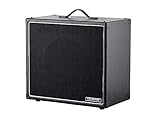
Overview: The Monoprice 1x12 cabinet pairs professional-grade tone with budget-conscious pricing. Built around the legendary Celestion Vintage 30 speaker—heard on countless recordings from artists like Slash and Peter Frampton—this enclosure delivers the midrange punch and clarity that defines modern rock guitar tone. Designed specifically as a companion to Monoprice’s 30-watt Stage Right head, it features a rugged black textured synthetic leather exterior, metal corner caps, and a comfortable leather handle for reliable gigging durability.
What Makes It Stand Out: The Celestion Vintage 30 is the star here, offering a proven sonic signature rarely found in budget-friendly cabinets. The speaker’s tight lows, aggressive mids, and detailed highs respond beautifully to both clean and overdriven tones. Monoprice has smartly focused resources on the component that matters most—the speaker—while providing adequate, road-worthy construction that doesn’t inflate the price with premium hardwood claims.
Value for Money: Comparable V30-loaded cabinets typically cost $400-600, making this Monoprice offering a remarkable value at roughly half the price. You’re getting the exact same speaker used in high-end cabs, making it an intelligent choice for tone-seekers on a budget. The trade-off comes in cabinet materials and construction finesse, but the core tone remains authentic.
Strengths and Weaknesses: Pros: Authentic Celestion Vintage 30 speaker; aggressive, professional tone; rugged enough for gigging; exceptional price point. Cons: Requires separate amplifier head; synthetic cabinet materials may lack resonance of birch plywood; limited tonal versatility without EQ controls on the cab itself.
Bottom Line: This cabinet is a no-brainer for players wanting Vintage 30 tone without the premium price. Perfect for pairing with the Stage Right 30W head or any quality amplifier, it delivers pro-level sound for budget-minded musicians.
7. Fender Frontman 20G Guitar Amp, 20 Watts, with 2-Year Warranty 6 Inch Fender Special Design Speaker, 10x16x16 inches

Overview: The Fender Frontman 20G represents the classic entry point into the Fender amplifier ecosystem. This 20-watt combo delivers the brand’s signature clean tones through a compact 6-inch Special Design speaker, housed in a straightforward 10x16x16-inch enclosure. With dual channels, three-band EQ, and convenient practice features like aux input and headphone jack, it’s built specifically for beginners and bedroom players seeking that authentic Fender voice.
What Makes It Stand Out: Fender’s two-year warranty underscores their confidence in build quality—a standout in the budget amp category. The clean channel captures the sparkling Fender character that defined electric guitar tone for decades, while the separate Drive channel provides accessible overdrive without complexity. The intuitive control layout means new players spend time playing, not deciphering menus.
Value for Money: Priced competitively with other entry-level amps, the Frontman 20G justifies its cost through brand reliability and resale value. While the 6-inch speaker naturally limits low-end response, you’re paying for Fender’s quality control and service network rather than raw power or premium components—a worthwhile trade-off for beginners.
Strengths and Weaknesses: Pros: Authentic Fender clean tones; excellent warranty coverage; simple, beginner-friendly interface; reliable brand support; aux/headphone jacks for practice. Cons: 6-inch speaker lacks bass depth; 20 watts insufficient for jamming with drums; Drive channel can sound thin at higher volumes; no reverb.
Bottom Line: Ideal for new players prioritizing brand trust and clean tones over raw power. The Frontman 20G excels as a practice amp and introduction to Fender’s legendary sound, though serious players will quickly outgrow its limitations.
8. Monoprice 1x10 Guitar Combo Amplifier - Black, 40-Watt, Spring Reverb, 10-Inch 4-Ohm Speaker, High & Low Inputs, Headphone Output - Stage Right Series

Overview: The Monoprice Stage Right 1x10 combo delivers surprising versatility in a budget-friendly package. This 40-watt amplifier drives a 10-inch speaker through a 3-band EQ spanning 60 Hz to 12 kHz, with total harmonic distortion kept at a respectable 0.5%. The inclusion of genuine spring reverb and dual inputs (high/low) suggests ambitions beyond typical practice amp status, while the headphone output maintains home-friendly usability.
What Makes It Stand Out: The “volume goes to 11” feature—while a cheeky Spinal Tap reference—highlights Monoprice’s willingness to have fun while delivering serious features. The spring reverb is a rarity in this price class, offering authentic ambience that digital reverbs struggle to replicate. The 40-watt power section provides genuine clean headroom for small gigs, a significant step up from 20-watt competitors.
Value for Money: With 40 watts, spring reverb, and flexible EQ at a price point where most brands offer 20-watt solid-state amps with digital effects, the value proposition is compelling. You’re getting gig-worthy power and authentic vintage-style reverb without the vintage price tag, though corners are inevitably cut in speaker quality and cabinet construction.
Strengths and Weaknesses: Pros: 40 watts of usable power; genuine spring reverb; flexible 3-band EQ; high/low inputs accommodate various guitars; excellent price-to-feature ratio. Cons: Off-brand 10-inch speaker may not handle 40W optimally; build quality less robust than premium brands; no effects loop; limited clean headroom at maximum volume.
Bottom Line: A feature-packed amplifier for players needing more power than typical practice amps provide. The Monoprice 1x10 excels at home practice and small venue gigs, especially for those prioritizing effects and power over brand prestige.
9. Orange Crush 20 20W 8" 2-Channel Guitar Amplifier and Speaker Combo, Orange
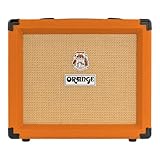
Overview: The Orange Crush 20 distills the company’s iconic British tone into a compact 20-watt combo. Built around a high-gain preamp and 8-inch speaker, this twin-channel amplifier delivers the distinctive Orange sound that dominated British rock. The three-band EQ provides tonal shaping, while the CabSim-loaded headphone output lets players practice silently with realistic cabinet emulation—a thoughtful touch for apartment dwellers.
What Makes It Stand Out: Orange’s signature high-gain preamp voice is the main attraction, offering thick, saturated distortion that competitors struggle to match. The CabSim technology is genuinely useful, providing recording-ready direct tones and inspiring practice sessions through headphones. The unmistakable orange tolex and basketweave grille maintain brand authenticity even at this accessible price point.
Value for Money: Orange commands a slight premium over generic brands, but the Crush 20 justifies it through superior preamp design and build quality. You’re paying for decades of tone-crafting expertise rather than raw power or speaker size. For rock and metal players, the signature distortion alone validates the price difference.
Strengths and Weaknesses: Pros: Iconic Orange high-gain tone; excellent CabSim headphone output; robust build quality; authentic brand aesthetics; effective 3-band EQ. Cons: 8-inch speaker limits low-end thump; 20 watts won’t compete with drummers; clean channel lacks Fender-like sparkle; no reverb or effects.
Bottom Line: Perfect for rock players seeking authentic Orange tone in a practice-friendly package. The Crush 20 prioritizes distinctive distortion and quiet practice capabilities over versatility, making it ideal for apartment players and genre-specific musicians.
10. GLARRY Electric Guitar Amp, Portable Guitar Tube Amp with Headphone MP3 Input, 20W Practice Guitar Combo Amplifier Speaker Accessories with Bass, Volume, Treble, and Middle Controls
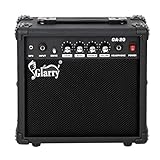
Overview: The Glarry 20-watt combo targets the ultra-portable practice market with a lightweight (6.61lb) design and budget-conscious feature set. Driving a 6.5-inch speaker, this amplifier includes essential controls—gain, volume, and 3-band EQ—plus built-in overdrive for basic tonal variety. The 1/4-inch headphone jack and 1/8-inch MP3 input facilitate silent practice, while hard rubber edges provide basic protection during transport.
What Makes It Stand Out: Extreme portability defines this amp, with the included belt clip enabling literal walk-around practice sessions. The price point makes it one of the most accessible electric guitar amplifiers available, removing financial barriers for absolute beginners. The rubber edge protection is a practical addition rarely seen even in pricier practice amps.
Value for Money: This is among the cheapest functional guitar amplifiers on the market. While you sacrifice tone quality, power, and brand support, the Glarry delivers basic amplification at a price that competes with guitar cables. For beginners unsure about their commitment, the financial risk is minimal.
Strengths and Weaknesses: Pros: Extremely affordable; highly portable; headphone/MP3 inputs; protective rubber edges; simple operation. Cons: Off-brand reliability concerns; 6.5-inch speaker produces thin tone; “tube amp” claim is misleading (solid-state); minimal clean headroom; questionable long-term durability.
Bottom Line: A functional tool for absolute beginners prioritizing price and portability over tone. The Glarry amp gets you playing electric guitar amplified, but serious students will quickly outgrow its sonic limitations. Consider it a temporary stepping stone rather than a long-term investment.
Why Tube Amplifiers Still Reign Supreme in Modern Studios
The enduring appeal of tube amplifiers in professional recording environments isn’t mere nostalgia—it’s rooted in tangible sonic physics. Vacuum tubes generate even-order harmonics when driven into distortion, creating a natural-sounding compression that flatters guitar frequencies in ways solid-state circuits struggle to replicate. This harmonic series aligns with the instrument’s natural overtones, producing a “euphonic” distortion that sits beautifully in dense mixes without requiring excessive EQ.
In the controlled environment of a studio, where every nuance is captured with surgical precision, tube amplifiers reveal their true character. The subtle sag in the power supply when you dig into a chord, the way the bias shifts slightly as the amp warms up, the interaction between preamp and power amp sections—these micro-behaviors create a living, breathing tone that responds to your picking dynamics like a musical instrument rather than a static sound processor.
Understanding the Sonic Signature of Tube Amps for Recording
Every tube amplifier possesses a unique voice shaped by its circuit design, component selection, and construction philosophy. British-style circuits typically emphasize upper-midrange presence and aggressive cut, making them ideal for punching through rock mixes. American-style designs often showcase scooped mids, extended lows, and sparkling highs that excel in clean applications and ambient textures.
The recording environment magnifies these differences. A bright, cutting amp that sounds perfect in a live room might translate as harsh and fizzy through a close-miked SM57. Conversely, a dark, woolly-sounding combo could produce gorgeous, saturated midrange warmth when paired with the right microphone and preamp combination. The key is understanding how an amp’s harmonic content, note bloom, and decay characteristics will interact with your studio’s signal chain.
Power Ratings Decoded: Finding Your Studio’s Sweet Spot
The relationship between an amplifier’s wattage rating and its practical studio utility is often misunderstood. A 100-watt head isn’t inherently “better” than a 20-watt combo for recording—in fact, the opposite is frequently true. Studio environments prioritize tone at manageable volume levels, where microphones can capture the speaker’s behavior without room reflections overwhelming the direct sound.
The critical metric is clean headroom versus breakup character. Lower-wattage amps (5-15 watts) allow you to achieve satisfying power tube saturation at conversation-level volumes, perfect for intimate tracking sessions. Medium-wattage designs (20-40 watts) offer versatility, providing enough clean headroom for pedals while still reaching the sweet spot without demolishing your control room. High-wattage monsters (50+ watts) have their place for pristine clean tones and specific genres, but they demand sophisticated attenuation or isolation solutions.
Wattage vs. Volume: Breaking Down the Myths
The logarithmic nature of human hearing means that doubling an amp’s wattage doesn’t double its perceived volume. A 100-watt amp is only marginally louder than a 50-watt version of the same design—roughly 3dB, which is just noticeable to the ear. What changes dramatically is the clean headroom and the character of the distortion when the amp is pushed.
For studio recording, this principle is liberating. A 15-watt amp isn’t a “compromise”; it’s a precision tool designed to reach its tonal apex at practical SPLs. The magic happens when power tubes begin to clip, generating that spongy, responsive feel that makes notes sing. Understanding that you can capture world-class tones without 130dB sound pressure levels opens up a universe of creative miking techniques and allows for simultaneous tracking in multi-room facilities.
The Low-Wattage Revolution: Bedroom to Booth
The proliferation of home studios has catalyzed an engineering renaissance in low-wattage amplifier design. Modern 1-5 watt amps aren’t simply scaled-down versions of their louder siblings—they’re purpose-built recording instruments featuring innovative power scaling, switchable attenuation, and direct recording outputs that maintain tube integrity at whisper-quiet levels.
These designs often utilize single-ended Class A circuits that produce delicious harmonic complexity even at minimal volumes. The reduced component count and simplified signal path can actually enhance tonal purity, removing unnecessary circuit stages that color the sound. For session guitarists and producers working in residential spaces, these amps deliver professional results without requiring structural modifications or angry neighbor negotiations.
Single-Ended vs. Push-Pull Circuitry
The fundamental architecture of a tube amplifier’s output stage profoundly impacts its recording character. Single-ended designs, typically found in lower-wattage amps, use one or more power tubes operating in parallel without phase inversion. This topology generates predominantly second-order harmonics—sweet, musical overtones that create a rich, piano-like sustain. The asymmetrical clipping sounds organic and forgiving, making single-ended amps remarkably easy to record.
Push-pull circuits, the standard for mid-to-high wattage amplifiers, split the signal into two phases that drive matched pairs of power tubes. This cancels even-order harmonics while emphasizing odd-order harmonics, producing a tighter, more aggressive distortion with greater headroom and efficiency. The symmetrical clipping provides better note definition for complex chords and fast passages. For recording, push-pull designs offer more versatility but can sound harsh if not properly tamed with microphone selection and placement.
The Preamp and Power Amp Dance
Studio recording thrives on understanding the two-stage gain structure of tube amplifiers. Preamp distortion—generated in the early gain stages—produces a fizzy, compressed tone that can sound “amp-in-a-box” and two-dimensional when overemphasized. Power amp distortion, conversely, creates the dynamic, three-dimensional bloom that defines legendary recorded tones.
The most versatile studio amps provide independent control over these stages. Master volume designs separate preamp gain from power amp drive, allowing you to dial in the perfect balance. For recording, the ideal approach often involves pushing the power amp into slight compression while keeping preamp gain moderate, then using pedals to add front-end saturation. This preserves touch sensitivity while achieving sufficient gain for modern styles.
Speaker Configuration and Its Impact on Recorded Tone
The speaker is the final voice of your amplifier, and its characteristics are magnified exponentially in a recording context. Alnico speakers exhibit a smooth, compressed response with natural compression and a sweet top-end chime that flatters single-coil pickups. Ceramic magnets deliver tighter lows, more aggressive mids, and greater power handling—ideal for high-gain applications and extended low-end definition.
The number of speakers matters as much as their type. A single 12-inch speaker provides focused, direct tone that’s easy to place in a mix. Multiple speakers create complex phase interactions and cabinet resonance that can sound massive but may require more careful miking to avoid comb filtering. For studio work, consider that a well-miked 1x12 combo often records more consistently than a 4x12 cabinet, which can sound different with every mic position shift.
Master Volume vs. Non-Master Designs
The inclusion of a master volume control fundamentally changes an amplifier’s recording workflow. Non-master designs, like vintage Plexis, require you to crank the single volume control to achieve overdrive, making them dependent on attenuation or natural amp breakup at high SPLs. This simplicity can be inspiring—the amp responds as a unified system, and every control interaction affects the whole.
Master volume amps offer surgical control, letting you dial preamp gain for saturation texture while independently setting overall level. For session work, this flexibility is invaluable. You can achieve high-gain tones at conversation volumes or clean up the sound without touching the guitar’s volume knob. The trade-off is potential “master volume syndrome”—harsh, buzzy distortion if the preamp is pushed too hard while the power amp remains sterile.
The FX Loop Conundrum for Studio Use
Effects loops seem like a studio-friendly feature, allowing you to place time-based effects after the preamp distortion. However, they introduce complexity that can degrade tone if not properly implemented. Series loops interrupt the signal path completely, while parallel loops blend dry and wet signals. For recording, the loop’s transparency is paramount—many color the tone or introduce noise when engaged.
Modern studio-focused amps often feature switchable, buffered loops with send/return level controls. This allows proper gain-staging with professional studio effects. Consider whether you’ll actually use the loop—many top engineers prefer running delays and reverbs in front of the amp for a more organic, vintage-inspired sound, or adding them in post-production for maximum control.
Attenuators and Load Boxes: Modern Studio Solutions
The marriage of tube amplifiers and digital recording has spawned sophisticated attenuation technology. Reactive load boxes capture the amp’s signal post-power-tube, allowing silent recording with cabinet impulse responses. Unlike resistive attenuators that can sound flat and lifeless, reactive loads mimic a real speaker’s impedance curve, preserving the amp’s feel and harmonic complexity.
For 2026’s studio environment, look for attenuators with adjustable impedance matching, built-in IR loading, and line-level outputs with speaker simulation. Some advanced units even allow you to blend a small amount of actual speaker sound with the direct signal, capturing both the amp’s direct character and the cabinet’s acoustic signature. This hybrid approach represents the cutting edge of tube amp recording.
Microphone Pairing Strategies for Tube Amps
Your amplifier is only half the equation—the microphone transforms acoustic energy into electrical signal and shapes the recorded tone as much as the amp itself. Dynamic mics like the industry-standard SM57 capture midrange punch and handle high SPLs, but they represent just one color in a vast palette. Ribbon microphones deliver smooth, natural top-end and excel at capturing cabinet resonance without harshness.
Large-diaphragm condensers provide extended frequency response and detailed transient capture, ideal for clean tones and complex chords. The real magic happens in combination—a 57 on the dust cap for attack blended with a ribbon at the cone edge for body, or a condenser across the room for natural ambience. Understanding how different mics interact with your amp’s frequency response and distortion character is essential for consistent, professional results.
DI and Line-Out Options in the Digital Age
Modern studio tube amps increasingly feature direct outputs that maintain signal integrity without a microphone. These range from simple preamp taps to sophisticated outputs taken post-power-tube with cabinet simulation. For reamping and flexibility, a post-power-amp DI is invaluable—it captures the complete amp character while allowing you to experiment with different IRs or reamp through different cabinets later.
Some designs include variable cabinet simulation, letting you match the DI tone to your project’s needs. Others provide dry and processed outputs simultaneously, enabling you to record a safety clean track while committing to an amped sound. For 2026’s workflow efficiency, these features transform a traditional tube amp into a hybrid recording solution that bridges analog warmth with digital flexibility.
Maintenance and Longevity in Studio Environments
A studio amplifier faces different stresses than a touring workhorse. Constant power cycling, climate-controlled environments, and sporadic use can actually accelerate tube wear compared to consistent operation. Power tubes should be checked for bias drift every 3-6 months in professional studio settings, as even slight changes affect recorded tone consistency.
Preamp tubes typically last longer but should be rotated annually. Keep a detailed log of tube brands and positions—different manufacturers’ tubes in specific circuit locations can dramatically alter noise floor and harmonic character. Consider investing in a tube tester and maintaining a small stock of premium-grade replacements. The goal is tone consistency across sessions, ensuring that the sound you captured on Tuesday matches what you need for overdubs next month.
Budget Considerations and Value Propositions
The tube amplifier market spans from sub-$500 imports to custom-shop masterpieces exceeding $5,000. For studio recording, the law of diminishing returns hits hard around the $1,500-$2,000 mark. Below this price point, you’re often compromising on component quality, transformer design, or construction robustness. Above it, you’re paying for prestige, exotic materials, or marginal improvements in noise floor.
The sweet spot for professional studio work lies in hand-wired or meticulously PCB-built amps from established manufacturers who prioritize circuit design over features. These amps offer 90% of the tone of boutique builds with superior reliability and serviceability. Consider total cost of ownership—an amp that requires frequent tube replacement or repair loses value quickly compared to a robust design that holds bias stability and maintains consistent tone year after year.
Matching Amps to Genres and Recording Contexts
Different musical styles demand different amplifier characteristics, and the studio environment amplifies these requirements. Jazz and fusion benefit from pristine clean headroom, extended frequency response, and low noise floors—typically found in higher-wattage American-style designs with robust power supplies. Rock and blues often require that edge-of-breakup responsiveness where power tube compression adds glue and sustain.
Metal and hardcore need tight low-end control, defined midrange aggression, and noise gates—modern high-gain designs excel here with multi-stage preamps and damping controls. Ambient and experimental music thrives on amps with unusual features like spring reverb, tremolo, or expandable FX loops. The most versatile studio maintains a small collection covering these bases rather than seeking one do-it-all solution.
The Room Factor: Studio Acoustics and Amp Placement
Your recording space is an extension of the amplifier itself. A live room with natural reverb and diffusion can add dimension to a dry amp tone, while a dead, absorptive space allows surgical control over every sonic element. Amp placement relative to walls and corners dramatically affects bass response—corner loading can boost low frequencies by 6dB or more, which may sound massive but can muddy a mix.
Consider building a dedicated amp isolation box for consistent recording, or invest in movable baffles to control reflections. The distance between amp and walls affects phase relationships captured by room mics. In smaller studios, a 1x12 combo placed on a sturdy stand at ear height often records better than a 4x12 on the floor, reducing unwanted bass buildup and providing more consistent mic placement.
Future-Proofing Your Studio Investment
As we approach 2026, consider how emerging technologies might integrate with traditional tube designs. MIDI switching for channels and functions is becoming standard, allowing automation recall for complex session recalls. Some manufacturers are experimenting with hybrid designs that maintain an all-tube signal path while offering digital control and recall.
Look for amps with upgradeable components—socketed resistors, accessible bias adjustments, and standard tube types that won’t become obsolete. Consider the manufacturer’s track record for parts availability and technical support. A timeless circuit design will record as beautifully in 2036 as it does today, while feature-laden designs may become difficult to service. The goal is investing in tools that inspire creativity while delivering consistent, professional results across countless sessions.
Frequently Asked Questions
What’s the ideal wattage for home studio recording?
For most home studios, 5-20 watts provides the sweet spot between tone and practicality. These amps reach power tube saturation at 85-95dB SPL—loud enough to excite the speaker but quiet enough for apartment recording. Many modern designs include power scaling down to 1 watt or less, offering even greater flexibility without sacrificing harmonic complexity.
How often should I replace tubes in a studio amp?
Power tubes typically need replacement every 1,000-2,000 hours of actual playing time in studio conditions. However, check bias every 3-4 months as tubes drift with temperature cycles. Preamp tubes can last 5,000+ hours but benefit from annual rotation. Always keep a matched set of power tubes as backup for critical sessions.
Do I need an attenuator for low-wattage amps?
Even 5-watt amps can be too loud for close-miking in small rooms, often reaching 100dB when cranked. A quality reactive attenuator provides invaluable control, letting you find the perfect balance of power tube distortion and speaker movement. Modern attenuators also enable silent recording with IRs, expanding your tonal palette without volume constraints.
Can I record direct from a tube amp without a microphone?
Yes, but with caveats. Post-power-amp DI outputs with reactive load boxes capture authentic tube character, but the cabinet emulation quality varies dramatically. For professional results, blend a DI signal with a mic’d cabinet, or use premium impulse responses. Never record from a preamp-only output if you want the full power amp compression and harmonic richness.
What’s the best speaker size for studio recording?
A single 12-inch speaker offers the most consistent, focused results for studio work. It provides sufficient low-end extension while maintaining punch and clarity. Multiple speakers create complex phase interactions that can sound huge but may require more trial-and-error with mic placement. For specialized applications, 10-inch speakers offer tighter lows while 15-inch speakers deliver extended bass.
How do I reduce noise when recording high-gain tube amps?
Start with proper gain staging—lower preamp gain and push the power amp instead. Use a quality power conditioner and ensure proper grounding. Keep single-coil guitars away from transformers and computer monitors. For extreme gain, place a noise gate in the FX loop or after the mic preamp. Some modern amps include built-in noise reduction that maintains tone integrity.
Is hand-wired construction worth the premium for studio use?
For recording consistency and longevity, yes. Hand-wired or premium PCB amps use higher-quality components with tighter tolerances, resulting in lower noise floors and more consistent tone between sessions. They’re also easier to service and modify. For a commercial studio, this reliability translates to faster setups and predictable results across multiple projects.
What’s the difference between tube and solid-state rectifiers for recording?
Tube rectifiers create natural “sag”—a slight delay in voltage delivery that compresses attack and adds bounce to the feel. This sounds musical and forgiving but can reduce tightness for high-gain styles. Solid-state rectifiers provide immediate voltage, resulting in tighter bass response and more immediate attack. Many modern amps offer switchable rectification for maximum versatility.
Should I use the amp’s built-in reverb or add it in post-production?
For maximum flexibility, record both a dry signal and a wet signal. Spring reverb from a tube amp has a unique character that plugins struggle to replicate—it interacts with the amp’s distortion and creates a cohesive space. However, committing to reverb during tracking limits mixing options. A parallel approach gives you the best of both worlds.
How do I maintain consistent tone across recording sessions?
Document everything: bias settings, tube brands and positions, mic placement measurements, amp settings photographed from multiple angles. Use a reference track from previous sessions to match tones. Allow the amp to warm up for at least 20 minutes before critical recording. Maintain stable room temperature and humidity. Consider a power conditioner to maintain consistent voltage delivery.
See Also
- 10 Tube Guitar Amplifiers Under 15 Watts for Studio Recording in 2026
- 10 Essential Guitar Amplifiers for College Dorm Room Recording in 2026
- 10 Best Tube Guitar Amplifiers for Recording Warmth Without Mic Bleed in 2026
- 10 Best Low-Watt Tube Guitar Amplifiers for Studio Crunch in 2026
- 10 Tube Guitar Amplifiers Under 15 Watts for Apartment Recording in 2026