Table of Contents
The modern DJ landscape in 2026 looks nothing like it did even five years ago. You’ve mastered your controller’s pads, faders, and endless encoders, but there’s that undeniable pull back to the analog warmth and tactile magic of vinyl. Maybe it’s the crackle of a rare pressing, the visual feedback of a spinning record, or simply the credibility that comes with dropping a needle. Yet you’re not willing to abandon the flexibility of your digital library, the precision of sync when you need it, or the performance features that define your signature sound. This is the hybrid DJ’s dilemma—and it’s exactly why the mixer market has evolved into something far more sophisticated than simple two-channel battle mixers or feature-stripped controller companions.
Choosing the right mixer as a controller DJ who occasionally (or frequently) spins vinyl isn’t about finding the “best” spec sheet—it’s about understanding how your unique workflow intersects with circuit design, signal path architecture, and software integration. The wrong choice will leave you wrestling with latency, noise floor issues, or connectivity headaches that kill your creative flow mid-set. The right choice becomes an invisible partner, translating your every intention into seamless sound whether you’re riding the pitch on a Technics 1200 or finger-drumming a cue point on your pads. Let’s dive into what actually matters when you’re building a setup that respects both the analog past and digital future.
Top 10 Dj Mixers Vinyl
Detailed Product Reviews
1. Pioneer DJ DJM-250MK2 2-Channel DJ Mixer,Black

Overview: The Pioneer DJM-250MK2 bridges the gap between beginner gear and professional club standards. This 2-channel mixer inherits flagship DNA from the DJM-900NXS2, packing a Magvel crossfader and Sound Color FX filter into a compact, intuitive package. With a built-in 24-bit sound card and included rekordbox DJ/DVS software, it delivers a complete digital vinyl system out of the box.
What Makes It Stand Out: The Magvel crossfader is the star—smooth, durable, and precise for scratching. Pioneer’s dithering technology ensures pristine audio from both analog and digital sources, while 3-band isolators provide surgical EQ control. The bundled rekordbox DJ and DVS licenses (a $300 value) make this a turnkey solution for aspiring digital vinyl enthusiasts.
Value for Money: At its price point, the 250MK2 punches above its weight. Competing mixers with similar build quality lack the included software bundle, and the Magvel crossfader alone justifies the premium over budget alternatives. It’s an investment in Pioneer’s ecosystem without the four-figure price tag.
Strengths and Weaknesses: Strengths include professional-grade crossfader, excellent audio converters, robust metal chassis, and comprehensive software bundle. Weaknesses are limited to two channels, basic single-knob FX, and no dedicated performance pads. The RCA master output lacks XLR connectivity for professional PA systems.
Bottom Line: For bedroom DJs ready to graduate from controllers or vinyl purists entering the digital realm, the DJM-250MK2 is the definitive entry-level pro mixer. It’s a future-proof foundation that trains you on the industry-standard layout.
2. Numark M2 - 2-Channel Scratch DJ Mixer, Rack Mountable with 3-Band EQ, Microphone Input and Replaceable Crossfader with Reverse and Slope Controls

Overview: The Numark M2 is a no-nonsense 2-channel workhorse built for reliability and simplicity. This rack-mountable scratch mixer strips away digital complexities to focus on analog fundamentals, making it ideal for mobile DJs, wedding entertainers, and beginners learning core mixing skills. With replaceable crossfader and straightforward 3-band EQ, it prioritizes function over flash.
What Makes It Stand Out: The user-replaceable crossfader with reverse and slope controls is rare in this price class, extending the mixer’s lifespan significantly. Its rugged steel chassis and rack ears make it perfect for permanent installations or mobile rigs. The M2 embraces a “less is more” philosophy—every knob and fader serves an essential purpose without menu-diving.
Value for Money: As one of the most affordable pro-style mixers available, the M2 delivers exceptional durability-per-dollar. It costs half of entry-level Pioneer gear while offering comparable analog performance. However, the lack of a built-in sound card means budgeting for an external audio interface for DVS use.
Strengths and Weaknesses: Strengths include bulletproof build quality, replaceable crossfader, rack-mount readiness, and clutter-free layout. Weaknesses are no onboard effects, no USB connectivity, and basic mic input without EQ. The phono preamps are decent but not exceptional, and the single headphone cueing option feels dated.
Bottom Line: The M2 is the AK-47 of DJ mixers—reliable, simple, and virtually indestructible. It’s perfect for beginners or as a backup mixer, but digital DJs will need additional hardware to unlock its full potential.
3. Numark Scratch | Two-Channel DJ Scratch Mixer for Serato DJ Pro (included) With Innofader Crossfader, DVS license, 6 Direct Access Effect Selectors, Performance Pads and 24-Bit Sound Quality
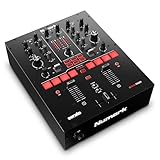
Overview: The Numark Scratch is a purpose-built 2-channel mixer for Serato power users, combining battle-ready hardware with premium software. Designed around the acclaimed InnoFader, it includes Serato DJ Pro and DVS licenses, plus performance pads and six direct-access FX selectors. This is Numark’s direct shot at the scratch market, delivering pro features without the pro price.
What Makes It Stand Out: The InnoFader crossfader sets the industry standard for precision and durability, with adjustable tension and reverse. Six tactile FX selectors with dual paddle triggers offer instant creative control, while the eight performance pads unlock Serato’s hot cues, loops, and sampler. The combo mic input with dedicated EQ is a thoughtful addition for event DJs.
Value for Money: Bundling $500+ worth of software (Serato DJ Pro, DVS, Prime Loops pack) with a $300 mixer creates incredible value. Comparable mixers with InnoFaders cost twice as much. The 24-bit audio interface and dual headphone outputs eliminate need for external gear.
Strengths and Weaknesses: Strengths include best-in-class crossfader, comprehensive software bundle, performance pads, and robust FX control. Weaknesses are Serato exclusivity (no rekordbox support), only two channels, and plastic construction that feels less premium than metal rivals. No booth output limits club installations.
Bottom Line: For Serato scratch DJs, this is the unequivocal value champion. It delivers battle mixer performance and software integration that rivals $800 setups, making it the smartest purchase in its category.
4. Pioneer Pro DJ RBVS1 Mixer Accessory

Overview: The RBVS1 is Pioneer’s official control vinyl for DVS systems, not a mixer itself. This 12-inch record allows DJs to manipulate digital files using traditional turntables and a DVS-enabled mixer. Pressed with Pioneer’s proprietary timecode, it provides responsive, accurate tracking for rekordbox DVS and compatible hardware, bridging analog feel with digital convenience in a familiar package.
What Makes It Stand Out: As Pioneer’s first-party vinyl, it guarantees perfect compatibility with all Pioneer DVS mixers and controllers, eliminating calibration headaches common with third-party control records. The lightweight construction reduces turntable motor strain while maintaining excellent grip, and the responsive timecode signal minimizes dropout even during heavy scratching and backspinning.
Value for Money: Priced competitively with other control vinyl, the RBVS1’s value lies in reliability rather than cost savings. Third-party alternatives may be cheaper, but Pioneer’s quality control ensures consistent performance. For DJs already invested in the Pioneer ecosystem, the seamless integration justifies the modest premium over universal options.
Strengths and Weaknesses: Strengths include guaranteed compatibility, durable construction, accurate timecode tracking, and official Pioneer support. Weaknesses are ecosystem lock-in (only works with Pioneer DVS hardware) and the need for replacement every 6-12 months with heavy use. It’s a consumable, not a permanent tool, adding ongoing costs.
Bottom Line: If you own a Pioneer DVS mixer, the RBVS1 is the hassle-free choice. For cross-platform DJs, universal control vinyl offers better flexibility. It’s a necessary accessory, not a luxury.
5. Behringer Pro Mixer VMX1000USB Professional 7-Channel Rack-Mount DJ Mixer with USB/Audio Interface, black

Overview: The VMX1000USB is a seven-channel beast designed for mobile DJs and complex setups. This rack-mountable mixer combines analog flexibility with digital convenience via a built-in USB interface. With three phono inputs, four line inputs, and a dedicated mic channel, it handles multiple turntables, CDJs, and media players simultaneously—ideal for weddings, mobile gigs, and radio-style broadcasting.
What Makes It Stand Out: The seven-channel architecture is unmatched at this price, allowing seamless integration of extensive gear without external switchers. The intelligent dual BPM counter automatically detects tempo from any source, while the USB interface enables direct recording to computer. The massive software bundle (Audacity, Podifier) adds value for podcasters and archivists.
Value for Money: No competitor offers seven channels under $300. You’re getting a mixer, audio interface, and software suite for the price of a basic 2-channel unit. While build quality reflects the price, the feature-per-dollar ratio is extraordinary for DJs needing multiple input sources.
Strengths and Weaknesses: Strengths include unprecedented channel count, USB recording capability, rack-mount design, and comprehensive software bundle. Weaknesses are Behringer’s historically variable build quality, noisy preamps at high gain, and complex routing that intimidates beginners. The effects section is basic compared to digital mixers.
Bottom Line: The VMX1000USB is a utilitarian powerhouse for DJs prioritizing connectivity over brand prestige. It’s a practical solution for multi-source gigs, but club purists should invest in premium two-channel alternatives.
6. Gemini Direct Drive DJ Turntable for Vinyl Records – USB Turntable with Built-In Preamp, High Torque Motor, Pitch Control, S-Shaped Tonearm, 33/45/78 RPM (TT-5000)

Overview:
The Gemini TT-5000 is a professional-grade direct drive DJ turntable designed for both live performance and home archiving. This versatile unit combines traditional analog playback with modern USB digitization capabilities, making it suitable for DJs, audiophiles, and vinyl collectors who demand reliability and flexibility from a single piece of equipment.
What Makes It Stand Out:
This turntable’s high-torque direct drive motor delivers instant start and stable playback essential for scratching and beatmatching. The S-shaped tonearm with adjustable anti-skate ensures precise tracking, while the built-in preamp with switchable phono/line outputs eliminates the need for external gear. Its USB connectivity and included Audacity software allow seamless vinyl-to-digital conversion at high resolution.
Value for Money:
Positioned as a mid-tier option, the TT-5000 competes with entry-level models from Pioneer and Audio-Technica while offering DJ-focused features typically found in more expensive units like the Technics SL-1200MK7. For performers who need both club-ready performance and archiving capabilities, it eliminates the need to purchase separate equipment.
Strengths and Weaknesses:
Strengths include robust torque (exceeding 1.6kgfcm), versatile speed compatibility (33/45/78 RPM), solid aluminum platter reducing resonance, and comprehensive connectivity options. Weaknesses involve Gemini’s lesser brand prestige compared to industry stalwarts, potentially shorter component lifespan under heavy touring conditions, and Audacity’s steeper learning curve for non-technical users.
Bottom Line:
The TT-5000 suits mobile DJs and vinyl enthusiasts seeking a dual-purpose workhorse. While not quite matching flagship models’ build quality, its feature set and performance make it a smart compromise between budget and professional functionality.
7. XONE:24 Analogue 2+1 Channel DJ Mixer

Overview:
The XONE:24 is a boutique 2+1 channel analog DJ mixer from Allen & Heath’s revered Xone series, delivering pure analog warmth for discerning DJs and turntablists. This compact mixer prioritizes sound quality over digital gimmicks, featuring a 100% analog signal path that appeals to purists seeking that classic, rich tonal character missing from digital counterparts.
What Makes It Stand Out:
The inclusion of the mini innoFADER crossfader provides unmatched durability and precision for scratch DJs, while the legendary Xone:VCF filter with hi-pass/lo-pass modes, frequency sweep, and resonance control offers creative expression unmatched in this class. The master insert FX loop allows external effects integration without compromising signal purity.
Value for Money:
Competing with mixers like the Pioneer DJM-250MK2, the XONE:24 commands a premium for its all-analog architecture and superior components. For DJs valuing sonic integrity over digital effects, it represents excellent long-term investment, though those wanting onboard sound coloration may find better value elsewhere.
Strengths and Weaknesses:
Strengths include pristine analog circuitry, industry-leading filter section, robust build quality, and scratch-optimized fader. Weaknesses are limited channel count, lack of digital connectivity (no USB or DVS support), and minimal EQ options compared to digital mixers. The 2+1 configuration may feel restrictive for DJs using multiple sources.
Bottom Line:
Perfect for vinyl purists and scratch artists prioritizing audio quality and tactile control. The XONE:24 excels as a specialized tool but isn’t ideal for DJs requiring digital integration or multiple channels.
8. AKOZLIN DJ Mixer Travel Backpack 15"x9.8"x21.6" For Controller DJ Multi-Pockets With USB Port For Two Equipments,Laptop,Vinyl Records,Cables Accessories

Overview:
The AKOZLIN DJ Mixer Travel Backpack is a specialized transport solution designed for mobile DJs and producers who need to safely carry multiple pieces of equipment. With its three-layer design and generous 15.2"x21.3"x10" dimensions, this backpack accommodates controllers, mixers, laptops, vinyl records, and essential accessories in one organized package.
What Makes It Stand Out:
Its innovative three-tier structure with individual equipment straps prevents gear from shifting during transit, while the 1680D nylon construction offers exceptional durability and water resistance. The integrated USB charging port provides convenient device charging, and the versatile carry system (backpack, shoulder, handle, luggage strap) adapts to any travel scenario.
Value for Money:
Compared to premium brands like Magma and UDG costing $200+, this backpack delivers comparable protection and capacity at a fraction of the price. For gigging DJs needing reliable gear transport without breaking the bank, it offers professional features like ergonomic padding and multiple compartments typically found in higher-end bags.
Strengths and Weaknesses:
Strengths include impressive organizational capacity, rugged waterproof material, versatile carrying options, and thoughtful features like the hidden back pocket. Weaknesses involve unknown brand reliability, potential size limitations for larger controllers (verify dimensions before purchase), and less refined aesthetics than boutique alternatives. The three-layer division may prove inflexible for oddly-shaped gear.
Bottom Line:
An excellent budget-friendly option for mobile DJs prioritizing functionality over brand prestige. Verify your equipment fits, but if dimensions align, this backpack provides outstanding protection and organization for regular gigging.
9. Turntable Record Player DJ Mixer Classic Vinyl Funny PC Computer Mouse Mat Pad, Full Width Fine Lock Edge,7.9 x 9.5 inches (F)

Overview:
This Turntable Record Player DJ Mixer-themed mouse pad adds personality to any DJ’s studio or office setup while delivering functional performance. Measuring 7.9 x 9.5 inches, it features a nostalgic vinyl record design that resonates with music enthusiasts, making it more than just a standard desk accessory.
What Makes It Stand Out:
Beyond its eye-catching aesthetic, this pad’s 3mm thickness exceeds standard mouse pads, providing superior cushioning and durability. The rubber base ensures non-slip stability during intense sessions, while the finely stitched edges prevent fraying. Its machine-washable fabric surface maintains appearance after heavy use, and the versatile design allows repurposing as decorative wall art or protective mat.
Value for Money:
Priced similarly to generic mouse pads, this themed version offers added personality without premium cost. For DJs and producers spending hours at their computer, the enhanced thickness and durability provide tangible ergonomic benefits over bargain alternatives, making it a worthwhile small investment.
Strengths and Weaknesses:
Strengths include durable construction, non-slip performance, generous size accommodating various mouse movements, easy maintenance, and unique aesthetic appeal. Weaknesses are its niche design unsuitable for formal office environments, potential color fading with repeated washing, and the fact it doesn’t actually improve DJ skills—it’s purely decorative. Some users may prefer larger extended mouse pads.
Bottom Line:
A perfect affordable gift for DJ enthusiasts or a personal treat to inspire creativity in your workspace. While not essential gear, its quality construction and thematic design make it a charming addition to any music lover’s desk setup.
10. Numark Mixtrack Pro FX Serato DJ Controller with 2 Decks, Mixer, Effects Paddles and Audio Interface

Overview:
The Numark Mixtrack Pro FX is an entry-level Serato DJ controller that delivers professional features at a beginner-friendly price point. This 2-deck system includes a built-in audio interface, capacitive jog wheels, and performance pads, providing everything needed to start DJing immediately with included Serato DJ Lite software.
What Makes It Stand Out:
The six quick-launch FX with dual paddle triggers offer tactile effects control typically reserved for higher-end controllers, while the 6-inch capacitive jog wheels provide responsive scratching and beatmatching. Seamless streaming integration with Apple Music, Tidal, Spotify, and others gives beginners instant access to massive music libraries without upfront track purchases.
Value for Money:
Competing with Pioneer DDJ-200 and FLX4, the Mixtrack Pro FX offers superior jog wheel size and FX control at a comparable price. For aspiring DJs, it eliminates the need for separate audio interfaces or software purchases, representing exceptional value. The included Serato DJ Lite provides upgrade path to full Serato Pro.
Strengths and Weaknesses:
Strengths include plug-and-play USB connectivity, large responsive jog wheels, comprehensive FX section, performance pads for hot cues and loops, and robust streaming support. Weaknesses involve plastic construction feeling less durable than professional gear, limited standalone functionality (requires laptop), and Serato DJ Lite’s feature restrictions compared to paid versions. The controller may feel limiting as skills advance.
Bottom Line:
Ideal first controller for serious beginners wanting room to grow. While not built for professional gigs, its feature set and software integration provide an excellent learning platform that remains capable through intermediate skill levels.
The Hybrid DJ Revolution: Why 2026 Demands Specialized Mixers
The resurgence of vinyl isn’t just a nostalgic hipster trend anymore—it’s become a legitimate performance requirement across virtually every electronic genre. But unlike the vinyl-only DJs of the 90s, you’re not abandoning your controller. You’re augmenting it. This creates a unique set of demands that standard club mixers or controller audio interfaces simply weren’t designed to handle. In 2026, manufacturers have finally caught up, creating a new class of mixers that treat digital and analog sources as equals rather than afterthoughts.
What makes this year particularly pivotal is the convergence of several technologies: native DVS integration that doesn’t require a separate sound card, phono preamps that rival standalone audiophile units, and MIDI implementation deep enough to control your software’s most advanced features. The mixer is no longer just a signal router—it’s the central nervous system of a multi-dimensional performance rig.
Understanding Your Unique Workflow
Before diving into features and specs, you need to honestly assess how you actually perform. Your workflow determines which mixer characteristics will feel like natural extensions versus frustrating limitations.
The Controller-First Approach with Vinyl Flair
If you primarily perform on your controller but want to drop occasional vinyl tracks for texture, credibility, or special moments, you need a mixer that prioritizes digital integration while offering transparent, hassle-free analog inputs. Your vinyl channels might see 10-15% of your total playtime, but when you use them, they need to sound pristine and integrate without rebooting your brain mid-performance.
The Vinyl Purist with Digital Enhancement
On the other end of the spectrum, maybe you’re a crate digger at heart who uses your controller for acapellas, samples, and emergency tracks when that rare white label skips. Here, the phono stage quality and analog signal path become paramount. Your mixer needs to honor the vinyl’s character while giving you just enough digital control without overwhelming the analog experience.
The True Hybrid Performer
If you’re equally comfortable in both worlds—perhaps blending vinyl drum breaks with digital basslines or using DVS timecode vinyl to control your software while maintaining that authentic feel—you need a mixer that eliminates the technical barriers between formats. This means seamless switching, unified EQs that behave consistently across sources, and a cue system that doesn’t make you think about which deck is which.
Core Mixer Architecture: What Makes a Difference
The fundamental design choices manufacturers make ripple through every aspect of your performance experience. Understanding these architectural decisions helps you cut through marketing hype.
Analog vs. Digital Signal Path
Here’s a truth that spec sheets rarely clarify: even “analog” mixers in 2026 have digital elements, and “digital” mixers use analog components. The real question is where the analog-to-digital conversion happens and how it affects your vinyl signal. Some designs convert everything immediately, processing even phono inputs in the digital domain. Others keep phono signals purely analog until the master bus, preserving that coveted warmth. For vinyl playback, analog-through-to-master designs typically offer superior depth and dimensionality, but they sacrifice some flexibility for digital effects routing.
Channel Count Reality Check
You might think more channels equal more flexibility, but each unused channel adds potential noise, complexity, and cost. A four-channel mixer seems future-proof until you’re navigating a cramped booth, trying to remember if Channel 3 is your right turntable or your controller’s Deck C. Consider your actual performance: do you ever use more than two digital decks simultaneously with vinyl? Many hybrid DJs find that three well-implemented channels—two phono/line and one dedicated controller return—outperform cluttered four-channel designs.
Crossfader vs. Line Fader Priorities
Controller DJs often develop intricate line-fader techniques for blending and FX sends. Vinyl DJs historically worship the crossfader for scratching and rapid cuts. Your hybrid setup needs to excel at both, but which matters more? Magnetic faders offer buttery smoothness for mixing but lack the tactile snap essential for turntablism. Optical faders provide lightning-fast response but can feel vague for subtle blends. Some premium mixers now offer user-replaceable fader modules, letting you customize the feel per channel.
Essential Connectivity Features
The back panel tells the real story. A mixer that looks perfect on paper becomes useless if it can’t integrate with your specific gear chain.
Phono Pre-amps: The Heart of Vinyl Sound
Not all phono stages are created equal. In 2026, we’re seeing a split between “accurate” preamps that faithfully reproduce the RIAA curve and “character” preamps that add subtle saturation reminiscent of classic rotary mixers. For DJs who play modern pressings of electronic music, accuracy matters. For those spinning 70s funk and disco, a touch of character might be preferable. Pay attention to input impedance options—some mixers now offer switchable loading to match different cartridge types, which can dramatically affect high-frequency response and tracking.
USB Audio Interface Integration
The interface isn’t just about getting sound into your laptop; it’s about latency, stability, and channel count. A 2-in/2-out interface forces you to mix externally, which many vinyl DJs prefer. But a 6-in/6-out or higher interface lets you route individual decks through software effects before returning to the mixer—a powerful hybrid technique. Check whether the interface operates in class-compliant mode or requires proprietary drivers. The latter might offer lower latency but can become obsolete if the manufacturer stops supporting it.
MIDI and DAW Control Capabilities
Your mixer should control more than just volume. Deep MIDI implementation lets you map EQs, filters, and even faders to control software parameters. Some mixers now transmit high-resolution MIDI (14-bit) from their analog controls, giving you 16,384 steps of resolution instead of the standard 128. This eliminates stair-stepping when riding filter sweeps or subtle EQ adjustments. Look for MIDI input ports too—this lets you sync external controllers to your mixer’s tempo or even control the mixer’s settings from your laptop for automated transitions.
Sound Quality Considerations
Spec sheets love to boast about bit depth and sample rates, but the reality of sound quality is far more nuanced.
Bit Depth and Sample Rate Deep Dive
Yes, 32-bit floating point processing eliminates digital clipping internally, but your final output is still 24-bit/96kHz to the sound system. What matters more is the quality of the DACs and ADCs. In 2026, premium mixers use discrete DACs per channel rather than a single chip, reducing crosstalk and improving stereo imaging. For vinyl, this separation is crucial—you want that left-right panning on your records to feel wide and immersive, not collapsed.
Headroom and Dynamic Range
Vinyl has a naturally high noise floor but incredible dynamic range on well-pressed material. Your mixer needs enough headroom (ideally +24dBu or higher) to handle the transients of a loud record without distorting, while keeping digital sources clean. Check the master output clipping behavior—some digital mixers apply soft limiting that can squash your dynamics in subtle but musically damaging ways. A good hybrid mixer gives you the option to disable all master bus processing for pure signal pass-through.
EQ and Filter Character
The difference between a musical EQ and a surgical one becomes glaringly obvious when blending vinyl and digital. Vinyl often needs gentle tone shaping; digital benefits from precise cuts. Look for mixers with asymmetrical EQs—perhaps 3-band with full kills on the digital channels, but a more vintage-style 2-band or 3-band with musical slopes on the phono inputs. Filter resonance characteristics matter too: a filter that self-oscillates beautifully on a digital track might sound harsh and unmusical on a noisy vinyl record.
Performance Features That Matter
Beyond basic mixing, modern hybrid setups demand advanced performance tools that work seamlessly across analog and digital domains.
Effects Send/Return Flexibility
In 2026, the best hybrid mixers offer dual-mode effects routing: a traditional send/return for analog pedals or rack units, and a digital insert that lets you route specific channels through your laptop’s plugins with near-zero latency. The key is independent control—being able to send your vinyl channel to analog tape saturation while simultaneously sending your digital deck through a granular delay plugin. Check if the return channels have their own EQs and filters; this turns them into additional mixing channels rather than just effect returns.
Cue System Sophistication
When you’re juggling vinyl and digital, your cue system becomes your lifeline. Look for split-cue functionality that lets you hear the master in one ear and the cued channel in the other—essential for beatmatching vinyl to digital without relying solely on waveforms. Advanced mixers now offer “cue blend” knobs that let you adjust this balance on the fly. Some even provide independent cue volume for each channel, so you can preview a vinyl record at a different level than your digital track without adjusting the main gain.
Looping and Sampling Integration
Even if you don’t use the mixer’s internal looper, its ability to sync with your controller’s looping functions matters. Some mixers now output MIDI clock derived from your vinyl’s tempo (extracted via DVS timecode), allowing your controller’s loops to automatically sync to your turntable’s pitch variations. This is game-changing for hybrid performance. Additionally, check if the mixer has a built-in sampler that can capture audio from any channel—grab that perfect vinyl scratch and trigger it from your controller’s pads without touching your laptop.
Build Quality and Longevity
A mixer is an investment that should survive years of gigs, spills, and transportation abuse. The difference between professional and consumer-grade gear becomes obvious after six months on the road.
Fader and Knob Feel
In 2026, we’re seeing a trend toward “user-serviceable” components. Replaceable fader caps are standard, but premium mixers offer replaceable fader assemblies and even potentiometer modules. For vinyl DJs, the torque and damping of the rotary knobs matter as much as fader feel. A good channel gain knob should have enough resistance that you can make sub-1dB adjustments by feel alone, even with sweaty hands. Test the knob spacing—can you adjust two adjacent EQs simultaneously without accidentally moving a third?
Faceplate Materials
Aluminum faceplates look professional and provide RF shielding, but they dent. Steel is heavier but virtually indestructible. High-end polymer composites offer the best of both worlds but can feel “cheap” to traditionalists. Consider the environment where you play most. Outdoor festivals demand different durability than dark clubs. The faceplate finish matters too—matte black looks sleek but shows every fingerprint; brushed metal hides wear but can reflect stage lights into your eyes.
Serviceability and Modularity
The best mixers in 2026 are designed for field service. Look for units where you can access the fader compartment without a soldering iron, and where the power supply is external (easier to replace if it fails mid-tour). Some manufacturers now offer “expansion slots”—blank panels that can be fitted with additional I/O modules, DSP cards, or even wireless connectivity packs as standards evolve. This modular approach protects your investment from obsolescence.
Software Ecosystem Compatibility
Your mixer doesn’t exist in isolation—it’s the bridge between your physical performance and your digital library.
Native Integration vs. Universal Mapping
Native integration (where the mixer automatically maps to your DJ software) offers plug-and-play convenience but can be limiting if you use multiple platforms. Universal mapping via MIDI Learn gives you ultimate flexibility but requires time-consuming setup. The sweet spot? Mixers that store multiple mapping profiles internally, letting you switch between “Serato Mode,” “Rekordbox Mode,” and “Ableton Mode” with a single button press. This is invaluable if you play different venues with different standard software.
Firmware Update Philosophy
In 2026, a mixer is a computer with knobs. Check the manufacturer’s firmware update history—do they regularly add features, or just fix bugs? Some brands have earned loyalty by releasing firmware that adds entirely new effects, improves phono stage performance, or even unlocks higher sample rates years after purchase. Others abandon products after 18 months. Look for manufacturers who publish their firmware roadmap and have a track record of supporting legacy products.
Library Management Synergy
Modern hybrid mixers often include features that interact directly with your music library. Some can read track metadata from your software and display it on OLED screens above each channel. Others can write BPM and key information back to your track files based on your vinyl analysis. This two-way communication turns your mixer from a dumb controller into an intelligent hub that actively helps organize your collection.
The Vinyl-Specific Features Most DJs Overlook
While obsessing over digital specs, many hybrid DJs miss critical analog details that make or break vinyl performance.
Grounding Solutions for Turntables
That annoying 60Hz hum isn’t just about bad cables—it’s about proper grounding architecture. Premium mixers now offer isolated ground paths for each phono input, preventing ground loops when you connect multiple turntables and a laptop. Some even provide a “ground lift” switch that disconnects the signal ground from the chassis ground while maintaining safety. If you play venues with questionable electrical systems, this feature alone can save your set.
Phono Input Isolation
When you’re running high-gain digital signals adjacent to delicate phono inputs, crosstalk becomes a real issue. Look for mixers with physically separated phono circuitry, often indicated by dedicated sections on the PCB or even separate daughterboards. The best designs use differential signaling for phono inputs, rejecting common-mode noise from nearby USB cables and power supplies. This isn’t just audiophile snake oil—you’ll hear the difference as cleaner highs and tighter bass when both digital and analog sources are playing.
Anti-Vibration Design Elements
Booth vibrations from subwoofers can cause microphonic feedback through your mixer’s chassis, subtly coloring the sound. High-end hybrid mixers now incorporate vibration-damping mounts for critical components and weighted chassis designs that shift resonant frequencies below the audible range. If you often play on wooden stages or directly above subwoofers, these features prevent that muddy, indistinct quality that plagues vinyl sets in bass-heavy environments.
Power Requirements and Portability
Your mixer needs to work everywhere from Berlin’s underground clubs to festival stages with questionable power distribution.
Internal vs. External Power Supplies
External power bricks keep the mixer cooler and make replacement easier, but they add another item to your cable bag and can be accidentally unplugged mid-set. Internal supplies offer cleaner setups but can make the mixer heavier and trap heat near sensitive components. Some innovative designs use redundant power—an internal supply with a backup external connection that automatically takes over if the primary fails. For mission-critical gigs, this is worth its weight in gold.
Voltage Considerations for Touring DJs
If you play internationally, universal voltage (100-240V) is non-negotiable. But beyond that, consider how the mixer handles voltage sag—when a venue’s power dips under heavy load. Quality mixers use regulated power supplies that maintain stable performance even when the wall voltage drops 10-15%. Some even display real-time voltage and current draw on a utility screen, letting you diagnose venue power issues before they become audible problems.
Size and Weight Trade-offs
That 20-pound rotary mixer sounds incredible, but will you still love it after carrying it through three airports and up four flights of stairs to a Brooklyn rooftop gig? Compact mixers sacrifice some features but fit in overhead bins and don’t break your back. The sweet spot for hybrid DJs is often the “desktop” form factor—roughly the size of a large laptop, weighing 8-12 pounds, with enough heft to stay planted during intense mixing but not so much that it requires roadies.
Budget Tiers and Value Propositions
Price doesn’t always correlate with performance for hybrid setups. Understanding what you’re actually paying for helps you allocate budget wisely.
Entry-Level Investment Strategy
Sub-$500 mixers in 2026 have come a long way, but they make strategic compromises. Typically, you’ll get excellent digital integration and adequate phono stages, but limited headroom and basic build quality. The smart play here is to choose a model with upgradeable components—perhaps it accepts premium faders or has an expansion port for future I/O. This lets you start affordable and evolve the mixer as your skills and needs grow.
Mid-Range Sweet Spot Analysis
The $800-$1,500 range is where hybrid mixers truly shine. These units offer professional-grade phono stages, robust build quality, and sophisticated software integration without the diminishing returns of ultra-premium gear. You’ll often find the same core circuitry as flagship models but with fewer channels or less exotic materials. For most controller DJs adding vinyl, this is the sweet spot—pro performance without the boutique price tag.
Premium Features Worth the Splurge
Above $2,000, you’re paying for exceptional phono stages (often designed by renowned audiophile engineers), modular construction, and unique features like transformer-isolated outputs or custom DSP effects. The law of diminishing returns hits hard here, but certain premium features justify the cost for serious vinyl DJs: true analog filters that saturate beautifully, discrete circuitry per channel, and documentation that includes full schematics for repair shops. If vinyl isn’t just a hobby but a core part of your artistic identity, this tier offers tools that inspire new performance techniques.
Future-Proofing Your Investment
Technology moves fast, but a great mixer should last a decade. Here’s how to ensure yours won’t be obsolete by 2027.
Emerging Connectivity Standards
USB-C is ubiquitous in 2026, but Thunderbolt 5 is gaining traction for its daisy-chaining capabilities. Some mixers now include a “protocol-agnostic” expansion slot that can accept Thunderbolt, Dante, or AVB cards as standards evolve. While you might not need these today, they ensure your mixer can integrate with next-generation sound systems and recording setups. Also consider mixers with Wi-Fi 6E for wireless firmware updates and remote control from tablets—handy for soundchecks when you’re stuck at the bar.
Modular Expansion Possibilities
The most future-proof mixers treat the main unit as a platform. Can you add more channels via expansion boxes? Swap the DSP chip for a more powerful version? Install a different USB interface card? Some manufacturers have committed to a 10-year compatibility promise, ensuring new modules will fit old chassis. This approach costs more initially but saves money long-term as you can upgrade incrementally rather than replacing the entire mixer.
Resale Value Considerations
Should you decide to switch setups, certain brands and models hold value remarkably well. Mixers with cult followings in specific genres (like rotary mixers in house music) often resell for 80% of their purchase price years later. Conversely, feature-heavy digital mixers from brands with poor support can depreciate 50% in the first year. Research used market prices before buying new—a mixer that holds its value indicates real-world satisfaction, not just marketing hype.
Common Pitfalls to Avoid
Even experienced DJs make these mistakes when selecting hybrid mixers. Learn from others’ regrets.
Overbuying Channels You’ll Never Use
That gorgeous four-channel mixer with individual metering for each channel is tempting, but will you actually use Decks C and D? Every additional channel adds complexity, potential failure points, and cost. Be ruthless about your actual performance style. If you’ve never used more than two decks simultaneously, a well-designed two-channel mixer with exceptional phono stages will serve you better than a compromised four-channel unit.
Ignoring Latency Specs
Manufacturers love to quote “near-zero latency,” but what does that actually mean? For vinyl DVS use, you need round-trip latency under 5ms from needle drop to software response. For simple audio passthrough, under 2ms is critical to avoid phase issues when blending analog and digital sources. Always test latency yourself using a simple loopback test: play a click track from your controller, route it through the mixer’s phono input (using a DVS tone), and record the output. The delay between the original and returned click is your real-world latency.
Disregarding Software Lock-in
That mixer with deep, native integration into your favorite software is amazing—until you decide to switch platforms or the software company changes their licensing model. Avoid mixers that require proprietary drivers or software to access basic functions. The best hybrid mixers work as standalone analog mixers even without a computer connected, then layer on digital features as a bonus rather than a requirement. This gives you the freedom to evolve your setup without being held hostage by a software ecosystem.
Making the Final Decision: A Framework
With all these factors swirling, here’s a practical framework to cut through the noise and choose confidently.
Create Your Feature Priority Matrix
List every feature discussed here, then rank them: “Must Have,” “Important,” “Nice to Have,” and “Don’t Care.” Be brutally honest. If you only spin vinyl at home for fun, touring durability drops to “Don’t Care.” If you scratch daily, fader feel is “Must Have.” Use this matrix to eliminate mixers that lack your non-negotiables, then compare the remaining options based on how many “Important” features they include.
Test Before You Buy Protocol
Never purchase based on reviews alone. If possible, borrow the mixer for a weekend gig. Short of that, visit a dealer and spend at least 30 minutes with it. Bring your own headphones and a familiar vinyl record. Test these specific scenarios: beatmatching vinyl to a digital track without looking at waveforms, quickly switching between DVS and real vinyl on the same channel, and using the mixer’s effects while riding the pitch on a record. If any action feels awkward or requires conscious thought, it’s not the right mixer for your muscle memory.
Warranty and Support Evaluation
Read the warranty terms carefully. Does it cover fader wear? What about liquid damage? More importantly, research the manufacturer’s support reputation. Do they respond to technical questions within 24 hours? Is there an active user community sharing mappings and tips? A mixer is only as good as the support behind it. In 2026, some manufacturers offer “advance replacement” programs where they’ll overnight you a loaner unit while yours is being repaired—priceless if you have upcoming gigs.
Frequently Asked Questions
Can I use any DJ mixer for both controllers and vinyl, or do I need a specialized hybrid model?
While any mixer with phono inputs and a line input can technically work, specialized hybrid models offer critical advantages like matched gain structure between analog and digital sources, low-latency DVS integration, and unified EQ behavior. Standard club mixers often treat digital sources as afterthoughts, requiring awkward gain staging and delivering inconsistent sound quality.
How important is the phono preamp quality if I’m only playing vinyl occasionally?
Even occasional vinyl playback reveals preamp quality. A mediocre preamp adds noise and coloration that becomes glaringly obvious when A/B’d against your pristine digital files. You don’t need audiophile-grade, but aim for preamps with signal-to-noise ratios above -85dB and THD below 0.01%. Your vinyl moments should sound intentional, not like a compromised afterthought.
What’s the minimum USB audio interface quality I should accept for hybrid DJing?
Look for interfaces with at least 24-bit/96kHz conversion, but more importantly, verify the driver stability and round-trip latency. Aim for under 5ms total latency with a 64-sample buffer. Class-compliant interfaces offer better long-term compatibility, while proprietary drivers might provide slightly lower latency at the cost of future OS update headaches.
Should I prioritize mixers with built-in DVS or use a separate sound card?
Built-in DVS offers convenience and tighter integration, often with lower latency since the signal path is optimized. However, separate sound cards give you flexibility to upgrade or switch DVS systems. In 2026, the best hybrid mixers include built-in DVS but also function as standard audio interfaces, giving you the option to bypass their internal processing if needed.
How do I eliminate ground hum when connecting both turntables and a controller?
Start with a mixer featuring isolated phono grounds for each channel. Use balanced cables where possible, and connect all gear to the same power outlet via a quality power conditioner. If hum persists, engage the ground lift switch on your mixer (if available) or use inline ground isolators on your controller’s audio outputs. Never defeat safety grounds on power cables.
Is a four-channel mixer overkill for a hybrid setup?
Not necessarily, but evaluate honestly. Two channels for vinyl and two for digital decks offer maximum flexibility for complex blends. However, if you typically use one vinyl deck and one controller deck simultaneously, a three-channel mixer with a flexible input matrix often provides better workflow and saves money. The key is input routing flexibility, not just channel count.
What’s the difference between MIDI and OSC control, and which should my mixer support?
MIDI is the universal standard for hardware control, offering 128-step resolution (or 16,384 with high-resolution CCs). OSC (Open Sound Control) offers unlimited resolution and network-based communication, ideal for controlling modern software like Ableton Live or custom Max/MSP patches. For hybrid DJing, robust MIDI implementation is essential; OSC is a bonus for advanced users wanting to build custom performance systems.
How can I test a mixer’s true latency before purchasing?
Perform a loopback test: generate a click track in your DJ software, route it through the mixer’s inputs (both line and DVS phono), and record the output back into your software. Measure the delay between the original and recorded clicks. Reputable manufacturers publish these specs, but real-world testing with your specific laptop and cables reveals the truth. Bring a fast SSD-equipped laptop to the store for this test.
Will adding vinyl to my controller setup require me to relearn beatmatching?
Yes, but it’s a skill that enhances your digital mixing too. The tactile feedback of pitch riding improves your overall timing and groove. Many hybrid DJs report that their controller mixing becomes more musical after learning vinyl. Start with a DVS system to practice with familiar tracks, then transition to real vinyl. The learning curve is steep but rewarding, and a good hybrid mixer makes the transition less frustrating.
How long should a professional hybrid mixer last before needing repairs?
With proper care, a quality mixer should perform flawlessly for 5-7 years before requiring major service. Faders typically need replacement every 2-3 years with heavy use, while potentometers and switches can last a decade. Choose mixers with user-replaceable components and published service manuals. Brands that sell spare parts directly to consumers earn lasting loyalty from working DJs who can’t afford downtime.
See Also
- 10 DJ Mixers for Controller DJs Who Want 4-Deck Control in 2026
- 10 DJ Turntables for Controller DJs Who Miss Vinyl Feel in 2026
- 10 DJ Turntables for Controller DJs Who Sample Vinyl Live in 2026
- 10 DJ Mixers for Controller DJs Who Need Extra Channels in 2026
- 10 DJ Mixers for Controller DJs Who Want Hardware FX in 2026