Table of Contents
The journey from air-drumming in your bedroom to commanding a real kit is a rite of passage for musicians, but for self-taught drummers, that path has traditionally been paved with uncertainty. Are you holding the sticks right? Is your timing actually improving, or are you just playing louder to mask the mistakes? Enter the era of electronic drum sets with built-in coach functions—your personal rhythm sensei that never gets tired of hearing you flam your way through a paradiddle for the hundredth time.
These intelligent practice systems have transformed what it means to learn drums independently, offering real-time feedback that was once only available through expensive private lessons. But not all coach functions are created equal, and the difference between a gimmicky metronome with a smiley face and a sophisticated learning platform can mean the difference between developing solid fundamentals and cementing bad habits that take years to unlearn. This deep dive will equip you with the knowledge to identify the features that genuinely accelerate your progress, avoid the common traps that ensnare solo learners, and build a practice routine that turns your living room into a legitimate training ground.
Top 10 Electronic Drum Sets
Detailed Product Reviews
1. Donner DED-80 Electronic Drum Set with 4 Quiet Mesh Pads, 180+ Sounds, 2 Pedals, Throne, Headphones, Sticks, and Melodics Lessons

Overview: The Donner DED-80 delivers a complete entry-level drumming solution designed for space-conscious musicians. This five-piece electronic kit features four 6-inch dual-layer mesh pads and three 10-inch cymbals mounted on a foldable metal frame. With 180 sounds, 15 drum kits, and 30 demo songs, it targets beginners seeking authentic feel without acoustic volume. The included throne, headphones, sticks, and Melodics lessons provide everything needed for silent apartment practice.
What Makes It Stand Out: Donner’s high-density mesh heads offer impressive rebound and durability rarely seen at this price point. The intelligent dynamic clarity technology creates responsive, realistic sound dynamics. Its educational suite stands apart—30 accompaniment tracks, drum coach functions, and Melodics integration transform practice into structured learning. The compact 42.5x18x39-inch footprint folds flat for storage, making it ideal for youth players and small living spaces where permanent setup isn’t possible.
Value for Money: Priced competitively for beginners, the DED-80 includes accessories competitors often omit: adjustable throne, quality headphones, and premium drumsticks. While requiring a separate amplifier for room-filling sound, its USB MIDI interface adds recording capabilities that extend its lifespan beyond pure practice. Compared to piezo-only kits, the mesh heads alone justify the investment, delivering acoustic-like response that rubber pads cannot match.
Strengths and Weaknesses: Pros: Authentic mesh head feel; comprehensive beginner bundle; excellent educational features; space-saving foldable design; quiet practice capability. Cons: Requires external amp for audible performance; smaller 6" pads limit playing surface; limited sound library versus premium kits; basic module without advanced editing.
Bottom Line: The DED-80 is an exceptional starter kit for apartment dwellers and young learners. If silent practice and educational growth are priorities, this bundle delivers outstanding value despite its compact size.
2. Alesis Nitro Max Kit Electric Drum Set with Quiet Mesh Pads, 10" Dual-Zone Snare, Bluetooth, 440+ Authentic Sounds, Drumeo, USB MIDI, Kick Pedal
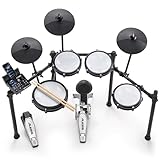
Overview: The Alesis Nitro Max represents a significant step-up in the entry-to-intermediate electronic drum market. This eight-piece kit features a 10-inch dual-zone mesh snare, three 8-inch toms, and three 10-inch cymbals with choke functionality. Powered by the BFD engine, it delivers 440+ multi-velocity samples across 32 factory kits. Bluetooth connectivity and 90 days of Drumeo lessons position it as a modern learning platform for serious developing drummers.
What Makes It Stand Out: The BFD-powered module delivers studio-grade acoustic drum sampling with unprecedented realism for this category. Bluetooth audio streaming allows playing along with tracks wirelessly, while the dual-zone snare enables rimshots and cross-sticks. The foldable rack maintains stability despite its expanded configuration. Drumeo integration provides world-class instruction from 200+ artists, making this a comprehensive skill-building ecosystem rather than just an instrument.
Value for Money: While priced higher than basic kits, the Nitro Max justifies every dollar with professional-grade sounds and features typically found in $1000+ systems. The inclusion of Drumeo membership, Bluetooth, and BFD samples creates exceptional long-term value. Players won’t outgrow this module quickly, and USB MIDI ensures DAW compatibility for recording. It’s an investment that bridges the gap between beginner and gig-ready equipment.
Strengths and Weaknesses: Pros: Premium BFD sound engine; large 10" dual-zone snare; Bluetooth connectivity; extensive Drumeo lessons; choke-enabled cymbals; robust foldable rack. Cons: Higher price point for beginners; 8" toms could be larger; module interface has learning curve; kick tower requires solid flooring.
Bottom Line: For committed students ready to invest in their craft, the Nitro Max offers professional features at a consumer price. The educational content and sound quality make it the best growth-oriented kit under $600.
3. Alesis Turbo X Electronic Drum Set - Sweetwater Exclusive

Overview: The Alesis Turbo X, available exclusively through Sweetwater, presents a streamlined five-piece electronic drum solution for absolute beginners. This configuration includes three 8-inch tom pads, an 8-inch crash, ride, and hi-hat cymbal setup, controlled by the Turbo X module. While specifications remain concise, the kit delivers core electronic drumming functionality in a compact, no-frills package designed for immediate setup and practice.
What Makes It Stand Out: As a Sweetwater exclusive, buyers receive the retailer’s renowned customer support, 55-point inspection, and extended warranty options. The simplified five-piece layout reduces setup complexity for first-time users. The Turbo X module focuses on essential sounds and practice tools without overwhelming novices with excessive options. Its exclusive availability ensures consistent quality control and dedicated support channels unavailable through general market variants.
Value for Money: Positioned as a budget-conscious entry point, the Turbo X offers Alesis reliability at a competitive price. While lacking the expansive sound libraries of premium models, it provides authentic mesh head response where many competitors use rubber pads. Sweetwater’s bundle often includes exclusive perks like discounted accessories or extended protection plans. For uncertain beginners, this represents a low-risk investment with upgrade paths through Sweetwater’s trade-in programs.
Strengths and Weaknesses: Pros: Exclusive Sweetwater support and inspection; simplified beginner-friendly configuration; authentic Alesis build quality; compact footprint; competitive pricing. Cons: Limited published specifications; smaller sound library; basic module features; no included throne or headphones; potential availability constraints.
Bottom Line: The Turbo X suits tentative beginners prioritizing vendor support over features. If you value expert guidance and hassle-free returns while testing your commitment to drumming, this exclusive package delivers peace of mind.
4. AODSK Electric Drum Set for Beginner with 150 Sounds,4 Quiet Drum Pads,2 Pedal,Throne,Sticks,Electronic Drum with Headphone,AED-400

Overview: The AODSK AED-400 targets first-time drummers with a complete, portable solution. This kit features four 6.5-inch silicone drum pads and three 8-inch cymbals mounted on a lightweight foldable frame. With 150 sounds, 15 drum kits, and 10 demo songs, it covers essential practice needs. The bundle includes a throne, sticks, headphones, and dual pedals, offering immediate playability for beginners of any age seeking a space-efficient practice instrument.
What Makes It Stand Out: AODSK emphasizes portability without sacrificing essential accessories. The silicone pads provide durability and a unique feel distinct from standard rubber surfaces. Multiple practice modes include a built-in metronome, LED display, and USB MIDI connectivity for music creation. The AUX input allows seamless play-along with external devices. Its lightweight design enables outdoor performance possibilities rare in electronic kits, while the comprehensive bundle eliminates hidden costs.
Value for Money: This kit excels in all-inclusive value, bundling every necessary accessory at a budget-friendly price point. While the silicone pads differ from mesh, they offer consistent response and longevity. The 150 sounds, though modest, cover core genres adequately for beginners. Competitors often exclude thrones or quality headphones, making the AED-400’s transparency appealing. For parents or gift-givers, the complete package removes guesswork and additional expenses.
Strengths and Weaknesses: Pros: All-inclusive accessory bundle; highly portable and lightweight; silicone pad durability; multiple connectivity options; excellent gift presentation. Cons: Silicone lacks mesh realism; smaller pad sizes; limited sound editing; basic module functionality; lesser-known brand support network.
Bottom Line: The AED-400 is a thoughtful gift-grade kit for casual learners prioritizing convenience and completeness. While serious students may outgrow it quickly, it removes all barriers to immediate drumming enjoyment.
5. Donner DED-200 Electric Drum Sets with Quiet Mesh Drum Pads, 2 Cymbals w/Choke, 31 Kits and 450+ Sounds, Throne, Headphones, Sticks, USB MIDI, Melodics Lessons (5 Pads, 3 Cymbals)

Overview: The Donner DED-200 elevates the brand’s offerings into intermediate territory with an eight-piece configuration. It features an 8-inch dual-zone mesh snare, three 8-inch toms, a 6-inch kick tower, and three 10-inch cymbals with choke capability. The module delivers 450 sounds across 31 kits, plus 50 play-along tracks. With Melodics lessons, USB MIDI, and a sturdy four-post aluminum rack, it targets developing drummers seeking professional features without premium pricing.
What Makes It Stand Out: The dual-zone snare and chokable cymbals bring expressive techniques typically reserved for higher-end kits. Donner’s robust mesh heads maintain tension without sagging, providing consistent response during extended sessions. The four-post rack offers superior stability compared to entry-level stands. MP3 player compatibility and smartphone integration facilitate versatile practice scenarios. Melodics integration provides structured learning paths, while the recording function enables self-assessment and composition.
Value for Money: The DED-200 bridges the gap between beginner and professional kits at a compelling mid-range price. Dual-zone pads and choke cymbals alone justify the upgrade from entry-level models. With 450 sounds rivaling Alesis BFD libraries and a stable rack system, it competes with kits costing significantly more. The complete accessory bundle and Melodics subscription add substantial value, making this a long-term investment for serious students.
Strengths and Weaknesses: Pros: Dual-zone snare pad; chokable cymbals; extensive 450+ sound library; stable four-post rack; Melodics integration; recording and sequencer functions. Cons: 6-inch kick tower feels small; module interface less intuitive than premium brands; pad size still limited for advanced techniques; Donner brand lacks Alesis’s market presence.
Bottom Line: The DED-200 is Donner’s most compelling offering for committed learners wanting professional articulation without breaking the bank. If expressive control and sound variety matter, this kit punches well above its weight class.
6. AKLOT Acoustic-Style Electric Drum Set: Independent 16’’ Wooden Bass Drum and 12’’ Snare, Triple-Zone Ride Cymbal, Standalone Hi-Hat, Full Mesh Pads, 460 Sounds, USB MIDI, Throne, Sticks (B-CORE543)

Overview: The AKLOT B-CORE543 is a premium acoustic-style electronic drum set built for drummers craving authentic feel. This 8-piece kit features genuine wooden shells on the 16-inch kick and 12-inch snare, paired with full mesh heads and a module loaded with 460 studio-sampled sounds. It targets serious players needing natural response for practice and recording.
What Makes It Stand Out: True wooden drum construction delivers 30% faster beater rebound and acoustic punch unmatched by rubber-shell kits. The independent two-piece 12-inch hi-hat system provides nuanced foot control with weighted cymbals, while the 14-inch triple-zone ride captures bell, bow, and edge articulations. The dual-zone snare features triple-ply mesh with 6-point tension adjustment, mirroring acoustic performance. Choke-enabled crashes and deep sound editing round out the pro features.
Value for Money: Competitively priced against entry-level Roland kits, the AKLOT offers superior acoustic replication at a mid-range cost. Wooden drums and professional cymbal articulation typically require premium investments. The included throne and sticks add value, making it a cost-effective alternative for drummers wanting high-end feel without flagship pricing.
Strengths and Weaknesses: Strengths include exceptional acoustic feel, wooden shells, advanced cymbal articulation, comprehensive sound library, and deep customization. Weaknesses include a steeper learning curve for beginners, unproven long-term reliability compared to established brands, and a less refined module interface. The complexity may overwhelm novices.
Bottom Line: Ideal for intermediate to advanced drummers prioritizing authentic acoustic response, the B-CORE543 bridges practice convenience and genuine feel. It’s a smart investment for serious students and gigging musicians needing volume control without sacrificing expression.
7. Alesis Nitro Pro Electric Drum Set with Dual-Zone Quiet Mesh Pads, 500+ Authentic BFD Sounds, Bluetooth, Drumeo, USB MIDI, Double Kick Compatible

Overview: The Alesis Nitro Pro is an 8-piece professional electronic drum kit featuring dual-zone mesh pads, a robust steel rack, and the BFD drum module with over 500 multi-velocity samples. Bluetooth connectivity and included Drumeo lessons create a comprehensive platform for advancing drummers seeking professional sounds.
What Makes It Stand Out: BFD Player software integration unlocks studio-grade samples and expansion packs typically found in expensive software instruments. The PRO 8-inch mesh tower supports double kick pedals, essential for metal and progressive styles. Bluetooth audio streaming enables wireless play-along, while 90 days of Drumeo provides world-class instruction from top professionals.
Value for Money: Priced below Roland TD-07 kits, the Nitro Pro offers more sounds and larger cymbals. The BFD engine alone rivals costly software instruments. Steel rack construction and double-kick compatibility future-proof the investment, delivering professional features at a mid-range price that undercuts major competitors.
Strengths and Weaknesses: Strengths include authentic BFD sounds, Bluetooth connectivity, Drumeo integration, double-kick support, and sturdy steel rack. Multi-velocity samples provide realistic dynamics. Weaknesses include small 8-inch toms that feel cramped, a basic hi-hat pedal lacking nuance, and occasionally cumbersome module navigation that frustrates some users.
Bottom Line: The Nitro Pro suits serious students and gigging drummers wanting professional sounds and expandability without premium cost. The BFD integration and double-kick compatibility appeal to rock and metal players, while lesson content supports skill development. A strong mid-range contender with pro-level potential.
8. Alesis Turbo Max Electric Drum Set with Quiet 8" Mesh Pads, Lessons, Bluetooth and Accessories, Foldable

Overview: The Alesis Turbo Max is a beginner-focused 7-piece electronic drum kit with 8-inch mesh pads, a compact module featuring 12 kits and 110 sounds, and Bluetooth connectivity. The foldable design and included accessories make it ideal for small spaces and new drummers.
What Makes It Stand Out: The foldable space-saving design collapses for storage under beds or against walls—perfect for dorms and apartments. Bluetooth audio streaming allows wireless play-along with lessons and tracks. The module includes 20 play-along tracks and rhythmic exercises designed for fundamental skill building, while ultra-quiet mesh heads minimize noise.
Value for Money: Among the most affordable mesh-head kits from a major brand, the Turbo Max delivers remarkable value. Comparable foldable kits cost significantly more, and included accessories eliminate extra purchases. It offers quality practice tools at a price point near basic rubber-pad kits.
Strengths and Weaknesses: Strengths include exceptional portability, Bluetooth connectivity, quiet operation, included accessories, and beginner-friendly lesson content. The foldable design is genuinely innovative for the price. Weaknesses include small 8-inch pads limiting expression, limited sound editing, and a basic hi-hat pedal lacking realism. Not suitable for advanced techniques.
Bottom Line: The Turbo Max is perfect for absolute beginners, young students, or drummers needing a whisper-quiet practice solution in tight spaces. While it won’t satisfy experienced players, its portability, Bluetooth features, and complete package make it unbeatable for entry-level convenience.
9. Donner DED-200 MAX Electronic Drum Set with Industry Standard Mesh Heads, 10’’ Snare, 8“ Tom, 10’’ Tom, 12’’ Crash, 450+ Authentic Sounds for Optimal Performance and Feel NEW

Overview: The Donner DED-200 MAX is a mid-range electronic drum kit featuring expanded pad sizes—a 10-inch snare, 10-inch floor tom, and 12-inch cymbals—all with industry-standard mesh heads. The module offers 450 sounds and 31 kits, but requires external amplification or headphones as it lacks built-in speakers.
What Makes It Stand Out: Larger cymbals and snare provide more authentic playing surfaces than typical budget kits. The 12-inch crash and ride offer expanded strike zones and better articulation. With 450 sounds, 31 kits, a 50-song play-along library, and recording functions, the feature set surpasses many competitors in this bracket significantly.
Value for Money: The DED-200 MAX competes aggressively with Alesis and Roland entry-mid kits, offering larger pads and more sounds for less. However, the lack of built-in speakers adds hidden cost for beginners. For home studio users with existing monitors, this represents excellent value, punching above its price class.
Strengths and Weaknesses: Strengths include generous pad sizes, extensive sound library, recording capabilities, metal hoop construction, and play-along features. The 2-ply mesh heads offer good durability. Weaknesses include no built-in speakers, a less intuitive module interface, limited brand support network, and a basic hi-hat controller lacking nuance.
Bottom Line: The DED-200 MAX suits home studio musicians and advancing students wanting larger pads and comprehensive sounds without premium pricing. The speaker omission is a trade-off for superior pad sizes. If you own amplification, this kit delivers professional features that outclass most competitors at this price point.
10. HAMPBACK MK-0 Electric Drum Set with 7’’ Quiet Mesh Drum Pads, 8’’ Full Rubber Cymbals, 12 Kits and 68 Authentic Sounds, USB MIDI, Throne, Sticks, Headphone, 2 Switch Pedals for Beginners & Kids

Overview: The HAMPBACK MK-0 is an ultra-compact electronic drum kit designed for young beginners and casual players with severe space constraints. This 7-piece kit features tiny 7-inch mesh pads and 8-inch rubber cymbals, powered by a basic module with 68 sounds and 12 kits, with power bank compatibility for portable play anywhere.
What Makes It Stand Out: The MK-0’s microscopic footprint and foldable rack store in car trunks or under beds, making it uniquely portable. Power bank operation via USB liberates players from wall outlets, perfect for outdoor jams or travel. The complete package includes throne, headphones, and sticks at a budget price, backed by a reassuring 2-year warranty.
Value for Money: Among the most affordable electronic drum kits with mesh heads, the MK-0’s price reflects its entry-level positioning. For young beginners testing interest, the low investment risk is appealing. However, serious students will quickly outgrow its capabilities, making it a short-term solution rather than a long-term instrument.
Strengths and Weaknesses: Strengths include unbeatable portability, power bank operation, included accessories, quiet mesh pads, budget pricing, and generous warranty. Weaknesses include tiny 7-inch pads hindering technique development, rubber cymbals with poor feel, extremely limited sounds, and basic switch pedals lacking expression or nuance.
Bottom Line: The HAMPBACK MK-0 serves a narrow niche: introducing young children to drumming with minimal space and financial commitment. Its toy-like dimensions compromise authentic technique development, making it unsuitable for serious study. Purchase only if extreme portability and low price outweigh all other considerations.
Why Built-In Coach Functions Are Game-Changers for Self-Taught Drummers
The Evolution from Metronome to Full Digital Mentor
Remember when a metronome was just a tick-tock box that either kept you honest or drove you insane? Modern electronic drum sets have evolved far beyond simple timekeeping. Today’s coach functions analyze your stroke velocity, measure dynamic consistency, score your timing accuracy down to the millisecond, and even detect whether you’re rushing the downbeat or dragging the fill. This represents a fundamental shift from passive timekeeping to active mentorship. The best systems don’t just tell you when to play—they evaluate how you’re playing and provide actionable feedback that addresses the neurological process of skill acquisition. For self-taught drummers, this means building myelin sheaths around the correct neural pathways from day one, rather than practicing mistakes for six months before a teacher points them out.
How Real-Time Feedback Accelerates Muscle Memory
The critical window for motor learning happens in the seconds immediately after you execute a movement. When a coach function instantly displays your timing accuracy or velocity consistency, your brain can correlate the physical sensation with the quantitative result. This closed-loop feedback system compresses the learning curve dramatically. Instead of guessing whether that ghost note was subtle enough, you see a velocity reading of 23% and know exactly how it felt to produce that number. Over weeks, this creates a mental map of your dynamic range that becomes instinctive. The most sophisticated systems even show you visual representations of your stroke timing relative to the beat grid, allowing you to see that you’re consistently hitting 15ms ahead of the click—something impossible to detect with human ears alone.
Deconstructing Modern Coach Function Categories
Rhythm and Timing Accuracy Scoring
The cornerstone of any legitimate coaching system is its ability to evaluate your temporal precision. Look for modules that don’t just display a vague “good” or “bad” rating, but show your hit accuracy in milliseconds relative to the perfect beat placement. Advanced systems categorize your timing into zones—dead-on, acceptable, rushing, or dragging—and track these patterns over time. This reveals whether you have a systematic tendency to anticipate certain beats or lag during fills. The scoring should be nuanced enough to reward consistency over perfection; a drummer who lands every hit within 5ms of the target is developing better control than someone who nails three beats perfectly but flams the fourth by 50ms.
Dynamic Range and Velocity Consistency Tools
Great drumming lives in the dynamics, yet this is the hardest element to self-assess. Quality coach functions measure the velocity of each stroke on a 0-127 MIDI scale and display your dynamic range in real-time. They should offer exercises that force you to hit specific velocity targets—like maintaining a backbeat at exactly 100 while ghost notes hover around 30. The system should flag when your “consistent” hits vary by more than 10-15 velocity points, which indicates a lack of stick control. For self-taught drummers, this is invaluable because uneven dynamics are the telltale sign of a beginner, and you can’t fix what you can’t measure.
Play-Along Libraries with Performance Analysis
A robust song library becomes a teaching tool when the module can compare your performance to the original track. The best systems mute the drum part and score your playing based on timing, dynamics, and even correct voicing (did you hit the crash where the song calls for it?). They should provide post-performance reports showing which sections need work and whether your tempo drifts during transitions. This transforms passive play-along sessions into structured assessments. Be wary of systems that simply show a pass/fail; you want granular data that tells you the verse was solid but the bridge fill consistently runs ahead of the beat.
Groove Checkpoint Systems
Groove is more than keeping time—it’s about feel, pocket, and consistency over extended periods. Advanced coach functions include groove trainers that analyze your playing across multiple bars, looking for timing drift, dynamic decay, and pattern stability. They might have you play a simple beat for two minutes straight, then reveal that your hi-hat started at 95 velocity but dropped to 62 by the end, or that your backbeat gradually moved 20ms later. This long-form analysis is crucial for developing the endurance and consistency needed for real-world playing, where a groove must be maintained through entire songs, not just four-bar loops.
Progress Tracking and Goal Setting Dashboards
Data without context is just noise. Sophisticated coaching platforms aggregate your performance metrics into visual progress dashboards that show improvement curves over days, weeks, and months. They allow you to set specific goals—“improve timing accuracy on 16th-note hi-hat patterns from 78% to 90%"—and track your daily progress toward that target. The system should identify plateaus and suggest when to increase exercise difficulty. For self-taught drummers, this objective progress tracking is psychologically critical; it proves you’re improving during those frustrating weeks when everything feels stagnant.
Beyond Coaching: Critical Hardware Features
Mesh Head Technology and Realistic Stick Response
Your coach function is only as good as the data it receives, and that data starts with the pads. Mesh heads provide a more realistic rebound and dynamic range than rubber pads, allowing you to develop proper stroke technique. Look for dual-ply mesh with adjustable tension—these mimic acoustic drum response and give the module accurate velocity data across the full spectrum from feather-light ghost notes to rimshots. Single-ply or low-quality mesh can choke under hard hits, capping your dynamic input and teaching you to play with artificially limited range. The head should also have a convincing rim with separate trigger capability, as rim clicks and shots are fundamental techniques you’ll need to master.
Module Processing Speed and Latency Considerations
A coach function that analyzes your timing needs to process hits almost instantaneously. Modules with slow processors introduce latency that makes the feedback feel disconnected from your playing, destroying the closed-loop learning effect. You want a system with less than 5ms internal latency from pad strike to sound output, and even faster processing for the analysis engine. Test this by playing rapid single-stroke rolls; if the system struggles to register each hit accurately above 150 BPM, its processor can’t keep up with serious practice. The module should also have enough RAM to load large, multi-sampled sounds without glitching, as dropped samples will corrupt your perception of timing.
Expandable Input Jacks for Future Growth
Your learning needs will evolve, and a coaching system that can’t grow with you becomes a dead end. Ensure the module has at least two additional trigger inputs for adding a second crash, a splash, or auxiliary percussion. Some advanced systems even allow you to add a hi-hat controller or upgrade to a three-zone ride cymbal later. This expandability means the coach functions can assess more complex playing as you progress. A system locked to its factory configuration will limit the sophistication of its coaching—there’s only so much you can learn on a 4-piece kit with two cymbals.
Kit Configuration Strategies for Progressive Learning
Starting with the Essentials: 4-Piece vs. 5-Piece Layouts
The temptation to buy a massive kit is strong, but smart self-taught drummers start simple. A 4-piece configuration (snare, kick, one rack tom, one floor tom) with two cymbals forces you to learn creative orchestration and proper hi-hat technique. Coach functions on these streamlined kits focus on fundamentals: solid backbeats, consistent hi-hat patterns, and clean fills between few elements. A 5-piece adds a second rack tom, allowing more melodic fill patterns but also more complexity. The key is choosing a configuration where the coach functions can isolate your weaknesses. On a 4-piece, it’s obvious if your kick drum timing is sloppy; on a 7-piece, you might hide deficiencies behind busy patterns.
Planning Your Upgrade Path Before You Buy
Before purchasing, map out what a realistic 2-year progression looks like for you. Will you need a second crash for the music you want to play? Are you interested in genres that require a bell zone on the ride? Choose a system where the module’s coach functions remain relevant as you add pads. Some entry-level modules disable coaching features for additional triggers, or their analysis algorithms don’t account for expanded kits. The best systems have coaching exercises specifically designed for larger configurations and can assess how well you utilize the full kit. This foresight prevents you from outgrowing not just the hardware, but the educational software that sold you on it in the first place.
Sound Engine Quality and Motivational Psychology
Multi-Sampled Acoustic Drums vs. Synthetic Sounds
Your ears need convincing feedback to stay motivated, and nothing kills practice enthusiasm faster than cheesy sounds. Modern modules use multi-sampling—recording each drum at multiple velocity levels and different mic positions—to create realistic responses. A snare should have 30+ samples ranging from ghost notes to rimshots, with the sound changing character, not just volume, as you hit harder. Coach functions that pair with rich sound engines provide better learning because you can hear the dynamics you’re trying to master. If the snare sounds the same at velocity 50 and 100, you have no auditory feedback for your dynamic control. The system should also offer acoustic, electric, and processed kits so you can practice with sounds that match your musical goals.
Dynamic Layering and Expressive Potential
Beyond sample count, investigate how the module layers sounds. Does the snare add a subtle rim component as velocity increases? Can you trigger bell, bow, and edge sounds on the ride with positional accuracy? The coach functions should teach you to exploit these expressive capabilities. Exercises that require you to move between ride bell and bow while maintaining dynamics develop the kind of subtle control that separates good drummers from great ones. If the module only offers one-dimensional sounds, its coaching will be similarly one-dimensional, focusing on timing while ignoring the nuanced expression that defines musical drumming.
Noise Management for Apartment and Shared Living
Mesh Head Noise Profiles Decoded
The irony of electronic drums is that they’re not silent—just quieter. Mesh heads produce stick impact noise, and different designs vary significantly. Tightly woven, dual-ply mesh with sound-absorbing foam underneath can reduce acoustic noise by 70-80% compared to acoustic drums, but still produce a tapping sound that travels through floors. Thicker, looser mesh is quieter but feels less realistic. The sweet spot is medium-tension dual-ply mesh that balances feel with noise control. Some advanced systems include “practice mode” that reduces the acoustic volume of the pads themselves by softening the head response, which is perfect for late-night sessions when you need to focus on technique without disturbing neighbors.
Cymbal Pad Technologies and Volume Control
Cymbal pads are the noisiest component of electronic kits due to their rigid structure. Rubber cymbals are durable but produce a sharp “thwack” that can be surprisingly loud. Plastic cymbals with rubber playing surfaces are quieter but wear faster. The newest designs use multi-layer composites that absorb stick impact while maintaining realistic rebound. Look for cymbals with adjustable tension and optional felt dampeners that can reduce noise by another 10-15 dB. The module should also have a “practice volume” setting that not only lowers the speaker output but adjusts the velocity curve, making it easier to play quietly while still triggering full-range samples. This is crucial for developing control at low volumes—a skill that translates directly to acoustic kit dynamics.
Goal-Setting Frameworks for Self-Directed Practice
Beginner Milestones: First 30 Days
In your first month, the coach functions should help you achieve non-negotiable fundamentals: consistent quarter-note hi-hat patterns at 80 BPM with 90% timing accuracy, clean 8th-note fills that don’t rush, and the ability to maintain a simple beat for 60 seconds without dynamic decay. Set module goals accordingly: start with timing exercises that require you to hit a pad exactly on the click, then progress to playing ahead or behind the beat by specific milliseconds to develop feel. The dashboard should show daily improvement in these core metrics. Don’t worry about speed yet—focus on the coach’s consistency scores. A drummer who can play a perfect beat at 60 BPM for five minutes has better control than one who can barely hold together a sloppy 120 BPM pattern.
Intermediate Benchmarks: 90-Day Progression
By three months, you should be tackling 16th-note hi-hat patterns, syncopated kick drum placements, and dynamic contrast between verse and chorus feels. The coach functions need to assess more sophisticated concepts: can you play a groove at 100 BPM, then double-time the hi-hat to 200 BPM while keeping the backbeat locked? Can you execute a crescendo from pianissimo to fortissimo over four bars while maintaining timing? Set module goals for velocity consistency—aim for your backbeat hits to vary less than 5 velocity points across a full song. The system should also track your “groove stability” score, which measures how little your timing drifts during long passages. This is when you transition from learning patterns to learning music.
Technical Pitfalls That Stall Progress
The Visual Dependency Trap
Here’s a paradox: the more sophisticated the visual feedback, the more you risk becoming dependent on it. Staring at timing meters and velocity graphs can turn you into a reactive player who only performs well when watching the screen. The solution is progressive independence training. Use the coach functions in three modes: full visual feedback, audio-only feedback (it beeps when you’re off), and post-session analysis. The best systems have a “blind mode” where the screen goes dark during play, then reveals your stats afterward. This forces you to internalize the feel first, then verify with data. Self-taught drummers must actively avoid letting the technology become a crutch that prevents developing your internal clock.
Dynamics: Why Hitting Harder Isn’t Always Better
Coach functions that only reward velocity can create monsters who bash every drum at 127. True dynamic control means playing quietly with conviction. Advanced systems include “dynamic ceiling” exercises where hits above a certain velocity are penalized, forcing you to express energy through timing and feel rather than volume. They should also have “quiet practice” modes that compress the velocity curve, making it physically harder to trigger loud samples. This teaches you to generate power through stick height and technique rather than arm strength. The module’s analysis should flag when you’re over-playing—if your average velocity is above 90 for a moderate rock beat, you’re working too hard and sounding worse.
Hybrid Learning: Integrating External Resources
MIDI Connectivity and Third-Party Apps
Built-in coaching is just the foundation. The real power comes when your kit connects to the ecosystem of drum education apps. Look for modules with USB MIDI that supports bidirectional communication—this allows apps like Melodics, Drumeo, or even custom Max/MSP patches to send exercises to your module and receive your performance data. The coach functions should work seamlessly with these external tools, perhaps passing timing accuracy scores to the app while the app controls the exercise parameters. Some systems even allow the app to override the module’s built-in sounds, so you can practice with app-specific samples while still using the hardware’s low-latency triggering.
Video Lesson Synchronization Techniques
The modern self-taught drummer learns from YouTube, paid subscriptions, and Instagram clips. Your electronic kit should facilitate this, not compete with it. Modules with Bluetooth audio input let you stream lessons directly to the module and mix them with your drums. Advanced systems can sync their metronome or coaching exercises to video playback, so when the instructor says “play along at 85 BPM,” the module automatically sets that tempo and starts analyzing. Some even have “video bookmarking” where you can tag a tricky section in a lesson, and the coach function will loop that timestamp and create a custom exercise based on the pattern. This turns passive video watching into active, measured practice.
The Power of Self-Recording and Analysis
Built-In Recorders vs. DAW Integration
Recording yourself is the most brutally honest feedback mechanism, and electronic kits make it effortless. Built-in recorders should capture both audio and MIDI data, allowing you to listen back while seeing the exact timing and velocity of every hit. Look for systems that let you overdub—record your basic beat, then add fills on a second pass while hearing the first. However, for serious analysis, the module should function as a standalone audio interface. This lets you record multi-track audio (each drum on its own channel) directly into a DAW like Logic or Reaper, where you can use advanced plugins to visualize your performance in ways the module’s small screen can’t match.
Objective Listening Skills Development
The coach function’s greatest gift is teaching you to hear objectively. Use the recording feature to capture a performance, then listen back without watching the analysis. Take notes on what you hear, then compare your impressions to the module’s data. Often, what feels “tight” might show 30ms timing variations, while a performance that felt sloppy might have excellent dynamic contrast. This process calibrates your self-perception with reality. The best systems have an “anonymize” feature that plays back your recording alongside a reference performance without labeling which is which, forcing you to judge purely on sound. When you can consistently identify your own playing—and articulate why it’s weaker—you’ve developed the critical ear of a professional.
Budget Reality Check for Serious Students
Entry-Level Limitations You Need to Know
Sub-$500 kits might advertise “coach functions,” but these are often stripped-down metronomes with basic scoring. Their pads lack the dynamic range for meaningful velocity training, and their processors can’t handle the rapid-fire analysis needed for accurate timing feedback. The modules may have only a handful of sounds, making dynamic exercises frustrating because the samples don’t respond realistically. Worse, many entry-level systems don’t store long-term progress data, resetting your stats whenever you power down. For a self-taught drummer, this is catastrophic—you need trend data to stay motivated and identify plateaus. These kits are fine for testing interest, but they won’t support disciplined practice beyond three months.
Mid-Range Sweet Spot for Long-Term Growth
The $800-$1,500 range is where coach functions become genuinely educational. These modules offer full-featured analysis, expandable inputs, and high-quality mesh heads that respond accurately. They store months of progress data, support MIDI integration, and have sound engines with enough dynamic layers to make coaching exercises meaningful. The hardware is built for daily practice, with replaceable parts and stable racks. From a learning ROI perspective, this is the minimum investment that yields professional-grade feedback. A mid-range kit used daily for two years costs less than six months of weekly private lessons, while providing more quantitative feedback than a human teacher could offer. The coach functions in this tier are designed by educators, not just engineers, and it shows in the sophistication of the exercises.
Space Optimization and Portability
Compact Frame Designs for Urban Living
Not everyone has a dedicated drum room. Modern compact kits fold into footprints as small as 4’ x 3’, with vertical rack designs that position toms above the snare to save width. The key is finding a configuration where the compact design doesn’t compromise the coaching accuracy. Pads must remain stable under hard playing; if the rack wobbles, the triggers can misfire, corrupting your timing data. Look for systems where the module mounts directly to the rack, reducing cable clutter and making the entire kit portable as one unit. Some designs allow you to fold the kit flat against a wall in under 60 seconds, perfect for apartment dwellers who need to reclaim their living room for guests.
Quick-Breakdown Systems for Multi-Use Spaces
The ultimate space-saving feature is a tool-free breakdown system. Knurled wing bolts and snap-lock clamps let you disassemble the kit without Allen wrenches, making it feasible to pack it away daily. This matters for practice consistency—if it takes 20 minutes to set up, you’re less likely to practice. The best systems have memory locks that remember your pad positions, so reassembly is precise. From a coaching perspective, this consistency is crucial; if your snare pad moves half an inch each setup, your muscle memory for cross-sticking and rim shots gets disrupted. The module should have a “kit position memory” that alerts you if a pad seems misaligned based on unexpected trigger behavior.
Build Quality for Daily Practice Regimens
Rack Stability and Hardware Durability
A wobbling rack doesn’t just feel unprofessional—it undermines the coach function’s data integrity. When cymbal pads shake, they can trigger accidentally or miss intentional hits, creating false timing errors in your analysis. Look for racks with double-braced legs and thick tubing (at least 1.5” diameter). The clamps should be metal, not plastic, and tighten with proper torque. Test stability by playing a hard backbeat and watching the rack; any visible movement is unacceptable. The hardware should also survive thousands of adjustments as you experiment with ergonomics. Cheap kits use pot-metal wing nuts that strip after a few months of daily tweaking, while quality systems use steel hardware that lasts years.
Pad Wear Patterns and Replacement Economics
Mesh heads wear out, especially under heavy practice. A head that sees 500 strokes daily will need replacement every 12-18 months. Factor this into your budget: replacement mesh heads cost $20-$40 each. Some systems use proprietary sizes that lock you into expensive OEM parts, while others use standard sizes where third-party heads work fine. The module’s coach functions should include a pad health monitor that tracks strike count and alerts you when a head is wearing unevenly. Uneven wear affects velocity response, which corrupts your dynamic training. Cymbal pads have rubber surfaces that can develop dead spots; quality systems let you rotate or flip the cymbal to distribute wear. Consider the total cost of ownership: a $1,000 kit that lasts five years with $200 in replacements is cheaper than a $600 kit you replace entirely after two years.
The 90-Day Learning Curve Explained
Phase 1: Foundational Coordination (Days 1-30)
During the first month, your brain is building the motor cortex connections for independent limb movement. The coach functions should focus on simple, quantifiable goals: 8th-note hi-hat accuracy, consistent kick drum placement, and steady backbeats. Expect your timing accuracy to start around 60-70% and improve to 85% by day 30. The module’s analysis will show that your dominant hand is tighter than your weak hand, and your bass drum foot is consistently late. This is normal. Use the velocity tracking to ensure you’re not overplaying—your average stroke velocity should be between 60-80, not maxed at 127. The key metric is consistency, not complexity. A perfect beat at 70 BPM is worth more than a sloppy attempt at 120 BPM.
Phase 2: Timing Refinement (Days 31-60)
Now you’re adding 16th notes, simple fills, and basic syncopation. Your timing accuracy might dip back to 75% as complexity increases. The coach functions should reveal specific weaknesses: perhaps your hi-hat foot is late when opening on the “&” of 4, or your fills rush by an average of 25ms. This is where groove checkpoint analysis becomes vital. The system should show that your 8-bar groove stability score is only 65%, meaning your timing and dynamics drift significantly over time. Target exercises that isolate these issues: practice just the hi-hat foot pattern for five minutes, or loop a two-bar fill until its timing variance drops below 10ms. Your dynamic range should be expanding; aim to produce consistent ghost notes at velocity 20-30 and backbeats at 90-100.
Phase 3: Dynamic Control (Days 61-90)
By month three, you’re focusing on musicality: crescendos, ghost notes, and feel. The coach functions now assess subtlety. Your ghost note velocity consistency should improve from a chaotic 20-50 range to a controlled 25-35. The system should track your “dynamic contrast ratio”—the difference between your softest and loudest hits in a performance. A ratio of 4:1 (softest at 25, loudest at 100) indicates good control. You’ll also see your groove stability scores climb above 80% as you learn to maintain feel through entire songs. This is when you integrate the coach’s feedback with your own musical instincts, using the data to refine rather than dictate your playing.
Advanced Coach Features for Growing Drummers
Odd Time Signature Mastery Tools
Once you’re comfortable in 4/4, the next frontier is odd meters. Advanced coach functions include exercises for 3/4, 5/4, 7/8, and more esoteric signatures like 5/8 or 9/8. They don’t just count differently; they analyze how well you internalize the pulse. A good system will have you clap the quarter-note pulse while playing a 7/8 pattern, scoring your ability to maintain both simultaneously. It should also include “metric modulation” training, where you transition between time signatures seamlessly. The analysis will show whether you’re adding or dropping beats during transitions—a common pitfall. For self-taught drummers, this is where technology truly surpasses human teachers; the module can detect micro-timing errors in complex meters that even experienced instructors might miss.
Ghost Note and Subtlety Development Programs
The hallmark of an advanced drummer is control at low volumes. Dedicated ghost note trainers present patterns with increasingly subtle grace notes, requiring you to hit at velocities below 30 consistently. The system should penalize you for “cheating”—if a ghost note is supposed to be at velocity 15 and you hit 35, it should register as a wrong note, not just a loud one. Some systems use adaptive thresholds that learn your natural dynamic range and set personalized targets. They might also include “dynamic masking” exercises where the module plays loud backing tracks and you must execute ghost notes that are audible in the mix but still subtle. This teaches you to project quiet notes, a crucial skill for playing with other musicians.
Frequently Asked Questions
How accurate are built-in coach functions compared to a human drum teacher?
Coach functions excel at quantitative analysis—timing to the millisecond, velocity consistency, and long-term trend tracking—areas where human perception can’t compete. However, they lack qualitative judgment about musical feel and can’t correct technique issues like grip problems or inefficient motion. The ideal approach combines both: use the coach for daily objective feedback and periodic lessons with a human teacher for qualitative assessment. Think of the coach as your personal trainer who tracks every rep, while the teacher is the coach who fixes your form.
Can I develop bad habits using only electronic drums with coaching?
Absolutely. The most common pitfall is over-reliance on visual feedback, which prevents developing your internal clock. Another is ignoring dynamics because the pads feel different than acoustic drums. Mitigate this by practicing regularly without looking at the screen, recording yourself frequently, and playing acoustic drums whenever possible. The coach functions should be used to verify your feel, not create it. Also, ensure your pad heights and angles match acoustic ergonomics to avoid developing unnatural motions.
What should my timing accuracy percentage be before increasing the metronome speed?
Don’t chase 100%—it’s unrealistic and creates paralysis. Aim for 85-90% accuracy at your current tempo, but more importantly, achieve consistent scores over multiple sessions. If you hit 88% accuracy three days in a row, you’re ready to increase speed by 5 BPM. The key metric is consistency, not perfection. A drummer who scores 92% one day then 68% the next hasn’t internalized the pattern; a drummer who scores 85% daily has solidified the muscle memory and can progress.
How do I know if a kit’s pads are responsive enough for meaningful dynamic training?
Test it with a simple exercise: play the softest stroke you can, then the loudest, then try to hit exactly velocity 50 ten times in a row. If the module shows your soft hits registering as 0 (no trigger) or your controlled strokes vary from 35-75, the dynamic range is too compressed for proper training. Quality pads should register velocities from 5-127 with predictable response. Also, check for “hot spots” where the same stroke yields wildly different velocities depending on where you hit the head. The coach functions can’t fix bad hardware data.
Will practicing on electronic drums transfer to acoustic drums?
Yes, but with caveats. Your timing, limb independence, and pattern knowledge transfer completely. However, you must consciously practice acoustic-specific techniques: rim shots, cymbal swells, and hi-hat foot control feel different. Use the electronic kit’s coach functions to master the mental aspects, then supplement with acoustic practice for physical adaptation. Some advanced modules have “acoustic response mode” that simulates acoustic rebound and volume characteristics, bridging the gap. Record yourself on both to compare your feel.
How often should I use coach functions versus free playing?
Follow the 80/20 rule: use structured coach exercises for 80% of your focused practice time, especially when learning new patterns. Spend the remaining 20% in free play mode, applying what you’ve learned musically. However, always record your free playing and analyze it afterward with the coach functions. This prevents you from reinforcing mistakes during “creative” time. As you advance, shift to 60/40, using the coach for maintenance and problem-solving while dedicating more time to musical exploration.
Can coach functions help with creativity and musicality, or just technique?
Advanced systems include “groove builder” modes where you create patterns and the coach analyzes their musicality—checking for dynamic variation, fill placement, and repetition. Some have “style coaches” that score how well your playing fits specific genres. While they can’t teach taste, they can quantify elements of musicality like dynamic range and phrase consistency. Use these tools to ensure your creative ideas are executed cleanly, then trust your ears for the artistic decisions. The coach handles the science; you provide the art.
What’s the minimum practice time needed to see progress with coaching?
Quality trumps quantity. Fifteen minutes of focused, measured practice with the coach functions yields more progress than an hour of mindless playing. However, for neuroplasticity to cement new motor patterns, you need at least 30 minutes daily, five days a week. The coach’s progress tracking will show that skipping days creates noticeable backsliding, while consistent short sessions produce steady upward curves. Don’t practice until failure; practice until you hit your target metrics, then stop. Over-practicing tired muscles creates sloppy patterns.
How do I prevent the module’s feedback from making me anxious or frustrated?
Disable real-time scoring and switch to post-session analysis. Seeing red lights flash every time you’re 5ms off can create performance anxiety that sabotages learning. The best systems have “encouragement mode” that highlights improvement rather than errors, showing your timing trend improving even if individual hits are imperfect. Remember, the data is diagnostic, not judgmental. If you find yourself obsessively watching the meter instead of feeling the music, cover the screen and practice by ear for a week. The numbers serve your learning, not your ego.
Are there specific exercises that work best with electronic coaching?
Start with “dynamic pyramid” exercises: play 8 hits at velocity 30, 8 at 60, 8 at 90, then descend. The coach’s velocity tracking provides instant feedback on your consistency. Next, use “timing displacement” drills where the module shifts the click intentionally early or late, teaching you to correct and maintain pulse. For advanced practice, try “silent beat” exercises where the module drops the click for one beat per bar, scoring your ability to stay locked. The most effective drill is recording yourself playing a simple beat for five minutes, then analyzing the MIDI data for timing drift and dynamic decay—it’s brutally honest about your endurance.
See Also
- 10 Beginner Electronic Drum Sets with Built-In Coaches in 2026
- 10 Premium Electronic Drum Sets for Studio Recording in 2026
- 10 Junior Electronic Drum Sets with Game Apps in 2026
- 10 Electronic Drum Sets with Mesh Heads That Feel Like Acoustic Skins in 2026
- 10 Rock Drum Sets for Metal Drummers Needing Extra Deep Toms in 2026