Table of Contents
The modern controller DJ landscape in 2026 looks radically different from the laptop-only setups that dominated festival stages just five years ago. As audiences crave more authentic, tactile performances and streaming platforms reward unique sonic signatures, a new generation of digital DJs is rediscovering vinyl—not for purist nostalgia, but as a creative weapon. Sampling vinyl live during controller sets has evolved from a niche party trick into a legitimate performance art form, demanding equipment that bridges two worlds seamlessly.
But here’s the challenge: most turntable buying guides still speak to either traditional vinyl purists or bedroom producers sampling in controlled studio environments. Neither camp faces the unique pressures of dropping a needle mid-set while triggering pads, manipulating jog wheels, and keeping a dancefloor locked—all without missing a beat or inducing catastrophic feedback. This guide cuts through that noise, focusing exclusively on what controller DJs actually need when incorporating live vinyl sampling into their 2026 workflows.
Top 10 Dj Turntables For Sampling
Detailed Product Reviews
1. Numark PT01 Scratch | DJ Turntable for Portablists With User Replaceable Scratch Switch, Built In Speaker, Power via Battery or AC Adapter, Three Speed RPM Selection & USB Connectivity

Overview: The Numark PT01 Scratch redefines mobile turntablism by delivering a fully functional scratch deck in an ultra-portable package. Weighing considerably less than traditional turntables, this unit runs on either AC power or six D-cell batteries, enabling practice and performance literally anywhere. It supports all three standard speeds (33⅓, 45, and 78 RPM) and includes a built-in speaker, making it a self-contained solution for portablists who refuse to be tethered to a booth.
What Makes It Stand Out: The star feature is the user-replaceable scratch slide switch, engineered exclusively by Numark and ambidextrously designed for both right and left-handed turntablists. Unlike competitors with fixed faders, this switch can be swapped when worn out, dramatically extending the product’s lifespan. The built-in speaker produces surprisingly room-filling audio, while USB connectivity facilitates hassle-free recording to Mac or PC without additional drivers. The integrated carrying handle and included cartridge, slip-mat, and dust cover complete the road-ready package.
Value for Money: Priced in the sub-$200 range, the PT01 Scratch occupies a unique niche. Traditional turntables require separate mixers, speakers, and power sources that collectively cost far more. While entry-level controllers exist at similar prices, none offer the authentic vinyl scratching experience. Battery costs add up, but the freedom justifies the expense for serious portablists.
Strengths and Weaknesses: Pros: True portability with battery power; replaceable scratch switch extends longevity; built-in speaker enables instant performance; comprehensive accessory bundle; ambidextrous design.
Cons: D-cell batteries not included and represent ongoing cost; built-in speaker lacks bass depth for serious listening; plastic construction feels less robust than professional decks; limited torque compared to direct-drive models.
Bottom Line: The PT01 Scratch is the definitive choice for mobile turntablists and scratch enthusiasts seeking authentic vinyl performance without venue constraints. While it won’t replace a club setup, its portability and innovative replaceable switch make it an essential practice and performance tool for portablists at any skill level.
2. Pioneer DJ PLX-500 Direct Drive Turntable
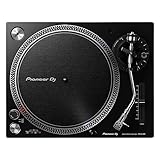
Overview: The Pioneer DJ PLX-500 bridges the gap between audiophile listening and digital DJ performance, inheriting DNA from the flagship PLX-1000 while maintaining accessibility for home users. This direct-drive turntable delivers warm, high-fidelity vinyl playback with modern conveniences like USB recording and rekordbox DVS compatibility, making it equally suited for archiving rare records and performing digital vinyl sets.
What Makes It Stand Out: Pioneer’s engineering pedigree shines through the servo-type direct drive motor, ensuring stable rotation and accurate tempo control essential for mixing. The unique sleeve stand inside the dust cover displays album artwork during playback—a thoughtful touch for collectors. USB connectivity enables effortless digital archiving, while DVS support transforms the deck into a controller for rekordbox digital files when paired with a compatible mixer and control vinyl, offering remarkable versatility.
Value for Money: Positioned around $350-400, the PLX-500 competes with entry-level audiophile turntables and budget DJ decks. It undercuts the PLX-1000 significantly while retaining core performance characteristics. Compared to similar priced USB turntables, the Pioneer brand assurance and DVS capability justify the premium, though pure audiophiles might find better sonic fidelity elsewhere at this price.
Strengths and Weaknesses: Pros: Excellent build quality and reliable direct-drive motor; versatile USB recording and DVS integration; thoughtful album art display feature; simple setup and operation; strong resale value due to brand reputation.
Cons: Torque output, while adequate, falls short of professional club standards; lacks adjustable start/stop time; pitch fader resolution could be finer for precise beatmatching; no built-in preamp requires external phono support.
Bottom Line: The PLX-500 excels as a multi-purpose turntable for serious hobbyists and aspiring DJs. It faithfully preserves vinyl collections digitally while providing a solid foundation for DVS performance. Though not a true club workhorse, its versatility and Pioneer reliability make it a smart investment for home studios and developing turntablists.
3. Gemini Direct Drive DJ Turntable for Vinyl Records – USB Turntable with Built-In Preamp, High Torque Motor, Pitch Control, S-Shaped Tonearm, 33/45/78 RPM (TT-5000)

Overview: The Gemini TT-5000 positions itself as a professional-grade direct-drive turntable that bridges analog tradition with digital convenience. Engineered for demanding DJ environments, it features a high-torque motor for instant start capability and stable playback across 33⅓, 45, and 78 RPM speeds. The built-in phono preamp and USB output address modern connectivity needs, making it a versatile solution for club DJs, home studio producers, and vinyl archivists alike.
What Makes It Stand Out: The high-torque direct drive motor delivers performance rivaling more expensive competitors, providing the quick start/stop response essential for scratching and beat juggling. The S-shaped tonearm with anti-skate and hydraulic lift ensures precise tracking and minimizes record wear. Most notably, the switchable built-in preamp eliminates the need for external hardware, simplifying integration with both modern line-level systems and traditional phono inputs—a flexibility rarely found in this price tier.
Value for Money: Priced competitively under $400, the TT-5000 packs features typically reserved for higher-end models: professional torque specs, USB digitization, and a built-in preamp. Comparable turntables from established DJ brands often lack the preamp or cost significantly more. While Gemini’s brand doesn’t command the same premium as Pioneer or Technics, the feature-to-price ratio is compelling for budget-conscious professionals.
Strengths and Weaknesses: Pros: High-torque motor suitable for professional performance; integrated USB recording and built-in preamp simplify setup; robust anti-skate and hydraulic tonearm lift; durable construction with shock-absorbing feet; three-speed compatibility including 78 RPM.
Cons: Gemini’s long-term reliability track record lags behind legacy brands; platter resonance control not quite audiophile-grade; pitch fader feel may lack premium precision; limited aftermarket modification support compared to industry standards.
Bottom Line: The Gemini TT-5000 delivers exceptional value for DJs and producers needing professional performance without premium pricing. Its high-torque motor and comprehensive connectivity make it club-capable, while USB archiving adds modern utility. Though it won’t dethrone flagship models, it’s a workhorse that punches well above its weight class for mobile DJs and serious home users.
4. Numark PT01 Scratch Portable Turntable Bundle with Headphones for Mobile Scratch DJ, Outdoor Events
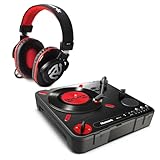
Overview: This bundle packages Numark’s acclaimed PT01 Scratch portable turntable with a matching set of headphones, creating a complete mobile scratching solution straight out of the box. Designed for turntablists who practice and perform beyond traditional DJ booths, the battery-powered setup enables wireless operation at outdoor events, park sessions, or impromptu battles. The integrated speaker and included headphones provide both public performance and private monitoring capabilities without additional equipment.
What Makes It Stand Out: The bundle’s convenience factor is unmatched—everything needed for mobile scratching arrives together, eliminating compatibility guesswork. The headphones are specifically selected for monitoring scratch routines, offering focused sound isolation crucial for practice. The PT01’s signature user-replaceable scratch switch and built-in speaker remain central features, while the battery operation liberates DJs from power outlet dependency, truly enabling “scratch anywhere” functionality that standalone turntables cannot match.
Value for Money: The bundle typically retails only slightly higher than the base PT01 Scratch unit, effectively delivering the headphones at a discount. For newcomers to portablism, this represents significant savings compared to purchasing components separately. While the included headphones won’t rival audiophile or professional DJ models, their inclusion provides immediate practice capability, making this the most cost-effective entry point into mobile vinyl scratching.
Strengths and Weaknesses: Pros: Complete mobile solution with no additional purchases necessary; genuine cost savings over separate components; maintains all PT01 portability advantages; headphones enable immediate private practice; ideal gift or starter package.
Cons: Headphone quality is basic and may require upgrade for serious use; inherits all PT01 limitations (battery cost, plastic build, limited torque); bundle locks you into specific headphone model; no upgrade path within package.
Bottom Line: This bundle is the smartest starting point for aspiring portablists and mobile DJs. It removes all barriers to entry by including essential monitoring gear, letting users focus on technique rather than equipment hunting. While serious performers will eventually upgrade headphones, the package delivers exceptional convenience and value for practice, casual performance, and outdoor events.
5. Universal 12" Format DJ Mixer and Two Standard Position Turntables Flight Coffin Case with Full Glide Platform

Overview: This heavy-duty flight coffin case provides professional-grade protection and transportability for a standard two-turntable and mixer setup. Built to withstand the rigors of constant gigging, it accommodates 12-inch format turntables and a mixer in traditional battle configuration. The patented full-width glide platform offers access to the mixer without removing turntables, while integrated wheels and heavy-duty ball corners ensure equipment survives both transit and performance environments.
What Makes It Stand Out: The removable glide platform is a game-changer for mobile DJs, allowing quick mixer adjustments mid-set without disturbing turntable positioning. Built-in roller wheels eliminate the need for separate hand trucks, converting the case into a mobile cart. The angled V-cut front panel improves mixer ergonomics during performance, and strategically placed rear and bottom cable ports maintain clean cable management. Heavy-duty ball corners and reinforced construction provide tour-grade protection far exceeding standard cases or bags.
Value for Money: Priced in the $300-400 range, this coffin case represents a significant but necessary investment for working DJs. Comparable protective solutions from brands like Odyssey or Gator often cost more while offering similar features. When factoring in potential equipment damage from inadequate protection, the case pays for itself by preventing a single turntable or mixer replacement. For hobbyists, it’s overkill; for mobile professionals, it’s essential insurance.
Strengths and Weaknesses: Pros: Superior protection with tour-grade construction; innovative glide platform enhances workflow; integrated wheels simplify transport; excellent cable management; universal fit for most standard gear.
Cons: Substantial weight makes it challenging for solo DJs to load; bulky size requires significant vehicle space; price point may deter casual users; limited customization for non-standard mixer sizes; over-engineered for bedroom DJs.
Bottom Line: This flight coffin is mandatory equipment for mobile DJs and turntablists who prioritize gear protection and setup efficiency. The glide platform and wheels transform gig logistics, saving time and preventing damage. While its weight and cost are considerable, professional performers will recoup the investment through equipment longevity and reduced stress. Bedroom DJs should consider lighter alternatives.
6. DJ Hero Stand-Alone Turntable - Xbox 360

Overview: The DJ Hero Stand-Alone Turntable is a specialized wireless controller designed exclusively for the DJ Hero rhythm game series on Xbox 360. This package includes the turntable controller, two batteries, and a hardware guide, but notably excludes the game software. The controller authentically mimics DJ equipment with a scratchable platter, crossfader, and tactile buttons that correspond to on-screen note highways, creating a physically engaging gaming experience.
What Makes It Stand Out: This controller transforms traditional button-mashing rhythm games into a tactile DJ performance. The wireless design eliminates cable clutter while the authentic layout—featuring platter scratching, crossfading between tracks, and an effects dial—creates genuine DJ immersion. The euphoria button and multiplier system add strategic depth, rewarding skilled mixing and scratching beyond simple note matching. Its unique form factor remains unmatched in the rhythm game genre.
Value for Money: As a discontinued accessory for a last-generation console, value depends entirely on your DJ Hero fandom. Secondary market prices vary, but for collectors or those reviving their Xbox 360 library, it offers unique gameplay modern controllers cannot replicate. However, requiring separate software purchase significantly diminishes initial value. For casual gamers, the investment is questionable; for enthusiasts, it’s priceless nostalgia.
Strengths and Weaknesses: Pros include authentic DJ gaming experience, responsive wireless controls, durable construction for intense scratching, and collectible value. Cons are its limited Xbox 360 compatibility, dependency on separately-sold software, battery-powered operation requiring frequent replacements, and zero practical DJ functionality beyond the game.
Bottom Line: This controller serves exclusively DJ Hero enthusiasts and retro gaming collectors. It delivers an unmatched rhythm gaming experience but offers no real-world DJ utility. Purchase only if you own DJ Hero or plan to acquire it—otherwise, it’s an expensive paperweight.
7. Pioneer DJ PLX-500 High Torque Turntable, USB, Black

Overview: The Pioneer DJ PLX-500 is a high-torque direct drive turntable engineered for vinyl enthusiasts and aspiring DJs demanding quality sound reproduction. This USB-enabled deck delivers Pioneer’s renowned audio fidelity through a shorter signal path that minimizes distortion. With both phono and line outputs, it connects directly to any sound system. The ability to digitize vinyl collections via USB creates a seamless bridge between analog warmth and digital convenience.
What Makes It Stand Out: The PLX-500 shines with rekordbox DVS compatibility, enabling digital vinyl system integration when paired with a compatible mixer and control vinyl. The integrated cover holder inside the dust lid displays album art during listening sessions—a thoughtful touch for audiophiles. Its high-torque motor provides stable rotation while remaining approachable for home listeners, bridging consumer and professional needs.
Value for Money: Positioned as a mid-range turntable, the PLX-500 justifies its price through Pioneer’s durability reputation and sound quality. It outperforms entry-level decks while costing significantly less than the professional PLX-1000. The included USB recording capability adds substantial value, eliminating need for separate audio interfaces. For vinyl collectors wanting one deck for both listening and light DJing, it’s optimally priced.
Strengths and Weaknesses: Pros include excellent audio quality, versatile connectivity, USB digitization, solid build quality, and rekordbox DVS readiness. Cons are moderate torque unsuitable for heavy scratching, price premium over similar spec competitors, and lack of advanced DJ features like adjustable brake time or detachable cables.
Bottom Line: The PLX-500 is ideal for vinyl collectors wanting digital archiving and entry-level DJs seeking reliable performance. It strikes an excellent balance between audiophile quality and DJ functionality, making it a smart long-term investment for growing vinyl lovers.
8. Pioneer DJ PLX-CRSS12 / Technics 1200 or Similar Size Turntable Black Label Flight Case

Overview: The Pioneer DJ Black Label Flight Case is a premium protective solution designed specifically for Pioneer’s PLX-CRSS12 turntable and similarly-sized decks like the iconic Technics SL-1200. This road-ready case features all-black anodized and powder-coated hardware for a sleek, professional appearance. The integrated cable port hole allows convenient connectivity while the turntable remains secured inside, and the lid foam provides compression protection during transport.
What Makes It Stand Out: This flight case distinguishes itself through purpose-built design for contemporary turntables, combining robust protection with practical functionality. The black-on-black hardware creates a cohesive, professional aesthetic that stands apart from traditional silver latches. The lid foam provides compression protection during transport, preventing internal movement that could damage sensitive tonearms and cartridges—critical for touring professionals.
Value for Money: While expensive for a case, it represents insurance for your $1,000+ turntable investment. Professional touring DJs understand that quality flight cases prevent catastrophic damage far exceeding the case cost. Compared to generic cases, the precise fit eliminates dangerous internal shifting, and the cable port adds workflow convenience that justifies the premium for working musicians.
Strengths and Weaknesses: Pros include heavy-duty construction, perfect fit for specified models, professional black aesthetic, cable management port, and high-quality foam padding. Cons are significant added weight for transport, premium pricing that approaches budget turntable costs, and limited versatility for differently-sized gear—making it a single-purpose investment.
Bottom Line: This flight case is essential for mobile DJs and touring professionals who own compatible turntables. The investment in protection far outweighs replacement costs. For stationary home use, it’s unnecessary, but for anyone regularly transporting valuable turntables, it’s mandatory equipment that pays for itself after one prevented accident.
9. Sardoxx Adjustable DJ Stand Portable Audio Mixer Stand Angled Foldable DJ Table Studio Music Synth Stand w/35” x 17.7” Tabletop and Carrybag For Drum Machines, Controller, Keyboard, DJ Turntables

Overview: The Sardoxx Adjustable DJ Stand is a versatile portable workstation designed for mobile performers and studio musicians. This collapsible stand features a generous 35.4” x 17.7” tabletop accommodating DJ controllers, mixers, turntables, synthesizers, and keyboards. The innovative width-adjustable design spans from 2.4 to 23.2 inches, while the tilting top enables optimal viewing angles and ergonomic control across diverse performance scenarios.
What Makes It Stand Out: Remarkable versatility defines this stand. It functions with or without the tabletop, weighing just 9.2 lbs in minimalist mode or 18 lbs fully equipped. The anti-slip rubber feet and optional stoppers ensure stability across various surfaces, while the pre-assembled design unfolds instantly for rapid setup. The included professional carry bag enhances portability for gigging musicians who need quick load-ins.
Value for Money: This stand delivers exceptional value through multi-instrument compatibility and included accessories. Comparable stands often cost more while offering less adjustability. The 300-pound weight capacity exceeds most competitors, supporting even heavy vintage synths. For mobile DJs and performers, the convenience factor justifies every dollar, eliminating need for multiple purpose-specific stands.
Strengths and Weaknesses: Pros include extreme adjustability, lightweight portability, high weight capacity, tilting functionality, and comprehensive package (bag, stoppers, tabletop). Cons are potential stability concerns at maximum extension, tabletop size limitations for larger setups, and aesthetic simplicity that may not suit all professional venue appearances.
Bottom Line: This Sardoxx stand is a must-have for mobile DJs, wedding performers, and studio musicians needing flexible, portable support. Its adaptability across gear types and easy transport make it an invaluable tool for working musicians who frequently reconfigure their setups. The included accessories and robust capacity make it a practical, cost-effective solution.
10. Reloop RP-2000 MK2 Direct Drive DJ Turntable

Overview: The Reloop RP-2000 MK2 is an entry-level direct drive DJ turntable that brings professional features to budget-conscious beginners. This quartz-driven deck offers precise motor control with selectable 33 1/3 and 45 RPM speeds, housed in a redesigned metal top panel with reinforced construction. The package includes a complete ready-to-play setup: platter, slipmat, statically balanced S-shaped tonearm, hydraulic lift, anti-skating mechanism, and notably, an Ortofon OM Black pick-up system.
What Makes It Stand Out: The inclusion of a genuine Ortofon cartridge immediately elevates this above typical beginner turntables with cheap stock needles. The direct drive motor provides reliable torque for learning scratching and mixing fundamentals, while the precision-engineered die-cast aluminum platter ensures stable rotation. The tactile buttons and improved housing demonstrate Reloop’s commitment to durability even at this accessible price point.
Value for Money: This turntable represents exceptional value, essentially bundling a $100+ Ortofon cartridge with a capable direct drive deck. Competitors at this price typically use belt drive or inferior cartridges. For aspiring DJs, it provides authentic learning tools without pro-level pricing, though it lacks advanced features like pitch reset or adjustable torque found in premium models costing twice as much.
Strengths and Weaknesses: Pros include affordable direct drive, quality Ortofon cartridge included, solid build quality, quartz speed stability, and complete ready-to-play package. Cons are basic features for experienced DJs, moderate torque unsuitable for professional scratching, limited upgrade path, and lack of modern connectivity options like USB.
Bottom Line: The RP-2000 MK2 is the perfect starter turntable for aspiring DJs wanting authentic direct drive performance without breaking the bank. The included Ortofon cartridge alone makes it a smart purchase. It’s ideal for practice, home listening, and beginner gigs, providing a solid foundation to build DJ skills before upgrading to professional gear.
The Evolution of Controller DJing in the Vinyl Renaissance
The controller revolution promised freedom from heavy record bags and skipping needles, yet it inadvertently created a sonic monoculture. By 2026, the pendulum has swung back toward hybrid setups, but with crucial differences from the DVS battles of the 2000s. Today’s controller DJs aren’t abandoning their digital ecosystems—they’re augmenting them with the organic textures, happy accidents, and performance energy that only vinyl can provide.
Live sampling changes everything about turntable selection. You’re not just beatmatching records; you’re isolating micro-moments—a crackling intro, a single horn stab, a vocal snippet—and capturing them on the fly while your digital deck continues underneath. This demands precision, reliability, and integration that traditional turntable guides overlook.
Why 2026 Marks a Turning Point for Hybrid DJs
Several converging trends make this moment pivotal. AI-assisted key detection and tempo mapping in modern DJ software now works flawlessly with external audio sources, eliminating the pitch-guessing games that made live sampling risky. Meanwhile, turntable manufacturers have finally embraced the hybrid DJ as a primary user, building features specifically for DVS sampling rather than treating it as an afterthought. The result? A perfect storm of capability and creativity.
Understanding the Core Requirements for Live Vinyl Sampling
Before diving into specifications, you need to reframe your thinking about turntables. For live sampling, your turntable becomes both an instrument and an input device—simultaneously generating audio and control data for your software.
The Critical Difference Between Studio Sampling and Live Performance
Studio sampling forgives everything. Mis-timed capture? Fix it in post. Background noise? Gate it out. In a live context, there are no second takes. Your turntable must provide immediate, predictable audio with minimal latency, zero motor drift, and enough tactile feedback to execute grabs without looking. The motor needs to start instantly when you flick the platter, stop just as fast for backspins, and maintain perfect speed stability while you’re distracted by your controller’s performance pads.
Key Turntable Specifications That Actually Matter
Spec sheets can be misleading when you’re shopping for live performance tools. Here’s what deserves your attention—and what’s just marketing fluff.
Torque, Pitch Stability, and Motor Types Explained
Torque isn’t just about scratching. For live sampling, high torque (at least 1.5 kgf/cm for direct-drive models) ensures the platter returns to exact speed immediately after you’ve held a record for a vocal grab. Pitch stability matters more than pitch range—look for wow and flutter specs below 0.15% WRMS. Quartz-locked motors with digital pitch control offer the tightest stability, but some DJs prefer analog servo motors for their “feel” during manual adjustments.
Platter Material and Vibration Dampening
Heavy platters reduce wow and flutter but increase transport weight—a real concern for touring DJs. Composite materials like die-cast aluminum with rubber damping rings offer the sweet spot: enough mass for stability without breaking your back or your flight case budget. Avoid lightweight plastic platters entirely; they’ll betray you the moment subwoofers start pumping.
DVS Integration: The Bridge Between Analog and Digital
Your turntable’s ability to communicate with your controller software determines whether live sampling feels magical or maddening. Modern DVS systems have evolved far beyond simple timecode tracking.
Look for turntables with built-in audio interfaces that support both phono and line-level DVS signals simultaneously. This lets you route timecode to your software while sending the actual vinyl audio to a separate input for sampling—no external splitters or compromise on sound quality. Some 2026 models even feature dual USB-C outputs, allowing you to connect to both your primary DJ laptop and a backup device without re-patching cables mid-set.
Cartridge and Stylus Selection for Live Sampling
The included cartridge on most turntables is an afterthought—fine for listening, disastrous for performance. For live sampling, you need a cartridge that tracks warped records reliably while delivering enough output to cut through a hot mixer.
Ortofon’s DJ cartridges dominate for good reason, but consider their “sampling-specific” models with enhanced high-frequency response to capture crisp transients from vinyl. More importantly, invest in a spare stylus and learn to swap it in under 60 seconds. Nothing kills a live sampling moment like a bent cantilever discovered 30 seconds before your set.
Connectivity Options in Modern Turntable Design
The back panel of your turntable reveals its true intentions. Manufacturers targeting hybrid DJs pack connections that traditional designs ignore.
USB, Bluetooth, and Network Audio Capabilities
USB audio interfaces are now standard, but check the latency—anything above 10ms makes live sampling feel disconnected. Bluetooth 5.3 with aptX Adaptive offers surprising utility for quick soundchecks or sampling from a partner’s device across the booth, though you’ll still want wired connections for the main performance. Ethernet ports with Dante or AVB support are emerging on high-end models, letting you route audio over network cables directly to digital mixers—game-changing for complex festival setups.
Build Quality and Roadworthiness for Touring DJs
That gorgeous turntable with the carbon fiber tonearm and glass platter might be perfect for your studio, but can it survive a Ryanair overhead bin? Touring DJs need to scrutinize build quality differently.
Look for steel top plates rather than aluminum—steel adds weight but resists bending when stacked under other gear. Removable cables prevent snapped RCA jacks, and recessed power switches avoid accidental shutoffs during energetic performances. The tonearm should lock securely for transport, and any included dust cover should latch positively rather than relying on friction.
Size, Weight, and Portability Considerations
The standard turntable footprint (approximately 450mm x 350mm) hasn’t changed since the 1970s, but your controller setup has. Measure your flight case or DJ booth carefully—some 2026 controllers are wider than classic mixers, leaving minimal space for turntables on either side.
Weight becomes a calculation: heavier turntables perform better but increase freight costs and back strain. The magic number seems to be 9-11 kg—light enough to carry in one hand, heavy enough to stay planted when you’re cueing records aggressively. Some manufacturers now offer “travel” versions with detachable bases that reduce bulk without sacrificing platter mass.
Software Ecosystem Compatibility
Your turntable doesn’t run software, but its features must align perfectly with your digital environment. Serato DJs need different capabilities than Rekordbox or VirtualDJ users.
Serato’s NoiseMap DVS demands pristine timecode signal, favoring turntables with high-output cartridges and minimal internal noise. Rekordbox’s DVS is more forgiving but benefits from turntables with MIDI output for additional control mapping. Traktor users should prioritize turntables with ultra-stable motors for its precise tempo detection. Before purchasing, download the manufacturer’s DVS calibration tones and test them with your specific software version—compatibility claims on the box don’t always match real-world performance.
Budget Tiers and Value Propositions
Turntable pricing in 2026 spans from budget direct-drive units under $300 to boutique models exceeding $3,000. Understanding what you gain at each tier prevents both overspending and costly upgrades six months later.
Entry-Level Investment vs. Professional Grade
Sub-$500 turntables can absolutely work for live sampling, but you’ll compromise on torque, build quality, and DVS integration. They’re ideal for learning the workflow and determining if vinyl sampling truly fits your style. The $800-$1,200 range represents the professional sweet spot—robust construction, excellent torque, and features specifically designed for hybrid DJs. Above $1,500, you’re paying for diminishing returns in absolute performance but gaining reliability, prestige, and tour support that’s invaluable for career DJs.
Advanced Features Worth the Premium
Some capabilities separate good turntables from transformative ones. These features often don’t appear on spec sheets but define your live sampling experience.
Reverse Playback, Adjustable Tonearms, and Motor Off Function
Reverse playback—activated by a physical switch rather than software—lets you create backward builds and transitions that feel more authentic than digital reverse. Adjustable tonearm height and azimuth become crucial when you’re switching between thick 180g vinyl and thin vintage pressings during a set. The motor off function, which disengages the platter while leaving the tonearm active, allows manual “hand-crank” effects that can’t be replicated digitally.
Setting Up Your Ideal Hybrid Performance Rig
Turntable selection is only half the battle; integration determines success. Your signal flow should prioritize reliability while maintaining creative flexibility.
Run your turntable’s phono output directly to a high-quality phono preamp, then split the signal: one path to your mixer’s line input for monitoring, another to your audio interface for DVS and sampling. This dual-path approach prevents software crashes from silencing your vinyl entirely. Position your turntable on the left if you’re right-handed—most DJs find this ergonomic for quick grabs while keeping the controller’s performance pads under their dominant hand.
Maintenance and Calibration for Reliable Live Use
A studio turntable can drift slightly without consequence. Your live sampling turntable cannot. Develop a pre-gig ritual: check pitch calibration with a strobe disc, verify anti-skate with a blank record, and clean the stylus with a carbon fiber brush. Carry a small torque screwdriver to adjust tonearm bearings if they loosen during travel.
Learn to replace your turntable’s RCA cables—this simple skill saves entire tours when a cable fails at 1 AM in a foreign city. Keep a “survival kit” in your gig bag: spare headshell, extra stylus, cartridge alignment protractor, and a tiny bottle of stylus cleaning solution.
Future-Proofing Your Investment
Turntable technology evolves slowly, but DJ software moves at light speed. Protect your investment by choosing models with firmware-updateable USB interfaces and modular components. Some manufacturers now offer upgrade kits—new tonearms, improved motor controllers, or enhanced plinths—that extend a turntable’s lifespan beyond the typical 5-7 year cycle.
Consider the manufacturer’s track record for supporting legacy products. A company that still offers parts for 10-year-old models will likely support your 2026 purchase through 2030 and beyond. Community matters too—active user forums mean crowdsourced troubleshooting when you encounter obscure integration issues at 3 AM before a festival slot.
Frequently Asked Questions
Do I need two turntables for live sampling, or can I get by with one?
One quality turntable is sufficient for most controller DJs. You’ll sample into your software’s deck or sampler, then manipulate the captured audio digitally. A second turntable only becomes necessary if you plan to perform extended vinyl-only sections or layer samples from multiple records simultaneously.
What’s the minimum torque rating I should accept for live performance?
Aim for at least 1.5 kgf/cm of starting torque. Anything lower will feel sluggish when you’re executing quick cue-point grabs or holding records for extended vocal samples. High-torque models (above 2.5 kgf/cm) offer marginally better performance but add cost and weight that may not justify the improvement for sampling-focused use.
Can I use a belt-drive turntable for live sampling, or is direct-drive mandatory?
Direct-drive is strongly recommended. Belt-drive turntables lack the instant start/stop response and speed stability required for reliable live sampling. While some high-end belt-drive models perform admirably for listening, their mechanical compliance introduces variables that digital workflows can’t easily correct in real-time.
How do I prevent feedback when sampling vinyl in a loud club environment?
Isolate your turntable from the booth’s vibrations using a dedicated isolation platform or dense foam mat. Keep your monitors at a 90-degree angle to the turntable and never place the turntable directly on the same surface as your subwoofer. Some DJs use a separate, small monitor for vinyl cueing at low volume rather than blasting the booth monitors.
Will my existing DJ controller work with any turntable I choose?
Almost certainly, but integration quality varies. Check that your controller’s audio interface has dedicated phono inputs with proper RIAA equalization. Controllers with only line-level inputs require an external phono preamp, adding complexity. Software compatibility matters more—verify your DVS software supports your chosen turntable’s timecode format before purchasing.
How much should I budget for a complete live sampling setup?
Plan for $1,200-$1,800 total: $600-$1,000 for a professional-grade turntable, $150-$250 for a quality cartridge and spare stylus, $200-$400 for a reliable phono preamp/audio interface if your controller lacks one, and the remainder for cables, isolation pads, and a protective case. This mid-tier investment provides professional reliability without boutique pricing.
What’s the learning curve for a controller DJ adding vinyl sampling?
Expect 3-4 weeks of practice before it feels natural. The physical mechanics—cueing by ear, handling records without looking, coordinating vinyl grabs with controller actions—require muscle memory. Start by sampling single elements (hi-hats, vocal snippets) before attempting complex layering. Practice your setup and breakdown routine until it becomes automatic.
Can I sample directly from vinyl into my DJ software’s sampler, or do I need separate hardware?
Modern DJ software (Serato DJ Pro 3.0+, Rekordbox 6.7+, VirtualDJ 2024+) supports direct audio capture from DVS inputs into their built-in samplers. No separate hardware required. However, dedicated samplers like the Pioneer DJS-1000 or Akai MPC Live offer more robust editing and can operate independently if your laptop fails mid-set.
How often should I replace my stylus when using turntables for live sampling?
Replace the stylus every 150-200 hours of actual play time for performance use. Sampling often involves repeated cueing and backspinning, which accelerates wear. Keep a log of gig hours and inspect the stylus weekly under magnification. A worn stylus destroys records and delivers poor samples—false economy that costs more long-term.
Are turntables with built-in Bluetooth reliable enough for professional gigs?
Use Bluetooth only for non-critical tasks like soundchecks or emergency backup connections. For live performance, always use wired connections. Bluetooth 5.3 offers impressive latency (around 40ms) but still introduces variables—wireless interference, battery levels, pairing issues—that have no place in professional setups. Think of it as a convenience feature, not a primary connection method.
See Also
- 10 DJ Turntables for Controller DJs Who Miss Vinyl Feel in 2026
- 10 Essential DJ Mixers for Controller DJs Who Play Vinyl in 2026
- 10 DJ Controller Stands for DJs Who Perform With Live Drummers in 2026
- 10 DJ Controller Accessories for DJs Who Use Neon Vinyl in 2026
- Top 10 DJ Turntables for DVS Controller DJs in 2026