Table of Contents
The moment you step behind the decks without a laptop in sight, something transformative happens. The barrier between you and your audience dissolves. No screen glare, no spinning beach balls, no anxiety about OS updates crashing your set mid-drop. In 2026, stand-alone DJ controllers have evolved from niche curiosities into legitimate professional tools that rival traditional setups in power, flexibility, and creative potential. This shift isn’t just about ditching the computer—it’s about reclaiming focus, simplifying your workflow, and embracing hardware that’s purpose-built for performance.
But choosing the right stand-alone controller requires more than browsing spec sheets. The market has fragmented into distinct tiers, each with unique trade-offs between portability, processing power, and connectivity. Whether you’re a mobile DJ tired of cable spaghetti or a club DJ seeking backup independence, understanding the underlying architecture and ecosystem of these devices will determine whether your investment becomes a creative liberation or an expensive paperweight. Let’s break down everything you need to know before making the leap into laptop-free performance.
Top 10 Dj Controllers Standalone
Detailed Product Reviews
1. Denon DJ SC LIVE 4 Standalone DJ Controller with Stem Separation on 4-Decks, Wi-Fi Streaming, Build-in Speakers, Serato DJ and Virtual DJ Compatible

Overview: The Denon DJ SC LIVE 4 redefines mobile DJing with a true standalone four-deck system. Engine DJ OS eliminates laptop dependency while delivering professional-grade performance. The 7-inch touchscreen provides intuitive track browsing and waveform visualization, complemented by innovative stem separation technology that isolates vocals, instruments, and beats in real-time for creative mixing possibilities.
What Makes It Stand Out: Built-in speakers transform any space into an instant DJ booth, perfect for practice sessions or intimate gigs. Wi-Fi streaming integration with Amazon Music, Apple Music, TIDAL, and Beatport grants access to over 100 million tracks on demand. The controller unlocks Serato DJ Pro and Virtual DJ with 1:1 hardware mapping, offering seamless software integration when needed for expanded flexibility.
Value for Money: Priced in the mid-to-high tier, the SC LIVE 4 justifies its cost by replacing multiple pieces of gear. You’re essentially getting a standalone media player, mixer, audio interface, and speaker system in one unit. Compared to purchasing separate components, it offers significant savings while maintaining professional capabilities suitable for serious DJs.
Strengths and Weaknesses:
- Strengths: True standalone operation; built-in speakers for portability; extensive streaming service support; four-deck control with stem separation; professional I/O options including XLR and booth outputs.
- Weaknesses: Built-in speakers lack power for large venues; learning curve for Engine DJ OS; premium price may deter beginners; streaming requires stable internet connection.
Bottom Line: Perfect for mobile DJs and live streamers seeking laptop-free freedom without sacrificing professional features. The SC LIVE 4 delivers exceptional versatility in a compact, all-in-one package.
2. Denon DJ SC LIVE 4 WHITE - Standalone DJ Controller with Stems on 4-Decks, Wi-Fi Streaming, Build-in Speakers, Serato DJ and Virtual DJ Compatible

Overview: The SC LIVE 4 WHITE delivers identical technical prowess to its black counterpart in a striking white finish. This four-deck standalone controller runs Engine DJ OS for laptop-free performances, featuring the same 7-inch touchscreen and revolutionary stem separation technology. The aesthetic transformation makes it a visual centerpiece while maintaining all professional features mobile DJs demand in modern setups.
What Makes It Stand Out: Beyond its bold aesthetic, the white variant retains the signature built-in speakers and comprehensive Wi-Fi streaming capabilities. Access over 100 million tracks from leading services while turning heads in any DJ booth. The pristine appearance particularly excels on camera for livestreamers and social media content creators who want their setup to pop visually and attract viewers.
Value for Money: Carrying the same premium price as the standard version, the white model offers no technical compromises. The colorway premium is justified for DJs prioritizing visual branding and booth presence. It represents the same excellent value proposition—consolidating media players, mixer, and speakers—while adding distinctive style that enhances your professional image.
Strengths and Weaknesses:
- Strengths: Eye-catching white design; identical feature set to SC LIVE 4; built-in speakers; extensive streaming support; four-deck stem separation; professional connectivity options.
- Weaknesses: White finish shows wear and dirt more visibly; same speaker power limitations; premium pricing; requires Engine DJ OS adaptation period.
Bottom Line: Choose the WHITE version if aesthetics matter for your brand or streaming presence. It delivers the same exceptional standalone performance with added visual impact that distinguishes you from the crowd.
3. Numark Mixstream Pro Go Portable DJ Controller with Battery, Mixer with Stem Separation, Speakers, WiFi Streaming, Touchscreen, works with Serato DJ

Overview: The Mixstream Pro Go revolutionizes portable DJing by integrating a rechargeable battery into a standalone controller. This two-deck system runs Engine DJ OS and features built-in speakers, 6-inch jog wheels, and a 7-inch touchscreen. Designed for true mobility, it lets you perform anywhere without external power or equipment, making it ideal for beach parties, pop-up events, and outdoor gatherings.
What Makes It Stand Out: Battery power sets this apart, offering 4+ hours of unplugged performance. Unique wireless DJ lighting control for Philips Hue, Nanoleaf, and DMX fixtures allows synchronized light shows without additional hardware. The built-in speakers with dedicated volume control eliminate headphone dependency for casual mixing sessions, while Wi-Fi streaming provides access to millions of tracks on demand.
Value for Money: Positioned as a mid-tier portable solution, it delivers exceptional value for mobile DJs. The battery and speaker integration alone justify the price compared to traditional controller setups requiring external power and monitors. While two-deck limitation may constrain some performers, the feature set outweighs compromises for target users.
Strengths and Weaknesses:
- Strengths: Built-in battery for true portability; integrated speakers; wireless lighting control; Wi-Fi streaming; standalone Engine DJ operation; affordable portability.
- Weaknesses: Only two decks versus four on competitors; smaller 6-inch jog wheels; built-in speakers lack bass response; battery life may limit long gigs.
Bottom Line: The ultimate grab-and-go controller for mobile DJs prioritizing portability and convenience. If you perform at varied locations without reliable power, this is your solution.
4. Denon DJ PRIME 4+ Standalone DJ Controller with Stem Separation on 4 Decks, Wi-Fi Streaming, Drop Sampler Mixer, 10.1" Touchscreen, Light Control

Overview: The PRIME 4+ represents Denon DJ’s flagship standalone console, elevating professional DJ performance with a massive 10.1-inch adjustable touchscreen and four-deck stem separation. Running Engine DJ OS, this powerhouse includes a 16-pad Drop Sampler, enhanced FX suite, and comprehensive connectivity. The larger jog wheel surfaces provide superior tactile control for demanding technical performances.
What Makes It Stand Out: The Drop Sampler transforms live sets with 16 pad-triggered sample slots for drops, loops, and one-shots without external hardware. An enhanced FX suite offers 25+ Main FX with OLED displays, 4 Sweep FX, and touchscreen XY control. Dedicated zone outputs enable separate room control, while light control integration syncs your show to DMX fixtures.
Value for Money: As a premium flagship, the PRIME 4+ commands top dollar but delivers professional club-ready features unmatched by competitors. The 10.1" screen, advanced sampling, and robust I/O justify the investment for serious DJs. It replaces $3,000+ in separate gear, making it cost-effective for professionals.
Strengths and Weaknesses:
- Strengths: Massive 10.1" touchscreen; 16-pad Drop Sampler; extensive FX suite; zone and booth outputs; larger jog wheels; professional build quality.
- Weaknesses: Premium price point; large footprint not ideal for small spaces; overkill for hobbyists; significant learning curve for advanced features.
Bottom Line: For professional DJs demanding the best standalone experience, the PRIME 4+ is unmatched. Its feature set and build quality make it a worthy investment for serious performers and club installations.
5. Denon DJ PRIME GO+ Portable DJ Controller and Mixer with Stem Separation, 2 Decks, Wi-Fi Streaming, Bluetooth, Lights Control, 7" Screen and Battery

Overview: The PRIME GO+ packs professional PRIME series features into an ultra-portable, battery-powered form factor. This two-deck standalone controller runs Engine DJ OS with stem separation, Wi-Fi streaming, and Bluetooth connectivity. The rechargeable battery enables true mobile performance, while the 7-inch touchscreen and robust FX suite deliver club-quality mixing anywhere inspiration strikes.
What Makes It Stand Out: Despite its compact size, the GO+ includes 26 Main FX, 2 Sweep FX, Fader Echo, and 10 Touch FX options matching full-sized mixers. A specialized DRM chip ensures reliable streaming from Apple Music and Amazon Music Unlimited. Wireless updates and onboard song analysis keep you current without laptop dependency, while light control integration syncs to your performance seamlessly.
Value for Money: This premium portable controller sits at the higher end of the mobile DJ market. The pro-level FX, streaming reliability, and build quality justify the cost over budget alternatives. For DJs wanting flagship features in a backpack-friendly unit, the investment delivers professional capabilities unmatched by other portable controllers in its class.
Strengths and Weaknesses:
- Strengths: Pro-grade FX in portable size; reliable battery power; excellent streaming integration; PRIME series features; compact and durable build quality.
- Weaknesses: Two-deck limitation versus four-deck units; premium pricing for portability; smaller screen than PRIME 4+; battery adds weight compared to non-battery units.
Bottom Line: The PRIME GO+ is the ultimate professional portable solution. If you need club-quality features with true mobility, this premium controller justifies every dollar for serious mobile DJs.
6. Numark Mixstream Pro+ DJ Controller with Stem Separation, 2 Decks, Wi-Fi Streaming, Mixer, 7" Touchscreen, Speakers, works with Serato and Virtual DJ

Overview: The Mixstream Pro+ is Numark’s all-in-one standalone DJ controller designed for ultimate portability. With built-in speakers, a 7-inch touchscreen, and Wi-Fi streaming capabilities, it eliminates the need for external gear in many scenarios. Running on Engine DJ OS, it lets you perform laptop-free using USB drives, SD cards, or cloud libraries while maintaining compatibility with Serato and Virtual DJ for added flexibility.
What Makes It Stand Out: Integrated speakers with dedicated volume control set this apart from most controllers. The Wi-Fi streaming directly from Amazon Music Unlimited, Apple Music, TIDAL, and others gives you access to 100M+ tracks without prep work. Unique DJ lighting control for Philips Hue, Nanoleaf, and DMX lights wirelessly from the unit is a standout feature for mobile entertainers who want synchronized visuals without additional equipment.
Value for Money: Priced in the mid-tier range, it replaces multiple pieces of gear: a controller, speakers, and lighting interface. For mobile DJs and beginners, this consolidation offers significant savings compared to buying components separately, though the 6-inch jog wheels are smaller than professional standards and may feel cramped for seasoned turntablists.
Strengths and Weaknesses: Pros include true standalone operation, extensive streaming integration, built-in speakers, and unique lighting control. Cons are smaller jog wheels, limited speaker power for large venues, reliance on Wi-Fi for streaming features, and plastic construction that may not withstand heavy touring.
Bottom Line: An excellent choice for mobile DJs, beginners, and hobbyists who prioritize portability and all-in-one convenience over professional-grade components. The streaming integration makes it perfect for events where requests dictate the playlist.
7. RANE SYSTEM ONE All-in-One Standalone Motorized DJ Controller with Engine DJ OS, Seamless Mixing on 2 Decks, Stems FX, Serato DJ, XLR Outputs
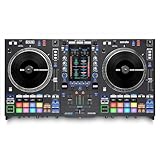
Overview: The RANE SYSTEM ONE represents a breakthrough as the first standalone DJ system with motorized platters, delivering authentic turntable feel without laptop dependency. Powered by Engine DJ OS, it features 7.2-inch aluminum motorized platters, a 7-inch HD touchscreen, and comprehensive connectivity options including XLR outputs for professional sound systems. This all-in-one unit targets open-format DJs who refuse to compromise on tactile response.
What Makes It Stand Out: Standalone Stems technology is the killer feature, allowing real-time vocal/instrumental isolation without a computer. The Omnisource flexibility seamlessly mixes USB, SD, internal drive, streaming services, and Serato DJ Pro. With 25+ onboard FX across multiple categories and aluminum paddle controls, it offers unprecedented creative control in a standalone unit that previously required laptop software.
Value for Money: Positioned at the premium end, it’s priced comparably to a pair of CDJs and a mixer but offers more flexibility. For professional DJs who want club-standard features without laptop reliance, the investment is justified by its versatility, build quality, and the ability to perform complex routines anywhere.
Strengths and Weaknesses: Pros include motorized platters, standalone Stems, extensive FX, robust build, and professional I/O. Cons are high price point, steep learning curve for Engine DJ OS, and weight that reduces portability compared to laptop controllers.
Bottom Line: A revolutionary choice for serious professional DJs and open-format performers who demand turntable authenticity and standalone freedom. It’s a complete club-ready system that fits in one flight case.
8. AlphaTheta DDJ-GRV6 4-channel DJ Controller with Groove Circuit

Overview: The AlphaTheta DDJ-GRV6 is a 4-channel DJ controller that pushes creative boundaries with its innovative Groove Circuit, allowing real-time drum part manipulation and live remixing. Designed with a club-standard layout, it bridges the gap between traditional mixing and modern performance production, targeting creative DJs who want to craft unique versions on the fly rather than just blend tracks.
What Makes It Stand Out: The Groove Circuit is genuinely innovative, letting you isolate and manipulate individual drum elements (kick, snare, hi-hats) independently. The Smart Rotary Selector and Discover function revolutionize track selection by intelligently suggesting compatible tracks. Combined with Stems FX in Serato DJ Pro, it transforms the controller into a live remix instrument rather than just a mixing tool.
Value for Money: At a premium price point, it’s competing with high-end controllers and entry-level CDJ setups. The unique Groove Circuit justifies the cost for performance-oriented DJs, though bedroom DJs may find the investment hard to rationalize without regular gigs that showcase these advanced capabilities.
Strengths and Weaknesses: Pros include revolutionary Groove Circuit, 4-channel flexibility, club-standard layout, and sophisticated design. Cons require laptop connection, steep learning curve for Groove Circuit, and premium pricing that may exceed beginner budgets or casual use cases.
Bottom Line: Perfect for creative DJs and producers who perform live remixes and want tools that transcend traditional mixing boundaries. It’s a performance instrument disguised as a controller.
9. Pioneer DJ DDJ-FLX4 2-deck Rekordbox and Serato DJ Controller - Graphite

Overview: The Pioneer DJ DDJ-FLX4 is an entry-level 2-deck controller designed to democratize DJing. Compatible with both Rekordbox and Serato DJ Lite (included), it works with PCs, Macs, iPhones, iPads, and Android devices. Its lightweight, portable design makes it ideal for beginners learning fundamentals or DJs wanting a practice setup that travels easily without compromising on essential features.
What Makes It Stand Out: Unmatched device compatibility lets you practice on a phone during commutes or perform with a laptop at gigs. The inclusion of Serato DJ Lite means instant out-of-box functionality. Support for major streaming services (TIDAL, Beatport, Beatsource, SoundCloud Go+) provides unlimited track access without large music libraries, perfect for beginners exploring genres before committing to purchases.
Value for Money: As one of the most affordable controllers from a major brand, it delivers exceptional value. The build quality reflects the price with lightweight plastic construction, but the feature set and software inclusion make it a steal for newcomers testing the waters of digital DJing.
Strengths and Weaknesses: Pros include affordability, portability, wide compatibility, streaming support, and beginner-friendly layout. Cons are basic 2-channel limitation, plastic construction, lack of standalone capability, and limited pro-level features like advanced FX or pad performance modes.
Bottom Line: The ultimate starter controller for aspiring DJs who want a reputable brand, comprehensive software, and room to grow without breaking the bank. It’s the modern gateway to DJing.
10. Rane ONE MKII Motorized Serato DJ Pro Controller with 2 Decks, Internal FX, Deep Stems Control for Scratch DJs, Clubs and Events

Overview: The Rane ONE MKII is a motorized Serato DJ Pro controller built specifically for scratch DJs and turntablists. Featuring 7.2-inch motorized platters with adjustable torque, it recreates the authentic vinyl experience while providing deep digital integration. The included Serato DJ Pro software and robust FX suite make it performance-ready for clubs, mobile gigs, and battle scenarios where precision matters.
What Makes It Stand Out: The motorized platters with classic plunger-style start/stop buttons deliver unparalleled tactile feedback for scratching. Deep Stems integration goes beyond basic isolation, letting you apply FX, rolls, and intricate manipulations to individual vocal, melody, bass, or drum elements. The 29 internal FX with OLED display provide hardware-level control without software dependency, crucial for live performance reliability.
Value for Money: Mid-to-high range pricing reflects its specialized nature. For scratch DJs, it replaces expensive turntables and mixers while adding digital flexibility, making it a sound investment. Generalist DJs may find better value elsewhere as features cater specifically to turntablism rather than all-around performance.
Strengths and Weaknesses: Pros include authentic motorized feel, deep Stems control, robust metal construction, comprehensive FX, and Serato DJ Pro inclusion. Cons are laptop requirement, weight, limited appeal for non-scratch DJs, and no standalone capability for true portability.
Bottom Line: The definitive choice for serious scratch DJs and turntablists who demand vinyl-like performance with modern digital power and portability. It’s a specialized tool that excels at its intended purpose.
The Evolution of Stand-Alone DJ Controllers
Stand-alone capability didn’t appear overnight. It emerged from the convergence of mobile computing power and DJs’ growing frustration with laptop dependency. Early attempts were essentially embedded computers running stripped-down software, often sluggish and limited. By 2026, we’re seeing custom silicon designed specifically for real-time audio processing, multi-threaded track analysis, and instant library navigation. These aren’t just controllers with screens—they’re complete musical instruments where the software and hardware are inseparable, optimized from the ground up for tactile interaction.
Understanding Stand-Alone Mode: More Than Just a Buzzword
“Stand-alone” has become a marketing term that requires scrutiny. True stand-alone mode means the controller can perform every critical DJ function—track loading, beatmatching, effects, recording, and library management—without any external computing device. Some units claim stand-alone capability but still require a tablet for advanced features like cloud sync or detailed editing. Others boot into a limited mode that restricts track count or effect usage. When evaluating controllers, dig into what functions remain available when disconnected and whether the device creates a full audio mix internally or merely sends MIDI signals to a hidden processor.
Why 2026 Is the Tipping Point for Laptop-Free DJing
Several converging technologies make 2026 the watershed year. WiFi 6E integration enables seamless cloud library streaming without latency concerns. ARM-based processors now deliver desktop-class performance with battery efficiency. AI-driven track analysis happens in real-time, automatically setting beatgrids, keys, and energy levels as you load songs. Perhaps most importantly, major record pools and labels have standardized high-quality, DJ-optimized file formats that reduce storage bloat while preserving audio fidelity. The infrastructure has finally caught up with the vision.
Essential Hardware Architecture
The heart of any stand-alone controller is its system-on-chip (SoC). In 2026, you’ll encounter two primary architectures: custom DSP-focused designs prioritizing low-latency audio, and general-purpose ARM chips running real-time operating systems. DSP-based units typically offer more predictable performance but less flexibility for updates. ARM-based systems behave like smartphones—powerful and versatile but potentially prone to resource contention. Check the RAM allocation: 4GB is the minimum for smooth operation with large libraries, while 8GB future-proofs you for upcoming features.
Processing Power Under the Hood
Clock speed alone tells an incomplete story. Look for dedicated cores handling audio streaming separate from UI rendering. Some premium controllers now feature neural processing units (NPUs) that accelerate AI tasks like vocal isolation and stem separation directly on the hardware. This matters because stem separation performed in real-time without taxing the main CPU means more headroom for effects and smoother overall performance. Ask manufacturers about their thermal throttling policies—does the processor slow down during a three-hour set in a hot booth?
Display Technology: Your New Command Center
In laptop-free DJing, your controller’s screen becomes your universe. 2026 brings three main display types: high-brightness LCD panels (1000+ nits for outdoor visibility), OLED screens with perfect blacks for dark clubs, and e-ink secondary displays for static information like track lists. Touch responsiveness has improved dramatically, with some units offering haptic feedback that simulates the tactile response of hardware buttons. Consider screen angle adjustability—fixed screens create glare issues in certain lighting conditions. Multi-screen setups that separate library browsing from waveform display can dramatically improve workflow efficiency.
Storage Solutions for the Modern DJ
Your music library is your livelihood, and how a controller stores and accesses it defines your creative limits. Stand-alone units typically offer hybrid storage architectures combining fast internal memory with expandable external options.
Internal Storage Options
Flash storage speeds vary wildly. UFS 4.0 internal storage delivers 4GB/s read speeds, making library searches instantaneous even with 50,000+ tracks. Slower eMMC storage, found in budget units, can cause frustrating lag when scrolling through large collections. Some controllers now include M.2 slots for user-upgradeable SSDs—a game-changer for DJs whose libraries outgrow factory configurations. Check whether internal storage is mirrored or backed up automatically; a storage failure mid-gig is catastrophic without redundancy.
External Media Flexibility
USB-C ports should support USB 3.2 speeds minimum for external SSDs, but also maintain backward compatibility with USB 2.0 flash drives. SD Express slots are becoming standard on professional units, offering theoretical speeds up to 985MB/s. Crucially, investigate how the controller handles multiple simultaneous media sources—can you hot-swap a backup drive while playing from internal storage? Does it gracefully handle read errors on aging USB sticks? The best units create a unified library view across all connected media, abstracting the physical location of your files.
Audio Interface Capabilities
Stand-alone controllers must deliver pristine audio without a separate interface. In 2026, professional-grade units offer 32-bit float DACs with dynamic ranges exceeding 120dB. This isn’t just spec-chasing—it provides headroom that prevents clipping when layering heavily compressed tracks. Examine the analog output stage: discrete op-amps deliver cleaner sound than integrated solutions. For mobile DJs, built-in microphone preamps with independent EQ and compression are invaluable. Check whether digital inputs (SPDIF, AES/EBU) are available for connecting backup media players without additional D/A conversion.
Connectivity: Bridging the Gap Between Devices
A stand-alone controller in 2026 functions as the hub of your entire setup. Beyond basic audio I/O, evaluate the data connectivity ecosystem.
Wireless Integration in 2026
Bluetooth 5.3 with LC3 codec support enables low-latency wireless headphone monitoring—finally practical for beatmatching. WiFi 6E opens doors to cloud library streaming, audience request systems, and remote backup access. Some units now support Thread/Matter protocols for integrating with smart venue lighting and video systems, allowing your mix to trigger visual cues automatically. However, wireless features introduce security considerations. Ensure the controller supports WPA3 Enterprise and offers the ability to disable unnecessary services to prevent unauthorized access during live sets.
Power Solutions: From AC to Battery
True portability requires flexible power. While most club installations provide reliable AC, mobile DJs need options. 2026 controllers increasingly support USB-C Power Delivery (PD 3.1) up to 140W, allowing operation from power banks or vehicle chargers. Battery-powered units typically offer 4-6 hours of runtime, but this drops significantly when using WiFi or processing stems. Investigate whether the battery is user-replaceable—lithium cells degrade over time, and swapping should be tool-free. For club installations, redundant power inputs (AC + USB-C) provide backup if venue power fluctuates.
Performance Workflows: Adapting Your Technique
Moving from laptop to stand-alone requires retraining muscle memory. The paradigm shift involves trusting the hardware to handle tasks you previously micromanaged. Waveform zoom, loop fine-tuning, and cue point management now happen through hardware controls rather than mouse precision. This can be liberating—many DJs report deeper crowd connection—but requires practice. The lack of a QWERTY keyboard for search means mastering tag-based filtering and playlist curation beforehand. Some controllers offer voice search, but its reliability varies with booth noise levels.
Pad Performance and Hot Cue Evolution
Performance pads in stand-alone mode have evolved beyond simple triggers. Pressure sensitivity and aftertouch now control effect intensity or sample volume. RGB lighting serves functional purposes, color-coding cues by musical element (kick, vocal, breakdown) rather than just aesthetics. Look for pads with adjustable actuation force—some DJs prefer feather-light touches while others want deliberate presses. The pad grid should be configurable; 4x4 might work for finger drumming, but 8x2 could better suit cue juggling.
Effects Processing: Built-In vs. Expansion
Stand-alone controllers bundle DSP effects, but implementation quality varies. 2026 units offer send/return loops for external hardware effects, preserving your signature sound. Internal effects should be fully parameter-adjustable via hardware encoders, not menu-diving. Check the effects routing: can you apply reverb to a specific frequency band? Do effects tails continue when you deactivate them, or do they cut abruptly? Some premium units allow loading custom VST-style plugins, though this requires careful CPU management.
Software Ecosystems and Longevity
The hardware is only half the equation. A controller’s firmware update policy reveals the manufacturer’s commitment to longevity. Look for devices with quarterly update schedules that add features, not just bug fixes. Community-driven feature requests being implemented indicates a responsive development team. Some manufacturers now offer beta firmware programs for early access to features. Investigate the backup and restore process—can you save your entire configuration (settings, cue points, playlists) to a cloud account? What happens if the manufacturer discontinues the product; does it become a brick or remain functional?
Build Quality: Surviving the Road
Club environments are brutal. Faders should be rated for at least 1 million cycles, with metal shafts that resist bending if the unit drops. Knobs need firm detents for precise adjustments but shouldn’t become loose after a year of gigs. The chassis should be extruded aluminum, not plastic, with corner reinforcements. Check the port reinforcement—USB-C connectors soldered directly to the main board are failure points. Premium units use daughterboards or reinforced brackets. Ingress protection ratings (IP54 minimum) indicate resistance to spilled drinks and dust. Weight matters too; a 15-pound unit might feel substantial but becomes a liability loading into a venue at 2 AM.
Form Factor: Balancing Size and Functionality
Stand-alone controllers span from ultra-portable two-deck units that fit in a backpack to four-deck behemoths replacing CDJ setups. Your choice depends on gig type. Mobile DJs need something that fits in an overhead bin and runs on battery power. Club DJs might prioritize a familiar CDJ-style layout with full-size jog wheels. A growing category is modular controllers—main units with detachable side panels that add decks or effects sections. This “grow as you go” approach offers flexibility but introduces connection reliability concerns. Consider the “setup footprint”—how much booth real estate it consumes when fully cabled.
Price Tiers and Value Proposition
The stand-alone controller market stratifies into three distinct tiers. Entry-level units ($800-$1,500) offer core functionality but compromise on screen quality, I/O count, and build materials. They’re perfect for learning the stand-alone workflow but may lack professional features like dual USB ports for back-to-back DJ changeovers. Mid-range controllers ($1,500-$3,000) represent the sweet spot for most working DJs, balancing performance, connectivity, and durability. Professional units ($3,000+) justify their price with redundant audio paths, modular expansion, and rider-friendly reliability. Factor in total cost of ownership: does the price include a protective case? Are firmware updates free for life? Some manufacturers charge for major feature updates after the first year.
Transitioning Your Library and Workflow
Migrating from laptop software to a stand-alone ecosystem requires planning. Most controllers support multiple file formats, but your carefully curated cue points and loops may not transfer perfectly. Export your library as RekordBox-compatible XML or use the emerging DJLibrary standard format adopted in 2026. Spend time normalizing your file metadata—stand-alone systems rely heavily on tags for search, and inconsistent naming creates chaos. Create “transition playlists” of 20-30 tracks you know intimately, and practice your first few stand-alone sets using only these to build confidence. Record your practice sessions; without laptop screen recording, you’ll need to adapt how you review and improve your mixes.
Future-Proofing Your 2026 Investment
Technology moves fast, but a stand-alone controller should last five to seven years. Look for devices with unused processing headroom—CPU utilization below 60% during normal operation leaves room for future features. Check for expansion ports not yet activated; some units include hidden USB4 ports reserved for future modules. AI acceleration hardware is becoming standard; ensure your unit has an NPU even if current firmware doesn’t leverage it fully. Finally, consider the manufacturer’s track record. Companies that maintain firmware support for discontinued products demonstrate respect for your investment and reduce electronic waste.
Frequently Asked Questions
1. Can I really DJ a full 6-hour set without a laptop, or will I run into limitations?
Absolutely, but preparation is key. Modern stand-alone controllers handle extended sets seamlessly, though you’ll need to manage your library differently. Create robust playlists and use the controller’s preparation mode to analyze tracks beforehand. The main limitation isn’t the hardware—it’s adjusting your workflow to browse and select tracks efficiently without a large screen and keyboard.
2. How do I handle emergency backup if the controller fails during a gig?
Professional units include dual USB ports for connecting a backup drive with a mirrored library. Some DJs run a small media player (like a phone with DJ software) into an auxiliary input as a last resort. Always have a backup plan that doesn’t rely on the controller’s operating system—this might mean keeping a classic iPod with a pre-mixed emergency set.
3. Will my existing DJ software library transfer over to a stand-alone system?
Most controllers import libraries from RekordBox, Serato, and Engine DJ, but cue points, loops, and beatgrids may need manual adjustment. The 2026 DJLibrary format improves compatibility, but you should budget 10-15 hours to clean up metadata and re-analyze your most-played tracks. Think of it as an opportunity to declutter your collection.
4. Are battery-powered controllers powerful enough for professional use?
Yes, but with caveats. Battery power works flawlessly for two-deck mixing with basic effects. However, activating stem separation, sampling, and heavy effect chains can drain power rapidly and potentially throttle performance. For critical gigs, keep the AC adapter connected as primary power with the battery as backup. Battery life is best reserved for cocktail hours, ceremonies, or outdoor events where AC is unavailable.
5. How do I update my music library on the road without a laptop?
Many 2026 controllers support WiFi-based library updates directly from record pools like Beatport or Beatsource. You can download and analyze tracks over WiFi, though this is slow for bulk updates. A more practical solution is carrying a small Android tablet with file management apps and a USB-C hub. Some DJs use portable NAS devices that create a local hotspot, allowing wireless library sync without internet dependency.
6. What’s the learning curve like for DJs coming from laptop setups?
Expect 2-4 weeks of regular practice to feel fully comfortable. The biggest adjustment is trusting the hardware’s automatic functions—like beatgrid detection and sync—without being able to visually verify on a large screen. Your mixing becomes more ears-focused, which most DJs find improves their skills. The physical workflow is actually more intuitive; the challenge is unlearning laptop-dependent habits.
7. Can I still use my favorite VST plugins and external effects?
Stand-alone controllers can’t host VSTs directly, but most professional units offer send/return loops for hardware effects. Some manufacturers have created plugin ecosystems that compile VSTs to run on their hardware’s DSP, though selection is limited. For unique effects, you’ll need to process stems beforehand or use an external effects unit. The trade-off is reliability—no plugin crashes during sets.
8. How reliable is cloud streaming for live performances?
Cloud streaming has matured significantly, but it’s not infallible. 2026 controllers buffer several minutes of audio locally, so brief connectivity drops won’t interrupt playback. However, for mission-critical gigs, maintain local copies of your must-play tracks. Use cloud streaming for requests and deep catalog access, not for your core set. Always test venue WiFi during soundcheck with a speed test built into the controller.
9. Do stand-alone controllers work with turntables and DVS systems?
Most four-deck units include phono preamps and support DVS (Digital Vinyl System) control when connected to turntables. However, this often requires switching the controller into a “hybrid mode” that may disable some stand-alone features. Check whether DVS is handled by the main processor or a separate chip—integration quality varies. Some DJs prefer keeping a separate DVS interface and routing audio into the controller’s line inputs for better reliability.
10. What happens if the manufacturer goes out of business or stops supporting my controller?
Unlike laptop software that can run indefinitely, stand-alone controllers depend on firmware. If support ends, you’ll lose access to new features but the hardware remains functional. Some community projects have emerged to keep discontinued units alive, but this is risky. Mitigate this by choosing manufacturers with established track records and avoiding crowdfunded controllers from unproven companies. Your controller should remain usable for years, but without updates, it may eventually struggle with new file formats or connectivity standards.
See Also
- 10 DJ Controllers with Stand-Alone Mixer Mode for Vinyl DVS in 2026
- 10 DJ Controllers with Slip Mode for Seamless Transitions in 2026
- 10 Professional DJ Controllers for Cruise Ship Gigs in 2026
- 10 DJ Controllers with Reverse Mode for Creative Transitions in 2026
- 10 Most Durable DJ Controllers for Festival Gigs Based on Real Rider Reviews