Table of Contents
The unmistakable tug of vinyl under your fingertips isn’t just nostalgia—it’s biomechanics. In 2026, scratch DJs are witnessing something remarkable: motorized platters have evolved from gimmicky add-ons into sophisticated instruments that genuinely replicate the torque, inertia, and tactile feedback of classic turntables. This isn’t about mimicking the past; it’s about preserving the physical language of scratching while unlocking digital superpowers. Whether you’re a battle DJ sharpening your crabs or a turntablist building complex routines, understanding what separates authentic motorized performance from marketing fluff has never been more critical.
The landscape has shifted dramatically. Early motorized controllers felt like toys—sluggish, imprecise, and prone to failure after months of heavy use. Today’s generation features industrial-grade motors, sub-millisecond latency, and build quality that survives cross-country tours and weekly battle sessions. But with this evolution comes complexity. Torque ratings, PPR counts, motor types, and DVS integration aren’t just spec sheet filler—they’re the difference between a controller that disappears under your hands and one that constantly reminds you it’s a compromise.
Top 10 Motorized Dj Controllers
Detailed Product Reviews
1. Rane ONE MKII Motorized Serato DJ Pro Controller with 2 Decks, Internal FX, Deep Stems Control for Scratch DJs, Clubs and Events

Overview: The Rane ONE MKII delivers a professional-grade motorized DJ controller experience built specifically for Serato DJ Pro. This performance-ready system bridges the gap between traditional vinyl turntablism and digital convenience, featuring 7.2-inch motorized platters with adjustable torque settings that replicate authentic turntable feel. Designed for scratch DJs and club installations, it combines classic tactile controls with modern digital workflow and comprehensive connectivity options.
What Makes It Stand Out: The ONE MKII’s plunger-style start/stop buttons provide satisfying tactile feedback rarely seen in digital controllers. Its deep Stems integration allows real-time isolation of vocals, melody, bass, and drums with dedicated controls, while the internal FX suite offers 29 meticulously crafted effects with OLED display feedback. Adjustable torque settings let DJs customize platter resistance to match their scratching style perfectly.
Value for Money: Positioned in the premium tier, the ONE MKII justifies its price for serious DJs who would otherwise invest in separate turntables and a mixer. It eliminates DVS complexity while preserving vinyl feel, making it cost-effective for professionals prioritizing authentic performance. The included Serato DJ Pro license adds significant value.
Strengths and Weaknesses: Strengths include exceptional build quality, authentic motorized performance, deep Serato integration, and comprehensive FX control. Weaknesses are its two-channel limitation, substantial weight for mobile gigs, and premium pricing that may deter hobbyists. The lack of built-in displays requires laptop visibility during performance.
Bottom Line: The Rane ONE MKII is the ultimate choice for scratch purists and club DJs seeking vinyl authenticity without sacrificing digital capabilities. Its robust construction and thoughtful design make it a long-term investment for serious performers.
2. Rane PERFORMER 4-Channel Motorized DJ Controller, 7" Platters with Displays, Precision Feel Faders, Stem Split, Advanced FX, Serato DJ Pro Included

Overview: The Rane PERFORMER redefines professional DJ controllers with its 4-channel motorized design and integrated displays. Built for creative performers, it combines 7-inch high-torque aluminum platters with magnetic acrylic discs and built-in screens showing track information and waveforms. This flagship controller includes Serato DJ Pro and represents Rane’s most advanced performance system for demanding professionals.
What Makes It Stand Out: The PERFORMER’s Stem-Split technology revolutionizes live remixing by separating track elements across different channels. Platter displays provide visual feedback without laptop dependency, while the MAG Four crossfader and tension-adjustable faders offer unparalleled mixing precision. Instant access to over 100 million tracks via streaming integration eliminates preparation boundaries and expands creative possibilities exponentially.
Value for Money: As a flagship controller, the PERFORMER commands premium pricing but delivers 4-channel flexibility that typically requires separate hardware. For mobile DJs and touring professionals, it consolidates multiple devices into one robust unit, justifying the investment through versatility and build quality that withstands rigorous use.
Strengths and Weaknesses: Strengths include innovative platter displays, advanced Stem controls, premium faders, comprehensive streaming integration, and 4-channel mixing capability. Weaknesses involve complexity that may overwhelm beginners, substantial footprint for small venues, and a price point positioning it exclusively for professional users requiring extensive features.
Bottom Line: The PERFORMER is a technological masterpiece for forward-thinking DJs who demand visual feedback, creative Stem manipulation, and four-deck control. It’s an investment in performance capability that pays dividends for professionals pushing creative boundaries.
3. RANE SYSTEM ONE All-in-One Standalone Motorized DJ Controller with Engine DJ OS, Seamless Mixing on 2 Decks, Stems FX, Serato DJ, XLR Outputs
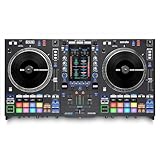
Overview: The SYSTEM ONE breaks new ground as the first standalone motorized DJ controller, running Engine DJ OS without requiring a laptop. This all-in-one solution features 7.2-inch aluminum platters and a 7-inch HD touchscreen, offering unprecedented flexibility for DJs wanting vinyl feel in a self-contained unit ready for professional gigs and club installations.
What Makes It Stand Out: Omnisource flexibility allows mixing from USB, SD, internal drives, and streaming services including Apple Music and TIDAL—all without a computer. Standalone Stems technology processes track separation internally, while the vertical touchscreen provides customizable waveforms. XLR outputs deliver professional connectivity directly from the unit, eliminating need for external audio interfaces.
Value for Money: Though priced at the premium tier, the SYSTEM ONE replaces a laptop, controller, and audio interface in one device. For DJs prioritizing laptop-free reliability and setup simplicity, it eliminates multiple failure points and gear purchases, offering exceptional long-term value despite the initial investment.
Strengths and Weaknesses: Strengths encompass true standalone operation, versatile media sources, integrated touchscreen, professional I/O, and onboard Stems processing. Weaknesses include the highest price in its class, a learning curve for Engine DJ OS, and potential overkill for DJs comfortable with laptop setups. The unit is heavier than traditional controllers.
Bottom Line: The SYSTEM ONE pioneers a new category for professional DJs seeking ultimate independence from laptops while maintaining motorized vinyl control. It’s a revolutionary tool for performers demanding maximum flexibility and reliability in any environment.
4. Hercules DJControl Inpulse T7, 2 Deck Motorized DJ Controller with built in STEMS Control, Serato DJ and DJUCED included
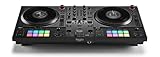
Overview: The Hercules DJControl Inpulse T7 democratizes motorized DJ controllers, offering entry-level pricing with professional-feel 7-inch platters. Weighing just 11 pounds with built-in handles and retractable feet, this 2-deck controller includes Serato DJ Lite and DJUCED software, making it ideal for beginners and mobile DJs seeking authentic vinyl feel without complexity or heavy investment.
What Makes It Stand Out: The T7’s separate vinyl record, slipmat, and platter design allows true vinyl removal, mimicking traditional turntables at a fraction of the cost. Its lightweight portability combined with motorized platters is unmatched in this price range, while included software bundles provide immediate out-of-box functionality for learning DJs wanting to practice scratching and mixing techniques.
Value for Money: Exceptional value for entry-level DJs, delivering motorized platters and Stems control at a price point far below professional alternatives. While Serato DJ Lite has limitations, the free upgrade path to Pro and inclusion of DJUCED makes this an affordable gateway to serious DJing without sacrificing core features that matter.
Strengths and Weaknesses: Strengths include affordability, portability, authentic platter design, beginner-friendly software bundle, and low weight. Weaknesses comprise Lite software limitations, less robust build quality than pro units, shorter fader travel, and limited I/O options for professional gigs requiring multiple connections.
Bottom Line: The Inpulse T7 is the perfect starting point for aspiring DJs wanting motorized control and room to grow. Its portability and price make it ideal for practice, small gigs, and learning the craft before investing in professional gear.
5. Hercules DJ T7 Premium, 2 Deck Motorized DJ Controller with built in STEMS Control, Serato DJ and DJUCED included Gold

Overview: The Hercules DJ T7 Premium elevates the standard T7 with enhanced components and premium accessories. This gold-accented motorized controller retains the core 7-inch platter design while adding a premium fader module, carry bag, and extra slipmats. It includes Serato DJ and DJUCED, targeting serious hobbyists wanting upgraded features without professional pricing.
What Makes It Stand Out: Beyond aesthetic gold accents, the premium fader module delivers smoother mixing and cutting performance. The included carry bag and two extra felt slipmats provide immediate value for mobile DJs and scratch practitioners. These upgrades enhance the T7’s core functionality while maintaining its beginner-friendly accessibility and motorized authenticity.
Value for Money: The Premium model sits in a sweet spot between entry-level and professional controllers. The upgraded faders and included accessories justify the modest price increase over the standard T7, offering tangible performance improvements for DJs who’ve outgrown basic equipment but aren’t ready for four-figure investments.
Strengths and Weaknesses: Strengths feature improved fader feel, comprehensive accessory bundle, stylish design, and the same reliable motorized platters. Weaknesses include gold styling that may not suit all aesthetics, core hardware identical to the standard T7, and still lacking pro-level I/O and build durability for heavy touring and professional club installations.
Bottom Line: The T7 Premium offers meaningful upgrades for committed DJs seeking better performance and portability. It’s an excellent intermediate choice that bridges the gap between learning and professional gear without the premium price tag, providing enhanced durability for regular gigging.
6. Rane FOUR Stems DJ Controller with 4 Decks, 8.5" Jog Wheels with Displays, Mixer with Internal FX, Serato DJ Pro and Pitch ‘n Time Included

Overview: The Rane FOUR represents a revolutionary leap in DJ controller design, engineered specifically around Serato’s Stems technology. This 4-deck professional mixer combines Rane’s legendary build quality with unprecedented stem manipulation capabilities, enabling DJs to isolate and remix track elements in real-time. The 8.5-inch jog wheels with integrated displays provide tactile control while keeping critical information visible during performances.
What Makes It Stand Out: What makes it truly exceptional is the dedicated STEM-SPLIT feature and instant-access instrumental/acapella buttons that unlock creative possibilities unavailable on competing controllers. The 24 paddle-triggered Main FX and 4 knob-controlled Channel FX offer extensive sound-shaping options, while seamless integration with Apple Music, TIDAL, and Spotify provides access to over 100 million tracks without downloads. This hardware-software synergy creates a comprehensive ecosystem for modern DJs.
Value for Money: Positioned at the premium tier, the FOUR includes Serato DJ Pro and Pitch ’n Time licenses worth several hundred dollars, making it competitively priced for professionals. DVS capability and 4-channel mixing effectively replace multiple pieces of gear, delivering exceptional value for working DJs who demand cutting-edge performance capabilities and future-proof workflow options.
Strengths and Weaknesses:
- Strengths: Unmatched stem integration; bulletproof metal construction; comprehensive internal FX; streaming service support; includes premium software; DVS-ready.
- Weaknesses: Complex workflow for beginners; substantial footprint requires dedicated space; premium pricing excludes hobbyists.
Bottom Line: The Rane FOUR is the definitive controller for forward-thinking DJs ready to embrace stem-based mixing. Its hardware-software synergy makes it worth every penny for serious professionals.
7. Pioneer DJ DDJ-FLX4 2-deck Rekordbox and Serato DJ Controller - Graphite

Overview: The Pioneer DJ DDJ-FLX4 is the ideal entry point into digital DJing, offering a compact 2-deck controller that works seamlessly across multiple platforms. This graphite-finished unit supports both Rekordbox and Serato DJ Lite, making it perfect for beginners exploring different software ecosystems. Its lightweight design belies a professional layout that accelerates the learning curve for aspiring DJs.
What Makes It Stand Out: What distinguishes the FLX4 is its remarkable device compatibility—working with PCs, Macs, iPhones, iPads, and Android devices. The controller supports streaming from TIDAL, Beatport, Beatsource, and SoundCloud Go+, allowing DJs to mix from vast online libraries without local storage constraints. The plug-and-play functionality with included software means you can start mixing immediately without additional purchases.
Value for Money: At its accessible price point, the FLX4 delivers exceptional value for newcomers. While it includes Serato DJ Lite, it’s hardware-unlocked for Rekordbox DJ’s performance features, effectively providing two software options. This versatility, combined with Pioneer DJ’s reliable build quality, makes it a smarter investment than cheaper alternatives that lack streaming or multi-device support.
Strengths and Weaknesses:
- Strengths: Universal device compatibility; streaming service integration; portable design; includes software; professional Pioneer layout.
- Weaknesses: Limited to 2 decks; Lite software requires eventual upgrade; fewer performance features than pro models.
Bottom Line: The DDJ-FLX4 is the perfect launchpad for aspiring DJs. Its versatility and ease of use make it the best value starter controller available today.
8. Pioneer DJ DDJ-REV7-N 2-Deck Serato DJ Controller - Limited Edition Gold

Overview: The Pioneer DJ DDJ-REV7-N Limited Edition Gold is a visually stunning variant of the flagship REV7, combining performance excellence with exclusive aesthetics. This 2-deck Serato controller maintains all the professional features of the standard model while adding a luxurious gold finish that commands attention in any booth. The limited production run ensures exclusivity for collectors and serious performers seeking distinctive gear.
What Makes It Stand Out: What makes it stand out is the striking gold colorway paired with the same motorized jog wheels and MAGVEL FADER that define the REV7 series. The On Jog Display provides critical track information at a glance, while Instant Scratch buttons deliver rapid sample triggering. With 22 built-in Beat FX including three new additions, this controller offers extensive creative possibilities for turntablists and open-format DJs who prioritize both function and form.
Value for Money: The premium price reflects both its limited edition status and underlying professional capabilities. While functionally identical to the standard REV7, the exclusive finish and collector’s appeal justify the additional cost for DJs wanting unique gear. It represents an investment in both performance capability and long-term prestige that standard controllers cannot match.
Strengths and Weaknesses:
- Strengths: Exclusive gold finish; motorized jog wheels; professional MAGVEL FADER; comprehensive FX suite; collectibility.
- Weaknesses: Higher cost than standard REV7; limited availability; aesthetic may not suit all venues.
Bottom Line: For DJs seeking performance and standout style, the gold REV7-N delivers both. It’s a worthy investment for collectors and professionals alike.
9. Pioneer DJ DDJ-REV7 2-deck Serato DJ Controller

Overview: The Pioneer DJ DDJ-REV7 is a professional 2-deck Serato controller that bridges the gap between digital convenience and analog turntable feel. Its centerpiece is the innovative motorized jog wheel system, engineered with rotational stability matching a 12-inch turntable. The acrylic top plate with authentic vinyl texture provides the tactile feedback scratch DJs demand, while the 3.5-inch On Jog Display keeps essential information visible during intense performances.
What Makes It Stand Out: What truly distinguishes the REV7 is the Magvel Fader Pro, offering customizable settings and rugged durability for intense scratching sessions. The Instant Scratch buttons provide four original samples at your fingertips, while the comprehensive performance pad layout unlocks Serato’s full potential. This controller is purpose-built for turntablists who refuse to compromise on feel but want modern digital workflow advantages.
Value for Money: Priced in the professional tier, the REV7 competes with high-end controllers and entry-level CDJs. The motorized jog system alone justifies the cost for scratch purists, eliminating the need for separate turntables and DVS interfaces. It’s a complete solution for serious open-format and hip-hop DJs who prioritize authentic performance feel above all else.
Strengths and Weaknesses:
- Strengths: Authentic motorized jog feel; excellent Magvel Fader Pro; informative displays; robust build quality; dedicated scratch features.
- Weaknesses: Heavy and less portable; premium pricing; overkill for beginners; limited to 2 decks.
Bottom Line: The DDJ-REV7 is the ultimate choice for scratch DJs wanting turntable authenticity without analog maintenance. Its performance justifies the professional price tag.
10. Hercules DJ Control Inpulse T7 White, Limited Edition

Overview: The Hercules DJControl Inpulse T7 White Limited Edition brings fresh aesthetics and innovative learning tools to the mid-range controller market. This striking white unit features 7-inch motorized jog wheels with touch detection, delivering precise control in a distinctive package that brightens any setup. The limited edition finish adds sophistication while maintaining Hercules’ commitment to accessibility and user-friendly design.
What Makes It Stand Out: What sets the T7 apart is the intelligent Beatmatch Guide system, using light cues to teach beatmatching fundamentals—a genuine game-changer for developing DJs. The Intelligent Music Assistant recommends tracks based on your library, helping maintain energy and flow during sets. Professional-grade XLR and RCA outputs, plus microphone input, provide connectivity typically found in pricier units, while the 7-inch motorized wheels offer a taste of high-end performance at a mid-tier price.
Value for Money: Positioned competitively, the T7 undercuts premium brands while offering unique educational features. The motorized jog wheels and pro connections deliver exceptional value, though it lacks the brand prestige of Pioneer or Rane. For self-taught DJs, the learning assistance features alone justify the investment over basic controllers that offer no pedagogical support.
Strengths and Weaknesses:
- Strengths: Unique white design; motorized jog wheels; Beatmatch Guide; Intelligent Music Assistant; pro audio connections.
- Weaknesses: Smaller jog wheels than competitors; less robust software ecosystem; brand perception limitations.
Bottom Line: The Inpulse T7 White is perfect for learning DJs wanting style and guidance. Its educational features make it a smart mid-range investment for skill development.
The Renaissance of Motorized Platters in Digital DJing
Why Vinyl Feel Still Matters in 2026
The human brain processes tactile feedback 10 times faster than visual cues. When you perform a chirp scratch, your hand adjusts pressure based on platter resistance before your eyes register the waveform. This proprioceptive loop is why static platters, despite their precision, never fully satisfied purists. Motorized platters reintroduce that physical conversation between DJ and gear. In 2026, advanced haptic feedback systems and dynamic torque adjustment mean the platter actually responds differently to a light baby scratch versus a heavy-handed transformer scratch—just like vinyl does.
The Evolution From Static to Spinning
The first generation of motorized controllers sacrificed reliability for novelty. Motors burned out, platters wobbled, and latency made precise timing impossible. Modern units employ brushless direct-drive motors borrowed from high-end robotics, paired with optical sensors reading over 3,600 pulses per revolution. The result? Startup times under 0.3 seconds, torque stability within 2% variance, and lifespans rated for 50,000+ hours. Manufacturers have also solved the power problem—2026 models sip energy through USB-C PD 3.0 while delivering performance that once required separate AC adapters.
Understanding Torque: The Heartbeat of Scratch Performance
Decoding Torque Specifications
Torque ratings tell you how aggressively the platter fights back. For scratch DJs, look for continuous torque between 2.5 kgf·cm and 4.5 kgf·cm. Anything below 2.0 feels mushy during heavy cue drags; above 5.0 becomes fatiguing during long sessions. Pay attention to how specs are measured—peak torque numbers are marketing fluff. What matters is sustained torque under load, when you’re physically holding the platter still against the motor’s spin. Quality controllers publish both “starting torque” and “running torque” figures, with minimal drop-off between them.
Real-World Testing Methods
Don’t trust the spec sheet alone. The hand test: place one finger on the platter’s edge and try to stop it from a standstill. A proper scratch-ready motor should require deliberate, focused pressure—not herculean effort, but enough that you feel genuine resistance. Next, perform a series of 16th-note stabs. The platter should return to exact pitch within milliseconds. If you feel “soft spots” or inconsistent braking, the motor control firmware is subpar. In 2026, premium units allow you to adjust torque curves via software, letting you fine-tune the “weight” for different techniques.
Platter Size, Weight, and Inertia Dynamics
7-inch vs. 12-inch Platters
The debate rages on. Seven-inch platters offer ridiculous portability and faster spin-up times, making them ideal for mobile DJs and cramped booths. However, their lower rotational inertia means they lose momentum quickly during power moves. Twelve-inch platters replicate full-size vinyl’s physics—crucial for DJs who learned on Technics. The larger diameter gives you more granular control over pitch bends and cleaner manual tempo adjustments. For 2026, the sweet spot for battle DJs is trending toward 10-inch platters, which split the difference while accommodating standard 7-inch vinyl for DVS timecode.
Weighted Rims and Rotational Mass
It’s not just size—it’s where the weight lives. Controllers with perimeter-weighted platters mimic the flywheel effect of vinyl, maintaining momentum through long drags. Look for units with adjustable rim weights or interchangeable mass rings. Some 2026 models feature dynamic weighting: internal ball bearings shift position based on playback speed, increasing stability for scratching while reducing wear during transport. A platter’s total mass should be 400-600 grams for optimal feel; lighter feels toy-like, heavier causes unnecessary motor strain.
Resolution Wars: PPR, Latency, and Digital Precision
Pulses Per Revolution Explained
PPR (pulses per revolution) is your digital granularity. For scratch DJs, 3,600 PPR is the 2026 baseline—anything less and you’ll notice stepping during slow drags. Elite controllers now push 7,200 PPR, translating to 0.05-degree rotational accuracy. This matters when you’re executing ultra-precise scribble scratches where hand movements are sub-millimeter. Higher PPR also improves DVS timecode tracking, reducing needle drops and signal drift during complex power routines.
The Latency Bottleneck
Here’s where specs get misleading. A controller might boast 1ms audio latency, but total system latency includes motor response, sensor processing, and software buffering. The magic number for scratching is under 8ms total round-trip. In 2026, top-tier controllers achieve 4-6ms by integrating the audio interface and motor controller on a single ASIC chip. Test this by recording a simple stab scratch and analyzing the waveform alignment between your controller’s direct output and the recorded signal in your DAW. Any visible misalignment indicates unacceptable latency.
Motor Types: Direct Drive, Belt Drive, and Hybrid Systems
True Direct-Drive Advantages
Direct-drive motors connect the platter directly to the rotor—no belts, no gears. This gives you instantaneous torque response and zero backlash, essential for tight crab scratches where direction changes happen in milliseconds. The downside? Cost and weight. Quality direct-drive systems require rare-earth magnets and precision bearings that add $300-500 to the retail price. For scratch DJs, this isn’t optional; it’s the price of admission for authentic feel.
Modern Hybrid Approaches
Some 2026 controllers use “smart belt” systems with tension sensors that adjust belt tightness in real-time. These claim direct-drive performance with lighter weight and lower cost. While impressive on paper, they still introduce microscopic lag during aggressive platter braking. True belt-drive systems have no place in scratch DJing—their inherent compliance makes precise timing impossible. If you’re considering a hybrid, verify it uses a toothed belt with zero slip, not a friction-based flat belt.
Build Quality: What Battle-Ready Really Means
Material Science in Platter Construction
The platter itself matters as much as the motor. Die-cast aluminum offers the best strength-to-weight ratio, with CNC-machined surfaces ensuring perfect flatness. Avoid plastic platters at any price—they warp with heat and transmit motor vibration directly to your fingertips. Premium controllers now use carbon fiber composites for the platter base, damping vibrations while keeping weight down. The slipmat surface should be user-replaceable; look for magnetic or clip-on systems rather than adhesive, which leaves residue.
Fader Integration and Durability
Your crossfader and platter are dance partners. The controller’s chassis must be rigid enough that aggressive platter work doesn’t flex the unit and affect fader alignment. Look for steel or reinforced aluminum faceplates at least 2mm thick. The fader should be isolated from the platter assembly—shared mounting points transfer vibration that causes microscopic fader jitter. In 2026, modular fader bays are standard on pro units, letting you swap in your favorite aftermarket fader without voiding warranty.
Software and DVS Integration Deep Dive
Native Ecosystem Benefits
Controllers designed specifically for one software package achieve tighter integration. They can leverage proprietary protocols that bypass standard MIDI, reducing latency and unlocking features like motorized platter feedback for loop rolls or cue point markers. The trade-off is vendor lock-in. Before committing, verify the manufacturer has a track record of supporting legacy hardware through at least three major software versions. Nothing’s worse than a $1,500 paperweight after an OS update.
Third-Party Flexibility
Universal MIDI controllers offer freedom but require more setup. For scratch DJs, the critical feature is DVS timecode compatibility. Ensure the controller can function as a standalone audio interface, routing timecode signals from external turntables through to your software. In 2026, look for “DVS Direct Mode” that processes timecode on the controller itself, reducing CPU load and latency. Test this with both traditional vinyl timecode and the newer “silent” timecode systems that use ultrasonic frequencies.
Audio Interface Excellence
Latency Benchmarks
A controller’s built-in audio interface should achieve <4ms round-trip latency at 96kHz with a 64-sample buffer. Many 2026 units now include onboard DSP for effects, offloading processing from your laptop and allowing even lower buffer sizes. The key spec is “driver stability under load.” A interface that crackles when you enable motor drivers and performance pads simultaneously is useless. Check user forums for real-world reports, not just manufacturer claims.
Output Options and Club Standards
For professional gigs, you need both RCA and XLR outputs. RCA for DJ mixers, XLR for direct connection to PA systems when the booth mixer is questionable. The XLR outputs should be true balanced lines, not just RCA-to-XLR adapters. Look for switchable line/phono levels on the RCA outs—some older club mixers still expect phono-level signals. In 2026, Dante audio networking is appearing on high-end controllers, letting you route audio over Ethernet directly to modern club sound systems with zero conversion loss.
Portability vs. Performance: The Modern DJ’s Dilemma
Travel-Friendly Designs
The lightest motorized controllers in 2026 weigh under 8 pounds, thanks to magnesium alloys and compact 7-inch platters. But weight savings come at a cost—reduced torque and smaller faders. For flying DJs, look for units with detachable platters that store separately in a custom case. This protects the motors from baggage handler abuse. Also consider “flight mode” settings that lock the platter and park the motor heads, preventing damage during transport.
Power and Connectivity Trends
USB-C Power Delivery 3.0 has unified charging and data, but not all ports are equal. A controller drawing 45W for motors needs a laptop that can supply that power while running. Many ultrabooks can’t. Look for controllers with auxiliary power inputs or dedicated power banks. Thunderbolt 4 connectivity is emerging on flagship models, offering 40Gbps bandwidth that eliminates data bottlenecks when streaming multiple timecode signals and high-resolution audio simultaneously.
Fader Customization: Cut-In, Curve, and Feel
Optical vs. Magnetic Technologies
Optical faders use light sensors for contactless operation, eliminating wear. They’re smooth and precise but can feel “dead” with no physical resistance. Magnetic faders (like the ones pioneered in high-end mixers) use Hall effect sensors with magnets, offering adjustable tactile feedback. For scratching, magnetic faders with customizable “bump” points at the cut-in threshold provide better tactile awareness. In 2026, hybrid faders combine both technologies, using optical for position sensing and magnets for feel.
Software Control and Presets
Your controller should store fader curves in onboard memory, not just in software. This ensures your settings persist when moving between laptops. Look for at least three user-programmable curves, with cut-in distances adjustable from 0.5mm to 3mm. The curve editor should allow different settings for forward and backward motion—crucial for DJs who use different techniques in each direction. Some advanced units now feature “scratch profiles” that automatically adjust fader and platter settings based on the genre or technique selected.
Performance Pads: Beyond Basic Hot Cues
Pressure Sensitivity and Aftertouch
2026 performance pads have evolved from simple buttons to expressive controllers. 128-level pressure sensitivity allows you to modulate effects intensity while triggering samples. Aftertouch—pressure applied after the initial press—opens up techniques like pitch-bent stabs and filter sweeps. For scratch DJs, pads should be positioned so they don’t interfere with platter access during body tricks. The best layouts place pads above the platter, not below, keeping your hands in the performance zone.
Advanced Mapping Strategies
Modern controllers support multi-mode pad functions. A single pad can trigger a sample on press, loop roll on hold, and effect on release. Look for controllers with “pad macros” that execute complex sequences—like a 8-bar scratch sentence—with one touch. The mapping software should allow conditional logic: “if platter is moving, pad does X; if stationary, pad does Y.” This transforms static controllers into dynamic instruments that adapt to your performance state.
Price Tiers and What to Expect at Each Level
What $800 Gets You in 2026
Entry-level motorized controllers now offer genuine performance. Expect 7-inch platters with 2.5 kgf·cm torque, 3,600 PPR resolution, and adequate audio interfaces. Build quality will be plastic-heavy, and faders are typically non-replaceable. These are perfect for practice and small gigs but won’t survive the rigors of touring. Software integration is often limited to one platform, and latency hovers around 8-10ms—acceptable for learning but competitive disadvantage.
The $2000+ Pro Category
Professional units justify their price with 12-inch platters, 4.0+ kgf·cm torque, and 7,200 PPR sensors. Build quality features milled aluminum and steel, modular faders, and redundant audio interfaces. Latency drops to 4-6ms, and software support spans multiple platforms with deep DVS integration. You’re also paying for reliability: these controllers use industrial-grade motors rated for continuous operation and include 3-year warranties with advance replacement programs. For working DJs, this is business insurance, not just gear.
Future-Proofing: 2026 Tech and Beyond
AI Features and Ethics
Artificial intelligence has crept into DJ controllers, offering “smart scratching” that corrects timing or suggests phrases. While intriguing, these features raise questions about authenticity. More useful are AI-powered motor calibration that learns your touch and adjusts torque compensation in real-time. Ensure any AI features can be completely disabled—future battles may ban “assisted scratching,” and you don’t want to unlearn bad habits. Look for controllers with open firmware that allows community-developed features, ensuring longevity beyond manufacturer support.
Firmware Update Policies
A controller is only as good as its last update. Before purchasing, investigate the manufacturer’s firmware history. Do they provide updates for 5+ year-old hardware? Are changelogs detailed? 2026’s best manufacturers offer beta firmware programs for power users and rollback options if updates cause issues. Avoid brands that require proprietary software just to update firmware—this is often a sign of planned obsolescence. USB mass storage mode updates (drag-and-drop firmware files) offer the most flexibility and longevity.
Common Pitfalls When Choosing Motorized Controllers
Overlooking Weight and Portability
That 25-pound controller feels solid in the store, but after hauling it through three airports and two subway transfers, you’ll question your life choices. Many DJs buy based on specs alone, forgetting that gear you leave home helps no one. Map your typical gig transport before deciding. If you’re a mobile DJ, prioritize 10-pound units with detachable platters. Club residents can afford heavier, more robust controllers that live in the booth. Remember: the best controller is the one that shows up to every gig.
Ignoring Software Lock-In
A controller that only works with one software package is a marriage, not a purchase. While deep integration offers benefits, ensure the unit can function as a standard MIDI/HID controller for other platforms. Test this in-store: map the platter to a different software and verify all functions work. Also check for “vendor-specific features” that become useless if you switch platforms. In 2026, the most flexible controllers use open-source firmware like Arduino-compatible architectures, letting the community create compatibility layers long after official support ends.
Setting Up Your Motorized Controller for Optimal Scratch Performance
Calibration Best Practices
Never use a motorized controller straight out of the box. First, run the manufacturer’s calibration routine—this aligns the motor’s internal encoder with the platter’s physical position. Next, perform a “touch calibration”: execute your full range of scratches for 10 minutes while the controller learns your hand pressure patterns. Disable any “eco mode” that reduces motor power to save energy; this introduces torque variance. Set your software buffer as low as possible without audio dropouts, then increase by one setting for stability. Finally, record a test scratch and measure the waveform alignment; if it’s off by more than 2ms, adjust the software’s “hardware latency offset.”
Vibration and Feedback Management
Motorized platters transmit vibration through the entire controller, causing fader jitter and pad misfires. Isolate your controller using sorbothane feet or a dedicated isolation pad. If your unit has internal vibration sensors, enable “feedback suppression” in the settings. For extreme cases, place the controller on a 10-pound steel plate—the mass absorbs high-frequency vibrations before they reach your faders. In club installations, decouple the controller from the booth’s surface entirely using studio monitor isolation pads. This isn’t audiophile snake oil; it’s mechanical engineering that keeps your cuts clean.
Frequently Asked Questions
Do I really need motorized platters for scratching, or can I get by with high-quality static platters?
If you’re serious about turntablism, motorized platters aren’t just nice-to-have—they’re essential for translating muscle memory from vinyl. Static platters, even with excellent capacitive touch, lack the rotational inertia that governs how your hand moves during power scratches. However, if you learned exclusively on static platters, the transition period can be frustrating. For competitions and battles where vinyl feel is judged, motorized is mandatory. For studio production or casual gigging, a premium static platter with high resolution (5,000+ PPR) can suffice.
What’s the minimum torque specification I should accept for heavy scratching?
Accept no less than 2.5 kgf·cm of continuous running torque. Peak torque numbers are meaningless for scratching since you’re constantly loading the motor. For battle routines involving rapid backspins and heavy-handed transforms, aim for 3.5 kgf·cm or higher. Below 2.0 kgf·cm, the platter will slow noticeably during drags, throwing off your timing. Test this practically: if you can stop the platter with light finger pressure, it’s too weak for professional use.
How do platter size and my scratching style influence each other?
Flare-style scratchers who work close to the center spindle prefer smaller 7-inch platters for faster hand movements. Transform scratchers and chirp specialists benefit from 12-inch platters where the outer edge provides more leverage for power techniques. If you incorporate a lot of body tricks (pl taps, hand waves over the platter), a larger diameter gives you more real estate. For all-around versatility, 10-inch platters offer the best compromise, providing 85% of a 12-inch platter’s inertia in a more portable package.
Can I replace the stock crossfader with my favorite aftermarket fader?
Only if the controller features a modular fader bay. Many 2026 units advertise “replaceable faders” but require proprietary connectors or have non-standard mounting holes. Before buying, check if the manufacturer sells blank faceplates for third-party faders. The gold standard is controllers that fit standard 60mm VCA faders without modification. Avoid units where the fader is soldered directly to the main PCB—replacement requires professional repair and voids warranty.
What’s the acceptable latency range for competitive scratching, and how do I measure it?
Total system latency (controller + software + audio interface) must stay under 8ms for competitive work. Elite competitors aim for 4-6ms. Measure this by recording a click track playing through your controller’s outputs while simultaneously recording your scratch movements via a contact microphone on the fader. Align the waveforms in a DAW—the offset between the click and your fader movement is your true latency. If it exceeds 10ms, you’ll feel disconnected from the audio. Many 2026 controllers include built-in latency measurement tools in their configuration software.
Are motorized controllers durable enough for weekly gigging and touring?
Modern brushless motors are rated for 50,000+ hours—far exceeding the lifespan of any other component. The failure points are bearings and motor drivers. Look for controllers with user-replaceable bearings and external motor driver chips (not integrated into the main processor). For touring, choose units with detachable platters and “transport mode” that mechanically locks the motor shaft. Always carry spare motor fuses; a power surge at a sketchy venue can blow them, and they’re often proprietary.
How do I maintain motorized platters to ensure consistent performance?
Monthly maintenance: Clean the platter surface with isopropyl alcohol to remove oil and dirt that affect slipmat grip. Quarterly: Check platter runout (wobble) using a dial indicator—more than 0.2mm indicates bearing wear. Annually: Lubricate motor bearings with manufacturer-specified synthetic grease; never use WD-40. After gigs in humid environments, run the platter at high speed for 5 minutes to evaporate moisture from the motor windings. If you notice torque variance, recalibrate the motor’s Hall effect sensors using the manufacturer’s utility.
Will motorized controllers work with my existing DVS timecode records and software?
Most 2026 controllers function as audio interfaces, routing external timecode signals through to your DVS software. However, verify the input gain range—some units can’t amplify weak timecode signals from worn needles. The best controllers include “timecode preamps” with adjustable gain up to 60dB. For software compatibility, ensure the controller supports both traditional timecode (1kHz tone) and modern “silent” timecode (ultrasonic carriers above 20kHz). Silent timecode prevents bleed into your main mix but requires more processing power.
What’s the power consumption difference between motorized and static controllers?
Motorized controllers draw 15-45 watts depending on platter size and torque—roughly 3-10 times more than static units. This matters for laptop battery life. A controller pulling 30W will drain a MacBook Pro’s battery 40% faster. For mobile setups, use a powered USB hub with 100W PD passthrough or the controller’s dedicated power supply. Many 2026 units feature “performance modes” that reduce motor torque when on battery power, extending laptop life at the cost of some feel.
Are there weight limits for flight cases that protect motorized controllers?
The concern isn’t case weight limits—it’s shock mounting. Motorized controllers need foam density of 4-6 pounds per cubic foot to absorb impacts without bottoming out. The platter area requires additional isolation; use a separate foam cutout that suspends the platter shaft without putting pressure on the motor. For checked baggage, the total case weight should be 2-3 times the controller’s weight to provide adequate protection. A 10-pound controller needs a 25-30 pound case with proper foam. Always remove detachable platters and pack them separately in pelican cases with custom foam inserts.
See Also
- 10 Ultimate DJ Controllers for Scratch DJs Who Need Motorized Platters in 2026
- 10 Most Durable DJ Controllers for Festival DJs Who Play Rain or Shine in 2026
- 10 Must-Have DJ Controllers for Wedding DJs Who Need Mic Inputs in 2026
- 10 DJ Turntables for DVS DJs Who Still Use Controllers in 2026
- 10 Ultimate Best DJ Mixers for Scratch DJs Using Controllers in 2026