Table of Contents
The modern worship landscape has evolved into a dynamic fusion of timeless hymns and contemporary anthems, where sonic excellence isn’t just preferred—it’s expected. As we approach 2026, digital stage pianos have become the cornerstone of worship music, bridging the gap between traditional piano ministry and the layered, atmospheric sounds that define today’s church experience. Whether you’re leading a congregation of fifty or five thousand, the right instrument serves as both a musical foundation and a spiritual conduit, empowering musicians to focus on worship rather than wrestling with inadequate gear.
Choosing a digital stage piano for your worship team represents more than a simple equipment purchase; it’s a strategic decision that impacts your sonic identity, volunteer training process, and budget planning for years to come. The marketplace continues to innovate at a breathtaking pace, introducing features that seemed like science fiction just a few years ago. Understanding what truly matters for worship applications—versus what amounts to flashy but ultimately useless gimmicks—can mean the difference between an investment that elevates your ministry and one that becomes a source of weekly frustration.
Top 10 Stage Pianos
Detailed Product Reviews
1. Nord Stage 4 88 Digital Piano Bundle with Adjustable Stand, Bench, Sustain Pedal, Headphones, Instrument Cable, and Austin Bazaar Polishing Cloth
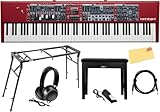
Overview: The Nord Stage 4 88 represents the pinnacle of professional stage piano engineering, bundled with essential performance accessories. This flagship instrument combines piano, organ, and synthesizer capabilities into a single, road-ready package designed for demanding musicians who refuse to compromise on sound quality or tactile control in live and studio environments.
What Makes It Stand Out: The three-layer synth engine based on the Nord Wave 2 delivers virtual analog, FM, and wavetable synthesis alongside an extensive sample library. The award-winning organ simulations feature physical LED drawbars for authentic control, while the new Pump and Spin effects alongside enhanced reverbs and delays provide unprecedented sonic sculpting. The intuitive panel design with dedicated LED faders for each layer revolutionizes live performance workflow and sound creation.
Value for Money: At approximately $4,500, this premium bundle includes a sturdy adjustable stand, comfortable bench, advanced sustain pedal with mechanical noise control, professional headphones, and cables—easily $600+ in accessories alone. For touring professionals and studio musicians, the investment delivers unmatched sonic versatility and build quality that competitors can’t match at this price point, making it a sound long-term investment.
Strengths and Weaknesses: Strengths include exceptional sound authenticity across all sections, robust metal construction, seamless live performance workflow, and comprehensive connectivity. The physical drawbars and LED faders provide unmatched tactile control. Weaknesses include substantial weight (40+ lbs), steep learning curve for newcomers, and premium pricing that places it out of reach for hobbyists. The complexity may overwhelm those seeking simple piano sounds.
Bottom Line: The Nord Stage 4 88 bundle is the ultimate choice for serious performing musicians and studio professionals who demand the finest sounds, controls, and reliability. While overkill for beginners, it’s a worthwhile investment that will serve professionals for years.
2. 88 Key Piano Keyboard, Semi Weighted Electronic Digital Piano with Music Stand, Power Supply, Sustain Pedal, Bluetooth, Stand, MIDI, for Beginner Professional at Home, Stage

Overview: This comprehensive 88-key digital piano bundle targets aspiring musicians seeking an all-in-one solution. With semi-weighted keys and a complete accessory package including stand, sustain pedal, carrying case, and headphones, it removes the guesswork from starting your musical journey, offering immediate playability at an accessible price point for home or stage use.
What Makes It Stand Out: The bundle’s completeness is its primary selling point—every necessary accessory arrives in one box. Bluetooth connectivity enables wireless integration with educational apps and DAWs, while the 128 instrument voices and 80 demo songs provide substantial creative fodder. The inclusion of a carrying case distinguishes it from stationary competitors and enables true portability for lessons and gigs.
Value for Money: Priced around $300-350, this package delivers remarkable affordability. Comparable entry-level keyboards without accessories typically cost $200-250, making the included stand ($40), pedal ($20), case ($30), and headphones ($25) represent excellent added value. For beginners uncertain about long-term commitment, this minimizes financial risk while maximizing utility and convenience.
Strengths and Weaknesses: Strengths include unbeatable affordability, true portability, wireless connectivity, and extensive sound library. The semi-weighted action provides adequate resistance for learning. Weaknesses include limited key action authenticity compared to graded hammer action, plastic construction that feels less durable, inconsistent sound quality across voices, and minimal dynamic range. The stand lacks stability for aggressive playing.
Bottom Line: Perfect for absolute beginners, students, and casual players seeking maximum value. While it won’t satisfy advancing pianists craving authentic action, it brilliantly serves its target market as a feature-rich, portable starter package that gets you playing immediately without breaking the bank.
3. YAMAHA P71 88-Key Weighted Action Digital Piano with Sustain Pedal and Power Supply (Amazon-Exclusive)

Overview: The Yamaha P71 delivers authentic acoustic piano feel in a compact, entry-level digital piano exclusive to Amazon. With fully weighted keys and Yamaha’s renowned sound engine, this streamlined instrument focuses on delivering core piano functionality without overwhelming beginners with unnecessary complexity, making it ideal for home practice.
What Makes It Stand Out: The graded hammer standard (GHS) weighted action is exceptional at this price point, providing heavier low-end and lighter high-end resistance that mimics acoustic pianos. Dual Mode layering allows blending two voices (like piano and strings) for richer performances. The one-button operation philosophy keeps the focus on playing rather than menu diving, which benefits developing musicians.
Value for Money: At approximately $500, the P71 sits at the sweet spot for entry-level weighted digital pianos. While competitors offer more voices and features, Yamaha’s sound quality and key action reliability justify the modest premium. The included sustain pedal and power supply add $40-50 in value, though the absence of a stand requires additional investment that should be factored into the total cost.
Strengths and Weaknesses: Strengths include authentic weighted key action, superior piano sample quality, compact portability, and Yamaha’s legendary reliability. The simple interface is ideal for beginners. Weaknesses include only 10 voices (limiting versatility), no Bluetooth connectivity, basic LCD display, and lack of built-in lessons or recording features. The included pedal is a simple switch rather than a progressive damper pedal, limiting expression.
Bottom Line: An excellent choice for beginners prioritizing authentic piano feel over feature quantity. The P71 serves as a reliable practice instrument that will remain relevant as skills advance, though those wanting versatility may outgrow its limited voice palette and should consider their long-term needs.
4. Yamaha MX88 88-Key Weighted Action Synthesizer, MX88BK

Overview: The Yamaha MX88 bridges the gap between digital piano and synthesizer workstation, offering 88 weighted keys paired with the legendary Motif sound engine. This versatile instrument targets keyboardists needing authentic piano feel alongside deep synthesis capabilities for stage, studio, and composition work, delivering professional features in a sub-$1,000 package.
What Makes It Stand Out: The Motif sound engine provides layer, zone, switch, cycle, randomize, and control of up to 8 elements per voice—unprecedented flexibility at this price. Virtual Circuitry Modeling (VCM) authentically recreates vintage effects and signal processors. Class-compliant USB audio/MIDI eliminates driver headaches, while 128-note polyphony ensures complex passages never drop notes, even with full 16-track sequences.
Value for Money: Positioned around $1,000, the MX88 competes with both high-end digital pianos and entry-level workstations. For synthesists needing weighted keys, it’s unparalleled. However, pure pianists may find better value in dedicated digital pianos with built-in speakers and more piano-focused features at similar prices. The inclusion of Cubase AI software adds meaningful value for recording musicians.
Strengths and Weaknesses: Strengths include exceptional sound design flexibility, robust connectivity, authentic weighted action, and professional-grade effects. The Motif legacy ensures proven reliability. Weaknesses include no built-in speakers (requiring external amplification), complex interface unsuited for beginners, limited piano-centric features compared to dedicated digital pianos, and a steep learning curve for mastering synthesis parameters.
Bottom Line: Ideal for intermediate to advanced musicians seeking a hybrid solution. The MX88 excels as a master controller and sound module but isn’t the best pure piano choice. Keyboardists wanting synthesis power with piano authenticity will find tremendous value here.
5. Yamaha CK Series 61-Key Stage Keyboard with Built-In Speakers, Black (CK61)

Overview: The Yamaha CK61 reimagines the stage keyboard for the modern gigging musician, combining a focused sound set with built-in speakers in an ultra-portable 61-key package. This performance-oriented instrument prioritizes versatility and mobility over authentic piano action, making it ideal for multi-genre keyboardists who frequently perform in varied venues without reliable backline equipment.
What Makes It Stand Out: The integrated speaker system eliminates the need for external amplification in small venues and practice sessions. Two split points enable three simultaneous sounds across the keyboard—exceptional flexibility for a compact instrument. The curated sound set includes expressive pianos, vintage drawbar and transistor organs from the Reface YC, realistic brass and string ensembles, and fat synth leads designed for real-time control via intuitive front-panel knobs.
Value for Money: At roughly $700, the CK61 occupies a unique niche. Competing stage pianos require external amplification, adding $200-400 to the total cost. While 61 non-weighted keys limit piano authenticity, the portability and built-in sound system deliver exceptional value for gigging musicians who prioritize versatility over piano realism. It’s a self-contained performance solution.
Strengths and Weaknesses: Strengths include exceptional portability (under 20 lbs), self-contained amplification, versatile splitting capabilities, and gig-ready sound selection. The interface is intuitive for live performance. Weaknesses include non-weighted keys that disappoint pianists, limited 61-key range for classical repertoire, no weighted action, and fewer voices than full workstations, restricting deep sound editing.
Bottom Line: Perfect for gigging musicians needing a grab-and-go solution. The CK61 excels as a secondary keyboard or primary instrument for pop, rock, and jazz players. Serious pianists should look elsewhere, but for versatility and convenience in live settings, it’s hard to beat at this price point.
6. Nord Stage 4 88-Key Fully-Weighted Keyboard

Overview: The Nord Stage 4 represents the pinnacle of professional stage piano engineering, combining three independent sound engines into a single road-ready instrument. This 88-key fully weighted keyboard delivers authentic piano feel through its triple-sensor keybed while providing seamless access to piano, organ, and synthesizer voices. Designed for demanding performers who require uncompromising sound quality and intuitive real-time control, the Stage 4 builds upon Nord’s legacy with expanded memory and enhanced synthesis capabilities.
What Makes It Stand Out: The triple-sensor keybed tracks key movement with exceptional precision, capturing nuanced playing dynamics that most digital pianos miss. The doubled sample memory allows musicians to load larger, more detailed instruments from Nord’s acclaimed Piano Library without compromise. The Organ section’s faithful recreations of B3 Tonewheel, Vox, Farfisa, and pipe organs remain industry benchmarks. Meanwhile, the Wave 2 Synth Engine’s three independent layers enable complex patch creation previously requiring multiple keyboards.
Value for Money: Positioned at the premium tier, the Stage 4 justifies its substantial investment through professional-grade build quality and unmatched versatility. For touring musicians and studio professionals, it effectively replaces three specialized instruments, saving money and stage space. While beginners may find the price prohibitive, serious performers will recognize exceptional value compared to purchasing separate high-end piano, organ, and synth modules.
Strengths and Weaknesses:
- Strengths: Unparalleled sound authenticity; robust metal construction; intuitive panel layout; seamless sound switching; extensive sound library support.
- Weaknesses: Premium pricing; considerable weight for transport; steep learning curve for synth section; limited built-in effects compared to some workstations.
Bottom Line: The Nord Stage 4 is the definitive choice for professional keyboardists who demand the finest action, most authentic sounds, and bulletproof reliability for stage and studio work.
7. RockJam 61 Key Keyboard Piano Stand With Pitch Bend Kit, Piano Bench, Headphones, Simply Piano App & Keynote Stickers
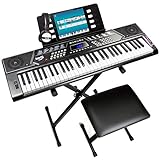
Overview: This comprehensive beginner bundle delivers everything a new pianist needs to start playing immediately. The RockJam 5061 keyboard features 61 full-size keys in a portable design powered by either batteries or AC adapter. With 200 rhythms, 200 tones, and 30 demo songs, the instrument provides ample sonic variety for exploration. The included adjustable stand, padded bench, headphones, and educational accessories create a complete practice station right out of the box.
What Makes It Stand Out: The all-in-one package eliminates guesswork for gift-givers and new students, including physical accessories and digital learning tools. The Simply Piano app subscription and keynote stickers accelerate skill development, while the LED panel simplifies navigation of the keyboard’s extensive feature set. Record and playback functionality allows learners to evaluate their progress, and the aux input enables playing along with favorite tracks—a crucial motivational tool for beginners.
Value for Money: Exceptional value dominates this package. Purchasing keyboard, stand, bench, and headphones separately would cost significantly more. The addition of educational software and key labels provides intangible value for newcomers. While professional musicians would quickly outgrow its capabilities, the price point makes it an ideal low-risk entry into piano playing, perfect for testing commitment before investing in premium gear.
Strengths and Weaknesses:
- Strengths: Complete starter package; highly affordable; portable battery operation; educational features; pitch bend wheel adds expression.
- Weaknesses: Non-weighted keys hinder technique development; plastic construction feels toy-like; limited dynamic range; headphone quality is basic.
Bottom Line: Perfect for beginners and young learners, this RockJam bundle removes every barrier to entry with its comprehensive accessories and educational support at an unbeatable price.
8. Yamaha CK Series 61-Key Stage Keyboard with Built-In Speakers, Black (CK61)

Overview: The Yamaha CK61 bridges the gap between portable keyboards and professional stage pianos, offering gigging musicians a lightweight yet capable performance instrument. With built-in stereo speakers and a focused sound set tailored for live use, this 61-key keyboard prioritizes practicality without sacrificing Yamaha’s signature sound quality. The instrument’s design centers on immediate access to essential piano, organ, and synth tones needed for diverse musical situations.
What Makes It Stand Out: Dual split points allow three simultaneous sounds across the keyboard—enabling left-hand bass, chords, and right-hand melody without external modules. The organ section draws from Yamaha’s acclaimed Reface YC, delivering authentic drawbar and transistor organ tones for rock, jazz, and gospel. Real-time synth controls provide expressive manipulation of filters and parameters during performance, while the imitative orchestral sounds offer convincing string and brass sections for one-person-band scenarios.
Value for Money: The CK61 occupies a sweet spot for working musicians who need quality sounds and portability without premium stage piano pricing. It eliminates the need for external amplification in small venues, reducing gear load. While 61 keys limit classical repertoire, the trade-off for reduced weight and cost makes sense for most gigging contexts. Competitors in this price range often lack the CK’s speaker system or split flexibility.
Strengths and Weaknesses:
- Strengths: Built-in speakers; dual split points; lightweight portability; authentic organ sounds; intuitive interface.
- Weaknesses: 61-key range limitation; non-weighted keys reduce piano authenticity; limited polyphony for complex layers; no aftertouch.
Bottom Line: An ideal workhorse for gigging musicians seeking Yamaha quality, portability, and versatile sound layering at a mid-range price point.
9. Roland RD-88 EX Stage Piano | 88-Note Keyboard with Expanded Sounds & Supreme Durability | SuperNATURAL Technology | ZEN-Core Engine with Over 3000 Onboard Sounds | Onboard Stereo Speakers

Overview: The Roland RD-88 EX delivers professional stage piano performance with unprecedented sonic depth, featuring the SuperNATURAL Acoustic Piano 3 Expansion and ZEN-Core synthesis engine. This 88-note instrument combines the acclaimed PHA-4 hammer action keyboard with over 3000 onboard sounds, creating a comprehensive solution for touring professionals. Built for road abuse, the RD-88 EX integrates room-filling stereo speakers while maintaining a relatively portable form factor.
What Makes It Stand Out: The PHA-4 keyboard with Ivory Feel keys provides one of the most authentic piano actions in its class, capturing subtle nuances through high-resolution sensing. The ZEN-Core engine’s massive 3000+ sound library covers everything from vintage synths to orchestral instruments, eliminating the need for additional sound modules. SuperNATURAL technology ensures seamless velocity transitions and natural decay, avoiding the artificial quality plaguing many digital pianos. The robust construction withstands constant touring without adding excessive weight.
Value for Money: While priced in the professional tier, the RD-88 EX offers exceptional value by consolidating multiple instruments into one reliable package. The expanded sound set rivals dedicated workstations costing considerably more. For working musicians, the durability reduces long-term replacement costs, and the onboard speakers save money on amplification for rehearsals and small gigs. The premium key action alone justifies the investment compared to budget 88-key alternatives.
Strengths and Weaknesses:
- Strengths: World-class key action; massive sound library; durable construction; natural piano response; built-in speakers.
- Weaknesses: Complex menu system; speaker quality can’t match studio monitors; limited user sample memory; heavier than ultraportable options.
Bottom Line: A top-tier choice for serious performers demanding premium key feel, vast sound options, and tour-ready reliability in one integrated package.
10. Yamaha YDP184 Console Digital Piano with Weighted 88-Key Graded Hammer 3 Action, CFX Concert Grand Piano Sound, Includes Bench (Dark Rosewood)
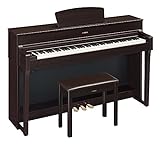
Overview: The Yamaha YDP184 brings concert hall performance into the home with its stunning Dark Rosewood console cabinet and flagship CFX Premium Grand Piano Voice. This furniture-style digital piano features the Graded Hammer 3 action with synthetic ivory keytops, replicating the tactile response of Yamaha’s renowned acoustic pianos. Virtual Resonance Modeling technology captures the complex interactions of strings, damper, and body resonance, creating an immersive playing experience for serious students and enthusiasts.
What Makes It Stand Out: The GH3 action progressively weights keys from heavy bass to light treble, building proper finger technique while preventing moisture-induced slipping through synthetic ivory surfaces. The CFX concert grand sound—sampled from Yamaha’s $150,000 flagship instrument—delivers unprecedented dynamic range and tonal depth. VRM technology calculates string resonance in real-time, producing the sympathetic vibrations that make acoustic pianos come alive. The elegant console design integrates seamlessly into home décor while housing a robust speaker system.
Value for Money: As a mid-range console piano, the YDP184 offers tremendous value for serious students and home musicians seeking authentic acoustic piano experience without maintenance costs. The included padded bench, music stand, and power supply eliminate additional purchases. While stage pianos offer more portability and sounds, the YDP184’s specialized focus on piano authenticity and furniture-grade construction provides better long-term value for stationary home use.
Strengths and Weaknesses:
- Strengths: Authentic weighted action; premium CFX sound; elegant furniture design; VRM technology; complete package with bench.
- Weaknesses: Not portable; limited to 128-note polyphony; fewer sounds than stage pianos; no USB audio interface.
Bottom Line: An exceptional home digital piano that prioritizes authentic acoustic feel and concert grand sound quality in a beautiful, permanent installation.
Why Your Worship Team Needs a Digital Stage Piano in 2026
The acoustic piano, while beautiful, presents limitations that modern worship teams can no longer afford. Climate control issues in aging sanctuaries, mic placement challenges, and the inability to seamlessly switch between sounds mid-song make traditional pianos impractical for contemporary services. Digital stage pianos eliminate these barriers while offering unprecedented versatility. In 2026, the technology has matured to where the gap between digital and acoustic has narrowed to imperceptible levels for most congregants, while the added benefits—volume control, sound variety, and integration capabilities—have become non-negotiable for serious worship ministries.
Your musicians need to transition from a delicate piano ballad to a soaring pad-driven anthem within seconds, often without the luxury of a soundcheck. The right digital stage piano becomes an extension of the player’s musical vision, responding instantly to the spontaneous leading of the Spirit without technical limitations creating obstacles. This reliability and flexibility explain why even churches with pristine acoustic grands are investing in premium digital alternatives for their primary worship instrument.
Understanding the Unique Demands of Worship Music
Worship music occupies a unique space that commercial stage pianos aren’t always designed to address. Unlike pop or rock settings where the piano might serve a supporting role, worship piano often carries the entire congregation melodically and harmonically. The instrument must speak with authority during intimate moments and cut through full-band arrangements without becoming harsh or fatiguing.
The dynamic range required is extraordinary—you’re whispering through a delicate communion meditation one moment and driving a celebratory chorus with the same keyboard the next. This demands exceptional touch sensitivity and a sound engine that responds naturally across the entire velocity spectrum. Additionally, worship pianos frequently operate in challenging acoustic environments, from gymnasiums with six-second reverberation times to carpeted multi-purpose rooms that swallow high frequencies. Your instrument must adapt to these spaces, not fight against them.
Key Features That Define Worship-Ready Pianos
Acoustic Piano Authenticity
The cornerstone of any worship piano is its primary acoustic voice. In 2026, we’re looking beyond simple sample playback to sophisticated modeling that captures every nuance of a concert grand. The instrument should reproduce not just the notes, but the sympathetic string resonance, damper noise, and subtle mechanical sounds that create authenticity. Progressive damper action simulation becomes crucial when pianists use the sustain pedal expressively during spontaneous worship moments. The best implementations allow you to adjust these resonances independently, tailoring the piano’s character to your sanctuary’s acoustics.
Electric Piano Versatility
From Gospel-flavored Rhodes to the crystalline bells of a Wurlitzer, electric piano sounds are worship staples. However, quality varies dramatically between manufacturers. Worship-ready pianos offer multiple variants of each classic EP, with realistic tine and reed modeling that responds to playing dynamics. The ability to add authentic analog-style chorus, phaser, or amp simulation directly from the keyboard—without relying on external pedals—streamlines your setup and ensures consistency between rehearsals and services.
Organ Simulation Excellence
Even if your primary organist uses a dedicated console, your stage piano must deliver convincing organ sounds for emergencies and specific arrangements. We’re talking about comprehensive drawbar control, rotary speaker simulation with adjustable acceleration, and percussion click that cuts through the mix. The Leslie emulation should be sophisticated enough to fool seasoned organists, with microphone placement modeling and cabinet size options that let you match the organ’s character to your musical style.
Synth and Pad Integration
Modern worship leans heavily on atmospheric pads and synth layers that create sonic depth. The days of chaining multiple keyboards are ending; today’s stage pianos integrate these sounds seamlessly. Look for instruments with dedicated synth engines offering high-quality waveforms, intuitive filtering, and envelope controls accessible without menu diving. The ability to layer these sounds with your acoustic piano or split them across the keyboard while maintaining independent volume control and effects processing is essential for creating those signature worship textures.
The Importance of Sound Quality and Sampling Technology
Sound quality extends far beyond the initial sample library. In 2026, advanced pianos utilize multiple velocity layers—sometimes exceeding 100 per key—to eliminate the “stepping” effect that plagues lesser instruments. But raw sample data is only half the equation; the playback engine’s sophistication determines how these samples blend and respond.
Look for instruments employing some form of physical modeling or hybrid synthesis that fills the gaps between samples. This technology calculates the piano’s behavior in real-time, ensuring that each note responds uniquely based on pedaling, preceding notes, and even the time of day (simulating how wooden instruments change with temperature). For worship contexts, pay special attention to the stereo imaging—does the piano create a wide, immersive soundstage that fills the room without becoming unfocused? Can you narrow the stereo width for mono broadcast mixes or hearing assistance systems?
Action and Feel: Finding the Right Keyboard Touch
The interface between musician and machine profoundly affects worship expression. An inferior action forces players to compensate technically, diverting mental energy from spiritual leadership to mechanical problem-solving.
Weighted vs. Semi-Weighted Keys
Fully weighted hammer actions replicate acoustic piano mechanics, providing the control necessary for expressive classical passages and dynamic ballads. However, some worship pianists prefer “balanced” or “semi-weighted” actions for faster synth leads and organ playing. The sweet spot for most worship teams is a graded hammer action that feels slightly lighter in the treble and heavier in the bass, mimicking a concert grand, but with a faster key return speed optimized for repeated notes and rhythmic patterns common in modern worship.
Hammer Action Mechanisms
Not all hammer actions are created equal. High-end mechanisms use real wooden keys or sophisticated synthetic materials that absorb moisture and maintain consistent feel across seasons. The pivot length matters—longer pivots provide more even response whether you strike the key’s edge or center, crucial when musicians play standing or in dim lighting. Some advanced actions incorporate escapement simulation, recreating the subtle “notch” felt when pressing keys slowly, which acoustic pianists rely on for delicate control.
Portability and Setup Considerations for Multi-Service Use
Many worship teams move equipment between traditional and contemporary services, or share instruments across multiple campuses. A 70-pound keyboard might seem manageable until you’re loading out at 11 PM after a three-service Sunday. Modern worship-ready pianos strike a balance between robust construction and manageable weight, typically ranging from 35-50 pounds for 88-key models.
Consider the setup footprint beyond just the keyboard. Does the instrument require external power bricks that clutter your stage? Are the audio outputs positioned where cables won’t interfere with music stands? Some pianos now integrate power supplies internally and position connections along the front edge for cleaner cable management. The control panel layout becomes critical during quick changeovers—can you access essential functions without awkward reaching that might bump other settings?
Connectivity: Modern Worship Requires Modern Integration
MIDI and USB Implementation
Your stage piano doesn’t exist in isolation—it must communicate flawlessly with Ableton Live for tracks, MainStage for additional sounds, and your church’s digital mixer. Class-compliant USB MIDI ensures plug-and-play compatibility with tablets and laptops running worship software. In 2026, Bluetooth MIDI has matured into a reliable option for wireless page turning and remote control, though hardwired connections remain standard for mission-critical applications.
Look for instruments that can function as USB audio interfaces, sending the piano’s audio directly to your computer via the same cable handling MIDI. This eliminates ground loop hum and simplifies your rig. Multiple USB ports allow simultaneous connection to a main playback computer and a secondary device for redundancy—a must for churches running tracks or loops.
Audio Outputs and Routing
The days of a single stereo output are long gone. Professional worship pianos offer at least four independent outputs, allowing you to route piano, pads, and synths to separate mixer channels for individual EQ and effects. Balanced XLR outputs connect directly to snake systems without DI boxes, reducing stage clutter and potential failure points. Some advanced models even include digital AES/EBU outputs for noise-free runs to front-of-house in large sanctuaries.
Built-in Effects and Processing Power
External pedalboards add complexity and can fail mid-service. Worship-oriented stage pianos integrate comprehensive effects engines that rival dedicated stompboxes. We’re discussing high-quality reverbs with pre-delay and decay time tailored for worship spaces, modulations that maintain stereo width, and compression that evens out dynamics without crushing expression.
The key is independent effects chains per sound zone. Your piano might need subtle hall reverb while your pad requires a long, ambient shimmer and your synth lead demands a tight delay. The ability to process these simultaneously without phasing issues or shared DSP limitations separates professional instruments from consumer keyboards. Pay attention to effects spillover—when you switch sounds, does the reverb tail naturally decay or cut off abruptly? The former maintains musical flow during spontaneous transitions.
Layering, Splitting, and Multi-Zone Functionality
Sophisticated layering transforms a single keyboard into an orchestral ensemble. The best worship pianos allow you to layer up to four sounds with independent volume, pan, and transpose controls. More importantly, these layers should be editable in real-time via foot pedals or assignable knobs—imagine fading in a string pad during a bridge by rocking an expression pedal, then switching to a synth bass for the final chorus with a footswitch.
Splitting functionality must exceed the basic “bass left, piano right” approach. Modern worship arrangements often require three or four zones: perhaps a deep pad in the lowest octave, piano through the mid-range, a bell-like synth in the upper register, and a trigger sample on the highest keys. Each zone needs independent MIDI channel assignment, letting you record performances as multitrack MIDI for later arrangement refinement.
Durability and Road-Worthiness for Regular Church Use
Church use often exceeds touring musician wear patterns. Your piano faces constant setup and teardown, dust from HVAC systems, temperature fluctuations, and the occasional coffee spill from a well-meaning vocalist. Professional-grade instruments feature metal chassis under the keybed, reinforced jack panels that withstand repeated cable insertions, and sealed faders that resist dust infiltration.
The key contact system matters more than most realize. Rubber dome contacts wear out and become inconsistent after a few thousand hours. Premium instruments use optical or Hall-effect sensors that never degrade, maintaining perfect velocity response year after year. Some even include self-diagnostic modes that alert you to potential issues before they cause mid-service failures.
Budget Planning: Investment vs. Longevity
The $1,000-$2,000 range offers capable instruments for smaller churches, but they typically compromise on action quality, polyphony, and output flexibility. Mid-tier options ($2,500-$4,000) represent the sweet spot for most ministries, delivering professional sound quality and durability without boutique pricing. Premium instruments ($4,500+) justify their cost through superior actions, expanded sound libraries, and touring-grade construction that survives a decade of weekly use.
Consider total cost of ownership. A cheaper piano requiring external modules for adequate sounds, replacement after three years, or constant technical support ultimately costs more than a premium instrument that “just works.” Factor in training time too—volunteer turnover means your keyboard will be operated by different musicians regularly. An intuitive interface reduces learning curves and service disruptions. Some manufacturers offer church-specific financing or extended warranties, recognizing the unique demands of ministry use.
The Role of Software Integration and Expansion
The line between hardware and software continues blurring. The most forward-thinking stage pianos function as dedicated controllers for hosted instruments while maintaining standalone capability. This hybrid approach lets you access infinite sound libraries through platforms like Kontakt or Omnisphere while keeping a reliable piano sound should your computer crash.
Look for instruments with user sample memory, allowing you to load custom piano samples or multi-samples of your sanctuary’s acoustic piano. Some pianos now include expansion slots for additional sound libraries, ensuring your investment grows with your ministry’s stylistic evolution rather than becoming obsolete. The ability to backup and share settings across multiple campuses via USB or cloud storage streamlines multi-site ministry technical consistency.
User Interface and On-the-Fly Adjustments During Service
When the Spirit moves and your pastor extends an altar call, you can’t pause to navigate three menu levels to adjust reverb. Worship-ready pianos prioritize tactile control: dedicated knobs for essential parameters, assignable buttons that glow different colors to indicate active functions, and large, readable displays that work under stage lighting.
The best interfaces allow you to “favorite” sounds and create setlists that mirror your service order. Touchscreen technology has improved dramatically, but physical controls remain superior for blind operation. Some instruments offer remote control via tablet apps, letting a tech director adjust levels from the sound booth while you focus on playing. This is invaluable during live streaming, where the FOH mix differs dramatically from the broadcast feed.
Acoustic Considerations for Your Sanctuary
Your piano’s voicing must complement your room’s acoustics, not compete with them. In live spaces with long decay times, overly bright piano samples create harsh, indistinct washes. Conversely, dead rooms require instruments with inherent warmth and body that doesn’t depend on environmental support. Many modern pianos include “voicing” controls that adjust the sample’s character from mellow to bright without simply EQing the output.
Consider your monitoring situation. In-ear mixes favor pianos with detailed midrange presence that translates well through balanced armature drivers. Floor wedge setups require instruments that maintain clarity when competing with drums and guitars. Some advanced pianos include separate “monitor” and “main” outputs with independent EQ, ensuring you hear yourself clearly without sending a harsh signal to the congregation.
Future-Proofing Your Investment for 2026 and Beyond
Technology moves rapidly, but musical instruments should last decades. The most future-ready pianos embrace open architecture—regular firmware updates that add features rather than just bug fixes, user-replaceable components like keybeds and motherboards, and adherence to universal standards rather than proprietary protocols.
Consider compatibility with emerging audio formats. As churches adopt immersive audio systems (Atmos, DTS:X), your piano might need to output beyond stereo. Some instruments now include height channel processing, creating three-dimensional piano sounds that envelop the listener without losing focus. While this seems excessive today, it’s rapidly becoming standard in forward-thinking ministries.
Battery operation, once a novelty, has become practical for outdoor services, prison ministries, or disaster relief work. Instruments offering 4-6 hours of cordless operation expand your ministry’s reach beyond the sanctuary walls. Solar charging compatibility and low-power modes ensure you’re never silenced when called to serve in challenging environments.
Frequently Asked Questions
What makes a digital piano “worship-ready” versus a standard stage piano?
Worship-ready pianos prioritize instant sound switching, multiple independent outputs, and organ/synth integration that standard stage pianos often lack. They’re designed for the unique flow of church services where spontaneous changes are common and technical failure isn’t an option.
How much polyphony do worship teams realistically need?
Aim for a minimum of 128-note polyphony, though 192 or higher is preferable when layering sounds. Complex worship arrangements with sustained pads, piano, and strings can consume 80-100 voices simultaneously. Lower polyphony causes note stealing that becomes audible during intimate moments.
Can one digital piano really replace our acoustic grand and organ?
In 2026, yes—provided you invest in a premium instrument with sophisticated modeling. While purists may notice differences, 95% of congregants won’t, and the versatility gains are transformative. Many large churches now use digital pianos even when acoustic instruments are available simply for consistency and control.
Should we prioritize piano sound quality or overall versatility?
Piano sound quality should be non-negotiable, as it’s your foundation 80% of the time. However, don’t sacrifice basic synth and pad capabilities. The ideal instrument excels at piano but offers at least 20-30 high-quality secondary sounds that integrate seamlessly.
How do we evaluate keyboard action without expert pianists on our team?
Bring multiple volunteers to test instruments, but also record their playing and listen back. Poor actions reveal themselves through inconsistent dynamics and unintended notes. Many dealers offer 30-day church trials—take advantage of this to test in your actual service environment.
What’s the realistic lifespan of a digital stage piano in church use?
Professional-grade instruments typically last 10-15 years with proper care. The keybed and power supply are usually the first components to show wear. Instruments with modular construction allow you to replace these components rather than buying entirely new units, extending lifespan significantly.
Do we need built-in speakers for our stage piano?
Avoid built-in speakers for stage pianos—they add weight and compromise sound quality. Your PA system and monitoring setup should handle audio reproduction. However, some portable models include small speakers for practice convenience, which can be useful for home rehearsals.
How important is aftertouch for worship playing?
Aftertouch allows expressive control over parameters like vibrato or filter cutoff by pressing harder after initial key strike. While not essential for basic piano sounds, it becomes invaluable for synth leads and expressive pads during spontaneous worship moments. It’s a feature worth prioritizing if your team plays contemporary styles.
Can we use consumer-grade digital pianos and upgrade later?
Starting with consumer instruments often creates bad habits and limits musical growth. The compromised action and limited connectivity lead to workarounds that persist even after upgrading. If budget is constrained, consider purchasing a previous-generation professional model used rather than a new consumer keyboard.
What’s the best way to train volunteers on a complex stage piano?
Create “performance modes” that lock down unnecessary functions, presenting volunteers with only the sounds and controls they need. Use color-coded stickers on assignable buttons, and record short video tutorials for each saved setup. Many modern pianos allow you to export settings as files—create a “volunteer profile” that loads a simplified interface, then restore your advanced setup for special events.
See Also
- 10 Must-Have Digital Stage Pianos for Church Worship Teams in 2026
- 10 Must-Have Digital Pianos with Triple Pedal Unit for Church Worship in 2026
- 10 Must-Have Digital Pianos with Metronome for Timing Training in 2026
- The Complete Guide to the 10 Best Digital Pianos for Worship Teams
- 10 Must-Have Portable Digital Pianos for Cruise Ship Entertainers in 2026