Table of Contents
Imagine craving the rich, resonant experience of playing a grand piano while living in a 600-square-foot apartment where your neighbors can hear a pin drop. In 2026, that dream isn’t just possible—it’s practically perfected. Digital console pianos have evolved from compromise instruments into sophisticated musical companions that honor both your artistic ambitions and your spatial reality. The modern iteration of these instruments combines space-conscious cabinetry with concert-hall sound engines, and perhaps most importantly for apartment dwellers, advanced headphone connectivity that transforms your living room into a private concert hall at the flick of a switch.
The landscape has shifted dramatically in recent years. We’re no longer talking about simply “quiet practice” or “space-saving design” as afterthoughts. Today’s digital console pianos are engineered from the ground up with the urban musician in mind, integrating silent practice technology so seamlessly that the transition from speakers to headphones feels as natural as the decay of a piano note. Whether you’re a conservatory student perfecting your Rachmaninoff at midnight, a working professional who needs to squeeze in practice between video calls, or a passionate hobbyist who values both tone and tenancy agreements, this guide will walk you through everything that matters when selecting your ideal instrument.
Top 10 Console Pianos
Detailed Product Reviews
1. Yamaha YDP184 Console Digital Piano with Weighted 88-Key Graded Hammer 3 Action, CFX Concert Grand Piano Sound, Includes Bench (Dark Rosewood)
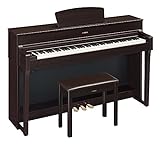
Overview: The Yamaha YDP184 represents the flagship of the Arius line, delivering a premium console digital piano experience for serious pianists. This instrument combines Yamaha’s acclaimed CFX concert grand sampling with advanced digital technology in an elegant dark rosewood cabinet. Designed for discerning players seeking authentic acoustic piano touch and tone without maintenance concerns.
What Makes It Stand Out: The full Virtual Resonance Modeling (VRM) technology sets this apart from lesser models, meticulously recreating the intricate string vibrations and resonance of a concert grand. The Graded Hammer 3 action with synthetic ivory key tops provides exceptional moisture absorption and realistic weight progression. The full dot LCD display offers intuitive navigation through advanced features, while the complete package includes a matching padded bench and accessories.
Value for Money: Positioned at the premium end of console digitals, the YDP184 justifies its higher price through authentic acoustic-like performance that rivals pianos costing twice as much. Compared to acoustic uprights, it eliminates tuning costs and space constraints while delivering superior touch and tone to entry-level digitals. The included bench and comprehensive feature set add significant value.
Strengths and Weaknesses: Strengths: Exceptional CFX Premium Grand Piano voice with full VRM; superior GH3 keyboard action; elegant furniture-grade cabinet; comprehensive bundle with bench; intuitive LCD interface; 128-note polyphony handles complex pieces.
Weaknesses: Premium pricing may exceed casual learners’ budgets; heavy cabinet limits mobility; limited to 19 voices compared to stage pianos; no Bluetooth connectivity.
Bottom Line: Ideal for intermediate to advanced pianists seeking a lifetime instrument that authentically replicates acoustic grand piano performance in a beautiful, maintenance-free package.
2. Yamaha YDP165 Console Digital Piano with Weighted 88-Key Graded Hammer 3 Action, CFX Concert Grand Piano Sound, Includes Bench (Black)

Overview: The YDP165 strikes an impressive balance between Yamaha’s premium technology and mid-range accessibility. This console digital piano brings the core features of the Arius line—CFX concert grand sound and GH3 action—to advancing students and serious hobbyists. The sleek black finish complements any room while delivering authentic piano performance.
What Makes It Stand Out: The GH3 keyboard with synthetic ivory key tops provides the same tactile excellence as higher-end models, preventing slip during extended practice. Tone escapement construction enhances sound projection, creating a more open, resonant quality. While featuring VRM Lite instead of full VRM, it still delivers nuanced string resonance that surpasses basic digital pianos, and the three piano-style pedals offer authentic half-pedaling capabilities.
Value for Money: This model hits the sweet spot for value-conscious buyers wanting Yamaha quality without flagship pricing. It sacrifices the LCD display and full VRM but retains the essential GH3 action and CFX sampling that define the Yamaha experience. For roughly 30% less than the YDP184, you get 90% of the playing experience—an excellent trade-off for students not requiring advanced navigation.
Strengths and Weaknesses: Strengths: Authentic GH3 weighted action; excellent CFX stereo sampling; robust tone escapement design; three functional pedals; attractive furniture styling; includes bench; strong resale value.
Weaknesses: VRM Lite less sophisticated than full version; no LCD display complicates feature access; limited voice selection; no modern connectivity options; cabinet still quite heavy.
Bottom Line: Perfect for dedicated students and intermediate players prioritizing authentic touch and tone over advanced digital features, offering Yamaha quality at a more accessible price point.
3. Casio Privia PX-770 – 88-Key Weighted Console Digital Piano | Tri-Sensor II Scaled Hammer Action Keys | AiR Sound Source, 19 Tones, Concert Play, 16W Stereo Speakers, USB-MIDI | Elegant Brown Cabinet

Overview: The Casio Privia PX-770 delivers remarkable value in a slim, elegant console package. This entry-level digital piano features Casio’s acclaimed AiR sound engine and Tri-Sensor II hammer action, making it an excellent choice for beginners and space-conscious players. The brown cabinet provides traditional aesthetics while occupying minimal floor space.
What Makes It Stand Out: The Tri-Sensor II scaled hammer action employs three sensors per key for superior note repetition and responsiveness rarely found at this price point. Concert Play mode stands out, offering orchestral backing tracks that transform practice into performance. The USB-MIDI connection works driver-free across all platforms, and dual headphone jacks enable silent duet lessons. The sliding key cover and compact 11.5-inch depth make it ideal for apartments.
Value for Money: This represents exceptional bang-for-buck in console digitals, typically priced 40% below comparable Yamaha models. While compromises exist, the core playing experience—touch and primary piano tone—punches well above its weight class. For beginners, the included 60 built-in songs and MIDI recorder provide learning tools that more expensive pianos often lack. It’s a complete package requiring no additional purchases.
Strengths and Weaknesses: Strengths: Outstanding price-to-performance ratio; realistic Tri-Sensor II action; elegant slim design; comprehensive learning features; USB-MIDI connectivity; dual headphone outputs; 128-note polyphony.
Weaknesses: 16W speakers lack bass response of premium models; AiR engine less nuanced than Yamaha CFX; plastic key feel inferior to synthetic ivory; limited sound customization; no Bluetooth.
Bottom Line: An unbeatable choice for beginners and casual players seeking authentic piano fundamentals, modern connectivity, and attractive furniture styling at an entry-level price.
4. Casio Privia PX-770 – 88-Key Weighted Console Digital Piano | Tri-Sensor II Scaled Hammer Action Keys | AiR Sound Source, 19 Tones, Concert Play, 16W Stereo Speakers, USB-MIDI | Elegant White Cabinet

Overview: Functionally identical to its brown counterpart, the white cabinet version of the PX-770 offers the same impressive feature set in a brighter, more contemporary aesthetic. This variant targets modern interiors where traditional wood finishes feel heavy. The slim 11.5-inch depth and clean lines create a minimalist statement piece that doesn’t compromise on piano performance.
What Makes It Stand Out: Beyond sharing the Tri-Sensor II action and AiR sound source, the white finish dramatically expands placement options in Scandinavian, coastal, or modern decors where brown wood would clash. The same Concert Play orchestral tracks and duet mode make it equally educational, while the driver-free USB-MIDI ensures seamless digital integration. The illuminated control labels remain visible against the white surface, improving usability.
Value for Money: At the same aggressive price point as the brown version, the white option provides identical value with added design flexibility. Casio charges no premium for this finish, making it purely an aesthetic choice. For apartment dwellers or those with contemporary furnishings, this eliminates the compromise between function and style that often forces buyers into more expensive brands for modern finishes.
Strengths and Weaknesses: Strengths: Contemporary white finish matches modern decor; identical Tri-Sensor II action to brown model; slim profile saves space; comprehensive learning tools; dual headphone jacks; excellent affordability.
Weaknesses: White finish shows dust and fingerprints more readily; same 16W speaker limitations; AiR sound less sophisticated than premium competitors; no wireless connectivity; limited tonal variety.
Bottom Line: Choose this version if you want the PX-770’s exceptional value and features wrapped in a fresh, modern aesthetic that brightens your space without paying a design premium.
5. Casio CELVIANO AP-S200 Console Digital Piano, with 88 Weighted Keys, 19 Tones, 40W Speaker System, Bluetooth Audio/MIDI, USB, Black Finish (AP-S200BK)

Overview: The Celviano AP-S200 bridges traditional console piano elegance with modern connectivity demands. This sleek instrument features Casio’s Smart Scaled Hammer Action and a powerful 40W speaker system in an ultra-slim cabinet. The black finish and touch-sensor controls create a sophisticated, uncluttered appearance for tech-savvy pianists.
What Makes It Stand Out: The included WU-BT10 Bluetooth adapter enables wireless audio streaming and MIDI connectivity—rare in console pianos at this price. Illuminated touch controls that disappear during play maintain a clean aesthetic while providing full functionality. The 40W speaker system delivers substantially more power than competitors, filling larger rooms with rich, detailed sound. The soft-close sliding key cover adds a premium furniture detail.
Value for Money: Priced between the PX-770 and Yamaha YDP series, the AP-S200 justifies its mid-range cost through modern features absent in traditional consoles. The Bluetooth capability alone saves $100+ in adapters, while the superior speaker system eliminates need for external monitors. For the digitally-connected household, this integrates seamlessly with tablets and computers for interactive learning and recording.
Strengths and Weaknesses: Strengths: Built-in Bluetooth audio/MIDI; powerful 40W speaker system; sleek illuminated controls; slim contemporary design; soft-close key cover; 19 quality tones; USB connectivity.
Weaknesses: Smart Scaled Hammer Action less refined than Yamaha GH3; fewer tonal nuances than premium models; plastic construction feels less substantial; limited polyphony details unspecified; Casio brand lacks Yamaha’s acoustic heritage.
Bottom Line: Perfect for modern players needing wireless connectivity and powerful sound in an attractive console, offering future-proof features that traditional digitals simply cannot match.
6. Casio Privia PX-870 – 88-Key Weighted Console Digital Piano | Tri-Sensor II Scaled Hammer Action Keys| Elegant Design | Powerful 40W 4-Speaker Sound, Concert Play, USB-MIDI | White

Overview:
The PX-870 anchors Casio’s popular Privia line as a compelling mid-range console piano. Finished in elegant white, it targets dedicated home players and advancing students who prioritize authentic touch and immersive sound over exhaustive features. This model strikes a careful balance between traditional piano authenticity and digital convenience, making it an ideal centerpiece for living spaces.
What Makes It Stand Out:
The Tri-Sensor II hammer action with simulated ebony/ivory textures delivers remarkable dynamic nuance rarely found at this price point. Its 4-speaker, 40W Sound Projection system creates genuine spatial depth that fills medium-sized rooms. Concert Play’s orchestral backing tracks elevate practice into inspired performance sessions, while the AiR engine’s damper and string resonance modeling captures subtle mechanical nuances of a genuine acoustic.
Value for Money:
Competitively positioned against Yamaha’s YDP-164, the PX-870 offers superior speaker power and more sophisticated resonance technology. The comprehensive learning suite—including Duet Mode, dual headphone jacks, and 60 built-in songs—provides exceptional educational value without recurring subscription costs, making it a wise long-term investment.
Strengths and Weaknesses:
Strengths: Exceptionally authentic weighted action; powerful, room-filling 40W sound system; elegant console aesthetic; advanced resonance modeling; robust practice features.
Weaknesses: Limited tone selection; no Bluetooth connectivity; white finish requires regular cleaning; key texture simulation doesn’t fully replicate real wood.
Bottom Line:
A superb investment for serious beginners and intermediate pianists seeking genuine acoustic feel. While connectivity is dated, its core piano performance remains class-leading for the price, making it a reliable choice for dedicated practice.
7. Casio Celviano AP-750 – 88-Key Digital Console Piano | Smart Hybrid Hammer Action Keyboard CELVIANO Edition | 39 Built In Tones | Black

Overview:
The AP-750 sits at the apex of Casio’s Celviano line, delivering a premium grand-piano experience for discerning home musicians. Its black console cabinetry conceals cutting-edge technology aimed at players who demand concert-hall authenticity without acoustic maintenance headaches. This instrument represents Casio’s finest non-stage piano engineering.
What Makes It Stand Out:
The Smart Hybrid Hammer Action keys—crafted from actual spruce wood with internal counterweights—provide uncannily realistic touch and whisper-quiet operation. The AiR Grand Sound Engine reproduces lid resonance and damper nuances, while the 8-speaker, 40W Grandphonic system with Hall Simulation creates breathtaking spatial realism. Vanishing touch controls and Bluetooth integration modernize the traditional piano experience.
Value for Money:
Though priced above the PX-870, it justifies the premium with genuine wooden keys, superior speaker configuration, and advanced sound modeling that rivals instruments costing twice as much. The adjustable bench and sophisticated cabinetry add luxury touches competitors often omit, making it a complete premium package.
Strengths and Weaknesses:
Strengths: Authentic spruce wood key construction; sophisticated 8-speaker system; comprehensive Bluetooth capabilities; advanced AiR Grand engine; elegant vanishing controls.
Weaknesses: Premium pricing may exceed casual learners’ budgets; 39 tones may feel limited compared to stage pianos; heavy cabinet limits mobility; Bluetooth adapter sold separately.
Bottom Line:
For serious pianists seeking the finest digital experience under $3,000, the AP-750 is unmatched. Its wooden keys and immersive sound justify every dollar, making it a true acoustic alternative for dedicated musicians.
8. Casio CELVIANO AP-S200 Console Digital Piano, with 88 Weighted Keys, 19 Tones, 40W Speaker System, Bluetooth Audio/MIDI, USB, White Finish (AP-S200WE)

Overview:
The AP-S200 reimagines the console piano for contemporary living, packaging Celviano quality into an ultra-slim white cabinet measuring just 12.8 inches deep. This model targets design-conscious musicians facing space constraints who refuse to compromise on essential piano performance. It proves that elegance and functionality can coexist without sacrifice.
What Makes It Stand Out:
The illuminated touch controls that completely vanish during play create unprecedented aesthetic minimalism. Despite its compact footprint, it houses a robust 40W speaker system and includes the WU-BT10 Bluetooth Audio/MIDI adapter—eliminating common hidden costs. The soft-close sliding key cover adds luxury feel typically reserved for premium models.
Value for Money:
While priced slightly above bulkier competitors, it delivers genuine value for apartment dwellers where space equals money. The 19 tones prioritize quality over quantity, focusing on core piano sounds rather than gimmicky extras, making it a focused investment for serious players with spatial limitations.
Strengths and Weaknesses:
Strengths: Ultra-slim profile ideal for small spaces; stunning minimalist design; included Bluetooth adapter; powerful speakers for size; soft-close key cover.
Weaknesses: Limited 19-tone selection; Smart Scaled Hammer Action less sophisticated than hybrid models; reduced resonance modeling; single pedal unit limits expression.
Bottom Line:
Perfect for urban musicians prioritizing aesthetics and footprint. Though it sacrifices some tonal complexity, its modern design and included connectivity make it a compelling choice for style-focused players seeking core piano functionality.
9. Casio Celviano AP-550 – 88-Key Digital Console Piano | Smart Hybrid Hammer Action Keyboard CELVIANO Edition | Dual Concert Grand Piano Tones | 40W 4-Speaker System | Rosewood

Overview:
The AP-550 strategically positions itself in Celviano’s mid-upper tier, delivering premium features without flagship pricing. Its sophisticated rosewood cabinetry houses Smart Hybrid keys that appeal to serious students and home performers seeking professional-grade tools for daily practice and occasional performance. This model balances aspiration with accessibility.
What Makes It Stand Out:
The spruce-and-resin hybrid keys replicate concert grand weight and response with impressive authenticity. Dual concert grand tones—meticulously recorded with dozens of microphones—provide distinct sonic characters for different repertoires. The innovative Instant RePlayer captures spontaneous musical moments, while illuminated touch sensors maintain elegant aesthetics. Bluetooth connectivity and USB recording deliver modern workflow flexibility.
Value for Money:
It bridges the gap between entry-level AP-270 and premium AP-750, offering hybrid action and advanced tones at a mid-range price point. The included adjustable bench and Bluetooth adapter eliminate additional expenses, while the 40W 4-speaker system provides ample power for most home environments without the AP-750’s premium.
Strengths and Weaknesses:
Strengths: Authentic hybrid wooden keys; dual concert grand tones; Instant RePlayer function; comprehensive connectivity; elegant cabinetry.
Weaknesses: 40W system less immersive than AP-750’s 8 speakers; tone selection similar to pricier models; slight premium over Privia PX-870; key surface texture could be refined.
Bottom Line:
A compelling upgrade for advancing players. The AP-550’s hybrid action and dual piano tones justify its price, offering near-flagship performance without the top-tier cost. Highly recommended for serious students ready to invest in their progression.
10. Casio Celviano AP-270 – 88-Key Digital Console Piano | Tri-Sensor II Scaled Weighted Action, 22 Tones, USB MIDI, 16W Speakers, Bench Included | Elegant Cabinet, Concert-Quality Sound at Home | Black

Overview:
The AP-270 serves as Casio’s entry-level Celviano console, delivering fundamental piano authenticity at an accessible price point. Its refined black cabinet and included matching bench provide a complete, no-frills solution for beginners and budget-conscious families seeking a proper piano replacement rather than a portable keyboard. This model prioritizes essential touch over exhaustive features.
What Makes It Stand Out:
Despite its entry status, it features the respected Tri-Sensor II Scaled Hammer Action, offering genuine weighted response that scales resistance across the keyboard. Two distinct concert grand tones and 192-note polyphony deliver surprising musical depth for the price. The elegant cabinetry and included bench provide a complete package rarely seen in this class, eliminating hidden accessory costs.
Value for Money:
It significantly undercuts competitors offering comparable wooden-key actions while providing essential features for learning. Compared to the PX-870, it sacrifices speaker power and advanced resonance detail but maintains the same core action, making it a smart budget alternative for learners not requiring premium sound projection or connectivity.
Strengths and Weaknesses:
Strengths: Authentic Tri-Sensor II action; two quality concert grand tones; includes matching bench; USB-MIDI connectivity; elegant cabinet design.
Weaknesses: Underpowered 16W speakers; limited resonance modeling; only 22 tones; no Bluetooth; basic control interface.
Bottom Line:
An exceptional starter piano that doesn’t compromise essential touch. While sound projection is modest, the AP-270’s authentic action and included accessories make it the best value for beginners. Perfect for learners prioritizing feel over features and families seeking a complete first piano.
Why Digital Console Pianos Are the Perfect Solution for Compact Living
Digital console pianos represent a brilliant convergence of acoustic authenticity and modern practicality that acoustic uprights simply cannot match in tight quarters. Unlike slab digital pianos that feel temporary or acoustic pianos that dominate a room both physically and sonically, console models offer the permanence and elegance of furniture while remaining respectful of shared walls and limited floor space. The integrated stand and pedal assembly eliminate the wobbliness of portable setups, while the sophisticated headphone systems make them functionally invisible to everyone except the player.
The psychological benefit is equally significant. When your instrument occupies a dedicated space in your home—rather than being tucked away in a closet—it becomes a natural part of your daily routine. You’re more likely to sit down for those 15-minute practice sessions that ultimately transform your playing. Yet unlike their acoustic counterparts, these instruments won’t dominate your entire living area or dictate when you can and cannot play based on your neighbors’ sleep schedules.
Understanding the Evolution of Digital Piano Technology in 2026
The digital pianos hitting the market in 2026 bear little resemblance to their predecessors from even three years ago. We’re witnessing the maturation of AI-assisted sound sampling, where manufacturers use machine learning algorithms to fill in the acoustic gaps between recorded samples, creating infinitely more nuanced and responsive tone generation. This means the instrument can now respond to your unique touch with the subtlety of a finely regulated acoustic grand.
Touch sensor technology has also leapfrogged forward. The latest key actions incorporate multiple sensors per key, capturing not just velocity but acceleration and even subtle vibrations that travel through the keybed. This data feeds into the sound engine to produce previously impossible levels of realism. For the apartment player, this means your silent practice through headphones retains every bit of the expressive capability you’d have in a concert hall.
Space-Saving Design Features That Actually Matter
When evaluating console pianos for small apartments, focus on depth rather than just width. Many manufacturers now produce “slimline” cabinets that protrude less than 18 inches from the wall when the key cover is closed—barely more than a standard desk. The magic lies in the internal engineering: soundboards and speaker arrays have been reimagined to project upward and forward rather than backward, eliminating the need for clearance behind the instrument.
Look for models with retractable key covers that double as music rests, eliminating the need for a separate stand that consumes additional space. Some innovative designs feature fold-down front panels that reveal the keys while keeping the overall silhouette sleek when not in use. The pedal assembly deserves scrutiny too; integrated lyre-style pedals maintain stability while occupying minimal floor space compared to traditional under-pedal boxes.
Headphone Jacks: More Than Just a Simple Port
The headphone connectivity in 2026’s digital console pianos has become remarkably sophisticated. Most premium models now feature dual headphone jacks—typically one 1/4-inch and one 1/8-inch—allowing you to switch between professional studio headphones and everyday earbuds without adapters. This isn’t mere convenience; it’s a recognition that your practice needs vary throughout the day. You might use closed-back over-ears for serious evening practice but want to plug in your AirPods for a quick lunchtime improvisation.
The real innovation lies in the dedicated headphone amplifiers and spatial processing. High-end models include binaural sampling technology that recreates the experience of sitting at a nine-foot concert grand, with the sound seemingly emanating from the instrument itself rather than from headphones clamped to your ears. This eliminates the “in-your-head” sensation that plague older digital pianos and reduces listening fatigue during marathon practice sessions.
Keyboard Action: The Heart of the Playing Experience
The action mechanism determines whether your digital piano feels like a toy or a serious instrument. In 2026, we’re seeing widespread adoption of hybrid actions that incorporate actual wooden keys and hammer mechanisms similar to acoustic pianos, but with optical sensors instead of strings. These systems replicate the subtle tactile feedback of let-off and key return that advanced pianists rely on for nuanced control.
For apartment living, consider actions with adjustable touch sensitivity and let-off simulation that you can disable if needed. While purists might scoff, the reality is that after midnight practice sessions, you might appreciate a slightly lighter action that reduces key noise—the physical clatter of keys bottoming out can be audible through walls even when using headphones. Some models now include “apartment mode” settings that optimize both the feel and physical noise level for silent practice.
Sound Engine Technology: What Separates Good from Exceptional
Polyphony numbers have become almost meaningless as a sole metric of quality. While 256-note polyphony was impressive five years ago, today’s top-tier sound engines use intelligent note-stealing algorithms that prioritize musically important notes, making the raw number less critical than the sophistication of the engine itself. More important are the layers of sampling: pedal-up, pedal-down, key-off samples, and string resonance modeling.
The 2026 breakthrough is in “adaptive resonance modeling” that calculates the sympathetic vibration of all 88 strings in real-time based on which keys are pressed, which pedals are engaged, and even the virtual “room” you’ve selected. When practicing through headphones, this creates a three-dimensional soundscape that prevents the claustrophobic feeling of traditional silent practice. For apartment dwellers, this means your midnight Rachmaninoff sounds lush and full to you, while remaining completely inaudible to your neighbors.
Speaker Systems vs. Silent Practice: Finding Your Balance
Even if you plan to use headphones 90% of the time, the onboard speaker system matters enormously. The speakers provide crucial auditory feedback during the times you can play aloud—whether that’s afternoon practice when neighbors are at work or when you have guests. Look for models with speaker systems that project sound upward through the top panel rather than forward, creating a more diffuse sound field that’s less likely to penetrate shared walls.
The best designs include acoustic lids that can be opened or closed, physically altering the sound projection just like a grand piano. When closed, the sound becomes more direct and intimate; when opened, it fills your small space without overwhelming it. This versatility is invaluable in apartments where the acoustic character changes dramatically between an empty room at noon and a furnished space at night.
Connectivity Options for the Modern Musician
USB-C has finally become the standard, replacing the confusing array of USB-B, MIDI DIN, and proprietary connectors of yesteryear. A single USB-C port now handles audio, MIDI, and charging for connected devices. This simplification is a godsend in small apartments where cable management already presents challenges. Look for models that support USB audio directly—meaning you can record CD-quality audio into your computer without separate audio interfaces.
Bluetooth MIDI and audio have also matured to the point where latency is imperceptible for practice purposes, though serious recording still benefits from wired connections. The ability to stream backing tracks from your phone directly to your headphones while playing is transformative for jazz and pop musicians. Some models even allow you to blend the Bluetooth audio with your piano sound, adjusting levels independently—perfect for playing along with YouTube tutorials without disturbing anyone.
Smart Features and App Integration in 2026 Models
The integration of AI practice companions has become standard rather than novelty. These systems listen to your playing through the headphone microphone (or internal microphones) and provide real-time feedback on timing, dynamics, and even expression. Unlike the robotic metronome apps of the past, 2026’s AI coaches adapt to your learning style, offering encouragement and breaking down difficult passages into micro-exercises automatically.
For apartment players, the most valuable smart feature might be the virtual “room” selection. You can practice with the acoustic response of a small recital hall, a cathedral, or even a jazz club—all through your headphones. This prevents the psychological fatigue that comes from hearing your magnificent playing in what sounds like a sonic vacuum. Your brain perceives the space, making practice more engaging and transferrable to real performance settings.
Budget Tiers: What to Expect at Every Price Point
Entry-level console pianos around $1,000-$1,500 now offer features that were premium just a few years ago: fully weighted keys, at least 192-note polyphony, and basic headphone spatial processing. The compromises typically appear in speaker quality, cabinet materials (more MDF, less hardwood), and simpler sound engines with fewer sample layers. These remain excellent choices for beginners or casual players whose primary concern is silent practice capability.
The $2,000-$3,500 range represents the sweet spot for serious apartment pianists. Here you’ll find hybrid wooden key actions, advanced binaural headphone technology, and cabinet construction that genuinely resembles furniture rather than an instrument. The sound engines incorporate string resonance and key-off samples, while connectivity becomes comprehensive. This tier balances long-term playability with space-conscious design.
Premium models above $4,000 offer diminishing returns in terms of pure sound quality but deliver superior craftsmanship, authentic materials, and cutting-edge features like haptic feedback in the keys and AI-powered adaptive response. For the apartment dweller, the primary benefit is often in reduced physical key noise and even more sophisticated headphone processing—luxuries that become necessities if you’re practicing four hours daily in a paper-thin-walled building.
The Importance of Polyphony in Your Decision
While we mentioned that raw polyphony numbers have become less critical, understanding how manufacturers achieve those numbers matters enormously. Some instruments achieve high polyphony through “stereo pairing,” where each note consumes two voices. Others use mono samples for most playing, reserving stereo samples only for the most prominent notes. For complex classical pieces with heavy pedaling, true 256-note polyphony (not stereo-halved) ensures notes don’t cut off prematurely.
More relevant for headphone practice is how the piano handles “note stealing” when you exceed polyphony limits. Premium models fade out the quietest, least musically significant notes gradually, while budget instruments might abruptly truncate notes, creating jarring silences in dense passages. Test this by playing sustained chords while running scales over them—if the chord disappears suddenly, you’re hearing poor note management that will frustrate you during serious practice.
Cabinet Design and Aesthetics for Small Spaces
The visual footprint of your piano matters as much as the physical one. In a small apartment, your instrument becomes a focal point of your living space. Modern designs embrace minimalism with clean lines, neutral finishes, and subtle grain patterns that complement rather than dominate your décor. Matte finishes have gained popularity because they don’t show fingerprints and dust—a practical consideration in compact living where you’re always near the instrument.
Consider models with integrated storage for headphones, power cables, and sheet music. Some cabinets feature magnetic panels that conceal these essentials while keeping them accessible. The depth of the cabinet when closed is crucial; a slim profile of 15-17 inches allows the piano to sit almost flush against the wall, functioning as both instrument and sideboard. When evaluating in showrooms, always ask for the “closed depth” measurement, not just the overall depth with the key cover open.
Assembly, Placement, and Acoustic Considerations
Most console pianos require some assembly—typically attaching the legs, pedal assembly, and music rest. In small apartments, consider the path from your front door to the final location. Can the main unit fit in your elevator? Through your hallway? Some manufacturers now ship their instruments in two manageable boxes rather than one massive crate, a blessing for fourth-floor walk-up residents.
Placement matters more than you might think. Avoid positioning the piano directly against a shared bedroom wall if possible. Even with headphones, the physical vibration from vigorous playing can transmit through the floor and walls. A position against an interior partition wall is ideal. If you must place it on a shared wall, invest in isolation pads under the piano’s feet—these rubber or foam pads absorb vibrations before they transfer to the building structure.
Maintenance and Longevity in Apartment Environments
Digital pianos are remarkably low-maintenance compared to acoustic instruments, but apartment environments present unique challenges. Dust accumulation happens faster in small spaces with active HVAC systems. The keybed can become a repository for dust and debris, affecting action feel over time. Use the key cover religiously, and consider a lightweight fabric dust cover for when the instrument is not in use for extended periods.
Humidity fluctuations in small apartments can be extreme—your heating and cooling system cycles more frequently in a compact space. While digital pianos don’t go out of tune, excessive humidity can affect wooden key actions and cabinet joints. If your apartment lacks humidity control, consider placing a small dehumidifier nearby during summer months. The goal is maintaining relative humidity between 40-60%, just as you would for an acoustic instrument.
Warranty, Support, and Upgrade Paths
The standard warranty for digital console pianos now ranges from 3-5 years for electronics and 10 years for the key action and cabinet. However, the fine print reveals important distinctions. Some manufacturers exclude “wear items” like key contacts from long-term coverage, while others offer comprehensive protection. For apartment dwellers who practice extensively, a warranty that covers key action components for the full term is invaluable.
Consider the manufacturer’s upgrade and trade-in policies. Some brands offer loyalty programs where you can trade in your entry-level console for a premium model within five years, receiving a substantial credit. This is particularly relevant in apartments where you might start with a compact model and later upgrade when you move to a larger space. Additionally, check whether firmware updates are free and how they’re delivered—over Wi-Fi is now standard, but some budget models still require USB drives.
Making the Final Decision: Trust Your Ears and Hands
After researching specifications, reading reviews, and measuring your space, the final decision always comes down to personal connection. Visit showrooms with your own headphones—the ones you’ll actually use for practice. The headphone amplifier in each piano will interact differently with your headphones’ impedance, creating dramatically different experiences. What sounds sublime with one model might sound thin and distant with another.
Play the same passage on each candidate instrument: something quiet and lyrical, something loud and percussive, and something with intricate pedaling. Listen for how the headphone sound changes between these styles. Does the bass become muddy when you play forcefully? Do quiet passages retain their detail? The best digital piano for your apartment isn’t the one with the most impressive spec sheet—it’s the one that disappears when you play, leaving only the music and the feel of authentic performance.
Frequently Asked Questions
Can I really get a grand piano experience through headphones in a small apartment?
Absolutely. Modern binaural sampling and spatial processing technology create a three-dimensional sound field that mimics the acoustic environment of a concert hall. The key is using quality headphones and selecting a piano with dedicated headphone amplifiers and advanced spatial processing. Many 2026 models now include personalized HRTF (Head-Related Transfer Function) calibration that tailors the sound to your unique ear shape, creating an almost uncanny realism.
What’s the difference between 1/4-inch and 1/8-inch headphone jacks, and do I need both?
The 1/4-inch (6.35mm) jack is the professional standard, offering a more robust connection and typically better sound quality with high-impedance studio headphones. The 1/8-inch (3.5mm) jack accommodates consumer headphones and earbuds. Having both gives you flexibility—use professional closed-back headphones for serious practice, but plug in your everyday earbuds for quick sessions. Premium models often include separate amplifiers for each jack, optimizing performance for both types.
Will my downstairs neighbors hear me even when I’m using headphones?
While the piano sound itself remains silent, some mechanical noise is inevitable. Key action produces a subtle “thump” when keys bottom out, and vigorous pedaling can create vibrations. Modern pianos minimize this with felt-lined keybeds and dampened pedal mechanisms. Place your piano on an interior wall if possible, and use isolation pads under the feet. For most apartments built after 1980, this mechanical noise is unlikely to disturb neighbors, especially during daytime hours.
How much floor space do I realistically need for a console piano?
Plan for the instrument’s footprint plus 2-3 feet of clearance for the bench and your body. Most compact console pianos occupy about 5 square feet of floor space (roughly 55 inches wide by 14 inches deep). You’ll want at least 3 feet of depth total for comfortable playing. Unlike acoustic pianos, digital consoles can sit flush against a wall, and many models are specifically designed to function as room dividers or console tables when not in use.
Are digital console pianos suitable for advanced classical repertoire?
Yes, particularly models in the $2,500+ range with hybrid wooden actions and advanced sound engines. These instruments can handle the most demanding repertoire, from rapid repeated notes in Scarlatti to the dense pedaling of Debussy. The key is selecting a model with sufficient polyphony (true 256+ notes) and sophisticated pedal sampling. Many conservatory students now use digital pianos as their primary practice instrument, reserving acoustic piano time for lessons and performances.
What about latency when using Bluetooth headphones?
While Bluetooth technology has improved dramatically, latency remains around 40-60 milliseconds even with the latest aptX Low Latency codecs. This is imperceptible for casual playing and some practice, but you’ll feel it during fast passages and when the piano sound needs to feel immediate under your fingers. For serious practice, wired headphones remain the gold standard. Use Bluetooth for convenience—streaming backing tracks or casual playing—but switch to wired for technical work and recording.
Can I use noise-cancelling headphones with digital pianos?
Yes, and they can be excellent for blocking out apartment ambient noise like traffic or neighbors. However, be aware that noise cancellation can subtly alter the frequency response, sometimes making the piano sound slightly less natural. Some premium digital pianos now include a “noise-cancelling headphone mode” that compensates for this effect. If you practice in a noisy environment, the benefits of isolation outweigh the minor coloration, but for critical listening, consider open-back studio headphones.
How long do digital console pianos typically last?
With proper care, a quality digital piano can last 20-30 years. The key action is usually the first component to show wear, with most rated for 10-15 million key strikes. For a serious student practicing 2-3 hours daily, that’s roughly 15-20 years. Electronics are more robust, though capacitors in the power supply may need replacement after 10-15 years. Unlike acoustic pianos, digital instruments don’t degrade tonally over time, making them excellent long-term investments for apartment dwellers.
Do digital pianos ever need tuning or maintenance like acoustic pianos?
Digital pianos never need tuning since pitch is generated digitally. However, the key action benefits from occasional regulation, especially in humid environments. Some manufacturers recommend professional cleaning and adjustment every 5-7 years for heavy users. The main maintenance involves keeping firmware updated, cleaning dust from the keybed, and ensuring connections remain secure. This hands-off maintenance is a major advantage for busy urbanites who’d rather play than manage instrument upkeep.
What’s the resale value like if I move to a larger space and want to upgrade?
Digital pianos depreciate faster than acoustic instruments but hold value better than most electronics. Expect to recoup 40-60% of your purchase price after 3-5 years, depending on condition and brand reputation. Premium brands with strong resale markets (Yamaha, Kawai, Roland) maintain value better. Many dealers offer trade-in programs that can net you 70-80% of your original purchase price toward an upgrade within their brand. Keep original packaging if possible, as this significantly increases resale appeal in the secondary market.
See Also
- We Tested 50 Digital Console Pianos—Here Are the 10 Best for Living Rooms in 2026
- 10 Premium Digital Console Pianos for Living Room Décor (Worth the Splurge) in 2026
- 10 Essential Digital Console Pianos for Classical Repertoire Practice in 2026
- 10 Space-Saving Digital Console Pianos for Narrow Music Rooms in 2026
- Stop Tuning Headaches: 10 Best Digital Console Pianos That Never Need Tuning in 2026