Table of Contents
The conservatory practice room of 2026 looks remarkably different from just a decade ago. While the soul of classical piano remains rooted in centuries of tradition, the tools serious pianists use to master Bach fugues and Rachmaninoff concertos have undergone a quiet revolution. Digital console pianos have transcended their reputation as compromise instruments, evolving into sophisticated practice partners that honor the nuances of acoustic performance while offering unprecedented flexibility for the modern musician.
For classical pianists navigating conservatory demands, competition preparation, or simply the desire for consistent practice without disturbing family or neighbors, the latest generation of digital consoles presents compelling possibilities. These instruments no longer ask you to choose between authenticity and convenience—they deliver both through advanced action mechanics, spatially-aware sound engines, and features designed specifically for the rigors of classical repertoire. Understanding what separates a truly capable digital console from a mere keyboard with fancy cabinetry is essential for making an investment that will serve your artistic development for years to come.
Top 10 Console Pianos
Detailed Product Reviews
1. Yamaha YDP184 Console Digital Piano with Weighted 88-Key Graded Hammer 3 Action, CFX Concert Grand Piano Sound, Includes Bench (Dark Rosewood)
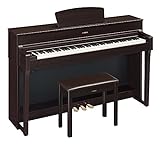
Overview: The Yamaha YDP184 crowns the Arius series as a sophisticated console digital piano for discerning musicians. It recreates Yamaha’s flagship CFX concert grand through premium sampling and Virtual Resonance Modeling, paired with the authentic GH3 graded hammer action featuring moisture-absorbing synthetic ivory keytops. The Dark Rosewood finish and traditional furniture design create an elegant presence in any home, while the comprehensive bundle—including bench and music stand—provides everything needed for serious practice.
What Makes It Stand Out: Full VRM technology distinguishes the YDP184 from competitors, meticulously simulating string resonance and damper effects for acoustic-like expression. The full dot LCD display simplifies navigation through 128-note polyphony voices and functions, a significant usability advantage. The complete accessory package eliminates additional purchases, while the tone escapement construction enhances sound projection beyond typical console pianos.
Value for Money: Positioned as a premium console, the YDP184 justifies its price through flagship sound technology and authentic touch. It delivers 90% of Yamaha’s costlier Clavinova experience at substantial savings. While pricier than the YDP165, the full VRM, superior interface, and enhanced sampling warrant the upgrade for advancing students who prioritize expressive realism over modern connectivity.
Strengths and Weaknesses: Strengths include the GH3 action’s realistic weight progression, expressive CFX sound engine, comprehensive bundle, and elegant aesthetics. However, 128-note polyphony lags behind some competitors, the absence of Bluetooth feels dated, and the substantial weight complicates installation. Navigation remains more complex than Yamaha’s higher-end models.
Bottom Line: The YDP184 excels for serious students and home musicians demanding authentic acoustic piano response. Its premium features justify the investment if traditional performance outweighs contemporary connectivity needs.
2. Yamaha YDP165 Console Digital Piano with Weighted 88-Key Graded Hammer 3 Action, CFX Concert Grand Piano Sound, Includes Bench (Black)

Overview: The Yamaha YDP165 delivers core Yamaha piano authenticity at an accessible mid-range price point. This console digital piano features the same GH3 graded hammer action with synthetic ivory keytops as premium models, paired with CFX concert grand sampling. The black cabinet maintains traditional styling while housing VRM Lite technology and three piano-style pedals, creating a solid foundation for developing pianists seeking genuine touch and tone.
What Makes It Stand Out: The CFX Stereo Sampling captures Yamaha’s flagship concert grand with impressive fidelity, while tone escapement construction enhances acoustic-like projection. VRM Lite adds dimensional resonance missing in budget alternatives. The three pedals provide authentic half-damper response crucial for expressive classical playing. Yamaha’s reputation for reliability and strong resale value differentiates it from lesser-known brands.
Value for Money: The YDP165 occupies a sweet spot for dedicated beginners, offering essential Yamaha quality without premium-model pricing. It significantly undercuts the YDP184 while retaining the same GH3 action and core sound engine. Compared to competitors, you’re investing in proven durability and acoustic authenticity, though the lack of a display and Bluetooth may disappoint tech-focused users.
Strengths and Weaknesses: Strengths include industry-standard GH3 keyboard, credible CFX grand piano sound, sturdy construction, and effective pedal mechanism. Weaknesses are the simplified VRM Lite implementation, absence of user interface display, modest 128-note polyphony, and no modern connectivity options like USB audio or Bluetooth.
Bottom Line: Ideal for serious students and hobbyists seeking genuine Yamaha piano feel on a budget. Choose it for proven acoustic performance; look elsewhere if you prioritize cutting-edge digital features.
3. Casio Privia PX-870 – 88-Key Weighted Console Digital Piano | Tri-Sensor II Scaled Hammer Action Keys| Elegant Design | Powerful 40W 4-Speaker Sound, Concert Play, USB-MIDI

Overview: The Casio Privia PX-870 redefines value in console digital pianos, packing premium features into an aggressively priced package. This flagship Privia model employs Casio’s AiR Sound Source and Tri-Sensor II Scaled Hammer Action to deliver an experience challenging pianos costing twice as much. The elegant cabinet conceals a powerful 40W four-speaker system that fills rooms with immersive sound, making it perfect for both practice and performance.
What Makes It Stand Out: The four-speaker Sound Projection system creates a remarkably wide, dimensional soundstage that rivals more expensive instruments. Tri-Sensor II technology captures keystrokes with exceptional speed and accuracy, particularly beneficial for rapid passages. The comprehensive learning suite—including Duet Mode, Concert Play with orchestral backing, and dual headphone jacks—makes it ideal for instruction and silent practice.
Value for Money: The PX-870 dramatically undercuts Yamaha equivalents while offering superior speaker power and comparable key action. Casio includes features like adjustable touch sensitivity and hammer response typically reserved for higher price tiers. For home use, it delivers perhaps the best price-to-performance ratio available, though brand prestige trails Yamaha.
Strengths and Weaknesses: Strengths are the powerful speaker system, responsive key action, extensive learning tools, and USB-MIDI connectivity. The AiR engine provides rich detail with damper resonance and key-off simulation. Weaknesses include a plastic-heavy build that feels less premium than Yamaha, limited tonal variety beyond the excellent grand piano, and a more complex menu system.
Bottom Line: An exceptional choice for budget-conscious serious students and home musicians. Prioritize it for features and sound; choose Yamaha for traditional aesthetics and brand cachet.
4. Casio Privia PX-770 – 88-Key Weighted Console Digital Piano | Tri-Sensor II Scaled Hammer Action Keys | AiR Sound Source, 19 Tones, Concert Play, 16W Stereo Speakers, USB-MIDI | Elegant White Cabinet

Overview: The Casio Privia PX-770 brings authentic weighted piano action and console elegance to entry-level buyers without compromising core performance. This slim, stylish instrument—particularly in white—fits gracefully into modern homes where space and aesthetics matter. Despite its accessible price, it retains Casio’s acclaimed Tri-Sensor II Hammer Action and AiR Sound Source, delivering fundamentals that genuinely support skill development.
What Makes It Stand Out: The ultra-slim cabinet with sliding key cover offers space-saving sophistication rarely seen at this price. The award-winning AiR engine provides damper resonance and stereo grand piano tones that belie the cost. USB-MIDI connectivity works driver-free across all platforms, eliminating technical headaches for recording and educational apps.
Value for Money: The PX-770 is among the most affordable console pianos with fully-weighted scaled hammer action. It sacrifices speaker power and some features of the PX-870 but preserves the essential playing experience. For beginners, it provides professional-grade key feel that won’t hinder technique development, making it a smarter long-term investment than most portable alternatives.
Strengths and Weaknesses: Strengths include the realistic key action, elegant minimalist design, straightforward operation, and cross-platform USB connectivity. The 16W stereo speakers, while clear, lack authority for larger rooms. Limited polyphony may cause note dropout in complex pedaling. Fewer tones and no Bluetooth limit versatility.
Bottom Line: Perfect for beginners and space-conscious musicians wanting authentic touch in an attractive package. It’s a wise starting point that remains relevant as skills advance.
5. Casio CELVIANO AP-S200 Console Digital Piano, with 88 Weighted Keys, 19 Tones, 40W Speaker System, Bluetooth Audio/MIDI, USB, White Finish (AP-S200WE)

Overview: The Casio Celviano AP-S200 bridges traditional piano craftsmanship and modern connectivity in a stunning white console. This instrument targets contemporary musicians who demand both authentic touch and wireless flexibility. The Smart Scaled Hammer Action keys provide weighted response while integrated Bluetooth audio and MIDI—via included WU-BT10 adapter—enable seamless integration with tablets, smartphones, and music apps.
What Makes It Stand Out: Illuminated touch sensor controls that disappear during play create a clean, distraction-free aesthetic while maintaining modern functionality. The 40W speaker system delivers powerful, room-filling sound that competes with pianos costing far more. Bluetooth audio allows playing along with streaming services, while MIDI connectivity unlocks educational and recording apps without cables.
Value for Money: The AP-S200 commands a modest premium over the PX-770 but adds significant value through Bluetooth and superior speakers. It undercuts Yamaha’s comparable models while offering connectivity they lack. The included adapter eliminates hidden costs. For tech-savvy users, this represents outstanding value, though traditionalists may not utilize the wireless features.
Strengths and Weaknesses: Strengths are the modern connectivity, powerful audio system, elegant slim design with soft-close key cover, and 19 versatile tones. The Smart Scaled Hammer Action feels excellent, though slightly different from traditional hammer systems. Weaknesses include Casio’s lower brand prestige in acoustic piano circles, reliance on external adapter (though included), and limited availability of authorized service centers compared to Yamaha.
Bottom Line: Ideal for modern musicians prioritizing connectivity and design. It seamlessly blends traditional piano performance with contemporary wireless convenience.
6. Casio Celviano AP-750 – 88-Key Digital Console Piano | Smart Hybrid Hammer Action Keyboard CELVIANO Edition | 39 Built In Tones | Black

Overview: The Casio Celviano AP-750 represents the pinnacle of Casio’s digital piano engineering, delivering a truly premium grand-piano experience in an elegant console cabinet. This flagship model targets serious pianists who demand acoustic-level authenticity without the maintenance headaches. The Smart Hybrid Hammer Action keyboard, featuring spruce-and-resin keys with internal counterweights, replicates the nuanced touch and whisper-quiet response of a concert grand, while the advanced AiR Grand Sound Engine captures every subtle resonance from damper to string vibration.
What Makes It Stand Out: The revolutionary Grandphonic 40-watt, 8-speaker system creates breathtaking spatial sound that fills any room with concert hall realism. Vanishing touch controls maintain the instrument’s classic aesthetic while providing modern functionality, and the Casio Music Space app integration via Bluetooth unlocks advanced learning and recording features that extend the instrument’s capabilities far beyond traditional pianos.
Value for Money: Positioned around $2,500-3,000, the AP-750 delivers exceptional value compared to acoustic pianos costing ten times more. It competes directly with Yamaha’s CLP-700 series while offering unique features like the 8-speaker array, making it a smart long-term investment for dedicated musicians who want professional performance without ongoing tuning costs.
Strengths and Weaknesses: Strengths include unparalleled sound realism, authentic key action, stunning design, and zero maintenance requirements. The 39 built-in tones offer versatility, while the Hall Simulation enhances spatial depth. Cons are its substantial footprint, premium price point that may exceed beginner budgets, and weight that complicates relocation. The complexity of features might overwhelm absolute novices.
Bottom Line: The AP-750 is ideal for advanced students and professional musicians seeking an uncompromising digital piano that authentically replicates the acoustic grand experience. Its combination of touch, tone, and technology makes it a worthy centerpiece for any serious musician’s home.
7. Casio Celviano AP-550 – 88-Key Digital Console Piano | Smart Hybrid Hammer Action Keyboard CELVIANO Edition | Dual Concert Grand Piano Tones | 40W 4-Speaker System | Rosewood

Overview: The Casio Celviano AP-550 strikes an impressive balance between premium performance and practical value, offering a sophisticated digital console piano experience for advancing musicians. This mid-tier model features the same Smart Hybrid Hammer Action keys found in higher-end Celvianos, combining spruce and resin construction with internal counterweights to capture the authentic weight and response of a concert grand piano in a refined digital format.
What Makes It Stand Out: Dual concert grand piano tones, recorded with dozens of microphones, deliver remarkable sonic depth through the 40-watt, 4-speaker system. The Instant RePlayer function captures spontaneous musical moments, while hidden illuminated touch sensors provide intuitive control without visual clutter. The free Casio Music Space app, accessible via included Bluetooth adapter, transforms the instrument into an interactive learning hub with a 60-song library.
Value for Money: At approximately $1,800-2,200, the AP-550 occupies a sweet spot in the digital piano market. It offers genuine hybrid key action and rich sound that rivals competitors like the Roland RP-700 series, while maintaining a price point accessible to serious students and hobbyists who need professional features without flagship cost.
Strengths and Weaknesses: Strengths include authentic grand-piano touch, rich resonant sound, elegant rosewood cabinetry, and comprehensive connectivity options including dual headphone jacks for silent practice. The 60-song library and lesson functions support skill development. Weaknesses include a less immersive 4-speaker system compared to the AP-750’s 8-speaker array, and limited tonal variety with primary focus on piano sounds rather than extensive instrumentation.
Bottom Line: Perfect for intermediate to advanced players seeking authentic touch and tone without flagship pricing. The AP-550 delivers professional-grade performance in a beautiful, functional package that grows with your musical journey and fits elegantly into any living space.
8. Casio Celviano AP-S200 – 88-Key Digital Console Piano | Smart Scaled Hammer Action Keyboard | 19 Built In Tones | Grey Beige

Overview: The Casio Celviano AP-S200 brings authentic piano performance to space-conscious homes, offering a slim console design without sacrificing essential playing experience. This entry-level model delivers the fundamentals that matter most: realistic sound, weighted keys, and elegant aesthetics at an accessible price point, making it an ideal choice for beginners and casual players who want proper piano feel without overwhelming complexity.
What Makes It Stand Out: The remarkably compact cabinet, available in versatile finishes including the distinctive Gray Beige, slides easily into apartments and smaller rooms where traditional consoles won’t fit. Smart Scaled Hammer Action keys provide fully weighted response with textured ebony-and-ivory surfaces, while the 40-watt sound system produces surprisingly robust audio. Bluetooth connectivity via the included WU-BT10 adapter enables wireless app control and audio streaming.
Value for Money: Priced around $1,000-1,300, the AP-S200 represents exceptional entry-level value. It significantly outperforms portable keyboards and competes favorably with Yamaha’s Arius YDP-145, offering proper console aesthetics and weighted action that supports proper technique development from day one while remaining budget-conscious.
Strengths and Weaknesses: Pros include space-saving design, authentic weighted keys, maintenance-free operation, and Bluetooth connectivity. The 19 built-in tones cover essential sounds, while Duet Mode facilitates lessons. Cons include the less sophisticated Scaled Hammer Action (non-hybrid) compared to pricier Celvianos, a basic speaker configuration, and limited advanced features for progressing musicians who may outgrow its capabilities within a few years.
Bottom Line: An excellent starter instrument that doesn’t feel like a compromise. The AP-S200 delivers genuine piano fundamentals in a stylish, apartment-friendly package that serves beginners well through their first several years of study while respecting both space and budget constraints.
9. Casio Celviano AP-S450 – 88-Key Digital Console Piano | Smart Hybrid Hammer Action Keyboard CELVIANO Edition | 26 Built In Tones | Black

Overview: The Casio Celviano AP-S450 bridges the gap between entry-level accessibility and premium performance, offering advanced features in a space-saving console design. This model caters to intermediate players who’ve outgrown basic digital pianos but aren’t ready for flagship investment, delivering enhanced authenticity through its Smart Hybrid Hammer Action keyboard and modern visual feedback systems.
What Makes It Stand Out: The innovative Visual Information Bar provides real-time feedback on dynamics, metronome beats, and Bluetooth audio levels—features rarely seen in this class. The Smart Hybrid Hammer Action keys, crafted from spruce and resin, deliver authentic grand-piano balance and quiet response. Enhanced headphone mode with improved bass response makes silent practice more satisfying, while Surround and Hall Simulation effects create immersive soundscapes.
Value for Money: Positioned around $1,600-2,000, the AP-S450 offers compelling value by packing hybrid key action and advanced digital features into a mid-tier price point. It competes with Roland’s F701 and Yamaha’s YDP-165, distinguishing itself through the Visual Information Bar and superior connectivity options that enhance both practice and performance.
Strengths and Weaknesses: Strengths include premium hybrid key action, modern visual feedback system, compact elegant design, and robust 40-watt 4-speaker output. Bluetooth MIDI and audio streaming provide excellent connectivity. Weaknesses include a relatively modest 26-tone selection and limited built-in song library compared to the AP-550. The compact speakers, while good, can’t match the AP-750’s spatial audio immersion for critical listening.
Bottom Line: A smart upgrade choice for progressing students seeking premium touch and modern features without the flagship price. The AP-S450’s combination of authentic action and innovative controls makes it a forward-looking instrument that rewards growing skill and adapts to evolving musical needs.
10. KY-HUAEN Upright Piano Cover, Heavy Duty Piano Cover For Fit an Acoustic Upright/Console Piano, 420D Dustproof Waterproof Piano Protective Cover , Block Sunlight, Moisture, Dust

Overview: The KY-HUAEN Upright Piano Cover provides essential protection for acoustic piano investments, shielding instruments from environmental threats that compromise sound quality and longevity. This heavy-duty cover addresses the practical needs of piano owners who understand that dust, moisture, and sunlight are silent destroyers of tuning stability and internal components, offering peace of mind at minimal cost.
What Makes It Stand Out: The robust 420D Oxford fabric with silver coating interior offers comprehensive defense against multiple threats—blocking UV rays, repelling water, and preventing dust infiltration. The intelligent zipper design allows quick access for spontaneous practice sessions without full removal, while the drawstring base ensures a secure, custom-like fit. The included storage bag keeps the cover tidy when not in use, demonstrating thoughtful design.
Value for Money: At approximately $50-80, this cover costs less than a single piano tuning while potentially preventing dozens of tuning issues and costly repairs. Considering that acoustic pianos represent investments of $3,000 to $30,000+, this protective accessory delivers peace of mind at a fraction of the instrument’s value, paying for itself through reduced maintenance alone.
Strengths and Weaknesses: Pros include durable waterproof construction, universal upright fit (60.2" x 13.7" x 43.3"), easy installation, and thoughtful zipper access. The fabric cleans easily with simple wiping. Cons include limited aesthetic appeal (functional rather than decorative), potential fit issues with non-standard upright sizes, and lack of padding for impact protection. Grand piano owners must seek alternative solutions.
Bottom Line: A must-have practical accessory for any acoustic upright piano owner. This cover’s robust protection and user-friendly design make it an essential investment that preserves your piano’s condition, reduces maintenance costs over time, and extends the instrument’s playable lifespan significantly.
Why Digital Console Pianos Have Revolutionized Classical Practice
The Evolution from Acoustic to Digital for Serious Pianists
The digital piano’s journey from novelty to legitimate practice tool mirrors the broader technological transformation in music education. Early digital instruments offered weighted keys and basic piano samples, but they couldn’t replicate the subtle feedback mechanisms that classical technique demands. The action felt uniform, the sound lacked dimension, and advanced techniques like half-pedaling or rapid repetition were hit-or-miss at best.
Today’s premium digital consoles employ hybrid mechanisms that replicate the exact hammer trajectory and escapement timing of concert grands. Manufacturers have invested heavily in understanding how professional pianists interact with their instruments, studying everything from key descent velocity to the microscopic vibrations transmitted through the keybed during fortissimo passages. This research has yielded instruments that don’t just approximate the piano experience—they recreate the physical dialogue between pianist and instrument that defines expressive playing.
Understanding the Modern Classical Pianist’s Needs
Contemporary classical training demands versatility. You might spend morning hours on Baroque ornamentation, afternoon on Romantic-era voicing, and evening recording a demo for summer festival applications. A practice instrument must accommodate this diversity without imposing limitations. Digital consoles excel here by offering consistent touch and tone regardless of climate conditions, studio availability, or time of day.
The modern classical pianist also faces practical constraints: urban living situations with thin walls, irregular schedules that make acoustic practice impractical, and the need for silent practice during family hours. Digital consoles solve these while adding tools that enhance deliberate practice—slow-motion playback of your recordings, instant transposition for ensemble preparation, and the ability to layer orchestral reductions beneath your part for concerto study.
Key Action Mechanisms That Mirror Acoustic Grand Pianos
Graded Hammer Action vs. Hybrid Actions
Graded hammer action remains the baseline for any serious digital console, with keys progressively weighted from lighter treble to heavier bass, mimicking the varying hammer sizes in an acoustic piano. However, the distinction between standard graded hammer and true hybrid actions defines the 2026 landscape.
Hybrid actions incorporate actual wooden keys (or advanced composites with similar density and moisture properties) and genuine hammer mechanisms that strike physical contacts rather than rubber domes. Some systems even replicate the individual key leads found in acoustic pianos, positioned with the same mathematical precision. When practicing Chopin études that require subtle voicing between fingers, this authentic mass distribution becomes non-negotiable. The key’s inertia, its return speed after release, and the precise point of escapement all contribute to muscle memory development that transfers seamlessly to concert instruments.
Escapement Simulation and Triple Sensor Keybeds
Escapement—that subtle “notch” felt when pressing a key slowly—serves a critical function beyond authenticity. It provides tactile feedback about key depth, helping pianists develop control over pianissimo passages and repeated notes. Modern digital consoles simulate this through mechanical means rather than simple software tricks, ensuring the sensation remains consistent across all velocities.
Triple-sensor keybeds represent another essential feature for classical work. Unlike dual-sensor systems that only register key press and release, triple sensors track the key’s position throughout its travel. This enables faster repetition and more accurate velocity measurement during rapid passages. When you’re practicing the finale of Prokofiev’s Seventh Sonata, where repeated notes approach 16th-note triplets at presto, that third sensor ensures every attack registers with precision, preventing the “missing notes” syndrome that plagued earlier digitals.
The Importance of Key Texture and Hygroscopic Properties
The tactile sensation of key surfaces profoundly affects long practice sessions. Premium digital consoles now feature keys with simulated ivory and ebony textures that absorb moisture from fingertips, preventing the slick feeling that occurs during intense technical work. More importantly, these materials exhibit hygroscopic properties—meaning they respond to humidity similarly to natural materials.
This isn’t mere luxury. When practicing trills and rapid figuration, finger grip consistency directly impacts articulation. Keys that become slippery after twenty minutes force subtle compensations in hand position that can introduce tension. The latest synthetic key materials maintain their coefficient of friction across varying humidity levels and practice durations, ensuring your technique remains pure whether you’re playing scales or tackling the Goldberg Variations.
Sound Engine Technology for Authentic Classical Timbre
Sampling vs. Physical Modeling: What Classical Pianists Should Know
The debate between sampling and physical modeling shapes the core of digital piano sound. Sampling involves recording thousands of notes from a concert grand at various velocities, microphone positions, and pedal configurations. The best implementations capture not just the initial attack but the entire decay, sometimes lasting over a minute for low bass notes.
Physical modeling, conversely, uses algorithms to simulate how strings, soundboard, and cabinet interact in real-time. This approach excels at capturing the infinite variations that occur when notes blend, particularly in pedaled passages where sympathetic resonance creates complex harmonic interactions. For classical practice, the ideal solution often involves hybrid engines that combine detailed sampling for individual note authenticity with modeling for resonance and pedaling behavior.
When evaluating instruments, play a heavily pedaled chord in the low register, then listen as it decays. A superior engine will reveal subtle beating between partials, the bloom of upper harmonics, and the way the sound seems to emanate from the entire instrument rather than a single point. These details matter profoundly when practicing impressionistic repertoire where pedaling defines the harmonic palette.
Polyphony Requirements for Complex Repertoire
Polyphony—the number of notes that can sound simultaneously—becomes critical when practicing works with extensive pedaling or multiple voices. A specification of 256 notes might seem excessive, but consider this: holding the sustain pedal through a measure of dense Chopin may retain 30-40 notes in the decay. Add the melodic line, inner voices, and the fact that each sustained note requires multiple samples (direct, sympathetic, damper resonance), and you quickly approach limits.
For organ transcription practice or advanced Liszt, where rapid passagework overlaps with sustained bass notes, 256-voice polyphony represents the practical minimum. Some 2026 instruments now offer “unlimited” polyphony through clever voice-stealing algorithms that prioritize audible notes, but the underlying capability still matters for maintaining tonal integrity during the most complex passages.
The Role of String Resonance and Damper Simulation
Authentic string resonance transforms digital piano sound from a collection of isolated notes into a living instrument. When you press a key without sounding it, then strike another note, the first string should sympathetically vibrate—a phenomenon called duplex scaling. High-end digital consoles model this behavior across all 88 keys, creating the shimmering halo that surrounds chords in acoustic pianos.
Damper resonance simulation proves equally crucial for classical pedaling technique. When the damper pedal is partially depressed, the felts barely touch the strings, allowing subtle vibration. This “half-pedal” zone, typically spanning the last 10-15% of pedal travel, requires continuous control data rather than simple on/off switching. Practice Ravel’s “Jeux d’eau” or Debussy’s “Reflets dans l’eau” without this capability, and the pedaling effects sound artificially clean, missing the watercolor-like blending that defines the impressionistic style.
Pedal Systems That Capture Nuance
Progressive Damper Pedals and Half-Pedaling Precision
The damper pedal on a quality digital console should feel like it belongs to a $100,000 concert grand—progressive resistance that increases as you approach full depression, with a clear “kickback” sensation at the point of damper lift. This tactile feedback develops proprioceptive memory for pedaling technique.
Half-pedaling precision goes beyond simply supporting the function. The best systems offer adjustable half-pedal points, allowing you to customize the response to match your primary acoustic instrument. Some 2026 models even include pressure sensors that detect how firmly you maintain the pedal position, translating subtle foot movements into corresponding tonal shading. This becomes invaluable when working on the pedaled pianissimo chords in the opening of Beethoven’s Fourth Concerto, where the pedal acts as a dynamic coloring tool rather than a simple sustain device.
Sostenuto and Soft Pedal Authenticity
The sostenuto pedal, often underutilized in digital pianos, demands the same level of sophistication. It should capture only notes that are fully depressed at the moment of engagement, allowing subsequent notes to remain unaffected. Test this with a simple exercise: play a low C major chord, engage sostenuto, release the chord, then play staccato notes above. The chord should sustain while the upper notes remain detached.
The soft pedal (una corda) requires more than mere volume reduction. On a grand piano, it shifts the action sideways so hammers strike fewer strings, altering timbre and attack. Digital consoles should replicate both the volume shift and the tonal mutation. Some advanced models even simulate the subtle clicking sensation of the mechanism engaging, providing the same tactile cue acoustic pianists rely on for delicate passages.
Cabinet Design and Acoustic Projection
Speaker Configuration for Room-Filling Sound
The speaker system transforms digital sound from a private headphone experience into a room-filling instrument. Look beyond wattage ratings—speaker placement and cabinet resonance matter more. Premium consoles employ multiple speaker arrays: near-field speakers directed at the player for immediate feedback, mid-field drivers for presence, and downward-firing woofers that use the floor as a coupling surface for bass reproduction.
The best configurations create a “sound island” where the instrument seems to disappear, replaced by a holographic piano sound that emanates from the space itself. When practicing for performance, this spatial accuracy helps you develop voicing and balance that translates directly to concert halls. Some 2026 models incorporate waveguide technology borrowed from high-end studio monitors, ensuring consistent frequency response whether you’re sitting at the bench or standing across the room evaluating your pedaling.
Soundboard Emulation Technology
Forward-thinking manufacturers now incorporate actual wooden soundboards into digital console cabinets, using them as passive radiators that vibrate in response to speaker output. This isn’t mere marketing—real wood responds to sound pressure with complex resonant modes that plastic or MDF cannot replicate. The result is a warmth and organic quality that closes the gap with acoustic instruments.
These soundboards often feature carefully tuned braces and ribs similar to acoustic piano construction, creating sympathetic vibrations that blur the line between digital and acoustic. When practicing late at night with headphones, some systems even allow you to engage a “soundboard feel” mode that uses transducers to vibrate the cabinet subtly, providing tactile feedback through the keys and bench that prevents the disembodied sensation of silent practice.
Connectivity and Integration in the Modern Studio
Bluetooth MIDI and Audio: Latency Considerations
Bluetooth connectivity has matured from a convenience to a professional tool, but latency remains the critical factor. For classical practice, any perceptible delay between key press and sound output disrupts timing and articulation. The Bluetooth 5.3 standard, now common in 2026 models, reduces latency to under 20 milliseconds—technically imperceptible for most players.
However, for absolute precision work, wired connections still prevail. The best digital consoles offer both options, allowing you to use Bluetooth for casual practice or streaming accompaniment tracks, while reserving USB or traditional MIDI for recording sessions where timing integrity is paramount. Some instruments now feature adaptive latency compensation that adjusts timing based on the connected device’s processing speed, ensuring your recorded performances align perfectly with external orchestrations.
USB Audio Interface Capabilities
Modern digital consoles should function as complete audio interfaces, transmitting multi-channel audio directly to your computer or tablet. This means separate audio streams for the piano sound, internal metronome, and Bluetooth accompaniment, each recordable on independent tracks. For conservatory students creating prescreening recordings, this eliminates the need for external microphones and preamps, capturing the instrument’s native sound with perfect isolation.
Look for 24-bit/192kHz resolution and ASIO or Core Audio drivers that ensure compatibility with professional recording software. Some advanced models even allow you to record the MIDI performance and audio simultaneously, then adjust the piano’s tone or reverb character during mixdown—a powerful tool for creating demonstration reels where the piano sound needs to match different acoustic environments.
Integration with Practice Apps and Recording Software
The ecosystem surrounding your digital piano matters as much as the instrument itself. Premium consoles now offer deep integration with apps that provide more than just digital sheet music. These platforms can listen to your playing in real-time, offering feedback on note accuracy, rhythm consistency, and even dynamic shaping. For classical practice, the most valuable apps analyze your pedaling, showing graphs of pedal depth against harmonic changes and suggesting adjustments for cleaner voicing.
Some 2026 instruments feature built-in cameras that track hand position, correlating video with MIDI data to identify tension-inducing fingering choices. While purists may resist such guidance, the objective feedback proves invaluable for breaking through plateaus in technical development. The key is choosing an instrument whose app ecosystem respects the artistic nature of classical interpretation rather than reducing performance to gamified metrics.
Advanced Practice Features Without Compromise
Metronome and Rhythm Training Tools
A metronome in a classical practice instrument must transcend simple timekeeping. Modern digital consoles offer conducting-pattern visuals on built-in displays, simulating the baton movements of different maestros. This helps internalize rubato within a structured framework—essential for concerto preparation where rhythmic flexibility must exist within orchestral constraints.
Advanced rhythm trainers can mute random beats, forcing you to maintain internal pulse, or shift accents to develop rock-solid time feel. For polyrhythmic works like Bartók’s Mikrokosmos or late Scriabin, some systems can voice different rhythmic layers through separate headphone channels, allowing you to practice 3-against-4 patterns by physically hearing each voice in isolation before combining them.
Recording and Playback for Self-Assessment
The ability to record and instantly critique your performance transforms practice efficiency. Look for systems that capture not just audio but complete MIDI data, including velocity curves, pedaling depth, and even the speed of key releases. When you play back a recording of your Chopin Nocturne, you should be able to see exactly where your left hand chords were uneven or your melodic line lacked directional shape.
Some 2026 models offer “performance comparison” modes where you can overlay your recording with a reference performance, visually aligning dynamic contours and timing. This objective feedback helps identify unconscious habits—perhaps you consistently rush the third beat of every measure, or your crescendos lack linear progression. The instrument becomes a mirror, reflecting not just sound but the physical and temporal architecture of your interpretation.
Splitting and Layering for Creative Practice
While purists may scoff, the ability to split the keyboard or layer sounds offers legitimate practice benefits. Splitting allows you to practice left-hand orchestral reductions while the right-hand piano part plays automatically—ideal for concerto preparation. Layering a subtle string pad beneath the piano sound can help develop voicing by forcing you to project the melody above the accompaniment texture.
The key is that these features must be implemented without compromising the primary piano sound. The layered voices should be completely removable, leaving a pure, uncolored piano tone. Some advanced systems allow you to adjust the layer’s response curve independently, so a string pad might only activate at fortissimo levels, serving as a dynamic target for your melodic projection.
The 2026 Feature Landscape: What’s New
AI-Powered Adaptive Response
Artificial intelligence has begun to influence digital piano action in subtle but meaningful ways. Some 2026 models feature adaptive response curves that learn your playing style over time. If you tend to play with a naturally heavy touch, the instrument slightly lightens the action in the upper register to prevent fatigue during long practice sessions. Conversely, if your touch is light, it adds resistance in the bass to develop finger strength.
More sophisticated systems analyze your repertoire choices, suggesting action adjustments for specific composers. Practicing Scarlatti sonatas? The action might quicken for crisper articulation. Working on Rachmaninoff preludes? It could add depth to the key dip for richer tonal control. This isn’t about the piano playing itself—it’s about the instrument adapting to serve your artistic goals, much like a master technician regulates an acoustic piano for a specific artist’s preferences.
Haptic Feedback Integration
Haptic technology, borrowed from high-end automotive and gaming applications, now provides tactile cues through the keybed. Subtle vibrations can indicate when you’re playing out of tune (when using stretch-tuning modes), or provide a gentle pulse on downbeats to reinforce rhythmic stability during complex passages.
For practice purposes, haptic feedback can warn you when you’re applying excessive force, helping prevent injury during intensive technical work. The sensation is so subtle—more a whisper than a shake—that it doesn’t interfere with playing, yet provides proprioceptive information that accelerates technical refinement. Some systems even simulate the subtle key vibration that occurs when sustaining low bass notes on a concert grand, connecting you physically to the instrument’s resonance.
Augmented Reality Sheet Music Display
While not embedded in the piano itself, the integration with AR glasses and heads-up displays represents a significant 2026 development. Rather than turning pages physically or tapping pedals, you can now set your own pacing, with the score advancing based on your playing position. The system follows your tempo rubato, waiting when you linger on a phrase and accelerating through familiar passages.
More impressively, AR displays can overlay fingering suggestions, harmonic analysis, or historical performance practice notes directly onto your field of vision without cluttering the printed page. For a Bach fugue, you might see the subject highlighted in different colors as it enters each voice, helping you maintain contrapuntal clarity. This technology respects the traditional relationship with written music while enhancing it with contextual information.
Space, Budget, and Longevity Considerations
Sizing Your Instrument to Your Practice Space
Digital console pianos range from compact 48-inch models to imposing 60-inch instruments that dominate a room. The speaker system must match the space—a powerful 6-speaker array in a 10x12 foot room creates overwhelming bass and harsh treble. Conversely, a modest 4-speaker system in a large living space sounds thin and disconnected.
Measure your practice area carefully, noting wall materials and ceiling height. Hard surfaces reflect sound, potentially creating harshness that a larger cabinet’s multiple speakers could exacerbate. Some 2026 models include room-correction microphones that analyze your space and adjust speaker EQ accordingly, ensuring the piano sounds balanced regardless of placement. This feature proves invaluable for apartment dwellers who must position the instrument against a wall rather than in free space.
Total Cost of Ownership: Maintenance and Upgrades
Unlike acoustic pianos that require regular tuning, voicing, and action regulation, digital consoles demand minimal maintenance. However, the total cost of ownership includes potential software updates, app subscriptions, and eventual hardware obsolescence. Premium manufacturers now offer guaranteed firmware support for at least seven years, ensuring your 2026 purchase remains current through 2033.
Consider upgrade paths. Some instruments feature modular sound engines that can be updated with new piano samples as recording technology improves. Others offer subscription services for additional instrument sounds or practice features. While these ongoing costs seem minor initially, they add up. A $2,500 instrument with $200 annual subscriptions over a decade costs more than a $4,000 instrument with lifetime updates included. Read the fine print about what features require ongoing payment versus one-time purchase.
Investment Value for Conservatory-Bound Students
For students pursuing conservatory training, a digital console represents a significant investment that should last through undergraduate and potentially graduate studies. The instrument must grow with your technical and musical development. An action that feels adequate for early Chopin may prove limiting for Prokofiev or Ligeti.
Consider instruments that hold resale value. While digital technology depreciates faster than acoustic pianos, certain premium models maintain 60-70% of their value after five years, particularly if the manufacturer has a reputation for long-term software support. Some companies offer trade-in programs toward upgraded models, effectively leasing the instrument during your student years. This flexibility proves valuable if you move from a small apartment to a larger space where an acoustic becomes feasible, or if your needs evolve from practice instrument to performance tool.
Acoustic Piano Comparison: When Digital Makes Sense
Touch and Tone: Closing the Gap
The touch gap between digital and acoustic has narrowed to the point where blind tests confuse even seasoned professionals. High-end digital actions now replicate the exact key dip depth (typically 10mm at the front, 12mm at the back), the precise weight progression, and even the subtle flex of the key frame under fortissimo playing. The remaining differences lie in the continuous vibration of an acoustic soundboard and the infinite variation of felt striking strings.
For practice purposes, these differences often work in the digital’s favor. The consistent action allows you to isolate technical issues without wondering if the instrument’s regulation is masking problems. When you then transition to acoustic instruments for lessons and performances, your technique translates cleanly because you’ve developed it on an action that mirrors the geometry of concert grands. Many concert pianists now keep digital consoles for practice while touring, using them to maintain their technique without the variability of hotel practice room instruments.
The Convenience Factor for Intensive Practice Schedules
Classical development demands hours of daily practice, often at inconvenient times. Digital consoles eliminate the social friction of early morning or late-night playing. More importantly, they remove the psychological barrier of “wasting” acoustic piano life—every hour on an acoustic piano wears the hammers and felts, a consideration for students with limited access to quality instruments.
The ability to practice with headphones while family sleeps, then switch to speakers for afternoon sessions, creates practice opportunities that acoustic instruments simply cannot match. Some 2026 models include “quiet acoustic” modes that use minimal speaker volume while still providing full sound through headphones, perfect for apartment living where even moderate volumes disturb neighbors.
Silent Practice Without Headphone Fatigue
Extended headphone practice traditionally causes listening fatigue and an unnatural sense of isolation. Newer digital consoles address this through binaural sampling—recording piano samples using microphones placed inside a dummy head, capturing the exact phase and timing differences your ears would experience at the bench. The result is a headphone sound that feels external, spacious, and three-dimensional.
Open-back headphone support further reduces fatigue by allowing ambient sound to mix with the piano, preventing the “vacuum” sensation of sealed designs. Some instruments even include tiny speakers in the music rack that provide subtle crossfeed, blending a whisper of the external sound with your headphones to create a more natural monitoring environment during long practice sessions.
Environmental Factors and Instrument Stability
Temperature and Humidity Resistance
Acoustic pianos are exquisitely sensitive to environmental changes, with wood swelling and contracting, affecting tuning stability and action regulation. Digital consoles thrive in conditions that would destroy acoustic instruments. This stability proves crucial for musicians in challenging climates or those who must place instruments near windows, doors, or heating vents.
However, digital components have their own environmental limits. Extreme cold can affect LCD displays, while excessive heat impacts processor performance. The best 2026 models specify operating ranges from 40°F to 95°F and include thermal management systems that protect internal components. If you live in a climate with dramatic seasonal changes, verify that your instrument can handle the full range without performance degradation.
Eco-Friendly Materials in Modern Construction
Sustainability concerns increasingly influence instrument design. Many manufacturers now use recycled composites for key construction, bamboo-based cabinet materials, and water-based finishes. These eco-friendly choices don’t compromise performance—in some cases, they enhance it. Bamboo cabinetry offers superior dimensional stability compared to traditional hardwoods, resisting the warping that can affect speaker alignment over time.
For the environmentally conscious pianist, some companies offer take-back programs, recycling old instruments into new components. This cradle-to-cradle approach ensures your practice instrument doesn’t contribute to landfill waste at end-of-life. The shift toward sustainable materials also often results in lighter instruments, simplifying moving and delivery without sacrificing cabinet rigidity or sound quality.
Trying Before Buying: The Ultimate Test Protocol
Testing Dynamic Range with Specific Repertoire
Never evaluate a digital piano using only showpiece repertoire. Instead, bring a varied program that tests specific capabilities. Use the opening of Beethoven’s “Moonlight” Sonata to assess pianissimo control and tonal evenness in the upper register. The repeated notes in Ravel’s “Alborada del gracioso” reveal repetition speed and key reset performance. Liszt’s “Un Sospiro” tests damper resonance and half-pedaling subtlety.
Play the same passage at pp, mp, mf, and ff, listening for tonal consistency. Some digital pianos sound thin and electronic at pianissimo but become harsh and brittle at fortissimo. The best instruments maintain harmonic richness across the entire dynamic spectrum, with each level revealing new colors rather than just more volume.
Evaluating Repetition Speed and Trills
Rapid repetition separates serious actions from pretenders. Test this not with single-finger trills but with measured alternation between fingers 3-4-5, as required in advanced Scarlatti or Clementi. The action must reset quickly enough that each note speaks clearly without “choking” or dropping notes at high speeds.
Pay attention to the feel of repetition. Does the key return with a crisp, positive motion, or does it feel mushy and uncertain? The return spring tension and escapement timing determine this sensation. A quality action feels lively and responsive, encouraging technical facility rather than fighting against it.
Assessing Tonal Balance Across Registers
Play a simple C major scale from bottom to top, listening for evenness. Many digital pianos emphasize the treble to sound “bright” in showrooms, but this becomes fatiguing during practice. The bass should be foundationally solid without booming, the tenor warm and singing, the treble clear but not harsh.
Test this further by playing the same melody in different octaves. A Chopin melody in the bass should sound rich and cello-like, not muddy. In the high treble, it should maintain body and presence, not thin out to a ping. The best instruments use separate sample sets and modeling parameters for each register, creating seamless transitions that feel like a single, unified instrument rather than three keyboards stitched together.
Warranty, Support, and Community
Understanding Manufacturer Support Networks
Digital pianos are computers with keys, and like all technology, they occasionally require support. Investigate the manufacturer’s service network before purchasing. Do they offer in-home service for larger models? What is the typical turnaround for repairs? Some premium brands provide loaner instruments during service, ensuring your practice schedule isn’t disrupted.
Warranty terms reveal confidence in build quality. Ten-year warranties on sound engines and actions suggest robust engineering, while one-year warranties on everything indicate potential longevity concerns. Pay particular attention to coverage for the action mechanism and key surfaces, as these experience the most wear. A five-year action warranty with a two-year electronic warranty represents a balanced approach.
The Value of User Communities for Classical Pianists
The most underrated aspect of digital piano ownership is the user community. Active forums and social media groups provide troubleshooting tips, share custom settings for specific repertoire, and offer insights into long-term reliability. Before purchasing, search for user groups dedicated to the brand or model you’re considering. A vibrant community suggests an engaged user base and responsive manufacturer.
Some manufacturers host virtual masterclasses and workshops exclusively for owners, featuring concert artists demonstrating practice techniques on their instruments. These events provide not just education but validation that serious musicians use these tools for serious work. The community becomes an extension of your musical network, connecting you with other classical pianists navigating the same practice challenges.
Frequently Asked Questions
Can I develop proper finger technique on a digital console that will transfer to acoustic concert grands?
Yes, provided the digital instrument uses a true hybrid action with wooden keys, graded hammer weight, and escapement simulation. The key is matching the action geometry—key dip depth, hammer weight progression, and front-to-back balance—to concert grand specifications. Many conservatory programs now accept digital practice instruments for daily use, with students transitioning seamlessly to acoustic instruments for lessons and performances.
How much polyphony do I realistically need for advanced repertoire like Rachmaninoff or Ravel?
For dense, pedaled repertoire, 256-note polyphony represents the practical minimum. While 128 notes may suffice for Bach or early Beethoven, late Romantic and Impressionistic works require more headroom. The damper pedal sustains decaying notes while new attacks occur, quickly consuming voices. Unlimited polyphony systems offer future-proofing but aren’t essential if the 256-voice implementation includes intelligent voice-stealing that prioritizes audible notes.
Will practicing on headphones hurt my ability to judge tone production?
Modern binaural sampling and open-back headphone support have largely eliminated this concern. The greater risk is practicing exclusively at low volumes through speakers, which can cause you to overplay when transitioning to acoustic instruments. Use headphones for timing and technical work, but regularly practice through speakers at performance-level dynamics to develop your full tonal palette and physical endurance.
How long should I expect a premium digital console to last before needing replacement?
With proper care, the hardware should remain functional for 15-20 years. However, software support typically extends 7-10 years before manufacturers focus on newer platforms. The action mechanism may require regulation after 5-7 years of heavy use, though this is less intensive than acoustic piano maintenance. Many professional pianists upgrade every 8-10 years to access improved action technology and sound engines, though the previous instrument often serves as a reliable secondary practice tool.
Do digital pianos hold their value for resale?
Premium models from established manufacturers retain 60-70% of their value after five years, particularly if firmware updates have kept them current. Entry-level digitals depreciate more rapidly. The key factors are build quality, brand reputation, and whether the manufacturer continues supporting the model. Instruments with modular sound engines tend to hold value better, as they can be updated rather than becoming obsolete.
Can I use a digital console for recording professional demo recordings?
Absolutely. High-end digital consoles with USB audio interfaces operating at 24-bit/192kHz resolution produce recordings that meet conservatory prescreening and competition submission standards. The key is using the instrument’s direct outputs rather than microphones, and understanding that the sound represents the manufacturer’s piano sample rather than a unique acoustic instrument. For professional album releases, most artists still prefer acoustic pianos, but demos and educational recordings from digital sources are widely accepted.
How do I evaluate speaker quality if I’m primarily a headphone user?
Even if you practice silently, speaker quality matters for performance preparation and longevity. Test speakers using repertoire you’ll eventually perform publicly. The speaker system should create a believable acoustic space that helps you develop voicing and pedaling for performance contexts. Additionally, well-designed speakers indicate thoughtful engineering throughout the instrument. Poor speaker implementation often correlates with compromises in other areas.
What maintenance does a digital console actually require?
Beyond dusting and occasional key cleaning, digital consoles need minimal maintenance. Avoid placing drinks near the instrument, and use a cover to protect against dust. The action may need occasional regulation after heavy use—typically a technician visit every 3-5 years. Software updates install automatically via Wi-Fi on most 2026 models. Unlike acoustic pianos, there are no tuning costs, and environmental fluctuations don’t affect performance.
Are subscription-based features worth the ongoing cost?
This depends on your practice needs. Features like expanded sound libraries, advanced practice apps, or cloud storage for recordings may justify $150-200 annually if you use them regularly. However, core functionality should never require subscription. Evaluate whether the features enhance your classical practice specifically—some subscriptions offer jazz improvisation tools or pop music libraries that classical pianists rarely use. Look for instruments where essential practice features are included permanently.
How do I know if I’m ready to transition from a digital console to an acoustic piano?
The decision isn’t about outgrowing the digital but about changing priorities. If you find yourself craving the infinite tonal colors and continuous vibration of strings, or if performance opportunities require acoustic familiarity, consider adding an acoustic rather than replacing the digital. Many professional pianists maintain both: the digital for consistent practice and silent work, the acoustic for performance preparation and repertoire that demands ultimate tonal subtlety. The digital console remains valuable even after acquiring an acoustic, serving different but complementary practice needs.
See Also
- We Tested 50 Digital Console Pianos—Here Are the 10 Best for Living Rooms in 2026
- 10 Premium Digital Console Pianos for Living Room Décor (Worth the Splurge) in 2026
- Top 10 Digital Console Pianos for Small Apartments with Headphone Jacks in 2026
- 10 Space-Saving Digital Console Pianos for Narrow Music Rooms in 2026
- Stop Tuning Headaches: 10 Best Digital Console Pianos That Never Need Tuning in 2026