Table of Contents
Living in a small apartment doesn’t mean you have to compromise on your musical aspirations. As we move into 2026, digital console pianos have evolved from compact compromises into sophisticated instruments that rival their acoustic counterparts while respecting your spatial constraints. The latest generation of built-in speaker systems delivers room-filling sound that defies their modest footprints, making them ideal for urban dwellings where every square foot counts.
The convergence of advanced sampling technology, space-efficient cabinetry, and intelligent acoustic design has created a golden age for apartment-friendly pianos. Whether you’re a classical purist, jazz improviser, or weekend hobbyist, understanding what makes these instruments tick will transform your buying journey from overwhelming to empowering. Let’s explore the essential features that separate exceptional digital console pianos from the merely adequate, ensuring your investment delivers authentic piano performance without overwhelming your living space.
Top 10 Console Pianos
Detailed Product Reviews
1. Yamaha YDP184 Console Digital Piano with Weighted 88-Key Graded Hammer 3 Action, CFX Concert Grand Piano Sound, Includes Bench (Dark Rosewood)
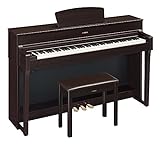
Overview: The Yamaha YDP184 represents the pinnacle of the Arius console series, delivering an authentic concert grand piano experience for discerning home pianists. It faithfully reproduces Yamaha’s flagship CFX concert grand through advanced sampling technology, paired with the responsive Graded Hammer 3 action and synthetic ivory key tops that absorb moisture during intense practice sessions. This complete package includes a matching bench, making it ready for serious musical study.
What Makes It Stand Out: Unlike its siblings, the YDP184 features full Virtual Resonance Modeling that calculates complex string interactions in real-time, creating living, breathing piano tones rather than static samples. The full dot LCD display provides intuitive navigation through its comprehensive features, while the Premium Grand Piano Voice offers enhanced detail over standard CFX sampling. The synthetic ivory key tops provide genuine grip and tactile feedback that serious pianists demand.
Value for Money: Positioned at the premium end of console digitals, the YDP184 justifies its price through uncompromising sound authenticity and build quality. It competes with instruments costing significantly more, offering conservatory-grade features without requiring acoustic piano maintenance. For dedicated students and professionals, this represents long-term value.
Strengths and Weaknesses: Pros include exceptional sound realism through full VRM, authentic graded hammer weighting, moisture-absorbing key surfaces, comprehensive LCD interface, and 128-note polyphony. Cons are its substantial weight and footprint, premium pricing that may exceed casual players’ budgets, and limited portability.
Bottom Line: The YDP184 is ideal for intermediate to advanced pianists seeking a permanent, high-fidelity digital piano that authentically replicates acoustic grand piano performance without the associated costs and space requirements.
2. Yamaha YDP165 Console Digital Piano with Weighted 88-Key Graded Hammer 3 Action, CFX Concert Grand Piano Sound, Includes Bench (Black)

Overview: The Yamaha YDP165 strikes an impressive balance between professional features and accessible pricing within the Arius lineup. It delivers the core Yamaha experience through CFX Stereo Sampling and Graded Hammer 3 action with synthetic ivory key tops, providing authentic touch and tone for developing pianists. The tone escapement construction enhances sound projection, filling medium-sized rooms with rich, detailed audio.
What Makes It Stand Out: This model retains the essential GH3 keyboard with moisture-absorbing synthetic ivory surfaces, ensuring consistent performance during extended practice. The three piano-style pedals offer authentic half-pedaling capabilities, while VRM Lite technology adds string resonance depth without the computational complexity of the full version found in higher models. Its straightforward design focuses resources on fundamental playing experience rather than extensive menu systems.
Value for Money: The YDP165 represents exceptional value for serious students and intermediate players, delivering Yamaha’s renowned action and flagship piano sound at a mid-tier price. It sacrifices the LCD display and full VRM of the YDP184 but maintains 90% of the playing experience for significantly less investment, making it a smart choice for budget-conscious families.
Strengths and Weaknesses: Pros include authentic GH3 weighted action, realistic three-pedal configuration, effective tone escapement for sound projection, and CFX sampling quality. Cons are the absence of an LCD display for easier navigation, VRM Lite versus full resonance modeling, and fewer advanced features compared to premium models.
Bottom Line: Perfect for dedicated students and advancing players who prioritize authentic touch and tone over digital bells and whistles, the YDP165 offers Yamaha quality without the premium price tag.
3. Casio Privia PX-870 – 88-Key Weighted Console Digital Piano | Tri-Sensor II Scaled Hammer Action Keys| Elegant Design | Powerful 40W 4-Speaker Sound, Concert Play, USB-MIDI

Overview: The Casio Privia PX-870 stands as the flagship console model in the Privia series, engineered for pianists who demand both expressive control and powerful sound projection. Its Tri-Sensor II Scaled Hammer Action with simulated ebony and ivory textures provides nuanced dynamic response, while the AiR Sound Source delivers meticulous detail through damper resonance, string resonance, and key-off simulation. The 40W four-speaker system creates an immersive sound field that rivals more expensive instruments.
What Makes It Stand Out: The quad-speaker Sound Projection system distinguishes the PX-870, using dedicated speakers for different frequency ranges and spatial imaging. Headphone Mode optimizes the soundstage for private practice, while Concert Play provides orchestral backing tracks for performance simulation. The three-sensor key detection captures rapid passages with exceptional accuracy, and the 256-note polyphony ensures complex pieces never drop notes.
Value for Money: The PX-870 delivers features typically found in instruments costing hundreds more, making it a compelling alternative to Yamaha’s mid-tier offerings. Its powerful speaker system alone justifies the price difference over the PX-770, while the enhanced resonance modeling provides professional-grade sound shaping for serious practice.
Strengths and Weaknesses: Pros include powerful 40W four-speaker output, advanced Tri-Sensor action with textured keys, extensive 256-note polyphony, comprehensive learning features, and USB-MIDI connectivity. Cons are Casio’s lesser brand prestige among traditionalists, a slightly lighter key action than Yamaha’s GH3, and a predominantly plastic construction.
Bottom Line: An outstanding choice for home pianists seeking maximum features and sonic power at a competitive price, the PX-870 excels as a practice and performance instrument for intermediate players.
4. Casio Privia PX-770 – 88-Key Weighted Console Digital Piano | Tri-Sensor II Scaled Hammer Action Keys | AiR Sound Source, 19 Tones, Concert Play, 16W Stereo Speakers, USB-MIDI | Elegant White Cabinet

Overview: The Casio Privia PX-770 delivers essential digital piano performance in an elegant, space-conscious package ideal for beginners and casual players. It shares the core Tri-Sensor II Scaled Hammer Action with its premium sibling, providing authentic weighted response and textured key surfaces. The AiR Sound Source generates convincing grand piano tones through stereo sampling and damper resonance, while the slim cabinet with sliding key cover integrates seamlessly into any room decor.
What Makes It Stand Out: This model prioritizes accessibility without sacrificing fundamental playing experience. It retains crucial learning tools including Duet Mode for side-by-side instruction, dual headphone jacks for silent practice, and Concert Play orchestral tracks. The USB-MIDI connection offers plug-and-play compatibility with computers and mobile devices without driver installation, making it an excellent tool for music education software.
Value for Money: As the most affordable console digital piano in this comparison, the PX-770 delivers remarkable value for entry-level players. It sacrifices speaker power and some resonance detail but maintains the same responsive keyboard action as pricier models, ensuring technique development isn’t compromised by budget constraints.
Strengths and Weaknesses: Pros include compact, attractive design, authentic Tri-Sensor hammer action, essential learning features, USB-MIDI connectivity, and accessible pricing. Cons are limited 16W speaker system lacking projection power, fewer tonal nuances than the PX-870, 128-note polyphony, and no Bluetooth connectivity.
Bottom Line: The PX-770 is the perfect starter instrument for families and beginners, offering genuine weighted-key experience and essential features at an entry-level price point that leaves room for musical growth.
5. Casio CELVIANO AP-S200 Console Digital Piano, with 88 Weighted Keys, 19 Tones, 40W Speaker System, Bluetooth Audio/MIDI, USB, White Finish (AP-S200WE)

Overview: The Casio Celviano AP-S200 bridges traditional piano craftsmanship with modern connectivity in a stunning white console cabinet. It features 88 fully-weighted Smart Scaled Hammer Action keys and a new Concert Grand Piano sample, delivered through a powerful 40W speaker system. The illuminated touch sensor controls create a minimalist aesthetic that disappears during performance, while the soft-close sliding key cover adds luxury feel to this contemporary instrument.
What Makes It Stand Out: The included WU-BT10 Bluetooth Audio and MIDI adapter sets the AP-S200 apart, enabling wireless streaming of backing tracks and cable-free connection to music apps. The illuminated control panel represents a sleek departure from traditional button arrays, and the slim profile proves that console pianos need not dominate a room. The 19 tones cover essential sounds without overwhelming casual users.
Value for Money: Positioned competitively against Yamaha’s mid-tier offerings, the AP-S200 justifies its price through modern features and elegant design. The Bluetooth connectivity alone adds significant value for tech-savvy musicians, while the 40W speaker system matches the PX-870’s audio power. It’s a lifestyle instrument that doesn’t compromise musical substance.
Strengths and Weaknesses: Pros include integrated Bluetooth Audio/MIDI, stylish minimalist design, powerful 40W sound system, illuminated touch controls, and soft-close key cover. Cons are the Smart Scaled Hammer Action lacks the triple-sensor precision of Privia models, limited 19-tone selection, white finish requires more maintenance, and Casio’s action may feel lighter than Yamaha’s to some players.
Bottom Line: Ideal for design-conscious players who value wireless connectivity and contemporary aesthetics, the AP-S200 delivers impressive sound and modern convenience in a beautiful package.
6. Casio Celviano AP-750 – 88-Key Digital Console Piano | Smart Hybrid Hammer Action Keyboard CELVIANO Edition | 39 Built In Tones | Black

Overview: The Casio Celviano AP-750 represents the pinnacle of digital console piano engineering, delivering a premium grand-piano experience through its advanced AiR Grand Sound Engine and Smart Hybrid Hammer Action keys. This flagship model combines authentic acoustic replication with modern digital convenience in an elegant black cabinet designed for discerning pianists.
What Makes It Stand Out: The revolutionary 8-speaker Grandphonic Sound System creates true spatial audio that mimics a concert hall’s acoustic properties. Unlike conventional digital pianos, the spruce-and-resin keys contain actual counterweights, providing the exact tactile response of a grand piano mechanism. Vanishing touch controls disappear during performance, maintaining visual elegance while offering instant access to 39 tones and advanced settings.
Value for Money: While positioned at the premium tier, the AP-750 costs a fraction of an acoustic grand piano and eliminates ongoing tuning expenses. For serious musicians, it delivers 90% of the acoustic experience at approximately 10% of the cost. Competing models from Yamaha and Roland with comparable features typically command 20-30% higher prices, making this an exceptional value.
Strengths and Weaknesses: Strengths include breathtaking sound realism through damper and string resonance modeling, whisper-quiet key action, powerful 40-watt amplification, and zero maintenance requirements. The adjustable bench and Bluetooth connectivity enhance usability. Weaknesses are its substantial footprint requiring dedicated space, premium pricing that may exceed casual learners’ budgets, and significant weight that complicates relocation.
Bottom Line: The AP-750 is the definitive choice for advanced students and professional musicians seeking acoustic authenticity without acoustic limitations. If space and budget allow, this is arguably the finest digital console piano available under premium price thresholds.
7. Casio Celviano AP-550 – 88-Key Digital Console Piano | Smart Hybrid Hammer Action Keyboard CELVIANO Edition | Dual Concert Grand Piano Tones | 40W 4-Speaker System | Rosewood

Overview: The Celviano AP-550 bridges professional performance and home enjoyment, offering dual concert grand piano tones through Casio’s sophisticated sound engine. The Smart Hybrid Hammer Action keyboard provides authentic grand-piano touch, while the rosewood-finish cabinet adds warmth to any living space. This model targets serious students and accomplished hobbyists.
What Makes It Stand Out: Dual meticulously sampled concert grand tones deliver distinct sonic characters, from European warmth to American brilliance. Hidden illuminated touch sensors provide intuitive control without visual clutter, fading to preserve the instrument’s classic aesthetic. The Instant RePlayer function captures spontaneous musical moments, while the 60-song library and Casio Music Space app integration create a comprehensive learning ecosystem.
Value for Money: The AP-550 hits a sweet spot between premium features and accessibility. It offers the same hybrid key action as higher-end models but with a more modest speaker configuration, reducing cost without compromising core performance. For intermediate to advanced players, it provides professional-grade touch and tone at roughly 60% of flagship pricing from competitors.
Strengths and Weaknesses: Strengths include authentic weighted key feel, rich resonance modeling, versatile connectivity with Bluetooth MIDI/audio, dual headphone jacks for silent practice, and an elegant rosewood cabinet. The four-speaker system delivers impressive clarity. Weaknesses include fewer onboard tones than flagship models, no visual information display, and speaker power that may not fill larger rooms as effectively as the AP-750’s eight-speaker array.
Bottom Line: The AP-550 excels for dedicated students and serious hobbyists prioritizing authentic touch and tone over maximum speaker output. It delivers professional performance in a beautiful, practical package.
8. Casio Celviano AP-S200 – 88-Key Digital Console Piano | Smart Scaled Hammer Action Keyboard | 19 Built In Tones | Grey Beige

Overview: The AP-S200 brings concert grand authenticity to compact living spaces through its slim cabinet design and Smart Scaled Hammer Action keyboard. This entry-level console piano captures the essential piano experience without overwhelming features, making it ideal for beginners and intermediate players in apartments or smaller homes. The grey-beige finish offers contemporary versatility.
What Makes It Stand Out: Remarkably slender profile saves valuable floor space while maintaining the presence of a traditional piano. The scaled hammer action, while simplified from hybrid models, still replicates individual hammer behaviors for expressive playing. Bluetooth connectivity via included WU-BT10 adapter enables wireless app control and audio streaming, a rare feature at this price point.
Value for Money: As the most accessible Celviano console, the AP-S200 delivers genuine weighted-key action and resonant grand piano tone for roughly half the cost of premium digital consoles. It eliminates the need for expensive acoustic piano maintenance while providing features that budget keyboards lack. For beginners, it offers room to grow without immediate upgrade pressure.
Strengths and Weaknesses: Strengths include authentic grand piano sound with natural resonance, space-saving design, Duet Mode for lessons, 60-song library, and easy-to-clean grey-beige finish. The soft-close key cover adds elegance. Weaknesses are the scaled hammer action (less refined than hybrid models), only 19 tones, four-speaker system that lacks the depth of premium models, and plastic key textures that feel less luxurious than spruce-and-resin counterparts.
Bottom Line: The AP-S200 is the smart choice for beginners and space-conscious buyers wanting authentic piano feel without premium cost. It provides everything needed to start and progress.
9. Casio Celviano AP-S450 – 88-Key Digital Console Piano | Smart Hybrid Hammer Action Keyboard CELVIANO Edition | 26 Built In Tones | Black

Overview: The AP-S450 packs premium features into a sleek, compact console, offering Smart Hybrid Hammer Action keys and a newly developed concert grand tone. This model targets intermediate players wanting professional touch in space-limited environments. The black finish and illuminated touch sensors create a modern aesthetic that complements contemporary interiors.
What Makes It Stand Out: Hybrid hammer action in a slim cabinet is the defining achievement, bringing authentic spruce-and-resin key construction to a space-saving form factor. The Visual Information Bar provides real-time feedback on dynamics, metronome, and Bluetooth audio—an innovative feature missing from even some premium models. Hall Simulation and Surround modes create immersive acoustics despite the compact size.
Value for Money: The AP-S450 bridges the gap between entry-level and flagship models, offering premium key action at a mid-tier price point. It costs approximately 30% more than the AP-S200 but delivers significantly superior touch response. For serious students, this investment in authentic technique development justifies the price difference over scaled-action alternatives.
Strengths and Weaknesses: Strengths include professional-grade hybrid key action, 26 versatile tones, excellent headphone mode with enhanced bass, modern visual controls, and included Bluetooth adapter. The four-speaker system produces surprising depth. Weaknesses include fewer tones than the AP-750, no counterweight specifics mentioned, and speaker power that may disappoint in large rooms. The compact design limits internal acoustic space.
Bottom Line: The AP-S450 is ideal for intermediate players prioritizing authentic key feel in a modern, compact instrument. It delivers professional touch without requiring a grand piano’s footprint.
10. KY-HUAEN Upright Piano Cover, Heavy Duty Piano Cover For Fit an Acoustic Upright/Console Piano, 420D Dustproof Waterproof Piano Protective Cover , Block Sunlight, Moisture, Dust

Overview: This heavy-duty piano cover from KY-HUAEN provides comprehensive protection for acoustic upright and console pianos. Constructed from 420D oxford cloth with silver coating, it shields instruments from dust, moisture, sunlight, and accidental damage. The universal design fits most standard upright pianos, making it essential for preservation in homes, studios, and institutions.
What Makes It Stand Out: The 420D oxford fabric offers superior durability compared to standard nylon covers, with a silver interior coating that actively blocks UV rays and heat. The innovative zipper design allows quick access without full removal—perfect for temporary protection during lessons or practice sessions. The drawstring bottom creates a custom fit, preventing slippage and ensuring complete coverage.
Value for Money: At a fraction of professional piano servicing costs, this cover prevents expensive damage from environmental factors. Replacing a piano’s damaged finish or internal components costs hundreds to thousands of dollars, making this cover a wise insurance policy. Comparable covers from music store brands typically cost 40-60% more for similar materials.
Strengths and Weaknesses: Strengths include excellent water resistance, easy cleaning, included storage bag, universal sizing fitting most uprights, and child/pet collision protection. The zipper enables convenient partial access. Weaknesses include the generic aesthetic lacking decorative appeal, potential fit issues with non-standard piano dimensions, and no padding for impact protection. The 420D material, while durable, may not breathe as well as lighter fabrics in humid climates.
Bottom Line: This KY-HUAEN cover is a practical, cost-effective solution for protecting your piano investment. It’s essential for anyone wanting to preserve their instrument’s condition with minimal fuss.
Why Digital Console Pianos Are Perfect for Small Apartments
The Space-Saving Revolution in Piano Design
Modern digital console pianos have redefined what’s possible in compact living. Unlike traditional uprights that demand dedicated music rooms, today’s models integrate vertically, often occupying less space than a standard armchair when positioned against a wall. Manufacturers now employ clever engineering tricks like integrated pedal bars that eliminate protruding lyres and slimline cabinets that measure under 18 inches in depth. The real magic happens inside, where multi-layered speaker arrays project sound in ways that create the illusion of a much larger instrument.
Acoustic vs. Digital: The Apartment Dweller’s Dilemma
Acoustic pianos generate sound through hammer striking strings, creating vibrations that travel through walls and floors with alarming efficiency—much to your neighbors’ chagrin. Digital console pianos eliminate this issue entirely while providing volume control, headphone practice, and the ability to play silently at 2 AM. The 2026 models have closed the authenticity gap so dramatically that even conservatory-trained pianists struggle to distinguish them from acoustic instruments in blind tests, especially when judging from the player’s perspective.
Understanding Built-In Speaker Systems
Speaker Configuration: What Those Wattage Numbers Really Mean
Don’t be fooled by raw wattage figures. A 40-watt system with strategically placed drivers and proper cabinet acoustics will outperform a poorly designed 100-watt system every time. Focus instead on the number of individual speakers and their placement. Premium models feature separate woofers, mid-range drivers, and tweeters—each handling specific frequency ranges to prevent muddiness. The crossover network, which directs frequencies to the appropriate drivers, matters more than total power output.
Down-Firing vs. Front-Firing Speakers: Spatial Acoustics
Down-firing speakers bounce sound off the floor, creating a fuller tone in small rooms but potentially overwhelming downstairs neighbors. Front-firing systems provide more direct sound and better control. The 2026 innovation? Hybrid systems that intelligently switch between modes based on volume levels and time of day, giving you the best of both worlds while maintaining neighborly relations.
Key Action Mechanisms: The Heart of Authenticity
Weighted Keys Explained: Hammer Action vs. Graded Hammer Standard
Graded hammer action mimics the heavier feel of bass keys and lighter touch of treble keys found in acoustic pianos. Look for models where the weight progression feels natural rather than artificially stepped. The key return speed—how quickly the key resets after being pressed—determines how well the action handles rapid repetitions and trills. Premium mechanisms achieve reset times under 50 milliseconds, crucial for advanced repertoire.
Triple Sensor Technology: Why It Matters for Expressive Playing
Dual-sensor systems register key press and release, but triple sensors add a middle detection point. This enables faster note repetition without fully releasing the key and captures subtle variations in key velocity that dual-sensor systems miss. For apartment players, this translates to better dynamic control at lower volumes, where expressiveness often gets lost.
Sound Quality Beyond the Speakers
Polyphony Count: The 192-Note Threshold
Polyphony determines how many notes can sound simultaneously before notes start dropping out. While 128-note polyphony suffices for beginners, intermediate and advanced players need 192 notes or higher. Sustained pedaling, layered sounds, and complex passages quickly consume polyphony. The 2026 standard for serious instruments starts at 256 notes, with flagship models offering unlimited polyphony through advanced processing.
Sampling Technology: Virtual Resonance Modeling
Modern pianos don’t just play back recordings of notes—they model the entire piano. Virtual Resonance Modeling simulates how strings vibrate sympathetically, how the damper pedal affects harmonics, and even the subtle sound of keys being released. This technology transforms digital pianos from sophisticated samplers into true virtual instruments, creating a living, breathing sound that responds to your touch like a acoustic piano.
Space Optimization Strategies
Measuring Your Space: The 3-Foot Rule
You need three feet of clearance in front of the keyboard for comfortable playing, plus additional space for the bench to slide back. Measure doorways and hallways for delivery—many console pianos ship in sections but still require 30-inch clearance. Consider the “playing envelope,” which includes elbow room and space for sheet music stands that extend beyond the cabinet width.
Vertical vs. Horizontal Console Designs
Vertical designs prioritize floor space efficiency, often featuring taller cabinets that integrate music storage and slim profiles. Horizontal models spread components across a wider footprint but typically offer more stable key beds and better speaker separation. For apartments under 600 square feet, vertical designs generally win, but horizontal models can double as room dividers in studio layouts.
Fold-Down Keyboards and Multi-Function Lids
Some 2026 models feature innovative fold-down keyboards that transform the instrument into a sleek sideboard when not in use. Multi-function lids serve as music rests, dust covers, and acoustic reflectors. These features prove invaluable in multi-purpose rooms where the piano must share space with dining, working, or living functions.
Budget Considerations for 2026
The $1,500 Sweet Spot: Features vs. Price
The $1,200-$1,800 range represents the value inflection point where key action quality, speaker systems, and sound engine sophistication converge. Below this price, compromises in action authenticity become noticeable. Above it, you enter premium territory with diminishing returns for casual players. This sweet spot typically includes wooden-key actions, multi-speaker arrays, and Bluetooth connectivity.
Hidden Costs: Benches, Headphones, and Apps
Factor in $150-$300 for an adjustable bench that promotes proper posture. Quality closed-back headphones for silent practice add another $100-$250. Manufacturer apps often require subscription fees for full feature access, typically $5-$15 monthly. Don’t forget delivery and assembly fees, which can reach $200 for white-glove service in walk-up apartments.
Connectivity in the Modern Musician’s Apartment
Bluetooth MIDI vs. Audio: Understanding the Difference
Bluetooth MIDI transmits performance data—what keys you press, how hard, pedal movements—allowing you to control apps and record without cables. Bluetooth Audio streams sound from your devices through the piano’s speakers. For apartment recording, MIDI offers zero-latency performance, while audio streaming transforms your piano into a premium Bluetooth speaker for entertaining guests.
USB-C and the Future of Digital Instruments
The shift to USB-C in 2026 models isn’t just about convenience—it enables faster data transfer for high-resolution recording and powers accessories directly from the piano. Look for models with USB-C ports that support both MIDI and audio interface functions, eliminating the need for separate audio interfaces in compact setups.
Pedal Systems and Authenticity
Progressive damper pedals that physically respond to half-pedaling techniques separate serious instruments from toys. The best systems replicate the tactile friction of real damper mechanisms, allowing subtle control over sustain and resonance. Soft and sostenuto pedals should offer realistic resistance curves, not just on/off switches. Some advanced models even simulate the subtle “pedal thump” acoustic pianos produce, adding another layer of realism.
Design Aesthetics for Compact Living
Minimalist vs. Traditional Cabinetry
Minimalist designs with clean lines and hidden controls blend seamlessly into modern apartments, while traditional cabinetry with brass accents and ornate legs suits classical interiors. The 2026 trend favors “transitional” design—simple silhouettes with premium materials like real wood veneers that complement any décor. Consider how the piano’s visual weight affects your room’s perceived spaciousness.
Color Psychology in Small Spaces
Dark finishes absorb light, making rooms feel smaller but adding sophistication. Light oak and white gloss finishes reflect light, creating airiness but showing dust more readily. Matte finishes hide fingerprints and scratches better than high-gloss, crucial in high-traffic apartments. Some manufacturers now offer interchangeable side panels, letting you update the look without replacing the instrument.
Technology Integration and Smart Features
App Ecosystems: Learning Tools and Recording
Companion apps have evolved beyond simple remote controls. Modern systems offer AI-powered practice feedback, video lessons that sync with your playing, and cloud storage for recordings. Look for apps with offline functionality—streaming lessons in apartments with spotty Wi-Fi proves frustrating. The best ecosystems integrate with popular notation software and DAWs for seamless music production.
AI Accompaniment: The 2026 Game-Changer
Artificial intelligence now generates responsive accompaniment that follows your tempo changes and dynamics in real-time. Unlike rigid auto-accompaniment patterns of the past, AI systems listen and adapt, creating the experience of playing with a sensitive duo partner. This feature transforms solo practice into interactive performance, especially valuable when living alone or unable to host jam sessions.
Maintenance and Longevity
Humidity Control in Small Apartments
Digital pianos resist humidity better than acoustics, but extreme fluctuations still affect wooden keys and action components. Apartments with forced-air heating or window-unit air conditioning experience dramatic humidity swings. Consider a small hygrometer near your piano and maintain 40-60% relative humidity. Silica gel packets inside the cabinet help in particularly dry or damp environments.
Firmware Updates: Keeping Your Piano Current
Unlike acoustic pianos, digital instruments improve over time through firmware updates. These updates add voices, refine action response curves, and fix bugs. Check manufacturers’ track records for update frequency before buying. Some premium models now support over-the-air updates, while others require USB installation—a minor inconvenience that becomes major if you lack a computer.
The Art of the In-Home Trial
The 30-Minute Test: What to Play First
Begin with slow, legato passages to test dynamic response and tonal consistency across the keyboard. Play octaves in the extreme registers to evaluate speaker balance. Test rapid repetitions and trills to assess action speed. Bring headphones to test the silent playing experience—some pianos sound vastly different through headphones than speakers. Play at whisper-quiet volumes, as apartment practice often happens at night.
Recording Yourself: Objective Evaluation
Use your phone to record yourself playing the same passage on different pianos. Listen back on quality speakers or headphones, focusing on tonal character and dynamic range. Recordings reveal flaws your ears miss during playing, especially in how the instrument projects sound into the room. This objective feedback proves invaluable when comparing multiple models.
Common Buyer Mistakes to Avoid
Don’t overbuy features you’ll never use—a beginner doesn’t need 500 instrument voices. Avoid pianos with non-standard key widths, which hinder skill transfer to other instruments. Beware of models with proprietary power adapters; universal DC inputs make replacements easier. Never purchase without testing the headphone output quality, as this becomes your primary playing mode in thin-walled apartments. Finally, don’t ignore the warranty terms—some manufacturers exclude “commercial use,” which could include teaching from your apartment.
Future-Proofing Your Investment
Look for expandable memory slots for additional sounds and styles. Modular design allows technician replacement of individual key mechanisms rather than entire keyboards. Choose manufacturers with strong third-party developer communities creating custom sounds and apps. Consider pianos that support emerging standards like MIDI 2.0, ensuring compatibility with future software and devices. The most future-proof feature? A timeless design that won’t look dated as your interior style evolves.
Frequently Asked Questions
Can I really get authentic piano sound without disturbing my neighbors?
Absolutely. Modern digital console pianos with built-in speakers deliver full-range sound at the player’s position while projecting minimally through walls. The key is strategic speaker placement and the ability to practice through high-quality headphones. Many 2026 models feature “apartment mode” that optimizes frequency response to minimize bass transmission through floors.
How much space do I actually need for a console piano?
Plan for the instrument’s footprint plus three feet of playing space in front. Most compact consoles need 5-7 square feet of floor space total. Measure vertically too—some models exceed 4 feet in height. Consider models with fold-down keyboards if you need the piano to serve multiple functions in a studio apartment.
What’s the difference between a $800 and $2,500 digital console piano?
The $1,700 difference primarily affects key action authenticity, speaker quality, and sound engine sophistication. Premium actions use wooden keys and escapement mechanisms that replicate acoustic piano feel. Higher-priced models feature multi-speaker arrays with separate amplification for each frequency range. The sound engine captures more velocity layers and includes advanced resonance modeling.
Do I need 256-note polyphony or is 128 enough?
For beginners and intermediate players, 128 notes suffice for most repertoire. However, advanced pedaling techniques and layered sounds quickly consume polyphony. If you play complex classical pieces or use lots of sustain, 192 notes should be your minimum. The 256-note standard in 2026 premium models ensures you’ll never experience note dropout.
How long do digital console pianos typically last?
With proper care, expect 15-20 years of reliable service. Key actions may require regulation after 5-7 years of heavy use. Electronics generally outlast mechanical components. Choose models with replaceable power supplies and modular action designs to extend lifespan. Firmware updates keep the instrument current, but eventually hardware limitations will emerge.
Can I connect my piano to my computer for recording?
Yes, virtually all 2026 models offer USB connectivity that functions as a MIDI interface and often as an audio interface. USB-C ports provide the most flexibility, handling data transfer and sometimes powering the piano. Bluetooth MIDI offers wireless convenience but introduces slight latency, making USB preferable for serious recording.
Will a digital piano help me learn faster than an acoustic?
Digital pianos accelerate learning through features like built-in metronomes, recording capabilities, and app integration that provides instant feedback. The ability to practice silently removes time-of-day restrictions. However, the action still differs from acoustics, so plan occasional acoustic piano practice if you aim for formal examinations or professional performance.
Do built-in speakers sound as good as external monitors?
High-end built-in speaker systems in 2026 models rival $500 external monitor setups, with the advantage of integrated acoustic design. Manufacturers tune speakers specifically to the cabinet’s resonant characteristics. External monitors offer more placement flexibility and upgrade paths, but built-in systems provide convenience and aesthetic integration that apartment dwellers prize.
How do I clean and maintain my digital piano?
Dust keys weekly with a microfiber cloth slightly dampened with water. Never use alcohol-based cleaners on keys—they damage the coating. Vacuum speaker grilles monthly with a brush attachment. Keep liquids far away; spills can destroy sensors. For wooden cabinets, use furniture polish sparingly. Update firmware every six months to access improvements and bug fixes.
What should I prioritize if I can only afford mid-range pricing?
Invest in the best key action your budget allows. Sound can be enhanced through headphones or external speakers later, but you cannot upgrade the action. Look for graded hammer action with at least dual sensors. Prioritize 192-note polyphony and Bluetooth connectivity. Sacrifice fancy instrument voices and accompaniment features—you’ll rarely use them anyway.
See Also
- 10 Compact Digital Pianos with Built-In Speakers for Small Cafés in 2026
- 10 Essential Digital Pianos with Built-In Speakers for Practice in 2026
- Stop Stage Clutter: 10 Game-Changing Digital Stage Pianos with Built-In Speakers in 2026
- How to Choose the 10 Best Digital Pianos for Small Apartments in 2026
- 10 Compact Digital Pianos for Small Apartments Under 500 Sq Ft in 2026