Table of Contents
That hollow, cavernous sound in your vocal recordings isn’t your talent—it’s your room fighting back. Home studio echo remains the arch-nemesis of creators in 2026, turning pristine performances into muddy, distant messes that no amount of mixing magic can fully salvage. While acoustic panels and bass traps are the traditional heroes of room treatment, the microphone you choose has become an equally powerful weapon in this battle.
The evolution of condenser microphone technology has fundamentally changed the game for bedroom producers, podcasters, and voiceover artists. Today’s advanced models don’t just capture sound—they actively shape it, rejecting ambient chaos before it ever hits your DAW. Understanding which features genuinely combat echo versus marketing fluff can save you thousands of dollars and countless hours of frustration.
Top 10 Condenser Microphones
Detailed Product Reviews
1. Audio-Technica AT2020 Cardioid Condenser Studio XLR Microphone, Ideal for Project/Home Studio Applications, Black
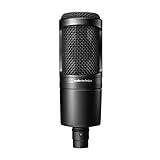
Overview: The Audio-Technica AT2020 has established itself as the quintessential entry-level XLR condenser microphone for home studio enthusiasts. This side-address cardioid mic delivers professional-grade audio capture without the professional-grade price tag, making it the go-to choice for vocalists, podcasters, and musicians building their first serious recording setup. Its robust construction and proven track record span nearly two decades of consistent performance.
What Makes It Stand Out: The AT2020’s custom-engineered low-mass diaphragm provides exceptional transient response and extended frequency range that rivals microphones costing significantly more. Its ability to handle high SPL (Sound Pressure Level) sources means you can record everything from delicate acoustic guitars to screaming guitar amplifiers without distortion. The tight cardioid polar pattern excels at isolating your intended sound source while rejecting off-axis noise—a critical feature in untreated home environments.
Value for Money: Typically priced under $100, the AT2020 represents arguably the best price-to-performance ratio in the studio microphone market. While it requires an audio interface with phantom power (adding $50-150 to your total cost), this modular approach allows for future upgrades. Compared to USB mics in its price range, the AT2020 offers superior audio fidelity and long-term flexibility that justifies the additional investment in an interface.
Strengths and Weaknesses: Strengths include outstanding audio clarity, durable metal construction, excellent SPL handling (up to 144dB), and universal compatibility with standard mic preamps. Weaknesses are the lack of onboard controls (no pad or low-cut filter), requirement for external phantom power, and absence of included accessories beyond a basic stand mount.
Bottom Line: For aspiring creators ready to invest in an expandable audio chain, the AT2020 remains the undisputed champion. It’s a microphone you’ll outgrow only when your skills demand it, not because its quality falls short.
2. Logitech Creators Blue Yeti USB Microphone for Gaming, Streaming, Podcast, YouTube, Discord, PC, Studio Sound, Plug & Play-Blackout

Overview: The Blue Yeti dominates the USB microphone landscape as the Swiss Army knife of content creation tools. With its distinctive retro design and three-capsule array, this plug-and-play powerhouse serves gamers, streamers, podcasters, and YouTubers who demand versatility without complexity. It’s the microphone that introduced millions of creators to professional-quality audio capture through simple USB connectivity.
What Makes It Stand Out: Four selectable polar patterns (cardioid, omnidirectional, bidirectional, and stereo) fundamentally differentiate the Yeti from single-pattern competitors, effectively replacing multiple microphones for different recording scenarios. The onboard controls—headphone volume, pattern selection, instant mute, and mic gain—provide real-time command over your audio without software diving. Blue VO!CE software adds broadcast-quality vocal processing, noise reduction, and entertaining vocal effects that elevate productions with studio polish.
Value for Money: Priced around $100-130, the Yeti delivers exceptional versatility that would cost hundreds more to replicate with separate microphones. The all-in-one design eliminates the need for an audio interface, phantom power, or XLR cables, saving beginners significant upfront investment. While dedicated XLR setups ultimately offer more upgrade paths, the Yeti’s convenience and feature set make it a compelling value for content-focused creators.
Strengths and Weaknesses: Strengths include pattern flexibility, intuitive controls, proven reliability, and robust software integration. Weaknesses involve sensitivity to desk vibrations (requiring a shock mount), bulky form factor that can dominate frame, and USB limitations that prevent it from scaling into professional studio environments.
Bottom Line: The Blue Yeti remains the definitive choice for creators prioritizing versatility and ease of use. If you need one microphone that adapts to interviews, solo commentary, and musical performances, this is your answer.
3. SE ELECTRONICS sE6160 Shotgun Condenser Microphone, Super Cardioid Lobar Pickup, Low Cut Filter and Attenuation Pad, XLR Recording Mic with Clip and Windscreen

Overview: The sE Electronics sE6160 shotgun condenser microphone targets professionals requiring precision directional capture in demanding environments. Built around a handcrafted true condenser capsule, this super-cardioid lobar-pattern mic excels at isolating dialogue, broadcast vocals, and spot-miking instruments where off-axis rejection is paramount. Its robust design suits both location work and studio applications.
What Makes It Stand Out: The tight shotgun polar pattern provides exceptional side and rear rejection, maintaining tonal consistency while delivering high gain-before-feedback—critical for live sound reinforcement and in-ear monitor applications. Switchable pre-attenuation pad and low-cut filter offer immediate control at the source, allowing flexible handling of high SPL sources and low-frequency rumble without reaching for external hardware. The hand-crafted capsule ensures consistent, detailed audio capture that meets professional broadcast standards.
Value for Money: Positioned in the mid-tier professional range (typically $250-350), the sE6160 competes directly with established models like the Rode NTG series. While significantly more expensive than entry-level options, its specialized performance justifies the cost for filmmakers, broadcasters, and live sound engineers who require reliable directionality. For general streaming or podcasting, however, the investment exceeds most creators’ needs.
Strengths and Weaknesses: Strengths include superior off-axis rejection, professional-grade construction, low self-noise (13dB-A), and flexible onboard filtering. Weaknesses are its specialized application (overkill for basic recording), requirement for phantom power and quality preamps, and absence of USB connectivity limiting its accessibility for beginners.
Bottom Line: The sE6160 serves a specific professional niche brilliantly. Choose it for video production, broadcast journalism, or live sound scenarios where pinpoint audio isolation matters. For standard desktop recording, simpler options make more sense.
4. USB Microphone, MAONO 192KHZ/24Bit Plug & Play PC Computer Podcast Condenser Cardioid Metal Mic Kit with Professional Sound Chipset for Recording, Gaming, Singing, YouTube (AU-A04)
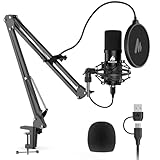
Overview: The MAONO AU-A04 positions itself as the ultimate budget-friendly USB microphone kit for entry-level creators. This all-in-one package combines a 192kHz/24-bit condenser mic with essential accessories—boom arm, pop filter, foam windscreen, and shock mount—delivering a complete recording solution at an impulse-buy price point. It targets beginners who want professional aesthetics and functionality without financial commitment.
What Makes It Stand Out: The included boom arm set provides immediate studio-like ergonomics that competing budget mics lack, allowing precise positioning and clean desk space. The advertised 192kHz/24-bit sampling rate exceeds typical USB mic specifications, though real-world performance depends on the entire signal chain. The strong anti-interference magnet ring on the USB cable demonstrates thoughtful engineering rarely seen at this price tier. Complete plug-and-play compatibility with most operating systems ensures frustration-free setup.
Value for Money: Typically available for $50-70, the AU-A04 dramatically undercuts competitors while including accessories that would cost $30-50 separately. This represents exceptional value for streamers, YouTubers, and remote workers making their first audio upgrade. While it won’t match $200+ microphones, it handily outperforms built-in laptop mics and entry-level headsets, making it a smart stepping stone.
Strengths and Weaknesses: Strengths include the complete accessory bundle, easy setup, decent audio quality for the price, and broad compatibility. Weaknesses involve inconsistent build quality, lack of Maono Link software support (limiting advanced control), and audio performance that reveals its budget nature under critical listening.
Bottom Line: The MAONO AU-A04 is the perfect starter kit for cost-conscious creators. If you need a functional, complete setup immediately and plan to upgrade later, this delivers remarkable bang for your buck.
5. Amazon Basics USB Condenser Microphone for Streaming, Recording, and Podcasting on PC, Plug and Play, Cardioid Pickup, Adjustable Stand with 360° Rotation, 5.8 x 3.4 inches, Black

Overview: The Amazon Basics USB Condenser Microphone strips away complexity to deliver no-frills audio capture for the absolute beginner. This compact, lightweight microphone focuses on essential functionality—cardioid pickup pattern, plug-and-play connectivity, and a convenient one-tap mute button. It represents the entry point for users who need better than built-in audio without any learning curve or significant investment.
What Makes It Stand Out: The 360° rotating adjustable stand provides flexible positioning that many budget mics omit, allowing users to optimize placement without additional boom arms. The integrated one-tap silent mode offers immediate privacy during video calls or streaming—an unexpectedly premium feature at this basement price point. Amazon’s brand backing ensures reliable customer support and warranty coverage, distinguishing it from anonymous generic competitors.
Value for Money: Priced at an incredibly accessible $30-40, this microphone makes audio improvement attainable for any budget. While it cannot compete with $100+ options in sound quality or durability, it handily surpasses integrated laptop microphones and basic headsets. For students, remote workers, or casual streamers, the value proposition is undeniable. It’s a disposable-priced tool that delivers genuine utility.
Strengths and Weaknesses: Strengths include rock-bottom pricing, simple operation, mute button convenience, and Amazon’s customer service. Weaknesses involve limited frequency response, basic plastic construction, non-detachable USB cable, and audio quality that distorts under demanding sources.
Bottom Line: The Amazon Basics USB Mic is ideal for users who prioritize simplicity and cost above all else. If you need a functional microphone for occasional video calls or basic streaming without any financial strain, this delivers acceptable performance where it matters most.
6. MAONO XLR/USB Condenser Microphone: 192kHz/24Bit Plug & Play PC Computer Podcast Cardioid Metal Mic Kit with Software, Professional Sound Chipset for Recording, Studio, Singing, YouTube A04 Gen2

Overview: The MAONO A04 Gen2 bridges the gap between entry-level USB mics and professional XLR setups. This versatile condenser microphone offers dual connectivity, allowing direct plug-and-play recording via USB or connection to professional audio interfaces through XLR. The 192kHz/24bit sampling rate delivers studio-quality audio capture that exceeds the requirements of most content creators, from podcasters to vocalists.
What Makes It Stand Out: The dual XLR/USB connectivity is the headline feature, providing future-proof flexibility as your setup evolves. The MAONO Link software adds significant value in USB mode, offering noise reduction controls, EQ presets, and gain adjustment without requiring external hardware. The 16mm large-diaphragm capsule captures detailed audio with strong bass response, while the cardioid pattern effectively rejects off-axis noise.
Value for Money: Positioned in the mid-range category, the A04 Gen2 punches above its weight. It essentially provides two microphones in one, saving you from purchasing separate USB and XLR mics as you upgrade your setup. Comparable flexibility typically costs significantly more from premium brands.
Strengths and Weaknesses: Strengths include versatile connectivity, excellent audio quality for the price, robust software control, and effective noise reduction. Weaknesses are the XLR mode’s phantom power requirement (which may need additional equipment), software limitations to USB mode only, and a build quality that feels functional rather than premium.
Bottom Line: An excellent choice for content creators seeking one microphone that can grow with them from beginner to intermediate setups. The flexibility justifies the investment.
7. Ideanthro G10-BM800(Cantilever) Professional Podcast Mic Bundle, Dual-Core DSP Sound Card with Voice Changer, Noise Reduction & Built-in Effects, PC/Phone Compatible for Streaming & Gaming

Overview: The Ideanthro G10-BM800 bundle positions itself as a comprehensive mobile podcasting solution, integrating a condenser microphone with a dual-core DSP sound card that functions as a portable mixer. This all-in-one approach targets streamers and podcasters who need professional features without the complexity of separate components, offering a streamlined path to enhanced audio production.
What Makes It Stand Out: The integrated sound card with voice changer effects and noise reduction sets this apart from simple mic bundles. It supports multiple input sources simultaneously—3.5mm mics, XLR dynamic microphones with phantom power, and instrument line-ins—making it remarkably versatile for its compact size. The rechargeable battery enables truly portable operation, a rare feature in this category that liberates creators from studio constraints.
Value for Money: For creators needing mixing capabilities, this bundle offers substantial savings compared to buying a separate audio interface and microphone. The included effects and EQ controls add value typically found in more expensive equipment, making it an economical entry into multi-source audio production.
Strengths and Weaknesses: Strengths include multi-source mixing, portability, built-in effects, and plug-and-play simplicity. Weaknesses involve potential quality compromises from the all-in-one design, limited power for demanding XLR condensers, and a learning curve for beginners unfamiliar with audio mixing concepts.
Bottom Line: Ideal for mobile creators and streamers wanting an integrated solution with effects and mixing capabilities. Less suitable for those prioritizing pure audio fidelity over features.
8. FIFINE USB Microphone, Metal Condenser Recording Microphone for MAC OS, Windows, Cardioid Laptop Mic for Recording Vocals, Voice Overs, Streaming, Meeting and YouTube Videos-K669B

Overview: The FIFINE K669B represents the entry-level tier of USB microphones, focusing on simplicity and reliability for beginners. This metal-bodied condenser mic delivers plug-and-play functionality across Windows, Mac, and PS4/PS5 platforms without requiring drivers or phantom power, making it accessible to users with minimal technical knowledge.
What Makes It Stand Out: The integrated volume knob provides immediate hardware-level control rare in this price bracket, allowing real-time adjustments during gaming, streaming, or meetings. The all-metal construction and included tripod stand offer durability that exceeds typical budget plastic alternatives, while the cardioid pattern effectively focuses on your voice.
Value for Money: Positioned as one of the most affordable reliable USB mics available, the K669B delivers exceptional bang-for-buck. It provides clearly audible improvement over built-in laptop mics without the investment required for mid-tier options, making it perfect for testing the waters of content creation.
Strengths and Weaknesses: Strengths include rock-bottom pricing, durable metal build, simple operation, and broad compatibility. Weaknesses are the lack of advanced features like software control, limited frequency response compared to premium mics, absence of a pop filter, and explicit incompatibility with Xbox and smartphones.
Bottom Line: A no-frills workhorse for budget-conscious users needing immediate audio improvement. Perfect for students, casual streamers, or remote workers, but creators seeking growth may outgrow its limitations quickly.
9. HyperX SoloCast 2 – Gaming USB Condenser Mic for PC, USB-C to USB-A, Built-in Pop Filter, Internal Shock Mount, Plug and Play, 24-bit / 96kHz, Compact Tiltable Stand – Black

Overview: The HyperX SoloCast 2 refines the gaming microphone formula with thoughtful engineering that prioritizes convenience without sacrificing quality. This compact USB condenser microphone targets streamers and gamers who want professional audio without cluttering their desk with accessories, delivering a streamlined solution that works immediately out of the box.
What Makes It Stand Out: The built-in shock mount and pop filter eliminate two common purchases, reducing both cost and cable management headaches. The tap-to-mute sensor with LED status indicator provides intuitive control during live streams, while the HyperX NGENUITY software enables filter customization that saves directly to the microphone—maintaining settings across different computers. The tilt-adjustable stand with weighted base offers stability without consuming excessive desk space.
Value for Money: Sitting in the competitive mid-range gaming mic market, the SoloCast 2 justifies its price through integrated features that would cost extra with competitors. The 24-bit/96kHz resolution, while not class-leading, exceeds the requirements of streaming platforms and delivers clean, broadcast-ready audio.
Strengths and Weaknesses: Strengths include the all-in-one design, tap-to-mute functionality, software customization, and sturdy tilt-adjustable stand with universal mounting threads. Weaknesses are the lower sampling rate compared to some rivals, gaming-centric branding that may not suit professional studios, and limited polar pattern options.
Bottom Line: An excellent choice for gamers and streamers seeking a clean, feature-rich setup without accessory overload. The smart integration makes it a strong contender in its category.
10. RØDE NT1 5th Gen Large-Diaphragm Studio Condenser Microphone - XLR & USB Outputs - Shock Mount & Pop Filter Included - Music Production, Vocal Recording, Podcasting - Black - Professional Audio

Overview: The RØDE NT1 5th Generation represents a landmark achievement in microphone technology, merging the legendary NT1’s warm, silky sonic character with cutting-edge digital connectivity. This large-diaphragm condenser microphone serves as a complete recording chain, eliminating the need for external preamps or interfaces when used in USB mode while retaining XLR connectivity for traditional studio setups.
What Makes It Stand Out: The integrated Revolution Preamp and high-resolution analog-to-digital converter deliver studio-grade 192kHz digital audio directly via USB, a feature unprecedented in this class. The microphone maintains the NT1’s signature ultra-low self-noise (4dBA) and high SPL handling while adding digital flexibility. The military-grade ceramic coating and nickel-plated aluminum body ensure durability for professional daily use, and the included shock mount and pop filter complete the premium package.
Value for Money: Though priced at the premium end, the NT1 5th Gen effectively replaces a $500+ chain of microphone, preamp, and interface. For serious creators, this consolidation represents genuine value, especially considering RØDE’s reputation for longevity and the included accessories.
Strengths and Weaknesses: Strengths include best-in-class audio quality, dual connectivity options, exceptional build quality, and true all-in-one functionality. Weaknesses involve the high price point, potential overkill for casual users, and limited software ecosystem compared to some competitors.
Bottom Line: The definitive choice for serious musicians, podcasters, and voiceover artists seeking professional results without compromise. Worth every penny for those who demand excellence.
The Home Studio Echo Challenge: Why Your Room Is Betraying You
Echo and reverberation in home studios stem from sound waves bouncing off hard surfaces—drywall, windows, hardwood floors, and even your desk. Unlike professional vocal booths designed for absorption, residential spaces create complex reflection patterns that smear transients and build up frequency nodes. The result? Recordings that sound like they were captured in a bathroom, no matter how expensive your interface might be.
The physics are unforgiving: when your voice hits a condenser microphone’s diaphragm, it’s capturing direct sound plus every reflection arriving within a 50ms window. Traditional large-diaphragm condensers excel at detail but often act like acoustic magnifying glasses, revealing every flaw in your untreated space. Modern designs, however, incorporate sophisticated engineering to separate desired signal from room hash.
How Modern Condenser Microphones Combat Reverb and Reflections
The 2026 generation of condenser microphones approaches echo rejection through three parallel strategies. First, advanced capsule designs feature tighter tolerances and modified tensioning that emphasizes close-source capture while rolling off diffuse field information. Second, integrated DSP chips now run real-time algorithms that identify and suppress reverberant tails without affecting the direct vocal tone. Third, revolutionary polar pattern control moves beyond simple cardioid settings to offer hybrid patterns specifically tuned for problematic room geometries.
This isn’t about gimmicky “room correction” that destroys your source. It’s about mechanical and electrical engineering working in concert to improve the signal-to-room-noise ratio at the capture point—where intervention matters most.
Critical Features That Separate Echo-Friendly Mics From the Pack
When evaluating condenser microphones for echo-prone spaces, certain specifications matter more than others. Proximity effect management has become crucial; mics that maintain balanced low-end response even when worked closely prevent the buildup of muddy reflections. Equally important is off-axis coloration—how the microphone treats sounds arriving from angles other than directly in front.
Look for models advertising “diffuse field linearity” or “reflection rejection ratio” in their specs. These metrics, now standardized in 2026, quantify how much ambient sound the mic suppresses relative to direct sound. A ratio above 12dB indicates strong performance in untreated rooms. Also scrutinize the transient response curve; mics with slightly softened attack characteristics can naturally de-emphasize the sharp reflections that make echo so noticeable.
Polar Pattern Precision: Your First Line of Defense
Cardioid isn’t just cardioid anymore. The latest microphones offer variable polar patterns with granular control, but more importantly, they provide “tight cardioid” or “hyper-cardioid minus” settings specifically engineered for home studios. These patterns narrow the acceptance angle to focus on your mouth while creating deeper rejection nulls at the sides where first reflections typically originate.
Some 2026 models even feature “adaptive polar mapping,” where built-in sensors analyze room reflections in real-time and automatically adjust the pattern’s shape to null out the strongest ambient contributors. This transforms your microphone from a passive capture device into an active acoustic participant. For most users, a fixed supercardioid pattern with consistent off-axis frequency response provides the best balance of simplicity and performance.
Frequency Response Tuning for Untreated Spaces
Manufacturers now tune microphone frequency responses specifically for the spectral imbalances of home studios. These “room-aware” curves feature subtle dips in the upper midrange (2-4kHz) where drywall reflections build harshness, and gentle shelving above 8kHz to reduce airy, washy reverberant tails. The goal isn’t to create a dark sound, but to preemptively compensate for what your room adds.
The most sophisticated models include switchable “space compensation” filters that let you select room size presets—small bedroom, medium office, or large living room. These aren’t EQ filters in the traditional sense; they’re complex acoustic networks that alter how the capsule responds to different wavelengths, effectively changing its directivity characteristics by frequency band.
The Self-Noise Equation: Why Silence Matters More Than You Think
In echoey rooms, microphone self-noise becomes a compounding problem. When you boost gain to compensate for distance or quiet sources, you’re not just amplifying your voice—you’re amplifying the room’s ambient hash and the microphone’s electronic hiss. Modern condensers achieving self-noise ratings below 5dB-A are essential for 2026 home studios, especially when recording dynamic sources like acoustic guitar or soft vocals.
Low self-noise means you can work the microphone closer without overloading, capturing more direct sound and less room. It also preserves headroom for post-processing; aggressive de-reverb plugins work far better on clean signals than on noise-floor-laden tracks. Don’t accept anything above 7dB-A for serious echo mitigation.
Sensitivity Ratings: Finding the Sweet Spot for Echo Control
Microphone sensitivity exists in a Goldilocks zone for home studio use. Too sensitive (above 30mV/Pa), and the mic becomes a room microphone, picking up every creak and HVAC whisper from across the house. Too insensitive (below 10mV/Pa), and you’ll crank preamp gain, raising noise floor and forcing you to back away from the capsule, defeating the purpose.
The 2026 sweet spot for echo-prone spaces falls between 15-25mV/Pa. This range provides enough output for modern, clean preamps while allowing you to maintain 6-8 inches from the microphone—a distance that captures full vocal character without inviting room tone into the party. Some advanced models feature “gain staging optimization” that internally pads the capsule output to keep you in this ideal range regardless of source volume.
Analog Versus Digital: The 2026 Connectivity Landscape
The USB-C microphone revolution has matured, and the best digital condensers now rival their XLR counterparts while adding powerful echo-fighting features. Built-in DSP allows for zero-latency monitoring with onboard room simulation and reflection suppression. The key is to ensure the digital processing occurs before the analog-to-digital conversion, preserving signal integrity.
However, analog XLR microphones still offer superior upgrade path flexibility and avoid potential driver conflicts. The emerging “hybrid” category provides both connections, with the digital path offering enhanced features while the analog output remains pristine for traditional recording chains. For echo control specifically, digital models with user-customizable DSP profiles let you dial in rejection curves matched to your exact room measurements.
Build Quality and Vibration Management
Echo rejection fails if mechanical vibrations from your desk, floor, or computer fans reach the capsule. Modern isolation systems have evolved beyond simple shock mounts. Look for microphones with internal floating capsule assemblies that decouple from the body, plus integrated RFI/EMI shielding that prevents electrical noise from contaminating your signal.
The body construction itself matters—heavier, denser housings resist microphonic pickup and prevent the casing from resonating with room modes. Some 2026 models incorporate “vibration-sensing compensation circuits” that detect handling noise or stand-borne vibrations and apply inverse correction in real-time, effectively canceling out mechanical interference before it becomes audible.
Budget Tiers: What to Expect at Every Investment Level
The sub-$300 category now includes surprisingly capable echo-conscious condensers, though you’ll make trade-offs in build quality and pattern consistency. These mics typically offer fixed cardioid patterns with basic foam windscreens and rely on simple acoustic tuning rather than active DSP. They work best in moderately problematic rooms, not acoustic disasters.
Mid-tier options ($300-$800) deliver the sweet spot for most creators. Here you’ll find variable patterns, superior self-noise performance, and often basic onboard DSP. The capsule quality jumps significantly, with tighter tolerances that translate to more predictable off-axis behavior. Professional-grade models ($800+) provide surgical control, adaptive features, and the kind of diffuse-field linearity that can make even a concrete basement sound controlled.
Positioning Strategy: Mic Placement as Echo Mitigation
Even the best echo-fighting microphone fails with poor placement. The “inverse square law” is your best friend—every halving of distance to the microphone delivers 6dB more direct sound relative to room reflections. In 2026, the standard technique involves positioning the mic 4-6 inches away, slightly off-axis to reduce plosives, with the rejection null pointed at the most reflective surface (usually the computer monitor or window).
Create a “reflection-free zone” by placing acoustic panels directly behind the microphone and behind your head, forming a vocal booth “corner.” Angle the microphone downward 15-20 degrees to reject ceiling reflections. For desktop setups, boom arms that position the mic above and in front of you prevent sound from bouncing off the desk surface before reaching the capsule.
The Synergy Factor: Pairing Your Mic With Smart Acoustic Treatment
A condenser microphone is not a substitute for treatment, but a force multiplier. The 2026 approach combines minimal, strategic absorption with intelligent microphone choice. A single broadband panel behind the microphone can improve your effective signal-to-room ratio by 8-10dB when paired with a tight-pattern condenser. Add a ceiling cloud above your recording position, and you’ve created a “micro-booth” environment.
Smart treatment means targeting first reflection points that your microphone’s pattern can’t null out. Use a mirror to identify where walls and ceiling reflect sound from your mouth to the mic, and place 2-inch thick panels at those spots. This hybrid approach costs a fraction of full room treatment while delivering 80% of the benefit.
Avoiding Common Pitfalls: What Not to Do
Don’t fall for “echo-proof” marketing claims. No microphone completely eliminates room sound; it only reduces it to manageable levels. Avoid omnidirectional patterns unless your room is professionally treated—they capture 360 degrees of acoustic disaster. Resist the temptation to record in closets; the tight space creates comb filtering that no microphone can fix.
Beware of heavy-handed DSP “room correction” that sounds artificial. The best echo reduction maintains natural vocal character. Also, don’t ignore gain staging. Recording too hot introduces digital clipping, while recording too low raises noise floor and limits your ability to process later. Aim for peaks around -12dBFS, leaving headroom for unexpected dynamics.
Future-Proofing Your 2026 Microphone Investment
The audio landscape evolves rapidly, but certain features ensure longevity. Firmware-upgradable DSP is crucial—manufacturers regularly release improved reflection-rejection algorithms. Look for microphones with open-architecture software that integrates with emerging AI mixing platforms. Modular capsule designs let you upgrade the heart of the system without replacing the entire mic.
USB-C is now the universal standard, but ensure any digital microphone also includes analog XLR output. This dual-connectivity future-proofs against interface changes. Also consider microphones with “recording chain profiling” that can match their output to classic studio signal paths, preserving your investment’s value as production trends shift.
Pro Tips for Maximizing Echo Reduction
Treat your microphone like a camera lens—focus it precisely. Use the “3-to-1 rule” when recording multiple sources: place each source three times farther from other sources than from its own microphone. This minimizes bleed and room buildup. For solo vocals, create a “tunnel” of absorption behind you using moving blankets or heavy curtains, extending 3-4 feet in each direction.
Experiment with “inverse polarity testing.” Record a phrase, then flip the polarity switch on your interface and record again in the same spot. The phase differences reveal how much room sound you’re capturing—less difference means better isolation. Finally, always record a 10-second room tone with the same gain settings. This gives you a noise profile for advanced restoration tools if needed later.
Frequently Asked Questions
Will a condenser microphone completely eliminate echo in my untreated room?
No microphone can entirely remove room sound, but modern condensers can reduce audible echo by 60-80% through tight polar patterns, tuned frequency response, and DSP processing. The goal is making the room acoustically invisible enough that listeners focus on your performance, not your space.
Are USB microphones as good as XLR for fighting echo?
Premium USB condensers now match XLR quality while offering onboard DSP for real-time echo suppression. The advantage of XLR remains flexibility and upgrade path, but for pure echo rejection, a high-end USB model with pre-conversion processing can actually outperform analog mics in problematic spaces.
How close should I be to the microphone to minimize room sound?
The optimal distance is 4-6 inches for most vocal work. This proximity delivers 12-18dB more direct sound than reflections while avoiding excessive proximity effect. Use a pop filter to manage plosives at this distance, and angle the microphone 15-20 degrees off-axis from your mouth.
Will a more expensive microphone solve my echo problem?
Price correlates with features, but a $400 microphone with a tight supercardioid pattern and low self-noise often outperforms a $1200 omnidirectional flagship in echoey rooms. Invest in the right tool for your specific problem rather than assuming cost equals isolation.
Can I use software to fix echo after recording?
Yes, but with significant caveats. De-reverb plugins like iZotope RX or Acon Digital DeVerberate can reduce room tone, but they also degrade vocal quality and introduce artifacts. It’s always better to capture a cleaner signal at the source. Think of software as emergency correction, not a primary strategy.
Do I need acoustic treatment if I buy an echo-reducing microphone?
A minimal treatment setup (panel behind mic, panel behind you, ceiling cloud) combined with a modern condenser provides 90% of the benefit of full room treatment at 10% of the cost and effort. The microphone handles what treatment can’t reach; treatment handles what the microphone can’t reject.
What’s the best polar pattern for a small, square bedroom?
Supercardioid or “tight cardioid” patterns excel in square rooms where reflections come from predictable directions. The narrowed front lobe and rear lobe rejection create a “cone of silence” that sidesteps the most problematic first reflections from side walls.
How important is microphone self-noise for echo reduction?
Critically important. Low self-noise (below 5dB-A) allows you to work closer to the capsule without noise floor issues. This proximity advantage directly translates to less room sound in your recordings. High self-noise forces you to back away, inviting more ambient hash into the signal.
Can I record instruments in an echoey room with these microphones?
Yes, but with strategic placement. Close-miking acoustic guitars (within 3 inches) using a small-diaphragm condenser with tight pattern control captures string detail while rejecting room splash. For pianos, use two mics inside the case. The principle remains: get closer than you think possible.
Will future microphones make current echo-reduction models obsolete?
The physics of sound won’t change, but DSP algorithms will continue improving. Choosing a microphone with firmware-upgradable processing ensures your 2026 purchase stays relevant. Mechanical capsule design advances more slowly, so a well-built mic with good isolation properties should remain effective for a decade or more.
See Also
- 10 Essential Microphones for Starting a Home Studio on a Budget in 2026
- 10 Studio Condenser Microphones with Multiple Polar Patterns for 2026
- How to Solve Hiss Noise with the 10 Best Dynamic Microphones for Live Gigs in 2026
- 10 Condenser Microphones for Choir Recording with Wide Pickup in 2026
- 10 Shotgun Microphones That Kill Echo in Cathedral Recordings in 2026