Table of Contents
Finding the perfect acoustic guitar shouldn’t feel like a compromise between comfort and sound quality. For female players with smaller hands, the journey toward that ideal instrument often comes with unique challenges that standard guitar reviews simply don’t address. The good news? The 2026 guitar market has evolved dramatically, with manufacturers finally recognizing that playability is just as important as tone. Concert body acoustics, with their balanced proportions and ergonomic design, have emerged as the sweet spot for countless players seeking both sonic excellence and physical comfort.
But here’s what most guides won’t tell you: it’s not just about choosing a “smaller” guitar. The relationship between neck profile, scale length, body depth, and string spacing creates a complex equation that determines whether an instrument will feel like an extension of your body or a constant battle. This comprehensive guide cuts through the marketing fluff to examine the specific features that matter most, empowering you to make an informed decision whether you’re shopping in a boutique showroom or browsing online catalogs from your living room.
Top 10 Concert Acoustic Guitars For Women
Detailed Product Reviews
1. Yamaha FS800J Small Body Solid Top Acoustic Guitar, Natural, Concert
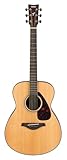
Overview: The Yamaha FS800J embodies the brand’s reputation for reliable, quality entry-level instruments. This concert-sized acoustic features a solid spruce top with scalloped bracing, delivering authentic tone that exceeds expectations for its price tier. The 25-inch scale length reduces string tension, making it particularly forgiving for developing fingers while maintaining proper intonation throughout the fretboard.
What Makes It Stand Out: Yamaha’s manufacturing consistency ensures every FS800J meets strict quality standards. The scalloped bracing pattern unlocks surprising resonance and harmonic balance, especially responsive to fingerstyle playing. The concert body provides comfortable ergonomics without sacrificing projection, while the shorter scale genuinely reduces playing fatigue for beginners or those transitioning from electric guitar.
Value for Money: Competing solid-top guitars typically cost 30-50% more without delivering superior performance. Yamaha’s efficiency and reputation create a rare blend of premium materials and accessible pricing. This instrument retains resale value better than most budget acoustics and requires fewer repairs over time, making it a smart long-term investment.
Strengths and Weaknesses: Strengths include genuine solid spruce top, excellent factory setup, comfortable playability, and exceptional durability. The concert size suits smaller players perfectly. Weaknesses are limited aesthetic options and a somewhat plain, utilitarian appearance. Advanced players may eventually desire more complex overtones from higher-end tonewoods.
Bottom Line: An outstanding starter instrument that grows with your skills. Ideal for serious beginners, fingerstyle enthusiasts, or anyone seeking Yamaha’s trusted quality at an accessible price point.
2. WINZZ AF227A 39 Inches Concert Acoustic Acustica Guitar with Full Kit, Delicate Vine

Overview: The WINZZ AF227A positions itself as a complete solution for aspiring guitarists. This 39-inch concert acoustic targets beginners with its comprehensive bundle and artistic aesthetics. The concert body shape favors fingerpicking and solo playing, while the included accessories promise an all-in-one entry point into guitar playing without additional purchases.
What Makes It Stand Out: The delicate vine pattern glossy finish transforms this from a mere instrument into a personalized art piece. The extensive accessory kit—including a waterproof gig bag, clip-on tuner, capo, strap, and one-month online lessons—eliminates guesswork for newcomers. Everything arrives in a single package, ready to play after minimal setup.
Value for Money: Purchasing comparable accessories separately would add $60-80 to any guitar purchase. WINZZ bundles everything at a price competitive with bare-bones instruments from established brands. For absolute beginners, this represents genuine convenience and cost savings, though the tuner requires a CR2032 battery (not included).
Strengths and Weaknesses: Strengths include the striking visual design, complete accessory package, and concert body ergonomics. The bundle addresses every beginner need comprehensively. Weaknesses involve unknown long-term durability, potential quality control inconsistencies from a lesser-known brand, and the battery omission. The laminated back and sides limit tonal complexity compared to solid wood options.
Bottom Line: Perfect for beginners prioritizing convenience and style over premium tonewoods. The artistic finish and complete kit make it an excellent gift, though serious students may eventually upgrade to a solid-top instrument.
3. Fender CC-60S Concert Acoustic Guitar, with 2-Year Warranty, 3-Color Sunburst

Overview: The Fender CC-60S brings the iconic brand’s expertise to the entry-level concert acoustic market. Featuring a solid spruce top with scalloped X-bracing and mahogany back and sides, this instrument delivers classic Fender quality with modern playability enhancements. The concert body style offers comfortable dimensions for seated practice and fingerstyle technique development.
What Makes It Stand Out: Fender’s 2-year warranty provides peace of mind uncommon in this price segment. The rolled fingerboard edges create a broken-in feel typically found on premium instruments, significantly reducing hand fatigue during extended practice sessions. The scalloped X-bracing pattern optimizes resonance while maintaining structural integrity, representing Fender’s thoughtful engineering approach for beginners.
Value for Money: While priced slightly above generic solid-top competitors, the Fender badge, warranty coverage, and enhanced playability justify the modest premium. You’re investing in proven quality control, reputable customer service, and an instrument that retains resale value. For brand-conscious beginners, this represents fair pricing with long-term benefits.
Strengths and Weaknesses: Strengths include the solid spruce top, comfortable neck profile, rolled fingerboard edges, strong warranty, and Fender’s established resale value. Build quality is consistently reliable across production runs. Weaknesses are limited finish options and a slightly higher price than comparable Yamaha models. The mahogany back and sides, while warm-sounding, lack the complex overtones of rosewood alternatives.
Bottom Line: A trustworthy choice for beginners wanting brand recognition and warranty protection. The enhanced playability features make learning more comfortable, though budget-conscious buyers might find comparable tonal value elsewhere.
4. Joymusic 38 inch blueburst beginner acoustic guitar kit,bundle with a strap with picks holder,digital tuner, set strings, capo,cleaning cloth,6 picks,gig bag.(JG-38C,BLS)
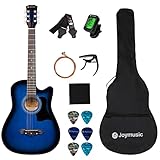
Overview: The Joymusic 38-inch acoustic targets absolute beginners with its compact dimensions and comprehensive accessory bundle. This folk-style guitar balances portability with playability, featuring a blueburst finish that adds visual appeal beyond typical starter instruments. The reduced 38-inch scale makes it particularly approachable for younger players or those with smaller hands seeking comfortable learning experience.
What Makes It Stand Out: The highly cost-effective pricing combined with an extensive accessory package—including a strap with pick holder, digital tuner, extra strings, capo, and gig bag—creates immediate value. The 38-inch size offers genuine portability for travel or casual practice while remaining large enough for proper technique development, effectively bridging the gap between travel and full-size guitars without sacrificing playability.
Value for Money: Among the most affordable full-kit options available, this bundle costs less than many standalone gig bags from premium brands. For budget-conscious beginners, it eliminates financial barriers to entry. However, the low price reflects laminate construction and basic hardware, prioritizing accessibility over tonal sophistication and long-term durability.
Strengths and Weaknesses: Strengths include exceptional affordability, lightweight portability, complete accessory bundle, and comfortable size for beginners. The blueburst finish is visually distinctive. Weaknesses involve laminated tonewoods that limit resonance and tonal complexity, basic tuning machines that may require frequent adjustment, and build quality that may not withstand decades of rigorous use.
Bottom Line: Ideal for tentative beginners or parents seeking an inexpensive introduction to guitar. While serious students will outgrow it within a year, the Joymusic provides a functional, affordable starting point that includes everything needed to begin immediately.
5. Enya Nova Go Carbon Fiber Travel Acoustic Guitar | 1/2 Size Lightweight Moisture-Proof Guitara | Adult & Beginner Portable Guitar with Gig Bag & Accessories (Black)

Overview: The Enya Nova Go revolutionizes the travel guitar concept with aerospace-grade carbon fiber construction. This 1/2-size acoustic defies environmental limitations, maintaining consistent tone regardless of humidity or temperature fluctuations. Weighing just 7.35 pounds, it targets adventurers, commuters, and beginners seeking an indestructible practice companion that performs reliably from beach to mountain peak without structural concerns.
What Makes It Stand Out: The carbon fiber build eliminates cracking, warping, and swelling issues that plague wooden guitars in extreme conditions. Patented one-piece molding and zero-fret technology deliver surprising tonal clarity and volume projection for its compact size. The ergonomic neck with polished fret edges reduces finger fatigue during extended sessions, while the included hex wrench allows personalized action adjustments—features rarely seen in travel guitars at this price point.
Value for Money: While priced above wooden competitors, the Nova Go justifies its premium through material innovation and long-term durability. For frequent travelers, the elimination of climate-related repairs and replacements creates significant savings over time. It’s a specialized tool whose value depends entirely on your need for portability and environmental resilience rather than traditional tone.
Strengths and Weaknesses: Strengths include complete climate immunity, lightweight portability, surprisingly good acoustic projection, beginner-friendly setup, and comprehensive accessory kit. The modern aesthetic appeals to contemporary players. Weaknesses involve a premium price point, 1/2 size that may feel cramped for larger hands, and a bright, articulate tone that lacks the organic warmth of traditional wooden guitars.
Bottom Line: A game-changer for traveling musicians and outdoor enthusiasts. Not for purists seeking classic acoustic warmth, but unbeatable for those prioritizing durability and consistent performance in any environment imaginable.
6. Fender CC-60S All-Mahogany Concert V2 Pack Acoustic Guitar, with 2-Year Warranty, Natural, with Gig Bag and Accessories

Overview: The Fender CC-60S All-Mahogany Concert V2 Pack delivers everything a beginner needs in one convenient bundle. This concert-sized acoustic features an all-mahogany construction that produces warm, rich tones with excellent midrange presence. The package includes a padded gig bag, guitar strap, extra strings, and a 3-month Fender Play subscription, making it an instant gateway to learning without additional purchases.
What Makes It Stand Out: The complete starter pack approach eliminates guesswork for new players. The all-mahogany body offers a distinct sonic character compared to spruce-top alternatives, providing a woody, intimate voice that excels at fingerpicking and light strumming. Fender’s included Play subscription adds tremendous educational value, offering structured lessons tailored to this instrument, effectively providing a built-in teacher.
Value for Money: Priced competitively for a branded bundle, you’re essentially getting the accessories and subscription for free compared to purchasing separately. The 2-year warranty provides peace of mind that budget options lack, while Fender’s strong resale value protects your investment. For parents buying a first guitar, this all-in-one solution saves both money and research time.
Strengths and Weaknesses: Pros: Comprehensive package, warm tonal character, quality Fender craftsmanship, excellent beginner resources, concert size suits smaller players. Cons: All-mahogany sound may lack brightness some prefer, concert size projects less volume than dreadnoughts, laminated back and sides limit dynamic range.
Bottom Line: This pack represents exceptional value for absolute beginners who want everything in one purchase. The warm mahogany tone and included learning tools make it an inspiring first instrument that grows with your skills.
7. Gretsch Jim Dandy Concert Acoustic Guitar - Deep Cherry Burst

Overview: The Gretsch Jim Dandy Concert Acoustic Guitar channels vintage vibe with its Deep Cherry Burst finish and retro aesthetic. This budget-friendly instrument features an all-laminate construction with a walnut fingerboard and nato neck, delivering classic Gretsch styling at an accessible price point. The concert body size offers comfortable playability for smaller frames or casual couch sessions, making it immediately approachable for beginners.
What Makes It Stand Out: The Gretsch heritage and distinctive Deep Cherry Burst finish give this guitar character that competitors lack. Its lightweight, no-frills design focuses on immediate playability rather than tonal complexity. The walnut fingerboard provides a smooth playing surface uncommon in this price range, while the concert shape ensures ergonomic comfort for extended practice sessions.
Value for Money: This is one of the most affordable ways to own a Gretsch-branded instrument. While all-laminate construction limits sonic depth, the price reflects this appropriately. It’s perfect for travelers, campfire strummers, or beginners testing their commitment without financial risk, offering brand prestige at entry-level cost.
Strengths and Weaknesses: Pros: Extremely affordable, iconic brand styling, lightweight and portable, comfortable concert size, smooth walnut fingerboard. Cons: All-laminate construction lacks tonal richness, nato neck is functional but uninspiring, limited dynamic response, basic hardware may require upgrading.
Bottom Line: Ideal for budget-conscious beginners or as a secondary travel guitar. Don’t expect premium tone, but the Jim Dandy delivers playable fun and vintage aesthetics that make it worth every penny for casual use.
8. YAMAHA FG800J Solid Top Acoustic Guitar

Overview: The Yamaha FG800J Solid Top Acoustic Guitar continues Yamaha’s legacy of building reliable, great-sounding instruments for beginners and developing players. This dreadnought features a solid spruce top with nato and mahogany back and sides, delivering the bright, balanced tone and bold low-end projection that made the FG series famous. Each guitar undergoes detailed quality control checks ensuring consistent playability and structural integrity.
What Makes It Stand Out: Yamaha’s uncompromising craftsmanship at a beginner price point sets this apart from competitors. The solid spruce top provides genuine tonal maturity that laminate tops cannot match, actually improving with age and play. The FG800J’s reinforced internal bracing creates exceptional durability while maintaining resonance, making it a true lifelong instrument rather than a disposable starter.
Value for Money: For a solid-top guitar from a reputable brand, this represents outstanding value. Comparable solid-top guitars often cost 30-50% more. The investment in quality materials and craftsmanship pays dividends in tone and longevity, making it cheaper long-term than replacing a laminate guitar as skills progress.
Strengths and Weaknesses: Pros: Solid spruce top, excellent build quality, bright balanced tone, strong resale value, proven durability over decades. Cons: Basic aesthetic appointments, laminate back and sides, slightly heavier than some competitors, no included accessories.
Bottom Line: The FG800J is arguably the best value solid-top acoustic for serious beginners. If you’re committed to learning and want an instrument that rewards practice with increasingly rich tone, this is your smartest investment.
9. Fender CC-60SCE Concert Cutaway Acoustic Guitar, with 2-Year Warranty, Natural

Overview: The Fender CC-60SCE Concert Cutaway Acoustic Guitar bridges the gap between practice room and performance stage. This electro-acoustic features a solid spruce top with scalloped X-bracing, mahogany back and sides, and a single-cutaway concert body for enhanced upper fret access. The integrated Fishman low-profile pickup/preamp system delivers natural amplified tone without compromising acoustic resonance, making it gig-ready straight out of the box.
What Makes It Stand Out: The combination of solid tonewoods, cutaway design, and professional electronics at a mid-level price is impressive. The Fishman system provides authentic plugged-in sound with volume and tone controls discreetly mounted in the soundhole. Fender’s easy-to-play neck with rolled fingerboard edges ensures comfortable action for extended playing sessions, while the concert size remains comfortable for smaller players.
Value for Money: While pricier than acoustic-only models, you’re essentially getting a quality pickup system worth $150+ included. For players planning to perform or record, this eliminates a major upgrade expense down the road. The solid top and quality electronics make this a smart long-term investment that adapts as your needs evolve.
Strengths and Weaknesses: Pros: Solid spruce top, Fishman electronics, cutaway access, comfortable neck, 2-year warranty, versatile for multiple genres. Cons: Electronics add cost for pure beginners, concert body projects less volume than dreadnoughts, battery compartment placement could be more elegant.
Bottom Line: Perfect for advancing students ready to perform or record. The CC-60SCE offers professional features without the professional price tag, making it the most versatile option in its class for aspiring gigging musicians.
10. Fender CN-60S Concert Nylon String Acoustic Guitar, with 2-Year Warranty, Natural

Overview: The Fender CN-60S Concert Nylon String Acoustic Guitar offers a modern take on classical guitar design for contemporary players. Featuring a solid spruce top with laminated mahogany back and sides, this instrument provides the warm, mellow tone of nylon strings with enhanced playability. The mahogany neck features a 12-inch fingerboard radius and walnut fingerboard, bridging classical tradition with steel-string comfort that many players prefer.
What Makes It Stand Out: This crossover design is perfect for steel-string players wanting to explore nylon without learning a completely new instrument. The 12-inch radius fingerboard allows for easier bending and faster playing than traditional flat classical boards, while the concert size ensures ergonomic comfort. The solid spruce top ensures the guitar opens up nicely over time, rewarding dedicated practice with richer tone.
Value for Money: Nylon-string guitars with solid tops are rare at this price point. You’re getting genuine Fender quality and a versatile hybrid design that functions as both a legitimate classical instrument and a fingerstyle acoustic. The 2-year warranty adds security to your investment, making it a smart choice for serious learners who want durability.
Strengths and Weaknesses: Pros: Comfortable nylon strings, solid spruce top, hybrid playability, excellent for fingerstyle, easier on beginner fingers, quality hardware. Cons: Nylon strings lack steel-string brightness, limited projection compared to dreadnoughts, classical tone not suitable for all genres, laminated back/sides.
Bottom Line: Ideal for fingerstyle enthusiasts, beginners with sensitive fingers, or steel-string players wanting to explore classical techniques. The CN-60S delivers exceptional comfort and versatility in an affordable package that encourages practice.
Why Body Size and Neck Dimensions Matter More Than You Think
That first chord you play on a properly fitted guitar feels different. Your thumb doesn’t stretch to its limit. Your wrist remains neutral. The body doesn’t dig into your ribcage. These aren’t minor conveniences—they’re the difference between practicing for hours and developing hand fatigue within minutes. For players with smaller hands, physics isn’t just a suggestion; it’s the foundation of sustainable playing technique.
The Physics of Comfort: Scale Length Explained
Scale length—the distance between the nut and saddle—directly impacts string tension and fret spacing. A shorter 24.75-inch scale requires less finger stretch than the standard 25.5-inch, making complex chord shapes significantly more accessible. The math is simple: every fraction of an inch removed from the scale length reduces the reach required for that dreaded four-fret stretch. In 2026, more manufacturers are offering “in-between” scales around 25 inches, providing a middle ground that maintains string tension while improving comfort.
Nut Width and String Spacing: Your Fingers’ Best Friends
Nut width determines how much real estate exists between each string. While 1-11/16" has become the modern standard, many players with smaller hands find salvation in 1-5/8" or even 1-9/16" nut widths. But here’s the critical detail: string spacing at the saddle matters just as much. Wider spacing at the bridge can make fingerpicking patterns feel like a chore, while too-narrow spacing causes accidental string muting. The 2026 trend toward compensated spacing—slightly narrower at the nut, progressively widening toward the bridge—offers the best of both worlds for hybrid playing styles.
Body Depth and Comfort: Avoiding the Dreaded Shoulder Dread
Concert guitars typically feature body depths around 4-4.5 inches, compared to the 5-inch-plus depth of many dreadnoughts. This reduction changes everything. The guitar sits closer to your body, reducing shoulder elevation and arm extension. Your strumming arm maintains a more natural position, and the infamous “dreadnought hunch” becomes a thing of the past. For seated playing, shallower depth means the guitar won’t slide forward on your lap, a subtle but game-changing stability improvement.
Understanding Concert Body Shapes vs. Other Acoustic Profiles
The term “concert” gets thrown around loosely, but understanding its precise definition helps you navigate the market with confidence. Originally designed for intimate performances before amplification, concert guitars prioritize balance and articulation over raw volume. This heritage makes them ideal for fingerstyle players and vocal accompaniment, where clarity matters more than sheer projection.
The Grand Concert vs. Concert: Subtle but Critical Differences
Grand Concert bodies, often designated as “OOO” or “GA” (Grand Auditorium), typically measure 15-16 inches across the lower bout, while standard concert bodies hover around 13.5-14 inches. That extra inch and a half dramatically changes the bass response and overall volume. For smaller-framed players, the standard concert’s reduced dimensions often provide better physical comfort without sacrificing the tonal complexity that makes the Grand Concert popular. The 2026 market has blurred these lines, with many “concert” models actually fitting Grand Concert dimensions, so always verify actual measurements.
How Concert Guitars Compare to Dreadnoughts and Jumbos
Dreadnoughts were designed for volume in bluegrass ensembles, not ergonomics. Their 16-inch-plus lower bouts and deep bodies create a booming sound but require significant physical accommodation. Jumbos take this to extremes, often feeling like hugging a barrel. Concert guitars flip this script, offering a voice that’s more focused in the midrange, with controlled bass that won’t overwhelm small rooms or home recordings. The trade-off? You’ll need a quality pickup system for unmic’d performances in larger venues—a feature most 2026 concert models include as standard.
The Parlor Guitar Alternative: When Smaller is Even Better
Parlor guitars, the concert’s smaller sibling, deserve consideration for players under 5'3" or those with particularly petite hands. With 12-fret neck joints and bodies around 12 inches wide, they offer maximum comfort but produce a distinctly different voice—bright, immediate, and surprisingly loud for their size. The modern parlor revival has produced instruments that don’t sound like toys, but they remain specialized tools. Consider one if you primarily play solo and prioritize comfort above all else.
Neck Profiles That Actually Work for Smaller Hands
Neck profile—the cross-sectional shape of the neck—remains one of the most misunderstood aspects of guitar ergonomics. Manufacturers love throwing terms like “slim taper” and “fast neck” around, but these marketing phrases rarely tell the full story. The reality lives in the subtle curves that either cradle your hand or force it into awkward positions.
C-Shaped Necks vs. V-Shaped Necks: The Ergonomic Verdict
Modern C-shaped necks, with their consistent oval cross-section, provide predictable hand positioning that most players find comfortable. The key is the depth measurement—a shallow C around 0.80 inches at the first fret allows smaller hands to wrap around without strain. V-shaped necks, whether soft or hard V, create a ridge that can either guide thumb placement beautifully or dig into your palm mercilessly. For most female players with smaller hands, a shallow C or a very soft V provides the best compromise between comfort and thumb-over techniques.
Slim-Taper Designs: Marketing Hype or Real Solution?
“Slim-taper” typically refers to necks that get progressively thinner as you move up the fretboard. While this sounds ideal, the taper rate matters enormously. Some budget guitars achieve slimness by simply removing wood everywhere, resulting in necks that feel flimsy and lack stability. Premium slim-taper designs maintain structural integrity through strategic wood removal and carbon fiber reinforcement. In 2026, look for necks that specify both first-fret and ninth-fret depth measurements—this transparency usually indicates a thoughtful design rather than a marketing afterthought.
The Role of Fingerboard Radius in Playability
Fingerboard radius—the curvature of the fretboard from side to side—affects how easily you can barre chords and bend strings. Vintage 7.25-inch radii feel extremely comfortable for chord work but can cause notes to choke during bends. Modern 12-16-inch radii solve the bending issue but can feel flat and unforgiving. The compound radius, which gradually flattens from 12 inches at the nut to 16 inches at the body joint, has become the gold standard in 2026. It offers chording comfort where you need it most while providing bend-friendly real estate in the upper registers.
Scale Length Decoded: Finding Your Sweet Spot
Scale length influences every aspect of playability, from string tension to fret spacing. It’s the invisible architecture that determines whether a guitar feels like it was built for you or built for someone else entirely. Understanding your ideal scale length eliminates 80% of unsuitable guitars before you ever play them.
Short Scale (24.75" and Below): The Comfort Zone
Gibson’s iconic 24.75-inch scale has become synonymous with playability for good reason. The reduced string tension makes bends easier and requires less hand strength for clean fretting. Fret spacing shrinks proportionally, making that 1-3-5 stretch in G major actually achievable without contorting your wrist. In 2026, more manufacturers offer 24-inch and even 23.5-inch scales on concert models, borrowing from the classical guitar world. These ultra-short scales work beautifully for fingerstyle but can feel slinky for aggressive strummers.
Standard Scale (25.5"): Can It Work for You?
Fender’s 25.5-inch scale provides superior string tension and articulation, especially for alternate tunings. The increased tension keeps strings from feeling floppy when tuned down, and the longer length enhances harmonic complexity. For players with smaller hands, this scale demands excellent technique but rewards it with greater dynamic range. If you have average-sized hands for your frame and prioritize lead playing or alternate tunings, don’t rule out 25.5-inch scales—especially with modern neck profiles that compensate with slimmer dimensions.
The Compromise of 25" Scale Guitars
PRS popularized the 25-inch scale as the ultimate compromise, and many 2026 concert models have adopted this middle ground. You retain 70% of the short-scale comfort while preserving 80% of the standard-scale tone. For many players, this represents the best of both worlds. The slightly reduced fret spacing makes complex chords more accessible, while the tension remains high enough for articulate fingerpicking. When in doubt, start here—it offers the most flexibility as your playing evolves.
Tonewoods and Their Impact on Sound and Weight
The wood choices in your guitar affect more than just tone; they determine the instrument’s weight, balance, and how it responds to your specific touch. A 3-pound difference might not seem significant until you’re holding it through a two-hour practice session. In 2026, sustainability concerns have also transformed the tonewood landscape, with many excellent alternatives to traditional choices.
Lighter Body Woods for Reduced Fatigue
Mahogany remains a popular choice for concert guitar backs and sides, offering warmth and midrange focus at a reasonable weight of 3-4 pounds for a complete instrument. But emerging options like African khaya or Central American santa maria provide similar tonal characteristics at 15-20% less weight. For maximum comfort, consider guitars with paulownia or Empress wood bodies—these ultra-light options can drop total weight below 2.5 pounds while still delivering surprising tonal complexity. The trade-off? They can be more susceptible to damage and require careful humidity control.
Top Wood Choices: Sitka, Cedar, or Something Else?
Sitka spruce dominates the market for good reason—it offers headroom and clarity that works for every playing style. But its stiffness can make lightly built concert guitars sound harsh under a delicate touch. Western red cedar, being softer, responds to gentle fingerpicking with a warm, immediate voice that many female players prefer. It also requires less break-in time. The 2026 market has introduced torrefied (thermally aged) versions of both woods, which provide vintage tone in new instruments. For smaller hands that produce less string energy, cedar or torrefied spruce often provides better response than standard Sitka.
How Laminate vs. Solid Wood Affects Your Decision
The stigma against laminate woods is largely outdated. Modern pressed laminates, especially those with solid wood outer veneers, can sound remarkably close to solid wood while offering superior durability and climate resistance. For gigging musicians, a high-quality laminate concert guitar might actually be the smarter choice—it withstands temperature changes that would crack solid wood and typically costs 30-40% less. The key is avoiding cheap plywood laminates. Look for terms like “pressed composite” or “layered tonewood” with specified veneer thicknesses.
Electronics and Amplification: Staying True to Your Tone
Most 2026 concert acoustic guitars come equipped with pickup systems, but not all electronics are created equal. A poorly voiced preamp can make even the finest acoustic sound like a tinny toy, while a thoughtfully designed system preserves every nuance of your instrument’s voice. Understanding the technology helps you separate genuine innovation from feature bloat.
Undersaddle vs. Soundhole Pickups: The Pros and Cons
Undersaddle piezo pickups dominate the market due to their feedback resistance and easy installation. They excel at capturing string attack but can sound quacky and unnatural without sophisticated preamp compensation. Soundhole pickups, particularly mini-humbuckers, capture more body resonance and sound more “acoustic” but are prone to feedback at stage volumes. The 2026 hybrid systems combine both, blending signals for authenticity and reliability. For smaller-bodied concert guitars, a pure undersaddle system often works better—the reduced body size means less low-end feedback risk, and the piezo’s articulation complements the guitar’s natural voice.
Built-in Tuners and Preamps: Convenience vs. Quality
Clip-on tuners have become so accurate that built-in tuners feel redundant, but they serve a purpose during live performances when silence matters. The real question is preamp quality. Budget systems offer volume and tone controls that drastically color your sound. Premium preamps from 2026 feature adjustable EQ, notch filters for feedback control, and even Bluetooth connectivity for app-based tone shaping. For home players, simple is better—fewer components mean fewer failure points. For performers, invest in the best preamp you can afford; it’s the brain of your amplified voice.
Battery Access: A Surprisingly Important Detail
Nothing kills a performance like a dead battery in a hard-to-reach compartment. Side-mounted battery boxes have become standard on quality instruments, but their placement varies widely. Some require removing the preamp unit entirely—a nightmare during quick changes. Others position the battery where your strap button sits, creating awkward balance issues. Test this in the store: can you change the battery blindfolded in under 30 seconds? If not, keep shopping. Rechargeable lithium battery packs are appearing in 2026 models, offering 200+ hours of playtime and eliminating the disposable battery ritual entirely.
Action, Setup, and the Myth of “Perfect Out of the Box”
That guitar hanging in the store feels perfect because a skilled technician made it that way. Factory setups are conservative by design—high enough to avoid buzzing complaints, but rarely optimized for individual playing styles. For players with smaller hands, a professional setup isn’t a luxury; it’s a necessity that transforms a decent guitar into a lifelong companion.
Why Factory Setup is Just a Starting Point
Mass-produced guitars ship with actions designed for average players with average hands playing average styles. This one-size-fits-all approach leaves you with string heights that require more finger pressure than necessary. A proper setup reduces the action at the 12th fret from the typical 2.5mm to a more comfortable 2.0mm or even 1.8mm for light strummers. This millimeter difference reduces required fretting pressure by nearly 30%, making barre chords achievable rather than painful. The 2026 manufacturing standards have improved consistency, but wood movement during shipping means every guitar needs individual attention.
The Importance of Professional Setup for Smaller Hands
A luthier experienced with ergonomic setups for smaller hands will address issues beyond string height. They’ll round fret ends that dig into your palm, adjust nut slots for lighter string gauges, and potentially recommend a neck shim to optimize break angle. This comprehensive approach costs $75-$150 but yields returns every time you play. Many shops include a free setup with purchase—negotiate this aggressively. A guitar that fits your hands but fights your technique is a waste of money.
String Gauge Selection: Lighter is Usually Brighter
Factory lights (.012-.053) might as well be mediums for players with less hand strength. Dropping to custom lights (.011-.052) or even extra lights (.010-.047) reduces required fretting pressure dramatically. The tonal sacrifice is minimal on a well-built concert guitar—the smaller body actually benefits from the quicker response of lighter strings. In 2026, coated string technology has improved to the point where .011 sets last as long as traditional .012s, eliminating the durability concern. Experiment with silk-and-steel strings for maximum comfort; their lower tension feels like playing on clouds.
Budget Considerations: Finding Value Without Compromise
The guitar industry’s pricing structure doesn’t always reflect actual quality. A $300 instrument can outperform a $600 competitor if you know which features matter and which exist purely for marketing. For concert acoustics in 2026, the value curve has sweet spots that savvy shoppers can exploit.
The $300-$500 Sweet Spot for Serious Beginners
This range now includes guitars with solid spruce tops, laminated mahogany bodies, and decent electronics. Manufacturers have streamlined production to offer features previously reserved for $800 instruments. The key is avoiding flashy inlays and exotic wood veneers—these cosmetic upgrades eat budget that should fund better tuners and a proper setup. Focus on playability fundamentals: consistent frets, stable tuning machines, and a comfortable neck profile. Brands competing in this space know that word-of-mouth from satisfied beginners drives sales, so they prioritize function over flash.
Mid-Range Investments ($600-$900): Diminishing Returns?
Between $600 and $900, you gain incremental improvements: solid back and sides, bone nuts and saddles, and better electronics. The tonal improvement is measurable but not transformative. Where this price range truly shines is in quality control—guitars receive more individual attention during final inspection, meaning you’re less likely to need immediate repairs. For players with smaller hands, this bracket often offers the first access to short-scale and slim-neck options that don’t appear in budget lines. The value proposition depends on your commitment; casual players won’t notice the difference, but daily practitioners will.
Premium Features Worth Paying For
Above $1,000, you’re paying for diminishing returns in tone but significant gains in playability customization. This is where you’ll find adjustable truss rod wheels at the soundhole, beveled armrests that eliminate edge digging, and truly ergonomic neck carves. Torrefied tops, while tonally superior, matter less for light-touch players than a perfectly dressed fretboard. The premium feature that justifies the cost for smaller hands is often a custom-setup service included with purchase. Some boutique builders now offer remote fitting consultations, where you video your playing position and they adjust the guitar before shipping.
Aesthetics and Personal Style: More Than Just Looks
Your guitar’s appearance affects how often you pick it up. A visually inspiring instrument that matches your personal style becomes a creative partner rather than just a tool. In 2026, finish options have expanded beyond traditional sunbursts, allowing for genuine self-expression without tonal sacrifice.
Finish Types and How They Affect Resonance
Thin, open-pore satin finishes allow the wood to vibrate most freely, producing a more responsive instrument. They also feel more organic against your skin and show wear as a natural patina rather than ugly chips. High-gloss poly finishes, while durable, add a glassy barrier that can dampen high-frequency response. The middle ground—thin nitrocellulose or modern UV-cured finishes—offers protection without significant tonal penalty. For concert guitars, which rely on subtlety, a thin finish helps maximize the inherent responsiveness of the smaller body.
Inlays and Binding: Subtle Details That Inspire
Abalone snowflakes and intricate vine inlays look stunning in product photos but add cost and weight without improving tone. More importantly, they can distract from fretboard navigation. Simple dot inlays or small side markers keep your focus on playing while still providing visual orientation. The 2026 trend toward minimalist aesthetics serves smaller players well—clean designs reduce weight and keep the instrument’s voice pure. If you crave personality, consider custom pickguards or unique bridge pins; these removable accents let you personalize without permanent commitment.
Color Psychology in Instrument Selection
The color of your guitar influences your mindset. Natural wood finishes promote connection to the instrument’s organic nature. Blues and teals can inspire calm, meditative playing. Bold reds and oranges might encourage energetic strumming. Matte black, while sleek, shows every fingerprint and can feel emotionally cold. In 2026, UV-printed designs allow for intricate patterns on solid-color backgrounds, offering personalization that wasn’t possible five years ago. Choose a color that makes you want to reach for the guitar daily—that’s the most important specification of all.
Trying Before Buying: The Non-Negotiable Step
Online reviews and spec sheets can’t tell you how a guitar feels against your body. The curve of the lower bout, the edge of the fretboard, the balance on your lap—these tactile details define the playing experience. In an era of free shipping and easy returns, it’s tempting to order multiple guitars for home trial, but nothing replaces the focused environment of a proper music store.
What to Bring to Your Guitar Shopping Trip
Bring your own strap, capo, and a set of your preferred strings. Store straps are often worn and unreliable, and their strings may be ancient. A familiar capo lets you test intonation accurately. Wear a comfortable, thin shirt to feel the guitar’s body against your torso without bulky fabric interfering. Most importantly, bring a list of specific chord shapes and passages that challenge you—testing these on each candidate reveals real-world playability that generic strumming cannot.
The 15-Minute Test: What to Play in the Store
Spend the first five minutes just holding the guitar. Sit with it, stand with it, notice pressure points. The next five minutes should focus on your problem areas: that F barre chord, the stretchy jazz voicing, the rapid position shift. The final five minutes are for tonal evaluation, but only after comfort is confirmed. Play at your normal volume, not the aggressive levels that showroom temptation encourages. Ask for a quiet room if possible—many stores now offer private testing spaces for serious buyers.
Online Purchases: How to Mitigate Risk
If local options are limited, purchase from retailers offering 45-day return policies and free return shipping. Document the guitar’s condition upon arrival with video. Play it for at least two weeks before deciding; initial impressions change as you adapt. Join online communities specific to your chosen model—owners often share setup specs and modifications that address common issues. Some 2026 retailers offer virtual setup consultations via video call, where a technician guides you through adjustments before you commit to a return.
The 2026 Market Landscape: What’s Changed
Guitar manufacturing in 2026 looks radically different from even three years ago. AI-assisted quality control, sustainable material sourcing, and mass-customization have democratized features once reserved for custom instruments. Understanding these shifts helps you identify genuine innovation from recycled marketing.
AI-Assisted Manufacturing and Quality Control
Machine learning algorithms now analyze top-tap tests and frequency response during production, flagging instruments that don’t meet resonance standards. This has reduced the number of “dud” guitars reaching stores by nearly 60%. However, AI can’t assess playability—it only measures acoustic properties. A guitar can pass frequency analysis while still having a neck profile that fights your hand. Use AI quality control as a baseline filter, not a final decision maker.
Sustainable Materials: The New Standard
With CITES restrictions tightening and consumer consciousness rising, 2026 guitars increasingly feature FSC-certified woods and innovative alternatives. Richlite fingerboards, once considered a compromise, now rival ebony in stability and feel. Bamboo bracing offers consistent strength with less weight. These materials aren’t just eco-friendly—they’re engineered for consistency, meaning you’re less likely to encounter the wild variation that plagued natural wood instruments. For smaller hands, the weight reduction from these modern materials is a tangible benefit.
Customization Options for the Modern Player
Direct-to-consumer brands now offer neck profile customization at no extra charge. You can select nut width, neck depth, and fingerboard radius from dropdown menus, and the guitar arrives built to your specs within three weeks. This revolutionizes the shopping experience for players with non-average hands. The downside? You can’t try before buying. Mitigate this by ordering from companies that offer free profile adjustments within the first year—some will even send you test necks to try before finalizing your order.
Long-Term Comfort: Thinking Beyond the First Year
A guitar that feels perfect today can become uncomfortable as your technique evolves or your body changes. Smart buyers consider accessories and maintenance practices that extend comfortable playing across decades. The 2026 accessory market offers solutions that didn’t exist even recently.
Gig Bags vs. Hard Cases for Lightweight Travel
Premium gig bags now offer impact protection rivaling hard cases at a fraction of the weight. For a 3.5-pound concert guitar, a 2-pound gig bag beats an 8-pound hard case when you’re navigating public transit. Look for bags with NEURO foam technology that hardens on impact while remaining flexible during normal handling. Hard cases still win for checked airline luggage and extreme climate changes, but for daily local travel, a quality gig bag reduces your total carry weight by 30%.
Strap Options That Distribute Weight Effectively
Standard 2-inch straps concentrate pressure on your shoulder, causing fatigue during long sessions. Wider 3-inch suede straps or those with memory foam padding distribute weight across more surface area. The 2026 innovation is the “floating strap” design, which uses elastic segments to let the guitar move naturally with your body, reducing static pressure points. For maximum comfort, pair a wide strap with a strap button relocated to the heel rather than the neck block—this balance point lets the guitar float rather than pull.
Humidity Control for Smaller Body Guitars
Concert guitars, with their thinner tops and lighter bracing, are more susceptible to humidity changes than dreadnoughts. A 40-50% relative humidity range is critical. In 2026, smart humidifiers that live inside your case connect to phone apps, alerting you when conditions drift. These devices are smaller and more accurate than traditional sponge humidifiers. For players in extreme climates, consider guitars with carbon fiber reinforcement rods in the neck—these stabilize against humidity changes, reducing seasonal setup adjustments.
Common Mistakes to Avoid When Shopping
Even experienced players fall prey to cognitive biases and marketing traps when guitar shopping. Recognizing these pitfalls saves money and prevents the disappointment of an instrument that gathers dust. For players with specific ergonomic needs, these mistakes are particularly costly.
Choosing Based on Brand Name Alone
The big brands built their reputations on dreadnoughts and jumbos decades ago. Their concert models, while competent, often carry price premiums for the headstock logo. Meanwhile, smaller builders and direct-to-consumer brands offer superior ergonomics at lower prices because they aren’t subsidizing massive marketing budgets. In 2026, some of the best concert guitars for smaller hands come from companies you’ve never heard of. Research builders who specialize in ergonomic designs rather than legacy brands trying to capture a market segment.
Ignoring the Used Market Opportunities
A guitar that’s been played for three years is often more resonant than a new one, as the wood has opened up through vibration. Used markets are flooded with barely-played instruments from pandemic-era purchases. For concert guitars, which aren’t as trendy as dreadnoughts, you can find premium instruments at 50-60% of retail. The key is inspecting for neck issues and fret wear. Many sellers will provide setup receipts and maintenance records. A used guitar with a fresh setup often outplays a new one straight from the factory.
Overlooking Return Policies and Warranties
That 30-day return policy seems generous until you realize it takes three weeks to identify setup issues. Look for 45-day policies with no restocking fees. Lifetime warranties sound impressive but often exclude the neck, which is the most critical component for players with smaller hands. The 2026 gold standard is a warranty that specifically covers neck adjustments and fretwork for the first five years. Some manufacturers even offer “comfort guarantees,” allowing you to return the guitar if it doesn’t physically suit you, regardless of condition.
The Setup Process: Making Your Guitar Truly Yours
A stock guitar is a compromise among thousands of potential players. A properly set up guitar is yours alone. This transformation requires either skilled hands or careful learning. For ergonomic optimization, certain adjustments provide disproportionate benefits to players with smaller hands.
Finding a Luthier Who Understands Your Needs
Most guitar techs can adjust action and intonation, but few understand the specific challenges of smaller hands. Seek out luthiers who ask about your playing style, measure your hand span, and watch you play before making recommendations. They should suggest nut width modifications, neck profile reshaping, or even bridge pin relocation. In 2026, many luthiers offer “ergonomic consultations” as a standalone service, creating a setup blueprint you can implement anywhere. This costs $50-$100 but ensures your setup targets your actual needs rather than generic best practices.
DIY Adjustments: What’s Safe to Try at Home
Truss rod adjustments, string changes, and action tweaks at the bridge are well within capable DIY territory—if you invest in proper tools and education. A $30 radius gauge and $20 set of feeler gauges let you measure neck relief accurately. YouTube tutorials from reputable luthiers provide step-by-step guidance. The adjustment that most benefits smaller hands is nut slot filing—lowering the slots by even 0.2mm reduces the effort required in first-position chords. But stop immediately if you feel uncertain. A $150 professional setup is cheaper than a $300 nut replacement.
The Break-In Period: Patience Pays Off
New guitars sound stiff because the wood fibers haven’t learned to vibrate sympathetically. Playing daily for 20 minutes is more effective than marathon weekend sessions. The human touch, with its variable pressure and subtle inconsistencies, breaks in an instrument better than any machine. For concert guitars, which rely on responsiveness over brute volume, this break-in period is crucial. Record yourself playing the same passage weekly for the first three months—you’ll hear the tone open up, becoming richer and more complex as the wood relaxes into its voice.
Maintenance Tips for Longevity
A well-maintained guitar lasts decades and improves with age. Neglected instruments develop problems that masquerade as ergonomic issues—high action from a warped neck, sharp frets from uneven wear, dead spots from lifted bridges. Simple maintenance habits prevent these cascading failures.
Cleaning and Polishing for Sensitive Skin
The oils and chemicals in some polishes can irritate sensitive skin or react with your body chemistry to corrode strings prematurely. Use microfiber cloths slightly dampened with distilled water for daily cleaning. For deep cleaning, choose plant-based polishes free of silicones and petroleum distillates. The 2026 market offers probiotic cleaners that establish a protective microbial layer on the finish, repelling dirt naturally. This is especially valuable for players who rest the guitar against bare skin, as it prevents the finish wear that occurs from sweat and friction.
String Changing Techniques for Smaller Hands
Wrestling with string windings and tight bridge pins can strain already tired hands. Use a string winder with a built-in bridge pin puller—this tool eliminates the most frustrating parts of the process. When winding strings, create a simple over-under pattern rather than multiple wraps; this reduces the hand strength needed to tighten strings. Consider locking tuners, which have become affordable in 2026. They require just a half-turn to secure strings, making changes a five-minute job rather than a fifteen-minute ordeal.
Seasonal Adjustments You Should Know
Wood moves with humidity, and your setup needs move with it. In dry winter months, you may need to loosen the truss rod slightly to compensate for neck shrinkage. During humid summers, tightening prevents buzzing. Mark your preferred neck relief measurement on the truss rod access with a silver Sharpie—this gives you a target for seasonal tweaks. Many 2026 guitars include QR codes on the truss rod cover that link to setup videos specific to that model. Use these resources; they’re tailored to your instrument’s exact construction.
Frequently Asked Questions
What’s the ideal nut width for someone with small hands?
Most players find 1-5/8" (41.3mm) provides the perfect balance of comfortable string spacing and chord clarity. If you primarily play fingerstyle, you might prefer 1-9/16" (39.7mm), while hybrid players often stick with 1-11/16" (43mm) for versatility. Always test both widths with complex chord shapes you actually use.
Can a full-size guitar work if I just practice enough?
Technique can compensate for some size mismatches, but physics doesn’t negotiate. A 25.5" scale with 1-3/4" nut width will always require more stretch than a properly sized instrument. You risk developing tendonitis or carpal tunnel by forcing your hands into unnatural positions. The “practice harder” mentality leads to injury, not mastery.
Are concert guitars quieter than dreadnoughts?
In raw volume, yes—typically 15-20% less projecting. But perceived loudness is different. Concert guitars produce more focused mids that cut through a mix better than a dreadnought’s boomy bass. For solo playing or small venues, they’re perfectly adequate. For larger spaces, a quality pickup system levels the playing field entirely.
How much should I budget for a professional setup?
Expect $75-$150 for a comprehensive setup including nut work, saddle adjustment, and fret dressing. Some luthiers offer a $200 “ergonomic setup” that includes measuring your hand span and customizing the neck profile. This specialized service pays dividends for players with smaller hands and is worth seeking out.
Is it worth buying a guitar online without playing it first?
Only if the retailer offers a 45-day return policy with free shipping both ways. Even then, limit yourself to brands with consistent quality control and detailed neck specifications. The 2026 market has improved online buying, but tactile comfort remains impossible to judge from specs alone. If possible, find the same model locally to test before ordering online.
What’s the difference between short-scale and 3/4 size guitars?
Short-scale guitars maintain full-size bodies with reduced string length (24.75" vs. 25.5"). 3/4 size guitars shrink everything—body, neck, and scale length (typically 23" or less). Short-scales sound like full-size guitars but play easier; 3/4 sizes sound like student instruments. For adult players, short-scale is the professional choice.
Do I need electronics as a beginner?
Not immediately, but most 2026 concert guitars include them by default. A basic undersaddle system adds minimal cost and doesn’t detract from acoustic tone. Think of it as future-proofing—when you’re ready for your first open mic, you’ll be prepared. Just avoid models where electronics consume more than 20% of the total price.
How often should I change strings on a concert guitar?
With daily play, change them every 6-8 weeks or when they lose brightness. Lighter strings lose their tone faster than heavy gauges because they have less metal to begin with. If your hands sweat significantly, you might need changes every 4 weeks. Coated strings extend this to 3-4 months but feel slightly different under the fingers.
Will a lighter guitar sound worse than a heavy one?
Weight and tone aren’t directly correlated. A well-built light guitar can sound more responsive and resonant than a heavy, overbuilt instrument. The key is appropriate bracing—light guitars need lighter bracing to maximize vibration. In 2026, carbon fiber and lattice bracing allow incredibly light guitars to maintain structural integrity while producing huge sound.
Can I modify a standard guitar to fit smaller hands better?
Nut width can be reduced by about 1/16" safely, and necks can be sanded to a slimmer profile by a skilled luthier. However, scale length cannot be changed without rebuilding the entire instrument. These modifications cost $200-$400, so they’re only worthwhile on guitars worth at least twice that. Often, selling the standard guitar and buying a properly sized one is more economical and effective.
See Also
- 10 Concert Acoustic Guitars for Female Vocalists That Sit Comfortably in 2026
- Top 10 Best Concert Acoustic Guitars for Fingerstyle Players in 2026
- 10 Concert Acoustic Guitars That Solve Finger Fatigue for Small-Handed Players
- 10 Concert Acoustic Guitars for Female Singers in 2026
- 10 Acoustic Guitars for Retirement-Hobby Players with Arthritic Hands in 2026