Table of Contents
Capturing crystal-clear audio can make or break your vlogging success, yet it’s the most overlooked element by content creators upgrading their mirrorless camera setup. While your camera’s internal microphone might suffice for casual clips, the moment you step into competitive content creation—whether you’re filming street photography walkthroughs, travel adventures, or tech reviews—its limitations become glaringly obvious. Compact shotgun microphones have emerged as the vlogger’s secret weapon, offering directional audio capture that isolates your voice from environmental chaos without adding bulk to your nimble mirrorless rig.
As we navigate the evolving landscape of 2026, these specialized mics have become more sophisticated, marrying broadcast-quality sound with the portability that mirrorless cameras demand. But not all shotgun microphones are created equal, and choosing the right one requires understanding a complex interplay of technical specifications, physical design, and real-world performance. This comprehensive guide cuts through the marketing noise to equip you with the knowledge to select the perfect compact shotgun microphone for your specific vlogging style and mirrorless setup.
Top 10 Shotgun Microphones For Vlogging
Detailed Product Reviews
1. Movo VXR10 Universal Shotgun Mic for Camera - Camera Microphone for DSLR, iPhone and Android Smartphones - Compatible with Canon EOS, Nikon, and Sony Cameras - Rycote Shock Mount, Windscreen

Overview: The Movo VXR10 is a versatile shotgun microphone designed for creators who work across multiple devices. This aluminum-bodied mic delivers directional audio capture for DSLRs, smartphones, and laptops, making it ideal for vloggers, journalists, and mobile filmmakers. The package includes both TRS and TRRS cables, a Rycote shock mount, and a furry windscreen, providing a complete solution for improving on-camera audio.
What Makes It Stand Out: The inclusion of a genuine Rycote shock mount at this price point is exceptional, offering professional-grade vibration isolation typically found in more expensive kits. The solid aluminum construction ensures durability while remaining lightweight, and the super-cardioid pickup pattern effectively isolates your subject from ambient noise. The universal compatibility design, with dedicated cables for cameras and smartphones, eliminates guesswork.
Value for Money: Priced around $50-60, the VXR10 punches above its weight class. Competing brands charge significantly more for similar feature sets, and the Rycote mount alone justifies the premium over budget alternatives. While it lacks USB connectivity, the comprehensive accessory bundle means no additional purchases are necessary for most users.
Strengths and Weaknesses: Pros: Robust aluminum build; Premium Rycote shock mount; Complete accessory package; Excellent off-axis rejection; No batteries required. Cons: Requires adapters for newer phones without headphone jacks; Not as compact as some competitors; Brand lacks RØDE’s pedigree.
Bottom Line: The Movo VXR10 is an outstanding mid-range choice for serious hobbyists and emerging professionals. If you need reliable, versatile performance without breaking the bank, this microphone delivers exceptional value and quality that will noticeably elevate your content.
2. RØDE VideoMicro II Ultra-Compact On-Camera Shotgun Microphone for Recording Audio with a Camera or Mobile Device

Overview: The RØDE VideoMicro II redefines portability for on-camera microphones. Measuring just 80mm and weighing a mere 39g, this ultra-compact shotgun mic delivers RØDE’s signature audio quality in a package that disappears on your camera or phone. Designed for creators who prioritize minimalism, it requires no batteries and connects via 3.5mm TRS, instantly upgrading your audio without complicating your workflow.
What Makes It Stand Out: The innovative Helix isolation mount system provides exceptional shock absorption in a revolutionary design that’s integrated directly into the mic body. This proprietary system outperforms traditional rubber band mounts while maintaining the microphone’s featherlight profile. The highly directional pickup pattern captures crisp, focused audio despite the diminutive size, making it perfect for run-and-gun shooting.
Value for Money: At approximately $80-100, the VideoMicro II commands a premium justified by its engineering excellence and brand reputation. While pricier than budget alternatives, its durability, warranty support, and class-leading compactness make it a smart long-term investment for travel vloggers and documentary shooters.
Strengths and Weaknesses: Pros: Unbeatable portability; Premium build quality; Superior Helix shock mount; No batteries required; Excellent brand support. Cons: Limited to 3.5mm connectivity; Higher price point; Minimal included accessories; Vulnerable to wind noise without deadcat.
Bottom Line: For creators who demand professional audio in the smallest possible package, the VideoMicro II is unmatched. It’s ideal for travel, street photography, and minimalist setups where every gram counts, though budget-conscious buyers may find better value elsewhere.
3. RØDE VideoMic GO II Helix | Ultra-Compact On-Camera Shotgun Microphone with Both 3.5mm and USB Outputs for Filmmaking, Content Creation, Podcasting and Video Calls (3rd Gen)

Overview: The RØDE VideoMic GO II Helix bridges the gap between traditional camera mics and modern USB audio devices. This third-generation model combines a 3.5mm TRS output for cameras with a digital USB-C output for smartphones, tablets, and computers. Requiring no batteries and featuring no complicated controls, it’s designed for creators who need seamless transitions between recording setups without sacrificing audio quality.
What Makes It Stand Out: Dual-output versatility sets this mic apart, allowing one device to serve your entire ecosystem. The USB connectivity unlocks advanced features through RØDE Central software, including high-pass filters and high-frequency boost. The Helix isolation mount provides professional-grade shock absorption, while the included deluxe windshield handles outdoor recording. Integration with RØDE Connect makes it a legitimate podcasting tool.
Value for Money: Priced around $100-120, the VideoMic GO II Helix represents excellent value for multi-platform creators. It effectively replaces separate camera and USB microphones, saving money and bag space. The software ecosystem and build quality justify the premium over budget options, though casual users may not leverage all features.
Strengths and Weaknesses: Pros: Dual 3.5mm and USB outputs; Software-enabled features; No battery needed; Premium Helix mount; Versatile for multiple use cases. Cons: Higher cost for beginners; USB cable sold separately for some devices; Requires software for advanced features; Overkill for single-platform users.
Bottom Line: This is the most versatile shotgun mic under $150. If you record across cameras, phones, and computers, the VideoMic GO II Helix eliminates compatibility headaches while delivering professional audio. It’s a future-proof investment for growing creators.
4. COMICA CVM-V30 LITE Video Microphone,Super-Cardioid Condenser On-Camera Shotgun Microphone for Canon Nikon Sony Panasonic DSLR Cameras,Mic for iPhone Android Smartphone with 3.5mm Jack(Black)

Overview: The COMICA CVM-V30 LITE targets budget-conscious creators seeking professional directional audio. This super-cardioid shotgun microphone operates without batteries, drawing power directly from your camera or smartphone. A physical switch toggles between camera and phone modes, ensuring compatibility across devices with 3.5mm jacks. The lightweight design and integrated shock mount make it an accessible upgrade for YouTube vloggers and amateur filmmakers.
What Makes It Stand Out: The dedicated camera/phone mode switch is a standout feature rarely seen at this price point, eliminating adapter confusion. The super-cardioid pattern provides tighter directionality than typical budget mics, offering genuine off-axis rejection. The shock-absorbing mount effectively reduces handling noise without adding bulk, while the battery-free design ensures you’re always ready to record.
Value for Money: At approximately $30-40, the CVM-V30 LITE delivers remarkable bang for your buck. It outperforms built-in mics dramatically and competes with options twice its price. While build quality can’t match premium brands, the feature set and audio performance make it the best entry-level value available.
Strengths and Weaknesses: Pros: Very affordable; Camera/phone mode switch; Super-cardioid pattern; No batteries required; Decent shock mount. Cons: Plastic construction feels less durable; Limited brand recognition; No USB connectivity; Windscreen not included; 3.5mm-only limits newer phones.
Bottom Line: For beginners and hobbyists on tight budgets, the COMICA CVM-V30 LITE is a no-brainer. It delivers genuine directional audio improvement and versatile compatibility at a price that won’t cause buyer’s remorse. Serious creators should invest more, but this is perfect for starting out.
5. Acuvar Mini Shotgun Microphone for Camera & Smartphone, External Camera Mic for DSLR, Camcorder & Phone, 3.5mm Plug, Vlogging & YouTube
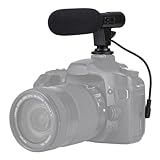
Overview: The Acuvar Mini Shotgun Microphone is the quintessential entry-level audio upgrade for absolute beginners. This ultra-compact, lightweight mic connects via 3.5mm plug to cameras, camcorders, and smartphones, offering a simple plug-and-play solution for improving video audio. With no batteries, software, or complex settings, it’s designed for creators taking their first step beyond built-in microphones for vlogging, interviews, and basic content creation.
What Makes It Stand Out: Its primary distinguishing feature is the rock-bottom price point, making professional-style directional audio accessible to anyone. The minimalist design prioritizes simplicity over features—what you see is what you get. The included cable works with both TRS and TRRS devices, providing basic universal compatibility without switches or adapters. Its tiny size makes it unobtrusive for casual shooting.
Value for Money: Typically priced under $20, the Acuvar Mini is among the cheapest external mics available. For the cost of a pizza, you get noticeable audio improvement over internal mics. However, the adage “you get what you pay for” applies—durability and audio fidelity lag behind even budget competitors like COMICA.
Strengths and Weaknesses: Pros: Extremely inexpensive; Very compact; Simple operation; No batteries needed; Basic compatibility. Cons: Poor build quality; Mediocre audio performance; No shock mount; No windscreen; Hit-or-miss quality control; No brand support.
Bottom Line: Only consider the Acuvar Mini if your budget is genuinely zero. It will improve audio over built-in mics, but saving for the COMICA CVM-V30 LITE or Movo VXR10 yields exponentially better results. This is a temporary solution, not a long-term tool.
6. Moukey MCM-1 Camera Microphone, Video Mic with Shock Mount and Windshield, Professional Vlogging Kit for iPhone, Android Smartphone, DSLR Camera & Camcorder, Battery-Free Shotgun Mic
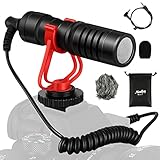
Overview: The Moukey MCM-1 is a versatile, battery-free shotgun microphone designed for content creators working across multiple devices. This compact aluminum-bodied mic delivers cardioid condenser recording quality while minimizing background noise through its unidirectional pickup pattern.
What Makes It Stand Out: Its comprehensive accessory bundle sets it apart—includes shock mount, windscreen, foam cover, carrying bag, and both TRS and TRRS cables for cameras and smartphones. The high-grade aluminum construction provides excellent RF interference protection, ensuring clean recordings in urban environments.
Value for Money: Priced competitively in the entry-level segment, it offers exceptional value by including professional-grade accessories that competitors often sell separately. The battery-free design eliminates ongoing costs, making it ideal for budget-conscious creators.
Strengths and Weaknesses: Strengths include universal 3.5mm compatibility, robust accessory package, durable metal construction, and zero power requirements. Weaknesses are significant: iPhone 7 and newer require Apple’s Lightning adapter (not included), and it’s incompatible with Canon EOS Rebel T5/T6/T7 series and other cameras lacking mic jacks. The shock mount, while functional, lacks the premium feel of Rycote Lyre systems.
Bottom Line: The Moukey MCM-1 is an excellent starter mic for multi-device creators who prioritize accessory completeness and simplicity. However, verify your camera’s compatibility before purchasing, and iPhone users should factor in the additional adapter cost.
7. Movo VXR10-AI Shotgun Microphone with AI Noise Cancellation - Camera Microphone for DSLR, Smartphone & Computer - Supercardioid On-Camera Mic with 3.5mm & USB-C Cables

Overview: The Movo VXR10-AI represents the next evolution of a bestselling microphone, integrating artificial intelligence to tackle the most persistent problem in field recording: background noise. This supercardioid shotgun mic delivers studio-quality audio across cameras, smartphones, and computers.
What Makes It Stand Out: The AI-powered noise cancellation, trained on over 700,000 real-world audio samples, intelligently eliminates wind, traffic, and crowd noise without sacrificing voice quality. The USB-C digital output enables 24-bit/48kHz recording with zero latency, bypassing analog limitations.
Value for Money: Positioned in the mid-range category, it justifies its premium over basic shotgun mics through genuine AI innovation and digital connectivity. The included Rycote Lyre shock mount alone adds significant value, typically costing $30+ separately.
Strengths and Weaknesses: Strengths include revolutionary AI processing, versatile dual-output (3.5mm analog and USB-C digital), professional Rycote Lyre mounting, and impressive 30-hour battery life (10 hours with AI active). The supercardioid pattern provides excellent off-axis rejection. Weaknesses include reliance on battery power (unlike many competitors), added weight from AI processing hardware, and potential over-processing of natural ambient sound for some applications.
Bottom Line: For creators battling challenging acoustic environments, the VXR10-AI is a game-changer that delivers measurable improvements. The premium is justified if you regularly shoot in noisy locations and need that AI advantage.
8. SMALLRIG Shotgun Mic for Camera, Video Microphone for DSLR & for iPhone, Camera Microphone for Sony and for Canon, with Shock Mount, Deadcat Windscreen, Dual Channel for Vlogging and Interview

Overview: The SMALLRIG shotgun microphone distinguishes itself through dual-channel stereo recording capabilities, offering content creators immersive audio capture in a compact, battery-free package. Engineered for versatility, it seamlessly integrates with cameras, smartphones, and tripods.
What Makes It Stand Out: Dual microphone capsules create true stereo and surround sound effects—a rarity in this price class. The innovative TPE shock-absorbing structure effectively isolates handling vibrations, while the hybrid mounting system accommodates both cold shoe and 1/4-inch tripod threads, providing exceptional placement flexibility.
Value for Money: This mic punches above its weight, delivering stereo recording typically found in higher-priced models. The comprehensive wind protection system (furry windscreen and foam cover) and versatile mounting options eliminate immediate accessory purchases, maximizing initial investment.
Strengths and Weaknesses: Strengths include unique stereo recording capability, battery-free operation, effective TPE shock mounting, robust wind noise reduction, and flexible mounting options. The cardioid pattern provides solid off-axis rejection. Weaknesses include slightly larger form factor than mono competitors, potential stereo phase issues if not positioned correctly, and less established brand recognition in audio compared to Rode or Movo.
Bottom Line: Creators seeking spatial audio separation for interviews or ambient recording will find exceptional value here. The SMALLRIG is ideal for those wanting stereo capability without premium pricing, though mono purists may prefer simpler alternatives.
9. COMICA VM10 PRO Universal Video Microphone - Adjustable Gain, USB C Digital Output, Monitoring - Shotgun Mic for Camera, Smartphone, Tablet, PC - Ideal for Vlogging, Live Streaming, and Recording

Overview: The COMICA VM10 PRO bridges analog and digital worlds with its switchable output modes, offering creators unprecedented flexibility. This supercardioid shotgun mic delivers professional features like stepless gain control and real-time monitoring in a battery-free design.
What Makes It Stand Out: The dual-mode output system allows seamless switching between traditional 3.5mm analog and USB-C digital connections, future-proofing your setup. Stepless gain control in digital mode provides precise level adjustment without camera menu diving, while real-time monitoring ensures confidence during critical recordings.
Value for Money: Mid-range pricing reflects its advanced feature set. The ability to work with legacy and modern devices extends its usable lifespan, offering better long-term value than single-mode competitors. Digital output eliminates need for external audio interfaces.
Strengths and Weaknesses: Strengths include versatile dual-output architecture, supercardioid pattern for superior directionality, stepless digital gain control, real-time monitoring capability, and battery-free convenience. The aluminum construction and integrated shock mount provide durability. Weaknesses include lack of included iPhone adapter (despite USB-C cable), potential compatibility issues with some camera USB-C ports, and learning curve for switching between modes.
Bottom Line: The VM10 PRO is perfect for creators transitioning between device ecosystems or wanting digital flexibility without sacrificing analog compatibility. Its monitoring and gain features make it a serious tool for growing channels.
10. Camera Microphone,Comica CVM-VM10II Professional Video Microphone with Shock Mount, Deadcat,Compact Shotgun Mic Compatible with iPhone,DSLR Camera,Android Smartphones- Perfect for TikTok YouTube Vlog

Overview: The Comica CVM-VM10II is a streamlined, battery-free shotgun microphone that prioritizes simplicity and reliability for mobile and DSLR creators. Building on Comica’s reputation for value-driven audio solutions, this compact mic delivers essential features without unnecessary complexity.
What Makes It Stand Out: The genuine Rycote Lyre shock mount at this price point is remarkable, providing professional-grade vibration isolation typically reserved for premium models. Its battery-free operation draws power directly from recording devices, ensuring you’re always ready to shoot without spare battery concerns.
Value for Money: Positioned as an entry-to-mid-range option, it offers tremendous value through its Rycote Lyre mount and robust accessory bundle. The deadcat windscreen and compact carrying case complete a package that requires no additional purchases for basic field recording.
Strengths and Weaknesses: Strengths include authentic Rycote Lyre shock mounting, battery-free convenience, solid aluminum construction, effective cardioid pattern for noise rejection, and comprehensive included accessories. The compact size suits run-and-gun shooting. Weaknesses include limited compatibility (not suitable for Canon Rebel T5/T6/T7 series without special adapters), no digital output option, lack of gain control, and iPhone 7+ users must purchase Apple’s Lightning adapter separately.
Bottom Line: The CVM-VM10II is an excellent choice for creators wanting proven shock mounting technology without premium pricing. It’s ideal for straightforward vlogging and interviews, provided your camera is compatible and you don’t require advanced features.
Understanding Compact Shotgun Microphone Technology
What Makes a Shotgun Microphone “Compact”?
The term “compact” in shotgun microphone design refers to more than just shortened length. These mics typically measure between 4-8 inches, engineered specifically for camera-mounted applications where every ounce matters. Unlike their boom-pole counterparts that stretch 12 inches or longer, compact shotguns use interference tube designs that have been miniaturized through advanced acoustic engineering. This reduction in size doesn’t necessarily mean compromised performance—modern materials and digital signal processing have enabled these smaller mics to achieve remarkable directionality that rivals larger predecessors.
The Physics of Directional Audio Capture
Shotgun microphones achieve their signature focused pickup pattern through a precisely engineered interference tube with carefully positioned side openings. Sound waves arriving from the front reach the capsule in-phase, while off-axis sounds enter the side ports at different points, creating phase cancellation that effectively mutes ambient noise. Compact models compress this physics into a smaller form factor, often using multiple acoustic labyrinths or advanced capsule designs to maintain directionality. Understanding this principle helps you appreciate why proper microphone positioning becomes critical—the sweet spot is narrow, and even slight angling changes dramatically affect audio quality.
Why Shotgun Mics Dominate Vlogging Workflows
Superior Voice Isolation in Uncontrolled Environments
When you’re vlogging in dynamic locations—bustling markets, windy beaches, or urban streetscapes—your voice competes with countless sound sources. A compact shotgun microphone’s supercardioid or hypercardioid polar pattern creates an acoustic spotlight, capturing sound primarily from where you point it while attenuating side and rear noise by 10-20dB. This isn’t magic; it’s physics working to separate your commentary from background chatter, traffic rumble, and wind noise. For mirrorless vloggers who often shoot without a dedicated audio operator, this automatic focus on your voice transforms post-production from a nightmare of noise reduction to simple level adjustments.
Visual Aesthetics and Camera Balance Considerations
Your mirrorless camera’s appeal lies in its compact, unobtrusive nature—a massive microphone rig defeats that purpose. Compact shotgun mics integrate seamlessly with your camera’s hot shoe mount, maintaining the stealth profile that allows you to shoot discreetly in public spaces. More importantly, they preserve the ergonomic balance that makes mirrorless cameras comfortable for all-day handheld shooting. A 3-5 ounce microphone positioned above the lens creates minimal torque, unlike heavier audio solutions that strain your wrist and make stable footage harder to achieve.
Key Specifications That Actually Matter
Decoding Polar Patterns: Supercardioid vs. Hypercardioid
While manufacturers love throwing around polar pattern terminology, the practical difference between supercardioid and hypercardioid impacts your vlogging significantly. Supercardioid patterns offer a slightly wider acceptance angle (about 115 degrees) with moderate rear sensitivity, making them more forgiving when you’re moving relative to the camera. Hypercardioid patterns narrow that field to roughly 105 degrees with pronounced rear lobes, providing better side rejection but requiring more precise positioning. For selfie-style vlogging where you’re often slightly off-axis, supercardioid often proves more practical. Interview-style setups where you can maintain consistent positioning benefit from hypercardioid’s tighter control.
Frequency Response: Flat vs. Tailored Curves
A flat frequency response (20Hz-20kHz ±3dB) captures audio exactly as it exists, giving you maximum flexibility in post-production. However, many compact shotgun mics feature tailored responses with subtle high-frequency boosts (presence peaks around 5-8kHz) that enhance speech intelligibility and compensate for windscreen dampening. Some models include low-frequency roll-offs starting at 80Hz or 120Hz to combat handling noise and wind rumble. For vlogging, a gently tailored response often produces better out-of-camera results, reducing editing time while delivering professional broadcast tones that cut through background music and sound effects.
Power Solutions for Uninterrupted Recording
Phantom Power vs. Battery Operation Trade-offs
Phantom power (typically 24V or 48V supplied through XLR or specialized camera inputs) delivers clean, consistent voltage without adding weight, but requires compatible camera bodies or external preamps. Battery-powered models (usually via single AA or AAA cells) offer universal compatibility and can be used with any mirrorless camera, but add minimal weight and require monitoring to avoid mid-shoot failures. Some hybrid designs accept both power sources, automatically switching to battery when phantom power drops. For all-day vlogging, consider battery life ratings—many 2026 models achieve 100+ hours on a single cell, making power management a monthly rather than daily concern.
USB-C Power Delivery Integration
The emergence of USB-C power passthrough in 2026’s microphone designs represents a game-changer for mirrorless vloggers. These mics can draw power directly from your camera’s USB-C port while simultaneously passing audio, eliminating batteries entirely for cameras that support power delivery. This creates a single-cable solution that reduces failure points and keeps your rig lightweight. However, verify your camera’s USB-C implementation—some ports prioritize data transfer over power delivery, and drawing audio plus power may exceed the port’s current capacity, causing intermittent dropouts.
Connectivity and Integration Challenges
3.5mm TRS vs. Digital USB-C Audio
The venerable 3.5mm TRS analog connection remains ubiquitous, offering universal compatibility across mirrorless brands. However, it introduces your camera’s often-mediocre preamps into the signal chain, potentially adding hiss to quiet passages. Digital USB-C connections bypass these preamps entirely, feeding pure digital audio directly to your camera’s processor. The catch? Not all mirrorless cameras support USB-C audio input, and those that do may have limited format support (some only accept 16-bit/48kHz). Before investing in a digital mic, verify your camera’s firmware capabilities—manufacturer spec sheets often bury this detail in footnotes.
Wireless Integration and Future-Proofing
Forward-thinking vloggers should consider microphones with modular wireless capabilities. Some 2026 compact shotguns feature detachable transmitters that convert the mic into a wireless unit for tripod-mounted interviews or b-roll audio capture. Others include Bluetooth connectivity for smartphone monitoring or firmware updates. While these features add cost, they transform a simple on-camera mic into a versatile audio ecosystem that grows with your content creation needs, eliminating the need to purchase separate wireless systems later.
Physical Design Elements That Impact Performance
Interference Tube Length and Acoustic Performance
Despite being “compact,” subtle differences in interference tube length significantly affect performance. A 6-inch tube provides better low-frequency directionality than a 4-inch version, making it more effective at rejecting traffic rumble and distant noise. However, longer tubes increase susceptibility to handling noise and wind. The sweet spot for vlogging lies around 5-6 inches, balancing directional control with practical handling characteristics. Some innovative designs use curved or stepped tubes to cheat physics, achieving longer effective lengths in shorter physical spaces.
Material Science and Acoustic Transparency
Premium compact shotguns use brass or titanium interference tubes for their rigidity and acoustic properties, while budget options rely on aluminum or engineered plastics. The material affects not just durability but also acoustic transparency—denser metals reflect internal sound waves more effectively, maintaining directionality. Grille design matters too; tightly spaced meshes block wind and moisture but can create subtle high-frequency reflections. The best designs use hydrophobic coatings and carefully calculated grille spacing that blocks particles while remaining acoustically invisible.
Wind Protection Strategies for Field Recording
Deadcat vs. Foam: Real-World Performance
Foam windscreens provide basic protection against light breezes (up to 5-7 mph) but quickly become saturated in real wind, causing muffled audio. Furry “deadcat” covers use acoustic transparency principles, with hairs that dissipate wind energy before it reaches the mic diaphragm. Quality deadcats maintain audio fidelity while handling 15-20 mph winds. For vlogging, a two-stage approach works best: a permanent foam screen for indoor/closet use, with a removable deadcat for outdoor adventures. Some 2026 models feature integrated magnetic mounting systems that let you swap wind protection in seconds without fumbling with elastic bands.
Active Wind Noise Reduction Technology
Emerging in 2026’s premium tier, active wind noise reduction uses MEMS sensors to detect wind pressure on the microphone body, then applies inverse-phase cancellation to the audio signal. This digital processing happens in real-time, often within the microphone’s DSP chip, reducing wind noise by an additional 10-15dB beyond physical protection. While impressive, this technology can occasionally introduce artifacts in complex soundscapes and typically requires battery power. For most vloggers, proper physical wind protection remains more reliable than electronic solutions.
Shock Mounting and Handling Noise Mitigation
Suspension System Design Philosophies
Every footstep, lens adjustment, or camera strap movement transmits through your camera body to the microphone as low-frequency rumble. Effective shock mounts use either rubber-band suspension or proprietary polymer isolators. Band-based systems provide superior vibration isolation but stretch over time and can snap unexpectedly. Polymer isolators offer consistent performance and durability but may transmit certain frequencies. The best designs use multi-stage isolation, combining a floating capsule design with external shock mounting for comprehensive protection across the frequency spectrum.
Cable Management and Microphonics
The cable connecting your mic to camera can act as a vibration conduit, transmitting handling noise directly into your recording. Quality compact shotguns feature internal cable routing through the shock mount, with strain relief that decouples the cable from the microphone body. Some include coiled or semi-rigid cable sections that absorb vibrations. For minimalist setups, consider mics with right-angle connectors that hug the camera body, reducing leverage and snagging risks when shooting in crowded environments.
Onboard Controls and Real-Time Adjustments
Gain Staging Without a Sound Engineer
Professional shotgun mics offer physical gain controls, typically -10dB, 0dB, and +20dB settings, allowing you to optimize signal levels for your camera’s preamps. The -10dB pad prevents clipping in loud environments (concerts, motorsports), while +20dB boost helps in quiet settings without forcing your camera to apply excessive digital gain. Some 2026 models include stepped attenuators with precise 3dB increments, giving you fine control without menu diving. The key is setting levels so your camera’s meters peak around -12dB to -6dB, leaving headroom for unexpected loudness while maximizing signal-to-noise ratio.
High-Pass Filters and Adaptive EQ
Switchable high-pass filters (typically 80Hz or 120Hz roll-off) are essential for vlogging, removing low-frequency rumble from wind, handling, and environmental sources. Advanced models feature adaptive filtering that automatically adjusts the roll-off frequency based on detected wind pressure or movement intensity. Some include speech-optimized EQ curves that can be engaged via physical switches, adding subtle presence boosts and de-essing that makes your voice cut through without harshness. While these features add cost, they reduce post-production time significantly for creators who publish daily content.
Build Quality and Environmental Resistance
Weather Sealing for All-Weather Vlogging
True weather sealing involves more than a few rubber gaskets. Professional-grade compact shotguns feature IP-rated designs with sealed PCBs, hydrophobic coatings on circuit boards, and moisture-repellent membranes over capsules. Some use magnetic reed switches instead of mechanical buttons, eliminating points of water ingress. For vloggers who shoot in varied climates, this protection prevents condensation from temperature changes and allows shooting in light rain. The investment pays off when you don’t have to replace a mic after a single humid jungle trek or snowy mountain vlog.
Temperature Extremes and Performance Stability
Microphone capsules and electronics drift with temperature changes, affecting sensitivity and frequency response. Quality designs use temperature-compensated circuits that maintain consistent performance from freezing conditions to scorching deserts. This is particularly crucial for mirrorless vloggers who frequently move between air-conditioned interiors and outdoor locations. Cheaper mics may exhibit increased self-noise or altered tonality as components heat up during extended recording sessions.
Price-to-Performance Ratios in 2026
Entry-Level Realities: What $50-100 Actually Buys
Budget compact shotguns in this range deliver directional audio that’s undeniably better than camera internals, but with compromises. You’ll typically find aluminum construction, basic foam wind protection, and fixed cardioid/supercardioid patterns without switchable options. Frequency response may show significant deviations, and handling noise rejection will be minimal. These mics serve as excellent learning tools and work well in controlled indoor environments, but struggle with challenging outdoor conditions. The key limitation is often sensitivity—budget capsules require more gain from your camera, exposing preamp noise.
Mid-Tier Sweet Spot: $150-300 Performance
This range represents the vlogger’s sweet spot, offering professional features without flagship pricing. Expect titanium or brass construction, comprehensive shock mounting, switchable polar patterns, and robust wind protection included. These mics often match the audio quality of premium options, differing mainly in advanced features like digital connectivity or modular wireless. The preamps are cleaner, handling noise is well-controlled, and frequency response is smooth and predictable. For most mirrorless vloggers, a mic in this category provides 90% of flagship performance at half the cost.
Premium Tier: When $400+ Makes Sense
High-end compact shotguns justify their price through reliability, features, and incremental audio improvements that matter for professional workflows. We’re talking about IP65+ weather sealing, active noise cancellation, digital USB-C audio with high-resolution support, and modular ecosystems. The frequency response might be ruler-flat with ultra-low self-noise (<10dBA), allowing heavy post-processing without revealing artifacts. These mics also hold their value, often lasting through multiple camera upgrades. For full-time creators whose income depends on audio quality, the investment is amortized across hundreds of videos.
Compatibility with Mirrorless Camera Ecosystems
Hot Shoe Integration and Physical Clearance
Not all hot shoe mounts are created equal. Sony’s Multi Interface Shoe, Canon’s Multi-Function Shoe, and Nikon’s accessory port each have different dimensions and electronic capabilities. A mic designed for Sony may physically obstruct your Canon’s viewfinder or interfere with articulating screens. Check dimensional drawings before purchasing, paying special attention to height above the shoe and rearward extension. Some mics feature adjustable mounting rails or reversible brackets that accommodate different camera geometries, ensuring the interference tube clears your lens and the controls remain accessible.
Audio Interface Compatibility and Preamp Quality
Your camera’s audio input quality dramatically affects final sound. Some mirrorless bodies apply aggressive noise reduction or limiting that can’t be disabled, processing your mic’s clean signal through heavy-handed algorithms. Others provide clean, unprocessed “audio interface” mode. Research your camera’s audio implementation in user forums—manufacturers rarely advertise these details. For cameras with poor preamps, consider mics with built-in digital converters that output line-level signals, bypassing the camera’s analog stage entirely.
Real-World Recording Techniques for Vloggers
Distance and Angle Optimization
The inverse square law dictates that doubling your distance from the mic drops level by 6dB, but shotgun mics add directional complexity. For optimal results, maintain 12-24 inches from the mic, positioning it at a 15-30 degree angle above or to the side of your mouth. This avoids plosives while keeping you in the acceptance lobe. Closer than 12 inches and proximity effect exaggerates low frequencies, making you sound boomy. Beyond 36 inches, ambient noise infiltrates and the shotgun advantage diminishes. Mark your selfie stick or monitor with tape to maintain consistent positioning.
Handling Reverberant Spaces
Shotgun mics don’t reject room echo—they’re not magic. In reflective spaces (marble lobbies, empty rooms), sound bounces off walls and enters the mic from the front, just like your voice. The solution isn’t a “better” mic, but technique. Get closer to reduce the direct-to-reverberant ratio, or angle the mic to minimize direct reflections. Some vloggers carry a small acoustic blanket to place behind the camera in challenging spaces. Remember: treating the room is always more effective than trying to fix it with microphone choice.
Common Mistakes That Ruin Good Audio
Ignoring the Proximity Effect
Every directional microphone exhibits proximity effect—bass boost when close to the source. Vloggers often position themselves too near, creating an unnatural, radio-announcer sound that’s difficult to correct in post. Conversely, standing too far away captures more room tone and reduces voice presence. The solution is consistent mic technique: practice maintaining optimal distance and use your camera’s audio meters to develop an intuition for proper levels. Record test clips at varying distances to train your ear for what “right” sounds like.
Over-Reliance on Post-Processing
Capturing clean audio at the source always trumps fixing it later. Noise reduction plugins and EQ can improve marginal recordings, but they introduce artifacts and never sound as natural as proper mic technique. Many vloggers crank up noise reduction until their voice sounds robotic, then add heavy compression that exaggerates background hiss. The 2026 standard should be minimal processing: a high-pass filter, light compression (2:1 ratio), and perhaps a gentle presence boost. If you’re reaching for heavy NR, revisit your recording setup instead.
Maintenance and Longevity Practices
Cleaning and Capsule Care
Microphone capsules are electrostatically charged and attract dust like magnets. Never blow into the grille—your breath contains moisture and particles that adhere to the diaphragm. Instead, use a soft brush to remove surface debris and store mics with desiccant packs in sealed cases. For stubborn contamination, some manufacturers offer ultrasonic cleaning services. Regularly inspect the interference tube ports for blockages; a single clogged hole degrades directionality. If you shoot in salt-air environments, wipe down the exterior with a slightly damp cloth to prevent corrosion of contacts.
Storage and Humidity Control
Condensation is the silent killer of microphone capsules. When moving between temperature extremes, seal your mic in a ziplock bag with air inside, allowing it to gradually acclimate. This prevents moisture from forming on the diaphragm. For long-term storage, maintain 40-50% relative humidity using silica gel or electronic dry cabinets. Avoid storing mics in foam-lined cases long-term—foam retains moisture and can mold, releasing spores that clog acoustic ports.
Future-Proofing Your Audio Investment
Modular Design and Upgrade Paths
The best 2026 compact shotguns function as audio ecosystems. Look for models with interchangeable capsules that let you switch between supercardioid and omnidirectional patterns, or add wireless modules as your needs evolve. Some manufacturers offer firmware upgradeable DSP chips that can receive new features via smartphone apps. This modular approach means your $300 investment today can adapt to tomorrow’s content formats rather than becoming obsolete when you upgrade cameras or pivot your vlogging style.
Software Integration and Smart Features
Modern shotgun mics increasingly communicate with your camera and smartphone. Bluetooth-enabled models can auto-configure camera audio settings based on detected polar pattern or apply custom EQ profiles for different voices. Some apps provide real-time spectral analysis, helping you identify problematic frequencies in your recording environment. While these features seem gimmicky, they democratize professional audio techniques, letting solo creators achieve results that previously required dedicated sound engineers.
Frequently Asked Questions
What’s the ideal shotgun microphone length for mirrorless vlogging?
For most mirrorless setups, a 5-6 inch interference tube hits the sweet spot—long enough for effective directionality while remaining compact enough for gimbal use and avoiding lens shadow in wide-angle shots. Shorter 4-inch models work for selfie-style vlogging where you’re extremely close, but sacrifice low-frequency rejection.
Do I need a separate audio recorder or is camera input sufficient?
Modern mirrorless cameras from 2024 onward have improved preamps that rival entry-level recorders for most vlogging scenarios. However, if your camera lacks manual audio controls or exhibits significant hiss, a compact recorder like the Zoom F3 provides cleaner gain and safety tracks. For run-and-gun vlogging, the convenience of direct camera recording usually outweighs marginal quality gains from external recorders.
Can I use a compact shotgun mic for indoor sit-down videos?
Yes, but with caveats. Shotgun mics accentuate room echo in reflective spaces. For indoor talking-head videos, position the mic 12-18 inches away and use acoustic treatment behind the camera. In untreated rooms, a small-diaphragm condenser or lavalier often delivers better results. Consider your room’s reverb time—if you can hear echo when clapping, a shotgun will capture it.
How do I prevent the mic from appearing in my wide-angle shots?
Position the mic as far forward on the hot shoe as possible, using extension brackets if needed. Angle it slightly upward so the tube clears the frame. For ultra-wide lenses (wider than 16mm), consider side-mounting the mic using a small rig cage. Some vloggers embrace the mic in frame as a stylistic element, but if you need it invisible, test your specific lens and mic combination before critical shoots.
Is digital USB-C audio really better than 3.5mm analog?
USB-C audio bypasses your camera’s analog preamps, eliminating a potential noise source and providing cleaner gain staging. However, the improvement is only noticeable if your camera’s preamps are subpar. High-end mirrorless cameras often have excellent analog stages where the difference is negligible. USB-C also enables higher bit depths and sample rates, though most vlogging platforms compress audio to 48kHz/16-bit anyway. The real advantage is convenience—one cable for power and audio.
What’s the difference between a $50 and $300 shotgun mic?
The $250 difference manifests in durability, consistency, and features. Budget mics use commodity capsules with variable quality control, basic shock mounting, and minimal weather resistance. Mid-tier mics offer matched capsules, robust construction, switchable patterns, and professional wind protection. The audio quality difference is audible but not night-and-day; the reliability and feature set improvements are where the money truly goes.
How often should I replace the shock mount bands?
Rubber suspension bands typically last 12-18 months with regular use before losing elasticity. Signs of degradation include sagging, cracking, or increased handling noise. Keep spare bands in your kit—they’re inexpensive and weigh nothing. Polymer isolator-based mounts last indefinitely but inspect them for tears or hardening every six months.
Can I use my shotgun mic for podcasting or voiceover work?
While possible, it’s not ideal. Shotgun mics are optimized for distance rejection, not close-up vocal richness. For podcasting, a large-diaphragm condenser or dynamic mic delivers warmer, more intimate sound. That said, a quality shotgun in a well-treated room can produce excellent voiceover results—just position it 8-12 inches away and speak slightly off-axis to avoid sibilance.
What’s the best way to test a shotgun mic before buying?
If possible, rent the mic for a weekend and test it in your actual vlogging environments. Record identical scenes with your current setup and the test mic, then compare waveforms and spectral analysis. Pay attention to self-noise in quiet passages and handling noise during movement. If renting isn’t an option, search for “raw audio tests” from reputable reviewers—avoid processed demos that hide flaws. Check return policies and buy from retailers offering 30-day satisfaction guarantees.
Will a shotgun mic work with my camera’s auto-gain feature?
Auto-gain can create problems with directional mics by dramatically boosting levels during quiet moments, amplifying self-noise and ambient sound. Most shotgun mics work with auto-gain, but you’ll get better results using manual levels. If you must use auto-gain, enable any onboard limiting or compression on the mic to smooth out dynamic swings, and always record a safety track if your camera supports dual-channel recording.
See Also
- 10 Shotgun Microphones for Bird-Watching Field Recording in 2026
- 10 Shotgun Microphones That Kill Echo in Cathedral Recordings in 2026
- We Tested 40 Shotgun Microphones—Here Are the 10 Best for Indie Filmmakers in 2026
- 10 Best Shotgun Microphones for Documentary Run-and-Gun Crews in 2026
- 10 Must-Have Shotgun Microphones for Documentary Filmmakers in 2026