Table of Contents
If you’ve ever watched your favorite set of strings turn from brilliant silver to a corroded greenish-gray after one particularly intense gig, you know the struggle is real. Sweaty hands don’t just compromise your grip on the neck—they launch a full-scale chemical assault on your strings, destroying tone, intonation, and your wallet with ruthless efficiency. For aggressive players, high-energy performers, and anyone whose perspiration could be classified as a biohazard, coated guitar strings have evolved from a novelty into an absolute necessity.
As we look toward 2026, the coated string landscape is undergoing its most dramatic transformation yet. Manufacturers are moving beyond simple polymer barriers, embracing nanotechnology, hydrophobic molecular engineering, and sustainable materials that promise unprecedented longevity without the tonal compromises of early generations. This isn’t just about adding a few extra weeks to your string life anymore—it’s about fundamentally changing the relationship between your sweat, your strings, and your sound.
Top 10 Coated Guitar Strings
Detailed Product Reviews
1. Ernie Ball Regular Slinky Coated Titanium Electric Guitar Strings, 10-46 Gauge (P03121)

Overview: Ernie Ball’s Coated Titanium Regular Slinky strings represent the iconic brand’s entry into the extended-life string market, combining their legendary 10-46 gauge with innovative titanium reinforcement. These strings target players seeking the familiar Slinky feel with enhanced durability.
What Makes It Stand Out: The titanium reinforcement at the ball-end is the star feature, addressing the most common breakage point while improving tuning stability. Unlike competitors who only coat wound strings, Ernie Ball treats both plain and wound strings—plain strings get rust-resistant plating plus titanium wire winding, while wound strings receive a micro-thin enamel layer that provides five times more corrosion resistance than uncoated sets.
Value for Money: Priced moderately above standard Slinkys, these strings offer compelling value for gigging musicians and frequent players. The extended lifespan means fewer string changes, offsetting the premium. While not the cheapest coated option, the titanium technology provides unique breakage prevention that budget competitors can’t match.
Strengths and Weaknesses: Strengths include exceptional tuning stability, reduced breakage at the ball-end, authentic Slinky tone preservation, and comprehensive corrosion protection. The enamel coating feels natural without the “slickness” some players dislike. Weaknesses include a slight premium price and the fact that titanium reinforcement adds minimal cost while the coating may eventually wear. Some purists argue any coating slightly alters high-frequency response.
Bottom Line: Perfect for gigging guitarists who love the classic Slinky feel but demand modern durability. The titanium reinforcement genuinely reduces breakage, making these a smart investment for aggressive players.
2. Elixir Strings, Acoustic Guitar Strings, 80/20 Bronze with NANOWEB Technology, Longest-Lasting Bright and Focused Tone For Life with Comfortable Feel, 6 String Set, Light 12-53

Overview: Elixir’s 80/20 Bronze NANOWEB strings have set the benchmark for coated acoustic strings, delivering bright, focused tone with unprecedented longevity. The Light 12-53 gauge suits versatile playing styles from strumming to fingerpicking.
What Makes It Stand Out: The proprietary NANOWEB coating protects the entire string from sweat, humidity, and corrosion while maintaining a comfortable, natural feel. Unlike traditional coatings, NANOWEB is microscopically thin, preserving the crisp, articulate character of 80/20 bronze without the “dead” sound that plague some competitors after weeks of play.
Value for Money: While double the price of uncoated strings, Elixirs last 3-5 times longer, making them economical for serious players. Studio musicians benefit most—consistent tone means fewer session interruptions. The price premium is justified by the USA manufacturing quality and rigorous testing.
Strengths and Weaknesses: Strengths include exceptional tone life, stable intonation, smooth finger feel, and resistance to environmental factors. The bright 80/20 voice cuts through mixes beautifully. Weaknesses include the coating’s subjective feel (some find it too slippery), a break-in period where tone slightly mellows, and the initial cost barrier for beginners. The coating can occasionally fray at frets after months of heavy use.
Bottom Line: The definitive choice for performing acoustic guitarists who prioritize tone consistency and longevity. If you change strings monthly, these will save money and maintain your signature sound.
3. D’Addario Electric Guitar Strings, XS Nickel Coated, XSE1046, Regular Light Gauge 10-46, 6-String Set, Pack of 1

Overview: D’Addario’s XS Nickel coated electric strings represent the company’s flagship for extended-life electric guitar strings, combining their renowned nickel-plated steel tone with cutting-edge coating technology. The 10-46 Regular Light gauge caters to traditionalists seeking familiar playability.
What Makes It Stand Out: The ultra-thin XS film coating delivers D’Addario’s longest electric string life without tonal dampening. The reformulated nickel-plated steel wrap wire boosts output and sustain, while the NY Steel core with Fusion Twist technology delivers a claimed 131% better tuning stability than standard strings—a game-changer for tremolo users.
Value for Money: Positioned at the premium tier, XS Nickel strings compete directly with Elixir’s electric offerings. The Players Circle rewards program adds value, and the extended lifespan justifies the cost for working musicians. While pricier than EXL110s, the tuning stability alone saves time and frustration.
Strengths and Weaknesses: Strengths include exceptional break resistance, outstanding tuning stability, bright articulate tone that lasts, and no coating fraying or peeling. The smooth feel appeals to speed players. Weaknesses include the premium price point, potential tone purist objections to any coating, and the fact that the ultra-thin coating may wear faster than thicker alternatives under aggressive picking.
Bottom Line: Ideal for electric players frustrated with tuning instability and frequent string changes. The XS coating technology successfully balances longevity with authentic nickel-plated steel tone.
4. Elixir Strings, Acoustic Guitar Strings, Phosphor Bronze with NANOWEB Technology, Longest-Lasting Rich and Full Tone For Life with Comfortable Feel, 6 String Set, Light 12-53

Overview: Elixir’s Phosphor Bronze NANOWEB strings offer acoustic players the warm, rich tonal character of phosphor bronze with the legendary longevity of Elixir’s coating technology. The Light 12-53 gauge provides versatile response for diverse playing techniques.
What Makes It Stand Out: By combining phosphor bronze wrap wire with NANOWEB coating, these strings deliver full-bodied warmth that traditionalists crave while eliminating the rapid tone decay of uncoated strings. The coating protects against sweat and humidity—critical for performers—while maintaining a smooth, non-slippery feel that fingerstyle players appreciate.
Value for Money: These command a premium over uncoated phosphor bronze strings but deliver 3-4 times the playable lifespan. For recording artists, the consistent tone eliminates the need to restring before sessions. The USA manufacturing ensures quality control that budget imports can’t match, making them cost-effective for serious musicians despite the higher upfront price.
Strengths and Weaknesses: Strengths include rich, balanced tone retention, excellent environmental resistance, comfortable playability, and stable intonation over months. The phosphor bronze voice suits singer-songwriters perfectly. Weaknesses include the coating’s subtle texture change that some players never embrace, a higher price point that deters casual players, and potential coating wear at contact points after extended use. The tone is slightly less “zingy” than uncoated fresh strings.
Bottom Line: The top choice for acoustic guitarists seeking phosphor bronze warmth without constant restringing. If you love your tone but hate changing strings monthly, these are essential.
5. D’Addario Acoustic Guitar Strings, XS Phosphor Bronze Coated, XSAPB1253, Light Gauge 12-53, 6-String Set, Pack of 1

Overview: D’Addario’s XS Phosphor Bronze acoustic strings merge the company’s beloved phosphor bronze tonal signature with their most advanced coating technology. The Light 12-53 gauge offers the familiar balance and warmth that has made D’Addario a studio staple.
What Makes It Stand Out: The ultra-thin XS film coating provides D’Addario’s longest acoustic string life without the tonal dampening or physical fraying common to older coating technologies. The NY Steel core and Fusion Twist technology deliver exceptional break strength and tuning stability—staying in tune 131% better than standard strings, according to D’Addario’s testing.
Value for Money: These compete directly with Elixir’s coated phosphor bronze offerings at a similar premium price point. The Players Circle rewards program adds tangible value over time, and the extended lifespan makes them economical for daily players. While costing more than uncoated EJ16s, the consistency and durability justify the investment for working musicians.
Strengths and Weaknesses: Strengths include unparalleled tuning stability, extended tonal life, warm balanced phosphor bronze voice, and coating durability without peeling. The recyclable VCI bag is eco-friendly. Weaknesses include the premium pricing that may deter hobbyists, the ultra-thin coating’s potential vulnerability to aggressive playing, and subjective feel preferences—some players prefer the texture of uncoated strings.
Bottom Line: A formidable competitor to Elixir for acoustic players prioritizing tuning stability and longevity. The XS coating successfully preserves D’Addario’s classic phosphor bronze character while extending string life dramatically.
6. D’Addario Acoustic Guitar Strings, XT Phosphor Bronze Coated, XTAPB1253, Light Gauge 12-53, 6-String Set, Pack of 1

Overview: The D’Addario XT Phosphor Bronze strings represent the brand’s answer to the coated string market, offering light gauge acoustic players extended lifespan without sacrificing tonal authenticity. Built with a NY Steel core and phosphor bronze wrap wire, these USA-made strings target musicians seeking durability alongside traditional warmth.
What Makes It Stand Out: D’Addario’s Fusion Twist technology and advanced corrosion-resistant coating claim 131% better tuning stability than competitors—a bold figure backed by their reputation for engineering. The XT coating is designed to preserve natural feel while extending life, distinguishing it from thicker-coated alternatives. The included Players Circle points code adds value for loyal D’Addario customers.
Value for Money: Priced in the premium tier, these strings compete directly with Elixir’s offerings. While slightly cheaper than some competitors per set, the single-pack presentation lacks bulk savings. The extended lifespan and break strength justify the cost for frequent players, though casual musicians may find standard phosphor bronze more economical.
Strengths and Weaknesses: Strengths include exceptional tuning stability, authentic uncoated-like tone, superior break resistance, and made-in-USA quality. The thin coating maintains natural string feel while providing genuine corrosion protection. Weaknesses involve potential coating wear at contact points and a price point nearly double that of uncoated strings. Some players may prefer the slicker feel of competitor coatings.
Bottom Line: Ideal for gigging acoustic guitarists who demand reliability and tonal consistency. The XT series successfully bridges the gap between coated longevity and uncoated feel, making them a smart investment for serious players tired of frequent string changes.
7. Elixir Acoustic Phosphor Bronze Guitar Strings w/NANOWEB® Technology - Light 12-53 - (3 Pack 16052) Limited Holiday Release
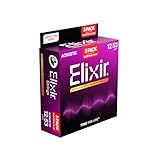
Overview: Elixir’s NANOWEB-coated phosphor bronze strings have long set the standard for extended-life acoustic strings. This limited holiday three-pack delivers their proven light gauge formula in a value-focused bundle, promising the dynamic balance and clarity that made the brand dominant in the coated string segment.
What Makes It Stand Out: The ultra-thin NANOWEB coating provides a smooth, fast feel while protecting the entire string—including the anti-rust plated plain strings—for maximum lifespan. Elixir’s proprietary coating technology remains the industry benchmark, offering consistent tone months after installation. This three-pack configuration provides immediate bulk savings and backup sets for performing musicians.
Value for Money: The holiday three-pack represents excellent value, effectively reducing per-set cost below individual purchases. While still premium-priced, Elixir’s proven longevity means fewer changes, translating to long-term savings. The multi-pack format suits heavy players and gigging musicians who consistently restring instruments.
Strengths and Weaknesses: Strengths include unparalleled coating durability, months-long tone retention, smooth playing feel, and reduced finger squeak. The anti-rust treatment on plain strings ensures balanced corrosion resistance. Weaknesses involve a slightly brighter, less “organic” tone that purists may reject, and the coating can eventually flake at heavy wear points. The initial cost remains high despite bulk packaging.
Bottom Line: A top choice for players prioritizing longevity and consistency above all. This three-pack offers smart savings for those already committed to Elixir’s ecosystem. While not for traditionalists seeking pure uncoated tone, these strings deliver unmatched convenience and performance stability for working musicians.
8. DR Strings Electric Guitar Strings, Black Beauties - Black Coated, 10-46 (BKE-10)

Overview: DR’s Black Beauties carve a unique niche with their distinctive black coating, offering electric guitarists a visual statement alongside functional benefits. These nickel-plated steel strings with K3 coating target players seeking both aesthetic differentiation and extended lifespan in a standard 10-46 gauge.
What Makes It Stand Out: The striking black appearance transforms any electric guitar’s visual presentation, making these strings immediately recognizable. Beyond looks, the ultra-hard K3 coating promises enhanced attack and output while compression winding delivers a smooth feel with reduced fret wear—addressing both performance and instrument preservation.
Value for Money: Positioned in the mid-to-premium range, Black Beauties cost slightly more than standard nickel-wound strings but less than top-tier coated competitors. The unique aesthetic justifies the premium for style-conscious players, though performance-focused musicians may find better longevity elsewhere. They represent fair value for those prioritizing appearance.
Strengths and Weaknesses: Strengths include the bold visual appeal, smooth playing surface, bright modern tone with enhanced harmonics, and genuine fret wear reduction. The coating does extend usable life compared to uncoated strings. Weaknesses involve black residue on fingers and frets during initial use, eventual coating wear that becomes visibly apparent, and tone that some find less refined than premium competitors. The coating doesn’t match Elixir or D’Addario XS for pure longevity.
Bottom Line: Perfect for players wanting their instrument to stand out visually while maintaining decent performance. These strings excel in stage settings where appearance matters, though serious tone purists may prefer traditional options. A solid choice for the style-conscious guitarist who changes strings regularly anyway.
9. D’Addario Electric Guitar Strings, XS Nickel Coated, XSE1046-3P, Regular Light Gauge 10-46, 6-String Set, Pack of 3

Overview: D’Addario’s XS Nickel strings represent their flagship electric offering, combining advanced coating technology with their trusted NY Steel core in a convenient three-pack. These regular light gauge strings target serious electric players demanding maximum lifespan without compromising the bright, articulate tone nickel-plated steel is known for.
What Makes It Stand Out: The ultra-thin XS film coating offers D’Addario’s longest-lasting electric string life while maintaining a smooth, fast feel without fraying or peeling. Fusion Twist technology delivers 131% better tuning stability than standard strings. The recyclable, resealable VCI bag demonstrates environmental consciousness, and the three-pack format with Players Circle points creates compelling value.
Value for Money: The three-pack reduces per-set cost significantly, bringing premium technology closer to mid-range pricing when calculated per string change. While expensive upfront, the extended lifespan means fewer purchases over time. For gigging musicians, the reliability offsets the initial investment, making it economically sensible compared to frequent standard string replacements.
Strengths and Weaknesses: Strengths include exceptional tuning stability, smooth feel, bright tone with enhanced output and sustain, superior break strength, and eco-friendly packaging. The thin coating preserves string response better than thicker alternatives. Weaknesses involve premium pricing that may deter casual players, and some purists may detect subtle coating dampening. The 10-46 gauge may not suit all playing styles.
Bottom Line: An excellent investment for performing electric guitarists who value reliability and longevity. The XS series successfully delivers extended life while preserving playing feel and tonal character. This three-pack offers the best value for players ready to commit to D’Addario’s premium coated ecosystem.
Understanding the Sweaty Player’s Dilemma
The Chemistry of Corrosive Sweat
Your sweat isn’t just water and salt—it’s a complex cocktail of electrolytes, amino acids, urea, and lactic acid with a pH that can range from 4.5 to 7.0. For reference, vinegar sits around pH 2.5, meaning highly acidic sweat can be surprisingly aggressive toward metal alloys. The real damage comes from chloride ions, which penetrate microscopic gaps in string windings, accelerating galvanic corrosion between the core and wrap wire. In 2026’s advanced testing environments, manufacturers now simulate “player sweat profiles” based on individual body chemistry, creating coatings that resist specific corrosive compounds rather than just moisture.
Impact on Tone and Playability
Corrosion doesn’t just look ugly—it fundamentally alters your string’s mass and tension distribution unevenly. As rust and oxidation accumulate, particularly in the lower mass winding gaps, your E and A strings develop false overtones and diminished sustain. The gunk buildup increases friction against fretwire, making bends feel sluggish and killing vibrato expressiveness. Modern players report that uncoated strings can lose up to 40% of their harmonic clarity within 10 hours of high-sweat playing, a metric that drives 2026’s coating innovations.
How String Coatings Actually Work
The Application Process
Today’s coating technologies employ plasma-enhanced chemical vapor deposition (PECVD) for nanometer-thin applications that bond at the molecular level. Unlike early dip-coating methods that added 3-5 microns of material, 2026 processes create layers as thin as 0.5 microns that conform to every winding contour. This precision matters because excessive coating thickness was the primary culprit behind the “dead” tone complaints of previous generations. The new application methods treat each string individually, allowing different coating densities for treble versus bass strings based on their corrosion susceptibility.
Micro vs. Nano-Coating Technologies
Micro-coatings protect the string’s surface but leave gaps between windings vulnerable. Nano-coatings, now becoming standard for sweaty players, penetrate these interstitial spaces, creating a three-dimensional protective matrix. The latest development involves dual-layer systems: a hydrophobic base layer that repels moisture and an oleophobic top layer that sheds skin oils and acids. This combination extends usable life by up to 800% in high-sweat conditions while maintaining the metallic edge players crave.
The Science Behind Sweat and String Corrosion
pH Levels and Metal Reactivity
The acidity in your sweat creates an electrochemical reaction with the phosphor bronze or nickel alloys in your strings. When pH drops below 5.5, the oxidation rate increases exponentially. 2026’s advanced strings now incorporate pH-buffering compounds within the coating itself, which neutralize acidic compounds on contact. Think of it as antacid for your strings—these smart polymers release microscopic amounts of alkaline buffers only when acidity is detected, preserving the coating’s integrity while protecting the metal underneath.
Salt Content and Oxidation
Sodium chloride acts as an electrolyte, creating tiny batteries across your string’s surface where dissimilar metals meet. This galvanic corrosion is why your plain steel treble strings often outlast your wound bass strings—the wrap wire and core create perfect conditions for electrochemical degradation. Modern coatings must exhibit dielectric properties, electrically insulating the different metals from each other while remaining thin enough not to dampen vibration.
Coating Materials: What to Look for in 2026
Polymer Innovations
Fluoropolymer blends have replaced basic PTFE (Teflon) as the gold standard. These new formulations incorporate perfluoroalkoxy alkanes (PFA) that offer superior temperature resistance—critical for players under hot stage lights. The latest materials also feature self-lubricating properties that reduce finger noise by up to 60% while actually enhancing bending smoothness. For sweaty players, look for coatings rated for continuous exposure above 300°F, as accumulated sweat can create localized heat through friction.
Hydrophobic vs. Oleophobic Properties
Hydrophobic coatings repel water-based sweat, but they do nothing against the oily sebum and fatty acids from your skin. The 2026 standard is amphiphobic—simultaneously repelling both water and oil. This dual-action protection prevents the “sweat-oil emulsion” that forms on your strings after intense playing, a sticky film that traps dead skin cells and accelerates corrosion. Test this yourself: a drop of water should bead up and roll off, while a fingerprint should wipe clean without smearing.
Tone Preservation: The Modern Breakthrough
Coating Thickness and Harmonic Response
The tonal compromise myth died when manufacturers learned to tune coating thickness to specific frequency ranges. Thinner coatings on treble strings preserve brilliance while slightly thicker applications on bass strings enhance fundamental focus. Advanced 2026 strings use variable-density coatings that are 30% thinner on the plain strings and 15% thicker on the low E and A strings. This targeted approach maintains the harmonic balance that sweat-heavy players lose so quickly with traditional strings.
The “Uncoated Feel” Revolution
Tactile feedback has been the final frontier. New coating formulations incorporate microscopic texturing that mimics the grip of bare metal while still providing chemical protection. These surfaces feature nano-scale ridges that increase surface area contact with your fingertips, improving string control during bends and vibrato. The result is a coating you can feel working with you rather than against you, eliminating the “plastic wrap” sensation that plagued early versions.
Playability and Feel Considerations
Tactile Sensation and Finger Noise
Sweaty hands create sticky contact points that increase finger squeak and sliding noise. Modern coatings address this with coefficient-of-friction engineering that actually decreases noise as moisture increases. The hydrophobic properties cause sweat to form micro-beads that act as ball bearings between your finger and the string. This paradoxically improves slickness when wet while maintaining grip when dry—a critical advantage for players who alternate between rhythm and lead work.
Bending and Vibrato Response
Coating elasticity has become a key performance metric. 2026’s premium options use elastomeric polymers that stretch with the string during bends, preventing the micro-cracking that allowed sweat to penetrate older coatings. This flexibility maintains the string’s natural compliance—the feeling that the string is responding to your touch. For wide-step bends common in blues and rock, look for coatings with elongation ratings above 200% to ensure they don’t constrain the core wire’s movement.
Longevity Metrics That Matter
Hour-Based Testing Standards
Forget vague “lasts 3x longer” claims. Reputable manufacturers now provide hour-based longevity ratings under controlled sweat simulation. The 2026 standard test exposes strings to pH 5.0 saline solution at 98.6°F for continuous periods, measuring tone loss, corrosion penetration, and tensile strength degradation. Premium coated strings for sweaty players should exceed 120 hours of simulated high-sweat playing before showing measurable tone loss, compared to 15-20 hours for uncoated equivalents.
Real-World vs. Laboratory Conditions
Laboratory perfection doesn’t always translate to stage reality. Manufacturers now publish “gig ratings” alongside lab data, accounting for variables like string stretching, temperature fluctuations, and mechanical wear from picking. The most accurate metric is “corrosion-free playing hours”—the time before noticeable discoloration appears in the winding gaps. For heavy sweaters, expect 40-60 actual playing hours from top-tier coated strings, though some players report 80+ hours in dry climates.
Environmental Factors Beyond Sweat
Humidity and Temperature Extremes
Your sweat isn’t the only enemy. Ambient humidity above 60% creates a moisture reservoir that works with your perspiration, accelerating corrosion even when you’re not playing. 2026’s advanced coatings incorporate humidity-activated sealants that become more effective as moisture increases. Temperature swings cause metal expansion and contraction, stressing coatings. Look for strings rated for thermal cycling between 40°F and 120°F, ensuring the coating remains bonded during outdoor festivals and winter tours.
Stage Lighting and Heat
LED and halogen lights can raise your guitar’s surface temperature to 110°F or higher, softening traditional coatings and making them vulnerable to mechanical wear. New thermal-stable formulations maintain integrity up to 150°F, preventing the tackiness that attracts dirt and dead skin. Some coatings even incorporate UV inhibitors, as ultraviolet light can break down polymer bonds over time—particularly relevant for outdoor summer performances.
Gauge Selection for Coated Strings
Balancing Tension and Coating Durability
Heavier gauges provide more metal mass but also create more surface area for sweat attack. The 2026 approach recommends hybrid sets: lighter treble strings (which corrode less) and heavier bass strings (which need the extra mass and coating thickness). For example, a .009-.046 set optimizes coating efficiency, putting protection where it’s needed most. The coating itself adds negligible mass—typically less than 0.0001 grams per inch—but its distribution affects vibration patterns, making gauge selection more critical than with uncoated strings.
Genre-Specific Recommendations
Aggressive palm-muted metal riffs generate more friction and heat, requiring thicker coatings on the lower strings despite the tonal dampening risk. Conversely, jazz players who prioritize articulation should opt for ultra-thin nano-coatings even if it means more frequent changes. Country hybrid-picking styles benefit from coated plain strings, as the reduced friction improves chicken-pickin’ speed. In 2026, manufacturers offer genre-optimized coating profiles rather than one-size-fits-all solutions.
Price vs. Performance Analysis
Cost Per Playing Hour Calculation
A $15 set of coated strings lasting 50 sweat-heavy hours costs $0.30 per hour. A $6 uncoated set lasting 8 hours costs $0.75 per hour. The math is clear, but the real value lies in tonal consistency. Coated strings maintain 90% of their initial tone profile throughout their lifespan, while uncoated strings degrade progressively. Factor in fewer string changes, reduced setup adjustments, and less fretwear from corroded string residue, and premium coated strings deliver 3:1 value for serious players.
When Premium Makes Sense
For weekend warriors playing 5 hours weekly, mid-tier coated strings offer the best balance. Professional touring musicians playing 30+ hours weekly should invest in premium nano-coatings with replaceable individual strings—2026’s emerging modular string systems. Studio musicians require the tonal stability of top-tier options, as re-tracking parts due to string degradation costs far more than the strings themselves. The breakpoint is typically 15 hours of weekly playing time; above that, premium coatings become economically essential.
Installation and Break-In Best Practices
Pre-Stretching Techniques
Coated strings require modified stretching protocols. Aggressive pulling can create micro-tears in the coating at the bridge and nut contact points. The 2026 method involves tuning to pitch, then applying gentle tension with a string stretcher in 5-second holds, repeated 3 times. This allows the coating to settle without damage. Some advanced players use a hair dryer on low heat (150°F max) for 30 seconds after installation, thermally setting the coating to the string’s tensioned state.
Tuning Stability Optimization
Coated strings can exhibit slightly different coefficients of thermal expansion than bare metal. To maximize stability, install them and let them sit tuned for 2-4 hours before playing. This “curing period” allows the coating to adapt to tension and temperature. Locking tuners are particularly effective with coated strings, as they prevent coating abrasion at the post. When winding, maintain consistent tension to avoid creating stress points where sweat can eventually penetrate.
Maintenance Routines for Maximum Life
Cleaning Protocols
Ironically, many string cleaners degrade modern coatings. Avoid alcohol-based solutions that strip oleophobic layers. Instead, use pH-neutral, coating-specific cleaners applied with microfiber cloths. The 2026 recommendation: wipe down after every playing session with a dry microfiber, then use a coating-safe cleaner weekly. Never scrub—let the cleaner dissolve residue, then pat dry. For heavy buildup, a 50/50 mix of distilled water and white vinegar (pH 2.5) can reset the coating’s surface, but use this sparingly as it temporarily reduces hydrophobic effectiveness.
Storage Solutions
Store guitars with coated strings at 45-55% humidity. Use silica gel packs in your case, but keep them from direct contact with strings. The latest innovation is coating-preservation strips—adhesive strips placed under the strings in the case that release protective vapor. For touring musicians, vacuum-sealed string storage between shows can extend life by 30% by preventing ambient corrosion during travel days.
Common Myths About Coated Strings Debunked
The “Dead Tone” Misconception
Early coated strings deserved this reputation, but modern frequency analysis tells a different story. 2026’s premium options actually measure flatter across the frequency spectrum than uncoated strings after 10 hours of playing. The perceived “brightness” of new uncoated strings is often just excessive treble hype that quickly disappears. Coated strings provide consistent harmonic content from day one to day thirty. The “dead” feeling often comes from improper gauge selection or over-thick coatings on treble strings, not an inherent flaw.
Coating Flaking Concerns
Flaking was a legitimate issue with dip-coated strings, but molecular-bonded nano-coatings can’t flake—they’re integrated into the string’s surface. What players mistake for flaking is typically accumulated grime that the coating has shed. If you see actual coating material coming off, you’ve either purchased obsolete technology or used an incompatible cleaner. Modern warranties specifically cover coating integrity, and reputable manufacturers will replace strings showing genuine delamination.
Sustainability and Eco-Friendly Options
Recyclable Materials
The environmental impact of coated strings has been a valid concern, as traditional polymers don’t biodegrade. 2026’s breakthrough is bio-based fluoropolymers derived from plant starches that maintain performance while being chemically recyclable. Some manufacturers now offer take-back programs where used strings are depolymerized and reformed into new coatings. The carbon footprint of a coated string set is now approaching parity with uncoated when factoring in reduced replacement frequency.
Manufacturing Impact
Plasma deposition processes use 70% less coating material than traditional methods, reducing waste. Water-based primers have replaced solvent-based ones, cutting VOC emissions by 90%. For environmentally conscious players, look for ISO 14001 certification and Cradle-to-Cradle material health ratings. The latest innovation is coating-free “self-passivating” alloys that form their own protective oxide layer, though these remain premium-priced for 2026.
Future Technologies on the Horizon
Self-Healing Coatings
Research labs are testing polymer coatings with embedded microcapsules that release fresh polymer when the surface is breached. While not commercially available in 2026, limited tour editions are being field-tested by major artists. These could theoretically extend string life indefinitely, with the coating regenerating after each playing session. The challenge is maintaining tonal transparency while building this biological-level resilience.
Smart String Integration
The convergence of coated strings and sensor technology is emerging. Experimental strings embed pH sensors in the coating that wirelessly transmit corrosion data to your phone, alerting you before tone degradation becomes audible. While currently cost-prohibitive for mass market, this technology will likely appear in signature series by late 2026, giving players unprecedented insight into their strings’ health and their own sweat chemistry.
Frequently Asked Questions
How do I know if I’m a “sweaty player” who needs coated strings?
If you notice discoloration on your strings within 5-10 hours of playing, see green or black buildup in the winding gaps, or experience rapid tone loss and intonation drift, you qualify. Test this by running your finger along a fresh string after 30 minutes of intense playing—if it leaves a visible smear or feels tacky, your sweat chemistry is aggressive enough to benefit from coating technology.
Will coated strings fix my tuning stability issues caused by sweat?
Partially. Coatings prevent the corrosion that causes rough string surfaces to bind in nut slots, a major cause of tuning instability. However, they don’t address stretching or improper winding. For maximum stability, combine coated strings with a properly cut nut, locking tuners, and correct installation technique. Many players report 40% fewer tuning adjustments per set with coated strings in sweaty conditions.
Do coated strings require a different setup or intonation adjustment?
The coating adds negligible mass, typically less than 0.0001 grams per inch, so standard setups remain valid. However, the reduced friction can make bends feel slightly easier, potentially requiring a quarter-turn truss rod tweak for players using very light gauges. Intonation stays identical, though some players report slightly longer saddle life as coated strings reduce metal-on-metal wear at contact points.
Can I use coated strings on my vintage guitar without damaging the finish?
Yes, but with precautions. Modern coatings are chemically inert and won’t react with nitrocellulose or other vintage finishes. The concern is abrasion at contact points. Use extra care during installation, and consider applying clear nail polish to the bridge and nut contact points as a sacrificial layer. Remove strings carefully by unwinding rather than cutting tension suddenly, which can snap the coating against delicate finishes.
How do coated strings affect my pickup tone and output?
Coatings are non-conductive, but they’re so thin that electromagnetic induction remains unaffected. Output voltage measurements show less than 0.5dB difference between coated and uncoated strings of the same alloy. The real tonal difference comes from consistent harmonic content over time—coated strings maintain their “new string” EQ curve longer, which can make your guitar sound slightly brighter in the long run compared to degraded uncoated strings.
Is there a break-in period for coated strings?
Unlike uncoated strings that lose 20% of their treble response in the first hour, coated strings are tonally stable immediately. However, they do require a 2-4 hour “settling” period for the coating to adapt to tension and temperature. During this time, you may notice slightly higher finger noise that diminishes as the coating surface micro-textures to your playing style. Avoid aggressive bending for the first hour to prevent coating stress.
Can I recoat my own strings once the coating wears off?
DIY coating attempts consistently fail. Commercial coatings require vacuum deposition and molecular bonding that can’t be replicated with wipe-on products. Spray-on lubricants like silicone can provide temporary corrosion resistance but deaden tone and attract dust. The economics don’t work either—by the time coating fails, the underlying metal has already begun micro-corrosion that affects tone. Replace rather than attempt restoration.
Do coated strings work for bass guitars and other fretted instruments?
Absolutely, and the benefits are even more pronounced. Bass strings cost 3-4 times more than guitar sets, making longevity critical. The larger winding gaps on bass strings are corrosion magnets. 2026’s bass-specific coatings use thicker applications on the lower strings while keeping the G string more open for articulation. Upright bass players are even seeing coated options that maintain gut-string warmth while resisting rosin-sweat combinations.
How should I store coated strings I haven’t installed yet?
Keep them in their original packaging until use. The sealed pouches contain corrosion inhibitors and maintain optimal humidity. Once opened, install within 24 hours. For bulk purchases, vacuum-seal individual sets with a food sealer, removing all air. Store in a climate-controlled space at 45-55% humidity and 65-75°F. Avoid garages, basements, or vehicles where temperature and humidity swings can cause the coating to develop microscopic cracks before installation.
Will switching to coated strings reduce my fretwear?
Significantly. Corroded strings act like abrasive paper on frets, accelerating wear particularly in the 1st-5th fret positions. Coated strings maintain smooth surfaces that reduce fret erosion by up to 70% over time. The polymer coating also traps fewer abrasive particles than the rough surface of corroded strings. Many luthiers now recommend coated strings for vintage instruments with soft nickel-silver frets, as the reduced wear can add decades to fret life, offsetting the higher string cost many times over.
See Also
- 10 Must-Have Nylon Guitar Strings for Classical Students on a Budget in 2026
- 10 Best Value Electric Guitar Strings Under $8 for Bedroom Players in 2026
- Stop Corrosion: 10 Best Coated Electric Strings for Coastal Players in 2026
- 10 Best Coated Electric Guitar Strings That Won’t Rust on Summer Tours in 2026
- The 10 Best Nylon Classical Guitar Strings for Fingerstyle Players in 2026